Winter Reads, Part II: Elisa Shua Dusapin, Howard Norman & Picture Books
As hoped for in my first instalment of winter reads, the weather is warmer now and signs of spring are appearing in the form of cherry blossom, crocuses, daffodils, primroses and snowdrops. So I’m bidding a (perhaps premature) farewell to winter with these two novels featuring very chilly settings. I also borrowed from the library a big ol’ pile of wintry children’s books full of bears, rabbits, snowmen, snowballs and days off school.
Winter in Sokcho by Elisa Shua Dusapin (2016; 2020)
[Daunt Books Originals; translated from the French by Aneesa Abbas Higgins]

Another title doing double duty for #FrenchFebruary and #ReadIndies month. This was Dusapin’s debut and won the Prix Robert Walser and the Prix Régine-Deforges.
Our beaches are still waiting for the end of a war that’s been going on for so long people have stopped believing it’s real. They build hotels, put up neon signs, but it’s all fake, we’re on a knife-edge, it could all give way any moment. We’re living in limbo. In a winter that never ends.
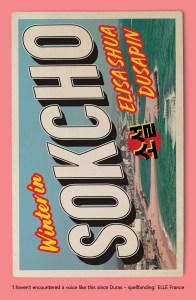 The protagonist is a young mixed-race woman working behind the reception desk at a hotel in Sokcho, a South Korean resort at the northern border. A tourist mecca in high season, during the frigid months this beach town feels down-at-heel, even sinister. The arrival of a new guest is a major event at the guesthouse. And not just any guest but Yan Kerrand, a French graphic novelist. Although she has a boyfriend and the middle-aged Kerrand is probably old enough to be her father – and thus an uncomfortable stand-in for her absent French father – the narrator is drawn to him. She accompanies him on sightseeing excursions but wants to go deeper in his life, rifling through his rubbish for scraps of work in progress.
The underemployed, self-sabotaging young woman is so familiar these days as to be a cliché (and I’d already met a very similar one, also Korean, in Ro from Sea Change by Gina Chung), but there is still something enticing about the atmosphere of this novella. I also enjoyed the narrator’s relationship with her mother, a fishmonger, which sets up for the entirely inconclusive and potentially very disturbing ending. Impossible to say more without spoilers, but I’d be interested to hear what others who have read it think will happen after the last page. (Birthday gift from my wish list) 
The Northern Lights by Howard Norman (1987)
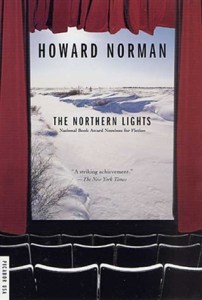 Norman is a really underrated writer and I’m a big fan of The Bird Artist and especially I Hate to Leave This Beautiful Place. This is a weird one; it’s his debut and you can see the autobiographical inspiration (per his Introduction) and the sorts of interests that would recur across his oeuvre, such as subarctic Canada and its Indigenous peoples, absent fathers and hotels (not the only reason this reminded me most of early John Irving).
The Canadian settings represent the two poles of isolation and the urban: Quill, Manitoba versus Toronto in 1959–60. The novel opens with the death of teenage Noah’s best friend, Pelly, who fell through a frozen lake while riding his unicycle. Noah’s family dynamic changes quickly, as his cousin Charlotte, orphaned by a factory disaster, comes to live with them and then his cartographer father leaves them to become a hermit in a remote cabin furnished with musical instruments. Noah stays with Pelly’s parents, Sam and Hettie (a Cree woman), to brave a harsh Quill winter –
January and February mornings you would get a crack of icy static in the nostrils when first stepping outside and have to shade your eyes against the harsh glint of snow, if the sun had worked its way through. Certain days neighbors were seen only on their way to their woodsheds. Chimney smoke was our windsocks. Enormous drifts had built up against the houses, sculpted in various shapes. Even brief walks were taken on snowshoes. Winter might be seven months long.
– while his mother, Mina, takes Charlotte to Toronto to run The Northern Lights, the movie theatre where she met her husband as a young woman. The previous alcoholic owner has run it into the ground; “the curtain smelled like a ten-thousand-year-old moose hide.”
At the time that Noah joins them, he’s never seen a movie before, but as “manager” of the theatre he soon sees The Magnificent Seven 15 times in quick succession. Norman does a peculiar thing here, which is to introduce a key character quite late on in the action. Noah hires Levon, a Cree man, to be the projectionist and he promptly moves his entire family into the building. Had Noah relocated to Toronto earlier, we might have seen more of these characters. Norman’s habit of mimicking broken speech from non-native speakers through overly frequent commas (indicating pauses, I suppose) irked me. There are lots of quirky elements here and I enjoyed the overall atmosphere, but felt the plot left something to be desired. I’d start elsewhere with Norman, but could still recommend this to readers of Robertson Davies and Elizabeth Hay. (Secondhand – 2nd & Charles)
And a DNF:
Snowflake, AZ by Marcus Sedgwick (2019): I wanted to try something else by the late Sedgwick (I’ve only read his nonfiction monograph, Snow) and this seemed ideal. I could have gotten onboard with the desert dystopia, but Ash’s narration was so unconvincing. Sedgwick was attempting a folksy American accent but all the “ain’t”s and “darned”s really don’t work from a teenage character. I only managed about 20 pages. (Public library)
Plus a whole bunch of children’s picture books:
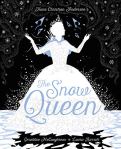 The Snow Queen by Hans Christian Andersen [adapted by Geraldine McCaughrean; illus. Laura Barrett] (2019): The whole is in the shadow painting style shown on the cover, with a black, white and ice blue palette. It’s visually stunning, but I didn’t like the language as much as in the original (or at least older) version I remember from a book I read every Christmas as a child.
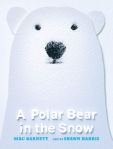 A Polar Bear in the Snow by Mac Barnett [art by Shawn Harris] (2020): From a grey-white background, a bear’s face emerges. The remaining pages are made of torn and cut paper that looks more three-dimensional than it really is. The bear passes other Arctic creatures and plays in the sea. Such simple yet intricate spreads.
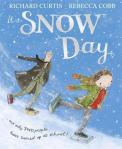 Snow Day by Richard Curtis [illus. Rebecca Cobb] (2014): When snow covers London one December, only two people fail to get the message that the school is closed: Danny Higgins and Mr Trapper, his nemesis. So lessons proceed. At first it feels like a prison sentence, but at break time Mr Trapper gives in to the holiday atmosphere. These two lonely souls play as if they were both children, making an army of snowmen and an igloo. And next year, they’ll secretly do it all again. Watch out for the recurring robin in a woolly hat.
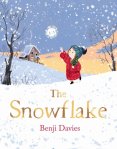 The Snowflake by Benji Davies (2020): I didn’t realize this was a Christmas story, but no matter. A snowflake starts her lonely journey down from a cloud; on Earth, Noelle hopes for snow to fall on her little Christmas tree. From motorway to town to little isolated house, Davies has an eye for colour and detail.
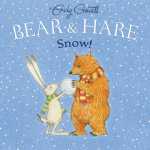 Bear and Hare: SNOW! by Emily Gravett (2014): Bear and Hare, wearing natty scarves, indulge in all the fun activities a blizzard brings: snow angels, building snow creatures, having a snowball fight and sledging. Bear seems a little wary, but Hare wins him over. The illustration style reminded me of Axel Scheffler’s work for Julia Donaldson.
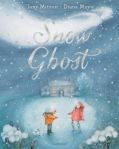 Snow Ghost by Tony Mitton [illus. Diana Mayo] (2020): Snow Ghost looks for somewhere she might rest, drifting over cities and through woods until she finds the rural home of a boy and girl who look ready to welcome her. Nice pastel art but twee couplets.
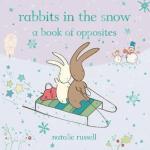 Rabbits in the Snow: A Book of Opposites by Natalie Russell (2012): A suite of different coloured rabbits explore large and small, full and empty, top and bottom, and so on. After building a snowman and sledging, they come inside for some carrot soup.
 The Snowbear by Sean Taylor [illus. Claire Alexander] (2017): Iggy and Martina build a snowman that looks more like a bear. Even though their mum has told them not to, they sledge into the woods and encounter danger, but the snow bear briefly comes alive and walks down the hill to save them. Delightful.
 Snow (2014) & Lost (2021) by Sam Usher: A cute pair from a set of series about a little ginger boy and his grandfather. The boy is frustrated with how slow and stick-in-the-mud his grandpa seems to be, yet he comes through with magic. In the former, it’s a snow day and the boy feels like he’s missing all the fun until zoo animals come out to frolic. There’s lots of white space to simulate the snow. In the latter, they build a sledge and help search for a lost dog. Once again, ‘wild’ animals come to the rescue. /
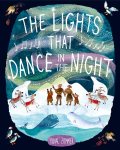 The Lights that Dance in the Night by Yuval Zommer (2021): I’ve seen Zommer speak as part of a conference panel on children’s nature writing. The Aurora Borealis unfolds across the sky above the creatures and people of the far north: “We sashayed for an Arctic fox. We swayed above an old musk ox.” I expected more anatomical accuracy (i.e., faces not flattened so that eyes appear to be next to each other on the same side of a face) but I loved how vivid and imaginative it all is.
Any snowy or icy reads (or weather) for you lately?
Chase of the Wild Goose by Mary Louisa Gordon: A Lurid Editions Reprint
 Chase of the Wild Goose, a playful, offbeat biographical novel about the Ladies of Llangollen, was first published by Leonard and Virginia Woolf’s Hogarth Press in 1936. I was delighted to be invited to take part in an informal blog tour celebrating the book’s return to print (today, 1 February) as the inaugural publication of Lurid Editions, which will focus on reprinting lesser-known and trailblazing 20th-century classics.
Mary Louisa Gordon was a medical doctor and early graduate of the London School of Medicine for Women. She also served as a prison inspector and had a special concern for the plight of female prisoners; another of her works was Penal Discipline (1922). Chase of the Wild Goose was published when she was 75. She underwrote the book to keep it in print until her death in 1941. A word-of-mouth success, it sold reasonably well in those first years.
I’d encountered the Ladies of Llangollen a couple of times before, in nonfiction: in The Art of the Wasted Day by Patricia Hampl, where they are among her exemplars of solitary, introspective living; and in Sign Here If You Exist and Other Essays by Jill Sisson Quinn, where, in the way that they blur the lines between romance and friendship, they presage her experience with an intimate female friend. This was a different way to explore their story.

Portrait of The Rt. Honble. Lady Eleanor Butler & Miss Ponsonby ‘The Ladies of Llangollen’. By James Henry Lynch, Public domain, via Wikimedia Commons. (Wearing their customary plain riding habits and top hats.)
“The two heroines of this story, the Lady Eleanor Butler and Miss Sarah Ponsonby, have a remarkable history. They achieved fame at a stroke. They made a noise in the world which has never since died out, and which we, their spiritual descendants, continue to echo.”
These are the opening lines of what, in its first half, is a fairly straightforward chronological account of the protagonists’ lives, from their first meeting to when they flee to Wales to set up house together at Plas Newydd. They grow up in Ireland and, although their prospects differ – EB has a wealthy upbringing at Kilkenny Castle, whereas teenage SP has recently lost her mother and is being passed around relatives and acquaintances – both are often told that marriage is the only viable option. The eccentric spinster stereotype is an unkind one, but one EB is willing to risk. In one terrific scene, she shames her archbishop great-uncle for being just like everyone else and threatening to sell her to the highest bidder in matrimony. Still, the notion persists that if only the right man comes courting, they’ll change their tune.
At their first meeting EB and SP engage in an intense discussion of the possibilities for women, and within two weeks they’re already pledging to be together forever: “I think that nothing cheap, or second-rate, or faute de mieux, will ever do for you or me … We think—you and I—that we want something strange and exceptional, but something different may be ordained for us,” Eleanor says to Sarah. “From now onwards I… won’t you keep me… in your heart?” Sarah asks in parting. Eleanor replies, “I think you have been in it since before we were born.”
The strength of that romantic conviction that they are fated for each other keeps them going despite difficulties – EB’s father disowns her and cuts her off, which has inevitable financial implications, though she had already bought Plas Newydd outright; and for both of them, leaving Ireland is a wrench because they feel certain that they can never go back.

Plas Newydd. Photo by Wolfgang Sauber, CC BY-SA 3.0 , via Wikimedia Commons.
By Part II, the erstwhile fugitives, settled into local life in North Wales, enter into a sedate middle age of visitors and correspondence. Much of the material for this section is drawn from the journal EB kept. Part III is where things get really interesting: in a metafictional twist, Gordon herself enters the narrative as she meets and converses with the long-dead Ladies at their house, reflecting on the social changes that have occurred since their time.
As the Afterword by Dr Nicola Wilson notes, Chase of the Wild Goose is creative nonfiction in the same vein as Orlando, building on real-life figures and relationships in a way that must have seemed ahead of its age, not least for how it looks back to venerate queer foremothers. Although there are long stretches of the book that are tedious with biographical detail and melodramatic speeches, there is enough in the way of convincing dialogue and scenes to make up for that. While I feel the novel probably has more to offer to academics and those with a particular interest in its subjects than to general readers, I was pleased to be able to experience a rediscovered classic. I marvelled every time I reminded myself that this largely takes place in the late eighteenth to early nineteenth century. Gordon ably reproduces the diction and mores of the Ladies’ time, but her modernist intrusion takes it beyond pastiche.
As for the title, I’m most accustomed to the wild goose as a metaphor for the Holy Spirit in Celtic Christian iconography, but of course it is also a pun on the proverbial wild-goose chase. Gordon nods to both connotations; the phrase appears several times in the text and is the protagonists’ private term for their search for a life together – for liberty and for love. You have to cheer for them, achieving what so few could in their time. Here’s to you, Ladies!
With thanks to D-M Withers and Lurid Editions for the free copy for review.
A first read for Karen and Lizzys #ReadIndies challenge. I will hope to add many more before the end of the month!
Liz has also reviewed the novel.
For more information, do also read this fascinating Guardian article.
Winter Reads, Part I: Patrick Gale & Tove Jansson (#NordicFINDS23)
This winter has been a disappointment: it’s bloody cold, but with no snow. It’s impossible to keep our house warm, even with extra loft insulation and new double-glazed windows (home ownership is boring and overrated), so I’m ready for signs of spring. Maybe by the time I review a second batch of seasonal reads in February, winter will truly be on its way out.
A Place Called Winter by Patrick Gale (2015)
 This was our January book club read. We’d had good luck with Gale before: his Notes from an Exhibition received our joint highest rating ever. As he’s often done in his fiction, he took inspiration from family history: here, the story of his great-grandfather Harry Cane, who emigrated to the Canadian prairies to farm in the most challenging of conditions. Because there is some uncertainty as to what precipitated his ancestor’s resettlement, Gale has chosen to imagine that Harry, though married and the father of a daughter, was in fact gay and left England to escape blackmailing and disgrace after his affair with a man was discovered.
There are very evocative descriptions of the pioneer life, lightened for Harry by his relationship with his closest neighbours, siblings Petra and Paul. The novel covers the First World War and the start of the Spanish flu epidemic, which provide much fodder for melodrama, but somehow I don’t mind it from Gale. Harry himself is so diffident as to seem blank, but that means he is free to become someone else in a new land. My other main criticism would be that the villain is implausibly evil. Some of our book club members also thought there were too many coincidences. Gale really makes you feel for these characters and their suffering, though. Sexuality and mental health, both so misunderstood at that time, are the two main themes and he explores them beautifully. In that both are historical fiction where homosexuality is simply a fact of life, not a titillating novelty, this reminded me a lot of Days Without End by Sebastian Barry. (Free from mall bookshop)
A Winter Book: Selected Stories by Tove Jansson (2006)
[Translated from the Swedish by Silvester Mazzarella, David McDuff and Kingsley Hart]
 A brief second review for Nordic FINDS. It’s the third time I’ve encountered some of these autofiction stories: this was a reread for me, and 13 of the pieces are also in Sculptor’s Daughter, which I skimmed from the library a few years ago. And yet I remembered nothing; not a single one was memorable. Most of the pieces are impressionistic first-person fragments of childhood, with family photographs interspersed. In later sections, the protagonist is an older woman, Jansson herself or a stand-in. I most enjoyed “Messages” and “Correspondence,” round-ups of bizarre comments and requests she received from readers. Of the proper stories, “The Iceberg” was the best. It’s a literal object the speaker alternately covets and fears, and no doubt a metaphor for much else. This one had the kind of profound lines Jansson slips into her children’s fiction: “Now I had to make up my mind. And that’s an awful thing to have to do” and “if one doesn’t dare to do something immediately, then one never does it.” A shame this wasn’t a patch on The Summer Book. (Free from a neighbour)

Original rating in 2012:
Rating now: 
Averaged rating: 
And a DNF:
Winter’s Tale by Mark Helprin (1983)
 Laila (Big Reading Life) and I attempted this as a buddy read, but we both gave up on it. I got as far as page 53 (in the 600+-page pocket paperback). The premise was alluring, with a magical white horse swooping in to rescue Peter Lake from a violent gang. I also appreciated the NYC immigration backstory, but not the adjective-heavy wordiness, the anachronistic exclamations (“Crap!” and “Outta my way, you crazy midget” – this is presumably set some time between the 1900s and 1920s) or the meandering plot. It was also disturbing to hear about Peter’s sex life when he was 12. From a Little Free Library (at Philadelphia airport) it came, and to a LFL (at the Bar Convent in York) it returned. Laila read a little further than me, enough to tell the library patron who recommended it to her that she’d given it a fair try.
Any snowy or icy reading (or weather) for you lately?
Three on a Theme: Frost Fairs Books
Here in southern England, we’ve just had a couple of weeks of hard frost. The local canal froze over for a time; the other day when I thought it had all thawed, a pair of mallard ducks surprised me by appearing to walk on water. In previous centuries, the entire Thames has been known to freeze through central London. (I’d like to revisit Virginia Woolf’s Orlando for a 17th-century scene of that.) This thematic trio of a children’s book, a historical novel, and a poetry collection came together rather by accident: I already had the poetry collection on my shelf, then saw frost fairs referenced in the blurb of the novel, and later spotted the third book while shelving in the children’s section of the library.
A Night at the Frost Fair by Emma Carroll (2021)
 Maya’s mum is visiting family in India; Maya and her dad and sister have just settled Gran into a clinical care home. Christmas is coming, and Gran handed out peculiarly mismatched presents: Maya’s older sister got a lovely brooch, while her own present was a weird brick-shaped brown object Gran says belonged to “Edmund”. Now the family is in a taxi home, crossing London Bridge, when Maya notices snow falling faster than seems possible and finds herself on a busy street of horse-drawn carriages, overlooking booths and hordes of people on the frozen river.
A sickly little boy named Eddie is her tour guide to the games, rides and snacks on offer here in 1788, but there’s a man around who wants to keep him from enjoying the fair. Maya hopes to help Eddie, and Gran, all while figuring out what the gift parcel means. A low page count meant this felt pretty thin, with everything wrapped up too soon. The problem, really, was that – believe it or not – this isn’t the first middle-grade time-slip historical fantasy novel about frost fairs that I’ve read; the other, Frost by Holly Webb, was better. Sam Usher’s Quentin Blake-like illustrations are a bonus, though. (Public library) 
The Weather Woman by Sally Gardner (2022)
This has been catalogued as science fiction by my library system, but I’d be more likely to describe it as historical fiction with a touch of magic realism, similar to The Mermaid and Mrs Hancock or Things in Jars. I loved the way the action is bookended by the frost fairs of 1789 and 1814. There’s a whiff of the fairy tale in the setup: when we meet Neva, she’s a little girl whose parents operate one of the fair’s attractions, a chess-playing bear. She knows, like no one else seems to, that the ice is shifting and it’s not safe to stay by the Thames. When the predicted tragedy comes, she’s left an orphan and adopted by Victor Friezland, a clockmaker who shares her Russian heritage. He lives in a wonderfully peculiar house made out of ship parts and, between him, Neva, the housekeeper Elise, and other servants, friends and neighbours, they form a delightful makeshift family.
Neva predicts the weather faultlessly, even years ahead. It’s somewhere between synaesthetic and mystical, this ability to hear the ice speaking and see what the clouds hold. While others in their London circle engage in early meteorological prediction, her talent is different. Victor decides to harness it as an attraction, developing “The Weather Woman” as first an automaton and then a magic lantern show, both with Neva behind the scenes giving unerring forecasts. At the same time, Neva brings her childhood imaginary friend to life, dressing in men’s clothing and appearing as Victor’s business partner, Eugene Jonas, in public.

These various disguises are presented as the only way that a woman could be taken seriously in the early 19th century. Gardner is careful to note that Neva does not believe she is, or seek to become, a man; “She thinks she’s been born into the wrong time, not necessarily the wrong sex. As for her mind, that belongs to a different world altogether.” (Whereas there is a trans character and a couple of queer ones; it would also have been interesting for Gardner to take further the male lead’s attraction to Eugene Jonas.) From her early teens on, she’s declared that she doesn’t intend to marry or have children, but in what I suspect is a trope of romance fiction, she changes her tune when she meets the right man. This was slightly disappointing, yet just one of several satisfying matches made over the course of this rollicking story.
London charms here despite its Dickensian (avant la lettre) grime – mudlarks and body snatchers, gambling and trickery, gloomy pubs and shipwrecks, weaselly lawyers and high-society soirees. The plot moves quickly and holds a lot of surprises and diverting secondary characters. While the novel could have done with some trimming – something I’d probably say about the majority of 450-pagers – I remained hooked and found it fun and racy. You’ll want to stick around for a terrific late set-piece on the ice. Gardner had a career in theatre costume design before writing children’s books. I’ll also try her teen novel, I, Coriander. (Public library)
[Two potential anachronisms: “Hold your horses” (p. 202) and calling someone “a card” (p. 209) – both slang uses that more likely date from the 1830s or 1840s.]
The Frost Fairs by John McCullough (2010)
 I knew McCullough’s name from his superb 2019 collection Reckless Paper Birds, which was shortlisted for a Costa Prize. This was his debut collection, for which he won a Polari Prize. Appropriately, one poem, “Georgie, Belladonna, Sid,” is crammed full of “Polari words” – “the English homosexual and theatrical slang prevalent in the early to mid 20th century.” The book leans heavily on historical scenes and seaside scenery. “The Other Side of Winter” is the source of the title and the cover image:
Overnight the Thames begins to move again.
The ice beneath the frost fair cracks. Tents,
merry-go-rounds and bookstalls glide about
On islands given up for lost. They race,
switch places, touch—the printing press nuzzling
the swings—then part, slip quietly under.
I also liked the wordplay of “The Dictionary Man,” the alliteration and English summer setting of “Miss Fothergill Observes a Snail,” and the sibilance versus jarringly violent imagery of “Severance.” However, it was hard to detect links that would create overall cohesion in the book. (Purchased directly from Salt Publishing)
Three on a Theme: “Birds” Short Story Collections
I read these three collections one at a time over three and a half months of last year, initially intending to write them up as part of my short story focus in September but ultimately deciding to spend more time with the latter two (and then falling ill with Covid before I could write them all up in 2022). They topped my Best Backlist Reads.
The word from the title is incidental, really; the books do have a lot in common in terms of theme and tone, though. The environment, fidelity and motherhood are recurring elements. The warmth and psychological depth are palpable. Each story feels fleshed out enough that I could happily read an entire novel set in its realm, but also complete unto itself.
Birds of a Lesser Paradise by Megan Mayhew Bergman (2012)
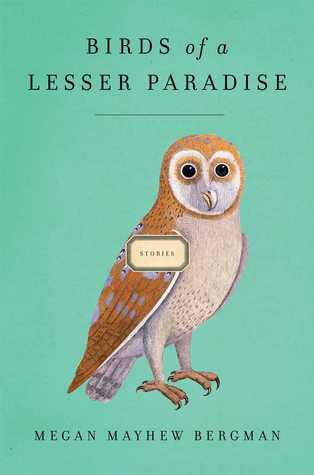 I knew Bergman from her second of three collections, Almost Famous Women; this was her debut. As is common for a first book, it incorporates autobiographical characteristics: North Carolina settings, a preponderance of animals (her husband is a vet), and pregnancy and early motherhood. Eleven of the 12 stories are in the first person, there are no speech marks, and the protagonists are generally women in their twenties or thirties coping with young children, crumbling households, ageing parents, and ethical dilemmas at work.
Creatures are companions or catalysts here. In “Housewifely Arts,” a single mother and her son embark on a road trip to rescue her late mother’s African gray parrot. In the title story, Mae accompanies her father and her new beau on a search for the ivory-billed woodpecker. Fear grapples with openness to change for many of these characters, as expressed in the final lines: “I wished for things to stay the same. I wished for stillness everywhere, but I opened up the rest of the bedroom windows and let the world in.”
Environmental threat blares in the background, but usually fades in comparison to everyday concerns; the 2050-set “The Artificial Heart” is more alarmed about her aged father’s bionic existence than about a dying planet. In “Yesterday’s Whales,” the overall standout for me, ambivalence about motherhood meets climate catastrophism. The narrator’s boyfriend, Malachi, founded a nonprofit called Enough with Us, which asks members to vow not to reproduce so the human race can die out and nature can take over. Embarrassing, then, that she finds herself pregnant and unwilling to tread the hard line he’s drawn. This one is funny and poignant, capturing so many of my own feelings, and seems 10 years ahead of its time.
When someone’s ideal is the absence of all human life, romance is kind of a joke.
I wanted, then, to become what I most admired, what now seemed most real to me. I wanted to be that exalted, complicated presence in someone’s life, the familiar body, the source of another’s existence. But I knew what I wanted was not always what I needed.
I envied my mother’s childhood, the awe with which she’d turned to her country and the world, the confidence she’d had in her right to exist and bear children. The world and mothers alike, I knew, had lost a little freshness.
(Secondhand, a gift from my wish list a couple of years ago)
Delicate Edible Birds by Lauren Groff (2009)
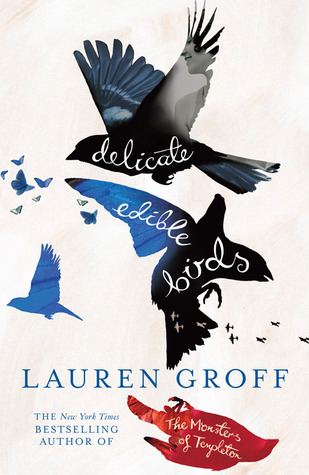 What a clever decision to open with “Lucky Chow Fun,” a story set in Templeton, the location of Groff’s debut novel – it forms a thread of continuity between her first book and her second. Elizabeth, the only girl on the varsity swim team, comes to a number of realizations about her family and her community, including that the title Chinese restaurant is a front for a brothel that exploits trafficked women. The story becomes a wider parable about appearances and suspicion. “In these dark days, there is so much distrust in this town. … You never know quite what to think about people”. And what a brilliant last line: “I like to think it’s a happy ending, though it is the middle that haunts me.”
“L. DeBard and Aliette” recasts in the notorious Héloïse and Abelard romance an Olympic swimmer and a schoolgirl in Spanish flu-plagued New York City. The other seven stories alternate between historical fiction and contemporary, the USA and abroad, first person and third person, speech marks or none. Desire and boundaries, accomplishment and escape, fear and risk are contradictory pulls. While the details have faded for me, I remember that, while I was reading them, each of these stories enveloped me in a particular world – 30 pages seems like the ideal length here to fully explore a set of characters and a situation. If I had to choose a favourite, it would be “Blythe,” about a woman who feels responsible for her alcoholic best friend. (From my birthday book haul last year)
Birds of America by Lorrie Moore (1998)
Life: what an absurd little story it always made.
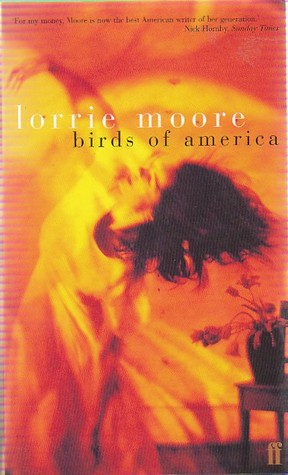 I’d read a few of Moore’s works before (A Gate at the Stairs, Bark, Who Will Run the Frog Hospital?) and not grasped what the fuss is about; turns out I’d just chosen the wrong ones to read. This collection is every bit as good as everyone has been saying for the last 25 years. Amy Bloom, Carol Shields and Helen Simpson are a few other authors who struck me as having a similar tone and themes. Rich with psychological understanding of her characters – many of them women passing from youth to midlife, contemplating or being affected by adultery – and their relationships, the stories are sometimes wry and sometimes wrenching (that setup to “Terrific Mother”!). There were even two dysfunctional-family-at-the-holidays ones (“Charades” and “Four Calling Birds, Three French Hens”) for me to read in December.
I’ll single out four of the 12 as favourites, though, really, any or all would be worthy of anthologizing in a volume epitomizing the art of the short story. “Which Is More than I Can Say about Some People” has a mother and daughter learning new things about each other on a vacation to Ireland. “What You Want to Do Fine,” another road trip narrative, stars an unlikely gay couple, one half of which is the flamboyant (and blind) Quilty. “People Like That Are the Only People Here” is so vivid on the plight of parents with a child in the paediatric oncology ward that I feel I should check whether Moore lived through that too. And the best of the best: “Real Estate” (not least because she dared to print two full pages of laughter: “Ha!”), which turns gently surreal as Ruth and her philandering husband move into a house that turns out to be a wreck, infested by both animal and human pests.
Moore is as great at the sentence level as she is at overarching plots. Here are a few out-of-context lines I saved to go back to:
She was starting to have two speeds: Coma and Hysteria.
In general, people were not road maps. People were not hieroglyphs or books. They were not stories. A person was a collection of accidents. A person was an infinite pile of rocks with things growing underneath.
Never a temple, her body had gone from being a home, to being a house, to being a phone booth, to being a kite. Nothing about it gave her proper shelter.
(From Oxfam Books, Hexham – a stop on our Northumberland trip last year)
Two of these writers are best known for their short stories; the third (Groff), to my mind, should be. Unusual for me to fall so wholeheartedly for short stories – these all earned my rarest rating: 
Most Anticipated Releases of 2023
In real life, it can feel like I have little to look forward to. A catch-up holiday gathering and a shortened visit from my sister were over all too soon, and we have yet to book any trips for the summer months. Thankfully, there are always pre-release books to get excited about.


This list of my 20 most anticipated titles covers a bit more than the first half of the year, with the latest publication dates falling in August. I’ve already read 14 releases from 2023 (written up here), and I’m also looking forward to new work from Margaret Atwood, Rowan Hisayo Buchanan, Angie Cruz, Patrick deWitt, Naoise Dolan, Tessa Hadley, Louisa Hall, Leah Hazard, Christian Kiefer, Max Porter, Tom Rachman, Gretchen Rubin, Will Schwalbe, Jenn Shapland, Abraham Verghese, Bryan Washington, Anne Youngson and more, as well as to trying out various debut authors.
The following are in (UK) release date order, within sections by genre. U.S. details given too/instead if USA-only. Quotes are excerpts from the publisher blurbs, e.g., from Goodreads.
Fiction
 The End of Drum-Time by Hanna Pylväinen [Jan. 24, Henry Holt and Co.] I loved Pylväinen’s 2012 debut, We Sinners. This sounds like a winning combination of The Bell in the Lake and The Mercies. “A richly atmospheric saga that charts the repercussions of a scandalous nineteenth century love affair between a young Sámi reindeer herder in the Arctic Circle and the daughter of the renegade Lutheran minister whose teachings are upending the Sámi way of life.” (Edelweiss download)
Heartstopper, Volume 5 by Alice Oseman [Feb. 2, Hodder Children’s] A repeat from my 2022 Most Anticipated post. Will this finally be the year?? I devoured the first four volumes of this teen comic in 2021. Nick will be getting ready to go off to university, so I guess we’ll see how he leaves things with Charlie and whether their relationship will survive a separation. (No cover art yet.)
 I Have Some Questions for You by Rebecca Makkai [Feb. 21, Viking / Feb. 23, Fleet] Makkai has written a couple of stellar novels; this sounds quite different from her usual lit fic but promises Secret History vibes. “A fortysomething podcaster and mother of two, Bodie Kane is content to forget her past [, including] the murder of one of her high school classmates, Thalia Keith. … [But] when she’s invited back to Granby, the elite New England boarding school where she spent four largely miserable years, to teach a course, Bodie finds herself inexorably drawn to the case and its increasingly apparent flaws.” (Proof copy)
 Birnam Wood by Eleanor Catton [March 7, Granta / Farrar, Straus and Giroux] I was lukewarm on The Luminaries (my most popular Goodreads review ever) but fancy trying Catton again – though this sounds like Atwood’s Year of the Flood, redux. “Five years ago, Mira Bunting founded a guerrilla gardening group … Natural disaster has created an opportunity, a sizable farm seemingly abandoned. … Robert Lemoine, the enigmatic American billionaire, has snatched it up to build his end-times bunker. … A gripping psychological thriller … Shakespearean in its wit, drama, and immersion in character.” (NetGalley download)
 Romantic Comedy by Curtis Sittenfeld [April 4, Random House / April 6, Doubleday] Sittenfeld is one of my favourite contemporary novelists. “Sally Milz is a sketch writer for The Night Owls, the late-night live comedy show that airs each Saturday. … Enter Noah Brewster, a pop music sensation with a reputation for dating models, who signed on as both host and musical guest for this week’s show. … Sittenfeld explores the neurosis-inducing and heart-fluttering wonder of love, while slyly dissecting the social rituals of romance and gender relations in the modern age.”
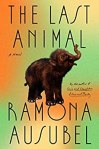 The Last Animal by Ramona Ausubel [April 18, Riverhead] “Jane is … on the cutting-edge team of a bold project looking to ‘de-extinct’ the woolly mammoth. … As Jane and her daughters ping-pong from the slopes of Siberia to a university in California, from the shores of Iceland to an exotic animal farm in Italy, The Last Animal takes readers on an expansive, bighearted journey that explores the possibility and peril of the human imagination on a changing planet, what it’s like to be a woman and a mother in a field dominated by men, and how a wondrous discovery can best be enjoyed with family. Even teenagers.”
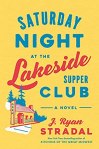 Saturday Night at the Lakeside Supper Club by J. Ryan Stradal [April 18, Pamela Dorman Books] Kitchens of the Great Midwest is one of my all-time favourite debuts. A repeat from my 2021 Most Anticipated post, hopefully here at last! “A story of a couple from two very different restaurant families in rustic Minnesota, and the legacy of love and tragedy, of hardship and hope, that unites and divides them … full of his signature honest, lovable yet fallible Midwestern characters as they grapple with love, loss, and marriage.” (Edelweiss download)
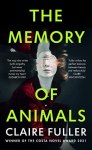 The Memory of Animals by Claire Fuller [April 20, Fig Tree (Penguin) / June 6, Tin House] Fuller is another of my favourite contemporary novelists and never disappoints. “Neffy is a young woman running away from grief and guilt … When she answers the call to volunteer in a controlled vaccine trial, it offers her a way to pay off her many debts … [and] she is introduced to a pioneering and controversial technology which allows her to revisit memories from her life before.” And apparently there’s also an octopus? (NetGalley download)
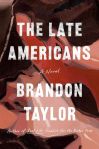 The Late Americans by Brandon Taylor [May 23, Riverhead / June 22, Jonathan Cape (Penguin)] “In the shared and private spaces of Iowa City, a loose circle of lovers and friends encounter, confront, and provoke one another in a volatile year of self-discovery. … These three [main characters] are buffeted by a cast of poets, artists, landlords, meat-packing workers, and mathematicians who populate the cafes, classrooms, and food-service kitchens … [T]he group heads to a cabin to bid goodbye to their former lives—a moment of reckoning that leaves each of them irrevocably altered.” (Proof copy)
Speak to Me by Paula Cocozza [June 8, Tinder Press] I loved her debut novel, How to Be Human, and this sounds timely. (I have never owned a smartphone.) “When Kurt’s phone rings during sex—and he reaches to pick it up—Susan knows that their marriage has passed the point of no return. … This sense of loss becomes increasingly focused on a cache of handwritten letters, from her first love, Antony, mementoes of a time when devotion seemed to spill out easily onto paper. Increasingly desperate and out of synch with the contemporary world, Susan embarks on a journey of discovery that will reconnect her to her younger self, while simultaneously revealing her future.” (No cover art yet.)
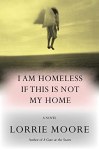 I Am Homeless If This Is Not My Home by Lorrie Moore [June 20, Faber / Knopf] What a title! I’m keen to read more from Moore after her Birds of America got a 5-star rating from me late last year. “Finn is in the grip of middle-age and on an enforced break from work: it might be that he’s too emotional to teach history now. He is living in an America hurtling headlong into hysteria, after all. High up in a New York City hospice, he sits with his beloved brother Max, who is slipping from one world into the next. But when a phone call summons Finn back to a troubled old flame, a strange journey begins, opening a trapdoor in reality.”
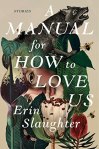 A Manual for How to Love Us by Erin Slaughter [July 5, Harper Collins] “A debut, interlinked collection of stories exploring the primal nature of women’s grief. … Slaughter shatters the stereotype of the soft-spoken, sorrowful woman in distress, queering the domestic and honoring the feral in all of us. … Seamlessly shifting between the speculative and the blindingly real. … Set across oft-overlooked towns in the American South.” Linked short stories are irresistible for me, and I like the idea of a focus on grief.
 Learned by Heart by Emma Donoghue [Aug. 24, Pan Macmillan / Aug. 29, Little, Brown] Donoghue’s contemporary settings have been a little more successful for me, but she’s still a reliable author whose career I am happy to follow. “Drawing on years of investigation and Anne Lister’s five-million-word secret journal, … the long-buried love story of Eliza Raine, an orphan heiress banished from India to England at age six, and Anne Lister, a brilliant, troublesome tomboy, who meet at the Manor School for young ladies in York in 1805 … Emotionally intense, psychologically compelling, and deeply researched”.
Nonfiction
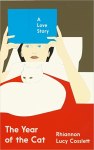 The Year of the Cat: A Love Story by Rhiannon Lucy Cosslett [Jan. 19, Tinder Press] “When Rhiannon fell in love with, and eventually married her flatmate, she imagined they might one day move on. … The desire for a baby is never far from the surface, but … after a childhood spent caring for her autistic brother, does she really want to devote herself to motherhood? Moving through the seasons over the course of lockdown, [this] nimbly charts the way a kitten called Mackerel walked into Rhiannon’s home and heart, and taught her to face down her fears and appreciate quite how much love she had to offer.”
 Fieldwork: A Forager’s Memoir by Iliana Regan [Jan. 24, Blackstone] “As Regan explores the ancient landscape of Michigan’s boreal forest, her stories of the land, its creatures, and its dazzling profusion of plant and vegetable life are interspersed with her and Anna’s efforts to make a home and a business of an inn that’s suddenly, as of their first full season there in 2020, empty of guests due to the COVID-19 pandemic. … Along the way she struggles … with her personal and familial legacies of addiction, violence, fear, and obsession—all while she tries to conceive a child that she and her immune-compromised wife hope to raise in their new home.” (Edelweiss download)
 Enchantment: Reawakening Wonder in an Exhausted Age by Katherine May [Feb. 28, Riverhead / March 9, Faber] I was a fan of her previous book, Wintering. “After years of pandemic life—parenting while working, battling anxiety about things beyond her control, feeling overwhelmed by the news-cycle and increasingly isolated—Katherine May feels bone-tired, on edge and depleted. Could there be another way to live? One that would allow her to feel less fraught and more connected, more rested and at ease, even as seismic changes unfold on the planet? Craving a different path, May begins to explore the restorative properties of the natural world”. (Proof copy)
 Monsters: A Fan’s Dilemma by Claire Dederer [April 25, Knopf / May 25, Sceptre] “What do we do with the art of monstrous men? Can we love the work of Roman Polanski and Michael Jackson, Hemingway and Picasso? Should we love it? Does genius deserve special dispensation? Is history an excuse? What makes women artists monstrous? And what should we do with beauty, and with our unruly feelings about it? Dederer explores these questions and our relationships with the artists whose behaviour disrupts our ability to apprehend the work on its own terms. She interrogates her own responses and her own behaviour, and she pushes the fan, and the reader, to do the same.”
 Undercurrent: A Cornish Memoir of Poverty, Nature and Resilience by Natasha Carthew [May 25, Hodder Studio] Carthew hangs around the fringes of UK nature writing, mostly considering the plight of the working class. “Carthew grew up in rural poverty in Cornwall, battling limited opportunities, precarious resources, escalating property prices, isolation and a community marked by the ravages of inequality. Her world existed alongside the postcard picture Cornwall … part-memoir, part-investigation, part love-letter to Cornwall. … This is a journey through place, and a story of hope, beauty, and fierce resilience.”
Grief Is for People by Sloane Crosley [June 25, MCD Books] According to Crosley, this is “a five-part book about many kinds of loss.” The press release adds to that: “Telling the interwoven story of a burglary, the suicide of Crosley’s closest friend, and the onset of Covid in New York City, [this] is the first full-length work of nonfiction by a writer best known for her acclaimed, bestselling books of essays.” (No cover art yet.)
Poetry
Bright Fear by Mary Jean Chan [Aug. 23, Faber] Their debut collection, Flèche, was my top poetry release in 2019. “These piercing poems fearlessly explore intertwined themes of queer identity, multilingualism and postcolonial legacy: interrogating acts of Covid racism, instances of queerphobia and the hegemony of the English language. Questions of acceptance and assimilation are further explored through a family’s evolving dynamics over time, or through the specious jargon of ‘Equality, Diversity and Inclusion’.” (No cover art yet.)
Other lists for more ideas:
What catches your eye here? What other 2023 titles do I need to know about?
The 2023 Releases I’ve Read So Far
Some reviewers and book bloggers are constantly reading three to six months ahead of what’s out on the shelves, but I tend to get behind on proof copies and read from the library instead. (Who am I kidding? I’m no influencer.)
In any case, I happen to have read a number of pre-release books, generally for paid review for Foreword, Shelf Awareness, etc. Most of my reviews haven’t been published yet; I’ll give very brief excerpts and ratings here to pique the interest.
Early in January I’ll follow up with my 20 Most Anticipated titles of the coming year.
My top recommendations so far:
(In alphabetical order)
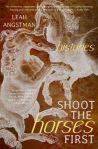 Shoot the Horses First by Leah Angstman [Feb. 28, Kernpunkt Press]: Sixteen sumptuous historical stories ranging from flash to novella length depict outsiders and pioneers who face disability and prejudice with poise.
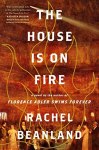 The House Is on Fire by Rachel Beanland [April 4, Simon & Schuster]: Four characters – two men and two women; two white people and two Black slaves – are caught up in the Richmond Theater Fire of 1811. Painstakingly researched and a propulsive read.
 Tell the Rest by Lucy Jane Bledsoe [March 7, Akashic Books]: A high school girl’s basketball coach and a Black poet, both survivors of a conversion therapy camp in Oregon, return to the site of their spiritual abuse, looking for redemption.
 All of Us Together in the End by Matthew Vollmer [April 4, Hub City Press]: A pensive memoir investigates the blinking lights that appeared in his family’s woods soon after his mother’s death from complications of Alzheimer’s and Parkinson’s in 2019.
Other 2023 releases I’ve read:
(In publication date order; links to the few reviews that are already available online)
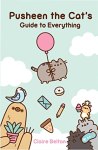 Pusheen the Cat’s Guide to Everything by Claire Belton [Jan. 10, Gallery Books]: Good-natured and whimsical comic scenes delight in the endearing quirks of Pusheen, everyone’s favorite cartoon cat since Garfield. Belton creates a family and pals for her, too.
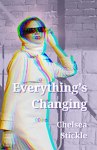 Everything’s Changing by Chelsea Stickle [Jan. 13, Thirty West]: The 20 weird flash fiction stories in this chapbook are like prizes from a claw machine: you never know whether you’ll pluck a drunk raccoon or a red onion the perfect size to replace a broken heart.
 Decade of the Brain by Janine Joseph [Jan. 17, Alice James Books]: With formal variety and thematic intensity, this second collection by the Philippines-born poet ruminates on her protracted recovery from a traumatic car accident and her journey to U.S. citizenship.
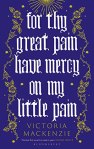 For Thy Great Pain Have Mercy on My Little Pain by Victoria Mackenzie [Jan. 19, Bloomsbury]: Two female medieval mystics, Julian of Norwich and Margery Kempe, are the twin protagonists of Mackenzie’s debut. She allows each to tell her life story through alternating first-person strands that only braid together very late on.
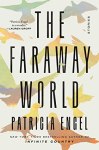 The Faraway World by Patricia Engel [Jan. 24, Simon & Schuster]: These 10 short stories contrast dreams and reality. Money and religion are opposing pulls for Latinx characters as they ponder whether life will be better at home or elsewhere.
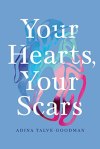 Your Hearts, Your Scars by Adina Talve-Goodman [Jan. 24, Bellevue Literary Press]: The author grew up a daughter of rabbis in St. Louis and had a heart transplant at age 19. This posthumous collection gathers seven poignant autobiographical essays about living joyfully and looking for love in spite of chronic illness.
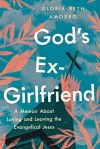 God’s Ex-Girlfriend: A Memoir About Loving and Leaving the Evangelical Jesus by Gloria Beth Amodeo [Feb. 21, Ig Publishing]: In a candid memoir, Amodeo traces how she was drawn into Evangelical Christianity in college before coming to see it as a “common American cult” involving unhealthy relationship dynamics and repressed sexuality.
 Zig-Zag Boy: A Memoir of Madness and Motherhood by Tanya Frank [Feb. 28, W. W. Norton]: A wrenching debut memoir ranges between California and England and draws in metaphors of the natural world as it recounts a decade-long search to help her mentally ill son.
 The Distance from Slaughter County by Steven Moore [March 7, The University of North Carolina Press]: An Iowan now based in Oregon, Moore balances nostalgia and critique to craft nuanced, hypnotic autobiographical essays about growing up in the Midwest. The piece on Shania Twain is a highlight.
Currently reading:
(In release date order)
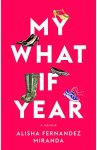 My What If Year: A Memoir by Alisha Fernandez Miranda [Feb. 7, Zibby Books]: “On the cusp of turning forty, Alisha Fernandez Miranda … decides to give herself a break, temporarily pausing her stressful career as the CEO of her own consulting firm … she leaves her home in London to spend one year exploring the dream jobs of her youth.”
 Sea Change by Gina Chung [April 11, Vintage]: “With her best friend pulling away to focus on her upcoming wedding, Ro’s only companion is Dolores, a giant Pacific octopus who also happens to be Ro’s last remaining link to her father, a marine biologist who disappeared while on an expedition when Ro was a teenager.”
Additional pre-release books on my shelf:
(In release date order)

Will you look out for one or more of these?
Any 2023 reads you can recommend already?
Review Catch-up: Lost & Found and Briefly, A Delicious Life
Picador has become one of the most reliable publishers for me, whether it’s fiction or nonfiction. My ever more preposterous backlog won’t be diminishing much before the end of the year, but here are two 2022 Picador releases from my Most Anticipated list that I picked back up recently and enjoyed: a bereavement memoir turned love story, and a historical novel about a real writer–musician pair as observed by a centuries-dead ghost.
Lost & Found: A Memoir by Kathryn Schulz
Schulz is a staff writer for the New Yorker, and her 2010 book Being Wrong was my favourite kind of nonfiction: wide-ranging, erudite and uncategorizable. When I heard she’d written a bereavement memoir, I was beyond eager to read it. Her father, Isaac, was a scholarly and opinionated Polish Jew whose family emigrated from Israel via Germany to the USA in the early 1950s. Schulz grew up in the Cleveland suburbs of Ohio. Her father died at 74 after a decade of poor health. I read part of this book on the transatlantic flight to my mother’s funeral, and found the thoughts on grief so wise and true. “One of the many ways that loss instructs us is by correcting our sense of scale, showing us the world as it really is: so enormous, complex, and mysterious that there is nothing too large to be lost.”

But loss is not the end of this story; it overlaps with and is in some sense superseded by an unexpected romance. Introduced by mutual friends 18 months before her father’s death, Schulz and “C.” (fellow New Yorker writer Casey Cep) quickly fell in love and fashioned a life together on the Eastern Shore of Maryland, despite some significant differences in temperament and background – for instance, C. is a devout Lutheran while Schulz is a largely non-practicing Jew. She manages to braid this together with bereavement: “Love, like grief, has the properties of a fluid: it flows everywhere, fills any container, saturates everything.” My only slight frustration with the book was the amount of generic material on losing and finding and what other thinkers have had to say about these universal experiences – I tended to skip past it to get back to the narrative of her developing relationship with C.
Briefly, A Delicious Life by Nell Stevens
This is Stevens’s third book but her first novel; her previous books (Bleaker House and Mrs Gaskell & Me) were autofiction-ish but have tended to be classified as memoirs. That same playfulness with genre is here, turning what could have been a straightforward biographical novel about George Sand – in the vein of the underwhelming The Dream Lover by Elizabeth Berg – into something cheeky and magical.
George Sand spent the winter of 1838–9 on Mallorca with her children, Solange and Maurice, and her lover, composer Frédéric Chopin. Stevens imagines that the monastery where they stay is still haunted by Blanca, a teenager who died in childbirth (having been impregnated by one of the trainee monks) there in 1473. Sand and Chopin – between them “Godless foreign odd consumptive cross-dressers … strangers and strange and strangely insouciant about their strangeness” – are instantly unpopular with the locals.
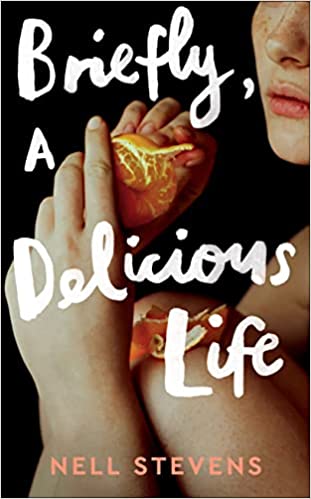
Blanca draws readers along on a tour of own past and George’s. Like any benevolent ghost, she’s a fan of pranks, but also hopes that she might use her power of omniscience to reverse tragic trajectories. A lover of men in her lifetime, she’s now enamoured with women in the hereafter, and outraged at how, even centuries later, women’s rights and desire are still being ignored. This is an earthy, impish, sexy read. Though it starts to wear a little thin before the end, it’s still well worth the ride.
With thanks to Picador for the proof copies for review.
Would you be interested in reading one or both of these? Do you have go-to/favourite publishers?
Book Serendipity, Mid-October to Mid-December 2022
The last entry in this series for the year. Those of you who join me for Love Your Library, note that I’ll host it on the 19th this month to avoid the holidays. Other than that, I don’t know how many more posts I’ll fit in before my year-end coverage (about six posts of best-of lists and statistics). Maybe I’ll manage a few more backlog reviews and a thematic roundup.
I call it “Book Serendipity” when two or more books that I read at the same time or in quick succession have something in common – the more bizarre, the better. This is a regular feature of mine every few months. Because I usually have 20–30 books on the go at once, I suppose I’m more prone to such incidents. The following are in roughly chronological order.
- Tom Swifties (a punning joke involving the way a quotation is attributed) in Savage Tales by Tara Bergin (“We get a lot of writers in here, said the rollercoaster operator lowering the bar”) and one of the stories in Birds of America by Lorrie Moore (“Would you like a soda? he asked spritely”).
- Prince’s androgynous symbol was on the cover of Dickens and Prince by Nick Hornby and is mentioned in the opening pages of Shameless by Nadia Bolz-Weber.


- Clarence Thomas is mentioned in one story of Birds of America by Lorrie Moore and Encore by May Sarton. (A function of them both dating to the early 1990s!)
- A kerfuffle over a ring belonging to the dead in one story of Shoot the Horses First by Leah Angstman and Motherthing by Ainslie Hogarth.
- Excellent historical fiction with a 2023 release date in which the amputation of a woman’s leg is a threat or a reality: one story of Shoot the Horses First by Leah Angstman and The House Is on Fire by Rachel Beanland.
- More of a real-life coincidence, this one: I was looking into Paradise, Piece by Piece by Molly Peacock, a memoir I already had on my TBR, because of an Instagram post I’d read about books that were influential on a childfree woman. Then, later the same day, my inbox showed that Molly Peacock herself had contacted me through my blog’s contact form, offering a review copy of her latest book!
- Reading nonfiction books titled The Heart of Things (by Richard Holloway) and The Small Heart of Things (by Julian Hoffman) at the same time.
- A woman investigates her husband’s past breakdown for clues to his current mental health in The Fear Index by Robert Harris and Motherthing by Ainslie Hogarth.
- “Tomorrow and tomorrow and tomorrow” is a repeated phrase in Another Brooklyn by Jacqueline Woodson, as it was in Tomorrow and Tomorrow and Tomorrow by Gabrielle Zevin.

- Massive, much-anticipated novel by respected author who doesn’t publish very often, and that changed names along the way: John Irving’s The Last Chairlift (2022) was originally “Darkness as a Bride” (a better title!); Abraham Verghese’s The Covenant of Water (2023) started off as “The Maramon Convention.” I plan to read the Verghese but have decided against the Irving.
- Looting and white flight in New York City in Feral City by Jeremiah Moss and Another Brooklyn by Jacqueline Woodson.
- Two bereavement memoirs about a loved one’s death from pancreatic cancer: Ti Amo by Hanne Ørstavik and Crying in H Mart by Michelle Zauner.


- The Owl and the Pussycat of Edward Lear’s poem turn up in an update poem by Margaret Atwood in her collection The Door and in Anna James’s fifth Pages & Co. book, The Treehouse Library.
- Two books in which the author draws security attention for close observation of living things on the ground: Where the Wildflowers Grow by Leif Bersweden and The Lichen Museum by A. Laurie Palmer.
- Seal and human motherhood are compared in Zig-Zag Boy by Tanya Frank and All of Us Together in the End by Matthew Vollmer, two 2023 memoirs I’m enjoying a lot.
- Mystical lights appear in Animal Life by Auður Ava Ólafsdóttir (the Northern Lights, there) and All of Us Together in the End by Matthew Vollmer.
- St Vitus Dance is mentioned in Zig-Zag Boy by Tanya Frank and Robin by Helen F. Wilson.
- The history of white supremacy as a deliberate project in Oregon was a major element in Heaven Is a Place on Earth by Adrian Shirk, which I read earlier in the year, and has now recurred in The Distance from Slaughter County by Steven Moore.

What’s the weirdest reading coincidence you’ve had lately?
Five Final Novellas: Adichie, Glück, Jhabvala, Victory for Ukraine, Woodson (#NovNov22)
We’ll wrap up Novellas in November and give some final statistics tomorrow. Today, I have mini reviews of another five novellas I read this month: one short nonfiction reread and then fiction ranging from India in the 1920s to short stories in comics about the war in Ukraine.
Notes on Grief by Chimamanda Ngozi Adichie (2021)
[85 pages]
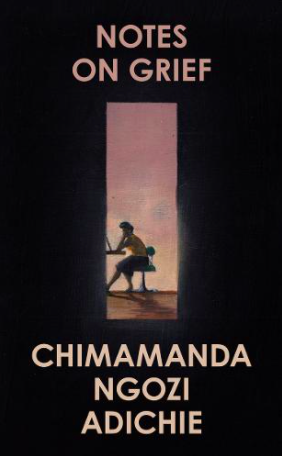 This came out in May last year – I pre-ordered it from Waterstones with points I’d saved up, because I’m that much of a fan – and it’s rare for me to reread something so soon, but of course it took on new significance for me this month. Like me, Adichie lived on a different continent from her family and so technology mediated her long-distance relationships. She saw her father on their weekly Sunday Zoom on June 7, 2020 and he appeared briefly on screen the next two days, seeming tired; on June 10, he was gone, her brother’s phone screen showing her his face: “my father looks asleep, his face relaxed, beautiful in repose.”
My experience of my mother’s death was similar: everything was sudden; my sister was the one there at the hospital, while all I could do was wait by the phone/laptop for news. So these details were particularly piercing, but the whole essay resonated with me as she navigates the early days of grief and remembers what she most admires about her father, including his piety, record-keeping and pride in her. (How lucky I am that Covid travel restrictions were no longer a factor; they delayed his memorial service.) My original review is here. Cathy also reviewed it. If you wish, you can read the New Yorker piece it arose from here.
Marigold and Rose: A Fiction by Louise Glück (2022)
[52 pages]
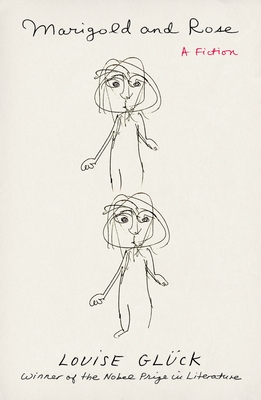 The first (and so far only) fiction by the poet and 2020 Nobel Prize winner, this is a curious little story that imagines the inner lives of infant twins and closes with their first birthday. Like Ian McEwan’s Nutshell, it ascribes to preverbal beings thoughts and wisdom they could not possibly have. Marigold, the would-be writer of the pair, is spiky and unpredictable, whereas Rose is the archetypal good baby.
Marigold did not like people. She liked Mother and Father; everyone else had not yet been properly inspected. Rose did like people and she intended them to like her. … Everyone understood that Marigold lived in her head and Rose lived in the world.
Now every day was like the days when the twins did not perform well at naptime. Then Mother and Father would begin to look tired and harassed. Mother explained that babies got tired too; often, they cried because they were tired. I don’t cry because I’m tired, Marigold thought. I cry because something has disappointed me.
As a psychological allegory, this tracks personality development and the growing awareness of Mother and Father as separate people with their own characteristics, some of which each girl replicates. But I failed to find much of a point. 
With thanks to Carcanet Press for the free e-copy for review.
Heat and Dust by Ruth Prawer Jhabvala (1975)
[181 pages]
 A lesser-known Booker Prize winner that we read for our book club’s women’s classics subgroup. My reading was interrupted by the last-minute trip back to the States, so I ended up finishing the last two-thirds after we’d had the discussion and also watched the movie. I found I was better able to engage with the subtle story and understated writing after I’d seen the sumptuous 1983 Merchant Ivory film: the characters jumped out for me much more than they initially had on the page, and it was no problem having Greta Scacchi in my head.
In 1923, Olivia is a bored young officer’s wife in India who becomes infatuated with the Nawab, an Indian prince involved in some dodgy dealings. In the novel’s present day, Olivia’s step-granddaughter (never named; in the film she’s called Anne, played by Julie Christie and changed to a great-niece for some reason) is also in India, enjoying the hippie freedom and rediscovering Olivia’s life through the letters she wrote to her sister. Both novel and film cut quickly and often between the two time periods to draw increasingly overt parallels between the women’s lives, culminating in unexpected pregnancies and difficult decisions to be made. I enjoyed the atmosphere (see also The Painted Veil and China Room) and would recommend the film, but I doubt I’ll seek out more by Jhabvala. (Public library) 
PEREMOHA: Victory for Ukraine (2022)
[96 pages]
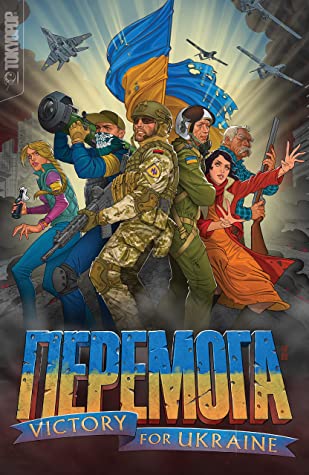 Various writers and artists contributed these graphic shorts, so there are likely to be some stories you enjoy more than others. “The Ghost of Kyiv” is about a mythical hero from the early days of the Russian invasion who shot down six enemy planes in a day. I got Andy Capp vibes from “Looters,” about Russian goons so dumb they don’t even recognize the appliances they haul back to their slum-dwelling families. (Look, this is propaganda. Whether it comes from the right side or not, recognize it for what it is.) In “Zmiinyi Island 13,” Ukrainian missiles destroy a Russian missile cruiser. Though hospitalized, the Ukrainian soldiers involved – including a woman – can rejoice in the win. “A pure heart is one that overcomes fear” is the lesson they quote from a legend. “Brave Little Tractor” is an adorable Thomas the Tank Engine-like story-within-a-story about farm machinery that joins the war effort. A bit too much of the superhero, shoot-’em-up stylings (including perfectly put-together females with pneumatic bosoms) for me here, but how could any graphic novel reader resist this Tokyopop compilation when a portion of proceeds go to RAZOM, a nonprofit Ukrainian-American human rights organization? (Read via Edelweiss)
Another Brooklyn by Jacqueline Woodson (2016)
[175 pages]
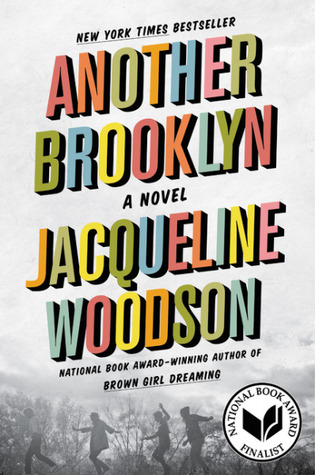 August looks back on her coming of age in 1970s Bushwick, Brooklyn. She lived with her father and brother in a shabby apartment, but friendship with Angela, Gigi and Sylvia lightened a gloomy existence: “as we stood half circle in the bright school yard, we saw the lost and beautiful and hungry in each of us. We saw home.” As in Very Cold People, though, this is not an untroubled girlhood. Male threat is everywhere, and if boyfriends bring sexual awakening they are also a constant goad to do more than girls are ready for. In short, flitting paragraphs, Woodson explores August’s past – a childhood in Tennessee, her uncle who died in the Vietnam War, her father’s growing involvement with the Nation of Islam. What struck me most, though, was August’s coming to terms with her mother’s death, a fact she doesn’t even acknowledge at first, and the anthropological asides about other cultures’ death rituals. This was my second from Woodson after the Women’s Prize-longlisted Red at the Bone, and I liked them about the same. A problem for me was that Brown Girls, which, with its New York City setting and focus on friendships between girls of colour, must have at least partially been inspired by Another Brooklyn, was better. (Public library)
In total, I read 17 novellas this November, though if you add in the ones I’d read in advance and then reviewed over the course of the month, I managed 24. All things considered, I think that’s a great showing. The 5-star stand-outs for me were The Hero of This Book and Body Kintsugi, but Up at the Villa was also a great read.
 Bookish Beck = Rebecca Foster. American transplant to England. Freelance proofreader and book reviewer.
 Bookish Beck