20 Books of Summer, 17–20: Bennett, Davidson, Diffenbaugh, Kimmerer
As per usual, I’m squeezing in my final 20 Books of Summer reviews late on the very last day of the challenge. I’ll call it a throwback to the all-star procrastination of my high school and college years. This was a strong quartet to finish on: two novels, the one about (felling) trees and the other about communicating via flowers; and two nonfiction books about identifying trees and finding harmony with nature.
Tree-Spotting: A Simple Guide to Britain’s Trees by Ros Bennett; illus. Nell Bennett (2022)
Botanist Ros Bennett has designed this as a user-friendly guide that can be taken into the field to identify 52 of Britain’s most common trees. Most of these are native species, plus a few naturalized ones. “Walks in the countryside … take on a new dimension when you find yourself on familiar, first-name terms with the trees around you,” she encourages. She introduces tree families, basics of plant anatomy and chemistry, and the history of the country’s forests before moving into identification. Summer leaves make ID relatively easy with a three-step set of keys, explained in words as well as with impressively detailed black-and-white illustrations of representative species’ leaves (by her daughter, Nell Bennett).

Seasonality makes things trickier: “Identifying plants is not rocket science, though occasionally it does require lots of patience and a good hand lens. Identifying trees in winter is one of those occasions.” This involves a close look at details of the twigs and buds – a challenge I’ll be excited to take up on canalside walks later this year. The third section of the book gives individual profiles of each featured species, with additional drawings. I learned things I never realized I didn’t know (like how to pronounce family names, e.g., Rosaceae is “Rose-A-C”), and formalized other knowledge. For instance, I can recognize an ash tree by sight, but now I know you identify an ash by its 9–13 compound, opposite, serrated leaflets.

Some of the information was more academic than I needed (as with one of my earlier summer reads, The Ash Tree by Oliver Rackham), but it’s easy to skip any sections that don’t feel vital and come back to them another time. I most valued the approachable keys and their accompanying text, and will enjoy taking this compact naked hardback on autumn excursions. Bennett never dumbs anything down, and invites readers to delight in discovery. “So – go out, introduce yourself to your neighbouring trees and wonder at their beauty, ingenuity and variety.” 
With thanks to publicist Claire Morrison and Welbeck for the free copy for review.
Damnation Spring by Ash Davidson (2021)
When this would-be Great American Novel* arrived unsolicited through my letterbox last summer, I was surprised I’d not encountered the pre-publication buzz. The cover blurb is from Nickolas Butler, which gives you a pretty good sense of what you’re getting into: a gritty, working-class story set in what threatens to be an overwhelmingly male milieu. For generations, Rich Gundersen’s family has been involved in logging California’s redwoods. Davidson is from Arcata, California, and clearly did a lot of research to recreate an insider perspective and a late 1970s setting. There is some specialist vocabulary and slang (the loggers call the largest trees “big pumpkins”), but it’s easy enough to understand in context.
 What saves the novel from going too niche is the double billing of Rich and his wife, Colleen, who is an informal community midwife and has been trying to get pregnant again almost ever since their son Chub’s birth. She’s had multiple miscarriages, and their family and acquaintances have experienced alarming rates of infant loss and severe birth defects. Conservationists, including an old high school friend of Colleen’s, are attempting to stop the felling of redwoods and the spraying of toxic herbicides.
A major element, then, is people gradually waking up to the damage chemicals are doing to their waterways and, thereby, their bodies. The problem, for me, was that I realized this much earlier than any of the characters, and it felt like Davidson laid it on too thick with the many examples of human and animal deaths and deformities. This made the book feel longer and less subtle than, e.g., The Overstory. I started it as a buddy read with Marcie (Buried in Print) 11 months ago and quickly bailed, trying several more times to get back into the book before finally resorting to skimming to the end. Still, especially for a debut author, Davidson’s writing chops are impressive; I’ll look out for what she does next. 
*I just spotted that it’s been shortlisted for the $25,000 Mark Twain American Voice in Literature Award.
With thanks to Tinder Press for the proof copy for review.
The Language of Flowers by Vanessa Diffenbaugh (2011)
The cycle would continue. Promises and failures, mothers and daughters, indefinitely.
 The various covers make this look more like chick lit than it is. Basically, it’s solidly readable issues- and character-driven literary fiction, on the lighter side but of the caliber of any Oprah’s Book Club selection. It reminded me most of White Oleander by Janet Fitch, one of my 20 Books selections in 2018, because of the focus on the foster care system and a rebellious girl’s development in California, and the floral metaphors.
In Diffenbaugh’s debut, Victoria Jones ages out of foster care at 18 and leaves her group home for an uncertain future. She spends time homeless in San Francisco but her love of flowers, and particularly the Victorian meanings assigned to them, lands her work in a florist’s shop and reconnects her with figures from her past. Chapters alternate between her present day and the time she came closest to being adopted – by Elizabeth, who owned a vineyard and loved flowers, when she was nine. We see how estrangements and worries over adequate mothering recur, with Victoria almost a proto-‘Disaster Woman’ who keeps sabotaging herself. Throughout, flowers broker reconciliations.
I won’t say more about a plot that would be easy to spoil, but this was a delight and reminded me of a mini flower dictionary with a lilac cover and elaborate cursive script that I owned when I was a child. I loved the thought that flowers might have secret messages, as they do for the characters here. Whatever happened to that book?! (Charity shop)
Braiding Sweetgrass: Indigenous Wisdom, Scientific Knowledge and the Teachings of Plants by Robin Wall Kimmerer (2013)
I’d heard Kimmerer recommended by just about every nature writer around, North American or British, and knew I needed this on my shelf. Before I ever managed to read it, I saw her interviewed over Zoom by Lucy Jones in July 2021 about her other popular science book, Gathering Moss, which was first published 18 years ago but only made it to the UK last year. So I knew what a kind and peaceful person she is: she just emanates warmth and wisdom, even over a computer screen.
And I did love Braiding Sweetgrass nearly as much as I expected to, with the caveat that the tiny-print 400 pages of my paperback edition make the essays feel very dense. I could only read a handful of pages in a sitting. Also, after about halfway, it started to feel a bit much, like maybe she had given enough examples from her life, Native American legend and botany. The same points about gratitude for the gifts of the Earth, kinship with other creatures, responsibility and reciprocity are made over and over.
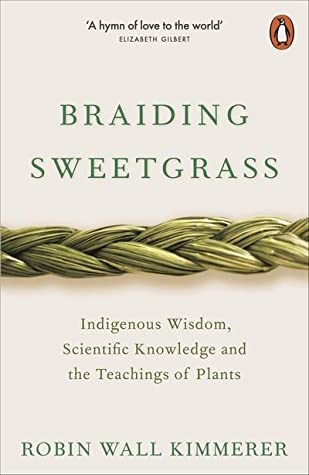 However, I feel like this is the spirituality the planet needs now, so I’ll excuse any repetition (and the basket-weaving essay I thought would never end). “In a world of scarcity, interconnection and mutual aid become critical for survival. So say the lichens.” (She’s funny, too, so you don’t have to worry about the contents getting worthy.) She effectively wields the myth of the Windigo as a metaphor for human greed, essential to a capitalist economy based on “emptiness” and “unmet desires.”
I most enjoyed the shorter essays that draw on her fieldwork or her experience of motherhood. “The Gift of Strawberries” – “An Offering” – “Asters and Goldenrod” make a stellar three-in-a-row, and “Collateral Damage” is an excellent later one about rescuing salamanders from the road, i.e. doing the small thing that we can do rather than being overwhelmed by the big picture of nature in crisis. “The Sound of Silverbells” is one of the most well-crafted individual pieces, about taking a group of students camping when she lived in the South. At first their religiosity (creationism and so on) grated, but when she heard them sing “Amazing Grace” she knew that they sensed the holiness of the Great Smoky Mountains.
But the pair I’d recommend most highly, the essays that made me weep, are “A Mother’s Work,” about her time restoring an algae-choked pond at her home in upstate New York, and its follow-up, “The Consolation of Water Lilies,” about finding herself with an empty nest. Her loving attention to the time-consuming task of bringing the pond back to life is in parallel to the challenges of single parenting, with a vision of the passing of time being something good rather than something to resist.
Here are just a few of the many profound lines:
For all of us, becoming indigenous to a place means living as if your children’s future mattered, to take care of the land as if our lives, both material and spiritual, depended on it.
I’m a plant scientist and I want to be clear, but I am also a poet and the world speaks to me in metaphor.
Ponds grow old, and though I will too, I like the ecological idea of aging as progressive enrichment, rather than progressive loss.
This will be a book to return to time and again. (Gift from my wish list several years ago)
I also had one DNF from this summer’s list:
Human Croquet by Kate Atkinson: This reminded me of a cross between The Crow Road by Iain Banks and The Heavens by Sandra Newman, what with the teenage narrator and a vague time travel plot with some Shakespearean references. I put it on the pile for this challenge because I’d read it had a forest setting. I haven’t had much luck with Atkinson in the past and this didn’t keep me reading past page 60. (Little Free Library)
A Look Back at My 20 Books of Summer 2022
Half of my reads are pictured here. The rest were e-books (represented by the Kindle) or have already had to go back to the library.

My fiction standout was The Language of Flowers, reviewed above. Nonfiction highlights included Forget Me Not and Braiding Sweetgrass, with Tree-Spotting the single most useful book overall. I also enjoyed reading a couple of my selections on location in the Outer Hebrides. The hands-down loser (my only 1-star rating of the year so far, I think?) was Bonsai. As always, there are many books I could have included and wished I’d found the time for, like (on my Kindle) A House among the Trees by Julia Glass, This Is Your Mind on Plants by Michael Pollan and Finding the Mother Tree by Suzanne Simard.
At the start, I was really excited about my flora theme and had lots of tempting options lined up, some of them literally about trees/flowers and others more tangentially related. As the summer went on, though, I wasn’t seeing enough progress so scrambled to substitute in other things I was reading from the library or for paid reviews. This isn’t a problem, per se, but my aim with this challenge has generally been to clear TBR reads from my own shelves. Maybe I didn’t come up with enough short and light options (just two novella-length works and a poetry collection; only the Diffenbaugh was what I’d call a page-turner); also, even with the variety I’d built in, having a few plant quest memoirs got a bit samey.

Next year…
I’m going to skip having a theme and set myself just one simple rule: any 20 print books from my shelves (NOT review copies). There will then be plenty of freedom to choose and substitute as I go along.
20 Books of Summer, 12–13: Black Narcissus & The False Rose
I’m limping towards the finish line with my flora-themed summer reading. Expect the reviews to come fast and furious over the next week and a half. Today’s novels aren’t about flowers, per se, but the title references do play a role. Both: (Public library) 
Black Narcissus by Rumer Godden (1939)
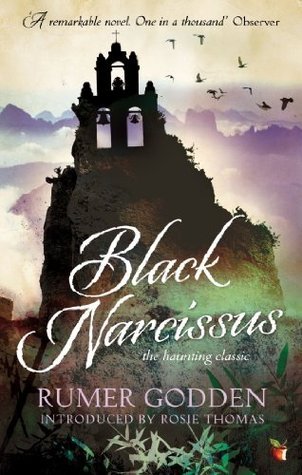 I saw the Deborah Kerr film version of this way back in my teen years but had never read anything by Rumer Godden. My interest was renewed by Laura’s post on nun books. A group of idealistic English nuns sets up a convent school and hospital in the mountains above Darjeeling. “They were going into the wilderness, to pioneer, to endure, to work; but surely not to enjoy themselves.” Much of the appeal of reading about small communities is seeing how different personalities play off each other: aloof leader Sister Clodagh, pensive Sister Philippa, impetuous Sister Ruth. The land belongs to the General, whose teenage son Dilip Rai comes for lessons (he’s a bit of a dandy and wears Black Narcissus perfume); the General’s caretaker, Mr. Dean, is a go-between between the nuns and the natives. Though cynical and often drunk, he pulls through for the sisters more than once.
There are vaguely racist attitudes here, perhaps inevitable for the time this was written, but the English characters do start to change: “[Sister Clodagh] was fond of these people. She could not remember when it was that she began to think of them as people; not as natives, persons apart, but as people like themselves, and she was beginning to see with their eyes.” An erotic undercurrent explodes into a couple of obsessive crushes that threaten the entire mission. I read the first third of this on a bus in the Highlands and when I tried to get back into it a month later, it couldn’t recapture my attention despite an enticing Indian atmosphere.
The False Rose by Jakob Wegelius (2020; 2021)
[Translated from the Swedish by Peter Graves]
 This is why I shouldn’t read sequels. The Murderer’s Ape was a pure delight and perfect companion on my long sea voyage to Spain back in May. Its every character and plot twist twinkle and the pages flew by. By contrast, this was … fine, but unnecessary. The plot turns on a pearl necklace Sally Jones the gorilla and Captain Koskela find hidden on their boat. Its centerpiece is a carved mother-of-pearl and silver rose and it belongs to Rose Henderson, the estranged daughter of Shetland Jack. They decide to return it to the rightful owner, but before they can track Rose down the necklace is stolen and a whole spiral is set underway. Once again, Sally Jones is separated from her captain and has to survive by her wits. Held prisoner by Glasgow bootleggers, she has to let them think her deaf and dumb, but makes friends with a former boxer named Bernie, who’s in thrall to his sister, harsh gang boss Moira. The final 100 pages or so, as everything finally unwinds, is satisfying, but it took me forever to make it there. I missed the supporting characters of the first book and gangster stories aren’t my jam.
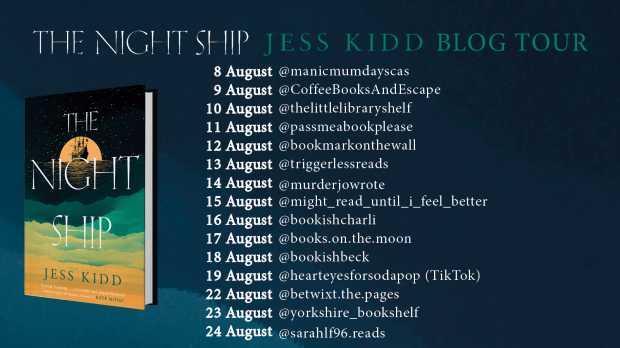
The Night Ship by Jess Kidd (Blog Tour Review)
Jess Kidd’s fourth novel is based on a true story: the ill-fated voyage of the Batavia, which set off from the Netherlands in 1628, bound for Indonesia, but wrecked on the Abrolhos Islands off the western coast of Australia in June 1629. If you look into it at all, you find a grim story of mutiny and murder. But we experience the voyage, and view its historical legacy, through the eyes of two motherless children: Mayken, travelling on the Batavia to be reunited with her merchant father abroad; and Gil, who, in 1989, moves in with his grandfather at his Australian beach hut and observes archaeologists diving into the wreck.
Chapters alternate between the two time periods. Mayken is in the care of her old nursemaid, Imke, who has second sight. As Imke’s health fails, Mayken goes semi-feral, dressing up as a cabin boy to explore the belowdecks world. Gil, a tender, traumatized boy in the company of rough grown-ups, becomes obsessed with the local dig and is given a pet tortoise – named Enkidu to match his own full name, Gilgamesh. Mayken and Gil both have to navigate a harsh adult world with its mixture of benevolent guardians and cruel strangers.
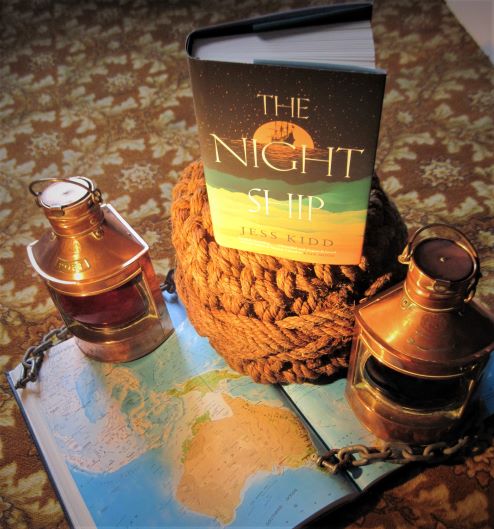
An explicit connection between the protagonists is set up early on, when a neighbour tells Gil there’s a “dead girl who haunts the island … Old-time ghost, from the shipwreck,” known as Little May. But there are little links throughout. For instance, both have a rote story to explain their mother’s death, and both absorb legends about a watery monster (the Dutch Bullebak and the Aboriginal Bunyip) that pulls people under. The symmetry of the story lines is most evident in the shorter chapters towards the end, such as the rapid-fire pair of 33–34.
These echoes, some subtle and some overt, are the saving grace of an increasingly bleak novel. Don’t be fooled by the focus on children’s experience: this is a dark, dark story, with only pinpricks of light at the end for one of the two. In terms of similar fiction I’ve read, the tone is more Wakenhyrst than The Essex Serpent; more Jamrach’s Menagerie than Devotion. (It didn’t help that I’d just read Julia and the Shark, an exceptional children’s book with a maritime setting and bullying/mental health themes.) I engaged more with the contemporary strand – as is pretty much always the case for me with a dual timeline – yet appreciated the atmosphere and the research behind the historical segments. This doesn’t match Things in Jars, but I was still pleased to have the chance to try something else by Jess Kidd.
With thanks to Canongate for my free copy for review.
I was delighted to be part of the social media tour for The Night Ship. See below for details of where other reviews and features have appeared or will be appearing soon.
Book Serendipity, May to Mid-August 2022
This is a regular feature of mine every few months. I call it “Book Serendipity” when two or more books that I read at the same time or in quick succession have something in common – the more bizarre, the better. Because I usually have 20–30 books on the go at once, I suppose I’m more prone to such incidents. The following are in roughly chronological order.
- Not only did the opening scene of All Down Darkness Wide by Seán Hewitt share with Falling Angels by Tracy Chevalier a graveyard setting, but more specifically an angel statue whose head falls off.

- SPOILER: {The protagonist has a backstory of a mother who drowned, presumably by suicide, in Secrets of the Sea House by Elisabeth Gifford and The Dance Tree by Kiran Millwood Hargrave.}
- I started reading two e-books on the same day that had Taylor Swift lyrics as an epigraph: Bad Vibes Only by Nora McInerny and Tracy Flick Can’t Win by Tom Perrotta. I have never knowingly heard a Taylor Swift song.
- Rescuing insects from a swimming pool in Fledgling by Hannah Bourne-Taylor and In the Quaker Hotel by Helen Tookey.
- Reading two feminist works of historical fiction in which the protagonist refuses to marry (even though it’s true love) at the same time: Lessons in Chemistry by Bonnie Garmus and Madwoman by Louisa Treger (about Nellie Bly).
- Two London-set books featuring a daughter named Mabel, one right after the other: This Is Not a Pity Memoir by Abi Morgan and Bridget Jones: Mad about the Boy by Helen Fielding.
- In Jenn Shapland’s My Autobiography of Carson McCullers I came across the fact that McCullers married the same man twice. Just a few days before, I’d seen that same odd fact about Hilary Mantel in her Wikipedia bio.
- A character named Clodagh in Black Narcissus by Rumer Godden and “Rainbows” by Joseph O’Neill, one of the entries in The Best Short Stories 2022: The O. Henry Prize Winners.
- Reading two books about an English author who died young of TB at the same time: Tenderness by Alison MacLeod (about D.H. Lawrence) and Orwell’s Roses by Rebecca Solnit.
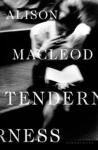
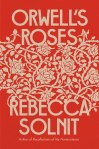
- Reading two novels that mention the shipwreck of the Batavia at the same time: The Night Ship by Jess Kidd (where it’s a major element) and Cloudstreet by Tim Winton (just a tiny reference that nonetheless took me aback). According to Wikipedia, “Batavia was a ship of the Dutch East India Company. Built in Amsterdam in 1628 as the company’s new flagship, she sailed that year on her maiden voyage for Batavia, capital of the Dutch East Indies. On 4 June 1629, Batavia was wrecked on the Houtman Abrolhos, a chain of small islands off the western coast of Australia.”
- David Lack’s Swifts in a Tower is mentioned in Swifts and Us by Sarah Gibson (no surprise there) but also in From the Hedgerows by Lew Lewis.
- There’s a child nicknamed Chub in Damnation Spring by Ash Davidson and Cloudstreet by Tim Winton (which both also at least started off being buddy reads with Marcie of Buried in Print!).
- Two novels in quick succession in which the discovery of a horse skeleton sparks the action in one story line: The Last Wild Horses by Maja Lunde and (coming up soon – I have a library reservation placed) Horse by Geraldine Brooks.
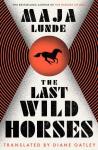
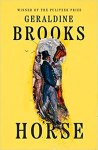
- Unst, Shetland as a setting in Orchid Summer by Jon Dunn, Sightlines by Kathleen Jamie, Julia and the Shark by Kiran Millwood Hargrave, and Where the Wildflowers Grow by Leif Bersweden.
- “Quiet as it’s kept” (a quote from the opening line of Toni Morrison’s The Bluest Eye) is borrowed in a poem in No Country for Eight-Spot Butterflies by Julian Aguon and one in the anthology American Wildflowers: A Literary Field Guide, ed. Susan Barba (“A Siren Patch of Indigo” by Cyrus Cassells).
- I didn’t recognize the word “swingeing” in The Reindeer Hunters by Lars Mytting and encountered it again the same day in Brief Lives by Anita Brookner before I had a chance to look it up (it means extreme or severe).
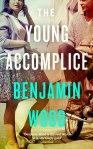
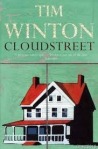
- A 1950s setting and a main character who is a man with missing fingers/arm in Cloudstreet by Tim Winton and The Young Accomplice by Benjamin Wood.
What’s the weirdest reading coincidence you’ve had lately?
Booker Prize Longlist Thoughts and Reading Plan
Yesterday the 2022 Booker Prize longlist was announced.

It’s an intriguing selection that for the most part avoids the usual suspects – although a few of these authors have previously been shortlisted, they’re not from the standard crop of staid white men. The website is making much of two pieces of trivia: that the longlist includes the youngest and oldest authors ever (Leila Mottley at 20 and Alan Garner at 87); and that Small Things Like These is the shortest book to be nominated.
I happen to have read two from the longlist so far, and I’m surprised by how many of the rest I want to read. I’ll go through each of the ‘Booker Dozen’ of 13 below (the brief summaries are from the Booker Prize announcement e-mail):
Glory by NoViolet Bulawayo
“This energetic and exhilarating joyride … is the story of an uprising, told by a vivid chorus of animal voices that help us see our human world more clearly.”
- Zimbabwean author Bulawayo was shortlisted for her debut novel, We Need New Names, in 2013. I’ve never been drawn to read that one, and have to wonder why we needed an extended Animal Farm remake…
Trust by Hernan Diaz
“A literary puzzle about money, power, and intimacy, Trust challenges the myths shrouding wealth, and the fictions that often pass for history.”
- I’m looking forward to this one after all the buzz from its U.S. release, and have a copy on the way to me from Picador.
The Trees by Percival Everett
“A violent history refuses to be buried in … Everett’s striking novel, which combines an unnerving murder mystery with a powerful condemnation of racism and police violence.”
- Susan is a fan of Everett’s. He’s known for his satirical fiction, whereas the only book of his that I happen to have read was poetry – not representative of his work. I’d happily read this if given the chance, but Everett’s stuff is hard to find over here.
Booth by Karen Joy Fowler
“Fowler’s epic novel about an ill-fated family of thespians, drinkers and dreamers, whose most infamous son is destined to commit a terrible and violent act.”
- I reviewed this for BookBrowse earlier in the year. (It’s Fowler’s second nomination, after We Are All Completely Beside Ourselves, a very different novel.) The present-tense narration helps it be less of a dull group biography, and there are two female point-of-view characters. The issues of racial equality, political divisions and mistrust of the government are just as important in our own day. However, the foreshadowing is sometimes heavy-handed, the extended timeline means there is some skating over of long periods, and the novel as a whole is low on scenes and dialogue, with Fowler conveying a lot of information through exposition. I gave it a tepid
 .
.
Treacle Walker by Alan Garner
“This latest fiction from a remarkable and enduring talent brilliantly illuminates an introspective young mind trying to make sense of the world around him.”
- Garner is a beloved fantasy writer in the UK. Though I didn’t care for The Owl Service when I read it in 2019, given that this is just over 150 pages, there would be no harm in taking a chance on it.
Seven Moons of Maali Almeida by Shehan Karunatilaka
“Karunatilaka’s rip-roaring epic is a searing, mordantly funny satire set amid the murderous mayhem of a Sri Lanka beset by civil war.”
- This is the sort of Commonwealth novel I’m wary of, fearing Rushdie-like indulgence. My library system tends to order all the Booker nominees, so I would gladly borrow this and try the early pages to see how I get on.
Small Things Like These by Claire Keegan
“Keegan’s tender tale of hope and quiet heroism is both a celebration of compassion and a stern rebuke of the sins committed in the name of religion.”
- I read and reviewed this late last year and appreciated it as a spare and heartwarming yuletide fable. A coal merchant in 1980s Ireland comes to value his quiet family life all the more when he sees how difficult existence is for the teen mothers sent to work in the local convent’s laundry service. I was familiar with the Magdalene Laundries from the movie The Magdalene Sisters and found this a fairly predictable narrative, with the nuns cartoonishly villainous. So I’m not as enthusiastic as many others have been, but feel like a Scrooge for saying so.
Case Study by Graeme Macrae Burnet
“Graeme Macrae Burnet offers a dazzlingly inventive – and often wickedly humorous – meditation on the nature of sanity, identity and truth itself.”
- Macrae Burnet was a dark horse in the 2016 Booker race for the terrific His Bloody Project. This new novel was one of Clare’s top picks for the longlist and sounds like a clever and playful book about a psychoanalyst and his patient; again the author blends fact and fiction and relies on ‘found documents’. I have it on request from the library.
The Colony by Audrey Magee
“In … Magee’s lyrical and brooding fable, two outsiders visit a small island off the west coast of Ireland, with unforeseen and haunting consequences.”
- One of Clare and Susan’s joint correct predictions (Susan’s review). On the face of it, it sounds too similar to one I read from last year’s longlist, An Island. I can’t say I’m particularly interested, though if this were to be shortlisted I might have a go.
Maps of Our Spectacular Bodies by Maddie Mortimer
“Under attack from within, Lia tries to keep the landscapes of her past, her present and her body separate. But time and bodies are porous, and unpredictable.”
- This Desmond Elliott Prize winner was already on my TBR for its medical theme and is one of two nominees I’m most excited about. It potentially sounds long and challenging, but has been received well by my Goodreads friends. I’ll hope my library system acquires a copy soon.
Nightcrawling by Leila Mottley
“At once agonising and mesmerising, Nightcrawling presents a haunting vision of marginalised young people navigating the darkest corners of an adult world.”
- Like many, I had this brought to my attention anew by Ruth Ozeki’s shout-out during her Women’s Prize acceptance speech (Mottley was her student). I’d already heard some chatter about it from its Oprah’s Book Club selection. The subject matter – sex workers in Oakland, California – will be tough, but I hope the prose and storytelling will make up for it. I have it on request from the library.
After Sappho by Selby Wynn Schwartz
“A joyous reimagining of the lives of a brilliant group of feminists, sapphists, artists and writers from the past, as they battle for control over their lives, for liberation and for justice.”
- The other novel I’m most excited about. It was totally new to me but sounds fantastic. It only came out this month, so I’ll see if Galley Beggar might be willing to send out a review copy.
Oh William! by Elizabeth Strout
“Strout returns to her beloved heroine Lucy Barton in a luminous novel about love, loss, and the family secrets that can erupt and bewilder us at any time.”
- I DNFed this one after just 20 or so pages last year, finding Lucy too annoyingly scatter-brained this time around (I’d enjoyed My Name Is Lucy Barton but not read the sequel). But I’m willing to give it another try, so have placed a library hold.
There we have it: 2 read, 4 I have immediate plans to read, 3 I’m keen to read if I can find them, 4 I’m less likely to read – but, unlike in most years, there are no entries I’m completely uninterested in or averse to reading.
Earlier this year my book club took part in a Women’s Prize shadowing project run by the Reading Agency. They’re organizing a similar thing on behalf of the Booker Prize, but the six groups (for six shortlisted books) will be chosen by the Prize organizers this time, so we’ve been encouraged to apply again. It’s a better deal in that members of successful groups will be invited to attend the shortlist party and then the awards ceremony. I’ll meet up with my co-leader later this week to work on our application.
What have you read from the longlist? Which book(s) do you most want to find?
What Lies Hidden: Secrets of the Sea House & Night Waking
When I read Kay’s review of Sarah Maine’s The House Between Tides, the book seemed so familiar I did a double take. A Scottish island in the Outer Hebrides … dual contemporary and historical story lines … the discovery of a skeleton. It sounded just like Night Waking by Sarah Moss (another Sarah M.!), which I was already planning on rereading on our trip to the Outer Hebrides. Kay then suggested a readalike that ended up being even more similar, Elisabeth Gifford’s The Sea House (U.S. title), one of whose plots was Victorian and the skeleton in which was a baby’s. I passed on the Maine but couldn’t resist finding a copy of the Gifford from the library so I could compare it with the Moss. Both:
Secrets of the Sea House by Elisabeth Gifford (2013)
 Although nearly 130 years separate the two protagonists, they are linked by the specific setting – a manse on the island of Harris – and a belief that they are descended from selkies. In 1992, Ruth and her husband are converting the Sea House into a B&B and hoping to start a family. When they find the remains of a baby with skeletal deformities reminiscent of a mermaid under the floorboards, Ruth plunges into a search for the truth of what happened in their home. In 1860, Reverend Alexander Ferguson lived here and indulged his amateur naturalist curiosity about cetaceans and the dubious creatures announced as “mermaids” (often poor taxidermy crosses between a monkey and a fish, as in The Mermaid and Mrs. Hancock).
Ruth and Alexander trade off as narrators, but we get a more rounded view of mid-19th-century life through additional chapters voiced by the reverend’s feisty maid, Moira, a Gaelic speaker whose backstory reveals the cruelty of the Clearances – she won’t forgive the laird for what happened to her family. Gifford’s rendering of period prose wasn’t altogether convincing and there are some melodramatic moments: this could be categorized under romance, and I was surprised by the focus on Ruth’s traumatic upbringing in a children’s home after her mother’s death by drowning. Still, this was an absorbing novel and I actually learned a lot, including the currently accepted explanation for where selkie myths come from.
I also was relieved that Gifford uses real place names instead of disguising them (as Bella Pollen and Sarah Moss did). We passed through the tiny town of Scarista, where the manse is meant to be, on our drive. If I’d known ahead of time that it was a real place, I would have been sure to stop for a photo op (it must be this B&B!). We also stopped in Tarbert, a frequent point of reference, to visit the Harris Gin distillery. (Public library)
Night Waking by Sarah Moss (2011)
This was my first of Moss’s books and I have always felt guilty that I didn’t appreciate it more. I found the voice more enjoyable this time, but was still frustrated by a couple of things. Dr Anna Bennet is a harried mum of two and an Oxford research fellow trying to finish her book (on Romantic visions of childhood versus the reality of residential institutions – a further link to the Gifford) while spending a summer with her family on the remote island of Colsay, which is similar to St. Kilda. Her husband, Giles Cassingham, inherited the island but is also there to monitor the puffin numbers and track the effects of climate change. Anna finds a baby’s skeleton in the garden while trying to plant some fruit trees. From now on, she’ll snatch every spare moment (and trace of Internet connection) away from her sons Raph and Moth – and the builders and the police – to write her book and research what might have happened on Colsay.
 Each chapter opens with an epigraph from a classic work on childhood (e.g. by John Bowlby or Anna Freud). Anna also inserts excerpts from her manuscript in progress and fragments of texts she reads online. Adding to the epistolary setup is a series of letters dated 1878: May Moberley reports to her sister Allie and others on the conditions on Colsay, where she arrives to act as a nurse and address the island’s alarming infant mortality statistics. It took me the entire book to realize that Allie and May are the sisters from Moss’s 2014 novel Bodies of Light; I’m glad I didn’t remember, as there was a shock awaiting me.
According to Goodreads, I first read this over just four days in early 2012. (This was back in the days where I read only one book at a time, or at most two, one fiction and one nonfiction.) I remember feeling like I should have enjoyed its combination of topics – puffin fieldwork, a small island, historical research – much more, but I was irked by the constant intrusions of the precocious children. That is, of course, the point: they interrupt Anna’s life, sleep and research, and she longs for a ‘room of her own’ where she can be a person of intellect again instead of wiping bottoms and assembling sometimes disgusting meals. She loves her children, but hates the daily drudgery of motherhood. Thankfully, there’s hope at the end that she’ll get what she desires.
I had completely forgotten the subplot about the first family they rent out the new holiday cottage to (yet another tie-in to the Gifford, in which they’re preparing to open a guest house): a hot mess of alcoholic mother, workaholic father, and university-age daughter with an eating disorder. Zoe’s interactions with the boys, and Anna’s role as makeshift counsellor to her, are sweet, but honestly? I would have cut this story line entirely. Really, I longed for the novella length and precision of a later work like Ghost Wall. Still, I was happy to reread this, with Anna’s wry wit a particular highlight, and to discover for the first time (silly me!) that thread of connection with Bodies of Light / Signs for Lost Children. (Free from a neighbour)
Original rating:
My rating now:
I enjoyed the Gifford enough to immediately request the library’s copy of one of her newer novels, The Lost Lights of St. Kilda, so my connection to the Western Isles can at least continue through my reading. I also found a pair of children’s novels plus a mystery novel set on St. Kilda, and I was sent an upcoming novel set on an island off the west coast of Scotland, so I’ll be on this Scotland reading kick for a while!
Truth Is Stranger than Fiction: The Summer of the Bear by Bella Pollen
“The island exerted a mesmeric pull. She had felt the magic of it all her life, but it was a magic that stayed on the island. You couldn’t take it with you.”
~MILD SPOILERS IN THIS ONE~
 One of my reading selections for our recent trip to the Outer Hebrides was The Summer of the Bear by Bella Pollen, which is set on a lightly fictionalized version of North Uist. It’s the summer of 1979 and the recently bereaved Fleming family is on the way from London to the island for their usual summer holiday. This year everything looks different. The patriarch, Nicky, had a fatal fall from a roof in Bonn, where he was stationed as a diplomat. Whether it was an accident or suicide is yet to be determined.
Now it’s just Letitia and the three children. Georgie is awaiting exam results and university offers. Jamie is the youngest and has an earnest, innocent, literal mind (I believe I first came across the novel in connection to my interest in depictions of autism, and I assume he is meant to be on the spectrum). Alba, smack in the middle, acts out via snarky comments as well as shoplifting and tormenting her brother. The locals look out for each of the family members and make allowances for the strange things they do because of grief.
In the meantime, there’s an escaped grizzly bear on the loose in the islands. The chapters rotate through the main characters’ perspectives and include short imaginings of the bear’s journey. I found it hard to take these seriously – could an animal really be in awe of the Northern Lights? – especially when Pollen begins to suggest telepathic communication occurring between Jamie and the bear.
I was a third of the way into the novel before I learned that the bear subplot was based on a true story – my husband saw a sidebar about it in the guidebook. I’d had no idea! Hercules the trained bear starred in films and commercials. In 1980, while filming an ad for Andrex, he slipped his rope and remained on the run for several weeks despite a military search, straying 20 miles and losing half his body weight before he was tranquillized and returned to his owner. We made the pilgrimage to his burial site in Langass Woodland.


Pollen herself spent childhood summers in the Outer Hebrides and remembered the buzz about the hunt for Hercules. This plus the recent death of their father makes it a pivotal summer for all three children. Though in general I appreciated the descriptions of the island, and liked the character interactions and Jamie’s guilelessness and gumption, I felt uncomfortable with his portrayal. I didn’t think it realistic for an 11-year-old to not understand the fact of death; it seemed almost offensive to suggest that, because he’s on the autism spectrum, he wouldn’t understand euphemisms about loss. The sequence where he goes looking for “Heaven” is pretty excruciating.
Add that to the unlikelihood of Jamie’s participation in the bear’s discovery and an unnecessary conspiracy element about Nicky’s death and this novel didn’t live up to its potential for me. I’d read one other book by Pollen, the memoir Meet Me in the In-Between, but won’t venture further into her work. Still, this was an interesting curio. (Public library)
[I thought about including this (and Sarah Moss’s Night Waking) in my flora-themed 20 Books of Summer because of the author’s surname, but I think I’ll make my 20 without stretching that far!]
The Best Books from the First Half of 2022
Yes, it’s that time of year already! At first I thought I wouldn’t have enough 2022-released standouts to fill a post, but the more I looked through my list the more I realized that, actually, it has been a pretty good reading year. It remains to be seen, of course, how many of these will make it onto my overall best-of year list, but for now, these are my highlights. I made it up to an even 20 by including one that doesn’t release until July. Fiction is winning thus far! I give review excerpts below and link to the full text here or elsewhere.
Fiction
 Our Wives under the Sea by Julia Armfield: Miri is relieved to have her wife back when Leah returns from an extended deep-sea expedition. Something went wrong with the craft when it was too late to evacuate, though. Chapters alternate between Miri describing their new abnormal and Leah recalling the voyage. As Miri tries to tackle life admin for both of them, she feels increasingly alone. This is a sensitive study of love, grief and dependency. Armfield gives an increasingly eerie story line a solid emotional foundation.
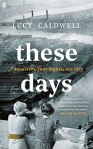 These Days by Lucy Caldwell: A beautiful novel set in Belfast in April 1941. We see the Second World War mostly through the eyes of the Bell family – especially daughters Audrey, engaged to be married to a young doctor, and Emma, in love with a fellow female first aider. The evocation of a time of crisis is excellent. The lack of speech marks, fluid shifting between perspectives, and alternation between past and present tense keep the story from seeming too familiar or generic. All of the female characters have hidden depths.
 Groundskeeping by Lee Cole: In Cole’s debut novel, two aspiring writers meet on a Kentucky college campus and form a romantic connection despite very different backgrounds. There are stereotypes to be overcome as Owen introduces Alma to Kentucky culture and slang. Trump’s election divides families and colleagues. The gentle satire on the pretensions of writing programs is another enjoyable element. Three-dimensional characters, vivid scenes ripe for the Netflix treatment, timely themes and touching relationships: alright!
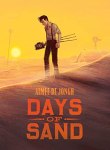 Days of Sand by Aimée de Jongh: This Great Depression-era story was inspired by the work of photographers such as Dorothea Lange. John Clark is following in his father’s footsteps as a photographer, leaving NYC for the Oklahoma panhandle. Locals are suspicious of John as an outsider, especially when they learn he is working to a checklist. Whether a cityscape or the midst of a dust storm, de Jongh’s scenes are stark and evocative. It’s rare for me to find the story and images equally powerful in a graphic novel, but that’s definitely the case here.
 Dance Move by Wendy Erskine: The 11 stories in Erskine’s second collection do just what short fiction needs to: dramatize an encounter, or a moment, that changes life forever. Her characters are ordinary, moving through the dead-end work and family friction that constitute daily existence, until something happens, or rises up in the memory, that disrupts the tedium. Erskine being from Belfast, evidence of the Troubles is never far away. Her writing is blunt and edgy, with no speech marks plus flat dialogue and slang.
 Antipodes by Holly Goddard Jones: Riveting stories of contemporary life in the American South and Midwest. Some have pandemic settings; others are gently magical. All are true to the anxieties of modern careers, marriage and parenthood. Endings elicit a gasp, particularly the audacious inconclusiveness of “Exhaust,” a tense tale of a quarreling couple driving through a blizzard. Worry over environmental crises fuels “Ark,” about a pyramid scheme for doomsday preppers. Nickolas Butler and Lorrie Moore fans will find much to admire.
 Sea of Tranquility by Emily St. John Mandel: This dazzlingly intricate novel blends historical fiction, up-to-the-minute commentary and science-fiction predictions. In 2401, the Time Institute hires Gaspery-Jacques Roberts to investigate a recurring blip in time. Fans of The Glass Hotel will recognize some characters, and those familiar with Station Eleven will find similarities in a pandemic plot that resonates with the Covid-19 experience. How does Mandel do it? One compulsively readable hit after another.
 Very Cold People by Sarah Manguso: The aphoristic style of some of Manguso’s previous books continues here as discrete paragraphs and brief vignettes build to a gloomy portrait of Ruthie’s archetypical affection-starved childhood in the fictional Massachusetts town of Waitsfield in the 1980s and 90s. The depiction of Ruthie’s narcissistic mother is especially acute. So much resonated with me. This is the stuff of girlhood – if not universally, then certainly for the (largely pre-tech) American 1990s as I experienced them.
 How High We Go in the Dark by Sequoia Nagamatsu: Just the right blend of literary fiction and science fiction. Opening in 2031 and stretching another 70 years into the future, this linked short story collection imagines how a pandemic reshapes the world and how communication and connection might continue after death. All but one story are in the first person, so they feel like personal testimonies. The whole is greater than the sum of the parts. The focus on illness and bereavement, but also on the love that survives, made this a winner.
 The Swimmers by Julie Otsuka: Otsuka’s third novel of the Japanese American experience again employs the first-person plural, as well as the second person – rarer perspectives that provide stylistic novelty. The first two chapters are set at a pool that, for the title swimmers, serves as a locus of escape and safety. On the first page we’re introduced to Alice, whose struggle with dementia becomes central. I admired Otsuka’s techniques for moving readers through the minds of the characters, alternating range with profundity and irony with sadness.
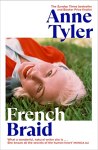 French Braid by Anne Tyler: My 17th from Tyler, and easily her best new work in 18 years. It joins my other favourites such as Dinner at the Homesick Restaurant which reveal a dysfunctional family’s quirks through a close look, in turn, at the various members. Mercy is a painter and essentially moves into her studio, but without announcing it, and her husband Robin spends the next 25+ years pretending they still share a home. Other surprises from Tyler this time: a mild sex scene and a gay character. A return to form. Brava!
Nonfiction
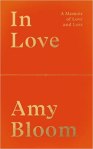 In Love by Amy Bloom: Bloom’s husband, Brian Ameche, was diagnosed with early-onset Alzheimer’s in his mid-60s, having exhibited mild cognitive impairment for several years. Brian quickly resolved to make a dignified exit while he still, mostly, had his faculties. This achieves the perfect tone, mixing black humour with teeth-gritted practicality as Bloom chronicles their relationship, the final preparations, his assisted suicide at Dignitas in Switzerland, and the aftermath. An essential, compelling read.
 Everything Is True by Roopa Farooki: Second-person, present-tense narration drops readers right into the life of a junior doctor. In February 2020, Farooki’s sister Kiron died of breast cancer. During the first 40 days of the initial UK lockdown, she continues to talk to Kiron. Grief opens the door for magic realism. There is also wry humour, wordplay, slang and cursing. A hybrid work that reads as fluidly as a novel while dramatizing real events, this is sure to appeal to people who wouldn’t normally pick up a bereavement or medical memoir.
 Body Work by Melissa Febos: A boldly feminist essay collection that explores how autobiographical writing can help one face regrets and trauma and extract meaning from the “pliable material” of memory. “In Praise of Navel Gazing” affirms the importance of women airing their stories of abuse and thereby challenging the power structures that aim to keep victims silent. “A Big Shitty Party” warns of the dangers of writing about real people. “The Return” employs religious language for the transformation writing can achieve.
 All Down Darkness Wide by Seán Hewitt: This poetic memoir about love and loss in the shadow of mental illness blends biography, queer history and raw personal experience. The book opens, unforgettably, in a Liverpool graveyard where Hewitt has assignations with anonymous men. His secret self, suppressed during teenage years in the closet, flies out to meet other ghosts: of his college boyfriend; of men lost to AIDS during his 1990s childhood; of English poet George Manley Hopkins; and of a former partner who was suicidal. (Coming out on July 12th from Penguin/Vintage (USA) and July 14th from Jonathan Cape (UK). My full review is forthcoming for Shelf Awareness.)
Poetry
 Thorpeness by Alison Brackenbury: This tenth collection features abundant imagery of animals and the seasons. Alliteration is prominent, but there is also a handful of rhymes. Family history and the perhaps-idyllic rural underpin the verse set in Lincolnshire and Gloucestershire as Brackenbury searches for ancestral graves and delivers elegies. I especially loved “Aunt Margaret’s Pudding,” a multipart poem about her grandmother’s life. There are also playful meetings between historical figures.
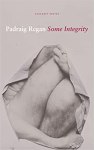 Some Integrity by Padraig Regan: The sensual poems in this debut collection are driven by curiosity, hunger and queer desire. Flora and foods are described as teasing mystery, with cheeky detail. An unusual devotion to ampersands; an erotic response to statuary; alternating between bold sexuality and masochism to the point of not even wanting to exist; a central essay on the Orlando nightclub shooting and videogames – the book kept surprising me. I loved the fertile imagery, and appreciated Regan’s exploration of a nonbinary identity.
 Love Poems in Quarantine by Sarah Ruhl: Having read Ruhl’s memoir Smile, I recognized the contours of her life and the members of her family. Cooking and laundry recur: everyday duties mark time as she tries to write and supervises virtual learning for three children. “Let this all be poetry,” she incants. Part 2 contains poems written after George Floyd’s murder, the structure mimicking the abrupt change in focus for a nation. Part 3’s haiku and tanka culminate in a series on the seasons. A welcome addition to the body of Covid-19 literature.
 Rise and Float by Brian Tierney: Although it tackles heavy subjects like grief and mental health, the collection’s candor and stunning images transform the melancholy into the sublime. Much of the verse is in the first person, building an intimate portrait of the poet and his relationships. A family history of mental illness and electroshock treatment occasions a visit to a derelict psychiatric hospital. Recurring metaphors of holes dramatize a struggle against the void. Tierney’s close attention lends beauty to bleak scenes.
 Vinegar Hill by Colm Tóibín: I didn’t realize when I started that this was Tóibín’s debut collection; so confident is his verse, I assumed he’d been publishing poetry for decades. There’s a wide range of tone, structures and topics. Bereavements and chemotherapy are part of a relatable current events background. Irish-Catholic nostalgia animates a witty sequence from “The Nun” to “Vatican II.” Come along on armchair travels. Poems are based around anecdotes or painterly observations. The line breaks are unfailingly fascinating.
What are some of the best books you’ve read so far this year?
What 2022 releases do I need to catch up on right away?
20 Books of Summer, 1–3: Hargrave, Powles & Stewart
Plants mirror minds,
Healing, harming powers
Growing green thoughts.
(First stanza of “Plants Mirror Minds” from The Facebook of the Dead by Valerie Laws)
Here are my first three selections for my flora-themed summer reading. I hope to get through more of my own books, as opposed to library books and review copies, as the months go on. Today I have one of each from fiction, nonfiction and poetry, with the settings ranging from 16th-century Alsace to late-20th-century Spain.
The Dance Tree by Kiran Millwood Hargrave (2022)
 Kiran Millwood Hargrave is one of my favourite new voices in historical fiction (she had written fiction for children and young adults before 2020’s The Mercies). Both novels hit the absolute sweet spot between the literary and women’s fiction camps, choosing a lesser-known time period and incident and filling in the background with sumptuous detail and language. Both also consider situations in which women, queer people and other cultural minorities were oppressed, and imagine characters pushing against those boundaries in affirming but authentic-feeling ways.
The setting is Strasbourg in the sweltering summer of 1518, when a dancing plague (choreomania) hit and hundreds of women engaged in frenzied public dancing, often until their feet bled or even, allegedly, until 15 per day dropped dead. Lisbet observes this all at close hand through her sister-in-law and best friend, who get caught up in the dancing. In the final trimester of pregnancy at last after the loss of many pregnancies and babies, Lisbet tends to the family beekeeping enterprise while her husband is away, but gets distracted when two musicians (brought in to accompany the dancers; an early strategy before the council cracked down), one a Turk, lodge with her and her mother-in-law. The dance tree, where she commemorates her lost children, is her refuge away from the chaos enveloping the city. She’s a naive point-of-view character who quickly has her eyes opened about different ways of living. “It takes courage, to love beyond what others deem the right boundaries.”
This is likely to attract readers of Hamnet; I was also reminded of The Sleeping Beauties, in that the author’s note discusses the possibility that the dancing plagues were an example of a mass hysteria that arose in response to religious restrictions. (Public library)
Magnolia by Nina Mingya Powles (2020)
 (Powles also kicked off my 2020 food-themed summer reading.) This came out from Nine Arches Press and a small New Zealand press two years ago but is being published in the USA by Tin House in August. I’ve reviewed it for Shelf Awareness in advance of that release. Those who are new to Powles’s work should enjoy her trademark blend of themes in this poetry collection. She’s mixed race and writes about crossing cultural and language boundaries – especially trying to express herself in Chinese and Hakka. Often, food is her way of embodying split loyalties and love for her heritage. I noted the alliteration in “Layers of silken tofu float in the shape of a lotus slowly opening under swirls of soy sauce.” Magnolia is the literal translation of “Mulan,” and that Disney movie and a few other films play a major role here, as do writers Eileen Chang and Robin Hyde. My issue with the book is that it doesn’t feel sufficiently different from her essay collections that I’ve read – the other is Small Bodies of Water – especially given that many of the poems are in prose paragraphs. [Update: I dug out my copy of Small Bodies of Water from a box and found that, indeed, one piece had felt awfully familiar for a reason: that book contains a revised version of “Falling City” (about Eileen Chang’s Shanghai apartment), which first appeared here.] (Read via Edelweiss)
A Parrot in the Pepper Tree by Chris Stewart (2002)
 It’s at least 10 years ago, probably nearer 15, that I read Driving over Lemons, the first in Stewart’s eventual trilogy about buying a remote farm in Andalusia. His books are in the Peter Mayle vein, low-key and humorous: an Englishman finds the good life abroad and tells amusing anecdotes about the locals and his own mishaps.
This sequel stood out for me a little more than the previous book, if only because I mostly read it in Spain. It’s in discrete essays, some of which look back on his earlier life. He was a founding member of Genesis and very briefly the band’s drummer; and to make some cash for the farm he used to rent himself out as a sheep shearer, including during winters in Sweden.
To start with, they were really very isolated, such that getting a telephone line put in revolutionized their lives. By this time, his first book had become something of a literary sensation, so he reflects on its composition and early reception, remembering when the Mail sent a clueless reporter out to find him. Spanish bureaucracy becomes a key element, especially when it looks like their land might be flooded by the building of a dam. Despite that vague sense of dread, this was good fun. (Public library)

Six Degrees of Separation: True History of the Kelly Gang to Geek Love
This month we begin with True History of the Kelly Gang by Peter Carey. (See also Kate’s opening post.) I feel like I still have an unread copy, but won’t find out now until after we move. I’ve read several of Carey’s novels; my favourite by far was Parrot and Olivier in America, a delightful picaresque set in the early 19th century.

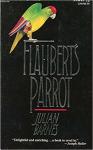 #1 Flaubert’s Parrot by Julian Barnes was one of my most-admired novels in my twenties, though I didn’t like it quite as much when I reread it in 2020. Funnily enough, his new novel has a bird in the title, too: Elizabeth Finch. I’m two-thirds through and it’s feeling like warmed-up leftovers of The Sense of an Ending with extra history and philosophy on the side.
 #2 My latest reread was Falling Angels by Tracy Chevalier, for book club. I’ve read all of her novels and always thought of this one as my favourite. A reread didn’t change that, so I rated it 5 stars. I love the neat structure that bookends the action between the death of Queen Victoria and the death of Edward VII, and the focus on funerary customs (with Highgate Cemetery a major setting) and women’s rights is right up my street.
 #3 Another novel featuring an angel that I read for a book club was The Vintner’s Luck by Elizabeth Knox. It’s set in Burgundy, France in 1808, when an angel rescues a drunken winemaker from a fall. All I can remember is that it was bizarre and pretty terrible, so I’m glad I didn’t realize it was the same author and went ahead with a read of The Absolute Book.
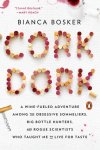 #4 The winemaking theme takes me to my next selection, Cork Dork by Bianca Bosker, which I read on a trip to the Netherlands and Belgium in 2017. Bosker, previously a technology journalist, gave herself a year and a half to learn everything she could about wine in hopes of passing the Court of Master Sommeliers exam. The result is such a fun blend of science, memoir and encounters with people who are deadly serious about wine.
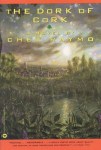 #5 I have so often heard the title The Dork of Cork by Chet Raymo, though I don’t know why because I can’t think of an acquaintance who’s actually read or reviewed it. The synopsis: “When Frank, an Irish dwarf, writes a personal memoir, he moves from dark isolation into the public eye. This luminous journey is marked by memories of his lonely childhood, secrets of his doomed young mother, and his passion for a woman who is as unreachable as the stars.” Sounds a bit like A Prayer for Owen Meany.
 #6 Another novel with a dwarf: Geek Love by Katherine Dunn, about a carnival of freaks that tours U.S. backwaters. I have meant to read this for many years and was even convinced that I owned a copy, but on my last few trips to the States I’ve not been able to find it in one of the boxes in my sister’s basement. Hmmm.
To the extent that we have ‘a song,’ “Geek Love” by Nerina Pallot would be it for my husband and me. A line from the chorus is “We’re geeks, but we know this is love.” It’s from her breakout album Fires, which came out in 2005 and was almost constant listening fodder for us while we were engaged. We’ve seen her live three times and she always plays this one.
From a gang via dorks to geeks, linked by the fact of books being stuck in (Schrödinger’s) boxes. Where will your chain take you? Join us for #6Degrees of Separation! (Hosted on the first Saturday of each month by Kate W. of Books Are My Favourite and Best.) Next month’s starting point is Sorrow and Bliss by Meg Mason — perfect given that it’s the book my book group has been sent to discuss as we shadow this year’s Women’s Prize.
Have you read any of my selections? Tempted by any you didn’t know before?
 Bookish Beck = Rebecca Foster. American transplant to England. Freelance proofreader and book reviewer.
