Book Serendipity, September through Mid-November
I call it “Book Serendipity” when two or more books that I read at the same time or in quick succession have something in common – the more bizarre, the better. This is a regular feature of mine every couple of months. Because I usually have 20–30 books on the go at once, I suppose I’m more prone to such incidents. People frequently ask how I remember all of these coincidences. The answer is: I jot them down on scraps of paper or input them immediately into a file on my PC desktop; otherwise, they would flit away.
Thanks to Emma and Kay for posting their own Book Serendipity moments! (Liz is always good about mentioning them as she goes along, in the text of her reviews.)
The following are in roughly chronological order.
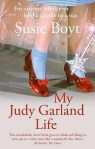
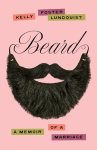
- An obsession with Judy Garland in My Judy Garland Life by Susie Boyt (no surprise there), which I read back in January, and then again in Beard: A Memoir of a Marriage by Kelly Foster Lundquist.
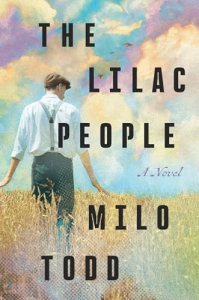
- Leaving a suicide note hinting at drowning oneself before disappearing in World War II Berlin; and pretending to be Jewish to gain better treatment in Aimée and Jaguar by Erica Fischer and The Lilac People by Milo Todd.
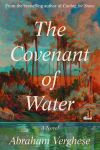
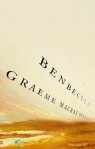
- Leaving one’s clothes on a bank to suggest drowning in The Covenant of Water by Abraham Verghese, read over the summer, and then Benbecula by Graeme Macrae Burnet.
- A man expecting his wife to ‘save’ him in Amanda by H.S. Cross and Beard: A Memoir of a Marriage by Kelly Foster Lundquist.
 A man tells his story of being bullied as a child in Goodbye to Berlin by Christopher Isherwood and Beard by Kelly Foster Lundquist.
- References to Vincent Minnelli and Walt Whitman in a story from Touchy Subjects by Emma Donoghue and Beard by Kelly Foster Lundquist.
- The prospect of having one’s grandparents’ dining table in a tiny city apartment in Beard by Kelly Foster Lundquist and Wreck by Catherine Newman.
- Ezra Pound’s dodgy ideology was an element in The Dime Museum by Joyce Hinnefeld, which I reviewed over the summer, and recurs in Swann by Carol Shields.
- A character has heart palpitations in Andrew Miller’s story from The BBC National Short Story Award 2025 anthology and Endling by Maria Reva.
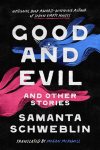
- A (semi-)nude man sees a worker outside the window and closes the curtains in one story of Cathedral by Raymond Carver and one from Good and Evil and Other Stories by Samanta Schweblin.
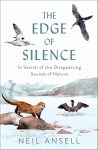
- The call of the cuckoo is mentioned in The Edge of Silence by Neil Ansell and Of All that Ends by Günter Grass.
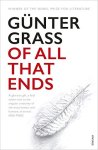 A couple in Italy who have a Fiat in Of All that Ends by Günter Grass and Caoilinn Hughes’s story from The BBC National Short Story Award 2025 anthology.
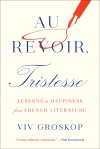
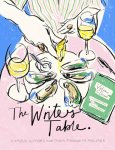
- Balzac’s excessive coffee consumption was mentioned in Au Revoir, Tristesse by Viv Groskop, one of my 20 Books of Summer, and then again in The Writer’s Table by Valerie Stivers.
- The main character is rescued from her suicide plan by a madcap idea in The Wedding People by Alison Espach and Endling by Maria Reva.
- The protagonist is taking methotrexate in Sea, Poison by Caren Beilin and Wreck by Catherine Newman.

- A man wears a top hat in Benbecula by Graeme Macrae Burnet and one story of Cathedral by Raymond Carver.
- A man named Angus is the murderer in Benbecula by Graeme Macrae Burnet and Swann by Carol Shields.
 The thing most noticed about a woman is a hair on her chin in the story “Pluck” in Touchy Subjects by Emma Donoghue and Swann by Carol Shields.
- The female main character makes a point of saying she doesn’t wear a bra in Sea, Poison by Caren Beilin and Find Him! by Elaine Kraf.
- A home hairdressing business in one story of Cathedral by Raymond Carver and Emil & the Detectives by Erich Kästner.
- Painting a bathroom fixture red: a bathtub in The Diary of a Nobody by George Grossmith, one of my 20 Books of Summer; and a toilet in Find Him! by Elaine Kraf.
- A teenager who loses a leg in a road accident in individual stories from A Wild Swan by Michael Cunningham and the Racket anthology (ed. Lisa Moore).
- Digging up the casket of a loved one in the wee hours features in Pet Sematary by Stephen King, one of my 20 Books of Summer; and one story of Pretty Monsters by Kelly Link.
- A character named Dani in the story “The St. Alwynn Girls at Sea” by Sheila Heti and The Silver Book by Olivia Laing; later, author Dani Netherclift (Vessel).
 Obsessive cultivation of potatoes in Benbecula by Graeme Macrae Burnet and The Martian by Andy Weir.
- The story of Dante Gabriel Rossetti digging up the poems he buried with his love is recounted in Sharon Bala’s story in the Racket anthology (ed. Lisa Moore) and one of the stories in Pretty Monsters by Kelly Link.
- Putting French word labels on objects in Alone in the Classroom by Elizabeth Hay and Find Him! by Elaine Kraf.
 A man with part of his finger missing in Find Him! by Elaine Kraf and Lessons from My Teachers by Sarah Ruhl.
- In Minor Black Figures by Brandon Taylor, I came across a mention of the Italian film director Pier Paolo Pasolini, who is a character in The Silver Book by Olivia Laing.
- A character who works in an Ohio hardware store in Flashlight by Susan Choi and Buckeye by Patrick Ryan (two one-word-titled doorstoppers I skimmed from the library). There’s also a family-owned hardware store in Alone in the Classroom by Elizabeth Hay.
- A drowned father – I feel like drownings in general happen much more often in fiction than they do in real life – in The Homecoming by Zoë Apostolides, Flashlight by Susan Choi, and Vessel by Dani Netherclift (as well as multiple drownings in The Covenant of Water by Abraham Verghese, one of my 20 Books of Summer).
- A memoir by a British man who’s hard of hearing but has resisted wearing hearing aids in the past: first The Quiet Ear by Raymond Antrobus over the summer, then The Edge of Silence by Neil Ansell.
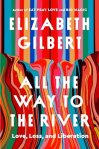 A loved one is given a six-month cancer prognosis but lives another (nearly) two years in All the Way to the River by Elizabeth Gilbert and Lessons from My Teachers by Sarah Ruhl.
- A man’s brain tumour is diagnosed by accident while he’s in hospital after an unrelated accident in Flashlight by Susan Choi and Saltwash by Andrew Michael Hurley.
- Famous lost poems in What We Can Know by Ian McEwan and Swann by Carol Shields.
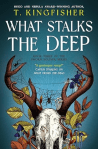
- A description of the anatomy of the ear and how sound vibrates against tiny bones in The Edge of Silence by Neil Ansell and What Stalks the Deep by T. Kingfisher.
- Notes on how to make decadent mashed potatoes in Beard by Kelly Foster Lundquist, Death of an Ordinary Man by Sarah Perry, and Lessons from My Teachers by Sarah Ruhl.
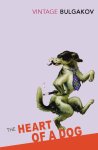
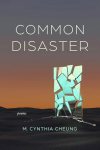
- Transplant surgery on a dog in Russia and trepanning appear in The Heart of a Dog by Mikhail Bulgakov and the poetry collection Common Disaster by M. Cynthia Cheung.
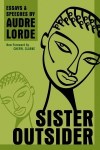
- Audre Lorde, whose Sister Outsider I was reading at the time, is mentioned in Lessons from My Teachers by Sarah Ruhl. Lorde’s line about the master’s tools never dismantling the master’s house is also paraphrased in Spent by Alison Bechdel.
- An adult appears as if fully formed in a man’s apartment but needs to be taught everything, including language and toilet training, in The Heart of a Dog by Mikhail Bulgakov and Find Him! by Elaine Kraf.
 Two sisters who each wrote a memoir about their upbringing in Spent by Alison Bechdel and Vessel by Dani Netherclift.
- The fact that ragwort is bad for horses if it gets mixed up into their feed was mentioned in Ghosts of the Farm by Nicola Chester and Understorey by Anna Chapman Parker.
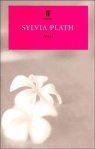
- The Sylvia Plath line “the O-gape of complete despair” was mentioned in Vessel by Dani Netherclift, then I read it in its original place in Ariel later the same day.
- A mention of the Baba Yaga folk tale (an old woman who lives in the forest in a hut on chicken legs) in Common Disaster by M. Cynthia Cheung and Woman, Eating by Claire Kohda. [There was a copy of Sophie Anderson’s children’s book The House with Chicken Legs in the Little Free Library around that time, too.]
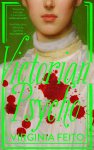
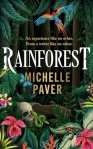
- Coming across a bird that seems to have simply dropped dead in Victorian Psycho by Virginia Feito, Vessel by Dani Netherclift, and Rainforest by Michelle Paver.
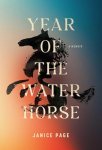
- Contemplating a mound of hair in Vessel by Dani Netherclift (at Auschwitz) and Year of the Water Horse by Janice Page (at a hairdresser’s).
- Family members are warned that they should not see the body of their loved one in Vessel by Dani Netherclift and Rainforest by Michelle Paver.
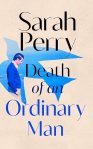
- A father(-in-law)’s swift death from oesophageal cancer in Year of the Water Horse by Janice Page and Death of an Ordinary Man by Sarah Perry.
- I saw John Keats’s concept of negative capability discussed first in My Little Donkey by Martha Cooley and then in Understorey by Anna Chapman Parker.
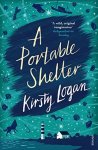
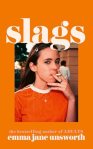
- I started two books with an Anne Sexton epigraph on the same day: A Portable Shelter by Kirsty Logan and Slags by Emma Jane Unsworth.
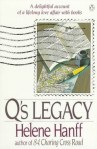
- Mentions of Martin Luther King, Jr.’s assassination in Q’s Legacy by Helene Hanff and Sister Outsider for Audre Lorde, both of which I was reading for Novellas in November.
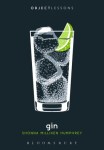
- Mentions of specific incidents from Samuel Pepys’s diary in Q’s Legacy by Helene Hanff and Gin by Shonna Milliken Humphrey, both of which I was reading for Nonfiction November/Novellas in November.
- Starseed (aliens living on earth in human form) in Beautyland by Marie-Helene Bertino and The Conspiracists by Noelle Cook.
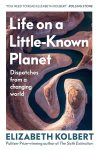
- Reading nonfiction by two long-time New Yorker writers at the same time: Life on a Little-Known Planet by Elizabeth Kolbert and Joyride by Susan Orlean.
- The breaking of a mirror seems like a bad omen in The Spare Room by Helen Garner and The Bell Jar by Sylvia Plath.
 The author’s husband (who has a name beginning with P) is having an affair with a lawyer in Catching Sight by Deni Elliott and Joyride by Susan Orlean.
- Mentions of Lewis Hyde’s book The Gift in Lessons from My Teachers by Sarah Ruhl and The Serviceberry by Robin Wall Kimmerer; I promptly ordered the Hyde secondhand!
- The protagonist fears being/is accused of trying to steal someone else’s cat in Minka and Curdy by Antonia White and Aunts Aren’t Gentlemen by P.G. Wodehouse, both of which I was reading for Novellas in November.
What’s the weirdest reading coincidence you’ve had lately?
Nine Days in Germany and What I Read, Part I: Berlin
We’ve actually been back for more than a week, but soon after our return I was felled by a nasty cold (not Covid, surprisingly), which has left me with a lingering cough and ongoing fatigue. Finally, I’m recovered just about enough to report back.
This Interrail adventure was more low-key than the one we took in 2016. The first day saw us traveling as far as Aachen, just over the border from France. It’s a nice small city with Christian and culinary history: Charlemagne is buried in the cathedral; and it’s famous for a chewy, spicy gingerbread called printen. Before our night in a chain hotel, we stumbled upon the mayor’s Green Party rally in the square – there was to be an election the following day – and drank and dined well. The Gin Library, spotted at random on the map, is an excellent and affordable Asian-fusion cocktail bar. My “Big Ben,” for instance, featured Tanqueray gin, lemon juice, honey, fresh coriander, and cinnamon syrup. Then at Hanswurst – Das Wurstrestaurant (cue jokes about finding the “worst” restaurant in Aachen!), a superior fast-food joint, I had the vegetarian “Hans Berlin,” a scrumptious currywurst with potato wedges.


The next day it was off to Berlin with a big bag of bakery provisions. For the first time, we experienced the rail cancellations and delays that would plague us for much of the next week. We then had to brave the only supermarket open in Berlin on a Sunday – the Rewe in the Hauptbahnhof – before taking the S-Bahn to Alexanderplatz, the nearest station to our Airbnb flat.


It was all worth it to befriend Lemmy (the ginger one) and Roxanne. It’s a sweet deal the host has here: whenever she goes away, people pay her to look after her cats. At the same time as we were paying for a cat-sitter back home. We must be chumps!


I’ll narrate the rest of the trip through the books I read. I relished choosing relevant reads from my shelves and the library’s holdings – I was truly spoiled for choice for Berlin settings! – and I appreciated encountering them all on location.


As soon as we walked into the large airy living room of the fifth-floor Airbnb flat, I nearly laughed out loud, for there in the corner was a monstera plant. The trendy, minimalist décor, too, was just like that of the main characters’ place in…
Perfection by Vincenzo Latronico (2022; 2025)
[Translated from Italian by Sophie Hughes]
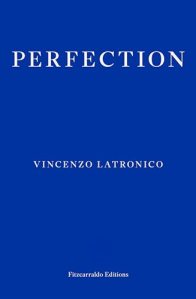 Anna and Tom are digital nomads from Southern Europe who offer up their Berlin flat as a short-term rental. In the listing photographs it looks pristine, giving no hint of the difficulties of the expatriate life such as bureaucracy and harsh winters. “Creative professionals” working in the fields of web development and graphic design, they are part of the micro-generation that grew up as the Internet was becoming mainstream, and they tailor their products and personal lives to social media’s preferences. They are lazy liberals addicted to convenience and materialism; aspiring hedonists who like the idea of sex clubs but don’t enjoy them when they actually get there. When Berlin loses its magic, they try Portugal and Sicily before an unforeseen inheritance presents them with the project of opening their own coastal guesthouse. “What they were looking for must have existed once upon a time, back when you only had to hop onto a train or a ferry to reach a whole other world.” This International Booker Prize shortlistee is a smart satire about online posturing and the mistaken belief that life must be better elsewhere. There are virtually no scenes or dialogue but Latronico gets away with the all-telling style because of the novella length. Were it not for his note in the Acknowledgements, I wouldn’t have known that this is a tribute to Things by Georges Perec. (Read via Edelweiss)
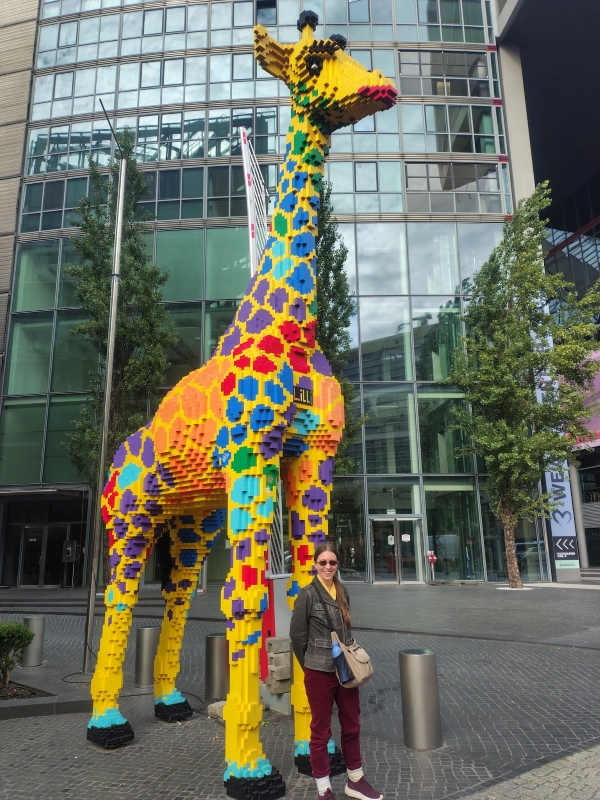
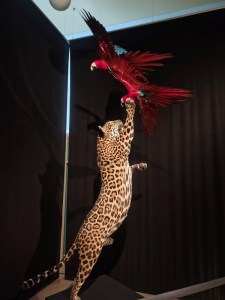 We got to pretend to be hip locals for four days, going up the Reichstag tower, strolling through the Tiergarten, touring the Natural History Museum (which has some excellent taxidermy as at left), walking from Potsdam station through Park Sanssouci and ogling the castles and windmill, chowing down on hand-pulled noodles and bao buns at neighbourhood café Wen Cheng, catching an excellent free lunchtime concert at the Philharmonic, and bringing back pastries or vegan doughnuts to snack on while hanging out with the kitties. The S-Bahn was included on our Interrail passes but didn’t go everywhere we needed, so we were often on the handy U-Bahn and tram system instead. Graffiti is an art form rather than an antisocial activity in Berlin; there is so much of it, everywhere.
-

- Reichstag (Photos 1, 2 and 4 by Chris Foster)
-

- Reichstag tower designed by Norman Foster
-

- The Philharmonic
-
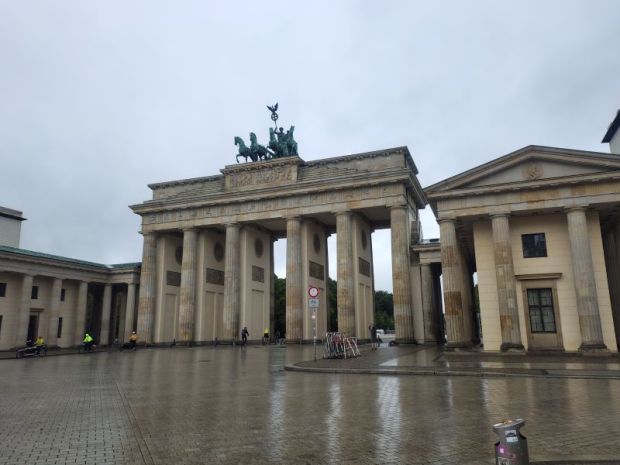
- Brandenburg Gate (Photos 1-3 by Chris Foster)
-
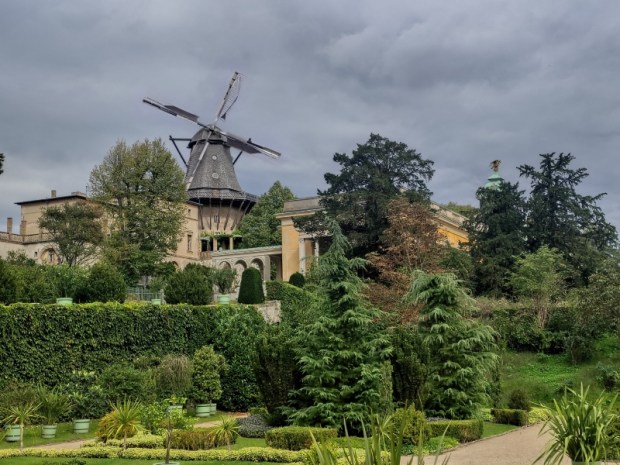
- Postdam’s Park Sanssouci
-
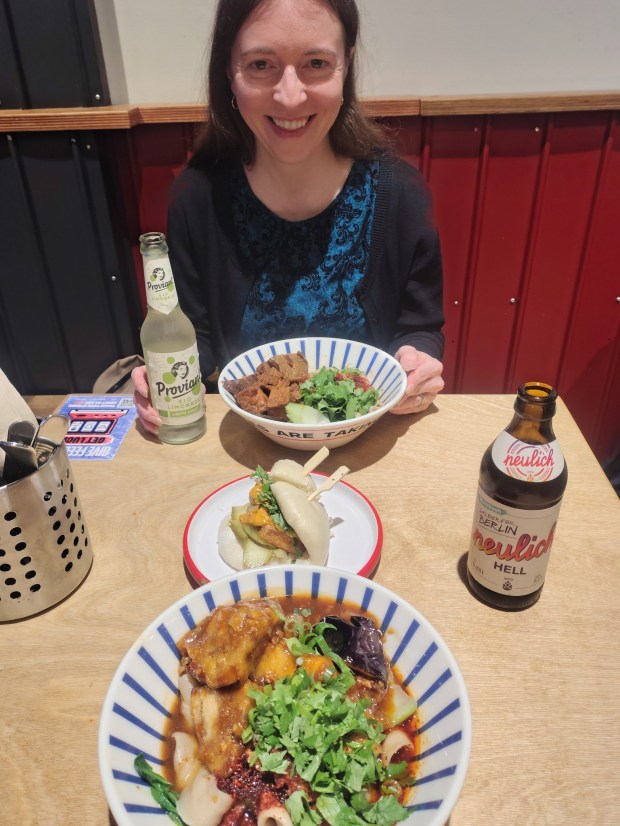
- Wen Cheng noodles
-

- Brammibal’s vegan doughnuts
I brought along another novella that proved an apt companion for our explorations of the city. Even just spotting familiar street and stop names in it felt like reassurance.
Sojourn by Amit Chaudhuri (2022)
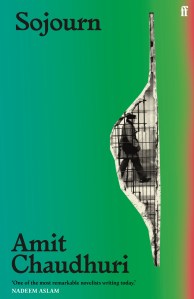 The narrator of this spare text is a Böll Visiting Professor experiencing disorientation yet resisting gestures of familiarity. Like a Teju Cole or Rachel Cusk protagonist, his personality only seeps in through his wanderings and conversations. After his first talk, he meets a fellow Indian from the audience, Faqrul Haq, who takes it upon himself to be his dedicated tour guide. The narrator isn’t entirely sure how he feels about Faqrul, yet meets him for meals and seeks his advice about the best place to buy warm outerwear. An expat friend is a crutch he wishes he could refuse, but the bewilderment of being somewhere you don’t speak the language at all is such that he feels bound to accept. Meanwhile, there is the possibility of another academic admirer, Birgit, becoming his lover. Strangely, his relationship with his cleaning lady, who addresses him only in German, seems the healthiest one on offer. As the book goes on, the chapters get shorter and shorter, presaging some kind of mental crisis. “I keep walking – in which direction I’m not sure; Kreuzberg? I’ve lost my bearings – not in the city; in its history. The less sure I become of it, the more I know my way.” This was interesting, even admirable, but I wanted more story. (Public library)
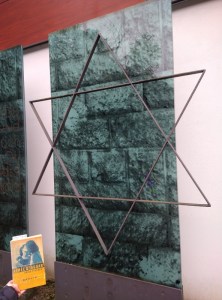
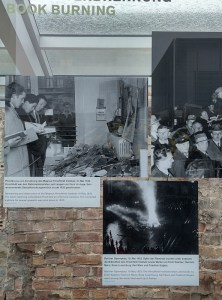
We spent a drizzly and slightly melancholy first day and final morning making pilgrimages to Jewish graveyards and monuments to atrocities, some of them nearly forgotten. I got the sense of a city that has been forced into a painful reckoning with its past – not once but multiple times, perhaps after decades of repression. One morning we visited the claustrophobic monument to the Murdered Jews of Europe, and, in the Tiergarten, the small memorials to the Roma and homosexual victims of the Holocaust. The Nazis came for political dissidents and the disabled, too, as I was reminded at the Topography of Terrors, a free museum where brutal facts are laid bare. We didn’t find the courage to go in as the timeline outside was confronting enough. I spotted links to the two historical works I was reading during my stay (Stella the red-haired Jew-catcher in the former and Magnus Hirschfeld’s institute in the latter). As I read both, I couldn’t help but think about the current return of fascism worldwide and the gradual erosion of rights that should concern us all.


Aimée and Jaguar: A Love Story, Berlin 1943 by Erica Fischer (1994; 1995)
[Translated from German by Edna McCown]
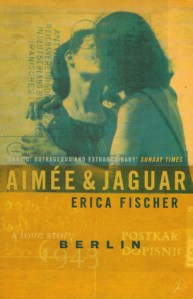 Elisabeth “Lilly” Wust was a good German: the estranged wife of a Nazi and mother of four young sons. She met Felice Schragenheim via her new domestic helper, Inge Wolf. Lilly (aka Aimée) was slow to grasp that Inge and Felice were part of a local lesbian milieu, and didn’t realize Felice (aka Jaguar) was a “U-boat” (Jew living underground) until they’d already become lovers. They got nearly a year and a half together, living almost as a married couple – they had rings engraved and everything – before Felice was taken into Gestapo custody. You know from the outset that this story won’t end well, but you keep hoping – just like Lilly did. It’s not a usual or ‘satisfying’ tragedy, though, because there is no record of what happened to Felice. She was declared legally dead in 1948 but most likely shared the fate of Anne and Margot Frank, dying of typhus at Bergen-Belsen. It’s heartbreaking that Felice, the orphaned daughter of well-off dentists, had multiple chances to flee Berlin – via her sister in London, their stepmother in Palestine, an uncle in America, or friends escaping through Switzerland – but chose to remain.
 The narrative incorporates letters, diaries and interviews, especially with Lilly, who clearly grieved Felice for the rest of her life. The book is unsettling, though, in that Fischer doesn’t let it stand as a simple Juliet & Juliet story; rather, she undermines Lilly by highlighting Felice’s promiscuity (so she likely would not have remained faithful) and Lilly’s strange postwar behaviour: desperately trying to reclaim Felice’s property, and raising her sons as Jewish. This was a time capsule, a wholly absorbing reclamation of queer history, but no romantic vision. (Secondhand purchase – Community Furniture Project)
[A similar recent release: Milena and Margarete: A Love Story in Ravensbrück by Gwen Strauss]
The Lilac People by Milo Todd (2025)
 This was illuminating, as well as upsetting, about the persecution of trans people in Nazi Germany. Todd alternates between the gaiety of early 1930s Berlin – when trans man Bertie worked for Magnus Hirschfeld’s Institute of Sexual Science and gathered with friends at the Eldorado Club for dancing and singing their anthem, “Das Lila Lied” – and 1945 Ulm, where Bert and his partner Sofie have been posing as an older farming couple. At the novel’s start, a runaway from Dachau, a young trans man named Karl, joins their household. Ironically, it is at this point safer to be Jewish than to be different in any other way; even with the war over, rumour has it the Allies are rounding up queer people and putting them in forced labour camps, so the trio pretend to be Jews as they ponder a second round of escapes.
 While this is slow to start with, and heavy on research throughout, it does gather pace. The American officer, Ward, is something of a two-dimensional villain who keeps popping back up. Still, the climactic scenes are gripping and the dual timeline works well. Todd explores survivor guilt and gives much valuable context. He is careful to employ language in use at that time (transvestites, transsexuals, “inverts,” “third sex”) and persuasively argues that, in any era, how we treat the vulnerable is the measure of our humanity. (Read via Edelweiss)
[A similar recent release: Under the Pink Triangle by Katie Moore (set in Dachau)]
We might have been at the Eldorado in the early 1930s on the evening when we ventured out to the bar Zosch for a “New Orleans jazz” evening. The music was superb, the German wine tasty, the whole experience unforgettable … but it sure did feel like being in a bygone era. We’re so used to the indoor smoking ban (in force in the UK since 2007) that we didn’t expect to find young people chain-smoking rollies in an enclosed brick basement, and got back to the flat with our clothes reeking and our lungs burning.


It was good to see visible signs of LGTBQ support in Berlin, though they weren’t as prevalent as I perhaps expected.


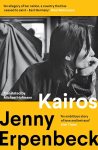 For a taste of more recent German history, I’ve started Kairos by Jenny Erpenbeck, which is set in the 1980s not long before the Berlin Wall came down. Unfortunately, my library hold didn’t arrive until too late to take it with me. We made a point of seeing the wall remnants and Checkpoint Charlie on our trip.


Other Berlin highlights: a delicious vegetarian lunch at the canteen of an architecture firm, the Ritter chocolate shop, and the pigeons nesting on the flat balcony – the chicks hatched on our final morning!


And a belated contribution to Short Story September:
Touchy Subjects by Emma Donoghue (2006)
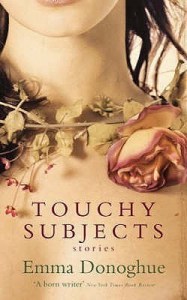 I seem to pluck one or two books at random from Donoghue’s back catalogue per year. I designated this as reliable train reading. The 19 contemporary stories fall into thematic bundles: six about pregnancy or babies, several about domestic life, a few each on “Strangers” and “Desire,” and a final set of four touching on death. The settings range around Europe and North America. It’s impressive how Donoghue imagines herself into so many varied situations, including heterosexual men longing for children in their lives and rival Louisiana crawfishermen setting up as tour-boat operators. The attempts to write Black characters in “Lavender’s Blue” and “The Welcome” are a little cringey, and the latter felt dated with its ‘twist’ of a character being trans. She’s on safer ground writing about a jaded creative writing tutor or football teammates who fall for each other. I liked a meaningful encounter between a tourist and an intellectually disabled man in a French cave (“The Sanctuary of Hands”), an Irishwoman’s search for her missing brother in Los Angeles (“Baggage”) and a contemporary take on the Lazarus myth (“Necessary Noise”), but my two favourites were “The Cost of Things,” about a lesbian couple whose breakup is presaged by their responses to their cat’s astronomical vet bill; and “The Dormition of the Virgin,” in which a studious young traveller to Florence misses what’s right under his nose. There are some gems here, but the topics are so scattershot the collection doesn’t cohere. (Secondhand – Awesomebooks.com)
Trip write-up to be continued (tomorrow, with any luck)…
April Releases by Chung, Ellis, Gaige, Lutz, McAlpine and Rubin
April felt like a crowded publishing month, though May looks to be twice as busy again. Adding this batch to my existing responses to books by Jean Hannah Edelstein & Emily Jungmin Yoon plus Richard Scott, I reviewed nine April releases. Today I’m featuring a real mix of books by women, starting with two foodie family memoirs, moving through a suspenseful novel about a lost hiker, a sparse Scandinavian novella, and a lovely poetry collection with themes of nature and family, and finishing up with a collection of aphorisms. I challenged myself to write just a paragraph on each for simplicity and readability.

Chinese Parents Don’t Say I Love You: A memoir of saying the unsayable with food by Candice Chung
“to love is to gamble, sometimes gastrointestinally … The stomach is a simple animal. But how do we settle the heart—a flailing, skittish thing?”
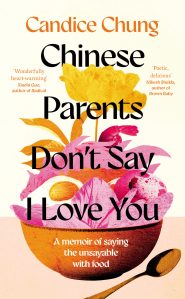 I got Caroline Eden (Cold Kitchen) and Nina Mingya Powles (Tiny Moons) vibes from this vibrant essay collection spotlighting food and family. The focus is on 2019–2021, a time of huge changes for Chung. She’s from Hong Kong via Australia, and reconnects with her semi-estranged parents by taking them along on restaurant review gigs for a Sydney newspaper. Fresh from a 13-year relationship with “the psychic reader,” she starts dating again and quickly falls in deep with “the geographer.” Sharing meals in restaurants and at home kindles closeness and keeps their spirits up after Covid restrictions descend. But when he gets a job offer in Scotland, they have to make decisions about their relationship sooner than intended. Although there is a chronological through line, the essays range in time and style, including second-person advice column (“Faux Pas”) and choose-your-own adventure (“Self-Help Meal”) segments alongside lists, message threads and quotes from the likes of Deborah Levy. My favourite piece was “The Soup at the End of the Universe.” Chung delicately contrasts past and present, singleness and being partnered, and different mental health states. The essays meld to capture a life in transition and the tastes and bonds that don’t alter.
With thanks to Elliott & Thompson for the free copy for review.
Chopping Onions on My Heart: On Losing and Preserving Culture by Samantha Ellis
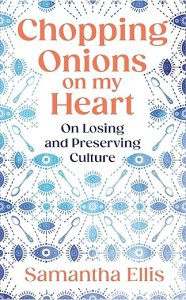 Ellis was distressed to learn that her refugee parents’ first language, Judeo-Iraqi Arabic, is in danger of extinction. Her own knowledge of it is piecemeal, mostly confined to its colourful food-inspired sayings – for example, living “eeyam al babenjan (in the days of the aubergines)” means that everything feels febrile and topsy-turvy. She recounts her family’s history with conflict and displacement, takes a Zoom language class, and ponders what words, dishes, and objects she would save on an imaginary “ark” that she hopes to bequeath to her son. Along the way, she reveals surprising facts about Ashkenazi domination of the Jewish narrative. “Did you know the poet [Siegfried Sassoon] was an Iraqi Jew?” His great-grandfather even invented a special variety of mango pickle. All of the foods described sound delicious, and some recipes are given. Ellis’s writing is enthusiastic and she braids the book’s various strands effectively. I wasn’t as interested in the niche history as I wanted to be, but I did appreciate learning about an endangered culture and language.
With thanks to Chatto & Windus (Vintage/Penguin) for the proof copy for review.
Heartwood by Amity Gaige
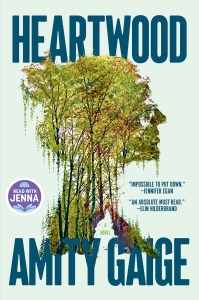 This was on my Most Anticipated list after how much I’d enjoyed Sea Wife when we read it for Literary Wives club. In July 2022, 42-year-old nurse Valerie Gillis, nicknamed “Sparrow,” goes missing in the Maine woods while hiking the Appalachian Trail. An increasingly desperate search ensues as the chances of finding her alive diminish with each day. The shifting formats – letters, transcripts, news reports, tip line messages – hold the interest. However, the chapters voiced by Lt. Bev, the warden who heads the mission, are much the most engaging, and it’s a shame that her delightful interactions with her sisters and nieces are so few and come so late. The third-person passages about Lena Kucharski in her Connecticut retirement home are intriguing but somehow feel like they belong in a different book. Gaige attempts to bring the threads together through three mother–daughter pairs, which struck me as heavy-handed. Mostly, this hits the sweet spot between mystery and literary fiction (apart from some red herrings), but because I wasn’t particularly invested in the characters, even Valerie, this fell a little short of my expectations. (Read via Edelweiss)
Wild Boar by Hannah Lutz (2016; 2025)
[Translated from Swedish by Andy Turner]
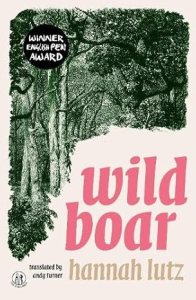 “I have seen them, the wild boar, they have found their way into my dreams!” Ritve travels from Finland to the forests of southern Sweden to track the creatures. Glenn, who appraises project applications for the council, has boar wander onto his property in the middle of the night. Mia, recipient of a council grant for her Recollections of a Sigga Child proposal, brings her ailing grandfather to record his memories for the local sound archive. As midsummer approaches, these three characters plus a couple of their partners will have encounters with the boar and with each other. Short sections alternate between their first-person perspectives. There is a strong sense of place and how migration poses challenges for both the human and more-than-human worlds. But it’s over before it begins. I found myself frustrated by how little happens, how stingily the characters reveal themselves, and how the boar, ultimately, are no more than a metaphor or plot device – a frequent complaint of mine when animals are central to a narrative. This might appeal to fans of Melissa Harrison’s fiction. In any case, I congratulate The Emma Press on their first novel, which won an English PEN Award.
With thanks to The Emma Press for the free copy for review.
Small Pointed Things by Erica McAlpine
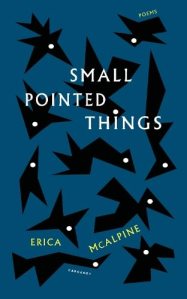 McAlpine is an associate professor of English at Oxford. Her second poetry collection is full of flora and fauna imagery. The title phrase comes from the opening poem, “Bats and Swallows” – in the “gloaming,” it’s hard to tell the difference between the flying creatures. The verse is bursting with alliteration and end rhymes, as just this first one shows (emphasis mine): “we couldn’t see / from where we stood in soft shadows / any signs that they were swallows // or bats”; “One seemed almost iridescent / as I tried to track / its crescent / flight across the hill.” Other poems consider moths, manatees, bees, swans and ladybirds; snowdrops and a cedar tree. Part II expands the view through conversations, theories and travel. What-ifs, consequences and regrets seep in. Parts III and IV incorporate mythical allusions, elegies and the concerns of motherhood. Sometimes the rhyme scheme adheres to a particular form. For instance, I loved “Triolet on My Mother’s 74th Birthday” – “You cannot imagine one season in another. … You cannot imagine life without your mother.” This is just my sort of poetry, sweet on the ear and rooted in nature and the everyday. A sample poem:
“Clementines”
New Year’s Day – another turning
of the sphere, with all we planned
in yesteryear as close to hand
as last night’s coals left unmanned
in the fire, still orange and burning.
It is the season for clementines
and citrus from Seville
and whatever brightness carries us until
leaves and petals once more fill
the treetops and the vines.
If ever you were to confess
some cold truth about love’s
dwindling, now would be the time – less
in order for things to improve
than for the half-bitter happiness
of peeling rinds
during mid-winter
recalling days that are behind
us and doors we cannot re-enter
and other doors we couldn’t find.
With thanks to Carcanet Press for the advanced e-copy for review.
Secrets of Adulthood: Simple Truths for Our Complex Lives by Gretchen Rubin
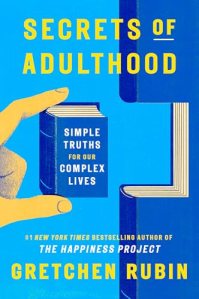 Rubin is one of the best self-help authors out there: Her books are practical, well-researched and genuinely helpful. She understands human nature and targets her strategies to suit different personality types. If you know her work, you’re likely aware of her fondness for aphorisms. “Sometimes, a single sentence can provide all the insight we need,” she believes. Here she collects her own pithy sayings relating to happiness, self-knowledge, relationships, work, creativity and decision-making. Some of the aphorisms were familiar to me through her previous books or her social media. They’re straightforward and sensible, distilling down to a few words truths we might be aware of but hadn’t truly absorbed. Like the great aphorists throughout history, Rubin relishes alliteration, repetition and contrasts. Some examples:
Accept yourself, and expect more from yourself.
I admire nature, and I am also nature. I resent traffic, and I am also traffic.
Work is the play of adulthood. If we’re not failing, we’re not trying hard enough.
Don’t wait until you have more free time. You may never have more free time.
This is not as meaty as her other work, and some parts feel redundant, but that’s the nature of the project. It would make a good bedside book for nibbles of inspiration. (Read via Edelweiss)
Which of these appeal to you?
Hard-Hitting Nonfiction I Read for #NovNov24: Hammad, Horvilleur, Houston & Solnit
I often play it safe with my nonfiction reading, choosing books about known and loved topics or ones that I expect to comfort me or reinforce my own opinions rather than challenge me. I wasn’t sure if I could bear to read about Israel/Palestine, or sexual violence towards women, but these four works were all worthwhile – even if they provoked many an involuntary gasp of horror (and mild expletives).
Recognising the Stranger: On Palestine and Narrative by Isabella Hammad (2024)
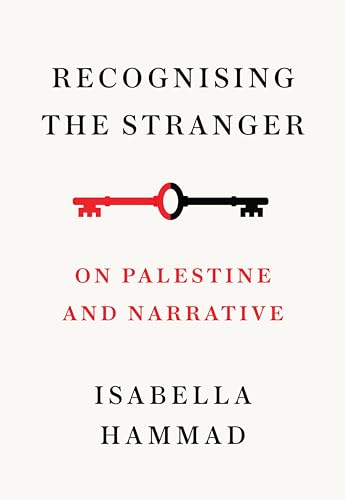 This is the text of the Edward W. Said Memorial Lecture that Hammad delivered at Columbia University on September 28, 2023. She posits that, in a time of crisis, storytelling can be a way of finding things out. Characters’ epiphanies, from Oedipus onward, see them encountering an Other but learning something about themselves in the process. In turning her great-grandfather’s life into her first novel, The Parisian, Hammad knew she had to avoid the pitfalls of nostalgia and unreliable memory. Fiction is always subjective, a matter of perspectives, and history is too. Sometimes the turning points will only be understood retrospectively.
Edward Said (1935–2003) was a Palestinian American academic and theorist who helped found the field of postcolonial studies. Hammad writes that, for him, being Palestinian was “a condition of chronic exile.” She takes his humanist ideology as a model of how to “dismantle the consoling fictions of fixed identity, which make it easier to herd into groups.” About half of the lecture is devoted to the Israel/Palestine situation. She recalls meeting an Israeli army deserter a decade ago who told her how a naked Palestinian man holding the photograph of a child had approached his Gaza checkpoint; instead of shooting the man in the leg as ordered, he fled. It shouldn’t take such epiphanies to get Israelis to recognize Palestinians as human, but Hammad acknowledges the challenge in a “militarized society” of “state propaganda.”
This was, for me, more appealing than Hammad’s Enter Ghost. Though the essay might be better aloud as originally intended, I found it fluent and convincing. It was, however, destined to date quickly. Less than two weeks later, on October 7, there was a horrific Hamas attack on Israel (see Horvilleur, below). The print version of the lecture includes an afterword written in the wake of the destruction of Gaza. Hammad does not address October 7 directly, which seems fair (Hamas ≠ Palestine). Her language is emotive and forceful. She refers to “settler colonialism and ethnic cleansing” and rejects the argument that it is a question of self-defence for Israel – that would require “a fight between two equal sides,” which this absolutely is not. Rather, it is an example of genocide, supported by other powerful nations.
The present onslaught leaves no space for mourning
To remain human at this juncture is to remain in agony
It will be easy to say, in hindsight, what a terrible thing
The Israeli government would like to destroy Palestine, but they are mistaken if they think this is really possible … they can never complete the process, because they cannot kill us all.
(Read via Edelweiss) [84 pages]
How Isn’t It Going? Conversations after October 7 by Delphine Horvilleur (2025)
[Translated from the French by Lisa Appignanesi]
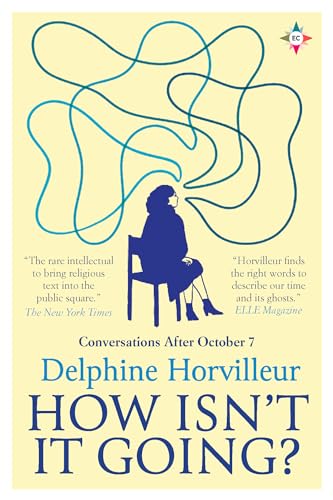 Horvilleur is one of just five female rabbis in France and is the leader of the country’s Liberal Jewish Movement. Earlier this year, I reviewed her essay collection Living with Our Dead, about attitudes toward death as illustrated by her family history, Jewish traditions and teachings, and funerals she has conducted. It is important to note that she expresses sorrow for Palestinians’ situation and mentions that she has always favoured a two-state solution. Moreover, she echoes Hammad with her final line, which hopes for “a future for those who think of the other, for those who engage in dialogue one with another, and with the humanity within them.” However, this is a lament for the Jewish condition, and a warning of the continuing and insidious nature of antisemitism. Who am I to judge her lived experience and say, “she’s being paranoid” or “it’s not really like that”? My job as reader is simply to listen.
There is by turns a stream of consciousness or folktale quality to the narrative as Horvilleur enacts 11 dialogues – some real and others imagined – with her late grandparents, her children, or even abstractions (“Conversation with My Pain,” “Conversation with the Messiah”). She draws on history, scripture and her own life, wrestling with the kinds of thoughts that come to her during insomniac early mornings. It’s not all mourning; there is sometimes a wry sense of humour that feels very Jewish. While it was harder for me to relate to the point of view here, I admired the author for writing from her own ache and tracing the repeated themes of exile and persecution. It felt important to respect and engage. [125 pages]
With thanks to Europa Editions for the advanced e-copy for review.
Without Exception: Reclaiming Abortion, Personhood, and Freedom by Pam Houston (2024)
 If you’re going to read a polemic, make sure it’s as elegantly written and expertly argued as this one. Houston responds to the overturning of Roe v. Wade with 60 micro-essays – one for each full year of her life – about what it means to be in a female body in a country that seeks to control and systematically devalue women. Roe was in force for 49 years, corresponding almost exactly to her reproductive years. She had three abortions and believes “childlessness might turn out to be the single greatest gift of my life.” Facts could serve as explanations: her grandmother died giving birth to her mother; her mother always said having her ruined her life; she was raped by her father from early childhood until she left home as a young adult; she is gender-fluid; she loves her life of adventure travel, spontaneity and chosen solitude; she adores the natural world and sees how overpopulation threatens it. But none are presented as causes or excuses. Houston is committed to nuance, recognizing individuality of circumstance and the primacy of choice.
Many of the book’s vignettes are autobiographical, but others recount statistics, track American cultural and political shifts, and reprint excerpts from the 2022 joint dissent issued by the Supreme Court. The cycling of topics makes for an exquisite structure. Houston has done extensive research on abortion law and health care for women. A majority of Americans actually support abortion’s legality, and some states have fought back by protecting abortion rights through referenda. (I voted for Maryland’s. I’ve come a long way since my Evangelical, vociferously pro-life high school and college days.) I just love Houston’s work. There are far too many good lines here to quote. She is among my top recommendations of treasured authors you might not know. I’ve read her memoir Deep Creek and her short story collections Cowboys Are My Weakness and Waltzing the Cat, and I’m already sad that I only have four more books to discover. (Read via Edelweiss) [170 pages] 
Men Explain Things to Me by Rebecca Solnit (2014)
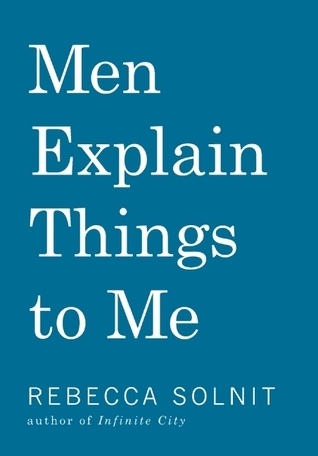 Solnit did not coin the term “mansplaining,” but it was created not long after the title essay’s publication in 2008 and was definitely inspired by her depiction of a male know-it-all. She was at a party in Aspen in 2003 when a man decided to tell her all about an important new book he’d heard of about Eadweard Muybridge. A friend had to interrupt him and say, “That’s her book.” A funny story, yes, but illustrative of a certain male arrogance that encourages a woman’s “belief in her superfluity, an invitation to silence” and imagines her “in some sort of obscene impregnation metaphor, an empty vessel to be filled with their wisdom and knowledge.”
This segues perfectly into “The Longest War,” about sexual violence against women, including rape and domestic violence. As in the Houston, there are some absolutely appalling statistics here. Yes, she acknowledges, it’s not all men, and men can be feminist allies, but there is a problem with masculinity when nearly all domestic violence and mass shootings are committed by men. There is a short essay on gay marriage and one (slightly out of place?) about Virginia Woolf’s mental health. The other five repeat some of the same messages about rape culture and believing women, so it is not a wholly classic collection for me, but the first two essays are stunners. (University library) [154 pages]
Have you read any of these authors? Or something else on these topics?
Nonfiction November: Two Memoirs of Biblical Living by Evans and Jacobs
I love a good year-challenge narrative and couldn’t resist considering these together because of the shared theme. Sure, there’s something gimmicky about a rigorously documented attempt to obey the Bible’s literal commandments as closely as possible in the modern day. But these memoirs arise from sincere motives, take cultural and theological matters seriously, and are a lot of fun to read.
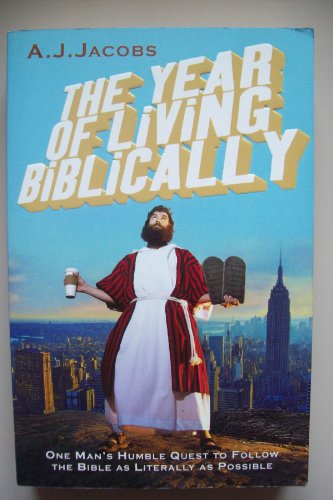
The Year of Living Biblically: One Man’s Humble Quest to Follow the Bible as Literally as Possible by A.J. Jacobs (2007)
Jacobs came up with the idea, so I’ll start with him. His first book, The Know-It-All, was about absorbing as much knowledge as possible by reading the encyclopaedia. This starts in similarly intellectual fashion with a giant stack of Bible translations and commentaries. From one September to the next, Jacobs vows, he’ll do his best to understand and implement commandments from both the Old and New Testaments. It’s not a completely random choice of project in that he’s a secular Jew (“I’m Jewish in the same way the Olive Garden is an Italian restaurant. Which is to say: not very.”). Firstly, and most obviously, he stops shaving and getting haircuts. “As I write this, I have a beard that makes me resemble Moses. Or Abe Lincoln. Or [Unabomber] Ted Kaczynski. I’ve been called all three.” When he also takes to wearing all white, he really stands out on the New York subway system. Loving one’s neighbour isn’t easy in such an antisocial city, but he decides to try his best.
 Jacobs is confused by the Bible’s combination of sensible moral guidelines and bizarre, arcane stuff. His conviction is that you can’t pick and choose – even if you don’t know why a law is important, you have to go with it. One of his “Top Five Most Perplexing Rules in the Bible” is a ban on clothing made of mixed fibers (shatnez). So he hires a shatnez tester, Mr. Berkowitz, who comes to investigate his entire wardrobe. To fulfil another obscure commandment, Berkowitz helps him ceremonially take an egg from a pigeon’s nest. Jacobs takes up prayer, hospitality, tithing, dietary restrictions, and avoiding women at the wrong time of the month. He gamely puts up a mezuzah, which displays a Bible passage above his doorframe. He even, I’m sorry to report, has a chicken sacrificed. Despite the proverb about not ‘sparing the rod’, he can’t truly bring himself to punish his son, so taps him gently with a Nerf bat; alas, Jasper thinks it’s a game. Stoning adulterers? Jacobs tosses pebbles at ankles.
The book is a near-daily journal, with a new rule or three grappled with each day. There are hundreds of strange and culturally specific guidelines, but the heart issues – covetousness, lust – pose more of a challenge. Alongside his work as a journalist for Esquire and this project, Jacobs has family stuff going on: IVF results in his wife’s pregnancy with twin boys. Before they become a family of five, he manages to meet some Amish people, visit the Creation Museum, take a trip to the Holy Land to see a long-lost uncle, and engage in conversation with Evangelicals across the political spectrum, from Jerry Falwell’s megachurch to Tony Campolo (who died just last week). Jacobs ends up a “reverent agnostic.” We needn’t go to such extremes to develop the gratitude he feels by the end, but it sure is a hoot to watch him. This has just the sort of amusing, breezy yet substantial writing that should engage readers of Bill Bryson, Dave Gorman and Jon Ronson. (Free mall bookshop)
A Year of Biblical Womanhood: How a Liberated Woman Found Herself Sitting on Her Roof, Covering Her Head, and Calling Her Husband “Master” by Rachel Held Evans (2012)
 Evans’s book proposal must have referenced Jacobs’s project, but she comes at things from a different perspective as a progressive Christian, and likely had a separate audience in mind. Namely, the sort of people who worry about the concept of biblical womanhood and wrestle with Bible verses about women remaining silent in church and not holding positions of religious leadership over men. There are indeed factions of Christianity that take these passages literally. Given that she was a public speaker and popular theologian, Evans obviously didn’t. But in her native Alabama and her new home of Tennessee, many would. She decides to look more closely at some of the prescriptions for women in the scriptures, focusing on Proverbs 31, which describes the “woman of valor.” She looks at this idealized woman’s characteristics in turn and tries to adhere to them by dressing modestly, taking etiquette lessons, learning to cook and hosting dinners, and practicing for parenthood with a “Baby-Think-It-Over” doll. Like Jacobs, she stops cutting her hair and meets some Amish people. But she also sleeps outside in a tent while menstruating and undertakes silent meditation at an abbey and a mission trip to Bolivia. Each monthly chapter ends with a profile of a female character from the Bible and what might be learned from her story.
It’s a sweet, self-deprecating book. You can definitely tell that she was only 29 at the time she started her project. It’s okay with me that Evans turned all her literal intentions into more metaphorical applications by the end of the year. She concludes that the Church has misused Proverbs 31: “We abandoned the meaning of the poem by focusing on the specifics, and it became just another impossible standard by which to measure our failures. We turned an anthem into an assignment, a poem into a job description.” Her determination is not to obsess over rules but to continue with the habits that benefited her spiritual life, and to champion women whenever she can. I suspect this is a lesser entry from Evans’s oeuvre. She died too soon – suddenly in 2019, of brain swelling after a severe allergic reaction to an antibiotic – but remains a valued voice, and I’ll catch up on the rest of her books. Searching for Sunday, for instance, was great, and I’m keen to read Evolving in Monkey Town (about living in Dayton, Tennessee, where the famous Scopes Monkey Trial took place). (Birthday gift from my wish list, 2023)
Three on a Theme: Trans Poetry for National Poetry Day
Today is National Poetry Day here in the UK. Alfie and I spent part of the chilly early morning reading from Pádraig Ó Tuama’s super Poetry Unbound, an anthology of 50 poems to which he’s devoted personal introductions and exploratory essays. He describes poetry as “like a flame: helping us find our way, keeping us warm.”

Poetry Unbound is also the name of his popular podcast; both were recommended to me by Sara Beth West, my fellow Shelf Awareness reviewer, in this interview we collaborated on back in April (National Poetry Month in the USA) about reading and reviewing poetry. I’ve been a keen reader of contemporary poetry for 15 years or so, but in the 3.5 years that I’ve been writing for Shelf I’ve really ramped up. Most months, I review a couple poetry collections for that site, and another one or more on here.
Two of my Shelf poetry reviews from the past 10 months highlight the trans experience; when I recently happened to read another collection by a trans woman, I decided to gather them together as a trio. All three pair the personal – a wrestling over identity – with the political, voicing protest at mistreatment.
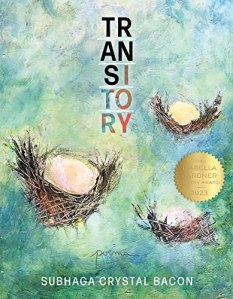
Transitory by Subhaga Crystal Bacon (2023)
In her Isabella Gardner Award-winning fourth collection, queer poet Subhaga Crystal Bacon commemorates the 46 trans and gender-nonconforming people murdered in the United States and Puerto Rico in 2020—an “epidemic of violence” that coincided with the Covid-19 pandemic.
 The book arose from a workshop Bacon attended on writing “formal poems of social protest.” Among the forms employed here are acrostics and erasures performed on news articles—ironically appropriate for reversing trans erasure. She devotes one elegy to each hate-crime victim, titling it with their name and age as well as the location and date of the killing, and sifting through key details of their life and death. Often, trans people are misgendered or deadnamed in prison, by ambulance staff, or after death, so a crucial element of the tributes is remembering them all by chosen name and gender.
The statistics Bacon conveys are heartbreaking: “The average life expectancy of a Black trans woman is 35 years of age”; “Half of Black trans women spend time in jail”; “Trans people are anywhere/ between eleven and forty percent/ of the homeless population.” She also draws on her own experience of gender nonconformity: “A little butch./ A little femme.” She recalls of visiting drag bars in the 1980s: “We were all/ trying on gender.” And she vows: “No one can say a life is not right./ I have room for you in me.” Her poetic memorial is a valuable exercise in empathy.
Published by BOA Editions. Reprinted with permission from Shelf Awareness.
I was interested to note that the below poets initially published under both female and male, new and dead names, as shown on the book covers. However, a look at social media makes it clear that the trans women are now going exclusively by female names.
I Don’t Want to Be Understood by Jennifer Espinoza (2024)
In Espinoza’s undaunted fourth poetry collection, transgender identity allows for reinvention but also entails fear of physical and legislative violence.
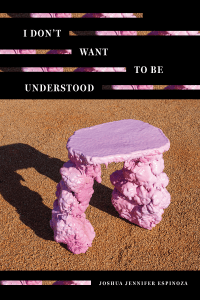 Two poems, both entitled “Airport Ritual,” articulate panic during a security pat-down on the way to visit family. In the first, a woman quells her apprehension by imagining a surreal outcome: her genitals expand infinitely, “tearing through her clothes and revealing an amorphous blob of cosmic energy.” In the second, the speaker chants the reassuring mantra, “I am not afraid.” “Makeup Ritual” vacillates between feminism and conformity; “I don’t even leave the house unless/ I’ve had time to build a world on my face/ and make myself palatable/ for public consumption.” Makeup is “your armor,” Espinoza writes in “You’re Going to Die Today,” as she describes the terror she feels toward the negative attention she receives when she walks her dog without wearing it. The murders of trans people lead the speaker to picture her own in “Game Animal.” Violence can be less literal and more insidious, but just as harmful, as in a reference to “the day the government announced another plan to strip a few/ more basic rights from trans people.”
Words build into stanzas, prose paragraphs, a zigzag line, or cross-hatching. Espinoza likens the body to a vessel for traumatic memories: “time is a body full of damage// that is constantly trying to forget.” Alliteration and repetition construct litanies of rejection but, ultimately, of hope: “When I call myself a woman I am praying.”
Published by Alice James Books. Reprinted with permission from Shelf Awareness.
Transgenesis by Ava Winter (2024)
“The body is holy / and is made holy in its changing.”
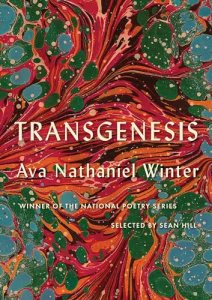 Winter’s debut full-length collection, selected by Sean Hill for the National Poetry Series, reckons with Jewishness as much as with gender identity. The second half of the title references any beginning, but specifically the scriptural account of creation and the lives of the matriarchs and patriarchs of the Abrahamic faiths. Poems are entitled “Torah Study” and “Midrash” (whence the above quote), and two extended sections, “Archived Light” and “Playing with the Jew,” reflect on Polish paternal family members’ arrival at Auschwitz and the dubious practice of selling Holocaust and Nazi memorabilia as antiques. Pharmaceuticals and fashion alike are tokens of transformation –
Let me greet now,
with warm embrace,
the small blue tablets
I place beneath my tongue each morning.
Oh estradiol,
daily reminder
of what our bodies
have always known:
the many forms of beauty that might be made
flesh by desire, by chance, by animal action.
(from “Transgenesis”)
The first time I wore a dress in public without a hint of irony—a Max Mara wrap adorned with Japanese lilies that framed my shoulders perfectly—I was still thin but also thickly bearded and men on the train whispered to me in a conspiratorial tone, as if they hoped the dress were a joke I might let them in on.
(from “WWII SS Wiking Division Badge, $55”)
– and faith grants affirmation that “there is beauty in such queer and fruitless bodies,” as the title poem insists, with reference to the saris (nonbinary person) acknowledged by the Talmudic rabbis. “Lament with Cello Accompaniment” provides an achingly gorgeous end to the collection:
I do not choose the sound of the song
In my mouth, the fading taste of what I still live through, but I choose this future, as I bury a name defined by grief, as I enter the silence where my voice will take shape.
Winter teaches English and Women’s and Gender Studies at the University of Nebraska–Lincoln. I’ll look out for more of her work.
Published by Milkweed Editions. (Read via Edelweiss)
More trans poetry I have read:
A Kingdom of Love & Eleanor Among the Saints by Rachel Mann
By nonbinary/gender-nonconforming poets, I have also read:
Surge by Jay Bernard
Like a Tree, Walking by Vahni Capildeo
Some Integrity by Padraig Regan
Don’t Call Us Dead by Danez Smith
Divisible by Itself and One by Kae Tempest
Binded by H Warren
Extra goodies for National Poetry Day:
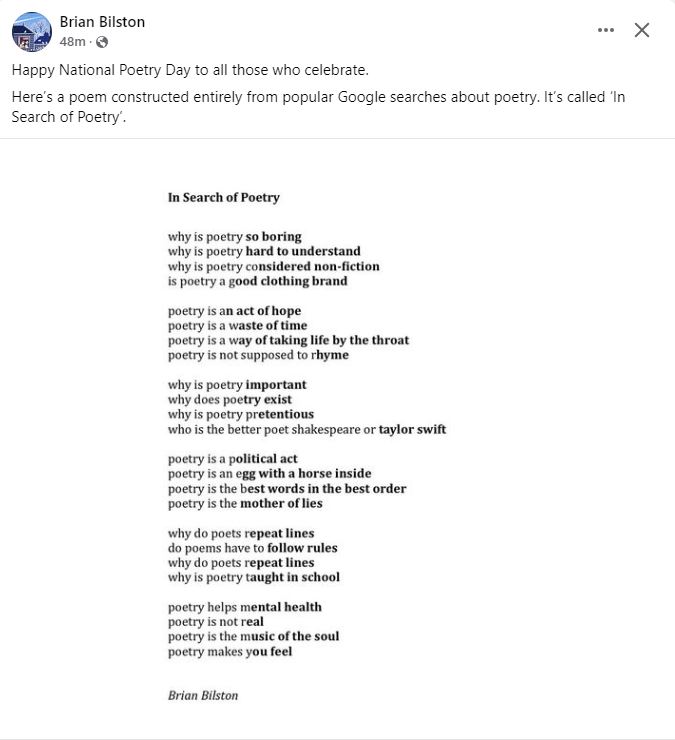
Follow Brian Bilston to add a bit of joy to your feed.
Editor Rosie Storey Hilton announces a poetry anthology Saraband are going to be releasing later this month, Green Verse: Poems for our Planet. I’ll hope to review it soon.
Two poems that have been taking the top of my head off recently (in Emily Dickinson’s phrasing), from Poetry Unbound (left) and Seamus Heaney’s Field Work:


June Releases by Caroline Bird, Kathleen Jamie, Glynnis MacNicol and Naomi Westerman
These four books by women all incorporate life writing to an extent. Although the forms differ, a common theme – as in the other June releases I’ve reviewed, Sandwich and Others Like Me – is grappling with what a woman’s life should be, especially for those who have taken an unconventional path (i.e. are queer or childless) or are in midlife or later. I’ve got a poet up to her usual surreal shenanigans but with a new focus on lesbian parenting; a hybrid collection of poetry and prose giving snapshots of nature in crisis; an account of a writer’s hedonistic month in pandemic-era Paris; and mordant essays about death culture.
Ambush at Still Lake by Caroline Bird
 Caroline Bird has become one of my favourite contemporary poets over the past few years. Her verse is joyously cheeky and absurdist. A great way to sample it is via her selected poems, Rookie. This seventh collection is muted by age and circumstance – multiple weddings and a baby – but still hilarious in places. Instead of rehab or hospital as in In These Days of Prohibition, the setting is mostly the domestic sphere. Even here, bizarre things happen. The police burst in at 4 a.m. for no particular reason; search algorithms and the baby monitor go haywire. Her brother calls to deliver a paranoid rant (in “Up and at ’Em”), while Nannie Edna’s dying wish is to dangle her great-grandson from her apartment window (in “Last Rites”). The clinic calls to announce that their sperm donor was a serial killer – then ‘oops, wrong vial, never mind!’ A toddler son’s strange and megalomaniac demands direct their days. My two favourites were “Ants,” in which a kitchen infestation signals general chaos, and “The Frozen Aisle,” in which a couple scrambles to finish the grocery shop and get home to bed before a rare horny moment passes. A lesbian pulp fiction cover, mischievous wit and topics of addiction and queer parenting: this is not your average poetry.
With thanks to Carcanet Press for the free copy for review.
A sample poem:
Siblings
A woman gave birth
to the reincarnation
of Gilbert and Sullivan
or rather, two reincarnations:
one Gilbert, one Sullivan.
What are the odds
of both being resummoned
by the same womb
when they could’ve been
a blue dart frog
and a supply teacher
on separate continents?
Yet here they were, squidged
into a tandem pushchair
with their best work
behind them, still smarting
from the critical reception
of their final opera
described as ‘but an echo’
of earlier collaborations.
Cairn by Kathleen Jamie
 As she approached age 60, Kathleen Jamie found her style changing. Whereas her other essay collections alternate extended nature or travel pieces with few-page vignettes, Cairn eschews longer material and instead alternates poems with micro-essays on climate crisis and outdoor experiences. In the prologue she calls these “distillations and observations. Testimonies” that she has assembled into “A cairn of sorts.”
As in Surfacing, she writes many of the autobiographical fragments in the second person. The book is melancholy at times, haunted by all that has been lost and will be lost in the future:
What do we sense on the moor but ghost folk,
ghost deer, even ghost wolf. The path itself is a
phantom, almost erased in ling and yellow tormentil (from “Moor”)
In “The Bass Rock,” Jamie laments the effect that bird flu has had on this famous gannet colony and wishes desperately for better news:
The light glances on the water. The haze clears, and now the rock is visible; it looks depleted. But hallelujah, a pennant of twenty-odd gannets is passing, flying strongly, now rising now falling They’ll be Bass Rock birds. What use the summer sunlight, if it can’t gleam on a gannet’s back? You can only hope next year will be different. Stay alive! You call after the flying birds. Stay alive!
Natural wonders remind her of her own mortality and the insignificance of human life against deep time. “I can imagine the world going on without me, which one doesn’t at 30.” She questions the value of poetry in a time of emergency: “If we are entering a great dismantling, we can hardly expect lyric to survive. How to write a lyric poem?” (from “Summer”). The same could be said of any human endeavour in the face of extinction: We question the point but still we continue.
My two favourite pieces were “The Handover,” about going on an environmental march with her son and his friends in Glasgow and comparing it with the protests of her time (Greenham Common and nuclear disarmament) – doom and gloom was ever thus – and the title poem, which piles natural image on image like a cone of stones. Although I prefer the depth of Jamie’s other books to the breadth of this one, she is an invaluable nature writer for her wisdom and eloquence, and I am grateful we have heard from her again after five years.
With thanks to Sort Of Books for the free copy for review.
I’m Mostly Here to Enjoy Myself: One Woman’s Pursuit of Pleasure in Paris by Glynnis MacNicol
 I loved New York City freelance writer Glynnis MacNicol’s No One Tells You This (2018), which approached her 40th year as an adventure into the unknown. This second memoir is similarly frank and intrepid as MacNicol examines the unconscious rules that people set for women in their mid-forties and gleefully flouts them, remaining single and childfree and delighting in the freedom that allows her to book a month in Paris on a whim. She knows that she is an anomaly for being “untethered”; “I am ready for anything. To be anyone.”
This takes place in August 2021, when some pandemic restrictions were still in force, and she found the city – a frequent destination for her over the years – drained of locals, who were all en vacances, and largely empty of tourists, too. Although there was still a queue for the Mona Lisa, she otherwise found the Louvre very quiet, and could ride her borrowed bike through the streets without having to look out for cars. She and her single girlfriends met for rosé-soaked brunches and picnics, joined outdoor dance parties and took an island break.
And then there was the sex. MacNicol joined a hook-up app called Fruitz and met all sorts of men. She refused to believe that, just because she was 46 going on 47, she should be invisible or demure. “All the attention feels like pure oxygen. Anything is possible.” Seeing herself through the eyes of an enraptured 27-year-old Italian reminded her that her body was beautiful even if it wasn’t what she remembered from her twenties (“there is, on average, a five-year gap between current me being able to enjoy the me in the photos”). The book’s title is something she wrote while messaging with one of her potential partners.
As I wrote yesterday about Others Like Me, there are plenty of childless role models but you may have to look a bit harder for them. MacNicol does so by tracking down the Paris haunts of women writers such as Edith Wharton and Colette. She also interrogates this idea of women living a life of pleasure by researching the “odalisque” in 18th- and 19th-century art, as in the François Boucher painting on the cover. This was fun, provocative and thoughtful all at once; well worth seeking out for summer reading and armchair travelling.
(Read via Edelweiss) Published in the USA by Penguin Life/Random House.
Happy Death Club: Essays on Death, Grief & Bereavement across Cultures by Naomi Westerman
 Like Erica Buist (This Party’s Dead) and Caitlin Doughty (Smoke Gets in Your Eyes, From Here to Eternity and Will My Cat Eat My Eyeballs?), playwright Naomi Westerman finds the comical side of death. Part of 404 Ink’s Inklings series (“Big ideas, pocket-sized books” – perfect for anyone looking for short nonfiction for Novellas in November!), this is a collection of short essays about her own experiences of bereavement as well as her anthropological research into rituals and beliefs around death. “The Rat King of South London” is about her father’s sudden death from an abdominal aneurysm. An instantaneous death is a good one, she contends. More than 160,000 people die every day, and what to do with all those bodies is a serious question. A subversive sense of humour is there right from the start, as she gives a rundown of interment options. “Mummification: Beloved by Ancient Egyptians and small children going through their Ancient Egypt phase, it’s a classic for a reason!” Meanwhile, she legally owns her father’s plot so also buries dead pet rats there.
Other essays are about taking her mother’s ashes along on world travels, the funeral industry and “red market” sales of body parts, grief as a theme in horror films, the fetishization of dead female bodies, Mexico’s Day of the Dead festivities, and true crime obsession. In “Batman,” an excerpt from one of her plays, she goes to have a terrible cup of tea with the man she believes to be responsible for her mother’s death – a violent one, after leaving an abusive relationship. She also used the play to host an on-stage memorial for her mother since she wasn’t able to sit shiva. In the final title essay, Westerman tours lots of death cafés and finds comfort in shared experiences. These pieces are all breezy, amusing and easy to read, so it’s a shame that this small press didn’t achieve proper proofreading, making for a rather sloppy text, and that the content was overall too familiar for me.
With thanks to 404 Ink and publicist Claire Maxwell for the free copy for review.
Does one or more of these catch your eye?
What June releases can you recommend?
September Focus on Short Stories, with Reviews of Bloom and de Kerangal
This is the eighth year in a row in which I’m making a special effort to read short stories in September; otherwise, story collections tend to languish on my shelves (and Kindle) unread. In September 2021 I read 12 collections and in September 2022 it was 11.5; let’s see how many I get to this year!
As someone who doesn’t claim to love short stories, I was surprised to see that I’ve already read 19 collections this year. Some of the highlights have been Old Babes in the Wood by Margaret Atwood, How Strange a Season by Megan Mayhew Bergman, What We Talk about When We Talk about Love by Raymond Carver, Games and Rituals by Katherine Heiny, and Sidle Creek by Jolene McIlwain.
I have a whole shelf of short story options set out for me and will make my selections from there. For now, I have brief reviews of two collections I read during a quick trip to the USA.
A Blind Man Can See How Much I Love You by Amy Bloom (2000)
 My second collection by Bloom this year, after Where the God of Love Hangs Out; somewhat confusingly, the latter reprints two of this volume’s Lionel and Julia stories, so there were actually only six stories here that were new to me (5 x first-person; 3 x third-person). However, they’re all typically great ones. The title story has a mother accompanying her daughter to the medical appointments that will transform Jessie into Jess, her son, and also taking a chance on romance. “Rowing to Eden” explores the dynamic between best friends, one lesbian and one married to a man; the one has already been through breast cancer treatment so can counsel her friend from experience.
In “Stars at Elbow and Foot,” a woman whose baby died goes back to the children’s hospital to volunteer with the disabled. “Hold Tight” also reflects on loss and accidents (but is probably the throw-away story if I had to name one). “The Story,” which closes the book, had me hunting for autobiographical correlations what with its mentions of “Amy.” By far my favourite was “The Gates Are Closing,” in which D.M. is having an affair with the synagogue president’s husband, who has Parkinson’s disease. As Yom Kippur approaches, he gives his mistress an ultimatum. The minor assisted dying theme in this one felt ironically prescient of Bloom’s own experience accompanying her husband to Dignitas (the subject of In Love). As always, Bloom’s work is sensual, wry and emotionally wise. 
Canoes by Maylis de Kerangal (2021; 2023)
[Translated from the French by Jessica Moore]
These eight stories are all in the first person; although I tend to prefer more diversity of narration, the plots are so dissimilar that it makes up for that homogeneity. In an author’s note at the end, de Kerangal writes that her overall theme was voices, especially women’s voices; perhaps ironically, then, the collection uses no speech marks. In “Mountain Stream and Iron Filings,” the narrator’s friend Zoé is on a mission to lower her voice to make it more suitable for radio. “Nevermore” has a woman contributing a recording of herself reading Edgar Allan Poe’s epic poem “The Raven” to an audio library. “A Light Bird,” which I found particularly poignant, is about a widower and his daughter deciding what to do about their late wife’s/mother’s voice on the answering machine.
 “After” has a school leaver partying and figuring out what comes next, “Ontario” revolves around a trip to Canada, and “Arianespace” has an investigator visiting an elderly woman who has reported a UFO sighting. The longest story (billed as a novella), “Mustang,” focuses on a French family that has relocated to Colorado in the 1990s. The mother, recently bereaved, learns to drive their rather impractical American car.
Like Painting Time, the collection is in thrall to questions of deep time. This is clearest in “Bivouac,” in which a woman undergoes a procedure while the dentist tells her about an ancient human jawbone found deep under Paris. Prehistory is even present in the metaphorical language: “the first foothills of the Rockies sketched the backbone of a sleepy stegosaurus who’d escaped extinction” (from “Mustang”). Each story also mentions a canoe, if only in passing (e.g., the dentist’s necklace charm in the first story).
As was my main quibble with Mend the Living, though, de Kerangal is all too fond of arcane vocabulary. I mean, she uses “alveolar” twice in this very short book; there’s also “sagittal slices” and “sinuous mnemic circuits.” Some sentences stretch to fill two-plus pages. So overwriting is a recurrent issue I have with her work, but I would certainly recommend that her fans read her short fiction, which I found more accessible than her novels. 
With thanks to MacLehose Press for the free copy for review. Canoes will be published on 28 September.
Currently reading: Revenge of the Lawn by Richard Brautigan; I Meant It Once by Kate Doyle; The Best Short Stories 2023: The O. Henry Prize Winners, ed. Lauren Groff; Why I Don’t Write by Susan Minot; Hateship, Friendship, Courtship, Loveship, Marriage by Alice Munro; The Human Origins of Beatrice Porter and Other Essential Ghosts by Soraya Palmer (linked stories); Small, Burning Things by Cathy Ulrich.
Resuming soon: The Secrets of a Fire King by Kim Edwards; If I Survive You by Jonathan Escoffery (I read the first two stories ages ago, but its longlisting for the Booker Prize is the impetus I need to pick it back up); Hey Yeah Right Get a Life by Helen Simpson.
Are you a short story fan? Read any good ones recently?
#ReadIndies and Review Catch-up: Hazrat, Nettel, Peacock, Seldon
Another four selections for Read Indies month. I’m particularly pleased that two from this latest batch are “just because” books that I picked up off my shelves; another two are catch-up review copies. A few more indie titles will appear in my February roundup on Tuesday. For today, I have a fun variety: a history of the exclamation point, a Mexican novel about choosing motherhood versus being childfree, a memoir of a decades-long friendship between two poets, and a posthumous poetry collection with themes of history, illness and nature.

An Admirable Point: A brief history of the exclamation mark by Florence Hazrat (2022)
I’m definitely a punctuation geek. (My favourite punctuation mark is the semicolon, and there’s a book about it, too: Semicolon: The Past, Present, and Future of a Misunderstood Mark by Cecelia Watson, which I have on my Kindle.) One might think that strings of exclamation points are a pretty new thing – rounding off phrases in (ex-)presidential tweets, for instance – but, in fact, Hazrat opens with a Boston Gazette headline from 1788 that decried “CORRUPTION AND BRIBERY!!!” in relation to the adoption of the new Constitution.
 The exclamation mark as we know it has been around since 1399, and by the 16th century its use for expression and emphasis had been codified. I was reminded of Gretchen McCulloch’s discussion of emoji in Because Internet, which also considers how written speech signifies tone, especially in the digital age. There have been various proposals for other “intonation points” over the centuries, but the question mark and exclamation mark are the two that have stuck. (Though I’m currently listening to an album called interrobang – ‽, that is. Invented by Martin Speckter in 1962; recorded by Switchfoot in 2021.)
I most enjoyed Chapter 3, on punctuation in literature. Jane Austen’s original manuscripts, replete with dashes, ampersands and exclamation points, were tidied up considerably before they made it into book form. She’s literature’s third most liberal user of exclamation marks, in terms of the number per 100,000 words, according to a chart Ben Blatt drew up in 2017, topped only by Tom Wolfe and James Joyce.
There are also sections on the use of exclamation points in propaganda and political campaigns – in conjunction with fonts, which brought to mind Simon Garfield’s Just My Type and the graphic novel ABC of Typography. It might seem to have a niche subject, but at just over 150 pages this is a cheery and diverting read for word nerds.
With thanks to Profile Books for the proof copy for review.
Still Born by Guadalupe Nettel (2020; 2022)
[Translated from the Spanish by Rosalind Harvey]
This was the Mexican author’s fourth novel; she’s also a magazine director and has published several short story collections. I’d liken it to a cross between Motherhood by Sheila Heti and (the second half of) No One Is Talking About This by Patricia Lockwood. Thirtysomething friends Laura and Alina veer off in different directions, yet end up finding themselves in similar ethical dilemmas. Laura, who narrates, is adamant that she doesn’t want children, and follows through with sterilization. However, when she becomes enmeshed in a situation with her neighbours – Doris, who’s been left by her abusive husband, and her troubled son Nicolás – she understands some of the emotional burden of motherhood. Even the pigeon nest she watches on her balcony presents a sort of morality play about parenthood.
 Meanwhile, Alina and her partner Aurelio embark on infertility treatment. Laura fears losing her friend: “Alina was about to disappear and join the sect of mothers, those creatures with no life of their own who, zombie-like, with huge bags under their eyes, lugged prams around the streets of the city.” They eventually have a daughter, Inés, but learn before her birth that brain defects may cause her to die in infancy or be severely disabled. Right from the start, Alina is conflicted. Will she cling to Inés no matter her condition, or let her go? And with various unhealthy coping mechanisms to hand, will her relationship with Aurelio stay the course?
Laura alternates between her life and her friends’ circumstances, taking on an omniscient voice on Nettel’s behalf – she recounts details she couldn’t possibly be privy to, at least not at the time (there’s a similar strategy in The Group by Lara Feigel). The question of what is fated versus what is chosen, also represented by Laura’s interest in tarot and palm-reading, always appeals to me. This was a wry and sharp commentary on women’s options. (Giveaway win from Bookish Chat on Twitter)
Still Born was published by Fitzcarraldo Editions in the UK and is forthcoming from Bloomsbury in the USA on August 8th.
A Friend Sails in on a Poem by Molly Peacock (2022)
I’ve read one of Peacock’s poetry collections, The Analyst, as well as her biography of Mary Delany, The Paper Garden. I was delighted when she got in touch to offer a review copy of her latest memoir, which reflects on her nearly half a century of friendship with fellow poet Phillis Levin. They met in a Johns Hopkins University writing seminar in 1976, and ever since have shared their work in progress over meals. They are seven years apart in age and their careers took different routes – Peacock headed up the Poetry Society of America’s subway poetry project and then moved to Toronto, while Levin taught at the University of Maryland – but over the years they developed “a sense of trust that really does feel familial … There is a weird way, in our conversations about poetry, that we share a single soul.” For a time they were both based in New York City and had the same therapist; more recently, they arranged annual summer poetry retreats in Cazenovia (recalled via diary entries), with just the two attendees. Jobs and lovers came and went, but their bond has endured.
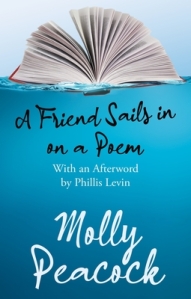 The book traces their lives but also their development as poets, through examples of their verse. Her friend is “Phillis” in real life, but “Levin” when it’s her work is being discussed – and her own poems are as written by “Peacock.” Both women became devoted to the sonnet, an unusual choice because at the time that they were graduate students free verse reigned and form was something one had to learn on one’s own time. Stanza means “room,” Peacock reminds readers, and she believes there is something about form that opens up space, almost literally but certainly metaphorically, to re-examine experience. She repeatedly tracks how traumatic childhood events, as much as everyday observations, were transmuted into her poetry. Levin did so, too, but with an opposite approach: intellectual and universal where Peacock was carnal and personal. That paradox of difference yet likeness is the essence of the friendships we sail on. What a lovely read, especially if you’re curious about ‘where poems come from’; I’d particularly recommend it to fans of Ann Patchett’s Truth and Beauty.
With thanks to Molly Peacock and Palimpsest Press for the free e-copy for review.
The Bright White Tree by Joanna Seldon (Worple Press, 2017)
This appeared the year after Seldon died of cancer; were it not for her untimely end and her famous husband Anthony (a historian and political biographer), I’m not sure it would have been published, as the poetry is fairly mediocre, with some obvious rhymes and twee sentiments. I wouldn’t want to speak ill of the dead, though, so think of this more like a self-published work collected in tribute, and then no problem. Some of the poems were written from the Royal Marsden Hospital, with “Advice” a useful rundown of how to be there for a friend undergoing cancer treatment (text to let them know you’re thinking of them; check before calling, or visiting briefly; bring sanctioned snacks; don’t be afraid to ask after their health).
 Seldon takes inspiration from history (the story of Kitty Pakenham, the bombing of the Bamiyan Buddhas), travels in England and abroad (“Robin in York” vs. “Tuscan Garden”), and family history. Her Jewish heritage is clear from poems about Israel, National Holocaust Memorial Day and Rosh Hashanah. Her own suffering is put into perspective in “A Cancer Patient Visits Auschwitz.” There are also ekphrastic responses to art and literature (a Gaugin, A Winter’s Tale, Jane Eyre, and so on). I particularly liked “Conker,” a reminder of a departed loved one “So is a good life packed full of doing / That may grow warm with others, even when / The many years have turned, and darkness filled / Places where memory shone bright and strong. / I feel the conker and feel he is here.” (New bargain book from Waterstones online sale with Christmas book token)
There are haikus dotted through the collection; here’s one perfect for the season:
“Snowdrops Haiku”
Maids demure, white tips to
Mob caps… Look now! They’ve
Splattered the lawn with snow
Have you discovered any new-to-you independent publishers recently?
The Hero of This Book by Elizabeth McCracken (#NovNov22)
The hero of this book is Elizabeth McCracken’s mother, Natalie (1935–2018).
Is it autofiction or a bereavement memoir? Both and neither. It’s clear that the subject is her late mother, but less obvious that the first-person narrator must be McCracken or that the framework she has set up – an American writer wanders London, seeing the sights but mostly reminiscing about her mother – is other than fiction.
In August 2019, the writer rents a hotel room in Clerkenwell and plays the flaneuse around the city. Her tour takes in the London Eye, a ferry ride across the Thames from one Tate museum to another, a production of A Midsummer Night’s Dream, and so on. London had been a favourite destination for her and her mother, their final trip together falling just three years before. McCracken is so funny on the quirks of English terminology – and cuisine:
The least appetizing words in the world concern English food: salad cream, baps, butties, carvery, goujons.
Always, though, her thoughts return to her mother, whom she describes through bare facts and apt anecdotes. A twin born with cerebral palsy. A little disabled Jewish lady with unmanageable hair. An editor and writer based at Boston University. Opinionated, outspoken, optimistic; set in her ways. Delightful and maddening in equal measure – like all of us. (“All mothers are unknowable, being a subset of human beings.”)
The writer’s parents were opposites you never would have paired up. (Her father, too, is gone now, but his death is only an aside here.) Their declines were predictably hard to forecast. The New England family home has been emptied and is now on the market; an excruciating memory resurfaces from the auction of the contents.
As well as a tribute to a beloved mother and a matter-of-fact record of dealing with ageing parents and the aftermath of loss, this is a playful cross-examination of literary genres:
I hate novels with unnamed narrators. I didn’t mean to write one.
My mother was known to say with disgust, “Oh, those people who write memoirs about the worst thing that ever happened to them!” I said it, too. Some years later a terrible thing happened to me, and there was nothing to do but to write a memoir.
That was An Exact Replica of a Figment of My Imagination, about the stillbirth of her first child. As bereavement memoirs go, it’s one of the very best and still, 10 years after I read it, stands as one of my absolute favourite books, with some of the strongest last lines out there. McCracken has done it again, producing a book that, though very different in approach and style (this time reminding me most of Jenny Offill’s Weather), somehow achieves the same poignancy and earns a spot in my personal hall of fame, for the reasons you’ll see below…
The hero of this review is my mother, Carolyn (1947–2022).
I find it hard to believe that she’s been gone for three and a half weeks already. One week after her funeral, I was reading this book on my Kindle in London, waiting for a climate march to start. So many lines penetrated my numbness; all could pertain to my own mother:
[Of a bad time when her mother was in hospital with an infection] Those days were a dress rehearsal for my mother’s easy actual death seven years later.
My mother was a great appreciator. It was a pleasure to take her places, because she enjoyed herself so much and so audibly. That was her form of gratitude.
My mother all by herself was a holiday, very good at buying presents and exceptional at receiving them.
Quirky, somebody once called my mother. What a colossally condescending word: I hate it. It means you’ve decided that you don’t have to take that person seriously.
My mother’s last illness was a brain aneurysm.
The dead have no privacy left, is what I’ve decided.
The adrenaline of a busy week back in the States – meeting up with family members, writing and delivering a eulogy, packing up most of her belongings, writing thank-you notes, starting on paperwork (“sadmin”) – has long worn off and I’m back into my routines of work and volunteering and trying to make our house habitable as winter sets in. It would be easy to feel as if that middle-of-the-night phone call in late October, and everything that followed, was merely a vivid, horribly extended dream and that tomorrow she’ll pop back up in my inbox with some everyday gossip.
Reminders of her are everywhere if I look. Clothes she gave me, or I inherited from her, or she sent me the money to buy; a box of extra-strong Earl Grey teabags, left over from what we handed out along with memorial cards at the visitation; her well-worn Bible and delicate gold watch; the five boxes of journals in my sister’s basement – 150 volumes each carefully labelled with a number and date range. I have the first few and the last, incomplete one here with me now. What a trove of family stories, precious or painful, await me when I’m strong enough to read them.
With Thanksgiving coming up tomorrow – a whole holiday devoted to gratitude! nothing could more perfectly suit my mother – I’m grateful for all of those mementoes, and for the books that are getting me through. Starting with this one. [192 pages] (Read via Edelweiss) 

 Bookish Beck = Rebecca Foster. American transplant to England. Freelance proofreader and book reviewer.
 Bookish Beck