Book Serendipity, March to April 2024
I call it “Book Serendipity” when two or more books that I read at the same time or in quick succession have something in common – the more bizarre, the better. This is a regular feature of mine every couple of months. Because I usually have 20–30 books on the go at once, I suppose I’m more prone to such incidents. The following are in roughly chronological order.
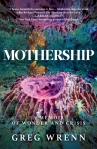
- I encountered quotes from “The Second Coming” by W.B. Yeats on the same day in Immanuel by Matthew McNaught and Waiting for the Monsoon by Rod Nordland. A week or so later, I found another allusion to it – a “rough _________ slouching toward ________” – in Mothership by Greg Wrenn.
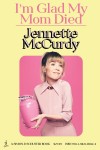
- Reading my second memoir this year in which the author’s mother bathed them until they were age 17 (in other words, way past when it ceased to be appropriate): I’m Glad My Mom Died by Jennette McCurdy was followed by Mothership by Greg Wrenn.
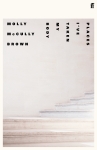
- Quoting a poem with the word “riven” in it (by Christian Wiman) in Places I’ve Taken My Body by Molly McCully Brown and (by a character in the novel) in Bright and Tender Dark by Joanna Pearson. The word “riven” (which is really not a very common one, is it?) also showed up in Sleepless by Annabel Abbs. And then “riving” in one of the poems in The Intimacy of Spoons by Jim Minick.
- East Timor as a destination in Waiting for the Monsoon by Rod Nordland and Mothership by Greg Wrenn.
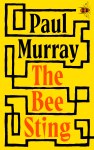
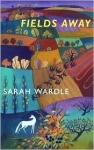
- Quoting John Donne in Places I’ve Taken My Body by Molly McCully Brown and The Bee Sting by Paul Murray (to which a Donne line is the epigraph); mimicking Donne in one poem of Fields Away by Sarah Wardle.
- “Who do you think you are?” as a question an abusive adult asks of a child in The Beggar Maid (aka Who Do You Think You Are?) by Alice Munro and Mothership by Greg Wrenn.
- Sylvia Plath is mentioned in Sleepless by Annabel Abbs and The Bee Sting by Paul Murray … and Katherine Mansfield in Sleepless by Annabel Abbs and The Beggar Maid by Alice Munro.
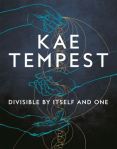
- Mosquitoes are mentioned in a poem in Rapture’s Road by Seán Hewitt and Divisible by Itself and One by Kae Tempest.

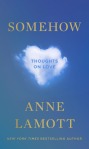
- Reading two memoirs that quote a Rumi poem (and that released on 9 April and that I reviewed for Shelf Awareness): Fi: A Memoir of My Son by Alexandra Fuller and Somehow: Thoughts on Love by Anne Lamott. (Rumi was also quoted as an epigraph in Viv Fogel’s poetry collection Imperfect Beginnings.)
- Bereavement memoirs that seek significance in eagle sightings (i.e. as visitations from the dead): Sleepless by Annabel Abbs and Fi: A Memoir of My Son by Alexandra Fuller.
- Snyder’s pretzels as a snack in Somehow: Thoughts on Love by Anne Lamott and Come and Get It by Kiley Reid.

- Reading two C-PTSD memoirs at the same time: A Flat Place by Noreen Masud and Mothership by Greg Wrenn.
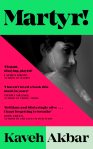 Information about coral reefs dying in Martyr! by Kaveh Akbar and Mothership by Greg Wrenn.
- The gay slang term “twink” appears in The Bee Sting by Paul Murray and Mothership by Greg Wrenn.
- Assisting a mother who reads tarot cards in Intervals by Marianne Brooker and The Year of the Cat by Rhiannon Lucy Cosslett. (Tarot is also read in First Love by Lilly Dancyger and The Future by Catherine Leroux.)

- An Asian American character who plays poker in a graphic novel: Advocate by Eddie Ahn and Lunar New Year Love Story by Gene Luen Yang.
- Vivian Gornick’s Fierce Attachments, which I was also reading at the time, is mentioned in Intervals by Marianne Brooker.
 An Uncle Frank in an Irish novel with no speech marks: Trespasses by Louise Kennedy and The Bee Sting by Paul Murray.
- Martin Luther King’s “I Have a Dream” speech is quoted in Some Kids I Taught & What They Taught Me by Kate Clanchy and How to Raise a Viking by Helen Russell.
- Using quarters for laundry in Come and Get It by Kiley Reid and one story from Dressing Up for the Carnival by Carol Shields.

- A scene of someone watching from a lawn chair as someone else splits wood in Martyr! by Kaveh Akbar and Becoming Little Shell by Chris La Tray.
 Quotes from cultural theorist Sara Ahmed in Intervals by Marianne Brooker and A Flat Place by Noreen Masud.
- I read about windows being blocked up because of high taxes on the same evening in Trespasses by Louise Kennedy and one story from Dressing Up for the Carnival by Carol Shields.
- I saw Quink ink mentioned in The Silence by Gillian Clarke and Trespasses by Louise Kennedy on the same evening.
- The song “It’s a Long Way to Tipperary” is mentioned in You’re on Your Own, Snoopy by Charles M. Schulz and Welcome to Glorious Tuga by Francesca Segal.
- A pet magpie in George by Frieda Hughes and A Council of Dolls by Mona Susan Power.

- A character tests to see what will happen (will God strike them down?) when they mess with the Host (by stealing the ciborium or dropping a wafer on the floor, respectively) in A Council of Dolls by Mona Susan Power and one story from Dressing Up for the Carnival by Carol Shields.
- Marrying the ‘wrong’ brother in The Bee Sting by Paul Murray and A Council of Dolls by Mona Susan Power.
 Indigenous author, Native versus Catholic religion, and descriptions of abuse and cultural suppression at residential schools in Becoming Little Shell by Chris La Tray and A Council of Dolls by Mona Susan Power.
- Teen girls obsessed with ‘sad girl’ poetry, especially by Sylvia Plath, in First Love by Lilly Dancyger and The Bee Sting by Paul Murray.
- “Hyacinth” is a poem in Solutions for the Problem of Bodies in Space by Catherine Barnett, and “Hyacinth Girl” a story in Cocktail by Lisa Alward. (Hyacinths are also mentioned in a poem in The Iron Bridge by Rebecca Hurst.)


- A character named Sissy in A Council of Dolls by Mona Susan Power and Stone Yard Devotional by Charlotte Wood.
- Harming amphibians, whether deliberately or accidentally, in a story in Barcelona by Mary Costello, a poem in Baby Schema by Isabel Galleymore, and Mothership by Greg Wrenn.
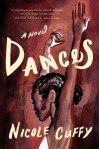
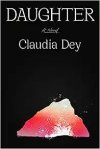
- A significant character called Paul in Dances by Nicole Cuffy, Daughter by Claudia Dey (those two were both longlisted for the Carol Shields Prize), and Moral Injuries by Christie Watson.

- Out of Africa (the film and then the book), which I was looking through for the #1937Club, is mentioned in The Whole Staggering Mystery by Sylvia Brownrigg – her writer grandfather lived in Nairobi’s “Happy Valley” in the 1930s.
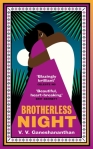
- Reading two novels at the same time in which a teen girl’s plans to study medicine are derailed by war: Brotherless Night by V.V. Ganeshananthan and The Snow Hare by Paula Lichtarowicz.

What’s the weirdest reading coincidence you’ve had lately?
March Releases by Akbar, Bosker, García Márquez, and Wrenn
I’m catching up after a busy end to last month. Today I have an uneven debut novel from a poet whose work I’ve enjoyed before, a journalist’s jaunty submersion in the world of modern art, a posthumous novella from a famous Colombian author I’d not previously read, and a (literally) trippy memoir about C-PTSD, coral, climate breakdown, queerness and more. I can pinpoint a couple of elements that some or all of them have in common: beauty (whether in art or in nature) and dead mothers.
Martyr! by Kaveh Akbar
I’d read the Iranian American poet’s two full-length collections and particularly admired Pilgrim Bell, one of my favourite books of 2021. That was enough for me to put this on my Most Anticipated list for 2024, even though based on the synopsis I wrote: “His debut novel sounds kind of unhinged, but I figure it’s worth a try.” Here’s an excerpt from the publisher’s blurb: “When Cyrus’s obsession with the lives of the martyrs – Bobby Sands, Joan of Arc – leads him to a chance encounter with a dying artist, he finds himself drawn towards the mysteries of an uncle who rode through Iranian battlefields dressed as the Angel of Death; and toward his [late] mother, who may not have been who or what she seemed.”
 Cyrus Shams is an Iranian American aspiring poet who grew up in Indiana with a single father, his mother Roya having died in a passenger aircraft mistakenly shot down by a U.S. Navy missile cruiser (this really happened: Iran Air Flight 655, on 3 July 1988). He continues to lurk around the Keady University campus, working as a medical actor at the hospital, but his ambition is to write. During his shaky recovery from drug and alcohol abuse, he undertakes a project that seems divinely inspired: “Tired of interventionist pyrotechnics like burning bushes and locust plagues, maybe God now worked through the tired eyes of drunk Iranians in the American Midwest”. By seeking the meaning in others’ deaths, he hopes his modern “Book of Martyrs” will teach him how to cherish his own life.
This document, which we see in fragments, sets up hypothetical dialogues between figures real and imaginary, dead and living, and intersperses them with poems and short musings. But when a friend tells Cyrus about the Brooklyn Museum installation “DEATH-SPEAK,” which has terminally ill Iranian artist Orkideh living out her last days in public, he spies an opportunity to move the work beyond theory and into the physical realm. So he flies to New York City with his best friend (and occasional f**kbuddy), bartender Zee Novak, and visits Orkideh every day until the installation’s/artist’s end.
This is a wildly original but unruly novel with a few problems. One: Akbar has clung too obviously to his own story and manner of speaking with Cyrus (e.g., “I honestly actually do worry about that, no joke. Being a young Iranian man making a book about martyrdom, going around talking to people about becoming a martyr. It’s not inert, you know?”). Another is that the poems, and poetic descriptions, are much the best material. The only exception might be a zany scene where Zee and Cyrus chop wood while high. But the main issue I had is that the plot turns on a twist 50 pages from the end, a huge coincidence that feels unearned. I admire the ambition Akbar had for this – a seething, open-hearted enquiry into addiction, love, suicide and queerness – but look forward to him getting back to poetry. 
With thanks to Picador for the proof copy for review.
Get the Picture: A Mind-Bending Journey among the Inspired Artists and Obsessive Art Fiends Who Taught Me How to See by Bianca Bosker
I was a big fan of Bosker’s Cork Dork (2017), her deep dive into the world of fine wine. Her second book is similarly constructed and equally fun: more personal than authoritative, light yet substantial, and accessible to the uninitiated as well as those with an existing interest in the subject. She begins as a complete novice, wondering if she’ll ever know what art is, let alone what it means and whether it’s any good (“the familiar feeling that everyone got the punch line except me”). By the end, she has discovered that, like the love of wine, art appreciation can be a way of expanding and savouring one’s life.
The aim was to get the broadest experience possible, generally through voluntary placements. She started out as an assistant at Jack Barrett’s 315 Gallery, where one of her tasks was to paint a wall white; she failed miserably to meet his expectations even for this simple task. He never lost his fundamental distrust of her, a writer and outsider, as one of “the enemy.” It was expected that she would attend as many art shows and openings as possible per week. “Talking shit was essentially a job requirement.” Bosker might not have known what to make of the art, but others were gossipy, snobbish and opinionated enough to make up for it. When she was tasked with writing a press release for an exhibit, a gallerist taught her the clichéd shorthand: “Every f**king artist allegedly transforms the familiar into the unfamiliar, or vice versa.”

In the course of the book, the New York City-based author also:
- attends the Art Basel Miami Beach contemporary art fair and sells photographs on behalf of Denny Dimin Gallery;
- befriends performance artist and “ass influencer” Mandy AllFIRE, who – ahem – sits on Bosker’s face as part of a temporary installment;
- serves as a studio assistant for French painter Julie Curtiss, whose work is selling for alarmingly high amounts at auction (not actually what a painter wants, as it tends to signal bad things for a career);
- meets a pair of North Dakota collectors known as “the Icy Gays”; and
- works as a Guggenheim Museum guard.
This last was my favourite episode. Forty-minute placements on particular ramps gave her time to focus on one chosen artwork – for instance, an abstract sculpture. She challenged herself to stay with it for that whole time, doing as one artist advised and simply noticing five things about the work. Before, her “default approach to art had just been to plant myself in front of a piece and wait for the epiphany to wash over me.” Now, she worked at it. In fact, she counsels newcomers to not read a caption because many people take a title at face value and an interpretation as gospel, and so don’t experience the art for themselves.
At times I found the book slightly scattered in the way that it zigzags from one challenge to another. There’s differing attention to various experiences; a week-long art school merits just one paragraph. And there’s no getting past the fact that some art she encounters sounds outlandish or just plain silly. (Is it any surprise that she mistakes part of a wall, and a mousetrap, for art pieces?) Ultimately, I think it’s best if you have at least a modicum of appreciation for modern art, which I don’t; whereas I do enjoy drinking wine even if I don’t have a trained palate.
Even so, Bosker’s writing has such verve (“artists were coyly evasive about their work and treated my questions like I was a cactus running after their balloon”; “a hazy daydream of an idea solidified into a yappy, un-shut-uppable chihuahua of want”) that you’ll be glad you went along for the ride. She concludes that taste is subjective, but “Beauty … pulls you close.” Art is valuable because it “knocks us off our well-worn pathways” into something uncharted, a tantalizing prospect. 
With thanks to Allen & Unwin (Grove Press) for the free copy for review.
{SPOILERS IN THIS NEXT ONE}
Until August by Gabriel García Márquez
[Translated from the Spanish by Anne McLean]
A posthumous ‘lost’ novella was not a good place for me to have started with this celebrated author. García Márquez okayed the fifth draft of the text in 2004, 10 years before his death. By this time he was already suffering with memory loss that interfered with his creativity. His sons got the message that he didn’t think the book worked and should be destroyed. But they didn’t do his bidding and, revisiting the book nearly a decade on from his death, decided it wasn’t that bad, if not up to the standard of his best work, and that it should see the light of day after all.
Every August 16th, Ana Magdalena Bach travels to the island where her mother is buried to visit the grave and lay gladioli on it. (My review book came with a bag of three gladioli bulbs and a mini Colombian chocolate bar.) Each year she takes a different lover for the one night at a hotel. The first time, the man leaves her a $20 bill and she feels ashamed, but it doesn’t stop her doing the same thing again for the next four years in a row. Once it’s a long-ago school friend whom she runs into on the ferry. Another time, by golly, it’s a bishop.

It’s refreshing to have a woman in middle age as protagonist and for her to claim sexual freedom. However, the setup is formulaic and repetitive, the sex scenes are somewhat excruciating, and the hypocrisy of her gleefully having one-night stands while fretting over her husband’s potential infidelity is grating. I did like the ending – Ana hears that an anonymous elderly gentleman has been paying to have gladioli laid on her mother’s grave year-round and she wonders if she is in a sense following in her mother’s footsteps all along without knowing it; and decides she’s had enough and exhumes her mother’s remains, returning to her husband with a bag of bones (gruesome!).
But nothing about the plot or the writing – fluid enough bar one awkward sentence (“She listened to him worried that he meant it, but she had the strength not to appear as easy a woman as he might think”) – suggested to me a master at work. At best, this might be reminiscent of the late work of misogynist-leaning authors like Coetzee or Updike.
In my mind García Márquez is linked with magic realism, so I’d be better off trying one of his more representative works. I have several of his earlier novellas on the shelf (received as review copies as part of the same recent marketing push), and if I get on better with those then I’ll be sure to try one of the most famous full-length novels. 
With thanks to Viking (Penguin) for the free copy for review.
Mothership: A Memoir of Wonder and Crisis by Greg Wrenn
Wrenn is an associate English professor teaching environmental literature at James Madison University. He has also been exploring coral reefs for 25 years, with a love of marine wildlife sparked by growing up in Florida. But all along, he’s been trying (much like Cyrus Shams) to come to terms with addiction, queerness, suicidal inclinations, and especially his mother’s place in his life. She made him feel dirty, that he would never be good enough; she hit him with a wooden spoon and bathed him until he was 17. Though he never found out for sure, he suspects his mother was sexually abused by her father and repeated the cycle of molestation.
 This is the third C-PTSD memoir I’ve read (after What My Bones Know and A Flat Place), and has a lot in common with I’m Glad My Mom Died, which features a co-dependent relationship with an abusive mother. After Wrenn’s parents’ divorce, he and his mother remained close. “I had been her therapist, confessor, girlfriend, and punching bag.” He helped care for her after a stroke but eventually had to throw up his hands at her stubborn refusal to follow doctors’ orders. Drawing on the Greek etymology of ecology (oikos means house or family), Wrenn insists on a parallel between the personal and the environmental here: “What we’re facing amounts to global C-PTSD” as “Mother” Earth turns against us. On each trip to Raja Ampat, he knows the coral reef is dying, his carbon footprint only accelerating it.
There’s a lot in this short memoir. Even the summary had me shaking my head in disbelief. For me, though, the tone and style were too erratic. Wrenn can be wry, sorrowful, or campy; he includes scientific data, letters to Adrienne Rich and an imagined descendent, a chapter riffing on “Otters” (the animal and the gay stereotype), flashbacks, and E.T. metaphors. The final third of the book then takes a left turn as he experiments with therapeutic psychedelics via ayahuasca ceremonies in South America, and ditches dating apps and casual sex to try to find a long-term relationship. The drug literally alters his brain, allowing him to feel trust and love. Add on nature and a husband and that’s why he’s still here rather than dead by suicide.
Like Akbar, Wrenn published poetry before switching genre. Their books are both amazing in premise but wobbly in execution. Still, I’d say both authors are laudable for their effort to depict lives wrenched back from extremity. 
With thanks to Regalo Press (USA) for the proof copy for review.
My Most Anticipated Releases of 2024
I feel a sense of freedom and anticipation about the reading opportunities stretching out ahead of me and want to preserve that, so apart from participating in my usual challenges and trying to read more from my own shelves, I have no specific reading goals for the year. (My ever-growing set-aside shelf does make me feel guilty, though.)
Knowing myself, close to half of my reading will be current-year releases. I’ve already read 10 releases from 2024 (8 are written up here), and I’m also looking forward to new work from Julia Armfield, Tracy Chevalier, Matt Gaw, Garth Risk Hallberg, Sheila Heti, Ann Hood, Rachel Khong, Sarah Manguso, Tommy Orange, Francesca Segal, Joe Shute and J. Courtney Sullivan. If there’s a recurring theme here, it’s sophomore novels from authors whose debuts I loved. Only a few nonfiction releases are musts for me.
I’ve chosen the dozen below as my most anticipated titles that I know about so far. They are arranged in UK release date order, within sections by genre. (U.S. details given too/instead if USA-only.) Quotes are excerpts from the publisher blurbs, e.g., from Goodreads. I’ve noted if I have sourced a review copy already.
Fiction
 Wellness by Nathan Hill [Jan. 25, Picador; has been out since September from Knopf] Hill’s debut novel, The Nix, was fantastic. I’ve developed an allergy to doorstoppers over the past year, but am determined to read this anyway. “Moving from the gritty 90s Chicago art scene to a suburbia of detox diets and home renovation hysteria, Wellness mines the absurdities of modern technology and modern love to reveal profound, startling truths about intimacy and connection.” Has been likened to Egan, Franzen and Strout. (Print proof copy)
 The Vulnerables by Sigrid Nunez [Jan. 25, Virago; has been out since November from Riverhead] I’ve read and loved three of Nunez’s novels. I’m a third of the way into this, “a meditation on our contemporary era, as a solitary female narrator asks what it means to be alive at this complex moment in history … Humor, to be sure, is a priceless refuge. Equally vital is connection with others, who here include an adrift member of Gen Z and a spirited parrot named Eureka.” (Print proof copy)
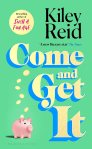 Come and Get It by Kiley Reid [Jan. 30, Bloomsbury / Jan. 9, G.P. Putnam’s] Such a Fun Age was a surprise hit with me, so I’m keen to try her second novel, set on a college campus. “It’s 2017 at the University of Arkansas. Millie Cousins, a senior resident assistant, wants to graduate, get a job, and buy a house. So when Agatha Paul, a [lesbian] visiting professor and writer, offers Millie an easy yet unusual opportunity, she jumps at the chance. But Millie’s starry-eyed hustle becomes jeopardised by odd new friends, vengeful dorm pranks and illicit intrigue.” (NetGalley download / public library reservation)
 Martyr! by Kaveh Akbar [March 7, Picador /Jan. 23, Knopf] I’ve read Akbar’s two full-length poetry collections and particularly admired Pilgrim Bell. His debut novel sounds kind of unhinged, but I figure it’s worth a try. “When Cyrus’s obsession with the lives of the martyrs – Bobby Sands, Joan of Arc – leads him to a chance encounter with a dying artist, he finds himself drawn towards the mysteries of an uncle who rode through Iranian battlefields dressed as the Angel of Death; and toward his [late] mother, who may not have been who or what she seemed.” (NetGalley download)
 Memory Piece by Lisa Ko [March 7, Dialogue Books / March 19, Riverhead] Ko’s debut, The Leavers, was a favourite of mine from 2018, so it was great to hear that she is coming out with a new book. “Moving from the predigital 1980s to the art and tech subcultures of the 1990s to a strikingly imagined portrait of the 2040s, Memory Piece is an innovative and audacious story of three lifelong [female, Asian American] friends as they strive to build satisfying lives in a world that turns out to be radically different from the one they were promised.”
 The Paris Novel by Ruth Reichl [April 23, Random House] I’m reading this for an early Shelf Awareness review. It’s fairly breezy but enjoyable, with an expected foodie theme plus hints of magic but also trauma from the protagonist’s upbringing. “When her estranged mother dies, Stella is left with an unusual gift: a one-way plane ticket, and a note reading ‘Go to Paris’. But Stella is hardly cut out for adventure … When her boss encourages her to take time off, Stella resigns herself to honoring her mother’s last wishes.” (PDF review copy)
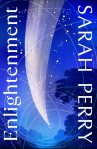 Enlightenment by Sarah Perry [May 2, Jonathan Cape / May 7, Mariner Books] “Thomas Hart and Grace Macauley are fellow worshippers at the Bethesda Baptist chapel in the small Essex town of Aldleigh. Though separated in age by three decades, the pair are kindred spirits – torn between their commitment to religion and their desire for more. But their friendship is threatened by the arrival of love.” Sounds a lot like The Essex Serpent (which is a very good thing) but with astronomy. (Print proof copy)
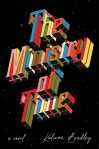 The Ministry of Time, Kaliane Bradley [May 7, Sceptre/Avid Reader Press] “A time travel romance, a speculative spy thriller, a workplace comedy, and an ingeniously constructed exploration of the nature of truth and power and the potential for love to change it. In the near future, a civil servant is offered the salary of her dreams and is, shortly afterward, told what project she’ll be working on. A recently established government ministry is gathering ‘expats’ from across history to establish whether time travel is feasible—for the body, but also for the fabric of space-time.” Promises to be zany and fun.
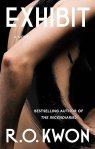 Exhibit by R.O. Kwon [May 21, Virago/Riverhead] I loved The Incendiaries and look forward to reading this next month for an early Shelf Awareness review. “At a lavish party in the hills outside of San Francisco, Jin Han meets Lidija Jung and nothing will ever be the same for either woman. A brilliant, young photographer, Jin is at a crossroads in her work, in her marriage to college sweetheart Phillip, in who she is and who she wants to be. Lidija is a glamorous, injured world-class ballerina on hiatus from her ballet company under mysterious circumstances. Drawn to each other by their intense artistic drives, the two women talk all night.” Bisexual rep from Kwon. (PDF review copy)
Nonfiction
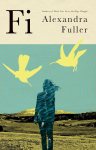 Fi: A Memoir of My Son by Alexandra Fuller [April 9, Grove Press] Fuller is one of the best memoirists out there (Don’t Let’s Go to the Dogs Tonight and Leaving Before the Rains Come), and I read pretty much every bereavement memoir I can get my hands on anyway. “It’s midsummer in Wyoming and Alexandra is barely hanging on. Grieving her father and pining for her home country of Zimbabwe, reeling from a midlife breakup, freshly sober and piecing her way uncertainly through a volatile new relationship with a younger woman, Alexandra vows to get herself back on even keel. And then – suddenly and incomprehensibly – her son Fi, at 21 years old, dies in his sleep.” (PDF review copy)
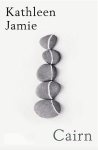 Cairn by Kathleen Jamie [June 13, Sort Of Books] Thanks to Paul (I link to his list below) for letting me know about this one. I’ll read anything Kathleen Jamie writes. “Cairn: A marker on open land, a memorial, a viewpoint shared by strangers. For the last five years … Kathleen Jamie has been turning her attention to a new form of writing: micro-essays, prose poems, notes and fragments. Placed together, like the stones of a wayside cairn, they mark a changing psychic and physical landscape.” Which leads nicely into…
Poetry
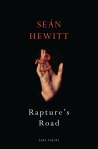 Rapture’s Road by Seán Hewitt [Jan. 11, Jonathan Cape] Hewitt’s debut collection, Tongues of Fire, was brilliant. This sounds like more of the same: “these poems forge their own unique path through the landscape. … Following the reciprocal relationship between queer sexuality and the natural world that he explored in [his previous book, the poet conjures us here into a trance: a deep delirium of hypnotic, hectic rapture where everything is called into question, until a union is finally achieved – a union in nature, with nature.”
Other lists for more ideas:
Electric Lit (all by women of color, as chosen by R.O. Kwon)
Kate – we overlap on a couple of our picks
Laura – we overlap on a few of our picks
Paul (mostly nonfiction)
What catches your eye here? What other 2024 titles do I need to know about?
The 2024 Releases I’ve Read So Far
I happen to have read eight pre-release books so far, all of them for paid review; mostly for Shelf Awareness, with one for Foreword. (I also have proof copies of upcoming novels by Tania James, Margot Livesey, Sigrid Nunez and Sarah Perry on the shelf, but haven’t managed to start on them yet.) I’ve given review excerpts, links where available, and ratings below to try to pique your interest. Early in January I’ll follow up with a list of my dozen Most Anticipated titles for the coming year.
My top recommendations so far:
(in alphabetical order)
 Theophanies by Sarah Ghazal Ali [Jan. 16, Alice James Books]: In this poised debut collection by a Muslim poet, spiritual enlightenment is a female, embodied experience, mediated by matriarchs. Ali’s ambivalence towards faith is clear in alliteration-laden verse that recalls Kaveh Akbar’s. Wordplay, floral metaphors, and multiple ghazals make for dazzling language.
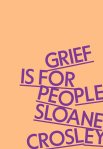 Grief Is for People by Sloane Crosley [Feb. 27, MCD]: A bereavement memoir like no other. Heart-wrenching yet witty, it bears a unique structure and offers fascinating glimpses into the New York City publishing world. Crosley’s apartment was burgled exactly a month before the suicide of her best friend and former boss. Investigating the stolen goods in parallel serves as a displacement activity for her.
 Behind You Is the Sea by Susan Muaddi Darraj [Jan. 16, HarperVia]: Darraj’s second novel-in-stories is a sparkling composite portrait of a Palestinian American community in Baltimore. Across nine stellar linked stories, she explores the complex relationships between characters divided by—or connected despite—class, language, and traditional values. The book depicts the variety of immigrant and second-generation experience, especially women’s.
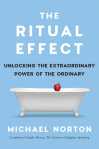 The Ritual Effect by Michael Norton [April 9, Scribner]: Many use the words “habit” and “ritual” interchangeably, but the Harvard Business School behavioral scientist argues convincingly that they are very different. While a habit is an automatic, routine action, rituals are “emotional catalysts that energize, inspire, and elevate us.” He presents an engaging and commonsense précis of his research, making a strong case for rituals’ importance in the personal and professional spheres as people mark milestones, form relationships, or simply “savor the experiences of everyday life.”
Other 2024 releases I’ve read:
(in publication date order)
 House Cat by Paul Barbera [Jan. 2, Thames & Hudson]: The Australian photographer Paul Barbera’s lavish art book showcases eye-catching architecture and the pets inhabiting these stylish spaces. Whether in a Revolutionary War-era restoration or a modernist show home, these cats preside with a befitting dignity. (Shelf Awareness review forthcoming)
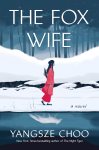 The Fox Wife by Yangsze Choo [Feb. 13, Henry Holt/Quercus]: Choo’s third novel is steeped in Chinese folklore, like her previous work, this time with a focus on tantalizing stories related to foxes, which were often worshiped at village shrines in China. Two tandem searches ramp up the level of suspense: in the winter of 1908 in Manchuria, in northeast China, a detective investigates a series of unexplained deaths; at the same time, a fox-woman masquerading as a servant plots vengeance against the man who murdered her child.
 The Only Way Through Is Out by Suzette Mullen [Feb. 13, University of Wisconsin Press]: A candid, inspirational memoir traces the events leading to her midlife acceptance of her lesbian identity and explores the aftermath of her decision to leave her marriage and build “a life where I would choose desire over safety.” The book ends on a perfect note as Mullen attends her first Pride festival aged 56. “It’s never too late” is the triumphant final line. (Foreword review forthcoming)
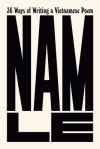 36 Ways of Writing a Vietnamese Poem by Nam Le [March 5, Knopf]: A fearless poetry debut prioritizes language and voice to explore inherited wartime trauma and expose anti-Asian racism. Each poem is titled after a rhetorical strategy or analytical mode. Anaphora is one sonic technique used to emphasize the points. Language and race are intertwined. This is a prophet’s fervent truth-telling. High-concept and unapologetic, this collection from a Dylan Thomas Prize winner pulsates. (Shelf Awareness review forthcoming)
Currently reading:
(in release date order; all for Shelf Awareness review)
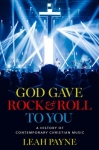 God Gave Rock and Roll to You: A History of Contemporary Christian Music by Leah Payne [Jan. 4, Oxford University Press]: “traces the history and trajectory of CCM in America and, in the process, demonstrates how the industry, its artists, and its fans shaped—and continue to shape—conservative, (mostly) white, evangelical Protestantism.”
 Raised by Wolves: Fifty Poets on Fifty Poems, A Graywolf Anthology [Jan. 23, Graywolf Press]: “Graywolf poets have selected fifty poems by Graywolf poets, offering insightful prose reflections on their selections. What arises is a choral arrangement of voices and lineages across decades, languages, styles, and divergences, inspiring a shared vision for the future.”
The Paris Novel by Ruth Reichl [April 30, Random House]: “When her estranged mother dies, Stella is left with an unusual gift: a one-way plane ticket, and a note reading ‘Go to Paris’. But Stella is hardly cut out for adventure … When her boss encourages her to take time off, Stella resigns herself to honoring her mother’s last wishes.”
Will you look out for one or more of these?
Any other 2024 reads you can recommend?
That’s it for me until later next week when I start in on my year-end round-ups (DNFs, miscellaneous superlatives, books of the year, and final statistics). Merry Christmas!
October Poetry Releases: Bergin, Draycott, Lopez, Rizwan, Skoulding
It was a prolific month for poetry. There is so much variety here in form and topic, from the tongue-in-cheek aphorisms of Tara Bergin’s Savage Tales to the maritime and ornithological portrait of Anglesey in Zoë Skoulding’s A Marginal Sea. Something for everyone, I’d like to think, and I hope these capsule reviews and sample poems give you a taste.
Savage Tales by Tara Bergin
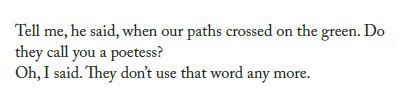
 This is the third collection by the Irish poet; I’d previously read her The Tragic Death of Eleanor Marx. Grouped into nine thematic sections, these very short poems take the form of few-sentence aphorisms or riddles, with the titles, printed in the bottom corner, often acting as something of a punchline – especially because I had them on my e-reader and they only appeared after I’d turned the digital ‘page’. Some appear to be autobiographical, about life for a female academic. Others are political (I loved “Tenants and Landlords”), or about wolves or blackbirds. The verse in “Constructions” takes different shapes on the page. Here are “The Subject Field” and “The Actor”:

With thanks to Carcanet Press for the free e-copy for review.
The Kingdom by Jane Draycott
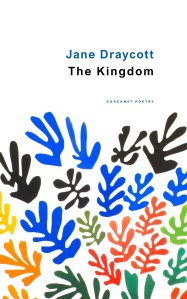 I love the Matisse cut-outs on the cover of Draycott’s fifth collection. The title poem’s archaic spelling (“hyther,” “releyf”) contrast with its picture of a modern woman seeking respite from “the men coming on to you / the taxi drivers saying here jump in no / no you don’t need no money.” Country vs. city, public vs. private, pastoral past and technological future are some of the dichotomies the verse plays with. I enjoyed the alliteration and references to an old English herbarium, Derek Jarman and polar regions. However, it was hard to find overall linking themes to latch onto.
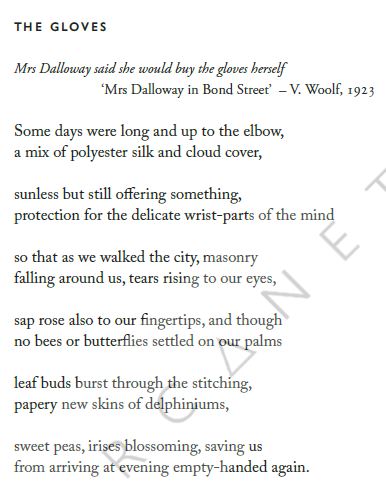
With thanks to Carcanet Press for the free e-copy for review.
We Borrowed Gentleness by J. Estanislao Lopez
 Brimming with striking metaphors and theological echoes, the first poetry collection by the Houston-based writer is an elegant record of family life on both sides of the Mexican border. “Laredo Duplex” (below) explains how violence prompted the family’s migration. “The Contract” recalls acting as a go-between for a father who didn’t speak English; in “Diáspora” the speaker is dubious about assimilation: “I am losing my brother to whiteness.” The tone is elevated and philosophical (“You take the knife of epistemology and the elegiac fork”), with ample alliteration. Flora and fauna and the Bible are common sources of unexpected metaphors. Lopez tackles big issues of identity, loss and memory in delicate verse suited to readers of Kaveh Akbar. (My full review is on Shelf Awareness.)
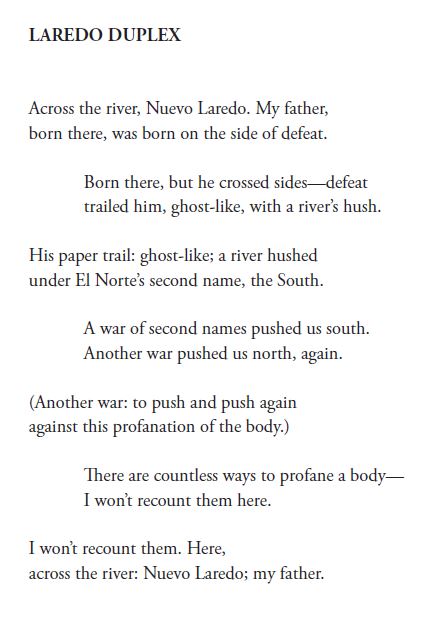
With thanks to Alyson Sinclair PR for the free e-copy for review.
Europe, Love Me Back by Rakhshan Rizwan
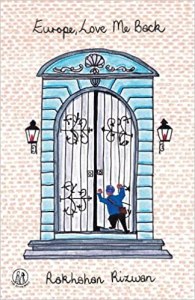 This debut collection has Rizwan juxtaposing East and West, calling out European countries for the prejudice she has experienced as a Muslim Pakistani in academia. She has also lived in the UK and USA, but mostly reflects on time spent in Germany and the Netherlands, where her imperfect grasp of the language was an additional way of standing out. “Adjunct” is the source of the cover image: she knocks and knocks for admittance, but finds herself shut out still. Rizwan takes extended metaphors from marriage, motherhood and women’s health: in “My house is becoming like my country,” she imagines her husband instituting draconian laws; in “I have found in my breast,” a visit to a doctor about a lump only exposes her own exoticism (“Basically, the Muslims are metastasizing”). In “Paris Proper,” she experiences the city differently from a friend because of the colonial history of the art. (See also Liz’s review.)
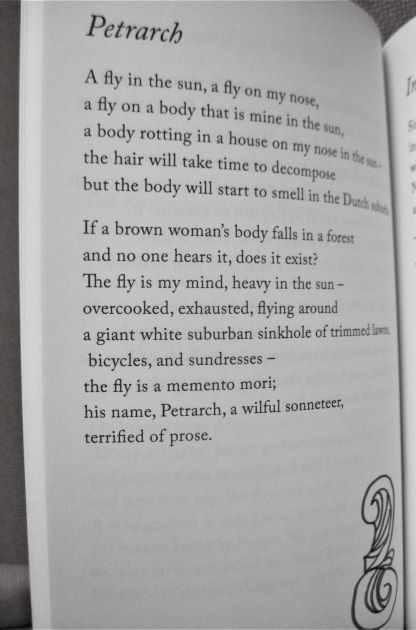
Some favourite lines:
“my breasts harden / with milk, that peculiar ache of women’s bodies / which do only half the sin / but carry all the history” (from “Half the Sin”)
With thanks to The Emma Press for the proof copy for review.
A Marginal Sea by Zoë Skoulding
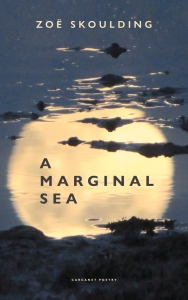 Skoulding’s collection is said to be all about Anglesey in Wales, but from that jumping-off point the poems disperse to consider maps, maritime vocabulary, seabirds, islands, tides and much more. There are also translations from the French, various commissions and collaborations, and pieces about the natural vs. the manmade. Some are in paragraph form and there’s a real variety to how lines and stanzas are laid out on the page. I especially liked “Red Squirrels in Coed Cyrnol.” I’ll read more by Skoulding.
 With thanks to Carcanet Press for the free e-copy for review.
Read any good poetry recently?
Best Books of 2021: Fiction and Poetry
I’ve chosen my 15 fiction and 15 nonfiction favourites (coming up tomorrow) from 2021, along with a few poetry selections at the end of this post. Two of my picks are graphic novels!
 Under the Blue by Oana Aristide: Fans of Station Eleven, this one’s for you: the best dystopian novel I’ve read since Mandel’s. Aristide started writing in 2017, and unknowingly predicted a much worse pandemic than Covid-19. In July 2020, Harry and sisters Ash and Jessie are among mere thousands of survivors worldwide. Their plan is to flee England for Uganda, out of range of Europe’s at-risk nuclear reactors. An epic road trip ensues. A propulsive cautionary tale that also reminded me of work by Louisa Hall and Maja Lunde.
 The Push by Ashley Audrain: Blythe Connor, living alone with her memories, ponders what went wrong with her seemingly perfect family: a handsome architect husband, Fox, and their daughter Violet and baby son Sam. How much of what happened was because of Violet’s nature, and how much was Blythe’s fault for failing to be the mother the girl needed? The fact that her experience with Sam was completely different makes her feel ambivalent about motherhood. A cracking psychological thriller with an unreliable narrator.
 Site Fidelity by Claire Boyles: A love for their Colorado homeland inspires women’s environmental activism in a linked short story collection. Hope and perseverance are watchwords for Boyles’s characters, many of whom are single mothers or unmarried women. Nearly half of the stories center on a trio of feisty sisters. This reminded me most of Love Medicine by Louise Erdrich, as well as Barbara Kingsolver’s early fiction set in the Southwest. It got me eagerly awaiting whatever Boyles writes next.
 A Lie Someone Told You About Yourself by Peter Ho Davies: Davies’ minimalist approach – short sections skating over the months and years, wryly pulling out representative moment – crystallizes fatherhood, illuminating its daily heartaches and joys. The tone is just right in this novella, showing both sides of parenthood and voicing things you aren’t allowed to think, or at least not to admit to, starting with abortion, which would-be fathers aren’t expected to have strong feelings about. I loved the rumination on the role that chance plays in a life.
 The Living Sea of Waking Dreams by Richard Flanagan: Extinction, personal and global, is at the heart of this timely and enchanting story. It starts off as a family drama. Francie, the 86-year-old matriarch, is in a Tasmanian hospital after a brain bleed. Her three middle-aged children can’t bear to let her go. In an Australia blighted by bushfires, species loss mirrors Francie’s physical and mental crumbling. Smartphone addiction threatens meaningful connection. And then characters start to literally disappear, part by part…
 Mrs Death Misses Death by Salena Godden: Grief Is the Thing with Feathers meets Girl, Woman, Other would be my marketing shorthand for this one. Poet Salena Godden’s debut novel is a fresh and fizzing work, passionate about exposing injustice but also about celebrating simple joys, and in the end it’s wholly life-affirming despite a narrative stuffed full of deaths real and imagined. The novel balances the cosmic and the personal through Wolf’s family story. Unusual, musical, and a real pleasure to read.
 Early Morning Riser by Katherine Heiny: This tickled my funny bone. A cross between Kitchens of the Great Midwest and Olive Kitteridge, it’s built of five extended episodes, crossing nearly two decades in the lives of Jane and Duncan and lovingly portraying the hangers-on who compose their unusual family constellation in Boyne City, Michigan. All the characters are incorrigible but wonderful. Bad things happen, but there’s a core of love as Heiny explores marriage and parenting. A good-natured book that feels wise and bittersweet.
 No One Is Talking About This by Patricia Lockwood: This starts as a flippant skewering of modern life. A woman who became a social media star by tweeting quips like “Can a dog be twins?” reflects on life on “the portal” and under “the dictator.” Midway through the book, she gets a wake-up call when her mother summons her back to the Midwest for a family emergency. It’s the about-face that makes this novel, forcing readers to question the value of a digital existence based on glib pretence. Funny, but with an ache behind it.
 When the Stars Go Dark by Paula McLain: I almost never pick up a thriller, but my love for McLain’s earlier fiction attracted me and I ended up loving this. Really, I can’t imagine a better take on the genre. Anna Hart is a detective who, fleeing tragedies from her past, throws herself into the linked mystery of three missing girls in California. The book is rich in atmosphere: McLain’s love of the coast and forests is clear, and the fact that the book is set in 1993 means that Anna has to rely on old-fashioned policework rather than technology.
 In by Will McPhail: Alternately laugh-out-loud funny and gentle. This debut graphic novel is a spot-on picture of modern life in a generic city. Nick never knows the right thing to say. The bachelor artist’s well-intentioned thoughts remain unvoiced; all he can manage is small talk. That starts to change when he meets Wren, a Black doctor who sees past his pretence. If only he can find the magic words that elicit honesty, he might make real connections with other human beings. A good old-fashioned story, with a wide emotional range.
 Heartstopper, Volume 4 by Alice Oseman: This super-cute series was my summer crush. I liked this best of the first four. I admired how Oseman works in serious issues teens might face but has still created something so full of queer joy. While Charlie has been figuring out when to tell Nick he loves him, Nick has been working out how to confront Charlie about his anorexia. They learn that love doesn’t solve everything, but that a friend or boyfriend can be there to listen. Oseman really brings out the supporting cast in this volume, too.
 Detransition, Baby by Torrey Peters: A sparkling, sexy comedy with a tender heart beneath the zingers. Peters has set herself up as the Jane Austen of the trans community, tracing the ins and outs of relationships with verve and nuance. For me this was a valuable book simply for normalizing trans sexuality. The themes are universal, after all: figuring out who you are and what the shape of your life will be. I admire when authors don’t pander to readers by making things easy for those who are unfamiliar with a culture. Great lines abound.
 Brood by Jackie Polzin: Polzin’s debut is a quietly touching story of a woman in the Midwest raising chickens and coming to terms with the shape of her life. The unnamed narrator is Everywoman and no one at the same time. At one point she reveals, with no fanfare, that she miscarried four months into pregnancy in the bathroom of one of the houses she cleans. There is a bittersweet tone to this short work. It’s a low-key, genuine portrait of life in the in-between stages and how it can be affected by fate or by other people’s decisions.
 Bewilderment by Richard Powers: As environmentally aware as The Overstory, but with a more intimate scope, focusing on a father and son who journey together in memory and imagination as well as in real life. Neurodivergent Robin is a scientific marvel and an environmental activist. Theo studies other planets that rival an ailing Earth, and another state allows Robin to reconnect with his late mother. When I came to the end, I felt despondent and overwhelmed. But as time has passed, the book’s feral beauty has stuck with me.

In the Company of Men: The Ebola Tales by Véronique Tadjo: This creative and compassionate work takes on various personae to plot the course of the Ebola outbreak in West Africa in 2014–16. The suffering is immense, and there are ironic situations that only compound the tragedy. Tadjo flows freely between all the first-person voices, even including non-human narrators such as baobab trees and a fruit bat. Local legends and songs, along with a few of her own poems, also enter into the text.
If I had to pick my novel of the year, it would be The Living Sea of Waking Dreams.

Books not pictured were from the library or read electronically.
Poetry
 Pilgrim Bell by Kaveh Akbar: An Iranian American poet imparts the experience of being torn between cultures and languages, as well as between religion and doubt, in this gorgeous collection of confessional verse. Food, plants, animals, and the body supply the book’s imagery. Wordplay and startling juxtapositions lend lightness to a wistful, intimate collection that seeks belonging and belief. (Reviewed for Shelf Awareness.)
 Field Requiem by Sheri Benning: Benning employs religious language to structure her solemn meditations on the degraded landscape of Saskatchewan, a place where old ways have been replaced by impersonal, industrial-scale farming. You can hear the rhythms of psalms and the echoes of the requiem mass. Alliteration pops out from lists of crops and the prairie species their cultivation has pushed to the edge of extinction. This is deeply place based writing. With its ecological conscience and liturgical sound, it’s just my kind of poetry.
 Eat or We Both Starve by Victoria Kennefick: In this audacious debut collection, the body is presented as a battleground: for the brain cancer that takes the poet’s father; for disordered eating that entwines with mummy issues; for the restructuring of pregnancy. Families break apart and fuse into new formations. Cannibalism and famine metaphors dredge up emotional states and religious doctrines. There’s a pleasingly morbid cast to the book, but it also has its lighter moments. Rich with imagery and alliteration, this is also just my kind of poetry.
What are some of the best books you’ve read so far this year?
What 2021 releases do I need to catch up on right away?
Autumnal Children’s and YA Books
Browsing through old magazines, I found a fun BookPage reading list from October 2019 entitled “Pumpkin spice latte literature.” It asks, “what if autumn were distilled into a book? The mixture of crispness and warmth, the thrill of possibility, the bittersweetness of change—these books are pure pumpkin spice.” I love the lateral thinking that came up with
 The Art of Fielding by Chad Harbach (back to school in the Midwest)
- I Remember Nothing by Nora Ephron (wry reflections from the autumn of a life)
- Possession by A.S. Byatt (bookish geeking out)
- Calling a Wolf a Wolf by Kaveh Akbar (taking comfort from a vision of recovery from alcoholism)
- An Enchantment of Ravens by Margaret Rogerson (wit and magic)
I’ve read the first three, and am keen to catch up on Akbar’s debut poetry collection after loving Pilgrim Bell this summer. I’m only unlikely to pick up Rogerson’s fantasy. In any case, I enjoyed seeing how the editors came up with their selections.
I tend to be rather more literal with my seasonal reading recommendations. Does it have autumn in the title or as a setting?! Is it about pumpkins or Halloween?
This year I happen to have amassed all children’s and YA selections.
October, October by Katya Balen (2020)
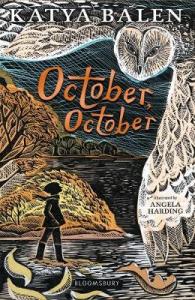 I’ll admit it: it was Angela Harding’s gorgeous cover illustration that drew me to this one. But I found a story that lived up to it, too. October, who has just turned 11 and is named after her birth month, lives in the woods with her father. Their shelter and their ways are fairly primitive, but it’s what October knows and loves. When her father has an accident and she’s forced into joining her mother’s London life, her only consolations are her rescued barn owl chick, Stig, and the mudlarking hobby she takes up with her new friend, Yusuf.
The child’s perspective is well rendered through artful run-on sentences. Balen is careful to show the consequences of October’s decisions and to present advantages as well as disadvantages so it’s not just countryside = good, city = bad. I thought the father’s recovery a bit too quick, but overall, this middle grade novel was a great read for any age, as well as one to get kids thinking about illness and loss. And how about these heart-tugging last lines? “There are stories everywhere and I want to tell them all. And all the world is wild and waiting for me.” (Public library) 
Autumn Story by Jill Barklem (1980)
 The second in the quartet of seasonal “Brambly Hedge” stories. Autumn is a time for stocking the pantry shelves with preserves, so the mice are out gathering berries, fruit and mushrooms. Young Primrose wanders off, inadvertently causing alarm – though all she does is meet a pair of elderly harvest mice and stay for tea and cake in their round nest amid the cornstalks. I love all the little touches in the illustrations: the patchwork tea cosy matches the quilt on the bed one floor up, and nearly every page is adorned with flowers and other foliage. After we get past the mild peril that seems to be de rigueur for any children’s book, all is returned to a comforting normal. Time to get the Winter volume out from the library. (Public library)
Une Chanson d’ours by Benjamin Chaud (2011)
 The first whole book I’ve read in French in many a year. I just about coped, given that it’s a picture book with not all that many words on a page; any vocabulary I didn’t know offhand, I could understand in context. It’s late into the autumn and Papa Bear is ready to start hibernating for the year, but Little Bear spies a late-flying bee and follows it out of the woods and all the way to the big city. Papa Bear, realizing his lad isn’t beside him in the cave, sets out in pursuit and bee, cub and bear all end up at the opera hall, to the great surprise of the audience. What will Papa do with his moment in the spotlight? This is a lovely book that, despite the whimsy, still teaches about the seasons and parent–child bonds as it offers a vision of how humans and animals could coexist. I’ve since found out that this was made into a series of four books, all available in English translation. (Little Free Library)
Pumpkinheads by Rainbow Rowell; illus. Faith Erin Hicks (2019)
 This YA graphic novel is set on a Nebraska pumpkin patch that’s more like Disney World than a simple field down the road. Josiah and Deja have worked together at the Succotash Hut for the last three autumns. Today they’re aware that it’s their final Halloween before leaving for college. Deja’s goal is to try every culinary delicacy the patch has to offer – a smorgasbord of foodstuffs that are likely to be utterly baffling to non-American readers: candy apples, Frito pie (even I hadn’t heard of this one), kettle corn, s’mores, and plenty of other saccharine confections.
Josiah’s goal, by contrast, is to catch the eye of Marcy, the beauty who works at the fudge stand. Deja convinces him to desert the Succotash Hut and go in pursuit of Marcy via as many food stands as possible. She’s willing to indulge his unrealistic fantasy even though, as a bisexual who’s dated just about everyone at the patch, she knows romance is sometimes not all it’s cracked up to be. Meanwhile, there’s an angry billy goat on the loose.
This is a fun and quick romp, and the ending genuinely surprised me. I liked the story better than the art, though – my main problem was that these teen characters look more like they’re 30 (Josiah, especially, looks almost haggard what with the sharp lines down the sides of his face – I guess they’re to give him a ‘chiselled’ jaw?), similar to that weird phenomenon of much older actors playing high schoolers. So, I laughed to see in an afterword conversation between Rowell and Hicks that one of the major things they changed from early mock-ups was making the protagonists look older. (Public library) 
Pick a Pumpkin by Patricia Toht; illus. Jarvis (2019)
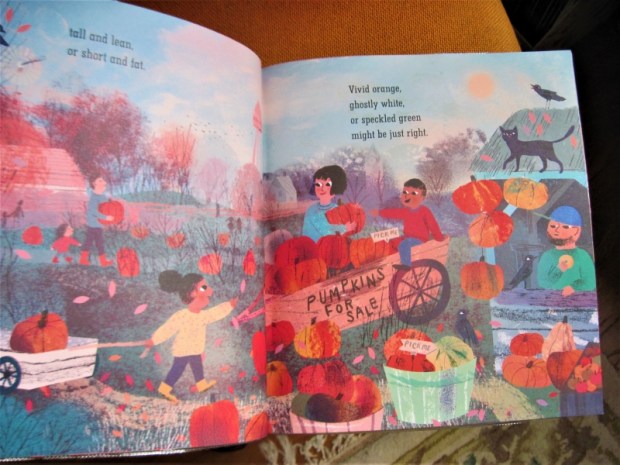
 From picking the best pumpkin at the patch to going out trick-or-treating, this is a great introduction to Halloween traditions. It even gives step-by-step instructions for carving a jack-o’-lantern. The drawing style – generally 2D, and looking like it could be part cut paper collages, with some sponge painting – reminds me of Ezra Jack Keats and most of the characters are not white, which is refreshing. There are lots of little autumnal details to pick out in the two-page spreads, with a black cat and crows on most pages and a set of twins and a mouse on some others. The rhymes are either in couplets or ABCB patterns. Perfect October reading. (Public library)
 Any super-autumnal reading for you this year?
Do you read children’s picture books and YA novels even if you (and any children) are well past that age – or is it just me?
The Best Books from the First Half of 2021
Hard to believe we’ve already crossed the midpoint of the year. My top 20 releases of 2021 thus far, in alphabetical order within genre (fiction is dominating this year!), are below. I link to those I’ve already reviewed in full here or on Goodreads:
Fiction
Under the Blue by Oana Aristide: Fans of Station Eleven, this one’s for you: the best dystopian novel I’ve read since Mandel’s. Aristide started writing in 2017, and unknowingly predicted a much worse pandemic than Covid-19. In July 2020, Harry and sisters Ash and Jessie are among mere thousands of survivors worldwide. Their plan is to flee England for Uganda, out of range of Europe’s at-risk nuclear reactors. An epic road trip ensues. A propulsive cautionary tale that also reminded me of work by Louisa Hall and Maja Lunde.
The Push by Ashley Audrain: Blythe Connor, living alone with her memories, ponders what went wrong with her seemingly perfect family: a handsome architect husband, Fox, and their daughter Violet and baby son Sam. How much of what happened was because of Violet’s nature, and how much was Blythe’s fault for failing to be the mother the girl needed? The fact that her experience with Sam was completely different makes her feel ambivalent about motherhood. A cracking psychological thriller with an unreliable narrator.
A Lie Someone Told You About Yourself by Peter Ho Davies: Davies’ minimalist approach – short sections skating over the months and years, wryly pulling out representative moment – crystallizes fatherhood, illuminating its daily heartaches and joys. The tone is just right in this novella, showing both sides of parenthood and voicing things you aren’t allowed to think, or at least not to admit to, starting with abortion, which would-be fathers aren’t expected to have strong feelings about. I loved the rumination on the role that chance plays in a life.
The Living Sea of Waking Dreams by Richard Flanagan: Extinction, personal and global, is at the heart of this timely and enchanting story. It starts off as a family drama. Francie, the 86-year-old matriarch, is in a Tasmanian hospital after a brain bleed. Her three middle-aged children can’t bear to let her go. In an Australia blighted by bushfires, species loss mirrors Francie’s physical and mental crumbling. Smartphone addiction threatens meaningful connection. And then characters start to literally disappear, part by part…
Mrs Death Misses Death by Salena Godden: Grief Is the Thing with Feathers meets Girl, Woman, Other would be my marketing shorthand for this one. Poet Salena Godden’s debut novel is a fresh and fizzing work, passionate about exposing injustice but also about celebrating simple joys, and in the end it’s wholly life-affirming despite a narrative stuffed full of deaths real and imagined. The novel balances the cosmic and the personal through Wolf’s family story. Unusual, musical, and a real pleasure to read.
Early Morning Riser by Katherine Heiny: This tickled my funny bone. A cross between Kitchens of the Great Midwest and Olive Kitteridge, it’s built of five extended episodes, crossing nearly two decades in the lives of Jane and Duncan and lovingly portraying the hangers-on who compose their unusual family constellation in Boyne City, Michigan. All the characters are incorrigible but wonderful. Bad things happen, but there’s a core of love as Heiny explores marriage and parenting. A good-natured book that feels wise and bittersweet.
No One Is Talking About This by Patricia Lockwood: This starts as a flippant skewering of modern life. A woman who became a social media star by tweeting quips like “Can a dog be twins?” reflects on life on “the portal” and under “the dictator.” Midway through the book, she gets a wake-up call when her mother summons her back to the Midwest for a family emergency. It’s the about-face that makes this novel, forcing readers to question the value of a digital existence based on glib pretence. Funny, but with an ache behind it.
In by Will McPhail: Alternately laugh-out-loud funny and gentle. This debut graphic novel is a spot-on picture of modern life in a generic city. Nick never knows the right thing to say. The bachelor artist’s well-intentioned thoughts remain unvoiced; all he can manage is small talk. That starts to change when he meets Wren, a Black doctor who sees past his pretence. If only he can find the magic words that elicit honesty, he might make real connections with other human beings. A good old-fashioned story, with a wide emotional range.
Detransition, Baby by Torrey Peters: A sparkling, sexy comedy with a tender heart beneath the zingers. Peters has set herself up as the Jane Austen of the trans community, tracing the ins and outs of relationships with verve and nuance. For me this was a valuable book simply for normalizing trans sexuality. The themes are universal, after all: figuring out who you are and what the shape of your life will be. I admire when authors don’t pander to readers by making things easy for those who are unfamiliar with a culture. Great lines abound.
Brood by Jackie Polzin: Polzin’s debut is a quietly touching story of a woman in the Midwest raising chickens and coming to terms with the shape of her life. The unnamed narrator is Everywoman and no one at the same time. At one point she reveals, with no fanfare, that she miscarried four months into pregnancy in the bathroom of one of the houses she cleans. There is a bittersweet tone to this short work. It’s a low-key, genuine portrait of life in the in-between stages and how it can be affected by fate or by other people’s decisions.
Nonfiction
 The Circling Sky by Neil Ansell: Hoping to reclaim an ancestral connection, Ansell visited the New Forest some 30 times between January 2019 and January 2020, observing the unfolding seasons and the many uncommon and endemic species its miles house. He weaves together his personal story, the shocking history of forced Gypsy relocation into forest compounds starting in the 1920s, and the unfairness of land ownership in Britain. The New Forest is a model of both wildlife-friendly land management and freedom of human access.
 The Inevitable by Katie Engelhart: Engelhart spends time with doctors and patients who are caught up in the assisted dying argument, chiefly in Western Europe and the United States. Each case is given its own long chapter, like an extended magazine profile. The stories are wrenching, but compassionately told. The author explores the nuances of each situation, crafting expert portraits of suffering people and the medical professionals who seek to help them, and adding much in the way of valuable context. A voice of reason and empathy.
 The Screaming Sky by Charles Foster: A Renaissance man as well versed in law and theology as he is in natural history, Foster is obsessed with swifts and ashamed of his own species: for looking down at their feet when they could be watching the skies; for the “pathological tidiness” that leaves birds and other creatures no place to live. He delivers heaps of information on the birds but refuses to stick to a just-the-facts approach. The book quotes frequently from poetry and the prose is full of sharp turns of phrase and whimsy.
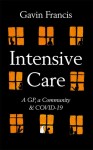 Intensive Care by Gavin Francis: Francis, an Edinburgh physician, reflects on “the most intense months I have known in my twenty-year career.” He journeys back through 2020, from the January day when he received a bulletin about a “novel Wuhan coronavirus” to November, when he learned of promising vaccine trials but also a rumored third wave and winter lockdown. An absorbing first-hand account of a medical crisis, it compassionately bridges the gap between experts and laymen. The best Covid chronicle so far.
 A Still Life by Josie George: Over a year of lockdowns, many of us became accustomed to spending most of the time at home. But for Josie George, social isolation is nothing new. Chronic illness long ago reduced her territory to her home and garden. The magic of A Still Life is in how she finds joy and purpose despite extreme limitations. Opening on New Year’s Day and travelling from one winter to the next, the book is a window onto George’s quiet existence as well as the turning of the seasons. (Reviewed for TLS.)
 Dusk, Night, Dawn by Anne Lamott: Lamott’s best new essays in nearly a decade. The central theme is how to have hope in God and in other people even when the news – Trump, Covid, and climate breakdown – only heralds the worst. One key thing that has changed for her is getting married for the first time, in her mid-sixties, to a Buddhist. In thinking of marriage, she writes about friendship, constancy, and forgiveness, none of which comes easy. Opportunities for maintaining quiet faith in spite of the circumstances arise all the time.
 A Braided Heart by Brenda Miller: Miller, a professor of creative writing, delivers a master class on the composition and appreciation of autobiographical essays. In 18 concise pieces, she tracks her development as a writer and discusses the “lyric essay”—a form as old as Seneca that prioritizes imagery over narrative. These innovative and introspective essays, ideal for fans of Anne Fadiman, showcase the interplay of structure and content. (Coming out on July 13th from the University of Michigan Press. My first review for Shelf Awareness.)
 Sanctuary by Emily Rapp Black: A continuation of The Still Point of the Turning World, about the author’s son Ronan, who died of Tay-Sachs disease at age three. In the months surrounding his death, she split from her husband and raced into another relationship that led to her daughter, Charlie. Rapp Black questions the sorts of words she got branded with: “brave,” “resilient.” Sanctuary is full of allusions and flashbacks, threading life’s disparate parts into a chaotic tapestry. It’s measured and wrought, taming fire into light and warmth.
Poetry
Pilgrim Bell by Kaveh Akbar: An Iranian American poet imparts the experience of being torn between cultures and languages, as well as between religion and doubt, in this gorgeous collection of confessional verse. Food, plants, animals, and the body supply the book’s imagery. Wordplay and startling juxtapositions lend lightness to a wistful, intimate collection that seeks belonging and belief. (Coming out on August 3rd from Graywolf Press. Reviewed for Shelf Awareness.)
Eat or We Both Starve by Victoria Kennefick: In this audacious debut collection, the body is presented as a battleground: for the brain cancer that takes the poet’s father; for disordered eating that entwines with mummy issues; for the restructuring of pregnancy. Families break apart and fuse into new formations. Cannibalism and famine metaphors dredge up emotional states and religious doctrines. There’s a pleasingly morbid cast to the book, but it also has its lighter moments. Rich with imagery and alliteration, this is just my kind of poetry.
 Bookish Beck = Rebecca Foster. American transplant to England. Freelance proofreader and book reviewer.
 Bookish Beck