Novellas in November, Part 1: 3 Nonfiction, 2 Super-Short Fiction
Short books; short reviews.
Nonfiction:
The Measure of My Days by Florida Scott-Maxwell (1968)
[150 pages]
 I learned about this from one of May Sarton’s journals, which shares its concern with ageing and selfhood. The author was an American suffragist, playwright, mother and analytical psychologist who trained under Jung and lived in England and Scotland with her Scottish husband. She kept this notebook while she was 82, partly while recovering from gallbladder surgery. It’s written in short, sometimes aphoristic paragraphs. While I appreciated her thoughts on suffering, developing “hardihood,” the simplicity that comes with giving up many cares and activities, and the impossibility of solving “one’s own incorrigibility,” I found this somewhat rambly and abstract, especially when she goes off on a dated tangent about the equality of the sexes. (Free from The Book Thing of Baltimore)
Hope in the Dark: Untold Histories, Wild Possibilities by Rebecca Solnit (2004)
[143 pages]
 “Activism is not a journey to the corner store, it is a plunge into the unknown. The future is always dark.” This resonated with the Extinction Rebellion handbook I reviewed earlier in the year. Solnit believes in the power of purposeful individuals working towards social justice, even in the face of dispiriting evidence (the largest protests the world had seen didn’t stop the Iraq War). Instead of perfectionism, she advises flexibility and resilience; things could be even worse had we not acted. At first I thought it depressing that 15 years on we’re still dealing with many of the issues she mentions here, and the environmental crisis has only deepened. But her strong and stirring writing is a reminder that, though injustice is always with us, so is everyday heroism. (Free from The Book Thing of Baltimore)
Lama by Derek Tangye (1966)
[160 pages]
 Tangye wrote a series of cozy animal books similar to Doreen Tovey’s. He and his wife Jean ran a flower farm in Cornwall and had a succession of cats, along with donkeys and a Muscovy duck named Boris. After the death of their beloved cat Monty, Jean wanted a kitten for Christmas but Tangye, who considered himself a one-cat man rather than a wholesale cat lover, hesitated. The matter was decided for them when a little black stray started coming round and soon made herself at home. (Her name is a tribute to the Dalai Lama’s safe flight from Tibet.) Mild adventures ensue, such as Lama going down a badger sett and Jeannie convincing herself that she’s identified another stray as Lama’s mother. Pleasant, if slight; I’ll read more by Tangye. (From Kennet Centre free bookshop)
Fiction:
The Small Miracle by Paul Gallico (1951)
[47 pages]
 Like Tangye, Gallico is known for writing charming animal books, but fables rather than memoirs. Set in postwar Assisi, Italy, this stars Pepino, a 10-year-old orphan boy who runs errands with his donkey Violetta to earn his food and board. When Violetta falls ill, he dreads losing not just his livelihood but also his only friend in the world. But the powers that be won’t let him bring her into the local church so that he can pray to St. Francis for her healing. Pepino takes to heart the maxim an American corporal gave him – “don’t take no for an answer” – and takes his suit all the way to the pope. This story of what faith can achieve just manages to avoid being twee. (From Kennet Centre free bookshop)
Birthday Girl by Haruki Murakami (2002; English translation by Jay Rubin, 2003)
[42 pages]
 Reprinted as a stand-alone pamphlet to celebrate the author’s 70th birthday, this is about a waitress who on her 20th birthday is given the unwonted task of taking dinner up to the restaurant owner, who lives above the establishment. He is taken with the young woman and offers to grant her one wish. We never hear exactly what that wish was. It’s now more than 10 years later and she’s recalling the occasion for a friend, who asks her if the wish came true and whether she regrets what she requested. She surveys her current life and says that it remains to be seen whether her wish will be fulfilled; I could only assume that she wished for happiness, which is shifting and subjective. Encountering this in a larger collection would be fine, but it wasn’t particularly worth reading on its own. (Public library)
I’ve also had a number of novella DNFs so far this month, alas: Atlantic Winds by William Prendiville (not engaging in the least), By Grand Central Station I Sat Down and Wept by Elizabeth Smart (fascinating autobiographical backstory; pretentious prose) and The Dream Life of Balso Snell by Nathanael West (even more bizarre and crass than I’m used to from him).
Onwards!
Have you read any of these novellas? Which one takes your fancy?
November Plans: Novellas, Margaret Atwood Reading Month & More
This is my fourth year joining Laura Frey and others in reading mostly novellas in November. Last year Laura put together a history of the challenge (here); it has had various incarnations but has no particular host or rules. Join us if you like! (#NovNov and #NovellasinNovember) The definition of a novella is loose – it’s based more on the word count than the number of pages – so it’s up to you what you’d like to classify as one. I generally limit myself to books of 150 pages or fewer, though I might go as high as 180-some if there aren’t that many words on a page. Some, including Laura and Susan, would be as generous as 200.


I’ve trawled my shelves for fiction and nonfiction stacks to select from, as well as a few volumes that include several novellas (I’d plan on reading at least the first one) and some slightly longer novels (150–190 pages) for backups. [From the N. West volume, I just have the 52-page novella The Dream Life of Balso Snell, his debut, to read. The Tangye book with the faded cover is Lama.] Also available on my Kindle are The Therapist by Nial Giacomelli*, Record of a Night too Brief by Hiromi Kawakami, Childhood: Two Novellas by Gerard Reve, and Milton in Purgatory by Edward Vass* (both *Fairlight Moderns Novellas, as is Atlantic Winds by William Prendiville).
Other November reading plans…
Margaret Atwood Reading Month
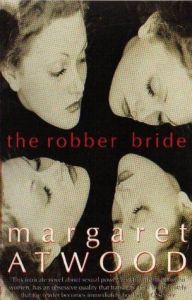 This is the second year of #MARM, hosted by Canadian bloggers extraordinaires Marcie of Buried in Print and Naomi of Consumed by Ink. This year they’re having a special The Handmaid’s Tale/The Testaments theme, but even if you’re avoiding the sequel, join us in reading one or more Atwood works of your choice. She has so much to choose from! Last year I read The Edible Woman and Surfacing. This year I’ve earmarked copies of the novel The Robber Bride (1993) and Moral Disorder (2006), a linked short story collection, both of which I got for free – the former from the free bookshop where I volunteer, and the latter from a neighbor who was giving it away.
Nonfiction November
I don’t usually participate in this challenge because nonfiction makes up at least 40% of my reading anyway, but last year I enjoyed putting together some fiction and nonfiction pairings and ‘being the expert’ on women’s religious memoirs, a subgenre I have a couple of books to add to this year. So I will probably end up doing at least one post. The full schedule is here.
Young Writer of the Year Award
Being on the shadow panel for the Sunday Times/PFD Young Writer of the Year Award was a highlight of 2017 for me. I was sad to not be able to attend any of the events last year. I’m excited for this year’s shadow panelists, a couple of whom are blogging friends (one I’ve met IRL), and I look forward to following along with the nominated books and attending the prize ceremony at the London Library on December 5th.
 With any luck I will already have read at least one or two books from the shortlist, which is to be announced on November 3rd. I have my fingers crossed for Yara Rodrigues Fowler, Daisy Johnson, Elizabeth Macneal, Stephen Rutt and Lara Williams; I expect we may also see repeat appearances from one of the poets recognized by the Forward Prizes and Guy Gunaratne, the winner of the 2019 Dylan Thomas Prize.
Any reading plans for November? Will you be joining in with novellas, Margaret Atwood’s books or Nonfiction November?
R.I.P. Classics for Halloween: The Haunting of Hill House, Dr. Jekyll & Mr. Hyde
I’ve enjoyed my second year participating in the Readers Imbibing Peril challenge. The highlights from my spooky October of reading were the classic ghost stories from my first installment and the Shirley Jackson novel below.
As this goes live I’m preparing to catch a train to York for the New Networks for Nature conference. Ever since the year I did my Master’s at Leeds, York is a place I’ve often contrived to be in late October or early November. What with ghost tours and fireworks for Bonfire Night, its cobbled streets are an atmospheric place to spend chilly evenings.
The Haunting of Hill House by Shirley Jackson (1959)
 The only thing I’d read by Jackson before is “The Lottery,” which I studied in a high school English class. I’d long meant to read one of her full-length books, so I snapped this up when it came into the free bookshop where I volunteer.
Dr. Montague, an anthropologist, assembles a small team to live at Hill House one summer and record any evidence that it is indeed haunted. Joining him are Luke Sanderson, the flippant heir to the house; Theodora (“Theo”), rumoured to have psychic abilities; and Eleanor Vance, a diffident 32-year-old who experienced an unexplained event when she was a child and now, after the recent death of the mother for whom she was a nurse for years, determines to have an adventure all of her own. As the four become familiar with the house’s history of tragedies and feuds, their attempts to explore the house and grounds leave them feeling disoriented and, later, terrified.
Things really heat up at about the halfway point. There’s a feeling that the house has power –
“the evil is the house itself, I think … it is a place of contained ill will” (Dr. Montague)
“It’s the house. I think it’s biding its time.” (Eleanor)
– what could it make them all do? I don’t often read from the suspense or horror genre, but I did find this gripping and frightening, and I never saw the ending coming. Hard to believe the book is 60 years old.
(I wondered if Claire Fuller could have taken this as partial inspiration for Bitter Orange, in which a thirtysomething woman who was her mother’s carer for many years until the older woman’s death undertakes a summer of study at a dilapidated house.)
The Strange Case of Dr. Jekyll and Mr. Hyde by Robert Louis Stevenson (1886)
 As with The Picture of Dorian Gray, which I attempted in 2017, I think the problem here was that the story was too culturally familiar to me. Everyone knows the basics of Jekyll & Hyde: a respectable doctor occasionally transforms into a snarling boor and commits acts of violence. The only thing that was murky for me was exactly how this happens. (Jekyll has been experimenting with drugs that will provoke mystical experiences and a taste of the dark side of humanity; to become Hyde he takes a potion of his own devising. At first the metamorphosis is something he can control, but eventually he starts becoming Hyde without any warning, until it seems there’s no returning to his normal life.)
The novella is mostly from the point of view of Mr. Utterson, Jekyll’s lawyer friend, who drew up his will leaving everything to Hyde. Utterson has always been uncomfortable with the terms of the will, but even more so as he hears of Hyde knocking over a young girl and beating a gentleman to death in the street. The third-person narrative is interspersed with documents including letters and confessions, a bit like in Dracula. For its first readers this must have been a thrilling read full of shocking revelations, but I found my mind wandering. I’ve tried a few Stevenson books now; I think this was probably my last.
(Available as a free download from Project Gutenberg.)
Happy Halloween!
R.I.P. Reads: Dahl, Le Guin, Lessing, Paver
This is my second year participating in R.I.P. – Readers Imbibing Peril, now in its 14th year. I assembled a lovely pile of magical or spooky reads to last me through October and noticed they were almost all by women, so I decided to make it an all-female challenge (yes, even with a Dahl title – see below) this year. I’m in the middle of another book and have a few more awaiting me, but with just two weeks left in the month I don’t know if I’ll manage to follow up this post with a Part II. At any rate, these first four were solid selections: classic ghost stories, children’s fantasy, a horror novella about an evil child, and an Arctic chiller.
Fear: Tales of Terror and Suspense (selected by Roald Dahl) (2017)
“Spookiness is, after all, the real purpose of the ghost story. It should give you the creeps and disturb your thoughts.”
I was sent this selection of Dahl-curated ghost stories as part of a book bundle in advance of a blog tour for Roald Dahl Day last year. For now I’ve read just the five stories by women, and will polish off the rest next year.
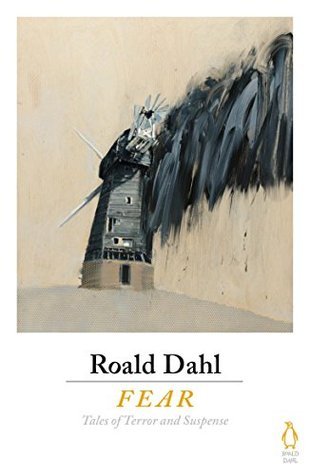 This collection originated from a television series on ghost stories that Dahl proposed for the American market in 1958 (the pilot was poorly received and it never got made). For his research he read nearly 750 ghost stories and whittled them down to the top 24. Women authors dominated early on in the selection process, but by the end the genders came out nearly even, with 13 men and 11 women. It’s disappointing, then, that only five of the 14 stories included here are by women – one of whom gets two entries, so there’s just four female authors recognized. And this even though Dahl claims that, when it comes to ghost stories, “it is the women who have written some of the very best ones.”
Any road, these are the five stories I read, all of which I found suitably creepy, though the Wharton is overlong. Each one pivots on a moment when the narrator realizes that a character they have been interacting with is actually dead. Even if you’ve seen the twist coming, there’s still a little clench of the heart when you have it confirmed by a third party.
“Harry” and “Christmas Meeting” by Rosemary Timperley: A little girl who survived a murder attempt is reclaimed by her late brother; a woman meets a century-dead author one lonely holiday – I liked that in this one each character penetrates the other’s time period.
“The Corner Shop” by Cynthia Asquith: An inviting antique shop is run by two young women during the day, but by a somber old man in the evenings. He likes to give his customers a good deal to atone for his miserly actions of the past.
“The Telephone” by Mary Treadgold: A man continues communicating with his dead ex-wife via the phone line.
“Afterward” by Edith Wharton: An American couple settles in a home in Dorset, and the husband disappears, after a dodgy business deal, in the company of a mysterious stranger.
A Wizard of Earthsea by Ursula K. Le Guin (1968)
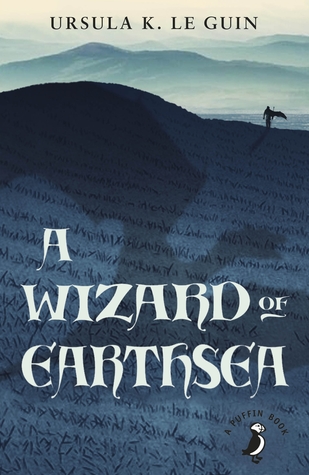 This was my second attempt with the late Le Guin, who would be turning 90 on the 21st; I didn’t get far at all with a buddy read of The Left Hand of Darkness last year. I enjoyed this a fair bit more, perhaps because it’s meant for children – I reckon I would have liked it most when I was ages nine to 11 and obsessed with various series of fantasy novels featuring dragons.
Long before Harry Potter was a glimmer, this was the archetypal story of a boy wizard learning magic at school. Ged meets many cryptic mentors and realizes that naming a thing gives you power over it. In his rivalry with the other boys, he accidentally releases a shadow beast and has to try to gain back control of it. It’s slightly difficult to keep on top of all the names and places (Le Guin created a whole archipelago, which you can see in the opening map) and I found my interest waning after the halfway point, but I did love the scene of Ged fighting with a dragon. 
A favorite passage: “But you must not change one thing, one pebble, one grain of sand, until you know what good and evil will follow on the act. … A wizard’s power of Changing and of Summoning can shake the balance of the world.”
The Fifth Child by Doris Lessing (1988)
Shelve this alongside We Need to Talk about Kevin as a book to make you rethink having kids. Harriet and David Lovatt buy a large Victorian house within commuting distance of London and dream of filling it with children – six, eight; however many. Their first four children are all they’d hoped for, if not spaced out as much as they intended. The Lovatts enjoy hosting the extended family at Easter and Christmas and during the summer holidays. Although there are good-natured jokes about the couple’s fertility, everyone enjoys the cozy, bustling atmosphere. “The Lovatts were a happy family. It was what they had chosen and what they deserved.”
[MILD SPOILERS ENSUE]
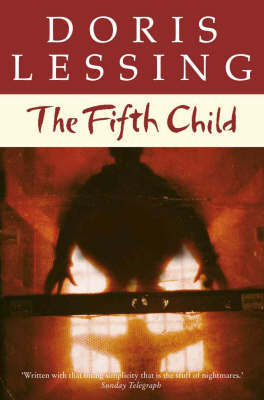 Everything changes with pregnancy #5, which is different right from the off. This “savage thing inside her” is kicking Harriet black and blue from the inside and grown to full term by eight months. When Ben is born Harriet thinks, “He’s like a troll, or a goblin.” Like a succubus, he sucks her dry, biting her nipples black and blue; he screams and thrashes non-stop; he’s freakishly strong and insatiably hungry. He strangles house pets and eats a raw chicken with his bare hands. Although he learns basic language and social skills from watching his older siblings and mimicking his idols from a motorcycle gang, something in him is not human. Yet Harriet cannot bear to leave Ben to rot in an institution.
At first I wondered if this was a picture of an extremely autistic child, but Lessing makes the supernatural element clear. “We are being punished,” Harriet says to David. “For presuming … we could be happy.” I think I was waiting for a few more horrific moments and a climactic ending, whereas Lessing almost normalizes Ben, making him part of a gang of half-feral youths who rampage around late-1980s Britain (and she took up his story in a sequel, Ben in the World). But I raced through this in just a few days and enjoyed the way dread overlays the fable-like simplicity of the family’s early life.
Dark Matter: A Ghost Story by Michelle Paver (2010)
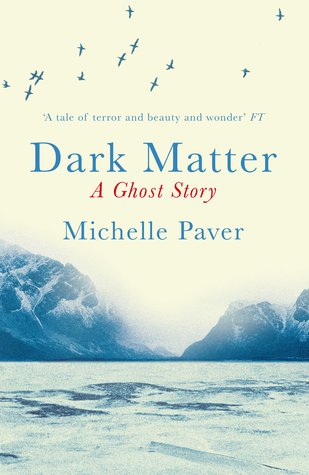 I read Paver’s Thin Air as part of last year’s R.I.P. challenge and it was very similar: a 1930s setting, an all-male adventure, an extreme climate (in that case: the Himalayas). Most of Dark Matter is presented as a journal written by Jack Miller, a lower-class lad who wanted to become a physicist but had to make a living as a clerk instead. He feels he doesn’t truly belong among the wealthier chaps on this Arctic expedition, but decides this is his big chance and he’s not going to give it up.
Even as the others drop out due to bereavement and illness, he stays the course, continuing to gather meteorological data and radio it back to England from this bleak settlement in the far north of Norway. For weeks his only company is a pack of sled dogs, and his grasp on reality becomes shaky as he begins to be visited by the ghost of a trapper who was tortured to death nearby – “the one who walks again.” Paver’s historical thrillers are extremely readable. I tore through this, yet never really found it scary.
Note: This book is the subject of the Bookshop Band song “Steady On” (video here).
And, alas, three DNFs:
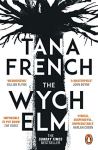 The Wych Elm by Tana French – French writes really fluid prose and inhabits the mind of a young man with admirable imagination. I read the first 100 pages and skimmed another 50 and STILL hadn’t gotten to the main event the blurb heralds: finding a skull in the wych elm in the garden at Ivy House. I kept thinking, “Can we get on with it? Let’s cut to the chase!” I have had French’s work highly recommended so may well try her again.
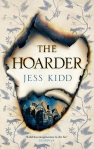 The Hoarder by Jess Kidd – Things in Jars was terrific; I thought Kidd’s back catalogue couldn’t fail to draw me in. This was entertaining enough that I made it to page 152, if far too similar to Jars (vice versa, really, as this came first; ghosts/saints only the main character sees; a transgender landlady/housekeeper); I then found that picking it back up didn’t appeal at all. Maud Drennan is a carer to a grumpy giant of a man named Cathal Flood whose home is chock-a-block with stuff. What happened to his wife? And to Maud’s sister? Who cares!
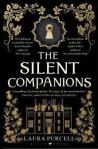 The Silent Companions by Laura Purcell – Purcell is now on her third Gothic novel in three years. I had a stab at her first and it was distinctly okay. I read the first 24 pages and skimmed to p. 87. Reminiscent of The Shadow Hour, The Familiars, etc.
Have you been reading anything fantastical or spooky this October?
Women in Translation Month 2019, Part I: Ernaux and Poschmann
Two rather different books to start off #WITMonth: a brief (c. 70 pp.) account of a mother’s decline with dementia; and a haiku-inspired novel of the quest for life and death in disorienting modern Japan. Both are admirable but detached – a judgment I seem more likely to make about work in translation – so don’t earn my wholehearted recommendation. My rating for both:
I Remain in Darkness by Annie Ernaux (1997; English translation, 1999)
[Translated from the French by Tanya Leslie]
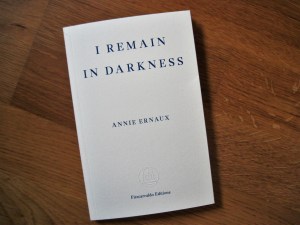 This is the second short, somewhat harrowing autobiographical work I’ve read by Ernaux this year (after Happening, her account of her abortion, in March). A collection of mostly present-tense fragments, it’s drawn from the journal she kept during her mother’s final years, 1983–6. “I Remain in Darkness” were the last words her mother wrote, in a letter to a friend (“Je ne suis pas sortie de ma nuit,” which more literally means “I have not left my night,” strikes me as cryptic and poetic, though maybe I’m missing a colloquialism). Slipping into Alzheimer’s, her mother spent these years in a long-term hospital geriatric ward. Ernaux could see her mother becoming like a child again:
This morning she got up and, in a timid voice, said: ‘I wet the bed. I couldn’t help it.’ The same words I would use when I was a child.
Now her room is on the third floor. A bunch of women circle us, addressing my mother with the familiar tu form: ‘You’re going to be in our group?’ They are like kids talking to the ‘new girl’ at school. When I take leave of her, she looks at me in panic and confusion: ‘You’re not leaving, are you?’
—and herself becoming like her mother: “It’s crystal-clear: she is me in old age and I can see the deterioration of her body threatening to take hold of me – the wrinkles on her legs, the creases in her neck”. Ernaux vacillates between guilt, fear and cruelty in how she approaches her mother. She tenderly shaves the older woman’s face every week when she visits, and buys her all manner of sweets. Food is one of her mother’s last remaining pleasures, though she often misses her mouth when she tries to eat the cakes her daughter brings.
Superficially, this is very similar to another book I’ve reviewed this year, Be With by Mike Barnes, a series of short letters written during his time as a caregiver to his mother, who also has Alzheimer’s. But where Barnes is reassuring and even humorous at times, Ernaux refuses to give any comfort, false or otherwise. This hospital is a bleak place that reeks of urine and is hiding excrement everywhere (really). A lazier reviewer than I generally try to be would brandish the word “unflinching.”
The entries from a few days after her mother’s death explain what the author is trying to do with her work, whether memoir or autofiction: “I am incapable of producing books that are not precisely that – an attempt to salvage part of our lives, to understand, but first to salvage … I’ll have to tell her story in order to ‘distance myself from it’.” That dual purpose, saving and distancing, makes her work honest yet unemotional, such that I have trouble warming to it.
This is easily read in a sitting. I may try again to get into Ernaux’s novel The Years, which, like the Poschmann (below), was on this past year’s Man Booker International Prize shortlist.
I Remain in Darkness will be released on September 18th. With thanks to Fitzcarraldo Editions for the free copy for review.
The Pine Islands by Marion Poschmann (2017; English translation, 2018)
[Translated from the German by Jen Calleja]
(Though I read this mostly in July, I finished it on August 1st, so I’m including it in my WIT Month coverage. It’s the first of the author’s books to be made available in English.)
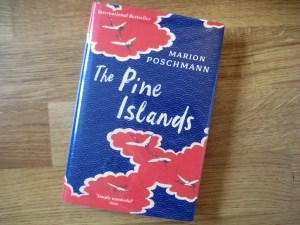 A man wakes up from a dream convinced that his wife is cheating on him, and sets off for Tokyo on a whim, where he embarks on a Bashō-inspired pilgrimage to the pine islands of Matsushima. This Gilbert Silvester, a beard historian, acquires an unlikely companion: a young man named Yosa, who’s looking for the best place to kill himself and takes Gilbert along to cliffs and forests famous for their suicide rates. Although there are still cherry blossoms and kabuki theatre, Gilbert soon learns that this isn’t Bashō’s Japan anymore.
From the haikus he composes and the letters he writes to Mathilda back home, we track his inward journey as it contrasts with the outward ones he undertakes. I enjoyed the surreal touches – Yosa says he once dated a woman who was actually a fox – and the Murakami setup (the wife’s adultery and the hair patterns are reminiscent of The Wind-Up Bird Chronicle).
Somehow, though, for me this is a book that succeeds more in its ideas (searching for the essence of a place but only finding the clichés; coniferous versus deciduous trees as a metaphor for what lasts in life versus what fades) than in its actual execution. It never all quite comes together, and the inconclusive ending makes you question how much of this has been a dream or a fantasy. It’s ambitious and intellectually impressive, but something about its dignified aloofness is hard to be enthusiastic about.
Do watch Lost in Translation, one of my favorite films, afterwards…
And a DNF: The Days of Abandonment by Elena Ferrante. The time has come to admit that I simply do not appreciate Ferrante’s work. I could only make it 25 pages into this one; I’ve read a different short novel of hers (The Lost Daughter), and skimmed another (My Brilliant Friend). While I enjoyed the narrator’s voice well enough, and loved the scene in which her errant husband finds broken glass in his dinner, I found that I had no interest in how this seemingly predictable story of the end of a marriage might play out.
Up next for Part II: The Wind that Lays Waste by Selva Almada, on its way from Charco Press, and The Awakening of Miss Prim by Natalia Sanmarin Fenollera.
Are you doing any special reading for Women in Translation month this year?
March Reading Plans and Books to Look out For
My apologies if you’ve already heard this story on social media: I was supposed to be in France this past weekend, but for the fourth time in a row we’ve been plagued by transport problems on a holiday: a flat tire in Wigtown, a cancelled train to Edinburgh, a cancelled flight to the States, and now car trouble so severe we couldn’t get on the ferry to Normandy. Though we made it all the way to the ferry port in Poole, our car was by then making such hideous engine noises that it would have been imprudent to drive it any further. We got a tow back to the auto shop where our car is usually serviced and currently await its prognosis. If it can be fixed, we may be able to reschedule our trip for this coming weekend.
The good news about our strange (non-)travel day: I got a jump on my Doorstopper of the Month, Cutting for Stone by Abraham Verghese, a terrific read that reminds me of a cross between Midnight’s Children and The Cider House Rules, and also started Priestdaddy by Patricia Lockwood – though my husband made me stop reading it because I couldn’t stop sniggering while he was trying to make important phone calls about the car. We ended up having a nice weekend at home anyway: going out for Nepalese food, gelato and a screening of The Favorite; doing some gardening and getting bits of work and writing done; and (of course) doing plenty of reading. Waking up with a purring cat on my legs and tucking into a stack of pancakes with maple syrup, I thought to myself, being home is pretty great, too.
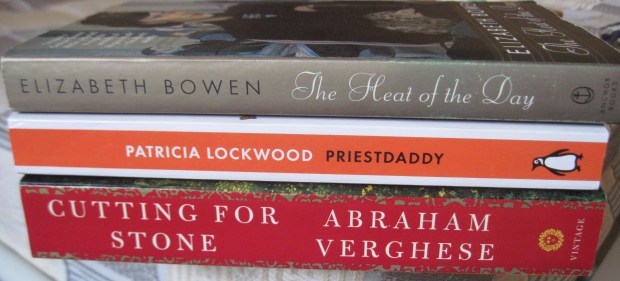
What I packed to read in France.
Reading Ireland Month 2019
This will be my second time participating in the annual challenge hosted by Cathy of 746 Books. I recently started The Heat of the Day by Elizabeth Bowen and I’m also currently reading two nonfiction books by Irish women: a review copy of Vagina: A Re-Education by Lynn Enright (which releases on March 7th) and the essay collection Notes to Self by Emilie Pine, on my Kindle. I have several other novels to choose from – two of which are set in Ireland rather than by Irish authors – plus a classic travel book by Dervla Murphy.
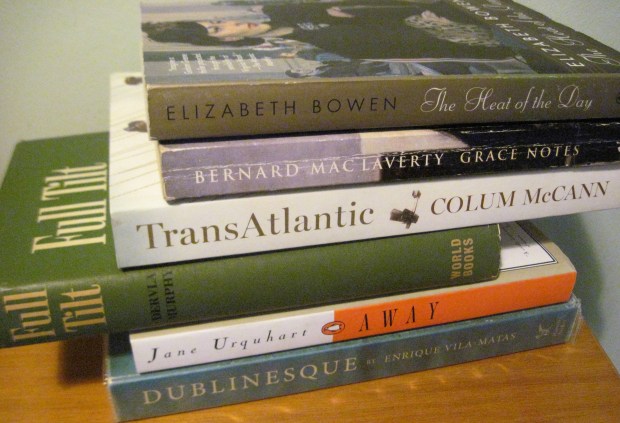
Irish selections.
Wellcome Book Prize
The second of my ‘assigned’ longlist reviews will be going up on Wednesday. I’m currently reading another three books from the longlist and will post some brief thoughts on them if I manage to finish them before the shortlist announcement on the 19th. At that point I will have read 10 out of the 12 books on the longlist, so should feel pretty confident about making predictions (or at least stating wishes) for what will go through to the next round.
Blog Tours
I have two blog tours coming up later in the month, including the official one that’s being run for the Dylan Thomas Prize longlist.
Review Books
I’ve got a pile-up of review copies that came out in February or are releasing early this month – 9, I think? Some I’ve already read and some are still in progress. So I will be doing my best to group these sensibly and write short reviews, but you may well notice a lot of posts from me.
Blog Anniversary
This Friday marks four years that I’ve been blogging about books!
Here are a few March releases I’ve read that you may want to look out for:
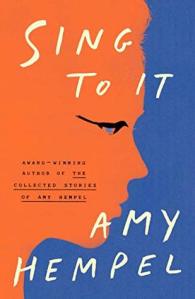 Sing to It: New Stories by Amy Hempel [releases on the 26th]: “When danger approaches, sing to it.” That Arabian proverb provides the title for Amy Hempel’s fifth collection of short fiction, and it’s no bad summary of the purpose of the arts in our time: creativity is for defusing or at least defying the innumerable threats to personal expression. Only roughly half of the flash fiction achieves a successful triumvirate of character, incident and meaning. The author’s passion for working with dogs inspired the best story, “A Full-Service Shelter,” set in Spanish Harlem. A novella, Cloudland, takes up the last three-fifths of the book and is based on the case of the “Butterbox Babies.” (Reviewed for the Pittsburgh Post-Gazette.)
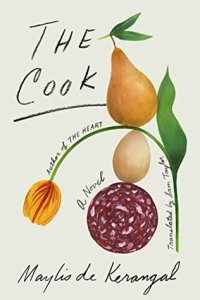 The Cook by Maylis de Kerangal (translated from the French by Sam Taylor) [releases on the 26th]: This is a pleasant enough little book, composed of scenes in the life of a fictional chef named Mauro. Each chapter picks up with the young man at a different point as he travels through Europe, studying and working in various restaurants. If you’ve read The Heart / Mend the Living, you’ll know de Kerangal writes exquisite prose. Here the descriptions of meals are mouthwatering, and the kitchen’s often tense relationships come through powerfully. Overall, though, I didn’t know what all these scenes are meant to add up to. Kitchens of the Great Midwest does a better job of capturing a chef and her milieu.
 Holy Envy: Finding God in the Faith of Others by Barbara Brown Taylor [releases on the 12th]: After she left the pastorate, Taylor taught Religion 101 at Piedmont College, a small Georgia institution, for 20 years. This book arose from what she learned about other religions – and about Christianity – by engaging with faith in an academic setting and taking her students on field trips to mosques, temples, and so on. She emphasizes that appreciating other religions is not about flattening their uniqueness or looking for some lowest common denominator. Neither is it about picking out what affirms your own tradition and ignoring the rest. It’s about being comfortable with not being right, or even knowing who is right.
What’s on your reading docket for March?
Kinds of Love: Three Books for Valentine’s Day
At about this time of year I try to read a handful of books with “love” in the title. I’m currently reading Iris Murdoch’s The Sacred and Profane Love Machine for the #IMReadalong, and I have one more “love” title towards the end of this post, but it turns out that my focus this year has been more on the kinds of love that tend to get ignored around Valentine’s Day – familial love for one’s ageing parents and grandparents.

Be With: Letters to a Carer by Mike Barnes (2018)
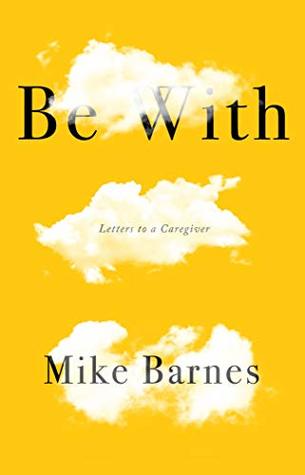 Mike Barnes, a Toronto poet and novelist, has been a primary caregiver for his mother, Mary, in the nine years since her Alzheimer’s diagnosis disease. She grew up on a Saskatchewan farm and is now in her nineties; he’s in his sixties. A bipolar sufferer, Barnes has spent his own fair share of time in hospitals and on disability. He’s moved Mary between care homes four times as her condition has deteriorated. Though he laments her gradual loss of words and awareness of her family, he can still discern instances of her bravery and the beauty of life.
This book of fragments – memories and advice delivered via short letters – was written in between demanding caregiving tasks and is meant to be read in those same gaps. Dementia is one situation in which you should definitely throw money at a problem, Barnes counsels, to secure the best care you can, even round-the-clock nursing help. However, as the title suggests, nothing outweighs simply being there. Your presence, not chiefly to make decisions, but just to sit, listen and place a soothing hand on a forehead, is the greatest gift.
There are many excellent, pithy quotations in this book. Here are a few of my favorites:
Dementia is…
“a retreat under fire”
“a passage of exquisite vulnerability”
By your loved one’s side is “Not where things are easy, or satisfactorily achieved, or achievable, or even necessarily pleasant. But where you ought to be, have to be, and are. It brings a peace.”
The goal is “Erring humanely”.
I can imagine this being an invaluable companion for caregivers, to be tucked into a pocket or purse and pulled out for a few moments of relief. On the theme of a parent’s dementia, I’d also recommend Paulette Bates Alden’s book of linked short stories, Unforgettable.
My rating:
Out now from Myriad Editions. My thanks for the free copy for review.
The Smallest Things: On the enduring power of family: A memoir of tiny dramas by Nick Duerden (2019)
 Journalist Nick Duerden always appreciated how his maternal grandparents, Nonna and Nonno, seemed so ordinary and unchanging. Every trip to see them in the Milan suburbs was, comfortingly, the same. He’d muddle along with his meager Italian, and they’d look after him in their usual clucking way. It was only as he reached middle age and realized that his grandparents were undeniably very old – his grandmother is 99 and in a care home at the time of writing – that he realized how lucky he was to still have them in his life and how unlikely it was that they’d be around for much longer.
Duerden compares his small immediate family with his Spanish wife’s large extended one, and his uptight paternal grandparents with the more effusive set. There are also some family secrets still to uncover. I made the mistake of reading a previous nonfiction book of Duerden’s just the week before this one: Get Well Soon (2018), which has a long chapter about his grandparents that told me all I needed to know about them. That’s probably the main reason why this short book struck me as lightweight, though I did ultimately find it a touching tribute, especially to his grandmother. It could make a good Mother’s Day present.
My rating:
Out today from Elliott & Thompson. My thanks for a proof copy for review.
Love Story by Erich Segal (1970)
 This offbeat novella was a bestseller and a successful film. You surely know its most famous line: “Love means not ever having to say you’re sorry.” Oliver Barrett IV is a golden boy: his banker father and previous generations of the eminent Barrett family funded various buildings at Harvard, where Oliver is a hockey player in the late 1960s. Jenny Cavilleri, on the other hand, comes from a single-parent Italian-American family in New Jersey. She’s made it to Radcliffe as a harpsichordist, but her father is just a baker; she’d never be considered good enough for the likes of Oliver. But they meet at the Radcliffe library and, sure enough, fall for each other. She calls him “Preppie”; he calls her a bitch. They’re only partially joking. It may be true love against the odds, but it has an expiration date, as we know from the first line: “What can you say about a twenty-five-year old girl who died?”
I wanted to like this more. There’s a pleasing lightness to the style, but because the whole book is from Oliver’s perspective, I felt like Jenny got short shrift: she’s the wise-cracking gal from the block, and then she’s the innocent victim in the hospital bed. Because this is only about 120 pages, there’s not much space in between for her character to be developed. I was somewhat appalled to learn about a 1977 sequel in which Oliver finds a new love.
(Segal’s daughter Francesca is also a novelist (The Innocents).)
My rating:
Have you read any “love” books, or books about love of any kind, lately?
A Retrospective of 2018’s Events, Reading Projects and Themes
 In January I had the tremendous opportunity to have a free personalized bibliotherapy appointment with Ella Berthoud at the School of Life in London. I’ve since read three of her prescriptions plus parts of a few others, but I still have several more awaiting me in the early days of 2019, and will plan to report back at some point on what I got out of all of them.
In March to April I ran a Wellcome Book Prize shadow panel for the second time. This year it was much more successful; I plan to do it again next year, too. (I actually proffered myself as an official judge for next year’s prize and got a very kind but entirely noncommittal e-mail back from the chairwoman, which I will have to take as victory enough.)
 Early April saw us visiting Wigtown, Scotland’s book town, for the first time. It was a terrific trip, but thus far I have not been all that successful at reading the 13 books that I bought! (Just two and a quarter so far.)
I reviewed three novels for Liz Dexter’s Iris Murdoch Readalong project: A Severed Head in March, The Italian Girl in June, and The Nice and the Good in September. In February I’ll pop back in with one more paperback that I own, The Sacred and Profane Love Machine. November was Margaret Atwood Reading Month, hosted by Marcie of Buried in Print and Naomi of Consumed by Ink, and provided me with a good excuse to read her first two novels.
 I did some “buddy reads” for the first time: Andrea Levy’s Small Island with Canadian blogger friends, including Marcie and Naomi; and West With the Night with Laila of Big Reading Life and Late Nights on Air with Naomi as well as Penny of Literary Hoarders during 20 Books of Summer, which I took part in for the first time. In May my mother and I read W. Somerset Maugham’s The Painted Veil and shared reading notes via e-mail. (A planned buddy read of The Left Hand of Darkness with Annabel and Laura was, alas, a fail.)
Besides the official Wellcome Book Prize blog tour in April, I participated in another 11 blog tours, averaging out at one a month. I’m going to scale back on these next year because I have too often found, after I accepted, that the book was a dud and I had to just run an extract because I could see I wasn’t going to get through it and write a review.
I joined my neighborhood book club in September and have attended every month since then. Our first four selections were Ladder of Years by Anne Tyler, The Gracekeepers by Kirsty Logan, Noonday by Pat Barker, and Number 11 by Jonathan Coe. I’d already read the Logan and Coe years ago and didn’t fancy rereading them, so wasn’t able to participate as much in those months, but was still glad to go along for the socializing. My husband even read the Coe and came to December’s meeting (was it just for the mince pies and mulled wine?!). We’ve set our first four reads for 2019 – the three below, in order from left to right, plus Ernest Hemingway’s The Garden of Eden, which I’ll borrow from the university library.

 In October I won tickets to see a production of Angela Carter’s Wise Children at the Old Vic in London. Just a few weeks later I won tickets to see Barbara Kingsolver in conversation about Unsheltered at the Southbank Centre. I don’t often make it into London, so it was a treat to have bookish reasons to go and blogging friends to meet up with (Clare of A Little Blog of Books joined me for both, and Laura T. was also at the Kingsolver event).
November was mostly devoted to novellas, for the third year in a row. Although I didn’t officially participate in Nonfiction November, I still enjoyed coming up with some fiction/nonfiction pairings and an “expert’s” list of women’s religious memoirs.
My husband wrote pretty much his entire PhD thesis this year and on Friday the 14th had his graduation ceremony. I was the moral support / proofreader / preparer of simple meals during the months when he was in the throes of writing up, so I will consider myself as sharing in the accomplishment. Congratulations, Dr. Foster!
This month and into January I’ll be reading the last few nominees for the National Book Critics Circle’s John Leonard Prize.

When the list of finalists was released, I was relieved to see I’d already read four out of seven (and three of those were ones I’d nominated); the other three – the Adjei-Brenyah and Brinkley stories and There There – were books I was keen to read but hadn’t managed to get hold of. About 80 of us NBCC members are reading the shortlist and voting for the best first book of the year by January 8th. Plus I’m technically up for an NBCC prize myself, in that I nominated myself (that’s how it works) for the 2018 Nona Balakian Citation for Excellence in Reviewing and sent in an application with five of my best reviews from the year.
The Ones that Got Away
 Two posts I planned but never got around to putting together would have commemorated the 50th anniversary of Thomas Merton’s death (I own several of his books but am most interested in reading The Seven-Storey Mountain, which celebrated its 70th birthday in October) and the 40th anniversary of the publication of The Snow Leopard by the late Peter Matthiessen. Perhaps I’ll try these authors for the first time next year instead.
Final Book Serendipity Incidents
In the second half of the year I started keeping track of all my weird reading coincidences, posting about them on Twitter or Instagram before collecting them into a blog post a couple months ago. Here are a few that popped up since then or recalled earlier reads from the year:
- Two protagonists named Willa: Anne Tyler’s Clock Dance and Barbara Kingsolver’s Unsheltered
- Two novels featuring bog people: Anne Youngson’s Meet Me at the Museum and Sarah Moss’s Ghost Wall
- Two dogs named Flash: Ben Crane’s Blood Ties and Andrew Marshall’s The Power of Dog
- Multiple sclerosis is an element in Christian Donlan’s The Unmapped Mind: A Memoir of Neurology, Incurable Disease and Learning How to Live, Jennifer Richardson’s Americashire and Michelle Obama’s Becoming (her father had it)
- The ideas of Freud are mentioned in a 1910s setting in Nancy Horan’s Loving Frank, Annabel Abbs’s Frieda and Daniel Mason’s The Winter Soldier
- Mermaids (or ‘mermaids’) and/or mermen appear in Imogen Hermes Gowar’s The Mermaid and Mrs Hancock, Melissa Broder’s The Pisces, Daniel Mason’s The Winter Soldier, and a series of poems in Miriam Darlington’s Windfall
- Bohemian writer dies young of tuberculosis (or similar) in novels about their wives: Annabel Abbs’s Frieda (D.H. Lawrence) and Nancy Horan’s Under the Wide and Starry Sky (Robert Louis Stevenson)
- Two books that mention the Indonesian practice of keeping dead relatives as mummies and bringing them out on occasion for ritual celebrations: From Here to Eternity by Caitlin Doughty and The Hot Young Widows Club by Nora McInerny
- Two books that include a trip to Lourdes for healing: Heal Me by Julia Buckley and Constellations by Sinéad Gleeson
- Two books that mention the irony of some of the most well-loved modern Christmas songs being written by Jews: In Mid-Air by Adam Gopnik and Christmas Days by Jeanette Winterson
Surprise Themes from My Year’s Reading
A few of these make sense – cults fit with my interest in narratives of religious experience, and it doesn’t take a psychologist to see that my relationship with my father has been an ongoing issue in recent years (I wonder how the numbers would compare for books about mothers?) – but most are completely random.
I decided a theme had to show up at least three times to make the list. Some topics I enjoyed so much I’ll keep reading about them next year. Within a category the books are in rough chronological order of my reading, and I include skims, DNFs and books in progress.
 Fathers (absent/difficult) + fatherhood in general: Educated by Tara Westover, And When Did You Last See Your Father? by Blake Morrison, The Italian Teacher by Tom Rachman, In the Days of Rain by Rebecca Stott, Implosion by Elizabeth W. Garber, Little Women by Louisa May Alcott & March by Geraldine Brooks, The Unmapped Mind by Christian Donlan, Never Mind and Bad News by Edward St. Aubyn, The Reading Promise by Alice Ozma, How to Build a Boat by Jonathan Gornall, Lake Success by Gary Shteyngart, Normal People by Sally Rooney, Rosie by Rose Tremain, My Father and Myself by J.R. Ackerley, Everything Under by Daisy Johnson, Ghost Wall by Sarah Moss, Surfacing by Margaret Atwood, Heart Berries by Terese Marie Mailhot, Blood Ties by Ben Crane, To Throw Away Unopened by Viv Albertine, Small Fry by Lisa Brennan-Jobs
Addiction: The Leavers by Lisa Ko, Mayhem by Sigrid Rausing, The Only Story by Julian Barnes, The Small Door of Your Death by Sheryl St. Germain, Writing and Madness in a Time of Terror by Afarin Majidi, Marlena by Julie Buntin, Ninety Days by Bill Clegg, Bad News by Edward St. Aubyn, Pretend I’m Dead by Jen Beagin, Heart Berries by Terese Marie Mailhot
 Greenland: A Wilder Time by William E. Glassley, This Cold Heaven by Gretel Ehrlich, Miss Smilla’s Feeling for Snow by Peter Høeg, On Balance by Sinéad Morrissey (the poem “Whitelessness”), Cold Earth by Sarah Moss, Crimson by Niviaq Korneliussen, The Library of Ice by Nancy Campbell
Cults: Educated by Tara Westover, Harmony by Carolyn Parkhurst, In the Days of Rain by Rebecca Stott, The Incendiaries by R.O. Kwon, A River Could Be a Tree by Angela Himsel
Trees: Ladders to Heaven by Mike Shanahan, The Overstory by Richard Powers, The Man Who Planted Trees by Jean Giono, The Wood and The Secret Life of the Oak by John Lewis-Stempel
 Flying: Skybound by Rebecca Loncraine, West With the Night by Beryl Markham, Going Solo by Roald Dahl, Skyfaring by Mark Vanhoenacker
The Anglo experience in Africa: Free Woman: Life, Love and Doris Lessing by Lara Feigel, Leaving Before the Rains Come by Alexandra Fuller, West With the Night by Beryl Markham, Going Solo by Roald Dahl
Korean-American women: The Incendiaries by R.O. Kwon, If You Leave Me by Crystal Hana Kim, All You Can Ever Know by Nicole Chung, Famous Adopted People by Alice Stephens, Digging to America by Anne Tyler
 New Zealand: The Garden Party and Other Stories by Katherine Mansfield, To the Is-Land by Janet Frame, Dunedin by Shena Mackay
Life in the White House: Living History by Hillary Rodham Clinton, All the Presidents’ Pastries by Roland Mesnier, Becoming by Michelle Obama
Lighthouses: Stargazing: Memoirs of a Young Lighthouse Keeper by Peter Hill, The Bird Artist by Howard Norman, Under the Wide and Starry Sky by Nancy Horan (about Robert Louis Stevenson, whose family built lighthouses)

More lighthouse books ready for next year.
Butterflies: Four Wings and a Prayer by Sue Halpern, Magdalena Mountain by Robert Michael Pyle, Mama Amazonica by Pascale Petit

More butterfly books ready for next year.
What were some of the highlights of your bookish year?
What odd coincidences and recurring themes have you spotted in your year’s reading?
Novellas in November Wrap-Up, with Mini-Reviews
 Novellas in November was a great success, helping me to finish more books in one month than I possibly ever have before. David Szalay’s Turbulence – a linked short story collection of tantalizing novella length – just arrived yesterday; I’ve started it but will be finishing it in December. The slim volume Fox 8 by George Saunders is also waiting for me at the library and I should be able to read it soon.
For this final installment I have 10 small books to feed back on: a mixture of fiction, graphic novels, nature books and memoirs.
Fiction:
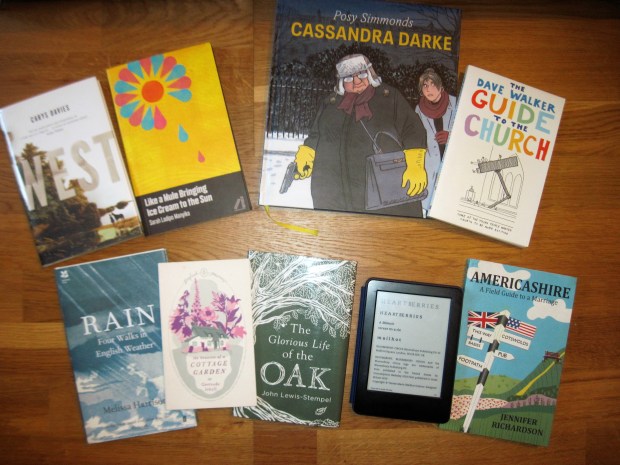
West by Carys Davies (2018)
[149 pages]
 A gritty piece of historical fiction about a widowed mule breeder, Cyrus Bellman, who sets out from Pennsylvania to find traces of the giant creatures whose bones he hears have been discovered in Kentucky. He leaves his 10-year-old daughter, Bess, in the care of his sister, knowing he’ll be gone at least two years and may never return. Chapters cut between Cy’s harrowing journey in the company of a Native American guide, Old Woman From A Distance, and Bess’s home life, threatened by the unwanted attentions of their ranch hand neighbor and the town librarian. I don’t usually mind dark stories, but this was so bleak that I found it pretty unpleasant. The deus ex machina ending saved it somewhat.
Like a Mule Bringing Ice Cream to the Sun by Sarah Ladipo Manyika (2016)
[118 pages]
 Morayo Da Silva is an unlikely heroine: soon to turn 75, she’s a former English professor from Nigeria who hopped between countries with her ambassador husband but now lives alone in San Francisco. The first-person narration switches around to give the perspectives of peripheral figures like a shopkeeper, a homeless woman, and Sunshine, the young friend who helps Morayo get her affairs in order after she has a fall and goes into a care home temporarily. These shifts in point of view can be abrupt, even mid-chapter, and are a little confusing. However, Morayo is a wonderful character, inspiring in her determination to live flamboyantly. I also sympathized with her love of books. I would happily have read twice as many pages about her adventures.
Graphic Novels:
Cassandra Darke by Posy Simmonds (2018)
[94 pages]
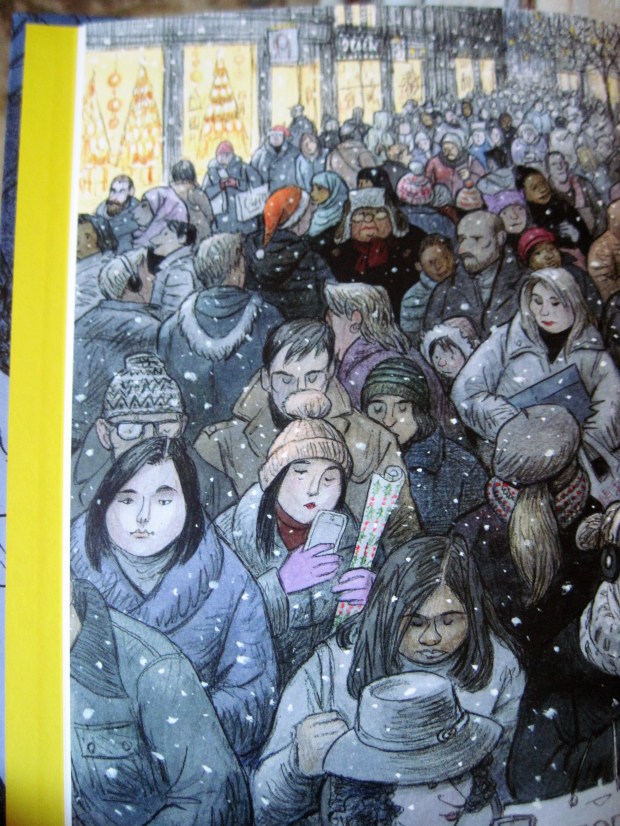
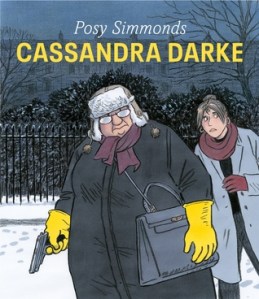 Simmonds would be great for graphic novel newbies: she writes proper, full-length stories, often loosely based on a classic plot, with lots of narration and dialogue alongside the pictures. Cassandra Darke is a 71-year-old art dealer who’s laid low by fraud allegations and then blindsided by a case of mistaken identity that brings her into contact with a couple of criminal rings. To start with she’s a Scrooge-like curmudgeon who doesn’t understand the big fuss about Christmas, but she gradually grows compassionate, especially after her own brief brush with poverty. Luckily, Simmonds doesn’t overdo the Christmas Carol comparisons. Much of the book is in appropriately somber colors, with occasional brightness, including the yellow endpapers and built-in bookmark.
The Dave Walker Guide to the Church by Dave Walker (2006)
[88 pages]
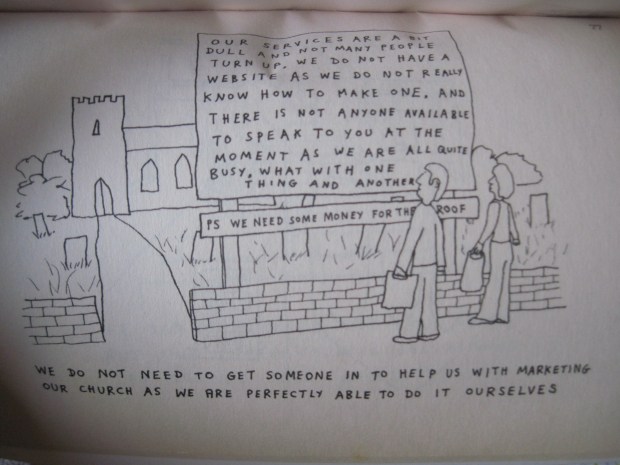
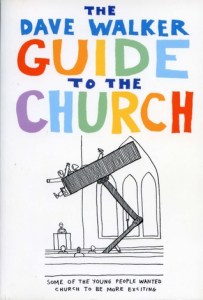 Most of these comics originally appeared in the Church Times, the official newspaper of the Church of England. No doubt you’ll get the most out of it if you’re familiar with Anglican churches or the like (Episcopalian or even Roman Catholic). My mother-in-law is a C of E vicar and we’ve attended a High Anglican church for the last two years, so I got many a good snort out of the book. Walker pokes fun at bureaucracy, silly traditions, closed-mindedness, and the oddities of church buildings and parishioners’ habits. My favorite spreads compare choirs and music groups on criteria like “ability to process in” and liken different church members to chess pieces to explain church politics.
Nature Books:
Rain: Four Walks in English Weather by Melissa Harrison (2016)
[100 pages]
 In the course of a year Harrison took four rainy walks, in different seasons and different parts of England. She intersperses her observations with facts and legends about the rain, quotes from historical weather guides and poems. It has the occasional nice line, but is overall an understated nature/travel book. A noteworthy moment is when she remembers scattering her mother’s ashes on a Dartmoor tor. I most liked the argument that it’s important to not just go out in good weather, but to adapt to nature in all its moods: “I can choose now to overcome the impulse for comfort and convenience that insulates us not only from the bad in life but from much of the good. I think we need the weather, in all its forms, to feel fully human.”
The Beauties of a Cottage Garden by Gertrude Jekyll (2009)
[88 pages]
 This mini-volume from Penguin’s English Journeys series feels like a bit of a cheat because it’s extracted from Wood and Garden (1899). Oh well. In short chapters Jekyll praises the variety of colors, smells and designs you’ll find in the average country garden, no matter how modest its size. She speaks of gardening as a lifelong learning process, humbly acknowledging that she’s no expert. “I hold that the best purpose of a garden is to give delight and to give refreshment of mind, to soothe, to refine, and to lift up the heart in a spirit of praise and thankfulness. … a garden is a grand teacher. It teaches patience and careful watchfulness; it teaches industry and thrift; above all, it teaches entire trust.”
The Glorious Life of the Oak by John Lewis-Stempel (2018)
[87 pages]
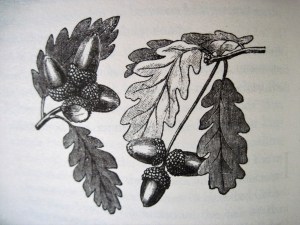 I didn’t enjoy this as much as the other Lewis-Stempel book I read this month, The Secret Life of the Owl. There’s a lot here about the role the oak has played in British history, such as in warships and cathedral roofs. Other topics are the oak’s appearance and function in different seasons, the use of acorns and oak leaves in cooking, and the myths and legends associated with the trees. I felt there was too much minimally relevant material added in to make up the page count, such as a list of Britain’s famous named oaks and long poems from the likes of John Clare and William Cowper. While Lewis-Stempel always has a piercing eye, I wonder if he shouldn’t be saving up his energies to write more substantial books.
General Nonfiction / Memoirs:
My Year by Roald Dahl (1993)
[64 pages]
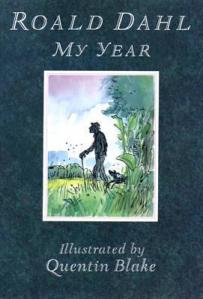 I spotted a copy in our Stamford Airbnb bedroom and read it over our two nights there. These short month-by-month essays were composed in the last year of Dahl’s life. Writing with children in mind, he remarks on what schoolkids will experience, whether a vacation or a holiday like Guy Fawkes night. But mostly he’s led by the seasons: the birds, trees and other natural phenomena he observed year after year from his home in Buckinghamshire. Dahl points out that he never lived in a city, so he chose to mark the passing of time chiefly by changes in the countryside. This is only really for diehard fans, but it’s a nice little book to have at the bedside. (Illustrated, as always, with whimsical Quentin Blake sketches.)
Heart Berries by Terese Marie Mailhot (2018)
[178 pages]
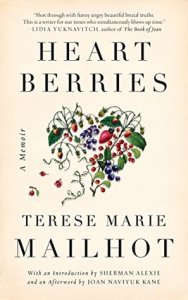 Mailhot was raised on a First Nation reservation on an island off of British Columbia. She is wary of equating her family with Native stereotypes, but there’s no denying that her father was a drunk and ended up murdered. After a childhood of abuse and foster homes, Mailhot committed herself to a mental hospital for PTSD, bipolar II and an eating disorder. It was there that she started writing her story. Much of the book is addressed in the second person to her partner, who helped her move past a broken marriage and the loss of her older son to his father’s custody. Though I highlighted lots of aphoristic pronouncements, I had trouble connecting with the book as a whole: the way imprecise scenes blend into each other makes it hard to find a story line in the murk of miserable circumstances. A more accurate title would have been “Indian Condition” or “Indian Sick” (both used as chapter titles).
Americashire: A Field Guide to a Marriage by Jennifer Richardson (2013)
[151 pages]
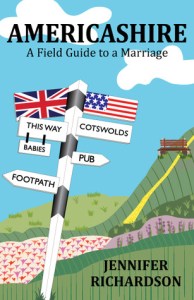 A memoir by an American woman married to a Brit and adjusting to English village life was always going to appeal to me. If you approach this as a set of comic essays on the annual rituals of rich toffs (summer fairs, auctions, horse racing, a hunt ball, a cattle market, etc.), it’s enjoyable enough. It’s when Richardson tries to be more serious, discussing her husband’s depression, their uncertainty over having children, and her possible MS, that the book falters. You can tell her editors kept badgering her to give the book a hook, and decided the maybe-baby theme was strongest. But I never sensed any real wrestling with the question. Not a bad book, but it lacks a clear enough idea of what it wants to be.
Total number of novellas read this month: 26
[not reviewed: In the Space between Moments: Finding Joy and Meaning in Medicine by Pranay Sinha –  ]
]
A few that didn’t take: The Optician of Lampedusa by Emma Jane Kirby, The Mussel Feast by Birgit Vanderbeke, Sea of Ink by Richard Weihe
 My overall favorite: The Gifts of the Body by Rebecca Brown
Runners-up: Surfacing by Margaret Atwood, How to See Nature by Paul Evans, Bodies of Water by V. H. Leslie, and Ghost Wall by Sarah Moss
The ones that got away from me:
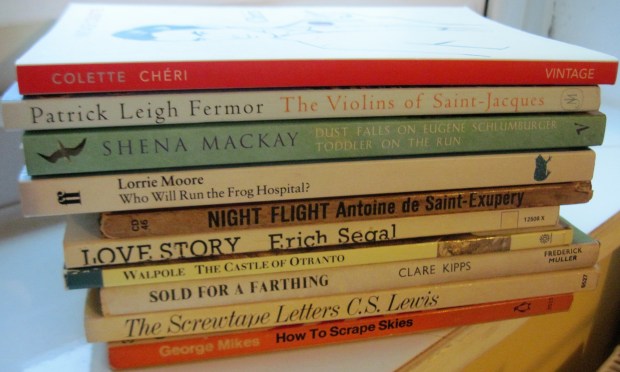
There’s always next year!
What’s the best novella you’ve read recently? Do you like the sound of any of the ones I read?
Margaret Atwood Reading Month: Surfacing and The Edible Woman
For the Margaret Atwood Reading Month hosted by Marcie and Naomi, I read her first two novels – though I didn’t realize they were so at the time, and read them in reverse order. These were my 18th and 19th Atwood books overall, and my 11th and 12th of her novels. It was particularly interesting to see the germ of her frequent themes in these early works.
Surfacing (1972)
(At 186 pages, this just about fit into Novellas for November too!) A young Canadian woman has returned to her French-speaking hometown, ostensibly to search for her missing father but really to search for herself. She’s an illustrator at work on a collection of Quebec folk tales, and in her past are a husband and child that she left behind. With her at her father’s lakeside cabin are her boyfriend Joe, whom she’s not sure she loves, and their friends David and Anna, a married couple whose dynamic is rather disturbing – David is always making demeaning sexualized jokes about Anna, who is afraid for him to see her without makeup on.
 This is a drifting, dreamy sort of book whose gorgeous nature writing (“Above the trees streaky mackerel clouds are spreading in over the sky, paint on a wet page; no wind at lake level, soft feel of the air before rain”) inures you to various threats. You’re never sure just how serious they’ll turn out to be. Will the men’s attitude to women spill over into outright assault? Will there be some big blowup with the resented Americans who are monopolizing the lake? (“We used to think they were harmless and funny and inept and faintly lovable, like President Eisenhower.”)
Meanwhile, the question of her father’s whereabouts becomes less and less important as the book goes on. The narrator seems to have closed herself off to emotion, but all that’s repressed returns dramatically in the final 20 pages (“From any rational point of view I am absurd; but there are no longer any rational points of view.”).
I suspect there may be a fair bit I missed; the book would probably benefit from future re-readings and even some exploration of secondary sources to think about all that’s going on. It’s maybe not as accessible and plot-heavy as much of Atwood’s later work, but I found it to be an intriguing and rewarding read, and it still feels timely more than four decades later.
The Edible Woman (1969)
Marian McAlpin works for Seymour Surveys, administering questionnaires about rice pudding and a new brand of beer. She shares an apartment with Ainsley, who tests electric toothbrushes, in the home of a harridan of a landlady who monitors their every move. Marian is happy enough with her boyfriend Peter and gradually drifts into an engagement – but she can’t stop thinking about Duncan, an apathetic graduate student whom she met during her survey rounds and ran into again at the laundromat. Duncan represents a sort of strings-free relationship that contrasts with the traditional marriage she’d have with Peter. Her challenge is to overcome the inertia of convention and decide what she really wants from her life.
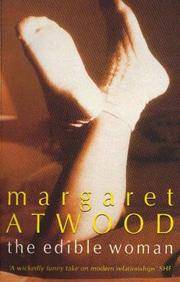 Part Two’s shift from first person to third person is a signal that Marian is dissociating from her situation. She recoils from food and pregnancy – two facts of bodily life that the book’s characters embrace greedily or turn from in horror. Gradually Marian eliminates more and more foods from her diet, starting with meat. And while Ainsley concocts a devious plan to get pregnant by Marian’s friend Len, Marian keeps in mind the cautionary tale of her college friend Clara, whose three monstrous children are always peeing on people or going off to poop in corners. Marian perceives Clara as having given up her mind in favor of her womb.
It’s unclear whether we’re meant to see Marian’s experience as a temporary eating disorder or a physical manifestation of endangered femininity. Now that veganism is mainstream, it sounds dated to hear her lamenting, “I’m turning into a vegetarian, one of those cranks; I’ll have to start eating lunch at Health Bars.” In any case, you can spot themes that will recur in Atwood’s later work, like the threat of the male gaze (Surfacing), the perception of the female body (Lady Oracle), manipulation of pregnancy (The Handmaid’s Tale) and so on. I can’t say I particularly enjoyed this novel, but I liked the food metaphors and laughed at the over-the-top language about babies.
 Bookish Beck = Rebecca Foster. American transplant to England. Freelance proofreader and book reviewer.
