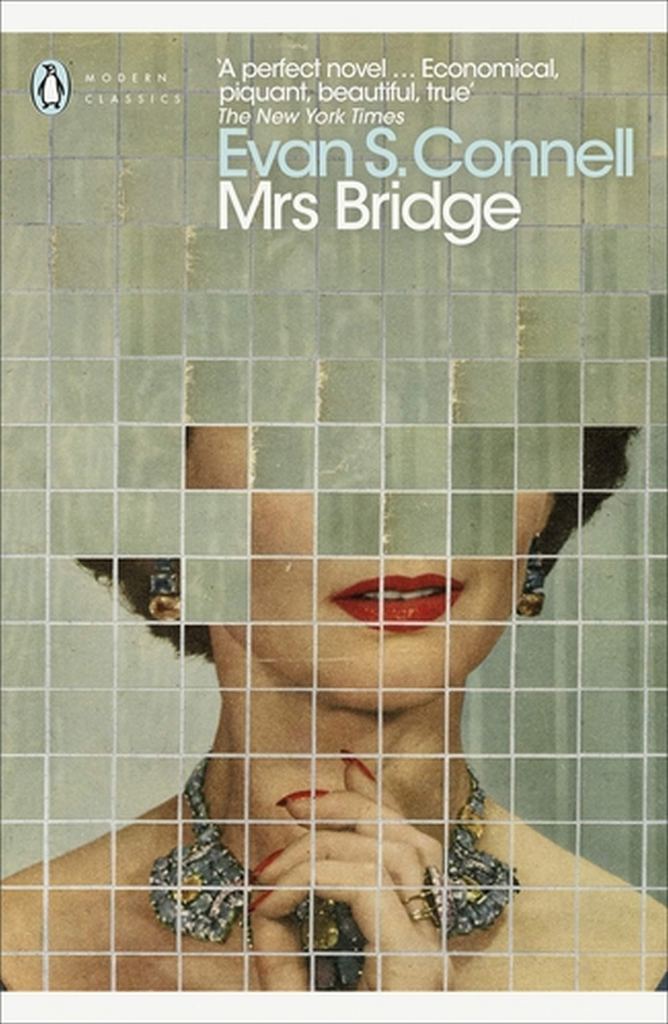
Literary Wives Club: Mrs. Bridge by Evan S. Connell (1959)
This is the best thing we’ve read in my time with the Literary Wives online book club (out of 16 books so far). In the early pages it reminded me of Richard Yates’s work, but by the end I was thinking of it as on par with Stoner by John Williams, a masterpiece I reread last year. Is Mrs. Bridge a female Stoner? In that she is an Everywoman, representative of a certain comfortable, conventional interwar life but also of common longings to be purposeful, experience novelty, and connect with others – I’d say yes. From the first line onwards, we see her as at odds with the facts of her life, which at least appear to her to be unalterable: “Her first name was India – she was never able to get used to it.” She’s never lived up to her exotic name, she feels; her parents must have expected something of her that she couldn’t be.
Connell (1924–2013) sets this portrait of a marriage in his native Kansas City, Missouri. The story is not contemporaneous to its publication but begins in the 1930s; this doesn’t become clear until two-thirds of the way through when, on a European tour that workaholic lawyer Walter Bridge arranged as a belated birthday gift to his wife, news comes that the Nazis have invaded Poland and they have to hurry home. Bear in mind that this is the man who refused to move when a tornado threatened their country club and every single other person had moved to the basement. He insisted on staying at the table and finishing his steak. (So … he expects the weather to bow to his will, if not world leaders?) It’s an astonishing scene, and occasions an astute summation of their relationship dynamic:
It did not occur to Mrs Bridge to leave her husband and run to the basement. She had been brought up to believe without question that when a woman married she was married for the rest of her life and was meant to remain with her husband wherever he was, and under all circumstances, unless he directed her otherwise. She wished he would not be so obstinate; she wished he would behave like everyone else, but she was not particularly frightened. For nearly a quarter of a century she had done as he told her, and what he had said would happen had indeed come to pass, and what he had said would not occur had not occurred. Why, then, should she not believe him now?
(That attitude of blind faith seems more appropriate in a father–daughter or God–mortal relationship than husband–wife, does it not?)
The structure of the book must have been groundbreaking for its time: it’s in 117 short, titled vignettes – a fragmentary style later popularized by writers such as Elizabeth Hardwick, Sarah Manguso and Jenny Offill – that build a picture of the protagonist and her milieu. Even though many of them seem to concern minor incidents from the Bridges’ social life (parties, gossip, the bores they’re forced to have lunch with every time they’re in town), they also reveal a lot about India’s outlook. She wears stockings even on the hottest summer days because “it was the way things were, it was the way things had always been, and so she complied.” Like many of her time and place, she is a casual racist, evidenced by comments on her children’s Black and “gypsy” friends. It pains her that she doesn’t understand her three children. To her it seems they do strange, shocking things (okay, Douglas building a tower of junk is pretty weird) when really they’re just experimenting with fashion and sexuality as any teenager would.
India is in awe of the women of her acquaintance who step out of line, like Grace Barron and Mabel Ong. Grace, in particular, is well informed and confident arguing with men. India seriously considers breaking away from Walter and voting liberal at the next election, but loses her nerve at the last minute; her viewpoint is fundamentally conservative. The novel justifies this by showing how those who flout social rules are shamed or punished in some way.
Mostly, India feels pointless. With a housekeeper around, there’s nothing for her to do. She has nothing but leisure time she doesn’t know how to fill. And yet the years fly past, propelling her into middle age. Occasionally, she’ll summon the motivation to sign up for painting classes or start learning Spanish via records, but she never follows through. So it’s just unnecessary shopping trips in a massive Lincoln she never figures out how to park properly.
She spent a great deal of time staring into space, oppressed by the sense that she was waiting. But waiting for what? She did not know. Surely someone would call, someone must be needing her. Yet each day proceeded like the one before. … Time did not move. The home, the city, the nation, and life itself were eternal; still she had a foreboding that one day, without warning and without pity, all the dear, important things would be destroyed.
It may be fashionable to scorn the existential despair of the privileged, but this is a potent picture of a universal condition. It’s all too easy to get stuck in the status quo and feel helpless to change life for the better. I came across a Slightly Foxed article (Spring 2016) by William Palmer, “The Sadness of Mrs Bridge.” Palmer suggests that Connell was an oddity to his publishers because he wrote in so many genres, and never the same kind of book twice. He dubs this Connell’s finest work. I marked out a couple of passages from his appreciation:
The genius of Connell is to show that this is how most people live: first in their own minds, then in their families, then in their limited social circles; most historical novels fail to realize that most people simply do not notice whatever great moments of history are being enacted around them unless they actually impinge upon their lives.
What is truly compelling about Mrs Bridge is her very ordinariness, notwithstanding all her petty snobbery, conformism and timidity. The list is easy to make and appears to be a fairly damning indictment, but Connell is not writing a satirical portrait. His intention is to show us the utter uniqueness of this one human life, irreplaceability of body and soul that is India Bridge. Connell portrays her so tenderly that we come to sympathize with her and, more, to care for her.
{SOME SPOILERS IN THE REMAINDER}
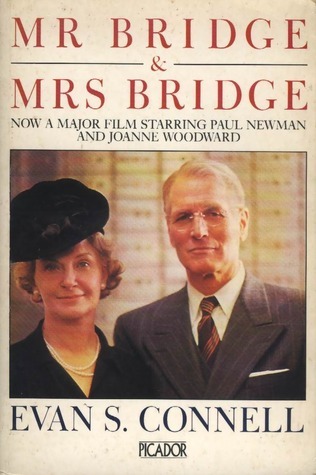
The way Mrs. Bridge ends indicates that Mr. Bridge, which was published 10 years later, will be not a sequel but a companion piece. I’m somewhat wary of reading it, but it will be intriguing to see how events overlap and to what extent Connell is able to make Walter a more sympathetic character. (Palmer remarks, “It is terrifying how little the two portraits have in common – they might be describing two entirely different worlds.”) Connell’s work remains influential: Claire Fuller has featured the pair of novels in one of her year-end reading roundups, and the husband’s surname in Manguso’s Liars is Bridges.
I’ve written much more than I intended to about Mrs. Bridge, but wanted to do justice to what will no doubt be one of my stand-out reads of the year.
(My omnibus edition came from the free bookshop we used to have in the local mall.) 
The main question we ask about the books we read for Literary Wives is:
What does this book say about wives or about the experience of being a wife?
Based on Mrs. Bridge’s experience, one would be excused for thinking that being a wife involves the complete suppression of one’s own personality, ambitions and desires – including sexual, as dealt with very succinctly in the first chapter: Walter usually initiates; the one time she tries to do so, he gives her a patronizing hug and falls asleep. “This was the night Mrs Bridge concluded that while marriage might be an equitable affair, love itself was not.” A wry statement from Connell as marriage is certainly not equitable in this novel.
Granted, this was the 1910s–1930s. By the 1940s, when her daughters are young women, they’re determined to live differently, the one by becoming a New York City career girl, single and promiscuous. The other also vows to do things differently – “Listen, Mother, no man is ever going to push me around the way Daddy pushes you around” – yet ends up pregnant and battered. When India tries to encourage her to placate her husband through sex, she replies, “Oh no, don’t tell me that! I don’t want any part of that myth.”
So we see attitudes starting to change, but it would be another couple of decades before there were more options for both of these generations of women.
A common observation in many of the novels we’ve considered is that, even in a marriage, it is possible for the partners to be a complete mystery to each other. I’ll be interested to see whether Walter’s side of the story illuminates anything or portrays him as clueless. And a main moral I draw from most of our reads is that defining oneself by any relationship – mostly marriage, but also parenthood – sets one up for disappointment, or worse.
See the reviews by Becky, Kate, Kay and Naomi, too!
We recently welcomed a new member, Marianne, and will soon be choosing our books for the next two-plus years. Here’s the club page on Kay’s blog with the current members’ profiles plus all the books covered since 2013.
Our next selection will be Interpreter of Maladies by Jhumpa Lahiri in June. I’ve not read Lahiri before but have always meant to, so I’m particularly looking forward to this one.
Nonfiction November: Two Memoirs of Biblical Living by Evans and Jacobs
I love a good year-challenge narrative and couldn’t resist considering these together because of the shared theme. Sure, there’s something gimmicky about a rigorously documented attempt to obey the Bible’s literal commandments as closely as possible in the modern day. But these memoirs arise from sincere motives, take cultural and theological matters seriously, and are a lot of fun to read.
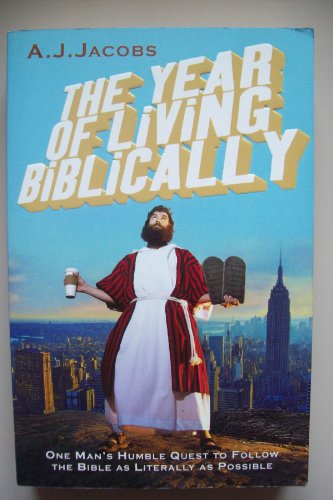
The Year of Living Biblically: One Man’s Humble Quest to Follow the Bible as Literally as Possible by A.J. Jacobs (2007)
Jacobs came up with the idea, so I’ll start with him. His first book, The Know-It-All, was about absorbing as much knowledge as possible by reading the encyclopaedia. This starts in similarly intellectual fashion with a giant stack of Bible translations and commentaries. From one September to the next, Jacobs vows, he’ll do his best to understand and implement commandments from both the Old and New Testaments. It’s not a completely random choice of project in that he’s a secular Jew (“I’m Jewish in the same way the Olive Garden is an Italian restaurant. Which is to say: not very.”). Firstly, and most obviously, he stops shaving and getting haircuts. “As I write this, I have a beard that makes me resemble Moses. Or Abe Lincoln. Or [Unabomber] Ted Kaczynski. I’ve been called all three.” When he also takes to wearing all white, he really stands out on the New York subway system. Loving one’s neighbour isn’t easy in such an antisocial city, but he decides to try his best.
 Jacobs is confused by the Bible’s combination of sensible moral guidelines and bizarre, arcane stuff. His conviction is that you can’t pick and choose – even if you don’t know why a law is important, you have to go with it. One of his “Top Five Most Perplexing Rules in the Bible” is a ban on clothing made of mixed fibers (shatnez). So he hires a shatnez tester, Mr. Berkowitz, who comes to investigate his entire wardrobe. To fulfil another obscure commandment, Berkowitz helps him ceremonially take an egg from a pigeon’s nest. Jacobs takes up prayer, hospitality, tithing, dietary restrictions, and avoiding women at the wrong time of the month. He gamely puts up a mezuzah, which displays a Bible passage above his doorframe. He even, I’m sorry to report, has a chicken sacrificed. Despite the proverb about not ‘sparing the rod’, he can’t truly bring himself to punish his son, so taps him gently with a Nerf bat; alas, Jasper thinks it’s a game. Stoning adulterers? Jacobs tosses pebbles at ankles.
The book is a near-daily journal, with a new rule or three grappled with each day. There are hundreds of strange and culturally specific guidelines, but the heart issues – covetousness, lust – pose more of a challenge. Alongside his work as a journalist for Esquire and this project, Jacobs has family stuff going on: IVF results in his wife’s pregnancy with twin boys. Before they become a family of five, he manages to meet some Amish people, visit the Creation Museum, take a trip to the Holy Land to see a long-lost uncle, and engage in conversation with Evangelicals across the political spectrum, from Jerry Falwell’s megachurch to Tony Campolo (who died just last week). Jacobs ends up a “reverent agnostic.” We needn’t go to such extremes to develop the gratitude he feels by the end, but it sure is a hoot to watch him. This has just the sort of amusing, breezy yet substantial writing that should engage readers of Bill Bryson, Dave Gorman and Jon Ronson. (Free mall bookshop) 
A Year of Biblical Womanhood: How a Liberated Woman Found Herself Sitting on Her Roof, Covering Her Head, and Calling Her Husband “Master” by Rachel Held Evans (2012)
 Evans’s book proposal must have referenced Jacobs’s project, but she comes at things from a different perspective as a progressive Christian, and likely had a separate audience in mind. Namely, the sort of people who worry about the concept of biblical womanhood and wrestle with Bible verses about women remaining silent in church and not holding positions of religious leadership over men. There are indeed factions of Christianity that take these passages literally. Given that she was a public speaker and popular theologian, Evans obviously didn’t. But in her native Alabama and her new home of Tennessee, many would. She decides to look more closely at some of the prescriptions for women in the scriptures, focusing on Proverbs 31, which describes the “woman of valor.” She looks at this idealized woman’s characteristics in turn and tries to adhere to them by dressing modestly, taking etiquette lessons, learning to cook and hosting dinners, and practicing for parenthood with a “Baby-Think-It-Over” doll. Like Jacobs, she stops cutting her hair and meets some Amish people. But she also sleeps outside in a tent while menstruating and undertakes silent meditation at an abbey and a mission trip to Bolivia. Each monthly chapter ends with a profile of a female character from the Bible and what might be learned from her story.
It’s a sweet, self-deprecating book. You can definitely tell that she was only 29 at the time she started her project. It’s okay with me that Evans turned all her literal intentions into more metaphorical applications by the end of the year. She concludes that the Church has misused Proverbs 31: “We abandoned the meaning of the poem by focusing on the specifics, and it became just another impossible standard by which to measure our failures. We turned an anthem into an assignment, a poem into a job description.” Her determination is not to obsess over rules but to continue with the habits that benefited her spiritual life, and to champion women whenever she can. I suspect this is a lesser entry from Evans’s oeuvre. She died too soon – suddenly in 2019, of brain swelling after a severe allergic reaction to an antibiotic – but remains a valued voice, and I’ll catch up on the rest of her books. Searching for Sunday, for instance, was great, and I’m keen to read Evolving in Monkey Town (about living in Dayton, Tennessee, where the famous Scopes Monkey Trial took place). (Birthday gift from my wish list, 2023) 
20 Books of Summer, 11–13: Campbell, Julavits, Lu
Two solid servings of women’s life writing plus a novel about a Chinese woman stuck in roles she’s not sure she wants anymore.
Thunderstone: A true story of losing one home and discovering another by Nancy Campbell (2022)
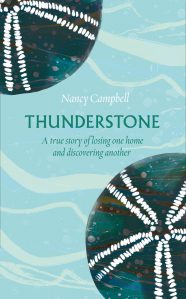 Just before Covid hit, Campbell’s partner Anna had a partially disabling stroke. They had to adjust to lockdown and the rigours of Anna’s at-home care at once. It was complicated in that Campbell was already halfway out the door: after 10 years, their relationship had run its course and she knew it was time to go, but guilt lingered about abandoning Anna at her most vulnerable (“How dare I leave someone who needed me”). That is the backdrop to a quiet book largely formed of a diary spanning June to September 2021. Campbell recounts settling into a caravan by the canal and railway line in Oxford, getting plenty of help from friends and neighbours but also finding her own inner resources and enjoying her natural setting.
The title refers to a fossil that has been considered a talisman in various cultures, and she needed the good luck during a period that involved accidental carbon monoxide poisoning and surgery for an ovarian abnormality (but it didn’t protect her books, which were all destroyed in a leaking shipping container – the horror!). I most enjoyed the longer entries where she muses on “All the potential lives I moved on from” during 20 years in Oxford and elsewhere, which makes me think that I would have preferred a more traditional memoir by her. Covid narratives feel really dated now, unfortunately. (New (bargain) purchase from Hungerford Bookshop with birthday voucher)
Directions to Myself: A Memoir by Heidi Julavits (2023)
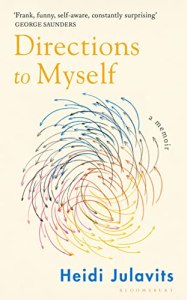 Julavits is a novelist and founding editor of The Believer. I loved her non-standard diary, The Folded Clock, back in 2017, so jumped at the chance to read her new memoir but then took more a year over reading it. The U.S. subtitle, “A Memoir of Four Years,” captures the focus: the change in her son from age five to age nine – from little boy to full-fledged individual. In later sections he sounds so like my American nephew with his Fortnite obsession and lawyerly levels of argumentation and self-justification. A famous author once told Julavits that writers should not have children because each one represents a book they will not write. This book is a rebuttal: something she could not have written without having had her son. Home is a New York City apartment near the Columbia University campus where she teaches – in fact, directly opposite a dorm at which rape allegations broke out – but more often the setting is their Maine vacations, where coastal navigation is a metaphor for traversing life.
Mostly the memoir takes readers through everyday conversations the author has with friends and family about situations of inequality or harassment. Through her words she tries to gently steer her son towards more open-minded ideas about gender roles. She also entrances him and his sleepover friends with a real-life horror story about being chased through the French countryside by a man in a car. The tenor of her musings appealed to me, but already the details are fading. I suspect this will mean much more to a parent.
With thanks to Bloomsbury for the free copy for review.
The Funeral Cryer by Wenyan Lu (2023)
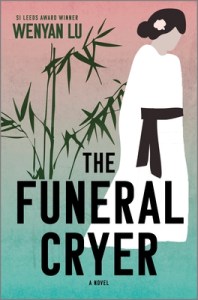 The title character holds a traditional position in her Chinese village, performing mourning at ceremonies for the dead. It’s a steady source of income for her and her husband, but her career choice has stigma attached: “Now that I brought bad luck and I smelt of the dead, nobody would step into our house to play mah-jong or chat.” Exotic as the setup might seem at first, it underpins a familiar story of a woman caught in frustrating relationships and situations. A very readable but plain style to this McKitterick Prize winner.
With thanks to the Society of Authors for the free copy.
June Releases by Caroline Bird, Kathleen Jamie, Glynnis MacNicol and Naomi Westerman
These four books by women all incorporate life writing to an extent. Although the forms differ, a common theme – as in the other June releases I’ve reviewed, Sandwich and Others Like Me – is grappling with what a woman’s life should be, especially for those who have taken an unconventional path (i.e. are queer or childless) or are in midlife or later. I’ve got a poet up to her usual surreal shenanigans but with a new focus on lesbian parenting; a hybrid collection of poetry and prose giving snapshots of nature in crisis; an account of a writer’s hedonistic month in pandemic-era Paris; and mordant essays about death culture.
Ambush at Still Lake by Caroline Bird
 Caroline Bird has become one of my favourite contemporary poets over the past few years. Her verse is joyously cheeky and absurdist. A great way to sample it is via her selected poems, Rookie. This seventh collection is muted by age and circumstance – multiple weddings and a baby – but still hilarious in places. Instead of rehab or hospital as in In These Days of Prohibition, the setting is mostly the domestic sphere. Even here, bizarre things happen. The police burst in at 4 a.m. for no particular reason; search algorithms and the baby monitor go haywire. Her brother calls to deliver a paranoid rant (in “Up and at ’Em”), while Nannie Edna’s dying wish is to dangle her great-grandson from her apartment window (in “Last Rites”). The clinic calls to announce that their sperm donor was a serial killer – then ‘oops, wrong vial, never mind!’ A toddler son’s strange and megalomaniac demands direct their days. My two favourites were “Ants,” in which a kitchen infestation signals general chaos, and “The Frozen Aisle,” in which a couple scrambles to finish the grocery shop and get home to bed before a rare horny moment passes. A lesbian pulp fiction cover, mischievous wit and topics of addiction and queer parenting: this is not your average poetry.
With thanks to Carcanet Press for the free copy for review.
A sample poem:
Siblings
A woman gave birth
to the reincarnation
of Gilbert and Sullivan
or rather, two reincarnations:
one Gilbert, one Sullivan.
What are the odds
of both being resummoned
by the same womb
when they could’ve been
a blue dart frog
and a supply teacher
on separate continents?
Yet here they were, squidged
into a tandem pushchair
with their best work
behind them, still smarting
from the critical reception
of their final opera
described as ‘but an echo’
of earlier collaborations.
Cairn by Kathleen Jamie
 As she approached age 60, Kathleen Jamie found her style changing. Whereas her other essay collections alternate extended nature or travel pieces with few-page vignettes, Cairn eschews longer material and instead alternates poems with micro-essays on climate crisis and outdoor experiences. In the prologue she calls these “distillations and observations. Testimonies” that she has assembled into “A cairn of sorts.”
As in Surfacing, she writes many of the autobiographical fragments in the second person. The book is melancholy at times, haunted by all that has been lost and will be lost in the future:
What do we sense on the moor but ghost folk,
ghost deer, even ghost wolf. The path itself is a
phantom, almost erased in ling and yellow tormentil (from “Moor”)
In “The Bass Rock,” Jamie laments the effect that bird flu has had on this famous gannet colony and wishes desperately for better news:
The light glances on the water. The haze clears, and now the rock is visible; it looks depleted. But hallelujah, a pennant of twenty-odd gannets is passing, flying strongly, now rising now falling They’ll be Bass Rock birds. What use the summer sunlight, if it can’t gleam on a gannet’s back? You can only hope next year will be different. Stay alive! You call after the flying birds. Stay alive!
Natural wonders remind her of her own mortality and the insignificance of human life against deep time. “I can imagine the world going on without me, which one doesn’t at 30.” She questions the value of poetry in a time of emergency: “If we are entering a great dismantling, we can hardly expect lyric to survive. How to write a lyric poem?” (from “Summer”). The same could be said of any human endeavour in the face of extinction: We question the point but still we continue.
My two favourite pieces were “The Handover,” about going on an environmental march with her son and his friends in Glasgow and comparing it with the protests of her time (Greenham Common and nuclear disarmament) – doom and gloom was ever thus – and the title poem, which piles natural image on image like a cone of stones. Although I prefer the depth of Jamie’s other books to the breadth of this one, she is an invaluable nature writer for her wisdom and eloquence, and I am grateful we have heard from her again after five years.
With thanks to Sort Of Books for the free copy for review.
I’m Mostly Here to Enjoy Myself: One Woman’s Pursuit of Pleasure in Paris by Glynnis MacNicol
 I loved New York City freelance writer Glynnis MacNicol’s No One Tells You This (2018), which approached her 40th year as an adventure into the unknown. This second memoir is similarly frank and intrepid as MacNicol examines the unconscious rules that people set for women in their mid-forties and gleefully flouts them, remaining single and childfree and delighting in the freedom that allows her to book a month in Paris on a whim. She knows that she is an anomaly for being “untethered”; “I am ready for anything. To be anyone.”
This takes place in August 2021, when some pandemic restrictions were still in force, and she found the city – a frequent destination for her over the years – drained of locals, who were all en vacances, and largely empty of tourists, too. Although there was still a queue for the Mona Lisa, she otherwise found the Louvre very quiet, and could ride her borrowed bike through the streets without having to look out for cars. She and her single girlfriends met for rosé-soaked brunches and picnics, joined outdoor dance parties and took an island break.
And then there was the sex. MacNicol joined a hook-up app called Fruitz and met all sorts of men. She refused to believe that, just because she was 46 going on 47, she should be invisible or demure. “All the attention feels like pure oxygen. Anything is possible.” Seeing herself through the eyes of an enraptured 27-year-old Italian reminded her that her body was beautiful even if it wasn’t what she remembered from her twenties (“there is, on average, a five-year gap between current me being able to enjoy the me in the photos”). The book’s title is something she wrote while messaging with one of her potential partners.
As I wrote yesterday about Others Like Me, there are plenty of childless role models but you may have to look a bit harder for them. MacNicol does so by tracking down the Paris haunts of women writers such as Edith Wharton and Colette. She also interrogates this idea of women living a life of pleasure by researching the “odalisque” in 18th- and 19th-century art, as in the François Boucher painting on the cover. This was fun, provocative and thoughtful all at once; well worth seeking out for summer reading and armchair travelling.
(Read via Edelweiss) Published in the USA by Penguin Life/Random House.
Happy Death Club: Essays on Death, Grief & Bereavement across Cultures by Naomi Westerman
 Like Erica Buist (This Party’s Dead) and Caitlin Doughty (Smoke Gets in Your Eyes, From Here to Eternity and Will My Cat Eat My Eyeballs?), playwright Naomi Westerman finds the comical side of death. Part of 404 Ink’s Inklings series (“Big ideas, pocket-sized books” – perfect for anyone looking for short nonfiction for Novellas in November!), this is a collection of short essays about her own experiences of bereavement as well as her anthropological research into rituals and beliefs around death. “The Rat King of South London” is about her father’s sudden death from an abdominal aneurysm. An instantaneous death is a good one, she contends. More than 160,000 people die every day, and what to do with all those bodies is a serious question. A subversive sense of humour is there right from the start, as she gives a rundown of interment options. “Mummification: Beloved by Ancient Egyptians and small children going through their Ancient Egypt phase, it’s a classic for a reason!” Meanwhile, she legally owns her father’s plot so also buries dead pet rats there.
Other essays are about taking her mother’s ashes along on world travels, the funeral industry and “red market” sales of body parts, grief as a theme in horror films, the fetishization of dead female bodies, Mexico’s Day of the Dead festivities, and true crime obsession. In “Batman,” an excerpt from one of her plays, she goes to have a terrible cup of tea with the man she believes to be responsible for her mother’s death – a violent one, after leaving an abusive relationship. She also used the play to host an on-stage memorial for her mother since she wasn’t able to sit shiva. In the final title essay, Westerman tours lots of death cafés and finds comfort in shared experiences. These pieces are all breezy, amusing and easy to read, so it’s a shame that this small press didn’t achieve proper proofreading, making for a rather sloppy text, and that the content was overall too familiar for me.
With thanks to 404 Ink and publicist Claire Maxwell for the free copy for review.
Does one or more of these catch your eye?
What June releases can you recommend?
Sandwich by Catherine Newman (Blog Tour)
Catherine Newman’s second novel for adults, Sandwich, takes place during a week on Cape Cod, a popular Massachusetts beach resort. Rachel, nicknamed “Rocky,” is a fiftysomething mother to two young adults, Jamie and Willa. She and her husband Nick have been renting the same cottage for their family’s summer vacations for 20 years. Although Rocky narrates most of the novel in the first person, in the Prologue she paints the scene for the reader in the third person: “They’ve been coming here for so many years that there’s a watercolor wash over all of it now … pleasant, pastel memories of taffy, clam strips, and beachcombing.”
 Also present are Maya, Jamie’s girlfriend; Rocky’s ageing parents; and Chicken the cat (can you imagine taking your cat on holiday?!). With such close quarters, it’s impossible to keep secrets. Over the week of merry eating and drinking, much swimming, and plenty of no-holds-barred conversations, some major drama emerges via both the oldies and the youngsters. And it’s not just present crises; the past is always with Rocky. Cape Cod has developed layers of emotional memories for her. She’s simultaneously nostalgic for her kids’ babyhood and delighted with the confident, intelligent grown-ups they’ve become. She’s grateful for the family she has, but also haunted by inherited trauma and pregnancy loss.
There couldn’t be more ideal reading for women in the so-called “sandwich generation” who have children growing towards independence as well as parents starting to struggle with infirmity. (The contemporary storyline of Barbara Kingsolver’s Unsheltered, which coincidentally is about a character named Willa, is comparable in that respect.) Newman is frank about Willa’s lesbianism and Rocky’s bisexuality, and she doesn’t hold back about the difficulties of menopause, either. Rocky is challenged to rethink her responsibilities as a daughter, wife and mother when she’s surrounded by equally strong-willed people who won’t do what she wants them to. The novel is so quirky, funny and relatable that it’s impossible not to sympathize with Rocky even if, like me, you’re in a very different life situation.

I like the U.S. cover so much more!
One observation I would make is that Rocky is virtually identical to Ash in Newman’s debut, We All Want Impossible Things, and to the author in real life (as I know from subscribing to her Substack). If you read even the most basic information about her, it’s clear that it’s all autofiction. That’s not an issue for me as I don’t think inventing is inherently superior to drawing from experience; some authors write what they know in a literal sense and that’s okay. So, for her fans, more of the same will be no problem at all. But it is a very particular voice: intense, scatty, purposely outrageous. Rocky is a protagonist who says things like, “How am I a feminist, an advocate for reproductive rights, Our Bodies, Ourselves, hear me roar, blah blah, and I am only just now learning about vaginal atrophy?” (A companion nonfiction read would be Nina Stibbe’s Went to London, Took the Dog.)
In outlook Newman reminds me a lot of Anne Lamott, who is equally forthright and whose books similarly juxtapose life’s joy and sorrows, especially in this late passage: “this may be the only reason we were put on this earth. To say to each other, I know how you feel.”
This is a sweet, fun, chatty book that’s about a summer break – and would be perfect to read on a summer break.
With thanks to Anne Cater of Random Things Tours and Doubleday for the free e-copy for review.
Buy Sandwich from Bookshop.org [affiliate link]
I was delighted to help close out the blog tour for Sandwich. See below for details of where the other reviews have appeared.

Book Serendipity, January to February 2024
I call it “Book Serendipity” when two or more books that I read at the same time or in quick succession have something in common – the more bizarre, the better. This is a regular feature of mine every couple of months. Because I usually have 20–30 books on the go at once, I suppose I’m more prone to such incidents. The following are in roughly chronological order.
- I finished two poetry collections by a man with the surname Barnett within four days in January: Murmur by Cameron Barnett and Birds Knit My Ribs Together by Phil Barnett.

- I came across the person or place name Courtland in The Optimist’s Daughter by Eudora Welty, then Cortland in a story from The Orange Fish by Carol Shields, then Cotland (but where? I couldn’t locate it again! Was it in Elizabeth Is Missing by Emma Healey?).
- The Manet painting Olympia is mentioned in Christmas Holiday by W. Somerset Maugham and The Paris Novel by Ruth Reichl (both of which are set in Paris).


- There’s an “Interlude” section in Babel by R.F. Kuang and The Vulnerables by Sigrid Nunez.
- The Morris (Minor) car is mentioned in Elizabeth Is Missing by Emma Healey and Various Miracles by Carol Shields.
- The “flour/flower” homophone is mentioned in Babel by R.F. Kuang and Various Miracles by Carol Shields.
- A chimney swift flies into the house in Cat and Bird by Kyoko Mori and The Optimist’s Daughter by Eudora Welty.
- A character named Cornelius in The Fruit Cure by Jacqueline Alnes and Wellness by Nathan Hill.
- Reading two year challenge books at the same time, A Year of Biblical Womanhood by Rachel Held Evans and Local by Alastair Humphreys, both of which are illustrated with frequent black-and-white photos by and of the author.
- A woman uses a bell to summon children in one story of Universally Adored and Other One Dollar Stories by Elizabeth Bruce and The Optimist’s Daughter by Eudora Welty.
- Apple turnovers get a mention in A Year of Biblical Womanhood by Rachel Held Evans and Wellness by Nathan Hill.
- A description of rolling out pie crust in A Year of Biblical Womanhood by Rachel Held Evans and Cat and Bird by Kyoko Mori.

- The idea of a house giving off good or bad vibrations in Wellness by Nathan Hill and a story from Various Miracles by Carol Shields.

- Emergency C-sections described or at least mentioned in Brother Do You Love Me by Manni Coe, The Unfamiliar by Kirsty Logan, Wellness by Nathan Hill, and lots more.
- Frustration with a toddler’s fussy eating habits, talk of “gentle parenting” methods, and mention of sea squirts in Wellness by Nathan Hill and Matrescence by Lucy Jones.
- The nickname “Poet” in The Tidal Year by Freya Bromley and My Friends by Hisham Matar.
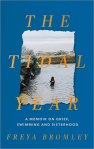
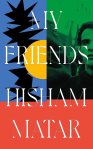
- A comment about seeing chicken bones on the streets of London in The Tidal Year by Freya Bromley and Went to London, Took the Dog by Nina Stibbe.
- Swans in poetry in The Tidal Year by Freya Bromley and Egg/Shell by Victoria Kennefick.
- A mention or image of Captcha technology in Egg/Shell by Victoria Kennefick and Went to London, Took the Dog by Nina Stibbe.
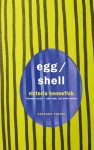

- An animal automaton in Loot by Tania James and Egg/Shell by Victoria Kennefick.
- A mention of Donna Tartt in The Tidal Year by Freya Bromley, Looking in the Distance by Richard Holloway, and Matrescence by Lucy Jones.
- Cathy Rentzenbrink appears in The Tidal Year by Freya Bromley and Went to London, Took the Dog by Nina Stibbe.
 Dialogue is given in italics in the memoirs The Tidal Year by Freya Bromley and The Unfamiliar by Kirsty Logan.
- An account of a man being forced to marry the sister of his beloved in A Year of Biblical Womanhood by Rachel Held Evans, Wellness by Nathan Hill, and The Tiger’s Wife by Téa Obreht.
- Saying that one doesn’t want to remember the loved one as ill (but really, not wanting to face death) so not saying goodbye (in Cat and Bird by Kyoko Mori) or having a closed coffin (Wellness by Nathan Hill).
- An unhappy, religious mother who becomes a hoarder in Wellness by Nathan Hill and I’m Glad My Mom Died by Jennette McCurdy.
- Characters called Lidija and Jin in Exhibit by R. O. Kwon and Lydia and Jing in the first story of This Is Salvaged by Vauhini Vara.
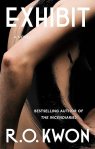
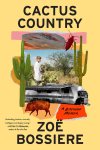
- Distress at developing breasts in Cactus Country by Zoë Bossiere and I’m Glad My Mom Died by Jennette McCurdy.
- I came across mentions of American sportscaster Howard Cosell in Heartburn by Nora Ephron and Stations of the Heart by Richard Lischer (two heart books I was planning on reviewing together) on the same evening. So random!
- Girls kissing and flirting with each other (but it’s clear one partner is serious about it whereas the other is only playing or considers it practice for being with boys) in Cactus Country by Zoë Bossiere and Winter’s Bone by Daniel Woodrell.
- A conversion to Catholicism in Places I’ve Taken My Body by Molly McCully Brown and Stations of the Heart by Richard Lischer.
- A zookeeper is attacked by a tiger when s/he goes into the enclosure (maybe not the greatest idea!!) in Tiger by Polly Clark and The Tiger’s Wife by Téa Obreht.

- The nickname Frodo appears in Tiger by Polly Clark and Brother Do You Love Me by Manni Coe.
- Opening scene of a parent in a coma, California setting, and striking pink and yellow cover to Death Valley by Melissa Broder and I’m Glad My Mom Died by Jennette McCurdy.

- An Englishman goes to Nigeria in Howards End by E.M. Forster and Immanuel by Matthew McNaught.
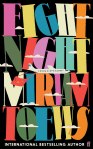 The Russian practice of whipping people with branches at a spa in Tiger by Polly Clark and Fight Night by Miriam Toews.
- A mother continues washing her daughter’s hair until she is a teenager old enough to leave home in Mrs. March by Virginia Feito and I’m Glad My Mom Died by Jennette McCurdy.
- Section 28 (a British law prohibiting the “promotion of homosexuality” in schools) is mentioned in A Bookshop of One’s Own by Jane Cholmeley, Some Kids I Taught and What They Taught Me by Kate Clanchy, and Brother Do You Love Me by Manni Coe.
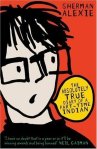
- Characters named Gord (in one story from Various Miracles by Carol Shields, and in Fight Night by Miriam Toews), Gordy (in The Absolutely True Diary of a Part-Time Indian by Sherman Alexie), and Gordo (in Blood Red by Gabriela Ponce).

- Montessori and Waldorf schools are mentioned in Cactus Country by Zoë Bossiere and When Fragments Make a Whole by Lory Widmer Hess.
- A trailer burns down in The Absolutely True Diary of a Part-Time Indian by Sherman Alexie and Cactus Country by Zoë Bossiere.
What’s the weirdest reading coincidence you’ve had lately?
Recent Releases by Nathan Hill, Hisham Matar, Sigrid Nunez and More
One key way in which 2024’s reading has already differed from previous years’ is that I no longer avoid doorstoppers. I now classify any book with over 400 pages as a doorstopper, and by that definition I have already gotten through three this year: The Tidal Year plus two of the below, with Wellness standing out as the true whopper at 597 small-print pages. January offered a set of releases full of variety: gritty yet funny flash fiction; a novel of big ideas and big empathy for its flawed characters; an exile’s elegant love letter to Libya from London; a coy pandemic-era reflection on connection and creation; and a tour of nature close to home.
Universally Adored and Other One Dollar Stories by Elizabeth Bruce
 This was a great collection of 33 stories, all of them beginning with the words “One Dollar” and most of flash fiction length. Bruce has a knack for quickly introducing a setup and protagonist. The voice and setting vary enough that no two stories sound the same. What is the worth of a dollar? In some cases, where there’s a more contemporary frame of reference, a dollar is a sign of desperation (for the man who’s lost house, job and wife in “Little Jimmy,” for the coupon-cutting penny-pincher whose unbroken monologue makes up the whole of “Grocery List”), or maybe just enough for a small treat for a child (as in “Mouse Socks” or “Boogie Board”). In the historical stories, a dollar can buy a lot more. It’s a tank of gas – and a lesson on the evils of segregation – in “Gas Station”; it’s a huckster’s exorbitant charge for a mocked-up relic in “The Grass Jesus Walked On.”
The tone ranges from black comedy (“Festus”) to high tragedy (“Votive Candle”), but the book mostly falls within the realm of dirty realism with the attention to working-class country folk, so I’d recommend the collection to fans of authors who perch on the lighter side of that subgenre, such as Barbara Kingsolver or Denis Johnson. A few of my favorite stories, in addition to the above, were “Ice-Cold Water,” which I appreciated for the Washington D.C. setting and the way that an assumption about who would be racist was overturned by a moment of simple compassion; “Dolores,” in which a slick humanitarian fundraiser meets a waitress who has his number; and “Boiling the Buggers,” a window onto Covid-exacerbated mental illness. (Read via BookSirens)
Wellness by Nathan Hill
Somehow nearly eight years have passed since Hill’s debut novel, The Nix, which I dubbed “a rich, multi-layered story about family curses and failure.” I admired it as much for its prose as for its ideas, and Wellness is just as effervescent and insightful. It’s a state-of-the-nation novel filtered through one Chicago family: experimental photographer and underperforming academic Jack; his wife Elizabeth, a placebo researcher at Wellness; and their YouTube-obsessed son Toby. They’ve recently invested their life savings in a new condo and are considering trendy features like open shelves and separate master bedrooms. It would be oversimplifying, but true, to say that this couple is experiencing midlife and marital crises. Their nineties college romance – and a time of life when everything felt open and possible – is so remote now. When Elizabeth suggests they join a friend at a swingers’ club and a patient of hers who’s also a parent at Toby’s school sees them outside, chaos ensues.
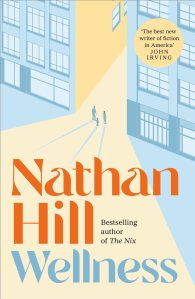
Some elements from The Nix carry over, such as campus politics, the American Midwest, and mother–son relationships, but also broader questions of authenticity, purpose and nurture. Is love itself a placebo? The novel spends time with Jack and Elizabeth at the dawn of their relationship and in the present day, but also looks back to their early careers and first years of parenthood. Hill is clearly fascinated with the sort of psychological experimentation Elizabeth engages in (there’s a whole bibliography of scientific papers consulted) but also turns it to humorous effect, as when Elizabeth subjects Toby to the marshmallow test. A lot of information is conveyed through dialogue, yet it never feels forced. A couple of long asides, on Elizabeth’s family history and the algorithms guiding Jack’s interactions with his conspiracy theorist father, tried my patience, but I loved a four-page chapter on a funeral supper where every sentence starts “There was.” Sooooo many quotable lines throughout.
The only fault in an addictive and spot-on novel (how did he know?! you’ll find yourself thinking about your own attitude to work/marriage/children) is that Hill is so committed to excavating these characters’ backstory of stunted emotion – Jack estranged from his religious Kansas farmer parents after a traumatic incident you feel right in the gut; Elizabeth glad to jettison her father’s wealth with his anger – that he hurries through the denouement. Still, this is sure to be a fiction highlight of my year. It’s one for readers of Jonathan Franzen, sure, but I also thought it reminiscent of Katherine Heiny’s Standard Deviation and Meg Wolitzer’s The Interestings.
With thanks to Picador for the proof copy for review.
My Friends by Hisham Matar
“Benghazi was the one place I longed for the most, it was also the place I most feared to return to.”
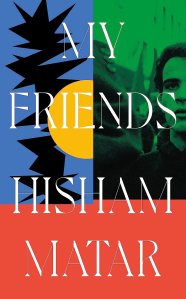 Taking a long walk through London one day, Khaled looks back from midlife on the choices he and his two best friends have made. He first came to the UK as an eighteen-year-old student at Edinburgh University. Everything that came after stemmed from one fateful day. Matar places Khaled and his university friend Mustafa at a real-life demonstration outside the Libyan embassy in London in 1984, which ended in a rain of bullets and the accidental death of a female police officer. Khaled’s physical wound is less crippling than the sense of being cut off from his homeland and his family. As he continues his literary studies and begins teaching, he decides to keep his injury a secret from them, as from nearly everyone else in his life. On a trip to Paris to support a female friend undergoing surgery, he happens to meet Hosam, a writer whose work enraptured him when he heard it on the radio back home long ago. Decades pass and the Arab Spring prompts his friends to take different paths.
I’d previously only read Matar’s short nonfiction work A Month in Siena. The slow, meditative style I enjoyed so much there didn’t translate well into doorstopper length; by the 300-page mark I found myself skimming to see if anything else might happen. Despite the title, we come to know Mustafa and Hosam much less well than we do Khaled. I would happily have had the book’s plot and sentiment concentrated into a taut 200 pages. However, I’m still interested in trying other books by Matar. In the Country of Men is significantly shorter and available from the backroom storage area of my library, and his Folio Prize-winning memoir The Return, too, is on shelf and I reckon will be right up my street.
With thanks to Viking (Penguin) for the proof copy for review.
The Vulnerables by Sigrid Nunez
I’m a huge Nunez fan after reading The Friend, What Are You Going Through, and especially A Feather on the Breath of God. Her last three books have been very much of a piece: autofiction voiced by an unnamed woman who has a duty of care towards a friend or a friend’s pet and ponders, in wry meta fashion, the nature of autobiographical writing and the meaning of life and death at a time of climate breakdown. Alas, The Vulnerables seems like no more than a rehashing of The Friend, with flanking main characters chosen at random from central casting: a parrot named Eureka and a mentally ill college drop-out called Vetch. This quirky trio is thrown together in a lavish New York City apartment during lockdown and nothing much happens but conversation brings them closer.
 A second problem: Covid-19 stories feel dated. For the first two years of the pandemic I read obsessively about it, mostly nonfiction accounts from healthcare workers or ordinary people looking for community or turning to nature in a time of collective crisis. But now when I come across it as a major element in a book, it feels like an out-of-place artefact; I’m almost embarrassed for the author: so sorry, but you missed your moment. My disappointment may primarily be because my expectations were so high. I’ve noted that two blogger friends new to Nunez were enthusiastic about this (but so was Susan, who’d enjoyed her before). That’s not to say this wasn’t a pleasantly fluid and incisive read, even if its message of essential human vulnerability is an obvious one. Anyway, I’ll take Nunez musing on familiar subjects over most other contemporary writers any day:
“Never write ‘I don’t remember,’ Editor says; it undermines your authority. But write as if you remember everything and Reader will smell a rat.”
“You can start with fiction or start with documentary, according to Jean-Luc Goddard. Either way, you will inevitably find the other.”
“I like this clarification by the narrator of a book by Stendhal: ‘It is not out of egotism that I say “I”; it is simply the quickest way to tell the story.’)”
(À propos of the doorstoppers above)
“Does that mean a long novel is easier to write than a short one? / Um, no. But, to borrow from a certain critic, in almost every long book I read I see a short one shirking its job.”
With thanks to Virago for the proof copy for review.
And a bonus work of nonfiction:
Local: A Search for Nearby Nature and Wildness by Alastair Humphreys
Lev Parikian alerted me to this amiable record of weekly discoveries of the nature on one’s home turf. Humphreys has been an international adventure traveller and written many books about his exploits. Here, by contrast, he zooms the lens in about as far as it will go, ordering a custom-made 20-km-square OS map that has his house at the centre and choosing one surrounding grid square per week (so 52 out of a total of 400) to cycle to and explore. He’s chosen to leave his town unnamed so this can function as an Everyman’s journey through edgelands. And his descriptions and black-and-white photographs really do present an accurate microcosm of modern England: fields, woods, waterways, suburban streets.
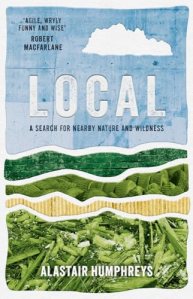 From one November to the next, he watches the seasons advance and finds many magical spaces with everyday wonders to appreciate. “This project was already beginning to challenge my assumptions of what was beautiful or natural in the landscape,” he writes in his second week. True, he also finds distressing amounts of litter, no-access signs and evidence of environmental degradation. But curiosity is his watchword: “The more I pay attention, the more I notice. The more I notice, the more I learn.”
Each week’s observations send him down a research rabbit hole, with topics including caves, land management, mudlarking, plant species, and much more. The nature of the short chapters means that there can only ever be a cursory look at huge issues like rewilding and veganism, but Humphreys is nimble in weaving in the brief, matter-of-fact discussions. His eagerness is irrepressible. “How you look, what you see, and the way all this makes you feel: a single map and the best of all possible worlds.” (See also: Paul’s review.)
With thanks to the author for the free copy for review.
Three on a Theme: Matrescence Memoirs (and a Bonus Novel)
I think of pregnancy and childbirth like any extreme adventure (skydiving, polar exploration): wholly extraordinary experiences with much to recommend them – though better appreciated retrospectively than in the moment – to which my response is a hearty “no, thanks.” But just as books have taken me to deserts and the frozen north, miles above or below the earth, into many eras and cultures, they’ve long been my window onto motherhood.
Matrescence, a word coined by anthropologist Dana Raphael in the 1970s, is the process of becoming a mother. It’s a transition period, like adolescence, that involves radical physical and mental changes and has lasting effects. And as Lucy Jones reports, up to 45% of women describe childbirth as traumatic. That’s not a niche experience; it’s an epidemic. If it was men going through this, you can bet it would be at the top of international research agendas.
These three memoirs (and a bonus novel) are bold, often harrowing accounts of the metamorphosis involved in motherhood. They’re personal yet political in how they expose the lack of social support for creating and raising the next generation. All four of these 2023 releases are eye-opening, lyrical and vital; they deserve to be better known.
Matrescence: On the Metamorphosis of Pregnancy, Childbirth and Motherhood by Lucy Jones
Like Jones’s previous book, Losing Eden, about climate breakdown and the human need for nature, Matrescence is a potent blend of scientific research and stories from the frontline. She has synthesized a huge amount of information into a tight 260-some pages that are structured thematically but also proceed roughly chronologically through her own matrescence. Not long into her pregnancy with her first child, a daughter, she realised the extent to which outdated and sexist expectations still govern motherhood: concepts like “natural childbirth” and “maternal instinct,” the judgemental requirement for exclusive breastfeeding, the idea that a parent should “enjoy every minute” of their offspring’s babyhood rather than admitting depression or overwhelm. After the cataclysm of birth, loneliness set in. “Matrescence was another country, another planet. I didn’t know how to talk about the existential crisis I was facing, or the confronting, encompassing relationship I was now in.”
 Jones is now a mother of three. You might think delivery would get easier each time, but in fact the birth of her second son was worst, physically: she had to go into immediate surgery for a fourth-degree anal sphincter tear. In reflecting on her own experiences, and speaking with experts, she has become passionate about fostering open discussion about the pain and risk of childbirth, and how to mitigate them. Women who aren’t informed about what they might go through suffer more because of the shock and isolation. There’s the medical side, but also the equally important social implications: new mothers need so much more practical and mental health support, and their unpaid care work must be properly valued by society. “Yet the focus remains on individual responsibility, maintaining the illusion that we are impermeable, impenetrable machines, disconnected from the world around us.”
The hybrid nature of the book is its genius. A purely scientific approach might have been dry; a social history well-trod and worthy; a memoir too inward-looking to make wider points. Instead it’s equally committed to all three purposes. I appreciated the laser focus on her own physical and emotional development, but the statistical and theoretical context gives a sense of the universal. The literary touches – lists and word clouds, verse-like meditations and flash vignettes about natural phenomena – are not always successful, but there is a thrill to seeing Jones experimenting. Like Leah Hazard’s Womb, this is by no means a book that’s just for mothers; it’s for anyone who’s ever had a mother.
With thanks to Allen Lane (Penguin) for the free copy for review.
Milk: On Motherhood and Madness by Alice Kinsella
 Kinsella is an Irish poet who became a mother in her mid-twenties; that’s young these days. In unchronological vignettes dated in relation to her son’s birth – the number of months after; negative numbers to indicate that it happened before – she explores her personality, mental health and bodily experiences, but also comments more widely on Irish culture (the stereotype of the ‘mammy’; the only recent closure of Magdalene laundries and overturning of anti-abortion laws) and theories about motherhood.
I liked this most when the author stuck close to her own sensory and emotional life; overall, the book felt too long and I thought a late segue into an argument against the dairy industry was unnecessary. Had I been the editor, I would have cut the titled essays and just stuck to the time-stamped pieces. At its best, though, this is a poetic engagement with the tropes and reality of motherhood, sometimes delivered in paragraphs that more closely resemble verse:
+1 I have become the common myth. Mother. The sleepy hum of early memories. The smell of shampoo, of Olay, of lavender. The feeling of safety. The absence of fear.
+2 There’s a possibility,
that we are among the happiest
people in the world:
mothers.[Record freeze preserve.] Fighting death by reproducing our days. Fighting death by reproducing. Here: your life on paper. Here: their life to come.
We’re expected to be mothers the instant we lock eyes with our baby. To shed everything we were and be reborn: Madonnas.
The baby’s favourite thing to do is sit on my lap and interact with other people. This is what mothers are for, I think. Comfort, security, a place to get to know the world from.
The language is gorgeous, and while Kinsella complains of disorientation to the point of worrying about losing herself (although she had struggled with mental health earlier in life, the subtitle’s reference to ‘madness’ seemed to me like overkill compared to other memoirs I’ve read of postpartum depression, trauma or psychosis, such as Inferno by Catherine Cho and Birth Notes by Jessica Cornwell), she comes across as entirely lucid. Her goal here is to find and add to the missing literature of motherhood, in much the same way that Jazmina Barrera, another young mother and writer, attempted with Linea Nigra. This would also make a good companion read to A Ghost in the Throat by Doireann Ní Ghríofa.
Kinsella is among my predictions for the Sunday Times Charlotte Aitken Young Writer of the Year Award shortlist, along with Eliza Clark (Penance) and Tom Crewe (The New Life). (Public library)
The Unfamiliar: A Queer Motherhood Memoir by Kirsty Logan
 I’ve read one of Kirsty Logan’s novels and dipped into her short stories. I immediately knew her parenting memoir would be up my street, but wondered how her fantasy/horror style might translate into nonfiction. Second-person narration is perfect for describing her journey into motherhood: a way of capturing the bewildering weirdness of this time but also forcing the reader to experience it firsthand. It is, in a way, as feminist and surreal as her other work. “You and your partner want a baby. But your two bodies can’t make a baby together. So you need some sperm.” That opening paragraph is a jolt, and the frank present-tense storytelling carries all through.
To start with, Logan’s wife Annie tried getting pregnant. They had a known sperm donor and did home insemination, then advanced to IVF. But after three miscarriages and a failed cycle, they took a doctor’s advice and switched to the younger womb – Logan’s, by four years. As “The Planning” makes way for “The Growing,” it helps that Annie knows exactly what she’s going through. The pregnancy sticks, though the fear of something going wrong never abates, and after the alternating magic and discomfort of those nine months (“You’ve reached the ‘shoplifting a honeydew’ stage”) it’s time for “The Birth,” as horrific an account as I’ve read. The baby had shifted to be back-to-back, which required an emergency C-section, but before that there was a sense of total helplessness, abandonment to unmanaged pain.
Finally the doctor comes. She asks what you would like, and you, shaking shitting pissing bleeding, unable to see when the pain reaches its peak, not screaming, not swearing, not being rude to anyone, not begging for an epidural, … say: I’d like to try some gas and air, if that’s okay, please.
What is remarkable is how Logan recreates this time so intensely – she took notes all through the pregnancy, plus on her phone in hospital and in the early days after bringing the baby home – but can also see how, even in the first hours, she was shaping it into a narrative. “You like that it’s a story. You like that it’s Gothic and gory … and funny.” Except it wasn’t. “You thought you were going to die.” And yet. “How can the lucid, everyday world explain this? The wonder, the curiosity, the recognition. The baby has lived inside your body, and you’ve only just met. The baby is your familiar, and deeply unfamiliar.”
This reminded me of other memoirs I’ve read about queer family-making, especially small by Claire Lynch, which similarly turns on the decision about which female partner will carry the pregnancy and is written in an experimental style. The Unfamiliar is utterly absorbing and conveys so much about the author and her family, even weaving in her father’s death seven years before. I’ve signed up for Logan’s online memoir-writing course (“Where to Start and Where to End”) organised by Writers & Artists (part of Bloomsbury) for next month.
With thanks to Virago Press for the free copy for review.
And, as a bonus, a short novel that deals with many of these same themes:
Reproduction by Louisa Hall
 Procreation. Duplication. Imitation. All three connotations are appropriate for the title of an allusive novel about motherhood and doppelgangers. A pregnant writer starts composing a novel about Mary Shelley and finds the borders between fiction and (auto)biography blurring: “parts of her story detached themselves from the page and clung to my life.” The first long chapter, “Conception,” is full of biographical information about Shelley and the writing and plot of Frankenstein, chiming with Mary and the Birth of Frankenstein by Anne Eekhout, which I read last year. It’s a recognisable piece of autofiction, moving with Hall from Texas to New York to Montana to Iowa as she marries, takes on various university teaching roles and goes through two miscarriages and then, in the “Birth” section, the traumatic birth of her daughter, after which she required surgery and blood transfusions.
These first two sections are exceptional. There’s a sublime clarity to them, like life has been transcribed to the page exactly as it was lived. The change of gears to the third section, “Science Fiction,” put me off, and it took me a long time to get back into the flow. In this final part, the narrator reconnects with a friend and colleague, Anna, who is determined to get pregnant on her own and genetically engineer her embryos to minimise all risk. Here she is more like a Rachel Cusk protagonist, eclipsed by another’s story and serving primarily as a recorder. I found this tedious. It all takes place during Trump’s presidency [Laura F. told me I accidentally published with that saying pregnancy – my brain was definitely saturated with the topic after these reads!] and the Covid pandemic, heightening the strangeness of matrescence and of the lengths Anna goes to. “What, after all, in these end times we lived in, was still really ‘natural’ at all?” the narrator ponders. She casts herself as the narrating Walton, and Anna as Dr. Frankenstein (or sometimes his monster), in this tale of transformation – chosen or not – and peril in a country hurtling toward self-implosion. It’s brilliantly envisioned, and – almost – flawlessly executed. (Public library)
Additional related reading:
Notes Made while Falling by Jenn Ashworth
After the Storm by Emma Jane Unsworth
And coming out in 2025: Mother, Animal by Helen Jukes (Elliott & Thompson)
Women’s Prize Shadowing & Men Reading Books by Women
Back in April I announced that my book club was one of six selected to shadow this year’s Women’s Prize shortlist by reading and discussing one of the finalists. Our assigned title was one I’d already read, but I skimmed back through it before our meet-up and enjoyed getting reacquainted with Martha Friel. Here’s our group’s review:

Sorrow and Bliss by Meg Mason
Readability: 5/5
Characters: 5/5
Storyline: 4/5
Can’t Put It Down: 4.5/5
Total = 18.5/20
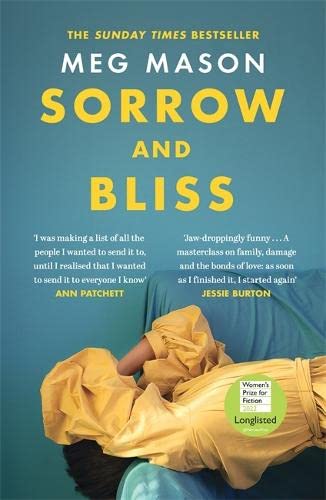 Our joint highest rating, and one of our best discussions – taking in mental illness and its diagnosis and treatment, marriage, childlessness, alcoholism, sisterhood, creativity, neglect, unreliable narrators and loneliness. For several of us, these issues hit close to home due to personal or family experience. We particularly noted the way that Mason sets up parallels between pairs of characters, accurately reflecting how family dynamics can be replicated in later generations.
Even the minor characters are fully rounded, and although Martha is not always pleasant to spend time with, her voice is impressively rendered. The picture of mental illness from the inside feels authentic, including the fact that Martha uses it as an excuse for her bad behaviour, becoming self-absorbed and not seeing how she is affecting others around her. Our main point of disagreement was about Mason’s decision not to name the mental illness Martha is suffering from. It seemed clear to several of us that it was meant to be bipolar disorder, so we wondered if it was a copout not to identify it as such.
We also thought about the meaning of the term “literary fiction”, and whether this has the qualities of a prize winner and will stand the test of time.
We had to fill out a feedback questionnaire about our experience of shadowing, and most of us sent in individual blurbs in response to the book. Some ended up in the final Reading Agency article. Here was mine:
“This deceptively light novel was a perfect book club selection, eliciting deep discussion about mental illness, family relationships and parenthood. Martha’s (unreliable) narration is a delight, wry and deadpan but also with moments of wrenching emotion. Mason masterfully controls the tone to create something that is witty and poignant all at once.”
Probably the main reason we were chosen for this opportunity is that we have a man – my husband, that is! – who attends regularly. This year the prize has been particularly keen to get more men reading books by women (see more below). So, he was responsible for giving The Male Response to the novel. No pressure, right? Luckily, he enjoyed it just as much as the rest of us. From the cover and blurb, it didn’t necessarily seem like the sort of book that he would pick up to read for himself, but he was fully engaged with the themes of mental illness, family relationships, and the question of whether or not to have children, and was so compelled that he read over half of it in a day.
I’m not sure who I expect to be awarded the Women’s Prize tomorrow. We of West Fields Readers would be delighted if it went to Meg Mason for Sorrow and Bliss, but I’d also be happy with a win for Louise Erdrich or Ruth Ozeki – though I wasn’t taken with their latest works compared with earlier ones I’ve read, they are excellent authors who deserve recognition. I don’t think The Bread the Devil Knead has a chance; I’d be disappointed in a win by Elif Shafak in that I would feel obligated to try her novel – the kind that gives magic realism a bad name – again; and, while I’m a Maggie Shipstead fan in general and admire the ambition of Great Circle, it would be galling for a book I DNFed twice to take the title!
Who are you rooting for/predicting?
I’d like to mock you with that thought,
jeer at the man
who won’t read novels
written by women –
at least not if they’re still alive
~from The Poet by Louisa Reid
Maybe you’ve seen on social media that the Women’s Prize has been canvassing opinion on the books by women that all men should read. This was prompted by some shocking statistics suggesting that even bestselling female authors can only attract a 20% male readership, whereas the best-known male authors are almost equally popular with men and women. They solicited 60 nominations from big names and ran a public poll. I voted for these 10:
Half of a Yellow Sun (Chimamanda Ngozi Adichie)
Possession (A.S. Byatt)
Homegoing (Yaa Gyasi)
The Poisonwood Bible (Barbara Kingsolver)
The Sea, The Sea (Iris Murdoch)
The Stone Diaries (Carol Shields)
We Need to Talk about Kevin (Lionel Shriver)
Olive Kitteridge (Elizabeth Strout)
The Goldfinch (Donna Tartt)
Orlando (Virginia Woolf)
*If I could have added to that list, though, my top recommendations for all men to read would be Station Eleven by Emily St. John Mandel and Bring Up the Bodies by Hilary Mantel (and probably a different Octavia E. Butler novel from the one nominated).


Three of my selections were among the 10 essential reads announced on the WP website. Their list was headed by Margaret Atwood’s The Handmaid’s Tale, though of her works I’d be more likely to direct men to Oryx and Crake.
I’ve seen discussions on Twitter about why men don’t read novels (at all, prioritizing nonfiction), or specifically not ones by women. Do you have any theories?
What one book by a woman do you think all men should read?
Review Catch-Up: Jhalak and Women’s Prize Nominees, Etc.
Another in an ongoing series as I catch up on the current and previous year releases I’ve been sent for review. Today I have four books by women: a poetry collection about living between countries and languages, a magic realist novel about vengeful spirits in Vietnam, a memoir in verse about the disabled body and queer parenting, and a novel set in gentrifying Puerto Rican neighbourhoods of New York City.
From the Jhalak Prize longlist:
Honorifics by Cynthia Miller (2021)
Miller is a Malaysian American poet currently living in Edinburgh. Honorifics was also shortlisted for the Forward Prize for Best First Collection. Its themes resonate with poetry I’ve read by other Asian women like Romalyn Ante and Jenny Xie and with the works of mixed-race authors such as Jessica J. Lee and Nina Mingya Powles: living between two or more countries and feeling like an exile versus finding a sense of home.
Nightly, you rosary American synonyms for success learned the hard way: suburb – 10-year visa – promotion – carpool – mortgage – parent-teacher conference – nuclear family – assimilation … Homecoming is the last, hardest thing you’ll ask yourself to do.
(from “Homecoming”)
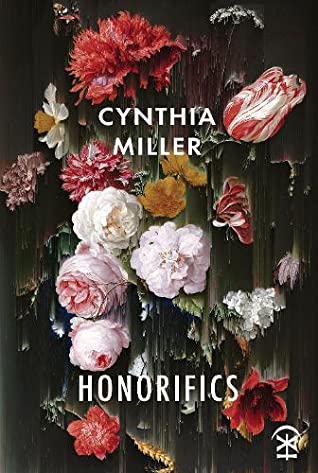 “Loving v. Virginia” celebrates interracial love: “Look at us, improper. Look at us, indecent. Look at us, incandescent and loving.” Food is a vehicle for memory, as are home videos. Like Ante, Miller has a poem based on her mother’s voicemail messages. “Glitch honorifics” gives the characters for different family relationships, comparing Chinese and Hokkien. The imagery is full of colour and light, plants and paintings. A terrific central section called “Bloom” contains 10 jellyfish poems (“We bloom like nuclear hydrangea … I’m an unwound chandelier, / a 150-foot-long coil of cilia, // made up of a million gelatinous foxgloves.”).
Miller incorporates a lot of unusual structures, some of them traditional forms (“Sonnet with lighthouses,” “Moon goddess ghazal,” “Persimmon abecedarian”) and others freer forms like a numbered list, columns, dictionary definitions or prose paragraphs. Six of the poems cite an inspiration; I could particularly see the influence in “The Home Office after Caroline Bird” – an absurdist take on government immigration policy.
There’s much variety here, and so many beautiful lines and evocative images. “Malaysiana,” a tour through everything she loves about the country of her birth, was my single favourite poem, and a couple more passages I loved were “the heart measuring breaths like levelling sugar / for a batter, the heart saying / why don’t you come in from the cold.” (from “The impossible physiology of the free diver”) and the last two stanzas of “Lupins”: “Some days / their purple spines // are the only things / holding me up.” Flora and fauna references plus a consideration of the expat life meant this was custom made for me, but I’d recommend it to anyone looking to try out different styles of contemporary poetry.
With thanks to Nine Arches Press for the free copy for review.
From the Women’s Prize longlist:
Build Your House around My Body by Violet Kupersmith (2021)
 Back in 2014, I reviewed Kupersmith’s debut collection, The Frangipani Hotel, for BookBrowse. I was held rapt by its ghostly stories of Vietnam, so I was delighted to hear that she had written a debut novel, and it was one of my few correct predictions for the Women’s Prize nominees. The main action takes place between when Winnie – half white and half Vietnamese – arrives in Saigon to teach English in 2010, and when she disappears from the house she shared with her boyfriend of three months, Long, in March 2011. But the timeline darts about to tell a much more expansive story, starting with the Japanese invasion of Vietnam in the 1940s. Each date is given as the number of months or years before or after Winnie’s disappearance.
Winnie starts off living with a great-aunt and cousins, and meets a family friend, Dr. Sang, who’s been experimenting on a hallucinogenic drug made from cobra venom. Long and his brother, Tan, a policeman, were childhood friends with a fearless young woman named Binh – now a vengeful ghost haunting them both. Meanwhile, the Saigon Spirit Eradication Company, led by the Fortune Teller, is called upon to eradicate a ghost – which from time to time seems to inhabit a small dog – from a snake-infested highland estate. These strands are bound to meet, and smoke and snakes wind their way through them all.
I enjoyed Kupersmith’s energetic writing, which reminded me by turns of Nicola Barker, Ned Beauman, Elaine Castillo and Naoise Dolan, and the glimpses of Cambodia and Vietnam we get through meals and motorbike rides. What happens with Belly the dog towards the end is fantastic. But the chronology feels needlessly complex, with the flashbacks to colonial history and even to Binh’s story not adding enough to the narrative. While I’d still like to see Kupersmith make the shortlist, I can recommend her short stories that bit more highly.
With thanks to Oneworld for the free copy for review.
Handbook for the Newly Disabled: A Lyric Memoir by Allison Blevins (2022)
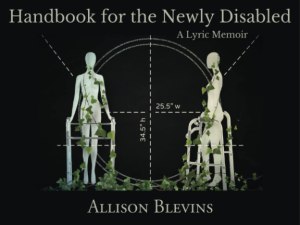 Allison Blevins, a poet, has published five chapbooks or collections and has another forthcoming. Based in Missouri and the director of an indie press, she tells her story of chronic illness and queer parenting in 10 “chapters” composed of multi-part poems. She moves through brain fog and commemorates pain and desire, which cannot always coexist (as in “How to F**k a Disabled Body”).
I’ll never
ride a bike again, hike, carry my children. I’m learning to number what I’ve lost.
Because of the pills, I no longer fall into sleep, I stop. I used to hate queer at 19
when I was a dyke. I can’t be disabled. I need a better word. I need a body that floats—
translucent and liquid—to my daughter’s bed, to cover her like cotton-red quilted stars.
(from “Brain Fog”)
Sometimes the title is enough: “My Neurologist (Who Doesn’t Have MS) Explains Pain Is Not a Symptom of MS.” Other times, what is left out, or erased (as in “Five by Five”) is what matters the most. For instance, the Photo Illustrations promised in the titles of two chapters are replaced by Accessibility Notes. That strategy reminded me of one Raymond Antrobus has used. Alliteration, synesthesia and the language of the body express the complexities of a friend’s cancer, having a trans partner, and coming to terms with sexuality (“I think now that being queer was easy, easy as forgetting / being born”). A really interesting work and an author I’d like to read more from.
Published by BlazeVOX [books] on 22 March. With thanks to the author for the e-copy for review.
Olga Dies Dreaming by Xóchitl González (2022)
 This was on my radar thanks to a starred Kirkus review. It would have been a good choice for the Women’s Prize longlist, with its bold heroine, Latinx and gay characters, and blend of literary and women’s fiction. The Puerto Rican immigrant community and gentrifying neighbourhoods of New York City are appealing locales, and Olga is a clever, gutsy protagonist. As the novel opens in 2017, she’s working out how best to fleece the rich families whose progeny’s weddings she plans. Today it’s embezzling napkins for her cousin Mabel’s wedding. Next: stockpiling cut-price champagne. Olga’s brother Prieto, a slick congressman inevitably nicknamed the “Latino Obama,” is a closeted gay man. Their late father was a drug addict; their mother left to be part of a revolutionary movement back in PR and sends her children occasional chiding letters when they appear to be selling out.
The aftermath of Hurricane Maria coincides with upheaval in Olga’s and Prieto’s personal and professional lives. The ins and outs of Puerto Rican politics went over my head somewhat, and the various schemes and conspiracy theories get slightly silly. The thread that most engaged me was Olga’s relationship with Matteo, a hoarder. I hoped that, following the satire of earlier parts (“Olga realized she’d allowed herself to become distracted from the true American dream—accumulating money—by its phantom cousin, accumulating fame. She would never make that mistake again”), there might be a message about the emptiness of the pursuit of wealth. So I ended up a little disappointed by a late revelation about Matteo.
However, I did appreciate the picture of how Olga is up against it as both a woman and a person of colour (“no person of color serious about being taken seriously was ever late to meet white people”). This debut was perhaps a little unsure of what it wanted to be, but the novelty of the main elements was enough to make it worth reading.
With thanks to Fleet for the free copy for review.
Would you be interested in reading one or more of these?
 Bookish Beck = Rebecca Foster. American transplant to England. Freelance proofreader and book reviewer.
 Bookish Beck