Miscellaneous for #ReadIndies: Grenville & Holman-Hunt, Trans History & Travel Poetry, Kathleen Jamie & Kristen Zory King
Squeaking in some more reviews on the last day of a challenge, as is my wont. Today I have mini-responses to a wide selection: a graphic novel companion to LGBTQ history, an exposé that will have you checking the ingredients lists on all your toiletries and other household cleaning products, a memoir of an eccentric Edwardian childhood, poems about modes of travel and the states of mind they produce, superb nature essays blending personal and environmental writing, and a mini collection of flash fiction about young women.
Trans History: From Ancient Times to the Present Day by Alex L. Combs and Andrew Eakett (2025)
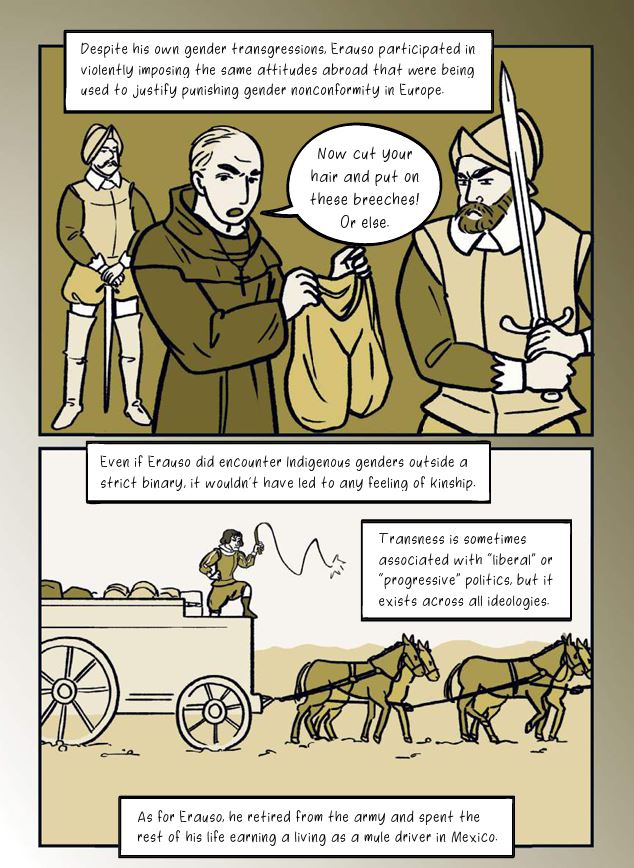
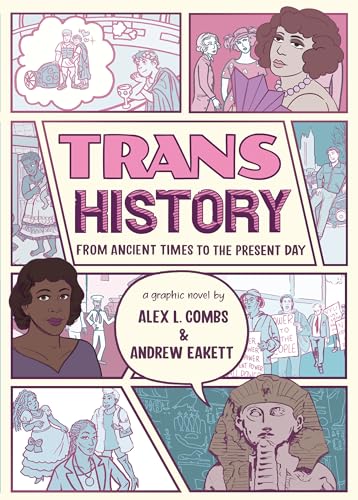 Queer people of all varieties have always been with us; they just might have understood their experience or talked about it in different terms. So while Combs and Eakett are careful not to apply labels retrospectively, they feature a plethora of people who lived as a different gender to that assigned at birth. Apart from a few familiar names like Lili Elbe and Marsha P. Johnson, most were new to me. For every heartening story of an emperor, monk or explorer who managed to live out their true identity in peace, there are three distressing ones of those forced to conform. Many Indigenous cultures held a special place for gender-nonconforming individuals; colonizers would have seen this as evidence of desperate need of civilizing. Even doctors who were willing to help with early medical transitions retained primitive ideas about gender and its connection to genitals. The structure is chronological, with a single colour per chapter. Panes reenact scenes and feature talking heads explaining historical developments and critical theory. A final section is devoted to modern-day heroes campaigning for trans rights and seeking to preserve an archive of queer history. This was a little didactic, but ideal for teens, I think, and certainly not just one for gender studies students.
Readalike: Meg-John Barker’s Sexuality: A Graphic Guide
 (Read via Edelweiss) [Candlewick Press]
The Case Against Fragrance by Kate Grenville (2017)
 File this with other surprising nonfiction books by well-known novelists. In 2015, Grenville started struggling while on a book tour: everything from a taxi’s air freshener and a hotel’s cleaning products to a fellow passenger’s perfume was giving her headaches. She felt like a diva for stipulating she couldn’t be around fragrances, but as she started looking into it she realized she wasn’t alone. I thought this was just going to be about perfume, but it covers all fragranced products, which can list “parfum” on their ingredients without specifying what that is – trade secrets. The problem is, fragrances contain any of thousands of synthetic chemicals, most of which have never been tested and thus are unregulated. Even those found to be carcinogens or endocrine disruptors in rodent studies might be approved for humans because it’s not taken into account how these products are actually used. Prolonged or repeat contact has cumulative effects. The synthetic musks in toiletries and laundry detergents are particularly bad, acting as estrogen mimics and likely associated with prostate and breast cancer. I tend to buy whatever’s on offer in Boots, but as soon as my Herbal Essences bottle is empty I’m going back to Faith in Nature (look for plant extracts). The science at the core of the book is a little repetitive, but eased by the social chapters to either side, and you can tell from the footnotes that Grenville really did her research.
Readalike: Chris van Tulleken’s Ultra-Processed People
 (Secondhand – gift from my wish list) [Text Publishing]
My Grandmothers and I by Diana Holman-Hunt (1960)
 The author was the granddaughter of Pre-Raphaelite painter William Holman Hunt (The Light of the World et al.). While her father was away in India, she was shunted between two homes: Grandmother and Grandfather Freeman’s Sussex estate, and the mausoleum-cum-gallery her paternal grandmother, “Grand,” maintained in Kensington. The grandparents have very different ideas about the sorts of foodstuffs and activities that are suitable for little girls. Both households have servants, but Grand only has the one helper, Helen. Grand probably has a lot of money tied up in property and paintings but lives like a penniless widow. Grand encourages abstemious habits – “Don’t be ruled by Brother Ass, he’s only your body and a nuisance” – and believes in boiled milk and margarine. The single egg she has Helen serve Diana in the morning often smells off. “Food is only important as fuel; whether we like it or not is quite immaterial,” Grand insists. Diana might more naturally gravitate to the pleasures of the Freeman residence, but when it comes time to give a tour of the Holman Hunt oeuvre, she does so with pride. There are some funny moments, such as Diana asking where babies come from after one of the Freemans’ maids gives birth, but this felt so exaggerated and fictionalized – how could she possibly remember details and conversations at the distance of several decades? – that I lost interest by the midpoint.
Readalike: Gwen Raverat’s Period Piece
 (Secondhand – Community Furniture Project) [Slightly Foxed]
In Transit: Poems of Travel, ed. Sarah Jackson and Tim Youngs (2018)
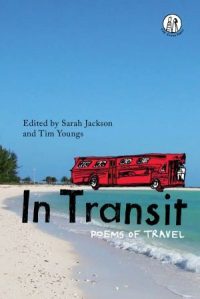 Some methods of transport are just more romantic than others. The editors’ introduction notes that “Trains were by far the most popular … followed by aeroplanes and then boats.” Walks and car journeys were surprisingly scarce, they observed, though there are a couple of poems about wandering in New York City. Often, the language is of maps, airports, passports and long flights; of trading one place for another as exile, expatriate or returnee. The collection circuits the globe: China, the Middle East, Greece, Scandinavia, the bayous of the American South. France and Berlin show up more than once. The Emma Press anthologies vary and this one had fewer standout entries than average. However, a few favourites were Nancy Campbell’s “Reading the Water,” about a boy launching out to sea in a kayak; Simon Williams’s “Aboard the Grey Ghost,” about watching for dolphins on a wartime voyage from England to the USA; and Vicky Sparrow’s “Dual Gauge,” which follows a train of thought – about humans as objects moving, perhaps towards death – during a train ride.
(New purchase from publisher) [The Emma Press]
Findings by Kathleen Jamie (2005)
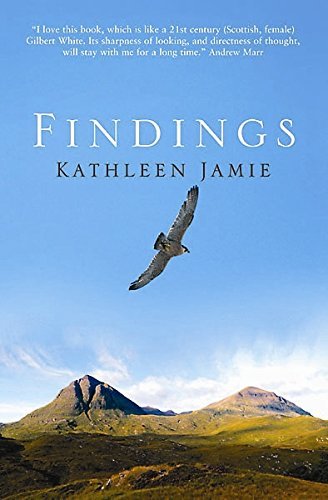 As I found when I reread Sightlines in 2022, Jamie’s topics couldn’t be better suited to my interests: Scottish islands, seabirds, medical history, and the meaning we derive from mortality. She visits the Orkney Islands just before the winter solstice, which draws a faithful few to the tomb of Maes Howe. From her attic room in Fife, she watches peregrine falcons on a cliff face. A gannet’s skull is her prized souvenir from a boat tour to an uninhabited Hebridean island. Vigilance pays off when she hears, then sees, corncrake on the Isle of Coll. Although she has a penchant for empty places, she also writes about cityscapes and hospitals. “Skylines” looks out over Edinburgh, also the setting for “Surgeons’ Hall,” about the pathology museum on the Royal College of Surgeons campus (my 2018 visit). In “Fever” her husband has a scary bout of pneumonia. Jamie is one of our wisest writers on nature and human culture. She asks whether any creatures are truly wild given the pervasiveness of human influence. Even as she seeks out the ancient, she knows we are all ephemeral. “Sabbath” is the best single essay, combining a visit to Lewis with her worry for her mother, who’s had a stroke, and her grandmother, who is to move into a care home. She explores the island “relishing the movement of my body, its own small continuing strength. It wouldn’t last forever – that was the truth of it – but today I could cycle along a road, to see where it led.”
(University library) [Sort Of Books]
My rating in 2012:
My rating now: 
Ladies, Ladies, Ladies by Kristen Zory King (2025)
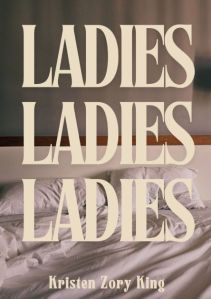 I’d never encountered “chapbook” being used for prose rather than poetry, but it’s an apt term for this 61-page paperback containing 18 stories. It’s remarkable how much King can pack into just a few pages: a voice, a character, a setting and situation, an incident, a salient backstory, and some kind of epiphany or resolution. Fifteen of the pieces focus on one named character, with another three featuring a set (“Ladies,” hence the title). Laura-Jean wonders whether it was a mistake to tell her ex’s mother what she really thinks about him in a Christmas card. A love of ice cream connects Margot’s past and present. A painting in a museum convinces Paige to reconnect with her estranged sister. Alice is sure she sees her double wandering around, and Mary contemplates stealing other people’s cats. The women are moved by rage or lust; stymied by loneliness or nostalgia. Is salvation to be found in scripture or poetry? Each story is distinctive, with no words wasted. I’ll look out for future work by King.
(Duplicate copy passed on by Marcie – thank you!) [Stanchion Books]
Which of these do you fancy reading?
Six more indie publishers spotlighted, for a total of 19 books and 18 publishers this month – job done!
Also covered:
Ansell, Farrier, Febos, Hoffman, Orlean, Stacey
Chevillard, Hopkins & Bateman, McGrath, Richardson
Victorian-Themed Novels by Annie Elliot and Livi Michael
There are plenty more indie books that I’m in the middle of, or picked out but didn’t get to in February. As much as possible, I’ll continue reading (indie) books from my shelves this year.
Final Reading Statistics for 2025 & Goals for 2026
Happy New Year! We went to a neighbours’ party again this year and played silly games and chased their kittens until 1:30 a.m. It was a fun, low-key way to see in 2026.
I read 313 books last year. (2024’s total of 352 will never be topped!) Initially, I set a goal of 350, but by midyear I downgraded it to 300 and it was easy to reach. I can’t pinpoint a particular reason for the decline. In general, I felt like I was chasing my tail all year, despite having less work on than ever (but increased volunteering commitments). Often, I struggled with fatigue or being on the verge of illness. What a fun guessing game: is it long Covid or perimenopause?
Goodreads was glitchy for me all year, randomly counting books two or three times and falsely inflating my total by a whole extra 33 books at one point. It also has a lot of annoying, automatically generated book records that duplicate ISBNs or add the publisher to the title field. So I’m thinking about moving over to StoryGraph this year – I just imported my Goodreads library – though I always quail at learning new online systems. It would also be the next logical step in divesting from Am*zon.
The year that was…
2025’s notable happenings:
- Twice assessing the ‘proper’ (published) books as a McKitterick Prize judge
- Adopting crazy Benny (though that was after losing our precious Alfie)
- Acquiring a secondhand electric car for the household
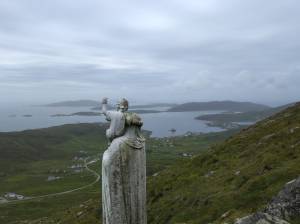
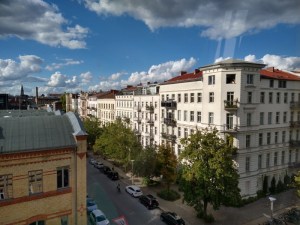
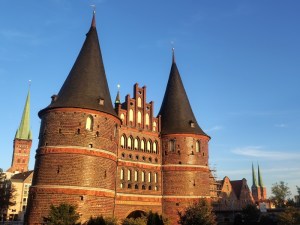
- Holidays in Hay-on-Wye; the Outer Hebrides; Suffolk; Berlin and Lübeck, Germany
- A summer visit from my sister and brother-in-law
- Having the windows and door replaced in the back of our house; and the hall and stairwell/landing redecorated
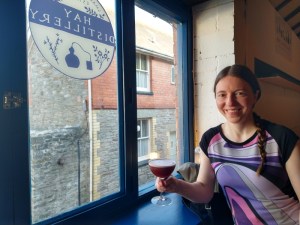
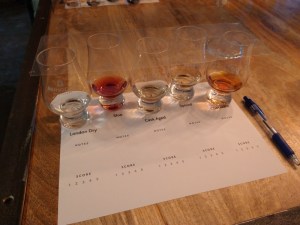
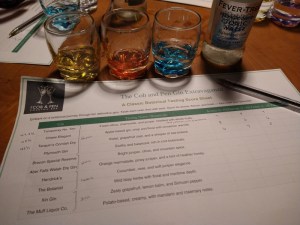
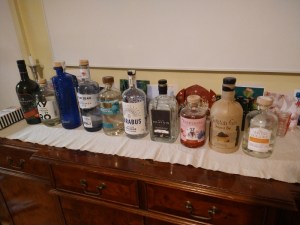
- I got ever more into gin and cocktails, with tastings in Abingdon and Wantage (and in December I led two informal tastings for friends). I also acquired the taste for rum!


The reading statistics, as compared to 2024:
Fiction: 54.7% (↑3.3%)
Nonfiction: 31.6% (↓0.2%)
Poetry: 13.7% (↓3.1%)
Female author: 67.7% (↓0.2%)
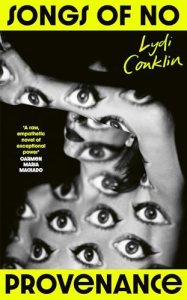
Lydi Conklin was one of 10 nonbinary authors I read from this year. Had I read their novel earlier, this would have made it into my Cover Love post!
Nonbinary author: 3.2% (↑2.1%)
BIPOC author: 18.5% (↑0.1%)
How to get it to 25% or more??
LGBTQ: 20.4% (↓1.1%)
(Author’s identity or a major theme in the work.) It’s the first time this has decreased since 2021, but I’m still pleased with the figure overall.
Work in translation: 9.6% (↑3.6%)
Going the right way with this trend! 10% seems like a good minimum to aim for. I find I have to make a conscious effort by accepting translated review copies or picking them off my shelves to tie in with particular reading challenges.
German (6) – mainly because of our trip in September
French (5)
Swedish (4)
Korean (3)
 Italian (2)
Japanese (2)
Spanish (2)
Chinese (1)
Dutch (1)
Norwegian (1)
Polish (1)
Portuguese (1)
Russian (1)
2025 (or pre-release 2026) books: 55.6% (↑3.2%)
Backlist: 44.4%
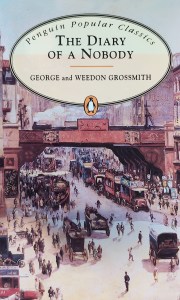
But a lot of that ‘backlist’ stuff was still from the 2020s; I only read eight pre-1950 books, the oldest being Diary of a Nobody from 1892.
E-books: 35.5% (↑3.4%)
Print books: 64.5%
I almost exclusively read e-books for BookBrowse, Foreword and Shelf Awareness reviews. The number of overall Shelf Awareness reviews will be decreasing because of changes to their publishing model, so this figure may well change by next year.
Rereads: 11, vs. last year’s 18
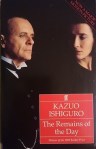
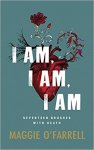
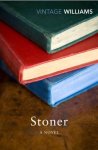
I managed nearly one a month. Like last year, three of my rereads ended up being among my most memorable reading experiences of the year, so I should really reread more often.
And, courtesy of Goodreads:
- 69,616 pages read
- Average book length: 221 pages (just one off of last year’s 220; in previous years it has always been 217–225, driven downward by poetry collections and novellas)
- Average rating for 2025: 6 (identical to the last three years)
Where my books came from for the whole year, compared to 2024:
- Free print or e-copy from publisher: 33.9% (↓10.9%)
- Public library: 18.8% (↑0.4%)
- Free (gifts, giveaways, Little Free Library/free bookshop, from friends or neighbours): 15.3% (↑2.9%)
- Downloaded from NetGalley, Edelweiss or BookSirens: 15% (↑7.2%)
- Secondhand purchase: 12.8% (↑1.3%)
- New purchase (often at a bargain price; includes Kindle purchases): 2.6% (↓0.5%)
- University library: 1.3% (↓0.7%)
- Other (church theological library): 0.3% (↑0.3%)


I’m pleased that 30.3% of my reading was from my own shelves, versus last year’s 24%. It looks like I mainly achieved this through a reduction in review copies. In 2026, I’d like to read even more backlist material from my own shelves (including rereads). This will be a particular focus in January, and then I’ll plan how to incorporate it for the rest of the year.
I have an absurd number of review books to catch up on (42), some stretching back to 2022 – the year of my mother’s death, which put me off my stride in many ways – as well as part-read books (116) to get real about and either finish or call DNFs and clear from my shelves. Dealing with these can be part of the reading-from-my-shelves initiative.
What trends did you see in your year’s reading? What is your plan for 2026?
Final Reading Statistics for 2024
Happy New Year! Even though we were out at neighbours’ until 2:45 a.m. (who are these party animals?!), I’m feeling bright-eyed and bushy-tailed today and looking forward to a special brunch at our favourite Newbury establishment. Despite all evidence to the contrary in the news – politically, environmentally, internationally – I’m choosing to be optimistic about what 2025 will hold. What hope I have comes from community and grassroots efforts.
In other good news, 2024 saw my highest reading total yet! (My usual average, as in 2019–21 and 2023, is 340.) Last year I challenged myself to read 350 books and I managed it easily, even though at one point in the middle of the year I was far behind and it didn’t look possible.
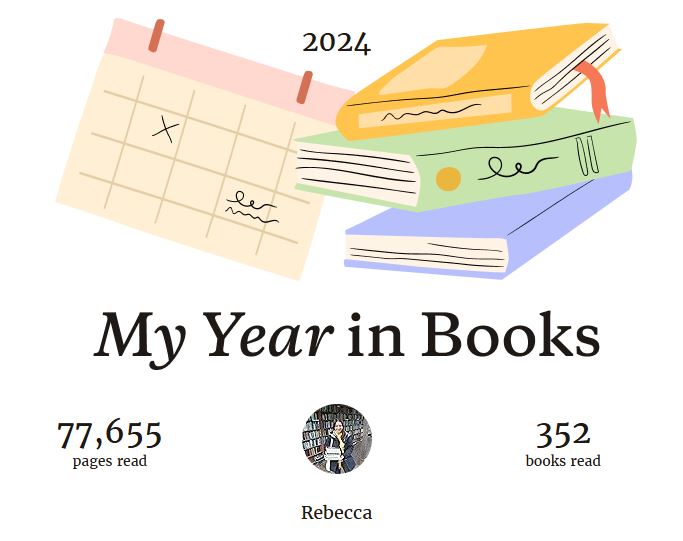
Reading a novella a day in November was certainly a major factor in meeting my goal. I also tend to prioritize poetry collections and novellas for my Shelf Awareness reviewing, and in general I consider it a bonus if a book is closer to 200 pages than 300+.
The statistics
Fiction: 51.4%
Nonfiction: 31.8% (similar to last year’s 31.2%)
Poetry: 16.8% (identical to last year!)
Female author: 67.9% (close to last year’s 69.7%)
Male author: 29.6%
Nonbinary author: 1.1%
Multiple genders (anthologies): 1.4%
BIPOC author: 18.4%
This has dropped a bit compared to previous years’ 22.4% (2023), 20.7% (2022), and 18.5% (2021). My aim will be to make it 25% or more.
LGBTQ: 21.6%
(Based on the author’s identity or a major theme in the work.) This has been increasing from 11.8% (2021), 8.8% (2022), and 18.2% (2023). I’m pleased!
Work in translation: 6%
I read only 21 books in translation last year, alas. This is an unfortunate drop from the previous year’s 10.6%. I do prefer to be closer to 10%, so I will need to make a conscious effort to borrow translated books and incorporate them in my challenges.
French (7)
German (4)
Norwegian (3)
Spanish (3)
Italian (1)
Latvian (1) – a new language for me to have read from
Swedish (1)
+ Misc. in a story anthology
2024 (or pre-release 2025) books: 52.3% (up from 44.7% last year)
Backlist: 47.7%
But a lot of that ‘backlist’ stuff was still from the 2020s; I only read five pre-1950 books, the oldest being Howards End and Kilmeny of the Orchard, both from 1910. I should definitely pick up something from the 19th century or earlier next year!
E-books: 32.1% (up from 27.4% last year)
Print books: 67.9%
I almost exclusively read e-books for BookBrowse, Foreword and Shelf Awareness reviews.
Rereads: 18
I doubled last year’s 9! I’m really happy with this 1.5/month average. Three of my rereads ended up being among my most memorable reading experiences for the year.
And, courtesy of Goodreads:
Average book length: 220 pages (in previous years it has been 217 and 225)
Average rating for 2024: 3.6 (identical to the last two years)
Where my books came from for the whole year, compared to 2023:
- Free print or e-copy from publisher: 44.8% (↑1.3%)
- Public library: 18.4% (↓5.7%)
- Secondhand purchase: 11.5% (↑1.7%)
- Free (giveaways, Little Free Library/free bookshop, from friends or neighbours): 9.8% (↑3.9%)
- Downloaded from NetGalley, Edelweiss, BookSirens or Project Gutenberg: 8.8% (↑2%)
- Gifts: 2.6% (↓1.5%)
- New purchase (often at a bargain price; includes Kindle purchases): 2.1% (↓2.6%)
- University library: 2% (↓1.2%)
So, like last year, nearly a quarter of my reading (24%) was from my own shelves. I’d like to make that more like a third to half, which would be better achieved by a reduction in the number of review copies rather than a drop in my library borrowing. It would also ensure that I read more backlist books.
What trends and changes did you see in your year’s reading?
Three on a Theme: Trans Poetry for National Poetry Day
Today is National Poetry Day here in the UK. Alfie and I spent part of the chilly early morning reading from Pádraig Ó Tuama’s super Poetry Unbound, an anthology of 50 poems to which he’s devoted personal introductions and exploratory essays. He describes poetry as “like a flame: helping us find our way, keeping us warm.”

Poetry Unbound is also the name of his popular podcast; both were recommended to me by Sara Beth West, my fellow Shelf Awareness reviewer, in this interview we collaborated on back in April (National Poetry Month in the USA) about reading and reviewing poetry. I’ve been a keen reader of contemporary poetry for 15 years or so, but in the 3.5 years that I’ve been writing for Shelf I’ve really ramped up. Most months, I review a couple poetry collections for that site, and another one or more on here.
Two of my Shelf poetry reviews from the past 10 months highlight the trans experience; when I recently happened to read another collection by a trans woman, I decided to gather them together as a trio. All three pair the personal – a wrestling over identity – with the political, voicing protest at mistreatment.
Transitory by Subhaga Crystal Bacon (2023)
In her Isabella Gardner Award-winning fourth collection, queer poet Subhaga Crystal Bacon commemorates the 46 trans and gender-nonconforming people murdered in the United States and Puerto Rico in 2020—an “epidemic of violence” that coincided with the Covid-19 pandemic.
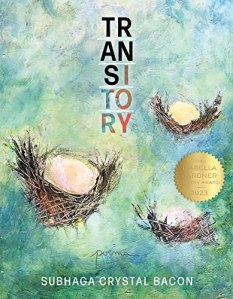 The book arose from a workshop Bacon attended on writing “formal poems of social protest.” Among the forms employed here are acrostics and erasures performed on news articles—ironically appropriate for reversing trans erasure. She devotes one elegy to each hate-crime victim, titling it with their name and age as well as the location and date of the killing, and sifting through key details of their life and death. Often, trans people are misgendered or deadnamed in prison, by ambulance staff, or after death, so a crucial element of the tributes is remembering them all by chosen name and gender.
The statistics Bacon conveys are heartbreaking: “The average life expectancy of a Black trans woman is 35 years of age”; “Half of Black trans women spend time in jail”; “Trans people are anywhere/ between eleven and forty percent/ of the homeless population.” She also draws on her own experience of gender nonconformity: “A little butch./ A little femme.” She recalls of visiting drag bars in the 1980s: “We were all/ trying on gender.” And she vows: “No one can say a life is not right./ I have room for you in me.” Her poetic memorial is a valuable exercise in empathy.
Published by BOA Editions. Reprinted with permission from Shelf Awareness.
I was interested to note that the below poets initially published under both female and male, new and dead names, as shown on the book covers. However, a look at social media makes it clear that the trans women are now going exclusively by female names.
I Don’t Want to Be Understood by Jennifer Espinoza (2024)
In Espinoza’s undaunted fourth poetry collection, transgender identity allows for reinvention but also entails fear of physical and legislative violence.
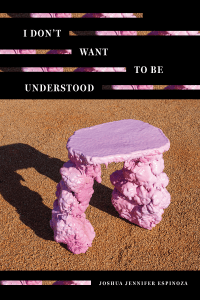 Two poems, both entitled “Airport Ritual,” articulate panic during a security pat-down on the way to visit family. In the first, a woman quells her apprehension by imagining a surreal outcome: her genitals expand infinitely, “tearing through her clothes and revealing an amorphous blob of cosmic energy.” In the second, the speaker chants the reassuring mantra, “I am not afraid.” “Makeup Ritual” vacillates between feminism and conformity; “I don’t even leave the house unless/ I’ve had time to build a world on my face/ and make myself palatable/ for public consumption.” Makeup is “your armor,” Espinoza writes in “You’re Going to Die Today,” as she describes the terror she feels toward the negative attention she receives when she walks her dog without wearing it. The murders of trans people lead the speaker to picture her own in “Game Animal.” Violence can be less literal and more insidious, but just as harmful, as in a reference to “the day the government announced another plan to strip a few/ more basic rights from trans people.”
Words build into stanzas, prose paragraphs, a zigzag line, or cross-hatching. Espinoza likens the body to a vessel for traumatic memories: “time is a body full of damage// that is constantly trying to forget.” Alliteration and repetition construct litanies of rejection but, ultimately, of hope: “When I call myself a woman I am praying.”
Published by Alice James Books. Reprinted with permission from Shelf Awareness.
Transgenesis by Ava Winter (2024)
“The body is holy / and is made holy in its changing.”
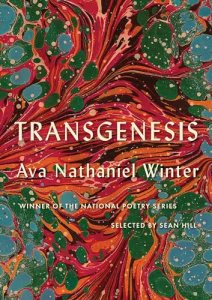 Winter’s debut full-length collection, selected by Sean Hill for the National Poetry Series, reckons with Jewishness as much as with gender identity. The second half of the title references any beginning, but specifically the scriptural account of creation and the lives of the matriarchs and patriarchs of the Abrahamic faiths. Poems are entitled “Torah Study” and “Midrash” (whence the above quote), and two extended sections, “Archived Light” and “Playing with the Jew,” reflect on Polish paternal family members’ arrival at Auschwitz and the dubious practice of selling Holocaust and Nazi memorabilia as antiques. Pharmaceuticals and fashion alike are tokens of transformation –
Let me greet now,
with warm embrace,
the small blue tablets
I place beneath my tongue each morning.
Oh estradiol,
daily reminder
of what our bodies
have always known:
the many forms of beauty that might be made
flesh by desire, by chance, by animal action.
(from “Transgenesis”)
The first time I wore a dress in public without a hint of irony—a Max Mara wrap adorned with Japanese lilies that framed my shoulders perfectly—I was still thin but also thickly bearded and men on the train whispered to me in a conspiratorial tone, as if they hoped the dress were a joke I might let them in on.
(from “WWII SS Wiking Division Badge, $55”)
– and faith grants affirmation that “there is beauty in such queer and fruitless bodies,” as the title poem insists, with reference to the saris (nonbinary person) acknowledged by the Talmudic rabbis. “Lament with Cello Accompaniment” provides an achingly gorgeous end to the collection:
I do not choose the sound of the song
In my mouth, the fading taste of what I still live through, but I choose this future, as I bury a name defined by grief, as I enter the silence where my voice will take shape.
Winter teaches English and Women’s and Gender Studies at the University of Nebraska–Lincoln. I’ll look out for more of her work.
Published by Milkweed Editions. (Read via Edelweiss)
More trans poetry I have read:
A Kingdom of Love & Eleanor Among the Saints by Rachel Mann
By nonbinary/gender-nonconforming poets, I have also read:
Surge by Jay Bernard
Like a Tree, Walking by Vahni Capildeo
Some Integrity by Padraig Regan
Don’t Call Us Dead by Danez Smith
Divisible by Itself and One by Kae Tempest
Binded by H Warren
Extra goodies for National Poetry Day:
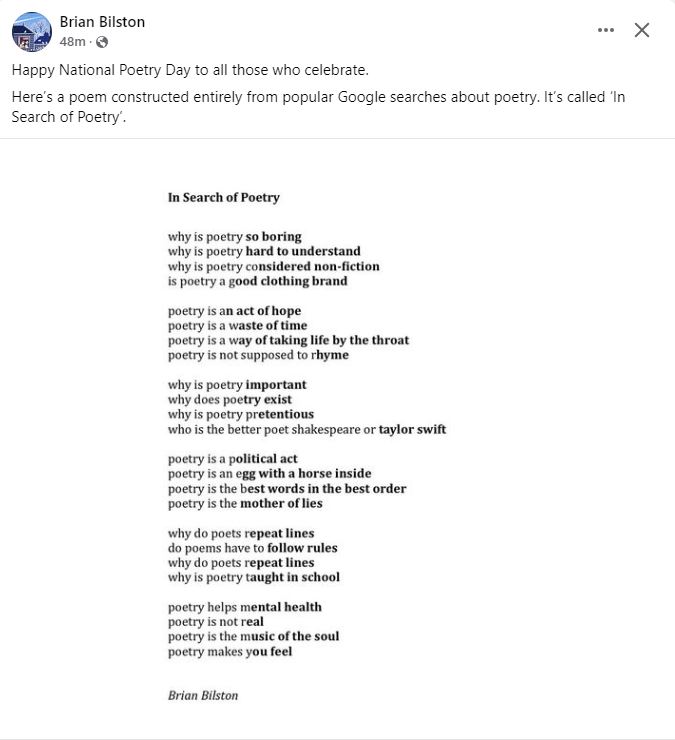
Follow Brian Bilston to add a bit of joy to your feed.
Editor Rosie Storey Hilton announces a poetry anthology Saraband are going to be releasing later this month, Green Verse: Poems for our Planet. I’ll hope to review it soon.
Two poems that have been taking the top of my head off recently (in Emily Dickinson’s phrasing), from Poetry Unbound (left) and Seamus Heaney’s Field Work:


Summer Reading, Part II: Beanland, Watters; O’Farrell, Oseman Rereads
Apparently the UK summer officially extends to the 22nd – though you’d never believe it from the autumnal cold snap we’re having just now – so that’s my excuse for not posting about the rest of my summery reading until today. I have a tender ancestry-inspired story of a Jewish family’s response to grief, a bizarre YA fantasy comic, and two rereads, one a family story from one of my favourite contemporary authors and the other the middle instalment in a super-cute graphic novel series.
Florence Adler Swims Forever by Rachel Beanland (2020)
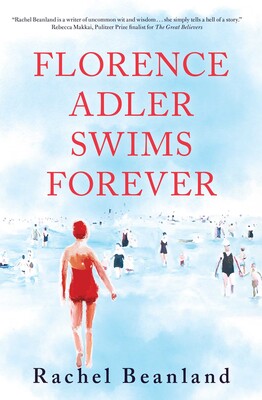 After reviewing Beanland’s second novel, The House Is on Fire, I wanted to catch up on her debut. Both are historical and give a broad but detailed view of a particular milieu and tragic event through the use of multiple POVs. It’s the summer of 1934 in Atlantic City, New Jersey. Florence, a plucky college student who intends to swim the English Channel, drowns on one of her practice swims. This happens in the first chapter (and is announced in the blurb), so the rest is aftermath. The Adlers make the unusual decision to keep Florence’s death from her sister, Fannie, who is on hospital bedrest during her third pregnancy because she lost a premature baby last year. Fannie’s seven-year-old daughter, Gussie, is sworn to silence about her aunt – with Stuart, the lifeguard who loved Florence, and Anna, a German refugee the Adlers have sponsored, turning it into a game for her by creating the top-secret “Florence Adler Swims Forever Society” with its own language.
The particulars can be chalked up to family history: this really happened; the Gussie character was Beanland’s grandmother, and the author believes her great-great-aunt Florence died of hypertrophic cardiomyopathy. It’s intriguing to get glimpses of Jewish ritual, U.S. anti-Semitism and early concern over Nazism, but I was less engaged with other subplots such as Fannie’s husband Isaac’s land speculation in Florida. There’s a satisfying queer soupcon, and Beanland capably inhabits all of the perspectives and the bereaved mindset. (Secondhand – Awesomebooks.com) 
Lumberjanes: Campfire Songs by Shannon Watters et al. (2020)
 This comics series created by a Boom! Studios editor ran from 2014 to 2020 and stretched to 75 issues that have been collected in 20+ volumes. Watters wanted to create a girl-centric comic and roped in various writers who together decided on the summer scout camp setting. I didn’t really know what I was getting into with this set of six stand-alone stories, each illustrated by a different artist. The characters are recognizably the same across the stories, but the variation in style meant I didn’t know what they’re “supposed” to look like. All are female or nonbinary, including queer and trans characters. I guess I expected queer coming-of-age stuff, but this is more about friendship and fantastical adventures. Other worlds are just a few steps away. They watch the Northern Lights with a pair of yeti, attend a dinner party cooked by a ghost chef, and play with green kittens and giant animate pumpkins. My favourite individual story was “A Midsummer Night’s Scheme,” in which Puck the fairy interferes with preparations for a masquerade ball. I won’t bother reading other installments. (Public library)
And the rereads:
Instructions for a Heatwave by Maggie O’Farrell (2013)
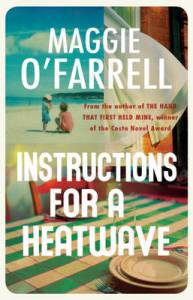 I read this when it first came out (original review here) and saw O’Farrell speak on it, in conversation with Julie Cohen, at a West Berkshire Libraries event – several years before I lived in the county. I expected it to be a little more atmospheric about the infamous UK drought of summer 1976. All I’d remembered otherwise was that one character is hiding illiteracy and another has an affair while leading a residential field trip. The novel opens, Harold Fry-like, with Robert Riordan disappearing from his suburban home. Gretta phones each of her adult children to express concern, but she’s so focussed on details like how she’ll get into the shed without Robert’s key that she fails to convey the gravity of the situation. Eventually the three descend on her from London, Gloucestershire and New York and travel to Ireland together to find him, but much of the novel is a patient filling-in of backstory: why Monica and Aoife are estranged, what went wrong in Michael Francis’s marriage, and so on.
I had forgotten the two major reveals, but this time they didn’t seem as important as the overall sense of decisions with unforeseen consequences. O’Farrell was using extreme weather as a metaphor for risk and cause-and-effect (“a heatwave will act upon people. It lays them bare, it wears down their guard. They start behaving not unusually but unguardedly”), and it mostly works. But this wasn’t a top-tier O’Farrell on a reread. (Little Free Library)
My original rating (2013):
My rating now:
Average:
Heartstopper: Volume 3 by Alice Oseman (2020)
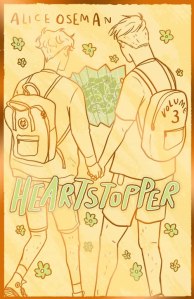 Heartstopper was my summer crush back in 2021, and I couldn’t resist rereading the series in the hardback reissue. That I started with the middle volume (original review here) is an accident of when my library holds arrived for me, but it turned out to be an apt read for the Olympics summer because it mostly takes place during a one-week school trip to Paris, full of tourism, ice cream, hijinks and romance. Nick and Charlie are dating but still not out to everyone in their circle. This is particularly true for Nick, who is a jock and passes as straight but is actually bisexual. Charlie experienced a lot of bullying at his boys’ school before his coming-out, so he’s nervous for Nick, and the psychological effects persist in his disordered eating. Oseman deals sensitively with mental health issues here, and has fun adding more queer stories into the background: Darcy and Tara, Tao and Elle (trans), and even the two male trip chaperones. It’s adorable how everything flirtation-related is so dramatic and the characters are always blushing and second-guessing. Lucky teens who get to read this at the right time. (Public library)
Any final “heat” or “summer” books for you this year?
20 Books of Summer, 17–18: Suzanne Berne and Melissa Febos
Nearly there! I’ll have two more books to review for this challenge as part of roundups tomorrow and Saturday. Today I have a lesser-known novel by a Women’s Prize winner and a set of personal essays about body image and growing up female.
A Perfect Arrangement by Suzanne Berne (2001)
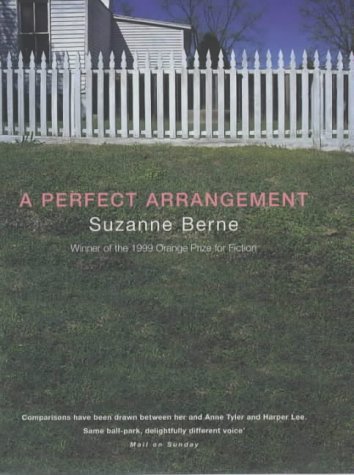 Berne won the Orange (Women’s) Prize for A Crime in the Neighbourhood in 1999. This is another slice of mild suburban suspense. The Boston-area Cook-Goldman household faces increasingly disruptive problems. Architect dad Howard is vilified for a new housing estate he’s planning, plus an affair that he had with a colleague a few years ago comes back to haunt him. Hotshot lawyer Mirella can’t get the work–life balance right, especially when she finds out she’s unexpectedly pregnant with twins at age 41. They hire a new nanny to wrangle their two under-fives, headstrong Pearl and developmentally delayed Jacob. If Randi Gill seems too good to be true, that’s because she’s a pathological liar. But hey, she’s great with kids.
It’s clear some Bad Stuff is going to happen to this family; the only questions are how bad and precisely what. Now, this is pretty much exactly what I want from my “summer reading”: super-readable plot- and character-driven fiction whose stakes are low (e.g., midlife malaise instead of war or genocide or whatever) and that veers more popular than literary and so can be devoured in large chunks. I really should have built more of that into my 20 Books plan! I read this much faster than I normally get through a book, but that meant the foreshadowing felt too prominent and I noticed some repetition, e.g., four or five references to purple loosestrife, which is a bit much even for those of us who like our wildflowers. It seemed a bit odd that the action was set back in the Clinton presidency; the references to the Lewinsky affair and Hillary’s “baking cookies” remark seemed to come out of nowhere. And seriously, why does the dog always have to suffer the consequences of humans’ stupid mistakes?!
This reminded me most of Friends and Strangers by J. Courtney Sullivan and a bit of Breathing Lessons by Anne Tyler, while one late plot turn took me right back to The Senator’s Wife by Sue Miller. While the Goodreads average rating of 2.93 seems pretty harsh, I can also see why fans of A Crime would have been disappointed. I probably won’t seek out any more of Berne’s fiction. (Secondhand – Community Furniture Project, Newbury)
Girlhood by Melissa Febos (2021)
I was deeply impressed by Febos’s Body Work (2022), a practical guide to crafting autobiographical narratives as a way of reckoning with the effects of trauma. Ironically, I engaged rather less with her own personal essays. One issue for me was that her highly sexualized experiences are a world away from mine. I don’t have her sense of always having had to perform for the male gaze, though maybe I’m fooling myself. Another was that it’s over 300 pages and only contains seven essays, so there were several pieces that felt endless. This was especially true of “The Mirror Test” (62 pp.) which is about double standards for girls as they played out in her simultaneous lack of confidence and slutty reputation, but randomly references The House of Mirth quite a lot; and “Thank You for Taking Care of Yourself” (74 pp.), which ponders why Febos has such trouble relaxing at a cuddle party and whether she killed off her ability to give physical consent through her years as a dominatrix.
 “Wild America,” about her first lesbian experience and the way she came to love a perceived defect (freakishly large hands; they look perfectly normal to me in her author photo), and “Intrusions,” about her and other women’s experience with stalkers, worked a bit better. But my two favourites incorporated travel, a specific relationship, and a past versus present structure. “Thesmophoria” opens with her arriving in Rome for a mother–daughter vacation only to realize she told her mother the wrong month. Feeling guilty over the error, she remembers other instances when she valued her mother’s forgiveness, including when she would leave family celebrations to buy drugs. The allusions to Greek myth were neither here nor there for me, but the words about her mother’s unconditional love made me cry.
I also really liked “Les Calanques,” which again draws on her history of heroin addiction, comparing a strung-out college trip to Paris when she scored with a sweet gay boy named Ahmed with the self-disciplined routines and care for her body she’d learned by the time she returns to France for a writing retreat. This felt like a good model for how to write about one’s past self. “I spend so much time with that younger self, her savage despair and fleeting reliefs, that I start to feel as though she is here with me.” The prologue, “Scarification,” is a numbered list of how she got her scars, something Paul Auster also gives in Winter Journal. As if to insist that we can only ever experience life through our bodies.
Although I’d hoped to connect to this more, and ultimately felt it wasn’t really meant for me (and maybe I’m a deficient feminist), I did admire the range of strategies and themes so will keep it on the shelf as a model for approaching the art of the personal essay. I think I would probably prefer a memoir from Febos, but don’t need to read more about her sex work (Whip Smart), so might look into Abandon Me. If bisexuality and questions of consent are of interest, you might also like Another Word for Love by Carvell Wallace, which I reviewed for BookBrowse. (Gift (secondhand) from my Christmas wish list last year)
July Releases, II: Howard Norman, Andrés N. Ordorica, Neil D. A. Stewart
Three more July releases after yesterday’s Disability Pride Month special. Today is all fiction, but with rather different settings: Atlantic Canada, upstate New York and Mexico, and a London restaurant. The time period ranges from the last days of the First World War to 2013. The themes? Murder, plagues, accidental deaths and gourmet food in addition to those perennial subjects of finding love and coming to terms with identity.
Come to the Window by Howard Norman
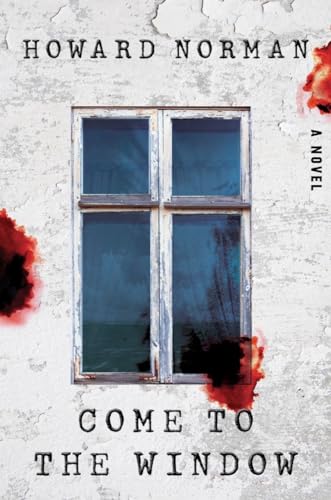 This was my eighth book by Norman and felt most similar to My Darling Detective and Next Life Might Be Kinder. Nothing much happens in the Nova Scotia fishing village of Parrsboro – until the night in April 1918 that Elizabeth Frame shoots dead her husband of 11 hours and throws the revolver into the blowhole of a beached whale. The story is a boon for Toby Havenshaw, a journalist with the Halifax Evening Mail, and quickly becomes an obsession. It’s never a whodunit so much as a why as Toby reports on the trial and follows Elizabeth when she goes on the lam. The sordid case just keeps getting stranger, drawing in bigamy, illegitimate pregnancy, and so on.
But Norman never treats all this too seriously; it is almost a tragicomic foil to the more consequential matters of world war and an influenza pandemic, which soon has Atlantic Canada in its grip as well. Toby’s wife, Amelia, is a hospital surgeon operating on returning veterans. She’s so quietly capable she makes Toby look a dunce, and their everyday rapport and unusual road to parenthood in their late thirties are charming. I also enjoyed Norman’s Dickensian naming (Bevel Cousins, Dr. S. S. Particulate) and literary references: the title phrase is from Matthew Arnold, and L. M. Montgomery gets a mention.
No doubt Norman wrote this as a Covid response; the parallel with the Spanish flu has been irresistible for many. He really captures the feeling of living through a uniquely terrible world situation. However, I’m not sure this short novel will prove memorable. Such has been true for his other recent novels, which pale in comparison with The Bird Artist. (Read via Edelweiss)
How We Named the Stars by Andrés N. Ordorica
I learned about this through the Observer’s 10 best new novelists feature and requested a copy via a Northern Fiction Alliance online showcase. There’s a sweet Heartstopper vibe to the story of an unlikely romance blooming between Daniel de la Luna and Sam Morris, his roommate at the University of Cayuga (= Cornell). Sam is a hunky jock while Daniel is a nervous would-be writer who has only just become comfortable with calling himself gay.
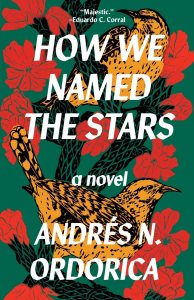 Ordorica, also a poet, immediately sets an elegiac tone by revealing Sam’s untimely death soon after the end of their freshman year. To cope with losing the love of his life, Daniel writes this text as if it’s an extended letter to Sam, recounting the course of their relationship – from strangers to best friends to secret lovers – and telling of his summer spent in Mexico exploring his family history, especially the parallels between his life and that of his late uncle and namesake, who was brave enough to be openly gay in the early days of the AIDS crisis.
Unfortunately, solid ideas and a warm-hearted approach are swamped by a host of problems. Ordorica writes a pretty good sex scene but the rest is clichéd, purple or awkward prose (“I snapped photo after photo of you, laughing all the while from your infectious elation”; “I felt unmoored, unsettled, and utterly liminal, in a state of flux”; “I sank into my pillows, muffling my tears as my mind floundered into even deeper waves of sadness”) and stiff dialogue. The cultural references and terminology feel all wrong for 2011, let alone for the 1988 diary entries of Uncle Daniel’s. The Mexico subplot is too tidy and Daniel’s breakdown after news of Sam’s death, which appears to involve full-blown alcohol addiction, is implausibly resolved within a chapter. The characterization of the secondary figures, particularly Daniel’s trio of queer Cayuga friends, is tissue thin.
It seems likely that Ordorica channeled much of his own experience into this queer coming-of-age narrative. He may have been aiming for star-crossed lovers and a groundbreaking own voices story, but this is run-of-the-mill stuff – more like a college student’s first draft than a finished book.
With thanks to Saraband for the proof copy for review.
Test Kitchen by Neil D. A. Stewart
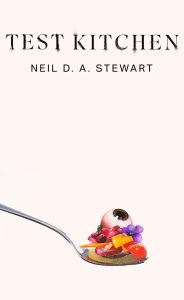 I spied this in one of Susan’s monthly previews. (If you haven’t already subscribed to her blog, do so at once. You’ll never be short of ideas for what to read.) Midgard is a fine dining restaurant with a tree in the middle whose multiple small courses evoke childhood memories and disguise one foodstuff as another. The London establishment earned two Michelin stars and has a perpetual waiting list, but as a news piece at the start presages, it will be forced to close its doors within five years after a series of disasters. Every other chapter introduces another set of diners, table by table: a first date, a reunion of old friends, a 12-year-old foodie trying to forestall his parents’ divorce, a restaurant critic and her freeloading acquaintances, and a solitary man who should really get that face wound seen to.
Many of these situations aren’t what they seem; the same goes for the intervening glimpses into the kitchen. Our host for these is Marley, the most recently hired waitress, who fled a chaotic home life in Melbourne. She didn’t show for work today; she’s in hiding, yet knows everything about the staff dynamics so is a perfect tour guide. There’s a mixture of nerves and bravado running through the kitchen as dinner starts. A knife accident, a food allergy, and a champagne cork hitting a customer are only the beginning of the evening’s mishaps. While I was initially drawn to the structure, which is almost like a linked short story collection, and I can’t resist a restaurant setting, the narrative trickery and the way that the mood evolves from slapstick to grotesque put me off. I enjoyed individual vignettes, but the whole didn’t come together as satisfyingly as in Sweetbitter or Service, among others.
With thanks to Corsair (Hachette) for the free copy for review.
Any July releases you’d recommend?
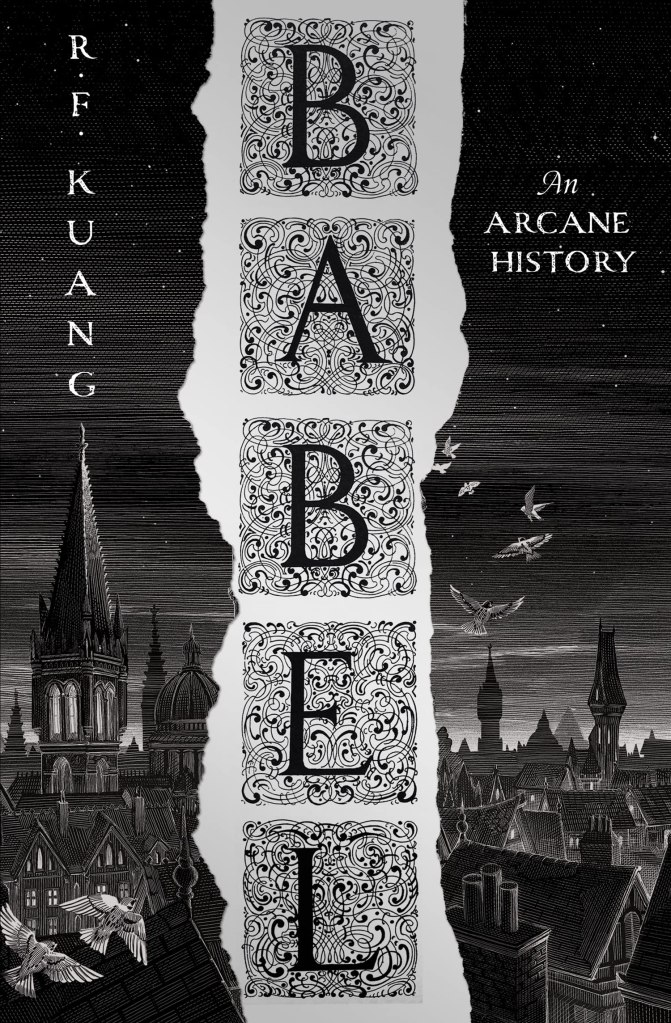
20 Books of Summer, 10: Babel by R. F. Kuang (2022)
I substituted this in as my one doorstopper of the challenge after I failed with the new Persaud. It’s a bit of a cheat in that I actually started reading Babel in January, but I only just finished it this morning. I raced through the first 200 pages or so at the start of the year and loved all the geeky etymological footnotes and musings on translation. I thought I’d read it within a matter of days, which would have been a real feat for me. It’s hard to say why, instead, I stalled and found it difficult to regain sustained interest in the months that followed. Initially, it was a buddy read for me and my husband (his bookmark is still stranded at p. 178). His pithy comment, early on, was, “So, this is basically a woke Harry Potter?” And that’s actually a pretty apt summary. Four students at a magical academy – the Royal Institute of Translation at Oxford University, also known as Babel – find themselves questioning their responsibilities and loyalties as they confront the forces of evil, specifically colonialism.
When Robin Swift’s mother dies of cholera, he’s rescued from Canton by Professor Lovell and taken to England to train for entrance into Babel, a tower beside the Radcliffe Camera. He, Ramy (Indian), Victoire (Haitian) and Letty, the only white member of the quartet, are soon inseparable. While Victoire and Letty face prejudice for being female, it’s nothing to the experience of being racially other. Luckily, Babel values foreignness: intimate knowledge of other languages is an asset. In Kuang’s speculative 1830s setting, Britain’s economy is founded on a warped alchemy: silver is turned into energy to keep everyday life running smoothly in the industrializing nation. This is accomplished by harnessing the power of words. Silver bars are engraved with match-pairs – a phrase in a foreign language and its closest English counterpart – and the incantation of that untranslatable meaning sparks action. Spells keep bridges standing and traffic flowing; used for ill, they kill and destroy.
Robin and his friends gradually realise that their work at Babel is reinforcing mass poverty and the colonial system and, ultimately, fuelling future wars. “Truly, the only ones who seemed to profit from the silver industrial revolution were those who were already rich, and the select few others, who were cunning or lucky enough to make themselves so.” He becomes radicalized via the clandestine Hermes Society, which, Robin Hood-like, siphons silver resources away from where they are concentrated in Oxford to where they can help the oppressed. Surprised to learn who else is involved in Hermes, Robin (name not coincidental!) starts working behind the backs of his friends and professors, driven by conscience yet loath to give up the prospects he has through the tremendous privilege of being part of Babel. It goes from being an ivory tower of academia to being a hideaway for strikers and the besieged. And if you know your Bible stories, you’ll remember that Babel is destined to fall.
In faux-archaic fashion, Kuang has given her novel a lengthy subtitle: “Or: The Necessity of Violence – An Arcane History of the Oxford Translators’ Revolution.” The principle behind Hermes is that justice will never be achieved by negotiation; only by force. “Violence was the only thing that brought the colonizer to the table; violence was the only option.” Kuang published this fourth novel at age 26 and it manifests a certain youthful idealism. The sense of retrospective righteous anger is justified but also unsubtle; I felt similarly about Kuang’s Yellowface. Although there are exciting twists in the latter half of the book, I preferred the early semi-Dickensian atmosphere as Robin investigates his parentage and learns the joy of language and friendship. Kuang also adds a queer angle: an unrequited heterosexual crush comes to nothing because two same-sex friends are in love, even if they can never say. For as full-on and high-stakes as the plot becomes, I wished I could stay in this quieter mode.
Kuang has rendered the historical setting admirably and, though this is a typical adventure novel in that she has prioritized action over depth of characterization, one does get invested in the central characters and their interactions. The whole silver-working motif at first seems implausible but quickly becomes an accepted part of the background. Longstanding fantasy readers will probably have no problem reading this, but if you’re unsure and daunted by the 540-page length, ask yourself just how interested you are in word meanings and the history of colonialism and uprisings. (Little Free Library)
[P.S. OMG, have you seen her wedding photos from a few weeks ago?!]
Also two DNFs, argh!
 The Museum of Whales You Will Never See: Travels among the Collectors of Iceland by A. Kendra Greene (2020) – This sounded quirky and fun, but it turns out it was too niche for me. I read the first two “Galleries” (78 pp.) about the Icelandic Phallological Museum and one woman’s stone collection. Another writer might have used a penis museum as an excuse for lots of cheap laughs, but Greene doesn’t succumb. Still, “no matter how erudite or innocent you imagine yourself to be, you will discover that everything is funnier when you talk about a penis museum. … It’s not salacious. It’s not even funny, except that the joke is on you.” I think I might have preferred a zany Sarah Vowell approach to the material. (Secondhand – Bas Books and Home, Newbury)
 Because I Don’t Know What You Mean and What You Don’t by Josie Long (2023) – A free signed copy – and, if I’m honest, a cover reminiscent of Ned Beauman’s Glow – induced me to try an author I’d never heard of. She’s a stand-up comic, apparently, not that you’d know it from these utterly boring, one-note stories about unhappy adolescents and mums on London council estates. I read 108 pages but could barely tell you what a single story was about. Long is decent at voices, but you need compelling stories to house them. (Little Free Library)
20 Books of Summer, 7–9: Furies, The Earthquake Bird, and Greta & Valdin
It might seem that I’m very behind on 20 Books of Summer, and I am, but that’s mostly because I’ve done my usual trick of starting loads of books at once so that I’m currently in the middle of another nine with no prospect of finishing any particularly soon. I will eventually review more, but probably all in a rush and on the later side. It doesn’t help that quite a few happen to be lacklustre reads, such that I have to push myself through them instead of enjoying spending time with the stack. For today, though, I have a pretty readable trio made up of feminist short stories, a mild Japan-set mystery, and a highly random queer dysfunctional family novel that rose from indie obscurity in New Zealand. (Also a DNF.)
Furies: Stories of the Wicked, Wild and Untamed (2023)
It was my second attempt at this Virago anthology; I borrowed it from the library last year but never opened it, as far as I can remember. Each story is named after a synonym for “virago,” so the focus is on strong and unconventional women, but given that brief there is huge variety, including memoir (Ali Smith’s “Spitfire,” about her late mother’s WAAF service), historical research (CN Lester on sexology and early trans figures, Emma Donoghue on early-twentieth-century activist and lesbian Kathlyn Oliver, Stella Duffy on menopause) and even one graphic short, the mother–daughter horror story “She-Devil” by comics artist Eleanor Crewes.
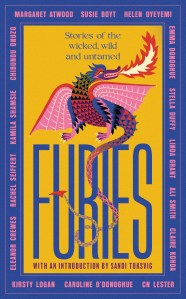 As with any anthology, some pieces stand out more than others. Caroline O’Donoghue, Helen Oyeyemi and Kamila Shamsie’s contributions were unlikely to convert me into a fan. Margaret Atwood is ever sly and accessible, with “Siren” opening with the line “Today’s Liminal Beings Knitting Circle will now be called to order.” I was surprised to get on really well with Kirsty Logan’s “Wench,” about girls ostracized by their religious community because of their desire for each other – I’ll have to read Now She Is Witch, as it’s set in the same fictional world – and Chibundu Onuzo’s “Warrior,” about Deborah, an Israelite leader in the book of Judges. And while I doubt I need to read a whole novel by Rachel Seiffert, I did enjoy “Fury,” about a group of Polish women who fended off Nazi invaders.
A few of my favourites were “Harridan” by Linda Grant, about an older woman who frightens the young couple who share her flat’s garden during lockdown (“this old lady, this hag she sees, this bitter travesty of her celestial youth and beauty is not her. Inside she’s a flame, she’s a pistol”); “Muckraker” by Susie Boyt, in which a woman makes conquests of breast cancer widowers; and “Tygress” by Claire Kohda, where the stereotype of the Asian ‘tiger mother’ turns literal. Duffy’s “Dragon” closes the collection with a very interesting blend of autofiction, interviews and medical reportage about different experiences of objectification in youth and invisibility in ageing. It brings the whole together nicely: “Tell me your tale and, in the telling, feel it all drop away. You are, and you are not, your story. Keep what serves you now, make space for new maybes.” (Free from a neighbour)
The Earthquake Bird: A Novel of Mystery by Susanna Jones (2001)
 Susanna Jones’s When Nights Are Cold is one of my favourite novels that no one else has ever heard of, so I jumped at the chance to buy a bargain copy of her debut back in 2020. Lucy Fly has lived in Tokyo for ten years, working as a translator of machinery manuals. She wanted to get as far away as possible from her conventional family of six brothers, so she’s less than thrilled to meet fellow Yorkshire lass Lily Bridges, a nurse new to the country and looking for someone to help her find an apartment and learn some basic Japanese. Lucy is a prickly loner with only a few friends – and a lover, photographer Teiji – but she reluctantly agrees to be Lily’s guide.
We know from the start that Lucy is in custody being questioned about events leading up to Lily’s murder. She refuses to tell the police anything, but what we are reading is her confession, in which she does eventually tell all. We learn that there have already been three accidental deaths among her family and acquaintances – she seems cursed to attract them – and that her feelings about Lily changed over the months she showed the woman around. This short and reasonably compelling book gives glimpses of mountain scenery, noodle bars, and spartan apartments. Perhaps inevitably, it reminded me a bit of Murakami. It’s hard to resist an unreliable narrator. However, I felt Jones’s habit of having Lucy speak of herself in the third person was overdone. (Secondhand – Broad Street Book Centre, Hay-on-Wye)
Greta & Valdin by Rebecca K Reilly (2021; 2024)
 The title characters are a brother and sister in their late twenties who share a flat and a tendency to sabotage romantic relationships. Both are matter-of-factly queer and biracial (Māori/Russian). The novel flips back and forth between their present-tense first-person narration with each short chapter. It takes quite a while to pick up on who is who in the extended Vladisavljevic clan and their New Zealand university milieu (their father is a science professor and Greta an English department PhD and tutor), so I was glad of the character list at the start.
I was expecting a breezy, snarky read and to an extent that’s what I got. Not a whole lot happens; situations advance infinitesimally through quirky dialogue thick with pop culture references. There are some quite funny one-liners, but the plot is so meandering and the voices so deadpan that I struggled to remain engaged. (On her website, Reilly, who is Māori, ascribes the book’s randomness to her neurodivergence.)
The protagonists seem so affectedly cynical that when they exhibit strong feelings for new partners, you’re a bit taken aback. Really, Reilly can do serious? One of the siblings is reunited with a former partner and starts to think about settling down and even adopting a child. This is the last novel I would have expected to end with a wedding, but so it does. If you’re a big fan of Elif Batuman and Naoise Dolan, this might be up your street. Below are some sample lines that should help you make up your mind (quotes unattributed to minimize spoilers).
I don’t really feel like anything these days, just a beautiful husk filled with opinions about globalism and a strong desire to go out for dinner.
I don’t think you’re the weirdest person I’ve ever met even though you do sometimes talk like a philosophical narrator in an independent film.
I’m trying to write my wedding speech, so I don’t go off on a tangent and start listing my favourite Arnold Schwarzenegger movies. I was thinking I could write an acrostic poem, but I’ve made the foolish decision of marrying someone whose name begins with X.
With thanks to Hutchinson Heinemann (Penguin Random House) for the free copy for review.
And a DNF:
 The Lost Love Songs of Boysie Singh by Ingrid Persaud – I thought Persaud’s debut novel, Love after Love, was fantastic, but I was right to be daunted by the length of this follow-up. The strategy is similar to that in Mrs. Hemingway by Naomi Wood: giving sideways looks at a famous man through the women he collected around him. John Boysie Singh was a real-life Trinidadian gangster who was hanged for his crimes in 1957 (as the article reprinted on the first page reveals). The major problem here is that all four of the dialect voices sound much the same, so I couldn’t tell them apart. Each time I opened the book, I had to look back at the blurb to be reminded that Popo was his prostitute mistress while Mana Lala was the mother of his son Chunksee. In the 103 pages I read (less than one-fifth of the total), there were so few chapters by Doris and Rosie that I never got a handle on who they were. Nor did I come to understand, or care about, Boysie. The editor needed to make drastic changes to this to ensure widespread readability. (Signed copy won in a Faber Instagram giveaway)
March Releases by Akbar, Bosker, García Márquez, and Wrenn
I’m catching up after a busy end to last month. Today I have an uneven debut novel from a poet whose work I’ve enjoyed before, a journalist’s jaunty submersion in the world of modern art, a posthumous novella from a famous Colombian author I’d not previously read, and a (literally) trippy memoir about C-PTSD, coral, climate breakdown, queerness and more. I can pinpoint a couple of elements that some or all of them have in common: beauty (whether in art or in nature) and dead mothers.
Martyr! by Kaveh Akbar
I’d read the Iranian American poet’s two full-length collections and particularly admired Pilgrim Bell, one of my favourite books of 2021. That was enough for me to put this on my Most Anticipated list for 2024, even though based on the synopsis I wrote: “His debut novel sounds kind of unhinged, but I figure it’s worth a try.” Here’s an excerpt from the publisher’s blurb: “When Cyrus’s obsession with the lives of the martyrs – Bobby Sands, Joan of Arc – leads him to a chance encounter with a dying artist, he finds himself drawn towards the mysteries of an uncle who rode through Iranian battlefields dressed as the Angel of Death; and toward his [late] mother, who may not have been who or what she seemed.”
 Cyrus Shams is an Iranian American aspiring poet who grew up in Indiana with a single father, his mother Roya having died in a passenger aircraft mistakenly shot down by a U.S. Navy missile cruiser (this really happened: Iran Air Flight 655, on 3 July 1988). He continues to lurk around the Keady University campus, working as a medical actor at the hospital, but his ambition is to write. During his shaky recovery from drug and alcohol abuse, he undertakes a project that seems divinely inspired: “Tired of interventionist pyrotechnics like burning bushes and locust plagues, maybe God now worked through the tired eyes of drunk Iranians in the American Midwest”. By seeking the meaning in others’ deaths, he hopes his modern “Book of Martyrs” will teach him how to cherish his own life.
This document, which we see in fragments, sets up hypothetical dialogues between figures real and imaginary, dead and living, and intersperses them with poems and short musings. But when a friend tells Cyrus about the Brooklyn Museum installation “DEATH-SPEAK,” which has terminally ill Iranian artist Orkideh living out her last days in public, he spies an opportunity to move the work beyond theory and into the physical realm. So he flies to New York City with his best friend (and occasional f**kbuddy), bartender Zee Novak, and visits Orkideh every day until the installation’s/artist’s end.
This is a wildly original but unruly novel with a few problems. One: Akbar has clung too obviously to his own story and manner of speaking with Cyrus (e.g., “I honestly actually do worry about that, no joke. Being a young Iranian man making a book about martyrdom, going around talking to people about becoming a martyr. It’s not inert, you know?”). Another is that the poems, and poetic descriptions, are much the best material. The only exception might be a zany scene where Zee and Cyrus chop wood while high. But the main issue I had is that the plot turns on a twist 50 pages from the end, a huge coincidence that feels unearned. I admire the ambition Akbar had for this – a seething, open-hearted enquiry into addiction, love, suicide and queerness – but look forward to him getting back to poetry.
With thanks to Picador for the proof copy for review.
Get the Picture: A Mind-Bending Journey among the Inspired Artists and Obsessive Art Fiends Who Taught Me How to See by Bianca Bosker
I was a big fan of Bosker’s Cork Dork (2017), her deep dive into the world of fine wine. Her second book is similarly constructed and equally fun: more personal than authoritative, light yet substantial, and accessible to the uninitiated as well as those with an existing interest in the subject. She begins as a complete novice, wondering if she’ll ever know what art is, let alone what it means and whether it’s any good (“the familiar feeling that everyone got the punch line except me”). By the end, she has discovered that, like the love of wine, art appreciation can be a way of expanding and savouring one’s life.
The aim was to get the broadest experience possible, generally through voluntary placements. She started out as an assistant at Jack Barrett’s 315 Gallery, where one of her tasks was to paint a wall white; she failed miserably to meet his expectations even for this simple task. He never lost his fundamental distrust of her, a writer and outsider, as one of “the enemy.” It was expected that she would attend as many art shows and openings as possible per week. “Talking shit was essentially a job requirement.” Bosker might not have known what to make of the art, but others were gossipy, snobbish and opinionated enough to make up for it. When she was tasked with writing a press release for an exhibit, a gallerist taught her the clichéd shorthand: “Every f**king artist allegedly transforms the familiar into the unfamiliar, or vice versa.”

In the course of the book, the New York City-based author also:
- attends the Art Basel Miami Beach contemporary art fair and sells photographs on behalf of Denny Dimin Gallery;
- befriends performance artist and “ass influencer” Mandy AllFIRE, who – ahem – sits on Bosker’s face as part of a temporary installment;
- serves as a studio assistant for French painter Julie Curtiss, whose work is selling for alarmingly high amounts at auction (not actually what a painter wants, as it tends to signal bad things for a career);
- meets a pair of North Dakota collectors known as “the Icy Gays”; and
- works as a Guggenheim Museum guard.
This last was my favourite episode. Forty-minute placements on particular ramps gave her time to focus on one chosen artwork – for instance, an abstract sculpture. She challenged herself to stay with it for that whole time, doing as one artist advised and simply noticing five things about the work. Before, her “default approach to art had just been to plant myself in front of a piece and wait for the epiphany to wash over me.” Now, she worked at it. In fact, she counsels newcomers to not read a caption because many people take a title at face value and an interpretation as gospel, and so don’t experience the art for themselves.
At times I found the book slightly scattered in the way that it zigzags from one challenge to another. There’s differing attention to various experiences; a week-long art school merits just one paragraph. And there’s no getting past the fact that some art she encounters sounds outlandish or just plain silly. (Is it any surprise that she mistakes part of a wall, and a mousetrap, for art pieces?) Ultimately, I think it’s best if you have at least a modicum of appreciation for modern art, which I don’t; whereas I do enjoy drinking wine even if I don’t have a trained palate.
Even so, Bosker’s writing has such verve (“artists were coyly evasive about their work and treated my questions like I was a cactus running after their balloon”; “a hazy daydream of an idea solidified into a yappy, un-shut-uppable chihuahua of want”) that you’ll be glad you went along for the ride. She concludes that taste is subjective, but “Beauty … pulls you close.” Art is valuable because it “knocks us off our well-worn pathways” into something uncharted, a tantalizing prospect.
With thanks to Allen & Unwin (Grove Press) for the free copy for review.
{SPOILERS IN THIS NEXT ONE}
Until August by Gabriel García Márquez
[Translated from the Spanish by Anne McLean]
A posthumous ‘lost’ novella was not a good place for me to have started with this celebrated author. García Márquez okayed the fifth draft of the text in 2004, 10 years before his death. By this time he was already suffering with memory loss that interfered with his creativity. His sons got the message that he didn’t think the book worked and should be destroyed. But they didn’t do his bidding and, revisiting the book nearly a decade on from his death, decided it wasn’t that bad, if not up to the standard of his best work, and that it should see the light of day after all.
Every August 16th, Ana Magdalena Bach travels to the island where her mother is buried to visit the grave and lay gladioli on it. (My review book came with a bag of three gladioli bulbs and a mini Colombian chocolate bar.) Each year she takes a different lover for the one night at a hotel. The first time, the man leaves her a $20 bill and she feels ashamed, but it doesn’t stop her doing the same thing again for the next four years in a row. Once it’s a long-ago school friend whom she runs into on the ferry. Another time, by golly, it’s a bishop.

It’s refreshing to have a woman in middle age as protagonist and for her to claim sexual freedom. However, the setup is formulaic and repetitive, the sex scenes are somewhat excruciating, and the hypocrisy of her gleefully having one-night stands while fretting over her husband’s potential infidelity is grating. I did like the ending – Ana hears that an anonymous elderly gentleman has been paying to have gladioli laid on her mother’s grave year-round and she wonders if she is in a sense following in her mother’s footsteps all along without knowing it; and decides she’s had enough and exhumes her mother’s remains, returning to her husband with a bag of bones (gruesome!).
But nothing about the plot or the writing – fluid enough bar one awkward sentence (“She listened to him worried that he meant it, but she had the strength not to appear as easy a woman as he might think”) – suggested to me a master at work. At best, this might be reminiscent of the late work of misogynist-leaning authors like Coetzee or Updike.
In my mind García Márquez is linked with magic realism, so I’d be better off trying one of his more representative works. I have several of his earlier novellas on the shelf (received as review copies as part of the same recent marketing push), and if I get on better with those then I’ll be sure to try one of the most famous full-length novels. 
With thanks to Viking (Penguin) for the free copy for review.
Mothership: A Memoir of Wonder and Crisis by Greg Wrenn
Wrenn is an associate English professor teaching environmental literature at James Madison University. He has also been exploring coral reefs for 25 years, with a love of marine wildlife sparked by growing up in Florida. But all along, he’s been trying (much like Cyrus Shams) to come to terms with addiction, queerness, suicidal inclinations, and especially his mother’s place in his life. She made him feel dirty, that he would never be good enough; she hit him with a wooden spoon and bathed him until he was 17. Though he never found out for sure, he suspects his mother was sexually abused by her father and repeated the cycle of molestation.
 This is the third C-PTSD memoir I’ve read (after What My Bones Know and A Flat Place), and has a lot in common with I’m Glad My Mom Died, which features a co-dependent relationship with an abusive mother. After Wrenn’s parents’ divorce, he and his mother remained close. “I had been her therapist, confessor, girlfriend, and punching bag.” He helped care for her after a stroke but eventually had to throw up his hands at her stubborn refusal to follow doctors’ orders. Drawing on the Greek etymology of ecology (oikos means house or family), Wrenn insists on a parallel between the personal and the environmental here: “What we’re facing amounts to global C-PTSD” as “Mother” Earth turns against us. On each trip to Raja Ampat, he knows the coral reef is dying, his carbon footprint only accelerating it.
There’s a lot in this short memoir. Even the summary had me shaking my head in disbelief. For me, though, the tone and style were too erratic. Wrenn can be wry, sorrowful, or campy; he includes scientific data, letters to Adrienne Rich and an imagined descendent, a chapter riffing on “Otters” (the animal and the gay stereotype), flashbacks, and E.T. metaphors. The final third of the book then takes a left turn as he experiments with therapeutic psychedelics via ayahuasca ceremonies in South America, and ditches dating apps and casual sex to try to find a long-term relationship. The drug literally alters his brain, allowing him to feel trust and love. Add on nature and a husband and that’s why he’s still here rather than dead by suicide.
Like Akbar, Wrenn published poetry before switching genre. Their books are both amazing in premise but wobbly in execution. Still, I’d say both authors are laudable for their effort to depict lives wrenched back from extremity.
With thanks to Regalo Press (USA) for the proof copy for review.
 Bookish Beck = Rebecca Foster. American transplant to England. Freelance proofreader and book reviewer.
 Bookish Beck