Most Anticipated Books of 2026
Later than intended, but here we are. I’ve narrowed it down to the 25 books I’m most looking forward to in January–September, though no doubt I’ll have heard of many more unmissable titles before that time is up. My list is dominated by fiction, which I tend to find out about earlier. Also on my radar are novels by Sharon Bala, Freya Bromley, Mary Costello, Louise Kennedy, Ben Lerner, Paula McLain, Liz Nugent and Tom Perrotta; short stories by Jess Gibson (Margaret Atwood’s daughter); and nonfiction from Margaret Drabble, Cal Flyn, Siri Hustvedt and Anne Lamott.
In release date order, with UK publication info given first if available. The blurbs are adapted from Goodreads. I’ve taken the liberty of using whichever cover I prefer.
Fiction
 Departure(s) by Julian Barnes [20 Jan., Vintage (Penguin) / Knopf]: (Currently reading) I get more out of rereading Barnes’s classics than reading his latest stuff, but I’ll still attempt anything he publishes. He’s 80 and calls this his last book. So far, it’s heavily about memory. “Julian played matchmaker to Stephen and Jean, friends he met at university in the 1960s; as the third wheel, he was deeply invested in the success of their love”. Sounds way too similar to 1991’s Talking It Over, and the early pages have been tedious. (Review copy from publisher)
 Half His Age by Jennette McCurdy [20 Jan., Fourth Estate / Ballantine]: McCurdy’s memoir, I’m Glad My Mom Died, was stranger than fiction. I was so impressed by her recreation of her childhood perspective on her dysfunctional Mormon/hoarding/child-actor/cancer survivor family that I have no doubt she’ll do justice to this reverse-Lolita scenario about a 17-year-old who’s in love with her schlubby creative writing teacher. (Library copy on order)
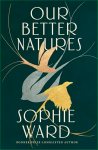 Our Better Natures by Sophie Ward [5 Feb., Corsair]: I loved Ward’s Booker-longlisted Love and Other Thought Experiments (though the follow-up, The Schoolhouse, was a letdown). “Amid the chaos and political upheaval of 1970s America, three very different women must accept the world as it is, or act to change it. Phyllis Patterson is a housewife in White Plains, Illinois. … Andrea Dworkin is an activist in Amsterdam. … Muriel Rukeyser is a poet in New York.” (Library copy on order)
 Brawler: Stories by Lauren Groff [Riverhead, Feb. 24]: (Currently reading) Controversial opinion: Short stories are where Groff really shines. Three-quarters in, this collection is just as impressive as Delicate Edible Birds or Florida. “Ranging from the 1950s to the present day and moving across age, class, and region (New England to Florida to California) these nine stories reflect and expand upon a shared the ceaseless battle between humans’ dark and light angels.” (For Shelf Awareness review) (Edelweiss download)
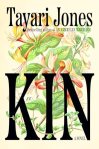 Kin by Tayari Jones [24 Feb., Oneworld / Knopf]: I’m a big fan of Leaving Atlanta and An American Marriage. This sounds like Brit Bennett meets Toni Morrison. “Vernice and Annie, two motherless daughters raised in Honeysuckle, Louisiana, have been best friends and neighbors since earliest childhood, but are fated to live starkly different lives. … A novel about mothers and daughters, about friendship and sisterhood, and the complexities of being a woman in the American South”. (Edelweiss download)
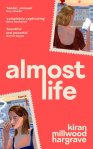 Almost Life by Kiran Millwood Hargrave [12 March, Picador / March 24, S&S/Summit Books]: There have often been queer undertones in Hargrave’s work, but this David Nicholls-esque plot sounds like her most overt. “Erica and Laure meet on the steps of the Sacré-Cœur in Paris, 1978. … The moment the two women meet the spark is undeniable. But their encounter turns into far more than a summer of love. It is the beginning of a relationship that will define their lives and every decision they have yet to make.” (Edelweiss download)
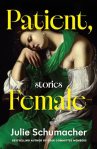 Patient, Female: Stories by Julie Schumacher [May 5, Milkweed Editions]: I found out about this via a webinar with Milkweed and a couple of other U.S. indie publishers. I loved Schumacher’s Dear Committee Members. “[T]his irreverent collection … balances sorrow against laughter. … Each protagonist—ranging from girlhood to senescence—receives her own indelible voice as she navigates social blunders, generational misunderstandings, and the absurdity of the human experience.” The publicist likened the tone to Meg Wolitzer.
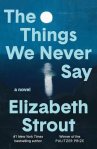 The Things We Never Say by Elizabeth Strout [7 May, Viking (Penguin) / May 5, Random House]: Hurrah for moving on from Lucy Barton at last! “Artie Dam is living a double life. He spends his days teaching history to eleventh graders … and, on weekends, takes his sailboat out on the beautiful Massachusetts Bay. … [O]ne day, Artie learns that life has been keeping a secret from him, one that threatens to upend his entire world. … [This] takes one man’s fears and loneliness and makes them universal.”
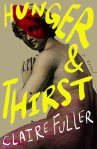 Hunger and Thirst by Claire Fuller [7 May, Penguin / June 2, Tin House]: I’ve read everything of Fuller’s and hope this will reverse the worsening trend of her novels, though true crime is overdone. “1987: After a childhood trauma and years in and out of the care system, sixteen-year-old Ursula … is invited to join a squat at The Underwood. … Thirty-six years later, Ursula is a renowned, reclusive sculptor living under a pseudonym in London when her identity is exposed by true-crime documentary-maker.” (Edelweiss download)
 Little Vanities by Sarah Gilmartin [21 May, ONE (Pushkin)]: Gilmartin’s Service was great. “Dylan, Stevie and Ben have been inseparable since their days at Trinity, when everything seemed possible. … Two decades on, … Dylan, once a rugby star, is stranded on the sofa, cared for by his wife Rachel. Across town, Stevie and Ben’s relationship has settled into weary routine. Then, after countless auditions, Ben lands a role in Pinter’s Betrayal. As rehearsals unfold, the play’s shifting allegiances seep into reality, reviving old jealousies and awakening sudden longings.”
 Said the Dead by Doireann Ní Ghríofa [21 May, Faber / Sept. 22, Farrar, Straus and Giroux]: A Ghost in the Throat was brilliant and this sounds right up my street. “In the city of Cork, a derelict Victorian mental hospital is being converted into modern apartments. One passerby has always flinched as she passes the place. Had her birth occurred in another decade, she too might have lived within those walls. Now, … she finds herself drawn into an irresistible river of forgotten voices”.
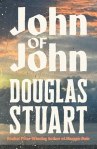 John of John by Douglas Stuart [21 May, Picador / May 5, Grove Press]: I DNFed Shuggie Bain and haven’t tried Stuart since, but the Outer Hebrides setting piqued my attention. “[W]ith little to show for his art school education, John-Calum Macleod takes the ferry back home to the island of Harris [and] begrudgingly resumes his old life, stuck between the two poles of his childhood: his father John, a sheep farmer, tweed weaver, and pillar of their local Presbyterian church, and his maternal grandmother Ella, a profanity-loving Glaswegian”. (For early Shelf Awareness review) (Edelweiss download)
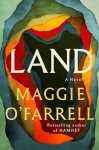 Land by Maggie O’Farrell [2 June, Tinder Press / Knopf]: I haven’t fully loved O’Farrell’s shift into historical fiction, but I’m still willing to give this a go. “On a windswept peninsula stretching out into the Atlantic, Tomás and his reluctant son, Liam [age 10], are working for the great Ordnance Survey project to map the whole of Ireland. The year is 1865, and in a country not long since ravaged and emptied by the Great Hunger, the task is not an easy one.” (Edelweiss download)
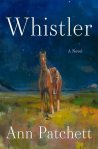 Whistler by Ann Patchett [2 June, Bloomsbury / Harper]: Patchett is hella reliable. “When Daphne Fuller and her husband Jonathan visit the Metropolitan Museum of Art, they notice an older, white-haired gentleman following them. The man turns out to be Eddie Triplett, her former stepfather, who had been married to her mother for a little more than year when Daphne was nine. … Meeting again, time falls away; … [in a story of] adults looking back over the choices they made, and the choices that were made for them.” (Edelweiss download)
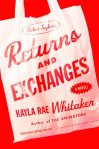 Returns and Exchanges by Kayla Rae Whitaker [2 June, Scribe / May 19, Random House]: Whitaker’s The Animators is one of my favourite novels that hardly anyone else has ever heard of. “A sweeping novel of one [discount department store-owning] Kentucky family’s rise and fall throughout the 1980s—a tragicomic tour de force about love and marriage, parents and [their four] children, and the perils of mixing family with business”. (Edelweiss download)
 The Great Wherever by Shannon Sanders [9 July, Viking (Penguin) / July 7, Henry Holt]: Sanders’s linked story collection Company left me keen to follow her career. Aubrey Lamb, 32, is “grieving the recent loss of her father and the end of a relationship.” She leaves Washington, DC for her Black family’s ancestral Tennessee farm. “But the land proves to be a burdensome inheritance … [and] the ghosts of her ancestors interject with their own exasperated, gossipy commentary on the flaws and foibles of relatives living and dead”. (Edelweiss download)
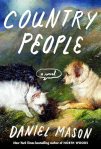 Country People by Daniel Mason [14 July, John Murray / July 7, Random House]: It doesn’t seem long enough since North Woods for there to be another Mason novel, but never mind. “Miles Krzelewski is … twelve years late with his PhD on Russian folktales … [W]hen his wife Kate accepts a visiting professorship at a prestigious college in the far away forests of Vermont, he decides that this will be his year to finally move forward with his life. … [A] luminous exploration of marriage and parenthood, the nature of belief and the power of stories, and the ways in which we find connection in an increasingly fragmented world.”
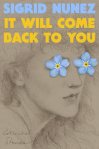 It Will Come Back to You: Collected Stories by Sigrid Nunez [14 July, Virago / Riverhead]: Nunez is one of my favourite authors but I never knew she’d written short stories. The blurb reveals very little about them! “Carefully selected from three decades of work … Moving from the momentous to the mundane, Nunez maintains her irrepressible humor, bite, and insight, her expert balance between intimacy and universality, gravity and levity, all while entertainingly probing the philosophical questions we have come to expect, such as: How can we withstand the passage of time? Is memory the greatest fiction?” (Edelweiss download)
 Exit Party by Emily St. John Mandel [17 Sept., Picador / Sept. 15, Knopf]: The synopsis sounds a bit meh, but in my eyes Mandel can do no wrong. “2031. America is at war with itself, but for the first time in weeks there is some good news: the Republic of California has been declared, the curfew in Los Angeles is lifted, and everyone in the city is going to a party. Ari, newly released from prison, arrives with her friend Gloria … Years later, living a different life in Paris, Ari remains haunted by that night.”
The Housekeeper by Rose Tremain [17 Sept., Vintage (Penguin); no cover image yet]: “Set in 1930s England and fictionalises the inspiration behind Daphne du Maurier’s famous novel, Rebecca.” Strangely, this started life as a short story (in The American Lover), then become a screenplay authored by Tremain (the film is in production and stars Uma Thurman and Anthony Hopkins), and is now being expanded into a novel. Tremain is 82 and a survivor of major cancer; I do wonder if this is the last book we can expect from her.
Nonfiction
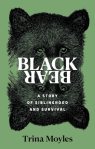 Black Bear: A Story of Siblinghood and Survival by Trina Moyles [Jan. 6, Pegasus Books]: Out now! “When Trina Moyles was five years old, her father … brought home an orphaned black bear cub for a night before sending it to the Calgary Zoo. … After years of working for human rights organizations, Trina returned to northern Alberta for a job as a fire tower lookout, while [her brother] Brendan worked in the oil sands … Over four summers, Trina begins to move beyond fear and observe the extraordinary essence of the maligned black bear”. (For BookBrowse review) (Review e-copy)
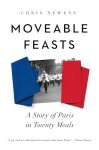 Moveable Feasts: A Story of Paris in Twenty Meals by Chris Newens [Feb. 3, Pegasus Books; came out in the UK in July 2025 but somehow I missed it!]: I’m a sucker for foodie books and Paris books. A “long-time resident of the historic slaughterhouse quartier Villette takes us on a delightful gastronomic journey around Paris … From Congolese catfish in the 18th to Middle Eastern falafels in the 4th, to the charcuterie served at the libertine nightclubs of Pigalle in the 9th, Newens lifts the lid on the city’s ever-changing, defining, and irresistible food culture.” (Edelweiss download)
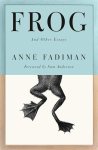 Frog: And Other Essays by Anne Fadiman [Feb. 10, Farrar, Straus and Giroux]: Fadiman publishes rarely, and it can be difficult to get hold of her books, but they are always worth it. “Ranging in subject matter from her deceased frog, to archaic printer technology, to the fraught relationship between Samuel Taylor Coleridge and his son Hartley, these essays unlock a whole world—one overflowing with mundanity and oddity—through sly observation and brilliant wit.”
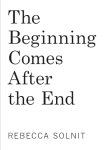 The Beginning Comes after the End: Notes on a World of Change by Rebecca Solnit [March 3, Haymarket Books]: A sequel to Hope in the Dark. Hope is a critically endangered species these days, but Solnit has her eyes open. “While the white nationalist and authoritarian backlash drives individualism and isolation, this new world embraces antiracism, feminism, a more expansive understanding of gender, environmental thinking, scientific breakthroughs, and Indigenous and non-Western ideas, pointing toward a more interconnected, relational world.” (Edelweiss download)
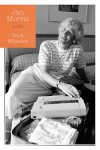 Jan Morris: A Life by Sara Wheeler [7 April, Faber / April 14, Harper]: I didn’t get on with the mammoth biography Paul Clements published in 2022 – it was dry and conventional; entirely unfitting for Morris – but hope for better things from a fellow female travel writer. “Wheeler uncovers the complexity of this twentieth-century icon … Drawing on unprecedented access to Morris’s papers as well as interviews with family, friends and colleagues, Wheeler assembles a captivating … story of longing, traveling and never reaching home.” (Edelweiss download)
Others’ lists whence a few of my ideas came!
What catches your eye here? What other 2026 titles do I need to know about?
#ShortStorySeptember: Stories by Katherine Heiny, Shena Mackay and Ian McEwan
Every September I enjoy focusing on short stories, which I seem to read at a rate of only one or two collections per month in the rest of a year. This year, Lisa of ANZ Lit Lovers is hosting Short Story September as a blogger challenge for the first time. She’s encouraging people to choose individual short stories they would recommend, so I’ll be centring all of my reviews around one particular story but also giving my reaction to the collections as a whole.
“Dark Matter”
from
Single, Carefree, Mellow by Katherine Heiny (2015)
“One week in late February, Rhodes and Gildas-Joseph told Maya the same come fact, that there was a movement to reinstate Plato’s status as a planet.”
Maya is engaged to Rhodes but also sleeping with Gildas-Joseph, the director of the university library where she works. She’s one of Heiny’s typical whip-smart, exasperated protagonists, irresistibly drawn to a man or two even though they seem like priggish or ridiculous bores (witness the “come fact” above – neither can stop himself from mansplaining after sex). Having an affair means always having to keep your wits about you. Maya bumps into her boss with his wife, Adèle, at a colleague’s cocktail party and in line for the movies, and one day her fiancé’s teenage sister, Magellan (seriously, what is up with these names?!), turns up at the coffee shop where she is supposed to be meeting Gildas-Joseph. Quick, act natural. By the end, Maya knows that she must decide between the two men.
 This is the middle of a trio of stories about Maya. They’re not in a row and I read the book over quite a number of months, so I was in danger of forgetting that we’d met this set of characters before. In the first, the title story, Maya has been with Rhodes for five years but is thinking of leaving him – and not just because she’s crushing on her boss. A health crisis with her dog leads her to rethink. In “Grendel’s Mother,” Maya is pregnant and hoping that she and her partner are on the same page.
This triptych of linked stories is evidence that Heiny was working her way towards a novel, and I certainly prefer Standard Deviation and Early Morning Riser. However, I really liked Heiny’s 2023 story collection, Games and Rituals, which has much more variety.
I like the second person as much as anyone but three instances of “You” narration is too much. The best of these was “The Rhett Butlers,” about a teenager whose history teacher uses famous character names as aliases when checking them into motels for trysts. The cover image is from this story: “The part of your life that contains him is too sealed off, like the last slice of cake under one of those glass domes.”
Although all of these stories are entertaining and have some of the insouciance and bittersweetness of Nora Ephron’s Heartburn, they are so overwhelmingly about adultery (the main theme of at least 8 of 11) that they feel one-note.
why have an affair if not to say bad things about your spouse?
She thought that was the essence of motherhood: acting like you knew what you were talking about when you didn’t. That, and looking at people’s rashes. It was probably why people had affairs.
I would recommend any of Heiny’s other books over this one, but I wanted to read everything she’s published and I wouldn’t say my time spent on this was a waste. (Secondhand – Awesomebooks.com) 
“All the Pubs in Soho”
from
Dreams of Dead Women’s Handbags by Shena Mackay (1987)
“It was his father’s vituperation about ‘those bloody pansies at Old Hollow’ that had brought Joe to the cottage on this empty summer holiday afternoon.”
It’s 1956 in Kent and Joe is only eight years old, so it’s not too surprising that, ignorant of the slang, he shows up at Arthur and Guido’s expecting to find flowers dripping red. Their place becomes his haven from a home full of crying, excreting younger siblings and a conventional father who intends to send him to a private girls’ school in the autumn. That’s right, “Joe” is Josephine, who likes to wear boys’ clothes and insists on a male name. Mackay struck me as ahead of her time (rather like Rose Tremain with Sacred Country) in honouring Joe’s chosen pronouns and letting him imagine an adult future in which he’d keep company with Arthur and Guido’s bohemian, artistic set – the former is a poet, the latter a painter – and they’d take him round ‘all the pubs in Soho.’ But in a sheltered small town where everyone has a slur ready for the men, it is not to be. Things don’t end well, but thankfully not as badly as I was hoping, and Joe has plucked up the courage to resist his father. There’s all the emotional depth and character development of a novella in this 26-page story.
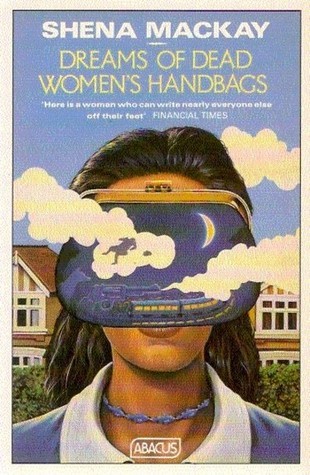 I’ve had a mixed experience with Mackay, but the one novel of hers I got on well with, The Orchard on Fire, also dwells on the shattered innocence of childhood. By contrast, most of the stories in this collection are grimy ones about lonely older people – especially elderly women – reminding me of Barbara Comyns or Barbara Pym at her darkest. “Where the Carpet Ends,” about the long-term residents of a shabby hotel, recalls The Lonely Passion of Judith Hearne. In “Violets and Strawberries in the Snow,” a man in a mental institution awaits a holiday visit from his daughters. “What do we do now?” he asks a fellow inmate. “We could hang ourselves in the tinsel” is the reply. It’s very black comedy indeed. The same is true of a Halloween-set story that I’ll revisit next month.
The cover is so bad it’s good, amirite? In the title story, Susan Vigo is on her way by train to give a speech at a writers’ workshop and running through possible plots for her mystery novel in progress. “Slaves to the Mushroom” is another great one that takes place on a mushroom farm. Mackay’s settings are often surprising, her vocabulary precise, and her portraits of young people as cutting as those of the aged are pitiful. This would serve as a great introduction to her style. (Secondhand – Slightly Foxed Books, Berwick) 
“The Grown-up”
from
The Daydreamer by Ian McEwan (1994)
“The following morning Peter Fortune woke from troubled dreams to find himself transformed into a giant person, an adult.”
A much better Kafka homage, this, than that forgettable novella The Cockroach that McEwan published in 2019. Every story of this linked collection features Peter, a 10-year-old with a very active imagination. Three of the stories are straightforward body-swap narratives (with his sister’s mangled doll, his cat, or his baby cousin), whereas in this one he’s not trading with anyone else but still experiencing what it’s like to be someone else. In this case, a young man falling in love for the first time. Just the previous day, at the family’s holiday cottage in Cornwall, he’d been bemoaning how boring adults are: all they want to do is sit on the beach and chat or read, when there’s so much world out there to explore and turn into a personal playground. He never wants to be one of them. Now he realizes there are different ways to enjoy life; “he stopped and turned to look at the grown-ups one more time. … He felt differently about them now. There were things they knew and liked which for him were only just appearing, like shapes in a mist. There were adventures ahead of him after all.”
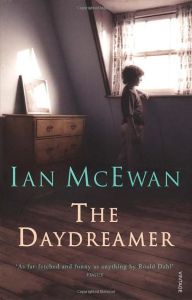 Of course, I also loved “The Cat,” which Eleanor mentioned when she read my review of Matt Haig’s To Be a Cat. At the time, I’d not heard of this and couldn’t believe McEwan had written something suitable for kids! These stories were ones he read aloud to his children as he composed them. There is a hint of gruesomeness in “The Dolls,” but most are just playful. “Vanishing Cream” is a cautionary tale about wanting your family to go away. In “The Bully,” Peter turns a bully into a tentative friend. “The Baby” sees him changing his mind about an annoying relative, while “The Burglar” has him imagining himself a hero who stops the spate of neighbourhood break-ins. Events are explained away as literal dreams, daydreams or a bit of magic. This was an offbeat gem. Try it for a very different taste of McEwan! (Secondhand – Community Furniture Project, Newbury)
Book Serendipity, June to Mid-August 2024
I call it “Book Serendipity” when two or more books that I read at the same time or in quick succession have something in common – the more bizarre, the better. This is a regular feature of mine every couple of months. Because I usually have 20–30 books on the go at once, I suppose I’m more prone to such incidents. People frequently ask how I remember all of these coincidences. The answer is: I jot them on scraps of paper or input them immediately into a file on my PC desktop; otherwise, they would flit away!
The following are in roughly chronological order.
- A self-induced abortion scene in Recipe for a Perfect Wife by Karma Brown and Sleeping with Cats by Marge Piercy.
- A woman who cleans buildings after hours, and a character named Tova who lives in the Seattle area in A Reason to See You Again by Jami Attenberg and Remarkably Bright Creatures by Shelby Van Pelt.
- Flirting with a surf shop employee in Sandwich by Catherine Newman and Remarkably Bright Creatures by Shelby Van Pelt.
- Living in Paris and keeping ticket stubs from all films seen in Paris Trance by Geoff Dyer and The Invention of Hugo Cabret by Brian Selznick.
- A schefflera (umbrella tree) is mentioned in Cheri by Jo Ann Beard and Company by Shannon Sanders.

- The Plague by Albert Camus is mentioned in Knife by Salman Rushdie and Stowaway by Joe Shute.
- Making egg salad sandwiches is mentioned in Cheri by Jo Ann Beard and Sandwich by Catherine Newman.
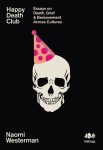
- Pet rats in Stowaway by Joe Shute and Happy Death Club by Naomi Westerman. Rats are also mentioned in Mammoth by Eva Baltasar, The Tale of Despereaux by Kate DiCamillo, and The Colour by Rose Tremain.
- Eels feature in Our Narrow Hiding Places by Kristopher Jansma, Late Light by Michael Malay, and The Colour by Rose Tremain.
- Atlantic City, New Jersey is a location in Florence Adler Swims Forever by Rachel Beanland and Company by Shannon Sanders.
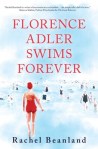 The father is a baker in Florence Adler Swims Forever by Rachel Beanland and Our Narrow Hiding Places by Kristopher Jansma.
- A New Zealand setting (but very different time periods) in Greta & Valdin by Rebecca K Reilly and The Colour by Rose Tremain.
- A mention of Melanie Griffith’s role in Working Girl in I’m Mostly Here to Enjoy Myself by Glynnis MacNicol and Happy Death Club by Naomi Westerman.
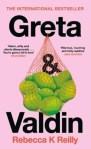 Ermentrude/Ermyntrude as an imagined alternate name in Greta & Valdin by Rebecca K Reilly and a pet’s name in Stowaway by Joe Shute.
- A poet with a collection that was published on 6 August mentions a constant ringing in the ears: Joshua Jennifer Espinoza (I Don’t Want to Be Understood) and Keith Taylor (What Can the Matter Be?).
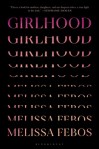
- A discussion of the original meaning of “slut” (a slovenly housekeeper) vs. its current sexualized meaning in Girlhood by Melissa Febos and Sandi Toksvig’s introduction to the story anthology Furies.
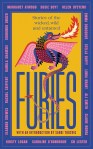
- An odalisque (a concubine in a harem, often depicted in art) is mentioned in I’m Mostly Here to Enjoy Myself by Glynnis MacNicol and The Shark Nursery by Mary O’Malley.
- Reading my second historical novel of the year in which there’s a disintegrating beached whale in the background of the story: first was Whale Fall by Elizabeth O’Connor, then Come to the Window by Howard Norman.
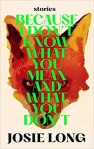 A short story in which a woman gets a job in online trolling in Because I Don’t Know What You Mean and What You Don’t by Josie Long and in the Virago Furies anthology (Helen Oyeyemi’s story).
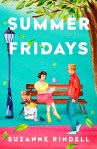
- Her partner, a lawyer, is working long hours and often missing dinner, leading the protagonist to assume that he’s having an affair with a female colleague, in Recipe for a Perfect Wife by Karma Brown and Summer Fridays by Suzanne Rindell.
- A fierce boss named Jo(h)anna in Summer Fridays by Suzanne Rindell and Test Kitchen by Neil D.A. Stewart.
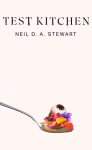
- An OTT rendering of a Scottish accent in Greta & Valdin by Rebecca K Reilly and Test Kitchen by Neil D.A. Stewart.
- A Padstow setting and a mention of Puffin Island (Cornwall) in The Cove by Beth Lynch and England as You Like It by Susan Allen Toth.
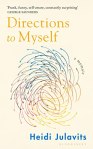
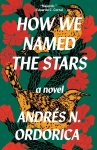
- A mention of the Big and Little Dipper (U.S. names for constellations) in Directions to Myself by Heidi Julavits and How We Named the Stars by Andrés N. Ordorica.
- A mention of Binghamton, New York and its university in We Are Animals by Jennifer Case and We Would Never by Tova Mirvis.
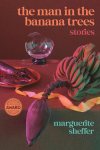
- A character accidentally drinks a soapy liquid in We Would Never by Tova Mirvis and one story of The Man in the Banana Trees by Marguerite Sheffer.
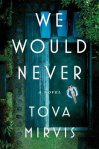 The mother (of the bride or groom) takes over the wedding planning in We Would Never by Tova Mirvis and Summer Fridays by Suzanne Rindell.
- The ex-husband’s name is Jonah in The Mourner’s Bestiary by Eiren Caffall and We Would Never by Tova Mirvis.
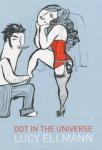
- The husband’s name is John in Dot in the Universe by Lucy Ellmann and Liars by Sarah Manguso.
- An affair is discovered through restaurant receipts in Summer Fridays by Suzanne Rindell and Test Kitchen by Neil D.A. Stewart.
- A mention of eating fermented shark in The Museum of Whales You Will Never See by A. Kendra Greene and Test Kitchen by Neil D.A. Stewart.
- A mention of using one’s own urine as a remedy in Thunderstone by Nancy Campbell and Terminal Maladies by Okwudili Nebeolisa.
- The main character tries to get pregnant by a man even though one of the partners is gay in Mammoth by Eva Baltasar and Until the Real Thing Comes Along by Elizabeth Berg.
- Motherhood is for women what war is for men: this analogy is presented in We Are Animals by Jennifer Case, Parade by Rachel Cusk, and Want, the Lake by Jenny Factor.
 Childcare is presented as a lifesaver for new mothers in We Are Animals by Jennifer Case and Liars by Sarah Manguso.
- A woman bakes bread for the first time in Mammoth by Eva Baltasar and A Year of Biblical Womanhood by Rachel Held Evans.
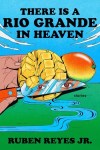
- A gay couple adopts a Latino boy in Greta & Valdin by Rebecca K Reilly and one story of There Is a Rio Grande in Heaven by Ruben Reyes, Jr.
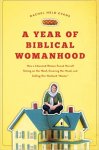 A husband who works on film projects in A Year of Biblical Womanhood by Rachel Held Evans and Liars by Sarah Manguso.
- A man is haunted by things his father said to him years ago in Parade by Rachel Cusk and one story in There Is a Rio Grande in Heaven by Ruben Reyes, Jr.
- Two short story collections in a row in which a character is a puppet (thank you, magic realism!): The Man in the Banana Trees by Marguerite Sheffer, followed by There Is a Rio Grande in Heaven by Ruben Reyes, Jr.
- A farm is described as having woodworm in Mammoth by Eva Baltasar and Parade by Rachel Cusk.
- Sebastian as a proposed or actual name for a baby in Signs, Music by Raymond Antrobus and Birdeye by Judith Heneghan.
What’s the weirdest reading coincidence you’ve had lately?
Women’s Prize 2024: Longlist Predictions vs. Wishes
This is the fourth year in a row that I’ve made predictions for the Women’s Prize longlist (the real thing comes out on Tuesday, 6 p.m. GMT). It shows how invested I’ve become in this prize in recent years. Like I did last year, I’ll give predictions, then wishes (no overlap this time!). My wishes are based on what I have already read and want to read. Although I kept tabs on publishers and ‘free entries’ for previous winners and shortlistees, I didn’t let quotas determine my selections. And while I kept in mind that there are two novelists on the judging panel, I don’t know enough about any of these judges’ taste to be able to tailor my predictions. My only thought was that they will probably appreciate good old-fashioned storytelling … but also innovative storytelling.
(There are two books – The List of Suspicious Things by Jennie Godfrey (= Joanna Cannon?) and Jaded by Ela Lee (this year’s Queenie) – that I only heard about as I was preparing this post and seem pretty likely, but I felt that it would be cheating for me to include them.)
Predictions
The Three of Us, Ore Agbaje-Williams
The Future, Naomi Alderman
The Storm We Made, Vanessa Chan
Penance, Eliza Clark


The Wren, The Wren, Anne Enright
A House for Alice, Diana Evans
Piglet, Lottie Hazell
Pineapple Street, Jenny Jackson


Yellowface, R. F. Kuang
Biography of X, Catherine Lacey
Julia, Sandra Newman
The Vulnerables, Sigrid Nunez


Tom Lake, Ann Patchett
In Memory of Us, Jacqueline Roy
The Fraud, Zadie Smith
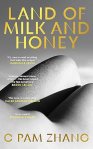
Land of Milk and Honey, C. Pam Zhang


Wish List
Family Lore, Elizabeth Acevedo
The Sleep Watcher, Rowan Hisayo Buchanan
The Unfortunates, J. K. Chukwu
The Three Graces, Amanda Craig


Learned by Heart, Emma Donoghue
Service, Sarah Gilmartin
The Vaster Wilds, Lauren Groff
Reproduction, Louisa Hall


Happiness Falls, Angie Kim
Bright Young Women, Jessica Knoll
A Sign of Her Own, Sarah Marsh
The Fetishist, Katherine Min


Hello Beautiful, Ann Napolitano
Mrs S, K Patrick
Romantic Comedy, Curtis Sittenfeld
Absolutely and Forever, Rose Tremain


If I’m lucky, I’ll get a few right from across these two lists; no doubt I’ll be kicking myself over the ones I considered but didn’t include, and marvelling at the ones I’ve never heard of…
What would you like to see on the longlist?
Appendix
(A further 50 novels that were on my radar but didn’t make the cut. Like last year, I made things easy for myself by keeping an ongoing list of eligible novels in a file on my desktop.)
Everything Is Not Enough, Lola Akinmade Akerstrom
The Wind Knows My Name, Isabel Allende
Swanna in Love, Jennifer Belle
The Sisterhood, Katherine Bradley
The Fox Wife, Yangsze Choo
The Guest, Emma Cline
Speak to Me, Paula Cocozza
Talking at Night, Claire Daverley
Clear, Carys Davies
Bellies, Nicola Dinan
The Happy Couple, Naoise Dolan
In Such Tremendous Heat, Kehinde Fadipe
The Memory of Animals, Claire Fuller
Anita de Monte Laughs Last, Xochitl Gonzalez
Normal Women, Ainslie Hogarth
Sunburn, Chloe Michelle Howarth
Loot, Tania James
The Half Moon, Mary Beth Keane
Morgan Is My Name, Sophie Keetch
Soldier Sailor, Claire Kilroy
8 Lives of a Century-Old Trickster, Mirinae Lee
August Blue, Deborah Levy
Winter Animals, Ashani Lewis
Rosewater, Liv Little
The Couples, Lauren Mackenzie
Tell Me What I Am, Una Mannion
She’s a Killer, Kirsten McDougall
The Misadventures of Margaret Finch, Claire McGlasson
Nightbloom, Peace Adzo Medie
I Am Homeless If This Is Not My Home, Lorrie Moore
The Lost Wife, Susanna Moore
Okay Days, Jenny Mustard
Parasol against the Axe, Helen Oyeyemi
The Human Origins of Beatrice Porter and Other Essential Ghosts, Soraya Palmer
The Lodgers, Holly Pester
Night Wherever We Go, Tracey Rose Peyton
The Mars House, Natasha Pulley
Playing Games, Huma Qureshi
Come and Get It, Kiley Reid
High Time, Hannah Rothschild
Commitment, Mona Simpson
Death of a Bookseller, Alice Slater
Bird Life, Anna Smail
Stealing, Margaret Verble
Help Wanted, Adelle Waldman
Temper, Phoebe Walker
Hang the Moon, Jeannette Walls
Moral Injuries, Christie Watson
Ghost Girl, Banana, Wiz Wharton
Speak of the Devil, Rose Wilding
Best Books from 2023
Keeping it simple again this year with one post covering all genres: the 24 (or, actually 26) current-year releases that stood out the most for me. (No rankings; anything from my Best of First Half that didn’t make it through can be considered a runner-up, along with The Librarianist.)


Fiction
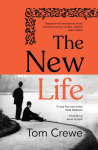 The New Life by Tom Crewe: Two 1890s English sex researchers (based on John Addington Symonds and Havelock Ellis) write a book called Sexual Inversion drawing on ancient Greek history and containing case studies of homosexual behaviour. Oscar Wilde’s trial puts everyone on edge; not long afterwards, their own book becomes the subject of an obscenity trial, and each man has to decide what he’s willing to give up in devotion to his principles. This is deeply, frankly erotic stuff, and, on the sentence level, just exquisite writing.
 The Vaster Wilds by Lauren Groff: Groff’s fifth novel combines visceral detail and magisterial sweep as it chronicles a runaway Jamestown servant’s struggle to endure the winter of 1610. Flashbacks to traumatic events seep into her mind as she copes with the harsh reality of life in the wilderness. The style is archaic and postmodern all at once. Evocative and affecting – and as brutal as anything Cormac McCarthy wrote. A potent, timely fable as much as a historical novel.
Counting as one this thematic trio of women’s true crime pastiches; I liked the Makkai best.
Penance by Eliza Clark: A compelling account of teenage feuds and bullying that went too far and ended in murder. It’s a pretty gruesome crime, but memorable, not least because it coincided with the day of the Brexit vote. I loved Clark’s portrait of Crow-on-Sea, a down-at-heel seaside town near Scarborough, and the depth of character that comes through via interviews and documents. She also nails teenage dialogue and social media use, podcasts, true crime obsession and so on.

 Bright Young Women by Jessica Knoll: An engrossing story of a Type A sorority president whose perfect life goes askew when a serial killer targets the house and kills two of her friends. She and the domestic partner of one of his previous victims are determined to see “the Defendant” brought to justice. 1970s Florida/Washington were interesting settings, and I liked the focus on the victims. The judge in the Defendant’s case lamented that such a bright young man would come to grief; think of the bright young women he extinguished instead.
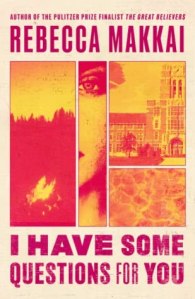
I Have Some Questions for You by Rebecca Makkai: When an invitation comes from her boarding school alma mater, Granby, to teach a two-week course on podcasting, Bodie indulges her obsession with the 1995 murder of her former roommate. Makkai has taken her cues from the true crime genre and constructed a convincing mesh of evidence and theories. She so carefully crafts her pen portraits, and so intimately involves us in Bodie’s psyche, that it’s impossible not to get invested. This is timely, daring, intelligent, enthralling storytelling.
 Sidle Creek by Jolene McIlwain: In this debut collection of 22 short stories, loosely linked by their location in the Appalachian hills in western Pennsylvania and a couple of recurring minor characters, McIlwain softens the harsh realities of addiction, poverty and violence with the tender bruises of infertility and lost love. Grief is a resonant theme in many of the stories, with pregnancy or infant loss a recurring element. At times harrowing, always clear-eyed, these stories are true to life and compassionate about human foibles and animal pain.
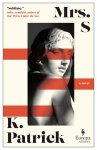 Mrs S by K Patrick: Patrick’s unnamed narrator is an early-twenties Australian butch lesbian who has come to England to be a matron at a girls’ boarding school. Mrs S is the headmaster’s wife, perhaps 20 years her senior. A heat wave gives a sultry atmosphere as hints of attraction between them give way to explicit scenes. Summer romances never last, but their intensity is legendary, and this feels like an instant standard. Not your average coming-of-age story, seduction narrative or cougar stereotype. It’s a new queer classic.
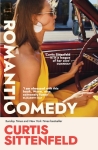 Romantic Comedy by Curtis Sittenfeld: Through her work as a writer for a sketch comedy show modelled on Saturday Night Live, Sally Milz meets Noah Brewster, a pop star with surfer-boy good looks. Plain Jane getting the hot guy – that never happens, right? In fact, Sally has a theory about this very dilemma… As always, Sittenfeld’s inhabiting of a first-person narrator is flawless, and Sally’s backstory and Covid-lockdown existence endeared her to me. Could this be called predictable? Well, what does one want from a romcom?
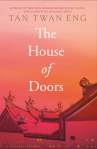 The House of Doors by Tan Twan Eng: In 1921, “Willie” Somerset Maugham and his secretary/lover, Gerald, stay with old friends Robert and Lesley Hamlyn in Penang, Malaysia. Willie’s marriage is floundering and he faces financial ruin. He needs a story that will sell and gets one when Lesley starts recounting the momentous events of 1910: volunteering at the party office of Dr Sun Yat Sen and trying to save her friend from a murder charge. Tan weaves it all into a Maugham-esque plot with sumptuous scene-setting and atmosphere.
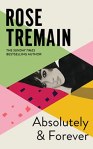 Absolutely and Forever by Rose Tremain: At age 15, Marianne falls in love. She imagines her romance with Simon as a grand adventure (and escape from her parents’ ordinariness), but his post-school life in Paris doesn’t have room for her. Much changes over the next 15 years, but never her attachment to her first love. This has the chic, convincing 1960s setting of Tessa Hadley’s work, and Marianne’s droll narration is a delight. It put me through an emotional wringer – no cheap tear-jerker but a tender depiction of love in all its forms.
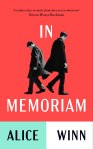 In Memoriam by Alice Winn: Heartstopper on the Western Front; swoon! Will Sidney Ellwood and Henry Gaunt both acknowledge that this is love and not just sex, as it is for so many teenage boys at their English boarding school? And will one or both survive the trenches of the First World War? Winn depicts the full horror of war, but in between there is banter, friendship and poetry. Some moments are downright jolly. This debut is obsessively researched, but Winn has a light touch with it. Engaging, thrilling, and, yes, romantic.
Nonfiction
 All My Wild Mothers by Victoria Bennett: A lovely memoir about grief and gardening, caring for an ill child and a dying parent. The book is composed of dozens of brief autobiographical, present-tense essays, each titled after a wildflower with traditional healing properties. The format realistically presents bereavement and caring as ongoing, cyclical challenges rather than one-time events. Sitting somewhere between creative nonfiction and nature essays, it’s a beautiful read for any fan of women’s life writing.
 Monsters by Claire Dederer: The question posed by this hybrid work of memoir and cultural criticism is “Are we still allowed to enjoy the art made by horrible people?” It begins, in the wake of #MeToo, by reassessing the work of film directors Roman Polanski and Woody Allen. The book is as compassionate as it is incisive. While there is plenty of outrage, there is also much nuance. Dederer’s prose is forthright and funny; lucid even when tackling thorny issues. Erudite, empathetic and engaging from start to finish.
 Womb by Leah Hazard: A wide-ranging and accessible study of the uterus, this casts a feminist eye over history and future alike. Blending medical knowledge and cultural commentary, it cannot fail to have both personal and political significance for readers of any gender. The thematic structure of the chapters also functions as a roughly chronological tour of how life with a uterus might proceed: menstruation, conception, pregnancy, labour, caesarean section, ongoing health issues, menopause. Inclusive and respectful of diversity.
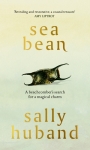 Sea Bean by Sally Huband: Stories of motherhood, the quest to find effective treatment in a patriarchal medical system, volunteer citizen science projects, and studying Shetland’s history and customs mingle in a fascinating way. Huband travels around the archipelago and further afield, finding vibrant beachcombing cultures. In many ways, this is about coming to terms with loss, and the author presents the facts about climate crisis with sombre determination. She writes with such poetic tenderness in this radiant debut memoir.
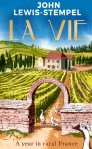 La Vie by John Lewis-Stempel: The author has written much about his Herefordshire haunts, but he’s now relocated permanently to southwest France (La Roche, in the Charente). He proudly calls himself a peasant farmer, growing what he can and bartering for much of the rest. La Vie chronicles a year in his quest to become self-sufficient. It opens one January and continues through the December, an occasional diary with recipes. It’s a peaceful, comforting read that’s attuned to the seasons and the land. Lewis-Stempel’s best book in an age.
 All of Us Together in the End by Matthew Vollmer: In 2019, Vollmer’s mother died of complications of Alzheimer’s and Parkinson’s. Months later, his father reported blinking lights in the woods near the family cemetery. Although Vollmer had left the Seventh-Day Adventist Church in college, his religious upbringing influenced his investigation, which overlapped with COVID-19. Grief, mysticism, and acceptance of the unexplained are resonant themes. An unforgettable record of “a collision with the ineffable.”
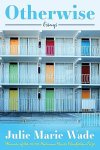 Otherwise by Julie Marie Wade: Nine intricate autobiographical essays reflect on risk, bodily autonomy, and poetry versus prose. A series of meditations composed across Wade’s thirties arranges snapshots of her growing frustration with gendered stereotypes. In particular, she interrogates her rosy childhood notions of marriage. As she explored feminism and accepted her lesbian identity—though not before leaving a man at the altar—she found ways to be “a secular humanist by day and a hopeless romantic by night.” Superb.
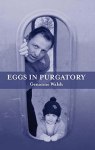 Eggs in Purgatory by Genanne Walsh: This autobiographical essay tells the story of the last few months of her father’s life. Aged 89, he lived downstairs from Walsh and her wife in San Francisco. He was quite the character: idealist, stubborn, outspoken; a former Catholic priest. Although he had no terminal conditions, he was sick of old age and its indignities and ready to exit. The task of a memoir is to fully mine the personal details of a situation but make of it something universal, and that’s just what she does here. Stunning.
Poetry
 More Sky by Joe Carrick-Varty: In this debut collection, the fact of his alcoholic father’s suicide is inescapable. The poet alternates between an intimate “you” address and third-person scenarios, auditioning coping mechanisms. His frame of reference is wide: football, rappers, Buddhist cosmology. The word “suicide” itself is repeated to the point where it becomes just a sibilant collection of syllables. The tone is often bitter, as is to be expected, but there is joy in the deft use of language.
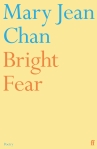 Bright Fear by Mary Jean Chan: This follow-up to Flèche takes up many of the same foundational subjects: race, family, language and sexuality. But this time, the pandemic is the lens through which all is filtered. At a time when Asian heritage merited extra suspicion, English was both a means of frank expression and a source of ambivalence. At the centre of the book, “Ars Poetica,” a multi-part collage incorporating lines from other poets, forms a kind of autobiography in verse. Chan also questions the lines between genres. Excellent.
 Lo by Melissa Crowe: This incandescent autobiographical collection delves into the reality of sexual abuse and growing up in rural poverty. Guns are insidious, used for hunting or mass shootings. Trauma lingers. “Maybe home is what gets on you and can’t / be shaken loose.” The collection is so carefully balanced in tone that it never feels bleak. In elegies and epithalamiums (poems celebrating marriage), Crowe honors family ties that bring solace. The collection has emotional range: sensuality, fear, and wonder at natural beauty.
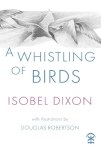 A Whistling of Birds by Isobel Dixon: I was drawn to this for its acknowledged debt to D.H. Lawrence’s Birds, Beasts and Flowers. Snakes, bees, bats and foxes are some of the creatures that scamper through the text. There are poems for marine life, fruit and wildflowers. You get a sense of the seasons turning, and the natural wonders to prize from each. Dixon’s poetry is formal yet playful, the structures and line and stanza lengths varying. There are portraits and elegies. The book is in collaboration with Scottish artist Douglas Robertson. A real gem.
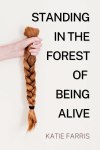 Standing in the Forest of Being Alive by Katie Farris: This debut collection addresses the symptoms and side effects of breast cancer treatment at age 36, but often in oblique or cheeky ways – it can be no mistake that “assistance” appears two lines before a mention of hemorrhoids, for instance, even though it closes an epithalamium distinguished by its gentle sibilance (Farris’s husband is Ukrainian American poet Ilya Kaminsky.) She crafts sensual love poems, and exhibits Japanese influences. (Discussed in my review essay for The Rumpus.)
 The House of the Interpreter by Lisa Kelly: Kelly is half-Danish and has single-sided deafness, and her second collection engages with questions of split identity. One section ends with the Deaf community’s outrage that the Prime Minister’s Covid briefings were not translated into BSL. Bizarre but delightful is the sequence of alliteration-rich poems about fungi, followed by a miscellany of autobiographical poems full of references to colour, language, nature and travel.
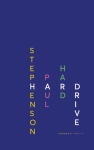 Hard Drive by Paul Stephenson: This wry, wrenching debut collection is an extended elegy for his partner, Tod Hartman, an American anthropologist who died of heart failure at 38. There’s every style, tone and structure imaginable here. Stephenson riffs on his partner’s oft-misspelled name (German for death), and writes of discovery, autopsy, sadmin and rituals. In “The Only Book I Took” he opens up Tod’s copy of Joan Didion’s The Year of Magical Thinking – which came from Wonder Book, the bookstore chain I worked at in Maryland!
Okay, twist my arm … if I had to pick my overall books of the year, I’d concur with the Times in picking The New Life. In nonfiction: Monsters. In poetry: Standing in the Forest of Being Alive.


Have you read any of my favourites? What 2023 releases do I need to catch up on right away?
Book Serendipity, October to December 2023
I call it “Book Serendipity” when two or more books that I read at the same time or in quick succession have something in common – the more bizarre, the better. This is a regular feature of mine every couple of months. Because I usually have 20–30 books on the go at once, I suppose I’m more prone to such incidents. The following are in roughly chronological order.
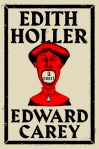
- A woman turns into a spider in Edith Holler by Edward Carey and The Human Origins of Beatrice Porter and Other Essential Ghosts by Soraya Palmer.

- Expulsion from Eden scenes (one literal, after the Masaccio painting; another more figurative by association) in Conversation Among Stones by Willie Lin and North Woods by Daniel Mason.
- Reading my second 2023 release featuring a theatre fire (after The House Is on Fire by Rachel Beanland, which I actually read last year): Edith Holler by Edward Carey.
- The protagonist cuts their foot in The Rituals by Rebecca Roberts and The Last House on Needless Street by Catriona Ward.


- On the same evening, I started two novels where the protagonist’s parents both died in a car crash: The Witches by Roald Dahl and Family Meal by Bryan Washington. This is something I encounter ALL THE TIME in fiction (versus extremely rarely in life) and it’s one of my major pet peeves. I can excuse it more in the children’s book as the orphan trope allows for adventures, but for the most part it just seems lazy to me. The author has decided they don’t want to delve into a relationship with parents at all, so they cut it out in the quickest and easiest possible way.
- A presumed honour killing in Behind You Is the Sea by Susan Muaddi Darraj and The Hundred and Ninety-Nine Steps by Michel Faber.


- A Houston, Texas setting in The Only Way Through Is Out by Suzette Mullen and Family Meal by Bryan Washington.
- Daniel Clowes, whose graphic novel Monica I was also in the middle of at the time, was mentioned in Robin Ince’s Bibliomaniac.
- The author/speaker warns the squeamish reader to look away for a paragraph in Robin Ince’s Bibliomaniac (recounting details of a gross-out horror plot) and one chapter of Daniel Mason’s North Woods.


- A mentally ill man who lives at the end of a lane in Daniel Mason’s North Woods and The Last House on Needless Street by Catriona Ward.
- Reading Last House before the Mountain by Monika Helfer and The Last House on Needless Street by Catriona Ward at the same time.
- The Daedalus myth (via Aeschylus or Brueghel, or just in general) is mentioned in Last House before the Mountain by Monika Helfer, The Ghost Orchid by Michael Longley, and Absolutely and Forever by Rose Tremain.
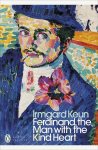
- A character goes to live with their aunt and uncle in Western Lane by Chetna Maroo and The House of Doors by Tan Twan Eng (both Booker-longlisted), but also The Woman in Black by Susan Hill, Train Dreams by Denis Johnson, and The Story Girl by L.M. Montgomery. I came across all five instances within a few days! Later I also encountered a brief mention of this in Ferdinand by Irmgard Keun. How can this situation be so uncommon in life but so common in fiction?!


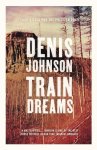

- The outdated terms “Chinaman” and “coolie” appear frequently in Train Dreams by Denis Johnson and The House of Doors by Tan Twan Eng.
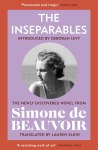
- A 15-year-old declares true love in The Inseparables by Simone de Beauvoir and Absolutely and Forever by Rose Tremain.
- A French character named Pascal in The Inseparables by Simone de Beauvoir and The Garrick Year by Margaret Drabble.

- A minor character called Mrs Biggs in Harriet Said… by Beryl Bainbridge and The House of Doors by Tan Twan Eng.
- The Chinese zither (guzheng) is mentioned in Dear Chrysanthemums by Fiona Sze-Lorrain, which I read earlier in the year, and The House of Doors by Tan Twan Eng.
- Oscar Wilde’s trial is mentioned in The House of Doors by Tan Twan Eng, as it was in The New Life by Tom Crewe, which I read earlier in the year – in both it was a cautionary case for older homosexual characters (based on real people: W. Somerset Maugham vs. John Addington Symonds) who were married to women but had a live-in male secretary generally known to be their lover. At the same time as I was reading The House of Doors, I was rereading Wilde’s De Profundis, which was written from prison.

- In Fifty Days of Solitude Doris Grumbach mentions reading Bear by Marian Engel. I read both during Novellas in November.
- Living funerals are mentioned in Ferdinand by Irmgard Keun and The Ritual Effect by Michael Norton.
- A character insists that lilac not be included in a bouquet in In the Sweep of the Bay by Cath Barton and Bright Young Women by Jessica Knoll.

- A woman has a lover named Frances in Bright Young Women by Jessica Knoll and The Cancer Journals by Audre Lorde.
- The final word of the Fanny Howe poem in Raised by Wolves (the forthcoming 50th anniversary poetry anthology from Graywolf Press) is “theophanies.” At the same time, I was reading the upcoming poetry collection Theophanies by Sarah Ghazal Ali.


- The Cancer Journals by Audre Lorde, which I’d read the month before, was a major influence on the cancer memoir All In by Caitlin Breedlove.
- Two foodie memoirs I read during our city break, A Waiter in Paris by Edward Chisholm and The Sweet Life in Paris by David Lebovitz, both likened a group of young men to a Dolce & Gabbana ad. (Chisholm initially lived at Porte des Lilas, the next Metro stop up from where we stayed in Mairie des Lilas.)
- A French slang term for penis, “verge,” is mentioned in both The Sweet Life in Paris by David Lebovitz and Learning to Drive by Katha Pollitt.


What’s the weirdest reading coincidence you’ve had lately?
The Woman in Black, Train Dreams, and Absolutely & Forever (#NovNov23)
I’ve been slow off the mark this year, mostly because instead of reading a sensible one or two novellas at a time, I’ve had 10 or 15 on the go. It might mean I’ll read more overall, but from day to day it feels like crawling through loads of books, never to finish any. Except I did finally finish these three, all of which were great reads. After my thoughts on each, I’ll ponder this week’s prompt, “What Is a Novella?”
The Woman in Black by Susan Hill (1983)
This was a reread for me and our November book club book, as well as part of my casual project to read books from my birth year. I’ve generally been underwhelmed by Hill’s ghost stories, but I found this spookier than remembered and enjoyed spotting the nods to Victorian literature and to classic ghost story tropes. (Best of all, because it was so short, everyone actually read the book and came to the discussion. All 12 group members. I can’t recall the last time that happened!)
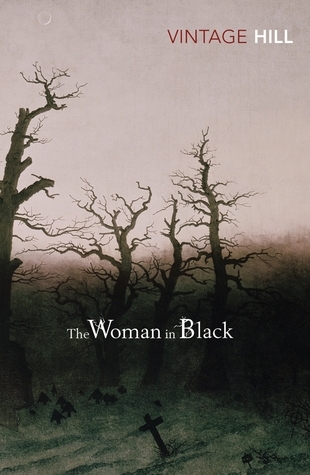 Hill keeps the setting deliberately vague, but it seems that it might be the Lincolnshire Fens in the 1930s or so. Arthur Kipps is a young lawyer tasked with attending the funeral of old Mrs Drablow and sorting through her papers. Locals don’t envy him the time spent in Eel Marsh House, and when he starts seeing a wasting-away, smallpox-pocked woman dressed in black in the churchyard, he understands why. This place harbours a malevolent ghost, and from the empty nursery with its creaking rocking chair to the marsh’s treacherous mud, Arthur fears that it’s out to get him.
The rational male narrator who insists he doesn’t believe in ghosts until he can’t deny an experience of one is a feature of the traditional ghost story à la M.R. James – and indeed, one of the chapter titles here (“Whistle and I’ll Come to You”) is a direct adaptation of a James story title. A framing story has Kipps as an older man writing the ghost story to share with his stepchildren. Some secondary characters have Dickensian names and there’s a Bleak House-esque description of a thick fog. The novel’s title must be an homage to Wilkie Collins’s sensation novel The Woman in White, with which it shares the theme of debated parentage.
A few members of our book club had seen the play or one of two film versions. Curiously, it seems like both movies alter the ending. Why, when the last four pages are such a perfect kicker? I might have dismissed the whole as a bit dull were it not for the brilliant conclusion. (Public library) [160 pages] 
Train Dreams by Denis Johnson (2002)
This is Cathy’s example of a perfect novella. I picked it up on her recommendation and read it within a few days (though you could easily do so in one sitting). Robert Grainier is a manual labourer in the American West. His body shattered by logging before he turns 40 and his spirit nearly broken by the loss of his home to a forest fire, he looks for meaning in the tragedy and a purpose to the rest of his long life. Is he being punished for participating in the attempted lynching of a Chinese worker decried as a thief? Or for not helping an injured man he came across in the woods as a teenager?
 Although Grainier might appear to be a Job-like figure, his loneliness never shades into despair, lightened by comic dialogues and the mildest of supernatural interventions. He starts a haulage business and keeps dogs. There are rumours of a wolf-girl in the area, and, convinced that his dog’s new pups are part-wolf, he teaches them to howl – his own favourite way of letting off steam.
A couple of gratuitously bleak scenes (a confession of incest and an accidental death) made me think Cormac McCarthy would be a major influence, but the tone is lighter than that. Richard Brautigan came to mind, and I imagine many contemporary writers have found inspiration here: Carys Davies, Ash Davidson, Donald Ray Pollock, even Patrick deWitt.
Gritty yet light, this presents life as an arbitrary accumulation of error and incident, longing (“Pulchritude!”) and effort. Grainier is an effective Everyman, such that his story feels not just all-American but universal. (Free from a neighbour) [116 pages]
Absolutely and Forever by Rose Tremain (2023)
I had lost track of Tremain’s career a bit; I find her work hit and miss – perhaps too varied, though judging by her last five novels, she seems to have settled on historical fiction as her wheelhouse. I wasn’t sure what to expect from this latest book, but seeing that it was novella length, I was willing to give it a try. Tremain follows her heroine, Marianne Clifford, from the 1950s up to perhaps 1970. At age 15, she falls hopelessly in love with an 18-year-old aspiring writer, Simon Hurst, and loses her virginity in the back of his pale blue Morris Minor. She feels grown-up and sophisticated, and imagines their romance as a grand adventure that will whisk her away from her parents’ stultifying ordinariness –
when I thought about my future as Mrs Simon Hurst (riding a camel in Egypt, floating along in a gondola in Venice, driving through the Grand Canyon in an open-topped Cadillac, watching elephants drink from a waterhole in Africa) and about Mummy’s future (in the red-brick house in Berkshire with the shivery birch tree and the two white columns, playing Scrabble with Daddy and shopping at Bartlett’s of Newbury), I could see that my life was going to be more interesting than hers and that she might already be envious
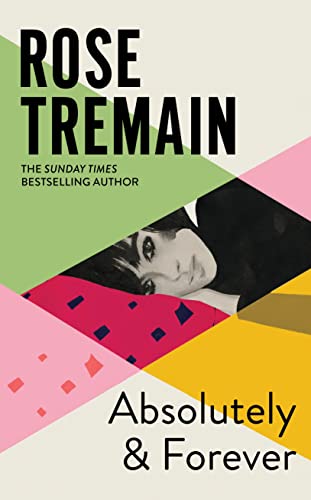 – but his new post-school life in Paris doesn’t have room for her. As she moves to London and trains for secretarial work, Marianne is bolstered by friendships with plain-speaking Scot Petronella (“Pet”) and Hugo Forster-Pellisier, her surfing and ping-pong partner on their parents’ Cornwall getaways. Forasmuch as her life changes over the next 15 years or so – taking on a traditional wife and homemaker role; her parents quietly declining – her attachment to her first love never falters.
This has the chic and convincing 1960s setting of Tessa Hadley’s work. Marianne’s narration is a delight, droll but not as blasé as she tries to appear. Tremain could have easily fallen into the trap of making her purely naïve (in the moment) or nostalgic (looking back), but instead she’s rendered her voice knowing yet compassionate, and made her a real wit (“I thought, Everything in Paris looks as if it’s practising the waltz, whereas quite a lot of things in London … appear as if they’ve just come out of hospital after a leg operation”). Pet is very funny, too. And it’s always fun for me to have nearby locations: Newbury, Reading, Marlborough. In imagining a different life for herself, Marianne resists repeating her mother’s mistakes and coincides with the rising feminist movement. There are two characters named Marianne, and two named Simon; the revelations about these doubles are breathtaking.
This really put me through an emotional wringer. It’s no cheap tear-jerker but a tender depiction of love in all its forms. I think, with Academy Street by Mary Costello, it may be my near-perfect novella. (Public library) [181 pages] 
Novellas in November, Week 2: What Is a Novella?
- Ponder the definition, list favourites, or choose ones you think best capture the ‘spirit’ of a novella.
A novella is defined by its length in words, but because that’s often difficult for readers to gauge, for this challenge we go by the number of pages instead, making 200 an absolute maximum – though some books with wide margins and spacing may top that but still seem slight enough to count (while those with tiny type can feel much longer than 160–200 pages).
Thematically, a novella is said to be concentrated on one character or small set of characters, with one plotline rather than several. This week I’ve been musing on a theory: a novella is to a novel what a memoir is to an autobiography. That is, if the latter is a comprehensive and often chronological story, the former focuses on a particular time or experience and shapes a narrative around it. What it potentially sacrifices in scope it makes up for with intensity.
But as soon as I’d formulated this hypothesis to myself, I started thinking of exceptions on either side. Train Dreams, like Silk by Alessandro Baricco and A Whole Life by Robert Seethaler, conveys a pretty complete life story. And no doubt there are many full-length novels that are almost claustrophobic in their adherence to one point of view and timeline.
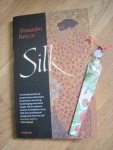
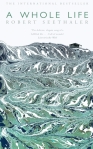
The simplest way I’d put it is that a novella is a book that doesn’t outstay its welcome. I think it must be easier to write a doorstopper than a novella. Once you’ve arrived at a voice and a style, just keeping going can become a question of habit. But to continue paring back to get at the essence of a character and a situation – that takes real discipline. My other criterion would be that it has to portray the full range of human emotion, even if within a limited set of circumstances. Based on that, Train Dreams and Absolutely and Forever both triumph.
A few classic novellas that do this particularly well (links to my reviews):
Giovanni’s Room by James Baldwin
A Month in the Country by J. L. Carr
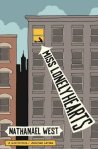
Miss Lonelyhearts by Nathanael West
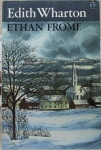
Ethan Frome by Edith Wharton


A few more contemporary novellas that do this particularly well (links to my reviews):
A Lie Someone Told You about Yourself by Peter Ho Davies
Our Souls at Night by Kent Haruf
Foster by Claire Keegan
A Feather on the Breath of God by Sigrid Nunez


Young Writer of the Year Award 2020: Shortlist Reviews and Predictions
Being on the shadow panel for the Sunday Times Young Writer of the Year Award was a bookish highlight of 2017 for me. I’m pleased for this year’s panelists, especially blogging friend Marina Sofia, to have had the same opportunity, and I look forward to hearing who they choose as their shadow panel winner on December 3rd and then attending the virtual prize ceremony on December 10th.

At the time of the shortlisting, I happened to have already read Exciting Times by Naoise Dolan and was halfway through Catherine Cho’s memoir Inferno. I got the poetry collection Surge by Jay Bernard out from the library to have another go (after DNFing it last year), and the kind folk of FMcM Associates sent me the other two shortlisted books, a poetry collection and a novel, so that I could follow along with the shadow panel’s deliberations. Here are my brief thoughts on all five nominees.
Surge by Jay Bernard (2019)
 As a writer-in-residence at the George Padmore Institute, a research centre for radical Black history, in 2016, Bernard investigated the New Cross Massacre, a fire that killed 13 young people in 1981. In 2017, the tragedy found a horrific echo in the Grenfell Tower fire, which left 72 dead. This debut poetry collection bridges that quarter-century through protest poems from various perspectives, giving voice to victims and their family members and exploring the interplay between race, sexuality and violence. Patois comes in at several points, most notably in “Songbook.” I especially liked “Peg” and “Pride,” and the indictment of government indifference in “Blank”: “It-has-nothing-to-do-with-us today issued this statement: / those involved have defended their actions and been … acquitted / retired with full pay”. On the whole, I found it difficult to fully engage with this collection, but I am reliably informed that Bernard’s protest poems have more impact when performed aloud.
Readalikes: In Nearby Bushes by Kei Miller, A Portable Paradise by Roger Robinson and Don’t Call Us Dead by Danez Smith
My rating:
Inferno by Catherine Cho (2020)
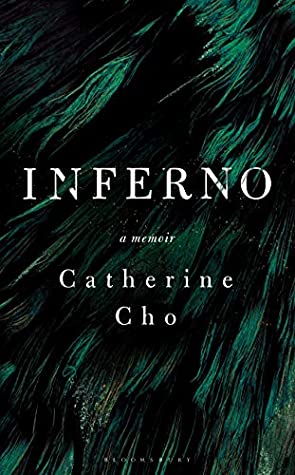 Cho, a Korean American literary agent based in London, experienced stress-induced postpartum psychosis after the birth of her son. She and her husband had returned to the USA when Cato was two months old to introduce him to friends and family, ending with a big Korean 100-day celebration at her in-laws’ home. Almost as soon as they got to her in-laws’, though, she started acting strangely: she was convinced cameras were watching their every move, and Cato’s eyes were replaced with “devil’s eyes.” She insisted they leave for a hotel, but soon she would be in a hospital emergency room, followed by a mental health ward. Cho alternates between her time in the mental hospital and a rundown of the rest of her life before the breakdown, weaving in her family history and Korean sayings and legends. Twelve days: That was the length of her hospitalization in early 2018, but Cho so painstakingly depicts her mindset that readers are fully immersed in an open-ended purgatory. She captures extremes of suffering and joy in this vivid account. (Reviewed in full here.)
Readalikes: An Angel at My Table by Janet Frame and Dear Scarlet by Teresa Wong
My rating:
Exciting Times by Naoise Dolan (2020)
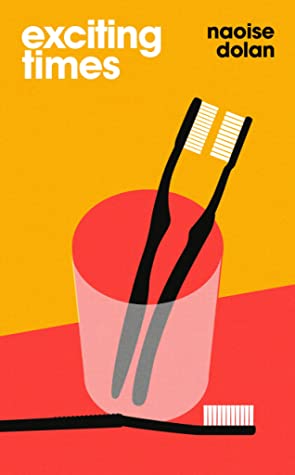 At 22, Ava leaves Dublin to teach English as a foreign language to wealthy preteens in Hong Kong and soon comes to a convenient arrangement with her aloof banker friend, Julian, who lets her live with him without paying rent and buys her whatever she wants. They have sex, yes, but he’s not her boyfriend per se, so when he’s transferred to London for six months, there’s no worry about hard feelings when her new friendship with Edith Zhang turns romantic. It gets a little more complicated, though, when Julian returns and she has to explain these relationships to her two partners and to herself. On the face of it, this doesn’t sound like it would be an interesting plot, and the hook-up culture couldn’t be more foreign to me. But with Ava Dolan has created a funny, deadpan voice that carries the entire novel. I loved the psychological insight, the playfulness with language, and the zingy one-liners (“I wondered if Victoria was a real person or three Mitford sisters in a long coat”). (Reviewed in full here.)
Readalikes: Besotted by Melissa Duclos and Conversations with Friends by Sally Rooney
My rating:
Tongues of Fire by Seán Hewitt (2020)
 In the title poem, the arboreal fungus from the cover serves as “a bright, ancestral messenger // bursting through from one realm to another” like “the cones of God, the Pentecostal flame”. This debut collection is alive with striking imagery that draws links between the natural and the supernatural. Sex and grief, two major themes, are silhouetted against the backdrop of nature. Fields and forests are loci of meditation and epiphany, but also of clandestine encounters between men: “I came back often, // year on year, kneeling and being knelt for / in acts of secret worship, and now / each woodland smells quietly of sex”. Hewitt recalls travels to Berlin and Sweden, and charts his father’s rapid decline and death from an advanced cancer. A central section of translations of the middle-Irish legend “Buile Suibhne” is less memorable than the gorgeous portraits of flora and fauna and the moving words dedicated to the poet’s father: “You are not leaving, I know, // but shifting into image – my head / already is haunted with you” and “In this world, I believe, / there is nothing lost, only translated”.
Readalikes: Physical by Andrew McMillan and If All the World and Love Were Young by Stephen Sexton
My rating:
Nightingale by Marina Kemp (2020)
 Marguerite Demers, a 24-year-old nurse, has escaped Paris to be a live-in carer for elderly Jérôme Lanvier in southern France. From the start, she senses she’s out of place here – “She felt, as always in this village, that she was being observed”. She strikes up a friendship with a fellow outsider, an Iranian émigrée named Suki, who, in this story set in 2002, stands out for wearing a hijab. Everyone knows everyone here, and everyone has history with everyone else – flirtations, feuds, affairs, and more. Brigitte Brochon, unhappily married to a local farmer, predicts Marguerite will be just like the previous nurses who failed to hack it in service to the curmudgeonly Monsieur Lanvier. But Marguerite sticks up for herself and, though plagued by traumatic memories, makes her own bid for happiness. The novel deals sensitively with topics like bisexuality, euthanasia, and family estrangement, but the French provincial setting and fairly melodramatic plot struck me as old-fashioned. Still, the writing is strong enough to keep an eye out for what Kemp writes next. (U.S. title: Marguerite.)
Readalikes: French-set novels by Joanne Harris and Rose Tremain; The Hoarder by Jess Kidd
My rating:
General thoughts:
After last year’s unexpected winner – Raymond Antrobus for his poetry collection The Perseverance – I would have said that it’s time for a novel by a woman to win. However, I feel like a Dolan win would be too much of a repeat of 2017’s win (for Sally Rooney), and Kemp’s debut novel isn’t quite up to scratch. Much as I enjoyed Inferno, I can’t see it winning over these judges (three of whom are novelists: Kit de Waal, Sebastian Faulks and Tessa Hadley), though it would be suited to the Wellcome Book Prize if that comes back in 2021. So, to my surprise, I think it’s going to be another year for poetry.
I’ve been following the shadow panel’s thoughts via Marina’s blog and the others’ Instagram accounts and it looks like they are united in their admiration for the poetry collections, particularly the Hewitt. That would be my preference, too: I respond better to theme and style in poetry (Hewitt) than to voice and message (Bernard). However, I think that in 2020 the Times may try to trade its rather fusty image for something more woke, bearing in mind the Black Lives Matter significance and the unprecedented presence of a nonbinary author.
My predictions:
Shadow panel winner: Tongues of Fire by Seán Hewitt
Official winner: Surge by Jay Bernard
Have you read anything from this year’s shortlist?
September Releases: Gyasi, McKay, Sheldrake, Tremain, Woolfson
September is always a big month in the publishing world, but even more so this year because of all the titles delayed from the spring and summer – apparently 600 books were published in the first week of September in the UK alone.
Still, I only ended up with my usual, manageable five new releases (with a few more on the way from the library). I read a beautiful novel about addiction and religion in contemporary America, speculative fiction about communication with wildlife in mid-pandemic (!) Australia, everything you ever wanted to know about fungi, historical fiction about outsiders in England and Borneo, and a study of our broken relationship with other animals.
Two of these are from my most anticipated list for the second half of 2020. Four of the five can be linked by the tenet that humans are only one species among many others necessary to life on this Earth, and not in some way above and beyond.
Transcendent Kingdom by Yaa Gyasi
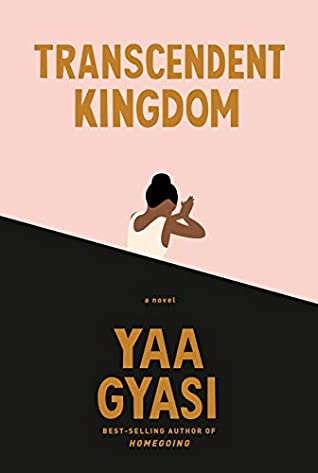 This follow-up to Gyasi’s dazzling, centuries-spanning linked story collection, Homegoing, won’t be out in the UK until March 2021, but I couldn’t resist reading an e-copy of the American edition (Knopf) from Edelweiss. It’s altogether a more subdued and subtle book, but its treatment of themes of addiction, grief, racism and religion is so spot on that it packs a punch. Gifty is a PhD student at Stanford, researching pleasure and reward circuits in the mouse brain. She gets mice hooked on a sugary drink and then performs experiments to see if she can turn off their compulsion to keep pressing a lever for more. Sometimes when they press the lever they get an electric shock. Certain mice give up; others never will. Why?
People who know Gifty well assume she chose her field because of a personal tragedy. When she was 10, her 16-year-old brother, Nana, a high school basketball star in this Ghanaian-American family’s Alabama town, died of an opiate overdose. He’d gotten addicted to prescription drugs after a sports injury. At one level, Gifty acknowledges she is trying to atone for her brother’s death, but she won’t see it in those terms. An intensely private person, she shoulders almost impossible burdens of grief and responsibility for her mother, who has plunged into depression and, when she comes to live with Gifty, spends all her time in bed.
The most compelling aspect of the novel for me was Gifty’s attitude towards the religion of her childhood. Though they were the only black family at their Pentecostal church, she was a model believer, writing prayers in her journal, memorizing scriptures, and never doubting that everything happens for a reason. Nana’s death shattered it all. Though she now looks to science for answers, she misses the certainty she once had: that she was saved, that humans are special, that someone was looking out for her and her family, that it all mattered. I highlighted dozens of passages, but it’s possible the book won’t mean quite as much to readers for whom there’s no personal resonance. The complex mother–daughter relationship is an asset, and musings on love and risk are tenderly expressed. I wanted a more climactic conclusion to take this into 5-star territory, but I’ve still added it to my Best of 2020 shelf.
Favorite lines:
the species Homo sapiens, the most complex animal, [is] the only animal who believed he had transcended his Kingdom, as one of my high school biology teachers used to say.
At times, my life now feels so at odds with the religious teachings of my childhood that I wonder what the little girl I once was would think of the woman I’ve become … I am looking for new names for old feelings. My soul is still my soul, even if I rarely call it that.
the more I do this work the more I believe in a kind of holiness in our connection to everything on Earth. Holy is the mouse.
My rating:
I read an advanced e-copy via Edelweiss.
The Animals in That Country by Laura Jean McKay
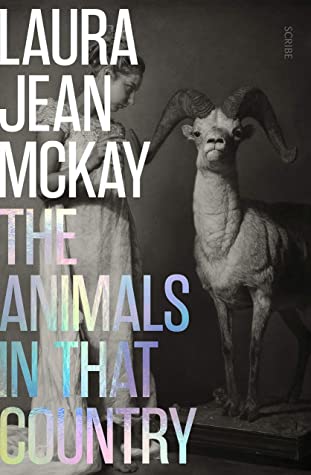 McKay has a PhD in literary animal studies and serves as an animal expert and presenter on Australia’s ABC radio show Animal Sound Safari. Pair her academic background with the fact that this shares a title with a Margaret Atwood poetry collection and you’ll have some idea of what to expect here: mysterious but mostly believable speculative fiction that hinges on human communication with animals.
Jean Bennett isn’t your average grandma: a wise-cracking alcoholic, she drives the tourist train through the Australian wildlife park her daughter-in-law manages but wishes she could be a fully fledged ranger. Her ex-husband, Graham, left her and went down south, and eventually their only son Lee did the same. Now all Jean has left is Kim, her six-year-old granddaughter. Jean entertains Kim by imagining voices for the park’s animals. This no longer seems like a game, though, when news filters through of the “zooflu,” which has hit epidemic levels and has as a main symptom the ability to understand what animals say.
When Kim is kidnapped, Jean steals a camper van and takes Sue the dingo along to help her find her granddaughter. “There’s a new normal now,” a bus driver tells her. “And around here, not wearing a mask means you’ve gone animal. I’d put on my protective if I was you. Put that mutt in a cage.” It was uncanny reading this in the midst of a pandemic, but the specifics of McKay’s novel are hard to grasp. The animal language isn’t audible, necessarily, but a combination of smells, noises and body language. For a long time, they seem like pure nonsense, but gradually they resemble a sort of rough poetry. Here’s one example from Sue:
My front end
takes the food
quality.
Muzzle
for the Queen
(Yesterday).
(Sue usually calls Jean “Queen” or “Mother,” showing that she respects her authority, and “Yesterday” is frequently used to suggest a primitive sense of the past or of an older person.)
As entertaining a protagonist as Jean is, I lost interest in her road trip. If you focus on the journey into the wilderness and don’t mind a sudden ending, you may find this a worthwhile heir to Hollow Kingdom by Kira Jane Buxton and The Road by Cormac McCarthy.
My rating:
I read a proof copy for a Nudge review, but it’s never shown up on their website.
Entangled Life: How Fungi Make Our Worlds, Change Our Minds, and Shape Our Futures by Merlin Sheldrake
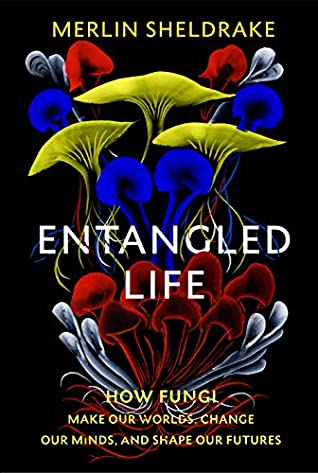 I first heard about Sheldrake through Robert Macfarlane’s Underland. He struck me as a mad genius – an impression that was only strengthened by reading his detailed, enthusiastic book about fungi. Sheldrake researches fungal life in the tropical forests of Panama, accompanies truffle hunters in Italy, takes part in a clinical study on the effects of LSD (derived from a fungus), observes lichens off the coast of British Columbia, and attends a conference in Oregon on Radical Mycology. But more than a travel memoir, this is a work of science – there are over 100 pages devoted to notes, bibliography and index.
Basic information you’ll soon learn: mushrooms are only the fruiting bodies of fungi; under the ground is the material bulk, the mycelium, a sprawling network of hyphae. In what’s sometimes called the “Wood Wide Web,” fungal networks link the trees in a forest, and join up with plants, such as in lichens. “I feel a … sense of vertigo when I think about the complexity of mycorrhizal relationships – kilometers of entangled life – jostling beneath my feet,” Sheldrake confesses. He gives examples of fungi navigating and solving problems – what of our concept of intelligence if a creature without a brain can do such things?
Fungi are very adaptable to extreme conditions. Research is underway to grow edible mushrooms on some of our most troublesome waste, such as used diapers (nappies) and cigarette butts. And, of course, for millennia we’ve relied on certain fungi – yeasts – to create products like bread and beer. Sheldrake is a very hands-on writer: When he wants to know something, he does it, whether that’s scrumping Isaac Newton’s apples in Cambridge and fermenting the juice into cider at home or growing mushrooms on a copy of this very book.

During the month I was reading this, I felt like I kept coming across references to fungi. (I even had a patch of ringworm!)

It’s a perspective-altering text, but one that requires solid concentration. I’ll confess that at times it went over my head and I wished for a glossary and diagrams. A greater than average interest in biology and/or botany would thus be a boon to a potential reader. But if you can keep up, the book will elicit many a cry of “wow!” and “what?!” I kept launching “did you know?” questions at my husband, especially about the zombie fungi that parasitize insects. What a strange and wonderful world.
Favorite lines: “Paying more attention to animals than plants contributes to humans’ plant-blindness. Paying more attention to plants than fungi makes us fungus-blind.”
My rating:
My thanks to Bodley Head for the free copy for review.
Islands of Mercy by Rose Tremain
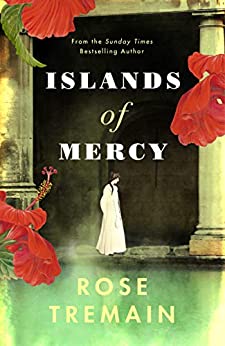 I read this back in June to prepare for writing a profile of Tremain for a forthcoming issue of Bookmarks magazine. Here’s the summary I wrote: “In Bath, England in 1865, 24-year-old nurse Jane Adeane is nicknamed ‘The Angel of the Baths’ for her healing touch. If she marries Dr. Valentine Ross, a colleague of her surgeon father, she can earn respectability – but will have to hide her love for Julietta, a married woman. Meanwhile, Dr. Ross’s brother, Edmund, a naturalist following in the footsteps of Alfred Russel Wallace, has journeyed to Borneo. Ill with malaria, he is taken in by British eccentric Sir Ralph Savage, a lover of native men and benevolent local rajah who funds infrastructure projects like a paved road and a hospital. Exiled or inwardly tortured for loving the wrong people, Tremain’s characters search for moments of wonder and comfort – whether those come in a primitive hut in the Malay Archipelago or in a cozy tearoom in Bath.”
It’s a slightly odd title, but tells you a lot about what Tremain is doing in this 14th novel. Often at the mercy of forces internal and external, her outcast characters look for places where they can find rest and refuge after a time of suffering. Will they, in turn, extend mercy? The split perspective and the focus on people who have to hide their sexuality are most similar to Sacred Country. The Victorian tip of the hat is mostly directed, I think, to George Eliot; of recent work, I was reminded of The Doll Factory and The Essex Serpent. I especially liked Jane’s painter aunt, Emmeline, and Clorinda, the Irish woman whose opening of a tearoom sets the plot going. The settings are surprising and vivid, and if Tremain doesn’t quite bring them and their story lines together seamlessly, she is still to be applauded for her ambition. This is probably my joint favorite of her novels that I’ve read so far, with The Road Home.
Favorite lines:
We must be unconventional in our joys and find them wherever we can.
life, so often so cruel in the way it thrust the human soul into prisons from which there seemed to be no escape, could sometimes place it athwart an open door.
My rating:
I read an advanced e-copy via NetGalley.
Between Light and Storm: How We Live with Other Species by Esther Woolfson
 If you’ve read Woolfson’s Corvus, you’ve already met Chicken, an orphaned rook she raised. For over 31 years, Chicken was a constant presence in her home. The recently departed bird is the dedicatee of her new book, feted as “Colleague, companion, friend.” (No mere pet.) Relationships with these creatures with whom she shared her life led her to think differently about how we as humans conceive of the animal world in general. “If I had ever believed humans to be the only ones to live profound and interconnected lives, I couldn’t any more. … If we’re the gods now, shouldn’t we be better than we are?” From her introduction, it’s clear that her sympathy toward the more-than-human world extends even to spiders, and her language throughout – using words like “who” and “his” in reference to animals, rather than “that” or “its” – reinforces the view that all species are equally valuable.
Or, at least, should be. But our attitudes are fundamentally distorted, Woolfson believes, and have been since the days of Aristotle (whose Ladder of Nature is an origin of the ideas that nature is there for man to use) and the Old Testament writers (one of the two creation accounts in Genesis established the idea of “dominion”). From cave paintings to animal sacrifice, intensive farming to fur coats, taxidermy to whaling, she surveys what others have thought and said about how animals are, or should be, perceived. There was more of an academic tone to this book than I expected, and in early chapters I found too much overlap with other works I’ve read about deep time (Time Song, Surfacing, Underland again!).
I most appreciated the fragments of nature writing and memoir and would have liked more in the way of personal reflection. Woolfson’s perspective – as a Jewish woman in Scotland – is quite interesting. She is clearly troubled by how humans exploit animals, but mostly recounts others’ reasoning rather than coming to conclusions of her own. (Though there is a brilliant takedown of the gender politics of Watership Down.) It’s a book that demands more time and attention than I was able to give just now. As I only skimmed it, I’m going to refrain from assigning a rating and will pass this on to my husband and return to it one day. [I do wish the title, on its own (subtitle aside), was more indicative of the contents.]
My thanks to Granta for the free copy for review.
Which of those 600+ September releases can you recommend?
Book Serendipity, April‒Early July
I call it serendipitous when two or more books that I read at the same time or in quick succession have something pretty bizarre in common. Because I have so many books on the go at once (usually around 20), I suppose I’m more prone to such incidents than some. I also list these occasional reading coincidences on Twitter. The following are in rough chronological order. (January to March appeared in this post.)
- Characters named Sonny in Pew by Catherine Lacey, My Father’s Wake by Kevin Toolis, and Sacred Country by Rose Tremain.
- A double dose via Greenery via Tim Dee – while reading it I was also reading Other People’s Countries by Patrick McGuinness, whom he visits in Belgium; and A Cold Spring by Elizabeth Bishop, referenced in a footnote.


- A red thread is worn as a bracelet for its emotional or spiritual significance in The Book of Longings by Sue Monk Kidd and Plan B by Anne Lamott.
- The Library of Alexandria features in Footprints by David Farrier and The Book of Longings by Sue Monk Kidd.
- The Artist’s Way is mentioned in At Hawthorn Time by Melissa Harrison and Traveling Mercies by Anne Lamott.
- Characters sleep in a church in Pew by Catherine Lacey and Abide With Me by Elizabeth Strout. (And both novels have characters named Hilda.)


- Coins being flung away among some trees in In the Springtime of the Year by Susan Hill and The Book of Longings by Sue Monk Kidd (literally the biblical 30 pieces of silver in the Kidd, which is then used as a metaphor in the Hill).
- Rabbit-breeding projects in When the Lights Go Out by Carys Bray and Parable of the Sower by Octavia E. Butler.


- Mentions of the Great Barrier Reef in When the Lights Go Out by Carys Bray and Footprints by David Farrier.
- The same very specific fact – that Seamus Heaney’s last words, in a text to his wife, were “Noli timere” – was mentioned in Curlew Moon by Mary Colwell and Greenery by Tim Dee.
- Klondike ice cream bars appeared in both Small Victories by Anne Lamott and The Fixed Stars by Molly Wizenberg.

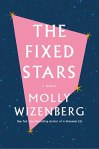
- The metaphor of a rising flood only the parent or the child will survive is used in both Exit West by Mohsin Hamid and What We Carry by Maya Lang.
- The necessity of turning right to save oneself in a concentration camp setting is mentioned in both Man’s Search for Meaning by Viktor Frankl and Fugitive Pieces by Anne Michaels.
- An English child is raised in North Africa in Oleander, Jacaranda by Penelope Lively and The Child in Time by Ian McEwan.
- The Bristol Stool Chart appeared in both Gulp by Mary Roach and The Bad Doctor by Ian Williams.


- A Greek island setting in both Exit West by Mohsin Hamid and Fugitive Pieces by Anne Michaels (plus, earlier, in A Theatre for Dreamers by Polly Samson).
- Both Writers & Lovers by Lily King and Mother: A Memoir by Nicholas Royle mention Talking Heads within the first 20 pages.
- A trip to North Berwick in the early pages of Mother: A Memoir by Nicholas Royle, and hunting for cowrie shells on the beach – so familiar from Evie Wyld’s The Bass Rock, read the previous month. (Later, more collecting of cowrie shells in Oleander, Jacaranda by Penelope Lively.)
- Children’s authors are main characters in The Crow Road by Iain Banks and The Child in Time by Ian McEwan.
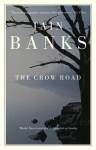

- A character is killed by a lightning strike in The Crow Road by Iain Banks and Writers & Lovers by Lily King.
- Characters named Ash in The Crow Road by Iain Banks and The Fixed Stars by Molly Wizenberg.
 A brother steals the main character’s object of affection in The Crow Road by Iain Banks and Sacred Country by Rose Tremain.
- A minor character in Parable of the Sower by Octavia E. Butler is called Richard Rohr … meanwhile, I was reading a book by Richard Rohr, The Universal Christ.
- A maternity ward setting in The Pull of the Stars by Emma Donoghue and The Bell in the Lake by Lars Mytting.
- A love triangle is a central element in Writers & Lovers by Lily King and The Bell in the Lake by Lars Mytting.


- Reading a book by a Galloway (The Trick Is to Keep Breathing by Janice Galloway) and a book about Galloway (Native: Life in a Vanishing Landscape by Patrick Laurie) simultaneously.
- Attending college in L.A. in The Vanishing Half by Brit Bennett and Dreams from My Father by Barack Obama.
- Two books that reference the same Darwin quote: Into the Tangled Bank by Lev Parikian, and “The Entangled Bank” is the title of the final poem in Red Gloves by Rebecca Watts.


- Characters with the surname Savage in The Box Garden by Carol Shields and Islands of Mercy by Rose Tremain.
- A character is taught how to eat oysters in The Vanishing Half by Brit Bennett and Kitchen Confidential by Anthony Bourdain.
- A Louisiana setting in The Vanishing Half by Brit Bennett and Property by Valerie Martin.
- Characters named Stella in The Vanishing Half by Brit Bennett and The Group by Lara Feigel.


- The last line of the book has a character saying “Come in” in Americanah by Chimamanda Ngozi Adichie and Ankomst by Gøhril Gabrielsen.
- Currently reading four books with mixed-race narrators: (Black/white) The Girl Who Fell from the Sky by Heidi Durrow, Dreams from My Father by Barack Obama, Memorial Drive by Natasha Trethewey; and (Japanese/white) My Year of Meats by Ruth Ozeki.
- Currently reading two novels in which a pair of orphaned sisters are taken in by relatives (Deerbrook by Harriet Martineau and Rise and Shine by Anna Quindlen). Plus two more novels with orphan characters: The Girl Who Fell from the Sky and My Year of Meats.
-
- In two of these four (not telling which, though you can safely assume it’s not the Victorian novel!), they are orphans because both parents were killed in a car accident. I feel like this is a fictional setup that I encounter all the time (cf. All the Beautiful Girls, The Monsters of Templeton, Saint Maybe) that can’t be that common in real life?
-


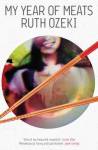
- Vassar as an alma mater in Kitchen Confidential by Anthony Bourdain and The Group by Mary McCarthy.
- Punahou School (Honolulu, Hawaii) is the author’s alma mater in The Noonday Demon by Kathleen Norris and Dreams from My Father by Barack Obama.
 Bookish Beck = Rebecca Foster. American transplant to England. Freelance proofreader and book reviewer.
 Bookish Beck