Book Serendipity, Mid-June through August
I call it “Book Serendipity” when two or more books that I read at the same time or in quick succession have something in common – the more bizarre, the better. This is a regular feature of mine every couple of months. Because I usually have 20–30 books on the go at once, I suppose I’m more prone to such incidents. People frequently ask how I remember all of these coincidences. The answer is: I jot them down on scraps of paper or input them immediately into a file on my PC desktop; otherwise, they would flit away!
The following are in roughly chronological order.
- A description of the Y-shaped autopsy scar on a corpse in Pet Sematary by Stephen King and A Truce that Is Not Peace by Miriam Toews.
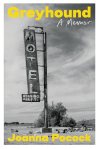
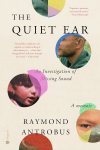
- Charlie Chaplin’s real-life persona/behaviour is mentioned in The Quiet Ear by Raymond Antrobus and Greyhound by Joanna Pocock.
- The manipulative/performative nature of worship leading is discussed in Don’t Forget We’re Here Forever by Lamorna Ash and Jarred Johnson’s essay in the anthology Queer Communion: Religion in Appalachia. I read one scene right after the other!
- A discussion of the religious impulse to celibacy in Don’t Forget We’re Here Forever by Lamorna Ash and The Dry Season by Melissa Febos.
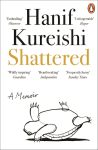
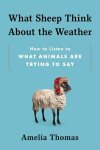
- Hanif Kureishi has a dog named Cairo in Shattered; Amelia Thomas has a son by the same name in What Sheep Think About the Weather.
- A pilgrimage to Virginia Woolf’s home in The Dry Season by Melissa Febos and Writing Creativity and Soul by Sue Monk Kidd.
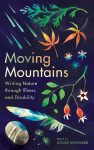
- Water – Air – Earth divisions in the Nature Matters (ed. Mona Arshi and Karen McCarthy Woolf) and Moving Mountains (ed. Louise Kenward) anthologies.
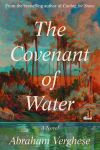 The fact that humans have two ears and one mouth and so should listen more than they talk is mentioned in What Sheep Think about the Weather by Amelia Thomas and The Covenant of Water by Abraham Verghese.
- Inappropriate sexual comments made to female bar staff in The Most by Jessica Anthony and Isobel Anderson’s essay in the Moving Mountains (ed. Louise Kenward) anthology.
- Charlie Parker is mentioned in The Most by Jessica Anthony and The Quiet Ear by Raymond Antrobus.
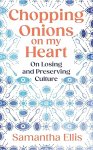
- The metaphor of an ark for all the elements that connect one to a language and culture was used in Chopping Onions on My Heart by Samantha Ellis, which I read earlier in the year, and then again in The Quiet Ear by Raymond Antrobus.
- A scene of first meeting their African American wife (one of the partners being a poet) and burning a list of false beliefs in The Dry Season by Melissa Febos and The Quiet Ear by Raymond Antrobus.
- The Kafka quote “a book must be the axe for the frozen sea inside us” appears in Shattered by Hanif Kureishi and Writing Creativity and Soul by Sue Monk Kidd. They also both quote Dorothea Brande on writing.
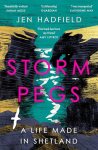
- The simmer dim (long summer light) in Shetland is mentioned in Storm Pegs by Jen Hadfield and Sally Huband’s piece in the Moving Mountains (ed. Louise Kenward) anthology (not surprising as they both live in Shetland!).
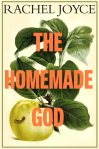
- A restaurant applauds a proposal or the news of an engagement in The Homemade God by Rachel Joyce and Likeness by Samsun Knight.
- Noticing that someone ‘isn’t there’ (i.e., their attention is elsewhere) in Woodworking by Emily St. James and Palaver by Bryan Washington.
- I was reading Leaving Atlanta by Tayari Jones and Leaving Church by Barbara Brown Taylor – which involves her literally leaving Atlanta to be the pastor of a country church – at the same time. (I was also reading Leave the World Behind by Rumaan Alam.)
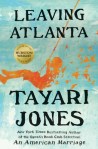
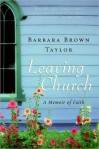
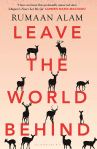
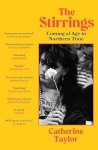
- A mention of an adolescent girl wearing a two-piece swimsuit for the first time in Leave the World Behind by Rumaan Alam, The Summer I Turned Pretty by Jenny Han, and The Stirrings by Catherine Taylor.
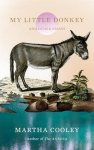
- A discussion of John Keats’s concept of negative capability in My Little Donkey by Martha Cooley and What Sheep Think About the Weather by Amelia Thomas.
- A mention of JonBenét Ramsey in Leave the World Behind by Rumaan Alam and the new introduction to Leaving Atlanta by Tayari Jones.
- A character drowns in a ditch full of water in Leaving Atlanta by Tayari Jones and The Covenant of Water by Abraham Verghese.
 A girl dares to question her grandmother for talking down the girl’s mother (i.e., the grandmother’s daughter-in-law) in Cekpa by Leah Altman and Leaving Atlanta by Tayari Jones.
- A woman who’s dying of stomach cancer in The Covenant of Water by Abraham Verghese and Book of Exemplary Women by Diana Xin.
- A woman’s genitals are referred to as the “mons” in Leave the World Behind by Rumaan Alam and The Covenant of Water by Abraham Verghese.
- A girl doesn’t like her mother asking her to share her writing with grown-ups in People with No Charisma by Jente Posthuma and one story of Book of Exemplary Women by Diana Xin.
- A girl is not allowed to walk home alone from school because of a serial killer at work in the area, and is unprepared for her period so lines her underwear with toilet paper instead in Leaving Atlanta by Tayari Jones and The Stirrings by Catherine Taylor.
 When I interviewed Amy Gerstler about her poetry collection Is This My Final Form?, she quoted a Walt Whitman passage about animals. I found the same passage in What Sheep Think About the Weather by Amelia Thomas.
- A character named Stefan in The Dime Museum by Joyce Hinnefeld and Palaver by Bryan Washington.
- A father who is a bad painter in The Dime Museum by Joyce Hinnefeld and The Homemade God by Rachel Joyce.
- The goddess Minerva is mentioned in The Dime Museum by Joyce Hinnefeld and The Stirrings by Catherine Taylor.
- A woman finds lots of shed hair on her pillow in In Late Summer by Magdalena Blažević and The Dig by John Preston.
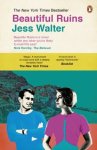 An Italian man who only uses the present tense when speaking in English in The Homemade God by Rachel Joyce and Beautiful Ruins by Jess Walter.
- The narrator ponders whether she would make a good corpse in People with No Charisma by Jente Posthuma and Terminal Surreal by Martha Silano. The former concludes that she would, while the latter struggles to lie still during savasana (“Corpse Pose”) in yoga – ironic because she has terminal ALS.
- Harry the cat in The Wedding People by Alison Espach; Henry the cat in Calls May Be Recorded by Katharina Volckmer.
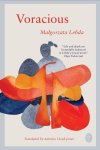
- The protagonist has a blood test after rapid weight gain and tiredness indicate thyroid problems in Voracious by Małgorzata Lebda and The Stirrings by Catherine Taylor.
- It’s said of an island that nobody dies there in Somebody Is Walking on Your Grave by Mariana Enríquez and Beautiful Ruins by Jess Walter.
- A woman whose mother died when she was young and whose father was so depressed as a result that he was emotionally detached from her in The Wedding People by Alison Espach and People with No Charisma by Jente Posthuma.
 A scene of a woman attending her homosexual husband’s funeral in The Homemade God by Rachel Joyce and Novel About My Wife by Emily Perkins.
- There’s a ghost in the cellar in In Late Summer by Magdalena Blažević, The Covenant of Water by Abraham Verghese and Book of Exemplary Women by Diana Xin.
- Mention of harps / a harpist in The Wedding People by Alison Espach, The Homemade God by Rachel Joyce, and What Mennonite Girls Are Good For by Jennifer Sears.
- “You use people” is an accusation spoken aloud in The Dry Season by Melissa Febos and Beautiful Ruins by Jess Walter.
- Let’s not beat around the bush: “I want to f*ck you” is spoken aloud in The Wedding People by Alison Espach and Novel About My Wife by Emily Perkins; “Want to/Wanna f*ck?” is also in The Wedding People by Alison Espach and in Bigger by Ren Cedar Fuller.
 A young woman notes that her left breast is larger in Voracious by Małgorzata Lebda and Woodworking by Emily St. James. (And a girl fondles her left breast in one story of Book of Exemplary Women by Diana Xin.)
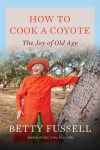
- A shawl is given as a parting gift in How to Cook a Coyote by Betty Fussell and one story of What Mennonite Girls Are Good For by Jennifer Sears.
- The author has Long Covid in Alec Finlay’s essay in the Moving Mountains anthology, and Pluck by Adam Hughes.
- An old woman applies suncream in Kate Davis’s essay in the Moving Mountains anthology, and How to Cook a Coyote by Betty Fussell.
- There’s a leper colony in What Mennonite Girls Are Good For by Jennifer Sears and The Covenant of Water by Abraham Verghese.
- There’s a missionary kid in South America in Bigger by Ren Cedar Fuller and What Mennonite Girls Are Good For by Jennifer Sears.
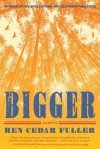
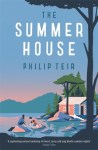 A man doesn’t tell his wife that he’s lost his job in Novel About My Wife by Emily Perkins and The Summer House by Philip Teir.
- A teen brother and sister wander the woods while on vacation with their parents in Leave the World Behind by Rumaan Alam and The Summer House by Philip Teir.
- Using a famous fake name as an alias for checking into a hotel in one story of Single, Carefree, Mellow by Katherine Heiny and Seascraper by Benjamin Wood.
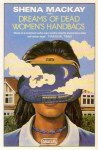
- A woman punches someone in the chest in the title story of Dreams of Dead Women’s Handbags by Shena Mackay and Novel About My Wife by Emily Perkins.
What’s the weirdest reading coincidence you’ve had lately?
20 Books of Summer, 13–16: Tony Chan, Jen Hadfield, Kenward Anthology, Catherine Taylor
Three from my initial list (all nonfiction) and one substitute picked up at random (poetry). These are strongly place-based selections, ranging from Sheffield to Shetland and drawing on travels while also commenting on how gender and dis/ability affect daily life as well as the experience of nature.
Four Points Fourteen Lines by Tony Chan (2016)
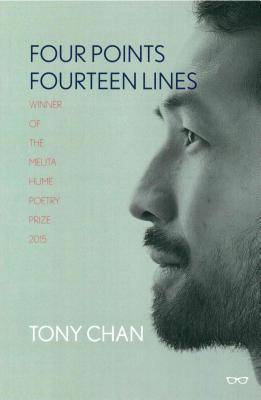 Chan is a schoolteacher who, in 2015, left his day job to undertake a 78-day solo walk between “the four extreme cardinal points of the British mainland”: Dunnet Head (North) to Ardnamurchan Point (West) in Scotland, down to Lowestoft Ness (East) in Suffolk and across to Lizard Point, Cornwall (South). It was a solo trek of 1,400 miles. He wrote one sonnet per day, not always adhering to the same rhyme scheme but fitting his sentiments into 14 lines of standard length. He doesn’t document much practical information, but does admit he stayed in decent hotels, ate hot meals, etc. Each poem is named for the starting point and destination, but the topic might be what he sees, an experience on the road, a memory, or whatever. “Evanton to Inverness” decries a gloomy city; “Inverness to Foyers” gives thanks for his shoes and lycra undershorts. He compares Highlanders to heroic Trojans: “Something sincere in their browned, moss-green tweeds, / In their greeting voice of gentle tenor. / From ancient Hector or from ancient clans, / Here live men most earnest in words and deeds.” None of the poems are laudable in their own right, but it’s a pleasant enough project. Too often, though, Chan resorts to outmoded vocabulary to fit the form or try to prove a poetic pedigree (“Suddenly comes an Old Testament of deluge and / Tempest, deluding the sense wholly”; “I know these streets, whence they come and whither / They run”; “I learnt well some verses of Tennyson / Years ago when noble dreams were begat”) when he might have been better off varying the form and/or using free verse. (Signed copy from Little Free Library)
Storm Pegs: A Life Made in Shetland by Jen Hadfield (2024)
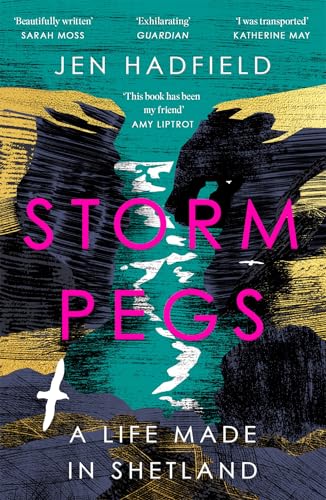 This is not so much a straightforward memoir as a set of atmospheric vignettes, each headed by a relevant word or phrase in the Shaetlan dialect. Hadfield, who is British Canadian, moved to the islands in her late twenties in 2006 and soon found her niche. “My new life quickly debunked those Edge-of-the-World myths – Shetland was too busy to feel remote, and had too strong a sense of its own identity to feel frontier-like.” It’s gently ironic, she notes, that she’s a terrible sailor and gets vertigo at height yet lives somewhere with perilous cliff edges that is often reachable only by sea. Living in a trailer waiting for her home to be built on West Burra, she feels the line between indoors and out is especially thin. It’s a life of wild swimming, beachcombing, fresh fish, folk music, seabirds, kind neighbours, and good cheer that warms long winter nights. After the isolation of the pandemic period comes the unexpected joy of a partner and a pregnancy in her mid-forties. Hadfield is a Windham-Campbell Prize-winning poet, and her lyrical prose is full of lovely observations that made me hanker to return to Shetland – it’s been 19 years since my only visit, after all. This was a slow read I savoured for its language and sense of place.
With thanks to Picador for the free paperback copy for review.
From Shetland authors, I have also reviewed:
Orchid Summer by Jon Dunn (Hadfield mentions him)
Sea Bean by Sally Huband (Hadfield meets her)
The Valley at the Centre of the World by Malachy Tallack
Moving Mountains: Writing Nature through Illness and Disability, ed. Louise Kenward (2023)
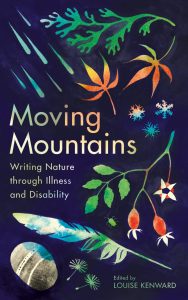 I often read memoirs about chronic illness and disability – the sort of narratives recognized by the Barbellion and ACDI Literary Prizes – and the idea of nature essays that reckon with health limitations was an irresistible draw. The quality in this anthology varies widely, from excellent to barely readable (for poor prose or pretentiousness). I’ll be kind and not name names in the latter category; I’ll only say the book has been poorly served by the editing process. The best material is generally from authors with published books: Polly Atkin (Some of Us Just Fall; see also her recent response to the Raynor Winn fiasco), Victoria Bennett (All My Wild Mothers), Sally Huband (as above!), and Abi Palmer (Sanatorium). For the first three, the essay feels like an extension of their memoir, while Palmer’s inventive piece is about recreating seasons for her indoor cats. My three favourite entries, however, were Louisa Adjoa Parker’s poem “This Is Not Just Tired,” Nic Wilson’s “A Quince in the Hand” (she’s an acquaintance through New Networks for Nature and has a memoir out this summer, Land Beneath the Waves), and Eli Clare’s “Moving Close to the Ground,” about being willing to scoot and crawl to get into nature. A number of the other pieces are repetitive, overlong or poorly shaped and don’t integrate information about illness in a natural way. Kudos to Kenward for including BIPOC and trans/queer voices, though. (Christmas gift from my wish list)
The Stirrings: Coming of Age in Northern Time by Catherine Taylor (2023)
“A typical family and an ordinary story, although neither the family nor the story seems commonplace when it is your family and your story.”
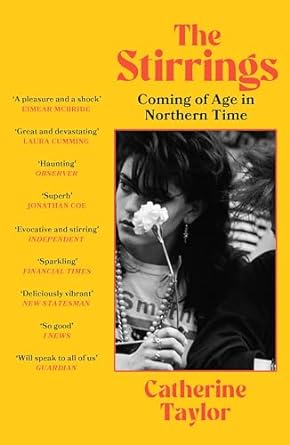 Taylor, who was born in New Zealand and grew up in Sheffield, won the Ackerley Prize for this memoir. (After Dunmore and King, this is the third in my intended four-in-a-row on the 20 Books of Summer Bingo card, fulfilling the “Book published in summer” category – August 2023.) It is bookended by two pivotal summers: 1976, the last normal season in her household before her father left; and 1989, the “Second Summer of Love,” when she had an abortion (the subject of “Milk Teeth,” the best individual chapter and a strong stand-alone essay). In between, fear and outrage overshadow her life: the Yorkshire Ripper is at large, nuclear war looms, mines are closing and protesters meet with harsh reprisals, and her own health falters until she gets a diagnosis of Graves’ disease. Then, in her final year at Cardiff, one of their housemates is found dead. Taylor draws reasonably subtle links to the present day, when fascism, global threats, and femicide are, unfortunately, as timely as ever. She’s the sort of personality I see at every London literary event I attend: Wellcome Book Prize ceremonies, Weatherglass’s Future of the Novella event, and so on. I got the feeling this book is more about bearing witness to history than revealing herself, and so I never warmed to it or to her on the page. But if you’d like to get a feel for the mood of the times, or you have experience of the settings and period, you may well enjoy it more than I did. (New purchase from Bookshop.org with a Christmas book token)
Best Books from 2023
Keeping it simple again this year with one post covering all genres: the 24 (or, actually 26) current-year releases that stood out the most for me. (No rankings; anything from my Best of First Half that didn’t make it through can be considered a runner-up, along with The Librarianist.)


Fiction
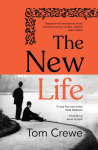 The New Life by Tom Crewe: Two 1890s English sex researchers (based on John Addington Symonds and Havelock Ellis) write a book called Sexual Inversion drawing on ancient Greek history and containing case studies of homosexual behaviour. Oscar Wilde’s trial puts everyone on edge; not long afterwards, their own book becomes the subject of an obscenity trial, and each man has to decide what he’s willing to give up in devotion to his principles. This is deeply, frankly erotic stuff, and, on the sentence level, just exquisite writing.
 The Vaster Wilds by Lauren Groff: Groff’s fifth novel combines visceral detail and magisterial sweep as it chronicles a runaway Jamestown servant’s struggle to endure the winter of 1610. Flashbacks to traumatic events seep into her mind as she copes with the harsh reality of life in the wilderness. The style is archaic and postmodern all at once. Evocative and affecting – and as brutal as anything Cormac McCarthy wrote. A potent, timely fable as much as a historical novel.
Counting as one this thematic trio of women’s true crime pastiches; I liked the Makkai best.
Penance by Eliza Clark: A compelling account of teenage feuds and bullying that went too far and ended in murder. It’s a pretty gruesome crime, but memorable, not least because it coincided with the day of the Brexit vote. I loved Clark’s portrait of Crow-on-Sea, a down-at-heel seaside town near Scarborough, and the depth of character that comes through via interviews and documents. She also nails teenage dialogue and social media use, podcasts, true crime obsession and so on.


 Bright Young Women by Jessica Knoll: An engrossing story of a Type A sorority president whose perfect life goes askew when a serial killer targets the house and kills two of her friends. She and the domestic partner of one of his previous victims are determined to see “the Defendant” brought to justice. 1970s Florida/Washington were interesting settings, and I liked the focus on the victims. The judge in the Defendant’s case lamented that such a bright young man would come to grief; think of the bright young women he extinguished instead.
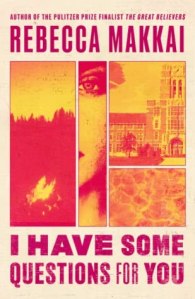
I Have Some Questions for You by Rebecca Makkai: When an invitation comes from her boarding school alma mater, Granby, to teach a two-week course on podcasting, Bodie indulges her obsession with the 1995 murder of her former roommate. Makkai has taken her cues from the true crime genre and constructed a convincing mesh of evidence and theories. She so carefully crafts her pen portraits, and so intimately involves us in Bodie’s psyche, that it’s impossible not to get invested. This is timely, daring, intelligent, enthralling storytelling.
 Sidle Creek by Jolene McIlwain: In this debut collection of 22 short stories, loosely linked by their location in the Appalachian hills in western Pennsylvania and a couple of recurring minor characters, McIlwain softens the harsh realities of addiction, poverty and violence with the tender bruises of infertility and lost love. Grief is a resonant theme in many of the stories, with pregnancy or infant loss a recurring element. At times harrowing, always clear-eyed, these stories are true to life and compassionate about human foibles and animal pain.
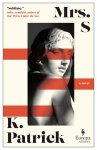 Mrs S by K Patrick: Patrick’s unnamed narrator is an early-twenties Australian butch lesbian who has come to England to be a matron at a girls’ boarding school. Mrs S is the headmaster’s wife, perhaps 20 years her senior. A heat wave gives a sultry atmosphere as hints of attraction between them give way to explicit scenes. Summer romances never last, but their intensity is legendary, and this feels like an instant standard. Not your average coming-of-age story, seduction narrative or cougar stereotype. It’s a new queer classic.
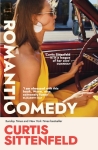 Romantic Comedy by Curtis Sittenfeld: Through her work as a writer for a sketch comedy show modelled on Saturday Night Live, Sally Milz meets Noah Brewster, a pop star with surfer-boy good looks. Plain Jane getting the hot guy – that never happens, right? In fact, Sally has a theory about this very dilemma… As always, Sittenfeld’s inhabiting of a first-person narrator is flawless, and Sally’s backstory and Covid-lockdown existence endeared her to me. Could this be called predictable? Well, what does one want from a romcom?
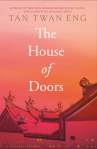 The House of Doors by Tan Twan Eng: In 1921, “Willie” Somerset Maugham and his secretary/lover, Gerald, stay with old friends Robert and Lesley Hamlyn in Penang, Malaysia. Willie’s marriage is floundering and he faces financial ruin. He needs a story that will sell and gets one when Lesley starts recounting the momentous events of 1910: volunteering at the party office of Dr Sun Yat Sen and trying to save her friend from a murder charge. Tan weaves it all into a Maugham-esque plot with sumptuous scene-setting and atmosphere.
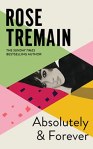 Absolutely and Forever by Rose Tremain: At age 15, Marianne falls in love. She imagines her romance with Simon as a grand adventure (and escape from her parents’ ordinariness), but his post-school life in Paris doesn’t have room for her. Much changes over the next 15 years, but never her attachment to her first love. This has the chic, convincing 1960s setting of Tessa Hadley’s work, and Marianne’s droll narration is a delight. It put me through an emotional wringer – no cheap tear-jerker but a tender depiction of love in all its forms.
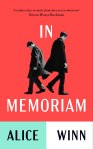 In Memoriam by Alice Winn: Heartstopper on the Western Front; swoon! Will Sidney Ellwood and Henry Gaunt both acknowledge that this is love and not just sex, as it is for so many teenage boys at their English boarding school? And will one or both survive the trenches of the First World War? Winn depicts the full horror of war, but in between there is banter, friendship and poetry. Some moments are downright jolly. This debut is obsessively researched, but Winn has a light touch with it. Engaging, thrilling, and, yes, romantic.
Nonfiction
 All My Wild Mothers by Victoria Bennett: A lovely memoir about grief and gardening, caring for an ill child and a dying parent. The book is composed of dozens of brief autobiographical, present-tense essays, each titled after a wildflower with traditional healing properties. The format realistically presents bereavement and caring as ongoing, cyclical challenges rather than one-time events. Sitting somewhere between creative nonfiction and nature essays, it’s a beautiful read for any fan of women’s life writing.
 Monsters by Claire Dederer: The question posed by this hybrid work of memoir and cultural criticism is “Are we still allowed to enjoy the art made by horrible people?” It begins, in the wake of #MeToo, by reassessing the work of film directors Roman Polanski and Woody Allen. The book is as compassionate as it is incisive. While there is plenty of outrage, there is also much nuance. Dederer’s prose is forthright and funny; lucid even when tackling thorny issues. Erudite, empathetic and engaging from start to finish.
 Womb by Leah Hazard: A wide-ranging and accessible study of the uterus, this casts a feminist eye over history and future alike. Blending medical knowledge and cultural commentary, it cannot fail to have both personal and political significance for readers of any gender. The thematic structure of the chapters also functions as a roughly chronological tour of how life with a uterus might proceed: menstruation, conception, pregnancy, labour, caesarean section, ongoing health issues, menopause. Inclusive and respectful of diversity.
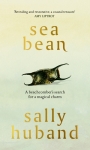 Sea Bean by Sally Huband: Stories of motherhood, the quest to find effective treatment in a patriarchal medical system, volunteer citizen science projects, and studying Shetland’s history and customs mingle in a fascinating way. Huband travels around the archipelago and further afield, finding vibrant beachcombing cultures. In many ways, this is about coming to terms with loss, and the author presents the facts about climate crisis with sombre determination. She writes with such poetic tenderness in this radiant debut memoir.
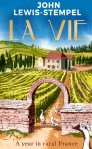 La Vie by John Lewis-Stempel: The author has written much about his Herefordshire haunts, but he’s now relocated permanently to southwest France (La Roche, in the Charente). He proudly calls himself a peasant farmer, growing what he can and bartering for much of the rest. La Vie chronicles a year in his quest to become self-sufficient. It opens one January and continues through the December, an occasional diary with recipes. It’s a peaceful, comforting read that’s attuned to the seasons and the land. Lewis-Stempel’s best book in an age.
 All of Us Together in the End by Matthew Vollmer: In 2019, Vollmer’s mother died of complications of Alzheimer’s and Parkinson’s. Months later, his father reported blinking lights in the woods near the family cemetery. Although Vollmer had left the Seventh-Day Adventist Church in college, his religious upbringing influenced his investigation, which overlapped with COVID-19. Grief, mysticism, and acceptance of the unexplained are resonant themes. An unforgettable record of “a collision with the ineffable.”
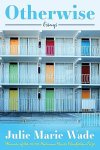 Otherwise by Julie Marie Wade: Nine intricate autobiographical essays reflect on risk, bodily autonomy, and poetry versus prose. A series of meditations composed across Wade’s thirties arranges snapshots of her growing frustration with gendered stereotypes. In particular, she interrogates her rosy childhood notions of marriage. As she explored feminism and accepted her lesbian identity—though not before leaving a man at the altar—she found ways to be “a secular humanist by day and a hopeless romantic by night.” Superb.
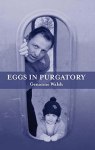 Eggs in Purgatory by Genanne Walsh: This autobiographical essay tells the story of the last few months of her father’s life. Aged 89, he lived downstairs from Walsh and her wife in San Francisco. He was quite the character: idealist, stubborn, outspoken; a former Catholic priest. Although he had no terminal conditions, he was sick of old age and its indignities and ready to exit. The task of a memoir is to fully mine the personal details of a situation but make of it something universal, and that’s just what she does here. Stunning.
Poetry
 More Sky by Joe Carrick-Varty: In this debut collection, the fact of his alcoholic father’s suicide is inescapable. The poet alternates between an intimate “you” address and third-person scenarios, auditioning coping mechanisms. His frame of reference is wide: football, rappers, Buddhist cosmology. The word “suicide” itself is repeated to the point where it becomes just a sibilant collection of syllables. The tone is often bitter, as is to be expected, but there is joy in the deft use of language.
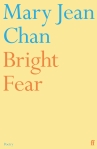 Bright Fear by Mary Jean Chan: This follow-up to Flèche takes up many of the same foundational subjects: race, family, language and sexuality. But this time, the pandemic is the lens through which all is filtered. At a time when Asian heritage merited extra suspicion, English was both a means of frank expression and a source of ambivalence. At the centre of the book, “Ars Poetica,” a multi-part collage incorporating lines from other poets, forms a kind of autobiography in verse. Chan also questions the lines between genres. Excellent.
 Lo by Melissa Crowe: This incandescent autobiographical collection delves into the reality of sexual abuse and growing up in rural poverty. Guns are insidious, used for hunting or mass shootings. Trauma lingers. “Maybe home is what gets on you and can’t / be shaken loose.” The collection is so carefully balanced in tone that it never feels bleak. In elegies and epithalamiums (poems celebrating marriage), Crowe honors family ties that bring solace. The collection has emotional range: sensuality, fear, and wonder at natural beauty.
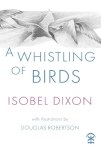 A Whistling of Birds by Isobel Dixon: I was drawn to this for its acknowledged debt to D.H. Lawrence’s Birds, Beasts and Flowers. Snakes, bees, bats and foxes are some of the creatures that scamper through the text. There are poems for marine life, fruit and wildflowers. You get a sense of the seasons turning, and the natural wonders to prize from each. Dixon’s poetry is formal yet playful, the structures and line and stanza lengths varying. There are portraits and elegies. The book is in collaboration with Scottish artist Douglas Robertson. A real gem.
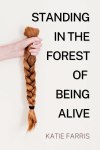 Standing in the Forest of Being Alive by Katie Farris: This debut collection addresses the symptoms and side effects of breast cancer treatment at age 36, but often in oblique or cheeky ways – it can be no mistake that “assistance” appears two lines before a mention of hemorrhoids, for instance, even though it closes an epithalamium distinguished by its gentle sibilance (Farris’s husband is Ukrainian American poet Ilya Kaminsky.) She crafts sensual love poems, and exhibits Japanese influences. (Discussed in my review essay for The Rumpus.)
 The House of the Interpreter by Lisa Kelly: Kelly is half-Danish and has single-sided deafness, and her second collection engages with questions of split identity. One section ends with the Deaf community’s outrage that the Prime Minister’s Covid briefings were not translated into BSL. Bizarre but delightful is the sequence of alliteration-rich poems about fungi, followed by a miscellany of autobiographical poems full of references to colour, language, nature and travel.
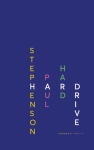 Hard Drive by Paul Stephenson: This wry, wrenching debut collection is an extended elegy for his partner, Tod Hartman, an American anthropologist who died of heart failure at 38. There’s every style, tone and structure imaginable here. Stephenson riffs on his partner’s oft-misspelled name (German for death), and writes of discovery, autopsy, sadmin and rituals. In “The Only Book I Took” he opens up Tod’s copy of Joan Didion’s The Year of Magical Thinking – which came from Wonder Book, the bookstore chain I worked at in Maryland!
Okay, twist my arm … if I had to pick my overall books of the year, I’d concur with the Times in picking The New Life. In nonfiction: Monsters. In poetry: Standing in the Forest of Being Alive.


Have you read any of my favourites? What 2023 releases do I need to catch up on right away?
Prize Updates: McKitterick Prize Winner and Wainwright Prize Longlists
It was my second year as a first-round manuscript judge for the McKitterick Prize; have a look at my rundown of the shortlist here.
 The winner, Louise Kennedy, and runner-up, Liz Hyder, were announced on 29 June. (Nominee Aamina Ahmad won a different SoA Award that night, the Gordon Bowker Volcano Prize for a novel focusing on the experience of travel away from home.) Other recipients included Travis Alabanza, Caroline Bird, Bonnie Garmus and Nicola Griffith. For more on all of this year’s SoA Award winners, see their website.


I’m a big fan of the Wainwright Prize for nature and conservation writing, and have been following it particularly closely since 2020, when I happened to read most of the nominees. In 2021 I also managed to read quite a lot from the longlists; 2022, the first year of an additional prize for children’s literature, saw me reading about a third of the total nominees.
This is the third year that I’ve been part of an “academy” of bloggers, booksellers, former judges and previously shortlisted authors asked to comment on a very long list of publisher submissions. I’m delighted that a few of my preferences made it through to the longlists.
My taste generally runs more to the narrative nature writing than the popular science or travel-based books. I find I’ve read just two from the Nature list (Bersweden and Huband) and one each from Conservation (Pavelle) and Children’s (Hargrave) so far.

The 2023 James Cropper Wainwright Prize for Nature Writing longlist:
- The Swimmer: The Wild Life of Roger Deakin, Patrick Barkham (Hamish Hamilton)
- The Flow: Rivers, Water and Wildness, Amy-Jane Beer (Bloomsbury)
- Where the Wildflowers Grow, Leif Bersweden (Hodder)
- Twelve Words for Moss, Elizabeth-Jane Burnett (Allen Lane)
- Cacophony of Bone, Kerri ní Dochartaigh (Canongate)
- Sea Bean, Sally Huband (Hutchinson)
- Ten Birds that Changed the World, Stephen Moss (Faber)
- A Line in the World: A Year on the North Sea Coast, Dorthe Nors, translated by Caroline Waight (Pushkin)
- The Golden Mole: And Other Living Treasure, Katherine Rundell, illustrated by Talya Baldwin (Faber)
- Belonging: Natural Histories of Place, Identity and Home, Amanda Thomson (Canongate)
- Why Women Grow: Stories of Soil, Sisterhood and Survival, Alice Vincent (Canongate)
- Landlines, Raynor Winn (Penguin)

The 2023 James Cropper Wainwright Prize for Writing on Conservation longlist:
- Sarn Helen: A Journey Through Wales, Past, Present and Future, Tom Bullough, illustrated by Jackie Morris (Granta)
- Beastly: A New History of Animals and Us, Keggie Carew (Canongate)
- Rewilding the Sea: How to Save Our Oceans, Charles Clover (Ebury)
- Birdgirl, Mya-Rose Craig (Jonathan Cape)
- The Orchid Outlaw, Ben Jacob (John Murray)
- Elixir: In the Valley at the End of Time, Kapka Kassabova (Jonathan Cape)
- Rooted: How Regenerative Farming Can Change the World, Sarah Langford (Viking)
- Black Ops and Beaver Bombing: Adventures with Britain’s Wild Mammals, Fiona Mathews and Tim Kendall (Oneworld)
- Forget Me Not, Sophie Pavelle (Bloomsbury)
- Fen, Bog, and Swamp: A Short History of Peatland Destruction and its Role in the Climate Crisis, Annie Proulx (Fourth Estate)
- The Lost Rainforests of Britain, Guy Shrubsole (HarperCollins)
- Nomad Century: How to Survive the Climate Upheaval, Gaia Vince (Allen Lane)

The 2023 James Cropper Wainwright Prize for Children’s Writing on Nature and Conservation longlist:
- The Earth Book, Hannah Alice (Nosy Crow)
- The Light in Everything, Katya Balen, illustrated by Sydney Smith (Bloomsbury)
- Billy Conker’s Nature-Spotting Adventure, Conor Busuttil (O’Brien)
- Protecting the Planet: The Season of Giraffes, Nicola Davies, illustrated by Emily Sutton (Walker)
- Blobfish, Olaf Falafel (Walker)
- A Friend to Nature, Laura Knowles, illustrated by Rebecca Gibbon (Welbeck)
- Spark, M G Leonard (Walker)
- A Wild Child’s Book of Birds, Dara McAnulty (Macmillan)
- Leila and the Blue Fox, Kiran Millwood Hargrave, illustrated by Tom de Freston (Hachette Children’s Group)
- The Zebra’s Great Escape, Katherine Rundell, illustrated by Sara Ogilvie (Bloomsbury)
- Archie’s Apple, Hannah Shuckburgh, illustrated by Octavia Mackenzie (Little Toller)
- Grandpa and the Kingfisher, Anna Wilson, illustrated by Sarah Massini (Nosy Crow)
It’s impressive that women writers are represented so well this year: 9/12 for Nature, 8/12 for Conservation, and 8/12 for Children’s. Amusingly, Katherine Rundell is on TWO of the lists. There are also, refreshingly, several BIPOC authors, and – I think for the first time ever – a work in translation (A Line in the World by Dorthe Nors, which I have as a set-aside proof copy and will get back into at once).
Here is where I have to admit that quite a number of the nominees, overall, are books I DNFed, authors whose work I’ve tried before and not enjoyed, or books I’ve been turned off of by the reviews. I’ll not mention these by name just now, and will leave any predictions for a future date when I’ve read a few more of the nominees. It seems that I’m most likely to catch up with the majority of the children’s longlist, if anything.
The shortlists will be announced on 10 August, and winners will be announced on 14 September at a 10th Anniversary live event held as part of the Kendal Mountain Festival in Cumbria (tickets available here).
See any nominees you’ve read? Who would you like to see shortlisted?
The Best Books from the First Half of 2023
Yes, it’s that time of year already! It remains to be seen how many of these will make it onto my overall best-of year list, but for now, these are my 20 highlights. Plus, I sneakily preview another great novel that won’t release until September. (For now I’m highlighting 2023 releases, whereas at the end of the year I divide my best-of lists into current year and backlist. I’ve read 86 current-year releases so far and am working on another 20, so I’m essentially designating a top 20% here.) I give review excerpts and link to the full text from this site or elsewhere. Pictured below are the books I read in print; all the others were e-copies.

Fiction
 Shoot the Horses First by Leah Angstman: In 16 sumptuous historical stories, outsiders and pioneers face disability and prejudice with poise. The flash entries crystallize moments of realization, often about health. Longer pieces shine as their out-of-the-ordinary romances have space to develop. In the novella Casting Grand Titans, a botany professor in 1850s Iowa learns her salary is 6% of a male colleague’s. She strives for intellectual freedom, reporting a new-to-science species of moss, while working towards liberation for runaway slaves.
 The House Is on Fire by Rachel Beanland: Moving at a propulsive pace, Beanland’s powerful second novel rotates through the perspectives of these main characters – two men and two women; two white people and two enslaved Black people – caught up in the Richmond Theater Fire of 1811 (one of the deadliest events in early U.S. history) and its aftermath. Painstakingly researched and full of historical detail and full-blooded characters, it dramatizes the range of responses to tragedy and how people rebuild their lives.
The New Life by Tom Crewe: Two 1890s English sex researchers (based on John Addington Symonds and Havelock Ellis) write a book called Sexual Inversion drawing on ancient Greek history and containing case studies of homosexual behaviour. Oscar Wilde’s trial puts everyone on edge; not long afterwards, their own book becomes the subject of an obscenity trial, and each man has to decide what he’s willing to give up in devotion to his principles. This is deeply, frankly erotic stuff, and, on the sentence level, just exquisite writing.
 Daughters of Nantucket by Julie Gerstenblatt: (Yes, another historical fire novel, and I reviewed both for Shelf Awareness!) This engrossing debut explores the options for women in the mid-19th century. Metaphorical conflagrations blaze in the background in the days leading up to the great Nantucket fire of 1846: each of three female protagonists (a whaling captain’s wife, a museum curator, and a pregnant Black entrepreneur) holds a burning secret and longs for a more expansive, authentic life. Tense and sultry; for Sue Monk Kidd fans.
 I Have Some Questions for You by Rebecca Makkai: When an invitation comes from her boarding school alma mater, Granby, to teach a two-week course on podcasting, Bodie indulges her obsession with the 1995 murder of her former roommate. Makkai has taken her cues from the true crime genre and constructed a convincing mesh of evidence and theories. She so carefully crafts her pen portraits, and so intimately involves us in Bodie’s psyche, that it’s impossible not to get invested. This is timely, daring, intelligent, enthralling storytelling.
Sidle Creek by Jolene McIlwain: In this debut collection of 22 short stories, loosely linked by their location in the Appalachian hills in western Pennsylvania and a couple of recurring minor characters, McIlwain softens the harsh realities of addiction, poverty and violence with the tender bruises of infertility and lost love. Grief is a resonant theme in many of the stories, with pregnancy or infant loss a recurring element. At times harrowing, always clear-eyed, these stories are true to life and compassionate about human foibles and animal pain.
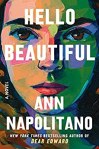 Hello Beautiful by Ann Napolitano: Oprah’s 100th book club pick. It’s a family story spanning three decades and focusing on the Padavanos, a working-class Italian American Chicago clan with four daughters. Julia meets melancholy basketball player William Waters while at Northwestern in the late 1970s. There is such warmth and intensity to the telling, and brave reckoning with bereavement, mental illness, prejudice and trauma. I love sister stories in general, and the subtle echoes of Leaves of Grass and Little Women add heft.
Romantic Comedy by Curtis Sittenfeld: Through her work as a writer for a sketch comedy show modelled on Saturday Night Live, Sally Milz meets Noah Brewster, a pop star with surfer-boy good looks. Plain Jane getting the hot guy – that never happens, right? In fact, Sally has a theory about this very dilemma… As always, Sittenfeld’s inhabiting of a first-person narrator is flawless, and Sally’s backstory and Covid-lockdown existence endeared her to me. Could this be called predictable? Well, what does one want from a romcom?
In Memoriam by Alice Winn: Heartstopper on the Western Front; swoon! Will Sidney Ellwood and Henry Gaunt both acknowledge that this is love and not just sex, as it is for so many teenage boys at their English boarding school? And will one or both survive the trenches of the First World War? Winn depicts the full horror of war, but in between there is banter, friendship and poetry. Some moments are downright jolly. This debut is obsessively researched, but Winn has a light touch with it. Engaging, thrilling, and, yes, romantic.
A bonus:
The Vaster Wilds by Lauren Groff (Riverhead/Hutchinson Heinemann, 12 September): Groff’s fifth novel combines visceral detail and magisterial sweep as it chronicles a runaway Jamestown servant’s struggle to endure the winter of 1610. Flashbacks to traumatic events seep into her mind as she copes with the harsh reality of life in the wilderness. The style is archaic and postmodern all at once. Evocative and affecting – and as brutal as anything Cormac McCarthy wrote. A potent, timely fable as much as a historical novel. (Review forthcoming for Shelf Awareness.)
Nonfiction
All My Wild Mothers by Victoria Bennett: A lovely memoir about grief and gardening, caring for an ill child and a dying parent. The book is composed of dozens of brief autobiographical, present-tense essays, each titled after a wildflower with traditional healing properties. The format realistically presents bereavement and caring as ongoing, cyclical challenges rather than one-time events. Sitting somewhere between creative nonfiction and nature essays, it’s a beautiful read for any fan of women’s life writing.
Monsters by Claire Dederer: The question posed by this hybrid work of memoir and cultural criticism is “Are we still allowed to enjoy the art made by horrible people?” It begins, in the wake of #MeToo, by reassessing the work of film directors Roman Polanski and Woody Allen. The book is as compassionate as it is incisive. While there is plenty of outrage, there is also much nuance. Dederer’s prose is forthright and droll; lucid even when tackling thorny issues. Erudite, empathetic and engaging from start to finish.
Womb by Leah Hazard: A wide-ranging and accessible study of the uterus, this casts a feminist eye over history and future alike. Blending medical knowledge and cultural commentary, it cannot fail to have both personal and political significance for readers of any gender. The thematic structure of the chapters also functions as a roughly chronological tour of how life with a uterus might proceed: menstruation, conception, pregnancy, labour, caesarean section, ongoing health issues, menopause. Inclusive and respectful of diversity.
Sea Bean by Sally Huband: Stories of motherhood, the quest to find effective treatment in a patriarchal medical system, volunteer citizen science projects, and studying Shetland’s history and customs mingle in a fascinating way. Huband travels around the archipelago and further afield, finding vibrant beachcombing cultures. In many ways, this is about coming to terms with loss, and the author presents the facts about climate crisis with sombre determination. She writes with such poetic tenderness in this radiant debut memoir.
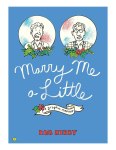 Marry Me a Little by Robert Kirby: Hopping around in time, this graphic memoir tells the story of how the author and his partner John decided to get married in 2013. The blue and red color scheme is effective at evoking a polarized America and the ebb and flow of emotions, with blue for calm, happy scenes and concentrated red for confusion or anger. This is political, for sure, but it’s also personal, and it balances those two aims well by tracing the history of gay marriage in the USA and memorializing his own relationship.
All of Us Together in the End by Matthew Vollmer: In 2019, Vollmer’s mother died of complications of Alzheimer’s and Parkinson’s. Months later, his father reported blinking lights in the woods near the family cemetery. Although Vollmer had left the Seventh-Day Adventist Church in college, his religious upbringing influenced his investigation, which overlapped with COVID-19. Grief, mysticism, and acceptance of the unexplained are resonant themes. An unforgettable record of “a collision with the ineffable.”
Eggs in Purgatory by Genanne Walsh: This autobiographical essay tells the story of the last few months of her father’s life. Aged 89, he lived downstairs from Walsh and her wife in San Francisco. He was quite the character: idealist, stubborn, outspoken; a former Catholic priest. Although he had no terminal conditions, he was sick of old age and its indignities and ready to exit. The task of a memoir is to fully mine the personal details of a situation but make of it something universal, and that’s just what she does here. Stunning.
Poetry
More Sky by Joe Carrick-Varty: In this debut collection, the fact of his alcoholic father’s suicide is inescapable. The poet alternates between an intimate “you” address and third-person scenarios, auditioning coping mechanisms. His frame of reference is wide: football, rappers, Buddhist cosmology. The word “suicide” itself is repeated to the point where it becomes just a sibilant collection of syllables. The tone is often bitter, as is to be expected, but there is joy in the deft use of language.
Lo by Melissa Crowe: This incandescent autobiographical collection delves into the reality of sexual abuse and growing up in rural poverty. Guns are insidious, used for hunting or mass shootings. Trauma lingers. “Maybe home is what gets on you and can’t / be shaken loose.” The collection is so carefully balanced in tone that it never feels bleak. In elegies and epithalamiums (poems celebrating marriage), Crowe honors family ties that bring solace. The collection has emotional range: sensuality, fear, and wonder at natural beauty.
Standing in the Forest of Being Alive by Katie Farris: This debut collection addresses the symptoms and side effects of breast cancer treatment at age 36, but often in oblique or cheeky ways – it can be no mistake that “assistance” appears two lines before a mention of haemorrhoids, for instance, even though it closes an epithalamium distinguished by its gentle sibilance (Farris’s husband is Ukrainian American poet Ilya Kaminsky.) She crafts sensual love poems, and exhibits Japanese influences. (Review forthcoming at The Rumpus.)
The House of the Interpreter by Lisa Kelly: Kelly is half-Danish and has single-sided deafness, and her second collection engages with questions of split identity. One section ends with the Deaf community’s outrage that the Prime Minister’s Covid briefings were not translated into BSL. Bizarre but delightful is the sequence of alliteration-rich poems about fungi, followed by a miscellany of autobiographical poems full of references to colour, nature and travel.
What are some of the best books you’ve read so far this year?
What 2023 releases should I catch up on right away?
Book Serendipity, Mid-April through Early June
I call it “Book Serendipity” when two or more books that I read at the same time or in quick succession have something in common – the more bizarre, the better. This is a regular feature of mine every few months. Because I usually have 20–30 books on the go at once, I suppose I’m more prone to such incidents. The following are in roughly chronological order.
- Fishing with dynamite takes place in Glowing Still by Sara Wheeler and In Memoriam by Alice Winn.
- Egg collecting (illegal!) is observed and/or discussed in Sea Bean by Sally Huband and The Jay, the Beech and the Limpetshell by Richard Smyth.

- Deborah Levy’s Things I Don’t Want to Know is quoted in What I’d Rather Not Think About by Jente Posthuma and Glowing Still by Sara Wheeler. I then bought a secondhand copy of the Levy on my recent trip to the States.
- “Piss-en-lit” and other folk names for dandelions are mentioned in The House of the Interpreter by Lisa Kelly and The Furrows by Namwali Serpell.
- Buttercups and nettles are mentioned in The House of the Interpreter by Lisa Kelly and Springtime in Britain by Edwin Way Teale (and other members of the Ranunculus family, which includes buttercups, in These Envoys of Beauty by Anna Vaught).

- The speaker’s heart is metaphorically described as green in a poem in Lo by Melissa Crowe and The House of the Interpreter by Lisa Kelly.
- Discussion of how an algorithm can know everything about you in Tomb Sweeping by Alexandra Chang and I’m a Fan by Sheena Patel.
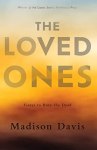
- A brother drowns in The Loved Ones: Essays to Bury the Dead by Madison Davis, What I’d Rather Not Think About by Jente Posthuma, and The Furrows by Namwali Serpell.


A few cases of a book recalling a specific detail from an earlier read:
- This metaphor in The Chosen by Elizabeth Lowry links it to The Marriage Portrait by Maggie O’Farrell, another work of historical fiction I’d read not long before: “He has further misgivings about the scalloped gilt bedside table, which wouldn’t look of place in the palazzo of an Italian poisoner.”
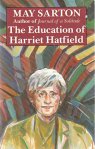
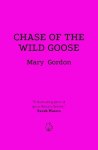
- This reference in The Education of Harriet Hatfield by May Sarton links it back to Chase of the Wild Goose by Mary Louisa Gordon (could it be the specific book she had in mind? I suspect it was out of print in 1989, so it’s more likely it was Elizabeth Mavor’s 1971 biography The Ladies of Llangollen): “Do you have a book about those ladies, the eighteenth-century ones, who lived together in some remote place, but everyone knew them?”
- This metaphor in Things My Mother Never Told Me by Blake Morrison links it to The Chosen by Elizabeth Lowry: “Moochingly revisiting old places, I felt like Thomas Hardy in mourning for his wife.”
- A Black family is hounded out of a majority-white area by harassment in The Education of Harriet Hatfield by May Sarton and Ordinary Notes by Christina Sharpe.
 Wartime escapees from prison camps are helped to freedom, including with the help of a German typist, in My Father’s House by Joseph O’Connor and In Memoriam by Alice Winn.
- A scene of eating a deceased relative’s ashes in 19 Claws and a Black Bird by Agustina Bazterrica and The Loved Ones by Madison Davis.
- A girl lives with her flibbertigibbet mother and stern grandmother in “Wife Days,” one story from How Strange a Season by Megan Mayhew Bergman, and Jane of Lantern Hill by L.M. Montgomery.
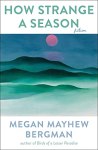
- Macramé is mentioned in How Strange a Season by Megan Mayhew Bergman, The Memory of Animals by Claire Fuller, Floppy by Alyssa Graybeal, and Sidle Creek by Jolene McIlwain.
- A fascination with fractals in Floppy by Alyssa Graybeal and one story in Sidle Creek by Jolene McIlwain. They are also mentioned in one essay in These Envoys of Beauty by Anna Vaught.
- I found disappointed mentions of the fact that characters wear blackface in Laura Ingalls Wilder’s Little Town on the Prairie in Monsters by Claire Dederer and, the very next day, Ordinary Notes by Christina Sharpe.

- Moon jellyfish are mentioned in the Blood and Cord anthology edited by Abi Curtis, Floppy by Alyssa Graybeal, and Sea Bean by Sally Huband.
- A Black author is grateful to their mother for preparing them for life in a white world in the memoirs-in-essays I Can’t Date Jesus by Michael Arceneaux and Ordinary Notes by Christina Sharpe.
- The children’s book The Owl Who Was Afraid of the Dark by Jill Tomlinson is mentioned in The Jay, the Beech and the Limpetshell by Richard Smyth and These Envoys of Beauty by Anna Vaught.
- The protagonist’s father brings home a tiger as a pet/object of display in The Marriage Portrait by Maggie O’Farrell and The Memory of Animals by Claire Fuller.

- Bloor Street, Toronto is mentioned in Jane of Lantern Hill by L.M. Montgomery and Ordinary Notes by Christina Sharpe.
- Ralph Waldo Emerson’s thinking about the stars is quoted in Jane of Lantern Hill by L.M. Montgomery and These Envoys of Beauty by Anna Vaught.
- Wondering whether a marine animal would be better off in captivity, where it could live much longer, in The Memory of Animals by Claire Fuller (an octopus) and Sea Bean by Sally Huband (porpoises).
 Martha Gellhorn is mentioned in The Collected Regrets of Clover by Mikki Brammer and Monsters by Claire Dederer.
- Characters named June in “Indigo Run,” the novella-length story in How Strange a Season by Megan Mayhew Bergman, and The Cats We Meet Along the Way by Nadia Mikail.
- “Explicate!” is a catchphrase uttered by a particular character in Girls They Write Songs About by Carlene Bauer and The Lake Shore Limited by Sue Miller.
- It’s mentioned that people used to get dressed up for going on airplanes in Fly Girl by Ann Hood and The Lights by Ben Lerner.

- Green-Wood Cemetery in Brooklyn is a setting in The Lights by Ben Lerner and Grave by Allison C. Meier.
- Last year I read Tomorrow, and Tomorrow, and Tomorrow by Gabrielle Zevin, in which Oregon Trail re-enactors (in a video game) die of dysentery; this is also a live-action plot point in “Pioneers,” one story in Lydia Conklin’s Rainbow Rainbow.
- A bunch (4 or 5) of Italian American sisters in Circling My Mother by Mary Gordon and Hello Beautiful by Ann Napolitano.
What’s the weirdest reading coincidence you’ve had lately?
Nature Book Catch-Up: Sally Huband, Richard Smyth & Anna Vaught
I’m catching up with a few nature- and travel-based 2023 releases that were sent to me for review. I’ve grouped them together because these British authors share some of the same interests and concerns. They celebrate beloved places that become ours through the time we spend in them and the attention we grant; they mourn the loss of biodiversity from rockpools and gardens and seabird cliffs. What kind of diminished world they’re raising their children into is a major worry for all three, and for Huband and Vaught the unease is exacerbated by chronic illness. Wild creatures, and the fellow authors who have hymned them, ease the hurt.
Sea Bean: A beachcomber’s search for a magical charm by Sally Huband
After more than a decade in her adopted home of Shetland, Sally Huband is still a newcomer. A tricky path to motherhood and ensuing chronic illness (the autoimmune disease palindromic rheumatism) limited her mobility and career. Beachcombing is at once her way of belonging to a specific place and feeling part of the wider world – what washes up on a Shetland beach might come from as far away as Atlantic Canada or the Caribbean. Sea glass, lobster pot tags, messages in bottles, driftwood … and a whole lot of plastic, of course. Early on, Huband sets her sights on a sea bean – also known as a drift-seed, from the tropics – which in centuries past was a talisman for ensuring safe childbirth. Possession of one was enough to condemn a 17th-century local woman to death for witchcraft, she learned.
 Stories of motherhood, the quest to find effective treatment in a patriarchal medical system, volunteer citizen science projects (monitoring numbers of dead seabirds, returning beached cetaceans to the water, dissecting fulmar stomachs to assess their plastic content), and studying Shetland’s history and customs mingle in a fascinating way. Huband travels around the archipelago and further afield, finding a vibrant beachcombing culture on the Dutch island of Texel. As in Moby-Duck by Donovan Hohn, one of my all-time favourite nonfiction books, there is delight at the randomness of what the ocean delivers.
I requested this book because Huband’s was my favourite essay in the Antlers of Water anthology. In it, she deplored the fact that women were still not allowed to participate in the Up Helly Aa fire festival in Lerwick. Good news: that is no longer the case, thanks to campaigning by Huband and others. In a late chapter, she also reports that blackface was recently banned from the festivals, and a Black Lives Matter demonstration drew 2000 people. Change does come, but slowly to a traditional island community. And sometimes it is not the right sort of change, as with an enormous wind farm, resisted vigorously by residents, that will primarily enrich a multinational company instead of serving the local people.
In many ways, this is a book about coming to terms with loss, and Huband presents the facts with sombre determination. Passages about the threats to birds and marine life had me near tears. But she writes with such poetic tenderness that the evocative specifics of island life point towards what’s true for all of us making the best of our constraints. I was lucky enough to visit several islands of Shetland in 2006; whether you have or not, this is a radiant memoir I would recommend to readers of Kathleen Jamie, Jean Sprackland and Malachy Tallack.
Some favourite lines:
No island can ever live up to the heightened expectations that we always seem to place on them; life catches up with us, sooner or later.
With each loss, emotional pain accretes for those who have paid attention.
If hope is a hierarchy of wishes then I am happy enough, each time that I beachcomb, to find fragments of the bark of paper birch
I’ve come to think of the ocean as an archive of sorts.
With thanks to Hutchinson Heinemann for the proof copy for review.
The Jay, the Beech and the Limpetshell: Finding Wild Things with My Kids by Richard Smyth
all around us
the stuff of spells. Our parents
let us go to scamper deeper,
leap from stumps lush with moss.
Everything aloof about me
fell into the soil once charged
with younger siblings
and freedoms of a wood.
…
I give you a damp valley floor,
this feather for your pocket.
~an extract from “Arger Fen,” from Latch by Rebecca Goss
I know Richard Smyth for his writing on birds (I’ve reviewed both A Sweet, Wild Note and An Indifference of Birds) and his somewhat controversial commentary on modern nature writing. This represents a change in direction for him toward more personal reflection, and with its focus on the phenomena of childhood and parenthood it recalls Wild Child by Patrick Barkham and The Nature Seed by Lucy Jones and Kenneth Greenway. But, as I knew to expect from previous works, he has such talent for reeling in the tangential and extrapolating from the concrete to the abstract that this lively read ends up being about everything: what it is to be human on this fading planet.
 And this despite the fact that four of five chapter headings suggest pandemic-specific encounters with nature. Lockdown walks with his two children, and the totems they found in different habitats – also including a chaffinch nest and an owl pellet – are indeed jumping-off points, punctuating a wide-ranging account of life with nature. Smyth surveys the gateway experiences, whether books or television shows or a school tree-planting programme or collecting, that get young people interested; and talks about the people who beckon us into greater communion – sometimes authors and celebrities; other times friends and family. He also engages with questions of how to live in awareness of climate crisis. He acknowledges that he should be vegetarian, but isn’t; who does not harbour such everyday hypocrisies?
It’s still, unfortunately, rare for men to write about parenthood (and especially pregnancy loss – I only think of Native by Patrick Laurie and William Henry Searle’s books), so it’s great to see that represented, and it’s a charming idea that we create “downfamily” because the “upfamily” doesn’t last forever. Although there’s nostalgia for his childhood here, and anxiety about his kids’ chances of seeing wildlife in abundance, Smyth doesn’t get mired in the past or in existential dread. He has a humanist belief that people are essentially good and can do positive things like build offshore wind farms, and in the meantime he will take Genevieve and Daniel into the woods to play so they will develop a sense of wonder at all that lives on. Even for someone like me who doesn’t have children, this was a captivating, thought-provoking read: We’re all invested in the future of life on this planet.
With thanks to Icon Press for the free copy for review.
These Envoys of Beauty: A Memoir by Anna Vaught
Anna Vaught is a versatile author: I have a copy of her mental health-themed novel Saving Lucia, longlisted for the inaugural Barbellion Prize, on the shelf; she’s written a spooky set of stories, Famished (see Susan’s review); and I gave some early reader feedback on the opening pages of her forthcoming work of quirky historical fiction, The Zebra and Lord Jones. She’s also publishing a book on writing, and editing a collection of pieces submitted for the first Curae Prize for writers who are also carers. I was drawn to her first nonfiction release by reviews by fellow bloggers – it’s always good when a blog tour achieves its aim!
These dozen short essays are about how nature doesn’t necessarily heal, but is a most valued companion in a life marked by chronic illness and depression. The evocative title and epigraphs are from Ralph Waldo Emerson’s essay “Nature” (1836). The pieces loop through Vaught’s past and present, focussing on favourite places in Wiltshire, where she lives, and at the Pembrokeshire coast. It’s the second memoir about complex PTSD that I’ve read this year (see also What My Bones Know). Both at the time and now, when flashbacks of her parents’ verbal and physical abuse haunt her, lying down in a grassy field, exploring a sea cave or sucking on a gorse flower could be a salve. “Nature offered stability and satisfying detail; pattern, form and things that made sense.”
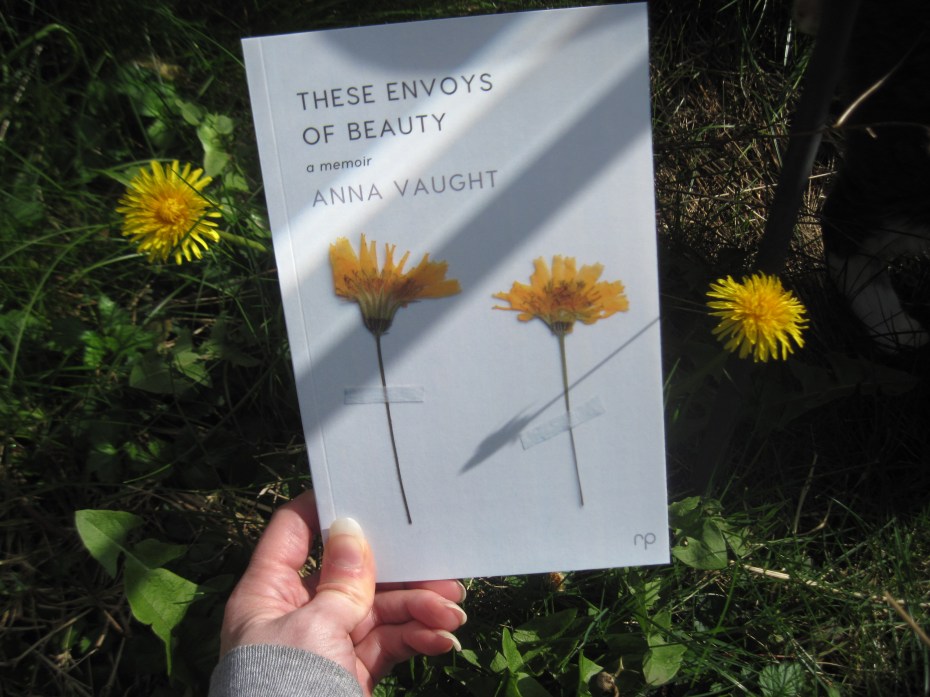
Vaught has a particular love for trees, flowers and moss – even just reciting their Latin names gives her a thrill, and she adds additional information about some species in footnotes. Although her childhood was painful, she retains gratitude for its wide-eyed wonder, and in the exuberance of her prose you can sense a willed childlike perspective (“But back to the list of clouds and writing about clouds!”). I found the frequent self-referential nature of the essays and direct reader address a little precious, but appreciated the thoughts about how nature holds us: “I have always felt a generosity around me, and that I was less lonely outside; at the very least, I could find something to comfort me”. She’s a bookish kindred spirit as well. I’ll be sure to try her work in other genres.
With thanks to Reflex Press for the free copy for review.
Catching Up on Review Books: Antlers, Arnett, E. Williams, Yamboliev
Four July–August releases: Scottish nature writing, the quirky story of a family taxidermy business in Florida, a dual-timeline novel set at an unusual dictionary’s headquarters, and a critical and personal response to Jeffrey Eugenides’ Middlesex.
Antlers of Water: Writing on the Nature and Environment of Scotland, edited by Kathleen Jamie
 This nature writing anthology of essays, poems and visual art drew me because of contributor names like GP Gavin Francis (reviewed: Shapeshifters), Amy Liptrot (the Wainwright Prize-winning memoir The Outrun), singer/songwriter Karine Polwart, and Shetland chronicler Malachy Tallack (reviewed: The Un-Discovered Islands and The Valley at the Centre of the World), not to mention editor Kathleen Jamie. Archaeology and folk music evoke the past, while climate change scenarios inject a sense of a menacing future. Seabirds circle and coastal and island scenery recurs. Entries from Alec Finlay’s “A Place-Aware Dictionary” disguise political points under tongue-in-cheek language, as in a definition of foraging: “Later sometimes referred to as the Brexit Diet.” The (sub)urban could be more evident, and I didn’t need two bouts of red deer sex, but there’s still a nice mix of tones and approaches here.
Six best pieces (out of 24): Chris Powici on wind turbines and red kites at the Braes of Doune; Jacqueline Bain on how reduced mobility allows her to observe wasps closely; Jim Crumley on sea eagle reintroductions and the ancient sky burials that took place at the Tomb of the Eagles; Jen Hadfield on foraging for whelks at the ocean’s edge, in a run-on hybrid narrative; Sally Huband on how persecution of ravens and of women (still not allowed to take part in Up Helly Aa festivities) continues on Shetland; and Liptrot on how wild swimming prepared her for childbirth and helped her to recover a sense of herself separate from her baby. And if I had to pick just one, the Huband – so brave and righteously angry.
Favorite lines:
“Compromises need to be made. An overlap between the wild and the human has to be negotiated and managed. … So let’s play merry hell with the distinction between what counts as wild and what counts as human, between what’s condemned as a visual obscenity and what’s seen as a marvel of the age. Let’s mess up the boundaries and get a new measure of ourselves as a species.” (Powici)
inspiration to get out walking again: “Don’t wait / thinking you’ve seen it all already … don’t wait thinking you need better boots / or a waterproof that’ll keep out the rain. / It won’t. Don’t wait.” (“Water of Ae” by Em Strang)
My rating: 
My thanks to Canongate for the free copy for review.
Mostly Dead Things by Kristen Arnett
“We couldn’t ever leave roadkill behind. Something inside us always made us stop to pick up dead things.”
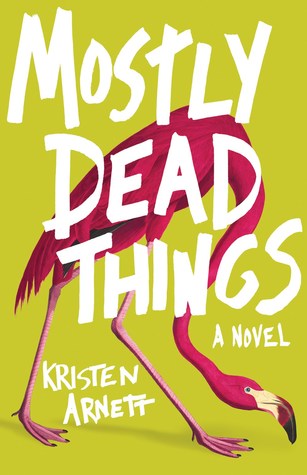 After her father’s suicide, Jessa-Lynn Morton takes over the family taxidermy business in central Florida. Despite her excessive drinking and grief over both her father and her best friend and long-time on-and-off girlfriend (also, inconveniently, her brother’s wife) Brynn, who recently took off, she’s just about holding it together. That is, until 1) her mother takes to composing interspecies orgies and S&M scenes in the shop window and 2) her niece and nephew, Lolee and Bastien, start bringing in specimens for taxidermy that they haven’t exactly obtained legally. Gallery owner Lucinda Rex takes an interest in her mother’s ‘art’ and is soon a new romantic interest for Jessa. But the entire family is going to have to face its issues before her professional and love life can be restored.
This debut novel’s title, cover and premise were utterly irresistible to me, and though I loved the humid Florida setting, it was all a bit too much. At 200 pages this could have been a razor-sharp new favorite, but instead there was a lot of sag in its 350+ pages. Alternating chapters based around mounting particular animals give glimpses into the family’s past but mostly have Jessa mooning over Brynn. Her emotional journey starts to feel belabored; it’s as if an editor tried to rein in Arnett’s campy glee at the dysfunctional family’s breakdown and made her add in some amateur psychoanalysis, and for me this diluted the quirky joy.
Skinning and sex scenes are equally explicit here. This never bothered me, but it should go without saying that it is not a book for the squeamish. It’s when sex and taxidermy mix that things get a little icky, as in her mother’s X-rated tableaux and a line like “Often I found myself comparing the limber body of a deer with the long line of [Lucinda’s] legs or the strong cord of her neck.” Believe it or not, this is not the first queer taxidermy novel I’ve read. The other one, English Animals by Laura Kaye, was better. I’d wanted another Swamplandia! but got something closer to Black Light instead.
My rating: 
My thanks to Corsair for the free copy for review.
The Liar’s Dictionary by Eley Williams
 Mallory is five years into an internship at Swansby House, the London headquarters of Swansby’s dictionary. The dictionary is known for being unfinished – too many of its lexicographers left for WWI and never returned – and for having made-up words. In 1899, Peter Winceworth, the butt of jokes among his colleagues, started composing mountweazels (fake entries) and inserting them into the dictionary. In the contemporary story line, Mallory’s job is to remove the mountweazels as the dictionary is prepared for digitization. But her attention is distracted by anonymous bomb threats and by lingering shame about her sexuality – Mallory thinks she’s “out enough,” but her girlfriend Pip begs to differ.
Chapters are headed with vocabulary words running from A to Z, and alternate between Mallory’s first-person narration and a third-person account of Winceworth’s misadventures at the turn of the twentieth century. In any book with this kind of structure I seem to prefer the contemporary strand and itch to get back to it, though there is a quite astounding scene in which Winceworth intervenes to help a choking pelican. Events at Swansby House resonate and mirror each other across the dozen decades, with both main characters emerging with a new sense of purpose after an epiphany that life is about more than work. Though silly in places, this has a winning love of words and characters you’ll care about.
A favorite made-up word: “Mammonsomniate: to dream that money might make anything possible.”
Readalikes: Enter the Aardvark by Jessica Anthony and Boxer, Beetle by Ned Beauman
My rating:
My thanks to William Heinemann for the proof copy for review.
Looking Was Not Enough: Jeffrey Eugenides’ Middlesex by Irena Yamboliev
 When I worked in a university library and read Middlesex during quiet evenings on the circulation desk in 2009, a colleague asked me, “Is that about the London borough?” My reply: “Er, no, it’s about a hermaphrodite.” That’s an off-putting, clinical sort of word, but it does appear in the first paragraph of this family saga with a difference, after the mythological intensity and medical necessity implied by the killer opening line: “I was born twice: first, as a baby girl, on a remarkably smogless Detroit day in January of 1960; and then again, as a teenage boy, in an emergency room near Petoskey, Michigan, in August of 1974.”
Cal, born Calliope but now living as a man and working in the Foreign Service, recounts three generations of family history, from Greece to Detroit to Berlin. “Because … their parents were dead and their village destroyed, because no one in Smyrna knew who they were,” brother and sister Lefty and Desdemona became lovers and got married on the boat over to America. They were his grandparents. Add to that his parents’ first-cousin marriage and you see how inbreeding played genetic havoc and made way for Callie/Cal.
 I intended to reread Middlesex, which I consider one of my all-time favorite books, but only made it through 60 pages on this occasion. Still, Yamboliev, a Bulgarian-American who teaches at Stanford, reminded me of everything I love about it: the medical theme, the exploration of selfhood, the playful recreation of the past. Drawing parallels with her own family’s move to America, she ponders the disconnection from the home country and the creation of a new life story. “To tell ourselves where we come from—to narrate—is to find a pattern retroactively.” She also looks at literary precursors like Ovid’s Metamorphoses, Herculine Barbin’s memoir, and Balzac’s and Barthes’s writings on a castrato. “Does transformation make the self discontinuous?” is one of her central questions, and she likens Cal’s situation to that of trans men who have to train themselves to speak, dress and act in a convincingly masculine way.
This is part of Fiction Advocate’s “Afterwords” series; all its monographs do a wonderful job of blending literary criticism, enthusiastic appreciation, and autobiographical reflection as life dovetails with (re)reading. I’ve previously reviewed the Fiction Advocate books on Blood Meridian, Fun Home, and The Year of Magical Thinking in this post, and the ones on Karl Ove Knausgaard’s My Struggle and Cheryl Strayed’s Wild in this one.
My rating: 
My thanks to Fiction Advocate for the free e-copy for review.
 Bookish Beck = Rebecca Foster. American transplant to England. Freelance proofreader and book reviewer.
 Bookish Beck