Some 2024 Reading Superlatives
Longest book read this year: The Bee Sting by Paul Murray

Shortest books read this year: The Wood at Midwinter by Susanna Clarke – a standalone short story (unfortunately, it was kinda crap); After the Rites and Sandwiches by Kathy Pimlott – a poetry pamphlet
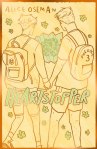 Authors I read the most by this year: Alice Oseman (5 rereads), Carol Shields (3 rereads); Margaret Atwood, Rachel Cusk, Pam Houston, T. Kingfisher, Sarah Manguso, Maggie O’Farrell, and Susan Allen Toth (2 each)
Publishers I read the most from: (Besides the ubiquitous Penguin Random House and its myriad imprints,) Carcanet (15), Bloomsbury & Faber (12 each), Alice James Books & Picador/Pan Macmillan (9 each)
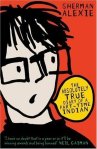
My top author ‘discoveries’ of the year: Sherman Alexie and Bernardine Bishop

Proudest bookish achievements: Reading almost the entire Carol Shields Prize longlist; seeing The Bookshop Band on their huge Emerge, Return tour and not just getting my photo with them but having it published on both the Foreword Reviews and Shelf Awareness websites

Most pinching-myself bookish moment: Getting a chance to judge published debut novels for the McKitterick Prize
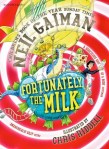
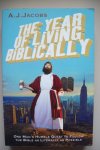
Books that made me laugh: Lots, but particularly Fortunately, the Milk… by Neil Gaiman, The Year of Living Biblically by A.J. Jacobs, and You Don’t Have to Be Mad to Work Here by Benji Waterhouse
Books that made me cry: On Chesil Beach by Ian McEwan, My Good Bright Wolf by Sarah Moss
 Two books that hit the laughing-and-crying-at-the-same-time sweet spot: The Absolutely True Diary of a Part-Time Indian by Sherman Alexie and I’m Glad My Mom Died by Jennette McCurdy
Best book club selections: Clear by Carys Davies, Howards End by E.M. Forster, Strange Sally Diamond by Liz Nugent
Best first lines encountered this year:
- From Cocktail by Lisa Alward: “The problem with parties, my mother says, is people don’t drink enough.”
- From A Reason to See You Again by Jami Attenberg: “Oh, the games families play with each other.”
- From The Snow Queen by Michael Cunningham: “A celestial light appeared to Barrett Meeks in the sky over Central Park, four days after Barrett had been mauled, once again, by love.”

Best last lines encountered this year:
 From The Ministry of Time by Kaliane Bradley: “Forgiveness and hope are miracles. They let you change your life. They are time-travel.”
- From Mammoth by Eva Baltasar: “May I know to be alert when, at the stroke of midnight, life sends me its cavalry.”
- From Private Rites by Julia Armfield: “For now, they stay where they are and listen to the unwonted quiet, the hush in place of rainfall unfamiliar, the silence like a final snuffing out.”
- From Come to the Window by Howard Norman: “Wherever you sit, so sit all the insistences of fate. Still, the moment held promise of a full life.”
- From Intermezzo by Sally Rooney: “It doesn’t always work, but I do my best. See what happens. Go on in any case living.”
- From Barrowbeck by Andrew Michael Hurley: “And she thought of those Victorian paintings of deathbed scenes: the soul rising vaporously out of a spent and supine body and into a starry beam of light; all tears wiped away, all the frailty and grossness of a human life transfigured and forgiven at last.”
- From Small Rain by Garth Greenwell: “Pure life.”

Books that put a song in my head every time I picked them up: I’m the King of the Castle by Susan Hill (“Crash” by Dave Matthews Band); Y2K by Colette Shade (“All Star” by Smashmouth)
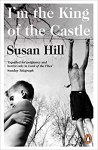

Shortest book titles encountered: Feh (Shalom Auslander) and Y2K (Colette Shade), followed by Keep (Jenny Haysom)
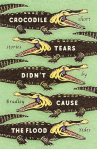 Best 2024 book titles: And I Will Make of You a Vowel Sound, I Can Outdance Jesus, Zombie Vomit Mad Libs, Crocodile Tears Didn’t Cause the Flood, This Is Why We Can’t Have Nice Things
Best book titles from other years: Recipe for a Perfect Wife, Tripping over Clouds, Waltzing the Cat, Dressing Up for the Carnival, The Met Office Advises Caution
Favourite title and cover combo of the year: I’m Mostly Here to Enjoy Myself by Glynnis MacNicol

Best punning title (and nominative determinism): Knead to Know: A History of Baking by Dr Neil Buttery
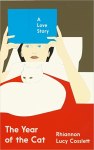 Biggest disappointments: The Glassmaker by Tracy Chevalier (I didn’t get past the first chapter because of all the info dumping from her research); The Year of the Cat by Rhiannon Lucy Cosslett; milk and honey by Rupi Kaur (that … ain’t poetry); 2 from the Observer’s 10 best new novelists feature (here and here)
A couple of 2024 books that everyone was reading but I decided not to: Creation Lake by Rachel Kushner, You Are Here by David Nicholls
 The worst books I read this year: Mammoth by Eva Baltasar, A Spy in the House of Love by Anaïs Nin
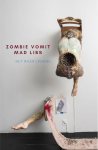
The downright strangest books I read this year: Zombie Vomit Mad Libs, followed by The Peculiar Life of a Lonely Postman. All Fours by Miranda July (I am at 44% now) is pretty weird, too.

A Belated R.I.P., Part III: Hand, Hurley, Kingfisher and Meddings
I meant to post on Halloween but the day got away from me, so here’s my belated third contribution to the Readers Imbibing Peril challenge (the first two are here and here). It’s rare for me to borrow from the horror section of the library and even rarer for me to read sequels, yet here I am with two purple-spotted spines and three books that count as continuations. I’m a little surprised at myself for managing eight R.I.P. reviews this year, but five of those were of very short books or graphic novels so were quick reads. With the possible exception of the dystopian final chapter of the Hurley, none of my selections scared me.
A Haunting on the Hill by Elizabeth Hand (2023)
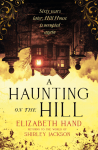
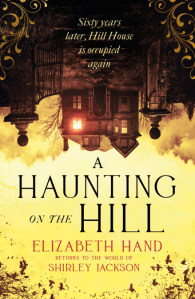 Hand was commissioned by Shirley Jackson’s estate to write a sequel to The Haunting of Hill House, which I read for R.I.P. in 2019 (my review). As in the original, four people gather at Hill House; artists rather than ghost-hunters, but they soon grasp the place’s supernatural malevolence. Holly has written a play about a historical witch – to be portrayed by Amanda, an actress of a certain age. Holly’s girlfriend, Nisa, provides music in the form of traditional murder ballads; actor Stevie makes up the quartet. Despite locals’ persistent admonitions, they take out a short-term rental on Hill House, thinking it will be atmospheric to finish the play and conduct read-throughs there. I was solidly engaged with the characters, whom Hand reinforces with traumatic backstories (Amanda’s proximity to an accidental death, Stevie’s molestation as a child actor), but couldn’t take the scary reveals seriously. A tablecloth suddenly soaked in blood? A black hare falling out of a chimney? Such moments just felt silly, plus Hand overplays the warnings versus the quartet’s blithe heedlessness. The ending is actually pretty chilling, but too much that came before strained belief. Do read the Jackson if you haven’t, though; it’s genuinely frightening. (Public library)
Barrowbeck by Andrew Michael Hurley (2024)
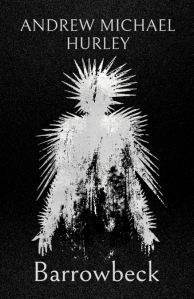 I’ve read all of Hurley’s novels (The Loney, Devil’s Day and Starve Acre), the first two for previous R.I.P. events. Here again, he explores the arcane beliefs and practices of an isolated community: Barrowbeck, a fictional valley on the Yorkshire–Lancashire borders. The 13 chapters, rather like linked short stories, alight at moments along its timeline, from the medieval conflict of “First Footing” all the way through the near-future desolation of “A Valediction.” What connects the vignettes is more tonal than geographical, though, with suspicion, exclusion and the uncanny recurring. There are hints of deadly customs and communion with the departed. As is true of most collections, some stories are more memorable than others, and I felt that a few went too far towards pastiche (e.g., “Autumn Pastoral” of The Woman in Black by Susan Hill). I had a few favourites: “To Think of Sicily,” set after the 15th-century visit of an Italian man bearing mysterious olive oil, introduces the people’s seemingly congenital xenophobia. In “Hymns for Easter,” residents killed in the First World War still join their voices with the choir’s. “Sisters,” about B&B operators trying to get rid of their solitary guest before closing for the winter, was the best of all and reminiscent of the twins in Daniel Mason’s North Woods. You should like this if you’re a Daisy Johnson fan or enjoyed Private Rites by Julia Armfield, though ultimately I found more difference than continuity across the chapters.
With thanks to John Murray Press for the proof copy for review.
What Feasts at Night by T. Kingfisher (2024)
 The second book of the “Sworn Soldier” duology, after What Moves the Dead. Easton has returned from Paris to their native Gallacia to give Miss Potter a fungi-hunting holiday as thanks for helping with the previous adventure. But the caretaker is dead and the home abandoned, so Easton hires a local widow and her grandson, Bors, to look after the property. Bors is soon troubled by the moroi, a ghost-woman who comes in dreams to sit on people’s chests, crushing the breath out of them. She also seems to take the form of moths. And next she comes for Easton. You’d think with all the world-building she’d done in the first book, Kingfisher could pack lots of plot into this novella. But there’s really not much to it. It was over before it began. The winking humour of the first book was worn-out. And the more I thought about it, the more uneasy I was with the negative nature imagery I kept encountering in horror: fungi, moths, rabbits/hares. I understand this is often harkening back to ancient legends, but in a biodiversity crisis we need love rather than fear. (Public library)
The Sad Ghost Club 2 by Lize Meddings (2022)
 This teen comic series is not about literal ghosts but about mental health. Young people struggling with anxiety and intrusive thoughts recognize each other – they’ll be the ones wearing sheets with eye holes. In the first book, which I reviewed for R.I.P. last year, SG meets Socks and determines to start a society for people like them. In this sequel, Socks worries that he’s not cool enough for the club and that SG, especially after they meet Rue, will leave him behind. The message is about being there for people even when they think they just want to be alone. By the end, it looks like the club is going to grow further. This barely built on the first book and contained so little incident that it felt unnecessary. Never mind! (Little Free Library)
Rather a lackluster finish to the challenge there, but the Hurley at least is recommended.
Book Serendipity, August to October 2024
I call it “Book Serendipity” when two or more books that I read at the same time or in quick succession have something in common – the more bizarre, the better. This is a regular feature of mine every couple of months. Because I usually have 20–30 books on the go at once, I suppose I’m more prone to such incidents. People frequently ask how I remember all of these coincidences. The answer is: I jot them down on scraps of paper or input them immediately into a file on my PC desktop; otherwise, they flit away!
The following are in roughly chronological order.
- The William Carlos Williams line “no ideas but in things” is quoted in Home Is Where We Start by Susanna Crossman and echoed with a slight adaptation in Want, the Lake by Jenny Factor.
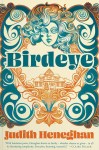
- A woman impulsively stops into a tattoo parlour in We Are Animals by Jennifer Case and Birdeye by Judith Heneghan.
- Cleaning up a partner’s bristles from the sink in 300 Arguments by Sarah Manguso and The Echoes by Evie Wyld.

- Sarah Manguso, by whom I was reading two books for a Bookmarks article, was quoted in Some of Us Just Fall by Polly Atkin.
- Someone is annoyed at their spouse making a mess cooking lemon preserves in How We Know Our Time Travelers by Anita Felicelli and Liars by Sarah Manguso, both of which are set in California.
- Rumpelstiltskin is referenced in one short story of a speculative collection: How We Know Our Time Travelers by Anita Felicelli and The Man in the Banana Trees by Marguerite Sheffer.
- A father who is hard of hearing, and an Australian woman looking for traces of her grandmother’s life in England in The House with All the Lights On by Jessica Kirkness and The Echoes by Evie Wyld.
- A character named Janie or Janey in Their Eyes Were Watching God by Zora Neale Hurston and The Echoes by Evie Wyld. The Pre-Raphaelite model Janey is also mentioned in The Garden Against Time by Olivia Laing.
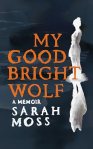 Contrasting one’s childhood love of the Little House on the Prairie books with reading them as an adult and being aware of the racial and colonial implications in Home Is Where We Start by Susanna Crossman and My Good Bright Wolf by Sarah Moss.
- A mention of Little Women in A Perfect Arrangement by Suzanne Berne and My Good Bright Wolf by Sarah Moss.
- A character grew up in a home hair-dressing business in A Perfect Arrangement by Suzanne Berne and Home Is Where We Start by Susanna Crossman.
- The discovery of an old pram in an outbuilding in Instructions for a Heatwave by Maggie O’Farrell and Mina’s Matchbox by Yōko Ogawa.
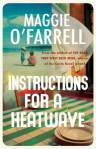
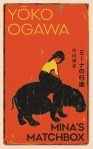
- An Irish woman named Aoife in My Good Bright Wolf by Sarah Moss and Instructions for a Heatwave by Maggie O’Farrell.
- Cooking then throwing out entire meals in My Good Bright Wolf by Sarah Moss and The Echoes by Evie Wyld. (Also throwing out a fresh meal in Birdeye by Judith Heneghan. Such scenes distress me!)
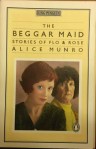 A new lover named Simon in one story of The Beggar Maid by Alice Munro and The Echoes by Evie Wyld.
- A character writes a recommendation letter for someone who then treats them vindictively, because they assumed the letter was negative when it wasn’t, in A Perfect Arrangement by Suzanne Berne and one story of The Beggar Maid by Alice Munro.
- After her parents’ divorce, the author never had a designated bedroom in her father’s house in Home Is Where We Start by Susanna Crossman and The Garden Against Time by Olivia Laing.
 Reading The Bell Jar as a teenager in Shred Sisters by Betsy Lerner and My Good Bright Wolf by Sarah Moss.
- A contentious Town Hall meeting features in A Perfect Arrangement by Suzanne Berne and Birdeye by Judith Heneghan.
- The wife is pregnant with twins in A Perfect Arrangement by Suzanne Berne and The Year of Living Biblically by A.J. Jacobs. (There are also twins in Birdeye by Judith Heneghan. In general, I find that they occur far more often in fiction than in real life!)
- 1930s Florida as a setting in Florence Adler Swims Forever by Rachel Beanland and Their Eyes Were Watching God by Zora Neale Hurston.
- Dorothy Wordsworth and her journals are discussed in Some of Us Just Fall by Polly Atkin and My Good Bright Wolf by Sarah Moss.
- Wordsworth’s daffodils are mentioned in Signs, Music by Raymond Antrobus and My Good Bright Wolf by Sarah Moss.
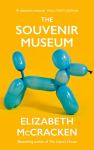
- “F*ck off” is delivered in an exaggerated English accent in Birdeye by Judith Heneghan and The Souvenir Museum by Elizabeth McCracken.
- The main character runs a country store in Their Eyes Were Watching God by Zora Neale Hurston and The Beggar Maid by Alice Munro.
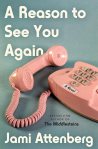 Reading a second novel this year in which the younger sister of a pair wants to go into STEM and joins the Mathletes in high school: first was A Reason to See You Again by Jami Attenberg; later was Shred Sisters by Betsy Lerner.
- An older sister who has great trouble attending normal school and so is placed elsewhere (including a mental institution) for a total of two years in Learning to Think by Tracy King and Shred Sisters by Betsy Lerner.
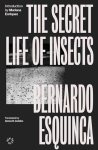
- The idea of trees taking revenge on people for environmental destruction in one story of The Secret Life of Insects by Bernardo Esquinca and one poem of The Holy & Broken Bliss by Alicia Ostriker.
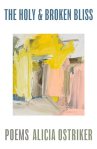
- An illiterate character in Instructions for a Heatwave by Maggie O’Farrell and Also Here by Brooke Randel.
-
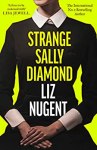 Controversy over throwing a dead body into the trash in Birdeye by Judith Heneghan and Strange Sally Diamond by Liz Nugent.
- A publishing assistant who wears a miniskirt and Doc Martens in Shred Sisters by Betsy Lerner and Summer Fridays by Suzanne Rindell.
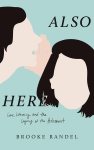
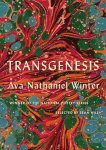
- Ancestors’ experience in Auschwitz in Also Here by Brooke Randel and Transgenesis by Ava Winter.
- The protagonist finds it comforting when her boyfriend lies down with his full weight on her in Shred Sisters by Betsy Lerner and The Echoes by Evie Wyld.
- A woman badgers her ex-husband about when his affair with his high school/college sweetheart started (before or after the divorce) in Shred Sisters by Betsy Lerner and Liars by Sarah Manguso.
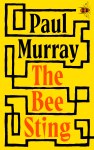 I encountered an Irish matriarch who married the ‘wrong’ brother, not Frank, in The Bee Sting by Paul Murray earlier in the year, and then in Instructions for a Heatwave by Maggie O’Farrell.
- A boy is playing in the family car on the driveway when it rolls backwards and kills someone in A Perfect Arrangement by Suzanne Berne and Tell Me Everything by Elizabeth Strout.
- Quantoxhead, Somerset is mentioned in On Trying to Keep Still by Jenny Diski and A House Unlocked by Penelope Lively.
- Tapeworms are mentioned in On Trying to Keep Still by Jenny Diski and one story of The Best Short Stories 2023: The O. Henry Prize Winners, ed. Lauren Groff.
- A description of horrific teeth in one story of The Best Short Stories 2023: The O. Henry Prize Winners, ed. Lauren Groff, and one story of The Long Swim by Terese Svoboda.
- A character researches potato blight, and another keeps his smoking a secret from his wife, in one story of The Best Short Stories 2023: The O. Henry Prize Winners, ed. Lauren Groff, and Tell Me Everything by Elizabeth Strout.
 A piano gets mauled out of anger in one story of Save Me, Stranger by Erika Krouse and Strange Sally Diamond by Liz Nugent.
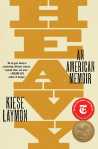
- Men experiencing eating disorders in Heavy by Kiese Laymon and Heartstopper Volumes 3 and 4 by Alice Oseman.
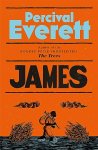
- Black people deliberately changing their vocabulary and speech register when talking to white people in James by Percival Everett and Heavy by Kiese Laymon.
- My second book of the year in which a woman from centuries ago who magically appears in the present requests to go night clubbing: first The Ministry of Time by Kaliane Bradley, then Isabella & Blodwen by Rachael Smith.
- Characters named Sadie in James by Percival Everett, The Souvenir Museum by Elizabeth McCracken, and Still Life at Eighty by Abigail Thomas.
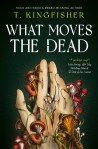
- Creepy hares in horror: A Haunting on the Hill by Elizabeth Hand and What Moves the Dead by T. Kingfisher. There were weird rabbits in I’m the King of the Castle by Susan Hill, too.
- I read two scenes of a calf being born, one right after the other: in Dangerous Enough by Becky Varley-Winter, then I’m the King of the Castle by Susan Hill.
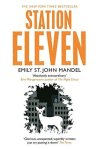
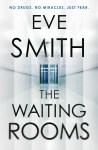
- I read about an animal scratch leading to infection leading to death in a future with no pharmaceuticals in Station Eleven by Emily St. John Mandel in the morning and then in the afternoon heard Eve Smith mention the same thing happening due to antibiotic resistance in her novel The Waiting Rooms. Forget about R.I.P.; this is the stuff that scares me…
What’s the weirdest reading coincidence you’ve had lately?
#1970Club: Desperate Characters & I’m the King of the Castle
Simon and Karen’s classics reading weeks are always a great excuse to pick up some older books. I found on my shelves a chilly Brooklyn-set novella that has been praised to the skies by the likes of Jonathan Franzen, and then borrowed a short and unsettling novel about warring English schoolboys from the library.

Desperate Characters by Paula Fox
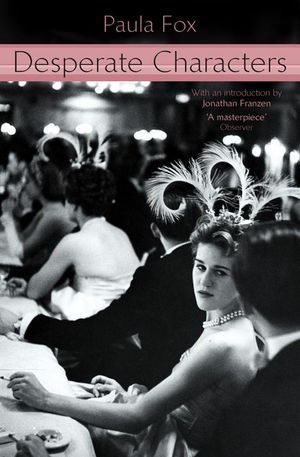 Other covers feature a cat, which is probably why this was on my radar. Don’t expect a cat lover’s book, though. The cat simply provides the opening incident. Sophie Bentwood is a forty-year-old underemployed translator; she doesn’t really need to work because her lawyer husband Otto keeps them in comfort. Feeding a feral cat, she is bitten savagely on the hand and over the next several days puts off seeking medical attention, wanting to stay in uncertainty rather than condemn herself to rounds of shots – and the cat to possible euthanasia. Both she and Otto live in this state of inertia. They were never able to have children but couldn’t take the step of adopting; Sophie had an affair but couldn’t leave Otto to commit elsewhere.
The cat bite seems to set off a chain of mishaps, culminating with the Bentwoods discovering that their house in the country has been vandalized. In the meantime, not a lot happens. The couple goes to a party and Sophie sneaks out for late-night drinks with her husband’s ex-partner, to whom she confides her affair. In Jonathan Franzen’s introduction, he compares to Bellow, Roth and Updike – but thinks Fox surpasses them all. The book explicitly references the Thoreau quote about people living lives of quiet desperation. I could sympathize with the midlife malaise depicted. As stagnant marriage stories go, this reminded me of what I’ve read by Richard Yates, just with a little less drinking. It would have made a good Literary Wives selection. In general, though, I can’t summon much enthusiasm. Given the cult classic status, I expected more. (Secondhand – Community Furniture Project, Newbury)
I’m the King of the Castle by Susan Hill
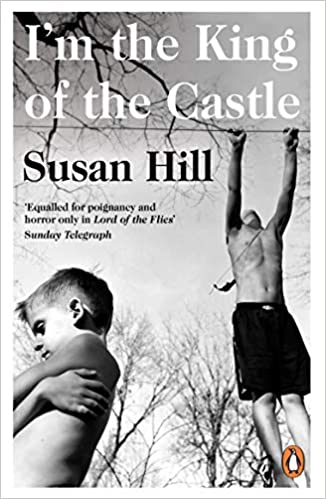 I’m almost tempted to mark this as an R.I.P. read, because it’s very dark indeed. Like The Woman in Black, it takes place in an ominous English mansion and its environs. Other scenes take place in a creepy forest and at castle ruins, adding to the Gothic atmosphere. Edmund Hooper and his father move into Warings after his grandparents’ death. Soon his father makes an unwelcome announcement: he’s hired a housekeeper, Helena Kingshaw, who will be moving in with her son, Charles, who is the same age as Edmund. Hooper writes Kingshaw (as the boys are called throughout the book, probably to replicate how they were known at their boarding schools) a note: “I DIDN’T WANT YOU TO COME HERE.”
That initial hostility erupts into psychological, and sometimes physical, abuse. Kingshaw quickly learns not to trust Hooper. “He thought, I mustn’t let Hooper know what I truly think, never, not about anything.” He tries running away to the woods but Hooper follows him; he makes friends with a local farm boy but it’s little comfort when he’ll soon be starting at Hooper’s school and it looks as if their lonely widowed parents might marry. The boys learn each other’s weaknesses and exploit them. At climactic moments, they have the opportunity to be gracious but retreat from every potential truce.
Heavy on dialogue and description, the book moves quickly with its claustrophobic scenes of nightmares come to life. Referring to the boys by surname makes them seem much older than 10 going on 11. Their antagonism is no child’s play – as the title ironically suggests – or harmless bullying. Is it evil? The reader feels for Kingshaw, the more passive one, yet what he does in revenge is nearly as bad. I was reminded somewhat of Harriet Said… by Beryl Bainbridge. It’s a deeply uncomfortable story, not least for how nature (pecking crows, cases of dead moths) is portrayed as equally menacing. (Public library)
Another 15 books from 1970 that I’ve read:
Jonathan Livingston Seagull by Richard Bach (in the running for worst book I’ve ever read)
Are You There, God? It’s Me, Margaret by Judy Blume
Runaway Ralph by Beverly Cleary
Fifth Business by Robertson Davies
84, Charing Cross Road by Helene Hanff
If Only They Could Talk by James Herriot
Ripley Under Ground by Patricia Highsmith
Crow by Ted Hughes
Moominvalley in November by Tove Jansson
Being There by Jerzy Kosiński
The Bluest Eye by Toni Morrison
Sing Down the Moon by Scott O’Dell
Love Story by Erich Segal
The Driver’s Seat by Muriel Spark
The Trumpet of the Swan by E.B. White
(Lots of children’s books there! Clearly they were considered modern classics during my 1980s childhood.)
I’ve previously participated in the 1920 Club, 1956 Club, 1936 Club, 1976 Club, 1954 Club, 1929 Club, 1940 Club and 1937 Club.
Some 2023 Reading Superlatives
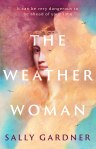 Longest book read this year: The Weather Woman by Sally Gardner (457 pages) – not very impressive compared to last year’s 720-page To Paradise. That means I didn’t get through a single doorstopper this year. D’oh!
Shortest book read this year: Pitch Black by Youme Landowne and Anthony Horton (40 pages)
Authors I read the most by this year: Margaret Atwood, Deborah Levy and Brian Turner (3 books each); Amy Bloom, Simone de Beauvoir, Tove Jansson, John Lewis-Stempel, W. Somerset Maugham, L.M. Montgomery and Maggie O’Farrell (2 books each)
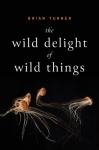


Publishers I read the most from: (Setting aside the ubiquitous Penguin and its many imprints) Carcanet (11 books) and Picador/Pan Macmillan (also 11), followed by Canongate (7).
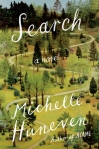
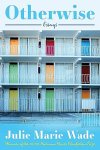
My top author discoveries of the year: Michelle Huneven and Julie Marie Wade
My proudest bookish accomplishment: Helping to launch the Little Free Library in my neighbourhood in May, and curating it through the rest of the year (nearly daily tidying; occasional culling; requesting book donations)
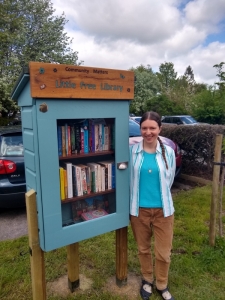
Most pinching-myself bookish moments: Attending the Booker Prize ceremony; interviewing Lydia Davis and Anne Enright over e-mail; singing carols after-hours at Shakespeare and Company in Paris

Books that made me laugh: Notes from a Small Island by Bill Bryson, The Librarianist by Patrick deWitt, two by Katherine Heiny, Motherland Fatherland Homelandsexuals by Patricia Lockwood
Books that made me cry: A Heart that Works by Rob Delaney, Lucy by the Sea by Elizabeth Strout, Family Meal by Bryan Washington
 The book that was the most fun to read: Romantic Comedy by Curtis Sittenfeld
Best book club selections: By the Sea by Abdulrazak Gurnah and The Woman in Black by Susan Hill
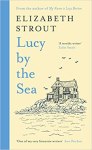 Best last lines encountered this year: “And I stood there holding on to this man as though he were the very last person left on this sweet sad place that we call Earth.” (Lucy by the Sea, Elizabeth Strout)
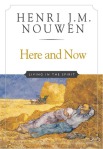 A book that put a song in my head every time I picked it up: Here and Now by Henri Nouwen (Aqualung song here)
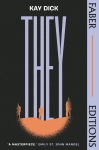
Shortest book title encountered: Lo (the poetry collection by Melissa Crowe), followed by Bear, Dirt, Milk and They
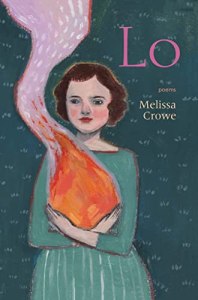



Best 2023 book titles: These Envoys of Beauty and You Bury the Birds in My Pelvis
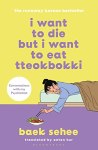 Best book titles from other years: I Want to Die but I Want to Eat Tteokbokki, Before You Suffocate Your Own Fool Self, A Down Home Meal for These Difficult Times, The Cats We Meet Along the Way, We All Want Impossible Things
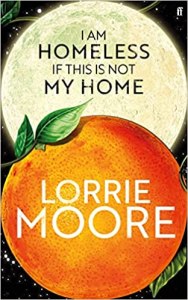
Favourite title and cover combo of the year: I Am Homeless If This Is Not My Home by Lorrie Moore (shame the contents didn’t live up to it!)
Biggest disappointment: Speak to Me by Paula Cocozza
A 2023 book that everyone was reading but I decided not to: Prophet Song by Paul Lynch

The worst books I read this year: Monica by Daniel Clowes, They by Kay Dick, Swallowing Geography by Deborah Levy and Self-Portrait in Green by Marie Ndiaye (1-star ratings are extremely rare for me; these were this year’s four)
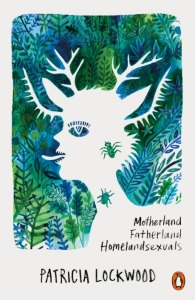
The downright strangest book I read this year: Motherland Fatherland Homelandsexuals by Patricia Lockwood
Book Serendipity, October to December 2023
I call it “Book Serendipity” when two or more books that I read at the same time or in quick succession have something in common – the more bizarre, the better. This is a regular feature of mine every couple of months. Because I usually have 20–30 books on the go at once, I suppose I’m more prone to such incidents. The following are in roughly chronological order.
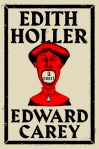
- A woman turns into a spider in Edith Holler by Edward Carey and The Human Origins of Beatrice Porter and Other Essential Ghosts by Soraya Palmer.

- Expulsion from Eden scenes (one literal, after the Masaccio painting; another more figurative by association) in Conversation Among Stones by Willie Lin and North Woods by Daniel Mason.
- Reading my second 2023 release featuring a theatre fire (after The House Is on Fire by Rachel Beanland, which I actually read last year): Edith Holler by Edward Carey.
- The protagonist cuts their foot in The Rituals by Rebecca Roberts and The Last House on Needless Street by Catriona Ward.


- On the same evening, I started two novels where the protagonist’s parents both died in a car crash: The Witches by Roald Dahl and Family Meal by Bryan Washington. This is something I encounter ALL THE TIME in fiction (versus extremely rarely in life) and it’s one of my major pet peeves. I can excuse it more in the children’s book as the orphan trope allows for adventures, but for the most part it just seems lazy to me. The author has decided they don’t want to delve into a relationship with parents at all, so they cut it out in the quickest and easiest possible way.
- A presumed honour killing in Behind You Is the Sea by Susan Muaddi Darraj and The Hundred and Ninety-Nine Steps by Michel Faber.


- A Houston, Texas setting in The Only Way Through Is Out by Suzette Mullen and Family Meal by Bryan Washington.
- Daniel Clowes, whose graphic novel Monica I was also in the middle of at the time, was mentioned in Robin Ince’s Bibliomaniac.
- The author/speaker warns the squeamish reader to look away for a paragraph in Robin Ince’s Bibliomaniac (recounting details of a gross-out horror plot) and one chapter of Daniel Mason’s North Woods.


- A mentally ill man who lives at the end of a lane in Daniel Mason’s North Woods and The Last House on Needless Street by Catriona Ward.
- Reading Last House before the Mountain by Monika Helfer and The Last House on Needless Street by Catriona Ward at the same time.
- The Daedalus myth (via Aeschylus or Brueghel, or just in general) is mentioned in Last House before the Mountain by Monika Helfer, The Ghost Orchid by Michael Longley, and Absolutely and Forever by Rose Tremain.
- A character goes to live with their aunt and uncle in Western Lane by Chetna Maroo and The House of Doors by Tan Twan Eng (both Booker-longlisted), but also The Woman in Black by Susan Hill, Train Dreams by Denis Johnson, and The Story Girl by L.M. Montgomery. I came across all five instances within a few days! Later I also encountered a brief mention of this in Ferdinand by Irmgard Keun. How can this situation be so uncommon in life but so common in fiction?!


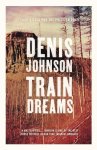

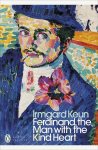
- The outdated terms “Chinaman” and “coolie” appear frequently in Train Dreams by Denis Johnson and The House of Doors by Tan Twan Eng.
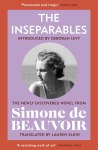
- A 15-year-old declares true love in The Inseparables by Simone de Beauvoir and Absolutely and Forever by Rose Tremain.
- A French character named Pascal in The Inseparables by Simone de Beauvoir and The Garrick Year by Margaret Drabble.

- A minor character called Mrs Biggs in Harriet Said… by Beryl Bainbridge and The House of Doors by Tan Twan Eng.
- The Chinese zither (guzheng) is mentioned in Dear Chrysanthemums by Fiona Sze-Lorrain, which I read earlier in the year, and The House of Doors by Tan Twan Eng.
- Oscar Wilde’s trial is mentioned in The House of Doors by Tan Twan Eng, as it was in The New Life by Tom Crewe, which I read earlier in the year – in both it was a cautionary case for older homosexual characters (based on real people: W. Somerset Maugham vs. John Addington Symonds) who were married to women but had a live-in male secretary generally known to be their lover. At the same time as I was reading The House of Doors, I was rereading Wilde’s De Profundis, which was written from prison.


- In Fifty Days of Solitude Doris Grumbach mentions reading Bear by Marian Engel. I read both during Novellas in November.
- Living funerals are mentioned in Ferdinand by Irmgard Keun and The Ritual Effect by Michael Norton.
- A character insists that lilac not be included in a bouquet in In the Sweep of the Bay by Cath Barton and Bright Young Women by Jessica Knoll.


- A woman has a lover named Frances in Bright Young Women by Jessica Knoll and The Cancer Journals by Audre Lorde.
- The final word of the Fanny Howe poem in Raised by Wolves (the forthcoming 50th anniversary poetry anthology from Graywolf Press) is “theophanies.” At the same time, I was reading the upcoming poetry collection Theophanies by Sarah Ghazal Ali.


- The Cancer Journals by Audre Lorde, which I’d read the month before, was a major influence on the cancer memoir All In by Caitlin Breedlove.
- Two foodie memoirs I read during our city break, A Waiter in Paris by Edward Chisholm and The Sweet Life in Paris by David Lebovitz, both likened a group of young men to a Dolce & Gabbana ad. (Chisholm initially lived at Porte des Lilas, the next Metro stop up from where we stayed in Mairie des Lilas.)
- A French slang term for penis, “verge,” is mentioned in both The Sweet Life in Paris by David Lebovitz and Learning to Drive by Katha Pollitt.


What’s the weirdest reading coincidence you’ve had lately?
The Woman in Black, Train Dreams, and Absolutely & Forever (#NovNov23)
I’ve been slow off the mark this year, mostly because instead of reading a sensible one or two novellas at a time, I’ve had 10 or 15 on the go. It might mean I’ll read more overall, but from day to day it feels like crawling through loads of books, never to finish any. Except I did finally finish these three, all of which were great reads. After my thoughts on each, I’ll ponder this week’s prompt, “What Is a Novella?”
The Woman in Black by Susan Hill (1983)
This was a reread for me and our November book club book, as well as part of my casual project to read books from my birth year. I’ve generally been underwhelmed by Hill’s ghost stories, but I found this spookier than remembered and enjoyed spotting the nods to Victorian literature and to classic ghost story tropes. (Best of all, because it was so short, everyone actually read the book and came to the discussion. All 12 group members. I can’t recall the last time that happened!)
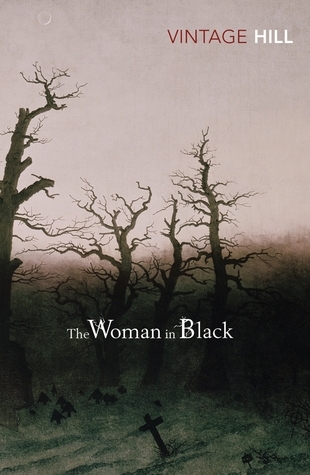 Hill keeps the setting deliberately vague, but it seems that it might be the Lincolnshire Fens in the 1930s or so. Arthur Kipps is a young lawyer tasked with attending the funeral of old Mrs Drablow and sorting through her papers. Locals don’t envy him the time spent in Eel Marsh House, and when he starts seeing a wasting-away, smallpox-pocked woman dressed in black in the churchyard, he understands why. This place harbours a malevolent ghost, and from the empty nursery with its creaking rocking chair to the marsh’s treacherous mud, Arthur fears that it’s out to get him.
The rational male narrator who insists he doesn’t believe in ghosts until he can’t deny an experience of one is a feature of the traditional ghost story à la M.R. James – and indeed, one of the chapter titles here (“Whistle and I’ll Come to You”) is a direct adaptation of a James story title. A framing story has Kipps as an older man writing the ghost story to share with his stepchildren. Some secondary characters have Dickensian names and there’s a Bleak House-esque description of a thick fog. The novel’s title must be an homage to Wilkie Collins’s sensation novel The Woman in White, with which it shares the theme of debated parentage.
A few members of our book club had seen the play or one of two film versions. Curiously, it seems like both movies alter the ending. Why, when the last four pages are such a perfect kicker? I might have dismissed the whole as a bit dull were it not for the brilliant conclusion. (Public library) [160 pages] 
Train Dreams by Denis Johnson (2002)
This is Cathy’s example of a perfect novella. I picked it up on her recommendation and read it within a few days (though you could easily do so in one sitting). Robert Grainier is a manual labourer in the American West. His body shattered by logging before he turns 40 and his spirit nearly broken by the loss of his home to a forest fire, he looks for meaning in the tragedy and a purpose to the rest of his long life. Is he being punished for participating in the attempted lynching of a Chinese worker decried as a thief? Or for not helping an injured man he came across in the woods as a teenager?
 Although Grainier might appear to be a Job-like figure, his loneliness never shades into despair, lightened by comic dialogues and the mildest of supernatural interventions. He starts a haulage business and keeps dogs. There are rumours of a wolf-girl in the area, and, convinced that his dog’s new pups are part-wolf, he teaches them to howl – his own favourite way of letting off steam.
A couple of gratuitously bleak scenes (a confession of incest and an accidental death) made me think Cormac McCarthy would be a major influence, but the tone is lighter than that. Richard Brautigan came to mind, and I imagine many contemporary writers have found inspiration here: Carys Davies, Ash Davidson, Donald Ray Pollock, even Patrick deWitt.
Gritty yet light, this presents life as an arbitrary accumulation of error and incident, longing (“Pulchritude!”) and effort. Grainier is an effective Everyman, such that his story feels not just all-American but universal. (Free from a neighbour) [116 pages] 
Absolutely and Forever by Rose Tremain (2023)
I had lost track of Tremain’s career a bit; I find her work hit and miss – perhaps too varied, though judging by her last five novels, she seems to have settled on historical fiction as her wheelhouse. I wasn’t sure what to expect from this latest book, but seeing that it was novella length, I was willing to give it a try. Tremain follows her heroine, Marianne Clifford, from the 1950s up to perhaps 1970. At age 15, she falls hopelessly in love with an 18-year-old aspiring writer, Simon Hurst, and loses her virginity in the back of his pale blue Morris Minor. She feels grown-up and sophisticated, and imagines their romance as a grand adventure that will whisk her away from her parents’ stultifying ordinariness –
when I thought about my future as Mrs Simon Hurst (riding a camel in Egypt, floating along in a gondola in Venice, driving through the Grand Canyon in an open-topped Cadillac, watching elephants drink from a waterhole in Africa) and about Mummy’s future (in the red-brick house in Berkshire with the shivery birch tree and the two white columns, playing Scrabble with Daddy and shopping at Bartlett’s of Newbury), I could see that my life was going to be more interesting than hers and that she might already be envious
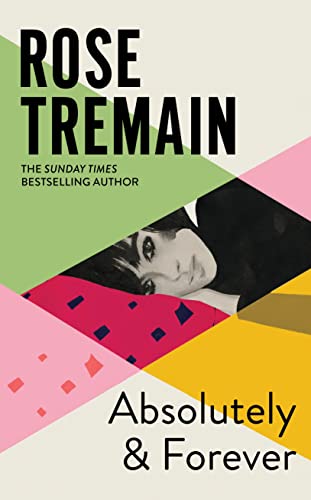 – but his new post-school life in Paris doesn’t have room for her. As she moves to London and trains for secretarial work, Marianne is bolstered by friendships with plain-speaking Scot Petronella (“Pet”) and Hugo Forster-Pellisier, her surfing and ping-pong partner on their parents’ Cornwall getaways. Forasmuch as her life changes over the next 15 years or so – taking on a traditional wife and homemaker role; her parents quietly declining – her attachment to her first love never falters.
This has the chic and convincing 1960s setting of Tessa Hadley’s work. Marianne’s narration is a delight, droll but not as blasé as she tries to appear. Tremain could have easily fallen into the trap of making her purely naïve (in the moment) or nostalgic (looking back), but instead she’s rendered her voice knowing yet compassionate, and made her a real wit (“I thought, Everything in Paris looks as if it’s practising the waltz, whereas quite a lot of things in London … appear as if they’ve just come out of hospital after a leg operation”). Pet is very funny, too. And it’s always fun for me to have nearby locations: Newbury, Reading, Marlborough. In imagining a different life for herself, Marianne resists repeating her mother’s mistakes and coincides with the rising feminist movement. There are two characters named Marianne, and two named Simon; the revelations about these doubles are breathtaking.
This really put me through an emotional wringer. It’s no cheap tear-jerker but a tender depiction of love in all its forms. I think, with Academy Street by Mary Costello, it may be my near-perfect novella. (Public library) [181 pages] 
Novellas in November, Week 2: What Is a Novella?
- Ponder the definition, list favourites, or choose ones you think best capture the ‘spirit’ of a novella.
A novella is defined by its length in words, but because that’s often difficult for readers to gauge, for this challenge we go by the number of pages instead, making 200 an absolute maximum – though some books with wide margins and spacing may top that but still seem slight enough to count (while those with tiny type can feel much longer than 160–200 pages).
Thematically, a novella is said to be concentrated on one character or small set of characters, with one plotline rather than several. This week I’ve been musing on a theory: a novella is to a novel what a memoir is to an autobiography. That is, if the latter is a comprehensive and often chronological story, the former focuses on a particular time or experience and shapes a narrative around it. What it potentially sacrifices in scope it makes up for with intensity.
But as soon as I’d formulated this hypothesis to myself, I started thinking of exceptions on either side. Train Dreams, like Silk by Alessandro Baricco and A Whole Life by Robert Seethaler, conveys a pretty complete life story. And no doubt there are many full-length novels that are almost claustrophobic in their adherence to one point of view and timeline.

The simplest way I’d put it is that a novella is a book that doesn’t outstay its welcome. I think it must be easier to write a doorstopper than a novella. Once you’ve arrived at a voice and a style, just keeping going can become a question of habit. But to continue paring back to get at the essence of a character and a situation – that takes real discipline. My other criterion would be that it has to portray the full range of human emotion, even if within a limited set of circumstances. Based on that, Train Dreams and Absolutely and Forever both triumph.
A few classic novellas that do this particularly well (links to my reviews):
Giovanni’s Room by James Baldwin
A Month in the Country by J. L. Carr
Miss Lonelyhearts by Nathanael West
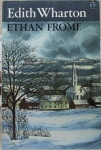
Ethan Frome by Edith Wharton


A few more contemporary novellas that do this particularly well (links to my reviews):
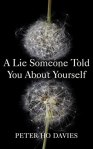
A Lie Someone Told You about Yourself by Peter Ho Davies
Our Souls at Night by Kent Haruf
Foster by Claire Keegan
A Feather on the Breath of God by Sigrid Nunez


R.I.P. Reads for Halloween: Ashworth, Bazterrica, Hill, Machado & More
I don’t often read anything that could be classed as suspense or horror, so the R.I.P. challenge is a fun excuse to dip a toe into these genres each year. This year I have an eerie relationship study, a dystopian scenario where cannibalism has become the norm, some traditional ghost stories old and new, and a bonus story encountered in an unrelated anthology.

Ghosted: A Love Story by Jenn Ashworth (2021)
Laurie’s life is thrown off kilter when, after they’ve been together 15 years, her husband Mark disappears one day, taking nothing with him. She continues in her job as a cleaner on a university campus in northwest England. After work she visits her father, who is suffering from dementia, and his Ukrainian carer Olena. In general, she pretends that nothing has happened, caring little how odd it will appear that she didn’t call the police until Mark had been gone for five weeks. Despite her obsession with true crime podcasts, she can’t seem to imagine that anything untoward has happened to him. What happened to Mark, and what’s with that spooky spare room in their flat that Laurie won’t let anyone enter?
 If you find unreliable narrators delicious, you’re in the right place. The mood is confessional, yet Laurie is anything but confiding. Occasionally she apologizes for her behaviour: “I realise this does not sound very sane” is one of her concessions to readers’ rationality. So her drinking problem doesn’t become evident until nearly halfway through, and a bombshell is still to come. It’s the key to understanding our protagonist and why she’s acted this way.
Ghosted wasn’t what I expected. Its air of supernatural menace mellows; what is to be feared is much more ordinary. The subtitle should have been more of a clue for me. I appreciated the working class, northern setting (not often represented; Ashworth is up for this year’s Portico Prize) and the unusual relationships Laurie has with Olena, as well as with co-worker Eddie and neighbour Katrina. Reminiscent of Jo Baker’s The Body Lies and Sue Miller’s Monogamy, this story of a storm-tossed marriage was a solid introduction to Ashworth’s fiction – this is her fifth novel – but I’m not sure the payoff lived up to that amazing cover.
With thanks to Sceptre for the free copy for review.
Tender Is the Flesh by Agustina Bazterrica (2017; 2020)
[Translated from the Spanish by Sarah Moses]
 This sledgehammer of a short Argentinian novel has a simple premise: not long ago, animals were found to be infected with a virus that made them toxic to humans. During the euphemistic “Transition,” all domesticated and herd animals were killed and the roles they once held began to be filled by humans – hunted, sacrificed, butchered, scavenged, cooked and eaten. A whole gastronomic culture quickly developed around cannibalism.
Marcos is our guide to this horrific near-future world. Although he works in a slaughterhouse, he’s still uneasy with some aspects of the arrangement. The standard terminology is an attempt at dispassion: the “heads” are “processed” for their “meat.” Smarting from the loss of his baby son and with his father in a nursing home, Marcos still has enough compassion that when he’s gifted a high-quality female he views her as a person rather than potential cuts of flesh. His decisions from here on will call into question his loyalty to the new system.
I wondered if there would come a point where I was no longer physically able to keep reading. But it’s fiendishly clever how the book beckons you into analogical situations and then forces you to face up to cold truths. It’s impossible to avoid the animal-rights message (in a book full of gruesome scenes, the one that involves animals somehow hits hardest), but I also thought a lot about how human castes might work – dooming some to muteness, breeding and commodification, while others are the privileged overseers granted peaceful ends. Bazterrica also conflates sex and death in uncomfortable ways. In one sense, this was not easy to read. But in another, I was morbidly compelled to turn the pages. Brutal but brilliant stuff. (Public library/Edelweiss)
Fear: Tales of Terror and Suspense, selected by Roald Dahl (2017)
 I reviewed the five female-penned ghost stories for R.I.P. back in 2019. This year I picked out another five, leaving a final four for another year. (Review copy)
“W.S.” by L.P. Hartley: The only thing I’ve read of Hartley’s besides The Go-Between. Novelist Walter Streeter is confronted by one of his characters, to whom he gave the same initials. What’s real and what’s only going on in his head? Perfectly plotted and delicious.
“In the Tube” by E.F. Benson: The concept of time is called into question when someone witnesses a suicide on the London Underground some days before it could actually have happened. All recounted as a retrospective tale. Believably uncanny.
“Elias and the Draug” by Jonas Lie: A sea monster and ghost ship plague Norwegian fishermen.
“The Ghost of a Hand” by J. Sheridan Le Fanu: A disembodied hand wreaks havoc in an eighteenth-century household.
“On the Brighton Road” by Richard Middleton: A tramp meets an ill boy on a road in the Sussex Downs. A classic ghost story that pivots on its final line.
The Small Hand: A Ghost Story by Susan Hill (2010)
 This was my fourth of Hill’s classic ghost stories, after The Woman in Black, The Man in the Picture and Dolly. They’re always concise and so fluently written that the storytelling voice feels effortless. I wondered if this one might have been inspired by “The Ghost of a Hand” (above). It doesn’t feature a disembodied hand, per se, but the presence of a young boy who slips his hand into antiquarian book dealer Adam Snow’s when he stops at an abandoned house in the English countryside, and again when he goes to a French monastery to purchase a Shakespeare First Folio. Each time, Adam feels the ghost is pulling him to throw himself into a pond. When Adam confides in the monks and in his brother, he gets different advice. A pleasant and very quick read, if a little predictable. (Free from a neighbour)
And a bonus story:
 Carmen Maria Machado’s “The Lost Performance of the High Priestess of the Temple of Horror” appears in Kink (2021), a short story anthology edited by Garth Greenwell and R.O. Kwon. (I requested it from NetGalley just so I could read the stories by Machado and Brandon Taylor.) It opens “I would never forget the night I saw Maxa decompose before me.” A seamstress, obsessed with an actress, becomes her dresser. Set in the 19th-century Parisian theatre world, this pairs queer desire and early special effects and is over-the-top sensual in the vein of Angela Carter, with hints of the sadomasochism that got it a place here.
Sample lines: “Women seep because they occupy the filmy gauze between the world of the living and the dead.” & “Her body blotted out the moon. She was an ambulatory garden, a beacon in a dead season, life where life should not grow.”
Also counting the short stories by Octavia E. Butler and Bradley Sides, I did some great R.I.P. reading this year! I think the book that will stick with me the most is Tender Is the Flesh.
Book Serendipity, April‒Early July
I call it serendipitous when two or more books that I read at the same time or in quick succession have something pretty bizarre in common. Because I have so many books on the go at once (usually around 20), I suppose I’m more prone to such incidents than some. I also list these occasional reading coincidences on Twitter. The following are in rough chronological order. (January to March appeared in this post.)
- Characters named Sonny in Pew by Catherine Lacey, My Father’s Wake by Kevin Toolis, and Sacred Country by Rose Tremain.
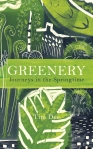
- A double dose via Greenery via Tim Dee – while reading it I was also reading Other People’s Countries by Patrick McGuinness, whom he visits in Belgium; and A Cold Spring by Elizabeth Bishop, referenced in a footnote.


- A red thread is worn as a bracelet for its emotional or spiritual significance in The Book of Longings by Sue Monk Kidd and Plan B by Anne Lamott.
- The Library of Alexandria features in Footprints by David Farrier and The Book of Longings by Sue Monk Kidd.
- The Artist’s Way is mentioned in At Hawthorn Time by Melissa Harrison and Traveling Mercies by Anne Lamott.
- Characters sleep in a church in Pew by Catherine Lacey and Abide With Me by Elizabeth Strout. (And both novels have characters named Hilda.)


- Coins being flung away among some trees in In the Springtime of the Year by Susan Hill and The Book of Longings by Sue Monk Kidd (literally the biblical 30 pieces of silver in the Kidd, which is then used as a metaphor in the Hill).
- Rabbit-breeding projects in When the Lights Go Out by Carys Bray and Parable of the Sower by Octavia E. Butler.


- Mentions of the Great Barrier Reef in When the Lights Go Out by Carys Bray and Footprints by David Farrier.
- The same very specific fact – that Seamus Heaney’s last words, in a text to his wife, were “Noli timere” – was mentioned in Curlew Moon by Mary Colwell and Greenery by Tim Dee.
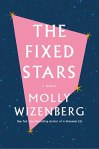
- Klondike ice cream bars appeared in both Small Victories by Anne Lamott and The Fixed Stars by Molly Wizenberg.

- The metaphor of a rising flood only the parent or the child will survive is used in both Exit West by Mohsin Hamid and What We Carry by Maya Lang.
- The necessity of turning right to save oneself in a concentration camp setting is mentioned in both Man’s Search for Meaning by Viktor Frankl and Fugitive Pieces by Anne Michaels.
- An English child is raised in North Africa in Oleander, Jacaranda by Penelope Lively and The Child in Time by Ian McEwan.
- The Bristol Stool Chart appeared in both Gulp by Mary Roach and The Bad Doctor by Ian Williams.


- A Greek island setting in both Exit West by Mohsin Hamid and Fugitive Pieces by Anne Michaels (plus, earlier, in A Theatre for Dreamers by Polly Samson).
- Both Writers & Lovers by Lily King and Mother: A Memoir by Nicholas Royle mention Talking Heads within the first 20 pages.
- A trip to North Berwick in the early pages of Mother: A Memoir by Nicholas Royle, and hunting for cowrie shells on the beach – so familiar from Evie Wyld’s The Bass Rock, read the previous month. (Later, more collecting of cowrie shells in Oleander, Jacaranda by Penelope Lively.)
- Children’s authors are main characters in The Crow Road by Iain Banks and The Child in Time by Ian McEwan.

- A character is killed by a lightning strike in The Crow Road by Iain Banks and Writers & Lovers by Lily King.
- Characters named Ash in The Crow Road by Iain Banks and The Fixed Stars by Molly Wizenberg.
 A brother steals the main character’s object of affection in The Crow Road by Iain Banks and Sacred Country by Rose Tremain.
- A minor character in Parable of the Sower by Octavia E. Butler is called Richard Rohr … meanwhile, I was reading a book by Richard Rohr, The Universal Christ.
- A maternity ward setting in The Pull of the Stars by Emma Donoghue and The Bell in the Lake by Lars Mytting.
- A love triangle is a central element in Writers & Lovers by Lily King and The Bell in the Lake by Lars Mytting.


- Reading a book by a Galloway (The Trick Is to Keep Breathing by Janice Galloway) and a book about Galloway (Native: Life in a Vanishing Landscape by Patrick Laurie) simultaneously.
- Attending college in L.A. in The Vanishing Half by Brit Bennett and Dreams from My Father by Barack Obama.
- Two books that reference the same Darwin quote: Into the Tangled Bank by Lev Parikian, and “The Entangled Bank” is the title of the final poem in Red Gloves by Rebecca Watts.


- Characters with the surname Savage in The Box Garden by Carol Shields and Islands of Mercy by Rose Tremain.
- A character is taught how to eat oysters in The Vanishing Half by Brit Bennett and Kitchen Confidential by Anthony Bourdain.
- A Louisiana setting in The Vanishing Half by Brit Bennett and Property by Valerie Martin.
- Characters named Stella in The Vanishing Half by Brit Bennett and The Group by Lara Feigel.


- The last line of the book has a character saying “Come in” in Americanah by Chimamanda Ngozi Adichie and Ankomst by Gøhril Gabrielsen.
- Currently reading four books with mixed-race narrators: (Black/white) The Girl Who Fell from the Sky by Heidi Durrow, Dreams from My Father by Barack Obama, Memorial Drive by Natasha Trethewey; and (Japanese/white) My Year of Meats by Ruth Ozeki.
- Currently reading two novels in which a pair of orphaned sisters are taken in by relatives (Deerbrook by Harriet Martineau and Rise and Shine by Anna Quindlen). Plus two more novels with orphan characters: The Girl Who Fell from the Sky and My Year of Meats.
-
- In two of these four (not telling which, though you can safely assume it’s not the Victorian novel!), they are orphans because both parents were killed in a car accident. I feel like this is a fictional setup that I encounter all the time (cf. All the Beautiful Girls, The Monsters of Templeton, Saint Maybe) that can’t be that common in real life?
-


- Vassar as an alma mater in Kitchen Confidential by Anthony Bourdain and The Group by Mary McCarthy.
- Punahou School (Honolulu, Hawaii) is the author’s alma mater in The Noonday Demon by Kathleen Norris and Dreams from My Father by Barack Obama.
What’s the weirdest reading coincidence you’ve had lately?
Spring Reading 2020, Part II
According to the Sámi reindeer herders, there are actually eight seasons; we’d now be in “Spring-summer” (gidágiesse), which runs from May to June.
In recent weeks I’ve read some more books that engage with the spring and/or its metaphors of planting and resurrection. (The first installment was here.) Two fiction and two nonfiction selections this time.

Stitchwort beside a nearby lane. Photo by Chris Foster.
The White Garden: A Novel of Virginia Woolf by Stephanie Barron (2009)
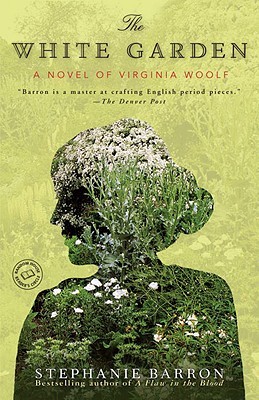 Barron is best known for her Jane Austen Mysteries series. Here she takes up the relationship between Virginia Woolf and Vita Sackville-West and crafts a conspiracy theory / alternative history in which Virginia did not commit suicide upon her disappearance in March 1941 but hid with Vita at Sissinghurst, her Kent home with the famous gardens. Investigating this in the autumn of 2008 are Jo Bellamy, an American garden designer who has been tasked with recreating Sackville-West’s famous White Garden at her wealthy client’s upstate New York estate, and Peter Llewelyn, a Sotheby’s employee who helps Jo authenticate a journal she finds hidden in a gardener’s shed at Sissinghurst.
Jo has a secret connection: her grandfather, Jock, who recently committed suicide, was a gardener here at the time of Woolf’s visit, and she believes the notebook may shed light on Virginia’s true fate and what led Jock to kill himself. Romantic complications ensue. This is fun escapism for Americans after an armchair trip to England (including Oxford and Cambridge for research), but so obviously written by an outsider. I had to correct what felt like dozens of errors (e.g. the indoor smoking ban came into effect in July 2007, so the hotel dining room wouldn’t have been filled with cigarette smoke; “pulling a few” is not slang for having a few drinks – rather, “pulling” has the connotation of making a romantic conquest).
I’ve visited Sissinghurst and Knole and had enough of an interest in the historical figures involved to keep me going through a slightly silly, frothy novel. 
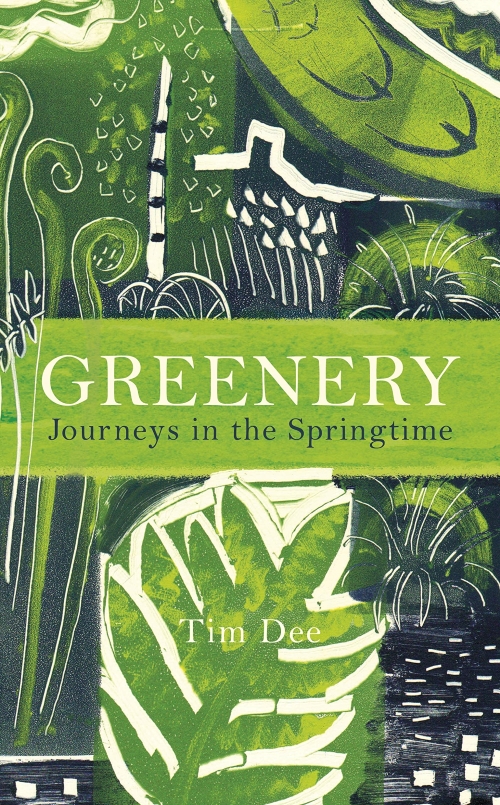
Greenery: Journeys in Springtime by Tim Dee (2020)
From the Cape of Good Hope to the Arctic Circle, Dee tracks the spring as it travels north. From first glimpse to last gasp, moving between his homes in two hemispheres, he makes the season last nearly half the year. His harbingers are chiefly migrating birds – starting with swallows. Here’s how he states his aim:
Knowing those annually recurring gifts of nature, and registering them alongside our own one-way journey through life, why not try to travel with the season and be in springtime for as long as possible, why not try to start where the season starts, and then to keep up with it, in step, walking a moving green room, travelling under the sun, like swallows out of Africa?
Starting in February in the Sahara Desert, he sees an abundance of the songbirds and raptors he’s used to finding in Europe, as well as more exotic species endemic to Africa. Any fear that this will turn out to be some plodding ‘I went here and saw this, then there and saw that’ nature/travel narrative dissipates instantly; although the book has a strong geographical and chronological through line, it flits between times and places as effortlessly as any bird, with the poetic quality of Dee’s observations lifting mundane moments into sharp focus. For instance, at their Ethiopian hotel, a wedding photography mecca, “a waiting wedding dress collapsed on a black cane chair, like an ostrich suicide.” A nightjar startled in the New Forest is “a bandaged balsa-wood model: a great moth’s head with the wings of a dark dragonfly.”
Dee’s wanderings take him from Scandinavia to central Europe and back. Wherever he happens to be, he is fully present, alive to a place and to all its echoes in memory and literature. He recalls a lonely year spent in Budapest studying Hungarian poetry in the 1980s, and how the sight and sound of birds like black woodpeckers and eagle owls revived him. Visits to migration hotspots like Gibraltar and Heligoland alternate with everyday jaunts in Ireland or the Bristol and Cambridgeshire environs he knows best.
Each vignette is headed with a place name and latitude, but many are undated, recalling springs from decades past or from the work of admired writers. Some of his walking companions and mentioned friends are celebrated nature or travel writers in their own right (like Julia Blackburn, Mark Cocker, Patrick McGuinness and Adam Nicolson; there’s also his cousin, fiction writer Tessa Hadley), while Samuel Taylor Coleridge, Seamus Heaney, D. H. Lawrence and Gilbert White are some of the book’s presiding spirits.

A redstart on some church steps in Tuscany, April 2014. Not the best view, but this is Dee’s favourite bird. Photo by Chris Foster.
Greenery is steeped in allusions and profound thinking about deep time and what it means to be alive in an era when nature’s rhythms are becoming distorted. It is so gorgeously literary, so far from nature and travel writing as usual, that it should attract readers who wouldn’t normally dip into those genres. While Dee’s writing reminds me somewhat of Barry Lopez’s, closer comparisons could be made with Helen Macdonald’s H Is for Hawk and Peter Matthiessen’s The Snow Leopard: quest narratives that nestle their nature writing within a substrate of memoir and philosophy. The last few pages, in which Dee, now in his late fifties, loses a close friend (Greg Poole, who painted the book’s cover) and receives a diagnosis of Parkinson’s disease but also learns he is to become a father again, are achingly beautiful.
I find I’ve written more about this book than I intended to in a reviews roundup, but it’s so extraordinary it deserves this much and more. It’s not just one of the few best nonfiction books of the year, but a fresh, masterful model of how to write about nature. 
In the Springtime of the Year by Susan Hill (1975)
 This is my favorite of the six books I’ve now read by Hill. Early one spring, Ruth Bryce’s husband, Ben, dies in a forestry accident. They had been only married a year and now here she is, aged 20 and a widow. Ben’s little brother, 14-year-old Jo, is a faithful visitor, but after the funeral many simply leave Ruth alone. Ben’s death is a “stone cast into still water,” whose ripples spread out beyond his immediate family.
There is little plot as such, yet this is a lovely, quiet meditation on grief and solitude amid the rhythms of country life. Ruth vacillates between suicidal despair and epiphanies of exaltation at how all of life is connected. Religious imagery coinciding with Easter describes a cycle of death and renewal. Very late on in the book, as winter comes round again, she has the chance to be of help to another local family that has suffered a loss, and to a member of Ben’s remaining family.
It took me two whole springs to read this. For those who think of Hill as a writer of crime novels (the Simon Serrailler series) and compact thrillers (The Woman in Black et al.), this may seem very low on action in comparison, but there is something hypnotic about the oddly punctuated prose and the ebb and flow of emotions.
Plant Dreaming Deep by May Sarton (1968)
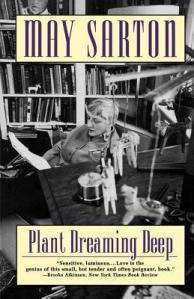 This serves as a prelude to the eight journals for which Sarton would become famous. It’s a low-key memoir about setting up home in the tiny town of Nelson, New Hampshire, making a garden and meeting the salt-of-the-earth locals who provided her support system and are immortalized in fictional form in the novel she published two years later, Kinds of Love. At the time of publication, she’d been in Nelson for 10 years; she would live there for 15 years in all, and (after seeing out her days in a rented house by the coast in Maine) be buried there.
Sarton was nearing 50 by the time she bought this, her first home, and for her it represented many things: a retreat from the world; a place for silence and solitude; and somewhere she could bring together the many aspects of herself, even if just by displaying her parents’ furniture, long in storage, and the souvenirs from her travels – “all the threads I hold in my hands have at last been woven together into a whole—the threads of the English and Belgian families from which I spring … the threads of my own wanderings”.
Nelson feels like a place outside of time. It holds annual Town Meetings, as it has for nearly two centuries. Her man-of-all-work, Perley Cole, still cuts the meadow with a scythe. After years of drought, she has to have water-drillers come and find her a new source. An ancient maple tree has to be cut down, reminding her of other deaths close to home. Through it all, her beloved garden is a reminder that new life floods back every year and the routines of hard work will be rewarded.
Some favorite lines:
“Experience is the fuel; I would live my life burning it up as I go along, so that at the end nothing is left unused, so that every piece of it has been consumed in the work.”
“gardening is one of the late joys, for youth is too impatient, too self-absorbed, and usually not rooted deeply enough to create a garden. Gardening is one of the rewards of middle age, when one is ready for an impersonal passion, a passion that demands patience, acute awareness of a world outside oneself, and the power to keep on growing through all the times of drought, through the cold snows, toward those moments of pure joy when all failures are forgotten and the plum tree flowers.”
Note: I discovered I’ve always misunderstood this title, thinking it whimsically imagined a plant having dreams; instead, “plant” is an imperative verb, as in Sarton’s adaptation of Joachim du Bellay: “Happy the man who can long roaming reap, / Like old Ulysses when he shaped his course / Homeward at last toward the native source, / Seasoned and stretched to plant his dreaming deep.” It’s about a place where one can root one’s work and intentions.
 Bookish Beck = Rebecca Foster. American transplant to England. Freelance proofreader and book reviewer.
 Bookish Beck