Book Serendipity, January to February
I call it “Book Serendipity” when two or more books that I read at the same time or in quick succession have something in common – the more bizarre, the better. This is a regular feature of mine every couple of months. Because I usually have 20–30 books on the go at once, I suppose I’m more prone to such incidents. People frequently ask how I remember all of these coincidences. The answer is: I jot them down on scraps of paper or input them immediately into a file on my PC desktop; otherwise, they would flit away! Feel free to join in with your own.
The following are in roughly chronological order.
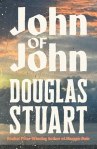
- An old woman with purple feet (due to illness or injury) in one story of Brawler by Lauren Groff and John of John by Douglas Stuart.

- Someone is pushed backward and dies of the head injury in Zofia Nowak’s Book of Superior Detecting by Piotr Cieplak and one story of Brawler by Lauren Groff.
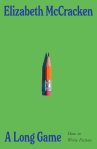
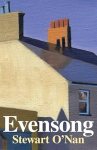
- The Hindenburg disaster is mentioned in A Long Game by Elizabeth McCracken and Evensong by Stewart O’Nan.
- Reluctance to cut into a corpse during medical school and the dictum ‘see one, do one, teach one’ in the graphic novel See One, Do One, Teach One: The Art of Becoming a Doctor by Grace Farris and Separate by C. Boyhan Irvine.
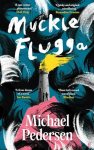 A remote Scottish island setting and a harsh father in Muckle Flugga by Michael Pedersen [Shetland] and John of John by Douglas Stuart [Harris]. (And another Scottish island setting in A Calendar of Love by George Mackay Brown [Orkney].)
- A mention of genuine Harris tweed in Alone in the Classroom by Elizabeth Hay and John of John by Douglas Stuart.
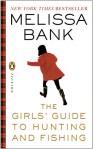
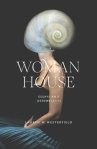
- The Katharine Hepburn film The Philadelphia Story is mentioned in The Girls’ Guide to Hunting and Fishing by Melissa Bank and Woman House by Lauren W. Westerfield.
- A mention of Icelandic poppies in Nighthawks by Lisa Martin and Boundless by Kathleen Winter.
- Vita Sackville-West is mentioned in the Orlando graphic novel adaptation by Susanne Kuhlendahl and Boundless by Kathleen Winter.

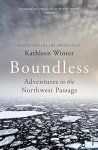
- Fear of bear attacks in Black Bear by Trina Moyles and Boundless by Kathleen Winter. Bears also feature in A Rough Guide to the Heart by Pam Houston and No Paradise with Wolves by Katie Stacey. [Looking through children’s picture books at the library the other week, I was struck by how many have bears in the title. Dozens!]
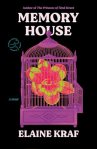
- I was reading books called Memory House (by Elaine Kraf) and Woman House (by Lauren W. Westerfield) at the same time, both of them pre-release books for Shelf Awareness reviews.
- An adolescent girl is completely ignorant of the facts of menstruation in I Who Have Never Known Men by Jacqueline Harpman and Carrie by Stephen King.
- Camembert is eaten in The Honesty Box by Lucy Brazier and Ordinary Saints by Niamh Ni Mhaoileoin.
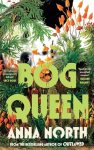
- A herbal tonic is sought to induce a miscarriage in The Girls Who Grew Big by Leila Mottley and Bog Queen by Anna North.

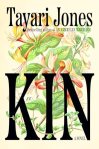
- Vicks VapoRub is mentioned in Love Invents Us by Amy Bloom, Kin by Tayari Jones, and Dirt Rich by Graeme Richardson.
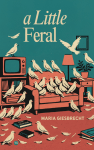
- An adolescent girl only admits to her distant mother that she’s gotten her first period because she needs help dealing with a stain (on her bedding / school uniform) in Love Invents Us by Amy Bloom, An Experiment in Love by Hilary Mantel, and Ordinary Saints by Niamh Ni Mhaoileoin. (I had to laugh at the mother asking the narrator of the Mantel: “Have you got jam on your underskirt?”) Basically, first periods occurred a lot in this set! They are also mentioned in A Little Feral by Maria Giesbrecht and one story of The Blood Year Daughter by G.G. Silverman. [I also had three abortion scenes in this cycle, but I think it would constitute spoilers to say which novels they appeared in.)
- A casual job cleaning pub/bar toilets in Kin by Tayari Jones and John of John by Douglas Stuart.
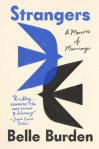
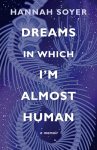
- Kansas City is a location mentioned in Strangers by Belle Burden, Mrs. Bridge by Evan S. Connell, and Dreams in Which I’m Almost Human by Hannah Soyer. (Not actually sure if that refers to Kansas or Missouri in two of them.)
- The notion of “flirting with God” is mentioned in Love Invents Us by Amy Bloom and A Little Feral by Maria Giesbrecht.

- A signature New Orleans cocktail, the Sazerac (a variation on the whisky old-fashioned containing absinthe), appears in Kin by Tayari Jones and Let the Bad Times Roll by Alice Slater.
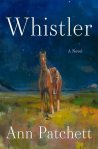
- An older person’s smell brings back childhood memories in Love Invents Us by Amy Bloom and Whistler by Ann Patchett.
- The fact that complaining of chest pain will get you seen right away in an emergency room is mentioned in Love Invents Us by Amy Bloom and The Girls Who Grew Big by Leila Mottley.
- Thickly buttered toast is a favoured snack in The Honesty Box by Lucy Brazier and An Experiment in Love by Hilary Mantel.
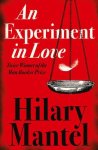 A scene of trying on fur coats in Love Invents Us by Amy Bloom and An Experiment in Love by Hilary Mantel.
- Lime and soda is drunk in Our Numbered Bones by Katya Balen, Kin by Tayari Jones, and Whistler by Ann Patchett.
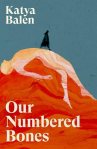
- A husband 17 years older than his wife in Kin by Tayari Jones and Whistler by Ann Patchett.
- The protagonist seems to hold a special attraction for old men in Love Invents Us by Amy Bloom and Whistler by Ann Patchett.
- A tattoo of a pottery shard (her ex-husband’s) in Strangers by Belle Burden and one of an arrowhead (her own) in Dreams in Which I’m Almost Human by Hannah Soyer.
- A relationship with an older editor at a publishing house: The Girls’ Guide to Hunting and Fishing by Melissa Bank (romantic) and Whistler by Ann Patchett (stepfather–stepdaughter).
- Repeated vomiting and a fever of 103–104°F leads to a diagnosis of appendicitis in My Grandmothers and I by Diana Holman-Hunt and Whistler by Ann Patchett.
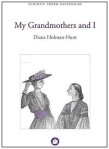 Multiple pet pugs in Strangers by Belle Burden and My Grandmothers and I by Diana Holman-Hunt.
- Palm crosses are mentioned in My Grandmothers and I by Diana Holman-Hunt and Kin by Tayari Jones.
- A Miss Jemison in Kin by Tayari Jones and a Miss Jamieson in Elizabeth and Ruth by Livi Michael.
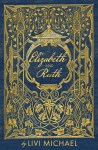
- Pasley as a surname in Elizabeth and Ruth by Livi Michael and a place name (Pasley Bay) in Boundless by Kathleen Winter.
- A remark on a character’s unwashed hair in My Grandmothers and I by Diana Holman-Hunt and Let the Bad Times Roll by Alice Slater.
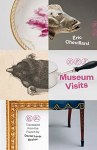
- A mention of a monkey’s paw in Museum Visits by Éric Chevillard and Let the Bad Times Roll by Alice Slater.

- A character gets 26 (22) stitches in her face (head) after a car accident, a young person who’s vehemently anti-smoking, and a mention of being dusted orange from eating Cheetos, in Whistler by Ann Patchett and Let the Bad Times Roll by Alice Slater.
- Pre-eclampsia occurs in Strangers by Belle Burden and The Girls Who Grew Big by Leila Mottley.
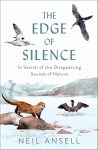
- There’s a chapter on searching for corncrakes on the Isle of Coll (the Inner Hebrides of Scotland) in The Edge of Silence by Neil Ansell, which I read last year; this year I reread the essay on the same topic in Findings by Kathleen Jamie.
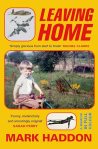
- Worry over women with long hair being accidentally scalped – if a horse steps on her ponytail in Mare by Emily Haworth-Booth; if trapped in a London Underground escalator in Leaving Home by Mark Haddon.
 A pet ferret in My Grandmothers and I by Diana Holman-Hunt and Shooting Up by Jonathan Tepper.
- A dodgy doctor who molests a young female patient in Leaving Home by Mark Haddon and Elizabeth and Ruth by Livi Michael.
- A high school girl’s inappropriate relationship with her English teacher is the basis for Love Invents Us by Amy Bloom, and then Half His Age by Jennette McCurdy, which I started soon after.

- College roommates who become same-sex lovers, one of whom goes on to have a heterosexual marriage, in Kin by Tayari Jones and Whistler by Ann Patchett.
- A mention of Sephora (the cosmetics shop) in Half His Age by Jennette McCurdy and Whistler by Ann Patchett.
- A discussion of the Greek mythology character Leda in Mrs. Bridge by Evan S. Connell and Whistler by Ann Patchett (where it’s also a character name).
- A workaholic husband who rarely sees his children and leaves their care to his wife in Strangers by Belle Burden and Mrs. Bridge by Evan S. Connell.
- An apparently wealthy man who yet steals food in Strangers by Belle Burden and Let the Bad Times Roll by Alice Slater.
- Characters named Lulubelle in Mrs. Bridge by Evan S. Connell and Lulabelle in Kin by Tayari Jones.
- Characters named Ruth in Mrs. Bridge by Evan S. Connell, Kin by Tayari Jones, and Elizabeth and Ruth by Livi Michael.
 A mention of Mary McLeod Bethune in Negroland by Margo Jefferson and Kin by Tayari Jones.
- Doing laundry at a whorehouse in Kin by Tayari Jones and Elizabeth and Ruth by Livi Michael.
- A male character nicknamed Doll in John of John by Douglas Stuart and then Elizabeth and Ruth by Livi Michael.
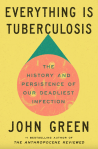
- A mention of tuberculosis of the stomach in Findings by Kathleen Jamie and Shooting Up by Jonathan Tepper. I was also reading a whole book on tuberculosis, Everything Is Tuberculosis by John Green, at the same time.
- Mention of Doberman dogs in Mrs. Bridge by Evan S. Connell and one story of The Blood Year Daughter by G.G. Silverman.
- Extreme fear of flying in Leaving Home by Mark Haddon and Whistler by Ann Patchett.
What’s the weirdest reading coincidence you’ve had lately?
#NovNov24 and #GermanLitMonth: Knulp by Hermann Hesse (1915)
My second contribution to German Literature Month (hosted by Lizzy Siddal) after A Simple Intervention by Yael Inokai. This was my first time reading the German-Swiss Nobel Prize winner Hermann Hesse (1877–1962). I had heard of his novels Siddhartha and Steppenwolf, of course, but didn’t know about any of his shorter works before I picked this up from the Little Free Library last month. Knulp is a novella in three stories that provide complementary angles on the title character, a carefree vagabond whose rambling years are coming to an end.
“Early Spring” has a first-person plural narrator, opening “Once, early in the nineties, our friend Knulp had to go to hospital for several weeks.” Upon his discharge he stays with an old friend, the tanner Rothfuss, and spends his time visiting other local tradespeople and casually courting a servant girl. Knulp is a troubadour, writing poems and songs. Without career, family, or home, he lives in childlike simplicity.
He had seldom been arrested and never convicted of theft or mendicancy, and he had highly respected friends everywhere. Consequently, he was indulged by the authorities very much, as a nice-looking cat is indulged in a household, and left free to carry on an untroubled, elegant, splendidly aristocratic and idle existence.
 “My Recollections of Knulp” is narrated by a friend who joined him as a tramp for a few weeks one midsummer. It wasn’t all music and jollity; Knulp also pondered the essential loneliness of the human condition in view of mortality. “His conversation was often heavy with philosophy, but his songs had the lightness of children playing in their summer clothes.”
In “The End,” Knulp encounters another school friend, Dr. Machold, who insists on sheltering the wayfarer. They’re in their forties but Knulp seems much older because he is ill with tuberculosis. As winter draws in, he resists returning to the hospital, wanting to die as he lived, on his own terms. The book closes with an extraordinary passage in which Knulp converses with God – or his hallucination of such – expressing his regret that he never made more of his talents or had a family. ‘God’ speaks these beautiful words of reassurance:
Look, I wanted you the way you are and no different. You were a wanderer in my name and wherever you went you brought the settled folk a little homesickness for freedom. In my name, you did silly things and people scoffed at you; I myself was scoffed at in you and loved in you. You are my child and my brother and a part of me. There is nothing you have enjoyed and suffered that I have not enjoyed and suffered with you.
I struggle with episodic fiction but have a lot of time for the theme of spiritual questioning. The seasons advance across the stories so that Knulp’s course mirrors the year’s. Knulp could almost be a rehearsal for Stoner: a spare story of the life and death of an Everyman. That I didn’t appreciate it more I put down to the piecemeal nature of the narrative and an unpleasant conversation between Knulp and Machold about adolescent sexual experiences – as in the attempted gang rape scene in Cider with Rosie, it’s presented as boyish fun when part of what Knulp recalls is actually molestation by an older girl cousin. I might be willing to try something else by Hesse. Do give me recommendations! (Little Free Library) 
Translated from the German by Ralph Manheim.
[125 pages]


Mini playlist:
- “Ramblin’ Man” by Lemon Jelly
- “I’ve Been Everywhere” by Johnny Cash
- “Rambling Man” by Laura Marling
- “Ballad of a Broken Man” by Duke Special
- “Railroad Man” by Eels
 I have also recently read a 2025 release that counts towards these challenges, The Café with No Name by Robert Seethaler (Europa Editions; translated by Katy Derbyshire; 192 pages). The protagonist, Robert Simon [Robert S., eh? Coincidence?], is not unlike Knulp, though less blithe, or the unassuming Bob Burgess from Elizabeth Strout’s novels (e.g., Tell Me Everything). Robert takes over the market café in Vienna and over the next decade or so his establishment becomes a haven for the troubled. The Second World War still looms large, and disasters large and small unfold. It’s all rather melancholy; I admired the chapters that turn the customers’ conversation into a swirling chorus. In my review, pending for Foreword Reviews, I call it “a valedictory meditation on the passage of time and the bonds that last.”
Book Serendipity, May to Mid-August 2022
This is a regular feature of mine every few months. I call it “Book Serendipity” when two or more books that I read at the same time or in quick succession have something in common – the more bizarre, the better. Because I usually have 20–30 books on the go at once, I suppose I’m more prone to such incidents. The following are in roughly chronological order.
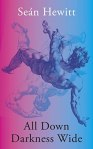
- Not only did the opening scene of All Down Darkness Wide by Seán Hewitt share with Falling Angels by Tracy Chevalier a graveyard setting, but more specifically an angel statue whose head falls off.

- SPOILER: {The protagonist has a backstory of a mother who drowned, presumably by suicide, in Secrets of the Sea House by Elisabeth Gifford and The Dance Tree by Kiran Millwood Hargrave.}
- I started reading two e-books on the same day that had Taylor Swift lyrics as an epigraph: Bad Vibes Only by Nora McInerny and Tracy Flick Can’t Win by Tom Perrotta. I have never knowingly heard a Taylor Swift song.
- Rescuing insects from a swimming pool in Fledgling by Hannah Bourne-Taylor and In the Quaker Hotel by Helen Tookey.
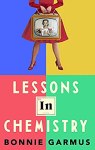
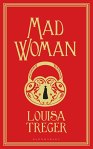
- Reading two feminist works of historical fiction in which the protagonist refuses to marry (even though it’s true love) at the same time: Lessons in Chemistry by Bonnie Garmus and Madwoman by Louisa Treger (about Nellie Bly).
- Two London-set books featuring a daughter named Mabel, one right after the other: This Is Not a Pity Memoir by Abi Morgan and Bridget Jones: Mad about the Boy by Helen Fielding.
- In Jenn Shapland’s My Autobiography of Carson McCullers I came across the fact that McCullers married the same man twice. Just a few days before, I’d seen that same odd fact about Hilary Mantel in her Wikipedia bio.
- A character named Clodagh in Black Narcissus by Rumer Godden and “Rainbows” by Joseph O’Neill, one of the entries in The Best Short Stories 2022: The O. Henry Prize Winners.
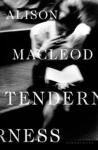
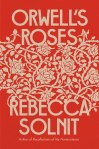
- Reading two books about an English author who died young of TB at the same time: Tenderness by Alison MacLeod (about D.H. Lawrence) and Orwell’s Roses by Rebecca Solnit.
- Reading two novels that mention the shipwreck of the Batavia at the same time: The Night Ship by Jess Kidd (where it’s a major element) and Cloudstreet by Tim Winton (just a tiny reference that nonetheless took me aback). According to Wikipedia, “Batavia was a ship of the Dutch East India Company. Built in Amsterdam in 1628 as the company’s new flagship, she sailed that year on her maiden voyage for Batavia, capital of the Dutch East Indies. On 4 June 1629, Batavia was wrecked on the Houtman Abrolhos, a chain of small islands off the western coast of Australia.”
- David Lack’s Swifts in a Tower is mentioned in Swifts and Us by Sarah Gibson (no surprise there) but also in From the Hedgerows by Lew Lewis.
- There’s a child nicknamed Chub in Damnation Spring by Ash Davidson and Cloudstreet by Tim Winton (which both also at least started off being buddy reads with Marcie of Buried in Print!).
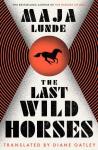
- Two novels in quick succession in which the discovery of a horse skeleton sparks the action in one story line: The Last Wild Horses by Maja Lunde and (coming up soon – I have a library reservation placed) Horse by Geraldine Brooks.
- Unst, Shetland as a setting in Orchid Summer by Jon Dunn, Sightlines by Kathleen Jamie, Julia and the Shark by Kiran Millwood Hargrave, and Where the Wildflowers Grow by Leif Bersweden.
- “Quiet as it’s kept” (a quote from the opening line of Toni Morrison’s The Bluest Eye) is borrowed in a poem in No Country for Eight-Spot Butterflies by Julian Aguon and one in the anthology American Wildflowers: A Literary Field Guide, ed. Susan Barba (“A Siren Patch of Indigo” by Cyrus Cassells).
- I didn’t recognize the word “swingeing” in The Reindeer Hunters by Lars Mytting and encountered it again the same day in Brief Lives by Anita Brookner before I had a chance to look it up (it means extreme or severe).
- A 1950s setting and a main character who is a man with missing fingers/arm in Cloudstreet by Tim Winton and The Young Accomplice by Benjamin Wood.
What’s the weirdest reading coincidence you’ve had lately?
Reading with the Seasons: Summer 2021, Part I
I’m more likely to choose lighter reads and dip into genre fiction in the summer than at other times of year. The past few weeks have felt more like autumn here in southern England, but summer doesn’t officially end until September 22nd. So, if I get a chance (there’s always a vague danger to labelling something “Part I”!), before then I’ll follow up with another batch of summery reads I have on the go: Goshawk Summer, Klara and the Sun, Among the Summer Snows, A Shower of Summer Days, and a few summer-into-autumn children’s books.
For this installment I have a quaint picture book, a mystery, a travel book featured for its title, and a very English classic. I’ve chosen a representative quote from each.
Summer Story by Jill Barklem (1980)
 One of a quartet of seasonal “Brambly Hedge” stories in small hardbacks. It wouldn’t be summer without weddings, and here one takes place between two mice, Poppy Eyebright and Dusty Dogwood (who work in the dairy and the flour mill, respectively), on Midsummer’s Day. I loved the little details about the mice preparing their outfits and the wedding feast: “Cool summer foods were being made. There was cold watercress soup, fresh dandelion salad, honey creams, syllabubs and meringues.” We’re given cutaway views of various tree stumps, like dollhouses, and the industrious activity going on within them. Like any wedding, this one has its mishaps, but all is ultimately well, like in a classical comedy. This reminded me of the Church Mice books or Beatrix Potter’s works: very sweet, quaint and English.
Source: Public library
My rating: 
These next two give a real sense of how heat affects people, physically and emotionally.
Heatstroke by Hazel Barkworth (2020)
“In the heat, just having a human body was a chore. Just keeping it suitable for public approval was a job”
 From the first word (“Languid”) on, this novel drips with hot summer atmosphere, with its opposing connotations of discomfort and sweaty sexuality. Rachel is a teacher of adolescents as well as the mother of a 15-year-old, Mia. When Lily, a pupil who also happens to be one of Mia’s best friends, goes missing, Rachel is put in a tough spot. I mostly noted how Barkworth chose to construct the plot, especially when to reveal what. By the one-quarter point, Rachel works out what’s happened to Lily; by halfway, we know why Rachel isn’t telling the police everything.
The dynamic between Rachel and Mia as they decide whether to divulge what they know is interesting. This is not the missing person mystery it at first appears to be, and I didn’t sense enough literary quality to keep me wanting to know what would happen next. I ended up skimming the last third. It would be suitable for readers of Rosamund Lupton, but novels about teenage consent are a dime a dozen these days and this paled in comparison to My Dark Vanessa. For a better sun-drenched novel, I recommend A Crime in the Neighborhood.
Source: Public library
My rating: 
The Shadow of the Sun: My African Life by Ryszard Kapuściński (1998; 2001)
[Translated from the Polish by Klara Glowczewska]
“Dawn and dusk—these are the most pleasant hours in Africa. The sun is either not yet scorching, or it is no longer so—it lets you be, lets you live.”
 The Polish Kapuściński was a foreign correspondent in Africa for 40 years and lent his name to an international prize for literary reportage. This collection of essays spans decades and lots of countries, yet feels like a cohesive narrative. The author sees many places right on the cusp of independence or in the midst of coup d’états. Living among Africans rather than removed in a white enclave, he develops a voice that is surprisingly undated and non-colonialist. While his presence as the observer is undeniable – especially when he falls ill with malaria and then tuberculosis – he lets the situation on the ground take precedence over the memoir aspect. I read the first half last year and then picked the book back up again to finish this year. The last piece, “In the Shade of a Tree, in Africa” especially stood out. In murderously hot conditions, shade and water are two essentials. A large mango tree serves as an epicenter of activities: schooling, conversation, resting the herds, and so on. I appreciated how Kapuściński never resorts to stereotypes or flattens differences: “Africa is a thousand situations, varied, distinct, even contradictory … everything depends on where and when.”
Along with Patrick Leigh Fermor’s A Time of Gifts and the Jan Morris anthology A Writer’s World, this is one of the best few travel books I’ve ever read.
Source: Free bookshop
My rating: 
August Folly by Angela Thirkell (1936)
“The sun was benignantly hot, the newly mown grass smelt sweet, bees were humming in a stupefying way, Gunnar was purring beside him, and Richard could hardly keep awake.”
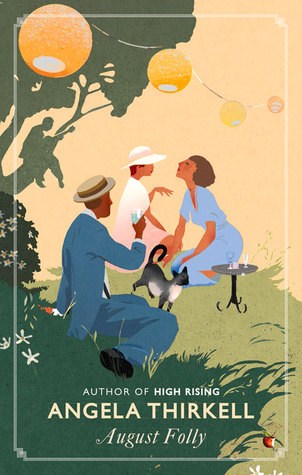 I’d been curious to try Thirkell, and this fourth Barsetshire novel seemed as good a place to start as any. Richard Tebben, not the best and brightest that Oxford has to offer, is back in his parents’ village of Worsted for the summer and dreading the boredom to come. That is, until he meets beautiful Rachel Dean and is smitten – even though she’s mother to a brood of nine, most of them here with her for the holidays. He sets out to impress her by offering their donkey, Modestine, for rides for the children, and rather accidentally saving her daughter from a raging bull. Meanwhile, Richard’s sister Margaret can’t decide if she likes being wooed, and the villagers are trying to avoid being roped into Mrs Palmer’s performance of a Greek play. The dialogue can be laughably absurd. There are also a few bizarre passages that seem to come out nowhere: when no humans are around, the cat and the donkey converse.
This was enjoyable enough, in the same vein as books I’ve read by Barbara Pym, Miss Read, and P.G. Wodehouse, though I don’t expect I’ll pick up more by Thirkell. (No judgment intended on anyone who enjoys these authors. I got so much flak and fansplaining when I gave Pym and Wodehouse 3 stars and dared to call them fluffy or forgettable, respectively! There are times when a lighter read is just what you want, and these would also serve as quintessential English books revealing a particular era and class.)
Source: Public library
My rating:
As a bonus, I have a book about how climate change is altering familiar signs of the seasons.
Forecast: A Diary of the Lost Seasons by Joe Shute (2021)
“So many records are these days being broken that perhaps it is time to rewrite the record books, and accept the aberration has become the norm.”
 Shute writes a weather column for the Telegraph, and in recent years has reported on alarming fires and flooding. He probes how the seasons are bound up with memories, conceding the danger of giving in to nostalgia for a gloried past that may never have existed. However, he provides hard evidence in the form of long-term observations (phenology) such as temperature data and photo archives that reveal that natural events like leaf fall and bud break are now occurring weeks later/earlier than they used to. He also meets farmers, hunts for cuckoos and wildflowers, and recalls journalistic assignments.
The book deftly recreates its many scenes and conversations, and inserts statistics naturally. It also delicately weaves in a storyline about infertility: he and his wife long for a child and have tried for years to conceive, but just as the seasons are out of kilter, there seems to be something off with their bodies such that something that comes so easily for others will not for them. A male perspective on infertility is rare – I can only remember encountering it before in Native by Patrick Laurie – and these passages are really touching. The tone is of a piece with the rest of the book: thoughtful and gently melancholy, but never hopeless (alas, I found The Eternal Season by Stephen Rutt, on a rather similar topic, depressing).
Forecast is wide-ranging and so relevant – the topics it covers kept coming up and I would say to my husband, “oh yes, that’s in Joe Shute’s book.” (For example, he writes about the Ladybird What to Look For series and then we happened on an exhibit of the artwork at Mottisfont Abbey.) I can see how some might say it crams in too much or veers too much between threads, but I thought Shute handled his material admirably.
Source: Public library
My rating: 
Have you been reading anything particularly fitting for summer this year?
Three May Graphic Novel Releases: Orwell, In, and Coma
These three terrific graphic novels all have one-word titles and were published on the 13th of May. Outwardly, they are very different: a biography of a famous English writer, the story of an artist looking for authentic connections, and a memoir of a medical crisis that had permanent consequences. The drawing styles are varied as well. But if the books share one thing, it’s an engagement with loneliness: It’s tempting to see the self as being pitted against the world, with illness an additional isolating force, but family, friends and compatriots are there to help us feel less alone and like we are a part of something constructive.
Orwell by Pierre Christin; illustrated by Sébastien Verdier
[Translated from the French by Edward Gauvin]
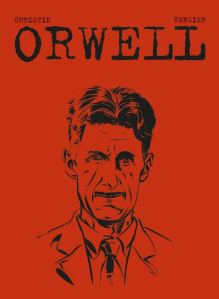 George Orwell was born Eric Blair in Bengal, where his father worked for the colonial government. As a boy, he loved science fiction and knew that he would become a writer. He had an unhappy time at prep school, where he was on reduced fees, and proceeded to Eton and then police training in Burma. Already he felt that “imperialism was an evil thing.” Among this book’s black-and-white panes, the splashes of colour – blood, a British flag – stand out, and guest artists contribute a two-page colour spread each, illustrating scenes from Orwell’s major works. His pen name commemorates a local river and England’s patron saint, marking his preoccupation with the essence of Englishness: something deeper than his hated militarism and capitalism. Even when he tried to ‘go native’ for embedded journalism (Down and Out in Paris and London and The Road to Wigan Pier), his accent marked him out as posh. He was opinionated and set out “rules” for clear writing and the proper making of tea.
The book’s settings range from Spain, where Orwell went to fight in the Civil War, via a bomb shelter in London’s Underground, to the island of Jura, where he retired after the war. I particularly loved the Scottish scenery. I also appreciated the notes on where his life story entered into his fiction (especially in A Clergyman’s Daughter and Keep the Aspidistra Flying). During World War II he joined the Home Guard and contributed to BBC broadcasting alongside T.S. Eliot. He had married Eileen, adopted a baby boy, and set up a smallholding. Even when hospitalized for tuberculosis, he wouldn’t stop typing (or smoking).
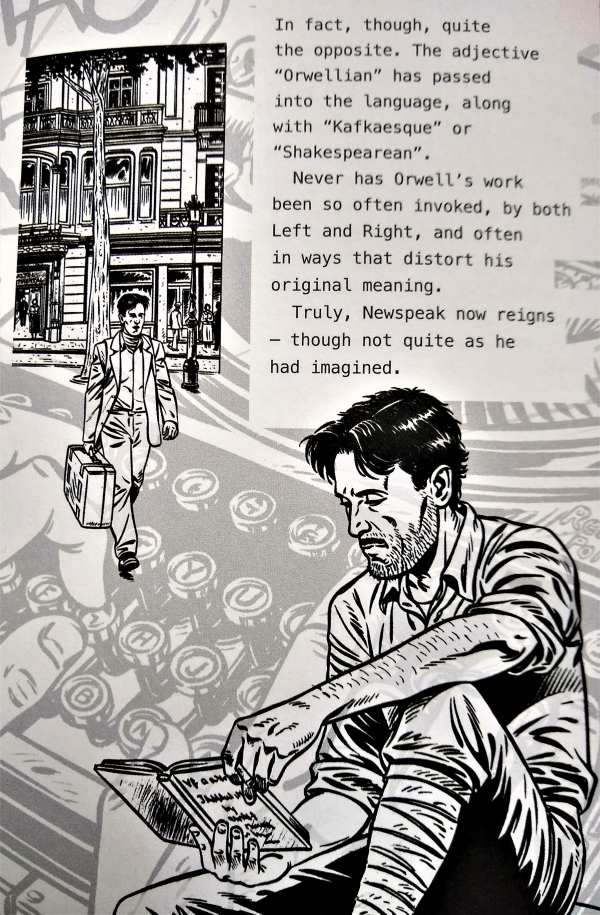 Christin creates just enough scenes to give a sense of the sweep of Orwell’s life, and incorporates plenty of the author’s own words in a typewriter font. He recognizes all the many aspects, sometimes contradictory, of his subject’s life. And in an afterword, he makes a strong case for Orwell’s ideas being more important now than ever before. My knowledge of Orwell’s oeuvre, apart from the ones everyone has read – Animal Farm and 1984 – is limited; luckily this is suited not just to Orwell fans but to devotees of life stories of any kind.
With thanks to SelfMadeHero for the free copy for review.
In by Will McPhail
Nick never knows the right thing to say. The bachelor artist’s well-intentioned thoughts remain unvoiced, such that all he can manage is small talk. Whether he’s on a subway train, interacting with his mom and sister, or sitting in a bar with a tongue-in-cheek name (like “Your Friends Have Kids” or “Gentrificchiato”), he’s conscious of being the clichéd guy who’s too clueless or pathetic to make a real connection with another human being. That starts to change when he meets Wren, a Black doctor who instantly sees past all his pretence.
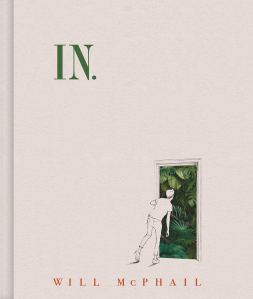 Like Orwell, In makes strategic use of colour spreads. “Say something that matters,” Nick scolds himself, and on the rare occasions when he does figure out what to say or ask – the magic words that elicit an honest response – it’s as if a new world opens up. These full-colour breakthrough scenes are like dream sequences, filled with symbols such as a waterfall, icy cliff, or half-submerged building with classical façade. Each is heralded by a close-up image on the other person’s eyes: being literally close enough to see their eye colour means being metaphorically close enough to be let in. Nick achieves these moments with everyone from the plumber to his four-year-old nephew.

Alternately laugh-out-loud funny and tender, McPhail’s debut novel is as hip as it is genuine. It’s a spot-on picture of modern life in a generic city. I especially loved the few pages when Nick is on a Zoom call with carefully ironed shirt but no trousers and the potential employers on the other end get so lost in their own jargon that they forget he’s there. His banter with Wren or with his sister reveals a lot about these characters, but there’s also an amazing 12-page wordless sequence late on that conveys so much. While I’d recommend this to readers of Alison Bechdel, Craig Thompson, and Chris Ware (and expect it to have a lot in common with Kristen Radtke’s forthcoming Seek You: A Journey through American Loneliness), it’s perfect for those brand new to graphic novels, too – a good old-fashioned story, with all the emotional range of Writers & Lovers. I hope it’ll be a wildcard entry on the Sunday Times Young Writer of the Year Award shortlist.
With thanks to Sceptre for the free copy for review.
Coma by Zara Slattery
In May 2013, Zara Slattery’s life changed forever. What started as a nagging sore throat developed into a potentially deadly infection called necrotising fascitis. She spent 15 days in a medically induced coma and woke up to find that one of her legs had been amputated. As in Orwell and In, colour is used to differentiate different realms. Monochrome sketches in thick crayon illustrate her husband Dan’s diary of the everyday life that kept going while she was in hospital, yet it’s the coma/fantasy pages in vibrant blues, reds and gold that feel more real.
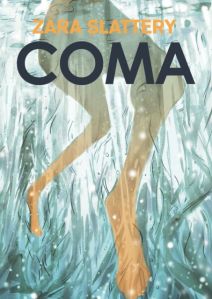 Slattery remembers, or perhaps imagines, being surrounded by nightmarish skulls and menacing animals. She feels accused and guilty, like she has to justify her continued existence. In one moment she’s a puppet; in another she’s in ancient China, her fate being decided for her. Some of the watery landscapes and specific images here happen to echo those in McPhail’s novel: a splash park, a sunken theatre; a statue on a plinth. There’s also a giant that reminded me a lot of one of the monsters in Spirited Away.
Meanwhile, Dan was holding down the fort, completing domestic tasks and reassuring their three children. Relatives came to stay; neighbours brought food, ran errands, and gave him lifts to the hospital. He addresses the diary directly to Zara as a record of the time she spent away from home and acknowledges that he doesn’t know if she’ll come back to them. A final letter from Zara’s nurse reveals how bad off she was, maybe more so than Dan was aware.


This must have been such a distressing time to revisit. In this interview, Slattery talks about the courage it took to read Dan’s diary even years after the fact. I admired how the book’s contrasting drawing styles recreate her locked-in mental state and her family’s weeks of waiting – both parties in limbo, wondering what will come next.
Brighton, where Slattery is based, is a hotspot of the Graphic Medicine movement spearheaded by Ian Williams (author of The Lady Doctor). Regular readers know how much I love health narratives, and with my keenness for graphic novels this series couldn’t be better suited to my interests.
With thanks to Myriad Editions for the free copy for review.
Read any graphic novels recently?
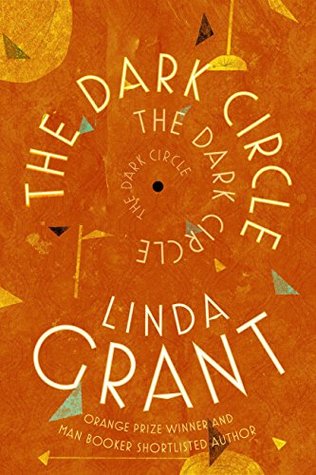
Review: The Dark Circle by Linda Grant
Linda Grant’s seventh novel, The Dark Circle, stars Lenny and Miriam Lynskey, nineteen-year-old twins and representatives of London’s small Jewish population. It is 1949; Miriam works in a flower shop and Lenny has just been rejected by the army at his National Service medical appointment. He has tuberculosis and there are worries about Miriam’s lungs, too, so it’s off to the Gwendo (the Gwendolyn Downie Memorial Hospital for the Care of Chronic Cases of Tuberculosis, that is) for both of them. We briefly see them through the eyes of the cab driver who takes them down to Kent: “The pair in the back were common as muck.”
It’s clear this is no ordinary sanatorium; it has a “reputation for being a modern, iconoclastic facility for the very best people,” like Lady Anne and Miriam’s Oxford-educated roommate, Valerie. The Lynskeys, as NHS rather than private patients, may be looked down on as a different class of people, but they bring fresh life into the place. That’s doubly true of new arrival Arthur Persky, a twenty-six-year-old Navy man from Brooklyn. He enlivens the bleak, clinical surroundings with rock ’n roll music and a certain sex act. The Gwendo, once a place of boredom and conformity, now seems like a site of quiet rebellion.
 One of Grant’s key skills is characterization, and short chapters from different characters’ perspectives give us access to their backstories. I especially liked getting to know German refugee Hannah Spiegel. Kafka, oddly enough, forms a link between her and the Lynskeys: Valerie has been reading The Metamorphosis aloud to Miriam to try to educate her; Miriam, absolutely captivated, gets Lenny in on the listening sessions, and he asks Hannah to interpret the book for them since she’s read the original German. “No, no-one can explain, it’s not possible to do so,” she replies. “You experience it in your way, it’s a labyrinth you must pass through but the labyrinth is yourself.”
The same might be said of tuberculosis. Each of these patients has the same disease, so Dr. Limb and his nurses sometimes treat them as interchangeable, yet each medical journey is individual and unpredictable. The typical approach was a pneumothorax injection to temporarily collapse one lung so it could ‘rest’, but in extreme cases some patients would have ribs removed. Great hopes were pinned on streptomycin treatment, and on Rosh Hashanah, the Jewish day of reckoning in 1950, Dr. Limb takes on the role of God, weighing up who live and who will die in the coming year. He has seven courses of streptomycin to distribute, but who will get them? The weakest? The woman he’s in love with? Or the ones with the most chance of improving? Meanwhile, Miriam’s condition is worsening, and Lenny and Persky decide they’ll do whatever it takes to make sure she gets one of those injections.
I was impressed by how Grant evokes her period setting through dialogue, slang and music. The novel’s tone is wry yet melancholy, almost nostalgic. The terrific opening paragraph gives you a taste of the no-nonsense style:
London. Big black old place, falling down, hardly any colour apart from a woman’s red hat going into the chemist with her string bag, and if you looked carefully, bottle green leather shoes on that girl, but mostly grey and beige and black and mud-coloured people with dirty hair and unwashed shirt collars, because everything is short, soap is short, joy is short, sex is short, and no one on the street was laughing so jokes must be short too. Four years after the war and still everything is up shit creek.
The final 60 pages are set in the future and reveal what happens to Lenny, Miriam and key others in the decades after they leave the sanatorium. These former patients are bound together in the title’s “dark circle” of suffering, but because TB has been eradicated no one remembers their pain. “From a death sentence to a course of antibiotics in a decade,” Lenny marvels. The novel loses momentum a bit in this short final section. I felt it would have been more powerful if Parts II and III were cut and the book simply ended with the plot coming full circle and Lenny and Miriam leaving the Gwendo in a taxi. But this is a minor quibble. The Dark Circle does what the best fiction does: drops you right into a situation you’ve never thought about and can’t begin to imagine—until a first-class novelist does so for you.
The Dark Circle was published by Virago on November 3rd. My thanks to Poppy Stimpson of Little, Brown for the free review copy.
My rating: 
It was a delight to participate in my first blog tour. See below for details of where other reviews have appeared and will be appearing soon.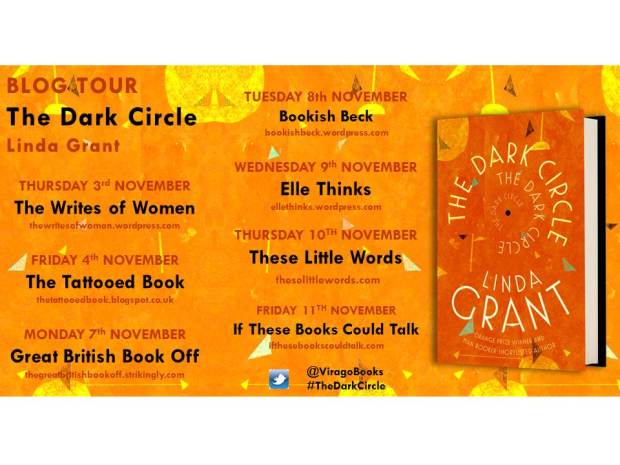
 Bookish Beck = Rebecca Foster. American transplant to England. Freelance proofreader and book reviewer.
 Bookish Beck