Three in Translation for #NovNov23: Baek, de Beauvoir, Naspini
I’m kicking off Week 3 of Novellas in November, which we’ve dubbed “Broadening My Horizons.” You can interpret that however you like, but Cathy and I have suggested that you might like to review some works in translation and/or think about any new genres or authors you’ve been introduced to through novellas. Literature in translation is still at the edge of my comfort zone, so it’s good to have excuses such as this (and Women in Translation Month each August) to pick up books originally published in another language. Later in the week I’ll have a contribution or two for German Lit Month too.

I Want to Die but I Want to Eat Tteokbokki by Baek Se-hee (2018; 2022)
[Translated from the Korean by Anton Hur]
 Best title ever. And a really appealing premise, but it turns out that transcripts of psychiatry appointments are kinda boring. (What a lazy way to put a book together, huh?) Nonetheless, I remained engaged with this because the thoughts and feelings she expresses are so relatable that I kept finding myself or other people I know in them. Themes that emerge include co-dependent relationships, pathological lying, having impossibly high standards for oneself and others, extreme black-and-white thinking, the need for attention, and the struggle to develop a meaningful career in publishing.
There are bits of context and reflection, but I didn’t get a clear overall sense of the author as a person, just as a bundle of neuroses. Her psychiatrist tells her “writing can be a way of regarding yourself three-dimensionally,” which explains why I’ve started journaling – that, and I want believe that the everyday matters, and that it’s important to memorialize.
I think the book could have ended with Chapter 14, the note from her psychiatrist, instead of continuing with another 30+ pages of vague self-help chat. This is such an unlikely bestseller (to the extent that a sequel was published, by the same title, just with “Still” inserted!); I have to wonder if some of its charm simply did not translate. (Public library) [194 pages]
The Inseparables by Simone de Beauvoir (2020; 2021)
[Translated from the French by Lauren Elkin]
 Earlier this year I read my first work by de Beauvoir, also of novella length, A Very Easy Death, a memoir of losing her mother. This is in the same autobiographical mode: a lightly fictionalized story of her intimate friendship with Elisabeth Lacoin (nicknamed “Zaza”) from ages 10 to 21, written in 1954 but not published until recently. The author’s stand-in is Sylvie and Zaza is Andrée. When they meet at school, Sylvie is immediately enraptured by her bold, talented friend. “Many of her opinions were subversive, but because she was so young, the teachers forgave her. ‘This child has a lot of personality,’ they said at school.” Andrée takes a lot of physical risks, once even deliberately cutting her foot with an axe to get out of a situation (Zaza really did this, too).
Whereas Sylvie loses her Catholic faith (“at one time, I had loved both Andrée and God with ferocity”), Andrée remains devout. She seems destined to follow her older sister, Malou, into a safe marriage, but before that has a couple of unsanctioned romances with her cousin, Bernard, and with Pascal (based on Maurice Merleau-Ponty). Sylvie observes these with a sort of detached jealousy. I expected her obsessive love for Andrée to turn sexual, as in Emma Donoghue’s Learned by Heart, but it appears that it did not, in life or in fiction. In fact, Elkin reveals in a translator’s note that the girls always said “vous” to each other, rather than the more familiar form of you, “tu.” How odd that such stiffness lingered between them.
This feels fragmentary, unfinished. De Beauvoir wrote about Zaza several times, including in Memoirs of a Dutiful Daughter, but this was her fullest tribute. Its length, I suppose, is a fitting testament to a friendship cut short. (Passed on by Laura – thank you!) [137 pages]
(Introduction by Deborah Levy; afterword by Sylvie Le Bon de Beauvoir, de Beavoir’s adopted daughter. North American title: Inseparable.)
Tell Me About It by Sacha Naspini (2020; 2022)
[Translated from the Italian by Clarissa Botsford]
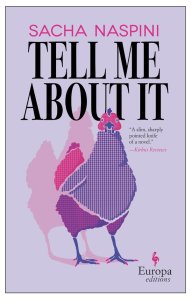 The Tuscan novelist’s second work to appear in English has an irresistible setup: Nives, recently widowed, brings her pet chicken Giacomina into the house as a companion. One evening, while a Tide commercial plays on the television, Giacomina goes as still as a statue. Nives places a call to Loriano Bottai, the local vet and an old family friend who is known to spend every night inebriated, to ask for advice, but they stay on the phone for hours as one topic leads to another. Readers learn much about these two, whom, it soon emerges, have a history.
The text is saturated with dialogue; quick wits and sharp tempers blaze. You could imagine this as a radio or stage play. The two characters discuss their children and the town’s scandals, including a lothario turned artist’s muse and a young woman who died by suicide. “The past is full of ghosts. For all of us. That’s how it is, and that’s how it will always be,” Loriano says. There’s a feeling of catharsis to getting all these secrets out into the open. But is there a third person on the line?
A couple of small translation issues hampered my enjoyment: the habit of alternating between calling him Loriano and Bottai (whereas Nives is always that), and the preponderance of sayings (“What’s true is that the business with the nightie has put a bee in my bonnet”), which is presumably to mimic the slang of the original but grates. Still, a good read. (Passed on by Annabel – thank you!) [128 pages]

Book Serendipity, August to September 2023
I call it “Book Serendipity” when two or more books that I read at the same time or in quick succession have something in common – the more bizarre, the better.
In Diary of a Tuscan Bookshop, Alba Donati remarks on this phenomenon: “Jung called these coincidences ‘synchronicities’, postulating that the universe possessed its own form of intelligence, which generated harmonies. A universe that detects and brings together the elements it feels are seeking each other in the endless swirl of life. Chance be damned.”
This is a regular feature of mine every couple of months. Because I usually have 20–30 books on the go at once, I suppose I’m more prone to such incidents. The following are in roughly chronological order.
- A memoir that opens with a little girl being injured in a bicycle accident: Some of Us Just Fall by Polly Atkin and Pharmakon by Almudena Sánchez.
- Telling stories through embroidery in Cross-Stitch by Jazmina Barrera and The Farmer’s Wife by Helen Rebanks.

- A small boy nicknamed “Willmouse” (real name: William) in Mary and the Birth of Frankenstein by Anne Eekhout and The Greengage Summer by Rumer Godden.
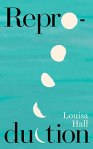
- An account of a routine sonogram that ends with the technician leaving the doctor to deliver bad news in Reproduction by Louisa Hall and The Unfamiliar by Kirsty Logan.
- Black dreadlocks/braid/ponytail being cut off in When We Were Birds by Ayanna Lloyd Banwo, The Wren, The Wren by Anne Enright, and Rebecca, Not Becky by Christine Platt and Catherine Wigginton Greene.

- Wondering how to arm a Black daughter against racist microaggressions in Rebecca, Not Becky by Christine Platt and Catherine Wigginton Greene and Ordinary Notes by Christina Sharpe.
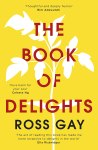
- Countering the commodification or romanticization of Black suffering in The Book of Delights by Ross Gay and Ordinary Notes by Christina Sharpe.

- An account of how the foot and mouth disease outbreak of 2001 affected the UK, especially northwest England, in Making the Beds for the Dead by Gillian Clarke and The Farmer’s Wife by Helen Rebanks.
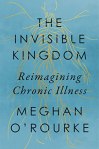
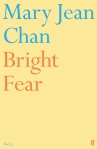
- I encountered the quote from Elaine Scarry’s The Body in Pain about pain being inexpressible in Reproduction by Louisa Hall and The Invisible Kingdom by Meghan O’Rourke on the same day. It’s also referenced in Mary Jean Chan’s Bright Fear.
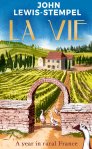
- A mention of eating frogs’ legs in The Book of Delights by Ross Gay and La Vie by John Lewis-Stempel.
- I read about the effects of heavy metal pollution on the body in The Invisible Kingdom by Meghan O’Rourke and Windswept by Annie Worsley in the same evening.
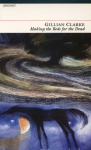
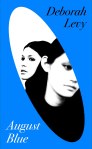
- Composer Erik Satie is mentioned in Making the Beds for the Dead by Gillian Clarke and August Blue by Deborah Levy.
- Stendhal syndrome and Florence are mentioned in The Wren, The Wren by Anne Enright and Pharmakon by Almudena Sánchez.
- Swallows nesting in an old Continental building in Diary of a Tuscan Bookshop by Alba Donati and La Vie by John Lewis-Stempel.
- France being all about the rules and a “Putain de merde” exclamation to bad news in Dirt by Bill Buford and La Vie by John Lewis-Stempel.

- A character named Nomi in Friends and Strangers by J. Courtney Sullivan and one called Noemi in Diary of a Tuscan Bookshop by Alba Donati.
- Epigenetics (trauma literally determining the genetic traits that are passed on) is discussed in The Invisible Kingdom by Meghan O’Rourke and Pharmakon by Almudena Sánchez.
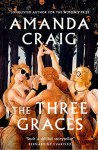
- Women of a certain age in Tuscany in The Three Graces by Amanda Craig and Diary of a Tuscan Bookshop by Alba Donati.
- Audre Lorde is quoted in Tremor by Teju Cole, Bibliomaniac by Robin Ince, The Invisible Kingdom by Meghan O’Rourke, Alone by Daniel Schreiber, and Ordinary Notes by Christina Sharpe.
- A Galway Kinnell poem is mentioned/quoted in The Dead Peasant’s Handbook by Brian Turner and Otherwise by Julie Marie Wade.
- The Bamiyan Buddhas are mentioned in Tremor by Teju Cole and The Dead Peasant’s Handbook by Brian Turner.


- Both The Three Graces by Amanda Craig and The Story of Lucy Gault by William Trevor open with a man shooting someone from his bedroom window.
- Linked short story collections about two children’s relationship with their Jamaican father, and mention of a devastating hurricane, in If I Survive You by Jonathan Escoffery and The Human Origins of Beatrice Porter and Other Essential Ghosts by Soraya Palmer. (Dual review coming up tomorrow!)
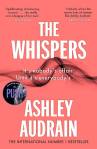
- Characters named Ben and Mara in The Whispers by Ashley Audrain and one story in Kate Doyle’s I Meant It Once.
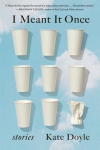
- Occasional uncut pages in my copies of I Meant It Once by Kate Doyle and The Unfamiliar by Kirsty Logan.
- A Florida setting and mention of the Publix supermarket chain in If I Survive You by Jonathan Escoffery and Arms and Legs by Chloe Lane.
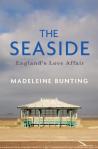
- A down-at-heel English seaside town near Scarborough features in The Seaside by Madeleine Bunting and Penance by Eliza Clark.

- A fictional northern town with “Crow” in the name: Crow-on-Sea in Penance by Eliza Clark and Crows Bank in Weyward by Emilia Hart.
- Claw-machine toys are mentioned in Penance by Eliza Clark and Directions to Myself by Heidi Julavits.
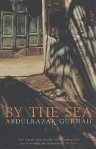
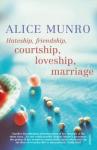
- Reading books by two Nobel Prize winners at the same time: Abdulrazak Gurnah (By the Sea) and Alice Munro (Hateship, Friendship, Courtship, Loveship, Marriage).
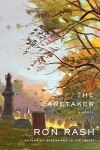
- Reading my second 2023 release featuring North Carolina ghost lights (after All of Us Together in the End by Matthew Vollmer, which I actually read last year): The Caretaker by Ron Rash.
- Reading my second 2023 release featuring a cat named Virginia Woolf (after Tell the Rest by Lucy Jane Bledsoe, which I actually read last year): one of the short stories in I Meant It Once by Kate Doyle.
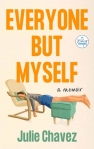
- A character named Shay in Everyone but Myself by Julie Chavez, The Human Origins of Beatrice Porter and Other Essential Ghosts by Soraya Palmer and The Caretaker by Ron Rash.

What’s the weirdest reading coincidence you’ve had lately?
Love Your Library, August 2023
Thanks to Elle and Jana for participating this month!
My reading and borrowing since last time:
READ
- Loved and Missed by Susie Boyt

- One Midsummer’s Day: Swifts and the Story of Life on Earth by Mark Cocker

- Protecting the Planet: The Season of Giraffes by Nicola Davies

- Rhubarb Lemonade by Oskar Kroon
- August Blue by Deborah Levy
- La Vie: A Year in Rural France by John Lewis-Stempel

&
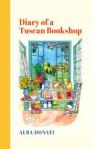
Diary of a Tuscan Bookshop by Alba Donati (2022; 2023)
[Translated from the Italian by Elena Pala]
My final #WITMonth selection (I’m pleased with my total of nine, after these four and those four!) and a perfect choice for readers of Shaun Bythell’s bookshop diaries. Instead of a lovable grump in Wigtown, you get a tiny town in the Tuscan hills and a stock of mostly women’s literature and bluestocking gifts curated by an outspoken feminist poet in her sixties. She relied on crowdfunding to open the shop in 2019 – and again to rebuild it after a devastating fire just a couple of months later.
 Set during the first five months of 2021, this gives lovely snapshots of a bookseller’s personal and professional life without overstaying its welcome or getting repetitive. Donati has an adult daughter and a 101-year-old mother who was only just losing independence. Although she generally feels supported by the people of Lucignana, some 30% are naysayers, she estimates, and not everyone shares her opinions – she’s outraged when the council cuts down all the trees in the central square.
While keeping the focus on books, she also manages to give a sense of her family’s convoluted wartime history, local politics, and shifting Covid restrictions. I especially enjoyed hearing about her 25-year career in publishing; Edward Carey, Michael Cunningham, and Daša Drndić were ‘her’ authors and she has juicy stories to tell about all three.
Each entry ends with a list of that day’s orders. It’s fascinating to see which are the popular authors in translation – Maeve Brennan, Emily Dickinson, Fannie Flagg, Kent Haruf, Jenny Offill, Vita Sackville-West, Ali Smith – as well as plenty in various European languages. Sometimes, no doubt, the stock reflects Donati’s own taste. [A couple of the English titles are rendered incorrectly: “Longbourne House” by Jo Baker and “Woman, Girl, Other” by Bernardine Evaristo should have been caught before this went to print.]
In short, she’s a bookish kindred spirit (“I like books that make you discover other books – a virtuous cycle that should never be broken. The only eternity we will ever experience here on earth”) and I thoroughly enjoyed reading about her fairly uneventful yet rewarding days. This, too, was perfect (summer) armchair travel reading. 
SKIMMED
- The Orchid Outlaw by Ben Jacob
CURRENTLY READING
- The Year of the Cat by Rhiannon Lucy Coslett
- The Three Graces by Amanda Craig
- Reproduction by Louisa Hall
- Milk by Alice Kinsella
- Tom Lake by Ann Patchett
- Wild Fell by Lee Schofield
CHECKED OUT, TO BE READ


RETURNED UNFINISHED
- The Other Side of Mrs Wood by Lucy Barker – I read the first 82 pages. This was capable hist fic but without the spark that would have kept me interested.
- King by Jonathan Eig – Requested after I’d only read two chapters. It’s a massive biography, so I’ll have to get it back out another time when I can give it more attention.
What have you been reading or reviewing from the library recently?

Share a link to your own post in the comments. Feel free to use the above image. The hashtag is #LoveYourLibrary.
Women’s Prize Longlist Reviews (Croft, Grudova, O’Farrell) & Shortlist Predictions
The Women’s Prize shortlist will be announced on Wednesday the 26th. I’ve managed to read a few more novels from the longlist and started another (Fire Rush by Jacqueline Crooks), which would take me up to 6 read out of 16. I have a couple of others on order from the library (Kennedy and Patel), but will only bother to read them if they are shortlisted.
Homesick by Jennifer Croft
I was intrigued by the publication history of this one: Croft first wrote it in Spanish, then produced an English-language version which, in the USA, was marketed as a memoir illustrated with her own photographs. Here in the UK, though, Charco Press published it as part of their new range of untranslated fiction – with no photos, alas. So, it’s clear that this is thinly veiled autobiography; literally all that may have been changed is the character names.
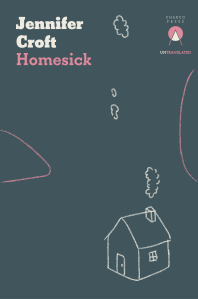 The protagonist is ‘Amy’, who lives in a tornado-ridden Oklahoma and whose sister, ‘Zoe’ – a handy A to Z of growing up there – has a mysterious series of illnesses that land her in hospital. The third person limited perspective reveals Amy to be a protective big sister who shoulders responsibility: “There is nothing in the world worse than Zoe having her blood drawn. Amy tries to show her the pictures [she’s taken of Zoe’s dog] at just the right moment, just right before the nurse puts the needle in”.
The girls are home-schooled and Amy, especially, develops a genius for languages, receiving private tutoring in Russian from Sasha, a Ukrainian former student of their father’s. Both sister are more than a little in love with Sasha. They alternate between competing for attention and indulging their joint passions – such as for the young Russian figure-skating couple who sweep the Winter Olympics. Amy starts college at 15, which earns her unwanted attention among her classmates, and struggles with her mental health before deciding to see the world. Despite periods of estrangement, her relationship with Zoe is what grounds her.
In a sense this is a simple chronological story, told in a matter-of-fact way. Yet each of its vignettes – some just a paragraph long – is perfectly chosen to reveal the family dynamic and the moment in American history. Detailed chapter headings continue the narrative and sometimes contain a shocking truth. What Croft does so brilliantly is to chart the accretion of ordinary and landmark events that form a life; Amy realizes this as she looks back at a packet of her photographs: “laid out step by step like this, more or less in order, the pictures also form a kind of path.”
Initially, I had my doubts as to whether this should have been eligible for the Women’s Prize. In the end it didn’t matter whether it was presented as memoir or autofiction, so true was it to the experience of 1990s girlhood, as well as to sisterhood and coming of age at any time in history. It reminded me strongly of Very Cold People by Sarah Manguso, but felt that little bit more universal in how it portrays family ties, ambition, and life’s winding path. (See also Annabel’s review for Shiny New Books.) 
With thanks to Charco Press for the free copy for review.
Children of Paradise by Camilla Grudova
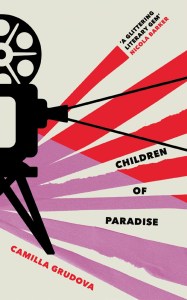 In 2017 I reviewed Grudova’s surreal story collection, The Doll’s Alphabet, describing its tales as “perverted fairytales or fragmentary nightmares.” Okay then, let’s continue in that perverted, nightmarish vein. Holly, new to the country/city, finds a room in a shared flat and a job as an usher at the Paradise Cinema, which shows a random assortment of art films and cult classics. The building is so low-rent it’s almost half derelict, and the staff take full advantage of the negligent management to get up to all sorts of sexual shenanigans, as well as drinking and drug-taking, while on duty. Holly and her co-workers are truly obsessed with the cinema, watching every showing at work but also hosting all-night movie marathons in their apartments. “The outside world, all of its news, faded away, and the movies became my main mirror of the world,” she confesses. “They were a necessary evil, customers, so that we, the true devotees, could have access to the screen, our giant godlike monument.”
The title is simultaneously ironic and an homage to Les Enfants du Paradis (1945), and the chapters are named after particular films. A change of ownership forces the Paradise to become more mainstream – hello, Marvel flicks and hipster snacks – but a series of horrific accidents and deliberate acts makes it seem like a cursed place. Aping movie genres, perhaps, Children of Paradise starts off as an offbeat stoner comedy and by the end approaches horror to an extent I didn’t expect. The content becomes increasingly sordid, visceral, with no opportunity missed to mention bodily fluids and excretions. I’m not notably opposed to gross-out humour, but the whole thing felt quite distasteful as well as miserable. (Public library e-book) 
My general feeling about these first two books, and probably a few others from the longlist (Crooks, McKenzie, Paull, et al.), is that the judges are trying to showcase the breadth of women’s writing: ‘Hey, guys, women can write autofiction and horror and humour and patois and speculative fiction and everything in between!’ But I don’t think these more niche or genre fiction representatives will make it any further in the race, especially because each may have been championed by a different judge.
Where the judges will find common ground will be on the standard stuff that always gets shortlisted: fairly run-of-the-mill character- and issue-driven contemporary or historical fiction. That makes it sound like I’m being dismissive, but in fact I do generally like much of the fiction that gets shortlisted for the WP: it’s readable book club fodder. It’s just maybe not inventive in the way that certain longlist titles can be. On which note, er, see the below!
The Marriage Portrait by Maggie O’Farrell
What a relief it was to wholeheartedly enjoy this sumptuous work of historical fiction, after the disappointment that was Hamnet (though perhaps I’ll feel more kindly towards the latter when I reread it for Literary Wives in November).
 Lucrezia di Cosimo de’ Medici is a historical figure who died at age 16, having been married off from her father’s Tuscan palazzo as a teenager to Alfonso II d’Este, Duke of Ferrara. She was reported to have died of a “putrid fever” but the suspicion has persisted that her husband actually murdered her, a story perhaps best known via Robert Browning’s poem “My Last Duchess.”
The focus is on the final year of Lucrezia’s life, but in flashbacks we meet her as a rebellious girl with a talent for drawing and a fascination with animals. At first it appears that Alfonso esteems her for her spiritedness – he gives her a painting of a stone marten as a betrothal gift, after all, and has her depicted with paintbrush in hand – but as the gradual storyline meets up with the 1561 spotlight, it becomes clear that she is only valued for her ability to produce an heir. However spacious and opulent they are, it is impossible to forget that Lucrezia, as a noblewoman, is confined to the edifices owned by her father or her husband.
O’Farrell’s usual present-tense narration is engaging throughout, and the two long chapters either side of the midpoint, one concerning her wedding day and the other the preparation for her portrait, are particularly absorbing. I was convinced I knew how this story would end, yet the author pulls off a delicious surprise. This is ripe for the miniseries treatment, not least because it is so attentive to visuals: the architecture of the main buildings, the lavish clothing, the colours, and the eye for what makes a good painting. Scenes are even described in terms of a spatial arrangement appreciated from afar: how three figures form a triangle in the centre of a room; how two people on a balcony bisect the view from a window.
Despite the length, this was thoroughly engrossing and one I’d recommend to readers of Geraldine Brooks and Tracy Chevalier. (See also Laura’s review.) (Public library)
The other nominees I’ve read are:
Demon Copperhead by Barbara Kingsolver 
Black Butterflies by Priscilla Morris
My ideal shortlist (a wish list based on my reading and what I still want to read):
Homesick by Jennifer Croft
Fire Rush by Jacqueline Crooks
Black Butterflies by Priscilla Morris
The Marriage Portrait by Maggie O’Farrell
I’m a Fan by Sheena Patel
Memphis by Tara M. Stringfellow
vs.
My predicted shortlist:
Trespasses by Louise Kennedy
Demon Copperhead by Barbara Kingsolver
Stone Blind by Natalie Haynes
The Marriage Portrait by Maggie O’Farrell
Memphis by Tara M. Stringfellow
Wandering Souls by Cecile Pin
An overall winner? Perhaps Trespasses by Louise Kennedy, or an unprecedented repeat win from Barbara Kingsolver or Maggie O’Farrell.
(See also Laura’s predictions post.)
What have you read from the longlist so far? Which of these books are calling to you?
Six Degrees: From No One Is Talking About This to The White Garden
This month marks two years that I’ve been participating in the Six Degrees meme. I’m an off-and-on contributor – I skipped last month – but this month’s starting book hooked me in. We begin with No One Is Talking About This by Patricia Lockwood, critically acclaimed but divisive among regular readers. It made my Best of 2021 list. (See Kate’s opening post.)

 #1 No one is talking about the danger/allure of social media and the real-life moments that matter so much more … or maybe everyone is by now? What else is ‘everyone’ up to? Well, according to an appealing 2021 title from my TBR, Everyone Dies Famous in a Small Town (a YA linked short story collection by Bonnie-Sue Hitchcock). My library has a copy, so I need to catch up.
 #2 I did a search of my Goodreads library to find other small-town stories and FOUR of the results were unread nonfiction books by Heather Lende, set in Alaska (where lots of the Hitchcock stories are set as well). Now, my rule is that I can only have ONE book by an untried author on my virtual TBR; only if I read and enjoy a book of theirs can I add further titles. So I culled the other three but kept Find the Good, about the simple lessons Lende learned from writing obituaries in her small town.
 #3 I’ve read a few books with a lemon on the cover, but the one that was most about, you know, lemons, was The Land Where Lemons Grow by Helena Attlee. I chose it as one of my location-appropriate reads – written up here – during a vacation to Tuscany in 2014, my first time in Italy. It contains (more than) all you ever wanted to know about lemons.
 #4 A less apt read for time spent in Florence, but I distinctly remember lying in bed in our hotel room, which was basically part of a medieval villa, and reading it on my Nook when I couldn’t sleep because of the noisy nightlife out the window: Dirty Daddy by the late comedian Bob Saget. I rarely choose celebrity memoirs and this one was kinda crummy, but I’d requested it from Edelweiss because of my fond memories of the 1990s sitcom Full House.
 #5 Full house? How about A House Full of Daughters, a family memoir by Juliet Nicolson (sister of Adam)? It covers seven generations of women, including her grandmother, Vita Sackville-West. I loved my visits to Sissinghurst Castle and Knole Park, two of Vita’s homes, and have devoured Adam Nicolson and Sarah Raven’s writings about their work at Sissinghurst. When a neighbour was giving away a copy of this book, I snatched it up. It’s packed in a box and will be awaiting me after our move (coming up in March, we hope).
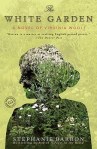 #6 During the lockdown spring I wrote about a silly novel called The White Garden by Stephanie Barron, which imagines that Virginia Woolf did not commit suicide upon her disappearance in March 1941, but hid with Vita at Sissinghurst. An American garden designer tasked with recreating Sackville-West’s famous White Garden at a wealthy client’s upstate New York estate ends up investigating what happened. My interest in the historical figures involved was enough to keep me going through a rather frothy book.
From one contemporary novel that swaps farce for poignancy to another that descends into ridiculousness, my chain has travelled via Alaska, Italy and Hollywood to Kent, England. The overarching theme has been fame: on the Internet, in small towns, in show business, and (my kind of celebrity) in the literary world.
Where will your chain take you? Join us for #6Degrees of Separation, hosted on the first Saturday of each month by Kate W. of Books Are My Favourite and Best. Next month’s starting point is The End of the Affair by Graham Greene, my perfect excuse to finally review it (I finished it more than a year ago!).
Have you read any of my selections? Tempted by any you didn’t know before?
20 Books of Summer, #19–20: Heat & The Gospel of Trees
Finishing off my summer reading project with a stellar biography-cum-travel book about Italian cuisine and a family memoir about missionary work in Haiti in the 1980s.
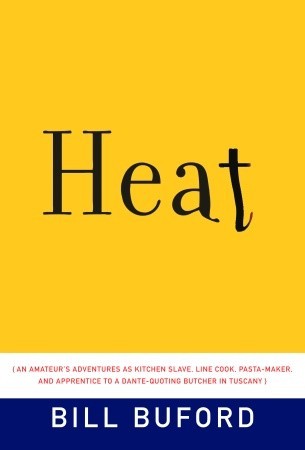
Heat by Bill Buford (2006)
(20 Books of Summer, #19) The long subtitle gives you an outline of the contents: “An Amateur’s Adventures as Kitchen Slave, Line Cook, Pasta-Maker, and Apprentice to a Dante-Quoting Butcher in Tuscany.” If Buford’s name sounds familiar, it’s because he was the founding editor of Granta magazine and publisher at Granta Books, but by the time he wrote this he was a staff writer for the New Yorker.
 Mario Batali is the book’s presiding imp. In 2002–3, Buford was an unpaid intern in the kitchen of Batali’s famous New York City restaurant, Babbo, which serves fancy versions of authentic Italian dishes. It took 18 months for him to get so much as a thank-you. Buford’s strategy was “be invisible, be useful, and eventually you’ll be given a chance to do more.”
In between behind-the-scenes looks at frantic or dull sessions of food prep (“after you’ve made a couple thousand or so of these little ears [orecchiette pasta], your mind wanders. You think about anything, everything, whatever, nothing”), Buford traces Batali’s culinary pedigree through Italy and London, where Batali learned from the first modern celebrity chef, Marco Pierre White, and gives pen portraits of the rest of the kitchen staff. At first only trusted with chopping herbs, the author develops his skills enough that he’s allowed to work the pasta and grill stations, and to make polenta for 200 for a benefit dinner in Nashville.
Later, Buford spends stretches of several months in Italy as an apprentice to a pasta-maker and a Tuscan butcher. His obsession with Italian cuisine is such that he has to know precisely when egg started to replace water in pasta dough in historical cookbooks, and is distressed when the workers at the pasta museum in Rome can’t give him a definitive answer. All the same, the author never takes himself too seriously: he knows it’s ridiculous for a clumsy, unfit man in his mid-forties to be entertaining dreams of working in a restaurant for real, and he gives self-deprecating accounts of his mishaps in the various kitchens he toils in:
to stir the polenta, I was beginning to feel I had to be in the polenta. Would I finish cooking it before I was enveloped by it and became the darkly sauced meaty thing it was served with?
Compared to Kitchen Confidential, I found this less brash and more polished. You still get the sense of macho posturing from a lot of the figures profiled, but of course this author is not going to be in a position to interrogate food culture’s overweening masculinity. However, he does take a stand in support of small-scale food production:
Small food: by hand and therefore precious, hard to find. Big food: from a factory and therefore cheap, abundant. Just about every preparation I learned in Italy was handmade and involved learning how to use my own hands differently. … Food made by hand is an act of defiance and runs contrary to everything in our modernity. Find it; eat it; it will go.
This is exactly what I want from food writing: interesting nuggets of trivia and insight, a quick pace, humor, and mouthwatering descriptions. If the restaurant world lures you at all, you must read this one.
- Nice connections with my other summer reading: there are mentions of both Eric Asimov and Ruth Reichl visiting Babbo in their capacity as food critics for the New York Times.
- This also induced a weird case of reverse déjà vu: a book I reviewed last summer for BookBrowse, Hungry by Jeff Gordinier, is so similar that it must have been patterned on Heat: the punchy one-word title; a New York journalist follows an internationally known chef (in that case, René Redzepi) and surveys culinary trends.
 I was delighted to learn that this year Buford released a sequel of sorts, this one about French cuisine: Dirt. It’s on my wish list.
Source: From my dad
My rating: 
The Gospel of Trees by Apricot Irving (2018)
(20 Books of Summer, #20) Irving’s parents were volunteer missionaries to Haiti between 1982 and 1991, when she was aged six to 15. Her father, Jon, was trained as an agronomist, and his passion was for planting trees to combat the negative effects of deforestation on the island (erosion and worsened flooding). But in a country blighted by political unrest, AIDS and poverty, people can’t think long-term; they need charcoal to light their stoves, so they cut down trees.
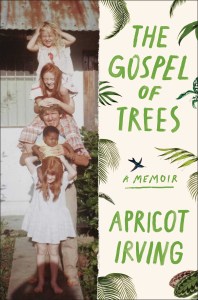 Along with an agricultural center, the American Baptist missionaries were closely associated with a hospital, Hôpital le Bon Samaritain, run by amateur archaeologist Dr. Hodges and his family. Although Apricot and her two younger sisters were young enough to adapt easily to life in a developing country, they were disoriented each time the family returned to California in between assignments. Their bonds were shaky due to her father’s temper, her parents’ rocky relationship, and the jealousy provoked over almost adopting a Haitian baby girl.
Irving drew on letters and cassette tape recordings, newsletters, and journals (her parents’ and her own) to recreate the decade in Haiti and the years since. This debut book was many years in the making – she started the project in 2001. “I inherited my father’s anger and his perfectionism. Haiti was a wound, an unhealed scab that I was afraid to pick open. But I knew that unless I faced that broken history, my own buried grief, like my father’s, would explode ways I couldn’t predict.”
She and her parents returned to the country after the 2010 earthquake: they were volunteers with a relief organization, while she reported for the This American Life radio program. I loved the ambivalent portrait of Haiti and, especially, of Jon, but couldn’t muster up much interest in secondary characters, hoped for more discussion of (loss of) faith, and thought the book about 80 pages too long. Irving writes wonderfully, though, especially when musing on Haiti’s pre-Columbian history; I’d gladly read a nature book about her life in Oregon, or a novel – in tone this reminded me of The Poisonwood Bible.
Some favorite lines:
If, like my father, you suffer from a savior complex, Haiti is a bleak assignment, but if you are able to enter it unguarded, shielded only by curiosity, you will find the sorrows entangled with a defiant joy.
My family had moved to Haiti to try to help, but instead, we learned our limitations. Failure can be a wise friend. We felt crushed at times; found it difficult to breathe; and yet the experience carved into each of us an understanding of loss, the weight of compassion. We learned how small we were when measured against the world’s great sorrow.
Source: Bargain book from Amazon last year
My rating: 
And a DNF:
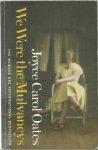 We Were the Mulvaneys by Joyce Carol Oates (oats!)
I gave up after 38 pages. I’ve long meant to try Oates, but her oeuvre is daunting. An Oprah’s Book Club selection seemed like a safe bet. I found the quirky all-American family saga approach somewhat similar to John Irving or Richard Russo, but Judd’s narration is annoyingly perky, and already I was impatient to find out what happened to his sister Marianne on Valentine’s Day 1976. I’ll give it a few years and try again. In the meantime, maybe I’ll try Oates in a different genre.
Looking back, Heat was the clear highlight of my 20 Books, closely followed by My Year of Meats by Ruth Ozeki. I also really enjoyed the foodoirs by Anthony Bourdain, Nina Mingya Powles and Luisa Weiss. It’s funny how much I love foodie lit given that I don’t cook. As Alice Steinbach puts it, “while we all like to eat, we like it more when someone else does the cooking.”
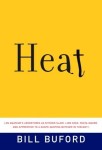
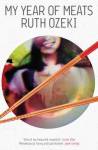
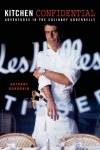
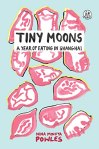
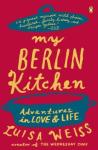
 Of course, not all of my selections were explicitly food-related; others simply had food words in their titles (or, as above, in the author’s name). Of these, my favorite was a reread, Ella Minnow Pea. Ideally, I would not have had to include my two skims and one partial read in the total, but I ran out of time in August to substitute in three more books. I’m happy enough with my showing this year, but next time I plan to build in more flexibility – or cheating, whichever you wish to call it – to ensure that I manage 20 solid reads.
I already have a color theme planned for 20 Books of Summer 2021! Here are 15 books that I own, mostly fiction, that would fit the bill:
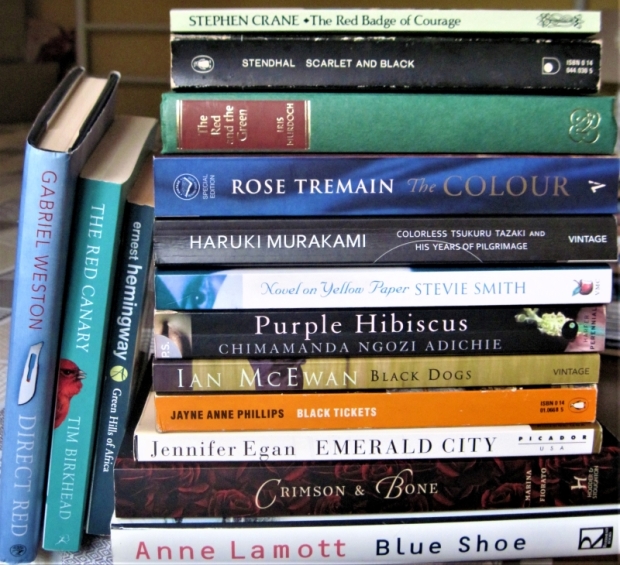
As wildcard selections and/or substitutes, I will also allow:
- Books with “light”, “dark”, or “bright” in the title
- Kindle or library books, though I’d like the focus to remain on print books I own.
- If I’m really stuck, book covers/jackets in a rainbow of colors. I’ll skip orange because Penguin paperbacks are too plentiful in my book collection, but I have some nice red, yellow, green, blue, purple and pink covers to choose from.
 Bookish Beck = Rebecca Foster. American transplant to England. Freelance proofreader and book reviewer.
 Bookish Beck