#NovNov23 Week 4, “The Short and the Long of It”: W. Somerset Maugham & Jan Morris
Hard to believe, but it’s already the final full week of Novellas in November and we have had 109 posts so far! This week’s prompt is “The Short and the Long of It,” for which we encourage you to pair a novella with a nonfiction book or novel that deals with similar themes or topics. The book pairings week of Nonfiction November is always a favourite (my 2023 contribution is here), so think of this as an adjacent – and hopefully fun – project. I came up with two pairs: one fiction and one nonfiction. In the first case, the longer book led me to read a novella, and it was vice versa for the second.

W. Somerset Maugham
The House of Doors by Tan Twan Eng (2023)
&
Liza of Lambeth by W. Somerset Maugham (1897)
I wasn’t a huge fan of The Garden of Evening Mists, but as soon as I heard that Tan Twan Eng’s third novel was about W. Somerset Maugham, I was keen to read it. Maugham is a reliably readable author; his books are clearly classic literature but don’t pose the stylistic difficulties I now experience with Dickens, Trollope et al. And yet I know that Booker Prize followers who had neither heard of nor read Maugham have enjoyed this equally. I’m surprised it didn’t make it past the longlist stage, as I found it as revealing of a closeted gay writer’s life and times as The Master (shortlisted in 2004) but wider in scope and more rollicking because of its less familiar setting, true crime plot and female narration.
The main action is set in 1921, as “Willie” Somerset Maugham and his secretary, Gerald, widely known to be his lover, rest from their travels in China and the South Seas via a two-week stay with Robert and Lesley Hamlyn at Cassowary House in Penang, Malaysia. Robert and Willie are old friends, and all three men fought in the First World War. Willie’s marriage to Syrie Wellcome (her first husband was the pharmaceutical tycoon) is floundering and he faces financial ruin after a bad investment. He needs a good story that will sell and gets one when Lesley starts recounting to him the momentous events of 1910, including a crisis in her marriage, volunteering at the party office of Chinese pro-democracy revolutionary Dr Sun Yat Sen, and trying to save her friend Ethel Proudlock from a murder charge.

It’s clever how Tan weaves all of this into a Maugham-esque plot that alternates between omniscient third-person narration and Lesley’s own telling. The glimpses of expat life and Asia under colonial rule are intriguing, and the scene-setting and atmosphere are sumptuous – worthy of the Merchant Ivory treatment. I was left curious to read more by and about Maugham, such as Selina Hastings’ biography. (Public library) 
But for now I picked up one of the leather-bound Maugham books I got for free a few years ago. Amusingly, the novella-length Liza of Lambeth is printed in the same volume with the travel book On a Chinese Screen, which Maugham had just released when he arrived in Penang.
{SPOILERS AHEAD}
This was Maugham’s debut novel and drew on his time as a medical intern in the slums of London. In tone and content it falls almost perfectly between Dickens and Hardy, because on the one hand Liza Kemp and her neighbours are cheerful paupers even though they work in factories, have too many children and live in cramped quarters; on the other hand, alcoholism and domestic violence are rife, and the wages of sexual sin are death. All seems light to start with: an all-village outing to picnic at Chingford; pub trips; and harmless wooing as Liza rebuffs sweet Tom in favour of a flirtation with married Jim Blakeston.
 At the halfway point, I thought we were going full Tess of the d’Urbervilles – how is this not a rape scene?! Jim propositions her four times, ignoring her initial No and later quiet. “‘Liza, will yer?’ She still kept silence, looking away … Suddenly he shook himself, and closing his fist gave her a violent, swinging blow in the belly. ‘Come on,’ he said. And together they slid down into the darkness of the passage.” So starts their affair, which leads to Liza getting beaten up by Mrs Blakeston in the street and then dying of an infection after a miscarriage. The most awful character is Mrs Kemp, who spends the last few pages – while Liza is literally on her deathbed – complaining of her own hardships, congratulating herself on insuring her daughter’s life, and telling a blackly comic story about her husband’s corpse not fitting in his oak coffin and her and the undertaker having to jump on the lid to get it to close.
Liza isn’t entirely the stereotypical whore with the heart of gold, but she is a good-time girl (“They were delighted to have Liza among them, for where she was there was no dullness”) and I wonder if she could even have been a starting point for Eliza Doolittle in Pygmalion. Maugham’s rendering of the cockney accent is over-the-top –
“‘An’ when I come aht,’ she went on, ‘’oo should I see just passin’ the ’orspital but this ’ere cove, an’ ’e says to me, ‘Wot cheer,’ says ’e, ‘I’m goin’ ter Vaux’all, come an’ walk a bit of the wy with us.’ ‘Arright,’ says I, ‘I don’t mind if I do.’”
– but his characters are less caricatured than Dickens’s. And, imagine, even then there was congestion in London:
“They drove along eastwards, and as the hour grew later the streets became more filled and the traffic greater. At last they got on the road to Chingford, and caught up numbers of other vehicles going in the same direction—donkey-shays, pony-carts, tradesmen’s carts, dog-carts, drags, brakes, every conceivable kind of wheeled thing, all filled with people”
In short, this was a minor and derivative-feeling work that I wouldn’t recommend to those new to Maugham. He hadn’t found his true style and subject matter yet. Luckily, there’s plenty of other novels to try. (Free mall bookshop) [159 pages] 
Jan Morris
Conundrum by Jan Morris (1974)
&
Jan Morris: Life from Both Sides, A Biography by Paul Clements (2022)

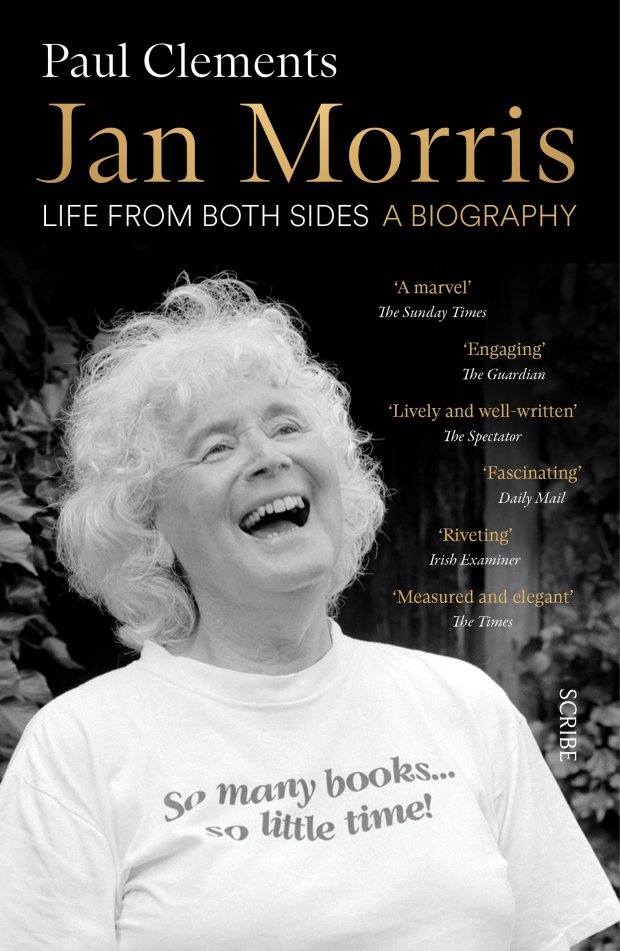
Back in 2021, I reread and reviewed Conundrum during Novellas in November. It’s a short memoir that documents her spiritual journey towards her true identity – she was a trans pioneer and influential on my own understanding of gender. In his doorstopper of a biography, Paul Clements is careful to use female pronouns throughout, even when this is a little confusing (with Morris a choirboy, a soldier, an Oxford student, a father, and a member of the Times expedition that first summited Everest). I’m just over a quarter of the way through the book now. Morris left the Times before the age of 30, already the author of several successful travel books on the USA and the Middle East. I’ll have to report back via Love Your Library on what I think of this overall. At this point I feel like it’s a pretty workaday biography, comprehensive and drawing heavily on Morris’s own writings. The focus is on the work and the travels, as well as how the two interacted and influenced her life.

#NovNov23 and #SciFiMonth: They by Kay Dick
To join the Week 3 theme of Novellas in November, “Broadening My Horizons,” with Science Fiction Month (celebrating a genre I still struggle with but occasionally enjoy), I decided to pick up a short rediscovered dystopian classic. Originally published in 1977, They: A Sequence of Unease was reissued by Faber Editions last year. I had never heard of its author, Kay Dick (1915–2001), a lesbian bookseller and publisher who lived in London and Brighton and wrote seven works of fiction and three biographies.
Although I can think of a few dystopian novels that I have loved, it’s not a mode I gravitate towards. This makes me out of step with the zeitgeist, I know, because dystopian stories are only rising in popularity as current events converge with premonitory visions of the future.
The specific problem I had with They is one I’ve had with some other speculative works: vagueness. I can’t stand it when allegorical books are set in a deliberate no-place, or a made-up country (I’ve not yet succeeded in reading a J.M. Coetzee or José Saramago novel, for instance). I gave up on the Giller Prize-winning Study for Obedience when its first ten pages gave no clear sense of its geographical or temporal setting. When there’s no detail to latch onto, disorientation usually leads me to turn to another more realist book in preference.
They is, in fact, set in an ironically idyllic Britain. There are lovely descriptions of the land during different seasons: roses, sunsets, wheat fields, birdsong. This is in contrast with the disquiet permeating the narrator’s everyday life. She is part of a dispersed, itinerant creative community whose members come and go, hiding their work and doing their best to avoid the nameless enforcers who patrol the country to destroy art and quash emotion and individual endeavours. Certain artists of her acquaintance have been maimed or disappeared. For all the public enshrinement of teamwork, the normies the book portrays seem purely mean-spirited: children torture animals for kicks.

A case could be made that Dick was aiming at universality – this could happen anywhere – but the combination of imprecision and flat, declarative sentences left me cold.
“We’re all frightened. We must live with it. Russell and Jane will be here tomorrow. They got through London. I’ll be sleeping in the room opposite yours tonight. You are over-tired; it’s the strain.”
“Subscribing to current social fashions, I gave a small party, inviting all my neighbours. They all talked at the same time. No one listened to anyone else. No one laughed. Only Tim and I smiled at each other. They felt uneasy because there was no television set.”
In terms of world-building, everything is either unexplained or revealed abruptly through unsubtle dialogue. I came away with no sense of the narrator or any of the many secondary characters, who are little more than a name. Funny that the most consistent presence is that of her dog, who is never given the dignity of a name. (It’s only ever “my dog,” when a creature so important to her would surely be referred to as a friend.) While the two authors were probably poles apart ideologically, I thought I spied the ghost of Ayn Rand in the awe surrounding individual achievement.
It’s comforting to try to believe what Hurst says about the persistence of art – “We can all add to the treasure, however short the time left may be. It can’t all be destroyed. Some of it will remain for those who come after us” – but this portrait of underground artists in a parallel modern Britain failed to move me. (New purchase at sale price from Faber website) [107 pages]
The Lost Supper by Taras Grescoe (Blog Tour)
“Searching for the Future of Food in the Flavors of the Past” is the instructive subtitle of this globe-trotting book of foodie exploration in the vein of A Cook’s Tour and The Omnivore’s Dilemma. With its firm grounding in history, it also reminded me of Twain’s Feast. Journalist Tara Grescoe is based in Montreal. Dodging Covid lockdowns, he managed to make visits to the homes of various traditional foods, such as the more nutritious emmer wheat that sustained the Çatalhöyük settlement in Turkey 8,500 years ago; the feral pigs that live on Ossabaw Island off of Georgia, USA: the Wensleydale cheese that has been made in Yorkshire for more than 700 years; the olive groves of Puglia; and the potato-like tuber called camas that is a staple for the Indigenous peoples of Vancouver Island.
One of the most fascinating chapters is about the quest to recreate “garum,” a fermented essence of salted fish (similar to modern-day Asian fish sauces) used ubiquitously by the Romans. Grescoe journeys to Cádiz, Spain, where the sauce is being made again in accordance with the archaeological findings at Pompeii. He experiences a posh restaurant tasting menu where garum features in every dish – even if just a few drops – and then has a go at making his own. “Garum seemed to subject each dish to the culinary equivalent of italicization,” he found, intensifying the existing flavours and giving an inimitable umami hit. I’m also intrigued by the possibilities of entomophagy (eating insects) so was interested in his hunt for water boatman eggs, “the caviar of Mexico”; and his outing to the world’s largest edible insect farm near Peterborough, Ontario.
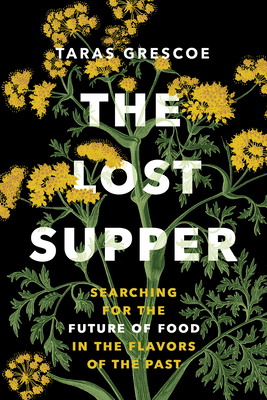
Grescoe seems to be, like me, a flexitarian, focusing on plants but indulging in occasional high-quality meat and fish. He advocates for eating as locally as you can, and buying from small producers whose goods reflect the care taken over the raising. “Everybody who eats cheap, factory-made meat is eating suffering,” he insists, having compared an industrial-scale slaughterhouse in North Carolina with small farms of heritage pigs. He acknowledges other ecological problems, too, however, such as the Ossabaw hogs eating endangered loggerhead turtles’ eggs and the overabundance of sheep in the Yorkshire Dales leading to a loss of plant diversity. This ties into the ecological conscience that is starting to creep into foodie lit (as opposed to a passé Bourdain eat-everything mindset), as witnessed by Dan Saladino’s Eating to Extinction winning the Wainwright Prize (Conservation) last year.
Another major theme of the book is getting involved in the food production process yourself, however small the scale (growing herbs or tomatoes on a balcony, for instance). “With every home food-making skill I acquired, I felt like I was tapping into some deep wellspring of self-sufficiency that connected me to my historic—and even prehistoric—ancestors,” Grescoe writes. He also cites American farmer-philosopher Wendell Berry’s seven principles for responsible eating, as relevant now as they were in the 1980s. The book went a little deeper into history and anthropology than I needed, but there was still plenty here to hold my interest. Readers may not follow Grescoe into grinding their own wheat or making their own cheese, but we can all be more mindful about where our food comes from, showing gratitude rather than entitlement. This was a good Nonfiction November and pre-Thanksgiving read!
With thanks to Random Things Tours and Greystone Books for the proof copy for review.
Buy The Lost Supper from Bookshop UK [affiliate link]
I was delighted to be part of the blog tour for The Lost Supper. See below for details of where other reviews have appeared or will be appearing soon.
Nonfiction November Book Pairings: Hardy’s Wives, Rituals, and Romcoms
Liz is hosting this week of Nonfiction November. For this prompt, the idea is to choose a nonfiction book and pair it with a fiction title with which it has something in common.

I came up with three based on my recent reading:
Thomas Hardy’s Wives
On my pile for Novellas in November was a tiny book I’ve owned for nearly two decades but not read until now. It contains some of the backstory for an excellent historical novel I reviewed earlier in the year.
Some Recollections by Emma Hardy
&
The Chosen by Elizabeth Lowry


The manuscript of Some Recollections is one of the documents Thomas Hardy found among his first wife’s things after her death in 1912. It is a brief (15,000-word) memoir of her early life from childhood up to her marriage – “My life’s romance now began.” Her middle-class family lived in Plymouth and moved to Cornwall when finances were tight. (Like the Bennets in Pride and Prejudice, you look at the house they lived in, and read about the servants they still employed, and think, “impoverished,” seriously?!) “Though trifling as they may seem to others all these memories are dear to me,” she writes. It’s true that most of these details seem inconsequential, of folk historical value but not particularly illuminating about the individual.
An exception is her account of her dealings with fortune tellers, who often went out of their way to give her good – and accurate – predictions, such as that she would marry a writer. It’s interesting to set this occult belief against the traditional Christian faith she espouses in her concluding paragraph, in which she insists an “Unseen Power of great benevolence directs my ways.” The other point of interest is her description of her first meeting with Hardy, who was sent to St. Juliot, where she was living with her parson brother-in-law and sister, as an architect’s assistant to begin repairs on the church. “I thought him much older than he was,” she wrote. As editor Robert Gittings notes, Hardy made corrections to the manuscript and in some places also changed the sense. Here Hardy gave proof of an old man’s continued vanity by adding “he being tired” after that line … but then partially rubbing it out. (Secondhand, Books for Amnesty, Reading, 2004) [64 pages] 
The Chosen contrasts Emma’s idyllic mini memoir with her bitterly honest journals – Hardy read but then burned these, so Lowry had to recreate their entries based on letters and tone. But Some Recollections went on to influence his own autobiography, and to be published in a stand-alone volume by Oxford University Press. Gittings introduces the manuscript (complete with Emma’s misspellings and missing punctuation) and appends a selection of Hardy’s late poems based on his first marriage – this verse, too, is central to The Chosen.
Another recent nonfiction release on this subject matter that I learned about from a Shiny New Books review is Woman Much Missed: Thomas Hardy, Emma Hardy and Poetry by Mark Ford. I’d also like to read the forthcoming Hardy Women: Mother, Sisters, Wives, Muses by Paula Byrne (1 February 2024, William Collins).
Rituals
The Ritual Effect by Michael Norton
&
The Rituals by Rebecca Roberts


Last month I reviewed this lovely Welsh novel about a woman who is an independent celebrant, helping people celebrate landmark events in their lives or cope with devastating losses by commemorating them through secular rituals.
Coming out in April 2024, The Ritual Effect is a Harvard Business School behavioral scientist’s wide-ranging study of how rituals differ from habits in that they are emotionally charged and lift everyday life into something special. Some of his topics are rites of passage in different cultures; musicians’ and sportspeople’s pre-performance routines; and the rituals we develop around food and drink, especially at the holidays. I’m just over halfway through this for an early Shelf Awareness review and I have been finding it fascinating.
Romantic Comedy
(As also featured in my August Six Degrees post)
What I Was Doing While You Were Breeding by Kristin Newman
&
Romantic Comedy by Curtis Sittenfeld


Romantic Comedy is probably still the most fun reading experience I’ve had this year. Sittenfeld’s protagonist, Sally Milz, writes TV comedy, as does Kristin Newman (That ’70s Show, How I Met Your Mother, etc.). What I Was Doing While You Were Breeding is a lighthearted record of her sexual conquests in Amsterdam, Paris, Russia, Argentina, etc. (Newman even has a passage that reminds me of Sally’s “Danny Horst Rule”: “I looked like a thirty-year-old writer. Not like a twenty-year-old model or actress or epically legged songstress, which is a category into which an alarmingly high percentage of Angelenas fall. And, because the city is so lousy with these leggy aliens, regular- to below-average-looking guys with reasonable employment levels can actually get one, another maddening aspect of being a woman in this city.”) Unfortunately, it got repetitive and raunchy. It was one of my 20 Books of Summer but I DNFed it halfway.
Last House Before the Mountain by Monika Helfer (#NovNov23 and #GermanLitMonth)
This Austrian novella, originally published in German in 2020, also counts towards German Literature Month, hosted by Lizzy Siddal. It is Helfer’s fourth book but first to become available in English translation. I picked it up on a whim from a charity shop.

“Memory has to be seen as utter chaos. Only when a drama is made out of it is some kind of order established.”
A family saga in miniature, this has the feel of a family memoir, with the author frequently interjecting to say what happened later or who a certain character would become, yet the focus on climactic scenes – reimagined through interviews with her Aunt Kathe – gives it the shape of autofiction.
Josef and Maria Moosbrugger live on the outskirts of an alpine village with their four children. The book’s German title, Die Bagage, literally means baggage or bearers (Josef’s ancestors were itinerant labourers), but with the connotation of riff-raff, it is applied as an unkind nickname to the impoverished family. When Josef is called up to fight in the First World War, life turns perilous for the beautiful Maria. Rumours spread about her entertaining men up at their remote cottage, such that Josef doubts the parentage of the next child (Grete, Helfer’s mother) conceived during one of his short periods of leave. Son Lorenz resorts to stealing food, and has to defend his mother against the mayor’s advances with a shotgun.

If you look closely at the cover, you’ll see it’s peopled with figures from Pieter Bruegel’s Children’s Games. Helfer was captivated by the thought of her mother and aunts and uncles as carefree children at play. And despite the challenges and deprivations of the war years, you do get the sense that this was a joyful family. But I wondered if the threats were too easily defused. They were never going to starve because others brought them food; the fending-off-the-mayor scenes are played for laughs even though he very well could have raped Maria.
Helfer’s asides (“But I am getting ahead of myself”) draw attention to how she took this trove of family stories and turned them into a narrative. I found that the meta moments interrupted the flow and made me less involved in the plot because I was unconvinced that the characters really did and said what she posits. In short, I would probably have preferred either a straightforward novella inspired by wartime family history, or a short family memoir with photographs, rather than this betwixt-and-between document.
(Bloomsbury, 2023. Translated from the German by Gillian Davidson. Secondhand purchase from Bas Books and Home, Newbury.) [175 pages]
Three in Translation for #NovNov23: Baek, de Beauvoir, Naspini
I’m kicking off Week 3 of Novellas in November, which we’ve dubbed “Broadening My Horizons.” You can interpret that however you like, but Cathy and I have suggested that you might like to review some works in translation and/or think about any new genres or authors you’ve been introduced to through novellas. Literature in translation is still at the edge of my comfort zone, so it’s good to have excuses such as this (and Women in Translation Month each August) to pick up books originally published in another language. Later in the week I’ll have a contribution or two for German Lit Month too.
I Want to Die but I Want to Eat Tteokbokki by Baek Se-hee (2018; 2022)
[Translated from the Korean by Anton Hur]
 Best title ever. And a really appealing premise, but it turns out that transcripts of psychiatry appointments are kinda boring. (What a lazy way to put a book together, huh?) Nonetheless, I remained engaged with this because the thoughts and feelings she expresses are so relatable that I kept finding myself or other people I know in them. Themes that emerge include co-dependent relationships, pathological lying, having impossibly high standards for oneself and others, extreme black-and-white thinking, the need for attention, and the struggle to develop a meaningful career in publishing.
There are bits of context and reflection, but I didn’t get a clear overall sense of the author as a person, just as a bundle of neuroses. Her psychiatrist tells her “writing can be a way of regarding yourself three-dimensionally,” which explains why I’ve started journaling – that, and I want believe that the everyday matters, and that it’s important to memorialize.
I think the book could have ended with Chapter 14, the note from her psychiatrist, instead of continuing with another 30+ pages of vague self-help chat. This is such an unlikely bestseller (to the extent that a sequel was published, by the same title, just with “Still” inserted!); I have to wonder if some of its charm simply did not translate. (Public library) [194 pages]
The Inseparables by Simone de Beauvoir (2020; 2021)
[Translated from the French by Lauren Elkin]
 Earlier this year I read my first work by de Beauvoir, also of novella length, A Very Easy Death, a memoir of losing her mother. This is in the same autobiographical mode: a lightly fictionalized story of her intimate friendship with Elisabeth Lacoin (nicknamed “Zaza”) from ages 10 to 21, written in 1954 but not published until recently. The author’s stand-in is Sylvie and Zaza is Andrée. When they meet at school, Sylvie is immediately enraptured by her bold, talented friend. “Many of her opinions were subversive, but because she was so young, the teachers forgave her. ‘This child has a lot of personality,’ they said at school.” Andrée takes a lot of physical risks, once even deliberately cutting her foot with an axe to get out of a situation (Zaza really did this, too).
Whereas Sylvie loses her Catholic faith (“at one time, I had loved both Andrée and God with ferocity”), Andrée remains devout. She seems destined to follow her older sister, Malou, into a safe marriage, but before that has a couple of unsanctioned romances with her cousin, Bernard, and with Pascal (based on Maurice Merleau-Ponty). Sylvie observes these with a sort of detached jealousy. I expected her obsessive love for Andrée to turn sexual, as in Emma Donoghue’s Learned by Heart, but it appears that it did not, in life or in fiction. In fact, Elkin reveals in a translator’s note that the girls always said “vous” to each other, rather than the more familiar form of you, “tu.” How odd that such stiffness lingered between them.
This feels fragmentary, unfinished. De Beauvoir wrote about Zaza several times, including in Memoirs of a Dutiful Daughter, but this was her fullest tribute. Its length, I suppose, is a fitting testament to a friendship cut short. (Passed on by Laura – thank you!) [137 pages]
(Introduction by Deborah Levy; afterword by Sylvie Le Bon de Beauvoir, de Beavoir’s adopted daughter. North American title: Inseparable.)
Tell Me About It by Sacha Naspini (2020; 2022)
[Translated from the Italian by Clarissa Botsford]
 The Tuscan novelist’s second work to appear in English has an irresistible setup: Nives, recently widowed, brings her pet chicken Giacomina into the house as a companion. One evening, while a Tide commercial plays on the television, Giacomina goes as still as a statue. Nives places a call to Loriano Bottai, the local vet and an old family friend who is known to spend every night inebriated, to ask for advice, but they stay on the phone for hours as one topic leads to another. Readers learn much about these two, whom, it soon emerges, have a history.
The text is saturated with dialogue; quick wits and sharp tempers blaze. You could imagine this as a radio or stage play. The two characters discuss their children and the town’s scandals, including a lothario turned artist’s muse and a young woman who died by suicide. “The past is full of ghosts. For all of us. That’s how it is, and that’s how it will always be,” Loriano says. There’s a feeling of catharsis to getting all these secrets out into the open. But is there a third person on the line?
A couple of small translation issues hampered my enjoyment: the habit of alternating between calling him Loriano and Bottai (whereas Nives is always that), and the preponderance of sayings (“What’s true is that the business with the nightie has put a bee in my bonnet”), which is presumably to mimic the slang of the original but grates. Still, a good read. (Passed on by Annabel – thank you!) [128 pages]
#NovNov23 Buddy Reads Reviewed: Western Lane & A Room of One’s Own
This year we set two buddy reads for Novellas in November: one contemporary work of fiction and one classic work of short nonfiction. Do let us know if you’ve been reading them and what you think!
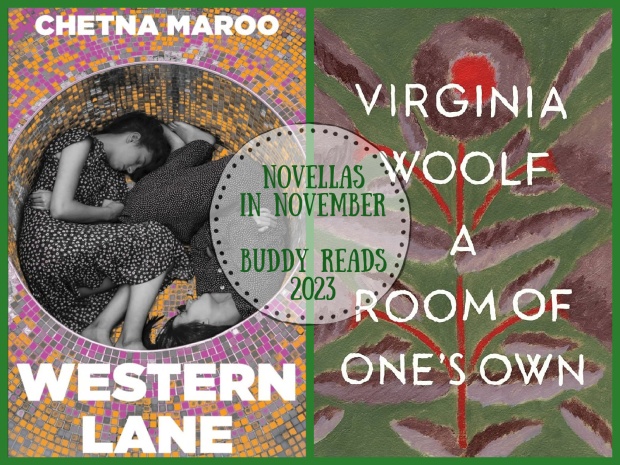 A version of the below review, submitted via their Facebook book club group, won me a pair of tickets to this year’s Booker Prize ceremony!
You may also wish to have a look at the excellent reading guide on the Booker website.
Western Lane by Chetna Maroo (2023)
In the same way that you don’t have to love baseball or video games to enjoy The Art of Fielding or Tomorrow, and Tomorrow, and Tomorrow, it’s easy to warm to Western Lane even if you’ve never played squash. Debut author Chetna Maroo assumes reader unfamiliarity with her first line: “I don’t know if you have ever stood in the middle of a squash court – on the T – and listened to what is going on next door.” As Gopi looks back to the year that she was eleven – the year after she lost her mother – what she remembers is the echo of a ball hitting a wall. That first year of mourning, which was filled with compulsive squash training, reverberates just as strongly in her memory.
To make it through, Pa tells his three daughters, “You have to address yourself to something.” That something will be their squash hobby, he decides, but ramped up to the level of an obsession. Having lost my own mother just over a year ago, I could recognize in these characters the strategies people adopt to deflect grief. Keep busy. Go numb. Ignore your feelings. Get angry for no particular reason. Even within this small family, there’s a range of responses. Pa lets his electrician business slip; fifteen-year-old Mona develops a mild shopping addiction; thirteen-year-old Khush believes she still sees their mother.
Preparing for an upcoming squash tournament gives Gopi a goal to work towards, and a crush on thirteen-year-old Ged brightens long practice days. Maroo emphasizes the solitude and concentration required, alternating with the fleeting elation of performance. Squash players hover near the central T, from which most shots can be reached. Maroo, too, sticks close to the heart. Like all the best novellas, hers maintains a laser focus on character and situation. A child point-of-view can sound precocious or condescending. That is by no means the case here. Gopi’s perspective is convincing for her age at the time, yet hindsight is the prism that reveals the spectrum of intense emotions she experienced: sadness, estrangement from her immediate family, and rejection on the one hand; first love and anticipation on the other.

This offbeat, delicate coming-of-age story eschews the literary fireworks of other Booker Prize nominees. In place of stylistic flair is the sense that each word and detail has been carefully placed. Less is more. Rather than the dark horse in the race, I’d call it the reader favourite: accessible but with hidden depths. There are cinematic scenes where little happens outwardly yet what is unspoken between the characters – the gazes and tension – is freighted with meaning. (I could see this becoming a successful indie film.)
she and my uncle stood outside under the balcony of my bedroom until much later, and I knelt above them with my blanket around me. The three of us looked out at the black shapes of the rose arbour, the trees, the railway track. Stars appeared and disappeared. My knees began to ache. Below me, Aunt Ranjan wanted badly to ask Uncle Pavan how things stood now and Uncle Pavan wanted to tell her, but she wasn’t sure how to ask and he wasn’t sure how to begin. Soon, I thought, it would be morning, and night, and morning again, and it wouldn’t matter, except to someone watching from so far off that they couldn’t know yet.
The novella is illuminating on what is expected of young Gujarati women in England; on sisterhood and a bereaved family’s dynamic; but especially on what it is like to feel sealed off from life by grief. “I think there’s a glass court inside me,” Gopi says, but over the course of one quietly momentous year, the walls start to crack. (Public library) [161 pages]
A Room of One’s Own by Virginia Woolf (1929)
Here’s the thing about Virginia Woolf. I know she’s one of the world greats. I fully acknowledge that her books are incredibly important in the literary canon. But I find her unreadable. The last time I had any success was when I was in college. Orlando and To the Lighthouse both blew me away half a lifetime ago, but I’ve not been able to reread them or force my way through anything else (and I have tried: Mrs Dalloway, The Voyage Out and The Waves). In the meantime, I’ve read several novels about Woolf and multiple Woolf-adjacent reads (ones by Vita Sackville-West, or referencing the Bloomsbury Group). So I thought a book-length essay based on lectures she gave at Cambridge’s women’s colleges in 1928 would be the perfect point of attack.
Hmm. Still unreadable. Oh well!
 In the end I skimmed A Room of One’s Own for its main ideas – already familiar to me, as was some of the language – but its argumentation, reliant as much on her own made-up examples as on literary history, failed to move me. Woolf alternately imagines herself as Mary Carmichael, a lady novelist trawling an Oxbridge library and the British Museum for her forebears; and as a reader of Carmichael’s disappointingly pedestrian Life’s Adventure. If only Carmichael had had the benefit of time and money, Woolf muses, she might have been good. As it is, it would take her another century to develop her craft. She also posits a sister for Shakespeare and probes the social conditions that made her authorship impossible.
This is important to encounter as an early feminist document, but I would have been okay with reading just the excerpts I’d already come across.
Some favourite lines:
“I thought how unpleasant it is to be locked out; and I thought how it is worse perhaps to be locked in”
“A very queer, composite being thus emerges. Imaginatively she [the woman in literature] is of the highest importance; practically she is completely insignificant. She pervades poetry from cover to cover; she is all but absent from history.”
“Poetry depends upon intellectual freedom. And women have always been poor, not for two hundred years merely, but from the beginning of time. Women have had less intellectual freedom than the sons of Athenian slaves. Women, then, have not had a dog’s chance of writing poetry. That is why I have laid so much stress on money and a room of one’s own.”
(Secondhand purchase many years ago) [114 pages]
The Woman in Black, Train Dreams, and Absolutely & Forever (#NovNov23)
I’ve been slow off the mark this year, mostly because instead of reading a sensible one or two novellas at a time, I’ve had 10 or 15 on the go. It might mean I’ll read more overall, but from day to day it feels like crawling through loads of books, never to finish any. Except I did finally finish these three, all of which were great reads. After my thoughts on each, I’ll ponder this week’s prompt, “What Is a Novella?”
The Woman in Black by Susan Hill (1983)
This was a reread for me and our November book club book, as well as part of my casual project to read books from my birth year. I’ve generally been underwhelmed by Hill’s ghost stories, but I found this spookier than remembered and enjoyed spotting the nods to Victorian literature and to classic ghost story tropes. (Best of all, because it was so short, everyone actually read the book and came to the discussion. All 12 group members. I can’t recall the last time that happened!)
 Hill keeps the setting deliberately vague, but it seems that it might be the Lincolnshire Fens in the 1930s or so. Arthur Kipps is a young lawyer tasked with attending the funeral of old Mrs Drablow and sorting through her papers. Locals don’t envy him the time spent in Eel Marsh House, and when he starts seeing a wasting-away, smallpox-pocked woman dressed in black in the churchyard, he understands why. This place harbours a malevolent ghost, and from the empty nursery with its creaking rocking chair to the marsh’s treacherous mud, Arthur fears that it’s out to get him.
The rational male narrator who insists he doesn’t believe in ghosts until he can’t deny an experience of one is a feature of the traditional ghost story à la M.R. James – and indeed, one of the chapter titles here (“Whistle and I’ll Come to You”) is a direct adaptation of a James story title. A framing story has Kipps as an older man writing the ghost story to share with his stepchildren. Some secondary characters have Dickensian names and there’s a Bleak House-esque description of a thick fog. The novel’s title must be an homage to Wilkie Collins’s sensation novel The Woman in White, with which it shares the theme of debated parentage.
A few members of our book club had seen the play or one of two film versions. Curiously, it seems like both movies alter the ending. Why, when the last four pages are such a perfect kicker? I might have dismissed the whole as a bit dull were it not for the brilliant conclusion. (Public library) [160 pages] 
Train Dreams by Denis Johnson (2002)
This is Cathy’s example of a perfect novella. I picked it up on her recommendation and read it within a few days (though you could easily do so in one sitting). Robert Grainier is a manual labourer in the American West. His body shattered by logging before he turns 40 and his spirit nearly broken by the loss of his home to a forest fire, he looks for meaning in the tragedy and a purpose to the rest of his long life. Is he being punished for participating in the attempted lynching of a Chinese worker decried as a thief? Or for not helping an injured man he came across in the woods as a teenager?
 Although Grainier might appear to be a Job-like figure, his loneliness never shades into despair, lightened by comic dialogues and the mildest of supernatural interventions. He starts a haulage business and keeps dogs. There are rumours of a wolf-girl in the area, and, convinced that his dog’s new pups are part-wolf, he teaches them to howl – his own favourite way of letting off steam.
A couple of gratuitously bleak scenes (a confession of incest and an accidental death) made me think Cormac McCarthy would be a major influence, but the tone is lighter than that. Richard Brautigan came to mind, and I imagine many contemporary writers have found inspiration here: Carys Davies, Ash Davidson, Donald Ray Pollock, even Patrick deWitt.
Gritty yet light, this presents life as an arbitrary accumulation of error and incident, longing (“Pulchritude!”) and effort. Grainier is an effective Everyman, such that his story feels not just all-American but universal. (Free from a neighbour) [116 pages]
Absolutely and Forever by Rose Tremain (2023)
I had lost track of Tremain’s career a bit; I find her work hit and miss – perhaps too varied, though judging by her last five novels, she seems to have settled on historical fiction as her wheelhouse. I wasn’t sure what to expect from this latest book, but seeing that it was novella length, I was willing to give it a try. Tremain follows her heroine, Marianne Clifford, from the 1950s up to perhaps 1970. At age 15, she falls hopelessly in love with an 18-year-old aspiring writer, Simon Hurst, and loses her virginity in the back of his pale blue Morris Minor. She feels grown-up and sophisticated, and imagines their romance as a grand adventure that will whisk her away from her parents’ stultifying ordinariness –
when I thought about my future as Mrs Simon Hurst (riding a camel in Egypt, floating along in a gondola in Venice, driving through the Grand Canyon in an open-topped Cadillac, watching elephants drink from a waterhole in Africa) and about Mummy’s future (in the red-brick house in Berkshire with the shivery birch tree and the two white columns, playing Scrabble with Daddy and shopping at Bartlett’s of Newbury), I could see that my life was going to be more interesting than hers and that she might already be envious
 – but his new post-school life in Paris doesn’t have room for her. As she moves to London and trains for secretarial work, Marianne is bolstered by friendships with plain-speaking Scot Petronella (“Pet”) and Hugo Forster-Pellisier, her surfing and ping-pong partner on their parents’ Cornwall getaways. Forasmuch as her life changes over the next 15 years or so – taking on a traditional wife and homemaker role; her parents quietly declining – her attachment to her first love never falters.
This has the chic and convincing 1960s setting of Tessa Hadley’s work. Marianne’s narration is a delight, droll but not as blasé as she tries to appear. Tremain could have easily fallen into the trap of making her purely naïve (in the moment) or nostalgic (looking back), but instead she’s rendered her voice knowing yet compassionate, and made her a real wit (“I thought, Everything in Paris looks as if it’s practising the waltz, whereas quite a lot of things in London … appear as if they’ve just come out of hospital after a leg operation”). Pet is very funny, too. And it’s always fun for me to have nearby locations: Newbury, Reading, Marlborough. In imagining a different life for herself, Marianne resists repeating her mother’s mistakes and coincides with the rising feminist movement. There are two characters named Marianne, and two named Simon; the revelations about these doubles are breathtaking.
This really put me through an emotional wringer. It’s no cheap tear-jerker but a tender depiction of love in all its forms. I think, with Academy Street by Mary Costello, it may be my near-perfect novella. (Public library) [181 pages] 
Novellas in November, Week 2: What Is a Novella?
- Ponder the definition, list favourites, or choose ones you think best capture the ‘spirit’ of a novella.
A novella is defined by its length in words, but because that’s often difficult for readers to gauge, for this challenge we go by the number of pages instead, making 200 an absolute maximum – though some books with wide margins and spacing may top that but still seem slight enough to count (while those with tiny type can feel much longer than 160–200 pages).
Thematically, a novella is said to be concentrated on one character or small set of characters, with one plotline rather than several. This week I’ve been musing on a theory: a novella is to a novel what a memoir is to an autobiography. That is, if the latter is a comprehensive and often chronological story, the former focuses on a particular time or experience and shapes a narrative around it. What it potentially sacrifices in scope it makes up for with intensity.
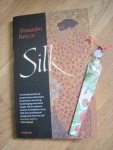
But as soon as I’d formulated this hypothesis to myself, I started thinking of exceptions on either side. Train Dreams, like Silk by Alessandro Baricco and A Whole Life by Robert Seethaler, conveys a pretty complete life story. And no doubt there are many full-length novels that are almost claustrophobic in their adherence to one point of view and timeline.

The simplest way I’d put it is that a novella is a book that doesn’t outstay its welcome. I think it must be easier to write a doorstopper than a novella. Once you’ve arrived at a voice and a style, just keeping going can become a question of habit. But to continue paring back to get at the essence of a character and a situation – that takes real discipline. My other criterion would be that it has to portray the full range of human emotion, even if within a limited set of circumstances. Based on that, Train Dreams and Absolutely and Forever both triumph.
A few classic novellas that do this particularly well (links to my reviews):
Giovanni’s Room by James Baldwin
A Month in the Country by J. L. Carr
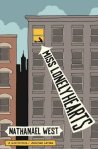
Miss Lonelyhearts by Nathanael West
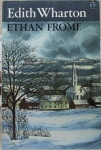
Ethan Frome by Edith Wharton


A few more contemporary novellas that do this particularly well (links to my reviews):
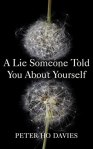
A Lie Someone Told You about Yourself by Peter Ho Davies
Our Souls at Night by Kent Haruf
Foster by Claire Keegan
A Feather on the Breath of God by Sigrid Nunez


Review Catch-Up: Monica, Bibliomaniac, Family Meal, Fudge & More
I’m catching up with reviews of the many October releases I read, including these four sent by publishers…
- a genre-bending, Technicolor graphic novel in the form of short comics
- a book-addict’s memoir of an ambitious Covid-times tour of Britain’s bookshops
- an understated novel about queer men of colour coping with death and mental illness
- and a quirky contemporary poetry collection I read in one sitting.
Followed by a bonus list of October books I reviewed for Shelf Awareness, similarly varied in genre: autofiction, flash fiction, horror-tinged historical fiction, graphic memoirs and more.
Monica by Daniel Clowes
 Daniel Clowes is a respected American graphic novelist best known for Ghost World, which was adapted into a 2001 film starring Scarlett Johansson. I’m not sure what I was expecting of Monica. Perhaps something closer to a quiet life story like Alison by Lizzy Stewart? In any case, not this jumble of 1970s nostalgia and supernatural horror. The book is in nine loosely connected stories that make the head spin with their genre and tonal shifts; one thing that stays constant is Clowes’s drawing style, which combines vibrant, campy colour with exaggerated faces and blunt haircuts.
At first it seems there will be a straightforward linear narrative: the prologue, “Foxhole,” has two soldiers dreaming of what life will be like Vietnam, with the one looking forward to a simple life with his fiancée Penny. “Pretty Penny” shatters those illusions as we see that Penny has fully embraced sexual liberation while he’s been away. She rejects her mother and, in a countercultural decision, keeps the baby when she gets pregnant. Young Monica has a sequence of stepfather figures before Penny dumps her with her parents and goes AWOL.
To an extent, the rest of the book is about Monica’s search for her parents. We see her as a young college student communicating with her dead grandfather via a radio, as a successful entrepreneur selling candles, and as an older woman caretaking for a California Airbnb. But in between there are bizarre sci-fi/folk horror interludes – “The Glow Infernal” and “The Incident” – about unconnected characters, and Monica’s involvement with a cult inevitably turns strange. I couldn’t get past the distasteful story lines or grotesque style. Mostly, I wasn’t convinced that Clowes liked or cared about any of his own characters, so why should I? (This might be Tom Cox’s dream book, but not mine.) I suppose I might try a classic work by Clowes one day, but only if I can be assured that it has more plot and heart.
With thanks to Jonathan Cape (Penguin) for the free copy for review.
Bibliomaniac: An Obsessive’s Tour of the Bookshops of Britain by Robin Ince
Do you know anyone who can buy just one book? Do you know anyone who leaves a bookshop only with what they walked in to buy?
I understand that Robin Ince is a radio personality and comedian who, though holding no formal qualifications, often delivers presentations about science. He was meant to undertake a stadium tour with Professor Brian Cox in the autumn of 2021, but a Covid resurgence put paid to that. Not one for sitting around at home – he comes across as driven, antsy; positively allergic to boredom – he formulated Plan B: 100+ events, most of them in independent bookshops (the oddest venue was a Chinese restaurant; he was speaking to the Plymouth Humanists), over the course of two months, criss-crossing Britain and hitting many favourite places such as Hay-on-Wye, Hungerford (my local indie) and Wigtown. The topic of his previous book was curiosity, which gave him free rein to feature anything that interested him, so no two talks were the same and he incorporated lots of ad hoc book recommendations.
 Ince is not just a speaker at the bookshops but, invariably, a customer – as well as at just about every charity shop in a town. Even when he knows he’ll be carrying his purchases home in his luggage on the train, he can’t resist a browse. And while his shopping basket would look wildly different to mine (his go-to sections are science and philosophy, the occult, 1960s pop and alternative culture; alongside a wide but utterly unpredictable range of classic and contemporary fiction and antiquarian finds), I sensed a kindred spirit in so many lines:
“A bookshop with a proximity to an interesting graveyard is a fine combination.”
“I like charity bookshops, because I can delude myself into believing that I am committing an altruistic act by purchasing too many books. I am not satisfying my consumer lust – I am digging a well in Uganda.”
“This is one of the wonders of books: the delight of being a species that can chronicle and preserve. I pick up a book from a shelf, and someone who is no more than ash or bone can still change me.”
He’s also refreshingly open-minded, determined not to become a white male dinosaur: he once spent a wonderful year reading only women authors, and gratefully accepts the gift of a Black queer feminist work – at which he knows a younger version of himself would have scoffed. I took lots of notes on shops I hadn’t heard of, but also appreciated the witty asides on British ways and on the rigours and coincidences of the tour. If you liked White Spines, this will be right up your street, though to me this was universal where the Royle was too niche. And it didn’t matter a jot that I was previously unfamiliar with Ince as a public figure.
Bibliomaniac came out in paperback on 5 October. My thanks to Atlantic Books for the free copy for review.
Family Meal by Bryan Washington
After the verve of his linked short stories (Lot, which won the Dylan Thomas Prize) and the offbeat tenderness of his debut novel, Memorial, I couldn’t wait for Bryan Washington’s next book. While it’s set in the multicultural Houston of his first book and similarly peopled by young queer men of colour, Family Meal shares the more melancholy edge of Memorial with its focus on bereavement and the habits and relationships that help the characters to cope.
Cam has moved back to Houston from Los Angeles after the untimely death of his boyfriend Kai, who had a budding career as a translator and spent part of each year in Japan. Cam works in a failing gay bar, crashes with his boss and has mostly stopped eating. Although he still loves cooking Asian food for others, he rarely tastes it himself; his overpowering appetite now is for pills and sex, leading him to arrange as many as four hook-ups per day. Kai still appears and communicates to him. “Easier to spend time dwelling on death than it is to live, says Kai.” Is it to escape this spectre, or the memory of what happened to Kai, that Cam descends into his addictions? Meanwhile, his estranged friend TJ, with whom Cam grew up at TJ’s Korean American family’s bakery after the death of Cam’s parents, has his own history of loss and unhealthy relationships. But a connection with the bakery’s new nonbinary employee, Noel, seems like it might be different.
If you’ve read Washington before, you’ll know what to expect: no speech marks, obscenity-strewn dialogue, sexually explicit scenes that seem to be there for the sake of it (because sex is part of life, rather than because they particularly advance the plot). An issue I had here, like with Memorial, is that having multiple first-person narrators doesn’t add anything; Kai and TJ sound so much like Cam, who narrates roughly the first half, that it’s hard to tell their affectless accounts apart. Such interchangeable voices two books running suggests to me that Washington hasn’t yet managed to fully imagine himself outside of his own personality.

The novel has much to convey about found family, food as nurture, and how we try to fill the emptiness in our lives with things that aren’t good for us. However, it often delivers these messages through what wise secondary characters say, which struck me as unsubtle.
“You don’t have to do this alone, says TJ.”
(Kai:) “My mother would say, Cooking is care. The act is the care.”
“Love can be a lot of things though, says Noel. Right? It’s pleasure but it’s also washing the dishes and sorting medication and folding the laundry. It’s picking out what to eat for dinner three nights in a row, even if you don’t want to. And it’s knowing when to speak up, and when to stay quiet, and when, I think, to move on. But also when to fight for it.”
“Sometimes the best we can do is live for each other, she [Kai’s sister] says. It’s enough. Even if it seems like it isn’t.”
There’s no doubting how heartfelt this story is. It brought tears to my eyes at the beginning and end, but in between did not captivate me as much as I hoped. While intermittently poignant on the subject of bereavement, it is so mired in the characters’ unhealthy coping mechanisms that it becomes painful to read.
In my mind Washington and Brandon Taylor are in the same basket, though that may be reductive or unimaginative of me (young, gay Black authors from the American South who have published three books and tend to return to the same themes and settings). Before this year I would have said Taylor had the edge, but The Late Americans was so disappointingly similar to his previous work that Washington has taken the lead. I just hope that with his next work he challenges himself instead of coasting along in the groove he’s created thus far.
I wish I could get a copy of this into the hands of Sufjan Stevens…
With thanks to Atlantic Books for the free copy for review.
Fudge by Andrew Weatherhead
 I read this over a chilled-out coffee at the Globe bar in Hay-on-Wye (how perfect, then, to come across the lines “I know the secret of life / Is to read good books”). Weatherhead mostly charts the rhythms of everyday existence in pandemic-era New York City, especially through a haiku sequence (“The blind cat asleep / On my lap—and coffee / Just out of reach” – a situation familiar to any cat owner). His style is matter-of-fact and casually funny, juxtaposing random observations about hipster-ish experiences. From “Things the Photoshop Instructor Said and Did”: “Someone gasped when he increased the contrast / I feel like everyone here is named Taylor.”
The central piece, “Poem While on Hold with NBA League Pass Customer Support Nov. 17, 2018,” descends into the absurd, but his four hours lost on the phone are reclaimed through his musings on a sport he once played (“I had begun to find meaning in art and music / I was always too cerebral a player anyways … That feeling—of perfect grace and equanimity— / must be what we’re all searching for in this life”) and on life in general. This is poetry that doesn’t feel like poetry, if that makes sense. I have a hunch that it might appeal to readers of David Foster Wallace.
Published by Publishing Genius. With thanks to publicist Lori Hettler for the e-copy for review.
Reviewed for Shelf Awareness:
(Links to full text)
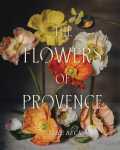
The Flowers of Provence by Jamie Beck (Gift books feature): A gorgeous book of photographs, perfect for gardeners, romantics, and armchair travelers. Her still lifes are as detailed and colorful as medieval paintings.
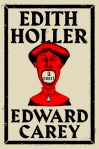
Edith Holler by Edward Carey (forthcoming): A dark fairy tale about a precocious girl confined to her family’s theatre in Norwich, England yet driven to reveal the truth behind her city’s child disappearances. Reminiscent of Dahl, Dickens, and Shakespeare at their goriest.
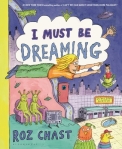
I Must Be Dreaming by Roz Chast: A laugh-out-loud-funny tour through her dream journal as well as a brief introduction to dream theory. Delightfully captures the randomness of dream topics and dialogues.

Tremor by Teju Cole: A kaleidoscopic work of autofiction that journeys between the US and Nigeria as it questions the ownership and meaning of Black art. The sophisticated structure is a highlight of this elegant study of art criticism, suffering, and subjectivity.
Our Strangers by Lydia Davis (Review and Q&A): In her ninth collection of mostly flash-length stories (a whopping 143 of them), an overarching theme is the mystery of human communication and connection. A real cornucopia of genres, structures, and voices. [Only available via Bookshop.org and independent bookstores.]
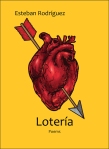
Lotería by Esteban Rodríguez: Lotería is a traditional Mexican game of chance. Each Spanish-language card is allotted a one-page poem in a creative, poignant recounting of his Mexican American family history.
Glass Half Empty by Rachael Smith: The British comics artist third graphic memoir is a refreshingly candid account of her recovery from alcoholism after her father’s death. In some panes, her adult self appears alongside her younger self, offering advice.


The Dead Peasant’s Handbook by Brian Turner: The final installment – after The Wild Delight of Wild Things and The Goodbye World Poem – in an intimate, autobiographical trilogy. Love is presented as the key to surviving bereavement and wartime trauma.
“The Possibilities of Place” Webinar with Nina Mingya Powles
Yesterday was National Nonfiction Day in the UK, apparently, as well as being part of the ongoing Nonfiction November challenge. Appropriately, I attended what I think must be my first writing workshop, run online by The Emma Press, a Birmingham-based publisher whose poetry and essay collections I enjoy. Thanks to Arts Council England funding, they’ve been able to arrange a series of masterclass webinars that explore some of the genres they publish.

The life writing class I participated in was led by Nina Mingya Powles, a poet and essayist whose terrific books Magnolia, Small Bodies of Water, and Tiny Moons (The Emma Press’s best-selling memoir) I’ve read and reviewed. Other attendees hailed from as far afield as Orkney, West Cork, the South of France, Berlin and New Zealand. The seminar was in Zoom presenter mode, so only Nina was on screen and the rest of us communicated via the chat box. I had been nervous about joining from my PC without a webcam or microphone, so I was relieved that this was the setup.


Nina spoke about how broad the umbrella of “life writing” is, potentially incorporating poetry and autofiction as well as straightforward prose. “Creative nonfiction” is a term sometimes used interchangeably with it. Today she wanted to focus on how memories (especially childhood memories), food and place are intertwined.
For our first warm-up exercise, she had us draw a rough map of a body of water and put a point on it, then write ourselves into that place. During this 7-minute freewrite, I compiled a list of not particularly poetic sense impressions of Annapolis harbour. I found myself crying as I realized I might never have a reason to go back to a place that was so important in my teen and early adult years.
Nina’s black-and-white cat, Otto, often butted in, in amusing and feline-appropriate ways. We proceeded to consider food as a portal to memories and to different places we’ve lived or travelled. Nina likes to think about being an outsider and the visitor’s perspective. She acknowledged that our relationships with food can be complicated, so sometimes it is a loaded topic. Mostly she is looking for gentle, tender, joyful depictions of food.
 She read aloud Rebecca May Johnson’s recipe poem “to purge the desire to write like a man,” which on one level is about making tomato sauce (as is Small Fires) but ends with a “found incantation” from Natalia Ginzburg that reclaims the female realm of the kitchen as a place of power. I loved how the first stanzas describe the body as an archive, containing multitudes. Then we considered a Jennifer Wong poem, “A personal history of soups,” about all the Chinese soups she loves and misses, and their personal and legendary meanings.
Taking the Wong title as our prompt, we spent 15 minutes writing a rough piece about a foodstuff. I’ve reproduced mine below, without any tidying-up. I mimicked the part-recipe format of the Johnson and tried to picture the kitchen of our first Bowie house and the cookware we had there.
A personal history of apple pie
As American as…
Dad did all the cooking when I was growing up, so for my mother to accompany me in the kitchen was a big thing. One year of my adolescence, there was a baking contest at the church my best friend and her family attended. I didn’t expect to take part at all or, if anything, perhaps I assumed I’d knock together some simple chocolate chip cookies on my own. But Mom insisted we would make an apple pie from scratch together – crust and all.
An apron each. One green, one red. Hand-embroidered heirlooms made by her grandmother. (Don’t keep them folded away in a drawer. Use them. They are your lineage, your artefacts.)
Half shortening, half butter. Glass bowl. Cold water. Half-moon cutter criss-crosses through chunks of semi-solid fat to render them smaller and smaller, flour-covered pebbles the size of peas.
Scent clouds of cinnamon and cloves billow up from a pan of stewing apples. A ceramic dish with crimping around the rim. A wooden rolling pin to achieve a uniform one-quarter inch round of dough. Freshly washed fingers gently pressing divots into the sides until every air bubble disappears.
Blind bake the crust. Trust that it will hold your creation. The sizzle of softened fruit in contact with the part-baked crust.
I have no memory of whether we won a prize. And me so competitive! The prize was the time. The prize was the attention. The assurance that this was worth it, that I was worth it.
Next we moved on to think about place and journeys, especially departures and arrivals – bringing places with us versus leaving them behind. An attendee commented, and Nina agreed, that often distance is useful: we can most easily write about somewhere after we’ve left it, once there is a sense of yearning. For this section we looked at a few-page extract from Larissa Pham’s essay collection Pop Song in which she describes a drive from Albuquerque to Taos. Expecting beautiful Georgia O’Keeffe-type scenery, she experiences the letdown of signs of the opioid crisis and Trump voters.
Borrowing a line from the Pham essay, Nina invited us to spend 20 minutes writing a piece that would bring the reader into the immediacy of our experience of a place. She reminded us, as a general rule, to remember to cite whatever we borrow, or to remove the borrowed line afterwards and see if it still works. My take on “Here I was now in the distant place…” ended up being a few rambling paragraphs contrasting my two study abroad years, one magical and one difficult. (Sample line: “Everything in England was like that: partially familiar but slightly askew.”)
At the end, three participants unmuted themselves and read their food pieces aloud. One was about food and a mother’s love; milk and rice. The other two, amusingly, were both about meringue: making a cherry meringue pie with a Scottish granny, and assembling pavlovas with aunts in New Zealand.
Nina encouraged us to think of life writing as a fluid thing, including journaling, blogging, travel and nature writing. This was heartening because I’ve always indulged in bits of autobiographical writing on my blog, and I started a journal last month as my 40th birthday approached, inspired in part by the 150 journals I inherited from my mother as well as by the desires to document my life and believe that the day-to-day has meaning.
The two-hour workshop was incredibly good value, especially considering that The Emma Press sent a voucher for £4 off of one of their books. (I’ve ordered their poetry anthology on ageing.) Nina also generously circulated lists of additional writing prompts, magazines that accept life writing submissions, and relevant competitions to enter.
I’d purchased a ticket on a whim but wasn’t sure whether I’d participate fully – I have a bad habit of skipping the exercises in books, after all. I’m so glad I did join, and gave myself over to the writing prompts. Who knows if anything will come of it, but it was cathartic to think about life experiences I don’t often have at the forefront of my mind, and to see how much can be produced in short periods of concerted writing.
 Bookish Beck = Rebecca Foster. American transplant to England. Freelance proofreader and book reviewer.
 Bookish Beck