The 2024 McKitterick Prize Shortlist and Winner
For the third year in a row, I was a first-round judge for the McKitterick Prize (for a first novel, published or unpublished, by a writer over 40), helping to assess the unpublished manuscripts. The McKitterick Prize is in memory of Tom McKitterick and sponsored by the Hawthornden Foundation. Thus far an unpublished manuscript has not advanced to the shortlist, but maybe one year it will!
On the 2024 McKitterick Prize shortlist (synopses adapted from Goodreads):
 Jacqueline Crooks for Fire Rush (Jonathan Cape, Vintage, Penguin Random House) – “Set amid the Jamaican diaspora in London at the dawn of 1980s, a mesmerizing story of love, loss, and self-discovery that vibrates with the liberating power of music. When Yamaye meets Moose, a soulful carpenter who shares her Jamaican heritage, a path toward a different kind of future seems to open. But then, Babylon rushes in.”
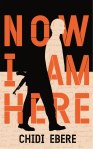 Chidi Ebere for Now I Am Here (Pan Macmillan, Picador) – “We begin at the end. The armies of the National Defence Movement have been crushed and our unnamed narrator and his unit are surrounded. As he recounts the events leading to his disastrous finale, we learn how this gentle man is gradually transformed into a war criminal, committing acts he wouldn’t have thought himself capable.”
 Aoife Fitzpatrick for The Red Bird Sings (Virago) – “West Virginia, 1897. When young Zona Heaster Shue dies only a few months after her wedding, her mother, Mary Jane, becomes convinced Zona was murdered by her husband, Trout, the town blacksmith. As the trial rises to fever pitch, with the men of Greenbrier County aligned against them, Mary Jane and Zona’s best friend Lucy must decide whether to reveal Zona’s greatest secret in the service of justice.”
 Greg Jackson for The Dimensions of a Cave (Granta) – “When investigative reporter Quentin Jones’s story about covert military interrogation practices in the Desert War is buried, he is spurred to dig deeper, and he unravels a trail that leads to VIRTUE: cutting-edge technology that simulates reality during interrogation. As the shadowy labyrinths of governmental corruption unfurl and tighten around him, unnerving links to his protégé – who, like Joseph Conrad’s Kurtz, disappeared in the war several years earlier – keep emerging.”
 Wenyan Lu for The Funeral Cryer (Atlantic Books, Allen & Unwin) – “The Funeral Cryer long ago accepted the mundane realities of her life: avoided by fellow villagers because of the stigma attached to her job and under-appreciated by her husband, whose fecklessness has pushed the couple close to the brink of break-up. But just when things couldn’t be bleaker, she takes a leap of faith – and in so doing things start to take a surprising turn for the better.”
 Allan Radcliffe for The Old Haunts (Fairlight Books) – “Recently bereaved Jamie is staying at a rural steading in the heart of Scotland with his actor boyfriend Alex. The sudden loss of both of Jamie’s parents hangs like a shadow over the trip. In his grief, Jamie finds himself sifting through bittersweet memories, from his working-class upbringing in Edinburgh to his bohemian twenties in London, with a growing awareness of his sexuality threaded through.”
The Society of Authors kindly sent me free copies of the six shortlisted novels. I already had The Red Bird Sings and The Funeral Cryer on my TBR, so I’m particularly looking forward to reading them as part of my 20 Books of Summer – which I’ve decided might as well contain, as well as all hardbacks, only books by women.

I was familiar with Fire Rush from its shortlisting for last year’s Women’s Prize for Fiction. The other three titles are new to me but sound interesting, especially The Old Haunts – at 150 pages, it will be perfect for Novellas in November.
My fellow judge Rónán Hession, whom I got to meet very briefly on a Zoom call, wrote: “It is exciting to judge a prize and encounter such a depth of talent. Though [the books] hugely varied in subject matter and style, the writers on the shortlist all impressed me with the clarity of their creative vision and their narrative authority on the page.”
The winner and runner-up were announced in advance of the SoA Awards ceremony in London yesterday evening. As in other years, I watched the livestream, which this year included captivating speeches by the Very Revd Dr Mark Oakley, Dean of Southwark Cathedral (where the ceremony took place) and Kate Mosse. And what a thrill it was to see and hear my name on the livestream!

Winner: Wenyan Lu for The Funeral Cryer
Runner-up: Chidi Ebere for Now I Am Here

In the press release announcing the winners, Hession said, “Wenyan Lu has created an unforgettable debut, brimming with personality and written with a sense of consummate ease. The Funeral Cryer is such a funny, warm and original book. An absolute gem of a novel.” I can’t wait to get started!
Other notable winners announced yesterday included:
- Tom Crewe for The New Life (Betty Trask Prize for a first novel by a writer under 35)
- Jacqueline Crooks for Fire Rush (Paul Torday Memorial Prize for a first novel by a writer over 60 – how perfect for her to win this in place of the McKitterick!)
- Soula Emmanuel for Wild Geese (Gordon Bowker Volcano Prize for a novel focusing on travel)
- Cecile Pin for Wandering Souls (Runner-up for the Gordon Bowker Volcano Prize; and a Somerset Maugham Award travel bursary)
Carol Shields Prize Reading: Coleman Hill and Between Two Moons
Two last Carol Shields Prize nominees today: from the shortlist, a gorgeous tapestry of African-American family history; and, from the longlist, a likable debut novel about Muslim twin sisters navigating the febrile summer of their high school graduation in Brooklyn.
Coleman Hill by Kim Coleman Foote
Is this family memoir or autofiction? I’ve shelved it as both on Goodreads; it’s a blend, one for which Foote borrows the term that Audre Lorde coined for Zami, “biomythography.” Like Edwidge Danticat, Jesmyn Ward and Jacqueline Woodson, Foote draws on personal stories but also invokes overarching narratives of Black migration and struggle. The result is magisterial, a debut novel that feels like oral history and a family scrapbook rolled into one.
During the First World War, the Coleman family were part of a mass exodus from the segregated South to the industrialized North. They hoped for a better life in New Jersey than they’d had under slavery and sharecropping in Alabama and Florida, but in fact many of the author’s ancestors became mired in ill-paid service roles (cleaner, maid, refuse collector) and, ironically, ended up having fewer opportunities for advancement than relatives who stayed behind and enrolled in Black educational institutions in the South.
Like a linked short story collection, the book pulls together 15 vignettes stretching from 1916 to 1989 and told in different styles and voices, including AAVE – I’m reliably informed that the audiobook is wonderful for that reason. A prologue in the first-person plural introduces the women who would become family matriarchs: “We wanted to go to school but couldn’t. The walk was too long. We was needed at home to plant and harvest. And boys could get more outta schooling, folks said, so it was our brothers who went.”

Other sections alternate first and third person. I especially admired the use of the second person for passages from the perspective of Celia Coleman, who develops a dependence on Four Roses whisky after being widowed. An interlude gives two poems from the point-of-view of cotton – crop failure was partly responsible for the initial relocation. There are also black-and-white photographs heading each chapter, and a family tree at the start. When I first heard about this book through its longlisting, the idea of family history told by nine characters sounded overwhelming (and potentially worthy). But the voices are so distinct that there is never a danger of getting lost, and the scenes are so vivid that you cringe from the beatings and cheer when a woman stands up to her meddling mother-in-law. There are echoes and reversals across the generations, as alcoholism and domestic abuse recur.
The core story is about Celia’s nastiness and resistance to her son Jeb’s marriage to Bertha Grimes. Bertha, battered by Jebbie and Celia alike, escapes to a brothel where she works as a cleaner. Celia ends up raising their children, along with another set of grandchildren, earning the nickname “Gra’ Coleman” and a reputation for meanness. (One excellent stand-alone story about the younger generation is titled “How to Kill Gra’ Coleman and Live to Tell About It (c. 1950).”) The inherited trauma is clear, yet I never found the content as bleak here as in A Council of Dolls; Foote weaves in enough counterbalancing lightness and love. There are so many strong female characters – Jeb’s older sisters, Bertha’s younger ones; their daughters – and plenty of humour and spirit despite the sometimes distressing subject matter. The family home, and the objects hoarded there, also play a major role.
It’s difficult to suggest the scope, as large and various as any American family’s history. An author’s note at the end details Foote’s approach – somewhere between “channeling spirits” and fictionalizing – to a novel that was many years in the gestation. I’d particularly recommend Coleman Hill to fans of Ayana Mathis and Toni Morrison. For me, there’s no contest; this should win the Carol Shields Prize for Fiction. 
With thanks to publicist Nicole Magas and SJP Lit (Zando) for the free e-copy for review.
Longlisted:
Between Two Moons by Aisha Abdel Gawad
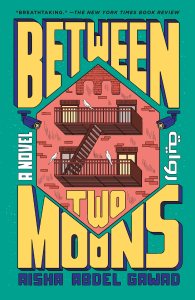 This debut novel is cleverly set within the month of Ramadan, a time of abstention. In this way, Gawad emphasizes the tension between faith and the temptations of alcohol and sex. Egyptian-American twin sisters Amira and Lina Emam are on the cusp, about to graduate from high school and go their separate ways. Lina wants to be a model and is dating a nightclub manager she hopes can make this a reality; Amira, ever the sensible one, is college-bound. But then she meets her first boyfriend, Faraj, and lets Lina drag her into a reckless partying lifestyle. “I was seized with that summertime desire of girls: to push my body to its limits.” Meanwhile, the girls’ older brother, Sami, just home from prison, is finding it a challenge to integrate back into the family and their Bay Ridge mosque, reeling from a raid on a Muslim-owned neighbourhood business and a senseless attack on the old imam.
I feared that a tired terrorism plot would surface and was relieved when this wasn’t the case, although there is a passionate message about the injustice of police surveillance of Muslim communities. I agree with Laura (see her review) that it does at times feel like an adult is producing YA fiction. It’s proficiently written and I enjoyed getting a glimpse into an unfamiliar world, but the novel never truly sparked into life for me. It also commits one of my pet peeves: inserting third-person segments to fill in events that the narrator could not have witnessed (while referring to the other characters as “the mother,” “the boy,” or “the other girl”). One to put on high school curricula but not on a prize list. 
With thanks to Laura for passing on her copy.
And a DNF:
 You Were Watching from the Sand by Juliana Lamy – I read the first 22% of this short fiction collection, which equated to a brief opener in the second person about a situation of abuse, followed by part of one endless-feeling story based around one apartment and bodega and featuring two young female family friends, one of whom accepts sexual favours in the supply closet from most male visitors. The voice and prose didn’t grab me, but of course I can’t say whether later stories would have been more to my taste. (Edelweiss)
Overall thoughts and prediction:
I’m grateful for the chance to have read most of the Carol Shields Prize longlist this year, thanks to the library, Edelweiss, and especially the publicist providing multiple books in digital format straight from the publishers. I’ve been introduced to a number of books and authors I might never have otherwise come across, and my reactions to what I expected to love or to dislike sometimes surprised me. It was also fun to do a few as buddy reads with Laura.
Here’s a recap of what I read, from favourite to least favourite:
Coleman Hill by Kim Coleman Foote – see above
Land of Milk and Honey by C Pam Zhang
Cocktail by Lisa Alward
I Have Some Questions for You by Rebecca Makkai (read last year)
Dances by Nicole Cuffy
Daughter by Claudia Dey
Chrysalis by Anuja Varghese
The Future by Catherine Leroux
Between Two Moons by Aisha Abdel Gawad – see above
Brotherless Night by V.V. Ganeshananthan (a skim)
A Council of Dolls by Mona Susan Power
You Were Watching from the Sand by Juliana Lamy (DNF) – see above
Birnam Wood by Eleanor Catton (skimmed last year)
Loot by Tania James (skim/DNF)
Thus, my ideal shortlist would have been the top five: Coleman Hill, Land of Milk and Honey, Cocktail, I Have Some Questions for You, and Dances.
It’s impossible to predict what the judges will pick from the actual shortlist. I never even attempted one of the finalists (A History of Burning by Janika Oza – Marcie’s comments made me confident it wouldn’t be for me) and only skimmed two others (Catton and Ganeshananthan). Sod’s law would suggest that one of those few will therefore win! I could see the case for any of the five, anyway. But I will have my fingers crossed for Coleman Hill.
The winner will be announced on Monday, 13 May.
Will you seek out something from the shortlist (or longlist)?
Carol Shields Prize Longlist Reads: Cocktail & Land of Milk and Honey
Two final reviews in advance of tomorrow’s shortlist announcement: a sophisticated, nostalgic short story collection and an intense future-set novel full of the pleasures of the flesh. Both make it onto my wish list at the end of this post.
Cocktail by Lisa Alward
The 12 stories of this debut collection brought to mind Tessa Hadley and Alice Munro for their look back at chic or sordid 1960s–1980s scenes and dysfunctional families or faltering marriages. They’re roughly half and half first-person and third-person (five versus seven). The title story opens the book with a fantastic line: “The problem with parties, my mother says, is people don’t drink enough.” Later, the narrator elaborates:
Her meaning is that if people drank more, they’d loosen up. Parties would be more fun, like they used to be. And I laugh along. Yes, I say, letting her top up my glass of Chardonnay. That’s it, not enough booze. But I’m thinking about Tom Collins.
 Not the drink, but an alias a party guest used when he stumbled into her bedroom looking for a toilet. She was about eleven at this point and she and her brother vaguely resented being shut away from their parents’ parties. While for readers this is an uncomfortable moment as we wonder if she’s about to be molested, in memory it’s taken on a rosy glow for her – a taste of adult composure and freedom that she has sought with every partner and every glass of booze since. This was a pretty much perfect story, with a knock-out ending to boot.
Dependence on alcohol recurs, and “Hawthorne Yellow,” is also about a not-quite affair, between a restless stay-at-home mother and the decorator who discovers antique sketches in the old servants’ quarters of her home. “Orlando, 1974” again contrasts childhood nostalgia with seedy reality: Disney World should have been an idyll, but the narrator mostly remembers a lot of vomiting. “Old Growth” and “Bear Country” have Ray renegotiating his relationship with his son after divorcing Gwyneth. “Hyacinth Girl,” too, is about complicated stepfamilies, while “Wise Men Say” looks back at cross-class romance. The protagonist of “Maeve” feels she can’t match the title character’s perfect parenting skills; the first-person plural in “Pomegranate” portrays a group of wild convent schoolgirls.
“Little Girl Lost” was the most Hadley-meets-Munro, with an alcoholic painter’s daughter seen first as a half-feral child and later as a hippie young woman. “How the Smoke Gets in Your Eyes” was the least essential with its elderly narrator piecing things together in the aftermath of a burglary. Along with the title story, the standout for me was “Bundle of Joy,” about a persnickety grandmother going to her daughter’s place to spend time with her new grandson. She disapproves of just about every decision Erin has made (leaving the dogs’ frozen turds in the backyard all winter, for instance), but her interference threatens to have lasting consequences. Not a dud in the dozen, and a very strong voice I’ll expect to read much more from. (Read via Edelweiss; published by Biblioasis) 
Land of Milk and Honey by C Pam Zhang
We all die. We have only the choice, if we are privileged, of whether death comes with a whimper or a bang; of what worlds we taste before we go.
A real step up from How Much of These Hills Is Gold, which I read for book club last year – while it was interesting to see the queer, BIPOC spin Zhang put on the traditional Western, I found her Booker-longlisted debut bleak and strange in such a detached way that it was hard to care about. By contrast, I was fully involved in her sensuous and speculative second novel.
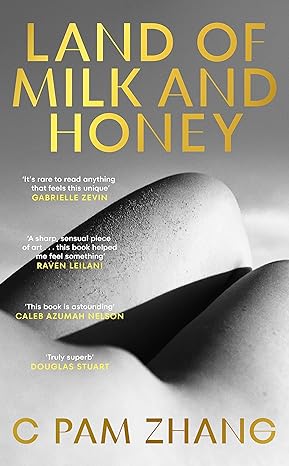 A 29-year-old Chinese American chef is exiled when the USA closes its borders while she’s working in London. On a smog-covered planet where 98% of crops have failed, scarcity reigns – but there is a world apart, a mountaintop settlement at the Italian border where money can buy any ingredient desired and threatened foods are cultivated in a laboratory setting. While peasants survive on mung bean flour, wealthy backers indulge in classic French cuisine. The narrator’s job is to produce lavish, evocative multi-course meals to bring investors on board. Foie gras, oysters, fine wines; heirloom vegetables; fruits not seen for years. But also endangered creatures and mystery meat wrested back from extinction. Her employer’s 21-year-old daughter, Aida, oversees the lab where these rarities are kept alive.
Ironically, surrounded with such delicacies, the chef loses her appetite for all but cigarettes – yet another hunger takes over. Her relationship with Aida is a passionate secret made all the more peculiar by the fact that the chef’s other role is to impersonate Aida’s dead mother, Eun-Young. It’s clear this precarious setup can’t last; ambition and technology keep moving on. The novel presents such a striking picture of desire at the end of the world. Each sentence is honed to flawlessness, with whole paragraphs of fulsome descriptions of meals. Zhang’s prose reminded me of Stephanie Danler’s and R.O. Kwon’s – no surprise, then, that they’re on the Acknowledgments list, as are a cornucopia of foods and other literary influences.
I’m not usually one for a dystopian novel, but the emotional territory keeps this one grounded even as the plot grows more sinister. My only complaint is that I would have left off the final chapter as I don’t think tracing the protagonist through four more decades of life adds much. I would rather have left this world in limbo than thought of the episode as a blip in a facile regeneration process – that’s the most unrealistic element of all. But this has still been my favourite read from the longlist so far. And there’s even a faithful pet cat, a “recalcitrant beast” that keeps coming back to the chef despite benign neglect. (Public library) 
My ideal shortlist, based on what I’ve read and still want to read, would be:


Cocktail by Lisa Alward
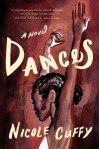
Dances by Nicole Cuffey
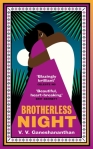
Brotherless Night by V.V. Ganeshananthan
I Have Some Questions for You by Rebecca Makkai
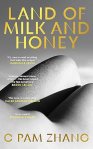
Land of Milk and Honey by C Pam Zhang
I wouldn’t be averse to seeing The Future or Chrysalis on there either. (Just not Loot, please!)
See Laura’s post for a recap of her reviews and her wish list. Marcie has also been reading from the longlist; see her first write-up here.
Carol Shields Prize Longlist: A Council of Dolls by Mona Susan Power
my doll is a collector of tragedy … the device I use to hide from something I already know
Mona Susan Power’s fourth novel, A Council of Dolls, is an Indigenous saga that draws on her own family history. Through first-person narratives by three generations of Dakhóta and Lakhóta women, she explores the ongoing effects of trauma resulting from colonialist oppression. The journey into the past begins with Sissy, a little girl in racist 1960s Chicago with an angry, physically abusive mother, Lillian. This section sets up the book’s pattern of ascribing voice and agency to characters’ dolls. Specifically, Sissy dissociates from her own emotions and upsetting experiences by putting them onto Ethel, her Black doll. Power relies on the dramatic irony between Sissy’s childhood perspective and readers’ understanding.
Moving backward: In 1930s North Dakota, we see Lillian coping with her father’s alcohol-fuelled violence by pretending she is being directed in a play. She loses her Shirley Temple doll, Mae, in an act of charity towards a sickly girl in the community. Lillian and her sister, Blanche, attend an Indian school in Bismarck. Run by nuns, it’s even crueller than the institution their parents, Cora and Jack, attended: the infamous Carlisle Indian Industrial School in Pennsylvania (also a setting in Wandering Stars by Tommy Orange). Cora’s beautifully introspective journal from the 1910s reveals the systematic cultural annihilation that took place there. Her doll, Winona, rescued from a massacre in the time of Sitting Bull, was on the pyre of precious belongings – tribal costumes, instruments, medals, sacred feathers – burned on students’ arrival. But her stone heart survives as a totem of resilience.

This is a powerful but harrowing story. The characterization and narration are strong, and the nesting-dolls structure means we get glimpses into the future for all three protagonists. However, I was disappointed by a number of Power’s decisions. It appeared that a fourth and final narrator close to the present day would introduce another aspect, but in fact Jesse is a new name that Sissy chose for herself. Now a 50-year-old academic and writer, she becomes a medium for the dolls’ accounts – but this ends up repeating material we’d already encountered. The personification of familial tragedy in the figure of “the injured woman” who appears to Cora verges on mawkish, and the touches of magic realism to do with the dolls sit uneasily beside clinical discussions of trauma. In Jesse’s section, there is something unsubtle about how this forms the basis of a conversation between her and her friend Izzy:
(Jesse thinks) “I wanted that chance to break the chain of passing on harmful inner scripts, the self-loathing that comes from brutally effective colonization.”
(Izzy says) “whoo, that’s a big fat pipe full of misery … Our people have been pathologized from the very beginning. Still are.”
It’s possible I would have responded to this with more enthusiasm had it been packaged as a family memoir. As it is, I was unsure about the hybridization of autofiction and magic realism and wondered what white readers coming to the novel should conclude. I kept in mind Elaine Castillo’s essay “How to Read Now,” about her sense of BIPOC writers’ job: “if our stories primarily serve to educate, console and productively scold a comfortable white readership, then those stories will have failed their readers”. Perhaps Power’s novel was not primarily intended to serve in that way.
I’ll let her have the last word, via the Author’s Note: “outrageously prejudiced depictions of my ancestors and our people are one reason I became a writer. From childhood I felt an urgent need to speak my truth, which was long suppressed. Writing this book was a healing endeavor. May it support the healing of others.”
With thanks to publicist Nicole Magas and Mariner Books for the free e-copy for review.
This was a buddy read with Laura; see her review here.
Before the shortlist is announced on 9 April, I plan to review my two current reads, Cocktail by Lisa Alward and Land of Milk and Honey by C Pam Zhang, and concoct a personal wish list.
Carol Shields Prize Longlist Reading: The Future and Chrysalis
My first two dedicated reads for our informal Carol Shields Prize shadowing project exhibit one main way in which the prize is different from the Women’s Prize for Fiction: works in translation and short story collections are eligible. I have one of each to review today. Laura and I did a buddy read of an atmospheric dystopian novel translated from the French, and I caught up on a magical, erotic story collection I’d had on my Kindle for a long time. These were both very good, but my minor misgivings are such that I’d rate them the same: 
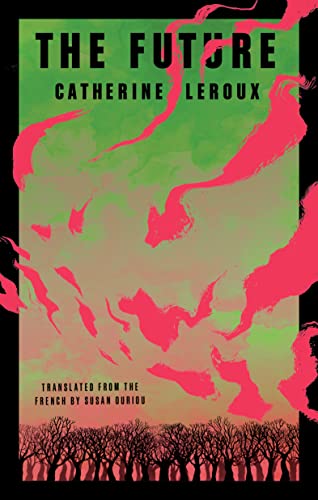
The Future by Catherine Leroux (2020; 2023)
[Translated from the French by Susan Ouriou]
For such a monolithic title, this has a limited stage: a few derelict districts of the ailing city we know as Detroit, Michigan – but in Leroux’s alternate version, it remained part of French Canada, with lingering Indigenous influence, and so is known as Fort Détroit. No doubt she was inspired by the many vacant properties that characterized Detroit in the 2010s; there’s even a ruins tour bus. In her Fort Détroit, a handful of determined adults cling on in their own homes, but the streets and parks have been abandoned to animals and to a gang of half-feral children who have developed their own nicknames (Adidas, Lego, Wolfpup), social hierarchy and vernacular. Worlds meet when Gloria determines to find her granddaughters Cassandra and Mathilda, who ran away after their addict mother Judith’s suspicious death. At the same time, her neighbour Eunice wants to find out who ran her father down in the street.
 Despite their fierce independence and acts of protest, the novel’s children still rely on the adult world. Ecosystems are awry and the river is toxic, but Gloria’s friend Solomon, a former jazz pianist, still manages to grow crops. He overlooks the children’s thefts from his greenhouse and eventually offers to help them grow their own food supply, and other adults volunteer to prepare a proper winter shelter to replace their shantytown. Puberty threatens their society, too: we learn that Fiji, the leader, has been binding her breasts to hide her age.
I expected to be reminded strongly of Station Eleven, and while there were elements that were reminiscent of Emily St John Mandel’s work, Leroux’s is a more consciously literary approach. The present-tense omniscient narration occupies many perspectives, including that of a dog, and the descriptions and musings are more lyrical than literal. Where another author would site high drama – sixtysomething Gloria’s night quest, a few children rafting down the river – Leroux moves on swiftly to other character interactions. What did bring Mandel to mind was the importance of art during societal collapse: the children spin nursery rhyme mash-ups and fairytales, Stutt rescues a makeshift library and insists on Huckleberry Finn going along on the river journey, and Solomon plays the piano again after decades.
The opening mysteries of death and disappearance are resolved before the end, but don’t seem to have been the point. The Future is more subtle and slippery than many dystopian novels I’ve read in that there’s not really a warning, or a message here. Instead, there’s an intriguing situation that opens out and alters slightly, but avoids resolution. It’s all about atmosphere and language – I was especially impressed by Ouriou’s rendering of Leroux’s made-up dialect via folksy slang (“She figgers she’s growed-up”). I loved the details and one-on-one moments more than the momentous scenes. On the whole, I found the story elegant but somewhat frustrating. You might be drawn to it if you enjoyed To Paradise or the MaddAddam books. (Read via Edelweiss; published by Biblioasis)
See also Laura’s review.
Chrysalis: Stories by Anuja Varghese (2023)
This debut collection of 15 stories brims with magic and horror, and teems with women of colour and queer people. Indeed, Varghese dedicates the book to “all the girls and women who don’t see themselves in most stories.” Most of the characters are of South Asian extraction. Adoption recurs in a couple of places. Two of the rarer realist stories, “Milk” and “Stories in the Language of the Fist,” have protagonists dealing with schoolgirl bullying and workplace microaggressions. More often, there are unexplained phenomena that position the players between life and death. “In the Bone Fields” focuses on the twin daughters of an Indian immigrant family on a Canadian farm. The house and the bone field behind are active and hungry, and only one twin will survive. (I got mild North Woods vibes.)
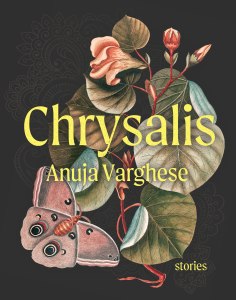 In the title story, Radhika visits her mother’s grave and wonders whether her life is here in Montreal with her lover or back in Toronto with her husband. Fangs and wings symbolize her desire for independence. Elsewhere, watery metaphors alternately evoke fear of drowning or sexual fluidity. “Midnight at the Oasis” charts the transformation of a trans woman and “Cherry Blossom Fever,” one of my two favourites, bounces between several POVs. Marjan is in love with Talia, but she’s married to Sunil, who’s also in love with Silas. “People do it — open their relationships and negotiate rules and write themselves into polyamorous fairy tales … Other people. Not brown people,” Talia sighs. They are better off, at least, than they would be back in India, where homophobia can be deadly (“The Vetala’s Song”).
My other favourite was “Bhupati,” about a man who sets up multiple Lakshmi figures in the backyard, hoping devotion will earn him and his wife a better future. The statues keep being burned up by lightning; we learn his wife may be petitioning for different things. “Chitra” is a straightforward Cinderella retelling whose title character lives with two mean stepsisters and works in food service at the mall. A Shoe Chateau BOGO closing sale gives her the chance to get a bargain – and catch the manager’s eye. Despite a striking ending signalled by the story’s subtitle, all I could conclude about this one was “cute.” The three flash horror stories (a murder hotel, ghosts in a basement, werewolves) were much the weakest for me.
There’s a pretty even split of third- and first-person stories (nine versus six) here, and the genre shifts frequently. The quality wasn’t as consistent as I’d hoped, but it was an engaging read. The overall blend of feminism and horror had me thinking of Her Body and Other Parties by Carmen Maria Machado, but I’d be most likely to recommend this to fans of Julia Armfield, Violet Kupersmith and Vauhini Vara. (Read via Edelweiss; published by House of Anansi Press)
Both of these are worthwhile books and it’s great that readers outside of Canada can discover them. I wouldn’t personally shortlist either, but the judges may well be dazzled enough to do so. I don’t yet have a sense of where they’d fit for me in the rankings.
Up next:
Cocktail by Lisa Alward (short story collection from Edelweiss)
A Council of Dolls by Mona Susan Power (buddy read with Laura)
Land of Milk and Honey by C Pam Zhang (from library)

I’m aiming for one or two more batches of reviews before the shortlist is announced on 9 April.
Women’s Prize for Non-Fiction, Writers’ Prize & Young Writer of the Year Award Catch-Up
This time of year, it’s hard to keep up with all of the literary prize announcements: longlists, shortlists, winners. I’m mostly focussing on the Carol Shields Prize for Fiction this year, but I like to dip a toe into the others where I can. I ask: What do I have time to read? What can I find at the library? and Which books are on multiple lists so I can tick off several at a go??
Women’s Prize for Non-Fiction

(Shortlist to be announced on 27 March.)
Read so far: Intervals by Marianne Brooker, Matrescence by Lucy Jones
&
A Flat Place by Noreen Masud
Past: Sunday Times/Charlotte Aitken Young Writer of the Year Award shortlist
Currently: Jhalak Prize longlist
I also expect this to be a strong contender for the Wainwright Prize for nature writing, and hope it doesn’t end up being a multi-prize bridesmaid as it is an excellent book but an unusual one that is hard to pin down by genre. Most simply, it is a travel memoir taking in flat landscapes of the British Isles: the Cambridgeshire fens, Orford Ness in Suffolk, Morecambe Bay, Newcastle Moor, and the Orkney Islands.
 But flatness is a psychological motif as well as a physical reality here. Growing up in Pakistan with a violent Pakistani father and a passive Scottish mother, Masud chose the “freeze” option when in fight-or-flight situations. When she was 15, her father disowned her and she moved with her mother and sisters to Scotland. Though no particularly awful things happened, a childhood lack of safety, belonging and love left her with complex PTSD that still affects how she relates to her body and to other people, even after her father’s death.
Masud is clear-eyed about her self and gains a new understanding of what her mother went through during their trip to Orkney. The Newcastle chapter explores lockdown as a literal Covid-era circumstance but also as a state of mind – the enforced solitude and stillness suited her just fine. Her descriptions of landscapes and journeys are engaging and her metaphors are vibrant: “South Nuns Moor stretched wide, like mint in my throat”; “I couldn’t stop thinking about the Holm of Grimbister, floating like a communion wafer on the blue water.” Although she is an academic, her language is never off-puttingly scholarly. There is a political message here about the fundamental trauma of colonialism and its ongoing effects on people of colour. “I don’t want ever to be wholly relaxed, wholly at home, in a world of flowing fresh water built on the parched pain of others,” she writes.
What initially seems like a flat authorial affect softens through the book as Masud learns strategies for relating to her past. “All families are cults. All parents let their children down.” Geography, history and social justice are all a backdrop for a stirring personal story. Literally my only annoyance was the pseudonyms she gives to her sisters (Rabbit, Spot and Forget-Me-Not). (Read via Edelweiss)
And a quick skim:
Doppelganger: A Trip into the Mirror World by Naomi Klein
Past: Writers’ Prize shortlist, nonfiction category
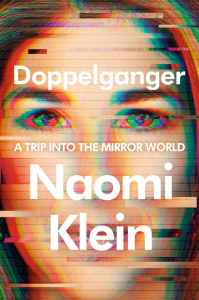 For years people have been confusing Naomi Klein (geography professor, climate commentator, author of No Logo, etc.) with Naomi Wolf (feminist author of The Beauty Myth, Vagina, etc.). This became problematic when “Other Naomi” espoused various right-wing conspiracy theories, culminating with allying herself with Steve Bannon in antivaxxer propaganda. Klein theorizes on Wolf’s ideological journey and motivations, weaving in information about the doppelganger in popular culture (e.g., Philip Roth’s novels) and her own concerns about personal branding. I’m not politically minded enough to stay engaged with this but what I did read I found interesting and shrewdly written. I do wonder how her publisher was confident this wouldn’t attract libel allegations? (Public library)
Predictions: Cumming (see below) and Klein are very likely to advance. I’m less drawn to the history or popular science/tech titles. I’d most like to read Some People Need Killing: A Memoir of Murder in the Philippines by Patricia Evangelista, Wifedom: Mrs Orwell’s Invisible Life by Anna Funder, and How to Say Babylon: A Jamaican Memoir by Safiya Sinclair. I’d be delighted for Brooker, Jones and Masud to be on the shortlist. Three or more by BIPOC would seem appropriate. I expect they’ll go for diversity of subject matter as well.
Writers’ Prize
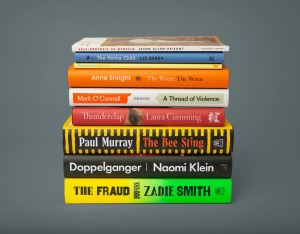
Last year I read most books from the shortlists and so was able to make informed (and, amazingly, thoroughly correct) predictions of the winners. I didn’t do as well this year. In particular, I failed with the nonfiction list in that I DNFed Mark O’Connell’s book and twice borrowed the Cumming from the library but never managed to make myself start it; I thought her On Chapel Sands overrated. (I did skim the Klein, as above.) But at least I read the poetry shortlist in full:
 Self-Portrait as Othello by Jason Allen-Paisant: I found more to sink my teeth into here than I did with his debut collection, Thinking with Trees (2021). Part I’s childhood memories of Jamaica open out into a wider world as the poet travels to London, Paris and Venice, working in snippets of French and Italian and engaging with art and literature. “I’m haunted as much by the character Othello as by the silences in the story.” Part III returns home for the death of his grandmother and a coming to terms with identity. [Winner: Forward Prize for Best Collection; Past: T.S. Eliot Prize shortlist] (Public library)
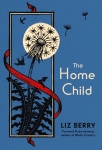 The Home Child by Liz Berry: A novel in verse “loosely inspired,” as Berry puts it, by her great-aunt Eliza Showell’s experience: she was a 12-year-old orphan when, in 1908, she was forcibly migrated from the English Midlands to Nova Scotia. The scenes follow her from her home to the Children’s Emigration Home in Birmingham, on the sea voyage, and in her new situation as a maid to an elderly invalid. Life is gruelling and lonely until a boy named Daniel also comes to the McPhail farm. This was a slow and not especially engaging read because of the use of dialect, which for me really got in the way of the story. (Public library)
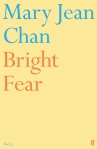 & Bright Fear by Mary Jean Chan (Current: Dylan Thomas Prize shortlist)
Three category winners:
- The Wren, The Wren by Anne Enright (Fiction)
- Thunderclap by Laura Cumming (Nonfiction) (Current: Women’s Prize for Non-Fiction longlist)
- The Home Child by Liz Berry (Poetry)
Overall winner: The Home Child by Liz Berry
Observations: The academy values books that cross genres. It appreciates when authors try something new, or use language in interesting ways (e.g. dialect – there’s also some in the Allen-Paisant, but not as much as in the Berry). But my taste rarely aligns with theirs, such that I am unlikely to agree with its judgements. Based on my reading, I would have given the category awards to Murray, Klein and Chan and the overall award perhaps to Murray. (He recently won the inaugural Nero Book Awards’ Gold Prize instead.)
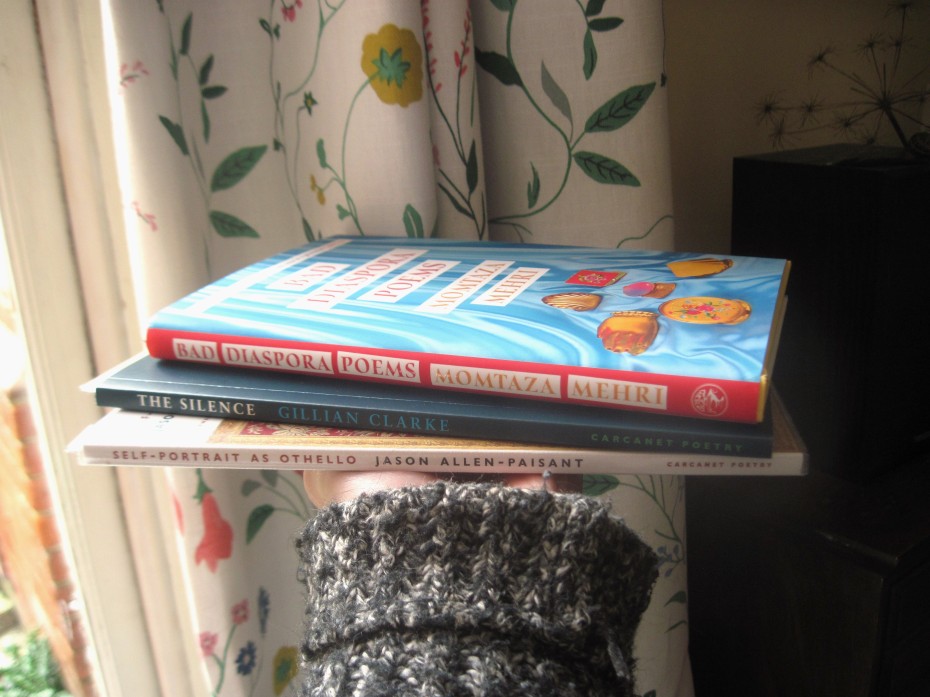
World Poetry Day stack last week
Young Writer of the Year Award
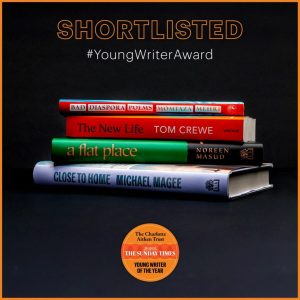
Shortlist:
- The New Life by Tom Crewe
 (Past: Nero Book Award shortlist, debut fiction)
 - Close to Home by Michael Magee (Winner: Nero Book Award, debut fiction category)
- A Flat Place by Noreen Masud (see above)
&
Bad Diaspora Poems by Momtaza Mehri
Winner: Forward Prize for Best First Collection
Nostalgia is bidirectional. Vantage point makes all the difference. Africa becomes a repository of unceasing fantasies, the sublimation of our curdled angst.
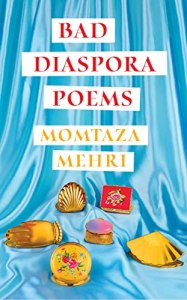 Crossing between Somalia, Italy and London and proceeding from the 1830s to the present day, this debut collection sets family history amid wider global movements. It’s peopled with nomads, colonisers, immigrants and refugees. In stanzas and prose paragraphs, wordplay and truth-telling, Mehri captures the welter of emotions for those whose identity is split between countries and complicated by conflict and migration. I particularly admired “Wink Wink,” which is presented in two columns and opens with the suspension of time before the speaker knew their father was safe after a terrorist attack. There’s super-clever enjambment in this one: “this time it happened / after evening prayer // cascade of iced tea / & sugared straws // then a line / break // hot spray of bullets & / reverb & // in less than thirty minutes we / they the land // lose twenty of our children”. Confident and sophisticated, this is a first-rate debut.
A few more favourite lines:
IX. Art is something we do when the war ends.
X. Even when no one dies on the journey, something always does.
(from “A Few Facts We Hesitantly Know to Be Somewhat True”)
You think of how casually our bodies are overruled by kin,
by blood, by heartaches disguised as homelands.
How you can count the years you have lived for yourself on one hand.
History is the hammer. You are the nail.
(from “Reciprocity is a Two-way Street”)
With thanks to Jonathan Cape (Penguin) for the free copy for review.
I hadn’t been following the Award on Instagram so totally missed the news of them bringing back a shadow panel for the first time since 2020. The four young female Bookstagrammers chose Mehri’s collection as their winner – well deserved.
Winner: The New Life by Tom Crewe
This was no surprise given that it was the Sunday Times book of the year last year (and my book of the year, to be fair). I’ve had no interest in reading the Magee. It’s a shame that a young woman of colour did not win as this year would have been a good opportunity for it. (What happened last year, seriously?!) But in that this award is supposed to be tied into the zeitgeist and honour an author on their way up in the world – as with Sally Rooney in my shadowing year – I do think the judges got it right.
Divisible by Itself and One by Kae Tempest: Dylan Thomas Prize Blog Tour
Divisible by Itself and One is Kae Tempest’s 14th book, its title referring to the definition of prime numbers. I’d read one of their previous collections, Let Them Eat Chaos, and enjoyed the performance poetry rhythms. There is a similar feel here – urban settings; internal and end rhymes – but more experimentation with theme, style and tone. Often the poet crosses casual speech with a formal approach: “Body” is composed of two nontraditional sonnets, while “The loop” is a villanelle. I also noted a repeated phrase as a fulcrum between the two stanzas of “Do it for the joy.”
The prose piece “Swear” features a heartbroken nonbinary god in the wreckage of the Garden of Eden: “Groaning in the empty garden in a moment that lasted till now, the almighty swore they’d never love again. And the words of the oath were famine, pestilence, genocide, flood.” It’s not the only biblical allusion; “Flood” references Noah and one epigraph is from Isaiah. Climate breakdown is a source of background dread, with “Even the youths shall faint and be weary” a sarcastic response to people’s relief at young people’s engagement with the environment – “Manaic adults peddling hope. Surely / the kids will sort it.”

“Wind in the tall trees” takes on a rough tree shape on the page. There are a couple of apparent break-up scenes, but a tentative new relationship fuels tender, mildly erotic love poems (“Flight” and “Fig”). The alliteration in “Pride” evokes a gradual coming to grips with gender identity: “Pride by degrees. It’s relative / I’ve carried my shame / like a drunk friend dragged / through the days of my life. / Damn dysphoria.” “Cocoon” envisions a transformation, which comes to fruition in the final poem, the LGBTQ manifesto “Love song for queens, studs, butches, daddies, fags and all the other angels.” Here the poet hymns queer heroes, then joins them. “You are the strongest ones among us. Daring as you do to live. Wholly as you are. While the rest of us go straight // to pieces for what we can’t bear to admit we carry.” What a fantastic tease that enjambment is.
I found more variety than cohesion here, but Tempest is likely to attract readers who wouldn’t usually turn to poetry. This is one I’d recommend to fans of Surge by Jay Bernard and Some Integrity by Padraig Regan.
More favourite lines:
“Why not stick it out with this insane human being, rather than dig it all up just to replant yourself in a parallel hole.” (from “Absurd”)
“life’s a chance to do.
It’s all been done before. We make it new” (from “Morning”)
With thanks to Picador and Midas PR for the free copy for review.
I’ve reviewed Dylan Thomas Prize-longlisted poetry in several previous years as well:
- Eye Level by Jenny Xie
- If All the World and Love Were Young by Stephen Sexton
- Auguries of a Minor God by Nidhi Zak/Aria Eipe
- Phantom Gang by Ciarán O’Rourke

I’ve now read three books from the longlist (the others are Bright Fear and Penance). The shortlist will be announced on 21 March, and the winner on 16 May. Look out for other bloggers’ posts between now and the 20th.
Thoughts on the Women’s Prize and Carol Shields Prize Longlists
Yesterday was my 9th blog anniversary! I love that it coincides with International Women’s Day.

It’s traditionally also been the day of the Women’s Prize longlist announcement, but the past two years they’ve brought it forward to pre-empt news of the Carol Shields Prize for Fiction longlist. It’s hard not to see these prizes as being in competition, though the CSP is only for U.S. and Canadian residents; also considers short story collections, graphic novels, and work in translation; and is more deliberate about including trans and nonbinary authors.
Like last year, their lists are extremely different. In 2023 there was no crossover; this year only one novel appears on both (Brotherless Night). Although it’s easier for me to feel engaged with the WP, I’m drawn to reading much more from the CSP list.
Women’s Prize
Of my predictions, only 1 was correct, compared to last year’s 4. I got none of my personal wishes, as in 2023. I guess making a wish list is a kiss of death! Once again, we have a mix of new and established authors, with a full half of the list being debut work. Nine of the authors are BIPOC. I’ve read 2 of the nominees and would be agreeable to reading up to 6 more. My library always buys the entire longlist, so I’ll eventually get the chance to read them, but not soon enough to add to the conversation.

Read:
 The Wren, The Wren by Anne Enright (CORRECT PREDICTION): Enright’s astute eighth novel traces the family legacies of talent and trauma through the generations descended from a famous Irish poet. The novel switches between Nell’s funny, self-deprecating narration and third-person vignettes about her mother, Carmel. Cycles of abandonment and abuse characterize the McDaraghs. Enright convincingly pinpoints the narcissism and codependency behind their love-hate relationships.
 Western Lane by Chetna Maroo: Easy to warm to even if you’ve never played and know nothing about squash. A debut novella that is illuminating on what is expected of young Gujarati women in England; on sisterhood and a bereaved family’s dynamic; but especially on what it is like to feel sealed off from life by grief. This offbeat, delicate coming-of-age story eschews literary fireworks. In place of stylistic flair is the sense that each word and detail has been carefully placed.
Will read:
Enter Ghost by Isabella Hammad – requested from the library
8 Lives of a Century-Old Trickster by Mirinae Lee – on my Kindle from NetGalley
Interested in reading:
In Defence of the Act by Effie Black – queer novella, suicide theme
And Then She Fell by Alicia Elliott – Indigenous Canadian, postpartum depression theme
Soldier Sailor by Claire Kilroy – Irish author, new motherhood theme
The Blue, Beautiful World by Karen Lord – Black sci-fi author
Maybe:
Brotherless Night by V.V. Ganeshananthan – see below
Not interested in reading:
Hangman by Maya Binyam – meh
The Maiden by Kate Foster – not keen on historical mysteries, and this looks very commercial
Restless Dolly Maunder by Kate Grenville – will read more Grenville, but not this one any time soon
River East, River West by Aube Rey Lescure – have read mixed reviews
Nightbloom by Peace Adzo Medie – disliked her debut novel
Ordinary Human Failings by Megan Nolan – enjoyed her first novel, but DNFed this
A Trace of Sun by Pam Williams – nah
See also the reactions posts from Eric and Laura.
Predictions:
I’d expect to see two or three of the Irish writers on the shortlist, plus probably Western Lane, Enter Ghost, and a couple of other wildcards (but not the SF novel). Enter Ghost, set in Palestine, would certainly be a timely winner…
What comes next:
Shortlist (6 titles) on 24 April and winner on 13 June.
Carol Shields Prize
After I badgered the administrators for six months about Q&A responses that never materialized, they kindly offered me digital review copies of any of the nominees that I’m not able to easily access in the UK. This is, in general, a more rigorous list of highbrow literary fiction, with some slight genre diversity thanks to Catton and Makkai (plus a mixture of historical and contemporary fiction, three story collections, and one book in translation); 10 of 15 authors are BIPOC. There are further details about all the nominees on the website.

Read:
 I Have Some Questions for You by Rebecca Makkai – When an invitation comes from her boarding school alma mater, Granby, to teach a two-week course on podcasting, Bodie indulges her obsession with the 1995 murder of her former roommate. Makkai has taken her cues from the true crime genre and constructed a convincing mesh of evidence and theories. She so carefully crafts her pen portraits, and so intimately involves us in Bodie’s psyche, that it’s impossible not to get invested. This is timely, daring, intelligent, enthralling storytelling. (Delighted to see this nominated as I hoped the WP would recognize it last year.)
Skimmed and didn’t care for:
Birnam Wood by Eleanor Catton
Loot by Tania James
Will read:
Land of Milk and Honey by C. Pam Zhang – requested from the library
Know little or nothing about but will happily read if I get a chance:
Cocktail: Stories by Lisa Alward
Dances by Nicole Cuffy
Daughter by Claudia Dey
Between Two Moons by Aisha Abdel Gawad
You Were Watching from the Sand: Short Stories by Juliana Lamy
The Future by Catherine Leroux, translated by Susan Ouriou – has just won Canada Reads
A Council of Dolls by Mona Susan Power
Chrysalis: Stories by Anuja Varghese
Less interested in reading:
Brotherless Night by V. V. Ganeshananthan – Sri Lankan civil war setting
Coleman Hill by Kim Coleman Foote – Fictionalized family memoir with 9 POVs
A History of Burning by Janika Oza – Big Indian-Ugandan multigenerational story
Predictions:
Not the first clue. Come back to me after I’ve read a few more.
What comes next:
Shortlist (5 titles) on 9 April and winner on 13 May.
What have you read, or might you read, from the longlists?
Women’s Prize 2024: Longlist Predictions vs. Wishes
This is the fourth year in a row that I’ve made predictions for the Women’s Prize longlist (the real thing comes out on Tuesday, 6 p.m. GMT). It shows how invested I’ve become in this prize in recent years. Like I did last year, I’ll give predictions, then wishes (no overlap this time!). My wishes are based on what I have already read and want to read. Although I kept tabs on publishers and ‘free entries’ for previous winners and shortlistees, I didn’t let quotas determine my selections. And while I kept in mind that there are two novelists on the judging panel, I don’t know enough about any of these judges’ taste to be able to tailor my predictions. My only thought was that they will probably appreciate good old-fashioned storytelling … but also innovative storytelling.
(There are two books – The List of Suspicious Things by Jennie Godfrey (= Joanna Cannon?) and Jaded by Ela Lee (this year’s Queenie) – that I only heard about as I was preparing this post and seem pretty likely, but I felt that it would be cheating for me to include them.)
Predictions
The Three of Us, Ore Agbaje-Williams
The Future, Naomi Alderman
The Storm We Made, Vanessa Chan
Penance, Eliza Clark


The Wren, The Wren, Anne Enright
A House for Alice, Diana Evans
Piglet, Lottie Hazell
Pineapple Street, Jenny Jackson


Yellowface, R. F. Kuang
Biography of X, Catherine Lacey
Julia, Sandra Newman
The Vulnerables, Sigrid Nunez


Tom Lake, Ann Patchett
In Memory of Us, Jacqueline Roy
The Fraud, Zadie Smith
Land of Milk and Honey, C. Pam Zhang


Wish List
Family Lore, Elizabeth Acevedo
The Sleep Watcher, Rowan Hisayo Buchanan
The Unfortunates, J. K. Chukwu
The Three Graces, Amanda Craig


Learned by Heart, Emma Donoghue
Service, Sarah Gilmartin
The Vaster Wilds, Lauren Groff
Reproduction, Louisa Hall


Happiness Falls, Angie Kim
Bright Young Women, Jessica Knoll
A Sign of Her Own, Sarah Marsh
The Fetishist, Katherine Min


Hello Beautiful, Ann Napolitano
Mrs S, K Patrick
Romantic Comedy, Curtis Sittenfeld
Absolutely and Forever, Rose Tremain


If I’m lucky, I’ll get a few right from across these two lists; no doubt I’ll be kicking myself over the ones I considered but didn’t include, and marvelling at the ones I’ve never heard of…
What would you like to see on the longlist?
Appendix
(A further 50 novels that were on my radar but didn’t make the cut. Like last year, I made things easy for myself by keeping an ongoing list of eligible novels in a file on my desktop.)
Everything Is Not Enough, Lola Akinmade Akerstrom
The Wind Knows My Name, Isabel Allende
Swanna in Love, Jennifer Belle
The Sisterhood, Katherine Bradley
The Fox Wife, Yangsze Choo
The Guest, Emma Cline
Speak to Me, Paula Cocozza
Talking at Night, Claire Daverley
Clear, Carys Davies
Bellies, Nicola Dinan
The Happy Couple, Naoise Dolan
In Such Tremendous Heat, Kehinde Fadipe
The Memory of Animals, Claire Fuller
Anita de Monte Laughs Last, Xochitl Gonzalez
Normal Women, Ainslie Hogarth
Sunburn, Chloe Michelle Howarth
Loot, Tania James
The Half Moon, Mary Beth Keane
Morgan Is My Name, Sophie Keetch
Soldier Sailor, Claire Kilroy
8 Lives of a Century-Old Trickster, Mirinae Lee
August Blue, Deborah Levy
Winter Animals, Ashani Lewis
Rosewater, Liv Little
The Couples, Lauren Mackenzie
Tell Me What I Am, Una Mannion
She’s a Killer, Kirsten McDougall
The Misadventures of Margaret Finch, Claire McGlasson
Nightbloom, Peace Adzo Medie
I Am Homeless If This Is Not My Home, Lorrie Moore
The Lost Wife, Susanna Moore
Okay Days, Jenny Mustard
Parasol against the Axe, Helen Oyeyemi
The Human Origins of Beatrice Porter and Other Essential Ghosts, Soraya Palmer
The Lodgers, Holly Pester
Night Wherever We Go, Tracey Rose Peyton
The Mars House, Natasha Pulley
Playing Games, Huma Qureshi
Come and Get It, Kiley Reid
High Time, Hannah Rothschild
Commitment, Mona Simpson
Death of a Bookseller, Alice Slater
Bird Life, Anna Smail
Stealing, Margaret Verble
Help Wanted, Adelle Waldman
Temper, Phoebe Walker
Hang the Moon, Jeannette Walls
Moral Injuries, Christie Watson
Ghost Girl, Banana, Wiz Wharton
Speak of the Devil, Rose Wilding
This and That (The January Blahs)
The January blahs have well and truly arrived. The last few months of 2023 (December in particular) were too full: I had so much going on that I was always rushing from one thing to the next and worrying I didn’t have the time to adequately appreciate any of it. Now my problem is the opposite: very little to do, work or otherwise; not much on the calendar to look forward to; and the weather and house so cold I struggle to get up each morning and push past the brain fog to settle to any task. As I kept thinking to myself all autumn, there has to be a middle ground between manic busyness and boredom. That’s the head space where I’d like to be living, instead of having to choose between hibernation and having no time to myself.
At least these frigid January days are good for being buried in books. Unusually for me, I’m in the middle of seven doorstoppers, including King by Jonathan Eig (perfect timing as Monday is Martin Luther King Jr. Day), Wellness by Nathan Hill, and Babel by R.F. Kuang (a nominal buddy read with my husband).
Another is Carol Shields’s Collected Short Stories for a buddy rereading project with Marcie of Buried in Print. We’re partway through the first volume, Various Miracles, after a hiccup when we realized my UK edition had a different story order and, in fact, different contents – it must have been released as a best-of. We’ll read one volume per month in January–March. I also plan to join Heaven Ali in reading at least one Margaret Drabble book this year. I have The Waterfall lined up, and her Arnold Bennett biography lurking. Meanwhile, the Read Indies challenge, hosted by Karen and Lizzy in February, will be a great excuse to catch up on some review books from independent publishers.
Literary prize season will be heating up soon. I put all of the Women’s Prize (fiction and nonfiction!) dates on my calendar and I have a running list, in a file on my desktop, of all the novels I’ve come across that would be eligible for this year’s race. I’m currently reading two memoirs from the Nero Book Awards nonfiction shortlist. Last year it looked like the Folio Prize was set to replace the Costa Awards, giving category prizes and choosing an overall winner. But then another coffee chain, Caffè Nero, came along and picked up the mantle.
This year the Folio has been rebranded as The Writers’ Prize, again with three categories, which don’t quite overlap with the Costa/Nero ones. The Writers’ Prize shortlists just came out on Tuesday. I happen to have read one of the poetry nominees (Chan) and one of the fiction (Enright). I’m going to have a go at reading the others that I can source via the library. I’ll even try The Bee Sting given it’s on both the Nero and Writers’ shortlists (ditto the Booker) and I have a newfound tolerance of doorstoppers.
As for my own literary prize involvement, my McKitterick Prize manuscript longlist is due on the 31st. I think I have it finalized. Out of 80 manuscripts, I’ve chosen 5. The first 3 stood out by a mile, but deciding on the other 2 was really tricky. We judges are meeting up online next week.
I’m listening to my second-ever audiobook, an Audible book I was sent as a birthday gift: There Plant Eyes by M. Leona Godin. My routine is to find a relatively mindless data entry task to do and put on a chapter at a time.
There are a handful of authors I follow on Substack to keep up with what they’re doing in between books: Susan Cain, Jean Hannah Edelstein, Catherine Newman, Anne Boyd Rioux, Nell Stevens (who seems to have gone dormant?), Emma Straub and Molly Wizenberg. So far I haven’t gone for the paid option on any of the subscriptions, so sometimes I don’t get to read the whole post, or can only see selected posts. But it’s still so nice to ‘hear’ these women’s voices occasionally, right in my inbox.
My current earworms are from Belle and Sebastian’s Late Developers album, which I was given for Christmas. These lyrics from the title track – saved, refreshingly, for last; it’s a great strategy to end on a peppy song (an uplifting anthem with gospel choir and horn section!) instead of tailing off – feel particularly apt:
Live inside your head
Get out of your bed
Brush the cobwebs off
I feel most awake and alive when I’m on my daily walk by the canal. It’s such a joy to hear the birdsong and see whatever is out there to be seen. The other day there was a red kite zooming up from a field and over the houses, the sun turning his tail into a burnished chestnut. And on the opposite bank, a cuboid rump that turned out to belong to a muntjac deer. Poetry fragments from two of my bedside books resonated with me.
This is the earnest work. Each of us is given
only so many mornings to do it—
to look around and love
the oily fur of our lives,
the hoof and the grass-stained muzzle.
Days I don’t do this
I feel the terror of idleness
like a red thirst.
That is from “The Deer,” from Mary Oliver’s House of Light, and reminds me that it’s always worthwhile to get outside and just look. Even if what you’re looking at doesn’t seem to be extraordinary in any way…
Importance leaves me cold,
as does all the information that is classed as ‘news’.
I like those events that the centre ignores:
small branches falling, the slow decay
of wood into humus, how a puddle’s eye
silts up slowly, till, eventually,
the birds can’t bathe there. I admire the edge;
the sides of roads where the ragwort blooms
low but exotic in the traffic fumes;
the scruffy ponies in a scrubland field
like bits of a jigsaw you can’t complete;
the colour of rubbish in a stagnant leat.
There are rarest enjoyments, for connoisseurs
of blankness, an acquired taste,
once recognised, it’s impossible to shake,
this thirst for the lovely commonplace.
(from “Six Poems on Nothing,” III by Gwyneth Lewis, in Parables & Faxes)
This was basically a placeholder post because who knows when I’ll next finish any books and write about them … probably not until later in the month. But I hope you’ve found at least one interesting nugget!
What ‘lovely commonplace’ things are keeping you going this month?
 Bookish Beck = Rebecca Foster. American transplant to England. Freelance proofreader and book reviewer.
 Bookish Beck