Final Reading Statistics for 2024
Happy New Year! Even though we were out at neighbours’ until 2:45 a.m. (who are these party animals?!), I’m feeling bright-eyed and bushy-tailed today and looking forward to a special brunch at our favourite Newbury establishment. Despite all evidence to the contrary in the news – politically, environmentally, internationally – I’m choosing to be optimistic about what 2025 will hold. What hope I have comes from community and grassroots efforts.
In other good news, 2024 saw my highest reading total yet! (My usual average, as in 2019–21 and 2023, is 340.) Last year I challenged myself to read 350 books and I managed it easily, even though at one point in the middle of the year I was far behind and it didn’t look possible.
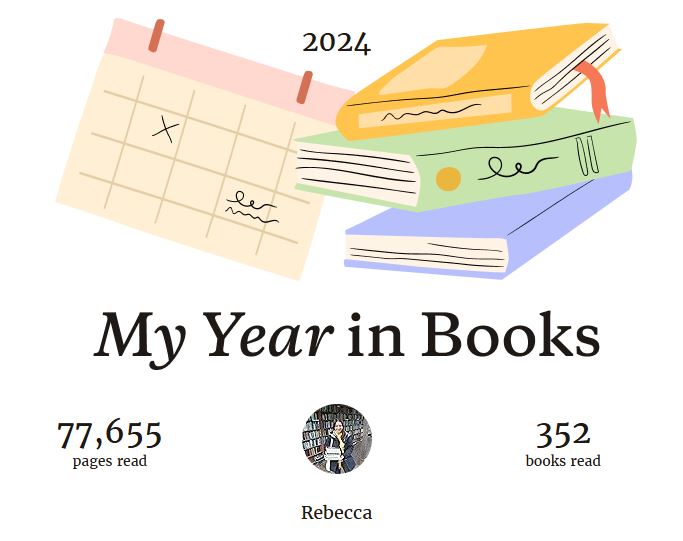
Reading a novella a day in November was certainly a major factor in meeting my goal. I also tend to prioritize poetry collections and novellas for my Shelf Awareness reviewing, and in general I consider it a bonus if a book is closer to 200 pages than 300+.
The statistics
Fiction: 51.4%
Nonfiction: 31.8% (similar to last year’s 31.2%)
Poetry: 16.8% (identical to last year!)
Female author: 67.9% (close to last year’s 69.7%)
Male author: 29.6%
Nonbinary author: 1.1%
Multiple genders (anthologies): 1.4%
BIPOC author: 18.4%
This has dropped a bit compared to previous years’ 22.4% (2023), 20.7% (2022), and 18.5% (2021). My aim will be to make it 25% or more.
LGBTQ: 21.6%
(Based on the author’s identity or a major theme in the work.) This has been increasing from 11.8% (2021), 8.8% (2022), and 18.2% (2023). I’m pleased!
Work in translation: 6%
I read only 21 books in translation last year, alas. This is an unfortunate drop from the previous year’s 10.6%. I do prefer to be closer to 10%, so I will need to make a conscious effort to borrow translated books and incorporate them in my challenges.
French (7)
German (4)
Norwegian (3)
Spanish (3)
Italian (1)
Latvian (1) – a new language for me to have read from
Swedish (1)
+ Misc. in a story anthology
2024 (or pre-release 2025) books: 52.3% (up from 44.7% last year)
Backlist: 47.7%
But a lot of that ‘backlist’ stuff was still from the 2020s; I only read five pre-1950 books, the oldest being Howards End and Kilmeny of the Orchard, both from 1910. I should definitely pick up something from the 19th century or earlier next year!
E-books: 32.1% (up from 27.4% last year)
Print books: 67.9%
I almost exclusively read e-books for BookBrowse, Foreword and Shelf Awareness reviews.
Rereads: 18
I doubled last year’s 9! I’m really happy with this 1.5/month average. Three of my rereads ended up being among my most memorable reading experiences for the year.
And, courtesy of Goodreads:
Average book length: 220 pages (in previous years it has been 217 and 225)
Average rating for 2024: 3.6 (identical to the last two years)
Where my books came from for the whole year, compared to 2023:
- Free print or e-copy from publisher: 44.8% (↑1.3%)
- Public library: 18.4% (↓5.7%)
- Secondhand purchase: 11.5% (↑1.7%)
- Free (giveaways, Little Free Library/free bookshop, from friends or neighbours): 9.8% (↑3.9%)
- Downloaded from NetGalley, Edelweiss, BookSirens or Project Gutenberg: 8.8% (↑2%)
- Gifts: 2.6% (↓1.5%)
- New purchase (often at a bargain price; includes Kindle purchases): 2.1% (↓2.6%)
- University library: 2% (↓1.2%)
So, like last year, nearly a quarter of my reading (24%) was from my own shelves. I’d like to make that more like a third to half, which would be better achieved by a reduction in the number of review copies rather than a drop in my library borrowing. It would also ensure that I read more backlist books.
What trends and changes did you see in your year’s reading?
Love Your Library, December 2024
Thanks so much to Eleanor, Jana and Naomi for writing about their recent library borrowing and reading! Marina Sofia also posted about marvellous library rooms and libraries with great views.
My library use over the last month:
READ
- Interlunar by Margaret Atwood

- Life before Man by Margaret Atwood

- A Beginner’s Guide to Dying by Simon Boas
- Small Rain by Garth Greenwell

- Dispersals: On Plants, Borders and Belonging by Jessica J. Lee
- Men Explain Things to Me by Rebecca Solnit

- Nine Minds: Inner Lives on the Spectrum by Daniel Tammet
- The Peculiar Life of a Lonely Postman by Denis Thériault

- The Safekeep by Yael van der Wouden
SKIMMED
- The Place of Tides by James Rebanks

CURRENTLY READING
- Dexter Procter: The 10-Year-Old Doctor by Adam Kay
- Poetry Unbound: 50 Poems to Open Your World by Pádraig Ó Tuama
CURRENTLY READING-ish (more accurately, set aside temporarily)
- Death Valley by Melissa Broder
- The Tale of Despereaux by Kate DiCamillo
- Learning to Think: A Memoir about Faith, Demons, and the Courage to Ask Questions by Tracy King
- Groundbreakers: The Return of Britain’s Wild Boar by Chantal Lyons
- Unearthing: A Story of Tangled Love and Family Secrets by Kyo Maclear
- Late Light: Finding Home in the West Country by Michael Malay
- Mrs Gulliver by Valerie Martin
- Stowaway: The Disreputable Exploits of the Rat by Joe Shute
CHECKED OUT, TO BE READ
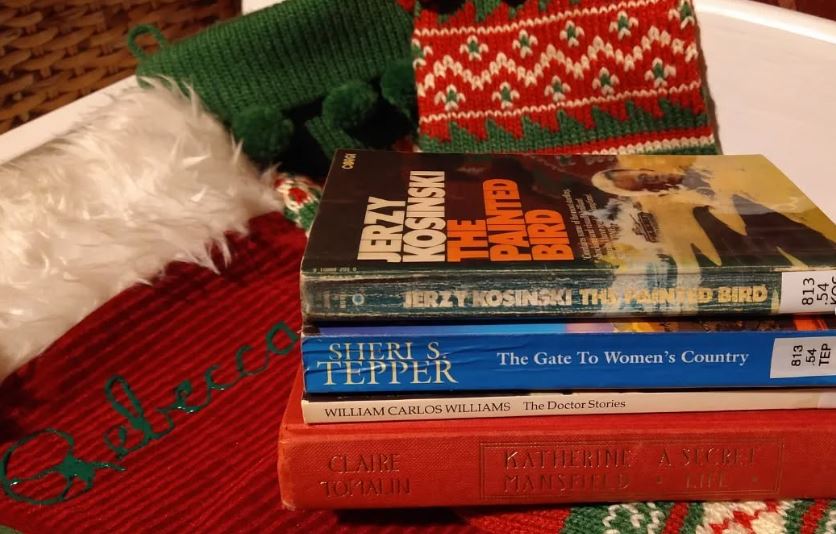
- The Painted Bird by Jerzy Kosinski
- The Gate to Women’s Country by Sheri S. Tepper
- Katherine Mansfield: A Secret Life by Claire Tomalin
- The Doctor Stories by William Carlos Williams
IN THE RESERVATION QUEUE
Some 2025 books are on order now, hooray!
- Old Soul by Susan Barker
- Keep Love: 21 Truths for a Long-Lasting Relationship by Paul Brunson
- Raising Hare by Chloe Dalton
- Maurice and Maralyn: An Extraordinary True Story of Shipwreck, Survival and Love by Sophie Elmhirst
- The Meteorites: Encounters with Outer Space and Deep Time by Helen Gordon
- The Alternatives by Caoilinn Hughes
- Newborn: Running Away, Breaking from the Past, Building a New Family by Kerry Hudson
- Black Woods, Blue Sky by Eowyn Ivey
- The Coast Road by Alan Murrin
- The Forgotten Sense: The Nose and the Perception of Smell by Jonas Olofsson
- The Leopard in My House: One Man’s Adventures in Cancerland by Mark Steel
- Three Days in June by Anne Tyler
- Time of the Child by Niall Williams
ON HOLD, TO BE PICKED UP
- Myself and Other Animals by Gerald Durrell
- The Mischief Makers by Elisabeth Gifford
- The Black Bird Oracle by Deborah Harkness
- The God of the Woods by Liz Moore
RETURNED UNREAD
- The Second Coming by Garth Risk Hallberg
- Bothy by Kat Hill
RETURNED UNFINISHED
- The City and Its Uncertain Walls by Haruki Murakami – I read 80 pages but found it aimless and flat.
- After Dark by Haruki Murakami – I couldn’t renew it for some reason. This is at least a nice short one, so I will go back to it once my hold comes in.
What have you been reading or reviewing from the library recently?

Share a link to your own post in the comments. Feel free to use the above image. The hashtag is #LoveYourLibrary.
Three on a Theme: Christmas Novellas I (Re-)Read This Year
I wasn’t sure I’d manage any holiday-appropriate reading this year, but thanks to their novella length I actually finished three, two in advance and one in a single sitting on the day itself. Two of these happen to be in translation: little slices of continental Christmas.
Twelve Nights by Urs Faes (2018; 2020)
[Translated from the German by Jamie Lee Searle]
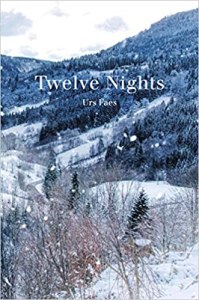 In this Swiss novella, the Twelve Nights between Christmas and Epiphany are a time of mischief when good folk have to protect themselves from the tricks of evil spirits. Manfred has trekked back to his home valley hoping to make things right with his brother, Sebastian. They have been estranged for several decades – since Sebastian unexpectedly inherited the family farm and stole Manfred’s sweetheart, Minna. These perceived betrayals were met with a vengeful act of cruelty (but why oh why did it have to be against an animal?). At a snow-surrounded inn, Manfred convalesces and tries to summon the courage to show up at Sebastian’s door. At only 84 small-format pages, this is more of a short story. The setting and spare writing are appealing, as is the prospect of grace extended. But this was over before it began; it didn’t feel worth what I paid. Perhaps I would have been happier to encounter it in an anthology or a longer collection of Faes’s short fiction. (Secondhand – Hungerford Bookshop)
Through a Glass, Darkly by Jostein Gaarder (1993; 1998)
[Translated from the Norwegian by Elizabeth Rokkan]
On Christmas Day, Cecilia is mostly confined to bed, yet the preteen experiences the holiday through the sounds and smells of what’s happening downstairs. (What a cosy first page!)
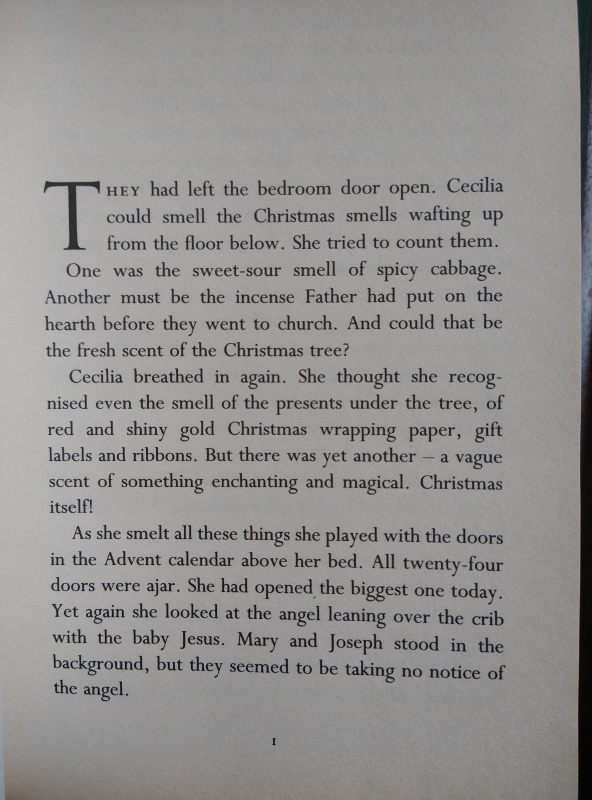
 Her father later carries her down to open her presents: skis, a toboggan, skates – her family has given her all she asked for even though everyone knows she won’t be doing sport again; there is no further treatment for her terminal cancer. That night, the angel Ariel appears to Cecilia and gets her thinking about the mysteries of life. He’s fascinated by memory and the temporary loss of consciousness that is sleep. How do these human processes work? “I wish I’d thought more about how it is to live,” Cecilia sighs, to which Ariel replies, “It’s never too late.” Weeks pass and Ariel engages Cecilia in dialogues and takes her on middle-of-the-night outdoor adventures, always getting her back before her parents get up to check on her. The book emphasizes the wonder of being alive: “You are an animal with the soul of an angel, Cecilia. In that way you’ve been given the best of both worlds.” This is very much a YA book and a little saccharine for me, but at least it was only 161 pages rather than the nearly 400 of Sophie’s World. (Secondhand – Community Furniture Project, Newbury)
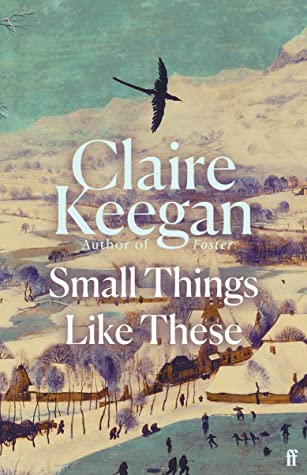
Small Things Like These by Claire Keegan (2021)
I idly reread this while The Muppet Christmas Carol played in the background on a lazy, overfed Christmas evening.
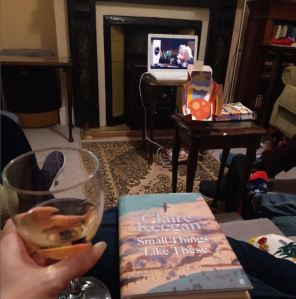
 It was an odd experience: having seen the big-screen adaptation just last month, the blow-by-blow was overly familiar to me and I saw Cillian Murphy and Emily Watson, if not the minor actors, in my mind’s eye. I realized fully just how faithful the screenplay is to the book. The film enhances not just the atmosphere but also the plot through the visuals. It takes what was so subtle in the book – blink-and-you’ll-miss-it – and makes it more obvious. Normally I might think it a shame to undermine the nuance, but in this case I was glad of it. Bill Furlong’s midlife angst and emotional journey, in particular, are emphasized in the film. It was probably a mistake to read this a third time within so short a span of time; it often takes me more like 5–10 years to appreciate a book anew. So I was back to my ‘nice little story’ reaction this time, but would still recommend this to you – book or film – if you haven’t yet experienced it. (Free at a West Berkshire Council recycling event)
Previous ratings: (2021 review); (2022 review)
My rating this time:
We hosted family for Christmas for the first time, which truly made me feel like a proper grown-up. It was stressful and chaotic but lovely and over all too soon. Here’s my lil’ book haul (but there was also a £50 book token, so I will buy many more!).
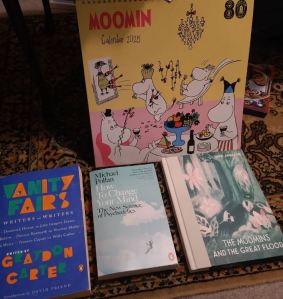
I hope everyone has been enjoying the holidays. I have various year-end posts in progress but of course the final Best-of list and statistics will have to wait until the turning of the year.
Coming up:
Sunday 29th: Best Backlist Reads of the Year
Monday 30th: Love Your Library & 2024 Reading Superlatives
Tuesday 31st: Best Books of 2024
Wednesday 1st: Final statistics on 2024’s reading
Reporting Back on My Most Anticipated Reads of 2024
Most years I’ve combined this topic with a rundown of my DNFs for the year; this time I can’t be bothered to list them. There have maybe not been as many as usual; generally, I’ve given a sentence or two about each DNF in a Love Your Library post. In any case, I hereby give you blanket permission to drop that book you’ve been struggling with. I absolve you of all potential guilt. It makes no difference if it has been nominated for or won a major prize, or if everyone else seems to love it. If for any reason a book isn’t connecting with you, move onto something else; you can always come back to try it another time, or not. Life is short.
So, on to those Most Anticipated books! In January, I picked the 12 new releases I was most looking forward to reading in 2024. Here’s how I fared with them – links are to my reviews:
Read and enjoyed: 5 (2 will appear on my Best-of list!)
 The Ministry of Time by Kaliane Bradley
- Fi: A Memoir of My Son by Alexandra Fuller
- Rapture’s Road by Seán Hewitt
- Wellness by Nathan Hill
- Come and Get It by Kiley Reid
Read and found somewhat disappointing (i.e., 3 stars or below): 5
 Martyr! by Kaveh Akbar
- Cairn by Kathleen Jamie
- Exhibit by R.O. Kwon
- The Vulnerables by Sigrid Nunez
- The Paris Novel by Ruth Reichl
DNF: 1
 Enlightenment by Sarah Perry
Haven’t managed to get hold of, but have basically decided against anyway: 1
 Memory Piece by Lisa Ko – The reviews from Susan and Laura made me realize I probably won’t love this as much as I want to. (Plus the average rating on Goodreads is disconcertingly low.)
I’ve really come to wonder if designating a book as “Most Anticipated” is a kiss of death. Are my hopes so high that only the rare book can live up to them?!
Nonetheless, I can’t resist compiling this list each year. In the first week of January, I’ll be previewing my 25 Most Anticipated titles for the first half of 2025.
Do you choose Most Anticipated books each year? (Or do you prefer to be surprised?) And if so, do they generally meet your expectations?
Book Serendipity, November to December 2024
I call it “Book Serendipity” when two or more books that I read at the same time or in quick succession have something in common – the more bizarre, the better. This is a regular feature of mine every couple of months. Because I usually have 20–30 books on the go at once, I suppose I’m more prone to such incidents. People frequently ask how I remember all of these coincidences. The answer is: I jot them down on scraps of paper or input them immediately into a file on my PC desktop; otherwise, they would flit away! The following are in roughly chronological order.
- Characters who were in a chess club and debating society in high school/college in Playground by Richard Powers and Intermezzo by Sally Rooney.
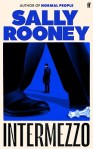
- Pondering the point of a memorial and a mention of hiring mourners in Immemorial by Lauren Markham and Basket of Deplorables by Tom Rachman.
- A mention of Rachel Carson, and her The Sea Around Us in particular, in Playground by Richard Powers, while I was also reading for review Rachel Carson and the Power of Queer Love by Lida Maxwell.
- A character pretends to be asleep when someone comes into the room to check on them in Knulp by Hermann Hesse and Rental House by Weike Wang.
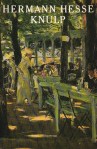
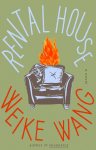
- A mention of where a partner puts his pistachio shells in After the Rites and Sandwiches by Kathy Pimlott and Rental House by Weike Wang.
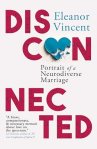 A character who startles very easily (in the last two cases because of PTSD) in Life before Man by Margaret Atwood, A History of Sound by Ben Shattuck, and Disconnected by Eleanor Vincent.
- The husband is named Nate in Life before Man by Margaret Atwood and Rental House by Weike Wang.
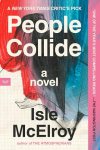
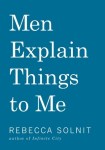
- In People Collide by Isle McElroy, there’s a mention of Elizabeth reading “a popular feminist book about how men explained things to women.” The day I finished reading the novel, I started reading the book in question: Men Explain Things to Me by Rebecca Solnit.
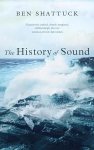
- I learned about the “he’s-at-home” (19th-century dildo) being used by whalers’ wives on Nantucket while the husbands are away at sea through historical fiction – Daughters of Nantucket by Julie Gerstenblatt, which I read last year – and encountered the practice again through an artefact found in the present day in The History of Sound by Ben Shattuck. Awfully specific!
- A week after I finished reading Station Eleven by Emily St. John Mandel, it turned up in a discussion of Vancouver Island in Island by Julian Hanna.
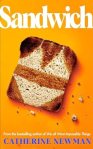
- A Cape Cod setting in Sandwich by Catherine Newman (earlier in the year) plus The History of Sound by Ben Shattuck and Rental House by Weike Wang.
- A gay character references Mulder and Scully (of The X-Files) in the context of determining sexual preference, and there’s a female character named Kit, in The Old Haunts by Allan Radcliffe and one story of Show Don’t Tell by Curtis Sittenfeld.
- A mention of The Truman Show in the context of delusions in The Year of Living Biblically by A.J. Jacobs and You Don’t Have to Be Mad to Work Here by Benji Waterhouse.
- St. Lucia is mentioned in Beasts by Ingvild Bjerkeland, Brightly Shining by Ingvild Rishøi (two Norwegian authors named Ingvild there!), and Mudhouse Sabbath by Lauren Winner.
- A pet named Darwin: in Levels of Life by Julian Barnes it’s Sarah Bernhardt’s monkey; in Cold Kitchen by Caroline Eden it’s her beagle. Within days I met another pet beagle named Darwin in Island by Julian Hanna. (It took me a moment to realize why it’s a clever choice!)
- A character named Henrik in The Place of Tides by James Rebanks and one story of Show Don’t Tell by Curtis Sittenfeld, and a Hendrik in The Safekeep by Yael van der Wouden.
- A hat with a green ribbon in The Safekeep by Yael van der Wouden and one story of Show Don’t Tell by Curtis Sittenfeld (in which it’s an emoji).
- Romanian neighbours who speak very good English in Island by Julian Hanna and Rental House by Weike Wang.
- A scene of returning to a house one used to live in in Hyper by Agri Ismaïl, The Old Haunts by Allan Radcliffe, and one story of Show Don’t Tell by Curtis Sittenfeld.
- A woman has had three abortions in The House of Dolls by Barbara Comyns and Without Exception by Pam Houston.
- Household items keep going missing and there’s broken china in The House of Dolls by Barbara Comyns and The Safekeep by Yael van der Wouden.
- Punctuated equilibrium (a term from evolutionary biology) is used as a metaphor in Hyper by Agri Ismaïl and Men Explain Things to Me by Rebecca Solnit.
 The author’s mother repeatedly asked her daughter a rhetorical question along the lines of “Do you know what I gave up to have you?” in Permission by Elissa Altman and Without Exception by Pam Houston.
- The author/character looks in the mirror at the end of a long day and hardly recognizes him/herself in The Place of Tides by James Rebanks, You Don’t Have to Be Mad to Work Here by Benji Waterhouse, and Amphibian by Tyler Wetherall.
- A man is afraid to hold his boyfriend’s hand in public in another country because he’s unsure about the cultural attitudes towards homosexuality in Clinical Intimacy by Ewan Gass and Small Rain by Garth Greenwell.
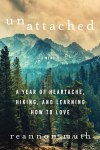
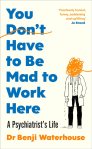
- The author’s mother is a therapist/psychologist and the author her/himself is undergoing some kind of mental health treatment in Unattached by Reannon Muth and You Don’t Have to Be Mad to Work Here by Benji Waterhouse.
- A man declares that dying in one’s mid-40s is nothing to complain about in A Beginner’s Guide to Dying by Simon Boas and Small Rain by Garth Greenwell.
- A woman ponders whether her ongoing anxiety is related to the stressful circumstances of her birth in Unattached by Reannon Muth and When the World Explodes by Amy Lee Scott.
What’s the weirdest reading coincidence you’ve had lately?
The End of the Year Book Tag
I’ve been feeling a little burnt out after Novellas in November, so when I spotted this on Laura’s blog I thought it might be just the thing to help me sort through my December reading plans while I wait to get my reviewing mojo back.
- Is there a book that you started that you still need to finish by the end of the year?
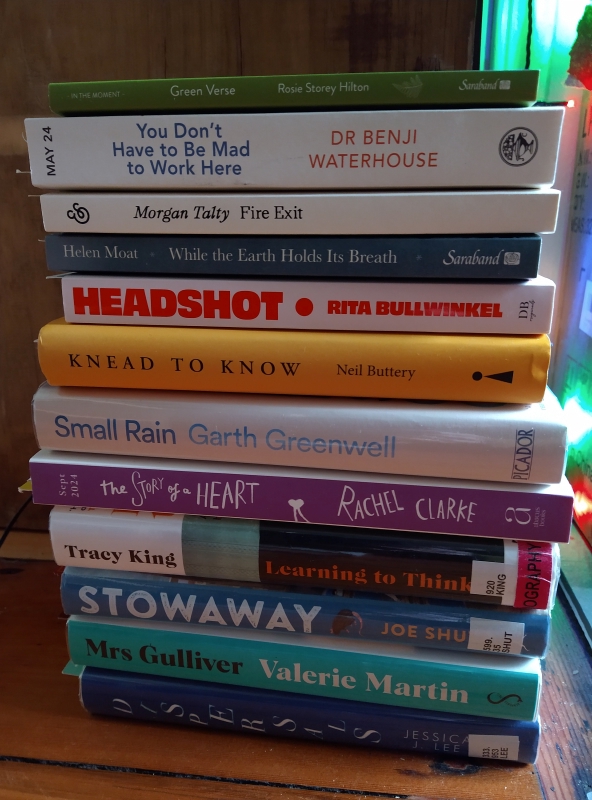
Yes … too many. Pictured are a dozen 2024 releases, a mixture of review copies and library books, that I still hope to get through. Some of them I’m a good way into; others I’ve barely started. (Not shown: All Fours by Miranda July, from NetGalley on my Kindle; and Nine Minds by Daniel Tammet, which I’ll be assessing for Foreword Reviews.)
- Do you have an autumnal book to transition to the end of the year?
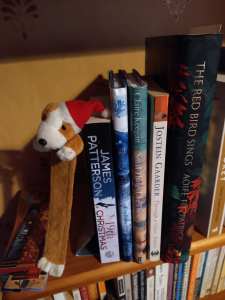
Autumn is the hardest season for me to assign reads to. I’m already in winter mode, so it’s more likely that I’ll pick up one or a few of these wintry or Christmassy books.
-
 Is there a release you are still waiting for?
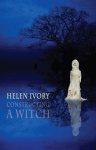
Published last week and on my Kindle from Edelweiss: the poetry collection Constructing a Witch by Helen Ivory. Otherwise, it’s on to January and February releases for my paid reviewing gigs.
- Name three books you want to read by the end of the year.
From the stack above, I haven’t properly started Headshot by Rita Bullwinkel or opened Fire Exit by Morgan Talty, and I’m still hoping to read those two review copies in their entirety. I will also try to squeeze in at least one more McKitterick Prize novel entry.
But I also have up to five 2025 releases to read for paid reviews that would be due early in January.
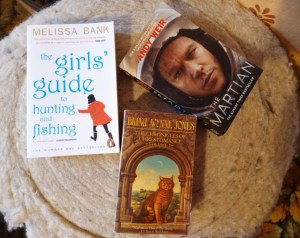
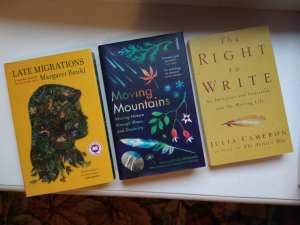
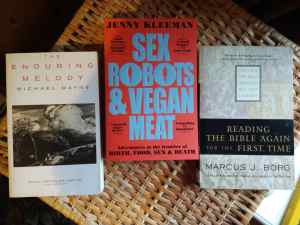
Over the holidays, I fancy dipping into some lighter fiction, cosy and engaging creative nonfiction, and thought-provoking but readable science and theology stuff. Here are some options I pulled off of my bedside table shelves.
- Is there a book that could still shock you and become your favourite of the year?
Small Rain by Garth Greenwell and Dispersals by Jessica J. Lee are both very promising. I’m nearly 1/3 into the Greenwell (it’s my first time reading him) and I’m so impressed: this is patently autofiction about a medical crisis he had during the pandemic, but there is such clarity and granular detail that it feels absolutely true to the record yet soars above any memoir he might have written about the same events. He’s both back in the moment and understanding everything omnisciently. Greenwell has also written poetry, and I was reminded of the Wordsworth quote “Poetry is the spontaneous overflow of powerful feelings: it takes its origin from emotion recollected in tranquillity.”
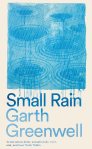
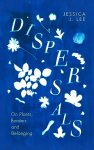
I’ve only read the first chapter of the Lee so far, but I’m a real fan of her hybrid nature memoirs and I think the metaphorical links between her life and plants will really work.
- Have you already started making reading plans for 2025?
So far I’ve read something like 11 books with 2025 publication dates, most of them for paid reviews. I will feature some of those soon. I’ve also compiled a list of my 20 Most Anticipated releases of 2025 and will post that early in January.
Apart from that, I expect it will be the usual pairs of contradictory goals: reading ahead (2025 stuff) versus catching up (backlist and my preposterous set-aside shelf); failing to resist review copies and library holds versus trying to read more from my own shelves; reading to challenges and themes versus preserving the freedom to pick up books as the whim takes me.


Speaking of themes, I fancy doing a deep dive into the senses, especially the sense of smell, which particularly intrigues me. (I’ll make it a trio with The Forgotten Sense: The New Science of Smell—and the Extraordinary Power of the Nose by Jonas Olofsson, which will be published on 7 January and is on order for me at the library.)
Love Your Library, November 2024
Thanks to Eleanor (here and here) and Marcie for posting about their recent library reading!
New at my library this month: lacemakers sitting and working at their craft at two designated tables, with examples of finished work behind them. I was intrigued by their round wooden boards, almost like artists’ palettes, holding various pins and threads. Apparently if you can crochet you can tat lace. I didn’t know that we had a local lacemaking tradition in Newbury. On travels elsewhere, e.g. Nottingham, I have seen it more prominently mentioned as part of a city’s history. During my Tuesday volunteering the other week, a patron made a point of coming up to me and saying how nice it was to see them there.
The only thing that tarnished the experience for me, as with some other things I’m involved with (Repair Café especially), is that the participants are overwhelmingly over 50 – probably most of them over 70, in fact. Such skills and crafts are going to die out unless they’re being passed on to younger generations. This is not arcane knowledge to be admired but essential human culture to be preserved. Art is always of value for its own sake. We have never needed a ‘make do and mend’ mindset more, yet we are consuming and disposing as if there is no tomorrow. I need to bring up again with the Repair Café coordinators how we might get younger people apprenticed to skilled volunteer repairers to start this process.
Anyway, back to libraries. That day, one member of staff went over to a lacemaker and apologized that it was about to get noisy with Rhyme Time (a singing session for babies and toddlers with their parents and carers), which seemed like a great juxtaposition that shows the range of activities the library system supports.
My library use over the last month:
I’ve been catching up on the Booker Prize shortlist and reading loads of novella-length works.
READ
- The Wood at Midwinter by Susanna Clarke
- Without Ever Reaching the Summit: A Himalayan Journey by Paolo Cognetti
- James by Percival Everett
- A Haunting on the Hill by Elizabeth Hand

- Orbital by Samantha Harvey
- What Feasts at Night by T. Kingfisher
- Heartstopper: Volume 5 by Alice Oseman (a reread)
- Playground by Richard Powers
- Intermezzo by Sally Rooney

+ picture books Pete the Cat Saves Christmas and The Twelve Cats of Christmas
SKIMMED
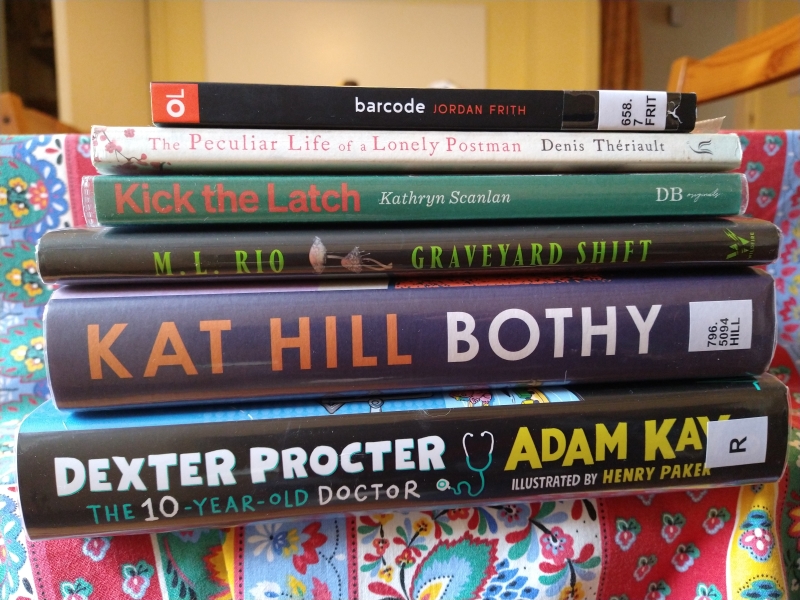
- Barcode by Jordan Frith
- A Nature Poem for Every Winter Evening by Jane McMorland Hunter
- A Thousand Feasts by Nigel Slater
- Dinner by Meera Sodha
CURRENTLY READING
- Interlunar by Margaret Atwood
- Life before Man by Margaret Atwood
- A Beginner’s Guide to Dying by Simon Boas
- Small Rain by Garth Greenwell
- Poetry Unbound: 50 Poems to Open Your World by Pádraig Ó Tuama
- The Place of Tides by James Rebanks
- Men Explain Things to Me by Rebecca Solnit
- The Peculiar Life of a Lonely Postman by Denis Thériault
- The Safekeep by Yael van der Wouden
CHECKED OUT, TO BE READ
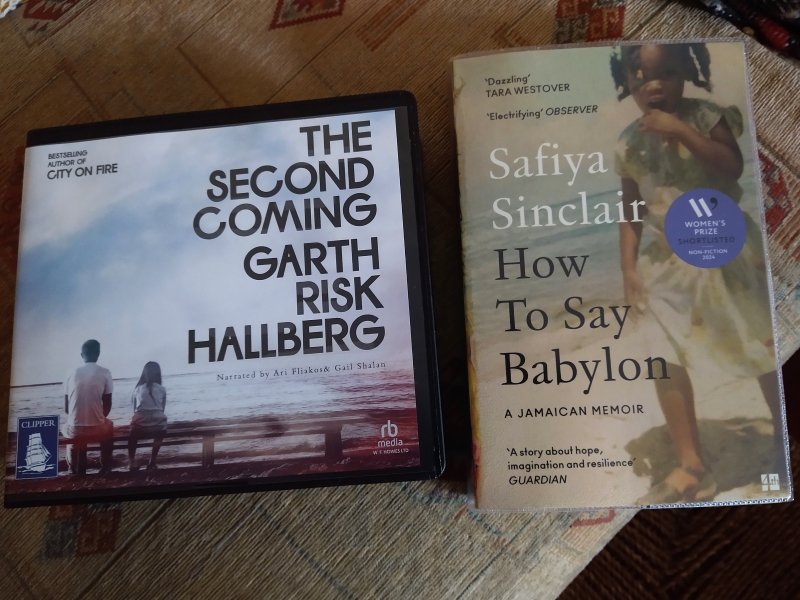
- The Second Coming by Garth Risk Hallberg (audiobook)
- Dexter Procter: The 10-Year-Old Doctor by Adam Kay
- Dispersals: On Plants, Borders and Belonging by Jessica J. Lee
RETURNED UNREAD
- Rosarita by Anita Desai
- Bellies by Nicola Dinan – Requested off me; will try another time.
- Bothy by Kat Hill – Have had it out twice and not managed to open it; maybe I should wait and take it away to a Scottish island.
- What Does It Feel Like? by Sophie Kinsella
- Kick the Latch by Kathryn Scanlan
The three not explained were borrowed for #NovNov24 with the best of intentions, but I don’t think they actually appeal to me (for very different reasons).
RETURNED UNFINISHED
- Graveyard Shift by M.L. Rio – Subpar.
- How to Say Babylon by Safiya Sinclair – Too long and involved (and such small print!) for a busy month. Will try another time.
What have you been reading or reviewing from the library recently?
Share a link to your own post in the comments. Feel free to use the above image. The hashtag is #LoveYourLibrary.
A New Chapter in My McKitterick Prize Judging
 For the past four years, I have been a judge for the McKitterick Prize, one of various awards administered by the Society of Authors (the UK trade union for writers). Since 1990, this Prize has been given to a debut novelist aged 40+. It’s unique in that it considers unpublished manuscripts as well as published novels – Tom McKitterick, who endowed the prize, was a former Political Quarterly editor and left an unpublished novel at his death. The overlapping Paul Torday Memorial Prize (for debut authors of 60+) closed last year, so this is one of just two prizes I know of for authors OVER a certain age, the other being the RSL Christopher Bland Prize, which is for fiction or nonfiction.
In 2021–24, my role was helping to whittle down the unpublished manuscripts, which then joined the traditionally published novels for judging. For 2025, I’m delighted to announce that I’m one of the judges assessing the published material (this includes self-published books). The opportunity came about by happenstance, really. I realized that I hadn’t heard from the SoA lately and assumed they didn’t need me this year, but e-mailed in case and learned that a judge had just had to bow out, leaving a space for me. It feels like a big step up as judging ‘proper books’ – by which I mean published, and in print format – for a literary prize is a longstanding ambition of mine.


My first shipment arrived on Thursday and I’ve already gotten stuck into my first two reads. I didn’t take a look at the list before the parcel was delivered so I could have the fun of unboxing surprises. Four of the submissions are ones I (secretly) predicted, and I recognized another six titles. The rest are new to me. I likely won’t be able to share more about the process or any of my reading until after the shortlist in May and/or the winner announcement in June at the annual SoA Awards ceremony. My hope is that I will find lots of gems so the task never turns tedious. Longlist choices are due in March, so I’m going to be busy over the next few months! I pulled out a notebook I won in a giveaway on Cathy’s blog to act as a repository for my notes and thoughts. I’m excited to see what themes emerge and encounter some debut novelists the world needs to hear about.


#NovNov24 Halfway Check-In & Small Things Like These Film Review
Somehow half of November has flown by. We hope you’ve been enjoying reading and reviewing short books this month. So far we have had 40 participants and 84 posts! Remember to add your posts to the link-up, or alert us via a comment here or on Bluesky (@cathybrown746.bsky.social / @bookishbeck.bsky.social), Instagram (@cathy_746books / @bookishbeck), or X (@cathy746books / @bookishbeck).

If you haven’t already, there’s no better time to pick up our buddy read, Orbital by Samantha Harvey, which won the Booker Prize on Tuesday evening. Chair of judges Edmund de Waal said it is “about a wounded world” and that the panel’s “unanimity about Orbital recognises its beauty and ambition.” I was surprised to learn that it is only the second-shortest Booker winner; Offshore by Penelope Fitzgerald is even shorter.

Another popular novella many of us have read is Small Things Like These by Claire Keegan (my latest review is here). I went to see the excellent film adaptation, with a few friends from book club, at our tiny local arthouse cinema on Wednesday afternoon. I’ve read the book twice now – I might just read it a third time before Christmas – and from memory the film is remarkably faithful to its storyline and scope. (The only significant change I think of is that Bill doesn’t visit Ned in the hospital, but there are still flashbacks to the role that Ned played in Bill’s early life.)
 The casting and cinematography are exceptional. Cillian Murphy portrays Bill with just the right blend of stoicism, meekness, and angst. Emily Watson is chilling as Sister Mary, the Mother Superior of the convent, which is suitably creepy with dim brick hallways and clinical laundry rooms. The grimy cobbles and dull streetlamps of the town contrast with the warm light in the scenes of Bill’s remembered childhood at Mrs Wilson’s. Repeated shots – of Bill’s truck setting off across the bridge in the early morning, of him scrubbing coal dust from his hands with carbolic soap, of his eyes wide open in the middle of the night – are not recursive but a way of establishing the gruelling nature of his tasks and the unease that plagues him. A life of physical labour has aged him beyond 39 (cf. Murphy is 48) and he’s in pain from shouldering sacks of coal day in and day out.
Both book and film are set in 1985 but apart from the fashions and the kitschy Christmas decorations and window dressings you’d be excused for thinking it was the 1950s. Bill’s business deals in coal, peat and tinder; rural Ireland really was that economically depressed and technologically constrained. (Another Ireland-set film I saw last year, The Miracle Club, is visually very similar – it even features two of the same actors – although it takes place in 1967. It’s as if nothing changed for decades.)
 By its nature, the film has to be a little more overt about what Bill is feeling (and generally not saying, as he is such a quiet man): there are tears at Murphy’s eyes and anxious breathing to make Bill’s state of mind obvious. Yet the film retains much of the subtlety of Keegan’s novella. You have to listen carefully during the conversation between Bill and Sister Mary to understand she is attempting to blackmail him into silence about what goes on at the convent.
At the end of the film showing, you could have heard a pin drop. Everyone was stunned at the simple beauty of the final scene, and the statistics its story is based on. It’s truly astonishing that Magdalene Laundries were in operation until the late 1990s, with Church support. Rage and sorrow build in you at the very thought, but Bill’s quietly heroic act of resistance is an inspiration. What might we, ordinary people all, be called on to do for women, the poor, and the oppressed in the years to come? We have no excuse not to advocate for them.
(Arti of Ripple Effects has also reviewed the film here.)
So far this month I’ve read nine novellas and reviewed eight. One of these was a one-sitting read, and I have another pile of ones that I could potentially read of a morning or evening next week. I’m currently reading another 16 … it remains to be seen whether I will average one a day for the month!
My Year in Novellas (#NovNov24)
Here at the start of the month, we’re inviting you to tell us about the novellas you’ve read since last November.
I have a special shelf of short books that I add to throughout the year. When at secondhand bookshops, charity shops, a Little Free Library, or the public library where I volunteer, I’m always thinking about my piles for November. But I do read novellas at other times of year, too. Forty-four of them between December 2023 and now, according to my Goodreads shelves (last year it was 46, so it seems like that’s par for the course). I often choose to review books of novella length for BookBrowse, Foreword and Shelf Awareness. I’ve read a real mixture, but predominantly literature in translation and autobiographical works.


My favourites of the ones I’ve already covered on the blog would probably be (nonfiction) Alphabetical Diaries by Sheila Heti and (fiction) Aimez-vous Brahms by Françoise Sagan. My proudest achievements are: reading the short graphic novel Broderies by Marjane Satrapi in the original French at our Parisian Airbnb in December; and managing two rereads: Heartburn by Nora Ephron and Of Mice and Men by John Steinbeck.


Of the short books I haven’t already reviewed here, I’ve chosen two gems, one fiction and one nonfiction, to spotlight in this post:
Fiction
Clear by Carys Davies
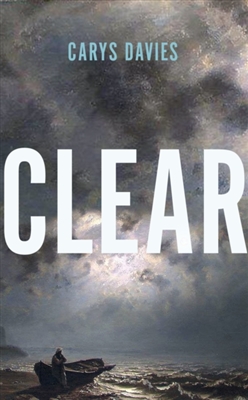 Clear depicts the Highland Clearances in microcosm though the experiences of one man, Ivar, the last resident of a remote Scottish island between Shetland and Norway. As in a play, there is a limited setting and cast. John is a minister sent by the landowner to remove Ivar, but an accident soon after his arrival leaves him beholden to Ivar for food and care. Mary, John’s wife, is concerned and sets off on the long journey from the mainland to rescue him. Davies writes vivid scenes and brings the island’s scenery to life. Flashbacks fill in the personal and cultural history, often via objects. The Norn language is another point of interest. The deceptively simple prose captures both the slow building of emotion and the moments that change everything. It seemed the trio were on course for tragedy, yet they are offered the grace of a happier ending.
In my book club, opinions differed slightly as to the central relationship and the conclusion, but we agreed that it was beautifully done, with so much conveyed in the concise length. This received our highest rating ever, in fact. I’d read Davies’ West and not appreciated it as much, although looking back I can see that it was very similar: one or a few character(s) embarked on unusual and intense journey(s); a plucky female character; a heavy sense of threat; and an improbably happy ending. It was the ending that seemed to come out of nowhere and wasn’t in keeping with the tone of the rest of the novella that made me mark West down. Here I found the writing cinematic and particularly enjoyed Mary as a strong character who escaped spinsterhood but even in marriage blazes her own trail and is clever and creative enough to imagine a new living situation. And although the ending is sudden and surprising, it nevertheless seems to arise naturally from what we know of the characters’ emotional development – but also sent me scurrying back to check whether there had been hints. One of my books of the year for sure.
Nonfiction
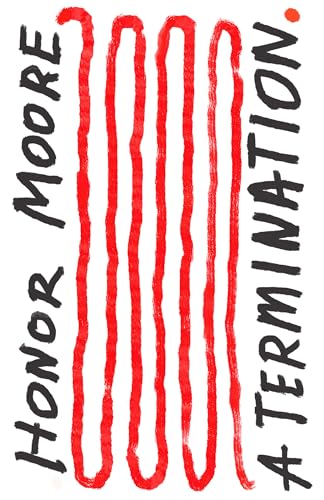
A Termination by Honor Moore
Poet and memoirist Honor Moore’s A Termination is a fascinatingly discursive memoir that circles her 1969 abortion and contrasts societal mores across her lifetime.
 During the spring in question, Moore was a 23-year-old drama school student. Her lover, L, was her professor. But she also had unwanted sex with a photographer. She did not know which man had impregnated her, but she did know she didn’t feel prepared to become a mother. She convinced a psychiatrist that doing so would destroy her mental health, and he referred her to an obstetrician for a hospital procedure. The termination was “my first autonomous decision,” Moore insists, a way of saying, “I want this life, not that life.”
Family and social factors put Moore’s experiences into perspective. The first doctor she saw refused Moore’s contraception request because she was unmarried. Her mother, however, bore nine children and declined to abort a pregnancy when advised to do so for medical reasons. Moore observes that she made her own decision almost 10 years before “the word choice replaced pro abortion.”
This concise work is composed of crystalline fragments. The stream of consciousness moves back and forth in time, incorporating occasional second- and third-person narration as well as highbrow art and literature references. Moore writes one scene as if it’s in a play and imagines alternative scenarios in which she has a son; though she is curious, she is not remorseful. The granular attention to women’s lives recalls Annie Ernaux, while the kaleidoscopic yet fluid approach is reminiscent of Sigrid Nunez’s work. It’s a stunning rendering of steps on her childfree path. 
Reprinted with permission from Shelf Awareness.
I currently have four novellas underway and plan to start some more this weekend. I have plenty to choose from!
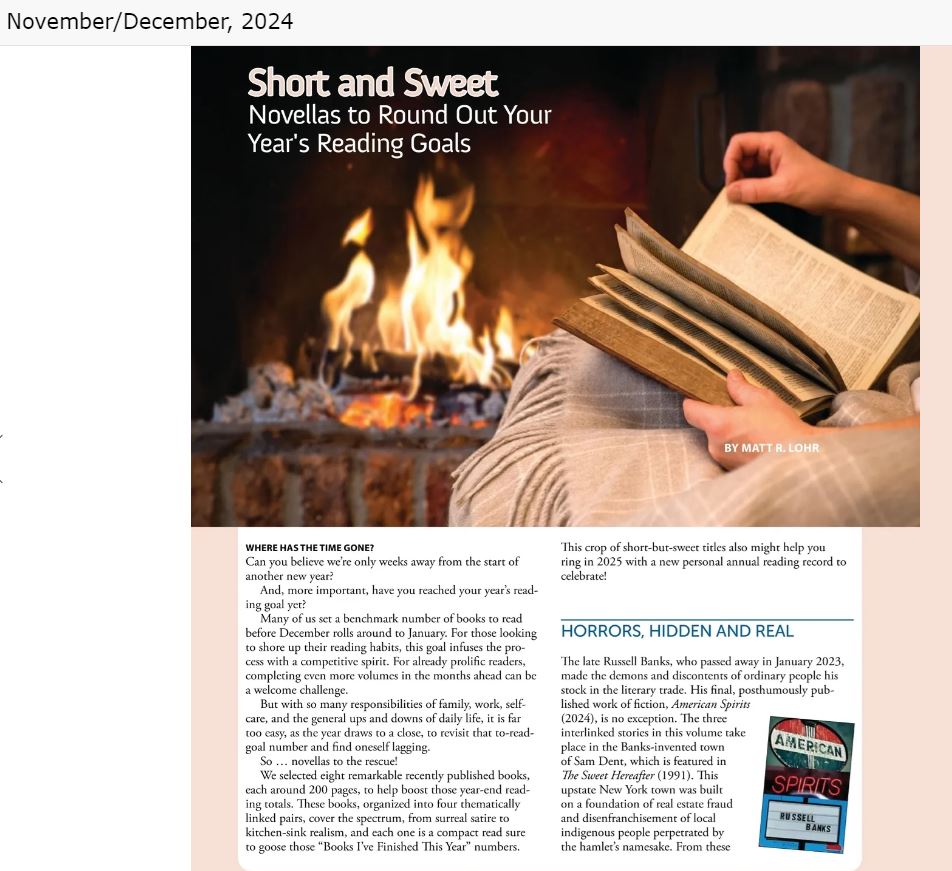
Everyone’s getting in on the act: there’s an article on ‘short and sweet books’ in the November/December issue of Bookmarks magazine, for which I’m an associate editor; Goodreads sent around their usual e-mail linking to a list of 100 books under 250 or 200 pages to help readers meet their 2024 goal. Or maybe you’d like to join in with Wafer Thin Books’ November buddy read, the Ugandan novella Waiting by Goretti Kyomuhendo (2007).
Why not share some recent favourite novellas with us in a post of your own?
 Bookish Beck = Rebecca Foster. American transplant to England. Freelance proofreader and book reviewer.
 Bookish Beck