#1962Club: A Dozen Books I’d Read Before
I totally failed to read a new-to-me 1962 publication this year. I’m disappointed in myself as I usually manage to contribute one or two reviews to each of Karen and Simon’s year clubs, and it’s always a good excuse to read some classics.

My mistake this time was to only get one option: Pale Fire by Vladimir Nabokov, which I had my husband borrow for me from the university library. I opened it up and couldn’t make head or tail of it. I’m sure it’s very clever and meta, and I’ve enjoyed Nabokov before (Pnin, in particular), but I clearly needed to be in the right frame of mind for a challenge, and this month I was not.
Looking through the Goodreads list of the top 100 books from 1962, and spying on others’ contributions to the week, though, I can see that it was a great year for literature (aren’t they all?). Here are 12 books from 1962 that I happen to have read before, most of which I’ve reviewed here in the past few years. I’ve linked to those and/or given review excerpts where I have them, and the rest I describe to the best of my muzzy memory.
 The Wolves of Willoughby Chase by Joan Aiken – The snowy scene on the cover and described in the first two paragraphs drew me in and the story, a Victorian-set fantasy with notes of Oliver Twist and Jane Eyre, soon did, too. Dickensian villains are balanced out by some equally Dickensian urchins and helpful adults, all with hearts of gold. There’s something perversely cozy about the plight of an orphan in children’s books: the characters call to the lonely child in all of us; we rejoice to see how ingenuity and luck come together to defeat wickedness. There are charming passages here in which familiar smells and favourite foods offer comfort. This would make a perfect stepping stone from Roald Dahl to one of the Victorian classics.
 Instead of a Letter by Diana Athill – This was Athill’s first book, published when she was 45. An unfortunate consequence of my not having read the memoirs in the order in which they are written is that much of the content of this one seemed familiar to me. It hovers over her childhood (the subject of Yesterday Morning) and centres in on her broken engagement and abortion, two incidents revisited in Somewhere Towards the End. Although Athill’s careful prose and talent for candid self-reflection are evident here, I am not surprised that the book made no great waves in the publishing world at the time. It was just the story of a few things that happened in the life of a privileged Englishwoman. Only in her later life has Athill become known as a memoirist par excellence.
 The Drowned World by J.G. Ballard – (Read in October 2011.) Quite possibly the first ‘classic’ science fiction work I’d ever read. I found Ballard’s debut dated, with passages of laughably purple prose, poor character development (Beatrice is an utter Bond Girl cliché), and slow plot advancement. It sounded like a promising environmental dystopia – perhaps a forerunner of Oryx and Crake – but beyond the plausible vision of a heated-up and waterlogged planet, the book didn’t have much to offer. The most memorable passage was when Strangman drains the water and Kerans discovers Leicester Square beneath; he walks the streets and finds them uninhabited except by sea creatures clogging the cinema entrances. That was quite a potent, striking image. But the scene that follows, involving stereotyped ‘Negro’ guards, seemed like a poor man’s Lord of the Flies rip-off.
 Silent Spring by Rachel Carson – Carson’s first chapter imagines an American town where things die because nature stops working as it should. Her main target was insecticides that were known to kill birds and had presumed negative effects on human health through the food chain and environmental exposure. Although the details may feel dated, the literary style and the general cautions against submitting nature to a “chemical barrage” remain potent.
 We Have Always Lived in the Castle by Shirley Jackson – I loved the offbeat voice and unreliable narration, and the way that the Blackwood house is both a refuge and a prison for the sisters. “Where could we go?” Merricat asks Constance when she expresses concern that she should have given the girl a more normal life. “What place would be better for us than this? Who wants us, outside? The world is full of terrible people.” As the novel goes on, you ponder who is protecting whom, and from what. There are a lot of great scenes, all so discrete that I could see this working very well as a play with just a few backdrops to represent the house and garden. It has the kind of small cast and claustrophobic setting that would translate very well to the stage.
 Tales from Moominvalley by Tove Jansson – Moomintroll discovers a dragon small enough to be kept in a jar; laughter brings a fearful child back from literal invisibility. But what struck me more was the lessons learned by neurotic creatures. In “The Fillyjonk who believed in Disasters,” the title character fixates on her belongings, but when a gale and a tornado come and sweep it all away, she experiences relief and joy. My other favourite was “The Hemulen who loved Silence.” After years as a fairground ticket-taker, he can’t wait to retire and get away from the crowds and the noise, but once he’s obtained his precious solitude he realizes he needs others after all. In “The Fir Tree,” the Moomins, awoken midway through hibernation, get caught up in seasonal stress and experience Christmas for the first time.
The Snowy Day by Ezra Jack Keats – A perennial favourite from my childhood, with a paper-collage style that has influenced many illustrators. Just looking at the cover makes me nostalgic for the sort of wintry American mornings when I’d open an eye to a curiously bright aura from around the window, glance at the clock and realize my mom had turned off my alarm because it was a snow day and I’d have nothing ahead of me apart from sledding, playing boardgames and drinking hot cocoa with my best friend. There was no better feeling.

 A Wrinkle in Time by Madeleine L’Engle – (Reread in 2021.) I probably picked this up at age seven or so, as a follow-on from the Chronicles of Narnia. Interplanetary stories have never held a lot of interest for me. As a child, I was always more drawn to talking-animal stuff. Again I found the travels and settings hazy. It’s admirable of L’Engle to introduce kids to basic quantum physics, and famous quotations via Mrs. Who, but this all comes across as consciously intellectual rather than organic and compelling. Even the home and school talk feels dated. I most appreciated the thought of a normal – or even not very bright – child like Meg saving the day through bravery and love. This wasn’t for me, but I hope that for some kids, still, it will be pure magic.
 The Golden Notebook by Doris Lessing – I read this feminist classic in my early twenties, in the days when I was working at a London university library. Lessing wrote autofiction avant la lettre, and the gist of this novel is that ‘Anna’, a writer, divides her life into four notebooks of different colours: one about her African upbringing, another about her foray into communism, a third containing an autobiographical novel in progress, and the fourth a straightforward journal. The fabled golden notebook is the unified self she tries to create as her romantic life and mental health become more complicated. Julianne Pachico read this recently and found it very powerful. I think I was too young for this and so didn’t appreciate it at the time. Were I to reread it, I imagine I would get a lot more out of it.
 The Pumpkin Eater by Penelope Mortimer – More autofiction. Like a nursery rhyme gone horribly wrong, this is the story of a woman who can’t keep it together. She’s the woman in the shoe, the wife whose pumpkin-eating husband keeps her safe in a pumpkin shell, the ladybird flying home to find her home and children in danger. Aged 31 and already on her fourth husband, the narrator, known only as Mrs. Armitage, has an indeterminate number of children. Her current husband, Jake, is a busy filmmaker whose philandering soon becomes clear, starting with the nanny. A breakdown at Harrods is the sign that Mrs. A. isn’t coping. Most chapters begin in medias res and are composed largely of dialogue, including with Jake or her therapist. The book has a dark, bitter humour and brilliantly recreates a troubled mind.
 One Day in the Life of Ivan Denisovich by Aleksandr Solzhenitsyn – This was required reading in high school, a novella and circadian narrative depicting life for a prisoner in a Soviet gulag. And that’s about all I can tell you about it. I remember it being just as eye-opening and depressing as you might expect, but pretty readable for a translated classic.
 A Cat in the Window by Derek Tangye – Tangye wasn’t a cat fan to start with, but Monty won him over. He lived with newlyweds Derek and Jeannie first in the London suburb of Mortlake, then on their flower farm in Cornwall. When they moved to Minack, there was a sense of giving Monty his freedom and taking joy in watching him live his best life. They were evacuated to St Albans and briefly lived with Jeannie’s parents and Scottie dog, who became Monty’s nemesis. Monty survived into his 16th year, happily tolerating a few resident birds. Tangye writes warmly and humorously about Monty’s ways and his own development into a man who is at a cat’s mercy. This was really the perfect chronicle of life with a cat, from adoption through farewell. Simon thought so, too.
Here’s hoping I make a better effort at the next year club!
R.I.P., Part I: Michel Faber, Rebecca Green and Lize Meddings
For my first installment of this year’s Readers Imbibing Peril challenge, I have a highly undemanding selection of a novella, a picture book, and a teen graphic novel. And nothing here is nearly as scary as proper horror-fiction readers might be expecting.
The Hundred and Ninety-Nine Steps by Michel Faber (2001)
 One of my reads in Hay was this suspenseful novella set in Whitby. Faber was invited by the then artist in residence at Whitby Abbey to write a story inspired by the English Heritage archaeological excavation taking place there in the summer of 2000. His protagonist, Siân, is living in a hotel and working on the dig. She meets Magnus, a handsome doctor, when he comes to exercise the dog he inherited from his late father on the stone steps leading up to the abbey. Siân had been in an accident and is still dealing with the physical and mental after-effects. Each morning she wakes from a nightmare of a man with large hands slitting her throat. When Magnus brings her a centuries-old message in a bottle from his father’s house for her to open and decipher, another layer of intrigue enters: the crumbling document appears to be a murderer’s confession.
At first I worried Faber would turn this into a simple, predictable ghost story and milk expected sources of trauma. But the plot twists kept surprising me. The focus on women’s bodies and sexuality is appropriate for the town that gave us Dracula. This had hidden depths and at 116 pages could easily be a one-sitting read. Hadrian the dog is a great character, too, and this is even in my favourite font, Mrs Eaves, one that Canongate uses often. [Unfortunate error: Faber twice refers to Whitby as being Northumbrian. Although it was in the historical kingdom of Northumbria, it is actually in North Yorkshire rather than Northumberland.] (Secondhand – Bookcase, Carlisle) 
How to Make Friends with a Ghost by Rebecca Green (2017)
 Here Green proposes a ghost as a lifelong, visible friend. The book has more words and more advanced ideas than much of what I pick up from the picture book boxes. It’s presented as almost a field guide to understanding the origins and behaviours of ghosts, or maybe a new parent’s or pet owner’s handbook telling how to approach things like baths, bedtime and feeding. What’s unusual about it is that Green takes what’s generally understood as spooky about ghosts and makes it cutesy through faux expert quotes, recipes, etc. She also employs Rowling-esque grossness, e.g. toe jam served on musty biscuits. Perhaps her aim was to tame and thus defang what might make young children afraid. I enjoyed the art more than the sometimes twee words. (Public library)
The Sad Ghost Club by Lize Meddings (2021)
 This is the simplest of comics. Sam or “SG” goes around wearing a sheet – a tangible depression they can’t take off. (Again, ghosts aren’t really scary here, just a metaphor for not fully living.) Anxiety about school assignments and lack of friends is nearly overwhelming, but at a party SG notices a kindred spirit also dressed in a sheet: Socks. They’re awkward with each other until they dare to be vulnerable, stop posing as cool, and instead share how much they’re struggling with their mental health. Just to find someone who says “I know exactly what you mean” and can help keep things in perspective is huge. The book ends with SG on a quest to find others in the same situation. The whole thing is in black-and-white and the setups are minimalist (houses, a grocery store, a party, empty streets, a bench in a wooded area where they overlook the town). Not a whole lot of art skill required to illustrate this one, but it’s sweet and well-meaning. I definitely don’t need to read the sequels, though. The tone is similar to the later Heartstopper books and the art is similar to in Sheets and Delicates by Brenna Thummler, all of which are much more accomplished as graphic novels go. (Public library)
Hay-on-Wye Trip & Book Haul
Our previous trip to Hay was in September 2020, when Covid restrictions meant some shops were closed and most eateries only offered takeaway or outdoor dining. At the end of my write-up, I vowed to go back before I turned 40. I stayed true to my word and we arrived in town the day before my 40th birthday. (Not only that, but I’ve completed the Triple Crown of British Book Towns in a year, what with visits to Wigtown in June and Sedbergh in August. My hauls were comparable in all three and my spending in Hay (£37.95 for 15 books) was somewhere between Sedbergh’s low (£24.50 for 13) and Wigtown’s high (£44 for 16).)
Every time we visit, we find some businesses have closed but others have opened. There’s still a core of 12 bookshops, but as in Sedbergh, there are other establishments with a few shelves of books, so there are 15–20 places in town where you can browse books. That’s plenty for anyone to be getting on with in a long weekend.
I had an action plan for our three days that moved from cheapest (honesty shelves below the castle, £1 area outside Cinema; Oxfam and British Red Cross charity shops; Hay-on-Wye Booksellers; Clock Tower Books) through mid-price (Addyman Books, Cinema) to the more expensive options (Green Ink, Booths). The town’s newest shop, as pictured in my birthday post, is Gay on Wye, which, with North Books, replaced Pembertons as sellers of new stock. (Booth’s, the Castle and the Old Electric Shop also sell curated selections of new books.)
New to us on this trip:
- The Bean Box, a terrific and reasonably priced mini coffee bar run out of a horse box by the river. They have a nice garden and a secondhand book selection, and you can sit on their patio or at tables and chairs closer to the river view.
 Felin Fach Griffin, a country pub about a 20-minute drive from Hay, where we booked a table for my birthday lunch. Excellent food and a cosy atmosphere, with hill views from the windows.
- Hay Castle, which has had scaffolding up and been half-derelict ever since our first visit in 2004. At various points it has had books for sale. In 2022, it opened to the public as a visitor attraction. A projected animation gives a jaunty historical overview from the Middle Ages to the present day. We especially liked the room of Richard Booth and Book Town memorabilia and the viewing platform at the top. Booth himself was the last to live in the castle. On our earliest trips we would occasionally see him around town – a loud, shuffling (after his stroke) eccentric.

- Hay Distillery, where I had a delicious gin cocktail on my birthday evening.
“It is obviously impossible to catalogue over one million books and these listings therefore represent only a very small selection of the books that we have in stock in Hay. We would point out that one of the chief services of the secondhand bookshop is to provide the customer the opportunity to find the book he did not know existed.”
~Richard Booth, “Books for Sale” periodical (1981?)
“The new book is for the ego; the second-hand book is for the intellect.”
~Richard Booth, quoted on the castle exhibit wall
When we arrived at our Airbnb, we found it had not been cleaned; no linen, etc. A cleaner belatedly came to sort it out, but the owner gave us a full refund, so a minor inconvenience got us back more than enough to pay for the rest of the weekend.
After the final day’s shopping, this was my final book haul. We had particularly good luck in the Addyman’s alleyway, where all books are £1 – we got a bunch for presents (not pictured).


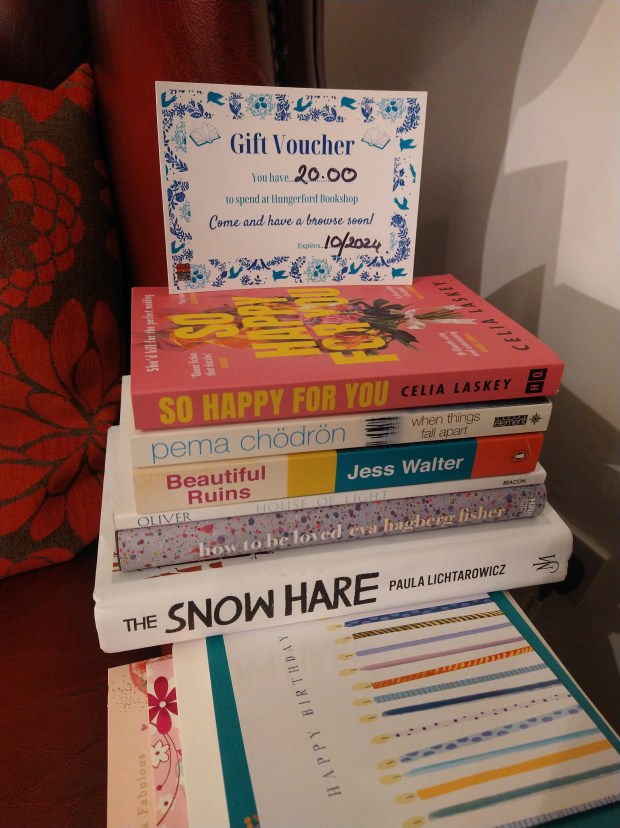
I also opened a first set of birthday books. (My husband and I are having a joint birthday party later this month; I daresay there may be more book parcels to open after.)
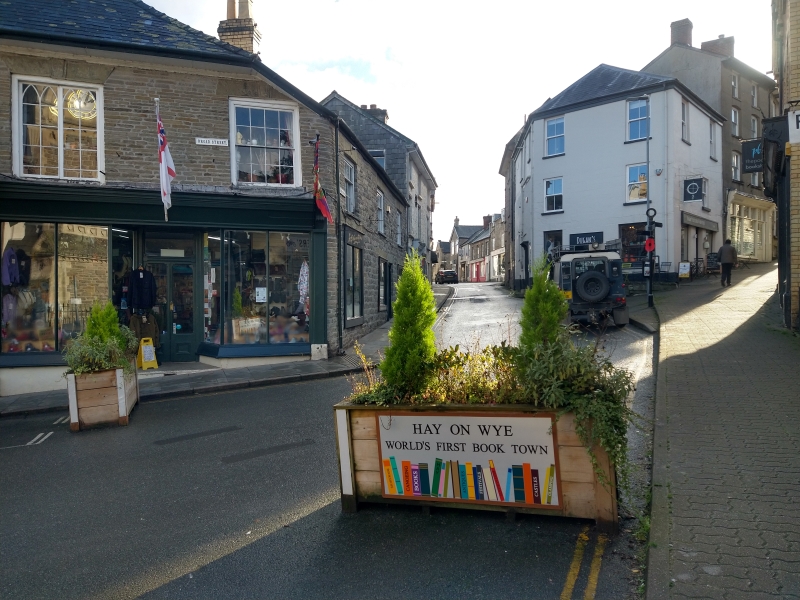
Hay is gentrified and hipster now in ways that would probably have Booth turning in his grave. While we slightly miss its dusty, ramshackle past, it’s the new businesses and the Festival that have helped it survive.
If you’ve never been to Hay, I’d certainly recommend it. I possibly slightly prefer Wigtown for its community atmosphere, but it’s more than twice as far away and has fewer book shopping opportunities, which for many of us is the main draw, as well as measly food options. Depending on where you live or are traveling in from, Hay is also likely to be the easiest of the three UK book towns to get to, including by public transport.
Happy Birthday & Bookshop Day
Happy Bookshop Day from Hay-on-Wye (and its newest bookshop, Gay on Wye)!


Today is my 40th birthday and I have been spending the weekend book shopping, reading, eating and drinking. What more could I ask for?


Before we left for Wales, I had my book club over for birthday cakes and bubbles. My husband made me a chocolate Guinness cake (vegan so everyone could share it) and pumpkin chai cupcakes; both recipes were from Hummingbird Bakery cookbooks.


I’ll report back on Monday with my book haul and trip highlights.
For now, here are some sweet lines from a children’s book I read this morning, about cats named Tom and Mot who discover that friendship and imagination are the greatest gifts, and that present has a double meaning: the now that must be appreciated.
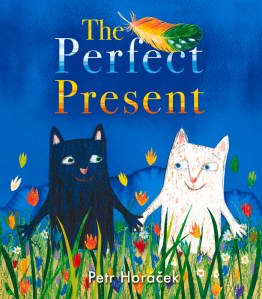
“And then it was time for a hot drink and the cake. The cake tasted like the BEST birthday cake in the world. … ‘Today was the best present in the world,’ said Tom. ‘The perfect present!’”
The Rituals by Rebecca Roberts (Blog Tour)
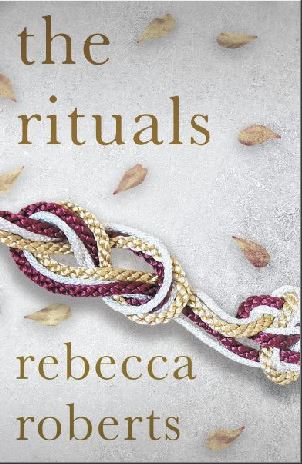
Rebecca Roberts adapted her 2022 Welsh-language novel Y Defodau, her ninth, into The Rituals, which draws on her time working as a non-religious celebrant. Her protagonist, Gwawr Efa Taylor, is a freelance celebrant, too. The novel is presented as her notebook, containing diary entries as well as the text of some of the secular ceremonies she performs to mark rites of passage. We open on a funeral for a 39-year-old woman, then swiftly move on to a Bridezilla celebrity’s wedding that sours in a way that threatens to derail Gwawr’s entire career. A victim of sabotage, she’s doubly punished by gossip.
As she tries to piece her life back together, Gwawr finds support from many quarters, such as her beloved grandfather (Taid), a friend who invites her along on a writing retreat, her Welsh-language book club, a high school acquaintance, other customers and a sweet dog. She and the widower from the first funeral make a pact to start counselling at the same time to work through their grief – we know early on that she has experienced the devastating loss of Huw, but the details aren’t revealed until later. A couple of romantic prospects emerge for the 37-year-old, but also some uncomfortable reminders of past scandal.
There are heavy issues here, like alcoholism, infant loss and suicide, but they reflect the range of human experience and allow compassionate connections to form. Gwawr’s empathy is motivated by her bereavement: “That’s what keeps me going – knowing that I’ve turned the worst time of my life into something that helps other people. Taking the good from the bad.” You can see that attitude infusing her naming ceremonies and funerals. I’ll say no more about the plot, just that it prioritizes moments of high emotion and is both absorbing and touching.
I think this is only the second Welsh-language book I have read in translation (the first was The Life of Rebecca Jones by Angharad Price). It’s whetted my appetite for heading back to Wales for the first time since 2020 – we’re off to Hay-on-Wye on Friday. The Rituals is a tear-jerker for sure, but also sweet, romantic and realistic. I enjoyed it in much the same way I did The Collected Regrets of Clover by Mikki Brammer, and was pleased to try something from a small press that champions women’s writing.
With thanks to Random Things Tours and Honno Welsh Women’s Press for the proof copy for review.
Buy The Rituals from Bookshop.org [affiliate link]
I was delighted to be part of the blog tour for The Rituals. See below for details of where other reviews have appeared or will be appearing soon.

October Reading Plans
My plans for the rest of the month’s reading, in pictures.
A handful of October releases (not counting the ones I’ve reviewed in advance for Shelf Awareness et al., one for a blog tour, or what I’ll be reading for November deadlines).


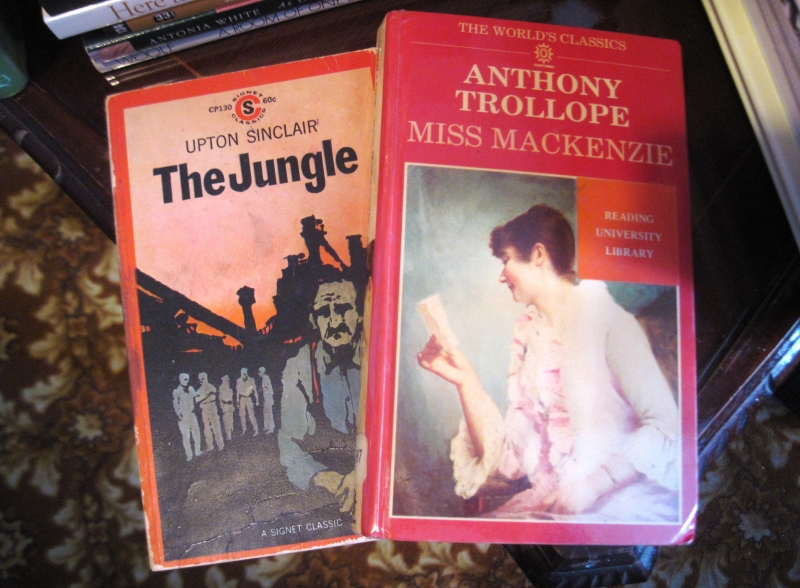
I turn 40 on the 14th, so have made a halfhearted attempt to gather my last four unread from The Novel Cure’s books to read in your thirties before that milestone passes. Whether I’ll actually read them, I’m less sure about. I’ve owned this copy of The Jungle for decades; I’ve not enjoyed Trollope since my student days. Time runs short, anyway, but I’ll see how I get on with the Sinclair at least, and perhaps skim the Trollope to get a sense of why Berthoud and Elderkin chose it for that list.
[The others are London Fields by Martin Amis, which is on loan just as I need it, and The Best of It All by Rona Jaffe, which I borrowed once and didn’t get far in; now it appears to have been withdrawn from the system. (My DNF review from 2018: “I read the first chapter and had a weird reverse case of déjà vu: this is awfully similar to Mad Men, Suzanne Rindell’s Three-Martini Lunch, and A.J. Pearce’s Dear Mrs Bird, though of course they would have been based on Jaffe’s novel rather than the other way round. Caroline Bender, fresh out of a broken engagement, arrives for her first day as a typist at a New York City publishing house and has to adjust to the catty office politics. I think I’ll truly enjoy this, but I need to find another time when I can give it my full attention. It’s nearly 450 pages of small print, so I need a chunk of time when I can really sink into it, like a flight or a long train ride.)]
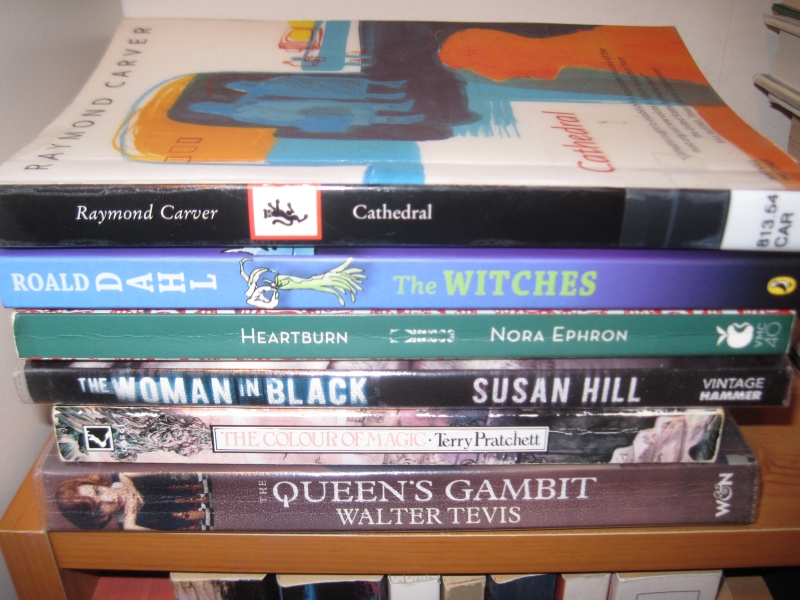
Also in conjunction with that big birthday, I’ve collected some notable 1983 releases, including 5 out of the 10 most popular on Goodreads’ list. (The Ephron and Hill would be rereads for me.) I’ll work on them in these last few months of the year.
A lesser-known Margaret Drabble novel for our women’s classics book club subgroup; Pale Fire for 1962 Club; two potential books for AusReading Month.

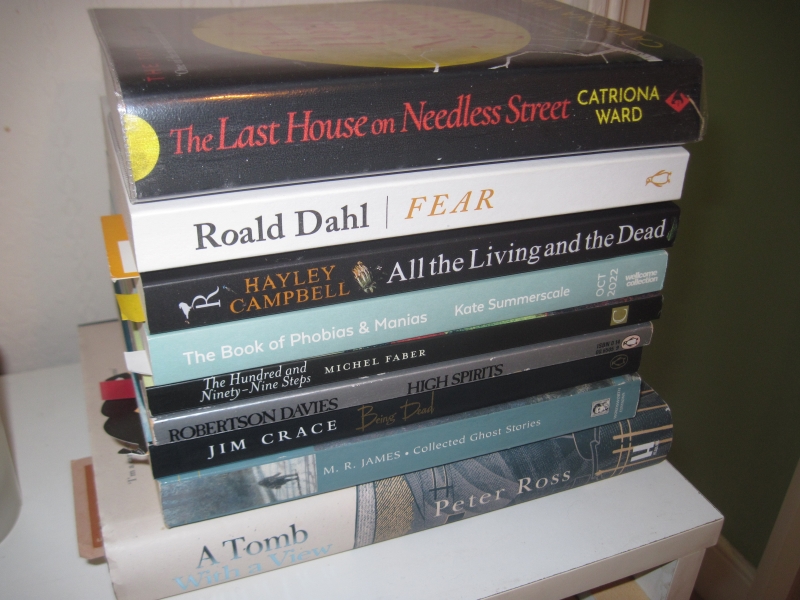
Some spooky or death-themed R.I.P. options (I know the challenge technically starts in September, but I only ever think to read such books as Halloween approaches).
I’ll be spending my birthday weekend in Hay-on-Wye, one of my special places. Here’s my Wales-themed and/or Hay-related pile. I’ll take all of these and probably many of the above as well; I like to have lots to choose from!

Short Stories in September Roundup: Munro, Ulrich; Virago Anthology
This comes a few days later than I intended, but better late than never. I’ve been focusing on short stories in September for the last eight years. In September 2021 I read 12 short story collections; last year it was 11.5; this year I finished 11, so pretty much par for the course, and pushing my year-to-date total to 30 story collections – not bad going for someone who feels like she hardly ever reads stories and doesn’t seek them out. This year’s reviews are here, here and here.
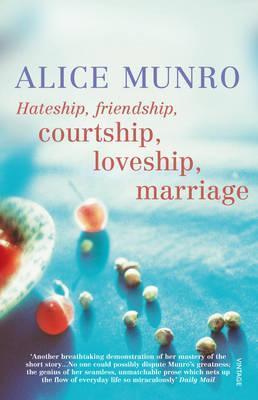
Hateship, Friendship, Courtship, Loveship, Marriage by Alice Munro (2001)
I always think I’ve never read Munro before, but that’s not the case. A decade or more ago I read Lives of Girls and Women. The ironic thing is that I chose it because I thought it was the odd one out in her oeuvre, being a novel rather than short stories. In fact, it’s a linked story collection, and really they might as well be discrete stories. That book left no impression, but I’d happened to accumulate several more Munro collections over the years and, especially after she won the Nobel, felt delinquent for not reading her.
 There are nine stories in the 320-page volume, so the average story here is 30–35 pages – a little longer than I tend to like, but it allows Munro to fill in enough character detail that these feel like miniature novels; they certainly have all the emotional complexity. Her material is small-town Ontario and the shifts and surprises in marriages and dysfunctional families.
More commonly, she employs an omniscient third person to allow her to move between minds, yet I found that the three first-person stories were among the most memorable: in “Family Furnishings,” a woman recalls the encounter with her father’s cousin that made her resolve to be a writer; in “Nettles,” childhood friends meet again in midlife and a potential affair is quashed by the report of a tragedy; in “Queenie,” a young woman spends a short time living with her older stepsister and her husband, her music teacher she ran off with. This last one reminded me of Tessa Hadley’s stories – no doubt Munro has been an influence on many.
For instance, the title story, which opens the collection, gave me strong Elizabeth Hay and Mary Lawson vibes. A housekeeper sets off on the train to start a new life, encouraged by a romantic correspondence fabricated by her adolescent charge, Sabitha, and her friend. Munro pays close attention to domestic minutiae like furniture and clothing. Illness and death are frequent seeds of a story: cancer in “Floating Bridge,” the suicide of an ALS patient in “Comfort,” and dementia in the oft-anthologized “The Bear Came Over the Mountain.”
Individual plots are less likely to stay with me than the quality of the prose, the compassionate eye, and the feeling of being immersed in a novel-length narrative when really I was only halfway through a few dozen pages. I’ll certainly read more Munro collections. (Free from a neighbour) 
Close Company: Stories of Mothers and Daughters, ed. Christine Park and Caroline Heaton (1987)
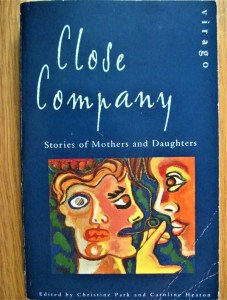 Back in 2021, I read 14 of these 25 stories (reviewed here) and set the book aside. At that time I noted the repeated theme of women’s expectations of their daughters, and that was true of the remainder as well. The editors quote Simone de Beauvoir in the introduction, “the daughter is for the mother at once her double and another person.” So in Emily Prager’s “A Visit from the Footbinder,” Lady Guo Guo subjects her spirited daughter to the same painful procedure she underwent as a child. The cultural detail was overpowering in this one, like the author felt she had to prove she’d done her research on China. The father–daughter relationship struck me more in Judith Chernaik’s Jewish Brooklyn-set “Honor Thy Father and Thy Mother.”
From this batch, two stood out the most: in “Children’s Liberation” by Jan Clausen, Lisa rebels against her lesbian mother’s bohemian lifestyle by idolizing heterosexual love stories; and in Zhang Jie’s “Love Must Not Be Forgotten,” a daughter comes to understand her mother by reading her diary about her doomed romance. My overall favourites, though, were still the stories by Jane Gardam, Janet Frame, Alice Walker and Charlotte Perkins Gilman. (Free mall bookshop) 
Small, Burning Things by Cathy Ulrich (2023)
 Ulrich’s second collection contains 50 flash fiction pieces, most of which were first published in literary magazines. She often uses the first-person plural and especially the second person; both “we” and “you” are effective ways of implicating the reader in the action. Her work is on a speculative spectrum ranging from magic realism to horror. Some of the situations are simply bizarre – teenagers fall from the sky like rain; a woman falls in love with a giraffe; the mad scientist next door replaces a girl’s body parts with robotic ones – while others are close enough to the real world to be terrifying. The dialogue is all in italics. Some images recur later in the collection: metamorphoses, spontaneous combustion. Adolescent girls and animals are omnipresent. At a certain point this started to feel repetitive and overlong, but in general I appreciated the inventiveness.
Published on 2 July by Okay Donkey Press. With thanks to publicist Lori Hettler for the free e-copy for review.
 I also read the first two stories in The Best Short Stories 2023: The O. Henry Prize Winners, edited by Lauren Groff. If these selections by Ling Ma and Catherine Lacey are anything to go by, Groff’s taste is for gently magical stories where hints of the absurd or explained enter into everyday life. Ma’s “Office Hours” has academics passing through closet doors into a dream space; the title of Lacey’s “Man Mountain” is literal. I’ll try to remember to occasionally open the book on my e-reader to get through the rest.
Novellas in November Possibility Piles (#NovNov23)
It’s less than a month now until Novellas in November (#NovNov23) begins, so Cathy and I are getting excited and making plans. I gathered up all of my potential reads of under 200 pages for a photo shoot, in rough categories as follows:
Library Haul
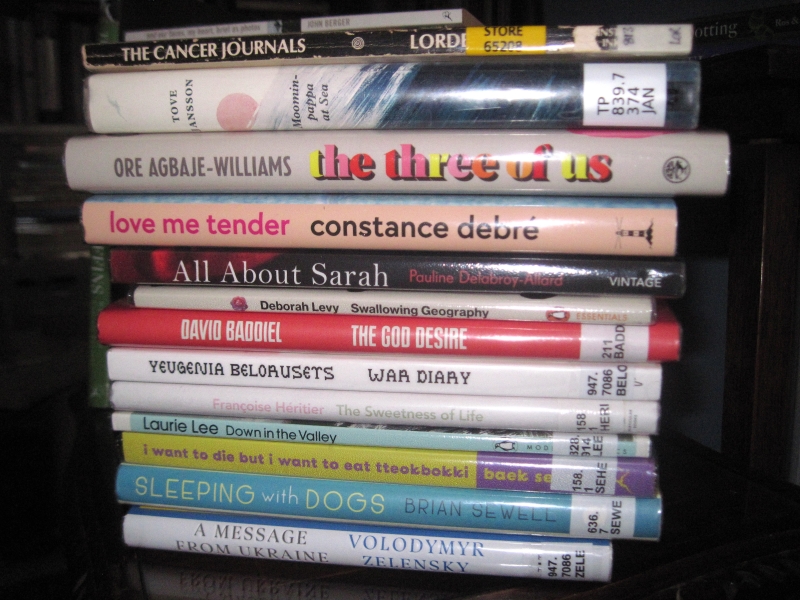
Short Classics (pre-1980)
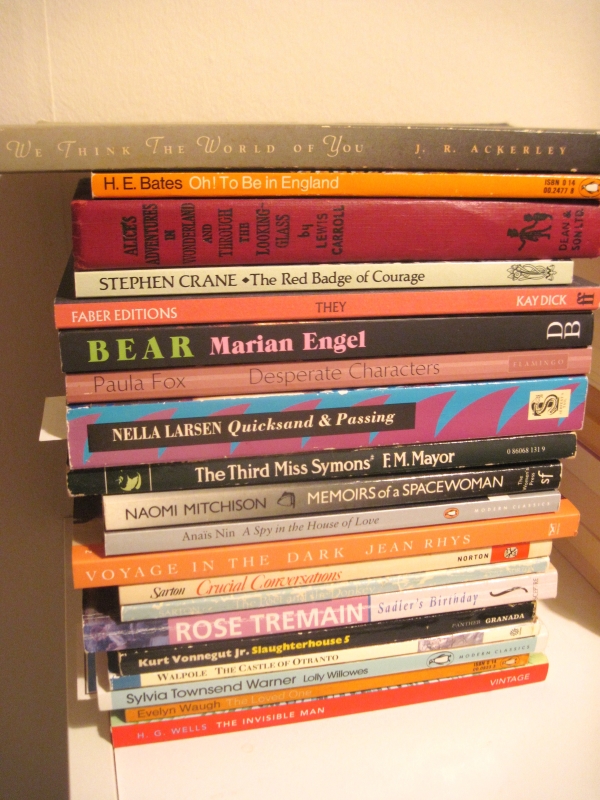
Novellas in Translation
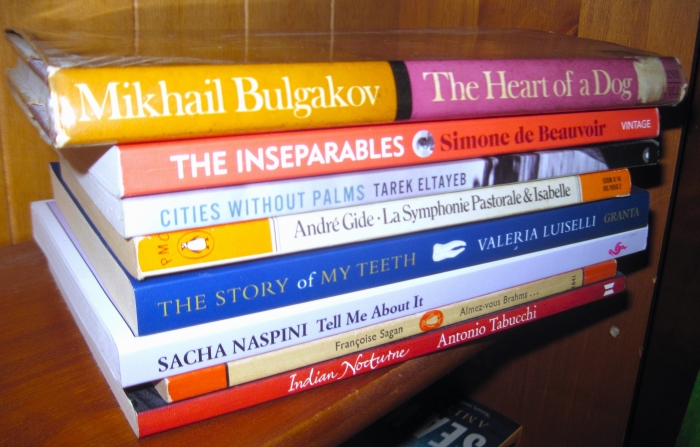
Short Nonfiction
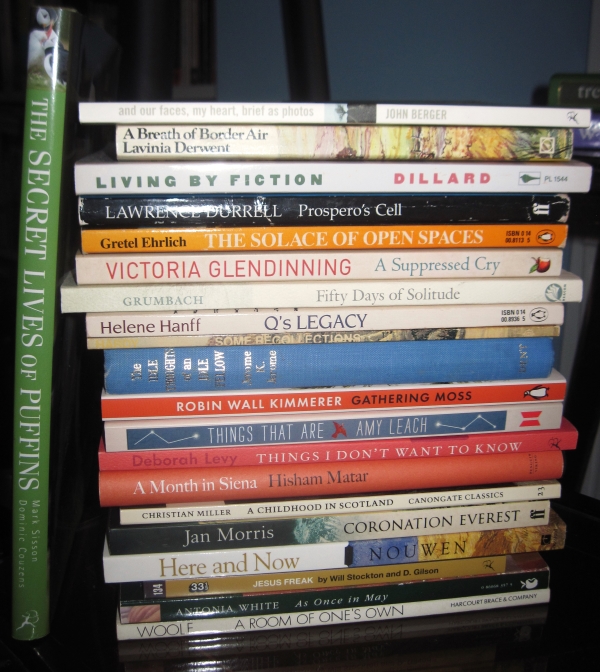
Contemporary Novellas

I’m still awaiting various library holds, including Western Lane by Chetna Maroo, one of our buddy reads for the month; and Ferdinand: The Man with the Kind Heart by Irmgard Keun, which would do double duty for German Literature Month.
I read 29 novellas in November 2021 and 24 in November 2022. I wonder how many I’ll manage this year.
Spy any favourites or a particularly appealing title in my piles? Give me a recommendation for what I should be sure to try to get to!

Have any novellas lined up to read next month?
September Releases by Chloe Lane, Ben Lerner, Navied Mahdavian & More
September and October are bounteous months in the publishing world. I’ll have a bunch of books to plug in both, mostly because I’ve upped my reviewing quota for Shelf Awareness. There’s real variety here, from contemporary novellas and heavily autobiographical poetry to nature essays and a graphic memoir.
Arms & Legs by Chloe Lane
 I reviewed Lane’s debut novel, The Swimmers, a black comedy about a family preparing for an assisted suicide, this time last year. It seems there’s an autobiographical setup to the author’s follow-up, which focuses on a couple from New Zealand now living in Florida with their young son. Narrator Georgie teaches writing at a local college and is having an affair with Jason, an Alabama-accented librarian she met through taking Finn to the Music & Movement class. She joins in a volunteer-led controlled burn in the forest, and curiosity quickly turns to horror when she discovers the decaying body of a missing student.
There’s a strong physicality to this short novel: fire, bodies and Florida’s dangerous fauna (“To choose to live in a place surrounded by these creatures, these threats, it made me feel like I was living a bold life”). Georgie has to decide whether setting fire to her marriage with Dan is what she really wants. A Barry Hannah short story she reads describes adultery as just a matter of arms and legs, a phrase that’s repeated several times.
Georgie is cynical and detached from her self-destructive choices, coming out with incisive one-liners (“My life isn’t a Muriel Spark novel, there’s no way to flash forward and find out if I make it out of the housefire alive” and “He rested the spade on his shoulder as if he were a Viking taking a drinks break in the middle of a battle”). Lane burrows into instinct and motivation, also giving a glimpse of the challenges of new motherhood. Apart from a wicked dinner party scene, though, the book as a whole was underwhelming: the body holds no mystery, and adultery is an old, old story.
With thanks to Gallic Books for the proof copy for review.
The Lights by Ben Lerner
 I’d read fiction and nonfiction from Lerner but had no idea of what to expect from his poetry. Almost every other poem is a prose piece, many of these being absurdist monologues that move via word association between topics seemingly chosen at random: psychoanalysis, birdsong, his brother’s colorblindness; proverbs, the Holocaust; art conservation, his partner’s upcoming C-section, an IRS Schedule C tax form, and so on.
The vocabulary and pronouncements can be a little pretentious. The conversational nature and randomness of the subjects contribute to the same autofiction feel you get from his novels. For instance, he probes parenting styles: his parents’ dilemma between understanding his fears and encouraging him in drama and sport; then his daughters’ playful adoption of his childhood nickname of Benner for him.
A few highlights: the enjambment in “Index of Themes”; the commentary on pandemic strictures and contrast between ancient poetry and modern technology in “The Stone.” I wouldn’t seek out more poetry by Lerner, but this was interesting to try. (Read via Edelweiss)
Sample lines:
“When you die in the patent office / there’s a pun on expiration”
“the goal is to be on both sides of the poem, / shuttling between the you and I. … Form / is always the answer to the riddle it poses”
“It’s raining now / it isn’t, or it’s raining in the near / future perfect when the poem is finished / or continuous, will have been completed”
This Country: Searching for Home in (Very) Rural America by Navied Mahdavian
 Mahdavian has also published comics in the New Yorker. His debut graphic novel is a memoir of the three years (2016–19) he and his wife lived in remote Idaho. Of Iranian heritage, the author had lived in Miami and then the Bay Area, so was pretty unprepared for living off-grid. His wife, Emelie (who is white), is a documentary filmmaker. They had a box house brought in on a trailer. After Trump’s surprise win, it was a challenging time to be a Brown man in the rural USA. “You’re not a Muslim, are you?” was the kind of question he got on their trips into town. Neighbors were outwardly friendly – bringing them firewood and elk kebabs, helping when their car wouldn’t start or they ran off the road in icy conditions, teaching them the local bald eagles’ habits – yet thought nothing of making racist and homophobic slurs.
I appreciated the self-deprecating depictions of learning DIY from YouTube videos and feeling like a wimp in comparison to his new friends who hunt and have gun collections – one funny spread has him imagining himself as a baby in a onesie sitting across from a manly neighbor. “I am shedding my city madness,” Mahdavian boasts as they plant an abundant garden and start learning about trees and birds. The references to Persian myth and melodrama are intriguing, though sometimes seem à propos of nothing, as do the asides on science and nature. I preferred when the focus was on the couple’s struggles with infertility and reopening the town movie theater – a flop because people only want John Wayne flicks.
This was enjoyable reading, but the simple black-and-white style is unlikely to draw in readers new to graphic storytelling, and I wondered if the overall premise – ‘we expected to find closed-minded racists and we did’ – was enough to hang a memoir on. (Read via Edelweiss)
Reviewed for Shelf Awareness:
(Links to full text)
The Wren, The Wren by Anne Enright
 Enright’s astute eighth novel traces the family legacies of talent and trauma through the generations descended from a famous Irish poet. Cycles of abandonment and abuse characterize the McDaraghs. Enright convincingly pinpoints the narcissism and codependency behind their love-hate relationships. (It was an honor to also interview Anne Enright. You can see our Q&A here.)
When My Ghost Sings by Tara Sidhoo Fraser
 This lyrical debut memoir is an experimental, literary recounting of the experience of undergoing a stroke and relearning daily skills while supporting a gender-transitioning partner. Fraser splits herself into two: the “I” moving through life, and “Ghost,” her memory repository. But “I can’t rely only on Ghost’s mental postcards,” Fraser thinks, and sets out to retrieve evidence of who she was and is.
The Vaster Wilds by Lauren Groff
 (Already featured in my Best of 2023 so far post.) Groff’s fifth novel combines visceral detail and magisterial sweep as it chronicles a runaway Jamestown servant’s struggle to endure the winter of 1610. Flashbacks to traumatic events seep into her mind as she copes with the harsh reality of life in the wilderness. The style is archaic and postmodern all at once. Evocative and affecting – and as brutal as anything Cormac McCarthy wrote. A potent, timely fable as much as a historical novel.
Zoo World: Essays by Mary Quade
 A collection of 15 thoughtful nature/travel essays that explore the interconnectedness of life and conservation strategies, and exemplify compassion for people and, particularly, animals. The book makes a round-trip journey, beginning at Quade’s Ohio farm and venturing further afield in the Americas and to Southeast Asia before returning home.
The Goodbye World Poem by Brian Turner
 The lovely laments in Brian Turner’s fourth collection (a sequel to The Wild Delight of Wild Things) dwell in the aftermath of the loss of his wife and others, and cultivate compensatory appreciation for the natural world. Turner’s poetry is gilded with alliteration and maritime metaphors The long title piece, which closes the collection, repeats many phrases from earlier poems—a pleasing way of drawing the book’s themes together. (My review of the third volume in this loose trilogy is forthcoming.)
And a bonus review book, relevant for its title:
September and the Night by Maica Rafecas
[Translated from the Catalan by Megan Berkobien and María Cristina Hall]
 A new Logistics Centre is to cut through Anaïs’s family vineyards as part of a compulsory land purchase. While her father, Magí, and brother, Jan, are resigned to the loss, this single mother decides to resist, tying herself to a stone shed on the premises that will be right in the path of the bulldozers. This causes others to question her mental health, with social worker Elisa tasked with investigating the case. Key evidence of her irrational behaviour turns out to have perfectly good explanations.
Certain chapters alternate Jan’s and Anaïs’s perspectives, recreate her confusion in a psychiatric hospital, or have every sentence beginning with “There” or “And” – effective anaphora. Although I didn’t think Jan’s several romantic options added to the plot, this debut novella from a Spanish author was a pleasant surprise. It’s based on a true story, though takes place in fictional locations, and bears a gentle message of cultural preservation.
With thanks to Fum d’Estampa Press for the free copy for review.
Short Stories in September, Part III: Linked Collections by Jonathan Escoffery & Soraya Palmer
These two debut linked short story collections had enough in common to get a mention in yesterday’s Book Serendipity post, including a 2023 publication date, a central sibling pair, Jamaican heritage, and memories of a devastating hurricane.
If I Survive You by Jonathan Escoffery
A starred Kirkus review first put this on my radar, and I requested a copy back in February. Though I enjoyed the first two stories, I then set the book aside. Its longlisting for this year’s Booker Prize reminded me to pick it back up and it’s now one of the six on the shortlist.
Five of eight stories are filtered through the consciousness of Trelawny, the younger son of Topper and Sanya, who immigrated to Miami in the late 1970s to escape unrest in Kingston, Jamaica. Older brother Delano is the golden boy, yet in a post-recession landscape both sons struggle to get by. After their parents’ split, the family home seems like a totem of security.
An accident leads Delano to give up his tree service business and pursue reggae music professionally. Trees play a pivotal role: when Topper humiliates him at a party by calling him “soft” and “defective,” Trelawny attacks his father’s beloved ackee tree with an axe. After Topper kicks him out, Trelawny lives in his car, accepting a succession of strange and sordid gigs (the stuff of “Odd Jobs” and the title story; “in Miami … you’re as likely to wind up getting your organs harvested as you are to make a profit”) before settling on teaching.

Three stories are in the always engaging second person (one of those inhabiting Topper’s perspective), three are narrated in the first person by Trelawny, and two are in the third person – the one about Delano and another about their cousin Cukie (“Splashdown”). Family legacy, particularly from fathers, is a major theme. “I felt sick with hatred,” Trelawny says. “For her [racist] father, yes, but for all fathers, for their propensity for passing down the worst of themselves.”
Trelawny is an entertaining POV character, jaded but quick-witted as he navigates microaggressions. People are confused about whether he’s African American or Latino. “In Flux,” the opening story and probably the strongest, has him coming to terms with what it means to be Black in America while living in Florida or at college in the Midwest, prompted by a question he frequently has to field: “What are you?” My other favourite story was “Independent Living,” in which he’s an administrator for an oversubscribed senior housing block and has to become as wily as his residents.
Escoffery creates a strong sense of place and character. I suspect there’s a lot that’s autobiographical here, as is common in first books. His ambivalence about sites that hold personal significance is palpable. Ideally, a linked collection will be composed of confident stand-alone stories that together are more than the sum of their parts. I didn’t really feel that about these. While the voice is promising and several stories are highlights, the whole didn’t set me on fire. (And I’d be astonished if it won the Booker. That’ll go to a guy named Paul.) Maybe Escoffery has a great novel brewing, though.
A favourite passage:
“On the day you are scheduled to begin the sixth grade, a hurricane named Andrew pops your house’s roof open, peeling it back like the lid of a Campbell’s soup can, pouring a fraction of the Atlantic into your bedroom, living room—everywhere—bloating carpet, drywall, and fibreboard with sopping sea salt corrosion. It disinters the kidney-colored fibreglass from the walls and ceiling, splaying the house’s entrails on the lawn. The storm chops your neighbor’s house to rubble, parks a tugboat at the far end of your street.”
With thanks to 4th Estate for the free copy for review.
Buy from Bookshop [affiliate link].
The Human Origins of Beatrice Porter & Other Essential Ghosts by Soraya Palmer
Sasha and Zora are steeped in Caribbean folklore absorbed from their parents. Nigel, from Jamaica, tells them about “Rolling Calf,” the vengeful ghost of a butcher paying penance for all the animals he slaughtered; Trinidadian Beatrice reminds them that the hero of the Anansi stories is a woman. Like the trickster spider, these Brooklyn adolescents will have to live by their wits when their family disintegrates – Nigel leaves to marry a German woman and Beatrice returns to Trinidad when she’s diagnosed with metastatic skin cancer.
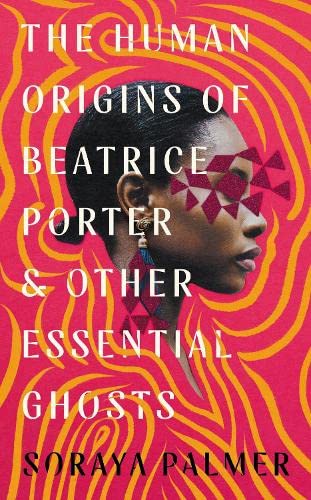 Apart from a few third-person segments about the parents, the chapters, set between 1997 and 2005, trade off first-person narration duties between Zora, a romantic would-be writer, and Sasha, the black sheep and substitute family storyteller-in-chief, who dates women and goes by Ashes when she starts wearing a binder. It’s interesting to discover examples of queer erasure in both parents’ past, connecting Beatrice more tightly to Sasha than it first appears – people always condemn most vehemently what they’re afraid of revealing in themselves.
I’ve had too much of the patois + legends/magic realism combo recently (e.g., When We Were Birds) and Palmer tries too hard to root her stories in time through 1990s pop culture references. She also exhibits a slightly annoying MFA stylistic showiness, whereas Escoffery’s work feels more natural. Still, this is more novel than stories (the opposite is true for If I Survive You) and thus the kind of book that would make a good wildcard selection on the Women’s Prize longlist. (Passed along by a book club friend) 
A favourite passage:
Zora: “It was like the end of a Jenga game, the way shit just fell apart. Our family foundation had been fading slowly for years, and yet when it all collapsed, it seemed to happen all at once.”
Buy from Bookshop [affiliate link].
Final reviews and a roundup coming up soon.
Currently reading: Hateship, Friendship, Courtship, Loveship, Marriage by Alice Munro; Close Company: Stories of Mothers and Daughters, ed. Christine Park; Small, Burning Things by Cathy Ulrich
 Bookish Beck = Rebecca Foster. American transplant to England. Freelance proofreader and book reviewer.
