Four for #WITMonth: Jansson, Lamarche, Lunde and Vogt
I’ve managed four novels for this year’s Women in Translation month: a nostalgic, bittersweet picture of island summers poised between childhood and old age; a brief, impressionistic account of domestic violence and rape; the third in a series looking at how climate change and species loss reverberate amid family situations; and a visceral meditation on women’s bodies and relationships. Two of these were review copies from the recently launched Héloïse Press, which “champions world-wide female talent”.

The Summer Book by Tove Jansson (1972; 1974)
[Translated from the Swedish by Thomas Teal]
It was just the same long summer, always, and everything lived and grew at its own pace.
 This was only the second time I’ve read one of Jansson’s books aimed at adults (as opposed to five from the Moomins series). Whereas A Winter Book didn’t stand out to me when I read it in 2012 – though I will try it again this winter, having acquired a free copy from a neighbour – this was a lovely read, so evocative of childhood and of languid summers free from obligation. For two months, Sophia and Grandmother go for mini adventures on their tiny Finnish island. Each chapter is almost like a stand-alone story in a linked collection. They make believe and welcome visitors and weather storms and poke their noses into a new neighbour’s unwanted construction.
Six-year-old Sophia, based on Jansson’s niece of the same name, is precocious and opinionated, liable to change her mind in an instant. In “The Cat,” one of my favourite stand-alone bits, she’s fed up with their half-feral pet who kills lots of birds and swaps him for a friend’s soppy lap cat, but then regrets it. She’s learning that logic and emotion sometimes contradict each other, which becomes clearer as she peppers Grandmother with questions about religion and superstition.
As is common to Jansson’s books, there’s a melancholy undercurrent here.
Everything was fine, and yet everything was overshadowed by a great sadness. It was August, and the weather was sometimes stormy and sometimes nice, but for Grandmother, no matter what happened, it was only time on top of time, since everything is vanity and a chasing after the wind.
Sophia’s mother died, and although her grandmother has the greater presence, Papa is also around, dealing with practicalities in the background. Death stalks around the edges, reminding Grandmother of her mortality through bouts of vertigo that have her grabbing for her heart medication. On just the second page we have this memento mori:
“When are you going to die?” the child asked.
And Grandmother answered, “Soon. But that is not the least concern of yours.”
And so it doesn’t feel like our concern either; the focus is on the now, on these beautiful little moments of connection across the generations – like in “Playing Venice,” when Grandmother stays up all night rebuilding Sophia’s model city that was washed away by the rain. (Public library)
The Memory of the Air by Caroline Lamarche (2014; 2022)
[Winner of an English PEN Award; translated from the French by Katherine Gregor]
 In a hypnotic monologue, a woman tells of her time with a violent partner (the man before, or “Manfore”) who thinks her reaction to him is disproportionate and all due to the fact that she has never processed being raped two decades ago. When she goes in for a routine breast scan, she shows the doctor her bruised arm, wanting there to be a definitive record of what she’s gone through. It’s a bracing echo of the moment she walked into a police station to report the sexual assault (and oh but the questions the male inspector asked her are horrible).
The novella opens with an image that returns in dreams but is almost more a future memory of what might have been: “I went down into a ravine and, at the bottom, found a dead woman. She was lying in a shroud, on a carpet of fallen leaves.” I read this in one sitting – er, yoga session – and it has stayed in my mind in intense flashes like that and the flounce of her red dress on the summer day that turned into a nightmare. At an intense 70 pages, this reminded me of Annie Ernaux’s concise autofiction (I’ve reviewed Happening and I Remain in Darkness). An introduction by Dr Dominique Carlini-Versini contextualizes the work by considering the treatment of rape in contemporary French women’s writing.
The Memory of the Air will be published on 26 September. With thanks to Héloïse Press for the proof copy for review.
The Last Wild Horses by Maja Lunde (2019; 2022)
[Translated from the Norwegian by Diane Oatley]
The third in Lunde’s “Climate Quartet,” with its recurring elements of migration, shortages and environmental collapse. Always, though, the overall theme is parent–child relationships and the love that might be the only thing that keeps us going in the face of unspeakable challenges. Here she returns to the tripartite structure of The History of Bees (much my favourite of the three): a historical strand, a near-contemporary one, and a dystopian future story line. The link between the three is Przewalski’s horses (aka takhi).
 In the early 1880s, Mikhail Alexandrovich Kovrov, assistant director of St. Petersburg Zoo, is brought the hide and skull of an ancient horse species assumed extinct. Although a timorous man who still lives with his mother, he becomes part of an expedition to Mongolia to bring back live specimens. In 1992, Karin, who has been obsessed with Przewalski’s horses since encountering them as a child in Nazi Germany, spearheads a mission to return the takhi to Mongolia and set up a breeding population. With her is her son Matthias, tentatively sober after years of drug abuse. In 2064 Norway, Eva and her daughter Isa are caretakers of a decaying wildlife park that houses a couple of wild horses. When a climate migrant comes to stay with them and the electricity goes off once and for all, they have to decide what comes next. This future story line engaged me the most.
I appreciated some aspects: queer and middle-aged romances, the return of a character from The End of the Ocean, the consideration across all three plots of what makes a good mother. However, the horses seemed neither here nor there. There are also many, many animal deaths. Perhaps an unsentimental attitude is necessary to reflect past and future values, and the apparent cruelty of natural processes, but it limits the book’s appeal to animal lovers. Maybe the tone fits the Norwegian prose, which the translator describes as lean.
The fourth book of the quartet, publishing in Norway next month, is called something like The Dream of a Tree; a focus on trees would be a draw for me. After the disappointment of Books 2 and 3, I’m unsure whether I want to bother with the final volume, but it makes sense to do so, if only to grasp Lunde’s full vision. (Public library)
What Concerns Us by Laura Vogt (2020; 2022)
[Translated from the German by Caroline Waight]
 Vogt’s Swiss-set second novel is about a tight-knit matriarchal family whose threads have started to unravel. For Rahel, motherhood has taken her away from her vocation as a singer. Boris stepped up when she was pregnant with another man’s baby and has been as much of a father to Rico as to Leni, the daughter they had together afterwards. But now Rahel’s postnatal depression is stopping her from bonding with the new baby, and she isn’t sure this quartet is going to make it in the long term.
Meanwhile, Rahel’s sister Fenna knows she’s pregnant but refuses a doctor’s care. When she comes to stay with Rahel, she confides that the encounter with her partner, Luc, that led to conception was odd, rough; maybe not consensual. And all this time, the women’s mother, Verena, has been undergoing treatment for breast cancer. All three characters appear to be matter-of-factly bisexual; Rahel and Fenna’s father has long been out of the picture, replaced in Verena’s affections by Inge.
As I was reading, I kept thinking of the declaration running through A Ghost in the Throat by Doireann Ní Ghríofa: “This is a female text.” Vogt’s vision is all breasts and eggs, genitals actual and metaphorical. I loved the use of food in the novel: growing up, the girls cherished “silly nights” when their mother prepared an egg feast and paired it with a feminist lecture on reproduction. Late on, there’s a wonderful scene when the three main characters gorge on preserved foodstuffs from the cellar and share their secrets. (Their language is so sexually frank; would anyone really talk to their mother and siblings in that way?!) As in the Lunde, the main question is what it means to be a mother, but negotiating their relationships with men stretches the bonds of this feminine trio. One for fans of Rachel Cusk and Sally Rooney.
With thanks to Héloïse Press for the proof copy for review.
What Lies Hidden: Secrets of the Sea House & Night Waking
When I read Kay’s review of Sarah Maine’s The House Between Tides, the book seemed so familiar I did a double take. A Scottish island in the Outer Hebrides … dual contemporary and historical story lines … the discovery of a skeleton. It sounded just like Night Waking by Sarah Moss (another Sarah M.!), which I was already planning on rereading on our trip to the Outer Hebrides. Kay then suggested a readalike that ended up being even more similar, Elisabeth Gifford’s The Sea House (U.S. title), one of whose plots was Victorian and the skeleton in which was a baby’s. I passed on the Maine but couldn’t resist finding a copy of the Gifford from the library so I could compare it with the Moss. Both: 
Secrets of the Sea House by Elisabeth Gifford (2013)
 Although nearly 130 years separate the two protagonists, they are linked by the specific setting – a manse on the island of Harris – and a belief that they are descended from selkies. In 1992, Ruth and her husband are converting the Sea House into a B&B and hoping to start a family. When they find the remains of a baby with skeletal deformities reminiscent of a mermaid under the floorboards, Ruth plunges into a search for the truth of what happened in their home. In 1860, Reverend Alexander Ferguson lived here and indulged his amateur naturalist curiosity about cetaceans and the dubious creatures announced as “mermaids” (often poor taxidermy crosses between a monkey and a fish, as in The Mermaid and Mrs. Hancock).
Ruth and Alexander trade off as narrators, but we get a more rounded view of mid-19th-century life through additional chapters voiced by the reverend’s feisty maid, Moira, a Gaelic speaker whose backstory reveals the cruelty of the Clearances – she won’t forgive the laird for what happened to her family. Gifford’s rendering of period prose wasn’t altogether convincing and there are some melodramatic moments: this could be categorized under romance, and I was surprised by the focus on Ruth’s traumatic upbringing in a children’s home after her mother’s death by drowning. Still, this was an absorbing novel and I actually learned a lot, including the currently accepted explanation for where selkie myths come from.
I also was relieved that Gifford uses real place names instead of disguising them (as Bella Pollen and Sarah Moss did). We passed through the tiny town of Scarista, where the manse is meant to be, on our drive. If I’d known ahead of time that it was a real place, I would have been sure to stop for a photo op (it must be this B&B!). We also stopped in Tarbert, a frequent point of reference, to visit the Harris Gin distillery. (Public library)
Night Waking by Sarah Moss (2011)
This was my first of Moss’s books and I have always felt guilty that I didn’t appreciate it more. I found the voice more enjoyable this time, but was still frustrated by a couple of things. Dr Anna Bennet is a harried mum of two and an Oxford research fellow trying to finish her book (on Romantic visions of childhood versus the reality of residential institutions – a further link to the Gifford) while spending a summer with her family on the remote island of Colsay, which is similar to St. Kilda. Her husband, Giles Cassingham, inherited the island but is also there to monitor the puffin numbers and track the effects of climate change. Anna finds a baby’s skeleton in the garden while trying to plant some fruit trees. From now on, she’ll snatch every spare moment (and trace of Internet connection) away from her sons Raph and Moth – and the builders and the police – to write her book and research what might have happened on Colsay.
 Each chapter opens with an epigraph from a classic work on childhood (e.g. by John Bowlby or Anna Freud). Anna also inserts excerpts from her manuscript in progress and fragments of texts she reads online. Adding to the epistolary setup is a series of letters dated 1878: May Moberley reports to her sister Allie and others on the conditions on Colsay, where she arrives to act as a nurse and address the island’s alarming infant mortality statistics. It took me the entire book to realize that Allie and May are the sisters from Moss’s 2014 novel Bodies of Light; I’m glad I didn’t remember, as there was a shock awaiting me.
According to Goodreads, I first read this over just four days in early 2012. (This was back in the days where I read only one book at a time, or at most two, one fiction and one nonfiction.) I remember feeling like I should have enjoyed its combination of topics – puffin fieldwork, a small island, historical research – much more, but I was irked by the constant intrusions of the precocious children. That is, of course, the point: they interrupt Anna’s life, sleep and research, and she longs for a ‘room of her own’ where she can be a person of intellect again instead of wiping bottoms and assembling sometimes disgusting meals. She loves her children, but hates the daily drudgery of motherhood. Thankfully, there’s hope at the end that she’ll get what she desires.
I had completely forgotten the subplot about the first family they rent out the new holiday cottage to (yet another tie-in to the Gifford, in which they’re preparing to open a guest house): a hot mess of alcoholic mother, workaholic father, and university-age daughter with an eating disorder. Zoe’s interactions with the boys, and Anna’s role as makeshift counsellor to her, are sweet, but honestly? I would have cut this story line entirely. Really, I longed for the novella length and precision of a later work like Ghost Wall. Still, I was happy to reread this, with Anna’s wry wit a particular highlight, and to discover for the first time (silly me!) that thread of connection with Bodies of Light / Signs for Lost Children. (Free from a neighbour)
Original rating: 
My rating now:
I enjoyed the Gifford enough to immediately request the library’s copy of one of her newer novels, The Lost Lights of St. Kilda, so my connection to the Western Isles can at least continue through my reading. I also found a pair of children’s novels plus a mystery novel set on St. Kilda, and I was sent an upcoming novel set on an island off the west coast of Scotland, so I’ll be on this Scotland reading kick for a while!
Adventures in Rereading: Madeleine L’Engle and Posy Simmonds
I’m not doing as well with my rereading goal this year as I did in 2020. So far I’ve gotten to The Republic of Love by Carol Shields and the two below (with another DNF). Considering that I completed 16 rereads last year, I’m looking seriously behind. I still have a bulging shelf of books I’d like to reread, but they never seem to make it onto my current reading stack…
A Wrinkle in Time by Madeleine L’Engle (1962)
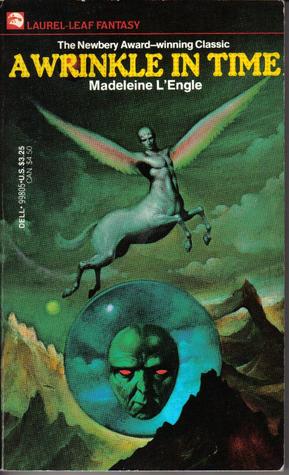 I probably picked this up at age seven or so as a natural follow-on from the Chronicles of Narnia – both are well-regarded children’s sci fi/fantasy from an author with a Christian worldview. In my memory I didn’t connect with L’Engle’s work particularly well, finding it vague and cerebral, if creative, compared to Lewis’s. I don’t think I ever went on to the multiple sequels. As an adult I’ve enjoyed L’Engle’s autobiographical and spiritual writing, especially the Crosswicks Journals, so I thought I’d give her best-known book another try.
On a proverbially dark and stormy night, Meg Murry and her precocious little brother Charles Wallace come down to the kitchen to join their mother for a snack. In blows Mrs. Whatsit with the promise of a way of rescuing their missing scientist father through a “tesseract,” or wrinkle in time. Mrs. Who and Mrs. Which, rounding out a trio of Macbeth-like witches, accompany the children and their friend Calvin on a perilous journey to face up to cosmic darkness in the form of a disembodied brain called IT that keeps their father hostage and tries to entrance Charles Wallace as well.
Interplanetary stories have never held a lot of interest for me. (As a child, I was always more drawn to talking-animal stuff.) Again I found the travels and settings hazy. It’s admirable of L’Engle to introduce kids to basic quantum physics, and famous quotations via Mrs. Who, but this all comes across as consciously intellectual rather than organic and compelling. Even the home and school talk feels dated. I most appreciated the thought of a normal – or even not very bright – child like Meg saving the day through bravery and love. This wasn’t for me, but I hope that for some kids, still, it will be pure magic.
Favorite lines:
“The only way to cope with something deadly serious is to try to treat it a little lightly.”
“we can’t take any credit for our talents. It’s how we use them that counts.”
Original rating (as remembered from childhood): 
My rating now: 
Tamara Drewe by Posy Simmonds (2007)
This must be one of the first graphic novels I ever read. Hearing that it was an adaptation of Thomas Hardy’s Far from the Madding Crowd, one of my favorite novels, was enough to attract me. During the years that I worked at King’s College London, I took full advantage of Lambeth Library’s extensive graphic novel collection and would pick up big piles of all sorts of books on my lunch breaks – I got a gentle ribbing from library staff nearly every time I showed up. Anyway, this is all backstory to me finding a severely underpriced secondhand copy (99p! the dear old ladies pricing things couldn’t have known what they had) in the Hay-on-Wye Oxfam shop in April 2017. It took me until earlier this year to reread it, though.
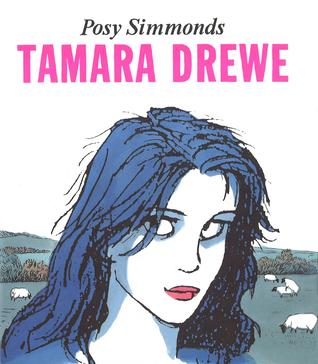 Simmonds recreates the central situation of FFTMC – an alluring young woman returns to her ancestral village and enraptures three very different men – but doesn’t stick slavishly to its plot. Her greatest innovation is in the narration. Set in and around a writers’ retreat, the novel is told in turns by Dr. Glen Larson, a (chubby, Bryson-esque) visiting American academic trying to get to grips with his novel; Beth Hardiman, who runs the retreat center and does all the admin for her philandering crime writer husband, Nicholas; and Casey Shaw, a lower-class teenager who, with her bold pal Jody, observes all the goings-on among the posh folk from the local bus shelter and later gets unexpectedly drawn in to their lives.
Tamara is a hotshot London journalist and, after a nose job, is irresistible to men. Andy Cobb, the Hardimans’ groundsman, runs a small organic food business and is a clear stand-in for Hardy’s Farmer Oak. He’s known Tamara nearly all their lives, and isn’t fussed about her new appearance and glitzy reputation. But she certainly turns Nicholas’s head, and also draws the attention of Ben, former drummer for a washed-up band. Tamara and Ben are a power couple in this sleepy village, and stir up jealousy. Ben is closest to Sergeant Troy, but he and Nicholas (who’s most like Boldwood) aren’t one-to-one equivalents. Casey and Jody fill the role of the servants and rustics, with chavs serving as the early 21st-century peasantry.
So Simmonds takes what she wants from Hardy, but adapts it as it suits her. There are a lot of words on the page compared to some graphic novels, so this would be a good halfway house for someone who’s new to comics for adults and still wants a good story to get the teeth into. At nearly 150 pages, there’s plenty of time for Simmonds to spin an involved, dramatic tale and give insight into her characters and their interactions. One ends up feeling, perhaps inevitably, more sympathy for the narrators than for the other characters, but all are well drawn. There’s a surprise ending, too. Back in 2010 I was probably more interested in getting a straight Hardy remake, so might have been disappointed when Simmonds strayed from the source material, but now I thoroughly enjoyed this for its own sake.
Original rating (2010?):
My rating now: 
And a DNF:
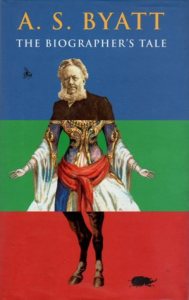 I’ve long considered A.S. Byatt a favorite author, and early last year my reread of one of her story collections was successful. But trying again with The Biographer’s Tale (2000) – which I remember reading in an airport as I traveled to or from Leeds, where I was doing a Master’s degree, to see my family for Christmas in 2005/6 – was a lost cause. I remembered an intricate, clever, witty take on the biographer’s art, but couldn’t have recited any details for you. I managed about the first 100 pages this time. Phineas G. sets out to write a biography of famous biographer Scholes Destry-Scholes, whose subjects included Francis Galton, Henrik Ibsen, and Carl Linnaeus. The novel quotes extensively from Destry-Scholes’s writing on these three, and his general notes on writing biography. I got lost somewhere in the documents. I think in my early twenties I was more impressed by virtuoso faux-scholarly writing like you often get in Byatt or Julian Barnes. Alas, it engages me less now.
Done any rereading lately?
Review Book Catch-Up: Bamforth, McGrath, Mertz
Today I have a book of medico-philosophical musings, a triptych of novels about the resonant moments of a Canadian childhood, and a varied collection of ekphrastic poems.
Scattered Limbs: A Medical Dreambook by Iain Bamforth (2020)
 A doctor based in Strasbourg, Iain Bamforth offers a commonplace book full of philosophical musings on medicine and wellness from the ancient world to today. All through December I would read just a few pages at a time as a palate cleanser between larger chunks of other books. Most of the entries are under three pages in length, with some one-sentence dictums interspersed. The point of reference is broadly European, with frequent allusions to English, French, and German literature (Charles Dickens, Marcel Proust, and Thomas Mann) and to Greek thinkers like Aristotle and Plato. The themes include memory, overtreatment, technology, and our modern wellness culture. If you’re equally interested in medicine and philosophy, this is a perfect bedside book for you; if you only gravitate towards one or the other, it’s possible that you could run low on patience for the high-brow rumination. My favourite piece was on “panicology,” and two stand-out lines are below.
“Prognostication is where writers and doctors resemble each other most.”
“A proper attitude to death can be a source of life. That is medicine’s only profundity.”
With thanks to Galileo Publishers for the free copy for review.
The Santa Rosa Trilogy by Wendy McGrath (2011–19)
I’m indulging in one last listen to our holiday music compilations as I write, before putting everything away until a hoped-for ‘Christmas in July’ with family and friends. Yesterday I devoured Broke City, the third novella in Wendy McGrath’s Santa Rosa Trilogy, in one sitting and treasured all the Christmas and pine tree references: they bind the book together but also connect it satisfyingly back to Book 1, Santa Rosa, which opened with Christine’s neighbour preparing a Christmas cake one summer. That annual ritual and its built-in waiting period take on new significance when the adult Christine’s life changes suddenly.
In this trio of linked narratives about Christine’s 1960s Edmonton childhood, totem objects and smells evoke memories that persist for decades: Pine-Sol, her parents’ cigarettes, the local meat-packing plant. Even at age seven, Christine is making synaesthetic links between colours and scents as she ponders language and imagines other lives. That her recollections – of a carnival, the neighbourhood grocery store, queasy road trips to her grandmother’s in Saskatchewan, a drive-in movie, and Christmas Eve with her father’s side of the family – so overlap with my late-1980s mental flipbook proves not that suburban Maryland and upstate New York (where I grew up and my mother’s home turf, respectively) are so similar to Alberta, but that this is the universal stuff of a later 20th-century North American childhood.


The other night, discussing The Light Years by Elizabeth Jane Howard, my book club noted how difficult it is to capture childhood in all its joy and distress. McGrath does so superbly, exploiting the dramatic irony between what Christine overhears and what she understands. Readers know her parents’ marriage is in trouble because she never sees them laughing or happy, and she hears her mother complain to her father about his drinking. We know the family is struggling because a man from the City delivers a box of Spam, standard issue to all those who are out of work over the winter. A simple mishearing (“clatteral,” “brain tuber”; thinking that an abattoir sounds “like a fancy ballroom”) can be a perfect example of the child perspective, too. Meanwhile, the pop culture references situate the story in the time period.
Towards the end of Broke City, young Christine declares, “I shall be unusual.” As we root for the girl to outrun her sadder memories and forge a good life, we hope that – like all of us – she’ll find a balance between the ordinary and the exceptional through self-knowledge. While Broke City was my favourite and could probably stand alone, it’s special to chart how moments turn into memories across the three books. I’d recommend the trilogy to readers of Tove Ditlevsen, Tessa Hadley, and Elizabeth Hay. I particularly loved the hybrid-poetry style of the Prologue to Santa Rosa (similar to what Bernardine Evaristo employs), so I would also be interested to try one of McGrath’s two poetry collections.
Some favourite passages:
“he walks at the same time everyday summer and winter
early morning when the day still makes promises” (Santa Rosa)
“Christine thought of herself as a child, with no idea of the world but all the ideas in the world. … Christine is the girl that used to live here, but the girl has disappeared. Her ghost is here, existing parallel to the person she is now. How did this happen? There must have been something she wasn’t paying attention to, something she didn’t see coming.” (Broke City)
With thanks to Wendy McGrath and Edmonton’s NeWest Press for the e-copies for review. I learned about the books from Marcie; see her appreciation of McGrath’s work at Buried in Print.
Color and Line by Carole Mertz (2021)
 “Ekphrastic” was a new vocabulary word for me – or, if I’d heard it before, I needed a reminder. It refers to poetry written to describe or respond to artworks. Many of Carole Mertz’s poems, especially in the first section, attest to her love of the visual arts. This is the Ohio church organist’s first full-length collection after the 2019 chapbook Toward a Peeping Sunrise and extensive publication in literary magazines. She was inspired by art ranging in date from 1555 to 2019. “Come Share a Glass with Me,” for instance, is a prose poem that imagines the story behind a Van Gogh. I loved the line “The ewer sits expectant” in a short poem capturing The Staircase by Xavier Mellery.
One could look up all of the artworks discussed, but the descriptions here are so richly detailed that I often didn’t feel I needed to. Two paintings in a row depict sisters. A poem about Salome and the beheading of John the Baptist draws on the Bible story, but also on its many portrayals through art history. Other topics include concern for the Earth and beloved works of literature. I particularly enjoyed “The Word in Joseph’s Hand,” a Christmas hymn that can be sung to the tune of “Lo, How a Rose E’er Blooming,” and a haiku about a cardinal, “a flash of bright red / … in the garden”. Below is my favourite of the poems; it incorporates the titles of 14 books, nine of them by Anne Tyler. See if you can spot them all!
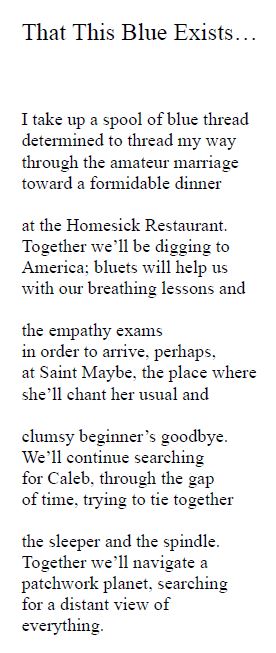
Color and Line was released by Kelsay Books on the 2nd. My thanks to Carole Mertz for the e-copy for review.
Would you be interested in reading one or more of these?
And, just for fun, put a description of or link to your favourite Bernie-in-mittens meme in the comments.
My Year in Nonfiction (Thus Far)
If your household is anything like mine, stressful days and nights of lost sleep are ceding to relief after the U.S. election result was finally announced. We celebrated with whoopie pies (a Pennsylvania specialty) and Prosecco.


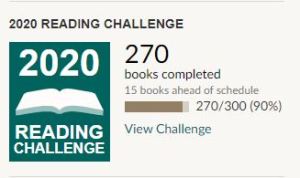
And look: I happened to pass 270 yesterday as well!
I’d taken part in the Six Degrees of Separation meme every month since February, but this time I had no inspiration. I was going to start with these two apple covers…
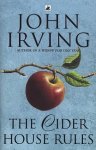
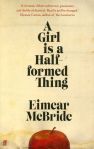
…but that’s as far as I got. Never mind! I’ll be back next month, when we all start with the YA classic Are You There God? It’s Me, Margaret by Judy Blume.
Instead, I’m catching up with this past week’s Nonfiction November prompt: Your Year in Nonfiction. It was hosted by Leann of Shelf Aware.

 What topics have been prominent in your year’s nonfiction reading?
I’ve read a lot of nature and popular science, probably more than in an average year. Greenery by Tim Dee has been an overall highlight. I managed to read 12 books from the Wainwright Prize longlists, and I’m currently reading four books of nature-themed essays or journals. Thoughtful as well as consoling.

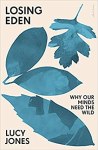
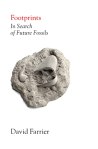
The popular science material has focused on environmentalism and current events, which has inevitably involved politics and long-term planning (Annabel called this category “The State We’re In”): e.g. Losing Eden, Footprints, The Good Ancestor, and Notes from an Apocalypse.


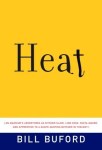 Thanks to the food and drink theme I set for my 20 Books of Summer, I read a number of foodie memoirs. The best one was Heat by Bill Buford, but I also really enjoyed Kitchen Confidential by Anthony Bourdain and My Berlin Kitchen by Luisa Weiss.
 Since the Wellcome Book Prize didn’t run this year, I’ve read fewer health-related books, although I did specially read Not the Wellcome Prize shortlistee The Remarkable Life of the Skin by Monty Lyman, and Dear Life by Rachel Clarke, a palliative care doctor, has been one of my overall best nonfiction reads of the year.
Not very well represented in my nonfiction reading this year were biographies and travel books. I can struggle with the depth and dryness of some books from these genres, but I’d like to find some readable options to get stuck into next year.
What are your favorite nonfiction books you’ve read so far?
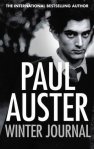
I’m a huge memoir junkie. Some of the most memorable ones this year have been Winter Journal by Paul Auster, Traveling Mercies by Anne Lamott (a reread), and A Three Dog Life by Abigail Thomas (another reread).


An incidental theme in the life writing I’ve read in 2020 is childhood (Childhood by Tove Ditlevsen, Cider with Rosie by Laurie Lee, Oleander, Jacaranda by Penelope Lively, Period Piece by Gwen Raverat); I hope to continue reading around this topic next year.
What books have you recommended the most to others?
I’ve mentioned the Clarke (above) in any discussions of books about illness and death.
I recommended the memoir Are You Somebody? by Nuala O’Faolain more than once following Reading Ireland Month.
Entangled Life, Merlin Sheldrake’s enthusiastic book about fungi, is one I can imagine suggesting to readers who don’t often pick up nonfiction.
And Signs of Life by Dr. Stephen Fabes has generated a fair bit of interest among my Goodreads friends.


Besides Annabel, Kate and Liz also wrote about their 2020 nonfiction reading habits.
How has your nonfiction reading been going this year?
Most Anticipated Releases of the Second Half of 2020
Although over 100 books from the second half of the year are already on my radar, I’ve limited myself here to the 15 July to November releases that I’m most excited about.
The modest number is a cheat in that I’ve already read seven books from this period in advance (plus I’m currently reading another three), and I haven’t listed any that I already have access to via proofs, promised finished copies, NetGalley, Edelweiss, or library preorders. Some of these that I intend to read are A Traveler at the Gates of Wisdom by John Boyne, D (A Tale of Two Worlds): A Modern-Day Dickensian Fable by Michel Faber, Bringing Back the Beaver by Derek Gow, Just Like You by Nick Hornby, How to Fly (poems) by Barbara Kingsolver, Vesper Flights by Helen Macdonald, Utopia Avenue by David Mitchell, Summerwater by Sarah Moss, Lake Life by David James Poissant, Dear Reader by Cathy Rentzenbrink, Jack by Marilynne Robinson and The Wild Silence by Raynor Winn.

(Meanwhile, two of my overall most anticipated 2020 releases have been pushed back to 2021, at least in the UK: Transcendent Kingdom by Yaa Gyasi and The Anthill by Julianne Pachico.)


The following are in release date order, within sections by genre; the quoted descriptions are from the publisher blurbs on Goodreads. For most I’ve added a note on why I want to read it. Nonfiction dominates: this seems to be the way of 2020 for me. Lots of flora and fauna on the covers and in the themes. Look out for antlers x 2.
Fiction

I love the U.S. cover.
Artifact by Arlene Heyman [July 9, Bloomsbury] “A sweeping debut novel about love, sex, motherhood, and ambition that follows a gifted and subversive scientist’s struggle to reach beyond cultural constraints for the life she wants. … Artifact is an intimate and propulsive portrait of a whole woman.” Susan of A life in books put me onto this one; here’s her review.

I love the U.S. cover.
Sisters by Daisy Johnson [Aug. 13, Jonathan Cape / Aug. 25, Riverhead] “After a serious case of school bullying becomes too much to bear, sisters July and September move across the country with their mother to a long-abandoned family home. … With its roots in psychological horror, Sisters is a taut, powerful and deeply moving account of sibling love.” I loved Johnson’s Booker-shortlisted debut, Everything Under.
 Piranesi by Susanna Clarke [Sept. 15, Bloomsbury] “Piranesi’s house is no ordinary building: its rooms are infinite, its corridors endless. … For readers of Neil Gaiman’s The Ocean at the End of the Lane … Piranesi introduces an astonishing new world.” It feels like forever since we had a book from Clarke. I remember devouring Jonathan Strange & Mr Norrell during a boating holiday on the Norfolk Broads in 2006. But whew: this one is only 272 pages.
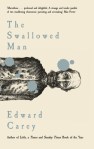 The Swallowed Man by Edward Carey [Nov. 5, Gallic / Oct. 27, Riverhead] “A beautiful and haunting imagining of the years Geppetto spends within the belly of a sea beast. Drawing upon the Pinocchio story while creating something entirely his own, Carey tells an unforgettable tale of fatherly love and loss, pride and regret, and of the sustaining power of art and imagination.” His Little was one of my favorite novels of 2018.
Poetry
 Dearly: New Poems by Margaret Atwood [Nov. 10, Chatto & Windus / Ecco / McClelland & Stewart] “By turns moving, playful and wise, the poems … are about absences and endings, ageing and retrospection, but also about gifts and renewals. They explore bodies and minds in transition … Werewolves, sirens and dreams make their appearance, as do various forms of animal life and fragments of our damaged environment.”
Nonfiction
 Bright Precious Thing: A Memoir by Gail Caldwell [July 7, Random House] “In a voice as candid as it is evocative, Gail Caldwell traces a path from her west Texas girlhood through her emergence as a young daredevil, then as a feminist.” I’ve enjoyed two of Caldwell’s previous books, especially Let’s Take the Long Way Home. Also, I’ve been reading a lot of childhood memoirs and I like comparing them to see how authors capture that time of life.
 The Fragments of My Father by Sam Mills [July 9, Fourth Estate] A memoir of being the primary caregiver for her father, who had schizophrenia; with references to F. Scott Fitzgerald and Leonard Woolf, who also found themselves caring for people struggling with mental illness. “A powerful and poignant memoir about parents and children, freedom and responsibility, madness and creativity and what it means to be a carer.”
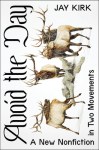 Avoid the Day: A New Nonfiction in Two Movements by Jay Kirk [July 28, Harper Perennial] Transylvania, Béla Bartók’s folk songs, an eco-tourist cruise in the Arctic … “Avoid the Day is part detective story, part memoir, and part meditation on the meaning of life—all told with a dark pulse of existential horror.” It was Helen Macdonald’s testimonial that drew me to this: it “truly seems to me to push nonfiction memoir as far as it can go.”
 World of Wonders: In Praise of Fireflies, Whale Sharks, and Other Astonishments by Aimee Nezhukumatathil [Aug. 3, Milkweed Editions] “From beloved, award-winning poet Aimee Nezhukumatathil comes a debut work of nonfiction—a collection of essays about the natural world, and the way its inhabitants can teach, support, and inspire us. … Even in the strange and the unlovely, Nezhukumatathil finds beauty and kinship.” Who could resist that title or cover?
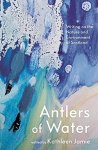 Antlers of Water: Writing on the Nature and Environment of Scotland, edited by Kathleen Jamie [Aug. 6, Canongate] Contributors include Amy Liptrot, musician Karine Polwart and Malachy Tallack. “Featuring prose, poetry and photography, this inspiring collection takes us from walking to wild swimming, from red deer to pigeons and wasps, from remote islands to back gardens … writing which is by turns celebratory, radical and political.”
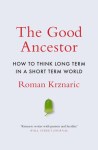 The Good Ancestor: How to Think Long Term in a Short-Term World by Roman Krznaric [Aug. 27, W.H. Allen] “Drawing on radical solutions from around the world, Krznaric celebrates the innovators who are reinventing democracy, culture and economics so that we all have the chance to become good ancestors and create a better tomorrow.” I’ve been reading a fair bit around this topic. I got a sneak preview of this one from Krznaric’s Hay Festival talk.
 Eat the Buddha: The Story of Modern Tibet through the People of One Town by Barbara Demick [Sept. 3, Granta / July 28, Random House] “Illuminating a culture that has long been romanticized by Westerners as deeply spiritual and peaceful, Demick reveals what it is really like to be a Tibetan in the twenty-first century, trying to preserve one’s culture, faith, and language.” I read her book on North Korea and found it eye-opening. I’ve read a few books about Tibet over the years; it is fascinating.
 Entangled Life: How Fungi Make Our Worlds, Change Our Minds and Shape Our Futures by Merlin Sheldrake [Sept. 3, Bodley Head / May 12, Random House] “Entangled Life is a mind-altering journey into this hidden kingdom of life, and shows that fungi are key to understanding the planet on which we live, and the ways we think, feel and behave.” I like spotting fungi. Yes, yes, the title and cover are amazing, but also the author’s name!! – how could you not want to read this?
 Between Light and Storm: How We Live with Other Species by Esther Woolfson [Sept. 3, Granta] “Woolfson considers prehistoric human‒animal interaction and traces the millennia-long evolution of conceptions of the soul and conscience in relation to the animal kingdom, and the consequences of our belief in human superiority.” I’ve read two previous nature books by Woolfson and have done some recent reading around deep time concepts. This is sure to be a thoughtful and nuanced take.
 The Stubborn Light of Things: A Nature Diary by Melissa Harrison [Nov. 5, Faber & Faber] “Moving from scrappy city verges to ancient, rural Suffolk, where Harrison eventually relocates, this diary—compiled from her beloved “Nature Notebook” column in The Times—maps her joyful engagement with the natural world and demonstrates how we must first learn to see, and then act to preserve, the beauty we have on our doorsteps.” I love seeing her nature finds on Twitter. I think her writing will suit this format.
Which of these do you want to read, too?
What other upcoming 2020 titles are you looking forward to?
Classic of the Month: Cider with Rosie by Laurie Lee (1959)
 (20 Books of Summer #2) Lee’s quaint family memoir is set in the years immediately after World War I. He was born in 1914 and his childhood unfolded in Stroud, Gloucestershire and nearby village Slad. I started reading Cider with Rosie in April 2019 when we stopped in Stroud for a night on the way back from a holiday in Devon. I got through the first 100 pages quickly, with the voice reminding me slightly of Gerald Durrell’s in his autobiographical trilogy, but then set the book aside for over a year before picking it back up for this summer’s food- and drink-themed reading. Taking such a long break wasn’t a major problem because the book’s vignettes are thematically arranged, so there was no plot as such to lose track of.
Lee was part of his father’s second brood, born out of the widower’s remarriage to his housekeeper. His father left his new family after just a few years, and for the next three decades Lee’s mother dutifully waited for a return that never came. Lee was a sickly child, doted on by his older half-sisters. He was surrounded by a large wider family of brothers, eccentric war-veteran uncles and duelling elderly neighbors who lived one upstairs and one downstairs in a sort of granny annex attached to their untidy, rambling 17th-century stone house. The book depicts a village on the cusp of modernization: everything was still done with wagons and horses, but that was soon to change.
It’s a nostalgic, evocative look at a country childhood. Lee captures a bygone era, portraying himself as similarly on the precipice of losing innocence. The title comes from a late moment when Rosie Burdock tempts the adolescent Lee with alcoholic cider and kisses underneath a hay wagon. This penultimate chapter on the lust of the flesh takes an alarming turn as he describes the village boys’ planned gang rape of a religious 16-year-old, Lizzy. Lee was among the boys who followed her into the woods one Sunday after church. Luckily, they lost their nerve and nothing happened, but Lee’s blasé recounting felt out of keeping and somehow more dated than the rest of his material. It left a sourness I couldn’t get over.
Quintessentially English but not as purely delightful as I expected, this was still a book I valued for its characterization and its description of golden moments in memory.
Some favorite passages:
“Summer, June summer, with the green back on earth and the whole world unlocked and seething – like winter, it came suddenly and one knew it in bed, almost before waking up; with cuckoos and pigeons hollowing the woods since daylight and the chipping of tits in the pear-blossom.”
“Myself, my family, my generation, were born in a world of silence; a world of hard work and necessary patience, of backs bent to the ground, hands massaging the crops, of waiting on weather and growth; of villages like ships in the empty landscapes and the long walking distances between them; … [The horse’s] eight miles an hour was the limit of our movements, as it had been since the days of the Romans. That eight miles an hour was life and death, the size of our world, our prison.”
Source: Free bookshop
My rating: 
Ten more childhood memoirs:
A few I’ve written about here and prefer:
- Boy by Roald Dahl
- To the Is-land by Janet Frame
- Don’t Let’s Go to the Dogs Tonight by Alexandra Fuller
- Bookworm by Lucy Mangan
- Period Piece by Gwen Raverat
A couple of favorites I’ve never written up:
- Oleander, Jacaranda by Penelope Lively
- Hellfire and Herring by Christopher Rush
Plus a few that I haven’t liked quite as much:
- Maggie & Me by Damian Barr
- Childhood by Tove Ditlevsen
- Rosie by Rose Tremain
A Few Bizarre Backlist Reads: McEwan, Michaels & Tremain
I’ve grouped these three prize-winning novels from the late 1980s and 1990s together because they all left me scratching my head, wondering whether they were jumbles of random elements and events or if there was indeed a satisfyingly coherent story. While there were aspects I admired, there were also moments when I thought it indulgent of the authors to pursue poetic prose or plot tangents and not consider the reader’s limited patience. I had to think for ages about how to rate these, but eventually arrived at the same rating for each, reflecting my enjoyment but also my hesitation.
The Child in Time by Ian McEwan (1987)
[Whitbread Prize for Fiction (now Costa Novel Award)]
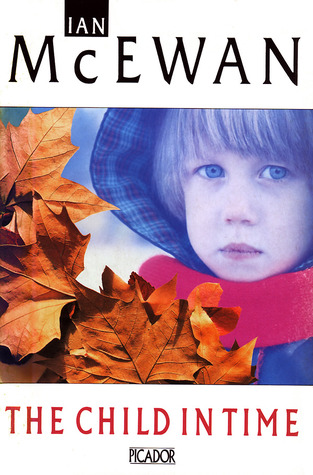 This is the second-earliest of the 13 McEwan books I’ve read. It’s something of a strange muddle (from the protagonist’s hobbies of Arabic and tennis lessons plus drinking onwards), yet everything clusters around the title’s announced themes of children and time.
Stephen Lewis’s three-year-old daughter, Kate, was abducted from a supermarket three years ago. The incident is recalled early in the book, as if the remainder will be about solving the mystery of what happened to Kate. But such is not the case. Her disappearance is an unalterable fact of Stephen’s life that drove him and his wife apart, but apart from one excruciating scene later in the book when he mistakes a little girl on a school playground for Kate and interrogates the principal about her, the missing child is just subtext.
Instead, the tokens of childhood are political and fanciful. Stephen, a writer whose novels accidentally got categorized as children’s books, is on a government committee producing a report on childcare. On a visit to Suffolk, he learns that his publisher, Charles Darke, who later became an MP, has reverted to childhood, wearing shorts and serving lemonade up in a treehouse.
Meanwhile, Charles’s wife, Thelma, is a physicist researching the nature of time. For Charles, returning to childhood is a way of recapturing timelessness. There’s also an odd shared memory that Stephen and his mother had four decades apart. Even tiny details add on to the time theme, like Stephen’s parents meeting when his father returned a defective clock to the department store where his mother worked.
This is McEwan, so you know there’s going to be a contrived but very funny scene. Here that comes in Chapter 5, when Stephen is behind a flipped lorry and goes to help the driver. He agrees to take down a series of (increasingly outrageous) dictated letters but gets exasperated at about the same time it becomes clear the young man is not approaching death. Instead, he helps him out of the cab and they celebrate by drinking two bottles of champagne. This doesn’t seem to have much bearing on the rest of the book, but is the scene I’m most likely to remember.
Other noteworthy elements: Stephen has a couple of run-ins with the Prime Minister; though this is clearly Margaret Thatcher, McEwan takes pains to neither name nor so much as reveal the gender of the PM (in fear of libel claims?). Homeless people and gypsies show up multiple times, making Stephen uncomfortable but also drawing his attention. I assumed this was a political point about Thatcher’s influence, with the homeless serving as additional stand-ins for children in a paternalistic society, representing vulnerability and (misplaced) trust.
This is a book club read for our third monthly Zoom meeting, coming up in the first week of June. While it’s odd and not entirely successful, I think it should give us a lot to talk about: the good and bad aspects of reverting to childhood, whether it matters if Kate ever comes back, the caginess about Thatcher, and so on.
Fugitive Pieces by Anne Michaels (1996)
[Orange Prize (now Women’s Prize for Fiction)]
“One can look deeply for meaning or one can invent it.”
 Poland, Greece, Canada; geology, poetry, meteorology. At times it felt like Michaels had picked her settings and topics out of a hat and flung them together. Especially in the early pages, the dreamy prose is so close to poetry that I had trouble figuring out what was actually happening, but gradually I was drawn into the story of Jakob Beer, a Jewish boy rescued like a bog body or golem from the ruins of his Polish village. Raised on a Greek island and in Toronto by his adoptive father, a geologist named Athos who’s determined to combat the Nazi falsifying of archaeological history, Jakob becomes a poet and translator. Though he marries twice, he remains a lonely genius haunted by the loss of his whole family – especially his sister, Bella, who played the piano. Survivor’s guilt never goes away. “To survive was to escape fate. But if you escape your fate, whose life do you then step into?”
The final third of the novel, set after Jakob’s death, shifts into another first-person voice. Ben is a student of literature and meteorological history. His parents are concentration camp survivors, so he relates to the themes of loss and longing in Jakob’s poetry. Taking a break from his troubled marriage, Ben offers to go back to the Greek island where Jakob last lived to retrieve his notebooks – which presumably contain all that’s come before. Ben often addresses Jakob directly in the second person, as if to reassure him that he has been remembered. Ultimately, I wasn’t sure what this section was meant to add, but Ben’s narration is more fluent than Jakob’s, so it was at least pleasant to read.
Although this is undoubtedly overwritten in places, too often resorting to weighty one-liners, I found myself entranced by the stylish writing most of the time. I particularly enjoyed the puns, palindromes and rhyming slang that Jakob shares with Athos while learning English, and with his first wife. If I could change one thing, I would boost the presence of the female characters. I was reminded of other books I’ve read about the interpretation of history and memory, Everything Is Illuminated and Moon Tiger, as well as of other works by Canadian women, A Student of Weather and Fall on Your Knees. This won’t be a book for everyone, but if you’ve enjoyed one or more of my readalikes, you might consider giving it a try.
Sacred Country by Rose Tremain (1992)
[James Tait Black Memorial Prize, Prix Fémina Etranger]
In 1952, on the day a two-minute silence is held for the dead king, six-year-old Mary Ward has a distinct thought: “I am not Mary. That is a mistake. I am not a girl. I’m a boy.” Growing up on a Suffolk farm with a violent father and a mentally ill mother, Mary asks to be called Martin and binds her breasts with bandages. Kicked out at age 15, she lives with her retired teacher and then starts to pursue a life on her own terms in London. While working for a literary magazine and dating women, she consults a doctor and psychologist to explore the hormonal and surgical options for becoming the man she believes she’s always been.
Meanwhile, a hometown acquaintance with whom she once shared a dentist’s waiting room, Walter Loomis, gives up his family’s butcher shop to pursue his passion for country music. Both he and Mary/Martin are sexually fluid and, dissatisfied with the existence they were born into, resolve to search for something more. The outsiders’ journeys take them to Tennessee, of all places. But when Martin joins Walter there, it’s an anticlimax. You’d expect their new lives to dovetail together, but instead they remain separate strivers.
At a bare summary, this seems like a simple plot, but Tremain complicates it with many minor characters and subplots. The story line stretches to 1980: nearly three decades’ worth of historical and social upheaval. The third person narration shifts perspective often to show a whole breadth of experience in this small English village, while occasional first-person passages from Mary and from her mother, Estelle, who’s in and out of a mental hospital, lend intimacy. Otherwise, the minor characters feel flat, more like symbols or mouthpieces.
To give a flavor of the book’s many random elements, here’s a decoding of the extraordinary cover on the copy I picked up from the free bookshop:
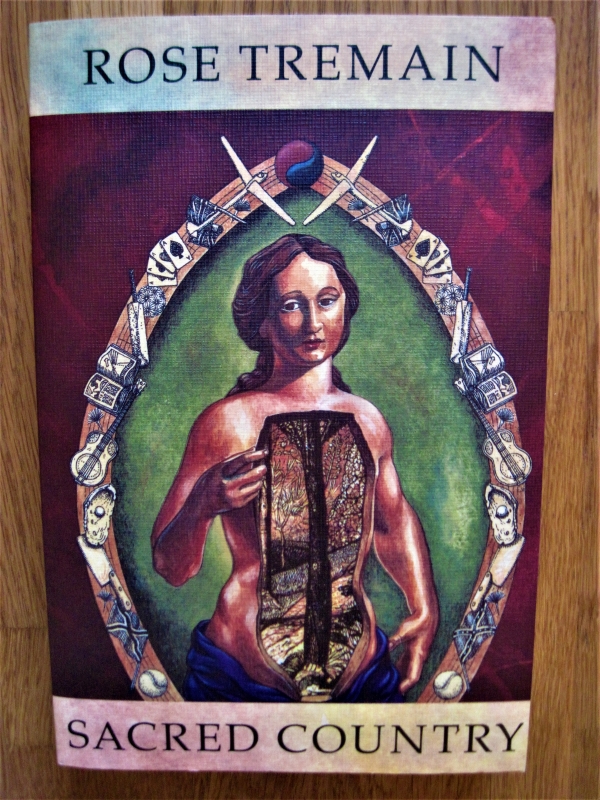
Crimson background and oval shape = female anatomy, menstruation
Central figure in a medieval painting style, with royal blue cloth = Mary
Masculine muscle structure plus yin-yang at top = blended sexuality
Airplane = Estelle’s mother died in a glider accident
Confederate flag = Tennessee
Cards = fate/chance, conjuring tricks Mary learns at school, fortune teller Walter visits
Cleaver = the Loomis butcher shop
Cricket bat = Edward Harker’s woodcraft; he employs and then marries Estelle’s friend Irene
Guitar = Walter’s country music ambitions
Oyster shell with pearl = Irene’s daughter Pearl, whom young Mary loves so much she takes her (then a baby) in to school for show-and-tell
Cutout torso = the search for the title land (both inward and outer), a place beyond duality
Tremain must have been ahead of the times in writing a trans character. She acknowledged that the premise was inspired by Conundrum by Jan Morris (who, born James, knew he was really a girl from the age of five). I recall that Sacred Country turned up often in the footnotes of Tremain’s recent memoir, Rosie, so I expect it has little autobiographical resonances and is a work she’s particularly proud of. I read this in advance of writing a profile of Tremain for Bookmarks magazine. It feels very different from her other books I’ve read; while it’s not as straightforwardly readable as The Road Home, I’d call it my second favorite from her. The writing is somewhat reminiscent of Kate Atkinson, early A.S. Byatt and Shena Mackay, and it’s a memorable exploration of hidden identity and the parts of life that remain a mystery.
Classic of the Month: Period Piece by Gwen Raverat (1952)
Later today we’re making a pilgrimage to Bookbarn International,* one of my favorite secondhand bookshops in the UK, on the way (ish) to seeing friends in Bristol and Exeter for the weekend. In the past we’ve managed to drop in to Bookbarn annually, but it’s been nearly 2.5 years since our last visit. At that special Harvest Supper and Scrabble** tournament in October 2017 (which I wrote about here), I got to meet William Pryor, the chairman of Bookbarn, and he gave me a copy of his grandmother Gwen Raverat’s memoir, Period Piece.
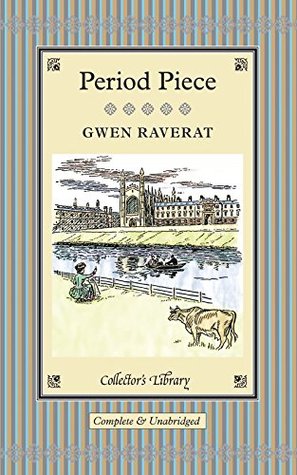 Raverat was a granddaughter of Charles Darwin (the first child of his son George) but never got to meet him as he died three years before her birth. Her book has the subtitle “A Cambridge Childhood,” which perfectly conveys the aim. This is not a comprehensive family history or autobiography, but a portrait of what it was like to grow up in a particular time and place. Raverat was born in 1885, but she begins two years earlier, when her American mother, Maud Du Puy, was 21 and in England for the first time to spend a summer with her great-aunt and -uncle. She had three suitors during that time, all of them Fellows of Trinity College. The rules had only just been changed to allow Fellows to marry, so George Darwin would be among the first married members, and Gwen was in the first batch of offspring.
Period Piece is a charming, witty look at daily life from the 1880s through about 1909 – ending with the marriage of her cousin Frances, which seemed to signal a definitive end to their collective youth. Raverat focuses on everyday sights and sounds but also points out life’s little absurdities. She proceeds thematically rather than chronologically, taking up topics like her mother’s parenting theories; her boarding school education and budding love of art; visits to Grandmamma at Down House, Kent; childhood fears and ghost stories; the five Darwin uncles; religion; sports and games; clothing; and social events such as dances.

Raverat’s childhood home in Cambridge, now part of Darwin College, University of Cambridge. CC BY-SA (https://creativecommons.org/licenses/by-sa/2.5).
Writing towards the end of her life and in the middle of the twentieth century, Raverat neatly draws contrasts between old-fashioned propriety and modern mores. For example, as a child she was often called upon to act as a chaperone to courting couples, and when ladies boated past a watering hole where boys swam naked, they would cover their faces with parasols. She herself managed to avoid the matter of sex entirely until she was an adult, though she does remember looking to an encyclopedia to find out where babies come from.
The utter reliance on servants, a profusion of buttons on every garment, and forced trips to church are a few elements that might strike today’s readers as alien. One incident felt eerily contemporary to me, though: once, walking home alone at around 10 p.m., Gwen saw a gang of dodgy-looking undergraduates carrying a drunk or dead young woman down the street and into a pub. After much internal debate, she decided not to say a word about it to her parents.
I often wonder how novelists and filmmakers get a historical setting just right. The answer is, probably by reading books like this one that so clearly convey quotidian details most people would leave out, e.g. a list of every piece of clothing a lady wore or a rundown of the steps to getting her mother out the door to catch the 8:30 train for a day out in London. Those who have visited or lived in Cambridge will no doubt enjoy spotting familiar locations. There are also amusing cameo appearances from Virginia Stephen (Woolf) and E.M. Forster.
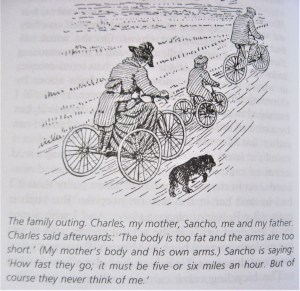 Raverat, a wood engraver, peppered Period Piece with her own illustrations (I have photographed one favorite, at left, but you can see them all in the archive here) – a lovely supplement to the highly visual text. Not just an invaluable record of domestic history, this is a very funny and impressively thorough memoir that could be used by anyone as a model for how to capture childhood. It has never been out of print, and still deserves to be widely read.
*They’ve recently had a renovation that I helped to crowdfund; I’m looking forward to seeing the results. I’ll also be sure to report back on my book haul.
**I was especially delighted to see that the Darwin family had a favorite word-making game, described in the middle of the “Sport” chapter, that sounds a fair bit like Scrabble – except that you only added one letter at a time and could scramble the letters to change the meaning.
Some favorite lines:
(describing one of her mother’s early letters home to America) “They got [rooms for the night] at last at ‘the St Pancreas Hotel’. I was delighted to find this spelling so early, as, to the end of her days, my mother always considered the saint and the internal organ as identical.”
(of their French nurserymaids) “By a provision of Providence they were always called Eugenie, so that when a new one came she could be called Newgenie.”
“The faint flavour of the ghost of my grandfather hung in a friendly way about the whole place [Down] – house, garden and all. … In fact, he was obviously in the same category as God and Father Christmas.”
My rating: 
I read the 2014 Collector’s Library edition, an attractive pocket-sized book with gilt edging and a built-in red ribbon bookmark.

Humiliation: Stories by Paulina Flores
Paulina Flores, a young Chilean author and high school teacher, won the Roberto Bolaño Short Story Prize for the title story in her debut collection. These nine stories are about how we relate to the past, particularly our childhood – whether with nostalgia or regret – and about the pivotal moments that stand out in the memory. The first two, “Humiliation” and “Teresa,” I previewed in one of my Women in Translation Month posts. They feature young fathers and turn on a moment of surprise: An unemployed father takes his two daughters along to his audition; a college student goes home with a single father for a one-night stand.
 Of the rest, my favorites were “Talcahuano,” about teenage friends whose plan to steal musical instruments from the local evangelical church goes awry when there’s a crisis with the narrator’s father, a laid-off marine (readalike: Sweet Sorrow by David Nicholls); and “Forgetting Freddy,” in which a young woman who ends up back in her mother’s apartment after a breakup listens to the neighbors fighting and relives childhood fears during her long baths (readalike: History of Wolves by Emily Fridlund).
“American Spirit” recalls two friends’ time waitressing (readalike: Sweetbitter by Stephanie Danler), and in “Last Vacation” a young man recounts his last trip to La Serena with his aunt before everything went wrong for his family. “Laika” is a troubling one in that the protagonist remembers her childhood brush with pedophilia not with terror or disgust but with a sort of fondness. A number of the stories conclude that you can’t truly remake your life, nor can you escape the memories that have shaped you – even if you might like to.
A fairly common feature in story volumes is closing with a novella. Almost invariably, I like these long stories the least, and sometimes skip them. Here, the 72-page “Lucky Me” could easily be omitted. Denise, a librarian who watches porn and reads the Old Testament in her spare time (“what she needed was to feel something. She needed pleasure and spirituality”), lets the upstairs neighbor use her bedroom for sex; Nicole, a fourth-grader, has her world turned upside down when her best friend’s mother becomes their housekeeper. Although the story brings its strands, one in the first person and one in the third (giving the book an even 4.5/4.5 split), together in a satisfying manner, it was among my least favorites in the collection.
Overall, though, these are sharp and readable stories I can give a solid recommendation.
My rating:
Humiliation (2016; English translation by Megan McDowell, 2019) is published by Oneworld today, November 7th,; it came out on the 5th from Catapult in the USA. My thanks to Margot Weale for a proof copy for review.
 Bookish Beck = Rebecca Foster. American transplant to England. Freelance proofreader and book reviewer.
 Bookish Beck