All Souls’ Day Reading: Armitage, Campbell, Mah & Perry
Along with my Halloween-tide R.I.P. reading (here and here), I’ve been reading books about ancestors and the dead – appropriate for All Saints’ Day (yesterday) and All Souls’ Day (today). Both are in the Church calendar but less a part of popular culture.
My mind naturally turns toward the dead as October advances: on the 30th, it was three years since my mother’s death (plus the 25th marked a year since we started losing sweet Alfie). To allay dread at the impending anniversary, I booked myself a treat to look forward to that day. For some reason, Wantage Literary Festival included a Gin Tasting Extravaganza alongside its bookish events. I didn’t fancy any book talks but was keen to try 10 British Isles gins, 9 of which were new to me and 5 of which were ticks in my 101 Gins to Try before You Die book.


Beforehand, I did some secondhand book shopping. Regent is an excellent and enormous maze of a bookshop that I’d been to once before. It has an exhaustive selection and great prices (£2.50 paperbacks / £3–5 hardbacks) that haven’t changed in three years. I considered this return trip a chance for another birthday book haul and was delighted with my finds (the Gleeson was from a charity shop in the town).


My All Souls’ stack includes a poetry collection and three #NonfictionNovember reads.
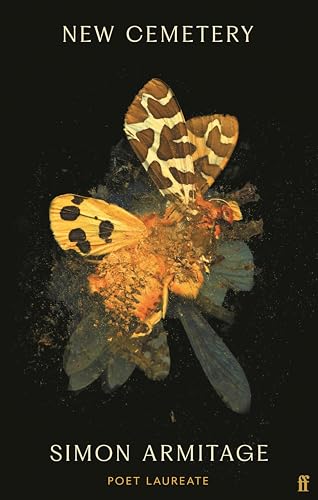
New Cemetery by Simon Armitage (2025)
Not far from the English Poet Laureate’s home in Huddersfield, some cow fields were recently converted into a municipal graveyard. I can’t do better than Armitage’s own description of the style in this collection: “short-lined tercets linked with/by intermittent rhymes and half-rhymes … like threading daisy chains.” Each one is titled in brackets after a species of moth, in a rather arbitrary way, as he acknowledges. The point was to – in a time of climate breakdown – include nature in the inevitable march of death and decay. I most liked the poems about the cemetery, whereas the majority of the book is about everyday moments from a writer’s life.
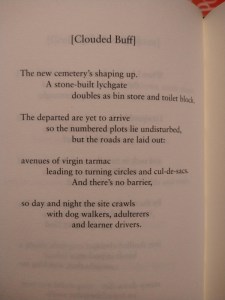
There are some amusing and poignant lines among the rest:
 I died and went
to Bristol Parkway
for my sins,
interchange
between soul and flesh
the whispered half-rhymes
of earth and death
on the spade’s tongue.
I also appreciated this haiku-like stanza: “Almond blossom / slash rotten confetti / clogging the church drains.” But there was little that struck me otherwise. I’ve tried to love Armitage’s poetry, but this third experience again leaves me unmoved. I’ve preferred his travel memoirs. Still, the book ends on the perfect note:
the dead are patiently
killing time
between visiting hours,
deaf, blind, mute
and numb,
unable to love
but capable still
of being loved.
(Public library) 
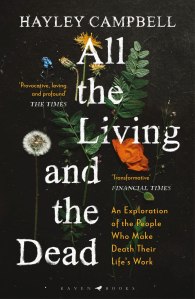 I’ve read the first two chapters of a long-neglected review copy of All the Living and the Dead by Hayley Campbell (2022), in which she shadows various individuals who work in the death industry, starting with a funeral director and the head of anatomy services for the Mayo Clinic in Minnesota. In Victorian times, corpses were stolen for medical students to practice on. These days, more people want to donate their bodies to science than can usually be accommodated. The Mayo Clinic receives upwards of 200 cadavers a year and these are the basis for many practical lessons as trainees prepare to perform surgery on the living. Campbell’s prose is journalistic, detailed and matter-of-fact, but I’m struggling with the very small type in my paperback. Upcoming chapters will consider a death mask sculptor, a trauma cleaner, a gravedigger, and more. If you’ve enjoyed Caitlin Doughty’s books, try this.
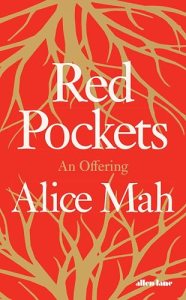 I’m halfway through Red Pockets: An Offering by Alice Mah (2025) from the library. I borrowed it because it was on the Wainwright Prize for Conservation Writing shortlist. During the Qingming Festival, the Chinese return to their hometowns to honour their ancestors. By sweeping their tombs and making offerings, they prevent the dead from coming back as hungry ghosts. When Mah, who grew up in Canada and now lives in Scotland, returns to South China with a cousin in 2017, she finds little trace of her ancestors but plenty of pollution and ecological degradation. Their grandfather wrote a memoir about his early life and immigration to Canada. In the present day, the cousins struggle to understand cultural norms such as gifting red envelopes of money to all locals. This is easy reading but slightly dull; it feels like Mah included every detail from her trips simply because she had the material, whereas memoirs need to be more selective. But I’m reminded of the works of Jessica J. Lee, which is no bad thing.
Death of an Ordinary Man by Sarah Perry (2025)
Perry recognises what a sacred privilege it was to witness her father-in-law’s death, which occurred just nine days after his diagnosis with oesophageal cancer. She concludes, like Simone de Beauvoir does of her mother in A Very Easy Death, that David’s end was as good as one might hope for. Viz., he was in his late seventies, remained at home, was looked after by his son and daughter-in-law, more or less maintained his mental capacity until the end, and showed minimal signs of pain or distress. Still, every death is fraught, to some degree, with bureaucracy, medical error and pangs of regret. There is a searing encounter here with an unfeeling GP; on the other hand, there is such kindness from nurses, relatives and a pastor.
The beauty of Perry’s memoir is its patient, clear-eyed unfolding of every stage of dying, a natural and inexorable process that in other centuries would have been familiar to anyone – having observed it with siblings, children, parents, neighbours, distant relatives and so on. She felt she was joining a specifically womanly lineage of ministering, a destiny so quotidian that she didn’t feel uncomfortable with any of the intimate care involved. I thought of my sister and her mother- and sister-in-law sitting vigil at my brother-in-law’s deathbed in 2015.
 Perry traces the physical changes in David as he moved with alarming alacrity from normal, if slowed, daily life to complete dependency to death’s door. At the same time, she is aware that this is only her own perspective on events, so she records her responses and emotional state and, to a lesser extent, her husband’s. Her quiver of allusions is perfectly chosen and she lands on just the right tone: direct but tender. Because of her and David’s shared upbringing, the points of reference are often religious, but not obtrusive. My only wish is to have gotten more of a sense of David alive. There’s a brief section on his life at the start, mirrored by a short “Afterlife” chapter at the end telling what succeeded his death. But the focus is very much on the short period of his illness and the days of his dying. During this time, he appears confused and powerless. He barely says anything beyond “I’m in a bit of a muddle,” to refer to anything from incontinence to an inability to eat. At first I thought this was infantilizing him. But I came to see it as a way of reflecting how death strips everything away.
As I read, I often had tears in my eyes, thinking of the deaths I have experienced at second hand and the many more that will come my way until my own. In this gift of a book, Perry captures the emotional poles of bearing witness, and the dignity and uniqueness of every life:
There was relief, and there was loss – it was the saddest thing we’d ever seen, and the best thing we had ever done – all these things existing together undiminished, and never cancelling each other out.
now I understand there are no ordinary lives – that every death is the end of a single event in time’s history: an event so improbable it represents a miracle, and irreplaceable in every particular.
(Public library) 
Death and grief are common topics in my stacks at all times of year. I see more books on dying and the dead in my immediate future, starting with two rereads for #NovNov – The Death of Ivan Ilych and Death in Venice, along with The Field by Robert Seethaler (narrated by the inhabitants of a cemetery), the latter two for #GermanLitMonth; and A Single Man by Christopher Isherwood.
Most Anticipated Books of the Second Half of 2025
My “Most Anticipated” designation sometimes seems like a kiss of death, but other times the books I choose for these lists live up to my expectations, or surpass them!
(Looking back at the 25 books I selected in January, I see that so far I have read and enjoyed 8, read but been disappointed by 4, not yet read – though they’re on my Kindle or accessible from the library – 9, and not managed to get hold of 4.)
This time around, I’ve chosen 15 books I happen to have heard about that will be released between July and December: 7 fiction and 8 nonfiction. (In release date order within genre. UK release information generally given first, if available. Note given on source if I have managed to get hold of it already.)
Fiction
 The Girls Who Grew Big by Leila Mottley [10 July, Fig Tree (Penguin) / June 24, Knopf]: I was impressed with the confident voice in Mottley’s debut, Nightcrawling. She’s just 22 years old so will only keep getting better. This is “about the joys and entanglements of a fierce group of teenage mothers in a small town on the Florida panhandle. … When [16-year-old Adela] tells her parents she’s pregnant, they send her from … Indiana to her grandmother’s in Padua Beach, Florida.” I’ve read one-third so far. (Digital review copy)
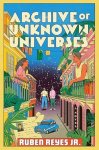 Archive of Unknown Universes by Ruben Reyes Jr. [21 Aug., Footnote Press (Bonnier) / July 1, Mariner Books]: There Is a Rio Grande in Heaven was a strong speculative short story collection and I’m looking forward to his debut novel, which involves alternative history elements. (Starred Kirkus review.) “Cambridge, 2018. Ana and Luis’s relationship is on the rocks, despite their many similarities, including … mothers who both fled El Salvador during the war. In her search for answers, and against her best judgement, Ana uses The Defractor, an experimental device that allows users to peek into alternate versions of their lives.”
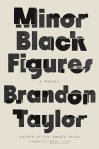 Minor Black Figures by Brandon Taylor [Oct. 7, Riverhead / 5 March 2026, Jonathan Cape (Penguin)]: I’ve read all of his works … but I’m so glad he’s moving past campus settings now. “A newcomer to New York, Wyeth is a Black painter who grew up in the South and is trying to find his place in the contemporary Manhattan art scene. … When he meets Keating, a white former seminarian who left the priesthood, Wyeth begins to reconsider how to observe the world, in the process facing questions about the conflicts between Black and white art, the white gaze on the Black body, and the compromises we make – in art and in life.” (Edelweiss download)
 Heart the Lover by Lily King [16 Oct., Canongate / Oct. 7, Grove Press]: I’ve read several of her books and after Writers & Lovers I’m a forever fan. “In the fall of her senior year of college, [Jordan] meets two star students from her 17th-Century Lit class, Sam and Yash. … she quickly discovers the pleasures of friendship, love and her own intellectual ambition. … when a surprise visit and unexpected news brings the past crashing into the present, Jordan returns to a world she left behind and is forced to confront the decisions and deceptions of her younger self.” (Edelweiss download)
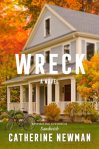 Wreck by Catherine Newman [28 Oct., Transworld / Harper]: This is a sequel to Sandwich, and in general sequels should not exist. However, I can make a rare exception. Set two years on, this finds “Rocky, still anxious, nostalgic, and funny, obsessed with a local accident that only tangentially affects them—and with a medical condition that, she hopes, won’t affect them at all.” In a recent Substack post, Newman compared it to Small Rain, my book of 2024, for the focus on a mystery medical condition. (Edelweiss download)
 Palaver by Bryan Washington [Nov. 4, Farrar, Straus, and Giroux / 1 Jan. 2026, Atlantic]: I’ve read all his work and I’m definitely a fan, though I wish that (like Taylor previously) he wouldn’t keep combining the same elements each time. I’ll be reviewing this early for Shelf Awareness; hooray that I don’t have to wait until 2026! “He’s entangled in a sexual relationship with a married man, and while he has built a chosen family in Japan, he is estranged from his family in Houston, particularly his mother … Then, in the weeks leading up to Christmas, ten years since they’ve last seen each other, the mother arrives uninvited on his doorstep. Separated only by the son’s cat, Taro, the two of them bristle against each other immediately.” (Edelweiss download)
 The Silver Book by Olivia Laing [6 Nov., Hamish Hamilton (Penguin) / 11 Nov., Farrar, Straus and Giroux]: I’ve read all but one of Laing’s books and consider her one of our most important contemporary thinkers. I was also pleasantly surprised by Crudo so will be reading this second novel, too. I’ll be reviewing it early for Shelf Awareness as well. “September 1974. Two men meet by chance in Venice. One is a young English artist, in panicked flight from London. The other is Danilo Donati, the magician of Italian cinema. … The Silver Book is at once a queer love story and a noirish thriller, set in the dream factory of cinema. (Edelweiss download)
Nonfiction
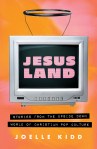 Jesusland: Stories from the Upside[-]Down World of Christian Pop Culture by Joelle Kidd [Aug. 12, ECW]: “Through nine incisive, honest, and emotional essays, Jesusland exposes the pop cultural machinations of evangelicalism, while giving voice to aughts-era Christian children and teens who are now adults looking back at their time measuring the length of their skirts … exploring the pop culture that both reflected and shaped an entire generation of young people.” Yep, that includes me! Looking forward to a mixture of Y2K and Jesus Freak. (NetGalley download)
 Somebody Is Walking on Your Grave: My Cemetery Journeys by Mariana Enríquez; translated from Spanish by Megan McDowell [25 Sept., Granta / Sept. 30, Hogarth]: I’ve enjoyed her creepy short stories, plus I love touring graveyards. “In 2013, when the body of a friend’s mother who was disappeared during Argentina’s military dictatorship was found in a common grave, she began to examine more deeply the complex meanings of cemeteries and where our bodies come to rest. In this vivid, cinematic book … Enriquez travels North and South America, Europe and Australia … [and] investigates each cemetery’s history, architecture, its dead (famous and not), its saints and ghosts, its caretakers and visitors.” (Edelweiss download, for Shelf Awareness review)
 Ghosts of the Farm: Two Women’s Journeys Through Time, Land and Community by Nicola Chester [30 Sept., Chelsea Green]: Nicola is our local nature writer and is so wise on class and countryside matters. On Gallows Down was her wonderful debut and, though I know very little about it, I’m looking forward to her second book. “This is the story of Miss White, a woman who lived in the author’s village 80 years ago, a pioneer who realised her ambition to become a farmer during the Second World War. … Moving between Nicola’s own attempts to work outdoors and Miss White’s desire to farm a generation earlier, Nicola explores the parallels between their lives – and the differences.”
 Death of an Ordinary Man by Sarah Perry [2 Oct., Vintage (Penguin)]: I’ve had a very mixed experience with Perry’s fiction, but a short bereavement memoir should be right up my street. “Sarah Perry’s father-in-law, David, died at home nine days after a cancer diagnosis and having previously been in the good health. The speed of his illness outstripped that of the NHS and social care, so the majority of nursing fell to Sarah and her husband. They witnessed what happens to the body and spirit, hour by hour, as it approaches death.”
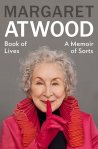 Book of Lives: A Memoir of Sorts by Margaret Atwood [4 Nov., Vintage (Penguin) / Doubleday]: It’s Atwood; ’nuff said, though I admit I’m daunted by the page count. “Raised by ruggedly independent, scientifically minded parents – entomologist father, dietician mother – Atwood spent most of each year in the wild forest of northern Quebec. … [She links] seminal moments to the books that have shaped our literary landscape. … In pages bursting with bohemian gatherings … and major political turning points, we meet poets, bears, Hollywood actors and larger-than-life characters straight from the pages of an Atwood novel.”
 Tigers Between Empires: The Improbable Return of Great Cats to the Forests of Russia and China by Jonathan C. Slaght [4 Nov., Allen Lane / Farrar, Straus and Giroux]: Slaght’s Owls of the Eastern Ice was one of the best books I read in 2022; he’s a top-notch nature and travel writer with an environmentalist’s conscience. After the fall of the Soviet Union, “scientists came together to found the Siberian Tiger Project[, which …] captured and released more than 114 tigers over three decades. … [C]haracters, both feline and human, come fully alive as we travel with them through the quiet and changing forests of Amur.” (NetGalley download)
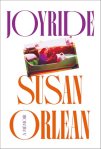 Joyride by Susan Orlean [6 Nov., Atlantic Books / Oct. 14, Avid Reader Press (Simon & Schuster)]: I’m a fan of Orlean’s genre-busting nonfiction, e.g. The Orchid Thief and The Library Book, and have always wanted to try more by her. “Joyride is her most personal book ever—a searching journey through finding her feet as a journalist, recovering from the excruciating collapse of her first marriage, falling head-over-heels in love again, becoming a mother while mourning the decline of her own mother, sojourning to Hollywood for films based on her work. … Joyride is also a time machine to a bygone era of journalism.”
 A Long Game: Notes on Writing Fiction by Elizabeth McCracken [Dec. 2, Ecco]: I’m not big on craft books, but will occasionally read one by an author I admire; McCracken won my heart with The Hero of This Book. “How does one face the blank page? Move a character around a room? Deal with time? Undertake revision? The good and bad news is that in fiction writing, there are no definitive answers. … McCracken … has been teaching for more than thirty-five years [… and] shares insights gleaned along the way, offering practical tips and incisive thoughts about her own work as an artist.” (Edelweiss download)
As a bonus, here are two advanced releases that I reviewed early:
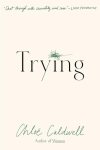 Trying: A Memoir by Chloe Caldwell [Aug. 5, Graywolf] (Reviewed for Foreword): Caldwell devoted much of her thirties to trying to get pregnant via intrauterine insemination. She developed rituals to ease the grueling routine: After every visit, she made a stop for luxury foodstuffs and beauty products. But then her marriage imploded. When she began dating women and her determination to become a mother persisted, a new conception strategy was needed. The book’s fragmentary style suits its aura of uncertainty about the future. Sparse pages host a few sentences or paragraphs, interspersed with wry lists.
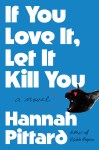 If You Love It, Let It Kill You by Hannah Pittard [July 15, Henry Holt] (Reviewed for Shelf Awareness): A quirky work of autofiction about an author/professor tested by her ex-husband’s success, her codependent family, and an encounter with a talking cat. Hana P. (or should that be Pittard?) relishes flouting the “rules” of creative writing. With her affectations and unreliability, she can be a frustrating narrator, but the metafictional angle renders her more wily than precious. The dialogue and scenes sparkle, and there are delightful characters This gleefully odd book is perfect for Miranda July and Patricia Lockwood fans.
I can also recommend:
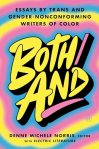
Both/And: Essays by Trans and Gender-Nonconforming Writers of Color, ed. Denne Michele Norris [Aug. 12, HarperOne / 25 Sept., HarperCollins] (Review to come for Shelf Awareness)
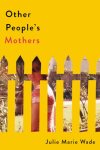
Other People’s Mothers by Julie Marie Wade [Sept. 2, Univ. of Florida Press] (Review pending for Foreword)
Which of these catch your eye? Any other books you’re looking forward to in this second half of the year?
May Graphic Novels by Alison Bechdel, Peter Kuper & Craig Thompson
May has been chock-full of new releases for me! For this first batch of reviews, I’m featuring three fantastic graphic novels that have made it onto my Best of 2025 (so far) list. I don’t read graphic books as often as I’d like to – my library tends to major on superhero comics and manga, which aren’t my cup of tea – but I sometimes get a chance to access them for paid review purposes. (The first two below are ones I was sent for potential Shelf Awareness reviews, but I missed the deadlines.) Reading these took me back to the early 2010s when I worked for a university library in South London and would walk to Lambeth Library on my lunch breaks to borrow huge piles of books, mostly taking advantage of their excellent graphic novel selection. That was where my education and fascination began.
Spent: A Comic Novel by Alison Bechdel
 I’ve read all but one of Bechdel’s works now. Fun Home was among the first graphic books I read and is a great choice if you’re new to this form of storytelling. It’s a family memoir about her father’s funeral home business and closeted lifestyle, which emerged shortly after her own coming-out – and shortly before his accidental death. In Spent, Alison and her handy wife Holly live on a Vermont pygmy goat farm. Alison has writer’s block and is struggling financially despite her famous memoir about her taxidermist father having been made into a successful TV series, Death & Taxidermy. Mostly, she’s consumed with anxiety about the state of the world, what with the ongoing pandemic, her sister’s right-wing opinions, and the litany of awful headlines. “Who can draw when the world is burning?” she exclaims.
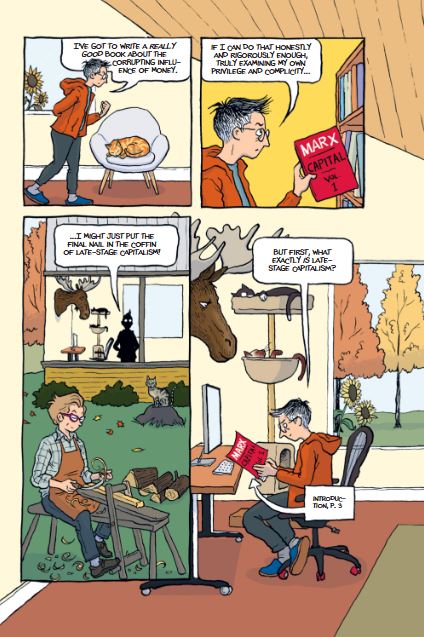
Then Alison has an idea for a book – or maybe a reality TV series – called $UM that will wean people off of capitalism. That creative journey is mirrored in Spent, which is composed of 12 “episodes” titled after Marxist terminology. Through Alison’s ageing hippie friends and their kids, Bechdel showcases alternative ways of living: a commune, a throuple, nonbinary identity, unpaid internships, Just Stop Oil demos, and the influencer lifestyle versus rejection of technology. It’s (auto)fiction exaggerated to the brink of absurdity, with details changed enough to mock but not enough to hide (e.g., she’s published by “Megalopub,” the hardware store is “Home Despot,” her show airs on “Schmamazon”).

Tiny details in the drawings reward close attention, such as Alison and Holly’s five cats’ antics during their morning routine, and a stuffed moose head rolling its eyes. It’s the funniest I can remember Bechdel being, with much broad humour derived from the outrageous screen mangling of her book – cannibalism, volcanoes and dragons come out of nowhere – and her middle-class friends’ hand-wringing over their liberal credentials. Even the throwaway phrases are hilarious. It’s a gleeful and zeitgeist-y satire, yet draws to a touching close as Alison has the epiphany that she can’t fix everything herself so must simply do what she can, “with a little help from her annoying, tender-hearted, and utterly luminous friends.”
Accessed as an e-book from Mariner Books. Published in the UK by Jonathan Cape (Penguin).
Insectopolis: A Natural History by Peter Kuper
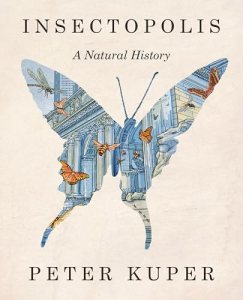 Nearly a decade ago, I reviewed Peter Kuper’s Ruins, which features monarch migration and has as protagonist a laid-off Natural History Museum entomologist. Here insects have even more of a starring role. The E. O. Wilson epigraph sets the stage: “If all mankind were to disappear, the world would regenerate back to the rich state of equilibrium that existed ten thousand years ago. If insects were to vanish, the environment would collapse into chaos.” We follow an African American brother-and-sister pair, the one dubious and the other eager, as they walk downtown to the New York Public Library. The sister, who holds a PhD in entomology, promises that its exhibition on insects is going to be amazing. But just before they reach the building, a red alert flashes up on every smartphone and sirens start blaring. A week later, the city is a ruin of overturned cabs and debris. Only insects remain and, group by group, they guide readers through the empty exhibit, interacting within and across species.


It’s a sly blend of science, history, stories and silliness. I loved the scenes of mosquitoes and ants railing against how they’ve been depicted as villainous, and dignified dung beetles resisting scatological jokes and standing up for their importance in ecosystems. There are interesting interludes about insects in literature (not just Kafka and Nabokov, but the Japanese graphic novel The Book of Human Insects by Osamu Tezuka), and unsung heroines of entomology get their moment in the sun. The pages in which Margaret Collins, an African American termite researcher in the 1950s, and Rachel Carson appear to a dragonfly as ghosts and tell their stories of being dismissed by male researchers were among my favourites. Informative and entertaining at once; what could be better? Welcome our insect overlords!
Accessed as an e-book from W. W. Norton & Company.
Ginseng Roots by Craig Thompson
 I’d read several of Thompson’s works and especially enjoyed his previous graphic memoir, Blankets, about his first love and loss of faith. When I read this blurb, I worried the niche subject couldn’t possibly sustain my attention for nearly 450 pages. But I was wrong; this is a vital book about everything, by way of ginseng. It begins with childhood summers working on American ginseng farms with his siblings in Marathon, Wisconsin. Theirs was a blue collar and highly religious family, but Thompson and his little brother Phil were allowed to spend their earnings from the back-breaking labour of weeding and picking rocks as they pleased. Each hour, each dollar, meant a new comic from the pharmacy. “Comics helped me survive my childhood. But what will help me survive my adulthood?” Thompson asks.

Together with Phil, he travels first to Midwest ginseng farms and festivals and then through China and Korea to learn about the plant’s history, cultivation practices, lore, and medicinal uses. As he meets producers – including a Hmong man whose early life mirrors his own – he feels sheepish about how he makes a living: “I carry this working-class guilt – what I do isn’t real work.” When his livelihood is threatened by worsening autoimmune conditions, he tries everything from acupuncture to psychotherapy to save his hands and his creativity.
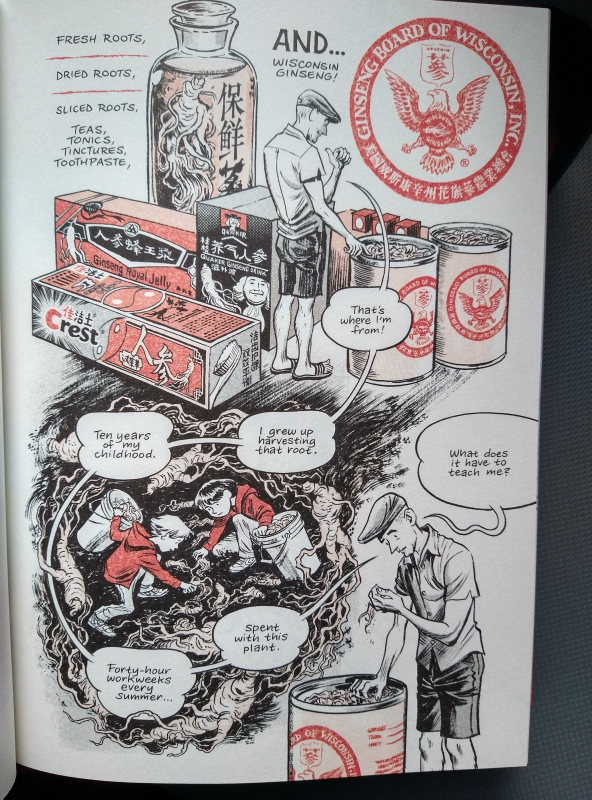
This chunky book has an appealing earth-tones palette and shifts smoothly between locations and styles, memories and research. When interviewing growers and Chinese medicine practitioners, the depictions are almost photorealistic, but there are also superhero pastiche panels and a cute ginseng mascot who pops up throughout the book. Like Spent, this pulls in class and economic issues in a lighthearted way and also explores its own composition process.
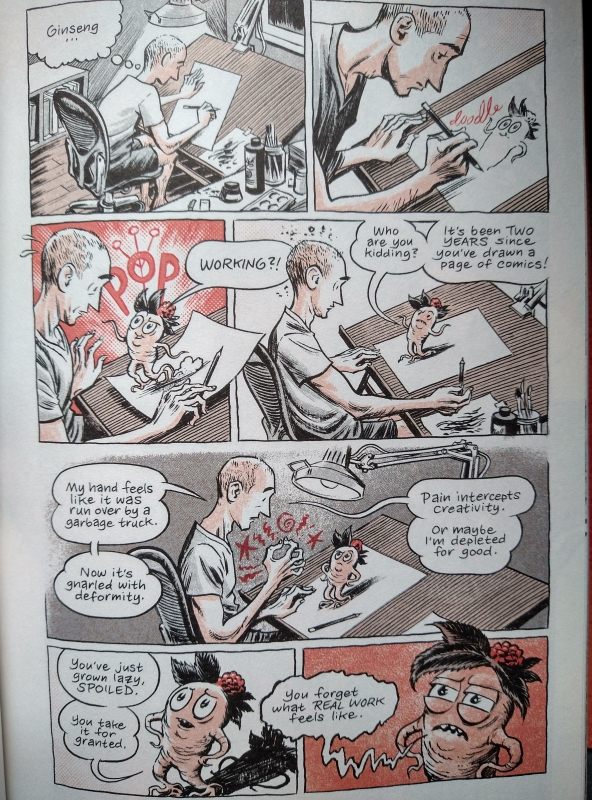
The story of ginseng is often sobering, involving the exploitation of immigrants (in the Notes, Thompson regrets that he was unable to speak with any of the Mexican migrant workers on whom the American ginseng harvest now depends), soil degradation, and pesticide pollution. The roots of the title are both literal and symbolic of the family story that unfolds in parallel. Both strands are captivating, but especially the autobiographical material: Thompson’s relationship with Phil, his new understanding but ongoing frustration with his parents, and the way all three siblings exhibit the damage of their upbringing – Phil’s marriage is crumbling; their sister Sarah, who has moved 26 times as an adult, wonders what she’s running from. A conversation with a Chinese herbal pharmacist gets to the heart of the matter: “I learned home is not WHERE I am. Home is HOW I am.”
Both expansive and intimate, this is a surprising gem from one of the best long-form graphic storytellers out there.
With thanks to Faber for the free copy for review. Published in the USA by Pantheon (Penguin).
20 Books of Summer, 11–13: Campbell, Julavits, Lu
Two solid servings of women’s life writing plus a novel about a Chinese woman stuck in roles she’s not sure she wants anymore.
Thunderstone: A true story of losing one home and discovering another by Nancy Campbell (2022)
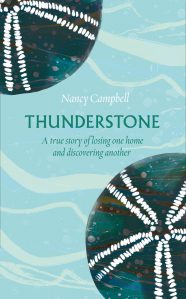 Just before Covid hit, Campbell’s partner Anna had a partially disabling stroke. They had to adjust to lockdown and the rigours of Anna’s at-home care at once. It was complicated in that Campbell was already halfway out the door: after 10 years, their relationship had run its course and she knew it was time to go, but guilt lingered about abandoning Anna at her most vulnerable (“How dare I leave someone who needed me”). That is the backdrop to a quiet book largely formed of a diary spanning June to September 2021. Campbell recounts settling into a caravan by the canal and railway line in Oxford, getting plenty of help from friends and neighbours but also finding her own inner resources and enjoying her natural setting.
The title refers to a fossil that has been considered a talisman in various cultures, and she needed the good luck during a period that involved accidental carbon monoxide poisoning and surgery for an ovarian abnormality (but it didn’t protect her books, which were all destroyed in a leaking shipping container – the horror!). I most enjoyed the longer entries where she muses on “All the potential lives I moved on from” during 20 years in Oxford and elsewhere, which makes me think that I would have preferred a more traditional memoir by her. Covid narratives feel really dated now, unfortunately. (New (bargain) purchase from Hungerford Bookshop with birthday voucher)
Directions to Myself: A Memoir by Heidi Julavits (2023)
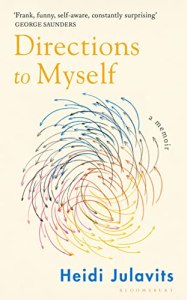 Julavits is a novelist and founding editor of The Believer. I loved her non-standard diary, The Folded Clock, back in 2017, so jumped at the chance to read her new memoir but then took more a year over reading it. The U.S. subtitle, “A Memoir of Four Years,” captures the focus: the change in her son from age five to age nine – from little boy to full-fledged individual. In later sections he sounds so like my American nephew with his Fortnite obsession and lawyerly levels of argumentation and self-justification. A famous author once told Julavits that writers should not have children because each one represents a book they will not write. This book is a rebuttal: something she could not have written without having had her son. Home is a New York City apartment near the Columbia University campus where she teaches – in fact, directly opposite a dorm at which rape allegations broke out – but more often the setting is their Maine vacations, where coastal navigation is a metaphor for traversing life.
Mostly the memoir takes readers through everyday conversations the author has with friends and family about situations of inequality or harassment. Through her words she tries to gently steer her son towards more open-minded ideas about gender roles. She also entrances him and his sleepover friends with a real-life horror story about being chased through the French countryside by a man in a car. The tenor of her musings appealed to me, but already the details are fading. I suspect this will mean much more to a parent.
With thanks to Bloomsbury for the free copy for review.
The Funeral Cryer by Wenyan Lu (2023)
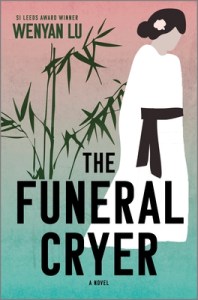 The title character holds a traditional position in her Chinese village, performing mourning at ceremonies for the dead. It’s a steady source of income for her and her husband, but her career choice has stigma attached: “Now that I brought bad luck and I smelt of the dead, nobody would step into our house to play mah-jong or chat.” Exotic as the setup might seem at first, it underpins a familiar story of a woman caught in frustrating relationships and situations. A very readable but plain style to this McKitterick Prize winner.
With thanks to the Society of Authors for the free copy.
20 Books of Summer, 10: Babel by R. F. Kuang (2022)
I substituted this in as my one doorstopper of the challenge after I failed with the new Persaud. It’s a bit of a cheat in that I actually started reading Babel in January, but I only just finished it this morning. I raced through the first 200 pages or so at the start of the year and loved all the geeky etymological footnotes and musings on translation. I thought I’d read it within a matter of days, which would have been a real feat for me. It’s hard to say why, instead, I stalled and found it difficult to regain sustained interest in the months that followed. Initially, it was a buddy read for me and my husband (his bookmark is still stranded at p. 178). His pithy comment, early on, was, “So, this is basically a woke Harry Potter?” And that’s actually a pretty apt summary. Four students at a magical academy – the Royal Institute of Translation at Oxford University, also known as Babel – find themselves questioning their responsibilities and loyalties as they confront the forces of evil, specifically colonialism.
When Robin Swift’s mother dies of cholera, he’s rescued from Canton by Professor Lovell and taken to England to train for entrance into Babel, a tower beside the Radcliffe Camera. He, Ramy (Indian), Victoire (Haitian) and Letty, the only white member of the quartet, are soon inseparable. While Victoire and Letty face prejudice for being female, it’s nothing to the experience of being racially other. Luckily, Babel values foreignness: intimate knowledge of other languages is an asset. In Kuang’s speculative 1830s setting, Britain’s economy is founded on a warped alchemy: silver is turned into energy to keep everyday life running smoothly in the industrializing nation. This is accomplished by harnessing the power of words. Silver bars are engraved with match-pairs – a phrase in a foreign language and its closest English counterpart – and the incantation of that untranslatable meaning sparks action. Spells keep bridges standing and traffic flowing; used for ill, they kill and destroy.
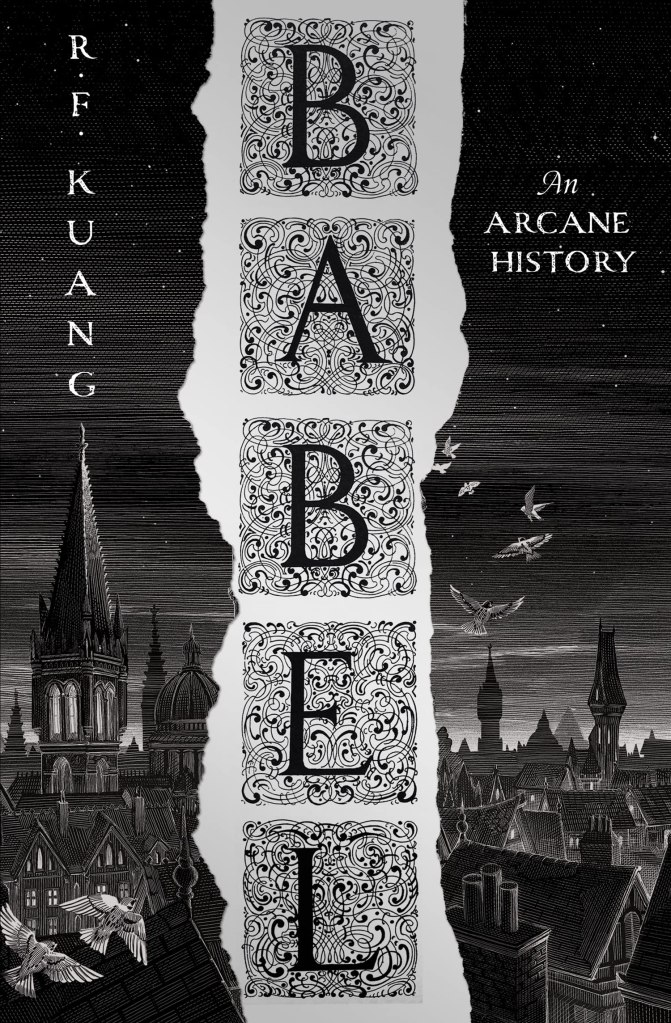
Robin and his friends gradually realise that their work at Babel is reinforcing mass poverty and the colonial system and, ultimately, fuelling future wars. “Truly, the only ones who seemed to profit from the silver industrial revolution were those who were already rich, and the select few others, who were cunning or lucky enough to make themselves so.” He becomes radicalized via the clandestine Hermes Society, which, Robin Hood-like, siphons silver resources away from where they are concentrated in Oxford to where they can help the oppressed. Surprised to learn who else is involved in Hermes, Robin (name not coincidental!) starts working behind the backs of his friends and professors, driven by conscience yet loath to give up the prospects he has through the tremendous privilege of being part of Babel. It goes from being an ivory tower of academia to being a hideaway for strikers and the besieged. And if you know your Bible stories, you’ll remember that Babel is destined to fall.
In faux-archaic fashion, Kuang has given her novel a lengthy subtitle: “Or: The Necessity of Violence – An Arcane History of the Oxford Translators’ Revolution.” The principle behind Hermes is that justice will never be achieved by negotiation; only by force. “Violence was the only thing that brought the colonizer to the table; violence was the only option.” Kuang published this fourth novel at age 26 and it manifests a certain youthful idealism. The sense of retrospective righteous anger is justified but also unsubtle; I felt similarly about Kuang’s Yellowface. Although there are exciting twists in the latter half of the book, I preferred the early semi-Dickensian atmosphere as Robin investigates his parentage and learns the joy of language and friendship. Kuang also adds a queer angle: an unrequited heterosexual crush comes to nothing because two same-sex friends are in love, even if they can never say. For as full-on and high-stakes as the plot becomes, I wished I could stay in this quieter mode.
Kuang has rendered the historical setting admirably and, though this is a typical adventure novel in that she has prioritized action over depth of characterization, one does get invested in the central characters and their interactions. The whole silver-working motif at first seems implausible but quickly becomes an accepted part of the background. Longstanding fantasy readers will probably have no problem reading this, but if you’re unsure and daunted by the 540-page length, ask yourself just how interested you are in word meanings and the history of colonialism and uprisings. (Little Free Library) 
[P.S. OMG, have you seen her wedding photos from a few weeks ago?!]
Also two DNFs, argh!
 The Museum of Whales You Will Never See: Travels among the Collectors of Iceland by A. Kendra Greene (2020) – This sounded quirky and fun, but it turns out it was too niche for me. I read the first two “Galleries” (78 pp.) about the Icelandic Phallological Museum and one woman’s stone collection. Another writer might have used a penis museum as an excuse for lots of cheap laughs, but Greene doesn’t succumb. Still, “no matter how erudite or innocent you imagine yourself to be, you will discover that everything is funnier when you talk about a penis museum. … It’s not salacious. It’s not even funny, except that the joke is on you.” I think I might have preferred a zany Sarah Vowell approach to the material. (Secondhand – Bas Books and Home, Newbury)
 Because I Don’t Know What You Mean and What You Don’t by Josie Long (2023) – A free signed copy – and, if I’m honest, a cover reminiscent of Ned Beauman’s Glow – induced me to try an author I’d never heard of. She’s a stand-up comic, apparently, not that you’d know it from these utterly boring, one-note stories about unhappy adolescents and mums on London council estates. I read 108 pages but could barely tell you what a single story was about. Long is decent at voices, but you need compelling stories to house them. (Little Free Library)
Reading Ireland Month: Seán Hewitt, Maggie O’Farrell
Reading Ireland Month is hosted each year by Cathy of 746 Books. I’m wishing you all well on St. Patrick’s Day with this first of two planned tie-in posts. Today I have a poetry collection that sets grief and queer longing amid nature, and my last unread novel – a somewhat middling one, unfortunately – by one of my favourite authors.

Rapture’s Road by Seán Hewitt (2024)
 The points of reference are so similar to his 2020 debut collection, Tongues of Fire, that parts of what I wrote about that one are fully applicable here: “Sex and grief, two major themes, are silhouetted against the backdrop of nature. Fields and forests are loci of meditation and epiphany, but also of clandestine encounters between men.” Perhaps inevitably, then, this felt less fresh, but there was still much to enjoy. I particularly loved two poems about moths (the merveille du jour as an “art-deco mint-green herringbone. Soft furred little absinthe warrior”), “To Autumn,” and “Alcyone,” which likens a kingfisher to “a rip / in the year’s old fabric”.
In “Two Apparitions,” the poet’s late father seems visible again. Many of the scenes take place at dusk or dark. There’s a layer of menace to “Night-Scented Stock,” about an abusive relationship, and the account of a slaughter in “Pig.” But the stand-out is “We Didn’t Mean to Kill Mr Flynn,” based on the 1982 murder of a gay man in a Dublin park. Hewitt drew lines from court proceedings and periodicals in the Irish Queer Archive at the National Library of Ireland, where he was poet in residence. He voices first the gang of killers, then Flynn himself. The trial kickstarted Ireland’s Pride movement.
More favourite lines:
Come out, make a verb of me, let
my body do your speaking tonight —
(from “A Strain of the Earth’s Sweet Being”)
awestruck, bright,
a child in the bell-tower of beauty —
(from “Skylarks”)
Love, the world is failing:
come and fail with me.
(from “Nightfall”)
With thanks to Jonathan Cape (Penguin) for the free copy for review.
My Lover’s Lover by Maggie O’Farrell (2002)
I was so excited, a few years ago, to find battered copies of this and After You’d Gone in a local charity shop for 50 pence each, even though it appears a mouse had a nibble on one corner here. They were her first two books, but the last that I managed to source. Whereas After You’d Gone is a surprisingly confident and elegant debut novel about a woman in a coma and the family and romantic relationships that brought her to this point, My Lover’s Lover ultimately felt like a pretty run-of-the-mill story about two women finding out that (some) men are dogs and they need to break free.
 Lily meets Marcus, an architect, at a party and almost before she knows it has moved into the spare room of his apartment, a Victorian factory space he renovated himself, and become his lover. But there’s an uncomfortable atmosphere in the flat: She can still smell perfume from Marcus’s ex, Sinead; one of her dresses hangs in the closet. We, along with Lily, get the impression Sinead has died. She haunts not just the flat but also the streets of London. It becomes Lily’s obsession to find out what happened to Sinead and why Marcus is so morose. Part Two gives Sinead’s side of things, in a mix of third person/present tense and first person/past tense, before we return to Lily to see what she’ll do with her new knowledge.
As in some later novels, there are multiple locales (here, NYC, the Australian desert, and China – a country O’Farrell often revisits in fiction) and complicated point-of-view shifts, but I felt the sophisticated craft was rather wasted on a book that boils down to a self-explanatory maxim: past relationships always have an effect on current ones. I also found the writing overmuch in places (“the grass swooshing, sussurating, cleaving open to her steps”; “letting fall a box of cereal into its [a shopping trolley’s] chrome meshing”; “her fingertips meeting the ceraceous, heated skin of his cheek”). However, this was an engrossing read – I read most of it in two days. It’s bottom-tier O’Farrell, though, along with The Distance Between Us and Hamnet – sorry, I know many adore it. (If you’re interested: middle tier = The Vanishing Act of Esme Lennox, Instructions for a Heatwave, her two children’s books, and The Marriage Portrait; top tier = After You’d Gone, The Hand that First Held Mine, This Must Be the Place, and I Am, I Am, I Am.)
I’ve gotten in the habit of reading one of Maggie O’Farrell’s works per year, so I will just have to reread my favourites until we get a new one. I’m already tapping a foot in impatience. (Secondhand from Bas, Newbury) 
Have you read any Irish literature this month?
The 2024 Releases I’ve Read So Far
I happen to have read eight pre-release books so far, all of them for paid review; mostly for Shelf Awareness, with one for Foreword. (I also have proof copies of upcoming novels by Tania James, Margot Livesey, Sigrid Nunez and Sarah Perry on the shelf, but haven’t managed to start on them yet.) I’ve given review excerpts, links where available, and ratings below to try to pique your interest. Early in January I’ll follow up with a list of my dozen Most Anticipated titles for the coming year.
My top recommendations so far:
(in alphabetical order)
 Theophanies by Sarah Ghazal Ali [Jan. 16, Alice James Books]: In this poised debut collection by a Muslim poet, spiritual enlightenment is a female, embodied experience, mediated by matriarchs. Ali’s ambivalence towards faith is clear in alliteration-laden verse that recalls Kaveh Akbar’s. Wordplay, floral metaphors, and multiple ghazals make for dazzling language.
 Grief Is for People by Sloane Crosley [Feb. 27, MCD]: A bereavement memoir like no other. Heart-wrenching yet witty, it bears a unique structure and offers fascinating glimpses into the New York City publishing world. Crosley’s apartment was burgled exactly a month before the suicide of her best friend and former boss. Investigating the stolen goods in parallel serves as a displacement activity for her.
 Behind You Is the Sea by Susan Muaddi Darraj [Jan. 16, HarperVia]: Darraj’s second novel-in-stories is a sparkling composite portrait of a Palestinian American community in Baltimore. Across nine stellar linked stories, she explores the complex relationships between characters divided by—or connected despite—class, language, and traditional values. The book depicts the variety of immigrant and second-generation experience, especially women’s.
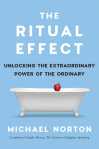 The Ritual Effect by Michael Norton [April 9, Scribner]: Many use the words “habit” and “ritual” interchangeably, but the Harvard Business School behavioral scientist argues convincingly that they are very different. While a habit is an automatic, routine action, rituals are “emotional catalysts that energize, inspire, and elevate us.” He presents an engaging and commonsense précis of his research, making a strong case for rituals’ importance in the personal and professional spheres as people mark milestones, form relationships, or simply “savor the experiences of everyday life.”
Other 2024 releases I’ve read:
(in publication date order)
 House Cat by Paul Barbera [Jan. 2, Thames & Hudson]: The Australian photographer Paul Barbera’s lavish art book showcases eye-catching architecture and the pets inhabiting these stylish spaces. Whether in a Revolutionary War-era restoration or a modernist show home, these cats preside with a befitting dignity. (Shelf Awareness review forthcoming)
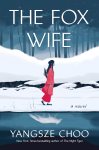 The Fox Wife by Yangsze Choo [Feb. 13, Henry Holt/Quercus]: Choo’s third novel is steeped in Chinese folklore, like her previous work, this time with a focus on tantalizing stories related to foxes, which were often worshiped at village shrines in China. Two tandem searches ramp up the level of suspense: in the winter of 1908 in Manchuria, in northeast China, a detective investigates a series of unexplained deaths; at the same time, a fox-woman masquerading as a servant plots vengeance against the man who murdered her child.
 The Only Way Through Is Out by Suzette Mullen [Feb. 13, University of Wisconsin Press]: A candid, inspirational memoir traces the events leading to her midlife acceptance of her lesbian identity and explores the aftermath of her decision to leave her marriage and build “a life where I would choose desire over safety.” The book ends on a perfect note as Mullen attends her first Pride festival aged 56. “It’s never too late” is the triumphant final line. (Foreword review forthcoming)
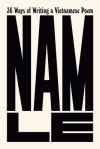 36 Ways of Writing a Vietnamese Poem by Nam Le [March 5, Knopf]: A fearless poetry debut prioritizes language and voice to explore inherited wartime trauma and expose anti-Asian racism. Each poem is titled after a rhetorical strategy or analytical mode. Anaphora is one sonic technique used to emphasize the points. Language and race are intertwined. This is a prophet’s fervent truth-telling. High-concept and unapologetic, this collection from a Dylan Thomas Prize winner pulsates. (Shelf Awareness review forthcoming)
Currently reading:
(in release date order; all for Shelf Awareness review)
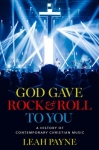 God Gave Rock and Roll to You: A History of Contemporary Christian Music by Leah Payne [Jan. 4, Oxford University Press]: “traces the history and trajectory of CCM in America and, in the process, demonstrates how the industry, its artists, and its fans shaped—and continue to shape—conservative, (mostly) white, evangelical Protestantism.”
 Raised by Wolves: Fifty Poets on Fifty Poems, A Graywolf Anthology [Jan. 23, Graywolf Press]: “Graywolf poets have selected fifty poems by Graywolf poets, offering insightful prose reflections on their selections. What arises is a choral arrangement of voices and lineages across decades, languages, styles, and divergences, inspiring a shared vision for the future.”
 The Paris Novel by Ruth Reichl [April 30, Random House]: “When her estranged mother dies, Stella is left with an unusual gift: a one-way plane ticket, and a note reading ‘Go to Paris’. But Stella is hardly cut out for adventure … When her boss encourages her to take time off, Stella resigns herself to honoring her mother’s last wishes.”
Will you look out for one or more of these?
Any other 2024 reads you can recommend?
That’s it for me until later next week when I start in on my year-end round-ups (DNFs, miscellaneous superlatives, books of the year, and final statistics). Merry Christmas!
#NovNov23 Week 4, “The Short and the Long of It”: W. Somerset Maugham & Jan Morris
Hard to believe, but it’s already the final full week of Novellas in November and we have had 109 posts so far! This week’s prompt is “The Short and the Long of It,” for which we encourage you to pair a novella with a nonfiction book or novel that deals with similar themes or topics. The book pairings week of Nonfiction November is always a favourite (my 2023 contribution is here), so think of this as an adjacent – and hopefully fun – project. I came up with two pairs: one fiction and one nonfiction. In the first case, the longer book led me to read a novella, and it was vice versa for the second.

W. Somerset Maugham
The House of Doors by Tan Twan Eng (2023)
&
Liza of Lambeth by W. Somerset Maugham (1897)
I wasn’t a huge fan of The Garden of Evening Mists, but as soon as I heard that Tan Twan Eng’s third novel was about W. Somerset Maugham, I was keen to read it. Maugham is a reliably readable author; his books are clearly classic literature but don’t pose the stylistic difficulties I now experience with Dickens, Trollope et al. And yet I know that Booker Prize followers who had neither heard of nor read Maugham have enjoyed this equally. I’m surprised it didn’t make it past the longlist stage, as I found it as revealing of a closeted gay writer’s life and times as The Master (shortlisted in 2004) but wider in scope and more rollicking because of its less familiar setting, true crime plot and female narration.
The main action is set in 1921, as “Willie” Somerset Maugham and his secretary, Gerald, widely known to be his lover, rest from their travels in China and the South Seas via a two-week stay with Robert and Lesley Hamlyn at Cassowary House in Penang, Malaysia. Robert and Willie are old friends, and all three men fought in the First World War. Willie’s marriage to Syrie Wellcome (her first husband was the pharmaceutical tycoon) is floundering and he faces financial ruin after a bad investment. He needs a good story that will sell and gets one when Lesley starts recounting to him the momentous events of 1910, including a crisis in her marriage, volunteering at the party office of Chinese pro-democracy revolutionary Dr Sun Yat Sen, and trying to save her friend Ethel Proudlock from a murder charge.

It’s clever how Tan weaves all of this into a Maugham-esque plot that alternates between omniscient third-person narration and Lesley’s own telling. The glimpses of expat life and Asia under colonial rule are intriguing, and the scene-setting and atmosphere are sumptuous – worthy of the Merchant Ivory treatment. I was left curious to read more by and about Maugham, such as Selina Hastings’ biography. (Public library) 
But for now I picked up one of the leather-bound Maugham books I got for free a few years ago. Amusingly, the novella-length Liza of Lambeth is printed in the same volume with the travel book On a Chinese Screen, which Maugham had just released when he arrived in Penang.
{SPOILERS AHEAD}
This was Maugham’s debut novel and drew on his time as a medical intern in the slums of London. In tone and content it falls almost perfectly between Dickens and Hardy, because on the one hand Liza Kemp and her neighbours are cheerful paupers even though they work in factories, have too many children and live in cramped quarters; on the other hand, alcoholism and domestic violence are rife, and the wages of sexual sin are death. All seems light to start with: an all-village outing to picnic at Chingford; pub trips; and harmless wooing as Liza rebuffs sweet Tom in favour of a flirtation with married Jim Blakeston.
 At the halfway point, I thought we were going full Tess of the d’Urbervilles – how is this not a rape scene?! Jim propositions her four times, ignoring her initial No and later quiet. “‘Liza, will yer?’ She still kept silence, looking away … Suddenly he shook himself, and closing his fist gave her a violent, swinging blow in the belly. ‘Come on,’ he said. And together they slid down into the darkness of the passage.” So starts their affair, which leads to Liza getting beaten up by Mrs Blakeston in the street and then dying of an infection after a miscarriage. The most awful character is Mrs Kemp, who spends the last few pages – while Liza is literally on her deathbed – complaining of her own hardships, congratulating herself on insuring her daughter’s life, and telling a blackly comic story about her husband’s corpse not fitting in his oak coffin and her and the undertaker having to jump on the lid to get it to close.
Liza isn’t entirely the stereotypical whore with the heart of gold, but she is a good-time girl (“They were delighted to have Liza among them, for where she was there was no dullness”) and I wonder if she could even have been a starting point for Eliza Doolittle in Pygmalion. Maugham’s rendering of the cockney accent is over-the-top –
“‘An’ when I come aht,’ she went on, ‘’oo should I see just passin’ the ’orspital but this ’ere cove, an’ ’e says to me, ‘Wot cheer,’ says ’e, ‘I’m goin’ ter Vaux’all, come an’ walk a bit of the wy with us.’ ‘Arright,’ says I, ‘I don’t mind if I do.’”
– but his characters are less caricatured than Dickens’s. And, imagine, even then there was congestion in London:
“They drove along eastwards, and as the hour grew later the streets became more filled and the traffic greater. At last they got on the road to Chingford, and caught up numbers of other vehicles going in the same direction—donkey-shays, pony-carts, tradesmen’s carts, dog-carts, drags, brakes, every conceivable kind of wheeled thing, all filled with people”
In short, this was a minor and derivative-feeling work that I wouldn’t recommend to those new to Maugham. He hadn’t found his true style and subject matter yet. Luckily, there’s plenty of other novels to try. (Free mall bookshop) [159 pages]
Jan Morris
Conundrum by Jan Morris (1974)
&
Jan Morris: Life from Both Sides, A Biography by Paul Clements (2022)

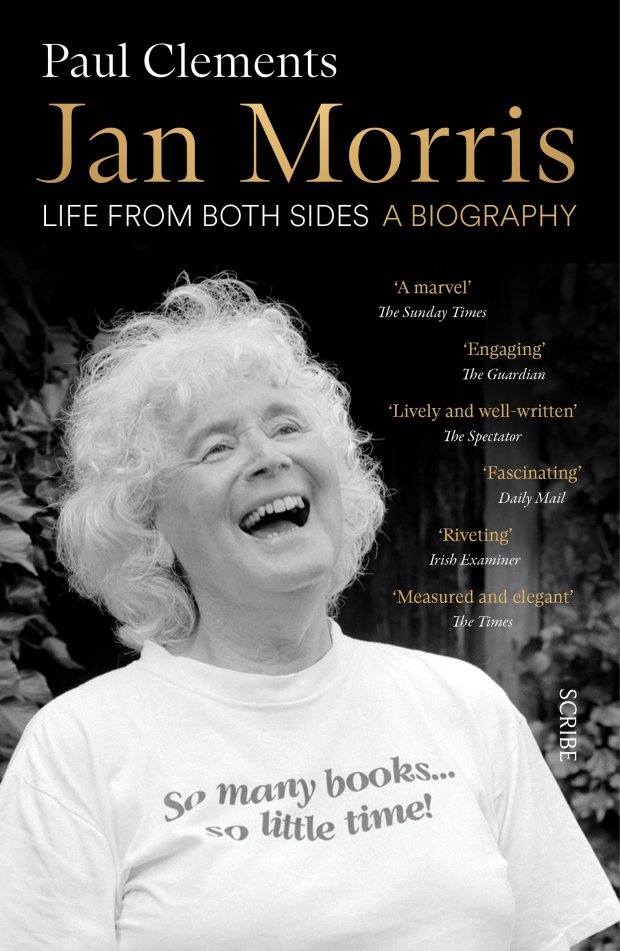
Back in 2021, I reread and reviewed Conundrum during Novellas in November. It’s a short memoir that documents her spiritual journey towards her true identity – she was a trans pioneer and influential on my own understanding of gender. In his doorstopper of a biography, Paul Clements is careful to use female pronouns throughout, even when this is a little confusing (with Morris a choirboy, a soldier, an Oxford student, a father, and a member of the Times expedition that first summited Everest). I’m just over a quarter of the way through the book now. Morris left the Times before the age of 30, already the author of several successful travel books on the USA and the Middle East. I’ll have to report back via Love Your Library on what I think of this overall. At this point I feel like it’s a pretty workaday biography, comprehensive and drawing heavily on Morris’s own writings. The focus is on the work and the travels, as well as how the two interacted and influenced her life.

Short Stories in September Roundup: Munro, Ulrich; Virago Anthology
This comes a few days later than I intended, but better late than never. I’ve been focusing on short stories in September for the last eight years. In September 2021 I read 12 short story collections; last year it was 11.5; this year I finished 11, so pretty much par for the course, and pushing my year-to-date total to 30 story collections – not bad going for someone who feels like she hardly ever reads stories and doesn’t seek them out. This year’s reviews are here, here and here.
Hateship, Friendship, Courtship, Loveship, Marriage by Alice Munro (2001)
I always think I’ve never read Munro before, but that’s not the case. A decade or more ago I read Lives of Girls and Women. The ironic thing is that I chose it because I thought it was the odd one out in her oeuvre, being a novel rather than short stories. In fact, it’s a linked story collection, and really they might as well be discrete stories. That book left no impression, but I’d happened to accumulate several more Munro collections over the years and, especially after she won the Nobel, felt delinquent for not reading her.
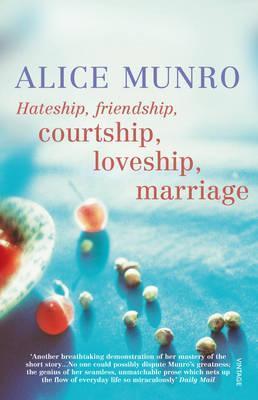 There are nine stories in the 320-page volume, so the average story here is 30–35 pages – a little longer than I tend to like, but it allows Munro to fill in enough character detail that these feel like miniature novels; they certainly have all the emotional complexity. Her material is small-town Ontario and the shifts and surprises in marriages and dysfunctional families.
More commonly, she employs an omniscient third person to allow her to move between minds, yet I found that the three first-person stories were among the most memorable: in “Family Furnishings,” a woman recalls the encounter with her father’s cousin that made her resolve to be a writer; in “Nettles,” childhood friends meet again in midlife and a potential affair is quashed by the report of a tragedy; in “Queenie,” a young woman spends a short time living with her older stepsister and her husband, her music teacher she ran off with. This last one reminded me of Tessa Hadley’s stories – no doubt Munro has been an influence on many.
For instance, the title story, which opens the collection, gave me strong Elizabeth Hay and Mary Lawson vibes. A housekeeper sets off on the train to start a new life, encouraged by a romantic correspondence fabricated by her adolescent charge, Sabitha, and her friend. Munro pays close attention to domestic minutiae like furniture and clothing. Illness and death are frequent seeds of a story: cancer in “Floating Bridge,” the suicide of an ALS patient in “Comfort,” and dementia in the oft-anthologized “The Bear Came Over the Mountain.”
Individual plots are less likely to stay with me than the quality of the prose, the compassionate eye, and the feeling of being immersed in a novel-length narrative when really I was only halfway through a few dozen pages. I’ll certainly read more Munro collections. (Free from a neighbour)
Close Company: Stories of Mothers and Daughters, ed. Christine Park and Caroline Heaton (1987)
 Back in 2021, I read 14 of these 25 stories (reviewed here) and set the book aside. At that time I noted the repeated theme of women’s expectations of their daughters, and that was true of the remainder as well. The editors quote Simone de Beauvoir in the introduction, “the daughter is for the mother at once her double and another person.” So in Emily Prager’s “A Visit from the Footbinder,” Lady Guo Guo subjects her spirited daughter to the same painful procedure she underwent as a child. The cultural detail was overpowering in this one, like the author felt she had to prove she’d done her research on China. The father–daughter relationship struck me more in Judith Chernaik’s Jewish Brooklyn-set “Honor Thy Father and Thy Mother.”
From this batch, two stood out the most: in “Children’s Liberation” by Jan Clausen, Lisa rebels against her lesbian mother’s bohemian lifestyle by idolizing heterosexual love stories; and in Zhang Jie’s “Love Must Not Be Forgotten,” a daughter comes to understand her mother by reading her diary about her doomed romance. My overall favourites, though, were still the stories by Jane Gardam, Janet Frame, Alice Walker and Charlotte Perkins Gilman. (Free mall bookshop)
Small, Burning Things by Cathy Ulrich (2023)
 Ulrich’s second collection contains 50 flash fiction pieces, most of which were first published in literary magazines. She often uses the first-person plural and especially the second person; both “we” and “you” are effective ways of implicating the reader in the action. Her work is on a speculative spectrum ranging from magic realism to horror. Some of the situations are simply bizarre – teenagers fall from the sky like rain; a woman falls in love with a giraffe; the mad scientist next door replaces a girl’s body parts with robotic ones – while others are close enough to the real world to be terrifying. The dialogue is all in italics. Some images recur later in the collection: metamorphoses, spontaneous combustion. Adolescent girls and animals are omnipresent. At a certain point this started to feel repetitive and overlong, but in general I appreciated the inventiveness.
Published on 2 July by Okay Donkey Press. With thanks to publicist Lori Hettler for the free e-copy for review.
 I also read the first two stories in The Best Short Stories 2023: The O. Henry Prize Winners, edited by Lauren Groff. If these selections by Ling Ma and Catherine Lacey are anything to go by, Groff’s taste is for gently magical stories where hints of the absurd or explained enter into everyday life. Ma’s “Office Hours” has academics passing through closet doors into a dream space; the title of Lacey’s “Man Mountain” is literal. I’ll try to remember to occasionally open the book on my e-reader to get through the rest.
Book Serendipity, Mid-February to Mid-April
I call it “Book Serendipity” when two or more books that I read at the same time or in quick succession have something in common – the more bizarre, the better. This is a regular feature of mine every couple of months. Because I usually have 20–30 books on the go at once, I suppose I’m more prone to such incidents. The following are in roughly chronological order.
Last time, my biggest set of coincidences was around books set in or about Korea or by Korean authors; this time it was Ghana and Ghanaian authors:
- Reading two books set in Ghana at the same time: Fledgling by Hannah Bourne-Taylor and His Only Wife by Peace Adzo Medie. I had also read a third book set in Ghana, What Napoleon Could Not Do by DK Nnuro, early in the year and then found its title phrase (i.e., “you have done what Napoleon could not do,” an expression of praise) quoted in the Medie! It must be a popular saying there.
- Reading two books by young Ghanaian British authors at the same time: Quiet by Victoria Adukwei Bulley and Maame by Jessica George.


And the rest:
- An overweight male character with gout in Where the God of Love Hangs Out by Amy Bloom and The Secret Diaries of Charles Ignatius Sancho by Paterson Joseph.
- I’d never heard of “shoegaze music” before I saw it in Michelle Zauner’s bio at the back of Crying in H Mart, but then I also saw it mentioned in Pulling the Chariot of the Sun by Shane McCrae.
- Sheila Heti’s writing on motherhood is quoted in Without Children by Peggy O’Donnell Heffington and In Vitro by Isabel Zapata. Before long I got back into her novel Pure Colour. A quote from another of her books (How Should a Person Be?) is one of the epigraphs to Lorrie Moore’s I Am Homeless If This Is Not My Home.


- Reading two Mexican books about motherhood at the same time: Still Born by Guadalupe Nettel and In Vitro by Isabel Zapata.
- Two coming-of-age novels set on the cusp of war in 1939: The Inner Circle by T.C. Boyle and Martha Quest by Doris Lessing.
- A scene of looking at peculiar human behaviour and imagining how David Attenborough would narrate it in a documentary in Notes from a Small Island by Bill Bryson and I Have Some Questions for You by Rebecca Makkai.
- The painter Caravaggio is mentioned in a novel (The Things We Do to Our Friends by Heather Darwent) plus two poetry books (The Fourth Sister by Laura Scott and Manorism by Yomi Sode) I was reading at the same time.


- Characters are plagued by mosquitoes in The Last Animal by Ramona Ausubel and Through the Groves by Anne Hull.
- Edinburgh’s history of grave robbing is mentioned in The Things We Do to Our Friends by Heather Darwent and Womb by Leah Hazard.
- I read a chapter about mayflies in Lev Parikian’s book Taking Flight and then a poem about mayflies later the same day in Ephemeron by Fiona Benson.
- Childhood reminiscences about playing the board game Operation and wetting the bed appear in Homesick by Jennifer Croft and Through the Groves by Anne Hull.

- Fiddler on the Roof songs are mentioned in Through the Groves by Anne Hull and We All Want Impossible Things by Catherine Newman.
- There’s a minor character named Frith in Shadow Girls by Carol Birch and Rebecca by Daphne du Maurier.
- Scenes of a female couple snogging in a bar bathroom in Through the Groves by Anne Hull and The Garnett Girls by Georgina Moore.

- The main character regrets not spending more time with her father before his sudden death in Maame by Jessica George and Pure Colour by Sheila Heti.
- The main character is called Mira in Birnam Wood by Eleanor Catton and Pure Colour by Sheila Heti, and a Mira is briefly mentioned in one of the stories in Before You Suffocate Your Own Fool Self by Danielle Evans.
- Macbeth references in Shadow Girls by Carol Birch and Birnam Wood by Eleanor Catton – my second Macbeth-sourced title in recent times, after Tomorrow and Tomorrow and Tomorrow by Gabrielle Zevin last year.


- A ‘Goldilocks scenario’ is referred to in Womb by Leah Hazard (the ideal contraction strength) and Taking Flight by Lev Parikian (the ideal body weight for a bird).
- Caribbean patois and mention of an ackee tree in the short story collection If I Survive You by Jonathan Escoffery and the poetry collection Cane, Corn & Gully by Safiya Kamaria Kinshasa.
- The Japanese folktale “The Boy Who Drew Cats” appeared in Our Missing Hearts by Celeste Ng, which I read last year, and then also in Enchantment by Katherine May.


- Chinese characters are mentioned to have taken part in the Tiananmen Square massacre/June 4th incident in Dear Chrysanthemums by Fiona Sze-Lorrain and Oh My Mother! by Connie Wang.
- Endometriosis comes up in What My Bones Know by Stephanie Foo and Womb by Leah Hazard.

What’s the weirdest reading coincidence you’ve had lately?
 Bookish Beck = Rebecca Foster. American transplant to England. Freelance proofreader and book reviewer.
 Bookish Beck