Book Serendipity, Mid-November–Early January
This is a short set but I’ll post it now to keep things ticking over. I’ve lost nearly a week to the upper respiratory virus from hell, and haven’t felt up to sitting at my computer for any extended periods of time. I had to request extensions on a few of my work deadlines; I’ll hope to be back to normal blogging next week, too.
I call it “Book Serendipity” when two or more books that I read at the same time or in quick succession have something in common – the more bizarre, the better. This is a regular feature of mine every couple of months. Because I usually have 20–30 books on the go at once, I suppose I’m more prone to such incidents. People frequently ask how I remember all of these coincidences. The answer is: I jot them down on scraps of paper or input them immediately into a file on my PC desktop; otherwise, they would flit away! Feel free to join in with your own.
The following are in roughly chronological order.
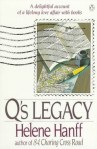
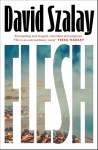
- Ayot St Lawrence as a setting in Q’s Legacy by Helene Hanff and Flesh by David Szalay.
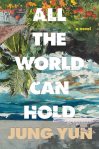
- A man who has panic attacks in Pan by Michael Clune and All the World Can Hold by Jung Yun.
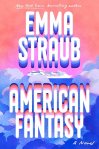
- Two of my Shelf Awareness PRO (early) reviews in a row were of 2026 novels set on a celebrity/reunion cruise: All the World Can Hold by Jung Yun, followed by American Fantasy by Emma Straub. In both, the narrative alternates between three main characters, the cruise is to celebrate a milestone birthday for a passenger’s relative, and there’s a celebrity who’s in AA.
- A teacher–student relationship develops into a friendship in The Irish Goodbye by Beth Ann Fennelly (with Molly McCully Brown, whose Places I’ve Taken My Body I’ve reviewed) and Lessons from My Teachers by Sarah Ruhl (with Max Ritvo, about whom she wrote a whole book).
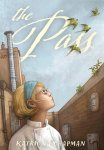 Someone becomes addicted to benzodiazepines in The Pass by Katriona Chapman and All the World Can Hold by Jung Yun (both 2026 releases).
- A New York City event scheduled to occur on September 15 or 16, 2001 is postponed because of 9/11 in Joyride by Susan Orlean (her wedding) and All the World Can Hold by Jung Yun (a cruise departure – it’s moved to Boston).
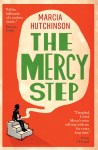
- A 1960s attempted suicide by putting one’s head in a gas oven in The Mercy Step by Marcia Hutchinson and The Soul of Kindness by Elizabeth Taylor.
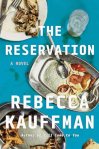
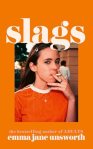
- A plan to eat cheese to induce dreams in The Reservation by Rebecca Kauffman and Slags by Emma Jane Unsworth.
- An author is (at least initially) aghast at the liberties taken with an adaptation of her book in Spent by Alison Bechdel and Joyride by Susan Orlean (the film Adaptation, one of my favourites, bears little relation to her nonfiction work The Orchid Thief, which I also love).
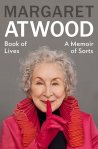
- A North American author meets her British publishers, André Deutsch and Diana Athill, in Book of Lives by Margaret Atwood and Q’s Legacy by Helene Hanff. (Atwood also mentions Sir Arthur Quiller-Couch, the title reference in the Hanff.)
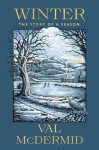
- An older white woman feels compelled to add, as an aside after a memory of slightly dodgy behaviour observed, that cultural appropriation was not a thing in those days in Book of Lives by Margaret Atwood and Winter by Val McDermid.
- I read two books in 2025 with a title taken from a Christian Wiman poem: A Truce that Is Not Peace by Miriam Toews, then Some Bright Nowhere by Ann Packer.
- A special trip undertaken for a younger sister’s milestone birthday: a road trip through Scotland in a campervan in Slags by Emma Jane Unsworth for a 40th; and a boy band reunion cruise to the Bahamas for a 45th in American Fantasy by Emma Straub.
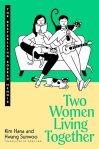
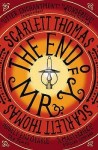
- A reference to Sartre’s “hell is other people” line (paraphrased) in Two Women Living Together by Kim Hana and Hwang Sunwoo and The End of Mr Y by Scarlett Thomas.
- The clock-drawing test as a shorthand for assessing a loved one’s dementia in Book of Lives by Margaret Atwood (her partner Graeme) and Joyride by Susan Orlean (her mother).
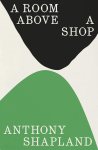 A sexual encounter between two men is presaged by them relieving themselves side by side at urinals in A Room Above a Shop by Anthony Shapland and The End of Mr Y by Scarlett Thomas.
- An older man who knows he’s having a stroke just wants to sit quietly in a chair and not be taken to hospital in Book of Lives by Margaret Atwood (her partner Graeme) and The Boy from the Sea by Garrett Carr.
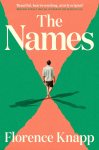
- A man who’s gone through Alcoholics Anonymous gets dangerously close to falling off the wagon: picks up a bottle of gin in a shop in The Names by Florence Knapp / buys a drink at a bar in All the World Can Hold by Jung Yun.
- I was reading two nonfiction books with built-in red ribbon bookmarks at the same time: Book of Lives by Margaret Atwood and Robin by Stephen Moss.
- Homoeopathy is an element in The Names by Florence Knapp and The End of Mr Y by Scarlett Thomas.
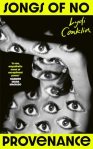
- A character named Sparrow in Spent by Alison Bechdel and Songs of No Provenance by Lydi Conklin.

- A mention of special celebrations for a Korean mother’s 70 birthday in Two Women Living Together by Kim Hana and Hwang Sunwoo and All the World Can Hold by Jung Yun.
- Some kinky practices in Songs of No Provenance by Lydi Conklin and Mr Norris Changes Trains by Christopher Isherwood.
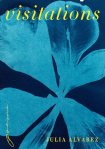
- A girl from an immigrant family reads Greek mythology for escape in Visitations by Julia Alvarez and The Mercy Step by Marcia Hutchinson.
- “View halloo” (originally a fox-hunting term) is used as a greeting in Talking It Over by Julian Barnes and Arsenic for Tea by Robin Stevens.
What’s the weirdest reading coincidence you’ve had lately?
Literary Wives Club: The Soul of Kindness by Elizabeth Taylor (1964)
(With apologies for today’s multiple posts!)
 This was my fifth time reading Elizabeth Taylor. It’s a later novel of hers: the ninth of 12. As per usual, there’s an ensemble cast, but this time I had some trouble keeping the characters straight and finding enough sympathy for all of them. There are a dozen main players if you count housekeepers and neighbours. The opening scene is Flora’s wedding to Richard. She’s the title character: beautiful and well-meaning yet sometimes thoughtless. As she grows into the roles of wife and mother, Flora believes everyone should follow her into marriage.
Although as good as gold, she had inconvenient plans for other people’s pleasure, and ideas differing from her own she was unable to imagine.
Her interfering can be comical – she doesn’t realize Patrick is homosexual, so her attempt to match-make between him and her friend Meg is futile.
If she could get Meg settled, Flora had decided, she herself would be quite happy, but her friend thought she went about it in strange ways and wondered what, if anything, Flora knew about people.
When she convinces her father-in-law, Percy, to marry his mistress, Barbara, it’s the wrong thing for them. (“I think we are very well as we are, Percy,” Ba had said.) By ignoring Meg’s little brother Kit’s crush on her and encouraging his hopeless dream of acting, Flora nearly precipitates a tragedy – and Kit’s lover decides to let her know about her misstep.
I got hints of Emma so was pleased to see that comparison made in Philip Hensher’s introduction, in which he considers The Soul of Kindness in the context of the English “novel of community.” Flora herself somewhat fades into the background as we spend time rotating through the other characters in pairs. I found Flora silly and stubborn but not deserving of others’ ire. I felt most for Richard and for her mother, Mrs Secretan, both of whom she unfairly underestimates and sidelines.
This wasn’t one of my favourite Taylors – those are Mrs. Palfrey at the Claremont, which I’ve read twice, and In a Summer Season – but she always writes with grace and psychological acuity. Here I loved a description of the fog – “It’s disorganising, like snow. It makes a different world” – and the fact that the book starts and ends with throwing crumbs to birds. Flora’s pet doves must be a symbol of something: the peace she tries to keep but unwittingly disturbs? In any case, the next time you find a book a slog, here’s her diplomatic strategy for talking about it:
she said that she was taking the books in tiny sips, à petites doses, as Henry James wrote when he was up to the same trick – as if it were the most precious wine. That meant that she was bogged down in it.
(Secondhand – Community Furniture Project, Newbury?)
The main question we ask about the books we read for Literary Wives is:
What does this book say about wives or about the experience of being a wife?
Marriage is not a solution to a problem. (Especially if that problem is loneliness.) Some people aren’t the marrying kind, for whatever reason. Being a spouse can be one aspect of a person’s identity, but it’s dangerous when it becomes defining – this is probably the single common moral I’d draw from all that we’ve read for the club.
See Becky’s, Kate’s and Kay’s reviews, too! (Naomi is taking a break.)
Coming up next, in March: Mrs. Bridge by Evan S. Connell.
November Releases Including #NovNov24: Bennett, Pimlott, Rishøi, Shattuck
Two belated novellas: one a morbid farce set at an old folks’ home; the other a sweet Norwegian tale that offers sisterhood and magic as ways to survive a rough upbringing. Plus a lovely poetry pamphlet about the early days of widowhood and a linked short story collection spanning several centuries of art and relationships in New England.
Killing Time by Alan Bennett
I’d only previously read The Uncommon Reader by Alan Bennett; I perpetually have him confused with Arnold Bennett, by whom I know more. It could be debated whether this is a novella by word count, but even if more of a short story, for me it counts for #NovNov24 because it’s in a stand-alone volume, as publishing partner Faber produced for Claire Keegan’s So Late in the Day last year.
I polished this off in one sitting. Bennett’s black comedy is set at a posh home for the elderly, the Edwardian mansion Hill Topp House. (Residents know to be on their best behaviour lest they be demoted to an inferior neighbouring facility, Low Moor.) When a prospective client calls, Mrs McBryde enthusiastically lists the assets:
We have a choir and on special occasions a glass of dry sherry. It’s less of a home and more of a club and very much a community. We go on frequent trips out. Only last week we went to a local farm where they have a flamingo. … We don’t vegetate at Hill Topp. And the cuisine is not unadventurous. It’s not long since we had a Norwegian evening.
 The dialogue is sparkling, just like you’d expect from a playwright. As in the Hendrik Groen books and Elizabeth Taylor’s Mrs Palfrey at the Claremont, the situation invites cliques and infantilizing. The occasional death provides a bit more excitement than jigsaws and knitting. Ageing bodies may be pitiable (the incontinence!), but sex remains a powerful impulse.
Here is where readers might start to feel disconnected from Bennett’s dated humour. The window cleaner turned gigolo is somewhat amusing; the repeated gag of a flasher, not so much. “Has she seen the sights yet?” two ladies ask. And a jesting conversation about clerical sexual abuse scandals seems particularly ill considered given recent news.
The story is most interesting and fresh once Covid comes onto the scene. Some perish early on; the survivors, ungoverned, do their best. I loved the detail of a resident turning a velvet dress into 60 masks. Two objects, one of them depicted on the cover (it’s not a grenade as I thought at first!), come to have particular importance. I liked this but thought by favouring broad humour it sacrificed characterization or compassion. You’ll enjoy it if you’re fond of wicked comedy by the likes of Alan Ayckbourn. [112 pages]
With thanks to Profile Books for the free copy for review.
After the Rites and Sandwiches: Poems by Kathy Pimlott
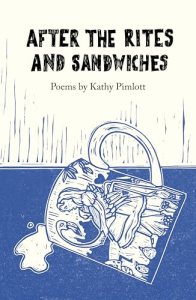 The 18 poems in this pamphlet (in America it would be called a chapbook) orbit the sudden death of Pimlott’s husband a few years ago. By the time she found Robert at the bottom of the stairs, there was nothing paramedics could do. What next? The callousness of bureaucracy: “Your demise constitutes a quarter off council tax; / the removal of a vote you seldom cast and then / only to be contrary; write-off of a modest overdraft; / the bill for an overpaid pension” (from “Death Admin I”). Attempts at healthy routines: “I’ve written my menu for the week. Today’s chowder. / I manage ten pieces of the 1000-piece jigsaw’s scenes / from Jane Austen. Tomorrow I’ll visit friends and say // it’s alright, it’s alright, seventy, eighty percent / alright” (from “How to be a widow”). Pimlott casts an eye over the possessions he left behind, remembering him in gardens and on Sunday walks of the sort they took together. Grief narratives can err towards bitter or mawkish, but this one never does. Everyday detail, enjambment and sprightly vocabulary lend the wry poems a matter-of-fact grace. I plan to pass on my copy to a new book club member who was widowed unexpectedly in May – no doubt she’ll recognise the practical challenges and emotional reality depicted.
With thanks to The Emma Press for the free copy for review.
Brightly Shining by Ingvild Rishøi (2021; 2024)
[Translated from the Norwegian by Caroline Waight]
 Ten-year-old Ronja and her teenage sister Melissa have to stick together – their single father may be jolly and imaginative, but more often than not he’s drunk and unemployed. They can’t rely on him to keep food in their Tøyen flat; they subsist on cereal. When Ronja hears about a Christmas tree seller vacancy, she hopes things might turn around. Their father lands the job but, after his crew at a local pub pull him back into bad habits, Melissa has to take over his hours. Ronja hangs out at the Christmas tree stand after school, even joining in enthusiastically with publicity. The supervisor, Tommy, doesn’t mind her being around, but it’s clear that Eriksen, the big boss, is uncomfortable with even a suggestion of child labour.
It’s touching to see Melissa take on a caring role and to meet the few indisputably good people who help the sisters, such as their elderly neighbour, Aronsen. Ronja’s innocent narration emphasizes her disbelief at their father’s repeated failings and also sets the story up for a late swerve into what seems like magic realism. I’m genuinely not sure what’s supposed to happen at the end, but the sisters find themselves alone in a wintry storm and the language of miracles is used. Rishøi’s debut will surely be compared to Small Things Like These and other classic holiday novellas. I found it a little obvious and saccharine, but if you find the right mood and moment it might just tug at your heart in the run-up to Christmas. [182 pages]
With thanks to Grove Press UK for the free copy for review.
The History of Sound by Ben Shattuck
“history is personal, even when it isn’t”
The dozen stories of Shattuck’s fiction debut form a “hook-and-chain” structure of five couplets, bookended by a first and last story that are related to each other. The links are satisfyingly overt: A pair might take place in the same house in different centuries, or the second will fill in the history of the characters from the first. In “Edwin Chase of Nantucket,” the eponymous figure recognizes his bereaved mother’s loneliness and does her a kindness. “Silver Clip,” which follows, is separated by 200 years, but its accounts of a young painter living in his ancestral island home reprises the motifs of grief, compassion and memory. “Graft,” about a woman spurned in the 1880s, and “Tundra Swan,” in which a man concocts a swindle to pay for his son’s rehab in the present day, are connected by a Cape Cod orchard. Artefacts and documents also play important roles: a journal accounts for a mysterious mass death, a radio transcript and a photograph explain a well-meaning con, and an excerpt from a history textbook follows up on the story of the religious cult in “The Children of New Eden.”
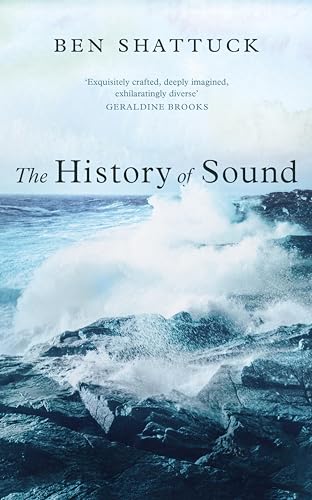 My favourite individual story was “August in the Forest,” about a poet whose artist’s fellowship isn’t all it cracked up to be – the primitive cabin being no match for a New Hampshire winter. His relationships with a hospital doctor, Chloe, and his childhood best friend, Elizabeth, seem entirely separate until Elizabeth returns from Laos and both women descend on him at the cabin. Their dialogues are funny and brilliantly awkward (“Sorry not all of us are quietly chiseling toward the beating heart of the human experience, August. One iamb at a time”) and it’s fascinating to watch how, years later, August turns life into prose. But the crowning achievement is the opening title story and its counterpart, “Origin Stories,” about folk music recordings made by two university friends during the First World War – and the afterlife of both the songs and the men.
From the start I was reminded strongly of North Woods by Daniel Mason, and particular sequences recall Shoot the Horses First by Leah Angstman and An Account of the Decline of the Great Auk, According to One Who Saw It by Jessie Greengrass. It’s a slight shame for Shattuck that what he was doing here didn’t seem as original to me because of my familiarity with these predecessors. Yet, to my surprise, I found that The History of Sound was more consistent than any of those. With the exception of a few phrases from “Graft” (“living room,” “had sex” and “boring” don’t strike me as 1880s lingo), all of the stories are historically convincing, and the very human themes of lust, parenthood, sorrow and frustrated ambition resonate across centuries and state lines. Really beautiful. (See Susan’s review too.)
[Some you-couldn’t-make-it-up trivia about Shattuck: he’s married to Jenny Slate (author of Little Weirds et al., as well as an actress known to me as Mona Lisa from Parks and Recreation); and he runs the oldest general store in America, built in 1793.]
With thanks to Swift Press for the free copy for review.
Which of these November releases catches your eye? What others can you recommend?
#WITMonth, Part I: Novellas by Eva Baltasar and Françoise Sagan
I’m starting off my Women in Translation month coverage with mini responses to two novellas: one Catalan and one French; both about disaffected women trying to work out what they want from life.
Mammoth by Eva Baltasar (2022; 2024)
[Translated from the Catalan by Julia Sanches]
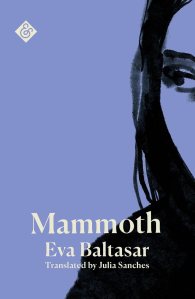 I’d been vaguely attracted by descriptions of the Spanish poet’s novels Permafrost and Boulder, which are also about lesbians in odd situations. Mammoth is the third book in a loose trilogy. Its 24-year-old narrator is so desperate for a baby that she’s decided to have unprotected sex with men until a pregnancy results. In the meantime, her sociology project at nursing homes comes to an end and she moves from Barcelona to a remote farm where she develops subsistence skills and forms an interdependent relationship with the gruff shepherd. “I’d been living in a drowning city, and I need this – the restorative silence of a decompression chamber. … my past is meaningless, and yet here, in this place, there is someone else’s past that I can set up and live in awhile.” For me this was a peculiar combination of distinguished writing (“The city pounces on the still-pale light emerging from the deep sea and seizes it with its lucrative forceps”) but absolutely repellent story, with a protagonist whose every decision makes you want to throttle her. An extended scene of exterminating feral cats certainly didn’t help matters. I’d be wary of trying Baltasar again.
With thanks to And Other Stories for the proof copy for review.
Aimez-vous Brahms… by Françoise Sagan (1959; 1960)
[Translated from the French by Peter Wiles]
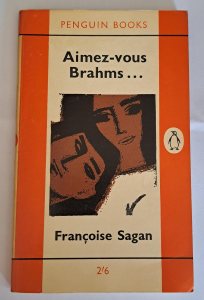 At age 39, divorced interior decorator Paule is “passionately concerned with her beauty and battling with the transition from young to youngish woman”. (Ouch. But true.) It’s an open secret that her partner Roger is always engaged in a liaison with a young woman; people pity her and scorn Roger for his infidelity. But when Paule has a dalliance with a client’s son, 25-year-old lawyer Simon, a double standard emerges: “they had never shown her the mixture of contempt and envy she was going to arouse this time.” Simon is an idealist, accusing her of “letting love go by, of neglecting your duty to be happy”, but he’s also indolent and too fond of drink. Paule wonders if she’s expected too much from an affair. “Everyone advised a change of air, and she thought sadly that all she was getting was a change of lovers: less bother, more Parisian, so common”.
I was by turns reminded of Chéri by Colette, In a Summer Season by Elizabeth Taylor, and even The Graduate (“Mrs. Robinson,” anyone?). Simon asks the title question to invite Paule to a concert; that she has to ponder it carefully tells her she’s “losing herself, losing track of herself”. But it’s all too easy for the status quo to be reinstated after a brave act. Middle-aged woman makes bid for freedom but ultimately nothing changes: same plot as The Funeral Cryer and any number of other books, but this was so much better. How did Sagan manage such insight at age 24 (and this was her fourth book)?! While not quite as memorable as Bonjour Tristesse, this is another incisive slice of fiction that has aged well apart from using “sodomite” and “Negress” as matter-of-fact terms for bit players. I’d read anything else I can find by Sagan. (Secondhand – Community Furniture Project, Newbury)

What to Read during a Heat Wave
The short answer is whatever you want. A longer answer: you could get stuck into heat-themed and summer-set books; escape by reading about a holiday destination, whether you can get there or not; will yourself cool by reading about icy places; and/or sink into a stack of lighter reading material.
I’ll be employing some or all of these strategies as the mercury climbs. I keep thinking I’ll just give up on work one of these days – my new study has a big window that traps the midday sun, but it remains bearable as long as I use blackout curtains and a desk fan – and read on a couch all afternoon. That hasn’t happened yet, but on Tuesday peak temperatures (of 36 °C) are expected here in the UK, so I may well carry out my threat.
Here’s what I’m reading now in each of those categories, along with some earlier reads I can recommend (with excerpts from my reviews and a link to the full text):
Embrace the Heat
My current reads:
Contemporary
 Golden Boys by Phil Stamper: Four gay high school students in small-town Ohio look forward to a summer of separate travels for jobs and internships and hope their friendships will stay the course. With alternating first-person passages and conversation threads, this YA novel is proving to be a sweet, fun page turner and the perfect follow-up to the Heartstopper series (my summer crush from last year).
Classic
 Summer by Edith Wharton: An adopted young woman (and half-hearted librarian) named Charity Royall gets a shot at romance when a stranger arrives in her New England town. I’m only 30 pages in so far, but this promises to be a great read – but please not as tragic as Ethan Frome? (Apparently, Wharton called it a favourite among her works, and referred to it as “the Hot Ethan,” which I’m going to guess she meant thermally.)
My top recommendations:
Contemporary
 Heatstroke by Hazel Barkworth: From the first word (“Languid”) on, this drips with hot summer atmosphere, with connotations of discomfort and sweaty sexuality. Rachel is a teacher of adolescents as well as the mother of a 15-year-old, Mia. When Lily, a pupil who also happens to be one of Mia’s best friends, goes missing, Rachel is put in a tough spot…
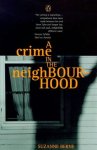 A Crime in the Neighbourhood by Suzanne Berne: Marsha remembers the summer of 1972, when her father left her mother for Aunt Ada and news came of a young boy’s sexual assault and murder in the woods behind a mall. “If you hadn’t known what had happened in our neighborhood, the street would have looked like any other suburban street in America.”
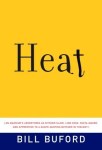 Heat by Bill Buford: You know what they say: if you can’t stand the heat, get out of the kitchen (eat some cold salads instead!). Buford traces TV chef Mario Batali’s culinary pedigree through Italy and London, and later spends stretches of several months in Italy as an apprentice to a pasta-maker and a Tuscan butcher. Exactly what I want from food writing.
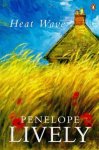 Heat Wave by Penelope Lively: Pauline, a freelance copyeditor in her fifties, has escaped from London to spend a hot summer at World’s End, the Midlands holiday cottage complex she shares with her daughter and her family. The increasing atmospheric threats (drought or storms; combine harvesters coming ever nearer) match the tensions in the household.
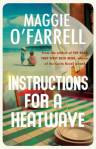 Instructions for a Heatwave by Maggie O’Farrell: Another spot-on tale of family and romantic relationships. The language is unfailingly elegant. It opens with the heat as the most notable character: “It inhabits the house like a guest who has outstayed his welcome: it lies along corridors, it circles around curtains, it lolls heavily on sofas and chairs.”
- This is set during the UK heatwave of 1976, which lives on in collective memory and legend in this country even though its temperature record has been topped (but not the length of the streak). I’ve since tried two other novels set during the summer of ’76 but neither took (maybe you’ll get on better with them?): Water Shall Refuse Them by Lucie McKnight Hardy and In the Place of Fallen Leaves by Tim Pears.
 Or try the American summer of 1975 instead, with Mary Jane by Jessica Anya Blau, a juicy coming-of-age novel set in Baltimore.
Classic
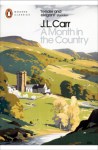 A Month in the Country by J. L. Carr: Tom Birkin, a First World War veteran whose wife has left him, arrives in Oxgodby to uncover the local church’s wall painting of the Judgment Day. “There was so much time that marvelous summer.” There is something achingly gorgeous about this Hardyesque tragicomic romance, as evanescent as ideal summer days.
 The Go-Between by L. P. Hartley: Twelve-year-old Leo Colston is invited to spend the several July weeks leading up to his birthday at his school friend Marcus Maudsley’s home, Brandham Hall. The heat becomes a character in its own right, gloweringly presiding over the emotional tension caused by secrets, spells and betrayals.
 In a Summer Season by Elizabeth Taylor: The title is not only literal, when much of the action takes place, but a metaphor for the fleeting nature of happiness (as well as life itself). Kate remembers pleasant days spent with her best friend and their young children: “It was a long summer’s afternoon and it stood for all the others now. … Their friendship was as light and warming as the summer’s air.”
Escape on Holiday
I try to read on location whenever possible, but if it’s a staycation for you this year, you can still transport yourself somewhere exciting or tropical through fiction.
My current read:
 Mustique Island by Sarah McCoy: “A sun-splashed romp with a rich divorcée and her two wayward daughters in 1970s Mustique, the world’s most exclusive private island [in the Caribbean], where Princess Margaret and Mick Jagger were regulars and scandals stayed hidden from the press.”
My top recommendations:
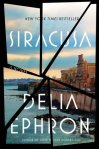 Siracusa by Delia Ephron: A snappy literary thriller about two American couples who holiday together on the Sicilian island of Siracusa. Shifting between the perspectives of the four main characters, it looks back to ask what went disastrously wrong on that trip. A delicious story ripe for a cinematic adaptation.
 Nothing but Blue Sky by Kathleen MacMahon: Set in Aiguaclara, a hidden gem on Spain’s Costa Brava where David and Mary Rose holidayed every summer for 20 years. Most of the book remembers their life together and their previous vacations here. Grief, memory, fate: some of my favourite themes, elegantly treated.
 A Theatre for Dreamers by Polly Samson: Set on the Greek island of Hydra in 1960, this zeroes in on several authors, including a young poet from Canada named Leonard Cohen. We see all of the real-life characters from the perspective of a starry-eyed 17-year-old narrator. You can feel the Mediterranean heat soaking up through your sandals.
 The Vacationers by Emma Straub: Perfect summer reading; perfect vacation reading. Straub writes great dysfunctional family novels featuring characters so flawed and real you can’t help but love and laugh at them. Here, Franny and Jim Post borrow a friend’s home in Mallorca for two weeks, hoping sun and relaxation will temper the memory of Jim’s affair.
Read Yourself Cool
Will reading about snow and ice actually make you feel any cooler? It can’t hurt.
My current reads:
I had a vague Antarctica reading theme going for a while, but have yet to get back into two set-aside reads, Empire Antarctica by Gavin Francis and Lean Fall Stand by Jon McGregor (or pick up Snow Widows by Katherine MacInnes and South Pole Station by Ashley Shelby). Maybe next week!
My top recommendations:
 Among the Summer Snows by Christopher Nicholson: After the death from cancer of his wife Kitty, a botanical illustrator, Nicholson set off for Scotland’s Cairngorms and Ben Nevis in search of patches of snow that persist into summer. “Summer snow is a miracle, a piece of out-of-season magic: to see it is one thing, to make physical contact with it is another.”
 The Still Point by Amy Sackville: A sweltering summer versus an encasing of ice; an ordinary day versus decades of futile waiting. Sackville explores these contradictions only to deflate them, collapsing time such that a polar explorer’s wife and her great-great-niece can inhabit the same literal and emotional space despite being separated by more than a century.
Keep it Light
I’m more likely to read genre fiction (crime, especially) during the summer, it seems. I recently read The Daughter of Time by Josephine Tey for book club, for instance – but it was so permeated in Plantagenet history that it wasn’t your standard detective drama at all.
I also like to pick up lighter reads that edge towards women’s fiction. I’ve been starting my days with passages from these two, though it might make more sense to read them later in the day as a reward for getting through parts of weightier books.
My current reads:
 Bridget Jones: Mad About the Boy by Helen Fielding: I’d never read this second sequel from 2013, so we’re doing it for our August book club – after some darker reads, people requested something light! Bridget is now a single mother in her early 50s, but some things never change, like constant yo-yo dieting and obsessive chronicling of the stats of her life.
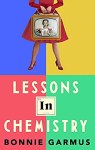 Lessons in Chemistry by Bonnie Garmus: This year’s It book. I’m nearly halfway through and enjoying it, if not as rapturously as so many. Katherine Heiny meets John Irving is the vibe I’m getting. Elizabeth Zott is a scientist through and through, applying a chemist’s mindset to her every venture, including cooking, rowing and single motherhood in the 1950s.
My top recommendations:
 Sunburn by Laura Lippman: While on a beach vacation in 1995, a woman walks away from her husband and daughter and into a new life as an unattached waitress. I liked that I recognized many Maryland/Delaware settings. Quick and enjoyable. (I’ve never been hotter than during the July week we spent in Milan in 2019. This is one of the books I read on that trip.)
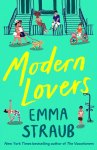 Modern Lovers by Emma Straub: Short chapters flip between all the major characters’ perspectives, showing that she completely gets each one of them. The novel is about reassessing as one approaches adulthood or midlife, about reviving old dreams and shoring up flagging relationships. Nippy and funny and smart and sexy. So many lines ring true. (Yes, a second entry from Straub: she writes such accessible and addictive literary fiction.)
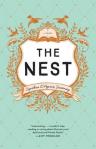 The Nest by Cynthia D’Aprix Sweeney: The four dysfunctional Plumb siblings must readjust their expectations when the truth comes out. This also affects their trust fund, “the nest.” A nest is, of course, also a home, so for as much as this seems to be about money, it is really more about family and how we reclaim our notion of home after a major upheaval.
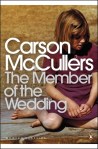 This article on the Penguin website has a few more ideas, including To Kill a Mockingbird (you think we’ve got it bad? Try a summer in the American South!), Atonement, and poetry. I took up one of Alice Vincent’s recommendations right away: since I’m reading My Autobiography of Carson McCullers by Jenn Shapland, it made sense to get a copy of McCullers’s The Member of the Wedding out from the public library. Already on the first page you’re steeped in a sweltering Georgia summer (like McCullers, my dad is from Columbus):
It happened that green and crazy summer when Frankie was twelve years old. … The sidewalks of the town were grey in the early morning and at night, but the noon sun put a glaze on them, so that the cement burned and glittered like glass. The sidewalks finally became too hot for Frankie’s feet. … The world seemed to die each afternoon and nothing moved any longer. At last the summer was like a green sick dream, or like a silent crazy jungle under glass.
What are your current reading strategies?
Have you ever spent all day reading, just because you could?
The Lonely Passion of Judith Hearne by Brian Moore (1955)
The readalong that Cathy of 746 Books is hosting for Brian Moore’s centenary was just the excuse I needed to try his work for the first time. My library had a copy of The Lonely Passion of Judith Hearne, his most famous work and the first to be published under his own name (after some pseudonymous potboilers), so that’s where I started.
Judith Hearne is a pious, set-in-her-ways spinster in Belfast. As the story opens, the piano teacher is moving into a new boarding house and putting up the two portraits that watch over her: a photo of her late aunt, whom Judith cared for in her sunset years; and the Sacred Heart. This establishment is run by a nosy landlady, Mrs. Henry Rice, and her adult son Bernard, who is writing his poetic magnum opus and carrying on with the maid. Recently joining the household is James Madden, the landlady’s brother, who is back from 30 years in New York City. Disappointed in his career and in his adult daughter, he’s here to start over.
Moore’s third-person narration slips easily between the viewpoints of multiple characters, creating a dramatic irony between their sense of themselves and what others think of them. Initially, we spend the most time in Judith’s head – an uncomfortable place to be because of how simultaneously insecure and hypercritical she is. She’s terrified of rejection, which she has come to expect, but at the same time she has nasty, snobbish thoughts about her fellow lodgers, especially overweight Bernard. The dynamic is reversed on her Sunday afternoons with the O’Neills, who, peering through the curtains as she arrives, groan at their onerous duty of entertaining a dull visitor who always says the same things and gets tipsy on sherry.
 An unfortunate misunderstanding soon arises between Judith and James: in no time she’s imagining romantic scenarios, whereas he, wrongly suspecting she has money stashed away, hopes she can be lured into investing in his planned American-style diner in Dublin. “A pity she looks like that,” he thinks. Later we get a more detailed description of Judith from a bank cashier: “On the wrong side of forty with a face as plain as a plank, and all dressed up, if you please, in a red raincoat, a red hat with a couple of terrible-looking old wax flowers in it.”
Oh how the heart aches for this figure of pathos. James’s situation, what with the ultimate failure of his American dream, echoes hers in several ways. Something happens that lessens our sympathy for James, but Judith remains a symbol of isolation and collapse. The title also reflects the spiritual aspect of this breakdown: Judith feels that she’s walking a lonely road, like Jesus did on the way to the crucifixion, and the Catholic Church to which she’s devoted, far from being a support in time of despair, is only the source of more judgment.
Alcoholism, mental illness, and religious doubt swirl together to make for a truly grim picture of life on the margins. The novel also depicts casual racism and a scene of sexual assault. No bed of roses here. But Moore’s writing, unflinching yet compassionate, renders each voice and perspective distinct in an unforgettable character study full of intense scenes. I especially loved how the final scene returns full circle. I’d particularly recommend this to readers of Tove Ditlevsen, Muriel Spark and Elizabeth Taylor, and fans of Barbara Pym’s Quartet in Autumn. I’ll definitely try more from Moore – I found a copy of The Colour of Blood in a Little Free Library in Somerset, so will add that to my stack for 20 Books of Summer.
My rating: 
The “P.S.” section of the Harper Perennial paperback I borrowed from the library contains a lot of interesting information on Moore’s life and the composition of Judith Hearne. After time as a civilian worker in the British army, Moore moved to Canada and became a journalist. Later he would move to Malibu and write the screenplay for Alfred Hitchcock’s Torn Curtain.
The protagonist was based on a woman Moore’s parents invited over for Sunday diners in Belfast. Like Judith, she loved wearing red and went on about the aunt who raised her. Moore said, “When I wrote Judith Hearne I was very lonely, writing in a rented caravan, I had almost no friends, I’d given up my beliefs, was earning almost no money as a reporter and I didn’t see much of a future. So I could identify with a dipsomaniac, isolated spinster.” The novel was rejected by 12 publishing houses before the firm André Deutsch, namely reader Laurie Lee and co-director Diana Athill, recognized its genius and accepted it for publication.
Short Story Collections Read Recently
This is the fourth year in a row that I’ve made a concerted effort to read more short stories in the alliterative month of September. (See also my 2016, 2017 and 2018 performances.) Short story collections are often hit and miss for me, and based on a few recent experiences I seem to be prone to DNFing them after two stories – when I’ve had my fill of the style and content. I generally have better luck with linked stories like Olive Kitteridge and its sequel, because they rely on a more limited set of characters and settings, and you often get intriguingly different perspectives on the same situations.
So far this year, I’ve read just five story collections – though that rises to 13 if I count books of linked short stories that are often classed as novels (Barnacle Love, Bottled Goods, Jesus’ Son, The Lager Queen of Minnesota, Olive Kitteridge, Olive, Again, That Time I Loved You and The Unchangeable Spots of Leopards). Twelve is my minimum goal for short story collections in a year – the equivalent of one per month – so I’m pleased to have surpassed that, and will continue to pick up the occasional short story collection as the year goes on.
The first two books I review here were hits with me, while the third disappointed me a bit.
The Assassination of Margaret Thatcher by Hilary Mantel (2014)
 Four of these 10 stories first appeared in the London Review of Books, and another four in the Guardian. Most interestingly, the opening story, “Sorry to Disturb,” about a bored housewife trying to write a novel while in Saudi Arabia with her husband in 1983–4, was published in the LRB with the subtitle “A Memoir.” That it’s one of the best few ‘stories’ here doesn’t negate Mantel’s fictional abilities so much as prove her talent for working in the short form.
My other few favorites were the very short ones, about a fatal discovery of adultery, an appalling accident on a holiday in Greece, and a sighting of a dead father on a train. I also enjoyed “How Shall I Know You?” in which an author is invited to give a talk to a literary society. I especially liked the jokey pep talks to self involving references to other authors: “come now, what would Anita Brookner do?” and “for sure A.S. Byatt would have managed it better.” Other topics include children’s horror at disability, colleague secrets at a Harley Street clinic, and a sister’s struggle with anorexia. The title story offers an alternative history in which Thatcher is assassinated by the IRA upon leaving an eye hospital after surgery.
In her stories Mantel reminds me most of Tessa Hadley. It’s high time I read another Mantel novel; most likely that will be the third Thomas Cromwell book, due out next year.
My rating:
In the Driver’s Seat by Helen Simpson (2005)
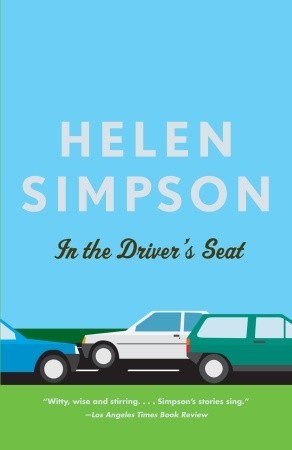 I liked this even more than Simpson’s first book, Four Bare Legs in a Bed, which I reviewed last year. The themes include motherhood (starting, in a couple of cases, in one’s early 40s), death versus new beginnings, and how to be optimistic in a world in turmoil. There’s gentle humor and magic to these stories that tempers some of the sadness. I especially liked “The Door,” about a grieving woman looking to restore her sense of security after a home break-in, “The Green Room,” a Christmas Carol riff (one of two Christmas-themed stories here) in which a woman is shown how her negative thoughts and obsession with the past are damaging her, and “Constitutional,” set on a woman’s one-hour circular walk during her lunch break and documenting her thoughts about everything from pregnancy to a nonagenarian friend’s funeral. [The UK title of the collection is Constitutional.]
In two stories, “Every Third Thought” and “If I’m Spared,” a brush with death causes a complete change of outlook – but will it last? “The Year’s Midnight” creates a brief connection between frazzled mums at the swimming pool in the run-up to the holidays. “Up at a Villa” and the title story capture risky moments that blend fear and elation. In “The Tree,” which is funny and cringeworthy all at the same time, a man decides to take revenge on the company that ripped off his forgetful old mother. Prize for the best title goes to “The Phlebotomist’s Love Life,” though it’s the least interesting story of the 11.
(Found in a Little Free Library at the supermarket near my parents’ old house.)
Some favorite lines:
“the inevitable difficulty involved in discovering ourselves to others; the clichés and blindness and inadvertent misrepresentations”
“Always a recipe for depression, Christmas, when complex adults demanded simple joy without effort, a miraculous feast of stingless memory.”
“You shouldn’t be too interested in the past. You yourself now are the embodiment of what you have lived. What’s done is done.”
My rating: 
The Lager Queen of Minnesota by J. Ryan Stradal (2019)
I had sky-high hopes for Stradal’s follow-up after Kitchens of the Great Midwest (it was on my Most Anticipated list for the second half of the year). Theoretically, a novel about three pie-baking, beer-making female members of a Minnesota family should have been terrific. Like Kitchens, this is female-centered, on a foodie theme, set in the Midwest and structured as linked short stories. Here the chapters are all titled after amounts of money; they skip around in time between the 1950s and the present day and between the perspectives of Edith Magnusson, her estranged younger sister Helen Blotz, and Edith’s granddaughter, Diana Winter.
 Edith and Helen have a rivalry as old as the Bible, based around an inheritance that Helen stole to reopen her husband’s family brewery, instead of sharing it with Edith. Ever since, Edith has had to work minimum-wage jobs at nursing homes and fast food restaurants to make ends meet. When Diana comes to live with her as a teenager, she, too, works hard to contribute to the family, but then gets caught up in a dodgy money-making scheme. It’s in penance for this error that she starts working at a local brewery, but beer soon becomes as much of an obsession for Diana as it once was for her great-aunt Helen.
I had a few problems with the book’s setup: Helen is portrayed as a villain, and never fully sheds that stereotypical designation; meanwhile, Edith is passive and boring, just a bit “wet” (in British slang). Edith and Diana suffer more losses than seems likely or fair, and there are too many coincidences involved in Diana’s transformation into a master brewer. I also found it far-fetched that a brewery would hire her as a 19-year-old and let her practice making many, many batches of lager, all while she’s still underage. None of the characters fully came alive for me, though Diana was the closest. The ending wasn’t as saccharine as I expected, but still left me indifferent. I did like reading about the process of beer-making and flavor development, though, even though I’m not a beer drinker.
My rating: 
Short story DNFs this year (in chronological order):
Mr Wrong by Elizabeth Jane Howard – I read the two shortest stories, “Summer Picnic” and “The Proposition.” The former was pleasantly like Elizabeth Taylor or Tessa Hadley lite; I got zero out of the latter.
 I Want to Show You More by Jamie Quatro – I read the first two stories. “Decomposition,” about a woman’s lover magically becoming a physical as well as emotional weight on her and her marriage, has an interesting structure as well as second-person narration, but I fear the collection as a whole will just be a one-note treatment of a woman’s obsession with her affair.
Multitudes: Eleven Stories by Lucy Caldwell – I read the first two stories. I enjoyed the short opener, “The Ally Ally O,” which describes a desultory ride in the car with mother and sisters with second-person narration and no speech marks. I should have given up on “Thirteen,” though, a tired story of a young teen missing her best friend.
The Country Ahead of Us, the Country Behind by David Guterson – I read “Angels in the Snow” (last Christmas) and “Wood Grouse on a High Promontory Overlooking Canada” (the other week). Both were fine but not particularly memorable; a glance at the rest suggests that they’ll all be about baseball and hunting. If I wanted to read about dudes hunting I’d turn to Ernest Hemingway or David Vann. Nevertheless, I’ll keep this around in case I want to try it again after reading Snow Falling on Cedars this winter.
Currently reading:
 Ship Fever by Andrea Barrett – Elegant stories about history, science and human error. Barrett is similar to A.S. Byatt in her style and themes, which are familiar to me from my reading of Archangel. This won a National Book Award in 1996.
- Descent of Man by T. Coraghessan Boyle – Even in this slim volume, there are SO MANY stories, and all so different from each other. Some I love; some are meh. I’m tempted to leave a few unread, though then I can’t count this towards my year total…
- Sum: Tales from the Afterlives by David Eagleman – A bibliotherapy prescription for reading aloud. My husband and I read a few stories to each other, but I’m going it alone for the rest. This is fairly inventive in the vein of Alan Lightman’s Einstein’s Dreams, yet I find it repetitive.
Future prospects:
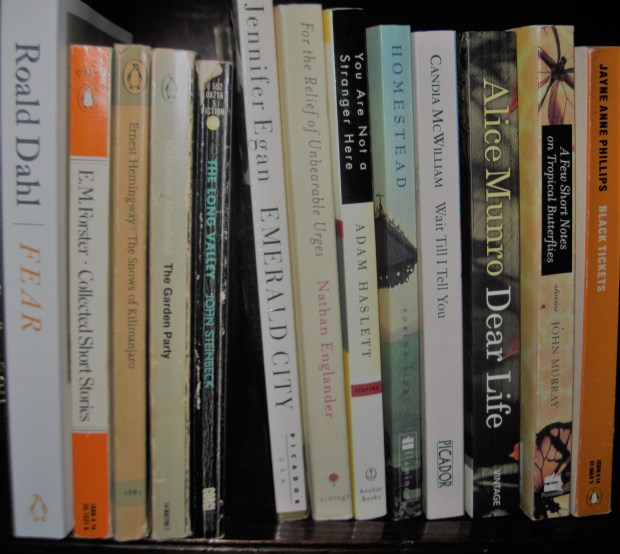
See also Laura’s excellent post about her favorite individual short stories.
Are you a short story fan? Read any good ones recently?
My Patchy Experience with Book Clubs
I know that a number of you have long-term, faithful book clubs. Boy, am I envious! You might find it surprising that I’ve only ever been in one traditional book club, and it wasn’t a resounding success. Partway through my time working for King’s College, London, an acquaintance from another library branch started the club. A group of five to eight of us from Library Services aimed to meet after work one evening a month at a Southbank venue or a staff room to discuss our latest pick. By poring over old e-mails and my Goodreads library, I’ve managed to remember 10 of the books we read between November 2011 and June 2013:
- Do Androids Dream of Electric Sheep?, Philip K. Dick [classic science fiction]
- The Little Shadows, Marina Endicott [Canadian historical fiction]
- A Spot of Bother, Mark Haddon [contemporary fiction]
- The Talented Mr. Ripley, Patricia Highsmith [classic suspense]
- The Vintner’s Luck, Elizabeth Knox [bizarre historical fiction/magic realism]
- What Was Lost, Catherine O’Flynn [contemporary fiction]
- Franny and Zooey, J.D. Salinger [classic short fiction]
- The Rabbi’s Cat, Joann Sfar [graphic novel in translation]
- Girl Meets Boy, Ali Smith [an update of Greek myth]
- Angel, Elizabeth Taylor [an obscure English classic]
That may well be the complete list. Although I was a member for 20 months until I quit to go freelance, we often only managed to meet every other month because we couldn’t find a mutually convenient free evening or no one had read the book in time. I was consistently frustrated that – even when our selections were only about 200 pages long – I was often one of the only people to have read the whole book.
Overall, the quality of books we chose struck me as mediocre: I rated half of these books 2 stars, and the rest 3 stars. (I think I was a harsher rater then, but it’s not a good sign, is it?) Perhaps this is part of the inevitable compromising that goes with book clubs, though: You humor other people in their choices and hope they’ll be kind about yours? My suggestion, for the record, was the pretty dismal Little Shadows, for which I got a free set of book club copies to review for Booktime magazine. But I also voted in favor of most of the above list.
Looking back, I am at least impressed by how varied our selections were. People were interested in trying out different genres, so we ranged from historical fiction to sci-fi, and even managed a graphic novel. But when we did get together for discussion there was far too much gossipy chat about work, and when we finally got around to the book itself the examination rarely went deeper than “I liked it” or “I hated all the characters.”
If it was profound analysis I was after, I got that during the years I volunteered at Greenbelt, an annual summer arts festival with a progressive Christian slant. I eagerly read the eclectic set of three books the literature coordinator chose for book club meetings in 2010 – Star of the Morning: The Extraordinary Life of Lady Hester Stanhope by Kirsten Ellis, The First Person and Other Stories by Ali Smith, and The Bridge of San Luis Rey by Thornton Wilder – and then as a literature volunteer for the next three years I read and prepared copious notes and questions about our festival “Big Read.” We did Exile by Richard North Patterson in 2011, Dark Eden by Chris Beckett in 2012 and So Many Ways to Begin by Chris Beckett in 2013, and each time I offered to chair the book club meetings.
Unfortunately, due at least in part to logistical considerations, these were run in the way many festival events are: a panel of two to five talking heads with microphones was at the front of the tent, sometimes on a raised dais, while the audience of whatever size sat towards the back. This created a disconnect between the “experts” and the participants, and with the exception of the McGregor meeting I don’t recall much audience input. I’ve mostly blanked out the events – as I tend to for anything that entails public speaking and nervous preparation for something you can’t control – but I was pleased to be involved and I should probably make more of this on my CV. It wasn’t your average book club setting, that’s for sure.
In recent years the closest thing I’ve had to a book club has been online buddy reading. The shadow panels for the Wellcome Book Prize and Sunday Times Young Writer of the Year Award fall into this category, as do online readalongs I’ve done for several Iris Murdoch novels and for C.S. Lewis’s Mere Christianity with various female family members. A few of us book bloggers chatted about Andrea Levy’s Small Island in an online document earlier this year, and my mom and I e-mailed back and forth while reading W. Somerset Maugham’s The Painted Veil in May. I’m also doing my last three of the #20BooksofSummer as online buddy reads, checking in occasionally on Twitter.
Of course, there are some inherent limitations to this kind of discussion – people read at different paces and don’t want to spoil the plot for others, and at some point the back-and-forth fizzles out – but it’s always been easier for me to organize my thoughts in writing, so I likely feel more comfortable contributing than I might in an in-person meeting.
This is all context for my decision to join my neighborhood book club next month. The club arose some months back out of our community’s Facebook group, a helpful resource run by a go-getting lady a few doors down from us. So far it’s turning out to be a small group of thirty- and fortysomething women who alternate meetings at each other’s houses, and the name they’ve chosen gives an idea of the tone: “Books, Booze and Banter.”
I made the mistake of not getting involved right at the start; I wanted to hang back and see what kind of books they’d choose. This means I wasn’t part of the early process of putting titles in a hat, so I’ve looked on snobbishly for several months as they lurched between crime and women’s fiction, genres I generally avoid. (Still, there were actually a couple books I might have joined them for had I not been in America and had they been readily available at the public library.) For many people a book club selection will be the only book they get through that month, so I can understand how they’d want it to be something ‘readable’ that they’d be happy to pick up anyway. Even though statistically I read 27 books a month, I’m still jealously protective of my reading time; I want everything I read to be worthwhile.
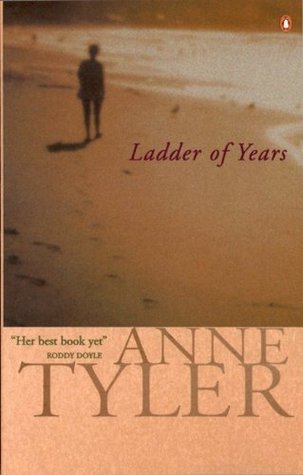 So for September I managed to steer the group away from a poorly received historical novel of over 400 pages and the new Joël Dicker and onto Ladder of Years by Anne Tyler, which the bookstore chain Waterstones has been promoting heavily as one of their books of the month. I already had a charity shop copy in hand and the others liked the sound of it, so we’re all set for September 12th! Future months’ literary fiction choices look promising, too, so provided I enjoy the discussion and the camaraderie I plan to stick with it: a backlist Pat Barker novel I’ve not read, and Kirsty Logan and Jonathan Coe novels I’ve read before and won’t reread but will remind myself about briefly before the meetings.
I’m out of practice with this book club thing. My mother tells me that I have a lot to contribute but that I must also be open to what I’ll learn from other people – even if I don’t expect to. So I don’t want to set myself up as some kind of expert. In fact, I probably won’t even mention that I’m a freelance book reviewer and book blogger. Mostly I’m hoping to find some friendly faces around the neighborhood, because even though we’ve lived here just over two years I still only know a handful of names and keep myself to myself as I work from home. Even if I have to read books I wouldn’t normally, it’ll be worth it to meet more people.
What has your experience with book clubs (in person and online) been?
Classic of the Month: The Rector’s Daughter by F.M. Mayor
I sought this out because Susan Hill hails it as a forgotten classic and it’s included on a list of books to read in your thirties in The Novel Cure.* It’s a gentle and rather melancholy little 1924 novel about Mary, the plain, unmarried 35-year-old daughter of elderly Canon Jocelyn, a clergyman in the undistinguished East Anglian village of Dedmayne. “On the whole she was happy. She did not question the destiny life brought her. People spoke pityingly of her, but she did not feel she required pity.” That is, until she unexpectedly falls in love. We follow Mary for the next four years and see how even a seemingly small life can have an impact.
 I expect Ella Berthoud and Susan Elderkin chose this as a book for one’s thirties because it’s about a late bloomer who hasn’t acquired the expected spouse and children and harbors secret professional ambitions. The struggle to find common ground with an ageing parent is a strong theme, as is the danger of an unequal marriage. Best not to say too much more about the plot itself, but I’d recommend this to readers of Elizabeth Taylor. I was also reminded strongly at points of A Jest of God by Margaret Laurence and Tender Is the Night by F. Scott Fitzgerald. It’s a short and surprising classic, one well worth rediscovering.
Some favorite lines:
- “she had written almost as a silkworm weaves a cocoon, with no thought of admiration.”
- “after three years in one place, suburban people, whatever their layer in society, become restless and want to move on.”
- “She had found self-pity a quagmire in which it was difficult not to be submerged.”
My rating:
Note: Flora Macdonald Mayor (1872–1932) published four novels and a short story collection. Her life story is vaguely similar to Mary Jocelyn’s in that she was the daughter of a Cambridge clergyman.
*I’ve now read six of the 10 titles on their list. The remaining four, which I’ll probably try to read by the end of next year, are London Fields by Martin Amis, The Best of Everything by Rona Jaffe, The Jungle by Upton Sinclair, and Miss Mackenzie by Anthony Trollope. I own the Sinclair in paperback, the Jaffe is on shelf at my local public library, and I can get the Amis and Trollope from the university library any time.
Two “Summer” Books
With summer winding down, I decided it was time to read a couple of books with the word in the title to try to keep the season alive. These turned out to be charming, low-key English novels that I would recommend to fans of costume dramas. Both:
I knew very little about Jonathan Smith’s Summer in February when I picked it up in a charity shop. From the ads for the 2013 film adaptation with Dan Stevens, I had in mind that this was an obscure classic. It was actually published in 1995, but is inspired by real incidents spanning 1909 to 1949. It’s set among a group of Royal Academy-caliber artists in Lamorna, Cornwall, including Alfred Munnings, who went on to become the academy’s president.
The crisis comes when Munnings and Captain Gilbert Evans, a local land manager, fall for the same woman. A love triangle might not seem like a very original story idea, but I enjoyed this novel particularly for its Cornish setting (“From dawn to dusk it had rained non-stop, as only Cornwall can”; “The sea was slate grey and the sky streaky bacon”) and for the larger-than-life Munnings, who has a huge store of memorized poetry and is full of outspoken opinions. Two characters describe his contradictions thusly: “I can see he’s crude and loud and unpolished and Joey says he cuts his toenails at picnics but…”; “he’s one in a million, a breath of fresh air, and he’s frank and fearless, which is always a fine thing.” The title refers to the way that love can make any day feel like summer.
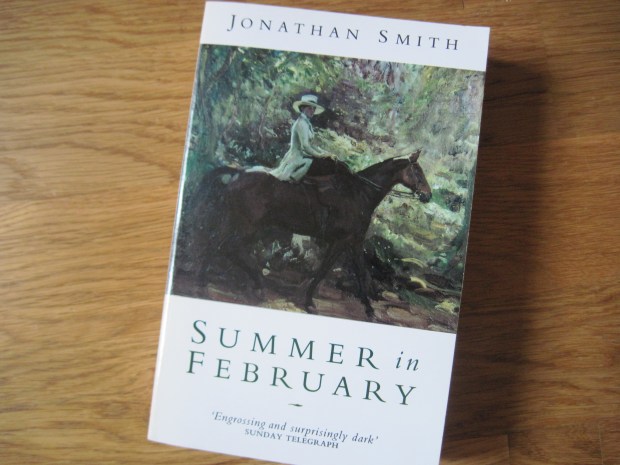
The cover image is the painting Morning Ride by A.J. Munnings.
For more information on Munnings, see here.
For more information on Gilbert Evans, see here. (Beware the spoilers!)
From 1961, In a Summer Season was Elizabeth Taylor’s eighth novel. The ensemble cast is led by Kate Heron – newly remarried to Dermot, a man ten years her junior, after the death of her first husband – and made up of her family circle, a few members of the local community, and her best friend Dorothea’s widower and daughter, who return from living abroad about halfway through the book. Set in the London commuter belt, this is full of seemingly minor domestic dilemmas that together will completely overturn staid life before the end.
From Kate dyeing her hair yet being keen to avoid accusations of “mutton dressed as lamb” to her son Tom’s disgust at his grandfather’s ageing body, old age and wasting one’s time on trivialities are a twin paranoia here. The title is not only a literal note of when much of the action takes place, but also a metaphor for the fleeting nature of happiness (as well as life itself). Kate remembers pleasant days spent with her best friend and their young children: “It was a long summer’s afternoon and it stood for all the others now. There had been many. And she and Dorothea were together day after day. Their friendship was as light and warming as the summer’s air.”
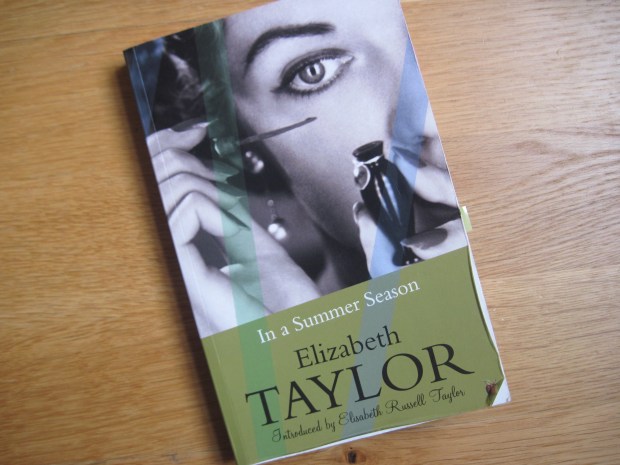
So much happens in the last seven pages. I wished the book could have turned out differently, yet the conclusion effectively sews it all up, and all within a cozy 220 pages. If you enjoy writers like Muriel Spark and Barbara Pym, you must try Elizabeth Taylor. Her work is similarly built around wry, perceptive observations about relationships and ways of life. This was my fourth novel by her, and I’d call it my second favorite so far after Mrs. Palfrey at the Claremont.
(Secondhand books are such good value: These two charity shop paperbacks cost me less than 85 pence in total. Such a low total spend per hour of enjoyment!)
This month I also read The Summer without Men by Siri Hustvedt (discussed here along with a few other recent reads). Earlier in the year I reviewed Ricarda Huch’s The Last Summer, and last year I reviewed the Summer anthology from the Wildlife Trusts. “Summer” turns up fairly frequently in titles of books I’ve read or want to read, in fact. Here’s the whole list!
 Bookish Beck = Rebecca Foster. American transplant to England. Freelance proofreader and book reviewer.
 Bookish Beck