Book Serendipity, Mid-November–Early January
This is a short set but I’ll post it now to keep things ticking over. I’ve lost nearly a week to the upper respiratory virus from hell, and haven’t felt up to sitting at my computer for any extended periods of time. I had to request extensions on a few of my work deadlines; I’ll hope to be back to normal blogging next week, too.
I call it “Book Serendipity” when two or more books that I read at the same time or in quick succession have something in common – the more bizarre, the better. This is a regular feature of mine every couple of months. Because I usually have 20–30 books on the go at once, I suppose I’m more prone to such incidents. People frequently ask how I remember all of these coincidences. The answer is: I jot them down on scraps of paper or input them immediately into a file on my PC desktop; otherwise, they would flit away! Feel free to join in with your own.
The following are in roughly chronological order.
- Ayot St Lawrence as a setting in Q’s Legacy by Helene Hanff and Flesh by David Szalay.
- A man who has panic attacks in Pan by Michael Clune and All the World Can Hold by Jung Yun.
- Two of my Shelf Awareness PRO (early) reviews in a row were of 2026 novels set on a celebrity/reunion cruise: All the World Can Hold by Jung Yun, followed by American Fantasy by Emma Straub. In both, the narrative alternates between three main characters, the cruise is to celebrate a milestone birthday for a passenger’s relative, and there’s a celebrity who’s in AA.
- A teacher–student relationship develops into a friendship in The Irish Goodbye by Beth Ann Fennelly (with Molly McCully Brown, whose Places I’ve Taken My Body I’ve reviewed) and Lessons from My Teachers by Sarah Ruhl (with Max Ritvo, about whom she wrote a whole book).
 Someone becomes addicted to benzodiazepines in The Pass by Katriona Chapman and All the World Can Hold by Jung Yun (both 2026 releases).
- A New York City event scheduled to occur on September 15 or 16, 2001 is postponed because of 9/11 in Joyride by Susan Orlean (her wedding) and All the World Can Hold by Jung Yun (a cruise departure – it’s moved to Boston).
- A 1960s attempted suicide by putting one’s head in a gas oven in The Mercy Step by Marcia Hutchinson and The Soul of Kindness by Elizabeth Taylor.
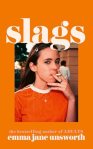
- A plan to eat cheese to induce dreams in The Reservation by Rebecca Kauffman and Slags by Emma Jane Unsworth.
- An author is (at least initially) aghast at the liberties taken with an adaptation of her book in Spent by Alison Bechdel and Joyride by Susan Orlean (the film Adaptation, one of my favourites, bears little relation to her nonfiction work The Orchid Thief, which I also love).
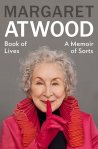
- A North American author meets her British publishers, André Deutsch and Diana Athill, in Book of Lives by Margaret Atwood and Q’s Legacy by Helene Hanff. (Atwood also mentions Sir Arthur Quiller-Couch, the title reference in the Hanff.)
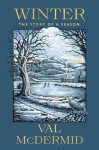
- An older white woman feels compelled to add, as an aside after a memory of slightly dodgy behaviour observed, that cultural appropriation was not a thing in those days in Book of Lives by Margaret Atwood and Winter by Val McDermid.
- I read two books in 2025 with a title taken from a Christian Wiman poem: A Truce that Is Not Peace by Miriam Toews, then Some Bright Nowhere by Ann Packer.
- A special trip undertaken for a younger sister’s milestone birthday: a road trip through Scotland in a campervan in Slags by Emma Jane Unsworth for a 40th; and a boy band reunion cruise to the Bahamas for a 45th in American Fantasy by Emma Straub.
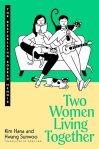
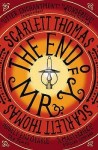
- A reference to Sartre’s “hell is other people” line (paraphrased) in Two Women Living Together by Kim Hana and Hwang Sunwoo and The End of Mr Y by Scarlett Thomas.
- The clock-drawing test as a shorthand for assessing a loved one’s dementia in Book of Lives by Margaret Atwood (her partner Graeme) and Joyride by Susan Orlean (her mother).
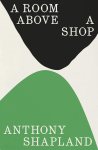 A sexual encounter between two men is presaged by them relieving themselves side by side at urinals in A Room Above a Shop by Anthony Shapland and The End of Mr Y by Scarlett Thomas.
- An older man who knows he’s having a stroke just wants to sit quietly in a chair and not be taken to hospital in Book of Lives by Margaret Atwood (her partner Graeme) and The Boy from the Sea by Garrett Carr.
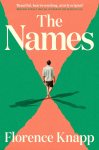
- A man who’s gone through Alcoholics Anonymous gets dangerously close to falling off the wagon: picks up a bottle of gin in a shop in The Names by Florence Knapp / buys a drink at a bar in All the World Can Hold by Jung Yun.
- I was reading two nonfiction books with built-in red ribbon bookmarks at the same time: Book of Lives by Margaret Atwood and Robin by Stephen Moss.
- Homoeopathy is an element in The Names by Florence Knapp and The End of Mr Y by Scarlett Thomas.
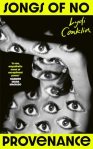
- A character named Sparrow in Spent by Alison Bechdel and Songs of No Provenance by Lydi Conklin.

- A mention of special celebrations for a Korean mother’s 70 birthday in Two Women Living Together by Kim Hana and Hwang Sunwoo and All the World Can Hold by Jung Yun.
- Some kinky practices in Songs of No Provenance by Lydi Conklin and Mr Norris Changes Trains by Christopher Isherwood.
- A girl from an immigrant family reads Greek mythology for escape in Visitations by Julia Alvarez and The Mercy Step by Marcia Hutchinson.
- “View halloo” (originally a fox-hunting term) is used as a greeting in Talking It Over by Julian Barnes and Arsenic for Tea by Robin Stevens.
What’s the weirdest reading coincidence you’ve had lately?
The 2026 Releases I’ve Read So Far
I happen to have read a number of pre-release books, generally for paid reviews for Foreword and Shelf Awareness. (I already previewed six upcoming novellas here.) Most of my reviews haven’t been published yet, so I’ll just give brief excerpts and ratings here to pique the interest. I link to the few that have been published already, then list the 2026 books I’m currently reading. Soon I’ll follow up with a list of my Most Anticipated titles.


 Simple Heart by Cho Haejin (trans. from Korean by Jamie Chang) [Other Press, Feb. 3]: A transnational adoptee returns to Korea to investigate her roots through a documentary film. A poignant novel that explores questions of abandonment and belonging through stories of motherhood.
 The Conspiracists: Women, Extremism, and the Lure of Belonging by Noelle Cook [Broadleaf Books, Jan. 6]: An in-depth, empathetic study of “conspirituality” (a philosophy that blends conspiracy theories and New Age beliefs), filtered through the outlook of two women involved in storming the Capitol on January 6, 2021.

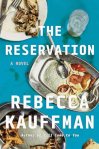 The Reservation by Rebecca Kauffman [Counterpoint, Feb. 24]: The staff members of a fine-dining restaurant each have a moment in the spotlight during the investigation of a theft. Linked short stories depict character interactions and backstories with aplomb. Big-hearted; for J. Ryan Stradal fans.


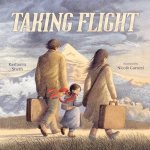 Taking Flight by Kashmira Sheth (illus. Nicolo Carozzi) [Dial Press, April 21]: A touching story of the journeys of three refugee children who might be from Tibet, Syria and Ukraine. The drawing style reminded me of Chris Van Allsburg’s. This left a tear in my eye.
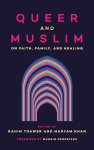

Currently reading:
(Blurb excerpts from Goodreads; all are e-copies apart from Evensong)
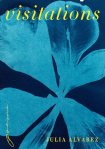 Visitations: Poems by Julia Alvarez [Knopf, April 7]: “Alvarez traces her life [via] memories of her childhood in the Dominican Republic … and the sisters who forged her, her move to America …, the search for mental health and beauty, redemption, and success.”
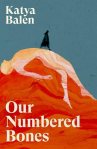 Our Numbered Bones by Katya Balen [Canongate, 12 Feb. / HarperVia, Feb. 17]: Her “adult debut [is] about a grieving author who heads to rural England for a writer’s retreat, only to stumble upon an incredible historical find” – a bog body!
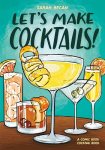 Let’s Make Cocktails!: A Comic Book Cocktail Book by Sarah Becan [Ten Speed Press, April 7]: “With vivid, easy-to-follow graphics, Becan guides readers through basic techniques such as shaking, stirring, muddling, and more. With all recipes organized by spirit for easy access, readers will delight in the panelized step-by-step comic instructions.”
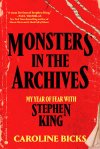 Monsters in the Archives: My Year of Fear with Stephen King by Caroline Bicks [Hogarth/Hodder & Stoughton, April 21]: “A fascinating, first of its kind exploration of Stephen King and his … iconic early books, based on … research and interviews with King … conducted by the first scholar … given … access to his private archives.”
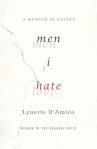 Men I Hate: A Memoir in Essays by Lynette D’Amico [Mad Creek Books, Feb. 17]: “Can a lesbian who loves a trans man still call herself a lesbian? As D’Amico tries to engage more deeply with the man she is married to, she looks at all the men—historical figures, politicians, men in her family—in search of clear dividing lines”.
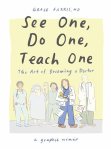 See One, Do One, Teach One: The Art of Becoming a Doctor: A Graphic Memoir by Grace Farris [W. W. Norton & Company, March 24]: “In her graphic memoir debut, Grace looks back on her journey through medical school and residency.”
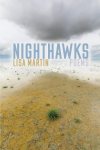 Nighthawks by Lisa Martin [University of Alberta Press, April 2]: “These poems parse aspects of human embodiment—emotion, relationship, mortality—and reflect on how to live through moments of intense personal and political upheaval.”
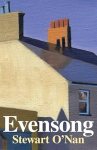 Evensong by Stewart O’Nan [published in USA in November 2025; Grove Press UK, 1 Jan.]: “An intimate, moving novel that follows The Humpty Dumpty Club, a group of women of a certain age who band together to help one another and their circle of friends in Pittsburgh.”
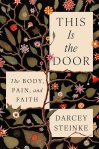 This Is the Door: The Body, Pain, and Faith by Darcey Steinke [HarperOne, Feb. 24]: “In chapters that trace the body—The Spine, The Heart, The Knees, and more—[Steinke] introduces sufferers to new and ancient understandings of pain through history, philosophy, religion, pop culture, and reported human experience.”
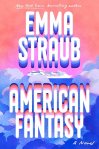 American Fantasy by Emma Straub [Riverhead, April 7 / Michael Joseph (Penguin), 14 May]: “When the American Fantasy cruise ship sets sail for a four-day themed voyage, aboard are all five members of a famous 1990s boyband, and three thousand screaming women who have worshipped them for thirty years.”
Additional pre-release review books on my shelf:
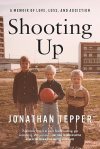 Shooting Up by Jonathan Tepper [Constable, 19 Feb.]: “Born into a family of American missionaries driven by unwavering faith … Jonathan’s home became a sanctuary for society’s most broken … AIDS hit Spain a few years after it exploded in New York and, like an invisible plague, … claimed countless lives – including those … in the family rehabilitation centre.”
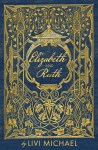 Elizabeth and Ruth by Livi Michael [Salt Publishing, 9 Feb.]: “Based on the real correspondence between Elizabeth Gaskell and Charles Dickens … [Gaskell] visits a young Irish prostitute in Manchester’s New Bailey prison. … [A] story of hypocrisy and suppression, and how Elizabeth navigates the … prejudice of the day to help the young girl”.
Will you look out for one or more of these?
Any other 2026 reads you can recommend?
Three on a Theme: Armchair Travels at the Italian Coast (Rachel Joyce, Sarah Moss and Jess Walter – #18 of 20 Books)
I’ve done a lot of journeying through Italy’s lakes and islands this summer. Not in real life, thank goodness – it would be far too hot! – but via books. I started with the Moss, then read the Joyce, and rounded off with the Walter, a book that had been on my TBR for 12 years and that many had heartily recommended, so I was delighted to finally experience it for myself.
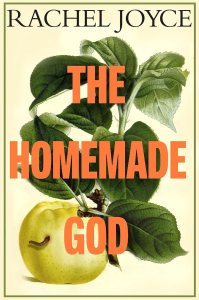
The Homemade God by Rachel Joyce (2025)
Joyce has really upped her game. I’ve somehow read all of her books though I often found them, from Harold Fry onward, disappointingly sentimental and twee. But with this she’s entering the big leagues, moving into the more expansive, elegant and empathetic territory of novels by Anne Enright (The Green Road), Patrick Gale (Notes from an Exhibition), Maggie O’Farrell (Instructions for a Heatwave) and Tom Rachman (The Italian Teacher). It’s the story of four siblings, initially drawn together and then dramatically blown apart by their father’s death. Despite weighty themes of alcoholism, depression and marital struggles, there is an overall lightness of tone and style that made this a pleasure to read.
Vic Kemp, the title figure, was a larger-than-life, womanizing painter whose work divided critics. After his first wife’s early death from cancer, he raised three daughters and a son with the help of a rotating cast of nannies (whom he inevitably slept with). At 76 he delivered the shocking news that he was marrying again: Bella-Mae, an artist in her twenties – much younger than any of his children. They moved from London to his second home in Italy just weeks before he drowned in Lake Orta. Netta, the eldest daughter, is sure there’s something fishy; he knew the lake so well and would never have gone out for a swim with a mist rolling in. Did Bella-Mae kill him for his money? And where is his last painting? Funny how waiting for an autopsy report and searching for a new will and carping with siblings over the division of belongings can ruin what should be paradise.
The interactions between Netta, Susan, Goose (Gustav) and Iris, plus Bella-Mae and her cousin Laszlo, are all flawlessly done, and through flashbacks and surges forward we learn so much about these flawed and flailing characters. The derelict villa and surrounding small town are appealing settings, and there are a lot of intriguing references to food, fashion and modern art.
My only small points of criticism are that Iris is less fleshed out than the others (and her bombshell secret felt distasteful), and that Joyce occasionally resorts to delivering some of her old obvious (though true) messages through an omniscient narrator, whereas they could be more palatable if they came out organically in dialogue or indirectly through a character’s thought process. Here’s an example: “When someone dies or disappears, we can only tell stories about what might have been the case or what might have happened next.” (One I liked better: “There were some things you never got over. No amount of thinking or talking would make them right: the best you could do was find a way to live alongside them.”) I also don’t think Goose would have been able to view his father’s body more than two months after his death; even with embalming, it would have started to decay within weeks.
You can tell that Joyce got her start in theatre because she’s so good at scenes and dialogue, and at moving people into different groups to see what they’ll do. She’s taken the best of her work in other media and brought it to bear here. It’s fascinating how Goose starts off seeming minor and eventually becomes the main POV character. And ending with a wedding (good enough for a Shakespearean comedy) offers a lovely occasion for a potential reconciliation after a (tragi)comic plot. More of this calibre, please! (Public library) 
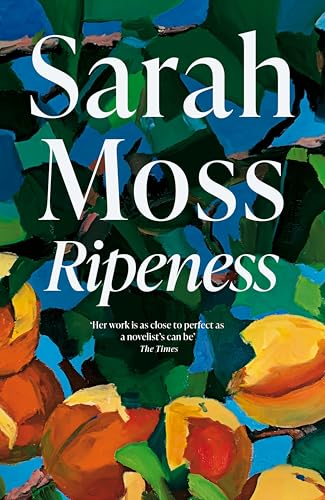
Ripeness by Sarah Moss (2025)
One sneaky little line, “Ripeness, not readiness, is all,” a Shakespeare mash-up (“Ripeness is all” is from King Lear vs. “the readiness is all” is from Hamlet), gives a clue to how to understand this novel: As a work of maturity from Sarah Moss, presenting life with all its contradictions and disappointments, not attempting to counterbalance that realism with any false optimism. What do we do, who will we be, when faced with situations for which we aren’t prepared?
Now that she’s based in Ireland, Moss seems almost to be channelling Irish authors such as Claire Keegan and Maggie O’Farrell. The line-up of themes – ballet + sisters + ambivalent motherhood + the question of immigration and belonging – should have added up to something incredible and right up my street. While Ripeness is good, even very good, it feels slightly forced. As has been true with some of Moss’s recent fiction (especially Summerwater), there is the air of a creative writing experiment. Here the trial is to determine which feels closer, a first-person rendering of a time nearly 60 years ago, or a present-tense, close-third-person account of the now. [I had in mind advice from one of Emma Darwin’s Substack posts: “What you’ll see is that ‘deep third’ is really much the same as first, in the logic of it, just with different pronouns: you are locking the narrative into a certain character’s point-of-view, but you don’t have a sense of that character as the narrator, the way you do in first person.” Except, increasingly as the novel goes on, we are compelled to think about Edith as a narrator, of her own life and others’.
In the current story line, everyone in rural West Ireland seems to have come from somewhere else (e.g. Edith’s lover Gunter is German). “She’s going to have to find a way to rise above it, this tribalism,” Edith thinks. She’s aghast at her town playing host to a small protest against immigration. Fair enough, but including this incident just seems like an excuse for some liberal handwringing (“since it’s obvious that there is enough for all, that the problem is distribution not supply, why cannot all have enough? Partly because people like Edith have too much.”). The facts of Maman being French-Israeli and having lost family in the Holocaust felt particularly shoehorned in; referencing Jewishness adds nothing. I also wondered why she set the 1960s narrative in Italy, apart from novelty and personal familiarity. (Teenage Edith’s high school Italian is improbably advanced, allowing her to translate throughout her sister’s childbirth.)
Though much of what I’ve written seems negative, I was left with an overall favourable impression. Mostly it’s that the delivery scene and the chapters that follow it are so very moving. Plus there are astute lines everywhere you look, whether on dance, motherhood, or migration. It may simply be that Moss was taking on too much at once, such that this lacks the focus of her novellas. Ultimately, I would have been happy to have just the historical story line; the repeat of the surrendering for adoption element isn’t necessary to make any point. (I was relieved, anyway, that Moss didn’t resort to the cheap trick of having the baby turn out to be a character we’ve already been introduced to.) I admire the ambition but feel Moss has yet to return to the sweet spot of her first five novels. Still, I’m a fan for life. (Public library)
#18 of my 20 Books of Summer
(Completing the second row on the Bingo card: Book set in a vacation destination)


Beautiful Ruins by Jess Walter (2012)
 I loved how Emma Straub described the ideal summer read in one of her Substack posts: “My plan for the summer is to read as many books as possible that make me feel that drugged-up feeling, where you just want to get back to the page.” I wish I’d been able to read this faster – that I hadn’t had so much on my plate all summer so I could have been fully immersed. Nonetheless, every time I returned to it I felt welcomed in. So many trusted bibliophiles love this book – blogger friends Laila and Laura T.; Emma Milne-White, owner of Hungerford Bookshop, who plugged it at their 2023 summer reading celebration; and Maris Kreizman, who in a recent newsletter described this as “One of my favorite summer reading novels ever … escapist magic, a lush historical novel.”
I’m relieved to report that Beautiful Ruins lived up to everyone’s acclaim – and my own high expectations after enjoying Walter’s So Far Gone, which I reviewed for BookBrowse earlier in the summer. I was immediately captivated by the shabby glamour of Pasquale’s hotel in Porto Vergogna on the coast of northern Italy. With refreshing honesty, he’s dubbed the place “Hotel Adequate View.” In April 1962, he’s attempting to build a cliff-edge tennis court when a boat delivers beautiful, dying American actress Dee Moray. It soon becomes clear that her condition is nothing nine months won’t fix and she’s been dumped here to keep her from meddling in the romance between the leads in Cleopatra, filming in Rome. In the present day, an elderly Pasquale goes to Hollywood to find out whatever happened to Dee.
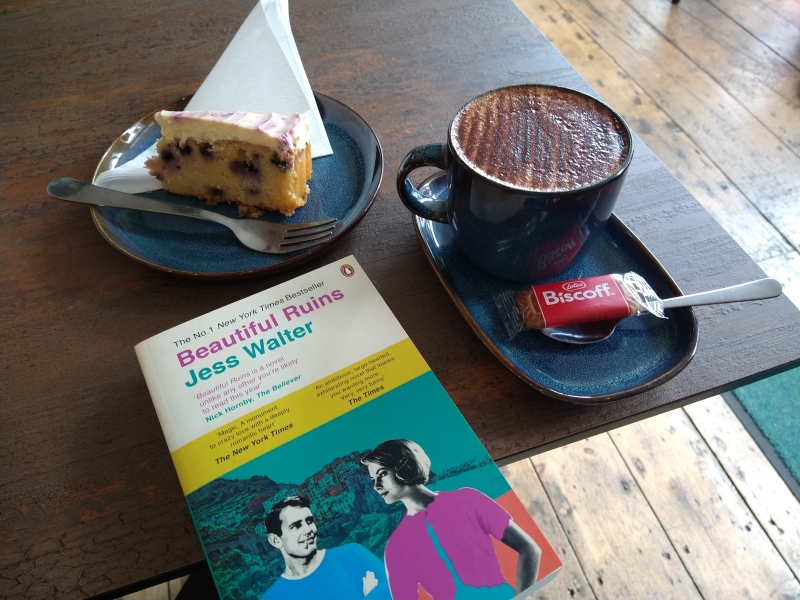
A myriad of threads and formats – a movie pitch, a would-be Hemingway’s first chapter of a never-finished wartime masterpiece, an excerpt from a producer’s autobiography and a play transcript – coalesce to flesh out what happened in that summer of 1962 and how the last half-century has treated all the supporting players. True to the tone of a novel about regret, failure and shattered illusions, Walter doesn’t tie everything up neatly, but he does offer a number of the characters a chance at redemption. This felt to me like a warmer and more timeless version of A Visit from the Goon Squad. There are so many great scenes, none better than Richard Burton’s drunken visit to Porto Vergogna, which had me in stitches. Fantastic. (Hungerford Bookshop – 40th birthday gift from my husband from my wish list) 
This and That (The January Blahs)
The January blahs have well and truly arrived. The last few months of 2023 (December in particular) were too full: I had so much going on that I was always rushing from one thing to the next and worrying I didn’t have the time to adequately appreciate any of it. Now my problem is the opposite: very little to do, work or otherwise; not much on the calendar to look forward to; and the weather and house so cold I struggle to get up each morning and push past the brain fog to settle to any task. As I kept thinking to myself all autumn, there has to be a middle ground between manic busyness and boredom. That’s the head space where I’d like to be living, instead of having to choose between hibernation and having no time to myself.
At least these frigid January days are good for being buried in books. Unusually for me, I’m in the middle of seven doorstoppers, including King by Jonathan Eig (perfect timing as Monday is Martin Luther King Jr. Day), Wellness by Nathan Hill, and Babel by R.F. Kuang (a nominal buddy read with my husband).
Another is Carol Shields’s Collected Short Stories for a buddy rereading project with Marcie of Buried in Print. We’re partway through the first volume, Various Miracles, after a hiccup when we realized my UK edition had a different story order and, in fact, different contents – it must have been released as a best-of. We’ll read one volume per month in January–March. I also plan to join Heaven Ali in reading at least one Margaret Drabble book this year. I have The Waterfall lined up, and her Arnold Bennett biography lurking. Meanwhile, the Read Indies challenge, hosted by Karen and Lizzy in February, will be a great excuse to catch up on some review books from independent publishers.
Literary prize season will be heating up soon. I put all of the Women’s Prize (fiction and nonfiction!) dates on my calendar and I have a running list, in a file on my desktop, of all the novels I’ve come across that would be eligible for this year’s race. I’m currently reading two memoirs from the Nero Book Awards nonfiction shortlist. Last year it looked like the Folio Prize was set to replace the Costa Awards, giving category prizes and choosing an overall winner. But then another coffee chain, Caffè Nero, came along and picked up the mantle.
This year the Folio has been rebranded as The Writers’ Prize, again with three categories, which don’t quite overlap with the Costa/Nero ones. The Writers’ Prize shortlists just came out on Tuesday. I happen to have read one of the poetry nominees (Chan) and one of the fiction (Enright). I’m going to have a go at reading the others that I can source via the library. I’ll even try The Bee Sting given it’s on both the Nero and Writers’ shortlists (ditto the Booker) and I have a newfound tolerance of doorstoppers.
As for my own literary prize involvement, my McKitterick Prize manuscript longlist is due on the 31st. I think I have it finalized. Out of 80 manuscripts, I’ve chosen 5. The first 3 stood out by a mile, but deciding on the other 2 was really tricky. We judges are meeting up online next week.
I’m listening to my second-ever audiobook, an Audible book I was sent as a birthday gift: There Plant Eyes by M. Leona Godin. My routine is to find a relatively mindless data entry task to do and put on a chapter at a time.
There are a handful of authors I follow on Substack to keep up with what they’re doing in between books: Susan Cain, Jean Hannah Edelstein, Catherine Newman, Anne Boyd Rioux, Nell Stevens (who seems to have gone dormant?), Emma Straub and Molly Wizenberg. So far I haven’t gone for the paid option on any of the subscriptions, so sometimes I don’t get to read the whole post, or can only see selected posts. But it’s still so nice to ‘hear’ these women’s voices occasionally, right in my inbox.
My current earworms are from Belle and Sebastian’s Late Developers album, which I was given for Christmas. These lyrics from the title track – saved, refreshingly, for last; it’s a great strategy to end on a peppy song (an uplifting anthem with gospel choir and horn section!) instead of tailing off – feel particularly apt:
Live inside your head
Get out of your bed
Brush the cobwebs off
I feel most awake and alive when I’m on my daily walk by the canal. It’s such a joy to hear the birdsong and see whatever is out there to be seen. The other day there was a red kite zooming up from a field and over the houses, the sun turning his tail into a burnished chestnut. And on the opposite bank, a cuboid rump that turned out to belong to a muntjac deer. Poetry fragments from two of my bedside books resonated with me.
This is the earnest work. Each of us is given
only so many mornings to do it—
to look around and love
the oily fur of our lives,
the hoof and the grass-stained muzzle.
Days I don’t do this
I feel the terror of idleness
like a red thirst.
That is from “The Deer,” from Mary Oliver’s House of Light, and reminds me that it’s always worthwhile to get outside and just look. Even if what you’re looking at doesn’t seem to be extraordinary in any way…
Importance leaves me cold,
as does all the information that is classed as ‘news’.
I like those events that the centre ignores:
small branches falling, the slow decay
of wood into humus, how a puddle’s eye
silts up slowly, till, eventually,
the birds can’t bathe there. I admire the edge;
the sides of roads where the ragwort blooms
low but exotic in the traffic fumes;
the scruffy ponies in a scrubland field
like bits of a jigsaw you can’t complete;
the colour of rubbish in a stagnant leat.
There are rarest enjoyments, for connoisseurs
of blankness, an acquired taste,
once recognised, it’s impossible to shake,
this thirst for the lovely commonplace.
(from “Six Poems on Nothing,” III by Gwyneth Lewis, in Parables & Faxes)
This was basically a placeholder post because who knows when I’ll next finish any books and write about them … probably not until later in the month. But I hope you’ve found at least one interesting nugget!
What ‘lovely commonplace’ things are keeping you going this month?
20 Books of Summer, 15–17: Bill Buford, Kristin Newman, J. Courtney Sullivan
One last foodie selection for the summer: a chef’s memoir set mostly in Lyon, France. Plus a bawdy travel memoir I DNFed halfway through, and an engaging but probably overlong contemporary novel about finances, generational conflict and women’s relationships.
Dirt: Adventures in French Cooking by Bill Buford (2020)
 Buford’s Heat was one of the highlights of my foodie summer reading in 2020. This is a sequel insomuch as it tells you what he did next, after his Italian-themed apprenticeships. The short answer is that he went to Lyon to learn French cooking in similarly obsessive fashion. Without knowing a word of French. And this time he had a wife and twin toddlers in tow. He met several celebrated French chefs – Michel Richard, Paul Bocuse, Daniel Boulud – and talked his way into training at a famous cookery school and in Michelin-starred kitchens.
These experiences are discussed in separate essays, so I rather lost track of the timeline. It’s odd that it took the author so many years to get around to publishing about it all. You’d think his sons were still young, but in fact they’re now approaching adulthood. The other slightly unusual thing is the amount of space Buford devotes to his pet theory that French cuisine (up to ragout, at least) evolved from Italian. Unsurprisingly, the French don’t favour this idea; I didn’t particularly care one way or the other.
Nonetheless, I enjoyed reading about his encounters with French bureaucracy; the stress of working in busy (and macho) restaurants, where he’s eventually entrusted with cooking the staff lunch; and his discovery of what makes for good bread: small wheat-growing operations rather than industrially produced flour – his ideal was the 90-cent baguette from his local boulangerie. This could have been a bit more focused, and I’m still more likely to recommend Heat, but I am intrigued to go to Lyon one day. (Secondhand gift, Christmas 2022) 
What I Was Doing While You Were Breeding by Kristin Newman (2014)
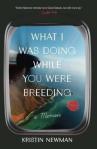 (DNF, 156/291 pages) As featured in my Six Degrees post earlier in the month. Newman is a comedy writer for film and television (That ’70s Show, How I Met Your Mother, etc.). I liked how the title unabashedly centres things other than couplehood and procreation. When she’s travelling, she can be spontaneous, open-to-experience “Kristin-adjacent,” who loves doing whatever it is that locals do. And be a party girl, of course (“If there is one thing that is my favorite thing in the world, it’s making out on a dance floor”). However, this chronological record of her sexual conquests in Amsterdam, Paris, Russia, Argentina, etc. gets repetitive and raunchy. I also felt let down when I learned that she married and had a child right after she published it. So this was just her “Pietra Pan” stage before she copied everyone else. Which is fine, but were her drunken shenanigans really worth commemorating? (Secondhand, Bas Books & Home)
Friends and Strangers by J. Courtney Sullivan (2020)
I got Emma Straub vibes from this big, juicy novel focusing on two women in upstate New York: Elisabeth, a married journalist who moved out of Brooklyn when she finally conceived via IVF; and Sam, a college art student who becomes her son Gil’s babysitter. Elisabeth misses her old crowd and doesn’t fit in with the middle-aged book club ladies in her suburban neighbourhood; Sam is almost her only friend, a confidante who’s also like a little sister (better, anyway, than Elisabeth’s real sister, who lives on tropical islands and models swimwear for inspirational Instagram posts). And Sam admires Elisabeth for simultaneously managing a career and motherhood with seeming aplomb.
 But fundamental differences between the two emerge, mostly to do with economics. Elisabeth comes from money and takes luxury products for granted, while Sam is solidly working-class and develops a surprising affinity with Elisabeth’s father-in-law, George, who is near bankruptcy after Uber killed off his car service business. His pet theory, “The Hollow Tree,” explains that ordinary Americans have been sold the lie that they are responsible for their own success, when really they are in thrall to corporations and the government doesn’t support them as it should. This message hits home for Sam, who is distressed about the precarious situation of the Latina dining hall employees she has met via her work study job. Both Elisabeth and Sam try to turn their privilege to the good, with varied results.
Although I remained engrossed in the main characters’ stories, which unfold in alternating chapters, I thought this could easily have been 300 pages instead of nearly 400. In particular, Sullivan belabours Sam’s uncertainty over her thirtysomething English fiancé, Clive, whom Elisabeth refers to as “sleazy-hot.” The red flags are more than obvious to others in Sam’s life, and to us as readers, yet we get scene after scene meant to cast shade on him. I also kept wondering if first person would have been the better delivery mode for one or both strands. Still, this was perfect literary cross-over summer reading. (Little Free Library) 
Women’s Prize 2023: Longlist Predictions vs. Wishes
I’ve been working on a list of novels eligible for this year’s Women’s Prize since … this time last year. Unusual for me to be so prepared! It shows how invested I’ve become in this prize over the years. For instance, last year my book club was part of an official shadowing scheme, which was great fun.
We’re now less than a month out from the longlist, which will be announced on 7 March. Like last year, I’ve separated my predictions from a wish list; two titles overlap. Here’s a reminder of the parameters, taken from the website:
“Any woman writing in English – whatever her nationality, country of residence, age or subject matter – is eligible. Novels must be published in the United Kingdom between 1 April in the year the Prize calls for entries, and 31 March the following year, when the Prize is announced. … The Prize only accepts novels entered by publishers, who may each submit a maximum of two titles per imprint, depending on size, and one title for imprints with a list of ten fiction titles or fewer published in a year. Previously shortlisted and winning authors are given a ‘free pass’.”
This year I dutifully kept tabs on publisher quotas as I compiled my lists. I also attempted to bear in mind the interests of this year’s judges (also from the website): “Chair of Judges, author and journalist Louise Minchin, is joined by award-winning novelist Rachel Joyce; author, journalist and podcaster Irenosen Okojie; bestselling author and journalist Bella Mackie and MP for Hampstead and Kilburn Tulip Siddiq.”
Predictions
A Spell of Good Things, Ayọ̀bámi Adébáyọ̀
Birnam Wood, Eleanor Catton
Joan, Katherine J. Chen
Maame, Jessica George


Really Good, Actually, Monica Heisey
Trespasses, Louise Kennedy
The Night Ship, Jess Kidd (my review)
Demon Copperhead, Barbara Kingsolver (my review)


Our Missing Hearts, Celeste Ng (my review)
The Marriage Portrait, Maggie O’Farrell
I’m a Fan, Sheena Patel
Elektra, Jennifer Saint


Best of Friends, Kamila Shamsie
River Sing Me Home, Eleanor Shearer
Lucy by the Sea, Elizabeth Strout – currently reading
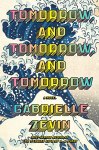
Tomorrow, and Tomorrow, and Tomorrow, Gabrielle Zevin (my review)


Wish List
How Not to Drown in a Glass of Water, Angie Cruz
The Weather Woman, Sally Gardner (my review)
Maame, Jessica George
The Great Reclamation, Rachel Heng


Bad Cree, Jessica Johns
I Have Some Questions for You, Rebecca Makkai – currently reading
Sea of Tranquillity, Emily St. John Mandel (my review)
The Hero of This Book, Elizabeth McCracken (my review)


Nightcrawling, Leila Mottley (my review)
We All Want Impossible Things, Catherine Newman – currently reading
Everything the Light Touches, Janice Pariat (my review)
Camp Zero, Michelle Min Sterling – review pending for Shelf Awareness


Briefly, A Delicious Life, Nell Stevens (my review)
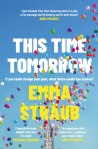
This Time Tomorrow, Emma Straub (my review)
Fight Night, Miriam Toews – currently reading
Tomorrow, and Tomorrow, and Tomorrow, Gabrielle Zevin (my review)


Of course, even if I’m lucky, I’ll still only get a few right across these two lists, and I’ll be kicking myself over the ones I considered but didn’t include, and marvelling at all the ones I’ve never heard of…
What would you like to see on the longlist?
~BREAKING NEWS: There are plans afoot to start a Women’s Prize for Non-Fiction. Now seeking funding to start in 2024. More details here.~
Appendix
(A further 99 eligible novels that were on my radar but didn’t make the cut:)
Hester, Laurie Lico Albanese
Rose and the Burma Sky, Rosanna Amaka
Milk Teeth, Jessica Andrews
Clara & Olivia, Lucy Ashe
Wet Paint, Chloë Ashby
Shrines of Gaiety, Kate Atkinson
Honey & Spice, Bolu Babalola
Hell Bent, Leigh Bardugo
Either/Or, Elif Batuman
Girls They Write Songs About, Carlene Bauer
seven steeples, Sara Baume
The Witches of Vardo, Anya Bergman
Shadow Girls, Carol Birch
Permission, Jo Bloom
Horse, Geraldine Brooks
Glory, NoViolet Bulawayo
Mother’s Day, Abigail Burdess
Instructions for the Working Day, Joanna Campbell
People Person, Candice Carty-Williams
Disorientation, Elaine Hsieh Chou
The Book of Eve, Meg Clothier
Cult Classic, Sloane Crosley
The Things We Do to Our Friends, Heather Darwent
The Bewitching, Jill Dawson
Common Decency, Susannah Dickey
Theatre of Marvels, L.M. Dillsworth
Haven, Emma Donoghue
History Keeps Me Awake at Night, Christy Edwall
The Candy House, Jennifer Egan
Dazzling, Chikodili Emelumadu
You Made a Fool of Death with Your Beauty, Akwaeke Emezi
there are more things, Yara Rodrigues Fowler
Factory Girls, Michelle Gallen
Lessons in Chemistry, Bonnie Garmus
The Illuminated, Anindita Ghose
Your Driver Is Waiting, Priya Guns
The Rabbit Hutch, Tess Gunty
The Dance Tree, Kiran Millwood Hargrave
Weyward, Emilia Hart
Other People Manage, Ellen Hawley
Stone Blind, Natalie Haynes
The Cloisters, Katy Hays
Motherthing, Ainslie Hogarth
The Unfolding, A.M. Homes
The White Rock, Anna Hope
They’re Going to Love You, Meg Howrey
Housebreaking, Colleen Hubbard
Vladimir, Julia May Jonas
This Is Gonna End in Tears, Liza Klaussmann
The Applicant, Nazli Koca
Babel, R.F. Kuang
Yerba Buena, Nina Lacour
The Swimmers, Chloe Lane
The Book of Goose, Yiyun Li
Amazing Grace Adams, Fran Littlewood
All the Little Bird Hearts, Viktoria Lloyd-Barlow
Now She Is Witch, Kirsty Logan
The Chosen, Elizabeth Lowry
The Home Scar, Kathleen MacMahon
Very Cold People, Sarah Manguso
All This Could Be Different, Sarah Thankam Mathews
Becky, Sarah May
The Dog of the North, Elizabeth McKenzie
Dinosaurs, Lydia Millet
Young Women, Jessica Moor
The Garnett Girls, Georgina Moore
Black Butterflies, Priscilla Morris
Lapvona, Ottessa Moshfegh
Someone Else’s Shoes, Jojo Moyes
The Men, Sandra Newman
True Biz, Sara Nović
Babysitter, Joyce Carol Oates
Tomorrow I Become a Woman, Aiwanose Odafen
Things They Lost, Okwiri Oduor
The Human Origins of Beatrice Porter and Other Essential Ghosts, Soraya Palmer
The Things that We Lost, Jyoti Patel
Still Water, Rebecca Pert
Stargazer, Laurie Petrou
Ruth & Pen, Emilie Pine
Delphi, Clare Pollard
The Whalebone Theatre, Joanna Quinn
The Poet, Louisa Reid
Carrie Soto Is Back, Taylor Jenkins Reid
Kick the Latch, Kathryn Scanlan
Blue Hour, Sarah Schmidt
After Sappho, Selby Wynn Schwartz
Signal Fires, Dani Shapiro
A Dangerous Business, Jane Smiley
Companion Piece, Ali Smith
Memphis, Tara M. Stringfellow
Flight, Lynn Steger Strong
Brutes, Dizz Tate
Madwoman, Louisa Treger
I Laugh Me Broken, Bridget van der Zijpp
I’m Sorry You Feel That Way, Rebecca Wait
The Schoolhouse, Sophie Ward
Sweet, Soft, Plenty Rhythm, Laura Warrell
The Odyssey, Lara Williams
A Complicated Matter, Anne Youngson
Avalon, Nell Zink
Some 2022 Reading Superlatives
Longest book read this year: To Paradise by Hanya Yanagihara (720 pages)

Shortest book read this year: Everything’s Changing by Chelsea Stickle (37 pages)

Authors I read the most by this year: Nicola Colton (4), Jakob Wegelius (3), Tove Jansson and Sarah Ruhl (2)
Publishers I read the most from: (Besides the ubiquitous Penguin and its many imprints) Canongate, Carcanet and Picador – which is part of the Pan Macmillan group.
An author I ‘discovered’ and now want to read everything by: Matthew Vollmer
My overall top discovery of the year: The Murderer’s Ape by Jakob Wegelius

My proudest non-bookish achievement: Giving a eulogy at my mom’s funeral (and even getting some laughs).
The books that made me laugh the most: Revenge of the Librarians by Tom Gauld, Undoctored by Adam Kay, Forget Me Not by Sophie Pavelle, Blurb Your Enthusiasm by Louise Willder
The books that made me cry the most: Foster by Claire Keegan, The Hero of This Book by Elizabeth McCracken


Most useful fact gleaned from a book: To convert a Celsius temperature to Fahrenheit, double it and add 30. It’s a rough estimate, but it generally works! I learned this from, of all places, The Hero of This Book by Elizabeth McCracken.
Best book club selections: The Boys in the Boat by Daniel James Brown, Falling Angels by Tracy Chevalier, Small Things Like These by Claire Keegan


Best first line encountered this year: “First, I got myself born.” (Demon Copperhead, Barbara Kingsolver)
Best last lines encountered this year:
- “Darling, that’s what life’s for – to take risks.” (Up at the Villa, W. Somerset Maugham)
- “The defiant soul of the city doesn’t die. It stays alive, right below the surface, pressing up against the boot heels, crouched like the life inside an egg, the force that drives the flower, forever reaching for its next breath.” (Feral City, Jeremiah Moss)
 “Until the future, whatever it was going to be.” (This Time Tomorrow, Emma Straub)
A book that put a song in my head every time I picked it up: Heaven Is a Place on Earth by Adrian Shirk

Shortest book title encountered: O (a poetry collection by Zeina Hashem Beck), followed by XO (a memoir by Sara Rauch)
Best 2022 book title: I Want to Die But I Want to Eat Tteokbokki by Baek Se-hee (No, I haven’t read it and I’m unlikely to, not having had great luck with recent translations of work by Japanese and Korean women.)
Favourite title and cover combo of the year: Briefly, A Delicious Life by Nell Stevens

Most fun cover serendipity: Two books I read in 2022 featured Matisse cut-outs.


Biggest disappointment: The Book of Form and Emptiness by Ruth Ozeki ( for me)
Two 2022 books that everyone was in raptures about but me: Trust by Hernan Diaz and Demon Copperhead by Barbara Kingsolver (both for me)

A 2022 book that everyone was reading but I decided not to: The Marriage Portrait by Maggie O’Farrell – since I thought Hamnet her weakest work, I’m not eager to try more historical fiction by her.
A 2022 book I can’t read: (No matter how good the reviews might be, because of the title) I’m Glad My Mom Died by Jennette McCurdy
The worst books I read this year: The Reactor by Nick Blackburn, Treacle Walker by Alan Garner, Anthropology by Dan Rhodes, Bonsai by Alejandro Zambra (1-star ratings are extremely rare from me; these were this year’s four)
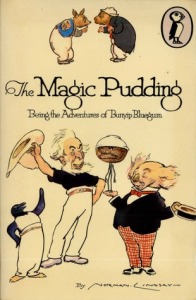
The downright strangest book I read this year: The Magic Pudding by Norman Lindsay
Book Serendipity, Mid-August to Mid-October 2022
It’s my birthday today and we’re off to Kelmscott Manor, where William Morris once lived, so I’ll start with a Morris-related anecdote even if it’s not a proper book coincidence. One of his most famous designs, the Strawberry Thief, is mentioned in Tomorrow, and Tomorrow, and Tomorrow by Gabrielle Zevin, and I happen to be using a William Morris wall calendar this year. I will plan to report back tomorrow on our visit plus any book hauls that occur.
I call it “Book Serendipity” when two or more books that I read at the same time or in quick succession have something in common – the more bizarre, the better. This is a regular feature of mine every few months. Because I usually have 20–30 books on the go at once, I suppose I’m more prone to such incidents. The following are in roughly chronological order.
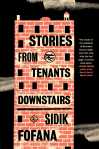
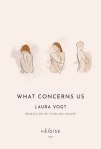
 There’s a character named Verena in What Concerns Us by Laura Vogt and Summer by Edith Wharton. Add on another called Verona from Stories from the Tenants Downstairs by Sidik Fofana.
- Two novels with a female protagonist who’s given up a singing career: Brief Lives by Anita Brookner and What Concerns Us by Laura Vogt.
- Two books featuring Black characters, written in African American Vernacular English, and with elements of drug use and jail time plus rent rises driving people out of their apartments and/or to crime (I’ve basically never felt so white): Stories from the Tenants Downstairs by Sidik Fofana and Nightcrawling by Leila Mottley.
- Two books on my stack with the protagonist an African American woman from Oakland, California: Red Island House by Andrea Lee and Nightcrawling by Leila Mottley
- A middle-aged woman’s hair is described as colourless and an officious hotel staff member won’t give the protagonist a cup of coffee/glass of wine in Brief Lives by Anita Brookner and Oh William! by Elizabeth Strout.
- There’s a central Switzerland setting in Mountain Song by Lucy Fuggle and What Concerns Us by Laura Vogt.
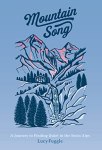
- On the same day, I encountered two references to Mary Oliver’s famous poem “The Summer Day” (“what is it you plan to do / with your one wild and precious life?”): in Mountain Song by Lucy Fuggle and This Beauty by Nick Riggle. (Fuggle and Riggle – that makes me laugh!)
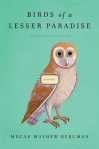
- In the same evening I found mentions of copperhead snakes in Demon Copperhead by Barbara Kingsolver (no surprise there), but also on the very first page of Birds of a Lesser Paradise by Megan Mayhew-Bergman.
- Crop circles are important to What Remains? by Rupert Callender and The Perfect Golden Circle by Benjamin Myers.
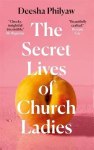
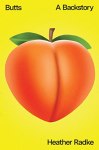
- I was reading two books with provocative peaches on the cover at the same time: The Secret Lives of Church Ladies by Deesha Philyaw and Butts: A Backstory by Heather Radke.
- A main character is pregnant but refuses medical attention in The Language of Flowers by Vanessa Diffenbaugh and What Concerns Us by Laura Vogt.
- An Australian setting and the slang “Carn” or “C’arn” for “come on” in Cloudstreet by Tim Winton and one story (“Halflead Bay”) from The Boat by Nam Le.
- Grape nuts cereal is mentioned in Leap Year by Helen Russell and This Time Tomorrow by Emma Straub.
- A character wagers their hair in a short story from Bratwurst Haven by Rachel King and one from Anthropology by Dan Rhodes.
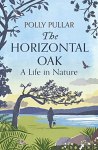
- Just after I started reading a Jackie Kay poetry collection (Other Lovers), I turned to The Horizontal Oak by Polly Pullar and found a puff from Kay on the front cover. And then one from Jim Crumley, whose The Nature of Spring I was also reading, on the back cover! (All Scottish authors, you see.)
- Reading two memoirs that include a father’s suicide – Sinkhole by Juliet Patterson and The Horizontal Oak by Polly Pullar – at the same time.
- Middle school students reading Of Mice and Men in Ms. Hempel Chronicles by Sarah Shun-lien Bynum and Stories from the Tenants Downstairs by Sidik Fofana.
- A second novel in two months in which Los Angeles’s K-Town (Korean neighbourhood) is an important location: after Which Side Are You On by Ryan Lee Wong, Tomorrow, and Tomorrow, and Tomorrow by Gabrielle Zevin.
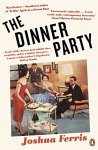
- The main character inherits his roommate’s coat in one story of The Dinner Party by Joshua Ferris, and Tomorrow, and Tomorrow, and Tomorrow by Gabrielle Zevin.
- The Groucho Marx quote “Whatever it is, I’m against it” turns up in What Remains? by Rupert Callender and Blurb Your Enthusiasm by Louise Willder (where it’s adapted to “we’re” as the motto of 3:AM Magazine).
 In Remainders of the Day by Shaun Bythell, Polly Pullar is mentioned as one of the writers at that year’s Wigtown Book Festival; I was reading her The Horizontal Oak at the same time.
- Marilyn Monroe’s death is mentioned in Sinkhole by Juliet Patterson and Tomorrow, and Tomorrow, and Tomorrow by Gabrielle Zevin.
- The types of standard plots that there are, and the fact that children’s books get the parents out of the way as soon as possible, are mentioned in And Finally by Henry Marsh and Blurb Your Enthusiasm by Louise Willder.
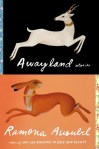
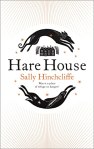
- Two books in quick succession with a leaping hare (and another leaping mammal, deer vs. dog) on the cover: Awayland by Ramona Ausubel, followed by Hare House by Sally Hinchcliffe.
- Three fingers held up to test someone’s mental state after a head injury in The House Is on Fire by Rachel Beanland and The Fear Index by Robert Harris.
- A scene where a teenage girl has to help with a breech livestock delivery (goat vs. sheep) in Belzhar by Meg Wolitzer and The Truants by Kate Weinberg.
- Two memoirs by a doctor/comedian that open with a scene commenting on the genitals of a cadaver being studied in medical school: Catch Your Breath by Ed Patrick wasn’t funny in the least, so I ditched it within the first 10 pages or so, whereas Undoctored by Adam Kay has been great so far.
What’s the weirdest reading coincidence you’ve had lately?
Until the Future: “Tomorrow” Novels by Emma Straub & Gabrielle Zevin
These two 2022 novels I read from the library recently were such fun, but also had me fighting back tears – they’re lovely, bittersweet reads that think seriously about time and failure and loss (and prompted me to ask myself, “Was everything better in 1995–6?” The answer to which is an emphatic YES). If you’re a city-goer, you’ll appreciate the loving depictions of New York City and Los Angeles. They’re also perfect literary/ commercial crossovers that I can imagine recommending to just about any of my readers. Both:
This Time Tomorrow by Emma Straub
Emma Straub is one of the most reliable authors I know for highly readable literary fiction (see also: Jami Attenberg, Maggie O’Farrell and Ann Patchett): while there’s always a lot going on in terms of family dysfunction and character dynamics, her plots are juicy and the prose slides right down (especially Modern Lovers, as well as The Vacationers). Here Alice Stern is a frustrated 40-year-old who feels stuck career- and relationship-wise, working in admissions in the same NYC private school she once attended and living with an okay boyfriend she secretly hopes won’t propose. She devotes much of her emotional energy to her seriously ill father, Leonard, who it seems may never be released from the hospital.
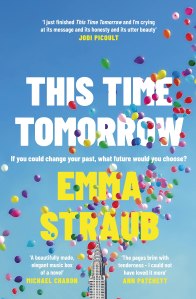 Leonard is the one-hit sci-fi author of a cult classic about time travel, and when an inebriated Alice falls asleep near her childhood home on the night of her 40th birthday, she has her own time-travel adventure, waking up on her 16th birthday in 1996. This is her chance, she thinks: to make sure things go right with her high school crush, and to encourage her father to write more and adopt healthier habits so he won’t be dying in a hospital 24 years down the line. As she figures out the rules of this personal portal and attempts the same transition again and again, she starts to get the hang of what works; what she can change and what is inexorable. And she tries to be a better person, both then and now.
True sci-fi aficionados would probably pick holes in the reasoning, but I would say so long as you pick this up expecting a smart commentary on relationships, ageing, loss and regret rather than a straight-up time-travel novel, you’ll be just fine. Straub is closer to my older sister’s age than mine, but I still loved the 1990s nostalgia, and looking back at your childhood/teen years from a parent’s perspective can only ever be an instructive thing to do.
It’s clever how Straub starts cycling through the time changes faster and faster so they don’t get repetitive. The supporting characters like Sam (Alice’s African American best friend), Kenji and even Ursula the cat are great, and there are little nods throughout to other pop culture representations of time travel. This was entertaining and relatable, but also left me with a lump in the throat. And it was all the more poignant to have been reading it just as news hit of author Peter Straub’s death; it’s a daughter’s tribute.
Some favourite lines:
(Alice thinking about Leonard) “She would feel immeasurably older when he was gone.”
“Maybe, she thought, … her mistake had been assuming that somewhere along the line, everything would fall into place and her life would look just like everyone else’s.”
(in 1996) “Everyone was gorgeous and gangly and slightly undercooked, like they’d been taken out of the oven a little bit too early”
“Any story could be a comedy or a tragedy, depending on where you ended it. That was the magic, how the same story could be told an infinite number of ways.”
Tomorrow, and Tomorrow, and Tomorrow by Gabrielle Zevin
I didn’t think I’d ever read another novel by Zevin after the dud that was The Storied Life of A.J. Fikry (by far my most popular negative review on Goodreads), but Laura’s fantastic review changed my mind.
Here’s the summary I wrote for Bookmarks magazine:
Sadie Green and Sam Masur met in unlikely circumstances. In 1986, Sam’s serious foot injury had him in a children’s hospital, where Sadie was visiting her sister, who had cancer. They hit it off talking video games, but Sam was hurt to learn Sadie kept up the visits to earn community service hours for her bat mitzvah. When they meet again during college in Boston, they decide to co-design a game. Helped by his roommate and her boyfriend, they create a bestseller, Ichigo, based on The Tempest. Over the decades, these gaming friends collaborate multiple times, but life throws some curveballs. A heartwarming story for gamers and the uninitiated alike.
 The novel was more complicated than I expected, mostly because it spans nearly 30 years – and my main critique would probably be that a shorter timeline would have been more intense. It also goes to some dark places as it probes the two central characters’ traumas and tendency to depression. But their friendship, which over the years becomes a business partnership that also incorporates Sam’s college roommate, Marx Watanabe, is a joy. The creative energy and banter are enviable. Marx is the uncomplicated, optimistic go-between when Sam and Sadie butt heads and take offense at perceived betrayals. Underneath Sam and Sadie’s conflicts is a love different from, and maybe superior to, romantic love (I think Sam might best be described as ace).
Gaming comes across as better than reality in that it offers infinite possibilities for do-overs. Life, on the other hand, only goes in one direction and is constrained by choices, your own and others’. Part VII, “The NPC” (for non-player character), is in second person narration and is beautiful as well as heartbreaking – I’ll say no more for fear of spoilers.
Apart from playing Super Mario with older cousins at 1990s family reunions and a couple of educational computer games with my childhood best friend, I don’t have any history with gaming at all, yet Zevin really drew me in to the fictional worlds Sadie and Sam created with their games. What with the vivid imagery and literary allusions, EmilyBlaster, Ichigo and Master of the Revels are real works of art, bridging high and low culture and proving that Dickinson’s poetry and Shakespeare’s plays are truly timeless. I was also interested to see how games might be ahead of their time socio-politically.
This reminded me most of The Animators and The Art of Fielding, similarly immersive stories of friendship and obsessive commitment to work and/or play. In the same way that you don’t have to know anything about cartooning or baseball to enjoy those novels, you don’t have to be a gamer to find this a nostalgic, even cathartic, read.
Some favourite lines:
“for Marx, the world was like a breakfast at a five-star hotel in an Asian country—the abundance of it was almost overwhelming. Who wouldn’t want a pineapple smoothie, a roast pork bun, an omelet, pickled vegetables, sushi, and a green-tea-flavoured croissant? They were all there for the taking and delicious, in their own way.”
Sam to Sadie: “We work through our pain. That’s what we do. We put the pain into the work, and the work becomes better.”
Marx (who was a college actor) in the early years, citing Macbeth: “What is a game? It’s tomorrow, and tomorrow, and tomorrow. It’s the possibility of infinite rebirth, infinite redemption. The idea that if you keep playing, you could win. No loss is permanent, because nothing is permanent, ever.”
What to Read during a Heat Wave
The short answer is whatever you want. A longer answer: you could get stuck into heat-themed and summer-set books; escape by reading about a holiday destination, whether you can get there or not; will yourself cool by reading about icy places; and/or sink into a stack of lighter reading material.
I’ll be employing some or all of these strategies as the mercury climbs. I keep thinking I’ll just give up on work one of these days – my new study has a big window that traps the midday sun, but it remains bearable as long as I use blackout curtains and a desk fan – and read on a couch all afternoon. That hasn’t happened yet, but on Tuesday peak temperatures (of 36 °C) are expected here in the UK, so I may well carry out my threat.
Here’s what I’m reading now in each of those categories, along with some earlier reads I can recommend (with excerpts from my reviews and a link to the full text):
Embrace the Heat
My current reads:
Contemporary
 Golden Boys by Phil Stamper: Four gay high school students in small-town Ohio look forward to a summer of separate travels for jobs and internships and hope their friendships will stay the course. With alternating first-person passages and conversation threads, this YA novel is proving to be a sweet, fun page turner and the perfect follow-up to the Heartstopper series (my summer crush from last year).
Classic
Summer by Edith Wharton: An adopted young woman (and half-hearted librarian) named Charity Royall gets a shot at romance when a stranger arrives in her New England town. I’m only 30 pages in so far, but this promises to be a great read – but please not as tragic as Ethan Frome? (Apparently, Wharton called it a favourite among her works, and referred to it as “the Hot Ethan,” which I’m going to guess she meant thermally.)
My top recommendations:
Contemporary
 Heatstroke by Hazel Barkworth: From the first word (“Languid”) on, this drips with hot summer atmosphere, with connotations of discomfort and sweaty sexuality. Rachel is a teacher of adolescents as well as the mother of a 15-year-old, Mia. When Lily, a pupil who also happens to be one of Mia’s best friends, goes missing, Rachel is put in a tough spot…
 A Crime in the Neighbourhood by Suzanne Berne: Marsha remembers the summer of 1972, when her father left her mother for Aunt Ada and news came of a young boy’s sexual assault and murder in the woods behind a mall. “If you hadn’t known what had happened in our neighborhood, the street would have looked like any other suburban street in America.”
 Heat by Bill Buford: You know what they say: if you can’t stand the heat, get out of the kitchen (eat some cold salads instead!). Buford traces TV chef Mario Batali’s culinary pedigree through Italy and London, and later spends stretches of several months in Italy as an apprentice to a pasta-maker and a Tuscan butcher. Exactly what I want from food writing.
 Heat Wave by Penelope Lively: Pauline, a freelance copyeditor in her fifties, has escaped from London to spend a hot summer at World’s End, the Midlands holiday cottage complex she shares with her daughter and her family. The increasing atmospheric threats (drought or storms; combine harvesters coming ever nearer) match the tensions in the household.
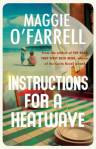 Instructions for a Heatwave by Maggie O’Farrell: Another spot-on tale of family and romantic relationships. The language is unfailingly elegant. It opens with the heat as the most notable character: “It inhabits the house like a guest who has outstayed his welcome: it lies along corridors, it circles around curtains, it lolls heavily on sofas and chairs.”
- This is set during the UK heatwave of 1976, which lives on in collective memory and legend in this country even though its temperature record has been topped (but not the length of the streak). I’ve since tried two other novels set during the summer of ’76 but neither took (maybe you’ll get on better with them?): Water Shall Refuse Them by Lucie McKnight Hardy and In the Place of Fallen Leaves by Tim Pears.
 Or try the American summer of 1975 instead, with Mary Jane by Jessica Anya Blau, a juicy coming-of-age novel set in Baltimore.
Classic
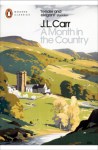 A Month in the Country by J. L. Carr: Tom Birkin, a First World War veteran whose wife has left him, arrives in Oxgodby to uncover the local church’s wall painting of the Judgment Day. “There was so much time that marvelous summer.” There is something achingly gorgeous about this Hardyesque tragicomic romance, as evanescent as ideal summer days.
 The Go-Between by L. P. Hartley: Twelve-year-old Leo Colston is invited to spend the several July weeks leading up to his birthday at his school friend Marcus Maudsley’s home, Brandham Hall. The heat becomes a character in its own right, gloweringly presiding over the emotional tension caused by secrets, spells and betrayals.
 In a Summer Season by Elizabeth Taylor: The title is not only literal, when much of the action takes place, but a metaphor for the fleeting nature of happiness (as well as life itself). Kate remembers pleasant days spent with her best friend and their young children: “It was a long summer’s afternoon and it stood for all the others now. … Their friendship was as light and warming as the summer’s air.”
Escape on Holiday
I try to read on location whenever possible, but if it’s a staycation for you this year, you can still transport yourself somewhere exciting or tropical through fiction.
My current read:
 Mustique Island by Sarah McCoy: “A sun-splashed romp with a rich divorcée and her two wayward daughters in 1970s Mustique, the world’s most exclusive private island [in the Caribbean], where Princess Margaret and Mick Jagger were regulars and scandals stayed hidden from the press.”
My top recommendations:
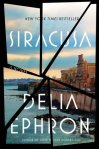 Siracusa by Delia Ephron: A snappy literary thriller about two American couples who holiday together on the Sicilian island of Siracusa. Shifting between the perspectives of the four main characters, it looks back to ask what went disastrously wrong on that trip. A delicious story ripe for a cinematic adaptation.
 Nothing but Blue Sky by Kathleen MacMahon: Set in Aiguaclara, a hidden gem on Spain’s Costa Brava where David and Mary Rose holidayed every summer for 20 years. Most of the book remembers their life together and their previous vacations here. Grief, memory, fate: some of my favourite themes, elegantly treated.
 A Theatre for Dreamers by Polly Samson: Set on the Greek island of Hydra in 1960, this zeroes in on several authors, including a young poet from Canada named Leonard Cohen. We see all of the real-life characters from the perspective of a starry-eyed 17-year-old narrator. You can feel the Mediterranean heat soaking up through your sandals.
 The Vacationers by Emma Straub: Perfect summer reading; perfect vacation reading. Straub writes great dysfunctional family novels featuring characters so flawed and real you can’t help but love and laugh at them. Here, Franny and Jim Post borrow a friend’s home in Mallorca for two weeks, hoping sun and relaxation will temper the memory of Jim’s affair.
Read Yourself Cool
Will reading about snow and ice actually make you feel any cooler? It can’t hurt.
My current reads:
I had a vague Antarctica reading theme going for a while, but have yet to get back into two set-aside reads, Empire Antarctica by Gavin Francis and Lean Fall Stand by Jon McGregor (or pick up Snow Widows by Katherine MacInnes and South Pole Station by Ashley Shelby). Maybe next week!
My top recommendations:
 Among the Summer Snows by Christopher Nicholson: After the death from cancer of his wife Kitty, a botanical illustrator, Nicholson set off for Scotland’s Cairngorms and Ben Nevis in search of patches of snow that persist into summer. “Summer snow is a miracle, a piece of out-of-season magic: to see it is one thing, to make physical contact with it is another.”
 The Still Point by Amy Sackville: A sweltering summer versus an encasing of ice; an ordinary day versus decades of futile waiting. Sackville explores these contradictions only to deflate them, collapsing time such that a polar explorer’s wife and her great-great-niece can inhabit the same literal and emotional space despite being separated by more than a century.
Keep it Light
I’m more likely to read genre fiction (crime, especially) during the summer, it seems. I recently read The Daughter of Time by Josephine Tey for book club, for instance – but it was so permeated in Plantagenet history that it wasn’t your standard detective drama at all.
I also like to pick up lighter reads that edge towards women’s fiction. I’ve been starting my days with passages from these two, though it might make more sense to read them later in the day as a reward for getting through parts of weightier books.
My current reads:
 Bridget Jones: Mad About the Boy by Helen Fielding: I’d never read this second sequel from 2013, so we’re doing it for our August book club – after some darker reads, people requested something light! Bridget is now a single mother in her early 50s, but some things never change, like constant yo-yo dieting and obsessive chronicling of the stats of her life.
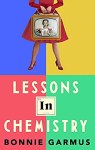 Lessons in Chemistry by Bonnie Garmus: This year’s It book. I’m nearly halfway through and enjoying it, if not as rapturously as so many. Katherine Heiny meets John Irving is the vibe I’m getting. Elizabeth Zott is a scientist through and through, applying a chemist’s mindset to her every venture, including cooking, rowing and single motherhood in the 1950s.
My top recommendations:
 Sunburn by Laura Lippman: While on a beach vacation in 1995, a woman walks away from her husband and daughter and into a new life as an unattached waitress. I liked that I recognized many Maryland/Delaware settings. Quick and enjoyable. (I’ve never been hotter than during the July week we spent in Milan in 2019. This is one of the books I read on that trip.)
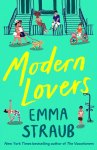 Modern Lovers by Emma Straub: Short chapters flip between all the major characters’ perspectives, showing that she completely gets each one of them. The novel is about reassessing as one approaches adulthood or midlife, about reviving old dreams and shoring up flagging relationships. Nippy and funny and smart and sexy. So many lines ring true. (Yes, a second entry from Straub: she writes such accessible and addictive literary fiction.)
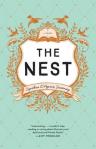 The Nest by Cynthia D’Aprix Sweeney: The four dysfunctional Plumb siblings must readjust their expectations when the truth comes out. This also affects their trust fund, “the nest.” A nest is, of course, also a home, so for as much as this seems to be about money, it is really more about family and how we reclaim our notion of home after a major upheaval.
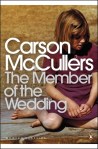 This article on the Penguin website has a few more ideas, including To Kill a Mockingbird (you think we’ve got it bad? Try a summer in the American South!), Atonement, and poetry. I took up one of Alice Vincent’s recommendations right away: since I’m reading My Autobiography of Carson McCullers by Jenn Shapland, it made sense to get a copy of McCullers’s The Member of the Wedding out from the public library. Already on the first page you’re steeped in a sweltering Georgia summer (like McCullers, my dad is from Columbus):
It happened that green and crazy summer when Frankie was twelve years old. … The sidewalks of the town were grey in the early morning and at night, but the noon sun put a glaze on them, so that the cement burned and glittered like glass. The sidewalks finally became too hot for Frankie’s feet. … The world seemed to die each afternoon and nothing moved any longer. At last the summer was like a green sick dream, or like a silent crazy jungle under glass.
 Bookish Beck = Rebecca Foster. American transplant to England. Freelance proofreader and book reviewer.
 Bookish Beck