10 Days in the USA and What I Read (Plus a Book Haul)
On October 29th, I went to an evening drinks party at a neighbour’s house around the corner. A friend asked me about whether the UK or the USA is “home” and I replied that the States feels less and less like home every time I go, that the culture and politics are ever more foreign to me and the UK’s more progressive society is where I belong. I even made an offhand comment to the effect of: once my mother passed, I didn’t think I’d fly back there often, if at all. I was thinking about 5–10 years into the future; instead, a few hours after I got home from the party, we were awoken by the middle-of-the-night phone call saying my mother had suffered a nonrecoverable brain bleed. The next day she was gone.
I haven’t reflected a lot on the irony of that timing, probably because it feels like too much, but it turns out I was completely wrong: in fact, I’m now returning to the States more often. With our mom gone and our dad not really in our lives, my sister and I have gotten closer. Since October I’ve flown back twice and she’s visited here once. There are 7.5 years between us and we’ve always been at different stages of life, with separate preoccupations and priorities; I was also lazy and let my mom be the go-between, passing family news back and forth. Now there’s a sense that we are all we have, and we have to stick together.


So it was doubly important for me to be there for my sister’s graduation from nursing school last week. If we follow each other on Facebook or Instagram, you will have already seen that she finished at the top of her cohort and was one of just two students recognized for academic excellence out of the college’s over 200 graduates – and all of this while raising four children and coping with the disruption of Mom’s death seven months ago. There were many times when she thought she would have to pause or give up her studies, but she persisted and will start work as a hospice nurse soon. We’re all as proud as could be, on our mom’s behalf, too.
The trip was a mixture of celebratory moments and sad duties. We started the process of going through our mom’s belongings and culling what we can, but the files, photos and mementoes are the real challenge and had to wait for another time. There were dozens of books I’d given her for birthdays and holidays, mostly by her favourite gentle writers – Gerald Durrell, Jan Karon, Gervase Phinn – invariably annotated with her name, the date and occasion. I looked back through them and then let them go.


Between my two suitcases I managed to bring back the rest of her first box of journals (there are 150 of them in total, spanning 1989 to 2022), and I’m halfway through #4 at the moment. We moved out of my first home when I was nine, and I don’t have a lot of vivid memories of those early years. But as I read her record of everyday life it’s like I’m right back in those rooms. I get new glimpses of myself, my dad, my sister, but especially of her – not as my mother, but as a whole person. As a child I never realized she was depressed: distressed about her job situation, worried over conflicts with her siblings and my sister, coping with ill health (she was later diagnosed with fibromyalgia) and resisting ageing. For as strong as her Christian faith was, she was really struggling in ways I couldn’t appreciate then.

I hope that later journals will introduce hindsight, now that she’s not around to give a more circumspect view. In any case, they’re an incredible legacy, a chance for me to relive much of my life that I otherwise would only remember in fragments through photographs, and perhaps have a preview of what I can expect from the course of our shared kidney disease.
What I Read
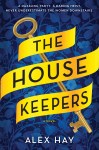 The Housekeepers by Alex Hay – A historical heist novel with shades of Downton Abbey, this comes out in July. Reviewed for Shelf Awareness.

Cowboys Are My Weakness by Pam Houston – Terrific: stark, sexy stories about women who live out West and love cowboys and hunters (as well as dogs and horses). Ten of the stories are in the first person, voiced by women in their twenties and thirties who are looking for romance and adventure and anxiously pondering motherhood (“by the time you get to be thirty, freedom has circled back on itself to mean something totally different from what it did at twenty-one”). The remaining two are in the second person, which I always enjoy. The occasional Montana setting reminded me of stories I’ve read by Maile Meloy and Maggie Shipstead, while the relationship studies made me think of Amy Bloom’s work. 

The Harpy by Megan Hunter – Read for Literary Wives club. Review coming up on Monday. 

The Lake Shore Limited by Sue Miller – A solid set of narratives alternating between the POVs of four characters whose lives converge around a play inspired by the playwright’s loss of her boyfriend on one of the hijacked planes on 9/11. Her mixed feelings about him towards the end of his life and about being shackled to his legacy as his ‘widow’ reverberate in other sections: one about the lead actor, whose wife has ALS; and one about a widower the playwright is being set up with on a date. Fitting for a book about a play, the scenes feel very visual. A little underpowered, but subtlety is to be expected from a Miller novel. She, Anne Tyler and Elizabeth Berg write easy reads with substance, just the kind of book I want to take on an airplane, as indeed I did with this one. I read the first 2/3 on my travel day (although with the 9/11 theme this maybe wasn’t the best choice!).
 For apposite plane reading, I also started Fly Girl by Ann Hood, her memoir of being a TWA flight attendant in the 1970s, the waning glory days of air travel. I’ve read 10 or so of Hood’s books before from various genres, but lost interest in the minutiae of her job applications and interviews. Another writer would probably have made a bigger deal of the inherent sexism of the profession, too. I read 30%.
 Hello Beautiful by Ann Napolitano – I knew I wanted to read this even before it was Oprah’s 100th book club pick. It’s a family story spanning three decades and focusing on the Padavanos, a working-class Italian American Chicago clan with four daughters: Julia, Sylvie, and twins Cecilia and Emeline. Julia meets melancholy basketball player William Waters while at Northwestern in the late 1970s and they marry and have a daughter; Sylvie, a budding librarian, makes out with boys in the stacks until her great romance comes along; Cecilia is an artist and Emeline loves babies and manages a nursery. More than once a character think of their collective story as a “soap opera,” and there’s plenty of melodrama here – an out-of-wedlock pregnancy, estrangements, a suicide attempt, a coming out, stealing another’s man – as well as far-fetched coincidences, including the two major deaths falling on the same day as a birth and a reconciliation.
There is such warmth and intensity to the telling, and brave reckoning with mental illness, prejudice and trauma, that I excused flaws such as dwelling overly much in characters’ heads through close third person narration, to the detriment of scenes and dialogue. I love sister stories in general, and the subtle echoes of Leaves of Grass and Little Women (the connections aren’t one to one and you’re kept guessing for most of the book who will be the Beth) add heft. I especially appreciated how a late parent is still remembered in daily life after 30 years have passed. This is, believe it or not, the second basketball novel I’ve loved this year, after Tell the Rest by Lucy Jane Bledsoe.
I always try to choose thematically appropriate reads, so I also started:
 Circling My Mother by Mary Gordon – A memoir she began after her nonagenarian mother’s death with dementia. Intriguingly, the structure is not chronological but topic by topic, built around key relationships: so far I’ve read “My Mother and Her Bosses” and “My Mother: Words and Music.”
Grave by Allison C. Meier – My sister and I made a day trip up to my mother’s grave for the first time since her burial. She has a beautiful spot in a rural cemetery dating back to the 1780s, but it’s in full sun and very dry, so we tried to cheer up the dusty plot with some extra topsoil and grass seed, marigolds, and a butterfly flag.


 Meier is a cemetery tour guide in Brooklyn, where she lives. In the third of the e-book I’ve read so far, she looks at American burial customs, the lack of respect for Black and Native American burial sites, and the rise of garden cemeteries such as Mount Auburn in Cambridge, Massachusetts. I’ve been reading death-themed books for over a decade and have delighted in exploring cemeteries (including Mount Auburn, as part of my New England honeymoon) for even longer, so this is right up my street and one of the better Object Lessons monographs.
What I Bought
I traded in most of my mother’s books at 2nd & Charles and Wonder Book and Video but, no surprise, promptly spent the store credit on more secondhand books. Thanks to clearance shelves at both stores, I only had to chip in another $12.25 for the below haul, which also covered two Dollar Tree purchases (I felt bad for Susan Minot having signed editions end up remaindered!). Some tried and true authors here, as well as novelties to test out, with a bunch of short stories and novellas to read later in the year.


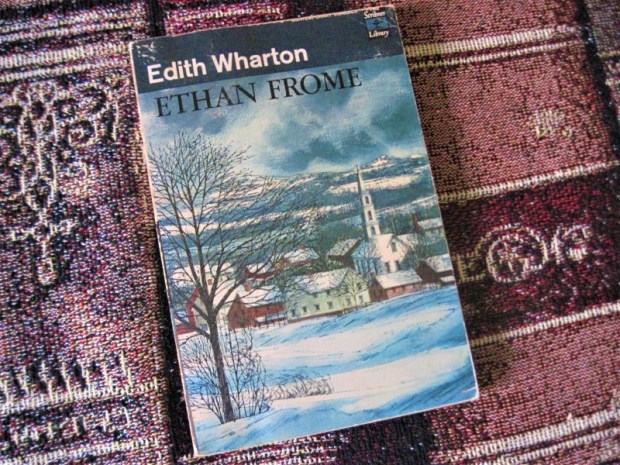
Ethan Frome by Edith Wharton (#NovNov Classics Week Buddy Read)
For the short classics week of Novellas in November, our buddy read is Ethan Frome by Edith Wharton (1911). You can download the book for free from Project Gutenberg here if you’d still like to join in.
Did you have to read Ethan Frome in school? For American readers, it’s likely that it was an assigned text in high school English. I didn’t happen to read it during my school days, but caught up in 2006 or 2008, I think, and was impressed with this condensed tragedy and the ambiance of a harsh New England winter. It struck me even more on a reread as a flawless parable of a man imprisoned by circumstance and punished for wanting more.
I had forgotten that the novella is presented as a part-imagined reconstruction of the sad events of Ethan Frome’s earlier life. A quarter-century later, the unnamed narrator is in Wharton’s fictional Starkfield, Massachusetts on business, and hears the bare bones of Ethan’s story from various villagers before meeting the man himself. Ethan, who owns a struggling sawmill, picks up extra money from odd jobs. He agrees to chauffeur the narrator to engineering projects in his sleigh, and can’t conceal his jealousy at a technical career full of travel – a reminder of what could have been had he been able to continue his own scientific studies. A blizzard forces the narrator to stay overnight in Ethan’s home, and the step over the threshold sends readers back in time to when Ethan was a young man of 28.
*There are SPOILERS in the following.*
Ethan’s household contains two very different women: his invalid wife, Zeena, eight years his elder; and her cousin, Mattie Silver, who serves as her companion and housekeeper. Mattie is dreamy and scatter-brained – not the practical sort you’d want in a carer role, but she had nowhere else to go after her parents’ death. She has become the light of Ethan’s life. By contrast, Zeena is shrewish, selfish, lazy and gluttonous. Wharton portrays her as either pretending or exaggerating about her chronic illness. Zeena has noticed that Ethan has taken extra pains with his appearance in the year since Mattie came to live with them, and conspires to get rid of Mattie by getting a new doctor to ‘prescribe’ her a full-time servant.
The plot turns on an amusing prop, “Aunt Philura Maple’s pickle-dish.” While Zeena is away for her consultation with Dr. Buck, Ethan and Mattie get one evening alone together. Mattie lays the table nicely with Zeena’s best dishes from the china cabinet, but at the end of their meal the naughty cat gets onto the table and knocks the red glass pickle dish to the floor, where it smashes. Before Ethan can obtain glue to repair it in secret, Zeena notices and acts as if this never-used dish was her most prized possession. She and Ethan are both to have what they most love taken away from them – but at least Ethan’s is a human being.
I had remembered that Ethan fell in love with a cousin (though I thought it was his cousin) and that there is a dramatic sledding accident. What I did not remember, however, was that the crash is deliberate: knowing they can never act on their love for each other, Mattie begs Ethan to steer them straight into the elm tree mentioned twice earlier. He dutifully does so. I thought I recalled that Mattie dies, while he has to live out his grief ever more. I was gearing myself up to rail against the lingering Victorian mores of the time that required the would-be sexually transgressing female to face the greatest penalty. Instead, in the last handful of pages, Wharton delivers a surprise. When the narrator enters the Frome household, he meets two women. One is chair-bound and sour; the other, tall and capable, bustles about getting dinner ready. The big reveal, and horrible irony, is that the disabled woman is Mattie, made bitter by suffering, while Zeena rose to the challenges of caregiving.
Ethan is a Job-like figure who lost everything that mattered most to him, including his hopes for the future. Unlike the biblical character, though, he finds no later reward. “Sickness and trouble: that’s what Ethan’s had his plate full up with, ever since the very first helping,” as one of the villagers tells the narrator. “He looks as if he was dead and in hell now!” the narrator observes. This man of sorrow is somehow still admirable: he and Zeena did the right thing in taking Mattie in again, and even when at his most desperate Ethan refused to swindle his customers to fund an escape with Mattie. In the end, Mattie’s situation is almost the hardest to bear: she only ever represented sweetness and love, and has the toughest lot. In some world literature, e.g. the Russian masters, suicide might be rendered noble, but here its attempt warrants punishment.
{END OF SPOILERS.}
I can see why some readers, especially if encountering this in a classroom setting, would be turned off by the bleak picture of how the universe works. But I love me a good classical tragedy, and admired this one for its neat construction, its clever use of foreshadowing and dread, its exploration of ironies, and its use of a rustic New England setting – so much more accessible than Wharton’s usual New York City high society. The cozy wintry atmosphere of Little Women cedes to something darker and more oppressive; “Guess he’s been in Starkfield too many winters,” a neighbor observes of Ethan. I could see a straight line from Jude the Obscure through Ethan Frome to The Great Gatsby: three stories of an ordinary, poor man who pays the price for grasping for more. I reread this in two sittings yesterday morning and it felt to me like a perfect example of how literature can encapsulate the human condition.
(Secondhand purchase) [181 pages]
My original rating (c. 2008):
My rating now: 
Keep in touch via Twitter (@bookishbeck / @cathy746books) and Instagram (@bookishbeck / @cathy_746books), using the hashtag #NovNov. We’ll add any of your review links in to our master posts.
Women in Translation Month 2019, Part II: Almada and Fenollera
All Spanish-language choices this time: an Argentinian novella, a Spanish novel, and a couple of Chilean short stories to whet your appetite for a November release.
The Wind that Lays Waste by Selva Almada (2012; English translation, 2019)
[Translated by Chris Andrews]
 Selva Almada’s debut novella is also her first work to appear in English. Though you might swear this is set in the American South, it actually takes place in her native Argentina. The circadian narrative pits two pairs of characters against each other. On one hand we have the Reverend Pearson and his daughter Leni, itinerants who are driven ever onward by the pastor’s calling. On the other we have “The Gringo” Brauer, a mechanic, and his assistant, José Emilio, nicknamed “Tapioca.”
On his way to visit Pastor Zack, Reverend Pearson’s car breaks down. While the Gringo sets to work fixing the vehicle, the preacher tries witnessing to Tapioca. He senses something special in the boy, perhaps even recognizing a younger version of himself, and wants him to have more of a chance in life than he’s currently getting at the garage. As a violent storm comes up, we’re left to wonder how Leni’s cynicism, the Reverend’s zealousness, the Gringo’s suspicion, and Tapioca’s resolve will all play out.
Different as they are, there are parallels to be drawn between these characters, particularly Leni and Tapioca, who were both abandoned by their mothers. I particularly liked the Reverend’s remembered sermons, printed in italics, and Leni’s sarcastic thoughts about her father’s vocation: “They always ended up doing what her father wanted, or, as he saw it, what God expected of them” and “she admired the Reverend deeply but disapproved of almost everything her father did. As if he were two different people.”
The setup and characters are straight out of Flannery O’Connor. The book doesn’t go as dark as I expected; I’m not sure I found the ending believable, even if it was something of a relief.
My rating:
My thanks to Charco Press for the free copy for review. Last year I reviewed two Charco releases: Die, My Love and Fish Soup.
See also Susan’s review.
The Awakening of Miss Prim by Natalia Sanmartin Fenollera (2013; English translation, 2014)
[Translated by Sonia Soto]
 San Ireneo de Arnois is a generically European village that feels like it’s been frozen in about 1950: it’s the sort of place that people who are beaten down by busy city life retreat to so they can start creative second careers. Prudencia Prim comes here to interview for a job as a librarian, having read a rather cryptic job advertisement. Her new employer, The Man in the Wingchair (never known by any other name), has her catalogue his priceless collection of rare books, many of them theological treatises in Latin and Greek. She’s intrigued by this intellectual hermit who doesn’t value traditional schooling yet has the highest expectations for the nieces and nephews in his care.
In the village at large, she falls in with a group of women who have similarly ridiculous names like Hortensia and Herminia and call themselves feminists yet make their first task the finding of a husband for Prudencia. All of this is undertaken with the aid of endless cups of tea or hot chocolate and copious sweets. The village and its doings are, frankly, rather saccharine. No prizes for guessing who ends up being Prudencia’s chief romantic interest despite their ideological differences; you’ll guess it long before she admits it to herself at the two-thirds point.
As much as this tries to be an intellectual fable for bibliophiles (Prudencia insists that The Man in the Wingchair give Little Women to his niece to read, having first tried it himself despite his snobbery), it’s really just a thinly veiled Pride and Prejudice knock-off – and even goes strangely Christian-fiction in its last few pages. If you enjoyed The Readers of Broken Wheel Recommend and have a higher tolerance for romance and chick lit than I, you may well like this. It’s pleasantly written in an old-fashioned Pym-homage style, but ultimately it goes on my “twee” shelf and will probably return to a charity shop, from whence it came.
My rating: 
Humiliation by Paulina Flores (2016; English translation, 2019)
[Translated by Megan McDowell]
I’ve read the first two stories so far, “Humiliation” and “Teresa,” which feature young fathers and turn on a moment of surprise. An unemployed father takes his two daughters along to his audition; a college student goes home with a single father for a one-night stand. In both cases, what happens next is in no way what you’re expecting. These are sharp and readable, and I look forward to making my way through the rest over the next month or two.
My rating:
Humiliation will be published by Oneworld on November 7th. My thanks to Margot Weale for a proof copy. I will publish a full review closer to the time.
Did you do any special reading for Women in Translation month this year?
Following Up on the Prescriptions from My Bibliotherapy Appointment
In January 2018 I had the wonderful opportunity to have a free bibliotherapy session at the School of Life in London with Ella Berthoud, one of the authors of The Novel Cure. I wrote about the experience in this post. I quickly got hold of all but a couple of my prescribed reads, but have been slower about actually reading them. Though I’ve read five now, I’ve only written up four, two of which I only managed to finish this week. (These 250-word reviews are in order of my reading.)
Heligoland by Shena Mackay (2002)
(CURE: moving house)
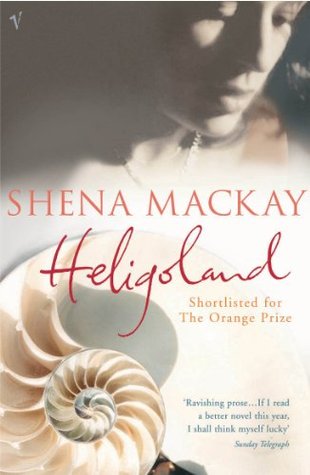 Heligoland is a Scottish island best known from the shipping forecast, but here it’s an almost mythical home. Rowena Snow was orphaned by her Indian/Scottish parents, and a second time by her aunt. Since then she’s drifted between caring and cleaning jobs. The Nautilus represents a fresh chance at life. This shell-shaped artists’ commune in South London houses just three survivors: Celeste Zylberstein, who designed the place; poet Francis Campion; and antiques dealer Gus Crabb. Rowena will be the housekeeper/cook, but she struggles with self-esteem: does she deserve to live in a haven for upper-class creative types?
The omniscient perspective moves between the Nautilus residents but also on to lots of other minor hangers-on, whose stories are hard to keep track of. Mackay’s writing reminded me somewhat of Tessa Hadley’s and is lovely in places – especially when describing a buffet or a moment of light-filled epiphany in a garden. There’s not much to be said beyond what’s in the blurb: Mackay is attempting to give a picture of a drifter who finds an unconventional home; in the barest sense she does succeed, but I never felt a connection with any of the characters. In this ensemble cast there is no one to love and thus no one to root for. While I didn’t love this book, it did inspire me to pick up others by Mackay: since then I’ve read The Orchard on Fire, which I liked a lot more, and the first half of Dunedin.
My rating: 
Family Matters by Rohinton Mistry (2002)
(CURE: worry over ageing parents)
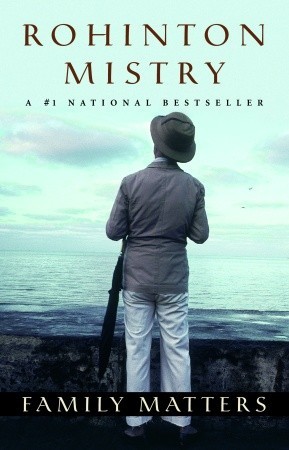 Retired professor Nariman Vakeel, 79, has Parkinson’s disease and within the first few chapters has also fallen and broken his ankle. His grown stepchildren, Coomy and Jal, reluctant to care for him anyway, decide they can’t cope with the daily reality of bedpans, sponge baths and spoon feeding in their large Chateau Felicity apartment. He’ll simply have to recuperate at Pleasant Villa with his daughter Roxana and her husband and sons, even though their two-bedroom apartment is barely large enough for the family of four. You have to wince at the irony of the names for these two Bombay housing blocks, and at the bitter contrast between selfishness and duty.
Perhaps inevitably, Nariman starts to fade into the background. An increasingly speechless invalid, he only comes alive through his past: italicized sections, presented as his night-time ravings, tell of his love for Lucy, whom his parents refused to let him marry, and the untimely end of his arranged marriage. I enjoyed time spent in a vibrantly realized Indian city and appreciated a chance to learn about a lesser-known community: Nariman and family are Parsis (or Zoroastrians). There’s also a faint echo here of King Lear, with one faithful daughter set against two wicked children.
As to ageing parents, this is a pretty relentlessly bleak picture, but there are sparks of light: joy in life’s little celebrations, and unexpected kindnesses. Mistry’s epic has plenty of tender moments that bring it down to an intimate scale. I’m keen to read his other novels.
My rating:
Maggie & Me by Damian Barr (2013)
(A supplementary prescription because I love memoirs and didn’t experience Thatcher’s Britain.)
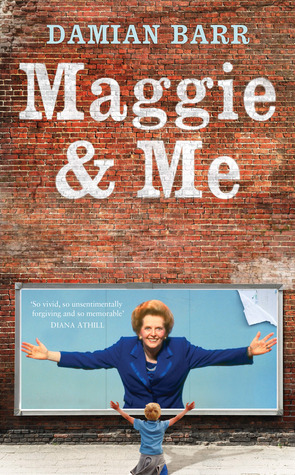 Like a cross between Angela’s Ashes and Toast, this recreates a fairly horrific upbringing from the child’s perspective. Barr was an intelligent, creative young man who early on knew that he was gay and, not just for that reason, often felt that there was no place for him: neither in working-class Scotland, where his father was a steelworker and his brain-damaged mother flitted from one violent boyfriend to another; nor in Maggie Thatcher’s 1980s Britain at large, in which money was the reward for achievement and the individual was responsible for his own moral standing and worldly advancement. “I don’t need to stand out any more,” he recalls, being “six foot tall, scarecrow skinny and speccy with join-the-dots spots, bottle-opener buck teeth and a thing for waistcoats. Plus I get free school dinners and I’m gay.”
There are a lot of vivid scenes in this memoir, some of them distressing ones of abuse, and the present tense, dialect, and childish grammar and slang give it authenticity. However, I never quite bought in to the Thatcher connection as an overarching structure. Three pages at the start, five at the end, and a Thatcher quote as an epigraph for each chapter somehow weren’t enough to convince me that the framing device was necessary or apt. Still, I enjoyed this well enough as memoirs go, and I would certainly recommend it if you loved Nigel Slater’s memoir mentioned above. I also have Barr’s recent debut novel, You Will Be Safe Here, on my Kindle.
My rating:
The Monsters of Templeton by Lauren Groff (2008)
(A supplementary prescription for uncertainty about having children.)
 I enjoyed this immensely, from the first line on: “The day I returned to Templeton steeped in disgrace, the fifty-foot corpse of a monster surfaced in Lake Glimmerglass.” Twenty-eight-year-old Willie Upton is back in her hometown, pregnant by her older, married archaeology professor after a summer of PhD fieldwork in Alaska. “I had come home to be a child again. I was sick, heartbroken, worn down.” She gives herself a few weeks back home to dig through her family history to find her father – whom Vi has never identified – and decide whether she’s ready to be a mother herself.
We hear from various leading lights in the town’s history and/or Willie’s family tree through a convincing series of first-person narratives, letters and other documents. Groff gives voice to everyone from a Mohican chief to a slave girl who catches her master’s eye. Willie and Vi are backed up by a wonderful set of secondary characters, past and present. Groff wrote this in homage to Cooperstown, New York, where she grew up. (If you’ve heard of it, it’s probably for the baseball museum; it’s not far from where my mother is from in upstate New York.) Templeton is “a slantwise version” of Cooperstown, Groff admits in an opening Author’s Note, and she owes something of a debt to its most famous citizen, James Fenimore Cooper. What a charming way to celebrate where you come from, with all its magic and mundanity. This terrific debut novel cemented my love of Groff’s work.
My rating:
I also have Ella to thank for the inspiration to reread a childhood favorite, Little Women by Louisa May Alcott, last year; the experiment formed the subject of my first piece for Literary Hub. I also worked my way through The Artist’s Way by Julia Cameron, another of my prescriptions, over a number of months in 2018, but failed to keep up with the regular writing exercises so didn’t get the maximum benefit.
My husband and I made a start on reading a few books aloud to each other, including Sum: Forty Tales from the Afterlives by David Eagleman, but that fell by the wayside after a handful of weeks.
(Incidentally, I had forgotten that Cutting for Stone turns up in The Novel Cure on a list of the 10 best books to combat xenophobia.)
 Still to read: Jitterbug Perfume by Tom Robbins (CURE: horror of ageing)
And one I still have to get hold of but haven’t been able to find cheap secondhand because it’s a Persephone classic: The Victorian Chaise-Longue by Marghanita Laski (a supplementary prescription because I love Victorian pastiches).
American Book Acquisitions and 2019 Reading Goals
We arrived in the UK on January 1, after an overnight flight from Baltimore. There was no midnight announcement, no complimentary champagne; nothing. Clearly I had my hopes too high. So we’re feeling a bit cheated out of our New Year’s Eve experience and will be doing a recreated countdown and toast when we have houseguests over for this Epiphany weekend.
It was a low-key, relaxing couple of weeks back in the States, the majority of it spent seeing family and friends. We also made it into D.C. to see the new Obama portraits. Mostly I enjoyed doing not a lick of work. And I acquired books, of course: a secondhand and remainder stack that, after my trade-in of some cast-off books, cost just $4; and a few ARCs I’m excited about.


2019 Goals
I’m feeling restless in my career, like if someone gave me permission to quit all my gigs I would do it tomorrow. But, of course, only a fool would do so with no plan to replace them with other remunerative work. The year is likely to involve a lot of rethinking for me as I evaluate which of my proofreading and writing jobs feel worthwhile, and what’s taking me in the direction I want to go (not that I currently know what that is).
Life is awfully hard to plan out. Reading is much easier! So here are my fairly modest reading goals for the year, some of them overlapping:
- I plan to reinstate the Classic and Doorstopper of the month features I ran in 2017, since otherwise I hardly ever read them. I’m starting with Annabel’s readalong of The Name of the Rose by Umberto Eco, which is just over 500 pages but also conveniently falls into one of the below categories.

The doorstoppers I have around to choose from.
- I’ll make a second attempt at getting through some of the travel books and biographies I own, though I won’t hold myself to any particular target. At least five of each would be nice.


- I’m determined to up my literature in translation ratio. These are all the books I own that were originally published in other languages – pitiful! – but I will get hold of more through the library and publishers.

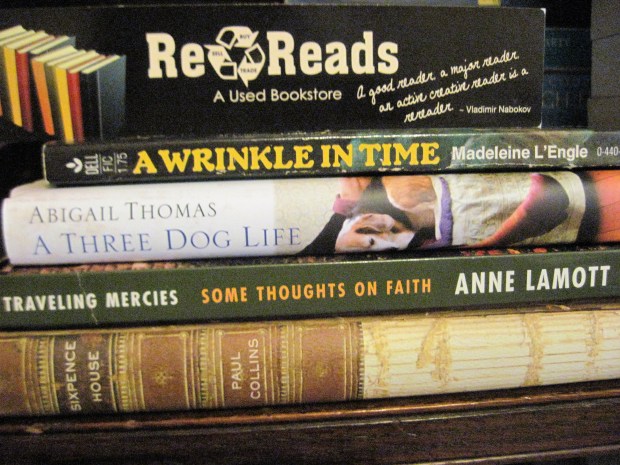
- Re-reading is something I undertake very reluctantly. I have friends who swear by it, but to me it can feel like a waste of time. Last year I re-read just four books: Little Women, Give Me Everything You Have, Crossing the Moon, and Diary of a Bookseller. In each case, on the second reading I rated the book a star lower. That suggests that, far from appreciating books more on a second reading, I have less patience with them and find more flaws! All the same, I’ve chosen four books to re-read in 2019. The Collins is a longtime favorite about moving to Hay-on-Wye; the Thomas is one of the books that first got me into reading memoirs. I’ve been let down by Lamott’s latest three books so wanted to go back to one of her spiritual classics; I’ve gotten into L’Engle’s writing for adults and want to revisit her most famous children’s book (which I don’t think I comprehended at age nine or whatever I was).
- I have a bad habit of racing through self-help and theology books rather than taking my time mulling over them and fully exploring how I might apply them in my life. This was especially true of The Artist’s Way, one of my bibliotherapy prescriptions. I started out with the aim of completing the daily “morning pages” of free writing (though for me they were ‘evening pages’; I’m not a morning person) and each chapter’s self-knowledge exercises. But soon I’d given up on the writing and contemplation and begun just reading the book straight through, which is not the point of it at all. So this year I mean to go back through the Cameron and Rubin books more mindfully, and use the McLaren devotional as it is intended, reading the recommended Bible passages alongside the weekly reflections.

What are some of your goals (reading-related or otherwise) for 2019?
My Most Anticipated Releases of the Second Half of 2018
Here are 30 books that are on my radar for the months of July through November (I haven’t heard about any December titles yet), plus one bonus book that I’ve already read. This is by no means a full inventory of what’s coming out, or even of what I have available through NetGalley and Edelweiss; instead, think of it as a preview of the books I actually intend to read, in release date order. The quoted descriptions are from the publisher blurbs on Goodreads. If I already have access to the book in some way, I’ve noted that.
The first half of the year seemed to be all about plants. This time around I have plenty of memoirs, some medical and some bookish; birds and watery imagery; and some religious and philosophical themes.
[By the way, here’s how I did with my most anticipated releases of the first half of the year:
- 17 out of 30 read; of those 8 were at least somewhat disappointing (d’oh!)
- 5 unfinished
- 1 currently reading
- 1 lost interest in
- 1 I still intend to read
- 5 I didn’t manage to find]
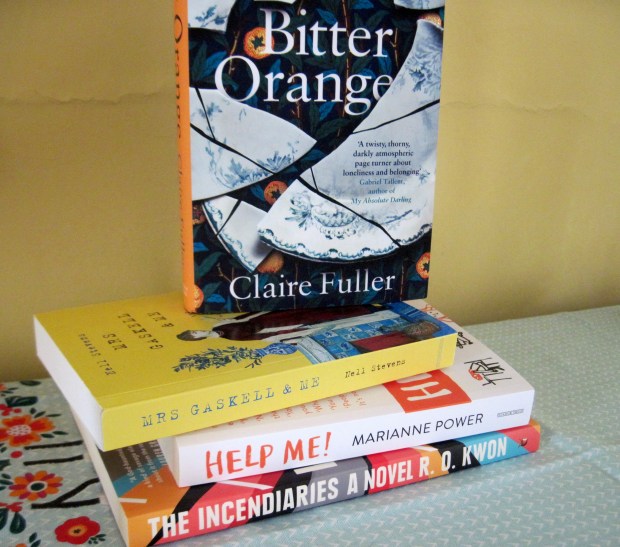
The upcoming titles I happen to own in print.
July
 No One Tells You This: A Memoir by Glynnis MacNicol [July 10, Simon & Schuster]: “If the story doesn’t end with marriage or a child, what then? This question plagued Glynnis MacNicol on the eve of her 40th birthday. … Over the course of her fortieth year, which this memoir chronicles, Glynnis embarks on a revealing journey of self-discovery that continually contradicts everything she’d been led to expect.” (NetGalley download)
 The Lost Chapters: Finding Recovery and Renewal One Book at a Time by Leslie Schwartz [July 10, Blue Rider Press]: “Leslie Schwartz’s powerful, skillfully woven memoir of redemption and reading, as told through the list of books she read as she served a 90-day jail sentence. … Incarceration might have ruined her, if not for the stories that comforted her while she was locked up.”
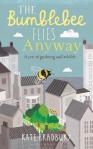 The Bumblebee Flies Anyway: Gardening and Surviving Against the Odds by Kate Bradbury [July 17, Bloomsbury Wildlife]: “Finding herself in a new home in Brighton, Kate Bradbury sets about transforming her decked, barren backyard into a beautiful wildlife garden. She documents the unbuttoning of the earth and the rebirth of the garden, the rewilding of a tiny urban space.”
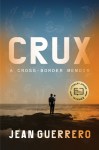 Crux: A Cross-Border Memoir by Jean Guerrero [July 17, One World]: “A daughter’s quest to find, understand, and save her charismatic, troubled, and elusive father, a self-mythologizing Mexican immigrant who travels across continents—and across the borders between imagination and reality; and spirituality and insanity—fleeing real and invented persecutors.”
 The Incendiaries by R.O. Kwon [July 31, Riverhead]: “A shocking novel of violence, love, faith, and loss, as a young woman at an elite American university is drawn into acts of domestic terrorism by a cult tied to North Korea. … The Incendiaries is a fractured love story and a brilliant examination of the minds of extremist terrorists, and of what can happen to people who lose what they love most.” (Print ARC for blog review at UK release on Sept. 6 [Virago])
August
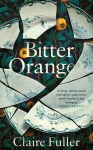 Bitter Orange by Claire Fuller [Aug. 2, Penguin Fig Tree]: I’ve loved Fuller’s two previous novels. This one is described as “a suspenseful story about deception, sexual obsession and atonement” set in 1969 in a run-down English country house. I don’t need to know any more than that; I have no doubt it’ll be brilliant in an Iris Murdoch/Gothic way. (Print ARC for blog review on release date)
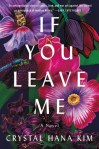 If You Leave Me by Crystal Hana Kim [Aug. 7, William Morrow]: “An emotionally riveting debut novel about war, family, and forbidden love—the unforgettable saga of two ill-fated lovers in Korea and the heartbreaking choices they’re forced to make in the years surrounding the civil war that continues to haunt us today.” This year’s answer to Pachinko? And another botanical cover to boot! (Edelweiss download)
 A River of Stars by Vanessa Hua [Aug. 14, Ballantine Books]: “In a powerful debut novel about motherhood, immigration, and identity, a pregnant Chinese woman makes her way to California and stakes a claim to the American dream. … an entertaining, wildly unpredictable adventure, told with empathy and wit” Sounds like The Leavers, which is a Very Good Thing.
 The Shakespeare Requirement by Julie Schumacher [Aug. 14, Doubleday]: A sequel to the very funny epistolary novel Dear Committee Members! “Now is the fall of his discontent, as Jason Fitger, newly appointed chair of the English Department of Payne University, takes aim against a sea of troubles, personal and institutional.” (Edelweiss download)
 Gross Anatomy: Dispatches from the Front (and Back) by Mara Altman [Aug. 21, G.P. Putnam’s Sons]: “By using a combination of personal anecdotes and fascinating research, Gross Anatomy holds up a magnifying glass to our beliefs, practices, biases, and body parts and shows us the naked truth—that there is greatness in our grossness.” (PDF from publisher; to review for GLAMOUR online)
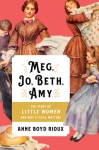 Meg, Jo, Beth, Amy: The Story of Little Women and Why It Still Matters by Anne Boyd Rioux [Aug. 21, W. W. Norton Company]: This is the bonus one I’ve already read, as part of my research for my Literary Hub article on rereading Little Women at its 150th anniversary. (That’s also the occasion for this charming book.) Rioux unearths Little Women’s origins in Alcott family history, but also traces its influence through to the present day. She also makes a strong feminist case for it. My short Goodreads review is here. (Edelweiss download)
September
 Lake Success by Gary Shteyngart [Sept. 4, Random House]: I read his memoir but am yet to try his fiction. “When his dream of the perfect marriage, the perfect son, and the perfect life implodes, a Wall Street millionaire takes a cross-country bus trip in search of his college sweetheart and ideals of youth. … [a] biting, brilliant, emotionally resonant novel very much of our times.” (Edelweiss download; for Pittsburgh Post-Gazette review)
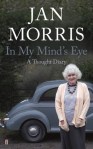 In My Mind’s Eye: A Thought Diary by Jan Morris [Sept. 6, Faber & Faber]: One of my most admired writers. “A collection of diary pieces that Jan Morris wrote for the Financial Times over the course of 2017.” I have never before in my life kept a diary of my thoughts, and here at the start of my ninth decade, having for the moment nothing much else to write, I am having a go at it. Good luck to me.
 Help Me!: One Woman’s Quest to Find Out if Self-Help Really Can Change Her Life by Marianne Power [Sept. 6, Picador]: “[F]or a year she vowed to test a book a month, following its advice to the letter, taking the surest road she knew to a perfect Marianne. As her year-long plan turned into a demented roller coaster where everything she knew was turned upside down, she found herself confronted with a different question: Self-help can change your life, but is it for the better?” (Print ARC)
 Normal People by Sally Rooney [Sept. 6, Faber & Faber]: Much anticipated follow-up to Conversations with Friends. “Connell and Marianne both grow up in the same town in rural Ireland. The similarities end there; they are from very different worlds. But they both get places to study at university in Dublin, and a connection that has grown between them despite the social tangle of school lasts long into the following years.”
 Mrs. Gaskell & Me by Nell Stevens [Sept. 6, Picador]: “In 2013, Nell Stevens is embarking on her PhD … and falling drastically in love with a man who lives in another city. As Nell chases her heart around the world, and as Mrs. Gaskell forms the greatest connection of her life, these two women, though centuries apart, are drawn together.” I was lukewarm on her previous book, Bleaker House, but I couldn’t resist the Victorian theme of this one! (Print ARC to review for Shiny New Books)
 Heart: A History by Sandeep Jauhar [Sept. 18, Farrar, Straus and Giroux]: “Deftly alternating between key historical episodes and his own work, Jauhar tells the colorful and little-known story of the doctors who risked their careers and the patients who risked their lives to know and heal our most vital organ. … Affecting, engaging, and beautifully written.” (Edelweiss download)
 To the Moon and Back: A Childhood under the Influence by Lisa Kohn [Sept. 18, Heliotrope Books]: “Lisa was raised as a ‘Moonie’—a member of the Unification Church, founded by self-appointed Messiah, Reverend Sun Myung Moon. … Told with spirited candor, [this] reveals how one can leave behind such absurdity and horror and create a life of intention and joy.”
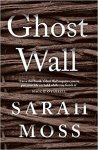 Ghost Wall by Sarah Moss [Sept. 20, Granta]: I’ve read Moss’s complete (non-academic) oeuvre; I’d read her on any topic. This novella sounds rather similar to her first book, Cold Earth, which I read recently. “Teenage Silvie is living in a remote Northumberland camp as an exercise in experimental archaeology. … Behind and ahead of Silvie’s narrative is the story of a bog girl, a sacrifice, a woman killed by those closest to her, and as the hot summer builds to a terrifying climax, Silvie and the Bog girl are in ever more terrifying proximity.” (NetGalley download)
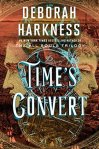 Time’s Convert (All Souls Universe #1) by Deborah Harkness [Sept. 25, Viking]: I was a sucker for Harkness’s A Discovery of Witches and its sequels, much to my surprise. (The thinking girl’s Twilight, you see. I don’t otherwise read fantasy.) Set between the American Revolution and contemporary London, this fills in the backstory for some of the vampire characters.
October
 All You Can Ever Know: A Memoir by Nicole Chung [Oct. 2, Catapult]: “Nicole Chung was born severely premature, placed for adoption by her Korean parents, and raised by a white family in a sheltered Oregon town. … With warmth, candor, and startling insight, Chung tells of her search for the people who gave her up, which coincided with the birth of her own child.” (Edelweiss download)
 Melmoth by Sarah Perry [Oct. 2, Serpent’s Tail]: Gothic fantasy / historical thriller? Not entirely sure. I just know that it’s the follow-up by the author of The Essex Serpent. (I choose to forget that her first novel exists.) Comes recommended by Eleanor Franzen and Simon Savidge, among others. (Edelweiss download)
 The Ravenmaster: Life with the Ravens at the Tower of London by Christopher Skaife [Oct. 2, 4th Estate]: More suitably Gothic pre-Halloween fare! “Legend has it that if the Tower of London’s ravens should perish or be lost, the Crown and kingdom will fall. … [A]fter decades of serving the Queen, Yeoman Warder Christopher Skaife took on the added responsibility of caring for these infamous birds.” I briefly met the author when he accompanied Lindsey Fitzharris to the Wellcome Book Prize ceremony.
 I Am Dynamite!: A Life of Friedrich Nietzsche by Sue Prideaux [Oct. 4, Faber & Faber]: “Friedrich Nietzsche’s work forms the bedrock of our contemporary thought, and yet a shroud of misunderstanding surrounds the philosopher behind these proclamations. The time is right for a new take on Nietzsche’s extraordinary life, whose importance as a thinker rivals that of Freud or Marx.” (For a possible TLS review?)
 Almost Everything: Notes on Hope by Anne Lamott [Oct. 16, Riverhead]: I haven’t been too impressed with Lamott’s recent stuff, but I’ll still read anything she publishes. “In this profound and funny book, Lamott calls for each of us to rediscover the nuggets of hope and wisdom that are buried within us that can make life sweeter than we ever imagined. … Almost Everything pinpoints these moments of insight as it shines an encouraging light forward.”
 The Library Book by Susan Orlean [Oct. 16, Simon & Schuster]: The story of a devastating fire at Los Angeles Public Library in April 1986. “Investigators descended on the scene, but over 30 years later, the mystery remains: Did someone purposefully set fire to the library—and if so, who? Weaving her life-long love of books and reading with the fascinating history of libraries and the sometimes-eccentric characters who run them, … Orlean presents a mesmerizing and uniquely compelling story as only she can.” (Edelweiss download)
 Unsheltered by Barbara Kingsolver [Oct. 18, Faber & Faber]: Kingsolver is another author I’d read anything by. “[T]he story of two families, in two centuries, who live at the corner of Sixth and Plum, as they navigate the challenges of surviving a world in the throes of major cultural shifts.” 1880s vs. today, with themes of science and utopianism – I’m excited! (Edelweiss download)
 Nine Pints: A Journey through the Money, Medicine, and Mysteries of Blood by Rose George [Oct. 23, Metropolitan Books]: “Rose George, author of The Big Necessity [on human waste], is renowned for her intrepid work on topics that are invisible but vitally important. In Nine Pints, she takes us from ancient practices of bloodletting to modern ‘hemovigilance’ teams that track blood-borne diseases.”
November
 The End of the End of the Earth: Essays by Jonathan Franzen [Nov. 13, Farrar, Straus and Giroux]: “[G]athers essays and speeches written mostly in the past five years … Whether exploring his complex relationship with his uncle, recounting his young adulthood in New York, or offering an illuminating look at the global seabird crisis, these pieces contain all the wit and disabused realism that we’ve come to expect from Franzen.”
 A River Could Be a Tree by Angela Himsel [Nov. 13, Fig Tree Books]: “How does a woman who grew up in rural Indiana as a fundamentalist Christian end up a practicing Jew in New York? … Ultimately, the connection to God she so relentlessly pursued was found in the most unexpected place: a mikvah on Manhattan’s Upper West Side. This devout Christian Midwesterner found her own form of salvation—as a practicing Jewish woman.”
 Becoming by Michelle Obama [Nov. 13, Crown]: “In her memoir, a work of deep reflection and mesmerizing storytelling, Michelle Obama invites readers into her world, chronicling the experiences that have shaped her—from her childhood on the South Side of Chicago to her years as an executive balancing the demands of motherhood and work, to her time spent at the world’s most famous address.”
Which of these do you want to read, too? What other upcoming 2018 titles are you looking forward to?
Some of My Recent and Upcoming Bylines
Next month marks five years that I’ve been a freelance reviewer, and I turn 35 later in the year. With these milestones in mind, I’ve been pushing myself a bit more to make contact with new publications and try to get my work out there more widely.
Most recently, I was pleased to have my first article in Literary Hub, an essay about rereading Little Women in its 150th anniversary year in conjunction with the new BBC/PBS miniseries production. (I shared this article intensively on social media, so do forgive me if you’ve already seen it somewhere else!) This is the first time, apart from here on the blog, that I’ve blended book commentary with personal material. I think it’s probably the best “exposure” I’ve had for my writing thus far: last time I looked, Literary Hub’s Facebook post about the article had gotten 123 likes and 33 shares, with 71 likes and 22 retweets on Twitter.
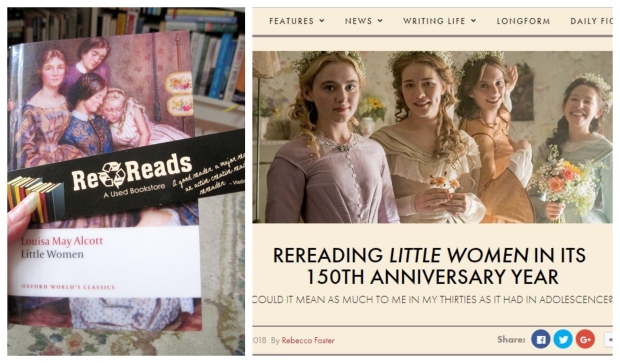
[Note: I now know that the spelling is Katharine Hepburn and have asked twice over e-mail for the editor to correct it, but it’s clearly very low on their list of priorities!]
I continue to review for the Pittsburgh Post-Gazette on a regular basis. My latest review was quite a negative one, alas, for Richard Flanagan’s First Person ( ). Upcoming: Slave Old Man by Patrick Chamoiseau () and A Weekend in New York by Benjamin Markovits.


I still contribute the occasional review to Shiny New Books. My latest two are of From Here to Eternity by Caitlin Doughty () and All the Beautiful Girls by Elizabeth J. Church ( ).
).


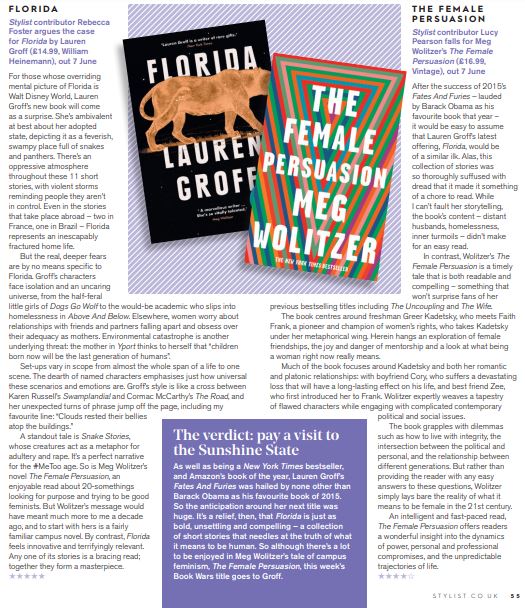
I reviewed Florida by Lauren Groff (), my fiction book of the year so far, for Stylist magazine. This is the fourth time I’ve volunteered for their “Book Wars” column, but the first time I’ve ‘won’ – I attribute it to the high class of book!
Bylines coming later in the summer:
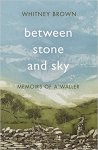
- A dual review of two nature-themed memoirs in the Times Literary Supplement (June 15th issue). This is my third piece for the TLS, but as it’s a longer one it feels a little more ‘real’.
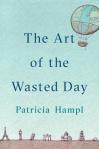
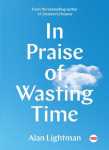
- An essay on two books about “wasting time” (including Alan Lightman’s) in the Los Angeles Review of Books (June 20th).
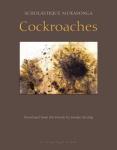
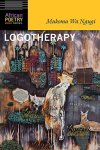
- A dual review of a memoir and a poetry volume by African writers in Wasafiri literary magazine (Issue 95).
Upcoming work, with no publication date yet:
- A dual review of two death-themed poetry collections for PN Review.

- Two book lists for OZY, one on the refugee crisis and another on compassion in medicine.
- A review essay on Gross Anatomy by Mara Altman for Glamour Online.
My Bibliotherapy Appointment at the School of Life
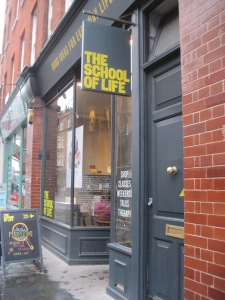 I’ve been interested in bibliotherapy for years, and I love The Novel Cure (see my review), the learned and playful advice book from Ella Berthoud and Susan Elderkin, two of the bibliotherapists at Alain de Botton’s London School of Life. Earlier this month I had the tremendous opportunity to have a personalized bibliotherapy appointment with Ella Berthoud at the School of Life. She’d put out a call on Twitter for volunteers to come for a free session (usually £100) to be observed by a journalist from La Repubblica writing about bibliotherapy – the translation of The Novel Cure has sold remarkably well in Italy. The feature will be part of a special color supplement in February, and I look forward to seeing if my story makes the cut! That is, if I can decipher any of the Italian.
Now, you might not think I’m the kind of person who needs a bibliotherapy assessment since I already find 300+ books per year I want to read; I worried that too, and felt a little bit guilty, but in the end I couldn’t pass up the chance, and Ella was happy to have me.

I took my copy of The Novel Cure along for Ella to sign.
Before my appointment I’d been asked to complete a two-page questionnaire about my reading habits and likes/dislikes, along with what’s going on in my life in general (the ‘therapy’ aspect is real). Once we were set up in the basement therapy room with hot drinks, Ella asked me more about how I read. I’d told her my reading was about two-thirds print books and one-third e-books. Had I ever tried audiobooks or reading aloud, she asked? The answer to both of those is no, I’m afraid. There’s no obvious place for audiobooks in my life because I work from home. However, as I’d mentioned I haven’t been able to get through a Dickens novel in five years, Ella suggested I try listening to one – abridged, it can be more like eight hours long instead of 42, and you still get a terrific story. She also highly recommended New Yorker and Guardian podcasts based around short stories and discussion.
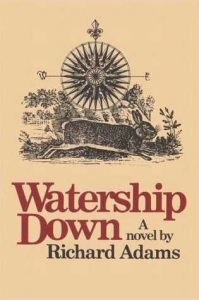 For reading aloud with my husband, Ella prescribed one short story per evening sitting – a way for me to get through short story collections, which I sometimes struggle to finish, and a different way to engage with books. We also talked about the value of rereading childhood favorites such as Watership Down and Little Women, which I haven’t gone back to since I was nine and 12, respectively. In this anniversary year, Little Women would be the ideal book to reread (and the new television adaptation is pretty good too, Ella thinks).
One other reading habit Ella is adamant about is keeping a physical reading journal in which you record the title of each book you read, where you read it, and about a paragraph of thoughts about it. It’s not meant to be a comprehensive response to every book; more like an aide-mémoire that you can get off the shelf in years to come to remind yourself of what you thought about a book. Specifically, Ella thinks writing down the location of your reading (e.g., on a train to Scotland) allows you to put yourself back in the moment. I tend to note where I bought a book, but not necessarily where I read it – for that, I would probably have to cross-reference my annual book list against a calendar. Since 2010 I’ve kept my book lists and responses in computer files, and I also keep full records via Goodreads, but I can see why having a physical journal would be a good back-up as well as a more pleasant representation of my reading. I’ll think about starting one.
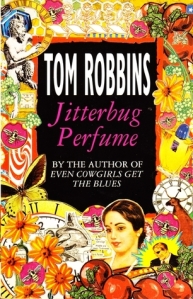 Various books came up over the course of our conversation: Abraham Verghese’s Cutting for Stone [appearance in The Novel Cure: The Ten Best Novels to Cure the Xenophobic, but Ella brought it up because of the medical theme], Tom Robbins’ Jitterbug Perfume [cure: ageing, horror of], and Julia Cameron’s The Artist’s Way, a nonfiction guide to thinking creatively about your life, chiefly through 20-minute automatic writing exercises every morning. We agreed that it’s impossible to dismiss a whole genre, even if I do find myself weary of certain trends, like dystopian fiction (I introduced Ella to Claire Vaye Watkins’ Gold Fame Citrus, one of my favorite recent examples).
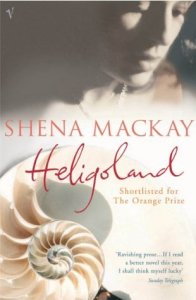 I came away with two instant prescriptions: Heligoland by Shena Mackay [cure: moving house], about a shell-shaped island house that used to be the headquarters of a cult. It’s a perfect short book, Ella tells me, and will help dose my feelings of rootlessness after moving more than 10 times in the last 10 years. She also prescribed Family Matters by Rohinton Mistry [cure: ageing parents] and an eventual reread of Jonathan Franzen’s The Corrections. As we discussed various other issues, such as my uncertainty about having children, Ella said she could think of 20 or more books to recommend me. “That’s a good thing, right?!” I asked.


Before I left, I asked Ella if she would ever prescribe nonfiction. She said they have been known to do so, usually if it’s written in a literary style (e.g. Robert Macfarlane and Alain de Botton). We chatted about medical memoirs and reading with the seasons for a little while, and then I thanked her and headed on my way. I walked around the corner to Skoob Books but, alas, didn’t find any of the books Ella had mentioned during our session. On the way back to the Tube station, though, I stopped at Judd Books and bought several secondhand and remaindered goodies, including these two:


(Imagine my surprise when I spotted The Year of the Hare in The Novel Cure under midlife crisis! Age seemed to be the theme of the day.)
 As soon as I got back from London I ordered secondhand copies of Heligoland, Jitterbug Perfume and The Artist’s Way, and borrowed Family Matters from the public library the next day. Within a few days four further book prescriptions arrived for me by e-mail. Ella did say that her job is made harder when her clients read a lot, so kudos to her for prescribing books I’d not read – with the one exception of Sebastian Barry’s Days Without End, which I love.
I’ve put in another order for Maggie and Me, the memoir by Damian Barr, plus (for reading aloud) Sum: Forty Tales from the Afterlives by David Eagleman and the collected short stories of Saki. I’m also keen to find The Victorian Chaise-Longue by Marghanita Laski, Ella’s final prescription, but as the Persephone Books reprint is pricey at the moment I may hold off and hope to chance upon a secondhand copy later in the year. Ella has been very generous with her recommendations, especially considering that I didn’t pay a penny. I certainly have plenty to be getting on with for now! I’ll report back later on in the year when I’ve had the chance to read some of these prescriptions.

The prescribed books I have gotten hold of so far.
Thanksgiving Reading
This Thursday marks one of the most American of holidays: Thanksgiving. (My apologies to Canadian readers, who already had their celebration in October, and to British readers, who may find the whole thing a bit mysterious.) If you’ve never experienced a Thanksgiving meal for yourself, you might not know what all the fuss is about. After all, as Bill Bryson puts it in Notes from a Big Country, it’s a holiday where you just try to “get your stomach into the approximate shape of a beach ball.” But something about dysfunctional families crossing the country for a feast and reflecting on the country’s origins – however spurious the Pilgrims-’n-Injuns history behind the tradition might be – makes for intriguing fictional possibilities.
It’s no wonder Thanksgiving turns up all the time in American novels. Jonathan Franzen’s The Corrections is a classic example, but look further and you’ll find references everywhere. For instance, I’m just finishing up Good on Paper by Rachel Cantor (coming in February), set in New York City as Y2K approaches, and what do you know? There’s a Thanksgiving meal. And even a simple list of dishes gives a perfect miniature view of differences in class and perspective: Shira’s neighbor wants “traditional fare—string bean casserole with cornflakes” and yam casserole topped with marshmallows, while her gay, Pakistani co-parent, Ahmad, prefers “the exotic: millet-shitake stuffing with chestnut-and-caper sauce.”
If you’re looking for something seasonal to read this week, here are snippets of books I’ve reviewed, two fiction and two nonfiction. For more ideas, check out this Thanksgiving books list on Goodreads from the Washington Post’s Ron Charles. Anne Tyler, Richard Ford – some great stuff on there!
Fiction:
 Want Not by Jonathan Miles: “Waste not, want not” goes the aphorism, and Miles’s second novel explores both themes to their fullest extent: the concept of waste – from profligate living to garbage and excrement – and ordinary people’s conflicting desires. In three interlocking story lines, Miles looks for what is really of human value at a time when everything seems disposable and possessions both material and digital can exert a dispiriting tyranny. The novel opens on Thanksgiving 2007, with New York City buried under an early snowstorm. The nation’s annual excuse for gluttony makes a perfect metaphorical setting for Miles’s exposé of food waste and consumerist excess. This is a book I wish I had written.


Housebreaking by Dan Pope: This tightly crafted novel of adultery in dysfunctional suburbia is somewhat reminiscent of Tom Perrotta’s Little Children or the movie Far from Heaven, but with less memorable characters and story line overall. The strategy of revisiting the same events of one late summer and fall from different characters’ perspectives makes it feel slightly repetitive and claustrophobic. My favorite touches were the comical dialogue between a handful of old folks and a description of the cookie-cutter buildings in the Connecticut suburbs: “all the little houses, lined up like cereal boxes on a shelf.” Like Want Not, it also revolves around Thanksgiving 2007.

Bet you never thought there would be a third novel set on Thanksgiving 2007! But it appears there is: Strangers at the Feast by Jennifer Vanderbes. You may also like to sample “An Old-Fashioned Thanksgiving,” an 1881 short story by Louisa May Alcott.
Nonfiction:
You won’t have to try too hard to find Thanksgiving scenes in nonfiction either, especially when it comes to memoirs. I read one of Ruth Reichl’s terrific ‘foodoirs’, Comfort Me with Apples, earlier this year and there’s a great moment when she and Michael Singer, who would become her second husband, go to a restaurant for their first Thanksgiving together. It’s a disaster of a meal; the duck isn’t served until midnight. Sure is memorable, though.
 The First Thanksgiving by Nathaniel Philbrick: In this selection from his 2007 book Mayflower: A Story of Courage, Community, and War, reprinted as a mini e-book in the “Penguin Tracks” series, Philbrick tells the true story behind the first Thanksgiving. As with most beloved legends, the circumstances are much more complicated and much less rosy than they appear in our collective memory. Philbrick writes in an informative yet conversational style, and paints an appealing picture of the Pilgrims as reasonable people with humble aims. (See my full review at Bookkaholic.)
 Eating Appalachia: Rediscovering Regional American Flavors by Darrin Nordahl: Nordahl travels through Ohio, West Virginia, Kentucky and North Carolina in search of truly indigenous local ingredients. There are a few recipes and photographs in each chapter, although this is more of a narrative than a cookbook. I loved how he brought it all together with his imagined Appalachian Thanksgiving feast (what we consider traditional today includes very little that would actually have been eaten in the Pilgrims’ place and time):
appetizers of pickled ramps and brook trout crostini, bowls of butternut [the nut, not the squash] cream bisque, plates piled with the showpiece dish of spicebush-peppered roast elk tenderloin and hickory nut stuffing—all washed down with steaming sassafras tea and chilled sumac-ade, capped with a choice of persimmon pudding with black walnut ice cream or pawpaw panna cotta.
Do you like to tailor your reading to the holidays? What will you be reading this Thanksgiving week?
 Bookish Beck = Rebecca Foster. American transplant to England. Freelance proofreader and book reviewer.
 Bookish Beck