Two Recent Reviews for BookBrowse
The Bell in the Lake by Lars Mytting
 A legend from Mytting’s hometown tells of two centuries-old church bells that, like conjoined twins, were never meant to be separated. Inspired by that story and by the real-life move of a stave church from Norway to what is now Poland, he embarked on a trilogy in which history and myth mingle to determine the future of the isolated village of Butangen. The novel is constructed around compelling dichotomies. Astrid Hekne, a feminist ahead of her time, is in contrast with the local pastor’s conventional views on gender roles. She also represents the village’s unlearned folk; Deborah Dawkin successfully captures Mytting’s use of dialect in her translation, making Astrid sound like one of Thomas Hardy’s rustic characters.
- See my full review at BookBrowse.

- See also my related article on stave churches.
- One of the coolest things I did during the first pandemic lockdown in the UK was attend an online book club meeting on The Bell in the Lake, run by MacLehose Press, Mytting’s UK publisher. It was so neat to see the author and translator speak “in person” via a Zoom meeting and to ask him a couple of questions in the chat window.
- A readalike (and one of my all-time favorite novels) is Carsten Jensen’s We, the Drowned.
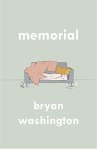
Memorial by Bryan Washington
 In Washington’s debut novel, set in Houston and Osaka, two young men reassess their commitments to their families and to each other. The narration is split between Benson and Mike, behind whose apparent lack of affect is a quiet seam of emotion. Both young men are still shaken by their parents’ separations, and haunted by patterns of abuse and addiction. Flashbacks to how they met create a tender backstory for a limping romance. Although the title (like most of the story titles in Lot) refers to a Houston neighborhood, it has broader significance, inviting readers to think about the place our loved ones have in our memories. Despite the tough issues the characters face, their story is warm-hearted rather than grim. Memorial is a candid, bittersweet work from a talented young writer whose career I will follow with interest.
- See my full review at BookBrowse.
- See also my related article on the use of quotation marks (or not!) to designate speech.
 I enjoyed this so much that I immediately ordered Lot with my birthday money. I’d particularly recommend it if you want an earthier version of Brandon Taylor’s Booker-shortlisted Real Life (which I’m halfway through and enjoying, though I can see the criticisms about its dry, slightly effete prose).
- This came out in the USA from Riverhead in late October, but UK readers have to wait until January 7th (Atlantic Books).
Short Stories in September, Part I
Each September I make a bit more of an effort to read short stories, which otherwise tend to sit on my shelves and Kindle unread. I’ve read three collections recently, all of them released this August or September, and I have a few more on the go to report on later in the month.
Likes by Sarah Shun-Lien Bynum
 This was a hit and miss collection for me: I only loved one of the stories, and enjoyed another three; touches of magic realism à la Aimee Bender produce the two weakest stories, and there are a few that simply tail off without having made a point. My favorite was “Many a Little Makes,” about a trio of childhood best friends whose silly sleepover days come to an end as they develop separate interests and one girl sleeps with another one’s brother. In “Tell Me My Name,” set in a post-economic collapse California, an actress who was a gay icon back in New York City pitches a TV show to the narrator’s wife, who makes kids’ shows.
“Julia and Sunny,” about two couples – one that makes it and one that doesn’t – who all met in medical school, reminded me of a Wallace Stegner plot. “The Bears” has a wispy resemblance to Goldilocks and the Three Bears and stars a woman convalescing from a miscarriage at a retreat center while writing a chapter on William James. In James’s famous metaphor involving a bear, bodily action precedes emotion – we are afraid because we flee; not vice versa. The touch of magic in this story is light enough to not be off-putting, whereas “The Erlking” and “The Young Wife’s Tale” take their fairy tale similarities too far.
The title story, about a father trying to understand his 12-year-old through her Instagram posts either side of the Trump election, is promising but doesn’t go anywhere, and “The Burglar” and “Bedtime Story” struck me as equally insubstantial, making nothing of their setups. Seven of these nine stories had been previously published in other publications in some form.
My rating: 
Published in the USA by Farrar, Straus and Giroux. I read an advanced e-copy via Edelweiss.
Black Light by Kimberly King Parsons
 Parsons’s debut collection, longlisted for the U.S. National Book Award in 2019, contains a dozen gritty stories set in or remembering her native Texas. Eleven of the 12 are in the first person, with the mostly female narrators unnamed or underdeveloped and thus difficult to differentiate from each other. The homogeneity of voice and recurring themes – drug use, dysfunctional families, overweight bodies, lesbian or lopsided relationships – lead to monotony.
“Glow Hunter” and “We Don’t Come Natural to It” are representative: in the former, Sarah and her girlfriend Bo have sex and go for a drive while tripping on magic mushrooms; in the latter, the narrator has a crush on her co-worker Suki, who has lost 200 pounds, and they remain obsessed with their and others’ fat bodies (the references are inescapable: “a pudgy,” “the fatty,” “some cow,” “thinspiration”). The opening story, “Guts,” is uncomfortable for the way that it both fetishizes fat and medicalizes sex: when unreliable, alcoholic receptionist Sheila turns up at her boyfriend Tim’s hospital saying there’s something wrong with her internally, he performs an examination that’s part striptease and part children playing doctor.
“The Light Will Pour In” is refreshingly different for its Lolita-type situation. “Into the Fold,” set at a girls’ boarding school, reminded me of Scarlett Thomas’s Oligarchy. In “Fiddlebacks,” my favorite, siblings on a night hunt for creepy-crawlies come across their newly religious mother and the handyman trysting in a car. “Starlite,” the only one in the third person, has colleagues, one a supervisor and both married, meet up in a seedy motel for drugs and junk food. The shortest stories at just a few pages each, “In Our Circle” and “The Animal Part” animate art therapy in a mental hospital and urban legends told while camping (though I’d forgotten it, I’d encountered the former in The Best Small Fictions 2017).
These stories engaged me at neither the sentence level nor the plot level, but many readers (and critics) have felt otherwise. Here are two lines I liked, from “Glow Hunter”: “Bo says everything that scares you is something to poke at with a stick, to pick up and turn in your hands” & “I’m very aware that we are organisms on the surface of a rock, orbiting a burning star.”
My rating: 
My thanks to Atlantic Books for the free copy for review.
You Will Never Be Forgotten by Mary South
“In the modern world, you might be easily forgotten, but you could also carve out your own niche.”

In the 10 stories of this debut collection, characters turn to technology to stake a claim on originality, compensate for their losses, and leave a legacy. In “Keith Prime,” a widowed nurse works at a warehouse that produces unconscious specimens for organ harvesting. When her favorite Keith wakes up, she agrees to raise him at home, but human development and emotional connection are inconveniences in a commodity. The narrator of “FAQs about Your Craniotomy” is a female brain surgeon who starts out by giving literal answers to potential patient questions and then segues into bitterly funny reflections on life after her husband’s suicide.
In “Architecture for Monsters,” a young woman interviews Helen Dannenforth, a formidable female architect whose designs are inspired by anatomy, specifically by her disabled daughter’s condition. The narrator’s mother, a molecular biologist, was assaulted and murdered by a lab technician. Dannenforth is a hero/replacement mother figure to her, even after she learns about the complicated situation with the architect’s sister, who was the surrogate for her niece but then got cut out of the child’s life.
I particularly liked “The Age of Love,” a funny one in which the nurses at a nursing home listen in to their elderly patients’ calls to phone sex lines. Their conversations aren’t about smut so much as they’re about loneliness and nostalgia. Another favorite of mine was “Camp Jabberwocky for Recovering Internet Trolls,” about a Martha’s Vineyard camp for teens who need a better relationship with social media. When camper Rex Hasselbach, who had posted foul content in his father’s name to get revenge on being beaten up at home, goes missing, three counselors with guilt or identity issues of their own go looking for him. The title story also engages with social media as a woman obsessively tracks her rapist and works as a “digital media curator” deleting distressing video content.
All of the characters have had a bereavement or other traumatic incident and are looking for the best way to move on, but some make bizarre and unhealthy decisions – such as to restage events from a dead daughter’s life, to breastfeed grown men, or to communicate by text with a deceased wife. These quirky, humorous stories never strayed so far into science fiction as to alienate me. I loved the medical themes and the subtle, incisive observations about a technology-obsessed culture. I’ll be looking out for what Mary South does next.
(Note: The cover image is a creepily pixelated version of the author’s photo.)
My rating: 
My thanks to Picador for the proof copy for review.
Are you a short story fan? Read any good ones recently?
Adventures in Rereading: The Sixteenth of June by Maya Lang
Last year I reviewed Tenth of December by George Saunders on its title date; this year I couldn’t resist rereading one of my favorites from 2014 for today’s date (which just so happens to be Bloomsday, made famous by James Joyce’s Ulysses), The Sixteenth of June.
I responded to the novel at length when it first came out. No point in reinventing the wheel, so here are mildly edited paragraphs of synopsis from my review for The Bookbag:
 Maya Lang’s playful and exquisitely accomplished debut novel, set on the centenary of the original Bloomsday, transplants many characters and set pieces from Ulysses to near-contemporary Philadelphia. Don’t fret, though – even if, like me, you haven’t read Ulysses, you’ll have no trouble following the thread. In fact, Lang dedicates her book to “all the readers who never made it through Ulysses (or haven’t wanted to try).” (Though if you wish to spot parallels, pull up any online summary of Ulysses; there is also a page on Lang’s website listing her direct quotations from Joyce.)
On June 16, 2004, brothers Leopold and Stephen Portman have two major commitments: their grandmother Hannah’s funeral is happening at the local synagogue in the morning; and their parents’ annual Bloomsday party will take place at their opulent Delancey Street home in the evening. Around those two thematic poles – the genuine emotions of grief and regret on the one hand, and the realm of superficial entertainment on the other – the novel expands outward to provide a nuanced picture of three ambivalent twenty-something lives.
The third side of this atypical love triangle is Nora, Stephen’s best friend from Yale – and Leo’s fiancée. Nora, a trained opera singer, is still reeling from her mother’s death from cancer one year ago. She’s been engaging in self-harming behavior, and Leo – a macho, literal-minded IT consultant – just wants to fix her. Nora and Stephen, by contrast, are sensitive, artistic souls who seem better suited to each other. Stephen, too, is struggling to find a meaning in death, but also to finish his languishing dissertation on Virginia Woolf.
Literature is almost as potent a marker of upper-class status as money here: some of the Portmans might not have even read Joyce’s masterpiece, but that doesn’t stop them name-dropping and maintaining the pretense of being well-read. While Lang might not mimic the extremes of Joyce’s stream-of-consciousness style, she prioritizes interiority over external action by using a close third-person voice that shifts between her main characters’ points of view. Their histories and thoughts are revealed mostly through interior monologues and conversations. Lang’s writing is full of mordant shards of humor; one of my favorite lines was “No one in a eulogy ever said, She watched TV with the volume on too loud.”
During my rereading, I was captivated more by the portraits of grief than by the subtle intellectual and class differences. I appreciated the characterization and the Joycean peekaboo, and the dialogue and shifts between perspectives still felt fresh and effortless. I could relate to Stephen and Nora’s feelings of being stuck and unsure how to move on in life. And the ending, which I’d completely forgotten, was perfect. I didn’t enjoy this quite as much the second time around, but it’s still a treasured signed copy on my shelf.
My original rating (June 2014): 
My rating now:
Readalikes: Writers & Lovers by Lily King and The Emperor’s Children by Claire Messud (my upcoming Doorstopper of the Month).
(See also my review of Lang’s recent memoir, What We Carry.)
Alas, I’ve also had a couple of failed rereading attempts recently…
Everything Is Illuminated by Jonathan Safran Foer (2002)
 I remembered this as a zany family history quest turned into fiction. A Jewish-American character named Jonathan Safran Foer travels to (fictional) Trachimbrod, Ukraine to find the traces of his ancestors and, specifically, the woman who hid his grandfather from the Nazis. I had totally forgotten about the comic narration via letters from Jonathan’s translator/tour guide, Alexander, who fancies himself a ladies’ man and whose English is full of comic thesaurus use (e.g. “Do not dub me that,” “Guilelessly yours”). This was amusing, but got to be a bit much. I’d also forgotten about the dense magic realism of the historical sections. As with A Visit from the Goon Squad, what felt dazzlingly clever on a first read (in January 2011) failed to capture me a second time. [35 pages]
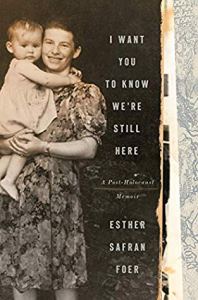 Interestingly, Foer’s mother, Esther, released a memoir earlier this year, I Want You to Know We’re Still Here. It’s about the family history her son turned into quirky autofiction: a largely fruitless trip he took to Ukraine to research his maternal grandfather’s life for his Princeton thesis, and a more productive follow-up trip she took with her older son in 2009. Esther Safran Foer was born in Poland and lived in a German displaced persons camp until she and her parents emigrated to Washington, D.C. in 1949. Her father committed suicide in 1954, making him almost a belated victim of the Holocaust. The stories she hears in Ukraine – of the slaughter of entire communities; of moments of good luck that allowed her parents to, separately, survive and find each other – are remarkable, but the book’s prose, while capable, never sings. Plus, she references her son’s novel so often that I wondered why someone would read her book when they could read his instead.
On Beauty by Zadie Smith (2005)
 This was an all-time favorite when it first came out. I remembered a sophisticated homage to E.M. Forster’s Howards End, featuring a biracial family in Cambridge, Mass. I remembered no specifics beyond a giant music store and (embarrassingly) an awkward sex scene. Howard Belsey’s long-distance rivalry with a fellow Rembrandt scholar gets personal when the Kipps family relocates from London to the Boston suburbs for Monty to be the new celebrity lecturer at the same college. Howard is in the doghouse with his African-American wife, Kiki, after having an affair. The Belsey boy and Kipps girl have an awkward romantic history. Zora Belsey is smitten with a lower-class spoken word poet she meets after a classical concert in the park when they pick up each other’s Discmans by accident (so dated!). All of the portraits felt like stereotypes to me, and there was so much telling, so much backstory, so many unnecessary secondary characters. Before I would have said this was my obvious Women’s Prize winner of winners, but now I have no idea what I’ll vote for. [107 pages]
Currently rereading: Watership Down by Richard Adams, Ella Minnow Pea by Mark Dunn, Dreams from My Father by Barack Obama
To reread soon: Heaven’s Coast by Mark Doty & Animal, Vegetable, Miracle by Barbara Kingsolver
Done any rereading lately?
Japanese Literature Challenge: Murakami’s A Wild Sheep Chase (1982)
 I was utterly entranced by my first two Haruki Murakami novels, The Wind-Up Bird Chronicle and Kafka on the Shore; both are so richly layered, dreamlike and bizarre. For Japanese Literature Challenge 13, run by Meredith of Dolce Belezza, I decided to pick up another of his books. First I tried Norwegian Wood, but, ironically, it was so normal (from the little I read, a standard, nostalgic coming-of-age novel set on a college campus) that I felt disoriented and set it down after 20 pages – I’ll keep it on the shelf for some other time. Instead I read A Wild Sheep Chase, a fairly short one for Murakami at just under 300 pages.
I loved the zany premise: the unnamed narrator, who works for a small advertising firm, gets a threatening visit one day. A PR bulletin his company created happens to feature a photo his friend The Rat sent him of a traditional Hokkaido landscape with sheep, among which is visible one particular sheep – “the third sheep from the right in the front row” – with a distinctive brown star-shaped birthmark. “The Boss” and his emissary give the narrator an ultimatum: he has two months to find this sheep, or he’ll be driven out of business.
So, along with his girlfriend, who has psychic powers and unbelievably seductive ears, he sets off by train in search of typical mountains-and-fields scenery. She chooses, seemingly at random, a hotel that turns out to be the former headquarters of the Hokkaido Ovine Association; its owner’s father, who lives like a hermit upstairs, is the Sheep Professor. Not just an expert on sheep, he believes he was at one time possessed by the star-marked sheep.
 As the narrator makes his way to The Rat’s mountain hideaway, an hour and a half from the nearest town, he’s moving further from rational explanations and deeper into solitude and communion with ghosts. There’s some trademark Murakami strangeness, but the book is too short to give free rein to the magic realist plot, and I felt like there were too many loose ends after his return from The Rat’s, especially around his girlfriend’s disappearance.
Also, after just three and a bit of his novels (I DNFed Killing Commendatore in 2018), I’m already noticing a lazy reliance on the same setup: a directionless thirtysomething man whose marriage has recently fallen apart starts a new and pretty peculiar life. There are also a couple of specific failings that I’m noticing for the second or third time now: a slow, pointless start (the first 40 pages here could easily be shaved off) and slight misogyny: “Women with their clothes off have a frightening similarity. Always throws me for a loop.”
I appreciate the imagination that went into this, and enjoyed some specific witty metaphors (“the effect was unpalatable. Like serving sherbet and broccoli on the same silver platter” and “The elevator shook like a large dog with lung disease”) and observant lines (“Age certainly hasn’t conferred any smarts on me. Character maybe, but mediocrity is a constant”), but overall the novel was a letdown. Can anyone recommend me another surefire Murakami?
My rating: 
Note: This was Murakami’s first novel to be translated into English, in 1989. I had no idea that it’s actually the third book out of four in a series called “The Rat.”
Dylan Thomas Prize Blog Tour: Things We Say in the Dark by Kirsty Logan
It’s an honour to be kicking off the official Swansea University International Dylan Thomas Prize 2020* blog tour with a post introducing and giving an excerpt from one of this year’s longlisted titles, the short story collection Things We Say in the Dark by Kirsty Logan.

Many of these 20 stories twist fairy tale imagery into nightmarish scenarios, enumerating fears of bodies and pregnancies going wrong. Body parts are offered as tokens of love or left behind as the sole evidence of an abduction. Ghosts and corpses are frequent presences. I also recognized some of the same sorts of Celtic sea legends that infuse Logan’s debut novel, The Gracekeepers.
Some stories are divided into multiple parts by headings or point-of-view changes. Others are in unusual formats like footnotes, a questionnaire, bullet-pointed lists, or a couple’s contrasting notes on house viewings. The titles can be like mini-tales in their own right, e.g. “Girls Are Always Hungry when All the Men Are Bite-Size” and “The Only Thing I Can’t Tell You Is Why.”
In between the stories are italicized passages that seem to give context on Logan’s composition process, including her writing retreat in Iceland – but it turns out that this is a story, too, split into pieces and shading from autobiography into fiction.
Full of magic realism and gentle horror, this is a book for fans of Salt Slow and The Doll’s Alphabet.
My favourite story was “Things My Wife and I Found Hidden in Our House,” about a series of objects Rain and her wife Alice find in the derelict house Alice’s granny has left them. Here’s an excerpt from the story to whet your appetite:
- A KNIFE
I wasn’t surprised when Alice and I found the long thin silver knife wrapped in blackened grot beneath the floorboards. It wasn’t easy: to find it we’d had to pull up just about every rotting, stinking board in the house, our hands slick with blood and filth. Alice had told me that a silver knife through the heart is the only way to kill a kelpie, so if Alice’s gran really had killed it, the knife was likely to be there somewhere. Her mistake, her haunting, was in keeping the thing. As proof? A memento? We’d never know. Then again, we knew that her bathtub drowning was due to a stroke. So I guess you can never really know anything.
Alice and I gathered up the ring and the paper and the horse and the pearls and the hair and the glass jar and the knife, and we put them all in a box. We drove for hours until we got to the coast, to the town where Alice’s gran and her grandad and the first wife had all lived, and we climbed to the highest cliff and we threw all the things into the sea.
Together we drove back to the house, holding hands between the front seats. A steady calm grew in our hearts; we knew that it was over, that we had cleansed the house and ourselves, that we had proven women’s love was stronger than women’s hate.
- MORE
Approaching the front door, key outstretched, hands still held, hearts grown sweet, Alice and I stopped. Our hands unlinked. The doorknob was wrapped all around with layers of long black hair.
My thanks to Midas PR for the free copy for review, and to Harvill Secker for permission to reprint an excerpt.
*The Swansea University International Dylan Thomas Prize recognizes the best published work in the English language written by an author aged 39 or under. All literary genres are eligible, so there are poetry collections nominated as well as novels and short stories. The other 11 books on this year’s longlist are:
- Surge, Jay Bernard
- Flèche, Mary Jean Chan (my review)
- Exquisite Cadavers, Meena Kandasamy
- Black Car Burning, Helen Mort
- Virtuoso, Yelena Moskovich
- Inland, Téa Obreht
- Stubborn Archivist, Yara Rodrigues Fowler (my review)
- If All the World and Love Were Young, Stephen Sexton
- The Far Field, Madhuri Vijay
- On Earth We’re Briefly Gorgeous, Ocean Vuong
- Lot, Bryan Washington
The official blog tour runs this month and into April, with multiple bloggers covering each book. At the end of March, I’ll also be reviewing the poetry collection by Stephen Sexton.
Review Books Roundup: Blackburn, Bryson, Pocock, Setterwall, Wilson
I’m attempting to get through all my 2019 review books before the end of the year, so expect another couple of these roundups. Today I’m featuring a work of poetry about one of Picasso’s mistresses, a thorough yet accessible introduction to how the human body works, a memoir of personal and environmental change in the American West, Scandinavian autofiction about the sudden loss of a partner, and a novel about kids who catch on fire. You can’t say I don’t read a variety! See if one or more of these tempts you.
The Woman Who Always Loved Picasso by Julia Blackburn
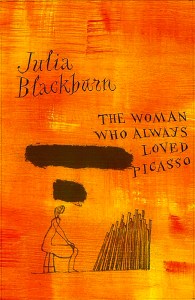 Something different from Blackburn: biographical snippets in verse about Marie-Thérèse Walter, one of Pablo Picasso’s many mistress-muses. When they met she was 17 and he was 46. She gave birth to a daughter, Maya – to his wife Olga’s fury. Marie-Thérèse’s existence was an open secret: he rented a Paris apartment for her to live in, and left his home in the South of France to her (where she committed suicide three years after his death), but unless their visits happened to overlap she was never introduced to his friends. “I lived in the time I was born into / and I kept silent, / acquiescing / to everything.”
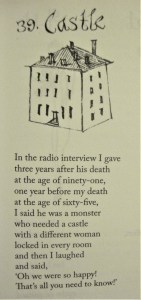 In Marie-Thérèse’s voice, Blackburn depicts Picasso as a fragile demagogue: in one of the poems that was a highlight for me, “Bird,” she describes how others would replace his caged birds when they died, hoping he wouldn’t notice – so great was his horror of death. I liked getting glimpses into a forgotten female’s life, and appreciated the whimsical illustrations by Jeffrey Fisher, but as poems these pieces don’t particularly stand out. (Plus, there are no page numbers! which doesn’t seem like it should make a big difference but ends up being annoying when you want to refer back to something. Instead, the poems are numbered.)
My rating:
With thanks to Carcanet Press for the free copy for review. Published today.
The Body: A Guide for Occupants by Bill Bryson
 Shelve this next to Being Mortal by Atul Gawande in a collection of books everyone should read – even if you don’t normally choose nonfiction. Bryson is back on form here, indulging his layman’s curiosity. As you know, I read a LOT of medical memoirs and popular science. I’ve read entire books on organ transplantation, sleep, dementia, the blood, the heart, evolutionary defects, surgery and so on, but in many cases these go into more detail than I need and I can find my interest waning. That never happens here. Without ever being superficial or patronizing, the author gives a comprehensive introduction to every organ and body system, moving briskly between engaging anecdotes from medical history and encapsulated research on everything from gut microbes to cancer treatment.
Bryson delights in our physical oddities, and his sense of wonder is infectious. He loves a good statistic, and while this book is full of numbers and percentages, they are accessible rather than obfuscating, and will make you shake your head in amazement. It’s a persistently cheerful book, even when discussing illness, scientists whose work was overlooked, and the inevitability of death. Yet what I found most sobering was the observation that, having conquered many diseases and extended our life expectancy, we are now overwhelmingly killed by lifestyle, mostly a poor diet of processed and sugary foods and lack of exercise.
My rating:
With thanks to Doubleday for the free copy for review.
Surrender: Mid-Life in the American West by Joanna Pocock
 Prompted by two years spent in Missoula, Montana and the disorientation felt upon a return to London, this memoir-in-essays varies in scale from the big skies of the American West to the smallness of one human life and the experience of loss and change. Then in her late forties, Pocock had started menopause and recently been through the final illnesses and deaths of her parents, but was also mother to a fairly young daughter. She explores personal endings and contradictions as a kind of microcosm of the paradoxes of the Western USA.
It’s a place of fierce independence and conservatism, but also mystical back-to-the-land sentiment. For an outsider, so much of the lifestyle is bewildering. The author attends a wolf-trapping course, observes a Native American buffalo hunt, meets a transsexual rewilding activist, attends an ecosexuality conference, and goes foraging. All are attempts to reassess our connection with nature and ask what role humans can play in a diminished planet.
This is an elegantly introspective work that should engage anyone interested in women’s life writing and the environmental crisis. There are also dozens of black-and-white photographs interspersed in the text. In 2018 Pocock won the Fitzcarraldo Editions Essay Prize for this work-in-progress. It came to me as an unsolicited review copy and hung around on my shelves for six months before I picked it up; I’m glad I finally did.
My rating:
With thanks to Fitzcarraldo Editions for the free copy for review.
Let’s Hope for the Best by Carolina Setterwall
[Trans. from the Swedish by Elizabeth Clark Wessel]
 Although this is fiction, it very closely resembles the author’s own life. She wrote this debut novel to reflect on the sudden loss of her partner and how she started to rebuild her life in the years that followed. It quickly splits into two parallel story lines: one begins in April 2009, when Carolina first met Aksel at a friend’s big summer bash; the other picks up in October 2014, after Aksel’s death from cardiac arrest. The latter proceeds slowly, painstakingly, to portray the aftermath of bereavement. In the alternating timeline, we see Carolina and Aksel making their life together, with her always being the one to push the relationship forward.
Setterwall addresses the whole book in the second person to Aksel. When the two story lines meet at about the two-thirds point, it carries on into 2016 as she moves house, returns to work and resumes a tentative social life, even falling in love. This is a wrenching story reminiscent of In Every Moment We Are Still Alive by Tom Malmquist, and much of it resonated with my sister’s experience of widowhood. There are many painful moments that stick in the memory. Overall, though, I think it was too long by 100+ pages; in aiming for comprehensiveness, it lost some of its power. Page 273, for instance (the first anniversary of Aksel’s death, rather than the second, where the book actually ends), would have made a fine ending.
My rating: 
With thanks to Bloomsbury UK for the proof copy for review.
Nothing to See Here by Kevin Wilson
 I’d read a lot about this novel while writing a synopsis and summary of critical opinion for Bookmarks magazine – perhaps too much, as it felt familiar and offered no surprises. Lillian, a drifting twentysomething, is offered a job as a governess for her boarding school roommate Madison’s stepchildren. Madison’s husband is a Tennessee senator in the running for the Secretary of State position, so it’s imperative that they keep a lid on the situation with his 10-year-old twins, Bessie and Roland.
You see, when they’re upset these children catch on fire; flames destroy their clothes and damage nearby soft furnishings, but leave the kids themselves unharmed. Temporary, generally innocuous spontaneous combustion? Okay. That’s the setup. Wilson writes so well that it’s easy to suspend your disbelief about this, but harder to see a larger point, except perhaps creating a general allegory for the challenges of parenting. This was entertaining enough, mostly thanks to Lillian’s no-nonsense narration, but for me it didn’t soar.
My rating:
With thanks to Text Publishing UK for the PDF for review. This came out in the States in October and will be released in the UK on January 30th.
Would you be interested in reading one or more of these?
My (Not the) Booker Prize Reading
A week from today, on the 14th (my birthday, as well as Susan’s – be sure to wish her a happy one!), this year’s Booker Prize will be announced. The Prize’s longlist didn’t contain much that piqued my interest this time around; I read one book from it and didn’t get on with it well at all, and I also DNFed another three.
Read
Frankissstein by Jeanette Winterson
 Winterson does her darndest to write like Ali Smith here (no speech marks, short chapters and sections, random pop culture references). Cross Smith’s Seasons quartet with the vague aims of the Hogarth Shakespeare project and Margaret Atwood’s The Heart Goes Last and you get this odd jumble of a novel that tries to combine the themes and composition of Frankenstein with the modern possibilities of transcending bodily limitations. Her contemporary narrator is Ry Shelley, a transgender doctor sponsored by the Wellcome Trust who supplies researcher Victor Stein with body parts for his experiments in Manchester. In Memphis for a tech expo, Ry meets Ron Lord, a tactless purveyor of sexbots.
Their interactions alternate with chapters narrated by Mary Shelley in the 1810s; I found this strand much more engaging and original, perhaps because I haven’t read that much about Shelley and her milieu, whereas it feels like I’ve read a lot about machine intelligence and transhumanism recently (To Be a Machine, Murmur, Machines Like Me). I think Winterson’s aim was to link the two time periods through notions of hybridness and resistance to death. It never really came together for me. 
DNFed
 Night Boat to Tangier by Kevin Barry – I read the first 76 pages. The other week two grizzled Welsh guys came to deliver my new fridge. Their barely comprehensible banter reminded me of that between Maurice and Charlie, two ageing Irish gangsters. The long first chapter is terrific. At first these fellas seem like harmless drunks, but gradually you come to realize just how dangerous they are. Maurice’s daughter Dilly is missing, and they’ll do whatever is necessary to find her. Threatening to decapitate someone’s dog is just the beginning – and you know they could do it. “I don’t know if you’re getting the sense of this yet, Ben. But you’re dealing with truly dreadful fucken men here,” Charlie warns at one point. I loved the voices; if this was just a short story it would have gotten a top rating, but I found I had no interest in the backstory of how these men got involved in heroin smuggling.
The Wall by John Lanchester – I lost interest in it and wasn’t drawn in by the first pages.
 The Man Who Saw Everything by Deborah Levy – I read the first 35 pages. There’s a lot of repetition; random details seem deliberately placed as clues. I’m sure there’s a clever story in here somewhere, but apart from a few intriguing anachronisms (in 1988 a smartphone is just “A small, flat, rectangular object … lying in the road. … The object was speaking. There was definitely a voice inside it”) there is not much plot or character to latch onto. I suspect there will be many readers who, like me, can’t be bothered to follow Saul Adler from London’s Abbey Road, where he’s hit by a car in the first paragraph, to East Berlin.
 There’s only one title from the Booker shortlist that I’m interested in reading: Girl, Woman, Other by Bernardine Evaristo. I’ll be reviewing it later this month as part of a blog tour celebrating the Aké Book Festival, but as a copy hasn’t yet arrived from either the publisher or the library I won’t have gotten far into it before the Prize announcement.
As for the other five on the shortlist…
- I’m a conscientious objector to Margaret Atwood’s The Testaments. I haven’t appreciated her previous dystopian sequels, and I’ve never really understood all the hype around The Handmaid’s Tale.
- I don’t plan on reading Lucy Ellmann’s Ducks, Newburyport – unless some enterprising soul produces an abridged version of no more than 250 pages.*

Ducks, Newbury
- I didn’t rate The Fishermen highly enough to give Chigozie Obioma’s An Orchestra of Minorities a try.
- I forced myself through Midnight’s Children some years back. What a pointless slog! Lukewarm reviews of his recent work mean I’m now doubly determined to avoid Salman Rushdie’s Quichotte.
- Although the setup appeals to me (a prostitute’s whole life spooling out in front of her in the moments before her death) and I enjoyed her previous novel well enough, I’ve not heard enough good things to pick up Elif Shafak’s 10 Minutes 38 Seconds in this Strange World.
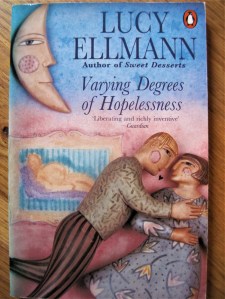 *However, I was delighted to find a copy of her 1991 novel, Varying Degrees of Hopelessness (just 182 pages, with short chapters often no longer than a paragraph and pithy sentences) in a 3-for-£1 sale at our local charity warehouse. Isabel, a 31-year-old virgin whose ideas of love come straight from the romance novels of ‘Babs Cartwheel’, hopes to find Mr. Right while studying art history at the Catafalque Institute in London (a thinly veiled Courtauld, where Ellmann studied). She’s immediately taken with one of her professors, Lionel Syms, whom she dubs “The Splendid Young Man.” Isabel’s desperately unsexy description of him had me snorting into my tea:
He had a masculinity.
His broad shoulders and narrow hips gave him a distinctive physique.
He held seminars and wore red socks.
To hold seminars seemed to indicate a wish to develop a rapport with his students.
The red socks seemed to indicate testosterone.
I swooned in admiration of him.
Unfortunately, the Splendid Young Man is more interested in Isabel’s portly flatmate, Pol. There’s a screwball charm to this campus novel full of love triangles and preposterous minor characters. I laughed at many of Ellmann’s deadpan lines, and would recommend this to fans of David Lodge’s academic comedies. But if you wish to, you could read this as a cautionary tale about the dangers of romantic fantasies. Ellmann even offers two alternate endings, one melodramatic and one more prosaic but believable. I’ll seek out the rest of her back catalogue – so thanks to the Booker for putting her on my radar.
In the meantime, I did a bit better with the “Not the Booker Prize” (administered by the Guardian) shortlist, reading three out of their six:
Flames by Robbie Arnott
 This strange and somewhat entrancing debut novel is set in Arnott’s native Tasmania. The women of the McAllister family are known to return to life – even after a cremation, as happened briefly with Charlotte and Levi’s mother. Levi is determined to stop this from happening again, and decides to have a coffin built to ensure his 23-year-old sister can’t ever come back from the flames once she’s dead. The letters that pass between him and the ill-tempered woodworker he hires to do the job were my favorite part of the book. In other strands, we see Charlotte traveling down to work at a wombat farm in Melaleuca, a female investigator lighting out after her, and Karl forming a close relationship with a seal. This reminded me somewhat of The Bus on Thursday by Shirley Barrett and Orkney by Amy Sackville. At times I had trouble following the POV and setting shifts involved in this work of magic realism, though Arnott’s writing is certainly striking.
A favorite passage:
“The Midlands droned on, denuded hill after denuded hill, until I rolled into sprawling suburbs around noon. Here’s a list of the places I’d choose to visit before the capital: hell, anywhere tropical, the Mariana Trench, a deeper pit of hell, my mother’s house.”
My thanks to Atlantic Books for the free paperback copy for review.
See Susan’s review for a more enthusiastic response.
 The Unauthorised Biography of Ezra Maas by Daniel James: A twisty, clever meta novel about “Daniel James” trying to write a biography of Ezra Maas, an enigmatic artist who grew up a child prodigy in Oxford and attracted a cult following in 1960s New York City, where he was a friend of Warhol et al. (See my full review.)
Supper Club by Lara Williams: A great debut novel with strong themes of female friendship and food. The Supper Club Roberta and Stevie create is performance art, but it’s also about creating personal meaning when family and romance have failed you. (See my full review.)
The other three books on the shortlist are:
- Skin by Liam Brown: A dystopian novel in which people become allergic to human contact. I think I’ll pass on this one.
 Please Read This Leaflet Carefully by Karen Havelin: A debut novel by a Norwegian author that proceeds backwards to examine the life of a woman struggling with endometriosis and raising a young daughter. I’m very keen to read this one.
- Spring by Ali Smith: I’ve basically given up on Ali Smith – and certainly on the Seasons quartet, after DNFing Winter.
(The Not the Booker Prize will be announced on the Guardian website this Friday the 11th.)
Have you read something from the (Not the) Booker shortlist(s)? Any predictions for next week?
Women’s Prize 2019: Longlist Review Excerpts and Shortlist Thoughts
There’s a reason I could never wholeheartedly shadow the Women’s Prize: although each year the prize introduces me one or two great novels I might never have heard of otherwise, inevitably there are also some I don’t care for, or have zero interest in reading. Here’s how I fared this year, in categories from best to worst, with excerpts and links to any I’ve reviewed in full:
Loved! (5)
- The Pisces by Melissa Broder: This starts off as a funny but somewhat insubstantial novel about a thirtysomething stuck with a life she isn’t sure she wants, morphs into a crass sex comedy (featuring a merman), but ultimately becomes a profound exploration of possession, vulnerability and the fluidity of gender roles. It’s about the prison of the body, and choosing which of the many different siren voices calling us we’ll decide to listen to. It’s a Marmite book, but perfect Women’s Prize material.
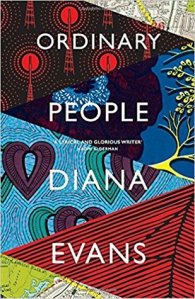 Ordinary People by Diana Evans: Reminds me of On Beauty by Zadie Smith, one of my favorite novels of this millennium. It focuses on two Black couples in South London and the suburbs who, in the wake of Obama’s election, are reassessing their relationships. Their problems are familiar middle-class ones, but Evans captures them so candidly that many passages made me wince. The chapter in which two characters experience mental instability is a standout, and the Black slang and pop music references a nice touch.
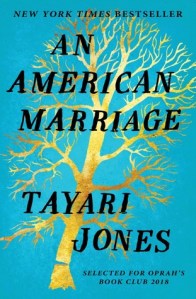
- An American Marriage by Tayari Jones: Roy and Celestial only get a year of happy marriage before he’s falsely accused of rape and sentenced to 12 years in prison in Louisiana. I ached for all three main characters: It’s an impossible situation. There’s a lot to probe about the characters’ personalities and motivations, and about how they reveal or disguise themselves through their narration. I found it remarkable how the letters, which together make up not even one-fifth of the text, enhance the raw honesty of the book.
- Ghost Wall by Sarah Moss: It’s the late 1980s and teenager Silvie Hampton and her parents have joined a university-run residential archaeology course in the North of England, near the bogs where human sacrifice once took place. Nationalism, racism, casual misogyny – there are lots of issues brewing under the surface here. Women’s bodies and what can be done to them is central; as the climax approaches, the tricksy matter of consent arises. I ended up impressed by how much Moss conveys in so few pages. Another one custom-made for the Women’s Prize.
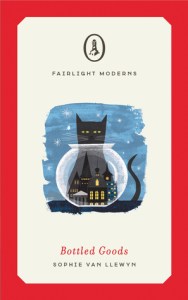 Bottled Goods by Sophie van Llewyn: I just finished this the other day. It’s a terrific hybrid work that manages to combine several of my favorite forms: a novella, flash fiction and linked short stories. The content is also an intriguing blend, of the horrific and the magical. After her brother-in-law’s defection, Alina and her husband Liviu come under extra scrutiny in Communist Romania. Bursts of magic realism and a delightful mixture of narrative styles (lists and letters; alternating between the first and third person) make all this material bearable.
Did not particularly enjoy (2)
- Freshwater by Akwaeke Emezi: Magic realism and mental illness fuel a swirl of disorienting but lyrical prose. Much of the story is told by the ọgbanje (an Igbo term for evil spirits) inhabiting Ada’s head. The conflation of the abstract and the concrete didn’t quite work for me, and the whole is pretty melodramatic. Although I didn’t enjoy this as much as some other inside-madness tales I’ve read, I can admire the attempt to convey the reality of mental illness in a creative way.
 Normal People by Sally Rooney: This book’s runaway success continues to baffle me. I kept waiting for more to happen, skimming ahead to see if there would be anything more to it than drunken college parties and frank sex scenes. It is appealing to see into these characters’ heads and compare what they think of themselves and each other with their awareness of what others think. But page to page it is pretty tedious, and fairly unsubtle.
Attempted but couldn’t get through (3)
- Remembered by Yvonne Battle-Felton: A historical novel marked by the presence of ghosts, this is reminiscent of the work of Cynthia Bond, Toni Morrison and Jesmyn Ward. It’s the closest thing to last year’s Sing, Unburied, Sing. I only read the first 36 pages as neither the characters nor the prose struck me as anything special.
 Swan Song by Kelleigh Greenberg-Jephcott: Full of glitzy atmosphere contrasted with washed-up torpor. I have no doubt the author’s picture of Truman Capote is accurate, and there are great glimpses into the private lives of his catty circle. I always enjoy first person plural narration, too. However, I quickly realized I don’t have sufficient interest in the figures or time period to sustain me through nearly 500 pages. I read the first 18 pages and skimmed to p. 35.
- Number One Chinese Restaurant by Lilian Li: Vague The Nest vibes, but the prose felt flat and the characters little more than clichés (especially scheming ‘Uncle’ Pang). I grew up in Silver Spring, Maryland so was expecting there to be more local interest for me, but this could be taking place anywhere. Reviews from trusted Goodreads friends suggested that the plot and characterization don’t significantly improve as the book goes on, so I gave up after the first two chapters.
Not interested (6)
(Don’t you go trying to change my mind!)

- The Silence of the Girls by Pat Barker: Updated Greek classics are so not my bag.
- My Sister, the Serial Killer by Oyinkan Braithwaite: Meh.
- Milkman by Anna Burns: Nah.
- Lost Children Archive by Valeria Luiselli: I’ll try something else by Luiselli.
- Praise Song for the Butterflies by Bernice L. McFadden: The setting of a fictional African country and that title already have me groaning.
- Circe by Madeline Miller: See the note on Barker above.
The shortlist will be announced on Monday the 29th. Broder and Moss will most likely make the cut. I’d love to see the van Llewyn make it through, as it’s my favorite of what I’ve read from the longlist, but I think it will probably be edged out by more high-profile releases. Either Evans or Jones will advance; Jones probably has the edge with more of an issues book. One of the Greek myth updates is likely to succeed. Luiselli is awfully fashionable right now. Emezi’s is an interesting book and the Prize is making a statement by supporting a non-binary author. Rooney has already won or been nominated for every prize going, so I don’t think she needs the recognition. Same for Burns, having won the Booker.
So, quickly pulling a combination of wanted and expected titles out of the air would give this predicted shortlist:
 The Silence of the Girls by Pat Barker
The Pisces by Melissa Broder
Freshwater by Akwaeke Emezi
An American Marriage by Tayari Jones
Lost Children Archive by Valeria Luiselli
Ghost Wall by Sarah Moss
Eleanor, Eric, Laura and Rachel have been posting lots of reviews and thoughts related to the Women’s Prize. Have a look at their blogs!
The Wellcome Book Prize 2019 Longlist: Reactions & Shadow Panel Reading Strategy
The 2019 Wellcome Book Prize longlist was announced on Tuesday. From the prize’s website, you can click on any of these 12 books’ covers, titles or authors to get more information about them.
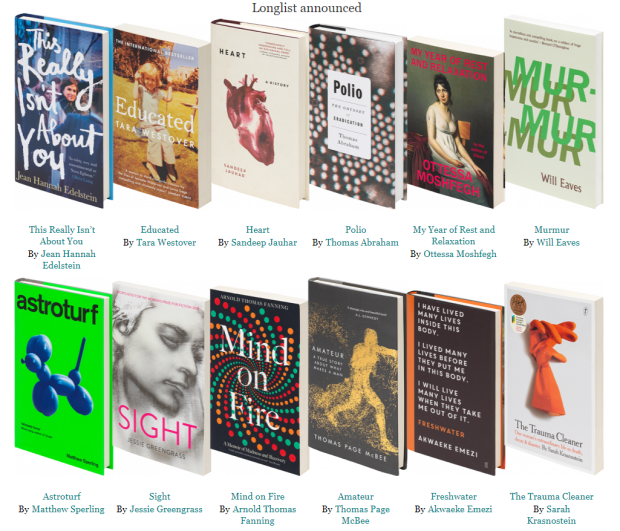
This year marks the 10th anniversary of the prize. As always, it’s a strong and varied set of nominees, with an overall focus on gender and mental health. Here are some initial thoughts (see also Laura’s thorough rundown of the 12 nominees):

- I correctly predicted just two, Sight by Jessie Greengrass and Heart: A History by Sandeep Jauhar, but had read another three: This Really Isn’t About You by Jean Hannah Edelstein, Amateur by Thomas Page McBee, and Educated by Tara Westover (reviewed for BookBrowse).
- I’m particularly delighted to see Edelstein on the longlist as her book was one of my runners-up from last year and deserves more attention.
- I’m not personally a huge fan of the Greengrass or McBee books, but can certainly see why the judges thought them worthy of inclusion.
- Though it’s a brilliant memoir, I never would have thought to put Educated on my potential Wellcome list. However, the more I think about it, the more health elements it has: her father’s possible bipolar disorder, her brother’s brain damage, her survivalist family’s rejection of modern medicine, her mother’s career in midwifery and herbalism, and her own mental breakdown at Cambridge.
- Books I knew about and was keen to read but hadn’t thought of in conjunction with the prize: The Trauma Cleaner by Sarah Krasnostein and My Year of Rest and Relaxation by Ottessa Moshfegh.
- Novels I had heard of but wasn’t necessarily interested in beforehand: Murmur by Will Eaves and Freshwater by Akwaeke Emezi. I went to get Freshwater from the library the afternoon of the longlist announcement and am now 60 pages in. I’d be tempted to call it this year’s Stay with Me except that the magic realist elements are much stronger here, reminding me of what I know about work by Chigozie Obioma and Ben Okri. The novel is narrated in the first person plural by a pair of (gods? demons? spirits?) inhabiting Ada’s head.
- And lastly, there are a few books I had never even heard of: Polio: The Odyssey of Eradication by Thomas Abraham, Mind on Fire: A Memoir of Madness and Recovery by Arnold Thomas Fanning, and Astroturf by Matthew Sperling. I’m keen on the Fanning but not so much on the other two. Polio will likely make it to the shortlist as this year’s answer to The Vaccine Race; if it does, I’ll read it then.

Some statistics on this year’s longlist, courtesy of a press release sent by Midas PR:
- Five novels (two more than last year – I think we can see the influence of novelist Elif Shafak), five memoirs, one biography, and one further nonfiction title
- Six debut authors
- Six titles from independent publishers (Canongate, CB Editions, Faber & Faber, Oneworld, Hurst Publishers, and The Text Publishing Company)
- Most of the authors are British or American, while Fanning is Irish (Emezi is Nigerian-American, Jauhar is Indian-American, and Krasnostein is Australian-American).
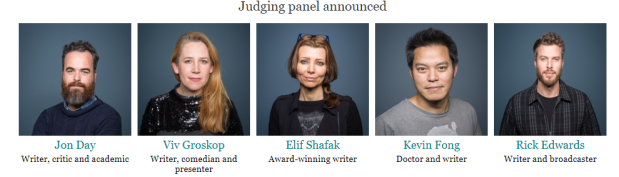
Chair of judges Elif Shafak writes: “In a world that remains sadly divided into echo chambers and mental ghettoes, this prize is unique in its ability to connect various disciplines: medicine, health, literature, art and science. Reading and discussing at length all the books on our list has been fascinating from the very start. We now have a wonderful longlist, of which we are all very proud. Although it sure won’t be easy to choose the shortlist, and then, finally, the winner, I am thrilled about and truly grateful for this fascinating journey through stories, ideas, ground-breaking research and revolutionary knowledge.”
We of the shadow panel have divided up the longlist titles between us as follows (though we may well each get hold of and read more of the books, simply out of personal interest) and will post reviews on our blogs within the next five weeks.
Amateur: A true story about what makes a man by Thomas Page McBee – LAURA
Astroturf by Matthew Sperling – PAUL
Educated by Tara Westover – CLARE
Freshwater by Akwaeke Emezi – REBECCA
Heart: A history by Sandeep Jauhar – LAURA
Mind on Fire: A memoir of madness and recovery by Arnold Thomas Fanning – REBECCA
Murmur by Will Eaves – PAUL
My Year of Rest and Relaxation by Ottessa Moshfegh – CLARE
Polio: The odyssey of eradication by Thomas Abraham – ANNABEL
[Sight by Jessie Greengrass – 4 of us have read this; I’ll post a composite of our thoughts]
The Trauma Cleaner: One woman’s extraordinary life in death, decay and disaster by Sarah Krasnostein – ANNABEL
This Really Isn’t About You by Jean Hannah Edelstein – LAURA
The Wellcome Book Prize shortlist will be announced on Tuesday, March 19th, and the winner will be revealed on Wednesday, May 1st.
We plan to choose our own shortlist to announce on Friday, March 15th. Follow along here and on Halfman, Halfbook, Annabookbel, A Little Blog of Books, and Dr. Laura Tisdall for reviews and predictions.
Are there any books on here that you’d like to read?
Blog Tour: The Long Forgotten by David Whitehouse
Have you noticed how many botanical titles and covers are out there this year? If you appreciate this publishing trend as much as I do, and especially if you enjoyed Susan Orlean’s The Orchid Thief, I can highly recommend The Long Forgotten. David Whitehouse’s third novel features plant hunting everywhere from Chile to Namibia, but it opens underwater: Professor Jeremiah Cole is in a submersible 200 miles west of Perth, Australia. He’s running out of oxygen down there when he collides with a goose-beaked whale that pulls his craft to the surface. The injured whale soon dies, and when the professor’s crew brings its corpse on board to perform an autopsy, they discover in its belly the black box of Flight PS570, lost on its way from Jakarta to London 30 years ago and dubbed “The Long Forgotten.”
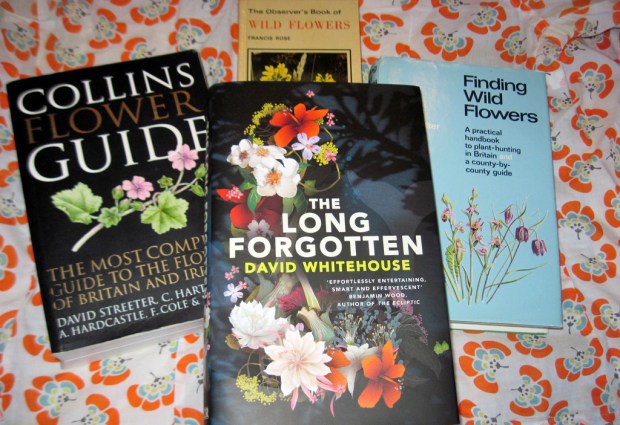
Whitehouse’s inspiration for the novel was the Malaysian Airlines flight that went missing in 2014, along with a story he read about the Rafflesia “corpse flower” 15 years ago. After the curious incident with the whale, more gentle magic is to come as we meet Dove, a lonely young man who works as an ambulance dispatcher in present-day London and starts tuning into the memories of Peter Manyweathers. In 1980s New York City, Peter gave up cleaning the houses of the dead to chase after the exotic plants mentioned in a love letter he found in an encyclopedia. Through a local botanical etching club he met Dr. Hens Berg, a memory researcher from Denmark, who encouraged him in the quest. Soon Peter was off to China and Gibraltar to find rare plants under a washing machine or along a steep cliff face. Along the way he fell in love and had to decide whom to trust and what was of most value to him.
How Peter and Dove are connected is a mystery whose unspooling is a continual surprise. I found it quite unusual that this novel ends with the plane crash; I can think of books that start with one, like Before the Fall by Noah Hawley, but no others that end on one. This late flashback to the crash, followed by a memorial service delivered by Prof. Cole, proves that the flight’s victims are far from forgotten. The mixture of genres, including magic realism, made me think of Haruki Murakami, and Whitehouse’s style is also slightly reminiscent of Joshua Ferris and Mark Haddon. Themes of memory and family, along with vivid scenes set around the globe and bizarre plants that trap sheep or reek of death, make this book stand out. If any of these elements even vaguely appeal to you, it’s well worth taking a chance on it.
A favorite passage:
“There on a ledge no bigger than an upturned hand was the Gibraltar campion. It was about forty centimeters high, with sun-kissed green leaves, no more interesting to the casual observer than any houseplant, quite ugly even. But nestled amongst the leaves, swaying, Peter found a small and beautifully detailed bilobed flower. White from a distance, up close an ethereal explosion of colour washed across the petals, from pink to purple. Elegant and soft, but surviving here, battered like a lighthouse by the wind and waves, a candle lit inside a tempest.
Peter was overcome by the sheer unlikeliness of its existence, and felt a kinship with the flower that seemed to distort him for a second. Above them, an infinite number of galaxies, planets and possibilities. Unknowns of a number that cannot be expressed. Yet here, on a protruding ledge and at the end of a rope, endless variables had colluded to bring him and the flower together.”
My rating:
The Long Forgotten was published by Picador on March 22nd. My thanks to the publisher for the free copy for review, and to Anne Cater for inviting me on the blog tour.
 Bookish Beck = Rebecca Foster. American transplant to England. Freelance proofreader and book reviewer.
 Bookish Beck