R.I.P. Reads, Part I: Apostolides, Dahl, Harkness, Kingfisher & Kohda
Ghosts, witches, vampires, creepy underground things: It can only be Readers Imbibing Peril time of year! Here’s my first five reviews.
The Homecoming by Zoë Apostolides (2025)
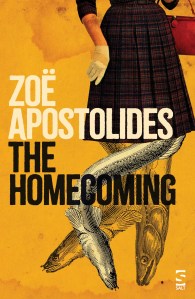 This debut novel dropped through my door as a total surprise: not only was it unsolicited, but I’d not heard about it. In this modern take on the traditional haunted house story, Ellen is a ghostwriter sent from London to Elver House, Northumberland, to work on the memoirs of its octogenarian owner, Catherine Carey. Ellen will stay in the remote manor house for a week and record 20 hours of audio interviews – enough to flesh out an autobiography. Miss Carey isn’t a forthcoming subject, but Ellen manages to learn that her father drowned in the nearby brook and that all Miss Carey did afterwards was meant to please her grieving mother and the strictures of the time. But as strange happenings in the house interfere with her task, Ellen begins to doubt she’ll come away with usable material. I was reminded of The Woman in Black, The Thirteenth Tale, and especially Wakenhyrst what with the local eel legends. The subplot about Ellen drifting apart from her best friend, a new mother, felt unnecessary, though I suppose was intended to bolster the main theme of women’s roles. There’s a twist that more seasoned readers of Gothic fiction and ghost stories might see coming. While I found this very readable and perfectly capably written, I didn’t get a sense of where the author hopes to fit in the literary market; she’s previously published a true crime narrative. Full disclosure: I once collaborated with Zoë on a Stylist assignment.
With thanks to Salt Publishing for the proof copy for review.
The Witches by Roald Dahl (1983)
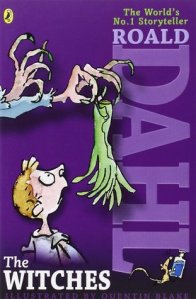 I’m sure I read all of Dahl’s major works when I was a child, though I had no specific memory of this one. After his parents’ death in a car accident, a boy lives in his family home in England with his Norwegian grandmother. She tells him stories from Norway and schools him in how to recognize and avoid witches. They wear wigs and special shoes to hide their baldness and square feet, and with their wide nostrils they sniff out children to turn them into hated creatures like slugs. When Grandmamma falls ill with pneumonia, she and the boy travel to a Bournemouth hotel for her recovery only to stumble upon a convention of witches under the guise of the Royal Society for the Prevention of Cruelty to Children. The Grand High Witch (Anjelica Huston, if you know the movie) has a new concoction that will transform children into mice at enough of a delay to occur the following morning at school. It’s up to the boy and his grandmother to save the day. I really enjoyed this caper, which I interpreted as being – like Tove Jansson’s The Summer Book – about imagination and making the most of one’s time with grandparents. But in the back of my mind was Jen Campbell’s objection to the stereotypical equating of disfigurement with villainy. The Grand High Witch also speaks with a heavy German accent. It would be understandable to dismiss this as dated and clichéd, but I still found it worthwhile. It also fit into my project to read books from my birth year. (Free from a neighbour)
The Black Bird Oracle by Deborah Harkness (2024)
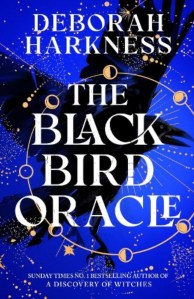 Somehow I’ve read this entire series even though none of the subsequent books lived up to A Discovery of Witches. What I loved about that first novel was how the author drew on her knowledge of the history of science to create a believable backdrop for a story of witches, vampires and other supernatural beings that took place largely in Oxford and its medieval libraries. Each sequel has elaborated further adventures for Diana Bishop, a witch; her vampire husband, Matthew de Clermont; and their family members and other hangers-on. Their twins, especially Becca, have inherited some of Diana’s power. I read the first half of this last year and finally skimmed to the end last week, so I haven’t retained much. Diana is summoned to the ancestral seat of the Bishops in Massachusetts and finds herself part of a community of gossipy, catty witches. (Dahl was right, they’re everywhere!) She has some fun, folksy interactions but things soon get more serious as she girds herself for a showdown with the darker implications of her gift. Overall, this didn’t add much to the ongoing narrative and the love scenes veered too close to romantasy for my liking. (Public library)
What Stalks the Deep by T. Kingfisher [Ursula Vernon] (2025)
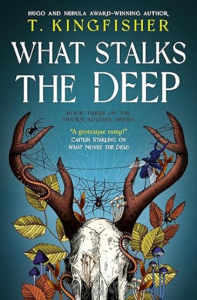 The third in the “Sworn Soldier” series, after What Moves the Dead and What Feasts at Night. Alex Easton is a witty, gender-nonconforming narrator, which is why I persist with these novellas even though I’m underwhelmed by the plots. Denton, the American doctor friend from the first book, begs Easton to come to West Virginia: his cousin Oscar has gone missing in a mine after sending a series of alarming letters about a red light he saw in the depths. Easton and their right-hand man, Angus, soon encounter claustrophobia-inducing cave systems, various kinds of bad air and siphonophore-like marine creatures that can assemble to imitate other beings. (Why aren’t these on the cover, huh?!) In other intriguing matters, Denton seems to have something going on with his friend John Ingold, an Indigenous scientist. Though, as Easton frequently reminds themself, that’s none of our business. There are some great set-pieces and funny, if anachronistic, asides (on learning how to flick a lighter just right: “I used to practice it for hours as a teenager, in hopes of impressing girls. Look, girls were more easily impressed in those days. Shut up.”) But my feeling with all three books is that they’re over before they’ve barely begun, and they never deliver the expected horror. Smart-ass, queer fantasy/horror: these will be some people’s perfect books, just not mine. If you’re intrigued, do at least try the first one, which riffs on Poe. (Read via Edelweiss)
Woman, Eating by Claire Kohda (2022)
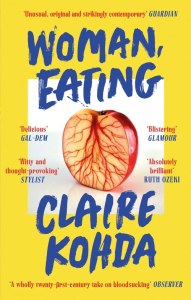 A very different sort of vampire novel. Twenty-three-year-old Lydia is half Japanese and half Malaysian; half human and half vampire. She’s trying to follow in her late father’s footsteps as an artist through an internship at a Battersea gallery, which comes with studio space where she’ll sleep to save money. But she can only drink blood like her mother, who turned her when she was a baby. Mostly she subsists on pig blood – which she can order dried if she can’t buy it fresh from a butcher – though, in one disturbing sequence, she brings home a duck carcass. When she falls for Ben, one of her studio-mates, she imagines what it would be like to be fully human: to make art together, to explore Asian cuisine, to bond over losing their mothers (his is dying of cancer; hers is in a care home with violence-tinged dementia). But Ben is already seeing someone, the internship is predictably dull, and a first attempt at consuming regular food goes badly wrong. There are a lot of promising threads in this debut. It’s fascinating how Lydia can intuit a creature’s whole life story by drinking their blood. She becomes obsessed with the Baba Yaga folk tale (and also mentions Malay vampire legends) and there’s a neat little bit of #MeToo revenge. But overall, it’s half-baked. Really, it’s just a disaster-woman book in disguise. The way Lydia’s identity determines her attitudes towards food and sex feels like a symbol of body dysmorphia. I’ll look out to see if Kohda does something more distinctive in future. (Secondhand – Awesomebooks.com)
More coming up on Halloween (thankfully, including books I liked better on average)!
May Releases, Part II (Fiction): Le Blevennec, Lynch, Puchner, Stanley, Ullmann, and Wald
A cornucopia of May novels, ranging from novella to doorstopper and from Montana to Tunisia; less of a spread in time: only the 1980s to now. Just a paragraph on each to keep things simple. I’ll catch up soon with May nonfiction and poetry releases I read.
Friends and Lovers by Nolwenn Le Blevennec (2023; 2025)
[Translated from French by Madeleine Rogers]
 Armelle, Rim, and Anna are best friends – the first two since childhood. They formed a trio a decade or so ago when they worked on the same magazine. Now in their mid-thirties, partnered and with children, they’re all gripped by a sexual “great awakening” and long to escape Paris and their domestic commitments – “we went through it, this mutiny, like three sisters,” poised to blow up the “perfectly executed choreography of work, relationships, children”. The friends travel to Tunisia together in December 2014, then several years later take a completely different holiday: a disaster-prone stay in a lighthouse-keeper’s cottage on an island off the coast of Brittany. They used to tolerate each other’s foibles and infidelities, but now resentment has sprouted up, especially as Armelle (the narrator) is writing a screenplay about female friendship that’s clearly inspired by Rim and Anna. Armelle is relatably neurotic (a hilarious French blurb for the author’s previous novel is not wrong: “Woody Allen meets Annie Ernaux”) and this is wise about intimacy and duplicity, yet I never felt invested in any of the three women or sufficiently knowledgeable about their lives.
With thanks to Peirene Press for the free copy for review.
A Family Matter by Claire Lynch
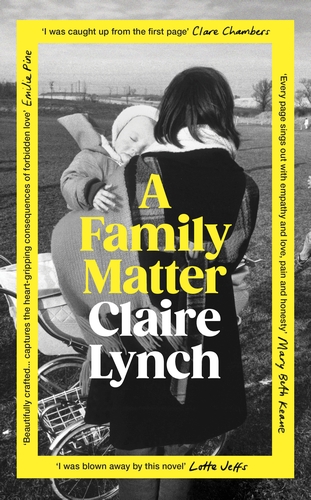 “The fluke of being born at a slightly different time, or in a slightly different place, all that might gift you or cost you.” At events for Small, Lynch’s terrific memoir about how she and her wife had children, women would speak up about how different their experience had been. Lesbians born just 10 or 20 years earlier didn’t have the same options. Often, they were in heterosexual marriages because that’s all they knew to do; certainly the only way they thought they could become mothers. In her research into divorce cases in the UK in the 1980s, Lynch learned that 90% of lesbian mothers lost custody of their children. Her aim with this earnest, delicate debut novel, which bounces between 2022 and 1982, is to imagine such a situation through close portraits of Heron, an ageing man with terminal cancer; his daughter, Maggie, who in her early forties bears responsibility for him and her own children; and Dawn, who loved Maggie desperately but felt when she met Hazel that she was “alive at last, at twenty-three.” How heartbreaking that Maggie knew only that her mother abandoned her when she was little; not until she comes across legal documents and newspaper clippings does she understand the circumstances. Lynch made the wise decision to invite sympathy for Heron from the start, so he doesn’t become the easy villain of the piece. Her compassion, and thus ours, is equal for all three characters. This confident, tender story of changing mores and steadfast love is the new Carol for our times. (Such a lovely but low-key novel was liable to make few ripples, so I’m delighted for Lynch that the U.S. release got a Read with Jenna endorsement.)
With thanks to Chatto & Windus (Penguin) for the proof copy for review.
Dream State by Eric Puchner
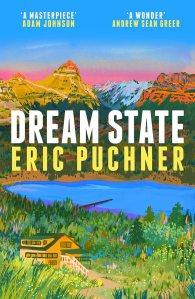 If it starts and ends with a wedding, it must be a comedy. If much of the in between is marked by heartbreak, betrayal, failure, and loss, it must be a tragedy. If it stretches towards 2050 and imagines a Western USA smothered in smoke from near-constant forest fires, it must be an environmental dystopian. Somehow, this novel is all three. The first 163 pages are pure delight: a glistening romantic comedy about the chaos surrounding Charlie and Cece’s wedding at his family’s Montana lake house in the summer of 2004. First half the wedding party falls ill with norovirus, then Charlie’s best friend, Garrett (who’s also the officiant), falls in love with the bride. Do I sound shallow if I admit this was the section I enjoyed the most? The rest of this Oprah’s Book Club doorstopper examines the fallout of this uneasy love triangle. Charlie is an anaesthesiologist, Cece a bookstore owner, and Garrett a wolverine researcher in Glacier National Park, which is steadily losing its wolverines and its glaciers. The next generation comes of age in a diminished world, turning to acting or addiction. There are still plenty of lighter moments: funny set-pieces, warm family interactions, private jokes and quirky descriptions. But this feels like an appropriately grown-up vision of idealism ceding to a reality we all must face. I struggled with a lack of engagement with the children, but loved Puchner’s writing so much on the sentence level that I will certainly seek out more of his work. Imagine this as a cross between Jonathan Franzen and Maggie Shipstead.
With thanks to Sceptre (Hodder) for the proof copy for review.
Consider Yourself Kissed by Jessica Stanley
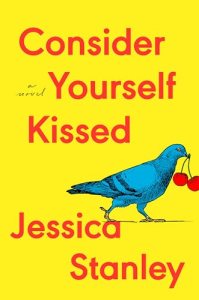 Coralie is nearing 30 when her ad agency job transfers her from Australia to London in 2013. Within a few pages, she meets Adam when she rescues his four-year-old, Zora, from a lake. That Adam and Coralie will be together is never really in question. But over the next decade of personal and political events, we wonder whether they have staying power – and whether Coralie, a would-be writer, will lose herself in soul-destroying work and motherhood. Adam’s job as a political journalist and biographer means close coverage of each UK election and referendum. As I’ve thought about some recent Jonathan Coe novels: These events were so depressing to live through, who would want to relive them through fiction? I also found this overlong and drowning in exclamation points. Still, it’s so likable, what with Coralie’s love of literature (the title is from The Group) and adjustment to expat life without her mother; and secondary characters such as Coralie’s brother Daniel and his husband, Adam’s prickly mother and her wife, and the mums Coralie meets through NCT classes. Best of all, though, is her relationship with Zora. This falls solidly between literary fiction and popular/women’s fiction. Given that I was expecting a lighter romance-led read, it surprised me with its depth. It may well be for you if you’re a fan of Meg Mason and David Nicholls.
With thanks to Hutchinson Heinemann for the proof copy for review.
Girl, 1983 by Linn Ullmann (2021; 2025)
[Translated from Norwegian by Martin Aitken]
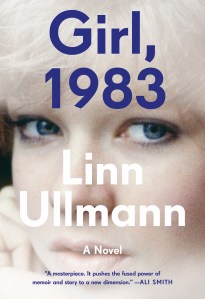 Ullmann is the daughter of actress Liv Ullmann and film director Ingmar Bergman. That pedigree perhaps accounts for why she got the opportunity to travel to Paris in the winter of 1983 to model for a renowned photographer. She was 16 at the time and spent the whole trip disoriented: cold, hungry, lost. Unable to retrace the way to her hotel and wearing a blue coat and red hat, she went to the only address she knew – that of the photographer, K, who was in his mid-forties. Their sexual relationship is short-lived and unsurprising, at least in these days of #MeToo revelations. Its specifics would barely fill a page, yet the novel loops around and through the affair for more than 250. Ullmann mostly pulls this off thanks to the language of retrospection. She splits herself both psychically and chronologically. There’s a “you” she keeps addressing, a childhood imaginary friend who morphs into a critical voice of conscience and then the self dissociated from trauma. And there’s the 55-year-old writer looking back with empathy yet still suffering the effects. The repetition made this something of a sombre slog, though. It slots into a feminist autofiction tradition but is not among my favourite examples.
With thanks to Hamish Hamilton (Penguin) for the proof copy for review.
The Bayrose Files by Diane Wald
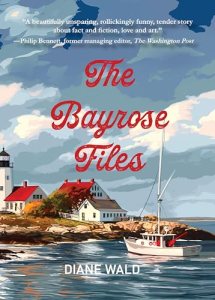 In the 1980s, Boston journalist Violet Maris infiltrates the Provincetown Home for Artists and Writers, intending to write a juicy insider’s exposé of what goes on at this artists’ colony. But to get there she has to commit a deception. Her gay friend Spencer Bayrose has a whole sheaf of unpublished short stories drawing on his Louisiana upbringing, and he offers to let her submit them as her own work to get a place at PHAW. Here Violet finds eccentrics aplenty, and even romance, but when news comes that Spence has AIDS, she has to decide how far she’ll go for a story and what she owes her friend. At barely over 100 pages, this feels more like a long short story, one with a promising setting and a sound plot arc, but not enough time to get to know or particularly care about the characters. I was reminded of books I’ve read by Julia Glass and Sara Maitland. It’s offbeat and good-natured but not top tier.
Published by Regal House Publishing. With thanks to publicist Jackie Karneth of Books Forward for the advanced e-copy for review.
A Family Matter was the best of the bunch for me, followed closely by Dream State.
Which of these do you fancy reading?
November Releases Including #NovNov24: Bennett, Pimlott, Rishøi, Shattuck
Two belated novellas: one a morbid farce set at an old folks’ home; the other a sweet Norwegian tale that offers sisterhood and magic as ways to survive a rough upbringing. Plus a lovely poetry pamphlet about the early days of widowhood and a linked short story collection spanning several centuries of art and relationships in New England.
Killing Time by Alan Bennett
I’d only previously read The Uncommon Reader by Alan Bennett; I perpetually have him confused with Arnold Bennett, by whom I know more. It could be debated whether this is a novella by word count, but even if more of a short story, for me it counts for #NovNov24 because it’s in a stand-alone volume, as publishing partner Faber produced for Claire Keegan’s So Late in the Day last year.
I polished this off in one sitting. Bennett’s black comedy is set at a posh home for the elderly, the Edwardian mansion Hill Topp House. (Residents know to be on their best behaviour lest they be demoted to an inferior neighbouring facility, Low Moor.) When a prospective client calls, Mrs McBryde enthusiastically lists the assets:
We have a choir and on special occasions a glass of dry sherry. It’s less of a home and more of a club and very much a community. We go on frequent trips out. Only last week we went to a local farm where they have a flamingo. … We don’t vegetate at Hill Topp. And the cuisine is not unadventurous. It’s not long since we had a Norwegian evening.
 The dialogue is sparkling, just like you’d expect from a playwright. As in the Hendrik Groen books and Elizabeth Taylor’s Mrs Palfrey at the Claremont, the situation invites cliques and infantilizing. The occasional death provides a bit more excitement than jigsaws and knitting. Ageing bodies may be pitiable (the incontinence!), but sex remains a powerful impulse.
Here is where readers might start to feel disconnected from Bennett’s dated humour. The window cleaner turned gigolo is somewhat amusing; the repeated gag of a flasher, not so much. “Has she seen the sights yet?” two ladies ask. And a jesting conversation about clerical sexual abuse scandals seems particularly ill considered given recent news.
The story is most interesting and fresh once Covid comes onto the scene. Some perish early on; the survivors, ungoverned, do their best. I loved the detail of a resident turning a velvet dress into 60 masks. Two objects, one of them depicted on the cover (it’s not a grenade as I thought at first!), come to have particular importance. I liked this but thought by favouring broad humour it sacrificed characterization or compassion. You’ll enjoy it if you’re fond of wicked comedy by the likes of Alan Ayckbourn. [112 pages]
With thanks to Profile Books for the free copy for review.
After the Rites and Sandwiches: Poems by Kathy Pimlott
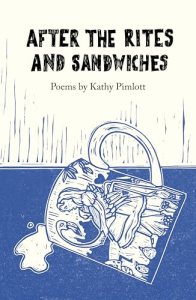 The 18 poems in this pamphlet (in America it would be called a chapbook) orbit the sudden death of Pimlott’s husband a few years ago. By the time she found Robert at the bottom of the stairs, there was nothing paramedics could do. What next? The callousness of bureaucracy: “Your demise constitutes a quarter off council tax; / the removal of a vote you seldom cast and then / only to be contrary; write-off of a modest overdraft; / the bill for an overpaid pension” (from “Death Admin I”). Attempts at healthy routines: “I’ve written my menu for the week. Today’s chowder. / I manage ten pieces of the 1000-piece jigsaw’s scenes / from Jane Austen. Tomorrow I’ll visit friends and say // it’s alright, it’s alright, seventy, eighty percent / alright” (from “How to be a widow”). Pimlott casts an eye over the possessions he left behind, remembering him in gardens and on Sunday walks of the sort they took together. Grief narratives can err towards bitter or mawkish, but this one never does. Everyday detail, enjambment and sprightly vocabulary lend the wry poems a matter-of-fact grace. I plan to pass on my copy to a new book club member who was widowed unexpectedly in May – no doubt she’ll recognise the practical challenges and emotional reality depicted.
With thanks to The Emma Press for the free copy for review.
Brightly Shining by Ingvild Rishøi (2021; 2024)
[Translated from the Norwegian by Caroline Waight]
 Ten-year-old Ronja and her teenage sister Melissa have to stick together – their single father may be jolly and imaginative, but more often than not he’s drunk and unemployed. They can’t rely on him to keep food in their Tøyen flat; they subsist on cereal. When Ronja hears about a Christmas tree seller vacancy, she hopes things might turn around. Their father lands the job but, after his crew at a local pub pull him back into bad habits, Melissa has to take over his hours. Ronja hangs out at the Christmas tree stand after school, even joining in enthusiastically with publicity. The supervisor, Tommy, doesn’t mind her being around, but it’s clear that Eriksen, the big boss, is uncomfortable with even a suggestion of child labour.
It’s touching to see Melissa take on a caring role and to meet the few indisputably good people who help the sisters, such as their elderly neighbour, Aronsen. Ronja’s innocent narration emphasizes her disbelief at their father’s repeated failings and also sets the story up for a late swerve into what seems like magic realism. I’m genuinely not sure what’s supposed to happen at the end, but the sisters find themselves alone in a wintry storm and the language of miracles is used. Rishøi’s debut will surely be compared to Small Things Like These and other classic holiday novellas. I found it a little obvious and saccharine, but if you find the right mood and moment it might just tug at your heart in the run-up to Christmas. [182 pages]
With thanks to Grove Press UK for the free copy for review.
The History of Sound by Ben Shattuck
“history is personal, even when it isn’t”
The dozen stories of Shattuck’s fiction debut form a “hook-and-chain” structure of five couplets, bookended by a first and last story that are related to each other. The links are satisfyingly overt: A pair might take place in the same house in different centuries, or the second will fill in the history of the characters from the first. In “Edwin Chase of Nantucket,” the eponymous figure recognizes his bereaved mother’s loneliness and does her a kindness. “Silver Clip,” which follows, is separated by 200 years, but its accounts of a young painter living in his ancestral island home reprises the motifs of grief, compassion and memory. “Graft,” about a woman spurned in the 1880s, and “Tundra Swan,” in which a man concocts a swindle to pay for his son’s rehab in the present day, are connected by a Cape Cod orchard. Artefacts and documents also play important roles: a journal accounts for a mysterious mass death, a radio transcript and a photograph explain a well-meaning con, and an excerpt from a history textbook follows up on the story of the religious cult in “The Children of New Eden.”
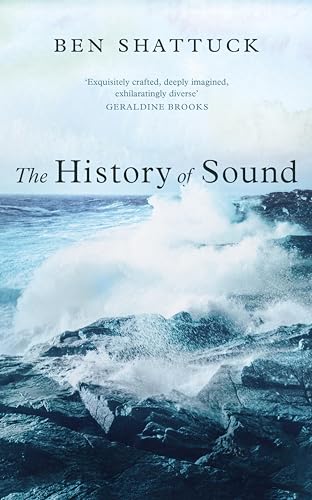 My favourite individual story was “August in the Forest,” about a poet whose artist’s fellowship isn’t all it cracked up to be – the primitive cabin being no match for a New Hampshire winter. His relationships with a hospital doctor, Chloe, and his childhood best friend, Elizabeth, seem entirely separate until Elizabeth returns from Laos and both women descend on him at the cabin. Their dialogues are funny and brilliantly awkward (“Sorry not all of us are quietly chiseling toward the beating heart of the human experience, August. One iamb at a time”) and it’s fascinating to watch how, years later, August turns life into prose. But the crowning achievement is the opening title story and its counterpart, “Origin Stories,” about folk music recordings made by two university friends during the First World War – and the afterlife of both the songs and the men.
From the start I was reminded strongly of North Woods by Daniel Mason, and particular sequences recall Shoot the Horses First by Leah Angstman and An Account of the Decline of the Great Auk, According to One Who Saw It by Jessie Greengrass. It’s a slight shame for Shattuck that what he was doing here didn’t seem as original to me because of my familiarity with these predecessors. Yet, to my surprise, I found that The History of Sound was more consistent than any of those. With the exception of a few phrases from “Graft” (“living room,” “had sex” and “boring” don’t strike me as 1880s lingo), all of the stories are historically convincing, and the very human themes of lust, parenthood, sorrow and frustrated ambition resonate across centuries and state lines. Really beautiful. (See Susan’s review too.)
[Some you-couldn’t-make-it-up trivia about Shattuck: he’s married to Jenny Slate (author of Little Weirds et al., as well as an actress known to me as Mona Lisa from Parks and Recreation); and he runs the oldest general store in America, built in 1793.]
With thanks to Swift Press for the free copy for review.
Which of these November releases catches your eye? What others can you recommend?
11 Days, 11 Books: 2023’s Reading So Far
I realized that, as in 2020, I happen to have finished 11 books so far this year (including a Patrick Gale again). Some of the below I’ll be reviewing in full for other themes or challenges coming up, and others have paid reviews pending that I can’t share yet, but I’ve written a little bit about each of the others. Here’s how my reading year has started off…


A children’s book
 Leila and the Blue Fox by Kiran Millwood Hargrave – Similar in strategy to Hargrave’s previous book (also illustrated by her husband Tom de Freston), Julia and the Shark, one of my favourite reads of last year – both focus on the adventures of a girl who has trouble relating to her mother, a scientific researcher obsessed with a particular species. Leila, a Syrian refugee, lives with family in London and is visiting her mother in the far north of Norway. She joins her in tracking an Arctic fox on an epic journey, and helps the expedition out with social media. Migration for survival is the obvious link. There’s a lovely teal and black colour scheme, but I found this unsubtle. It crams too much together that doesn’t fit.
Celebrity autobiographies
A genre that pretty much never makes it onto my stacks, but I read these two despite knowing little to nothing about the authors; instead, I was drawn in by their particular stories.
 A Heart that Works by Rob Delaney – Delaney is an American actor who was living in London for TV filming in 2016 when his third son, baby Henry, was diagnosed with a brain tumour. He died before the age of three. The details of disabling illness and brutal treatment could not be other than wrenching, but the tone is a delicate balance between humour, rage, and tenderness. The tribute to his son may be short in terms of number of words, yet includes so much emotional range and a lot of before and after to create a vivid picture of the wider family. People who have never picked up a bereavement memoir will warm to this one.
 Born a Crime: Stories from a South African Childhood by Trevor Noah – Again, I was not familiar with the author’s work in TV/comedy, but had heard good things so gave this a try. It reminded me of Barack Obama’s Dreams from My Father what with the African connection, the absent father, the close relationship with his mother, and the reflections on race and politics. I especially loved his stories of being dragged to church multiple times every Sunday. He writes a lot about her tough love, and the difficulty of leaving hood life behind once you’ve been sucked into it. The final chapter is exceptional. Noah does a fine job of creating scenes and dialogue; I’d happily read another book of his.
Novels
 Bournville by Jonathan Coe – Coe does a good line in witty state-of-the-nation novels. Patriotism versus xenophobia is the overarching dichotomy in this one, as captured through a family’s response to seven key events from English history over the last 75+ years, several of them connected with the royals. Mary Lamb, the matriarch, is an Everywoman whose happy life still harboured unfulfilled longings. Coe mixes things up by including monologues, diary entries, and so on. In some sections he cuts between the main action and a transcript of a speech, TV commentary, or set of regulations. Covid informs his prologue and the highly autobiographical final chapter, and it’s clear he’s furious with the government’s handling.
 Our Missing Hearts by Celeste Ng – Disappointing compared to her two previous novels. I’d read too much about the premise while writing a synopsis for Bookmarks magazine, so there were no surprises remaining. The political commentary, though necessary, is fairly obvious. The structure, which recounts some events first from Bird’s perspective and then from his mother Margaret Miu’s, makes parts of the second half feel redundant. Still, impossible not to find the plight of children separated from their parents heart-rending, or to disagree with the importance of drawing attention to race-based violence. It’s also appealing to think about the power of individual stories and how literature and libraries might be part of an underground protest movement.
And a memoir in miniature
 Heating & Cooling: 52 Micro-Memoirs by Beth Ann Fennelly – I love memoirs-in-essays. Fennelly goes for the same minimalist approach as Abigail Thomas’s Safekeeping. Pieces range from one line to six pages and mostly pull out moments of note from the everyday of marriage, motherhood and house maintenance. I tended to get more out of the ones where she reinhabits earlier life, like “Goner” (growing up in the Catholic church); “Nine Months in Madison” (poetry fellowship in Wisconsin, running around the lake where Otis Redding died in a plane crash); and “Emulsionar,” (age 23 and in Barcelona: sexy encounter, immediately followed by scary scene). Two about grief, anticipatory for her mother (“I’ll be alone, curator of the archives”) and realized for her sister (“She threaded her arms into the sleeves of grief” – you can tell Fennelly started off as a poet), hit me hardest. Sassy and poignant.
The best so far? Probably Born a Crime, followed by Bournville.
Any of these you have read or would read?
Review Book Catch-Up: Dennis, Galloway, Leland-St. John and Sampson
Capsule reviews today, of four books I am inexcusably late in reviewing. I have a record of personal experience with species reintroductions, a memoir about living among reindeer herders in the far north of Norway, a set of elegiac poems, and a biography of a Victorian woman poet who struggled with poor health for most of her life.
Restoring the Wild: Sixty Years of Rewilding Our Skies, Woods and Waterways by Roy Dennis
 Rewilding is a big buzz word in current nature and environmental writing. Few could be said to have played as major a role in the UK’s successful species reintroduction projects as Roy Dennis, who has been involved with the RSPB and other key organizations since the late 1950s. He trained as a warden at two of the country’s most famous bird observatories, Lundy Island and Fair Isle. Most of his later work was to focus on birds: white-tailed eagles, red kites, and ospreys. Some of these projects extended into continental Europe. He also writes about the special challenges posed by mammal reintroductions; beavers get a chapter of their own. Every initiative is described in exhaustive detail, full of names and dates, whereas I would have been okay with an overview. This feels like more of an insider’s history rather than a layman’s introduction. I have popped it on my husband’s bedside table in hopes that, with his degree in wildlife conservation, he’ll be more interested in the nitty-gritty.
Favourite lines:
“Tenacity and a long view to the future are important in wildlife conservation.”
“for every successful project that gets the go-ahead, there are others into which people put great effort but which then run up against problems.”
With thanks to William Collins for the free copy for review.
Dálvi: Six Years in the Arctic Tundra by Laura Galloway
 The title is the word for winter in the Northern Sámi language. Galloway, a journalist, traded in New York City for Arctic Norway after a) a DNA test told her that she had Sámi blood and b) she met and fell for Áilu, a reindeer herder, at a wedding. She enrolled in an intensive language learning course at university level and got used to some major cultural changes: animals were co-workers here rather than pets (like the two cats she brought with her); communal meals and drawn-out goodbyes were not the done thing; and shamans were still active (one helped them find a key she lost). Footwear neatly sums up the difference. The Prada heels she brought “just in case” ended up serving as hammers; instead, she helped Áilu’s mother make reindeer skins into boots. Two factors undermined my enjoyment: Alternating chapters about her unhappy upbringing in Indiana don’t add much of interest, and, after her relationship with Áilu ends, the book feels aimless. However, I appreciated her words about DNA not defining you, and family being what you make it.
With thanks to Atlantic Books for the free copy for review.
A Raga for George Harrison by Sharmagne Leland St.-John (2020)
 Native American poet Sharmagne Leland St.-John’s fifth collection is a nostalgic and bittersweet look at people and places from one’s past. There are multiple elegies for public figures – everyone from Janis Joplin to Virginia Woolf – as well as for some who aren’t household names but have important stories that should be commemorated, like Hector Pieterson, a 12-year-old boy killed during the Soweto Uprising for protesting enforced teaching of Afrikaans in South Africa in 1976. Many of the elegies are presented as songs. Personal sources of sadness, such as a stillbirth, disagreements with a daughter, and ageing, weigh as heavily as tragic world events.
Rhyming and alliteration create inviting rhythms throughout the book, and details of colour and fashion animate poems like “La Kalima.” Leland St.-John remembers meeting street children in Mexico, while bamboo calls to mind time spent in Japan. “Promised Land” is an ironic account of land being seized from natives and people of colour. I especially liked “Things I Would Have Given to My Mother Had She Asked” (some literal and some more abstract), which opens “A piece of my liberal mind. 5 more minutes of my time”, and the sombre “Cat’s Cradle” (“Drenched starlings perch on a cat’s cradle of telephone wires”).
You can read “I Said Coffee” and a few more of her poems online.
With thanks to the author for sending a free e-copy for review.
Two-Way Mirror: The Life of Elizabeth Barrett Browning by Fiona Sampson
 Coming in at under 260 pages, this isn’t your standard comprehensive biography. Sampson instead describes it as a “portrait,” one that takes up the structure of EBB’s nine-book epic poem, Aurora Leigh, and is concerned with themes of identity and the framing of stories. Elizabeth, as she is cosily called throughout the book, wrote poems that lend themselves to autobiographical interpretation – “her body of work creates a kind of looking glass in which, dimly, we make out the person who wrote it,” Sampson asserts.
Nicknamed “Ba,” Elizabeth was born in 1806 and brought up with 11 younger siblings at a Herefordshire estate, Hope End. Her father, Edward, had been born in Jamaica and the family fortune was based on sugar – and slavery. Sampson makes much of this inherited guilt, and also places an emphasis on EBB’s lifelong ill health, which involved headaches, back and side pain, and depression. She also suffered from respiratory complaints. The modern medically minded reader tries to come up with a concrete diagnosis. Tardive dystonia? Post-viral syndrome? The author offers many potential explanations, and notes that her subject was the very type of the Victorian female invalid. She would also suffer from miscarriages, but had one son, Pen. The Brownings were in the unusual position of the wife being the more famous partner.
Sampson draws heavily on correspondence and earnestly interrogates scenes and remembrances, but her use of the present tense is a bit odd for a historical narrative, and I found my casual curiosity about the Brownings wasn’t enough to sustain my interest. However, this did make me eager to try more of EBB’s poetry. I wonder if I still have that copy of Sonnets from the Portuguese in a box in the States?
Favourite lines:
“Within the continual process of reputation-making and remaking that is literary history, Elizabeth Barrett Browning remains a bellwether for the rising and sinking stock of women writers. … Elizabeth dramatizes the two-way creation of every writing self, from without and from within. That the life of the body both enables and limits the life of the mind is the paradox of the thinking self.”
With thanks to Profile Books for the free copy for review.
Would you be interested in reading one or more of these?
Book Serendipity, Late 2020 into 2021
I call it Book Serendipity when two or more books that I read at the same time or in quick succession have something pretty bizarre in common. Because I have so many books on the go at once (20+), I suppose I’m more prone to such incidents than some. I also list some of my occasional reading coincidences on Twitter. The following are in chronological order.
- The Orkney Islands were the setting for Close to Where the Heart Gives Out by Malcolm Alexander, which I read last year. They showed up, in one chapter or occasional mentions, in The Frayed Atlantic Edge by David Gange and The Stone Diaries by Carol Shields, plus I read a book of Christmas-themed short stories (some set on Orkney) by George Mackay Brown, the best-known Orkney author. Gavin Francis (author of Intensive Care) also does occasional work as a GP on Orkney.

- The movie Jaws is mentioned in Mr. Wilder and Me by Jonathan Coe and Landfill by Tim Dee.
- The Sámi people of the far north of Norway feature in Fifty Words for Snow by Nancy Campbell and The Mercies by Kiran Millwood Hargrave.
- Twins appear in Mr. Wilder and Me by Jonathan Coe and Tennis Lessons by Susannah Dickey. In Vesper Flights Helen Macdonald mentions that she had a twin who died at birth, as does a character in Miss Benson’s Beetle by Rachel Joyce. A character in The Light Years by Elizabeth Jane Howard is delivered of twins, but one is stillborn. From Wrestling the Angel by Michael King I learned that Janet Frame also had a twin who died in utero.
- Fennel seeds are baked into bread in The Mercies by Kiran Millwood Hargrave and The Strays of Paris by Jane Smiley. Later, “fennel rolls” (but I don’t know if that’s the seed or the vegetable) are served in Monogamy by Sue Miller.


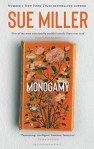
- A mistress can’t attend her lover’s funeral in Here Is the Beehive by Sarah Crossan and Tennis Lessons by Susannah Dickey.
- A sudden storm drowns fishermen in a tale from Christmas Stories by George Mackay Brown and The Mercies by Kiran Millwood Hargrave.
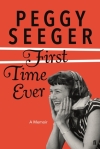 Silver Spring, Maryland (where I lived until age 9) is mentioned in one story from To Be a Man by Nicole Krauss and is also where Peggy Seeger grew up, as recounted in her memoir First Time Ever. Then it got briefly mentioned, as the site of the Institute of Behavioral Research, in Livewired by David Eagleman.
- Lamb is served with beans at a dinner party in Monogamy by Sue Miller and Larry’s Party by Carol Shields.
- Trips to Madagascar in Landfill by Tim Dee and Lightning Flowers by Katherine E. Standefer.
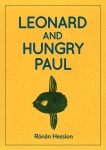 Hospital volunteering in My Year with Eleanor by Noelle Hancock and Leonard and Hungry Paul by Ronan Hession.
- A Ronan is the subject of Emily Rapp’s memoir The Still Point of the Turning World and the author of Leonard and Hungry Paul (Hession).
- The Magic Mountain (by Thomas Mann) is discussed in Scattered Limbs by Iain Bamforth, The Still Point of the Turning World by Emily Rapp, and Snow by Marcus Sedgwick.
- Frankenstein is mentioned in The Biographer’s Tale by A.S. Byatt, The Still Point of the Turning World by Emily Rapp, and Snow by Marcus Sedgwick.


- Rheumatic fever and missing school to avoid heart strain in Foreign Correspondence by Geraldine Brooks and Unsettled Ground by Claire Fuller. Janet Frame also had rheumatic fever as a child, as I discovered in her biography.
- Reading two novels whose titles come from The Tempest quotes at the same time: Owls Do Cry by Janet Frame and This Thing of Darkness by Harry Thompson.

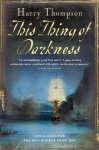
- A character in Embers by Sándor Márai is nicknamed Nini, which was also Janet Frame’s nickname in childhood (per Wrestling the Angel by Michael King).
- A character loses their teeth and has them replaced by dentures in America Is Not the Heart by Elaine Castillo and The Light Years by Elizabeth Jane Howard.
Also, the latest cover trend I’ve noticed: layers of monochrome upturned faces. Several examples from this year and last. Abstract faces in general seem to be a thing.


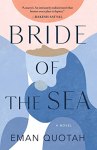


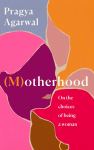
What’s the weirdest reading coincidence you’ve had lately?
The Best Books of 2020: Some Runners-Up
I’ve chosen 25 more cracking reads that were first released in 2020. (Asterisks = my hidden gems of the year.) Between this post and my Fiction/Poetry and Nonfiction best-of lists, I’ve now highlighted about the top 12% of my year’s reading.
Novels:
 The Vanishing Half by Brit Bennett: Like some lost mid-career gem from Toni Morrison, this novel is meaty with questions of racial and sexual identity. Light-skinned African-American twins’ paths divide in 1950s Louisiana. Perceptive and beautifully written, this has characters whose struggles feel genuine and pertinent.
 Piranesi by Susanna Clarke: To start with, Piranesi traverses his watery labyrinth like he’s an eighteenth-century adventurer, his resulting notebooks reading rather like Alexander von Humboldt’s writing. I admired how the novel moved from the fantastical and abstract into the real and gritty. Read it even if you say you don’t like fantasy.
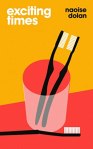 Exciting Times by Naoise Dolan: At 22, Ava leaves Dublin to teach English as a foreign language to wealthy preteens and almost accidentally embarks on affairs with an English guy and a Chinese girl. Dolan has created a funny, deadpan voice that carries the entire novel. I loved the psychological insight, the playfulness with language, and the zingy one-liners.
 *A Good Neighborhood by Therese Anne Fowler: Issues of race and privilege undermine a teen romance in a perfect-seeming North Carolina community. This is narrated in a first-person plural voice, like the Greek chorus of a classical tragedy. If you loved An American Marriage, it should be next on your list. I’m puzzled by how overlooked it’s been this year.
 Transcendent Kingdom by Yaa Gyasi: A more subdued and subtle book than Homegoing, but its treatment of themes of addiction, grief, racism, and religion is so spot on that it packs a punch. Gifty is a PhD student at Stanford, researching reward circuits in the mouse brain. There’s also a complex mother–daughter relationship and musings on love and risk. [To be published in the UK in March]
 The Mercies by Kiran Millwood Hargrave: A rich, natural exploration of a place and time period – full of detail but wearing its research lightly. Inspired by a real-life storm that struck on Christmas Eve 1617 and wiped out the male population of the Norwegian island of Vardø, it intimately portrays the lives of the women left behind. Tender, surprising, and harrowing.
 Sisters by Daisy Johnson: Teenagers September and July were born just 10 months apart, with July always in thrall to her older sister. For much of this short novel, Johnson keeps readers guessing as to why the girls’ mother, Sheela, took them away to Settle House, her late husband’s family home in the North York Moors. As mesmerizing as it is unsettling.
 The Book of Longings by Sue Monk Kidd: Kidd’s bold fourth novel started as a what-if question: What if Jesus had a wife? Although this retells biblical events, it is chiefly an attempt to illuminate women’s lives in the 1st century and to chart the female contribution to sacred literature and spirituality. An engrossing story of women’s intuition and yearning.
 *The Ninth Child by Sally Magnusson: Intense and convincing, this balances historical realism and magical elements. In mid-1850s Scotland, there is a move to ensure clean water. The Glasgow waterworks’ physician’s wife meets a strange minister who died in 1692. A rollicking read with medical elements and a novel look into Victorian women’s lives.
 *The Bell in the Lake by Lars Mytting: In this first book of a magic-fueled historical trilogy, progress, religion, and superstition are forces fighting for the soul of a late-nineteenth-century Norwegian village. Mytting constructs the novel around compelling dichotomies. Astrid, a feminist ahead of her time, vows to protect the ancestral church bells.
 What Are You Going Through by Sigrid Nunez: The narrator is called upon to help a terminally ill friend commit suicide. The voice is not solely or even primarily the narrator’s but Other: art consumed and people encountered become part of her own story; curiosity about other lives fuels empathy. A quiet novel that sneaks up to seize you by the heartstrings.
 Weather by Jenny Offill: A blunt, unromanticized, wickedly funny novel about how eco-anxiety permeates everyday life, written in an aphoristic style. Set either side of Trump’s election in 2016, the novel amplifies many voices prophesying doom. Offill’s observations are dead right. This felt like a perfect book for 2020 and its worries.
 Love and Other Thought Experiments by Sophie Ward: An intriguing set of linked short stories that combine philosophy and science fiction. Rachel and Eliza are preparing to have a baby together when an ant crawls into Rachel’s eye and she falls ill. I was particularly taken by the chapter narrated by the ant. It’s well worth making a rare dip into sci-fi for this one.
 *The Inland Sea by Madeleine Watts: The young female narrator of this debut novel lives in Sydney and works for Australia’s emergency call service. Against a backdrop of flooding and bush fires, a series of personal catastrophes play out. A timely, quietly forceful story of how women cope with concrete and existential threats.
Short Stories:
 To Be a Man by Nicole Krauss: These 10 stories from the last 18 years are melancholy and complex, often featuring several layers of Jewish family history. Europe, Israel, and film are frequent points of reference. “Future Emergencies,” though set just after 9/11, ended up feeling the most contemporary because it involves gas masks and other disaster preparations.
 *Help Yourself by Curtis Sittenfeld: A bonus second UK release from Sittenfeld in 2020 after Rodham. Just three stories, but not leftovers; a strong follow-up to You Think It, I’ll Say It. They share the theme of figuring out who you really are versus what others think of you. “White Women LOL,” especially, compares favorably to Kiley Reid’s Such a Fun Age.
 You Will Never Be Forgotten by Mary South: In this debut collection, characters turn to technology to stake a claim on originality, compensate for losses, and leave a legacy. These 10 quirky, humorous stories never strayed so far into science fiction as to alienate me. I loved the medical themes and subtle, incisive observations about a technology-obsessed culture.
Poetry:
 *Survival Is a Style by Christian Wiman: Wiman examines Christian faith in the shadow of cancer. This is the third of his books that I’ve read, and I’m consistently impressed by how he makes room for doubt, bitterness, and irony – yet a flame of faith remains. There is really interesting phrasing and vocabulary in this volume.
Nonfiction:
 Inferno: A Memoir by Catherine Cho: Cho experienced stress-induced postpartum psychosis after the birth of her son. She alternates between her time in the mental hospital and her life before the breakdown, weaving in family history and Korean sayings and legends. It’s a painstakingly vivid account.
 *The Lost Family: How DNA Testing Is Upending Who We Are by Libby Copeland: DNA tests can find missing relatives within days. But there are troubling aspects to this new industry, including privacy concerns, notions of racial identity, and criminal databases. A thought-provoking book with all the verve and suspense of fiction.
 *Signs of Life: To the Ends of the Earth with a Doctor by Stephen Fabes: Fabes is an emergency room doctor in London and spent six years of the past decade cycling six continents. This warm-hearted and laugh-out-loud funny account of his travels achieves a perfect balance between world events, everyday discomforts, and humanitarian volunteering.
 Losing Eden: Why Our Minds Need the Wild by Lucy Jones: Nature’s positive effect on human mental health is something we know intuitively and can explain anecdotally, but Jones wanted to investigate the scientific mechanism behind it. Losing Eden is full of common sense and passion, cramming in lots of information yet never losing sight of the big picture.
 *Nobody Will Tell You This But Me: A True (As Told to Me) Story by Bess Kalb: Jewish grandmothers are renowned for their fiercely protective love, but also for nagging. Both sides of the stereotypical matriarch are on display in this funny, heartfelt family memoir, narrated in the second person – as if from beyond the grave – by her late grandmother. A real delight.
 Diary of a Young Naturalist by Dara McAnulty: McAnulty is a leader in the UK’s youth environmental movement and an impassioned speaker on the love of nature. This is a wonderfully observant and introspective account of his fifteenth year and the joys of everyday encounters with wildlife. Impressive perspective and lyricism.
 Memorial Drive: A Daughter’s Memoir by Natasha Trethewey: Trethewey grew up biracial in 1960s Mississippi, then moved with her mother to Atlanta. Her stepfather was abusive; her mother’s murder opens and closes the book. Trethewey only returned to their Memorial Drive apartment after 30 years had passed. A striking memoir, delicate and painful.

(Books not pictured were read digitally, or have already gone back to the library.)
Coming tomorrow: My best backlist reads of the year.
Two Recent Reviews for BookBrowse
The Bell in the Lake by Lars Mytting
 A legend from Mytting’s hometown tells of two centuries-old church bells that, like conjoined twins, were never meant to be separated. Inspired by that story and by the real-life move of a stave church from Norway to what is now Poland, he embarked on a trilogy in which history and myth mingle to determine the future of the isolated village of Butangen. The novel is constructed around compelling dichotomies. Astrid Hekne, a feminist ahead of her time, is in contrast with the local pastor’s conventional views on gender roles. She also represents the village’s unlearned folk; Deborah Dawkin successfully captures Mytting’s use of dialect in her translation, making Astrid sound like one of Thomas Hardy’s rustic characters.
- See my full review at BookBrowse.

- See also my related article on stave churches.
- One of the coolest things I did during the first pandemic lockdown in the UK was attend an online book club meeting on The Bell in the Lake, run by MacLehose Press, Mytting’s UK publisher. It was so neat to see the author and translator speak “in person” via a Zoom meeting and to ask him a couple of questions in the chat window.
- A readalike (and one of my all-time favorite novels) is Carsten Jensen’s We, the Drowned.
Memorial by Bryan Washington
 In Washington’s debut novel, set in Houston and Osaka, two young men reassess their commitments to their families and to each other. The narration is split between Benson and Mike, behind whose apparent lack of affect is a quiet seam of emotion. Both young men are still shaken by their parents’ separations, and haunted by patterns of abuse and addiction. Flashbacks to how they met create a tender backstory for a limping romance. Although the title (like most of the story titles in Lot) refers to a Houston neighborhood, it has broader significance, inviting readers to think about the place our loved ones have in our memories. Despite the tough issues the characters face, their story is warm-hearted rather than grim. Memorial is a candid, bittersweet work from a talented young writer whose career I will follow with interest.
- See my full review at BookBrowse.
- See also my related article on the use of quotation marks (or not!) to designate speech.
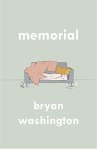 I enjoyed this so much that I immediately ordered Lot with my birthday money. I’d particularly recommend it if you want an earthier version of Brandon Taylor’s Booker-shortlisted Real Life (which I’m halfway through and enjoying, though I can see the criticisms about its dry, slightly effete prose).
- This came out in the USA from Riverhead in late October, but UK readers have to wait until January 7th (Atlantic Books).
Four June Releases (Fiction & Poetry): Bennett, Gabrielsen, Kwek and Watts
(A rare second post in a day from me, to make way for tomorrow’s list of the best books of the first half of the year.) My four new releases for June are a novel about the complications of race and sexuality in 1950s–80s America, a novella in translation about a seabird researcher struggling through a time of isolation, and two new poetry books from Carcanet Press. As a bonus just in time for Pride Month, I finish with a mini write-up of The Book of Queer Prophets, an anthology of autobiographical essays that was published late last month.
The Vanishing Half by Brit Bennett
 Like some lost mid-career gem from Toni Morrison, this novel is meaty with questions of racial and sexual identity and seems sure to follow in the footsteps of Ruby and An American Marriage with a spot in Oprah’s book club and on Barack Obama’s summer reading list.
It’s the story of light-skinned African American twins Stella and Desiree Vignes, and how their paths divide in 1954. Both are desperate to escape from Mallard, Louisiana, where their father was lynched and their mother cleans white people’s houses. Desiree works in fingerprinting for the FBI in Washington, D.C., but in 1968 leaves an abusive marriage to return to Mallard with her dark-skinned daughter, Jude Winston. Stella, on the other hand, has been passing as white for over a decade. She was a secretary for the man who became her husband, Blake Sanders, and now lives a life of comfort in a Los Angeles subdivision.
The twins’ decisions affect the next generation, too. Both have one daughter. Jude goes to college in L.A., where she meets and falls in love with photographer Reese (born Therese), who is, in a different sense, “passing” until he can afford the surgery that will align his body with his gender. In a coincidence that slightly strains belief, Jude runs into Stella’s daughter, Kennedy, and over the next seven years the cousins – one a medical student; the other an actress – continue to meet occasionally, marvelling at how two family lines that started in Mallard, a tiny town that doesn’t even exist anymore, could have diverged so dramatically.
This is Bennett’s second novel, after The Mothers, which I’m keen to read. It’s perceptive and beautifully written, with characters whose struggles feel genuine and pertinent. Though its story line ends in the late 1980s, it doesn’t feel passé at all. The themes of self-reinvention and running from one’s past resonate. I expected certain characters to be forced into moments of reckoning, but the plot is a little messier than that – and that’s more like real life. A shoo-in for next year’s Women’s Prize list.
My rating: 
My thanks to Dialogue Books for the free copy for review.
Ankomst by Gøhril Gabrielsen (2017)
[Translated from the Norwegian by Deborah Dawkin]
 The unnamed narrator of Gabrielsen’s fifth novel is a 36-year-old researcher working towards a PhD on the climate’s effects on populations of seabirds, especially guillemots. During this seven-week winter spell in the far north of Norway, she’s left her three-year-old daughter behind with her ex, S, and hopes to receive a visit from her lover, Jo, even if it involves him leaving his daughter temporarily. In the meantime, they connect via Skype when signal allows. Apart from that and a sea captain bringing her supplies, she has no human contact.
Daily weather measurements and bird observations still leave too much time alone in a cramped cabin, and this starts to tell in the protagonist’s mental state: she’s tormented by sexual fantasies, by memories of her life with S, and by the thought of a local family, the Berthelsens, who experienced a disastrous house fire in 1870. More and more frequently, she finds herself imagining what happened to Olaf and Borghild Berthelsen. Solitude and this growing obsession with ghosts of the past make her start to lose her grip on reality.
I’d encountered an unreliable narrator and claustrophobic setting before from Gabrielsen with her second novel, The Looking-Glass Sisters. Extreme weather and isolation account for this being paired with Snow, Dog, Foot by Claudio Morandini as the first two books in Peirene’s 2020 “Closed Universe” trilogy. I was also reminded of Sarah Moss’s Night Waking. However, I found this novella’s metaphorical links – how seabirds and humans care for their young; physical and emotional threats; lowering weather and existential doom – too obvious.
My rating: 
My thanks to Peirene Press for the free copy for review.
Moving House by Theophilus Kwek
 This is the first collection of the Chinese Singaporean poet’s work to be published in the UK. Infused with Asian history, his elegant verse ranges from elegiac to romantic in tone. Many of the poems are inspired by historical figures and real headlines. There are tributes to soldiers killed in peacetime training and accounts of high-profile car accidents; “The Passenger” is about the ghosts left behind after a tsunami. But there are also poems about the language and experience of love. I also enjoyed the touches of art and legend: “Monologues for Noh Masks” is about the Pitt-Rivers Museum collection, while “Notes on a Landscape” is about Iceland’s geology and folk tales. In most places alliteration and enjambment produce the sonic effects, but there are also a handful of rhymes and half-rhymes, some internal.
My individual favorite poems included “Prognosis,” “Sophia” (made up of two letters Sir Thomas Stamford Raffles writes home to his wife while surveying in Singapore), and “Operation Thunderstorm.” As an expat and something of a nomad, I especially loved the title poem, which comes last and explains the cover image: “every house has a skeleton – / while the body learns it must carry less / from place to place, a kind of tidiness / that builds, hardens. Some call it fear, // of change, or losing what we cannot keep. / Others, experience.” Recommended to fans of Mary Jean Chan, Nausheen Eusuf, Kei Miller and Ocean Vuong.
My rating:
My thanks to Carcanet Press for the PDF copy for review.
Red Gloves by Rebecca Watts
 I noted the recurring comparison of natural and manmade spaces; outdoors (flowers, blackbirds, birds of prey, the sea) versus indoors (corridors, office life, even Emily Dickinson’s house in Massachusetts). The style shifts from page to page, ranging from prose paragraphs to fragments strewn across the layout. Most of the poems are in recognizable stanzas, though these vary in terms of length and punctuation. Alliteration and repetition (see, as an example of the latter, her poem “The Studio” on the TLS website) take priority over rhymes. I was reminded of Elizabeth Bishop in places, while “Whereas” had me thinking of Stephen Dunn’s collection of that name (Layli Long Soldier also has a poetry book of the same title). A few of my individual favorite poems were “Surveillance,” “Building” and “Admission” (on a medical theme: “What am I afraid of? / The breaching of skin. / Violation of laws that / separate outside from in. / Liquidation of the thing / I call me.”).
My rating: 
My thanks to Carcanet Press for the PDF copy for review.
And a bonus for Pride Month:
The Book of Queer Prophets: 24 Writers on Sexuality and Religion, edited by Ruth Hunt
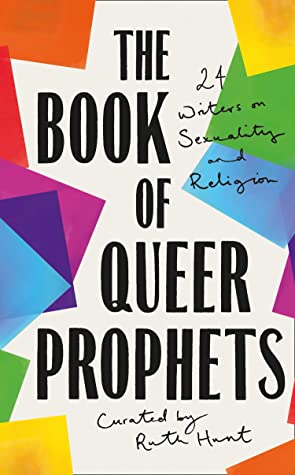 There isn’t, or needn’t be, a contradiction between faith and queerness, as the authors included in this anthology would agree. Many of them are stalwarts at Greenbelt, a progressive Christian summer festival – Church of Scotland minister John L. Bell even came out there, in his late sixties, in 2017. I’m a lapsed regular attendee, so a lot of the names were familiar to me, including those of poets Rachel Mann and Padraig O’Tuama.
Most of the contributors are Christian, then, including ordained priests like Desmond Tutu’s daughter, Mpho, and LGBT ally Kate Bottley, but we also hear from Michael Segalov, a gay Jewish man in London, and from Amrou Al-Kahdi (author of Unicorn: The Memoir of a Muslim Drag Queen), who describes the affirmation they found in the Sufi tradition. Dustin Lance Black tells of the exclusion LGBT Mormons still encounter.
Jarel Robinson-Brown addresses his lament on mistreatment to his nephew, as James Baldwin did in “My Dungeon Shook” (in The Fire Next Time). Tamsin Omond recounts getting married to Melissa on a London bridge in the middle of an Extinction Rebellion protest. Erin Clark, though bisexual, knows she can pass as straight because she’s marrying a man – so is she ‘gay enough?’ Two trans poets write of the way cathedrals drew them into faith. The only weaker pieces are by Jeanette Winterson (there’s nothing new if you’ve read her memoir) and Juno Dawson (entirely throwaway; ‘I’m an atheist, but it’s okay to be religious, too’).
Again and again, these writers voice the certainty that they are who God means them to be. A few of them engage with particular passages from the Bible, offering contextual critiques or new interpretations, but most turn to scripture for its overall message of love and justice. Self-knowledge is a key component of their search for truth. And the truth sets people free.
My rating:
I read an e-copy via NetGalley.
What recent releases can you recommend?
Nonfiction Review Books Roundup: Hay, Hope et al., Lee, Long, McLaren, Zuckerman
I’m continuing with the Nonfiction November focus by catching up on six nonfiction review books I’ve been sent over the last half a year. We’ve got a record of elderly parents’ decline, letters and poems written about the climate crisis, a family memoir set between Taiwan and Canada, a widow’s mushroom-hunting quest, a work of ecotheology that reflects on travels in the Galápagos Islands, and a defense of an entirely secular basis for morality. You can’t say I don’t read a variety, even within nonfiction! See if one or more of these tempts you.
All Things Consoled: A Daughter’s Memoir by Elizabeth Hay
 Gordon and Jean Hay stumbled into their early nineties in an Ottawa retirement home starting in 2009. Elizabeth Hay is one of four children, but caregiving fell to her for one reason and another, and it was a fraught task because of her parents’ prickly personalities: Jean was critical and thrifty to the point of absurdity, spooning thick mold off apple sauce before serving it and needling Elizabeth for dumping perfectly good chicken juice a year before; Gordon had a terrible temper and a history of corporal punishment of his children and of his students when he was a school principal. Jean’s knee surgery and subsequent infection finally put paid to their independence; her mind was never the same and she could no longer paint.
There are many harsh moments in this memoir, but almost as many wry ones, with Hay picking just the right anecdotes to illustrate her parents’ behavior and the shifting family dynamic. She never looks away, no matter how hard it all gets. Her father’s rage against the dying of the light contrasts with her mother’s fade into confusion – lightened by the surprisingly poetic turns of phrase she came out with despite her dementia and aphasia. The title phrase, for instance, was her attempt at “all things considered.” I would wholeheartedly recommend this to readers of Hay’s novels, but anyone can appreciate the picture of complicated love and grief. (See also Susan’s review.)
With thanks to MacLehose Press for the free copy for review.
Letters to the Earth: Writing to a Planet in Crisis, edited by Anna Hope et al.
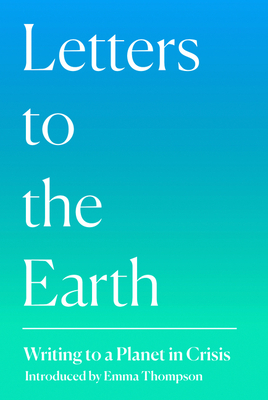 Culture Declares Emergency launched in April to bring the arts into the conversation about the climate emergency. Letters to the Earth compiles 100 short pieces by known and unknown names alike. Alongside published authors, songwriters, professors and politicians are lots of ordinary folk, including children as young as seven. The brief was broad: to write a letter in response to environmental crisis, whether to or from the Earth, to future generations (there are wrenching pieces written to children: “What can I say, now that it’s too late? … that I’m sorry, that I tried,” writes Stuart Capstick), to the government or to other species.
There are certainly relatable emotions here, especially the feeling of helplessness. “We take the train, go vegan, refuse plastic, buy less and less. But that is tiny. We are tiny,” novelist Jo Baker writes. I loved retired bishop Richard Holloway’s wry letter calling the author of Genesis to account for unhelpful language of dominion, Rob Cowen’s poem to a starling, and Anna Hope’s essay about parenting in a time of uncertainty. Unfortunately, much of the rest is twee or haranguing, e.g. “Forest fires are scorching INNOCENT wildlife. Plastic is strangling INNOCENT turtles and dolphins,” a 12-year-old writes. This was put together in a matter of months, and it shows. There is not enough tonal variety, a lot of overwriting has crept through, and errors, especially in the kids’ work, remain uncorrected. Perhaps six to 10 pieces stood out to me overall. I’d recommend the Extinction Rebellion handbook instead.
With thanks to Alison Menzies / William Collins for the free copy for review.
Two Trees Make a Forest: On Memory, Migration and Taiwan by Jessica J. Lee
 I loved Turning, Lee’s 2017 memoir about swimming in one of Berlin’s lakes per week for a year, so I jumped at the chance to read her follow-up, which delves into her maternal line’s history in Taiwan. She travels to Taipei for three months to brush up on her Chinese, write and hike. Interspersed with the lush descriptions of her walks are reflections on Taiwan’s history and on the hidden aspects of her grandfather Gong’s past that only came to light after Lee’s grandmother, Po, died and she and her mother discovered an autobiographical letter he’d written before he drifted into dementia. Nature, language, history and memory flow together in a delicate blend of genres – “I moved from the human timescale of my family’s story through green and unfurling dendrological time,” she writes.
This has got to be one of the most striking title and cover combinations of the year. Along with Chinese characters, the book includes some looping text and Nico Taylor’s maps and illustrations of Taiwanese flora and fauna. While you will likely get more out of this if you have a particular interest in Asian history, languages and culture, it’s impressive how Lee brings the different strands of her story together to form a hybrid nature memoir that I hope will be recognized by next year’s Wainwright Prize and Young Writer of the Year Award shortlists. She’d also be a perfect New Networks for Nature speaker.
With thanks to Virago for the free copy for review.
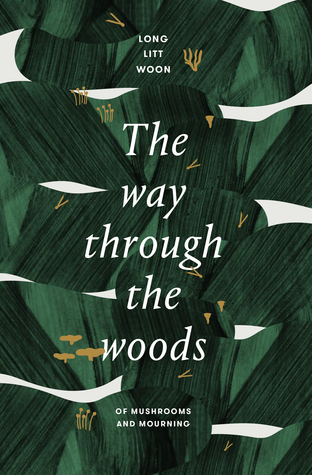
The Way through the Woods: Of Mushrooms and Mourning by Long Lit Woon
 [Trans. from the Norwegian by Barbara J. Haveland]
I couldn’t resist the sound of a bereavement memoir crossed with a mushroom hunting guide. When Long met her husband, Eiolf Olsen, she was an 18-year-old Malaysian exchange student in Stavanger, Norway. Meeting Eiolf changed the whole course of her life, keeping her in Europe for good; decades later, her life changed forever once again when Eiolf dropped dead at work one morning. “If anyone had told me that mushrooms would be my lifeline, the thing that would help me back onto my feet and quite literally back onto life’s track, I would have rolled my eyes. What had mushrooms to do with mourning?” she writes.
 The answer to that rhetorical question is nothing much, at least not inherently, so this ends up becoming a book of two parts, with the bereavement strand (printed in green and in a different font – green is for grief? I suppose) engaging me much more than the mushroom-hunting one, which takes her to Central Park and the annual Telluride, Colorado mushroom festival as well as to Norway’s woods again and again – “In Norway, outdoor life is tantamount to a religion.” But the quest for wonder and for meaning is a universal one. In addition, if you’re a mushroom fan you’ll find gathering advice, tasting notes, and even recipes. I fancy trying the “mushroom bacon” made out of oven-dried shiitakes.
With thanks to Scribe for the free copy for review.
God Unbound: Theology in the Wild by Brian McLaren
 McLaren was commissioned to launch a series that was part travel guide, part spiritual memoir and part theological reflection. Specifically, he was asked to write about the Galápagos Islands because he’d been before and they were important to him. He joins a six-day eco-cruise that tours around the island chain off Ecuador, with little to do except observe the birds, tortoises and iguanas, and swim with fish and sea turtles. For him this is a peaceful, even sacred place that reminds him of the beauty that still exists in the world despite so much human desecration. Although he avoids using his phone except to quickly check in with his wife, modernity encroaches unhelpfully through a potential disaster with his laptop.
I was surprised to see that McLaren leaves the Galápagos at the midpoint – whatever could fill the rest of the book, I wondered? He starts by reassessing Darwin, so often painted as a villain by Evangelical Christianity but actually a model of close, loving attention to nature. He also recalls how some of his most intense spiritual experiences have arisen from time in nature. McLaren’s books have been pivotal to my spiritual journey as we’ve both gradually become more liberal and environmentalist. His definition of God might horrify traditionalists, but holds appeal for me: “a centering singularity whose gravity holds me in insistent orbit, pulling me deeper into mystery, pondering who I am and what my life means.” This is an unusual but gently entrancing book full of photos and quotes from other thinkers including John Muir, Pope Francis and Richard Rohr. It’s an ideal introduction to ecotheology.
With thanks to Canterbury Press for the free copy for review.
What It Means to Be Moral: Why Religion Is Not Necessary for Living an Ethical Life by Phil Zuckerman
 From one end of the spectrum (progressive Christianity) to the other (atheism). Here’s a different perspective from a sociology professor at California’s Pitzer College. Zuckerman’s central argument is that humanism and free choice can fuel ethical behavior; since there’s no proof of God’s existence and theists have such a wide range of beliefs, it’s absurd to slap a “because God says so” label on our subjective judgments. Morals maintain the small communities our primate ancestors evolved into, with specific views (such as on homosexuality) a result of our socialization. Alas, the in-group/out-group thinking from our evolutionary heritage is what can lead to genocide. Instead of thinking in terms of ‘evil’, though, Zuckerman prefers Dr. Simon Baron-Cohen’s term, “empathy erosion.”
To tackle violent crime, Zuckerman contends, we need a more equal society, with the Scandinavian countries a model of how to achieve that through higher taxes, social services and the rehabilitation of prisoners. He uses a lot of relatable examples from history and from his own experience, as well as theoretical situations, to think through practical morality. I found his indictment of American Christianity accurate – how does it make sense for people who say they follow the way of Jesus to fight against equality, tolerance and scientific advances and instead advocate guns, the death penalty and Trump? Well, indeed.
It might seem odd for me to recommend this alongside the McLaren, but there is much to be gained from both viewpoints. Zuckerman’s work overlaps a fair bit with another I’ve read on the topic, Richard Holloway’s Godless Morality – even a bishop agrees we needn’t take our societal ethics straight from the Bible! I can’t go along fully with Zuckerman because I think progressive religion has been and can continue to be a force for good, but I would agree that atheists can be just as moral as people of faith – and often more so.
With thanks to Counterpoint Press for sending a proof copy for review.
 Bookish Beck = Rebecca Foster. American transplant to England. Freelance proofreader and book reviewer.
 Bookish Beck