January Novels by Alix E. Harrow & Patricia Highsmith
The month of January was named for the Roman god Janus, known for having two faces: one looking backward, the other forward. “He presided not over one particular domain but over the places between – past and present, here and there, endings and beginnings,” as Alix E. Harrow writes. In her novel, the door is a prevailing metaphor for liminal times and spaces; Highsmith’s work, too, focuses on the way life often pivots on tiny accidents or decisions.
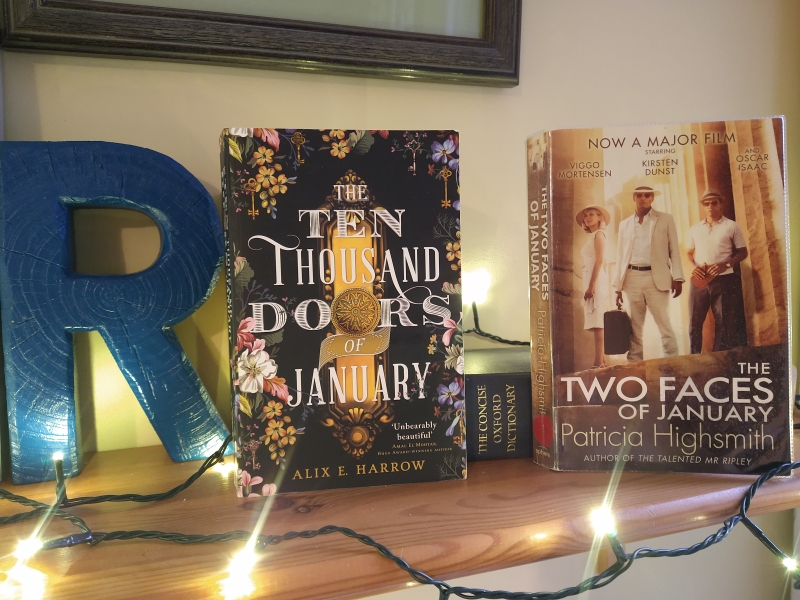
The Ten Thousand Doors of January by Alix E. Harrow (2019)
“I didn’t want to be safe … I wanted to be dangerous, to find my own power and write it on the world.”
 As the mixed-race ward of a wealthy collector, January Scaller grows up in a Vermont mansion with a dual sense of privilege and loss. She barely sees her brown-skinned father, who travels the world amassing treasures for Mr. Locke and his archaeological society; and her mother’s absence is an unexplained heartbreak. But when her father also disappears in 1911 – to be apparently replaced by an African governess named Jane Irimu (it’s her quote above) and an enticing scholarly manuscript entitled The Ten Thousand Doors – 17-year-old January discovers the power of words to literally open doors to new worlds, and sets off on a quest to reunite her family. At every turn, though, she’s thwarted by evil white men who, after plundering foreign cultures, intend to close the doors of opportunity behind them.
This was an unlikely book for me to pick up: I didn’t get on with that whole wave of books with books and keys on the cover (Bridget Collins et al.) and wouldn’t willingly pick up romantasy – yet this features two meant-to-be romances fought for across worlds and eras. I grow impatient with a book-within-the-book format. But The Chronicles of Narnia, which no doubt inspired Harrow, were my favourite books as a child. Especially early on, I found this as thrilling as The Absolute Book and The End of Mr. Y. Whereas those doorstoppers held my interest all the way through, though, this became a trudge at a certain point. Harrow is maybe a little too pleased with her own imagination and turns of phrase, like T. Kingfisher. (Bad the dog is also in peril far too often.) In the end, this reminded me most of Babel by R.F. Kuang with its postcolonial conscience and words as power. I enjoyed this enough that I think I’ll propose her The Once and Future Witches for book club. (Little Free Library) 
The Two Faces of January by Patricia Highsmith (1964)
 Three American vacationers meet in a hotel in Greece one January. But the circumstances are far from auspicious. Conman Chester MacFarland is traveling with his 15-years-younger wife, Colette. Rydal Keener is a stranger who, seemingly on a whim, helps them cover up the accidental death of a Greek police investigator who came to ask Chester some questions. From here on in, they’re in lockstep, moving around Greece together, obtaining fake passports and checking the headlines obsessively to outrun consequences. Colette takes a fancy to Rydal, and the jealousy emanating from the love triangle is complicated by Chester’s alcoholism and Rydal’s hurt over earning a police record for a consensual teenage relationship. I have a dim memory of seeing the 2014 Kirsten Dunst and Viggo Mortensen film, but luckily I didn’t recall any major events. A climactic scene takes place at the palace of Knossos, and the chase continues until an unavoidably tragic end.
I’ve read several Ripley novels and a few standalone psychological mysteries by Highsmith and enjoyed them well enough, but murders aren’t really my thing. (Carol is the only work of hers that I’ve truly loved.) My specific issue here was with the central trio of characters. Colette is thinly drawn and doesn’t get enough time on the page. Chester seems much older than his 42 years and is an irredeemable swindler. It’s only because of our fondness for Rydal that we want them all to get away with it. But even Rydal doesn’t get the in-depth portrayal one might hope for. There’s the injustice of his backstory and the fact that he’s a would-be poet, true, but we never understand why he helped the MacFarlands, so have to conclude that it was the impulse of a moment and committed him to a regrettable course. This is pacey enough to keep the pages turning, but won’t stick with me. (Public library) 
I’m turning my face forward: Good riddance to January 2026, during which I’ve mostly felt rubbish; here’s hoping for a better rest of the year. I’m off to the opera tonight – something I’ve only done once before, in Leeds in 2006! – to see Susannah, a tale from the Apocrypha transplanted to the 1950s U.S. South.
Best Backlist Reads of the Year
I consistently find that many of my most memorable reads are older rather than current-year releases. Four of these are from 2023–4; the other nine are from 2012 or earlier, with the oldest from 1939. My selections are alphabetical within genre but in no particular rank order. Repeated themes included health, ageing, death, fascism, regret and a search for home and purpose. Reading more from these authors would probably help to ensure a great reading year in 2026!
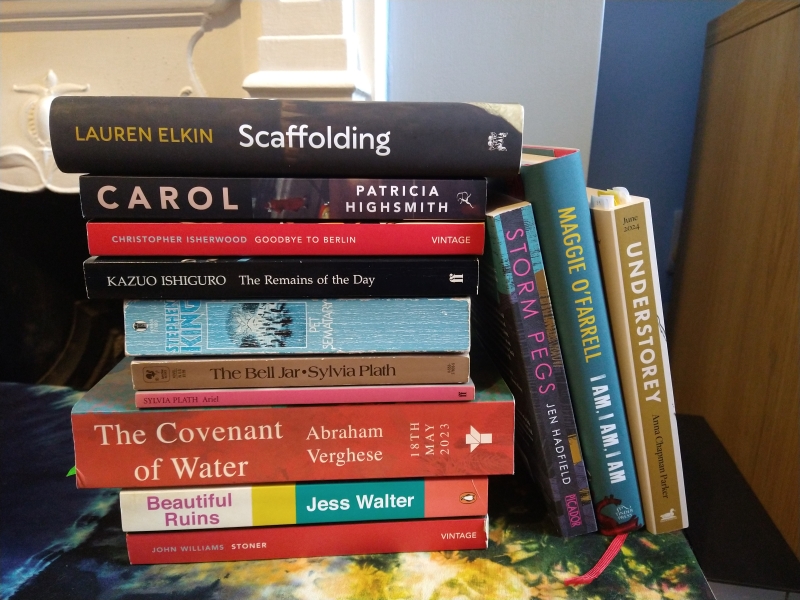
Some trivia:
- 4 were read for 20 Books of Summer (Hadfield, King, Verghese and Walter)
- 3 were rereads for book club (Ishiguro, O’Farrell and Williams) – just like last year!
- 1 was part of my McKitterick Prize judge reading (Elkin)
- 1 was read for 1952 Club (Highsmith)
- 1 was a review catch-up book (Parker)
- 1 was a book I’d been ‘reading’ since 2021 (The Bell Jar)
- The title of one (O’Farrell) was taken from another (The Bell Jar)
Fiction & Poetry
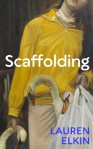 Scaffolding by Lauren Elkin: Psychoanalysis, motherhood, and violence against women are resounding themes in this intellectual tour de force. As history repeats itself during one sweltering Paris summer, the personal and political structures undergirding the protagonists’ parallel lives come into question. This fearless, sophisticated work ponders what to salvage from the past—and what to tear down. This was our collective runner-up for the 2025 McKitterick Prize, but would have been my overall winner.
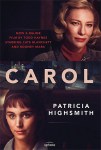 Carol by Patricia Highsmith: Widely considered the first lesbian novel with a happy ending. Therese, a 19-year-old aspiring stage designer, meets a wealthy housewife – “Mrs. H. F. Aird” (Carol) – in a New York City department store one Christmas. When the women set off on a road trip, they’re trailed by a private detective looking for evidence against Carol in a custody battle. It’s a beautiful and subtle romance that unfolds despite the odds and shares the psychological intensity of Highsmith’s mysteries.
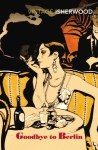 Goodbye to Berlin by Christopher Isherwood: Isherwood intended for these autofiction stories to contribute to a “huge episodic novel of pre-Hitler Berlin.” Two “Berlin Diary” segments from 1930 and 1933 reveal a change in tenor accompanying the rise of Nazism. Even in lighter pieces, menace creeps in through characters’ offhand remarks about “dirty Jews” ruining the country. Famously, the longest story introduces club singer Sally Bowles. I later read Mr Norris Changes Trains as well. Witty and humane, restrained but vigilant.
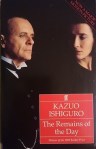 The Remains of the Day by Kazuo Ishiguro: I first read this pre-blog, back when I dutifully read Booker winners whether or not I expected to like them. I was too young then for its theme of regret over things done and left undone; I didn’t yet know that sometimes in life, it really is too late. When I reread it for February book club, it hit me hard. I wrote no review at the time (more fool me), but focused less on the political message than on the refined depiction of upper-crust English society and the brilliance of Stevens the unreliable, repressed narrator.
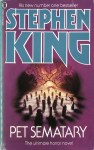 Pet Sematary by Stephen King: A dread-laced novel about how we deal with the reality of death. Is bringing the dead back a cure for grief or a horrible mistake? A sleepy Maine town harbours many cautionary tales, and the Creeds have more than their fair share of sorrow. Louis is a likable protagonist whose vortex of obsession and mental health is gripping. In the last quarter, which I read on a long train ride, I couldn’t turn the pages any faster. Sterling entertainment, but also surprisingly poignant. (And not gruesome until right towards the end.)
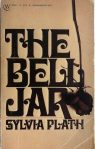
 The Bell Jar & Ariel by Sylvia Plath: Given my love of mental hospital accounts, it’s a wonder I’d not read this classic work of women’s autofiction before. Esther Greenwood is the stand-in for Plath: a talented college student who, after working in New York City during the remarkable summer of 1953, plunges into mental ill health. An enduringly relevant and absorbing read. / Ariel takes no prisoners. The images and vocabulary are razor-sharp and the first and last lines or stanzas are particularly memorable.
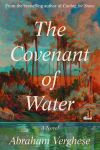 The Covenant of Water by Abraham Verghese: Wider events play out in the background (wars, partition, the fall of the caste system), but this saga sticks with one Kerala family in every generation of which someone drowns. I enjoyed the window onto St. Thomas Christianity, felt fond of all the characters, and appreciated how Verghese makes the Condition a cross between mystical curse and a diagnosable ailment. An intelligent soap opera that makes you think about storytelling, purpose and inheritance, this is extraordinary.
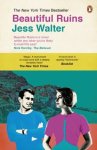 Beautiful Ruins by Jess Walter: I was captivated by the shabby glamour of Pasquale’s hotel in Porto Vergogna on the coast of northern Italy. A myriad of threads and formats – a movie pitch, a would-be Hemingway’s first chapter of a never-finished wartime opus, an excerpt from a producer’s autobiography and a play transcript – coalesce to flesh out what happened in the summer of 1962 and how the last half-century has treated all the supporting players. Warm, timeless and with great scenes, one of which had me in stitches. Fantastic.
 Stoner by John Williams: What a quiet masterpiece. A whole life, birth to death, with all its sadness and failure and tragedy; but also joy and resistance and dignity. One doesn’t have to do amazing things that earn the world’s accolades to find vocation and meaning. Just as powerful a second time (I first read it in 2013). I was especially struck by the power plays in Stoner’s marriage and university department, and how well Williams dissects them. It’s more about atmosphere than plot – and that melancholy tone will stay with you.
Nonfiction
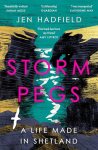 Storm Pegs by Jen Hadfield: Not a straightforward memoir but a set of atmospheric vignettes. Hadfield, a British Canadian poet, moved to Shetland in 2006 and soon found her niche. It’s a life of wild swimming, beachcombing, fresh fish, folk music, seabirds, kind neighbours, and good cheer that warms the long winter nights. After the isolation of the pandemic comes the unexpected joy of a partner and pregnancy in her mid-forties. I savoured this for its language and sense of place; it made me hanker to return to Shetland.
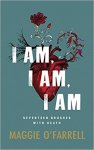 I Am, I Am, I Am: Seventeen Brushes with Death by Maggie O’Farrell: (The final book club reread.) The memoir-in-essays is a highly effective form because it focuses on themes or moments of intensity and doesn’t worry about accounting for boring intermediate material. These pieces form a vibrant picture of a life and also inspire awe at what the human body can withstand. The present tense and a smattering of second person make the work immediate and invite readers to feel their way into her situations. The last two essays are the pinnacle.
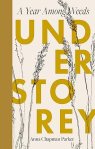 Understorey: A Year among Weeds by Anna Chapman Parker: I owe this a full review in the new year. Parker set out to study and sketch weeds as a way of cultivating attention and stillness as well as celebrating the everyday and overlooked. Daily drawings and entries bear witness to seasons changing but also to the minute alterations she observes in herself and her children. For me, this was all the more special because I’ve holidayed in Berwick-on-Tweed and could picture a lot of the ‘overgrown’ spaces she honours by making them her subjects.
What were some of your best backlist reads this year?
The Writer’s Table by Valerie Stivers (Blog Tour)
In 2017, Valerie Stivers started writing about food in classic fiction for The Paris Review. Her particular project for the “Eat Your Words” column would be cooking and baking her way through literature. It was a larger undertaking than she realized and became something of an obsession. A selection of the greatest hits made it into The Writer’s Table. Each few-page biographical profile opens with a recipe drawn from that author’s work or developed by Stivers. A surprising number of writers published cookbooks – or had one compiled after their death – including Maya Angelou, Jane Austen (of family friend and housekeeper Martha Lloyd’s recipes), Ernest Hemingway, Barbara Pym, George Sand and Alice B. Toklas.
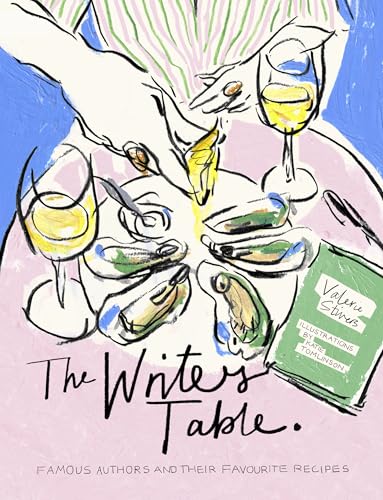 Though I’ve read a lot by and about D.H. Lawrence, I didn’t realise he did all the cooking in his household with Frieda, and was renowned for his bread. And who knew that Emily Dickinson was better known in her lifetime as a baker? Her coconut cake is beautifully simple, containing just six ingredients. Flannery O’Connor’s peppermint chiffon pie also sounds delicious. Some essays do not feature a recipe but a discussion of food in an author’s work, such as the unusual combinations of mostly tinned foods that Iris Murdoch’s characters eat. It turns out that that’s how she and her husband John Bayley ate, so she saw nothing odd about it. And Murakami’s 2005 New Yorker story “The Year of Spaghetti” is about a character whose fixation on one foodstuff reflects, Stivers notes, his “emotional … turmoil.”
The alphabetical arrangement of the pieces emphasizes the wide range of eras, regions, and genres. It’s a fun book for browsing, though I might have liked more depth on fewer authors. I especially liked the listicles on “Writers’ Favourite Cocktails” – E.B. White’s triple-strength gin martinis sound lethal! – and “Writers Who Didn’t Eat Proper Meals.” Proust subsisted on croissants and café au lait, while Highsmith ate nothing but bacon and eggs (hers being mostly a liquid diet). Katie Tomlinson’s colourful sketches are delightful. I enjoyed having this around to flick through and can recommend it as a gift for the literary foodie in your life.
With thanks to Anne Cater of Random Things Tours and Frances Lincoln (Quarto Books) for the free copy for review.
Buy The Writer’s Table from Bookshop.org [affiliate link]
I was pleased to be part of the blog tour for The Writer’s Table. See below for details of where other reviews have appeared or will appear soon.
Book Serendipity, Mid-April to Mid-June
I call it “Book Serendipity” when two or more books that I read at the same time or in quick succession have something in common – the more bizarre, the better. This is a regular feature of mine every couple of months. Because I usually have 20–30 books on the go at once, I suppose I’m more prone to such incidents. People frequently ask how I remember all of these coincidences. The answer is: I jot them down on scraps of paper or input them immediately into a file on my PC desktop; otherwise, they would flit away!
The following are in roughly chronological order.
- Raising a wild animal but (mostly) calling it by its species rather than by a pet name (so “Pigeon” and “the leveret/hare”) in We Should All Be Birds by Brian Buckbee and Raising Hare by Chloe Dalton.
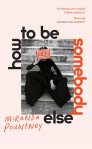
- Eating hash cookies in New York City in Women by Chloe Caldwell and How to Be Somebody Else by Miranda Pountney.
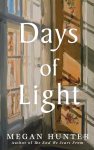
- A woman worries she’s left underclothes strewn about a room she’s about to show someone in one story of Single, Carefree, Mellow by Katherine Heiny and Days of Light by Megan Hunter.
 The dialogue is italicized in Women by Chloe Caldwell and Days of Light by Megan Hunter.
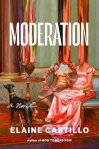
- The ‘you know it when you see it’ definition (originally for pornography) is cited in Moderation by Elaine Castillo and Bookish by Lucy Mangan.
- Women (including the protagonist) weightlifting in a gym in Moderation by Elaine Castillo and All Fours by Miranda July.
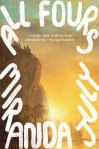
- Miranda July, whose All Fours I was also reading at the time, was mentioned in Chinese Parents Don’t Say I Love You by Candice Chung.
- A sibling story and a mystical light: late last year into early 2025 I read The Snow Queen by Michael Cunningham, and then I recognized this type of moment in Days of Light by Megan Hunter.
- A lesbian couple with a furniture store in Carol [The Price of Salt] by Patricia Highsmith and one story of Are You Happy? by Lori Ostlund.

- Not being able to see the stars in Las Vegas because of light pollution was mentioned in The Wild Dark by Craig Childs, then in Moderation by Elaine Castillo.
- A gynaecology appointment scene in All Fours by Miranda July and How to Be Somebody Else by Miranda Pountney.
- An awkwardly tall woman in Heartwood by Amity Gaige, How to Be Somebody Else by Miranda Pountney, and Stoner by John Williams.
- The 9/11 memorial lights’ disastrous effect on birds is mentioned in The Wild Dark by Craig Childs and How to Be Somebody Else by Miranda Pountney.
- A car accident precipitated by an encounter with wildlife is key to the denouement in the novellas Women by Chloe Caldwell and Wild Boar by Hannah Lutz.
- The plot is set in motion by the death of an older brother by drowning, and pork chops are served to an unexpected dinner guest, in Bug Hollow by Michelle Huneven and Days of Light by Megan Hunter, both of which I was reading for Shelf Awareness review.
- Kids running around basically feral in a 1970s summer, and driving a box of human ashes around in Case Histories by Kate Atkinson and Bug Hollow by Michelle Huneven.
- A character becomes a nun in Case Histories by Kate Atkinson and Days of Light by Megan Hunter.
- Wrens nesting just outside one’s front door in Lifelines by Julian Hoffman and Little Mercy by Robin Walter.

- ‘The female Woody Allen’ is the name given to a character in Women by Chloe Caldwell and then a description (in a blurb) of French author Nolwenn Le Blevennec.
- A children’s birthday party scene in Single, Carefree, Mellow by Katherine Heiny and Friends and Lovers by Nolwenn Le Blevennec. A children’s party is also mentioned in Case Histories by Kate Atkinson and A Family Matter by Claire Lynch.
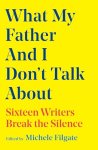
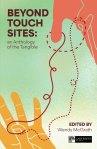
- A man who changes his child’s nappies, unlike his father – evidence of different notions of masculinity in different generations, in Case Histories by Kate Atkinson, What My Father and I Don’t Talk About, edited by Michele Filgate, and one piece in Beyond Touch Sites, edited by Wendy McGrath.
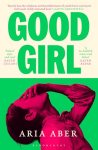
- What’s in a name? Repeated names I came across included Pansy (Case Histories by Kate Atkinson and Days of Light by Megan Hunter), Olivia (Case Histories by Kate Atkinson and A Family Matter by Claire Lynch), Jackson (Case Histories by Kate Atkinson and So Far Gone by Jess Walter), and Elias (Good Girl by Aria Aber and Dream State by Eric Puchner).
- The old wives’ tale that you should run in zigzags to avoid an alligator appeared in Alligator Tears by Edgar Gomez and then in The Girls Who Grow Big by Leila Mottley, both initially set in Florida.
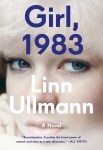
- A teenage girl is groped in a nightclub in Good Girl by Aria Aber and Girl, 1983 by Linn Ullmann.
- Discussion of the extinction of human and animal cultures and languages in both Nature’s Genius by David Farrier and Lifelines by Julian Hoffman, two May 2025 releases I was reading at the same time.
- In Body: My Life in Parts by Nina B. Lichtenstein, she mentions Linn Ullmann – who lived on her street in Oslo and went to the same school (not favourably – the latter ‘stole’ her best friend!); at the same time, I was reading Linn Ullmann’s Girl, 1983! And then, in both books, the narrator recalls getting a severe sunburn.
 On the same day, I read about otter sightings in Lifelines by Julian Hoffman and Spring by Michael Morpurgo. The next day, I read about nesting swallows in both books.
- The Salish people (Indigenous to North America) are mentioned in Lifelines by Julian Hoffman, Dream State by Eric Puchner (where Salish, the town in Montana, is also a setting), and So Far Gone by Jess Walter.
- Driving into a compound of extremists, and then the car being driven away by someone who’s not the owner, in Dream State by Eric Puchner and So Far Gone by Jess Walter.
- A woman worries about her (neurodivergent) husband saying weird things at a party in The Honesty Box by Lucy Brazier and Normally Weird and Weirdly Normal by Robin Ince.
- Shooting raccoons in Ginseng Roots by Craig Thompson and So Far Gone by Jess Walter. (Raccoons also feature in Dream State by Eric Puchner.)
- A graphic novelist has Hollywood types adding (or at least threatening to add) wholly unsuitable supernatural elements to their plots in Spent by Alison Bechdel and Ginseng Roots by Craig Thompson.
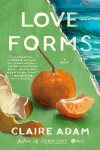
- A novel in which a character named Dawn has to give up her daughter in the early 1980s, one right after the other: A Family Matter by Claire Lynch, followed by Love Forms by Claire Adam.
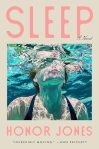
- A girl barricades her bedroom door for fear of her older brother in Love Forms by Claire Adam and Sleep by Honor Jones.
- A scene of an only child learning that her mother had a hysterectomy and so couldn’t have any more children in Dream Count by Chimamanda Ngozi Adichie and Other People’s Mothers by Julie Marie Wade.
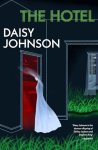
- An African hotel cleaner features in Dream Count by Chimamanda Ngozi Adichie and The Hotel by Daisy Johnson.

- Annie Dillard’s essay “Living Like Weasels” is mentioned in Nature’s Genius by David Farrier and The Dry Season by Melissa Febos.
- A woman assembles an inventory of her former lovers in Dream Count by Chimamanda Ngozi Adichie and The Dry Season by Melissa Febos.
What’s the weirdest reading coincidence you’ve had lately?
May Releases, Part II (Fiction): Le Blevennec, Lynch, Puchner, Stanley, Ullmann, and Wald
A cornucopia of May novels, ranging from novella to doorstopper and from Montana to Tunisia; less of a spread in time: only the 1980s to now. Just a paragraph on each to keep things simple. I’ll catch up soon with May nonfiction and poetry releases I read.
Friends and Lovers by Nolwenn Le Blevennec (2023; 2025)
[Translated from French by Madeleine Rogers]
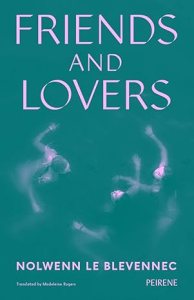 Armelle, Rim, and Anna are best friends – the first two since childhood. They formed a trio a decade or so ago when they worked on the same magazine. Now in their mid-thirties, partnered and with children, they’re all gripped by a sexual “great awakening” and long to escape Paris and their domestic commitments – “we went through it, this mutiny, like three sisters,” poised to blow up the “perfectly executed choreography of work, relationships, children”. The friends travel to Tunisia together in December 2014, then several years later take a completely different holiday: a disaster-prone stay in a lighthouse-keeper’s cottage on an island off the coast of Brittany. They used to tolerate each other’s foibles and infidelities, but now resentment has sprouted up, especially as Armelle (the narrator) is writing a screenplay about female friendship that’s clearly inspired by Rim and Anna. Armelle is relatably neurotic (a hilarious French blurb for the author’s previous novel is not wrong: “Woody Allen meets Annie Ernaux”) and this is wise about intimacy and duplicity, yet I never felt invested in any of the three women or sufficiently knowledgeable about their lives.
With thanks to Peirene Press for the free copy for review.
A Family Matter by Claire Lynch
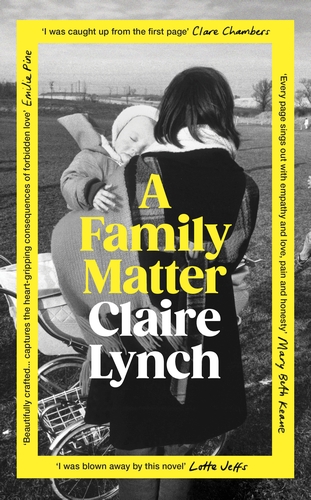 “The fluke of being born at a slightly different time, or in a slightly different place, all that might gift you or cost you.” At events for Small, Lynch’s terrific memoir about how she and her wife had children, women would speak up about how different their experience had been. Lesbians born just 10 or 20 years earlier didn’t have the same options. Often, they were in heterosexual marriages because that’s all they knew to do; certainly the only way they thought they could become mothers. In her research into divorce cases in the UK in the 1980s, Lynch learned that 90% of lesbian mothers lost custody of their children. Her aim with this earnest, delicate debut novel, which bounces between 2022 and 1982, is to imagine such a situation through close portraits of Heron, an ageing man with terminal cancer; his daughter, Maggie, who in her early forties bears responsibility for him and her own children; and Dawn, who loved Maggie desperately but felt when she met Hazel that she was “alive at last, at twenty-three.” How heartbreaking that Maggie knew only that her mother abandoned her when she was little; not until she comes across legal documents and newspaper clippings does she understand the circumstances. Lynch made the wise decision to invite sympathy for Heron from the start, so he doesn’t become the easy villain of the piece. Her compassion, and thus ours, is equal for all three characters. This confident, tender story of changing mores and steadfast love is the new Carol for our times. (Such a lovely but low-key novel was liable to make few ripples, so I’m delighted for Lynch that the U.S. release got a Read with Jenna endorsement.)
With thanks to Chatto & Windus (Penguin) for the proof copy for review.
Dream State by Eric Puchner
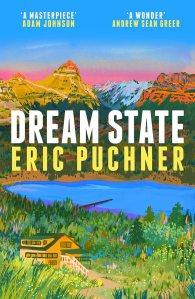 If it starts and ends with a wedding, it must be a comedy. If much of the in between is marked by heartbreak, betrayal, failure, and loss, it must be a tragedy. If it stretches towards 2050 and imagines a Western USA smothered in smoke from near-constant forest fires, it must be an environmental dystopian. Somehow, this novel is all three. The first 163 pages are pure delight: a glistening romantic comedy about the chaos surrounding Charlie and Cece’s wedding at his family’s Montana lake house in the summer of 2004. First half the wedding party falls ill with norovirus, then Charlie’s best friend, Garrett (who’s also the officiant), falls in love with the bride. Do I sound shallow if I admit this was the section I enjoyed the most? The rest of this Oprah’s Book Club doorstopper examines the fallout of this uneasy love triangle. Charlie is an anaesthesiologist, Cece a bookstore owner, and Garrett a wolverine researcher in Glacier National Park, which is steadily losing its wolverines and its glaciers. The next generation comes of age in a diminished world, turning to acting or addiction. There are still plenty of lighter moments: funny set-pieces, warm family interactions, private jokes and quirky descriptions. But this feels like an appropriately grown-up vision of idealism ceding to a reality we all must face. I struggled with a lack of engagement with the children, but loved Puchner’s writing so much on the sentence level that I will certainly seek out more of his work. Imagine this as a cross between Jonathan Franzen and Maggie Shipstead.
With thanks to Sceptre (Hodder) for the proof copy for review.
Consider Yourself Kissed by Jessica Stanley
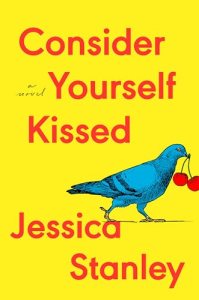 Coralie is nearing 30 when her ad agency job transfers her from Australia to London in 2013. Within a few pages, she meets Adam when she rescues his four-year-old, Zora, from a lake. That Adam and Coralie will be together is never really in question. But over the next decade of personal and political events, we wonder whether they have staying power – and whether Coralie, a would-be writer, will lose herself in soul-destroying work and motherhood. Adam’s job as a political journalist and biographer means close coverage of each UK election and referendum. As I’ve thought about some recent Jonathan Coe novels: These events were so depressing to live through, who would want to relive them through fiction? I also found this overlong and drowning in exclamation points. Still, it’s so likable, what with Coralie’s love of literature (the title is from The Group) and adjustment to expat life without her mother; and secondary characters such as Coralie’s brother Daniel and his husband, Adam’s prickly mother and her wife, and the mums Coralie meets through NCT classes. Best of all, though, is her relationship with Zora. This falls solidly between literary fiction and popular/women’s fiction. Given that I was expecting a lighter romance-led read, it surprised me with its depth. It may well be for you if you’re a fan of Meg Mason and David Nicholls.
With thanks to Hutchinson Heinemann for the proof copy for review.
Girl, 1983 by Linn Ullmann (2021; 2025)
[Translated from Norwegian by Martin Aitken]
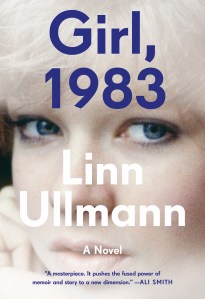 Ullmann is the daughter of actress Liv Ullmann and film director Ingmar Bergman. That pedigree perhaps accounts for why she got the opportunity to travel to Paris in the winter of 1983 to model for a renowned photographer. She was 16 at the time and spent the whole trip disoriented: cold, hungry, lost. Unable to retrace the way to her hotel and wearing a blue coat and red hat, she went to the only address she knew – that of the photographer, K, who was in his mid-forties. Their sexual relationship is short-lived and unsurprising, at least in these days of #MeToo revelations. Its specifics would barely fill a page, yet the novel loops around and through the affair for more than 250. Ullmann mostly pulls this off thanks to the language of retrospection. She splits herself both psychically and chronologically. There’s a “you” she keeps addressing, a childhood imaginary friend who morphs into a critical voice of conscience and then the self dissociated from trauma. And there’s the 55-year-old writer looking back with empathy yet still suffering the effects. The repetition made this something of a sombre slog, though. It slots into a feminist autofiction tradition but is not among my favourite examples.
With thanks to Hamish Hamilton (Penguin) for the proof copy for review.
The Bayrose Files by Diane Wald
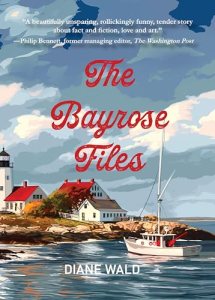 In the 1980s, Boston journalist Violet Maris infiltrates the Provincetown Home for Artists and Writers, intending to write a juicy insider’s exposé of what goes on at this artists’ colony. But to get there she has to commit a deception. Her gay friend Spencer Bayrose has a whole sheaf of unpublished short stories drawing on his Louisiana upbringing, and he offers to let her submit them as her own work to get a place at PHAW. Here Violet finds eccentrics aplenty, and even romance, but when news comes that Spence has AIDS, she has to decide how far she’ll go for a story and what she owes her friend. At barely over 100 pages, this feels more like a long short story, one with a promising setting and a sound plot arc, but not enough time to get to know or particularly care about the characters. I was reminded of books I’ve read by Julia Glass and Sara Maitland. It’s offbeat and good-natured but not top tier.
Published by Regal House Publishing. With thanks to publicist Jackie Karneth of Books Forward for the advanced e-copy for review.
A Family Matter was the best of the bunch for me, followed closely by Dream State.
Which of these do you fancy reading?
#1952Club: Patricia Highsmith, Paul Tillich & E.B. White
Simon and Karen’s classics reading weeks are always a great excuse to pick up some older books. I assembled an unlikely trio of lesbian romance, niche theology, and an animal-lover’s children’s classic.

Carol by Patricia Highsmith
Originally published as The Price of Salt under the pseudonym Claire Morgan, this is widely considered the first lesbian novel with a happy ending (it’s more open-ended, really, but certainly not tragic; suicide was a common consequence in earlier fiction). Therese, a 19-year-old aspiring stage designer in New York City, takes a job selling dolls in a department store one Christmas season. Her boyfriend, Richard, is a painter and has promised to take her to Europe, but she’s lukewarm about him and the physical side of their relationship has never interested her. One day, a beautiful blonde woman in a fur coat – “Mrs. H. F. Aird” (Carol) – comes to her counter to order a doll and have it sent to her out in New Jersey. Therese sends a Christmas card to the same address, and the women start meeting up for drinks and meals.
 It takes time for them to clarify their feelings to themselves, let alone to each other. “It would be almost like love, what she felt for Carol, except that Carol was a woman,” Therese thinks early on. When she first visits Carol’s home, a mothering dynamic prevails. Carol is going through a divorce and worries about its effect on her daughter, Rindy. The older woman tucks Therese into bed and brings her warm milk. Scenes like this have symbolic power but aren’t overdone; another has Therese and Richard out flying kites. She brings up homosexuality as a theoretical (“Did you ever hear of it? … I mean two people who fall in love suddenly with each other, out of the blue. Say two men or two girls”) and he cuts her kite strings.
The second half of the book has Carol and Therese setting out on a road trip out West. It should be an idyllic consummation, but they realize they’re being trailed by a private detective collecting evidence for Carol’s husband Harge to use against her in a custody battle. I was reminded of the hunt for Humbert Humbert and his charge in Lolita; “the whole world was ready to be their enemy,” Therese realizes, and to consider their relationship “sordid and pathological,” as Richard describes it in a letter.
The novel is a beautiful and subtle romance that unfolds despite the odds against it. I’d read five of Highsmith’s mysteries and thought them serviceable but nothing special (I don’t read crime in general). This does, however, share their psychological intensity and the suspense about how things will play out. Highsmith gives details about Therese’s early life and Carol’s previous intimate friendship that help to explain some things but never reduce either character to a diagnosis or a tendency. Neither of them wanted just anyone, some woman; it was this specific combination of souls that sparked at first sight. (Secondhand from a charity shop that closed long ago, so I know I’d had it on my shelf unread since 2016!) 
The Courage to Be by Paul Tillich
 Tillich is a theologian who left Nazi Germany for the USA in 1933. I had to read selections from his work as part of my Religion degree (during the Pauline Theology tutorial I took in Oxford during my year abroad, I think). This book is based on a lecture series he delivered at Yale University. He posits that in an age of anxiety, which “becomes general if the accustomed structures of meaning, power, belief and order disintegrate” – certainly apt for today! – it is more important than ever to develop the courage to be oneself and to be “as a part.” The individual and the collective are of equal importance, then. Tillich discusses various philosophers and traditions, from the Stoics to Existentialism. I have to admit that I barely got anything out of this, I found it so jargon-filled, repetitive and elliptical. It’s been probably 15 years or more since I’ve read any proper theology. I adopted that old student skimming trick of reading the first paragraph of each chapter, followed by the topic sentence of each paragraph, but that left me mostly none the wiser. Anyway, I believe his conclusion is that, when assailed by doubt, we can rely on “the God above the God of theism” – by which I take it he means the ground of all being rather than the deity envisioned by any specific religious system. (University library)
Charlotte’s Web by E.B. White
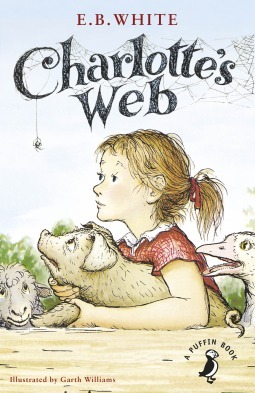 My library has a small section of the children’s department called “Family Matters” that includes the labels “First Time” (starting school, etc.), “Family” (divorce, new baby), “Health” (autism, medical conditions) and “Death.” I have the feeling Charlotte’s Web is not at all well known in the UK, whereas it’s a standard in the USA alongside L.M. Montgomery and Laura Ingalls Wilder. Were it more familiar to British children, it would be a great addition to that “Death” shelf. (Don’t read the Puffin Modern Classics introduction if you don’t want spoilers!) Wilbur is a doubly rescued pig. First, Fern Arable hand-rears him when he’s the doomed runt of the litter. When he’s transferred to Uncle Homer Zuckerman’s farm and an old sheep explains he’ll be fattened up for slaughter, his new friend Charlotte intervenes.
Charlotte is a fine specimen of a barn spider, well spoken and witty. She puts her mind to saving Wilbur’s bacon by weaving messages into her web, starting with “Some Pig.” He’s soon a county-wide spectacle, certain to survive the chop. But a farm is always, inevitably, a place of death. White fashions such memorable characters, including Templeton the gluttonous rat, and captures the hope of new life returning as the seasons turn over. Talking animals aren’t difficult to believe in when Fern can hear every word they say. The black-and-white line drawings are adorable. And making readers care about invertebrates? That’s a lasting achievement. I’m sure I read this several times as a child, but I appreciated it all the more as an adult. (Little Free Library) 

I’ve previously participated in the 1920 Club, 1956 Club, 1936 Club, 1976 Club, 1954 Club, 1929 Club, 1940 Club, 1937 Club, and 1970 Club.
Literary Wives Club: Mrs. March by Virginia Feito (2021)
{SPOILERS IN THIS REVIEW!}
What a deliciously odd debut novel, reminiscent of Patricia Highsmith’s work for how it places a neurotic outsider at the heart of an unlikely murder investigation. George March is a popular author whose latest novel stars Johanna, a prostitute so ugly that men feel sorry for her and can’t bear to sleep with her. Meanwhile, the news cycle is consumed with the strangling of a young woman named Sylvia Gibbler in Gentry, Maine, where George goes on hunting trips with his editor. Mrs. March takes two misconceptions – that George modeled Johanna on her, and that he was somehow involved in Sylvia’s death because he kept newspaper clippings about it on his desk – and runs with them, to catastrophic effect.
Mrs. March’s usual milieu is the New York City apartment she shares with George and their son, Jonathan. Martha, the housekeeper, keeps the daily details under control, leaving Mrs. March with little to do. She doesn’t seem very interested in her son, and resents George. Each morning she walks to the bakery to buy olive bread. Every so often she’ll host an extravagant dinner party. But there is plenty of time in between to fill with flashbacks to shameful memories (having an imaginary friend, wetting the bed, her mother’s favoritism towards her sister, being raped in Cádiz) and hallucinations (a dead pigeon in the bathtub, cockroaches scuttling around the apartment). She decides to travel to Maine herself to investigate Sylvia’s death; it’s not what she finds there but what she returns to that changes things forever.

There are so many intriguing factors. One is the nebulous time period: what with Mrs. March’s fur coat and head scarf, the train cars and payphone calls, it could be the 1950s; but then there are more modern references (a washing machine, holiday flights) that made me inclined to point to the 1980s. It couldn’t be the present day unless Feito is deliberately setting the story in an alternative world without much tech. As in Highsmith, we get mistaken identity and disguises. Feito really ramps up the psychological elements, interrogating how trauma, paranoia and extreme body issues may have led to dissociation in her protagonist. Mrs. March is both obsessed with and repulsed by bodily realities. It’s only through other characters’ reactions, though, that we see just how mentally disturbed she is. Worryingly, patterns seem to be repeating with her son, who is suspended for ‘doing something’ to a girl.
I can see how this would be a divisive read: the characters are thoroughly unlikable and it can be difficult to decide what is real and what is not. Incidents I took at face value may well be symbolic, or psychological manifestations of trauma. But I found it morbidly fascinating. I never knew what was going to happen next. (Public library/NetGalley) 
The main question we ask about the books we read for Literary Wives is:
What does this book say about wives or about the experience of being a wife?
In terms of Literary Wives reads, this reminded me most of The Harpy by Megan Hunter because of its eventual focus on adultery and revenge. Notably, until the very last sentence, we only know Mrs. March’s identity through her relationship to her husband. (Her first name is finally revealed to be Agatha, which of course made me think of Agatha Christie and detection, but its meaning is “good” or “honorable” – there was a martyred saint by the name.) What I took from that is that defining oneself primarily through marriage is dangerous because personality and control can be lost. This character was in need of a wider purpose to take her outside of her home and family – though those would always be her refuge to return to. Even setting Mrs. March’s mental problems aside, it is frighteningly easy to indulge in delusions about oneself or one’s spouse, so getting a reality check via communication is key.
See Kay’s and Naomi’s reviews, too!
We’ve recently acquired a new member – welcome to Kate of Books Are My Favourite and Best! – and chosen our books for the next two and a bit years. Anyone is welcome to join us in reading them. Here’s the club page on Kay’s blog, and our schedule through the end of 2026:
June 2024 Recipe for a Perfect Marriage by Karma Brown
Sept. 2024 Their Eyes Were Watching God by Zora Neale Hurston
Dec. 2024 Euphoria by Elin Culhed
March 2025 Lessons in Chemistry by Bonnie Garmus
June 2025 The Constant Wife by W. Somerset Maugham
Sept. 2025 Novel about My Wife by Emily Perkins
Dec. 2025 The Soul of Kindness by Elizabeth Taylor
March 2026 Mrs. Bridge by Evan S. Connell
June 2025 Interpreter of Maladies by Jhumpa Lahiri
Sept. 2026 Family Family by Laurie Frankel
Dec. 2026 The Eden Test by Adam Sternbergh
Up at the Villa by W. Somerset Maugham (#NovNov22 Short Classics Week)
This was just what I want from a one-sitting read: surprising and satisfying, and in this case with enough suspense to keep the pages turning. When beautiful 30-year-old widow Mary Panton, staying in a villa in the hills overlooking Florence, receives two marriage proposals within the first 33 pages, I worried I was in for a boring, conventional story.
 However, things soon get much more interesting. Her suitors are Sir Edgar Swift of the Indian Civil Service, 24 years her senior and just offered a job as the governor of Bengal; and Rowley Flint, a notorious lady’s man. Edgar has to go away on business and will ask for her answer when he’s back in several days. He leaves her with a revolver to take with her if she goes out in the car. A Chekhov’s gun? Absolutely. And it’ll be up to Mary and Rowley to deal with the consequences.
I’ll avoid further details; it’s too much fun to discover those for yourself. I’ll just mention that some intriguing issues get brought in, such as political dissidence in the early days of WWII, charity vs. pity, and the double standard of promiscuity in men vs. women.
Compared to something like Of Human Bondage, sure, this 1941 novella is a minor work, but I found it hugely enjoyable and would recommend it to anyone looking for a short classic or wanting to try Maugham (from here advance to The Painted Veil and The Moon and Sixpence before trying one of the chunksters).
Some plot points are curiously similar to Downton Abbey seasons 1–3, leading me to wonder if this was actually a conscious or unconscious influence on Julian Fellowes. Mostly, though, this reminded me of The Talented Mr. Ripley. It’s a deliciously twisted little book where you find yourself rooting for people you might not sympathize with in real life.
And how’s this for a last line? “Darling, that’s what life’s for – to take risks.”
(See also Simon’s review.)
[120 pages] (Public library)

Review Catch-Up: Capildeo, Castillo, Nagamatsu & Wedlich
A second catch-up for April. Today I have a sprightly poetry collection about history, language and nature; a linked short story collection that imagines funerary rituals and human meaning in a post-pandemic future; and a wide-ranging popular science book about the diverse connotations and practical uses of slime. As a bonus, I have a preview essay from a forthcoming collection about how reading promotes empathy and social justice.
Like a Tree, Walking by Vahni Capildeo (2021)
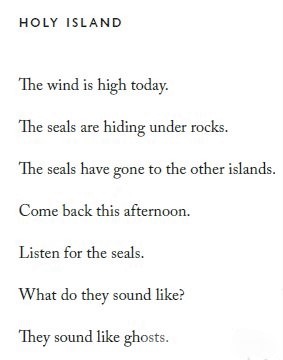
 Capildeo is a nonbinary Trinidadian Scottish poet and the current University of York writer in residence. Their fourth collection is richly studded with imagery of the natural world, especially birds and trees. “In Praise of Birds” makes a gorgeous start:
“In praise of high-contrast birds, purple bougainvillea thicketing the golden oriole. … In praise of grackles quarrelling on the lawn. / In praise of unbeautiful birds abounding in Old Norse, language of scavenging ravens, thought and memory, a treacherous duo”
and finds a late echo in “In Praise of Trees”: “If I could have translated piano practice into botany, the lichen is that Mozart phrase my left hand trialled endlessly.”
The title section (named after a moment from the book of Mark) draws on several numbered series – “Walk #2,” “Nocturne #1,” “Lullaby 4,” and so on – that appeared in a pamphlet they published last year. These are not uncomplicated idylls, though. Walks might involve dull scenery and asthma-inducing dust, as well as danger: “If nobody has abducted you, I’ll double back to meet you. … Before raper-man corner and the gingerbread house.” Lullabies wish for good sleep despite lawnmowers and a neighbour shooting his guns. There’s more bold defiance of expectations in phrases like “This is the circus for dead horses only”.
Language is a key theme, with translations from the French of Eugène Ionesco, and of Pierre de Ronsard into Trini patois. There are also dual-language erasure poems after Dame Julian of Norwich (Middle English) and Simone Weil (French). Much of the work is based on engagement with literature, or was written in collaboration with performers.
“Death is a thief in a stationery shop. He strolls out. The shopkeeper, a poor man, runs after, shouting. – I saw you! Give that back! – Give back what? Death says, strolling out. Hermes is a tram attendant who holds your coffee, helping you find the coin you dropped; it rolls underfoot.” (from “Odyssey Response”)
“Windrush Reflections” impresses for its research into the situation of Caribbean immigrants to Britain. It’s one of a number of long, multipart pieces, some of them prose poems. The verse relies mostly on alliteration and anaphora for its sonic qualities. Along with history, there is reflection on current events, as in “Plague Poems.” Experiences of casual racism fuel one of my favourite passages:
“the doorbell was ringing / the downstairs american oxford neighbours / wanted to check / by chatting on the intercom / if i was doing terrorism / i was doing transcriptions” (from “Violent Triage”)
Honorifics by Cynthia Miller, which I reviewed last week, had more personal resonance for me, but these are both powerful collections – alive to the present moment and revelling in language and in flora and fauna. However, only Capildeo progressed from the Jhalak Prize longlist onto the shortlist, which was announced yesterday.
With thanks to Carcanet Press for the free e-copy for review.
How High We Go in the Dark by Sequoia Nagamatsu (2022)
“Things are bad in every generation. But we still have to live our life.”
This linked short story collection was one of my most anticipated books of the year. Like two of its fellow entries on that list, Sea of Tranquility by Emily St. John Mandel and To Paradise by Hanya Yanagihara, it’s just the right blend of literary fiction and science fiction – an Octavia E. Butler level of the latter that I can handle. Opening in 2031 and stretching another 70 years into the future, it imagines how a pandemic reshapes the world and how communication and connection might continue after death. In the first story, Cliff is on the ground at the start of the Arctic plague, which emerges from a thawing Siberia (the same setup as in Under the Blue!), where his late daughter, Clara, had been part of a research group that discovered a 30,000-year-old Neanderthal girl they named Annie.
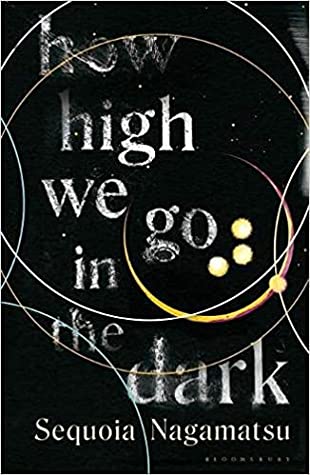 The virus is highly transmissible and deadly, and later found to mostly affect children. In the following 13 stories (most about Asian Americans in California, plus a few set in Japan), the plague is a fact of life but has also prompted a new relationship to death – a major thread running through is the funerary rites that have arisen, everything from elegy hotels to “resomation.” In the stand-out story, the George Saunders-esque “City of Laughter,” Skip works at a euthanasia theme park whose roller coasters render ill children unconscious before stopping their hearts. He’s proud of his work, but can’t approach it objectively after he becomes emotionally involved with Dorrie and her son Fitch, who arrives in a bubble.
All but one of these stories are in the first person, so they feel like intimate testimonies of how a pandemic transforms existence. Almost all of the characters have experienced a bereavement, or are sick themselves. Relatives or acquaintances become protagonists in later stories. For instance, in “Pig Son,” Dorrie’s ex, David, is a scientist growing organs for transplantation. Bereavement coordinator Dennis and his doctor brother Bryan narrate #5 and #8, respectively. Six years on, Cliff’s wife Miki takes their granddaughter on a space mission. My other two favourites were “Through the Garden of Memory,” in which patients on a plague ward build a human pyramid and plot a sacrifice, and “Songs of Your Decay,” about a researcher at a forensic body farm who bonds with her one live donor over rock music.
Some stories are weaker or less original than others, but this is one case where the whole is definitely greater than the sum of its parts. The focus on illness and death, but also on the love that survives, made this a winner for me. I’d be especially likely to recommend it to fans of Kazuo Ishiguro and Karen Russell.
With thanks to Bloomsbury for the free copy for review.
Slime: A Natural History by Susanne Wedlich (2021)
[Translated from the German by Ayça Türkoğlu]
 This is just the sort of wide-ranging popular science book that draws me in. Like Entangled Life by Merlin Sheldrake, a work I’ve had many opportunities to recommend even to those who don’t normally pick up nonfiction, it incorporates many weird and wonderful facts about life forms we tend to overlook. Wedlich, a freelance science journalist in Germany, starts off at the Hunterian Museum in Glasgow, where she seeks a sample of the “primordial slime” collected by the HMS Challenger in 1876. “It seems to be an unwritten rule of horror: slime sells!” she remarks – from H. P. Lovecraft to Ghostbusters, it has provoked disgust. Jellyfish, snails, frogs and carnivorous plants – you’re in for a sticky tour of the natural world.
The technical blanket term for slimy substances is “hydrogels,” which are 99% water and held together by polymers. Biological examples have been inspiring new technologies, like friction reducers (e.g. in fire hoses) modelled on fish mucus, novel adhesives to repair organs and seal wounds, and glue traps to remove microplastics. Looking to nature to aid our lives is nothing new, of course: Wedlich records that slugs were once used to lubricate cart wheels.
The book branches off in a lot of directions. You’ll hear about writers who were spellbound or terrified by marine life (Patricia Highsmith kept snails, while Jean-Paul Sartre was freaked out by sea creatures), the Victorian fascination with underwater life, the importance of the microbiome and the serious medical consequences of its dysfunction, and animals such as amphibians that live between land and water. At times it felt like the narrative jumped from one topic to another, especially between the biological and the cultural, without following a particular plan, but there are enough remarkable nuggets to hold the interest.
With thanks to Granta for the free copy for review.
And a bonus:
 I was delighted to be sent a preview pamphlet containing the author’s note and title essay of How to Read Now by Elaine Castillo, coming from Atlantic in August. This guide to cultural criticism – how to read anything, not just a book – is alive to the biased undertones of everyday life. “Anyone who is perfectly comfortable with keeping the world just as it is now and reading it the way they’ve always read it … cannot be trusted”. Castillo writes that it is not the job of people of colour to enlighten white people (especially not through “the gooey heart-porn of the ethnographic” – war, genocide, tragedy, etc.); “if our stories primarily serve to educate, console and productively scold a comfortable white readership, then those stories will have failed their readers”. This is bold, provocative stuff. I’m sure to learn a lot.
Would you be interested in reading one or more of these?
Classic of the Month: Thérèse Raquin by Émile Zola
I didn’t even make it past the first page of Giuseppe di Lampedusa’s The Leopard, which I’d planned for June, so in the middle of the month I had to rifle through my shelves for a short and accessible classic and found just that in Thérèse Raquin (1868) by Émile Zola. I’d only read one Zola novel previously, Germinal (1885), about seven years ago. I remember finding Germinal, an exposé of the working conditions of miners, heavy-handed, and while the same could be said of Thérèse Raquin, the latter is so deliciously Gothic that I could forgive the hammering on extreme emotions and points of morality that takes up the second half.
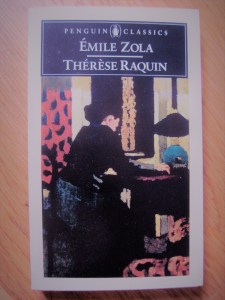 “The Passage du Pont-Neuf is no place to go for a nice stroll. You use it as a short cut and time-saver.” Yet this is the Paris street on which Madame Raquin runs her haberdashery shop, having moved here from a Normandy town when her son Camille insisted on getting a job with the Orléans railway. He has recently married his first cousin, Thérèse, whom Mme Raquin raised as her own daughter and always intended for Camille. Mme Raquin’s brother, a naval captain, had dropped off this product of his short-lived relationship with “a native woman of great beauty” from Algeria. Thérèse used to bear sisterly feelings for the sickly Camille, but finds him repulsive as a bedfellow, and their new Paris lodgings feel like a “newly-dug grave” – she can “see her whole life stretching before her totally void.”
It’s no particular surprise, then, when Thérèse is drawn to Laurent, a colleague and old school-friend of Camille’s who joins in their regular Thursday night soirées. Laurent and Thérèse start an affair right under the noses of Camille and Mme Raquin, with Thérèse throwing “herself into adultery with a kind of furious honesty, flouting danger, and as it were, taking pride in doing so.” There are details here that make today’s reader cringe: Thérèse’s “African blood” is cited as the reason for her reckless passion, and her first encounter with Laurent doesn’t sound fully consensual (“The act was silent and brutal”). But you also have to cheer for Thérèse, at least a little, because she’s finally chosen something for herself instead of just going along with what everyone else wants for her.
Before long Laurent and Thérèse are dreaming of how much better their lives would be if only Camille were out of the way and they could be together forever. They start plotting. This is a definite case of “be careful what you wish for.” I’ll say no more for fear of spoilers, except that the rest of this brief, claustrophobic book is a consideration of the ramifications of their decision, and it’s a gloriously lurid vision of what guilt can drive people to. From the “delicious terrors and agonizing thrills of adultery,” the couple is thrown deeper into a “sink of filth.” While you might predict the book’s general outcome, its exact ending surprised me.

Zola in 1870. [Public domain]
My rating:
I read a Penguin Classics edition of Leonard Tancock’s 1962 translation.
Next month’s plan: I have George Orwell’s Down and Out in Paris and London on my stack to read soon. After Sophie Ratcliffe’s The Lost Properties of Love, I might be inspired to read the first in Anthony Trollope’s Chronicles of Barsetshire series, The Warden. Or maybe after a week spent in Italy I’ll be led to pick up D.H. Lawrence’s Sea and Sardinia. L.P. Hartley’s The Go-Between would also seem like an appropriate classic to pick up in the summer months.
 Bookish Beck = Rebecca Foster. American transplant to England. Freelance proofreader and book reviewer.
 Bookish Beck