Hay-on-Wye Trip & Book Haul (Plus a Little Life Complication)
Last week was our ninth time visiting Hay-on-Wye. Our previous trip was in October 2023 for my 40th birthday. Prompted by my overhaul post last month, I managed to finish a couple more of the 16 books I’d bought that time, taking me to 4 read and 1 skimmed; I’ve also read the first quarter of So Happy for You by Celia Laskey. Considering it was less than 18 months between visits, I’m going to call that an adequate showing. However, I will endeavour to be better about reading this latest book haul (below) in a timely fashion!
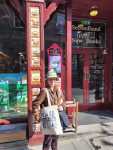 Because we were staying four nights, there was no need to rush through all the bookshops in a day or two, though that would be possible; instead, we parcelled them out and mixed up our shopping with walks, short outings in the car, and relaxing in the comfy cottage just over the English border in Cusop. I had work deadlines to meet within the first few days, but on another evening we took advantage of the place having Netflix to watch My Neighbor Totoro.
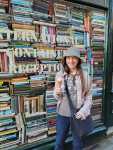 I’ve gotten secondhand book shopping in Hay down to a science over the years. Check on opening days and hours carefully or you can miss out. Thursday to Saturday is the best window to go: the Thursday market is excellent for local produce and crafts, and it’s nice to see the town bustling. (Though I’ve never seen it at Festival time, and wouldn’t want to!)


Start with the bargain options: the Little Free Library shelves by the river, where I scored Electricity by Victoria Glendinning; the sale area outside Hay Cinema Bookshop, the dedicated honesty shop beside Richard Booth’s Bookshop (new this trip), and the Book Passage beside Addyman Books – all £1/book; and the honesty shelves on the castle grounds, where it’s £2/book. Most of my purchases came from these areas. Just call me thrifty!

Next, the mid-priced options: Cinema, Broad Street Book Centre, Hay-on-Wye Booksellers, Clock Tower Books, and the new British Red Cross bookshop, which is not cheap for a charity shop but has a good selection of relatively recent stuff. (Oxfam, however, has moved away from books and primarily sells clothes, new products and bric-a-brac.) Cap it off with Addymans + Addyman Annexe, Cinema, Booth’s, the Poetry Bookshop and Green Ink Booksellers.
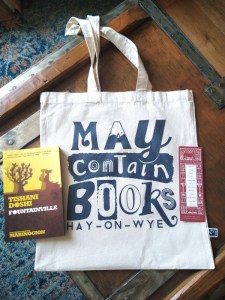 I had the best luck in Cinema this time, where I found two remainder books, three bargain books (one not pictured because it will be a gift) and the Howard Norman short stories – a particular thrill as his work is not often seen in the UK. Cinema and Booth’s are the greatest pleasure to browse. At Booth’s I bought my priciest book of the trip – Fountainville by Tishani Doshi, a retelling of stories from the Mabinogion – and indulged in a bookish tote bag (as if I needed another!). It was especially pleasing to find the Doshi and the Lewis in Hay as they are Welsh authors so will cover me for Reading Wales Month next year.
I wasn’t in the market for new books this time, not having any vouchers at my disposal, but those who are will also enjoy perusing Gay on Wye, North Books, and the large selection of new stock mixed in thematically at Booth’s. All told, that’s 15 places to shop for books.
Alas, The Bean Box, where you could get the best coffee in town, has now closed. We returned to Hay Distillery for delicious gin drinks and had Shepherd’s ice cream (a must) twice. New to us on this trip were nearby Talgarth and its excellent Mill café, the Burger Me (oh dear) restaurant at The Globe, a drink at Kilverts Inn, and an evening walk down the river to a nice shingle spit.


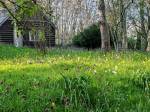
The weather was improbably warm and sunny – as in, I packed an umbrella and raincoat but never used them. I did need my woolly hat, scarf and gloves, but only on the first morning when we climbed up a hill. The rest of the time, it was blue skies and blossom, lambs in the fields, and 20 degrees C, for which, in early April, we could only be grateful – but also, as the lady on the till at Cinema rightly observed, it’s mildly disturbing.
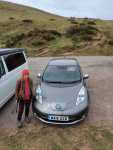
This was our first major trip with our secondhand electric car, which needs rather frequent charging. En route we broke the journey at Gloucester and toured its cathedral; on the way back, we plumped for usefulness over aesthetics by stopping at carparks in Ross-on-Wye and Cirencester. We now choose routes that avoid motorways, which makes for more leisurely and scenic touring.
-
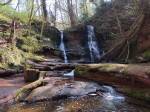
- Pwll y grach waterfall
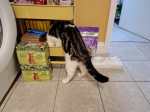
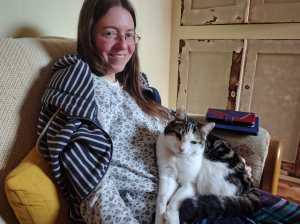
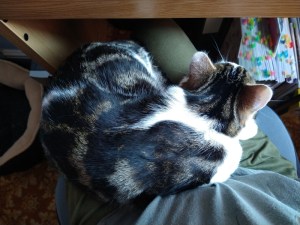
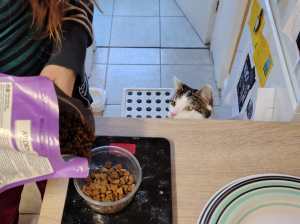
Two days after we bought the car from a local acquaintance, this creature entered our lives. I certainly didn’t intend to adopt another cat a shade under six weeks after Alfie’s death. (I haven’t even finished reading Grieving the Death of a Pet on my Kindle; I still haven’t brought myself to read your kind comments on my post about losing Alfie.) But we were deeply lonely in a way we hadn’t been expecting. I would object to the use of the word “replace” – there is no replacing Alfie; we still miss him for his predictability and dignity as well as all his own funny ways. I’ve come to realize that grief is ongoing, and all of a piece: mourning Alfie took me back to the same place of grief I inhabit for my mother, and missing them and others lost in recent years is tied into my helpless sadness over natural disasters, humanitarian crises, the state of affairs in my home country, the trajectory of the planet, and on and on.
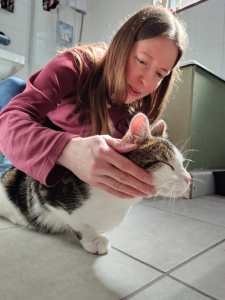

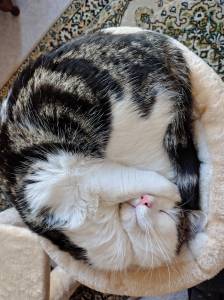
Any road, the adoption moved very quickly: from expressing interest on a Thursday to getting a call back on a Saturday to meeting and taking him home on a Sunday afternoon. Benny (“Tubbs” as was) is only a year old and full of energy. He came home with a tapeworm but got over it within a week after a targeted worming treatment. It’s been a big adjustment for us to have a cat who doesn’t sleep most of the day and can jump up onto any counter or piece of furniture. Benny considers every waking moment a chance for playtime and mischief. But he is also so sweet and affectionate. And we haven’t laughed this much in a long, long time.


We had booked the Hay trip long before we knew about Benny and were concerned it would be too soon to leave him. But we needn’t have worried; he was settled in here from Day One. Our regular cat sitter visited twice a day and he was absolutely fine. She sent us WhatsApp updates on him and cute photos, in most of which he is a blur chasing his toy snake!


So that’s what’s been going on with me. And of course, I’ve been frantically reading there in the background (36 books on the go at the moment): pre-release e-books for paid reviews, review copies I’ve been sent for the blog, new releases from the library, and the rest of the McKitterick Prize longlist – my shortlist choices are due on the 23rd, eek! I still hope to read a couple of novels from the Carol Shields Prize longlist before the winner is announced, too.
Hope everyone is having a happy spring!
On Trying to Keep Still (Post-Northumberland Holiday)
What’s the point of going on vacation? Expanding your cultural horizons, seeing new things and places, treating yourself to fun experiences you don’t have in the everyday, and relaxing could all be good answers. Relaxation isn’t our strong suit when we go away; we often return from a holiday wishing that we had a few recovery days before resuming work. Some combination of developing a bad cold in the last few days of the trip, coming back to non-stop rain, worrying about our cat’s ongoing health issues, and my husband already having a manically busy start to the term has left me feeling like staying put for the foreseeable.
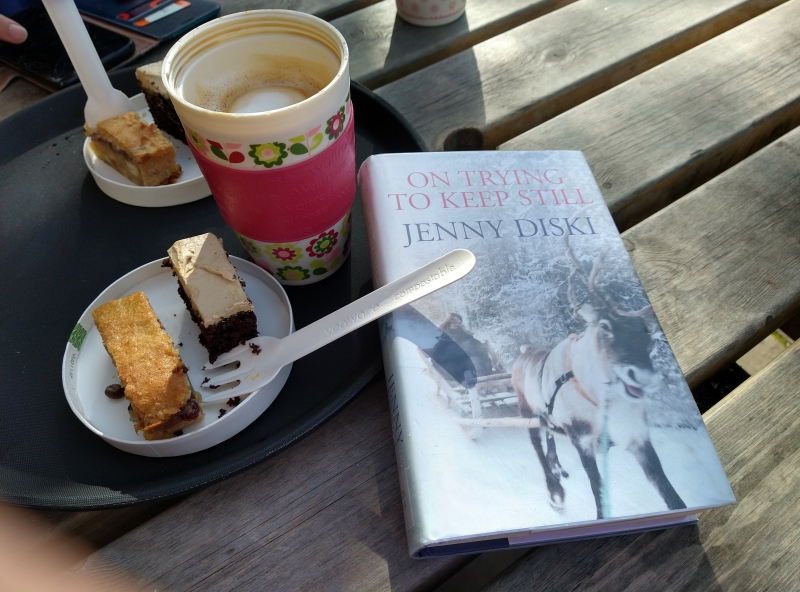
Apt reading for a coffee stop on Lindisfarne.
Jenny Diski understood that. Her collection of travel pieces, On Trying to Keep Still, was the one book I read in its entirety on our trip (along with parts of novels, poetry collections and many, many short story volumes). Essays and short stories were perfect reading for a public transport trip: ideal for taking out on a train or bus and reading one or a few. I’d earmarked the Diski for 20 Books of Summer but found a better setting for it after all. A couple of pieces touch on her traumatic childhood and time spent in a mental hospital as a teenager, which I vaguely remembered from her other autobiographical work. The essay “On Anatomy,” which doesn’t really fit with the others but may have been my favourite, matter-of-factly recounts her rape at 14, and her midlife diagnosis of Freiberg’s disease. Her doctor’s dismissive response to her debilitating foot pain was her first experience of age-related discrimination.
Diski expresses how troubled she is to have become known as a travel writer – through the two books of hers I’d previously read, Skating to Antarctica and Stranger on a Train – because, for the most part, she much prefers to stay at home and do nothing. Ironically, she ends up writing a travel feature on Lapland for the Observer, even though what she actually proposed was spending a few days in the polar dark. But the paper talked her into undertaking all sorts of uncomfortable adventures like a reindeer-drawn sleigh ride and sleeping in a tent – and this for someone who specifically hated being cold.
This is the stuff of Part Three. In Part One, she speaks at a book festival in New Zealand and resists the compulsion to skydive; in the long Part Two, she courts solitude by renting a cottage on a Somerset farm for two months. She holes up with a mini-library of silence- and seclusion-themed reads and shows her face only often enough so the owner won’t fret about her. (It took me a little while to work out that the farmer was Janet White, author of The Sheep Stell – quite a neat connection. Diski also lived with Doris Lessing as a teenager.) Here, too, Diski is delighted to eschew outings and exercise and just stay in comfort. The fact that she brought pristine Prada hiking boots tells you she’s no outdoorswoman. By the book’s end, she’s concluded it’s best to save the money and effort and just research or imagine your way to places instead. Tongue-in-cheek advice, perhaps, but the tone of cheerful indolence appealed to me. (Secondhand – Awesomebooks.com) 
Sprinting to make buses, hours-long bone-shaking rides, heavy luggage: we were out of practice at using public transport, sure, but the rigours of this trip were a bit much for me. It can’t just be age, though at nearly 41 I do long for my own bed on any stay away from home. It’s partly a matter of accepting that chronic illness means I will have limitations. Much as we wanted to do the right thing by not driving, travelling by car is so much more practical and comfortable. Trips to the Continent may still be doable by train as European services seem reliable. But within the UK? Unless it’s a short city break, I’m not sure.
All that said, we did have a nice time. Our cottage in Berwick-upon-Tweed was spacious and we had unexpectedly glorious weather for daytrips to Bamburgh Castle, the Farne islands and Lindisfarne, Alnwick and Alnmouth, and especially the fishing town of Dunbar in Scotland. If you ever find yourself in Berwick, do walk the medieval walls (plus try a charcuterie platter at Atelier wine bar, sample the sweet or savoury offerings at Northern Soul Kitchen, and find time for a drink or two at The Curfew micro-pub). Speaking of drinks, we also enjoyed our time with friends in York, not least an afternoon at the annual beer festival.


Bookishness included a return trip to Barter Books, where my store credit got me a free book and badge; Berwick’s Berrydin Books and Slightly Foxed, as well as several charity shops; the “Books by the Sea” Little Free Library network; and the John Muir birthplace museum and trail in Dunbar. Muir was a forefather of modern environmentalism involved in the inception of the U.S. national parks system. I’ll have to seek out his memoir of childhood.


My modest book haul (compared to our previous trip to Northumberland, anyway) of 12 books is testament to great restraint; had we been traveling by car, I probably would have acquired more books at each stop. I majored on short story collections and novella-length works. And I’ve started reading several already!


Other reading experiences, on a rail replacement bus and on the nearly empty Bamburgh and Dunbar beaches:


If you had to choose, would it be far-flung adventuring or the comforts of home?
Three Days in Paris and What I Read
My husband’s belated 40th birthday treat was a short city break in Paris earlier this week. No sooner had I gotten home on Tuesday than I was sealing up my suitcase to fly to the States the following afternoon. It’s been quite the whirlwind week (make that few months), but now that things have quieted down a little, I have a chance to look back on the long weekend’s eating, sightseeing and reading. I’d been to Paris twice before: once just for an overnight en route to Milan in 2019, while my first and only proper trip was in early 2004.
That time I did all the touristy things like the Eiffel Tower, the Musée d’Orsay (though not the Louvre), Notre Dame and the site of the Bastille. A sign of how times have changed: nearly 20 years ago when I was at Père Lachaise cemetery, you could go right up to Oscar Wilde’s grave and add your lip-print to the many kisses on it. (There’s a photo of me and my study abroad friend doing just that; I wish I’d had time to go dig it out of an album.) Today it’s walled off by Perspex with a note explaining that the family pay all the cleaning costs. To think that there are descendants of Wilde’s out there in the world! Still, a tiny letdown when it was such a cute ritual. We also visited Chopin and Balzac and took in the views.


The most touristy things we did this time around were Sainte-Chapelle, a marvel of medieval stained glass, and Shakespeare and Company, the famous English-language haunt of expats over the decades. Notre Dame is still closed for its extensive post-fire restoration (it’s due to reopen next year) but you can read some signboards about the reconstruction outside and sit on the bleachers to soak in the atmosphere. Our other destinations included the Hotel de Ville, lit up at night with a Christmas market to advertise the 2024 Olympics, and the Jardin des Plantes and its museum of paleontology and comparative anatomy – old-fashioned in just the way we like it, with row upon row of skeletons and lots of hand-inked original labels.


We were mostly in the city to eat, and eat we did. Many of our recommendations for boulangeries and patisseries came from American chef David Lebovitz’s blog. Although we did buy traditional baguettes and croissants, we were mostly on the lookout for unusual treats, such as hay-flavoured custard-filled choux buns and a famous maple syrup tart. We had one bistro meal and another at a creperie, this one incorporating Breton-Japanese fusion dishes such as my Breizh rolls, cut from a buckwheat galette filled with artichoke hearts, seaweed, scrambled egg and Comté cheese: a cross between a crêpe and sushi.
We enjoyed riding the Métro and by the time we left felt like pros at it. Speaking French to shopkeepers and waitstaff had also started to become second nature (I even managed to query errors in our order/bill twice at restaurants). The weather was showery and colder than expected, but never enough to spoil our experience, and we stole some good glimpses of the Tower from around the city.
But the highlight of the trip was something we stumbled upon and joined in on a whim. At Shakespeare and Company on our first full day, we spotted a sign for a free event they were hosting the next night: the recording of a podcast by comedian Greg Proops, followed by mince pies, mulled wine and carol singing.

We had never heard of Proops but thought we’d take a chance, so made our way back the next evening and got two of the last seats left in the back of the upstairs space. His monologue was funnier than expected, mostly a stringing together of in-jokes about national stereotypes of the English, Americans and French – but as we all know, clichés are amusing precisely because they contain grains of truth. He also had a few long anecdotes about getting eye surgery and running into a famous old film director in Paris. It sounds like this bookshop event is an annual tradition for him.


Best of all, afterwards the shop was technically closed but we were allowed to stay in – lock-in at the bookshop! They don’t normally allow photographs inside, but my husband managed to sneak a few plus some video of the carol singing. The mince pies, gingerbread and mulled wine were all tasty. Professor Lex Paulson at the piano led us in a marathon of 22 songs ranging from ancient traditionals (“O Come O Come Emmanuel” and “The Coventry Carol”) to recent pop (“Last Christmas” and “All I Want for Christmas Is You”); it must be said that there was more general enthusiasm for the latter, while my husband and I were among the few raring for “The Holly and the Ivy” and suchlike. A truly unforgettable evening.
 I’d read one memoir of working and living in Shakespeare and Company, Books, Baguettes and Bedbugs by Jeremy Mercer (original title: Time Was Soft There), back in 2017. I don’t remember it being particularly special as bookish memoirs go, but if you want an insider’s look at the bookshop that’s one option. Founder Sylvia Beach herself also wrote a memoir. The best part of any trip is preparing what books to take and read. I had had hardly any time to plan what else to pack, and ended up unprepared for the cold, but I had my shelf of potential reads ready weeks in advance. I took The Elegance of the Hedgehog by Muriel Barbery and read the first 88 pages before giving up. This story of several residents of the same apartment building, their families and sadness and thoughts, was reminiscent of Sophie’s World and didn’t grip me. But here’s what I did read, in chronological order (all:
  ):
):
Broderies by Marjane Satrapi (2003)
The fifth-floor Airbnb apartment where we stayed in the suburb of Mairie des Lilas overlooked a school and housed an amazing collection of graphic novels in French. I picked this one up to flick through because I remember enjoying Persepolis, but to my surprise I could understand just about every line bar a very few vocabulary words that I skipped over or grasped in context, so I read the whole thing over a couple of breakfasts and evening glasses of wine.
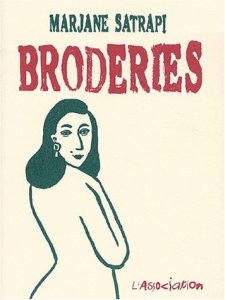 After a dinner party, Marji helps her grandmother serve tea from a samovar to their female family friends, and the eight Iranian women swap stories about their love lives. These are sometimes funny, but mostly sad and slightly shocking tales about arranged marriages, betrayals, and going to great lengths to entrap or keep a man. They range from a woman who has birthed four children but never seen a penis to a mistress who tried to use mild witchcraft to get a marriage proposal. What is most striking is how standards of beauty and purity have endured in this culture, leading women to despair over their loss of youth and virginity.
I think the title may have some slang meaning relating to the hymen? But in English translation it is Embroideries, referring to the way these women stitch together their life stories and their relationships. All the scenes are in black and white with a readable cursive handwriting for the plentiful text. It was a more talky graphic novel than I tend to prefer, but I learned a lot of good phrases from it, and found it a real joy to read. It must be the first book I have read in French since my university days!
The Sweet Life in Paris by David Lebovitz (2009)
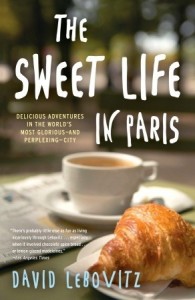 We both read this, keeping two bookmarks in and trading it off on Metro journeys. The short thematic chapters, interspersed with recipes, were perfect for short bursts of reading, and the places and meals he described often presaged what we experienced. His observations on the French, too, rang true for us. Why no shower curtains? Why so much barging and cutting in line? Parisians are notoriously rude and selfish, and France’s bureaucracy is something I’ve read about in multiple places this year, including John Lewis-Stempel’s La Vie.
Lebovitz has happily called the city home for two decades now, and performs culinary feats (testing the recipes for his dessert cookbooks) in a tiny apartment kitchen. There are sections here on fish, cheese, chocolate, and so on, but also on particular shopping areas and typically French incidents, such as everyone being on strike at the same time. One chapter was a hymn to G. Detou (a play on words meaning “I have it all”), a food emporium my husband was especially excited to visit. This was breezy and affectionate, a perfect travel companion.
A Waiter in Paris by Edward Chisholm (2022)
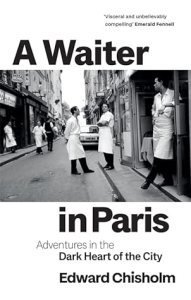 This was consciously based on George Orwell’s Down and Out in Paris and London, but more so than an exposé of working-class poverty and abuses of power in the restaurant world, it is a rollicking narrative of living hand to mouth and trying to gain acceptance as a waiter. I enjoyed it in much the same way that I did Kitchen Confidential by Anthony Bourdain and Sweetbitter by Stephanie Danler: this is a high-stress, macho world I would never want to be a part of myself, but reading about it is intriguing. After Chisholm broke up with his girlfriend, he lived in a bedbug-ridden garret and often did 14-hour shifts as a runner at the “Bistrot de la Seine,” which packed in hundreds of tables and served thousands of meals daily. As “l’Anglais,” with no proper contract or social security, Chisholm was overlooked but determined to become a waiter. Though he felt fraternity with his colleagues, day-to-day life was brutal. He survived on coffee, cigarettes, and stolen rolls, and caught few-hour naps in the toilets of upscale restaurants. The waiters were cut-throat in their competition for tips, and the chefs, mostly Tamil, worked in a basement inferno. His pen portraits of these characters are particularly Orwellian. The account is as vivid and engrossing as a novel.
 I forgot to start it while I was there, but did soon afterwards: The Paris Novel by Ruth Reichl, forthcoming in early 2024. When Stella’s elegant, aloof mother Celia dies, she leaves her $8,000 – and instructions to go to Paris and not return to New York until she’s spent it all. At 2nd & Charles yesterday, I also picked up a clearance copy of A Paris All Your Own, an autobiographical essay collection edited by Eleanor Brown, to reread. I like to keep the spirit of a vacation alive a little longer, and books are one of the best ways to do that.
Hay-on-Wye Trip & Book Haul
Our previous trip to Hay was in September 2020, when Covid restrictions meant some shops were closed and most eateries only offered takeaway or outdoor dining. At the end of my write-up, I vowed to go back before I turned 40. I stayed true to my word and we arrived in town the day before my 40th birthday. (Not only that, but I’ve completed the Triple Crown of British Book Towns in a year, what with visits to Wigtown in June and Sedbergh in August. My hauls were comparable in all three and my spending in Hay (£37.95 for 15 books) was somewhere between Sedbergh’s low (£24.50 for 13) and Wigtown’s high (£44 for 16).)
Every time we visit, we find some businesses have closed but others have opened. There’s still a core of 12 bookshops, but as in Sedbergh, there are other establishments with a few shelves of books, so there are 15–20 places in town where you can browse books. That’s plenty for anyone to be getting on with in a long weekend.
I had an action plan for our three days that moved from cheapest (honesty shelves below the castle, £1 area outside Cinema; Oxfam and British Red Cross charity shops; Hay-on-Wye Booksellers; Clock Tower Books) through mid-price (Addyman Books, Cinema) to the more expensive options (Green Ink, Booths). The town’s newest shop, as pictured in my birthday post, is Gay on Wye, which, with North Books, replaced Pembertons as sellers of new stock. (Booth’s, the Castle and the Old Electric Shop also sell curated selections of new books.)
New to us on this trip:
- The Bean Box, a terrific and reasonably priced mini coffee bar run out of a horse box by the river. They have a nice garden and a secondhand book selection, and you can sit on their patio or at tables and chairs closer to the river view.
 Felin Fach Griffin, a country pub about a 20-minute drive from Hay, where we booked a table for my birthday lunch. Excellent food and a cosy atmosphere, with hill views from the windows.
- Hay Castle, which has had scaffolding up and been half-derelict ever since our first visit in 2004. At various points it has had books for sale. In 2022, it opened to the public as a visitor attraction. A projected animation gives a jaunty historical overview from the Middle Ages to the present day. We especially liked the room of Richard Booth and Book Town memorabilia and the viewing platform at the top. Booth himself was the last to live in the castle. On our earliest trips we would occasionally see him around town – a loud, shuffling (after his stroke) eccentric.

- Hay Distillery, where I had a delicious gin cocktail on my birthday evening.
“It is obviously impossible to catalogue over one million books and these listings therefore represent only a very small selection of the books that we have in stock in Hay. We would point out that one of the chief services of the secondhand bookshop is to provide the customer the opportunity to find the book he did not know existed.”
~Richard Booth, “Books for Sale” periodical (1981?)
“The new book is for the ego; the second-hand book is for the intellect.”
~Richard Booth, quoted on the castle exhibit wall
When we arrived at our Airbnb, we found it had not been cleaned; no linen, etc. A cleaner belatedly came to sort it out, but the owner gave us a full refund, so a minor inconvenience got us back more than enough to pay for the rest of the weekend.
After the final day’s shopping, this was my final book haul. We had particularly good luck in the Addyman’s alleyway, where all books are £1 – we got a bunch for presents (not pictured).


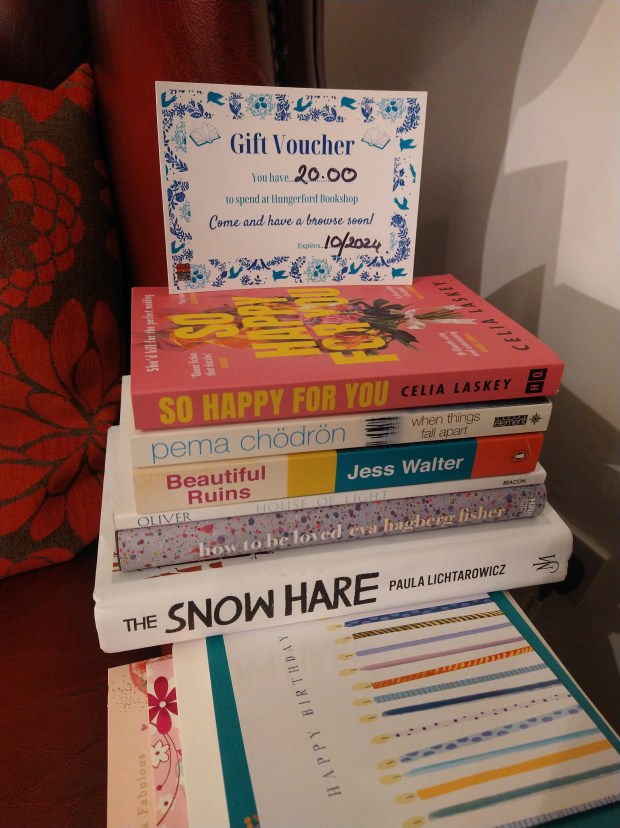
I also opened a first set of birthday books. (My husband and I are having a joint birthday party later this month; I daresay there may be more book parcels to open after.)
Hay is gentrified and hipster now in ways that would probably have Booth turning in his grave. While we slightly miss its dusty, ramshackle past, it’s the new businesses and the Festival that have helped it survive.
If you’ve never been to Hay, I’d certainly recommend it. I possibly slightly prefer Wigtown for its community atmosphere, but it’s more than twice as far away and has fewer book shopping opportunities, which for many of us is the main draw, as well as measly food options. Depending on where you live or are traveling in from, Hay is also likely to be the easiest of the three UK book towns to get to, including by public transport.
Happy Birthday & Bookshop Day
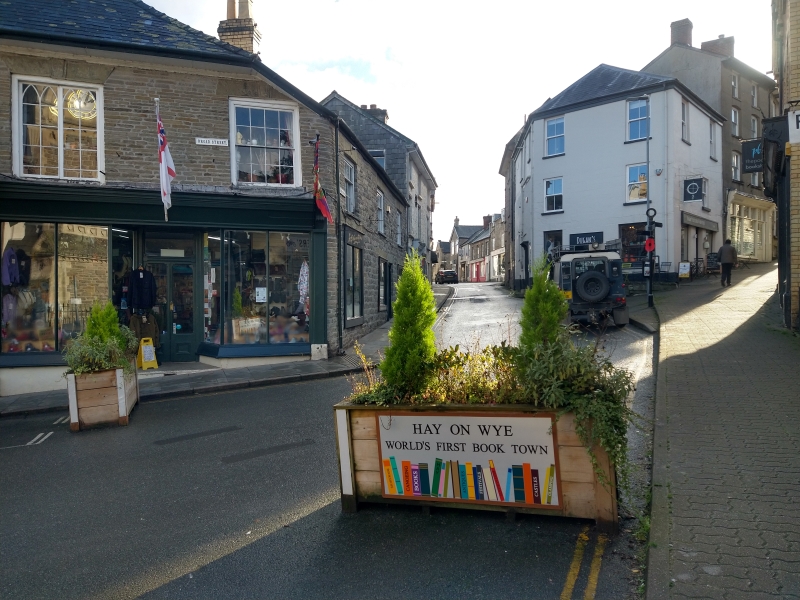
Happy Bookshop Day from Hay-on-Wye (and its newest bookshop, Gay on Wye)!


Today is my 40th birthday and I have been spending the weekend book shopping, reading, eating and drinking. What more could I ask for?


Before we left for Wales, I had my book club over for birthday cakes and bubbles. My husband made me a chocolate Guinness cake (vegan so everyone could share it) and pumpkin chai cupcakes; both recipes were from Hummingbird Bakery cookbooks.


I’ll report back on Monday with my book haul and trip highlights.
For now, here are some sweet lines from a children’s book I read this morning, about cats named Tom and Mot who discover that friendship and imagination are the greatest gifts, and that present has a double meaning: the now that must be appreciated.
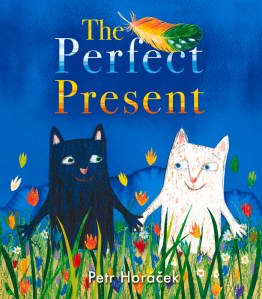
“And then it was time for a hot drink and the cake. The cake tasted like the BEST birthday cake in the world. … ‘Today was the best present in the world,’ said Tom. ‘The perfect present!’”
Cumbria Sights and Reading & A Return to Sedbergh
We returned on Friday from a one-week reunion with university friends – some we see very often and some less so; we hadn’t all been together since February 2020. After a protracted winter selection process pitting locations and cottages against each other, the nine of us had managed to agree on a converted inn in Appleby-in-Westmorland, Cumbria, and it ended up being the perfect base for us: roomy, with lots of communal space plus en suite rooms for each family unit, and well located.
This was my first time in the Lake District in 17 years, and I particularly enjoyed the outings to Haweswater, Acorn Bank, Keswick and Derwentwater, and Carlisle (that one by train), as well as some low-key walking closer to the cottage.


As apposite reading, I took along:
- Some of Us Just Fall by Polly Atkin: A memoir of chronic illness by a writer based in Grasmere.
- Haweswater by Sarah Hall: Purchased in Sedbergh last year. Hall’s debut novel is set in the run-up to the lake being dammed to provide water for the city of Manchester in 1936, flooding the village of Mardale. I’m finding it rather dry and the local accent over-the-top, but I’ll push through and call it one of my 20 Books of Summer.
- The Farmer’s Wife by Helen Rebanks: A recipe-studded memoir of daily life as the spouse of famous Lake District sheep farmer James Rebanks.
- Wild Fell by Lee Schofield: As featured in my Six Degrees post, a plant-loving and conservation-oriented memoir by the manager of the RSPB Haweswater site.
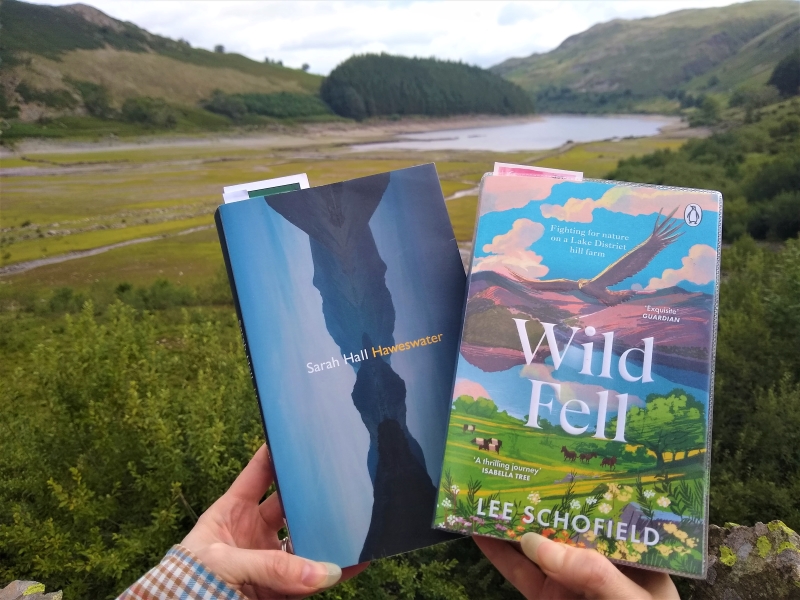
I also packed, but didn’t get time to read from, books by Margaret Forster and Dorothy Wordsworth. A good showing by women from the northwest!
Though we hadn’t planned on going back so soon, having been for the first time in September, when I learned that Sedbergh was only 40 minutes from where we were staying, I suggested it for a daytrip along with a scenic walk to a waterfall and cake and soft drinks at the Cross Keys Temperance Inn, and even the less book-obsessed of us seemed to enjoy.
My final haul – including, from Carlisle, one book each from a charity shop and Bookcase (above), which I learned about from Simon but actually found kind of overwhelmingly huge and mazelike – cost £9.50 after subtracting the sellback of a partial box of books at Westwood. A good selection of poetry and novellas, plus a favourite I couldn’t resist buying two copies of and might reread as a buddy read with my husband (the Orlean).

Any vacation reading or book hauls for you this August?
Hungerford Bookshop’s Summer Reading Celebration
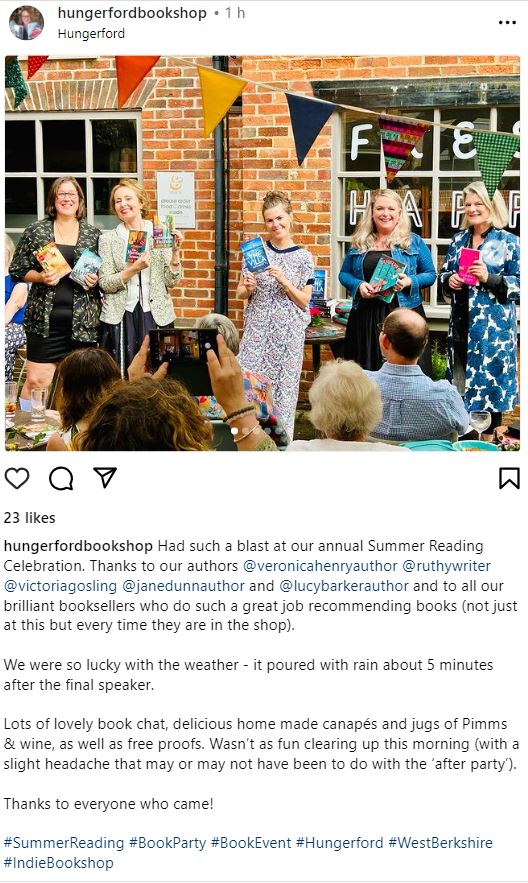
On Saturday evening my nearest indie, Hungerford Bookshop, hosted a Summer Reading celebration with five authors, some of them local, introducing their novels. It was such a delight to be invited! The rain just about held off for the duration of the outdoor event, and it was fun to learn more about new-to-me books over Pimm’s and canapes and pick up some proof copies.
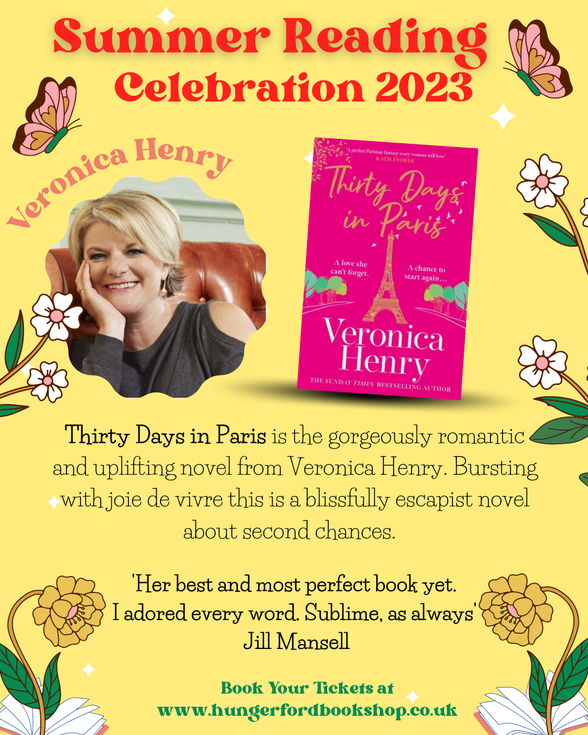
Veronica Henry usually writes English countryside and coastal stories, but this time it’s Thirty Days in Paris, about Juliet, a woman of a certain age who takes a one-month rental in the city to write a novel, having amicably separated from her husband. Henry based the flat on one she stayed in in Paris, and called this novel a wish fulfilment for her.
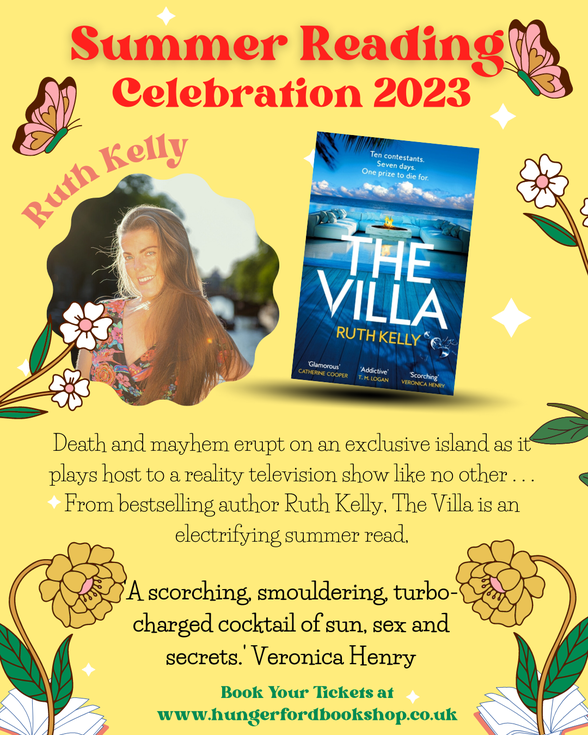
Ruth Kelly, a ghostwriter (The Prison Doctor, etc.) based in Kintbury, has written her first novel, The Villa, a thriller about a reality TV franchise. The main character is a journalist and the other two POVs are the producer and viewers collectively. She said the book starts with the body and moves backwards.
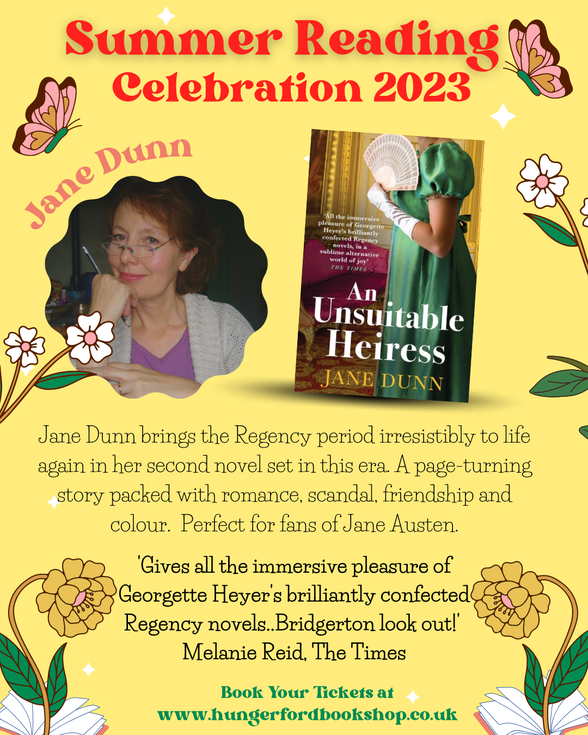
Jane Dunn is a biographer (of Daphne du Maurier, Antonia White et al.) who pivoted to writing Regency romances, having been inspired by a newfound love of Georgette Heyer. Her books, including An Unsuitable Heiress, feature women who are slightly on the periphery: a widow, illegitimate children, a male impersonator, and so on.
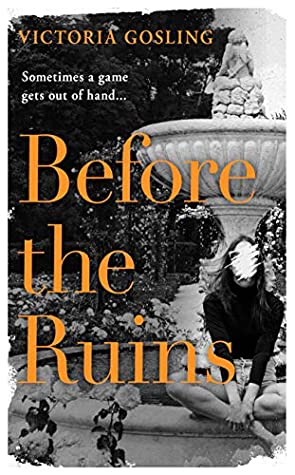
Victoria Gosling was a last-minute fill-in for an author who couldn’t make it. She moved back to Marlborough from Berlin, where she was living when she wrote her book set in Marlborough, Before the Ruins. She called it a slow-burn (Secret History-type) thriller about four people who spent the summer they were 17 squatting in a derelict manor house and have been dealing with the fallout ever since. I’ll get this one out from the library soon.
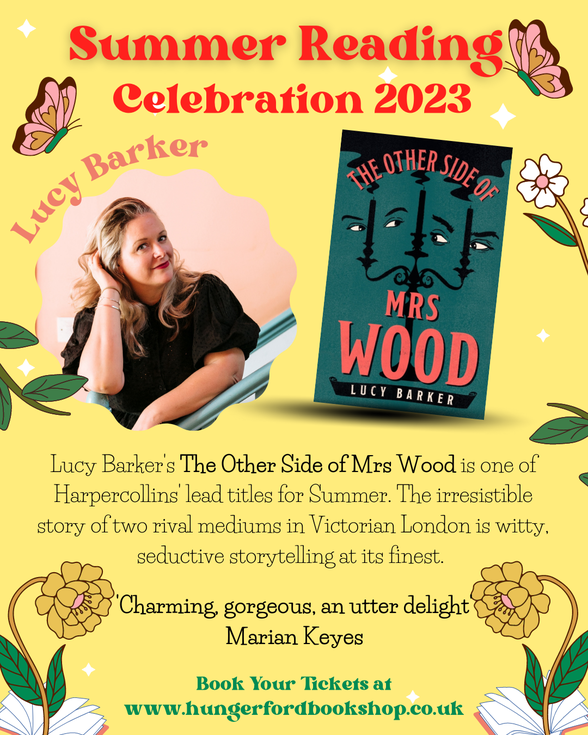
Lucy Barker’s debut novel, The Other Side of Mrs Wood, is about two warring mediums in 1873. Since I love most things set in the Victorian period, this was the one I’d already heard about and placed an order on through the library. It’s based on real-life mediums Agnes Guppy and Florence Cook and sounds like great fun! The summer reading choices are usually paperbacks, but an exception was made for this one still in hardback.
Which of these take your fancy?
There was also bookshop news and bookseller recommendations. The big announcement was the opening of a new branch in Wantage, taking over a closing-down shop.
Bookseller recommendations:
 Hilary: Briefly, A Delicious Life by Nell Stevens (I’d second that one; here’s my review)
Tessa: The Redemption of Isobel Farrar by Alan Robert Clark
Alison: Shrines of Gaiety by Kate Atkinson
Emma: Beautiful Ruins by Jess Walter (I’ve long been interested in this one)
Alex: The Sanctuary by Andrew Hunter Murray (& Lessons by Ian McEwan in paperback)
Imogen: Little Wing by Freya North (my ears pricked up to hear it’s set on the Isle of Harris)
Scottish Travels & Book Haul: Wigtown, Arran, Islay and Glasgow
When I was a kid, one-week vacations were rare and precious – Orlando or Raleigh for my dad’s church conferences, summer camp in Amish-country Pennsylvania, spring break with my sister in California – and I mourned them when they were over. As an adult, I find that after a week I’m ready to be home … and yet just days after we got back from Scotland, I’m already wondering why I thought everyday life was so great. Oh well. I like to write up my holidays because otherwise it’s all too easy to forget them. This one had fixed start and end points – several days of beetle recording in Galloway for my husband; meeting up with my sister and nephew in Glasgow one evening the next week – and we filled in the intervening time with excursions to two new-to-us Scottish islands; we’re slowly collecting them all.
First Stop, Wigtown
Hard to believe it had been over five years since our first trip to Wigtown. The sleepy little town had barely changed; a couple of bookshops had closed, but there were a few new ones I didn’t remember from last time. The weather was improbably good, sunny and warm enough that I bought a pair of cutoffs at the Community Shop. Each morning my husband set off for bog or beach or wood for his fieldwork and I divided the time until he got back between bits of paid reviewing, reading and book shopping. Our (rather spartan) Airbnb apartment was literally a minute’s walk into town and so was a perfect base.


I paced myself and parcelled out the eight bookshops and several other stores that happen to sell books across the three and a bit days that I had. It felt almost like living there – except I would have to ration my Reading Lasses visits, as a thrice-weekly coffee-and-cake habit would soon get expensive as well as unhealthy. (I spent more on books than on drinks and cakes over the week, though only ~25% more: £44 vs. £32.)


I also had the novelty of seeing my husband interact with his students when we were invited to a barbecue at one’s family home on the Mull of Galloway – and realizing that we’re almost certainly closer in age to the mum than to the student. Getting there required two rural bus journeys to the middle of nowhere, an experience all in itself.
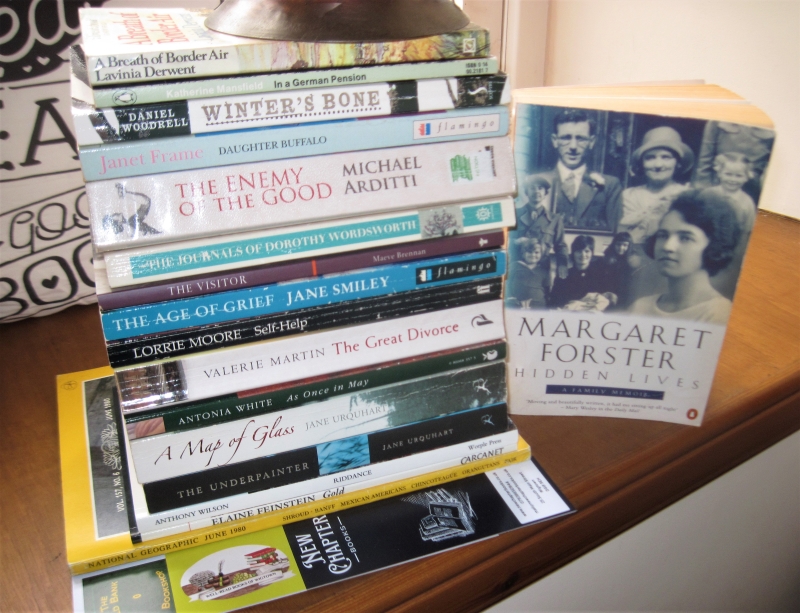
‘Pro’ tips: New Chapter Books was best for bargains, with sections for 50p and £1 paperbacks and free National Geographics. Well-Read Books was good for harder-to-find fiction: among my haul were two Jane Urquhart novels, and the owner was knowledgeable and pleasant. Byre Books carries niche subjects and has scant opening hours, but I procured two poetry collections and a volume of Dorothy Wordsworth’s journals. The Old Bank Bookshop and The Bookshop are the two biggest shops; wander for an hour or more if you can. The Open Book tends to get castoffs from other shops and withdrawn library stock, but I still made two purchases and ended up being the first customer for the week’s hosts: Debbie and Jenny, children’s book authors and long-distance friends from opposite coasts of the USA. Overall, I was pleased with my novella, short story and childhood memoir acquisitions. A better haul than last time.
‘Celebrity’ sightings: On our walk down to the bird hide on the first evening, we passed Jessica Fox, an American expat who’s been influential in setting up the literary festival and The Open Book. She gave us a cheery “hello.” I also spotted Ben of The Bookshop Band twice, once in Reading Lasses and another time on his way to the afternoon school run. Both times he had the baby in tow and I decided not to bother him, not even to introduce myself as one of their Patreon supporters.
On our last morning in town, we lucked out and found Shaun Bythell behind the counter at The Bookshop. He’d just taken delivery of a book-print kilt his staff surprised him by ordering with his credit card, and Nicky (not as eccentric as she’s portrayed in Diary of a Bookseller; she’s downright genteel, in fact) had him model it. He posted a video to Facebook that includes The Open Book hosts on the 23rd, if you wish to see it, and his new cover photo shows him and his staff members wearing the jackets that match the kilt. I bought a few works of paperback fiction and then got him to sign my own copies of two of his books.


As last time, he was chatty and polite, taking an interest in our travels and exhorting us to come back sooner than five years next time. I congratulated him on his success and asked if we could expect more books. He said that depends on his publisher, who worry the market is saturated at the moment, though he has another SIX YEARS of diaries in draft form and the Remainders of the Day epilogue would be quite different if he wrote it now. Tantalizing!
Note to self: Next time, plan to be in town through a Friday evening – we left at noon, so I was sad to miss out on a Beth Porter (the other half of The Bookshop Band) children’s songs concert at Foggie Toddle Books at 3:00, followed by a low-key cocktail party at The Open Book at 5:30 – but not until a Monday, as pretty much everything shuts that day. How I hope someone buys Reading Lasses (the owner is retiring) and maintains the café’s high standard!
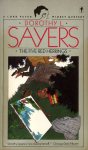 Appropriate reading: I read the first third of Dorothy L. Sayers’s The Five Red Herrings because it’s set in the area (first line: “If one lives in Galloway, one either fishes or paints”), and found it entertaining, though not enough to care whodunnit. In general, I’m terrible for trying mystery series and DNFing or giving up after the first book. Lord Peter Wimsey seemed like he’d be an amusing detective in the Sherlock Holmes vein, but the rendering of Scottish accents was OTT and the case relied too much on details of train schedules and bicycles.
Arran
Our short jaunt to Arran started off poorly with a cancelled ferry sailing, leaving us stranded in Ardrossan (which Bythell had almost prophetically dubbed a “sh*thole” that morning!) for several hours until the next one, and we struggled with a leaky rear tyre and showery weather for much of the time, but we were still enamoured with this island that calls itself “Scotland in miniature.” That was particularly delightful for me because I come from the state nicknamed “America in miniature,” Maryland. This Airbnb was plush by comparison, we obtained excellent food from the Blackwater Bakehouse and a posh French takeaway, and we enjoyed walks at the Machrie stone circles and Brodick Castle as well as at the various bays (one with a fossilized dinosaur footprint) that we stopped off at on our driving tour.


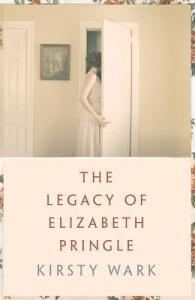 Appropriate reading: The Legacy of Elizabeth Pringle by Kirsty Wark, the only Arran-set novel on my library’s catalogue, is an enjoyable dual-timeline story linked by the Lamlash home of the title character. When she died in her nineties in 2006, she bequeathed her home to a kind woman who used to walk past on summer holidays with her daughter in a pram. Martha Morrison was that baby, and with her mother, Anna, suffering from dementia, it’s up to her to take possession and root out Elizabeth’s secrets. Every other chapter is a first-person fragment from Elizabeth’s memoir, cataloguing her losses of parents and lovers and leading ever closer to the present, when she befriended Saul, an American Buddhist monk based at Holy Island across the water, and Niall, a horticulturist at Brodick Castle. It’s a little too neat how the people in her life pair off (sub-Maggie O’Farrell; more Joanna Trollope, perhaps), but it was fun to be able to visualize the settings and to learn about Arran’s farming traditions and wartime history.
Islay
Islay is a tourist mecca largely because of its nine distilleries – what a pity we don’t care for whiskey! – but we sought it out for its wildlife and scenery, which were reminiscent of what we saw in the Outer Hebrides last year. Our B&B was a bit fusty (there was a rotary phone in the hall!), but we had an unbeatable view from our window and enjoyed visiting two RSPB reserves. The highlight for me was the walk to the Mull of Oa peninsula and the cow-guarded American Monument, which pays tribute to the troops who died in two 1918 naval disasters – a torpedoed boat and a shipwreck – and the heroism of locals who rescued survivors.


We spent a very rainy Tuesday mooching from one distillery shop to another. There are two gin-makers whose products we were eager to taste, but we also relished our mission to buy presents for two landmark birthdays, one of an American friend who’s a whiskey aficionado. Even having to get the tyre replaced didn’t ruin the day. There’s drink aplenty on Islay, but quality food was harder to acquire, so if we went back we’d plump for self-catering.


Incidental additional hauls: I found this 50th anniversary Virago tote bag under a bench at Bowmore harbour after our meal at Peatzeria. I waited a while to see if anyone would come back for it, but it was so sodden and sandy that it must have been there overnight. I cleaned it up and brought home additional purchases in it: two secondhand finds at a thrift store in Tarbert, the first town back on the mainland, and a Knausgaard book I got free with my card points from a Waterstones in Glasgow.


Glasgow
 My 15-year-old nephew is currently on a school trip to Scotland and my sister went along as an unofficial chaperone. I couldn’t let them come to the UK without meeting up, so for months we’d pencilled in an evening in Glasgow. When we booked our Airbnb room in a suburb, it was because it was on a super-convenient train line … which happened to be closed for engineering works while we were there. Plan B: rail replacement buses, which were fine. We greatly enjoyed the company of Santos the Airbnb cat, who mugged us for scraps of our breakfasts.
With our one day in Glasgow, we decided to prioritize the Burrell Collection, due to the enthusiastic recommendations from Susan, our Arran hosts, and Bill Bryson in Notes on a Small Island (“Among the city’s many treasures, none shines brighter, in my view”). It’s a museum with a difference, housed in a custom-built edifice that showcases the wooded surroundings as much as the stunning objects. We were especially partial to the stained glass.


Our whistle-stop city tour also included a walk past the cathedral, a ramble through the Necropolis (where, pleasingly, I saw a grave for one Elizabeth Pringle), and the Tenement Museum, a very different sort of National Trust house that showed how one woman, a spinster and hoarder, lived in the first half of the 20th century. Then on to an exceptional seafood-heavy meal at Kelp, also recommended by Susan, and an all-too-brief couple of hours with my family at their hotel and a lively pub.


We keep returning to Scotland. Where next in a few years? Possibly the southern islands of the Outer Hebrides, which we didn’t have time for last year, or the more obscure of the Inner Hebrides, before planning return visits to some favourites. All the short ferry rides were smooth this time around, so I can cope with the thought of more.
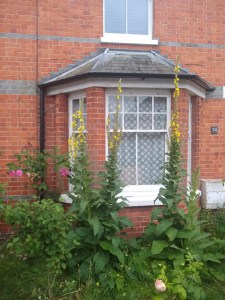
We got home to find our mullein plants attempting to take over the world.
Northumberland Trip, Book Haul, and Reading & 20 Books #9 Emerald
We spent the first 11 days of July on holiday in Northumberland (via stays with friends in York on the way up and back) – our longest spell of vacation since 2016, and our longest UK break since 2013. The trip also happened to coincide with our 14th anniversary. It was a fantastic time of exploring England’s northeast corner, a region new to me. I loved the many different types of landscape, from sandy beaches and rocky coasts and islands to moorland and lovely towns. It’s the county for you if you like castles. We joined the National Trust so we could make stops at lots of stately homes and other historic sites. Some highlights were:
- Cherryburn, the off-the-beaten-track home of engraver Thomas Bewick.
- A cheap and delicious meal of authentic Mexican street food in Hexham, of all places (at Little Mexico).
- Walking along a tiny fraction of Hadrian’s Wall from Housesteads Roman Fort.


- Cragside, the over-the-top home of a Victorian inventor (and the first international arms dealer – whoops), nestled in a plantation of pines and rhododendrons.
- A boat trip to the Farne Islands with a landing on Inner Farne, giving close-up views of puffins, other seabirds, and grey seals. We also sailed past the lighthouse made famous by Grace Darling’s rescue of shipwreck victims in 1838. (Relevant song by Duke Special, by way of a Michael Longley poem.)
- Whiling away a rainy morning in Barter Books, one of Britain’s largest secondhand bookshops (located in an old Victorian railway station), and the charity shops of Alnwick.
- An adventurous (and very wet) walk along the coast to the Dunstanburgh Castle ruin.


- Searching the dunes for rare orchids on Holy Island, followed by a delicious and largely vegan lunch at Pilgrims Coffee House.
- Another seabird-filled boat trip, this one round Coquet Island. Sightings included roseate terns and the Duke of Northumberland.
- Our second Airbnb, The Lonnen (near Rothbury), was a rural idyll shared mostly with sheep and gray wagtails. We were spoiled by Ruth’s excellent interior décor and cooked breakfasts. You can get a feel for the place via her Instagram.
- Coffee and snacks at Corbridge Larder’s Heron Café – so good we made a second trip.


It was also, half unexpectedly, a week filled with book shopping. First up was Forum Books in Corbridge, a lovely independent bookshop. I don’t often buy new books, so enjoyed the splurge here. The Flyn and Taylor were two of my most anticipated releases of 2021. It felt appropriate to pick up a Bloodaxe poetry title as the publisher is based in nearby Hexham.

Next came a bounteous charity shop haul in Hexham.
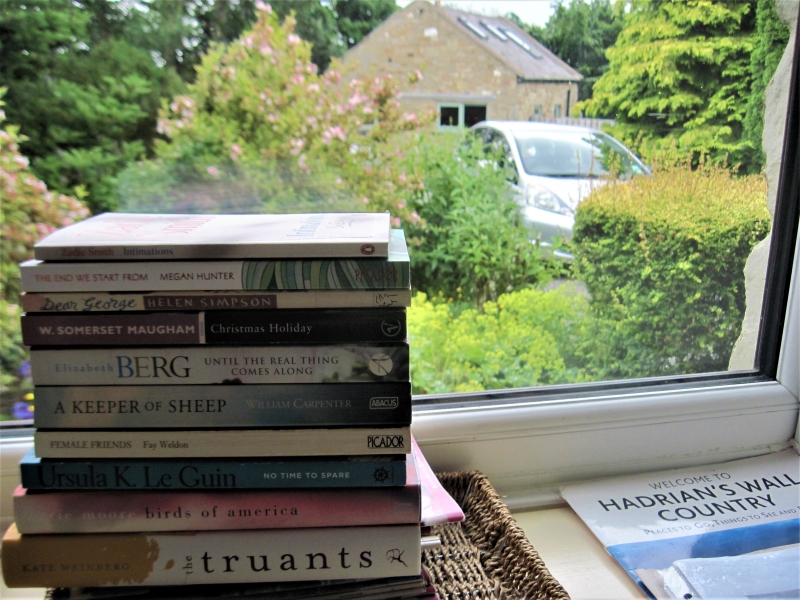
On the Tuesday we holed up in Barter Books for hours while it rained – and the queue lengthened – outside. I was surprised and delighted that the nine antiquarian books I resold to Barter more than paid for my purchases, leaving me in credit to spend another time (online if, as seems likely, I don’t get back up in person anytime soon).


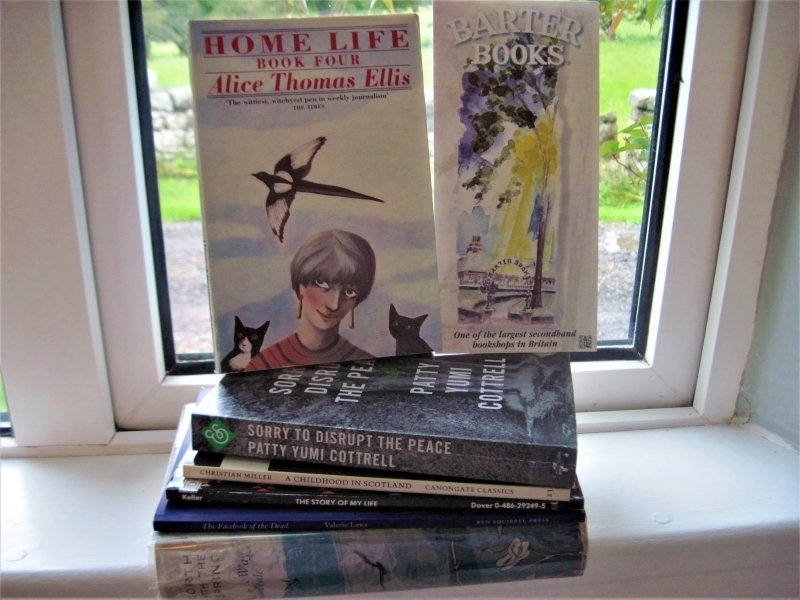
Alnwick also has a number of charity shops. I had the most luck at the Lions bookshop.
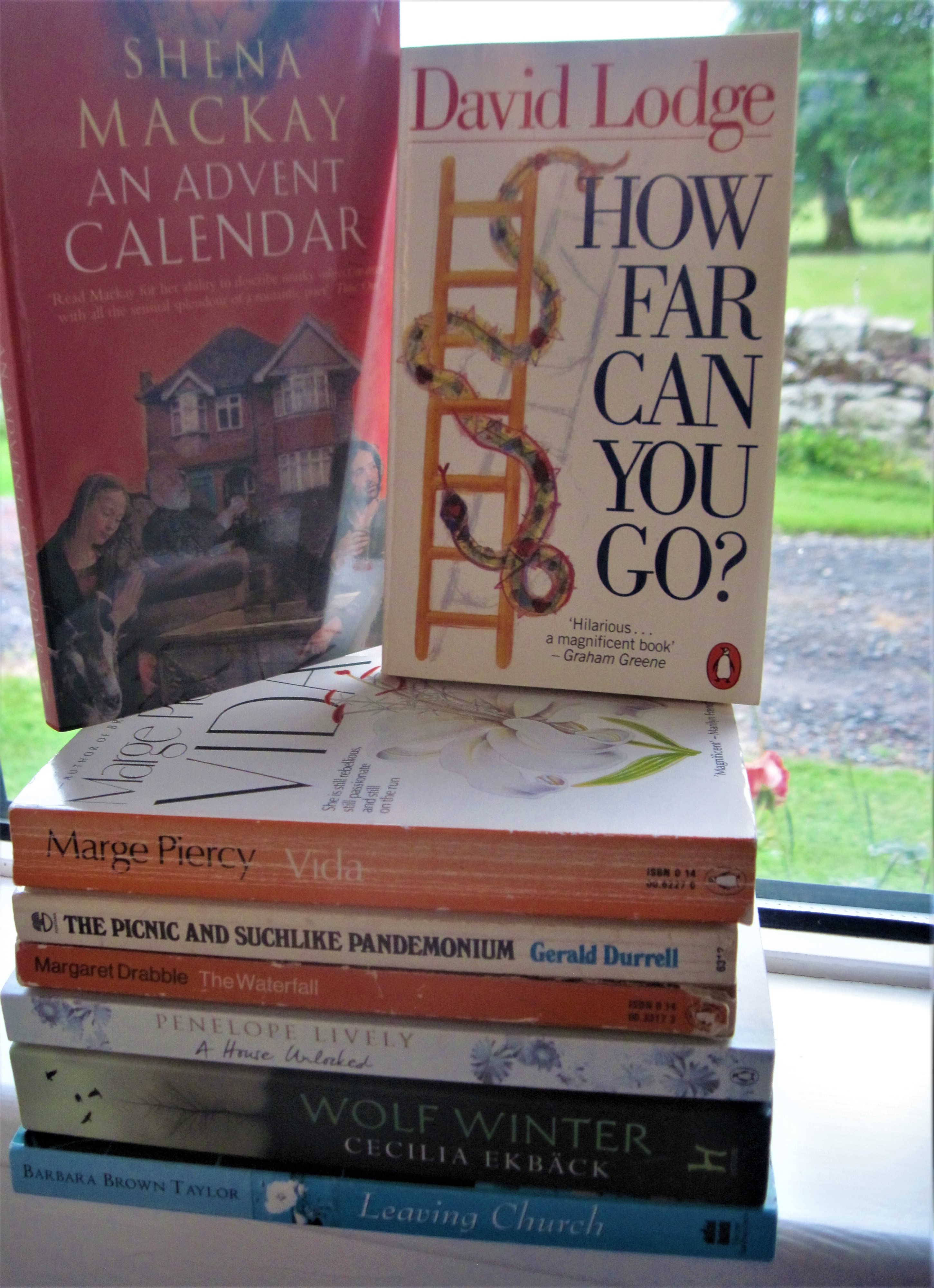
I seemed to keep finding books wherever I went. Kitchen came from a bookshelf in a shop/café on Holy Island. A secondhand/remainders shop near York Minster was the source of the other three.

What I Read:
The holiday involved significant car journeys as Northumberland is a big county with an hour or more between destinations. Alongside my navigating and DJ duties, I got a lot of reading done during the days, as well as in the evenings.
Finished second half or so of:
 Phosphorescence by Julia Baird – An intriguing if somewhat scattered hybrid: a self-help memoir with nature themes. Many female-authored nature books I’ve read recently (Wintering, A Still Life, Rooted) have emphasized paying attention and courting a sense of wonder. To cope with recurring abdominal cancer, Baird turned to swimming at the Australian coast and to faith. Indeed, I was surprised by how deeply she delves into Christianity here. She was involved in the campaign for the ordination of women and supports LGBTQ rights.
 Open House by Elizabeth Berg – When her husband leaves, Sam goes off the rails in minor and amusing ways: accepting a rotating cast of housemates, taking temp jobs at a laundromat and in telesales, and getting back onto the dating scene. I didn’t find Sam’s voice as fresh and funny as Berg probably thought it is, but this is as readable as any Oprah’s Book Club selection and kept me entertained on the plane ride back from America and the car trip up to York. It’s about finding joy in the everyday and not defining yourself by your relationships.
 Site Fidelity by Claire Boyles – I have yet to review this for BookBrowse, but can briefly tell you that it’s a terrific linked short story collection set on the sagebrush steppe of Colorado and featuring several generations of strong women. Boyles explores environmental threats to the area, like fracking, polluted rivers and an endangered bird species, but never with a heavy hand. It’s a different picture than what we usually get of the American West, and the characters shine. The book reminded me most of Love Medicine by Louise Erdrich.
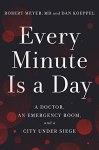 Every Minute Is a Day by Robert Meyer, MD and Dan Koeppel – The Bronx’s Montefiore Medical Center serves an ethnically diverse community of the working poor. Between March and September 2020, it had 6,000 Covid-19 patients cross the threshold. Nearly 1,000 of them would die. Unfolding in real time, this is an emergency room doctor’s diary as compiled from interviews and correspondence by his journalist cousin. (Coming out on August 3rd. Reviewed for Shelf Awareness.)
 Virga by Shin Yu Pai – Yoga and Zen Buddhism are major elements in this tenth collection by a Chinese American poet based in Washington. She reflects on her family history and a friend’s death as well as the process of making art, such as a project of crafting 108 clay reliquary boxes. “The uncarved block,” a standout, contrasts the artist’s vision with the impossibility of perfection. The title refers to a weather phenomenon in which rain never reaches the ground because the air is too hot. (Coming out on August 1st.)
Read most or all of:
 The Other Black Girl by Zakiya Dalila Harris – I feel like I’m the last person on Earth to read this buzzy book, so there’s no point recounting the plot, which initially is reminiscent of Luster by Raven Leilani but morphs into its own thing as Nella realizes her rivalry with Hazel, her new Black colleague at Wagner Books, is evidence of a wider social experiment. The prose is hip, bringing to mind Queenie and Such a Fun Age. It was a fun road trip read for me, but I could have done without the silliness of magical hair care products.
 Heartstopper, Volume 1 by Alice Oseman – It’s well known at Truham boys’ school that Charlie is gay. Luckily, the bullying has stopped and the others accept him. Nick, who sits next to Charlie in homeroom, even invites him to join the rugby team. Charlie is smitten right away, but it takes longer for Nick, who’s only ever liked girls before, to sort out his feelings. This black-and-white YA graphic novel is pure sweetness, taking me right back to the days of high school crushes. I raced through and placed holds on the other three volumes.
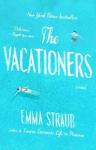 The Vacationers by Emma Straub – Perfect summer reading; perfect holiday reading. Like Jami Attenberg, Straub writes great dysfunctional family novels featuring characters so flawed and real you can’t help but love and laugh at them. Here, Franny and Jim Post borrow a friend’s home in Mallorca for two weeks, hoping sun and relaxation will temper the memory of Jim’s affair. Franny’s gay best friend and his husband, soon to adopt a baby, come along. Amid tennis lessons, swims and gourmet meals, secrets and resentment simmer.
 Kitchen by Banana Yoshimoto – A pair of poignant stories of loss and what gets you through. In the title novella, after the death of the grandmother who raised her, Mikage takes refuge with her friend Yuichi and his mother (once father), Eriko, a trans woman who runs a nightclub. Mikage becomes obsessed with cooking: kitchens are her safe place and food her love language. Moonlight Shadow, half the length, repeats the bereavement theme but has a magic realist air as Satsuki meets someone who lets her see her dead boyfriend again.
I also made a good start on a few of my other purchases from the trip: Islands of Abandonment, No Time to Spare, Filthy Animals, and Female Friends.
Alas, most of the in-demand library books I brought along with me – Great Circle by Maggie Shipstead, Malibu Rising by Taylor Jenkins Reid, and Still Life by Sarah Winman – didn’t hit the spot, so I’ve returned them unread and will borrow them at another point later in the year (except Malibu Rising, which felt soapy and insubstantial).
It’s been a struggle getting back into the routines of work and writing since we got back, but I’ve managed to review one more of my 20 Books of Summer. This is #9, slipped in from my Forum Books pile, and I’m currently working on books #10–13.
Emerald by Ruth Padel (2018)
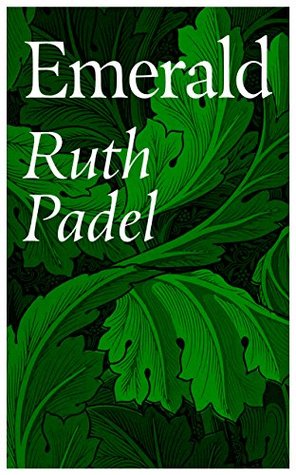 This was my 11th book from Padel; I’ve read a mixture of her poetry, fiction, narrative nonfiction and poetry criticism. Emerald consists mostly of poems in memory of her mother, Hilda, who died in 2017 at the age of 97. The book pivots on her mother’s death, remembering the before (family stories, her little ways, moving her into sheltered accommodation when she was 91, sitting vigil at her deathbed) and the letdown of after. It made a good follow-on to one I reviewed last month, Kate Mosse’s An Extra Pair of Hands.
Emerald, the hue and the gemstone, recurs frequently in ornate imagery of verdant outdoor scenes and expensive art objects. Two favourites were travel-based: “Jaipur,” about the emerald-cutters of India, where Padel guiltily flew while her mother was ill; and “Salon Noir,” about a trip down into prehistoric caves of France the summer after Hilda’s death. Overall, I expected the book to resonate with me more than it did. The bereavement narrative never broke through to touch me; it remained behind a silk screen of manners and form.
Two favourite stanzas:
“Your voice is your breath.
The first thing that’s yours
and the last.” (from “Fragile as Breath”)
“that’s all of us
sifting the dark
in our anonymities and hope.” (from “Above is the Same as Below”)
My rating:
Next books in progress: The Glitter in the Green by Jon Dunn and Nothing but Blue Sky by Kathleen MacMahon
Somerset Trip & Bookbarn Haul and Overhauls
Last week we managed a few days’ holiday in Somerset – our first trip away from home in over seven months (the last one was to Hay-on-Wye). Though only an hour and a half from where we live, it felt like a world away. We were very lucky with the weather, too. We wandered the quiet nature reserves of the Avalon Marshes, toured Glastonbury and Wells (the smallest cathedral city in the UK; alas, we missed the limited cathedral opening hours, but had a nice walk around the outside and saw a plaque marking where Elizabeth Goudge lived), and climbed Glastonbury Tor and Ebber Gorge. Not wanting to chance any pubs, we ate daytime meals outdoors at a few cafés and brought posh supermarket takeaways with us to heat up in the Airbnb kitchen for dinners.


(Photos by Chris Foster)
I read from lots of different books on the trip, but my most appropriate selection was Skylarks with Rosie, Stephen Moss’s diary of the coronavirus spring experienced in Somerset. By coincidence, my husband saw Moss (a mentor of his; we’ve met him a number of times before) filming at Ham Wall when he went back there early one morning!
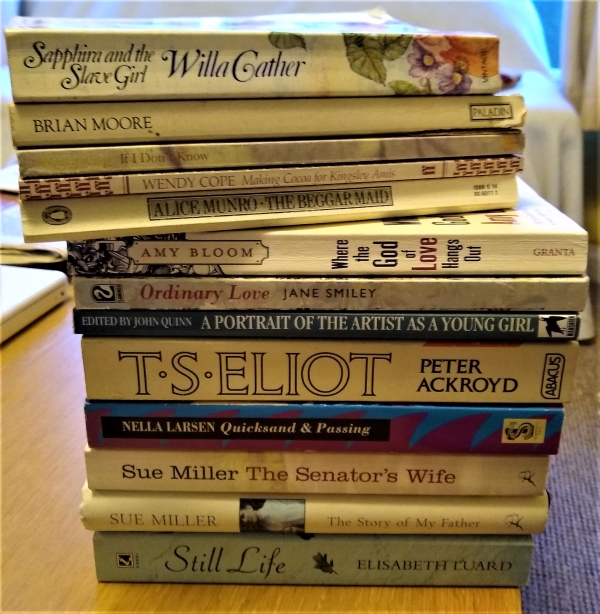
On the last day, we drove back via Bookbarn International, a favourite secondhand bookshop of mine. Below is my book haul from the trip: the top five were from a Little Free Library we found in a bus shelter in the delightfully named town of Queen Camel and the bottom stack was from Bookbarn, which was looking well stocked after the lockdown. I was particularly pleased to find books by Amy Bloom, Sue Miller, and Jane Smiley, authors you don’t come across so often in the UK. Some of the LFL books have rather hideous covers, but it’s the inside that counts, yes?
Overhaul of Previous Trips’ Purchases
This was our seventh trip to Bookbarn since June 2013. I don’t seem to have any photos of that first visit, but for all the rest I have at least one book haul photo.
Simon of Stuck in a Book runs a regular blog feature he calls “The Overhaul,” where he revisits a book haul from some time ago and takes stock of what he’s read, what he still owns, etc. (here’s the most recent one). With his permission, I’m borrowing the title and format to look back at what I’ve bought at Bookbarn over the years and how much I still have left to read.
Date: July 2015
Number of books bought: 8 [the Allen and Cobbett are reference books for my husband]
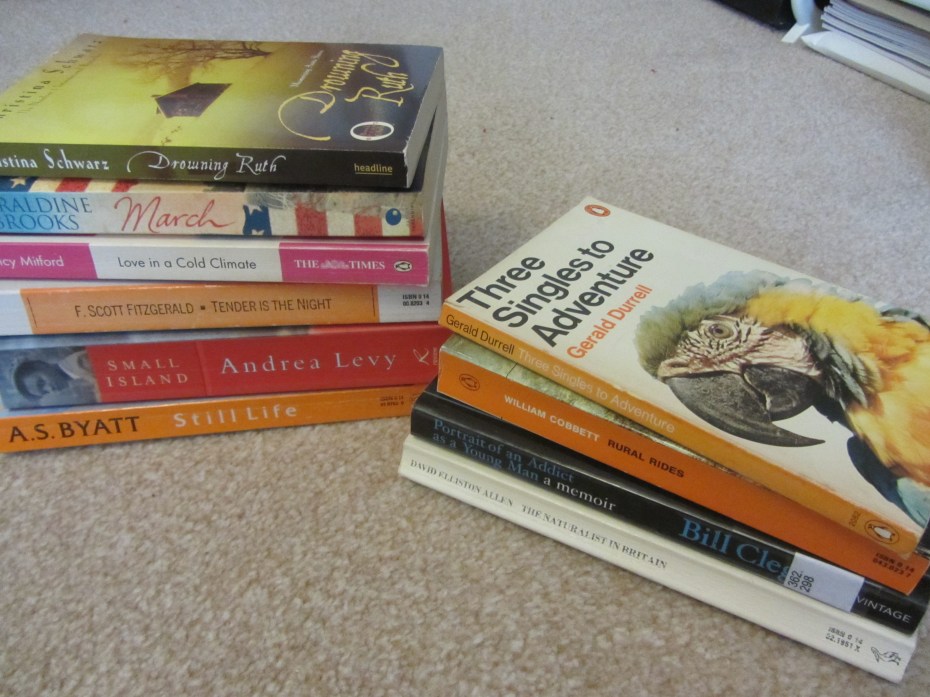
- Read: 7
- No longer owned: 2 (I resold the Fitzgerald and Levy)
- Remaining unread: 1 (Drowning Ruth by Christina Schwarz – so I took it with me on the Somerset trip and have read the first 50 pages so far.)
This is a very good showing for me! I suppose I did have nearly six years to get through them all. I’ve done less well on the other years’ hauls…
Date: July 2016
Number of books bought: 10
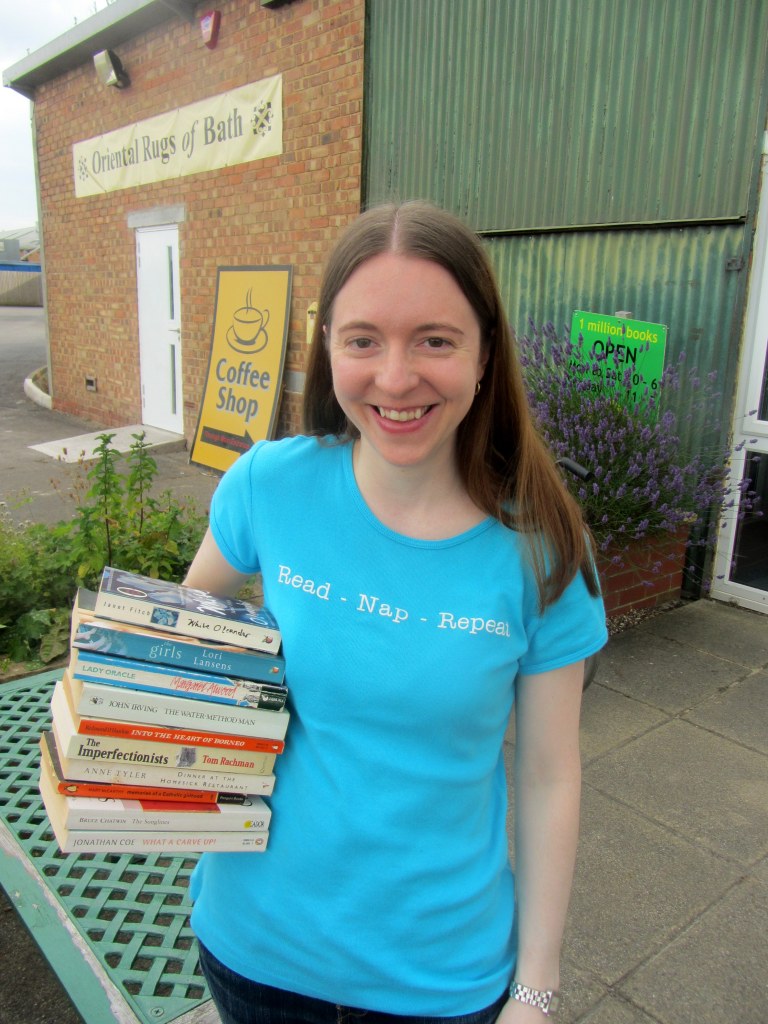
- Had read already: 1 (Rachman)
- Read since: 4
- No longer owned: 1 (Irving’s early work hasn’t been to my taste, so after my husband read The Water-Method Man, I donated it; its only virtue in my eyes is that the main character is called “Bogus Trumper”)
- Remaining unread: 4 (Chatwin, Coe, McCarthy, O’Hanlon)
Date: December 2016
Number of books bought: 13 (the two pictured at left were from another shop)
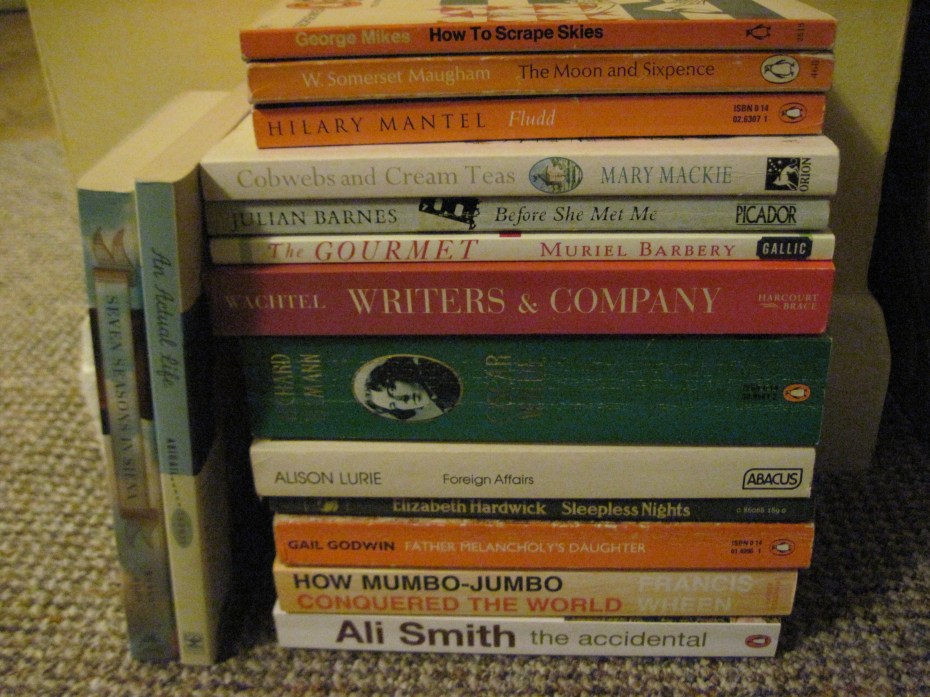
- Read: 6
- DNFed and gave away: 3 (Lurie, Smith, Wheen)
- Remaining unread: 4 (Barnes, Ellman biography, Godwin, Mantel)
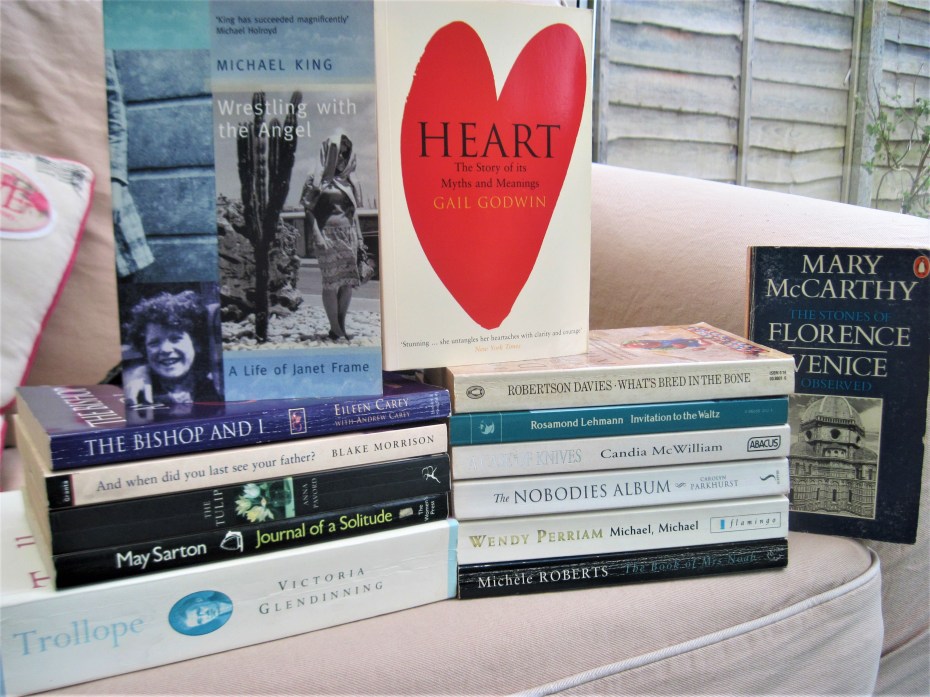
Date: October 2017 (multiple photos in this post)
Number of books bought: 15
- Read: 5
- Skimmed: 1 (McCarthy)
- DNFed: 1 (McNeillie)
- Remaining unread: 8! (I have a bad habit of letting biographies sit around unread)
Date: February 2020
Number of books bought: 14
- Had read already: 2
- Skimmed: 2
- Started reading but set aside: 2, so…
- Remaining unread: 10!
To encourage myself to get to more of these previous acquisitions, I’ve added six of them to my bedside stack.
 Bookish Beck = Rebecca Foster. American transplant to England. Freelance proofreader and book reviewer.
 Bookish Beck