Best Books from 2023
Keeping it simple again this year with one post covering all genres: the 24 (or, actually 26) current-year releases that stood out the most for me. (No rankings; anything from my Best of First Half that didn’t make it through can be considered a runner-up, along with The Librarianist.)


Fiction
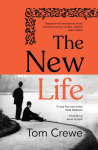 The New Life by Tom Crewe: Two 1890s English sex researchers (based on John Addington Symonds and Havelock Ellis) write a book called Sexual Inversion drawing on ancient Greek history and containing case studies of homosexual behaviour. Oscar Wilde’s trial puts everyone on edge; not long afterwards, their own book becomes the subject of an obscenity trial, and each man has to decide what he’s willing to give up in devotion to his principles. This is deeply, frankly erotic stuff, and, on the sentence level, just exquisite writing.
 The Vaster Wilds by Lauren Groff: Groff’s fifth novel combines visceral detail and magisterial sweep as it chronicles a runaway Jamestown servant’s struggle to endure the winter of 1610. Flashbacks to traumatic events seep into her mind as she copes with the harsh reality of life in the wilderness. The style is archaic and postmodern all at once. Evocative and affecting – and as brutal as anything Cormac McCarthy wrote. A potent, timely fable as much as a historical novel.
Counting as one this thematic trio of women’s true crime pastiches; I liked the Makkai best.
Penance by Eliza Clark: A compelling account of teenage feuds and bullying that went too far and ended in murder. It’s a pretty gruesome crime, but memorable, not least because it coincided with the day of the Brexit vote. I loved Clark’s portrait of Crow-on-Sea, a down-at-heel seaside town near Scarborough, and the depth of character that comes through via interviews and documents. She also nails teenage dialogue and social media use, podcasts, true crime obsession and so on.


 Bright Young Women by Jessica Knoll: An engrossing story of a Type A sorority president whose perfect life goes askew when a serial killer targets the house and kills two of her friends. She and the domestic partner of one of his previous victims are determined to see “the Defendant” brought to justice. 1970s Florida/Washington were interesting settings, and I liked the focus on the victims. The judge in the Defendant’s case lamented that such a bright young man would come to grief; think of the bright young women he extinguished instead.
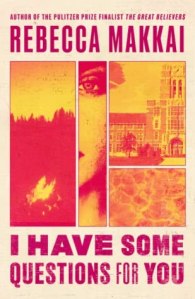
I Have Some Questions for You by Rebecca Makkai: When an invitation comes from her boarding school alma mater, Granby, to teach a two-week course on podcasting, Bodie indulges her obsession with the 1995 murder of her former roommate. Makkai has taken her cues from the true crime genre and constructed a convincing mesh of evidence and theories. She so carefully crafts her pen portraits, and so intimately involves us in Bodie’s psyche, that it’s impossible not to get invested. This is timely, daring, intelligent, enthralling storytelling.
 Sidle Creek by Jolene McIlwain: In this debut collection of 22 short stories, loosely linked by their location in the Appalachian hills in western Pennsylvania and a couple of recurring minor characters, McIlwain softens the harsh realities of addiction, poverty and violence with the tender bruises of infertility and lost love. Grief is a resonant theme in many of the stories, with pregnancy or infant loss a recurring element. At times harrowing, always clear-eyed, these stories are true to life and compassionate about human foibles and animal pain.
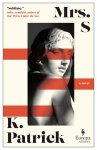 Mrs S by K Patrick: Patrick’s unnamed narrator is an early-twenties Australian butch lesbian who has come to England to be a matron at a girls’ boarding school. Mrs S is the headmaster’s wife, perhaps 20 years her senior. A heat wave gives a sultry atmosphere as hints of attraction between them give way to explicit scenes. Summer romances never last, but their intensity is legendary, and this feels like an instant standard. Not your average coming-of-age story, seduction narrative or cougar stereotype. It’s a new queer classic.
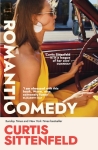 Romantic Comedy by Curtis Sittenfeld: Through her work as a writer for a sketch comedy show modelled on Saturday Night Live, Sally Milz meets Noah Brewster, a pop star with surfer-boy good looks. Plain Jane getting the hot guy – that never happens, right? In fact, Sally has a theory about this very dilemma… As always, Sittenfeld’s inhabiting of a first-person narrator is flawless, and Sally’s backstory and Covid-lockdown existence endeared her to me. Could this be called predictable? Well, what does one want from a romcom?
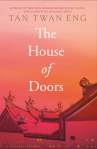 The House of Doors by Tan Twan Eng: In 1921, “Willie” Somerset Maugham and his secretary/lover, Gerald, stay with old friends Robert and Lesley Hamlyn in Penang, Malaysia. Willie’s marriage is floundering and he faces financial ruin. He needs a story that will sell and gets one when Lesley starts recounting the momentous events of 1910: volunteering at the party office of Dr Sun Yat Sen and trying to save her friend from a murder charge. Tan weaves it all into a Maugham-esque plot with sumptuous scene-setting and atmosphere.
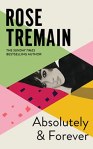 Absolutely and Forever by Rose Tremain: At age 15, Marianne falls in love. She imagines her romance with Simon as a grand adventure (and escape from her parents’ ordinariness), but his post-school life in Paris doesn’t have room for her. Much changes over the next 15 years, but never her attachment to her first love. This has the chic, convincing 1960s setting of Tessa Hadley’s work, and Marianne’s droll narration is a delight. It put me through an emotional wringer – no cheap tear-jerker but a tender depiction of love in all its forms.
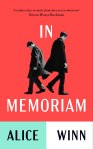 In Memoriam by Alice Winn: Heartstopper on the Western Front; swoon! Will Sidney Ellwood and Henry Gaunt both acknowledge that this is love and not just sex, as it is for so many teenage boys at their English boarding school? And will one or both survive the trenches of the First World War? Winn depicts the full horror of war, but in between there is banter, friendship and poetry. Some moments are downright jolly. This debut is obsessively researched, but Winn has a light touch with it. Engaging, thrilling, and, yes, romantic.
Nonfiction
 All My Wild Mothers by Victoria Bennett: A lovely memoir about grief and gardening, caring for an ill child and a dying parent. The book is composed of dozens of brief autobiographical, present-tense essays, each titled after a wildflower with traditional healing properties. The format realistically presents bereavement and caring as ongoing, cyclical challenges rather than one-time events. Sitting somewhere between creative nonfiction and nature essays, it’s a beautiful read for any fan of women’s life writing.
 Monsters by Claire Dederer: The question posed by this hybrid work of memoir and cultural criticism is “Are we still allowed to enjoy the art made by horrible people?” It begins, in the wake of #MeToo, by reassessing the work of film directors Roman Polanski and Woody Allen. The book is as compassionate as it is incisive. While there is plenty of outrage, there is also much nuance. Dederer’s prose is forthright and funny; lucid even when tackling thorny issues. Erudite, empathetic and engaging from start to finish.
 Womb by Leah Hazard: A wide-ranging and accessible study of the uterus, this casts a feminist eye over history and future alike. Blending medical knowledge and cultural commentary, it cannot fail to have both personal and political significance for readers of any gender. The thematic structure of the chapters also functions as a roughly chronological tour of how life with a uterus might proceed: menstruation, conception, pregnancy, labour, caesarean section, ongoing health issues, menopause. Inclusive and respectful of diversity.
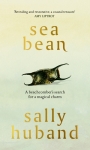 Sea Bean by Sally Huband: Stories of motherhood, the quest to find effective treatment in a patriarchal medical system, volunteer citizen science projects, and studying Shetland’s history and customs mingle in a fascinating way. Huband travels around the archipelago and further afield, finding vibrant beachcombing cultures. In many ways, this is about coming to terms with loss, and the author presents the facts about climate crisis with sombre determination. She writes with such poetic tenderness in this radiant debut memoir.
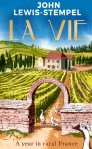 La Vie by John Lewis-Stempel: The author has written much about his Herefordshire haunts, but he’s now relocated permanently to southwest France (La Roche, in the Charente). He proudly calls himself a peasant farmer, growing what he can and bartering for much of the rest. La Vie chronicles a year in his quest to become self-sufficient. It opens one January and continues through the December, an occasional diary with recipes. It’s a peaceful, comforting read that’s attuned to the seasons and the land. Lewis-Stempel’s best book in an age.
 All of Us Together in the End by Matthew Vollmer: In 2019, Vollmer’s mother died of complications of Alzheimer’s and Parkinson’s. Months later, his father reported blinking lights in the woods near the family cemetery. Although Vollmer had left the Seventh-Day Adventist Church in college, his religious upbringing influenced his investigation, which overlapped with COVID-19. Grief, mysticism, and acceptance of the unexplained are resonant themes. An unforgettable record of “a collision with the ineffable.”
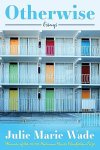 Otherwise by Julie Marie Wade: Nine intricate autobiographical essays reflect on risk, bodily autonomy, and poetry versus prose. A series of meditations composed across Wade’s thirties arranges snapshots of her growing frustration with gendered stereotypes. In particular, she interrogates her rosy childhood notions of marriage. As she explored feminism and accepted her lesbian identity—though not before leaving a man at the altar—she found ways to be “a secular humanist by day and a hopeless romantic by night.” Superb.
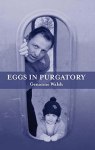 Eggs in Purgatory by Genanne Walsh: This autobiographical essay tells the story of the last few months of her father’s life. Aged 89, he lived downstairs from Walsh and her wife in San Francisco. He was quite the character: idealist, stubborn, outspoken; a former Catholic priest. Although he had no terminal conditions, he was sick of old age and its indignities and ready to exit. The task of a memoir is to fully mine the personal details of a situation but make of it something universal, and that’s just what she does here. Stunning.
Poetry
 More Sky by Joe Carrick-Varty: In this debut collection, the fact of his alcoholic father’s suicide is inescapable. The poet alternates between an intimate “you” address and third-person scenarios, auditioning coping mechanisms. His frame of reference is wide: football, rappers, Buddhist cosmology. The word “suicide” itself is repeated to the point where it becomes just a sibilant collection of syllables. The tone is often bitter, as is to be expected, but there is joy in the deft use of language.
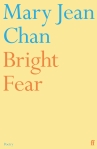 Bright Fear by Mary Jean Chan: This follow-up to Flèche takes up many of the same foundational subjects: race, family, language and sexuality. But this time, the pandemic is the lens through which all is filtered. At a time when Asian heritage merited extra suspicion, English was both a means of frank expression and a source of ambivalence. At the centre of the book, “Ars Poetica,” a multi-part collage incorporating lines from other poets, forms a kind of autobiography in verse. Chan also questions the lines between genres. Excellent.
 Lo by Melissa Crowe: This incandescent autobiographical collection delves into the reality of sexual abuse and growing up in rural poverty. Guns are insidious, used for hunting or mass shootings. Trauma lingers. “Maybe home is what gets on you and can’t / be shaken loose.” The collection is so carefully balanced in tone that it never feels bleak. In elegies and epithalamiums (poems celebrating marriage), Crowe honors family ties that bring solace. The collection has emotional range: sensuality, fear, and wonder at natural beauty.
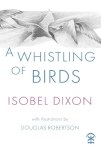 A Whistling of Birds by Isobel Dixon: I was drawn to this for its acknowledged debt to D.H. Lawrence’s Birds, Beasts and Flowers. Snakes, bees, bats and foxes are some of the creatures that scamper through the text. There are poems for marine life, fruit and wildflowers. You get a sense of the seasons turning, and the natural wonders to prize from each. Dixon’s poetry is formal yet playful, the structures and line and stanza lengths varying. There are portraits and elegies. The book is in collaboration with Scottish artist Douglas Robertson. A real gem.
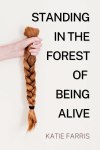 Standing in the Forest of Being Alive by Katie Farris: This debut collection addresses the symptoms and side effects of breast cancer treatment at age 36, but often in oblique or cheeky ways – it can be no mistake that “assistance” appears two lines before a mention of hemorrhoids, for instance, even though it closes an epithalamium distinguished by its gentle sibilance (Farris’s husband is Ukrainian American poet Ilya Kaminsky.) She crafts sensual love poems, and exhibits Japanese influences. (Discussed in my review essay for The Rumpus.)
 The House of the Interpreter by Lisa Kelly: Kelly is half-Danish and has single-sided deafness, and her second collection engages with questions of split identity. One section ends with the Deaf community’s outrage that the Prime Minister’s Covid briefings were not translated into BSL. Bizarre but delightful is the sequence of alliteration-rich poems about fungi, followed by a miscellany of autobiographical poems full of references to colour, language, nature and travel.
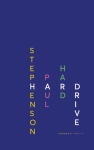 Hard Drive by Paul Stephenson: This wry, wrenching debut collection is an extended elegy for his partner, Tod Hartman, an American anthropologist who died of heart failure at 38. There’s every style, tone and structure imaginable here. Stephenson riffs on his partner’s oft-misspelled name (German for death), and writes of discovery, autopsy, sadmin and rituals. In “The Only Book I Took” he opens up Tod’s copy of Joan Didion’s The Year of Magical Thinking – which came from Wonder Book, the bookstore chain I worked at in Maryland!
Okay, twist my arm … if I had to pick my overall books of the year, I’d concur with the Times in picking The New Life. In nonfiction: Monsters. In poetry: Standing in the Forest of Being Alive.


Have you read any of my favourites? What 2023 releases do I need to catch up on right away?
Christmas Reading and Book Haul
I recently read two novels set in the week of Christmas. Both were good reminders to appreciate the family that you have because whatever your dysfunctional situation, it could probably be much worse.
 Christmas Holiday by W. Somerset Maugham (1939): Twenty-three-year-old Charley Mason heads to Paris on Christmas Eve to see his old friend Simon and live it up in the big city. First thing, Simon takes him to a brothel, where Charley dances with topless Russian prostitute “Princess Olga.” Before things go any further, he ducks out to attend a Mass he happened to get tickets for, and she begs to accompany him. When Lydia (for that is her real name) starts weeping during the service, he takes her back to his hotel and listens with rapt horror as she tells him the sordid story of how her husband, a petty criminal named Robert Berger, murdered a man for fun and ended up in prison overseas. From here on, Charley’s primary feeling for Lydia is pity and any desire he had is neutralized. Simon, too, is fascinated with the Berger case for what it reveals about essential human egoism. The chaste relationship with Lydia and the intensity of the interactions with Simon made me wonder if there was covert homoeroticism here. It was interesting, shortly after my Paris trip, to read something about how sleazy it is rather than how magical. (Secondhand purchase)
 Flight by Lynn Steger Strong (2022): I couldn’t resist the setup: three grown-up siblings and their families meet at the one brother’s house in upstate New York to celebrate their first Christmas since their mother died. The novel takes place over just four days, the 22nd through Christmas Day, but Strong pumps in a lot of backstory about the sibling dynamic and the three marriages. The late Helen has already ascended into legend, and her coastal home in Florida is a bargaining chip. Tess, Martin’s lawyer wife, approaches the problem practically: sell it and split the profits three ways. Henry, an environmentalist artist, wants to sell the land to the state to be part of a nature preserve. Kate, the sentimental one, wants to live in the house herself but isn’t sure she and Josh can afford to buy her brothers out. At first I thought this was going to be a slightly irksome story of privileged white people and their ‘problems’, but there is a biracial character and an ex-heroin addict and her daughter also become key characters. As the family build igloos, bake pies and plan the perfect photo shoot, offences are simmering under the surface (“Mostly they resent each other from a comfortable enough distance that they might call it love”). These all fade, though, when a child goes missing. I was reminded subtly of Ann Patchett’s work, but more, with the environmental and parenting themes, of Ramona Ausubel and Megan Mayhew Bergman. I’d read more by Strong. (Public library)
And now for the promised Christmas book haul.
Here’s what I bought with store credit at 2nd & Charles while in the States for my sister’s graduation with her bachelor’s in nursing.
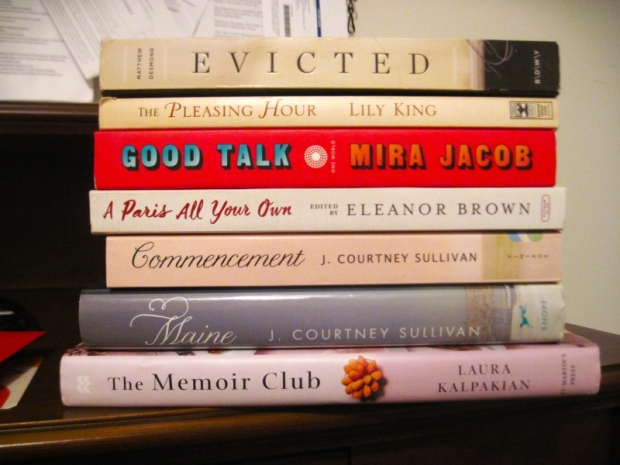
We got to do some fun family Christmassy things while I was there for 10 days, then I flew back to the UK into Christmas Eve and got to do actual Christmas with my in-laws. It’s been a whirlwind of a month!


I had this book post waiting for me when I got back.
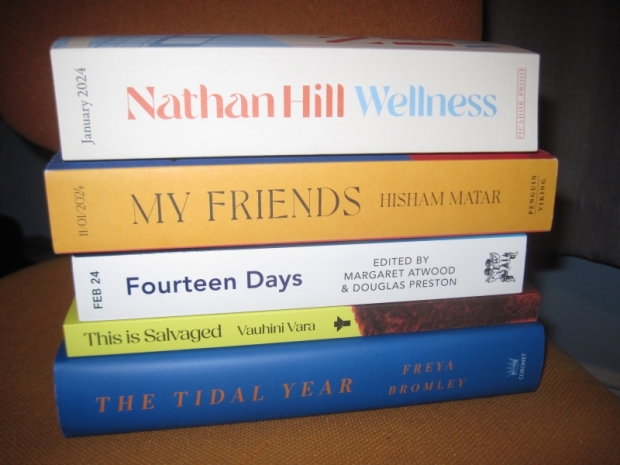
And received these for Christmas!
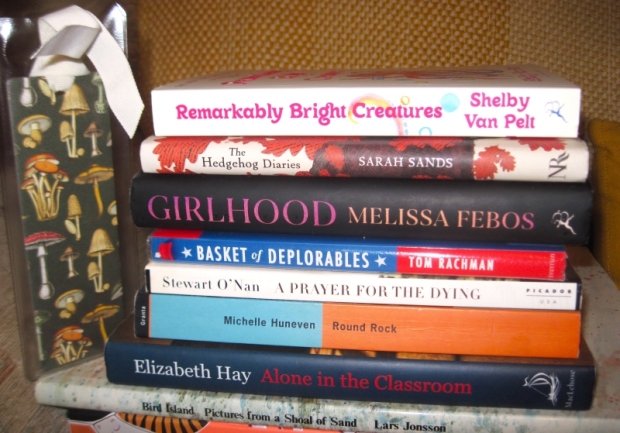
The 2024 Releases I’ve Read So Far
I happen to have read eight pre-release books so far, all of them for paid review; mostly for Shelf Awareness, with one for Foreword. (I also have proof copies of upcoming novels by Tania James, Margot Livesey, Sigrid Nunez and Sarah Perry on the shelf, but haven’t managed to start on them yet.) I’ve given review excerpts, links where available, and ratings below to try to pique your interest. Early in January I’ll follow up with a list of my dozen Most Anticipated titles for the coming year.
My top recommendations so far:
(in alphabetical order)
 Theophanies by Sarah Ghazal Ali [Jan. 16, Alice James Books]: In this poised debut collection by a Muslim poet, spiritual enlightenment is a female, embodied experience, mediated by matriarchs. Ali’s ambivalence towards faith is clear in alliteration-laden verse that recalls Kaveh Akbar’s. Wordplay, floral metaphors, and multiple ghazals make for dazzling language.
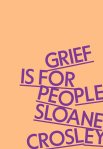 Grief Is for People by Sloane Crosley [Feb. 27, MCD]: A bereavement memoir like no other. Heart-wrenching yet witty, it bears a unique structure and offers fascinating glimpses into the New York City publishing world. Crosley’s apartment was burgled exactly a month before the suicide of her best friend and former boss. Investigating the stolen goods in parallel serves as a displacement activity for her.
 Behind You Is the Sea by Susan Muaddi Darraj [Jan. 16, HarperVia]: Darraj’s second novel-in-stories is a sparkling composite portrait of a Palestinian American community in Baltimore. Across nine stellar linked stories, she explores the complex relationships between characters divided by—or connected despite—class, language, and traditional values. The book depicts the variety of immigrant and second-generation experience, especially women’s.
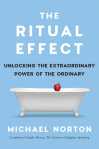 The Ritual Effect by Michael Norton [April 9, Scribner]: Many use the words “habit” and “ritual” interchangeably, but the Harvard Business School behavioral scientist argues convincingly that they are very different. While a habit is an automatic, routine action, rituals are “emotional catalysts that energize, inspire, and elevate us.” He presents an engaging and commonsense précis of his research, making a strong case for rituals’ importance in the personal and professional spheres as people mark milestones, form relationships, or simply “savor the experiences of everyday life.”
Other 2024 releases I’ve read:
(in publication date order)
 House Cat by Paul Barbera [Jan. 2, Thames & Hudson]: The Australian photographer Paul Barbera’s lavish art book showcases eye-catching architecture and the pets inhabiting these stylish spaces. Whether in a Revolutionary War-era restoration or a modernist show home, these cats preside with a befitting dignity. (Shelf Awareness review forthcoming)
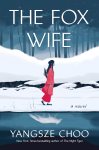 The Fox Wife by Yangsze Choo [Feb. 13, Henry Holt/Quercus]: Choo’s third novel is steeped in Chinese folklore, like her previous work, this time with a focus on tantalizing stories related to foxes, which were often worshiped at village shrines in China. Two tandem searches ramp up the level of suspense: in the winter of 1908 in Manchuria, in northeast China, a detective investigates a series of unexplained deaths; at the same time, a fox-woman masquerading as a servant plots vengeance against the man who murdered her child.
 The Only Way Through Is Out by Suzette Mullen [Feb. 13, University of Wisconsin Press]: A candid, inspirational memoir traces the events leading to her midlife acceptance of her lesbian identity and explores the aftermath of her decision to leave her marriage and build “a life where I would choose desire over safety.” The book ends on a perfect note as Mullen attends her first Pride festival aged 56. “It’s never too late” is the triumphant final line. (Foreword review forthcoming)
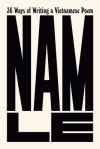 36 Ways of Writing a Vietnamese Poem by Nam Le [March 5, Knopf]: A fearless poetry debut prioritizes language and voice to explore inherited wartime trauma and expose anti-Asian racism. Each poem is titled after a rhetorical strategy or analytical mode. Anaphora is one sonic technique used to emphasize the points. Language and race are intertwined. This is a prophet’s fervent truth-telling. High-concept and unapologetic, this collection from a Dylan Thomas Prize winner pulsates. (Shelf Awareness review forthcoming)
Currently reading:
(in release date order; all for Shelf Awareness review)
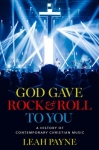 God Gave Rock and Roll to You: A History of Contemporary Christian Music by Leah Payne [Jan. 4, Oxford University Press]: “traces the history and trajectory of CCM in America and, in the process, demonstrates how the industry, its artists, and its fans shaped—and continue to shape—conservative, (mostly) white, evangelical Protestantism.”
 Raised by Wolves: Fifty Poets on Fifty Poems, A Graywolf Anthology [Jan. 23, Graywolf Press]: “Graywolf poets have selected fifty poems by Graywolf poets, offering insightful prose reflections on their selections. What arises is a choral arrangement of voices and lineages across decades, languages, styles, and divergences, inspiring a shared vision for the future.”
 The Paris Novel by Ruth Reichl [April 30, Random House]: “When her estranged mother dies, Stella is left with an unusual gift: a one-way plane ticket, and a note reading ‘Go to Paris’. But Stella is hardly cut out for adventure … When her boss encourages her to take time off, Stella resigns herself to honoring her mother’s last wishes.”
Will you look out for one or more of these?
Any other 2024 reads you can recommend?
That’s it for me until later next week when I start in on my year-end round-ups (DNFs, miscellaneous superlatives, books of the year, and final statistics). Merry Christmas!
December Releases: Rebecca, Not Becky & You Bury the Birds in My Pelvis
The last month of the year is generally thin on the ground for new books, but here are two December U.S. releases I reviewed early for Shelf Awareness. One is a fun and timely novel about race relations and the other an autobiographical poetry collection about asexuality and chronic illness. Below are excerpts with a link to the full text for one. Both:
Rebecca, Not Becky by Christine Platt and Catherine Wigginton Greene
 Two women navigate the nuances of racism in their affluent Northern Virginia community. Rebecca Myland shed the nickname “Becky” when it became cultural shorthand for clueless white ladies. She desperately wants to do the right thing, including making the perfect home for her husband and daughters and being a model white ally, leading the school’s diversity committee and antiracist book club.
De’Andrea Whitman reluctantly gave up her law career and Atlanta support system to move to Rolling Hills. It’s the best place for the family, given her husband Malik’s new job and the proximity to his mother’s top-notch dementia care facility. However, she is painfully aware that their daughter, Nina, may be the only Black student at the private school. De’Andrea’s therapist, Dr. Jones, challenges her to try to make one white friend.
The two protagonists have more in common than they realize. When the diversity committee’s controversial pet project of getting a statue of a Confederate general removed from the local park makes national news, the resulting ruckus threatens their fragile friendship. It’s a hugely enjoyable novel reminiscent of Terry McMillan and Curtis Sittenfeld that nonetheless takes a hard look at prejudice and performative allyship.
(And I love the title because my mother and one aunt always tried to call me Becky, but I hate that nickname!)
You Bury the Birds in My Pelvis by Kelly Weber
 The poet feels marked by “failure to want” and by recurring medical complaints—severe Crohn’s disease and menorrhagia, initially dismissed by a doctor as menstrual cramps. In “Blood Firsts,” she compares her first period with the later coming-of-age moment of realizing she was asexual. She describes herself as a teenage wallflower, aware of a same-sex pull but unsure what, if anything, to do about it. The series of lyrical attempted definitions in “Queerplatonic” show her in love with a female friend. Anatomy and nature supply the book’s interlocking metaphors. Animals appear frequently, but often as roadkill or taxidermied trophies. The structure varies, with prose paragraphs, columns, and text moving up the page. The rich stylistic palette (rhetorical questions, footnotes, second person, a call-and-response format) and sonic arsenal (alliteration, wordplay, anaphora) make for a courageous, unforgettable collection. (Forthcoming)
Three Days in Paris and What I Read
My husband’s belated 40th birthday treat was a short city break in Paris earlier this week. No sooner had I gotten home on Tuesday than I was sealing up my suitcase to fly to the States the following afternoon. It’s been quite the whirlwind week (make that few months), but now that things have quieted down a little, I have a chance to look back on the long weekend’s eating, sightseeing and reading. I’d been to Paris twice before: once just for an overnight en route to Milan in 2019, while my first and only proper trip was in early 2004.
That time I did all the touristy things like the Eiffel Tower, the Musée d’Orsay (though not the Louvre), Notre Dame and the site of the Bastille. A sign of how times have changed: nearly 20 years ago when I was at Père Lachaise cemetery, you could go right up to Oscar Wilde’s grave and add your lip-print to the many kisses on it. (There’s a photo of me and my study abroad friend doing just that; I wish I’d had time to go dig it out of an album.) Today it’s walled off by Perspex with a note explaining that the family pay all the cleaning costs. To think that there are descendants of Wilde’s out there in the world! Still, a tiny letdown when it was such a cute ritual. We also visited Chopin and Balzac and took in the views.


The most touristy things we did this time around were Sainte-Chapelle, a marvel of medieval stained glass, and Shakespeare and Company, the famous English-language haunt of expats over the decades. Notre Dame is still closed for its extensive post-fire restoration (it’s due to reopen next year) but you can read some signboards about the reconstruction outside and sit on the bleachers to soak in the atmosphere. Our other destinations included the Hotel de Ville, lit up at night with a Christmas market to advertise the 2024 Olympics, and the Jardin des Plantes and its museum of paleontology and comparative anatomy – old-fashioned in just the way we like it, with row upon row of skeletons and lots of hand-inked original labels.


We were mostly in the city to eat, and eat we did. Many of our recommendations for boulangeries and patisseries came from American chef David Lebovitz’s blog. Although we did buy traditional baguettes and croissants, we were mostly on the lookout for unusual treats, such as hay-flavoured custard-filled choux buns and a famous maple syrup tart. We had one bistro meal and another at a creperie, this one incorporating Breton-Japanese fusion dishes such as my Breizh rolls, cut from a buckwheat galette filled with artichoke hearts, seaweed, scrambled egg and Comté cheese: a cross between a crêpe and sushi.
We enjoyed riding the Métro and by the time we left felt like pros at it. Speaking French to shopkeepers and waitstaff had also started to become second nature (I even managed to query errors in our order/bill twice at restaurants). The weather was showery and colder than expected, but never enough to spoil our experience, and we stole some good glimpses of the Tower from around the city.
But the highlight of the trip was something we stumbled upon and joined in on a whim. At Shakespeare and Company on our first full day, we spotted a sign for a free event they were hosting the next night: the recording of a podcast by comedian Greg Proops, followed by mince pies, mulled wine and carol singing.

We had never heard of Proops but thought we’d take a chance, so made our way back the next evening and got two of the last seats left in the back of the upstairs space. His monologue was funnier than expected, mostly a stringing together of in-jokes about national stereotypes of the English, Americans and French – but as we all know, clichés are amusing precisely because they contain grains of truth. He also had a few long anecdotes about getting eye surgery and running into a famous old film director in Paris. It sounds like this bookshop event is an annual tradition for him.


Best of all, afterwards the shop was technically closed but we were allowed to stay in – lock-in at the bookshop! They don’t normally allow photographs inside, but my husband managed to sneak a few plus some video of the carol singing. The mince pies, gingerbread and mulled wine were all tasty. Professor Lex Paulson at the piano led us in a marathon of 22 songs ranging from ancient traditionals (“O Come O Come Emmanuel” and “The Coventry Carol”) to recent pop (“Last Christmas” and “All I Want for Christmas Is You”); it must be said that there was more general enthusiasm for the latter, while my husband and I were among the few raring for “The Holly and the Ivy” and suchlike. A truly unforgettable evening.
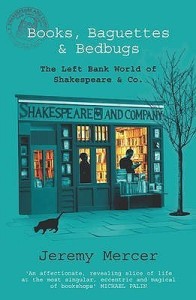 I’d read one memoir of working and living in Shakespeare and Company, Books, Baguettes and Bedbugs by Jeremy Mercer (original title: Time Was Soft There), back in 2017. I don’t remember it being particularly special as bookish memoirs go, but if you want an insider’s look at the bookshop that’s one option. Founder Sylvia Beach herself also wrote a memoir. The best part of any trip is preparing what books to take and read. I had had hardly any time to plan what else to pack, and ended up unprepared for the cold, but I had my shelf of potential reads ready weeks in advance. I took The Elegance of the Hedgehog by Muriel Barbery and read the first 88 pages before giving up. This story of several residents of the same apartment building, their families and sadness and thoughts, was reminiscent of Sophie’s World and didn’t grip me. But here’s what I did read, in chronological order (all: ):
Broderies by Marjane Satrapi (2003)
The fifth-floor Airbnb apartment where we stayed in the suburb of Mairie des Lilas overlooked a school and housed an amazing collection of graphic novels in French. I picked this one up to flick through because I remember enjoying Persepolis, but to my surprise I could understand just about every line bar a very few vocabulary words that I skipped over or grasped in context, so I read the whole thing over a couple of breakfasts and evening glasses of wine.
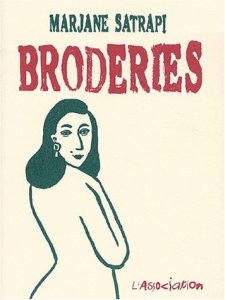 After a dinner party, Marji helps her grandmother serve tea from a samovar to their female family friends, and the eight Iranian women swap stories about their love lives. These are sometimes funny, but mostly sad and slightly shocking tales about arranged marriages, betrayals, and going to great lengths to entrap or keep a man. They range from a woman who has birthed four children but never seen a penis to a mistress who tried to use mild witchcraft to get a marriage proposal. What is most striking is how standards of beauty and purity have endured in this culture, leading women to despair over their loss of youth and virginity.
I think the title may have some slang meaning relating to the hymen? But in English translation it is Embroideries, referring to the way these women stitch together their life stories and their relationships. All the scenes are in black and white with a readable cursive handwriting for the plentiful text. It was a more talky graphic novel than I tend to prefer, but I learned a lot of good phrases from it, and found it a real joy to read. It must be the first book I have read in French since my university days!
The Sweet Life in Paris by David Lebovitz (2009)
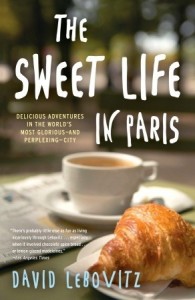 We both read this, keeping two bookmarks in and trading it off on Metro journeys. The short thematic chapters, interspersed with recipes, were perfect for short bursts of reading, and the places and meals he described often presaged what we experienced. His observations on the French, too, rang true for us. Why no shower curtains? Why so much barging and cutting in line? Parisians are notoriously rude and selfish, and France’s bureaucracy is something I’ve read about in multiple places this year, including John Lewis-Stempel’s La Vie.
Lebovitz has happily called the city home for two decades now, and performs culinary feats (testing the recipes for his dessert cookbooks) in a tiny apartment kitchen. There are sections here on fish, cheese, chocolate, and so on, but also on particular shopping areas and typically French incidents, such as everyone being on strike at the same time. One chapter was a hymn to G. Detou (a play on words meaning “I have it all”), a food emporium my husband was especially excited to visit. This was breezy and affectionate, a perfect travel companion.
A Waiter in Paris by Edward Chisholm (2022)
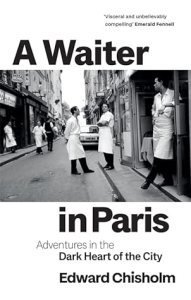 This was consciously based on George Orwell’s Down and Out in Paris and London, but more so than an exposé of working-class poverty and abuses of power in the restaurant world, it is a rollicking narrative of living hand to mouth and trying to gain acceptance as a waiter. I enjoyed it in much the same way that I did Kitchen Confidential by Anthony Bourdain and Sweetbitter by Stephanie Danler: this is a high-stress, macho world I would never want to be a part of myself, but reading about it is intriguing. After Chisholm broke up with his girlfriend, he lived in a bedbug-ridden garret and often did 14-hour shifts as a runner at the “Bistrot de la Seine,” which packed in hundreds of tables and served thousands of meals daily. As “l’Anglais,” with no proper contract or social security, Chisholm was overlooked but determined to become a waiter. Though he felt fraternity with his colleagues, day-to-day life was brutal. He survived on coffee, cigarettes, and stolen rolls, and caught few-hour naps in the toilets of upscale restaurants. The waiters were cut-throat in their competition for tips, and the chefs, mostly Tamil, worked in a basement inferno. His pen portraits of these characters are particularly Orwellian. The account is as vivid and engrossing as a novel.
I forgot to start it while I was there, but did soon afterwards: The Paris Novel by Ruth Reichl, forthcoming in early 2024. When Stella’s elegant, aloof mother Celia dies, she leaves her $8,000 – and instructions to go to Paris and not return to New York until she’s spent it all. At 2nd & Charles yesterday, I also picked up a clearance copy of A Paris All Your Own, an autobiographical essay collection edited by Eleanor Brown, to reread. I like to keep the spirit of a vacation alive a little longer, and books are one of the best ways to do that.
A Quick Look Back at Hamnet by Maggie O’Farrell for #LiteraryWives
I read Maggie O’Farrell’s Women’s Prize winner, Hamnet, at its release in 2020. Unfortunately, it has been my least favourite of her novels (I’ve read all but My Lover’s Lover now), and it turns out 3.5 years is too soon to reread and appreciate anew. But I had a quick skim back through, this time focusing on the central marriage and the question we ask for the Literary Wives online book club:
What does this book say about wives or about the experience of being a wife?

From my original review: O’Farrell imagines the context of the death of William Shakespeare’s son Hamnet and the effect it had on the playwright’s work – including, four years later, Hamlet. Curiously, she has decided never to mention Shakespeare by name in her novel, so he remains a passive, shadowy figure seen only in relation to his wife and children – he’s referred to as “the father,” “the Latin tutor” or “her husband.” Instead, the key characters are his wife, Agnes (most will know her as Anne, but Agnes was the name her father, Richard Hathaway, used for her in his will), and Hamnet himself.
It is refreshing, especially for the time period, to have the wife’s experience and perspective be primary, and the husband in the background to the extent of being unnamed. Both, however, blame themselves for not being there when 11-year-old Hamnet fell ill with what O’Farrell posits was the Plague. Shakespeare was away in London with his theatre company; Agnes was off tending her bees. Shakespeare is only present in flashbacks – in which he morphs from eager tutor to melancholy drinker – until three-quarters of the way through the novel, when he returns to Stratford, too late. All he can do then is carry his son’s corpse.
I have heard it said many times that few marriages survive the death of a child. And for a while that looks like it will be the case here, too:
Her husband takes her arm as they reach the gate; she turns to look at him and it is as if she has never seen him before, so odd and distorted and old do his features seem. Is it their long separation, is it grief, is it all the tears? she wonders, as she regards him. Who is this person next to her, claiming her arm, holding it to him?
How were they to know that Hamnet was the pin holding them together? That without him they would all fragment and fall apart, like a cup shattered on the floor?
With his earnings, Shakespeare buys the family a new house, but never moves them to London as he once intended. He continues to stay away for long periods at a time, leaving Agnes to her grief. When, four years after Hamnet’s death, Agnes and their daughters learn that he has written a play about a character called Hamlet, they feel betrayed, but Agnes goes to a performance and her anger melts as she recognizes her son. “It is him. It is not him. … grown into a near-man, as he would be now, had he lived, on the stage, walking with her son’s gait, talking in her son’s voice, speaking words written for him by her son’s father.”
Although O’Farrell leaves it there, creating uncertainty about the couple’s future, she implies that the play has been the saving of both of them. For Shakespeare, it was the outlet for his grief. For Agnes, it was the proof she needed that he loved their son, grieved him as bitterly as she did, and still remembers him. That seems to be enough to hold them together.
While her next novel, The Marriage Portrait, which I liked a lot more as historical fiction goes, might seem on the surface better suited for this club, Hamnet was in fact perfect for the prompt, revealing an aspect I don’t recall looking at before: the strain that a child’s illness and death can place on a marriage. At my first reading I found the prose flat and detached, to the point of vagueness, and thought there was anachronistic language and unsubtle insertion of research. This time, I was more aware of how the deliberate evenness softens the emotion, making it more bearable – though, still, I have a friend who gave up reading this partway because she found it too raw.
See also Kay’s and Naomi’s responses!
The next book, for March 2024, will be Mrs. March by Virginia Feito.
Preposterous #NovNov23 Catch-Up Post
I have a big pile of novellas I read last month but never wrote about, plus a few more I’ve sneaked in by finishing them over the past couple of days. I tweaked my shoulder last weekend and the discomfort has moved into my neck, making daily life, and sleep, difficult. A taste of what it’s like to live with chronic pain, I suppose. Add in the freezing temperatures of recent days and I’ve been feeling pretty sorry for myself and haven’t succeeded in sitting at a computer for the time required to write at least a bit about these short books. But as today is the day our link-up finishes, I’m tucked up in bed with laptop, electric blanket, heater, cat, cup of tea and ice pack, ready to do all 16 the best justice I can through a paragraph each.
Fiction:
In the Sweep of the Bay by Cath Barton (2020)
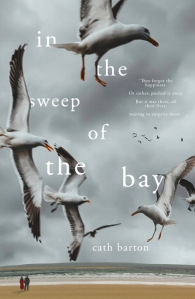 Susan put this on my radar and I bought it in publisher Louise Walters Books’ closing-down sale. Set in Morecambe, this bittersweet story of a half-century marriage and the figures on its margins – co-workers, children, even strangers – is both ambitious and intimate. Ted and Rene Marshall marry in the 1950s and soon drift into drudgery and traditional gender roles; “They forgot the happiness. Or rather, they pushed it away.” While Ted becomes a celebrated ceramics designer in the family company, Rene stagnates at home. It is not so much suspected infidelity as simply taking each other for granted that threatens their relationship. Barton moves through the decades and varies the perspective, letting us hear from one of the Marshalls’ daughters and giving kind attention to a gay couple. Strictly Come Dancing fans and those familiar with the northwest might take particular pleasure, but I enjoyed this quiet book reminiscent of Anne Tyler’s French Braid and (though less political) Jonathan Coe’s Bournville. (New purchase) [104 pages]
The Visitor by Maeve Brennan (2000)
 This posthumous novella was written in the 1940s but never published in Brennan’s lifetime. From Dublin, she was a longtime New Yorker staff member and wrote acclaimed short stories. After her mother’s death, Anastasia King travels from Paris, where the two set up residence after leaving her father, to Ireland to stay in the family home with her grandmother. Anastasia considers it a return, a homecoming, but her spiteful grandmother makes it clear that she is an unwelcome interloper. Mrs King can’t forgive the wrong done to her son, and so won’t countenance Anastasia’s plan to repatriate her mother’s remains. Rejection and despair eat away at Anastasia’s mental health (“She saw the miserable gate of her defeat already open ahead. There only remained for her to come up to it and pass through it and be done with it”) but she pulls herself together for an act of defiance. Most affecting for me was a scene in which we learn that Anastasia is so absorbed in her own drama that she does not fulfill the simple last wish of a dying friend. This brought to mind James Joyce’s The Dead. (Secondhand purchase – The Bookshop, Wigtown) [81 pages]
Bear by Marian Engel (1976)
 If you’ve heard of this, it’ll be for the fact that the main character – Lou, a librarian sent to archive the holdings of an octagonal house on an island one summer – has sex with a bear. That makes it sound much more repulsive and/or titillating than it actually is. The further I read the more I started to think of it as an allegory for women’s awakening; perhaps the strategy inspired Melissa Broder’s The Pisces (stuffed full of sex with a merman). “I have an odd sense of being reborn,” Lou writes to her boss, the Institute director, with whom she’d been having an affair. The bear lives in an outbuilding and at first Lou is indifferent, only feeding him as necessary. Then he becomes a friend, joining her for swims. Then he comes into the house. Bestiality is a taboo for a reason, but what mostly bothers me is the lack of mutuality, the sense of taking advantage. I’m also wary of stories in which animals have a primarily instrumental or metaphorical role. Still, this was a solid read, offbeat and nearly as shocking today as when it first appeared. (Secondhand purchase online) [167 pages]
So Late in the Day by Claire Keegan (2023)
 Several of us reviewed this for #NovNov though unsure it counts: in the UK the title story (originally for the New Yorker) was published in a standalone volume by Faber, while the U.S. release includes two additional earlier stories; I read the latter. The title story has Cathal spending what should have been his wedding weekend moping about Sabine calling off their engagement at the last minute. It’s no mystery why she did: his misogyny, though not overt, runs deep, most evident in the terms in which he thinks about women. And where did he learn it? From his father. (“The Long and Painful Death” is from Keegan’s second collection, Walk the Blue Fields, and concerns a woman on a writing residency at an author’s historic house in Ireland. She makes a stand for her own work by refusing to cede place to an entitled male scholar. The final story is “Antarctica,” the lead story in that 1999 volume and a really terrific one I’d already experienced before. It’s as dark and surprising as an early Ian McEwan novel.) Keegan proves, as ever, to be a master at portraying emotions and relationships, but the one story is admittedly slight on its own, and its point obvious. (Read via Edelweiss) [64 pages]
Swallowing Geography by Deborah Levy (1993)
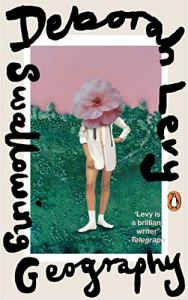 “She is Europe’s eerie child, and she is part of the storm.” J.K. is a young woman who totes her typewriter around different European locations, sleeps with various boyfriends, hears strangers’ stories, and so on. Many of the people she meets are only designated by an initial. By contrast, the most fully realized character is her mother, Lillian Strauss. The chapters feel unconnected and the encounters within them random, building to nothing. Though a bit like Crudo, this has very little detail to latch onto and so was pretentious in its opacity. I’ve generally gotten on much better with Levy’s nonfiction (see below) than her fiction. This, along with the Keegan (above), was my chosen train entertainment for the Booker Prize evening. I got so little out of it that it seemed like wasted reading time. Here’s a decent excerpted passage: “The arrogance of metaphor when facts save people’s lives. The succour of metaphor when facts inadequately describe people’s lives.” (Public library) [83 pages]
Nonfiction:
Starting with two from the Bloomsbury Object Lessons series, a great source of short monographs. These have been among my favourites so far.
Grave by Allison C. Meier (2023)
 Meier is a cemetery tour guide in Brooklyn, where she lives. She surveys American burial customs in particular, noting the lack of respect for Black and Native American burial grounds, the Civil War-era history of embalming, the increasing popularity of cremation, and the rise of garden cemeteries such as Mount Auburn in Cambridge, Massachusetts, which can serve as wildlife havens. The mass casualties and fear of infection associated with Covid-19 brought back memories of the AIDS epidemic, especially for those in New York City. Meier travels to a wide range of resting places, from potter’s fields for unclaimed bodies to the most manicured cemeteries. She also talks about newer options such as green burial, body composting, and the many memorial objects ashes can be turned into. I’m a dedicated reader of books about death and so found this fascinating, with the perfect respectful and just-shy-of-melancholy tone. It’s political and philosophical in equal measures. (Read via NetGalley) [168 pages]
Pregnancy Test by Karen Weingarten (2023)
 Laboratory pregnancy tests have been available since the 1930s and home pregnancy tests – the focus here – since the 1970s. All of them work by testing urine for the hormone hCG (human chorionic gonadotropin). What is truly wild is that pregnancy used to be verifiable only with laboratory animals – female mice and rabbits had to be sacrificed to see if their ovaries had swelled after the injection of a woman’s urine; later, female Xenopus toads were found to lay eggs in response, so didn’t need to be killed. Home pregnancy kits were controversial and available in Canada before the USA because it was thought that they could be unreliable or that they would encourage early abortions. Weingarten brings together the history, laypeople-friendly science, and cultural representations (taking a pregnancy test is excellent TV shorthand) in a readable narrative and makes a clear feminist statement: “the home pregnancy test gave back to women what should have always been theirs: first-hand knowledge about how their bodies worked” and thus “had the potential to upend a paternalistic culture.” (Read via NetGalley) [160 pages]
And from a different Bloomsbury series for monographs about seminal albums, 33 1/3:
Jesus Freak by Will Stockton and D. Gilson (2019)
 The dc Talk album Jesus Freak (1995) is the first CD I ever owned. My best friend and I listened to it (along with Bloom by Audio Adrenaline and Take Me to Your Leader by Newsboys) so many times that we knew every word and note by heart. So it’s hard for me to be objective rather than nostalgic; I was intrigued to see what two secular academics would have to say. Crucially, they were teenage dc Talk fans, now ex-Evangelicals and homosexual partners. As English professors, their approach is to spot musical influences (Nirvana on the title track; R&B and gospel elsewhere), critically analyse lyrics (with “Colored People” proving problematic for its “neoliberal multiculturalism and its potential for post-racial utopianism”), and put a queer spin on things. For those who don’t know, dc Talk were essentially a boy band with three singers, one Black and two white – one of these a rapper. Stockton and Gilson chronicle the confusion of living with a same-sex attraction they couldn’t express as teens, and cheekily suggest there may have been something going on between dc Talk members Toby McKeehan and Michael Tait, who were roommates at Liberty University and apparently dismantled their bunk beds so they could sleep side by side. Hmmm! I was interested enough in the subject matter to overlook the humanities jargon. (Birthday gift from my wish list last year) [132 pages]
And the rest:
Fifty Days of Solitude by Doris Grumbach (1994)
 Grumbach died last year at age 104. This was my third of her books; I read two previous memoirs, Extra Innings and The Presence of Absence, when they were brought back into print as Open Road Media e-books. I knew of Grumbach through her association with May Sarton, and the two in fact had a lot in common, including lesbianism, living in Maine and writing about older age. I was expecting something on a par with Sarton’s Journal of a Solitude, one of my favourite books, but this fell short in comparison. Grumbach spent a month and a half alone in Maine during the winter of 1993 while her partner, Sybil, was away amassing stock for their bookstore. The book is a collection of unconnected meditations about nature, the cold, creativity and so on. She finds herself writing fiction so the characters can keep her company, and notes “how much more I was aware of my vices.” Although she tries to avoid the news, word reaches her of acquaintances’ demises, and she recalls the recent death from AIDS of a young local man. Amusingly, she rereads Bear (see above) during the 50 days. Some atmosphere, but low on insight. (Secondhand purchase – Wonder Book and Video, Hagerstown) [114 pages]
Things I Don’t Want to Know: On Writing by Deborah Levy (2013)
 It feels like I made an error by reading Levy’s “Living Autobiography,” out of order. I picked up the middle volume of the trilogy, The Cost of Living, for #NovNov in 2021 and it ended up being my favourite nonfiction read of that year. I then read part of the third book, Real Estate, last year but set it aside. And now I’ve read the first because it was the shortest. It’s loosely structured around George Orwell’s four reasons for writing: political purpose, historical impulse, sheer egoism and aesthetic enthusiasm. The frame story has her flying to Majorca at a time when she was struggling with her mental health. She vaguely follows in the footsteps of George Sand and then pauses to tell a Chinese shopkeeper the story of her upbringing in apartheid-era South Africa and the family’s move to London. Although I generally admire recreations of childhood and there are some strong pen portraits of minor characters, overall there was little that captivated me here and I was too aware of the writerly shaping. (Secondhand purchase – 2nd & Charles, Hagerstown) [111 pages]
The Private Life of the Hare by John Lewis-Stempel (2019)
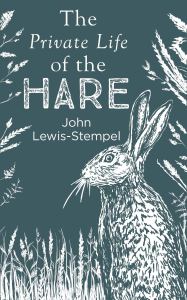 I reviewed a couple of JLS’s species-specific monographs for #NovNov in 2018: The Secret Life of the Owl and The Glorious Life of the Oak. There’s a similar range of material here: anatomy, natural history and cultural significance, including in poetry. There are chapters on hunting, the hare as food, and its appearances in myth and religion. I was engaged about half of the time; I tended to skip over longer excerpts from historical documents. The reliance on lengthy quotations and use of bullet points make it feel like a half-finished research project, with the kind of information you could find anywhere else. Too many of his recent books have felt like they were rushed into print. I would only pick this up if you’re particularly fascinated by hares. (Public library) [99 pages]
The Cancer Journals by Audre Lorde (1980)
 I’ve read so many cancer stories that it takes a lot to make one stand out. This feels like a random collection of documents rather than a coherent memoir. One of the three essays was originally a speech, and two were previously printed in another of her books. Lorde was diagnosed with breast cancer in 1978 and had a mastectomy. A Black lesbian feminist, she resisted wearing prostheses and spoke up about the potential environmental causes of breast cancer that need to be addressed in research (“I may be a casualty in the cosmic war against radiation, animal fat, air pollution, McDonald’s hamburgers and Red Dye No. 2”). Her actual journal entries make up little of the text, which is for the best because fear and pain can bring out the cliches in us – but occasionally a great quote like “if bitterness were a whetstone, I could be sharp as grief.” Another favourite line: “Pain does not mellow you, nor does it ennoble, in my experience.” I’m keen to read her memoir Zami. (University library) [77 pages]
A Month in Siena by Hisham Matar (2019)
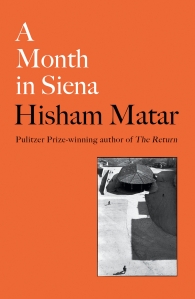 I’d not read Matar before I spotted this art book-cum-memoir and thought, why not. A Libyan American novelist who lives in London, Matar had long been fascinated by the Sienese School of painting (13th to 15th centuries), many of whose artists depicted biblical scenes or religious allegories – even though he’s not a Christian. He spent a month in Italy immersed in the art he loves; there are 15 colour reproductions here. His explications of art history are generalist enough to be accessible to all readers, but I engaged more with the glimpses into his own life. For instance, he meets a fellow Arabic speaker and they quickly form a brotherly attachment, and a Paradise scene gives him fanciful hope of being reunited with his missing father – the subject of his Folio Prize-winning memoir The Return, which I’d like to read soon. His prose is beautiful as he reflects on history, death and how memories occupy ‘rooms’ in the imagination. A little more interest in the art would have helped, though. (Little Free Library) [118 pages]
A Childhood in Scotland by Christian Miller (1981)
 I had high hopes for this childhood memoir that originally appeared in the New Yorker and was reprinted as part of the Canongate Classics series. But I soon resorted to skimming as her recollections of her shabby upper-class upbringing in a Highlands castle are full of page after page of description and dull recounting of events, with few scenes and little dialogue. This would be of high historical value for someone wanting to understand daily life for a certain fraction of society at the time, however. When Miller’s father died, she was only 10 and they had to leave the castle. I was intrigued to learn from her bio that she lived in Newbury for a time. (Secondhand purchase – Barter Books) [98 pages]
Here and Now: Living in the Spirit by Henri J.M. Nouwen (1994)
 This collection of micro-essays under themed headings like “Living in the Present” and “Suffering” was a perfect introduction to Nouwen’s life and theology. The Dutch Catholic priest lived in an Ontario community serving the physically and mentally disabled, and died of a heart attack just two years after this was published. I marked out many reassuring or thought-provoking passages. Here’s a good pre-Christmas one:
“God became a little child in the midst of a violent world. Are we surprised by joy or do we keep saying: ‘How nice and sweet, but the reality is different.’ What if the child reveals to us what is really real?”
I was taken by the ideas that the life of compassion is one of “downward mobility” and that inner freedom only comes when you don’t judge anyone. He encourages readers to not live in a past of shame and regret, but to be grateful for opportunities for God’s mercy and guidance. Very peaceful and readable; a good bedside devotional book. (Free from my stepfather) [175 pages] 
De Profundis by Oscar Wilde (1897)
 My only reread for the month. Wilde wrote this from prison. No doubt he had a miserable time there, but keeping in mind that he was a flamboyant dramatist and had an eye to this being published someday, this time around I found it more exaggerated and self-pitying than I had before. “Suffering is one very long moment. … Where there is sorrow there is holy ground,” he writes, stating that he has found “harmony with the wounded, broken, and great heart of the world.” He says he’s not going to try to defend his behaviour … but what is this but one extended apologia and humble brag, likening himself to a Greek tragic hero (“The gods had given me almost everything. But I let myself be lured into long spells of senseless and sensual ease. I amused myself with being a flâneur, a dandy, a man of fashion”) and even to Christ in his individuality as well as in his suffering at the hands of those who don’t understand him (the scene where he was pilloried consciously mimics a crucifixion tableau). As a literary document, it’s extraordinary, but I didn’t buy his sincerity. He feigns remorse but, really, wasn’t sorry about anything, merely sorry he got caught. (Free from a neighbour) [151 pages]
Original rating (2011):
Rating now:
Average:
Which of these have you read?
And which do you want to read? (You may choose no more than 4!)
In total, I read 27 novellas this November – close to my 2021 record of 29. The highlights included the Barton, Meier, Nouwen and Weingarten above plus Train Dreams by Denis Johnson and Western Lane by Chetna Maroo, but the best of the lot was Absolutely and Forever by Rose Tremain.
Coming right up, final statistics on the month’s participants and posts!
Bodily Harm and Stone Mattress by Margaret Atwood (#MARM)
It’s my sixth year participating in the annual Margaret Atwood Reading Month (#MARM), hosted by indomitable Canadian blogger Marcie of Buried in Print. In previous years, I’ve read Surfacing and The Edible Woman, The Robber Bride and Moral Disorder, Wilderness Tips, and The Door; and reread The Blind Assassin. Wish a happy belated birthday to MA, who turned 84 earlier this month. As it happens, today is my husband’s 40th birthday and I am tapping away at this in the passenger’s seat of the car as we hurtle through the freezing fog toward Slimbridge for some wintry birdwatching. I spent much of yesterday making his German chocolate cake (delicious but very involved) from a Hummingbird Bakery cookbook.

Bodily Harm (1982)
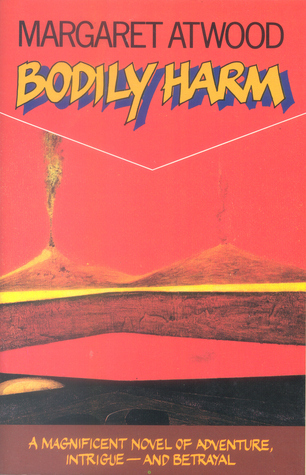 I had literally never heard of her fifth novel before I spotted it on the library catalogue and decided to have a go. The fact that nobody talks about it is evidence, I think, of an overbaked plot and more successful treatment of her trademark themes in other books. Nonetheless, it was perfectly readable and had its highlights. Renata Wilford, “Rennie,” is a journalist for hire from Ontario who has recently had her life turned upside down by breast cancer and the departure of her boyfriend, Jake. She flies to the Caribbean island nation of St. Antoine to write a travel piece, coinciding with the first elections since the British left. It’s a febrile postcolonial setting of shantytowns and shortages. Rennie tries to focus on boat trips, cocktails and beach lounging, but Dr. Minnow, who she met on the plane, is determined to show her the reality of his country – cold truths that include assassination and imprisonment.
Alongside the thriller plot are the more expected literary flashbacks to Rennie’s childhood, her life with Jake, and the cancer surgery and her crush on her surgeon. Her old friend Jocasta is an amusingly punky feminist and a counterpoint to Lora, the fellow Canadian and bad girl Rennie meets in St. Antoine. There are no speech marks in the sections set in the past, and there are some passages of direct monologue from Lora recounting her abusive upbringing. I felt Atwood was stretching to make points about cultural imperialism and violence, whereas the title is more applicable to the physical threats women face from illness and misogyny:
“The body, sinister twin, taking its revenge for whatever crimes the mind was supposed to have committed on it. Nothing had prepared her for her own outrage, the feeling that she’d been betrayed by a close friend. She’d given her body swimming twice a week, forbidden it junk food and cigarette smoke, allowed it a normal amount of sexual release. She’d trusted it. Why then had it turned against her?”
(University library)
Stone Mattress (2014)
I was tempted to call this my first ever audiobook, but that is not technically true: 11 years ago, we had a David Attenborough book on in the car on the way to Cornwall. However, this definitely felt like a landmark. I’d long meant to catch up on Atwood’s last but one story collection, but my library had withdrawn the physical copy and only had the book on CD. How would I fit it into my life, I wondered? Others have told me they listen to audiobooks while commuting, cooking or cleaning … er, I don’t really do any of those! But I amassed a goodly list of tasks involving my hands but not much of my brain to complete while listening to the CDs through my PC speakers:
• Prepared two clothing recycling parcels (37 socks off to the London Sock Company’s Sock Amnesty programme; 3 shirts and 2 sets of pyjamas to Rapanui’s 100% cotton recycling scheme)
• Mended 13 socks, 4 shirts, 3 gloves, 2 cardigans, a shoulder bag strap, and a purse strap and lining
• Framed a photo for a Christmas gift
• Baked the aforementioned German chocolate cake
• Wrapped my husband’s birthday presents
• Wrote a couple of Christmas cards
 Nonetheless, I found it frustrating that it took so long to get through a story/disc, surely longer than I would have spent reading with my eyes (and so I have only managed 7.5 of 9 stories so far), and it was slightly harder for me to concentrate. It was also disorienting to not have visual cues, such that I had no idea how much of a story was remaining, and sometimes didn’t know how place or character names were spelt. One interesting novelty, though, was the reader voices. There are five different voice actors on this audiobook, three women (including MA herself on the title story) and two men. It is interesting to ponder how their intonation might affect my reaction to a story. For instance, Rob Delaney’s deadpan delivery really makes “The Freeze-Dried Groom,” a witty work of mild horror in which a fraudulent antiques dealer finds an entire wedding, complete with groom, abandoned in a storage unit.
As in a number of Atwood’s later works, recurring themes of ageing and the writer’s craft intertwine. I most enjoyed the opening linked trio of “Alphinland,” “Revenant” and “Dark Lady,” which orbit SFF writer Constance and her one-time lover, macho poet Gavin. The first story has Constance slipping between her fictional world and the real one, in which a winter storm is impending and her husband Ewan has been dead for four days. In “Revenant,” an elderly Gavin holds court as a scholar comes to interview him. Imagine his ire when he learns she is there to question him about Constance for her PhD research. “Dark Lady” brings the three major women from Gavin’s life into a face-off.
Funniest was “I Dream of Zenia with the Bright Red Teeth,” a The Robber Bride mini-sequel in which three ageing women fend off an interfering male with the help of a potential reincarnation of their late friend. I was reminded of the setup of Charlotte Wood’s The Weekend, not least for the presence of an annoying dog. Least engaging has been “The Dead Hand Loves You,” about Jack Dace, the author of an international horror classic who has always resented having to share his profits four ways with his early adulthood housemates because of his promise to catch up on his back rent from his creative earnings. I thought this one would never end. In general, though, this has been classic MA, mixing realism and fantasy in clever and witty ways. And I’m sure it won’t be my last audiobook. I was gifted an Audible book for my birthday by a blind friend, to start with. Now to store up some more busy work… (Public library audiobook) 
The Story Girl by L. M. Montgomery (1911) #ReadingStoryGirl
Six months after the Jane of Lantern Hill readalong, Canadian bloggers Naomi (Consumed by Ink) and Sarah Emsley have chosen an earlier work by Lucy Maud Montgomery, The Story Girl, and its sequel The Golden Road, for November buddy reading.
The book opens one May as brothers Felix and Beverley King are sent from Toronto to Prince Edward Island to stay with an aunt and uncle while their father is away on business. Beverley tells us about their thrilling six months of running half-wild with their cousins Cecily, Dan, Felicity, and Sara Stanley – better known by her nickname of the Story Girl, also to differentiate her from another Sara – and the hired boy, Peter. This line gives a sense of the group’s dynamic: “Felicity to look at—the Story Girl to tell us tales of wonder—Cecily to admire us—Dan and Peter to play with—what more could reasonable fellows want?”
Felicity is pretty and domestically inclined; Sara knows it would be better to be useful like Felicity, but all she has is her storytelling ability. Some are fantasy (“The Wedding Veil of the Proud Princess”); some are local tales that have passed into folk memory (“How Betty Sherman Won a Husband”). Beverley is in raptures over the Story Girl’s orations: “if voices had colour, hers would have been like a rainbow. It made words live. … we had listened entranced. I have written down the bare words of the story, as she told it; but I can never reproduce the charm and colour and spirit she infused into it. It lived for us.”

The cousins’ adventures are gently amusing and quite tame. They all write down their dreams in notebooks. Peter debates which church denomination to join and the boys engage in a sermon competition. Pat the cat has to be rescued from bewitching, and receives a dose of medicine in lard he licks off his paws and fur. The Story Girl makes a pudding with sawdust instead of cornmeal (reminding me of Anne Shirley and the dead mouse in the plum pudding). Life consistently teaches lessons in humility, as when they are all duped by Billy Robinson and his magic seeds, which he says will change whatever each one most resents – straight hair, plumpness, height; and there is a false alarm about the end of the world.
I found the novel fairly twee and realized at a certain point that I was skimming over more than I was reading. As was my complaint about Jane of Lantern Hill, there is a predictable near-death illness towards the end. The descriptions of Felicity and the Story Girl are purple (“when the Story Girl wreathed her nut-brown tresses with crimson leaves it seemed, as Peter said, that they grow on her—as if the gold and flame of her spirit had broken out in a coronal”); I had to remind myself that this reflects on Beverley more so than on Montgomery. From Naomi’s review of The Golden Road, I think that would be more to my taste because it has a clear plot rather than just stringing together pleasant but mostly forgettable anecdotes.
Still, it’s been fun to discover some of L. M. Montgomery’s lesser-known work, and there are sweet words about cats and the seasons:
“I am very good friends with all cats. They are so sleek and comfortable and dignified. And it is so easy to make them happy.”
“The beauty of winter is that it makes you appreciate spring.”
This effectively captures the long, magical summer days of childhood. I thought about when I was a kid and loved trips up to my mother’s hometown in upstate New York, where her brothers still lived. I was in awe of the Judd cousins’ big house, acres of lawn and untold luxuries such as Nintendo and a swimming pool. I guess I was as star-struck as Beverley. (University library)
Ferdinand, the Man with the Kind Heart by Irmgard Keun (#NovNov23 and #GermanLitMonth)
My second contribution to German Literature Month, hosted by Lizzy Siddal, after Last House Before the Mountain by Monika Helfer. I spotted this in a display of new acquisitions at my library earlier in the year and was attracted by the pointillist-modernist style of its cover (Man with a Tulip by Robert Delaunay, 1906) featuring the image of a dandyish yet slightly melancholy young man. I had never heard of the author and assumed it was a man. In fact, Irmgard Keun (1905–82) was a would-be actress who wrote five novels and fled Germany when blacklisted by the Nazis. She was then, variously, a fugitive (returning to Germany only after a false report of her suicide in The Telegraph), a lover of Joseph Roth, a single mother, and an alcoholic. (I love it when a potted author biography reads like a mini-novel!)

Ferdinand (1950) was her last novel and is a curious confection, silly and sombre to equal degrees. It draws on her experiences living by her journalism in bombed-out postwar Cologne. Ferdinand Timpe is a former soldier and POW from a large, eccentric family. His tiny rented room is actually a corridor infested by his landlady Frau Stabhorn’s noisy grandchildren. He’s numb, stumbling from one unsuitable opportunity to another, never choosing his future but letting it happen to him. He once inherited a secondhand bookshop and ran it for a while (I wish we’d heard more about this). Now he’s been talked into writing articles for a weekly paper – it turns out the editor confused him with another Ferdinand. Later he’s hired as a “cheerful adviser” who mostly listens to women complain about their husbands. He is not quite sure how he acquired his own fiancée, Luise, but hopes to weasel out of the engagement.
Each chapter feels like a self-contained story, many of them focusing on particular relatives or friends. There’s his beautiful but immoral cousin, Johanna; his ruthless businessman cousin Magnesius; his lovely but lazy mother, Laura. His descriptions are hilarious, and Keun’s vocabulary really sparkles:
“Like many businesspeople, Magnesius is a jovial and generous party animal, only to emerge as even icier and stonier later. He damascenes himself. To heighten the mood, he has jammed a green monocle in one eye, and pulled a yellow silk stocking over his head. Just now I saw him kissing the hand of a woman unknown to me and offering to buy her a brand-new Mercedes.”
“Luise is a nice girl, and I’ve got nothing against her, but her presence has something oppressive about it for me. I have examined myself and established that this feeling of oppression is not love, and is no prerequisite for marriage, not even an unhappy one. I suppose I should tell her. But I can’t.”

Our antihero gets himself into ridiculous situations, like when he’s down on his luck and pays an impromptu visit to a former professor, Dr Muck, perhaps hoping for a handout; finding him away, he has to await his return for hours while the wife hosts a ladies’ poetry evening:
I was desperate not to fall asleep. Seven times I tiptoed out to the lavatory to take a sip from my flask. In the hall I walked into a sideboard and knocked over a large china ornament – I think it may have been a wood grouse. I broke off a piece of its beak. These things are always happening to me when I’m trying to be especially careful.
Hidden beneath Ferdinand’s hapless and frivolous exterior (he wears a jerkin made from a lady’s coat; Johanna says it makes him looks like “a hurdy-gurdy man’s monkey”), however, is psychological damage. “I feel so deep-frozen. I wonder if I’ll ever thaw out in this life. … Sometimes I feel like wandering on through the entire world. Maybe eventually I’ll run into a place or a person who will make me say yes, this is it, I’ll stay here, this is my home.” His feeling of purposelessness is understandable. Wartime hardship has dented his essential optimism, and external signs of progress – currency reform, denazification – can’t blot out the memory.
There’s a heartbreaking little sequence where he traces his rapid descent into poverty and desperation through cigarettes. He once shuddered at people saving their butts, but then started doing so himself. The same happened with salvaging strangers’ fag-ends from ashtrays. And then, worst of all, rescuing butts from the gutter. “So I never even noticed that one day there was no smoker in the world so degenerate that I could look down on him. I stood so low that no one could stand below me.”
I tend to lose patience with aimless picaresque plots, but this one was worth sticking with for the language and the narrator’s amusing view of the world. I’d happily read another book by Keun if I came across one. Her best known, from the 1930s, are Gilgi and The Artificial Silk Girl.
(Penguin Modern Classics series, 2021. Translated from the German by Michael Hofmann. Public library) [172 pages]

 Bookish Beck = Rebecca Foster. American transplant to England. Freelance proofreader and book reviewer.
 Bookish Beck