#ReadIndies Review Catch-Up: Chevillard, Hopkins & Bateman, McGrath, Richardson
Quick thoughts on some more review catch-up books, most of them from 2025. It’s a miscellaneous selection today: absurdist flash fiction by a prolific French author, a self-help graphic novel about surviving heartbreak, a blend of bird photography and poetry, and a debut poetry collection about life and death as encountered by a parish priest.
Museum Visits by Éric Chevillard (2024)
[Trans. from French by David Levin Becker]
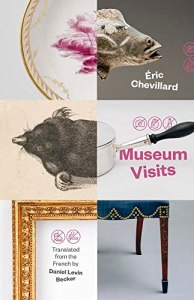 I’d not heard of Chevillard, even though he’s published 22 novels and then some. This appealed to me because it’s a collection of micro-essays and short stories, many of them witty etymological or historical riffs. “The Guide,” a tongue-in-cheek tour of places where things may have happened, reminded me of Julian Barnes: “So, right here is where Henri IV ran a hand through his beard, here’s where a raindrop landed on Dante’s forehead, this is where Buster Keaton bit into a pancake” and so on. It’s a clever way of questioning what history has commemorated and whether it matters. Some pieces elaborate on a particular object – Hegel’s cap, a chair, stones, a mass attendance certificate. A concertgoer makes too much of the fact that they were born in the same year as the featured harpsichordist. “Autofiction” had me snorting with laughter, though it’s such a simple conceit. All Chevillard had to do in this authorial rundown of a coming of age was replace “write” with “ejaculate.” This leads to such ridiculous statements as “It was around this time that I began to want to publicly share what I was ejaculating” and “I ejaculate in all the major papers.” There are some great pieces about animals. Others outstayed their welcome, however, such as “Faldoni.” Most feel like intellectual experiments, which isn’t what you want all the time but is interesting to try for a change, so you might read one or two mini-narratives between other things.
With thanks to the University of Yale Press for the free copy for review.
What to Do When You Get Dumped: A Guide to Unbreaking Your Heart by Suzy Hopkins; illus. Hallie Bateman (2025)
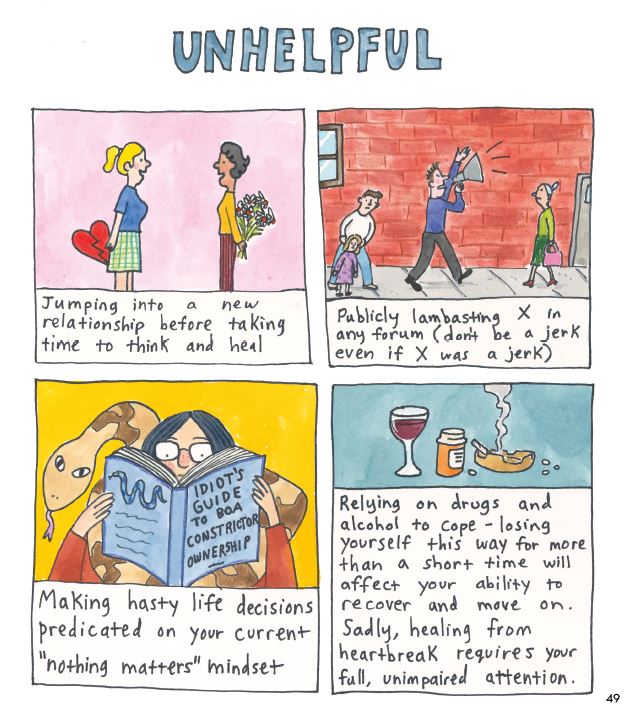
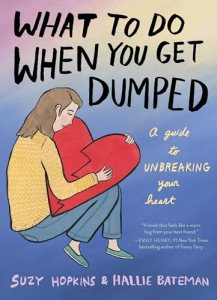 Discovered through Molly Wizenberg’s excellent author interview (she did a series on her Substack, “I’ve Got a Feeling”) with illustrator Hallie Bateman. It’s a mother–daughter collaboration – their second, after What to Do When I’m Gone, a funny advice guide that’s been likened to Roz Chast’s work (I’ve gotta get that one!). Hopkins’s husband of 30 years left her for an ex-girlfriend. (Ironic yet true: the girlfriend was a marriage counselor.) Composed while deep in grief, this is a frank look at the flood of emotions that accompany a breakup and gives wry but heartfelt suggestions for what might help: journaling, telling someone what happened, cleaning, making really easy to-do lists. Hopkins interviewed six others who had been dumped to get some extra perspective. Bateman describes her mother’s writing process: she made notes and stuck them in a shoebox with a hole in the lid, then went on a retreat to combine it all into a draft. At this point Bateman started illustrating. It was complicated for her, of course, because the dumper is her dad. She notes in the interview that she couldn’t just say “He’s an asshole” and dismiss him. But she could still position herself as a girlfriend to her mother, listening and commiserating. The vignettes are structured as a countdown starting with day 1,582 – it took over four years for Hopkins to come to terms with her loss and embrace a new life. This is a cute and gentle book that I wish had been around for my mom; it’s a heck of a lot cheaper than therapy.
With thanks to Bloomsbury for the free e-copy for review.
The Beauty of Vultures by Wendy McGrath; photos by Danny Miles (2025)
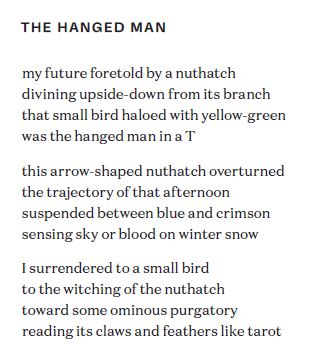
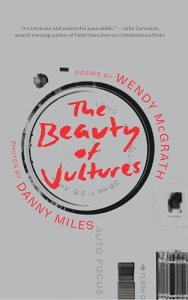 I enjoyed McGrath’s Santa Rosa trilogy and was keen to try her poetry, so I’m pleased that Marcie’s review pointed me here. McGrath came to collaborate with Miles, a musician, after her son told her of Miles’s newfound love of bird photography. She writes in her introduction that she wanted to go “beyond a simple call-and-response,” to instead use the photos as “portals” into art, history, memory, mythology, wordplay. The form varies to suit the topic: “sonnet, pantoum, acrostic, ghazal, concrete poem, … even a mini-play.” (I didn’t identify all of these on a first read, to be honest.) One poem imitates a matchbox cover and another is printed sideways. Most of the images are black-and-white close-ups, with a handful in colour. There are a few mammals as well as birds. One notable flash of colour is the recipient of the first poem, the sassy rebuttal “A Message from the Peahen to the Peacock.” The hen tells him to quit with the fancy displays and get real: “I’ve seen that gaudy display too often.”
Other poems describe birds, address them directly, or take on their perspectives. Birds are a reassuring presence (cf. Ted Hughes on swifts): “I counted on our robins to return every spring” as a balm, the anxious speaker reports in “Air raid siren.” A nest of gape-mouthed baby swallows in an outhouse is the prize at the end of a long countryside walk. With its alliteration and repetition, “The Goldfinch Charm” feels like an incantation. Birds model grace (or at least the appearance of grace):
Assume a buoyancy, lightness, as though you were about to fly.
That yellow rubber duck is my surreal mythology.
Head above water. Stay calm. Paddle like crazy.
They link the natural world and the human in these gorgeous poems that interact with the images in ways that both lead and illuminate.
A female swan is a pen and eyes open
I try to write this dream:
a moment stolen or given.
Published by NeWest Press. With thanks to the author for the free e-copy for review.
Dirt Rich by Graeme Richardson (2026)
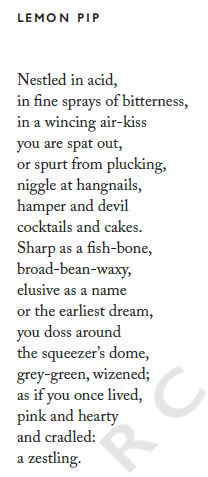
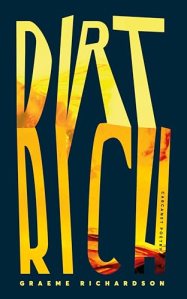 Dirt poor? Nah. Miners, gravediggers and archaeologists will tell you that dirt is precious. It’s where lots of our food and minerals come from; it’s what we’ll return to – our bodies as well as the material traces of what we loved and cared for. Richardson, the poetry critic for the Sunday Times, comes from Nottinghamshire mining country and has worked as a chaplain and parish priest. He writes of church interiors and cemeteries, funerals and crumbling faith. There’s a harsh reminder of life’s unpredictability in the juxtaposition of “For the Album,” about the photographic evidence of a wedding day; and, beginning on the facing page, “After the Death of a Child.” It opens with “A Pastoral Heckle”: “The dead live on in memory? Not true. / They lodge there dead, and yours not theirs the hell.” Richardson now lives in Germany, so there are continental scenes as well as ecclesial English ones. The elegiac tone of standouts such as “Last of the Coalmine Choirboys” (with its words drawn from scripture and hymns) is tempered by the chaotic joy of multiple poems about parenthood in the final section. Throughout, the imagery and language glisten. I loved the slant rhyme, assonance and sibilance in “Rewilding the Churchyard”: “Cedars and self-seeders link / with the storm-forked sycamore.” I highly recommend this debut collection.
With thanks to Carcanet Press for the advanced e-copy for review.
Which of these do you fancy reading?
(Goodbye to) Winter Reads by Sylvia Plath (#ReadIndies) & Kathleen Winter
The sunshine, temperatures and flora suggest that spring is here to stay, though I wouldn’t be surprised by a return of the cold and wet in March. We live in the wrong part of the UK for snow lovers; we didn’t get any snow this winter, apart from some early-morning flurries one day when I was fast asleep. My seasonal reading consisted of a lesser-known posthumous poetry collection, a record of a sea voyage past Greenland, and a silly children’s book.
Winter Trees by Sylvia Plath (1971)
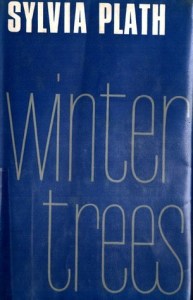 A prefatory note from Ted Hughes explains that these poems “are all out of the batch from which the Ariel poems were more or less arbitrarily chosen and they were all composed in the last nine months of Sylvia Plath’s life.” Ariel is much the stronger collection. There are only 19 poems here; the final one, “Three Women,” is more of a play (subtitled “A Poem for Three Voices”) set on a maternity ward. Motherhood is a central concern throughout. There’s harsh, unpleasant language around womanhood in general. The opening title poem is a marvel of artistic imagery, assonance and internal rhyme, but also contains a metaphor that made me cringe: “Knowing neither abortions nor bitchery, / Truer than women, / They seed so effortlessly!”


That paints motherhood as hard won, as “Childless Woman” reinforces by turning purposeless menstruation into a horror story with its vocabulary of “a child’s shriek” — “Spiderlike” — “Uttering nothing but blood— / Taste it, dark red!” — “My funeral” — “the mouths of corpses”. Plath was certainly ambivalent about babies (“Thalidomide” is particularly frightening) but I bristled at childlessness being linked with living only for oneself. Then again, pretty much everything – men, God, travel, animals – is portrayed negatively here. “Winter Trees” is the single poem I’d anthologize. (University library) 
Published by Faber, so counts for #ReadIndies
Boundless: Adventures in the Northwest Passage by Kathleen Winter (2015)
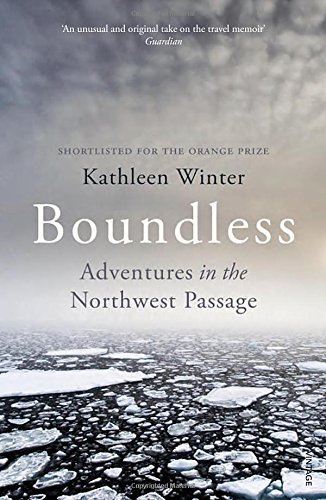 I read this excellent travel book slowly, over most of the winter, including during that surreal period when He Who Shall Not Be Named was threatening to annex Greenland. Winter was invited to be a writer-in-residence aboard an icebreaker travelling through the Northwest Passage, past southwest Greenland and threading between the islands of the Canadian Arctic. She was prepared: a friend had taught her that the only thing to say in these sorts of lucky, unexpected scenarios is “My bags are already packed.” Her ‘getaway bag’ of two pairs of underwear, a T-shirt, a pair of jeans, and a LBD wasn’t exactly Arctic-ready, but she still had a head start. She adds an old concertina and worn hiking boots that resemble “lobes of some mushroom cracked off the bole of an old warrior tree.”
It’s not a long or gruelling trip, so there’s not much of the bellyaching that bores me in trekking books. Winter is interested in everything: birds, folk music, Indigenous arts and crafts, her fellow passengers’ stories, the infamous lost Arctic expeditions, and her family’s history in England and Canada. She collects her scraps of notes in a Ziploc, and that’s what this book is – a grab bag. Winter is enthusiastic yet prioritizes quiet epiphanies about the sacredness of land and creatures over thrills – though their vessel does get stranded on rocks and requires a Coast Guard rescue. It would be interesting to reread her Orange Prize-shortlisted novel about an intersex person, Annabel. (If you hanker to go deeper about Greenland, read This Cold Heaven by Gretel Ehrlich and Miss Smilla’s Feeling for Snow by Peter Høeg.) (Secondhand – Bas Books) 
& A bonus children’s book:
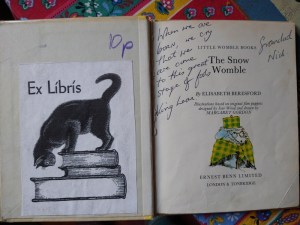
 The Snow Womble by Elisabeth Beresford; illus. Margaret Gordon (1975) – I thought this would be a cute one to read even though I’m unfamiliar with the Wombles. But it’s just a one-note extended joke about the creatures not being able to tell their snowman version of Great-Uncle Bulgaria apart from the real one. The best thing about reading this was the frontispiece’s juxtaposition of elements: the computer-printed bookplate, the nominal secondhand price (withdrawn from London Borough of Sutton Public Libraries), and the wholly inappropriate inscription Grandad Nick chose from King Lear! (Little Free Library)
Three on a Theme (Valentine’s Day): “Love” Books by Amy Bloom, George Mackay Brown & Hilary Mantel
Every year I say it: I’m really not a Valentine’s Day person and yet it’s become a tradition to put together a themed post featuring one or more books with “Love” or “Heart” in the title. This is the tenth year in a row, in fact – after 2017, 2018, 2019, 2020, 2021, 2022, 2023, 2024 and 2025. As you might expect, none of the three below contains a straightforward love story. The relationships portrayed tend to be unequal, creepy or doomed, but the solid character work and use of setting and voice was enough to keep me engaged with all of the books.
Love Invents Us by Amy Bloom (1997)
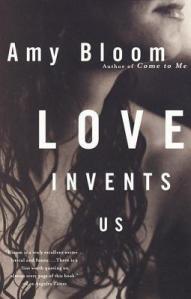 I’ve found Bloom’s short stories more successful than her novels. This is something of a halfway house: linked short stories (one of which was previously published in Come to Me; another that gives the title line to her 2000 collection A Blind Man Can See How Much I Love You) about Elizabeth Taube. When we first meet her on Long Island in the 1960s, she’s a rebellious and sexually precocious Jewish girl; by the time we’ve journeyed through several decades of vignettes, she’s a flighty and psychologically scarred single mother. Stories of her Lolita-esque attractiveness to grown salesmen and teachers, her shoplifting, her casual work for elderly African American Mrs. Hill, and her great love for Horace, nicknamed Huddie, a Black basketball player, are in the first person. The longer second part – about the aftermath of her physical affair with Huddie and her ongoing emotional entanglement with her English teacher, Max Stone – is in the third person yet feels more honest. Liz seems like bad news for everyone she meets. Bloom shows us some of the reasons for what she does, but I still couldn’t absolve her protagonist. I’d also reverse the title: We Invent Love. Liz is responsible for irrevocably altering two lives besides her own based on what she needs to feel secure. This is very much Lorrie Moore territory, but Moore leaves less of a bitter taste. (Secondhand – Community Furniture Project)
A Calendar of Love and Other Stories by George Mackay Brown (1967)
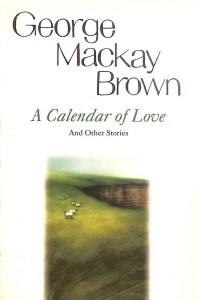 The title story opens a collection steeped in the landscape and history of Orkney. Each month we check in with three characters: Jean, who lives with her ailing father at the pub they run; and her two very different suitors, pious Peter and drunken Thorfinn. When she gives birth in December, you have to page back to see that she had encounters with both men in March. Some are playful in this vein or resemble folk tales: a boy playing hooky from school, a distant cousin so hapless as to father three bairns in the same household, and a rundown of the grades of whisky available on the islands. Others with medieval time markers are overwhelmingly bleak, especially “Witch,” about a woman’s trial and execution – and one of two stories set out like a play for voices. I quite liked the flash fiction “The Seller of Silk Shirts,” about a young Sikh man who arrives on the islands, and “The Story of Jorfel Hayforks,” in which a Norwegian man sails to find the man who impregnated his sister and keeps losing a crewman at each stop through improbable accidents. This is an atmospheric book I would have liked to read on location, but few of the individual stories stand out. (Secondhand – Community Furniture Project, Newbury)
An Experiment in Love by Hilary Mantel (1995)
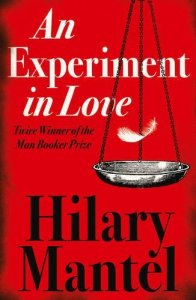 Mantel is best remembered for the Wolf Hall trilogy, but her early work includes a number of concise, sharp novels about growing up in the north of England. Carmel McBain attends a Catholic school in Manchester in the 1960s before leaving to study law at the University of London in 1970. In lockstep with her are a couple of friends, including Karina, who is of indeterminate Eastern European extraction and whose tragic Holocaust family history, added to her enduring poverty, always made her an object of pity for Carmel’s mother. But Karina as depicted by Carmel is haughty, even manipulative, and over the years their relationship swings between care and competition. As university students they live on the same corridor and have diverging experiences of schoolwork, romance, and food. “Now, I would not want you to think that this is a story about anorexia,” Carmel says early on, and indeed, she presents her condition as more like forgetting to eat. But then you recall tiny moments from her past when teachers and her mother shamed her for eating, and it’s clear a seed was sown. Carmel and her friends also deal with the results of the new-ish free love era. This is dark but funny, too, with Carmel likening roast parsnips to “ogres’ penises.” Further proof, along with Every Day Is Mother’s Day, that it’s well worth exploring authors’ back catalogue. (Public library)
Plus a DNF:
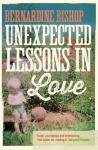 Unexpected Lessons in Love by Bernardine Bishop (2013): I loved Bishop’s The Street, and this posthumous novel initially drew me in with its medical detail (two friends who both had stoma operations) and the exploration of different forms of love – romantic, parental, grandparental – before starting to feel obvious (two adoptions, one historical and one recent), maudlin and overlong. With some skimming, I made it to page 120. (Secondhand – Awesomebooks.com)
Other relevant reading on the go:
I would have tried spinning this one into another thematic trio, but ran out of time…
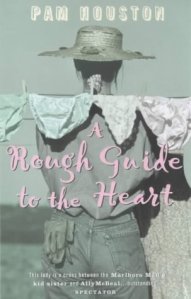 A Rough Guide to the Heart by Pam Houston (1999): A mix of personal essays and short travel pieces. The material about her dysfunctional early family life, her chaotic dating, and her thrill-seeking adventures in the wilderness is reminiscent of the highly autobiographical Waltzing the Cat. Amusingly, this has a previous price label from Richard Booth’s Bookshop in Hay-on-Wye, where it was incorrectly classed as Romance Fiction – one could be excused the mistake based on the title and cover! (Secondhand – Community Furniture Project)
And three books about marriage…
 The Honesty Box by Lucy Brazier – A pleasant year’s diary of rural living and adjusting to her husband’s new diagnosis of neurodivergence.
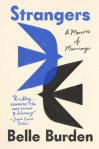
- Strangers by Belle Burden – A high-profile memoir about her husband’s strange and marriage-ending behaviour (his affair was only part of it) during the 2020 lockdown.
- Mrs. Bridge by Evan S. Connell – For Literary Wives Club in March. I’m in the early pages but it seems comparable to Richard Yates.
January Novels by Alix E. Harrow & Patricia Highsmith
The month of January was named for the Roman god Janus, known for having two faces: one looking backward, the other forward. “He presided not over one particular domain but over the places between – past and present, here and there, endings and beginnings,” as Alix E. Harrow writes. In her novel, the door is a prevailing metaphor for liminal times and spaces; Highsmith’s work, too, focuses on the way life often pivots on tiny accidents or decisions.
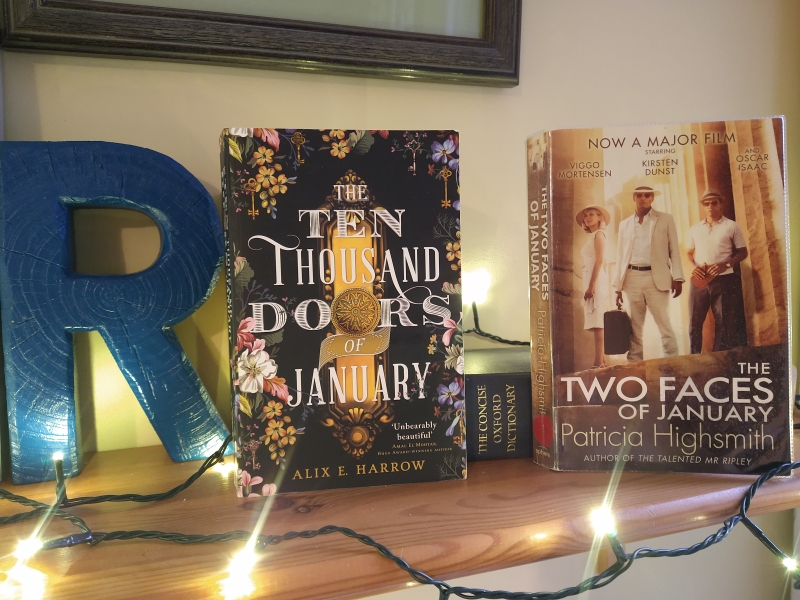
The Ten Thousand Doors of January by Alix E. Harrow (2019)
“I didn’t want to be safe … I wanted to be dangerous, to find my own power and write it on the world.”
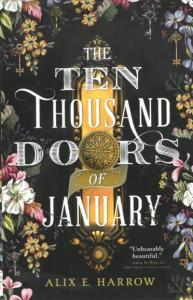 As the mixed-race ward of a wealthy collector, January Scaller grows up in a Vermont mansion with a dual sense of privilege and loss. She barely sees her brown-skinned father, who travels the world amassing treasures for Mr. Locke and his archaeological society; and her mother’s absence is an unexplained heartbreak. But when her father also disappears in 1911 – to be apparently replaced by an African governess named Jane Irimu (it’s her quote above) and an enticing scholarly manuscript entitled The Ten Thousand Doors – 17-year-old January discovers the power of words to literally open doors to new worlds, and sets off on a quest to reunite her family. At every turn, though, she’s thwarted by evil white men who, after plundering foreign cultures, intend to close the doors of opportunity behind them.
This was an unlikely book for me to pick up: I didn’t get on with that whole wave of books with books and keys on the cover (Bridget Collins et al.) and wouldn’t willingly pick up romantasy – yet this features two meant-to-be romances fought for across worlds and eras. I grow impatient with a book-within-the-book format. But The Chronicles of Narnia, which no doubt inspired Harrow, were my favourite books as a child. Especially early on, I found this as thrilling as The Absolute Book and The End of Mr. Y. Whereas those doorstoppers held my interest all the way through, though, this became a trudge at a certain point. Harrow is maybe a little too pleased with her own imagination and turns of phrase, like T. Kingfisher. (Bad the dog is also in peril far too often.) In the end, this reminded me most of Babel by R.F. Kuang with its postcolonial conscience and words as power. I enjoyed this enough that I think I’ll propose her The Once and Future Witches for book club. (Little Free Library)
The Two Faces of January by Patricia Highsmith (1964)
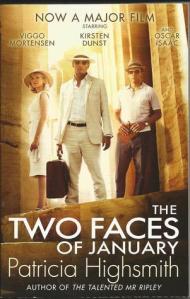 Three American vacationers meet in a hotel in Greece one January. But the circumstances are far from auspicious. Conman Chester MacFarland is traveling with his 15-years-younger wife, Colette. Rydal Keener is a stranger who, seemingly on a whim, helps them cover up the accidental death of a Greek police investigator who came to ask Chester some questions. From here on in, they’re in lockstep, moving around Greece together, obtaining fake passports and checking the headlines obsessively to outrun consequences. Colette takes a fancy to Rydal, and the jealousy emanating from the love triangle is complicated by Chester’s alcoholism and Rydal’s hurt over earning a police record for a consensual teenage relationship. I have a dim memory of seeing the 2014 Kirsten Dunst and Viggo Mortensen film, but luckily I didn’t recall any major events. A climactic scene takes place at the palace of Knossos, and the chase continues until an unavoidably tragic end.
I’ve read several Ripley novels and a few standalone psychological mysteries by Highsmith and enjoyed them well enough, but murders aren’t really my thing. (Carol is the only work of hers that I’ve truly loved.) My specific issue here was with the central trio of characters. Colette is thinly drawn and doesn’t get enough time on the page. Chester seems much older than his 42 years and is an irredeemable swindler. It’s only because of our fondness for Rydal that we want them all to get away with it. But even Rydal doesn’t get the in-depth portrayal one might hope for. There’s the injustice of his backstory and the fact that he’s a would-be poet, true, but we never understand why he helped the MacFarlands, so have to conclude that it was the impulse of a moment and committed him to a regrettable course. This is pacey enough to keep the pages turning, but won’t stick with me. (Public library)
I’m turning my face forward: Good riddance to January 2026, during which I’ve mostly felt rubbish; here’s hoping for a better rest of the year. I’m off to the opera tonight – something I’ve only done once before, in Leeds in 2006! – to see Susannah, a tale from the Apocrypha transplanted to the 1950s U.S. South.
January Releases by Julian Barnes and Stewart O’Nan
These two novels by literary lions (of the UK and USA, respectively) share themes of ageing, loss, and memory, as well as a wry and gently melancholy tone. I’ve read 23 books by Julian Barnes, some of them twice; Stewart O’Nan has also published twenty-some books, but was a new author for me.
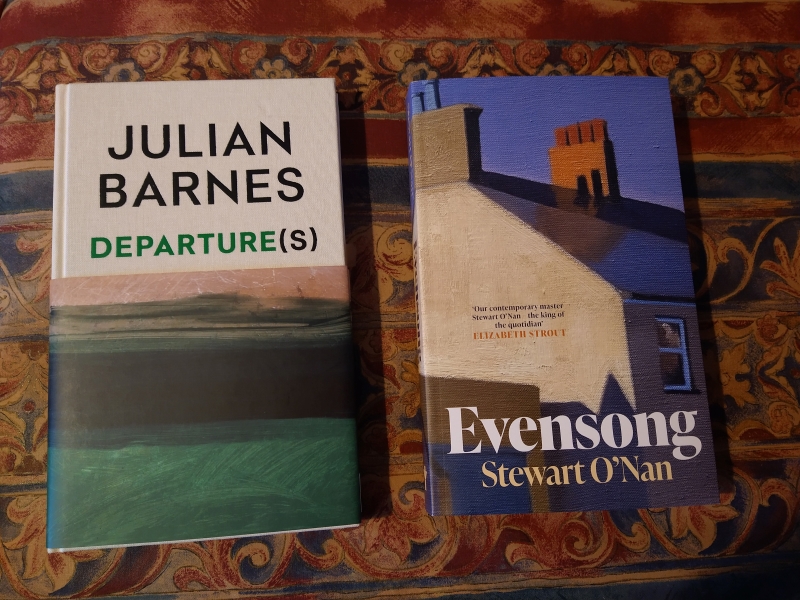
Departure(s) by Julian Barnes (2026)
“That’s what I’ve been after all my writing life: the whole story.”
Julian Barnes has been a favourite author of mine since my early twenties. He insists this novella will be his final book. It’s a coy fiction–autofiction mixture featuring the same fixations as much of his work: how time affects relationships and memory, how life gets translated into written evidence, and how we make peace with death. The narrator is one Julian Barnes, a writer approaching age 80 and adjusting to a recent diagnosis of a non-life-threatening blood cancer. The ostensible point is to retell his Oxford University friends Stephen and Jean’s two-stage romance: they were college sweethearts but married other people; then Julian reintroduced them in their sixties and they married – but it didn’t last.
 He parcels out bits of this story in between pondering involuntary autobiographical memory (IAM), his “incurable but manageable” condition, and his possible legacy. He hopes he’ll be exonerated due to waiting until Stephen and Jean were dead to write about them and adopting Jean’s old Jack Russell terrier, Jimmy. His late wife, Pat Kavanagh, is never far from his thoughts, and he documents other losses among his peers, including Martin Amis (d. 2023 – for a short book, this is curiously dated, as if it hung around for years unfinished). There are also, as one would expect from Barnes, occasional references to French literature. Confident narration gives the sense of an author in full control of his material. Yet I found much of it tedious. He’s addressed subjectivity much more originally in other works, and the various strands here feel like incomplete ideas shoehorned into one volume.
It’s a shame that I had just reread Talking It Over, a glistening voice-led novel of his from 1991, because it showed up the thinness and repetition of much of his recent work. (I even thought I spotted a reference to Talking It Over as Jean is warning Julian not to write about her and Stephen. “I’ll tell you the truth, and don’t you ever fucking use it, not even deeply disguised in some novel where I appear as Jeanette [Gillian?] and Stephen is Stuart.”) I see his oeuvre as a left-skewed bell curve: three of the first four novels are not worth reading and five of the last seven have also been dubious, but with much excellent material in between. It’s been a case of diminishing returns from The Sense of an Ending onwards, but I have many excellent rereads to look forward to. My next two will be A History of the World in 10½ Chapters – a typically playful take on documented history and legend – and Nothing to Be Frightened Of, his forthright memoir about mortality. If you’ve not read Barnes before, this wouldn’t be a bad place to start as you’ll get a taster of his trademark topics and dry wit, but delving into his back catalogue may well prove more rewarding.
With thanks to Jonathan Cape (Penguin) for the free copy for review.
Evensong by Stewart O’Nan (2025)
The comparisons to Kent Haruf and Elizabeth Strout in the press materials and pre-publication reviews are spot on: this is the kind of quiet American novel that appeals for its small-town ambience and cosy community of lovably quirky people with everyday problems. O’Nan grew up in Pittsburgh, the setting for this fourth book in a loose series based around the character Emily Maxwell – I did have a slight feeling of having wandered into a variant of Olive, Again partway through, but it wasn’t a major stumbling block for me. The generally elderly, female members of the Humpty Dumpty Club form a constellation of care: they help each other out by driving to hospital appointments, picking up prescriptions and groceries – and, when worst comes to worst, planning funeral services.
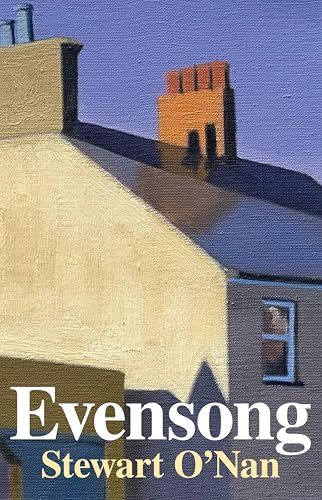 Often, the short chapters are vignettes starring one or more of the central characters. When Joan has a fall down her stairs and lands in rehab, Kitzi takes over as de facto HDC leader. A musical couple’s hoarding and cat colony become her main preoccupation. Emily deals with family complications I didn’t fully understand for want of backstory, and Arlene realizes dementia is affecting her daily life. Susie, the “baby” of the group at 63, takes in Joan’s cat, Oscar, and meets someone through online dating. The novel covers four months of 2022–23, anchored by a string of holidays (Halloween, Thanksgiving, Christmas); events such as John Fetterman’s election and ongoing Covid precautions; and the cycle of the Church year.
O’Nan encourages affection for his salt-of-the-earth folk who vote Democrat, support the Steelers and attend liberal Protestant churches as a matter of course. They lead simple lives and cope with failing health with as much dignity as they can. There’s something to be said for celebrating older, ordinary people, who don’t often get a look-in in contemporary fiction. But I struggled with the ensemble nature of the cast – well over halfway through I was still trying to work out who everyone was; it doesn’t help that there are a Gene, a Jean and a Joan – and the extreme verisimilitude. The Humpty Dumpty Club exists in real life, but these women could be your aunt or choir director from Any Town, USA. Were my mother still around, this would be her, running errands and helping neighbours in suburban Pittsburgh, and I would be visiting the area annually. That combination of the mundane and the too close to home conspired to make this more of a slog than expected. I also feel I gleaned no distinct understanding of O’Nan as a writer – especially as other novels of his that I own (The Night Country and A Prayer for the Dying) are classed under horror. I’ll just have to try more.
First published in November 2025 by Atlantic Monthly Press in the USA. With thanks to Grove Press UK for the free copy for review.
While these were much anticipated reads for me, I ultimately found them a little underwhelming. I think I wanted a bit more raging against the dying of the light.
Have you read either or both of these authors? What can you recommend by them, or what will you seek out?
The 2026 Releases I’ve Read So Far
I happen to have read a number of pre-release books, generally for paid reviews for Foreword and Shelf Awareness. (I already previewed six upcoming novellas here.) Most of my reviews haven’t been published yet, so I’ll just give brief excerpts and ratings here to pique the interest. I link to the few that have been published already, then list the 2026 books I’m currently reading. Soon I’ll follow up with a list of my Most Anticipated titles.


 Simple Heart by Cho Haejin (trans. from Korean by Jamie Chang) [Other Press, Feb. 3]: A transnational adoptee returns to Korea to investigate her roots through a documentary film. A poignant novel that explores questions of abandonment and belonging through stories of motherhood.
 The Conspiracists: Women, Extremism, and the Lure of Belonging by Noelle Cook [Broadleaf Books, Jan. 6]: An in-depth, empathetic study of “conspirituality” (a philosophy that blends conspiracy theories and New Age beliefs), filtered through the outlook of two women involved in storming the Capitol on January 6, 2021.

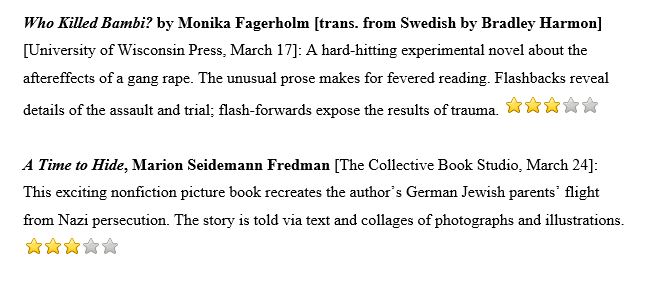
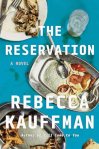 The Reservation by Rebecca Kauffman [Counterpoint, Feb. 24]: The staff members of a fine-dining restaurant each have a moment in the spotlight during the investigation of a theft. Linked short stories depict character interactions and backstories with aplomb. Big-hearted; for J. Ryan Stradal fans.


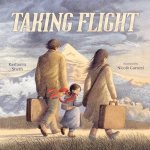 Taking Flight by Kashmira Sheth (illus. Nicolo Carozzi) [Dial Press, April 21]: A touching story of the journeys of three refugee children who might be from Tibet, Syria and Ukraine. The drawing style reminded me of Chris Van Allsburg’s. This left a tear in my eye.

Currently reading:
(Blurb excerpts from Goodreads; all are e-copies apart from Evensong)
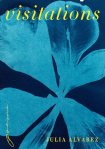 Visitations: Poems by Julia Alvarez [Knopf, April 7]: “Alvarez traces her life [via] memories of her childhood in the Dominican Republic … and the sisters who forged her, her move to America …, the search for mental health and beauty, redemption, and success.”
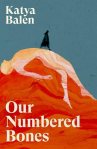 Our Numbered Bones by Katya Balen [Canongate, 12 Feb. / HarperVia, Feb. 17]: Her “adult debut [is] about a grieving author who heads to rural England for a writer’s retreat, only to stumble upon an incredible historical find” – a bog body!
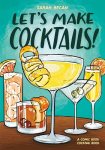 Let’s Make Cocktails!: A Comic Book Cocktail Book by Sarah Becan [Ten Speed Press, April 7]: “With vivid, easy-to-follow graphics, Becan guides readers through basic techniques such as shaking, stirring, muddling, and more. With all recipes organized by spirit for easy access, readers will delight in the panelized step-by-step comic instructions.”
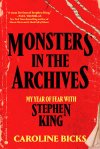 Monsters in the Archives: My Year of Fear with Stephen King by Caroline Bicks [Hogarth/Hodder & Stoughton, April 21]: “A fascinating, first of its kind exploration of Stephen King and his … iconic early books, based on … research and interviews with King … conducted by the first scholar … given … access to his private archives.”
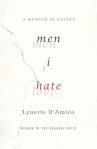 Men I Hate: A Memoir in Essays by Lynette D’Amico [Mad Creek Books, Feb. 17]: “Can a lesbian who loves a trans man still call herself a lesbian? As D’Amico tries to engage more deeply with the man she is married to, she looks at all the men—historical figures, politicians, men in her family—in search of clear dividing lines”.
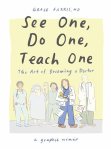 See One, Do One, Teach One: The Art of Becoming a Doctor: A Graphic Memoir by Grace Farris [W. W. Norton & Company, March 24]: “In her graphic memoir debut, Grace looks back on her journey through medical school and residency.”
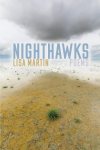 Nighthawks by Lisa Martin [University of Alberta Press, April 2]: “These poems parse aspects of human embodiment—emotion, relationship, mortality—and reflect on how to live through moments of intense personal and political upheaval.”
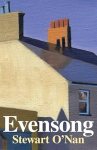 Evensong by Stewart O’Nan [published in USA in November 2025; Grove Press UK, 1 Jan.]: “An intimate, moving novel that follows The Humpty Dumpty Club, a group of women of a certain age who band together to help one another and their circle of friends in Pittsburgh.”
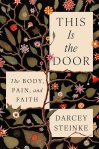 This Is the Door: The Body, Pain, and Faith by Darcey Steinke [HarperOne, Feb. 24]: “In chapters that trace the body—The Spine, The Heart, The Knees, and more—[Steinke] introduces sufferers to new and ancient understandings of pain through history, philosophy, religion, pop culture, and reported human experience.”
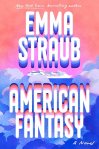 American Fantasy by Emma Straub [Riverhead, April 7 / Michael Joseph (Penguin), 14 May]: “When the American Fantasy cruise ship sets sail for a four-day themed voyage, aboard are all five members of a famous 1990s boyband, and three thousand screaming women who have worshipped them for thirty years.”
Additional pre-release review books on my shelf:
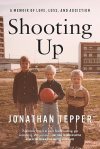 Shooting Up by Jonathan Tepper [Constable, 19 Feb.]: “Born into a family of American missionaries driven by unwavering faith … Jonathan’s home became a sanctuary for society’s most broken … AIDS hit Spain a few years after it exploded in New York and, like an invisible plague, … claimed countless lives – including those … in the family rehabilitation centre.”
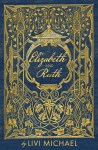 Elizabeth and Ruth by Livi Michael [Salt Publishing, 9 Feb.]: “Based on the real correspondence between Elizabeth Gaskell and Charles Dickens … [Gaskell] visits a young Irish prostitute in Manchester’s New Bailey prison. … [A] story of hypocrisy and suppression, and how Elizabeth navigates the … prejudice of the day to help the young girl”.
Will you look out for one or more of these?
Any other 2026 reads you can recommend?
Best Books of 2025
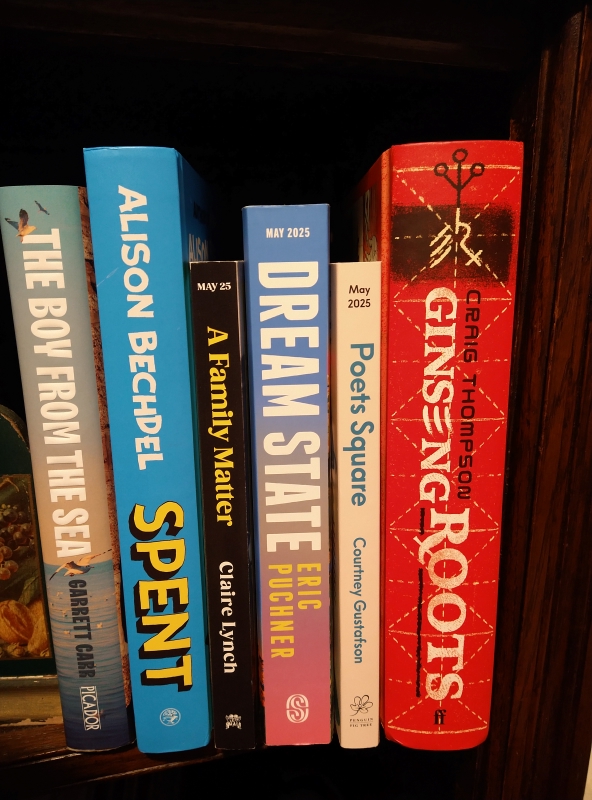
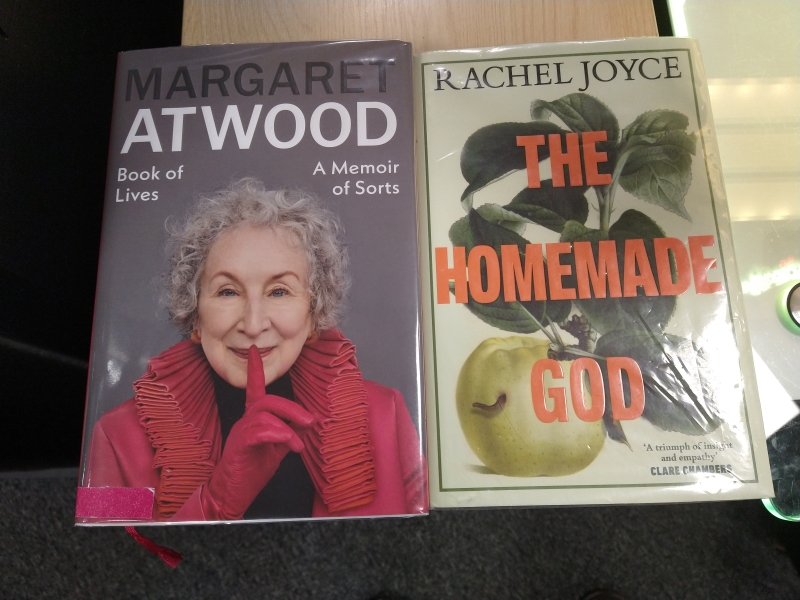
Without further ado, I present my 15 favourite releases from 2025. (With the 15 runners-up I chose yesterday, these represent about the top 9.5% of my current-year reading.) Pictured below are the ones I read in print; all the others were e-copies or library books I couldn’t get my hands on for a photo shoot. Links are to my full reviews where available.
Fiction
 Spent: A Comic Novel by Alison Bechdel: Alison has writer’s block and is consumed with anxiety about the state of the world. “Who can draw when the world is burning?” Then she has an idea for a book – or a reality TV series – called $UM to wean people off of capitalism. That creative journey is mirrored here. Through Alison’s ageing hippie friends and their kids, Bechdel showcases alternative ways of living. Even the throwaway phrases are hilarious. It’s a gleeful and zeitgeist-y satire, yet draws to a touching close. So great, I read it twice.
 The Boy from the Sea by Garrett Carr: I was entranced by this story of an Irish family in the 1970s–80s: Ambrose, a fisherman left behind by technology; his wife Christine, walked all over by her belligerent father and sister; their son Declan, a budding foodie; and the title character, Brendan, a foundling they adopt and raise. Narrated by a chorus of village voices, this debut has the heart of Claire Keegan and the humour of Paul Murray. It reimagines biblical narratives, too: Cain and Abel, Jacob and Esau (brotherly rivalry!); Job and more.
 The Homemade God by Rachel Joyce: The story of four siblings initially drawn together (in Italy) and then dramatically blown apart by their father’s remarriage and death. Despite weighty themes including alcoholism and depression, there is an overall lightness of tone and style that made this a pleasure to read. Joyce has really upped her game: it’s more expansive, elegant and empathetic than her previous seven books. You can tell she got her start in theatre, too: she’s so good at scenes, dialogue, and moving groups of people around.
 A Family Matter by Claire Lynch: In her research into UK divorce cases in the 1980s, Lynch learned that 90% of lesbian mothers lost custody of their children. Her earnest, delicate debut novel, which bounces between 2022 and 1982, imagines such a situation through close portraits of three family members. Maggie knew only that her mother, Dawn, abandoned her when she was little. Lynch’s compassion is equal for all three characters. This confident, tender story of changing mores and steadfast love is the new Carol for our times.
 Are You Happy? by Lori Ostlund: Nine short fictions form a stunning investigation into how violence and family dysfunction reverberate. “The Peeping Toms” and “The Stalker” are a knockout pair featuring Albuquerque lesbian couples under threat by male acquaintances. Characters are haunted by loss and grapple with moral dilemmas. Each story has the complexity and emotional depth of a novel. Freedom versus safety for queer people is a resonant theme in an engrossing collection ideal for Alice Munro and Edward St. Aubyn fans.
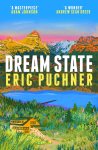 Dream State by Eric Puchner: It starts as a glistening romantic comedy about t Charlie and Cece’s chaotic wedding at a Montana lake house in summer 2004. First half the wedding party falls ill with norovirus, then the best man, Garrett, falls in love with the bride. The rest examines the fallout of this uneasy love triangle as it stretches towards 2050 and imagines a Western USA smothered in smoke from near-constant forest fires. Still, there are funny set-pieces and warm family interactions. Jonathan Franzen meets Maggie Shipstead.
 Palaver by Bryan Washington: Washington’s emotionally complex third novel explores the strained bond between a mother and her queer son – and their support systems of friends and lovers – when she visits him in Tokyo. The low-key plot builds through memories and interactions: the son’s with his students or hook-ups; the mother’s with restaurateurs as she gains confidence exploring Japan. Through words and black-and-white photographs, the author brings settings to life vibrantly. This is his best and most moving work yet.
Nonfiction
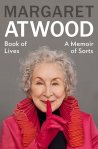 Book of Lives: A Memoir of Sorts by Margaret Atwood: For diehard fans, this companion to her oeuvre is a trove of stories and photographs. The context on each book is illuminating and made me want to reread lots of her work. I was reminded how often she’s been ahead of her time. The title feels literal in that Atwood has been wilderness kid, literary ingénue, family and career woman, philanthropist and elder stateswoman. She doesn’t try to pull all her incarnations into one, instead leaving the threads trailing into the beyond.
 Poets Square: A Memoir in 30 Cats by Courtney Gustafson: Working for a food bank, trapped in a cycle of dead-end jobs and rising rents: Gustafson saw first hand how broken systems and poverty wear people down. She’d recently started feeding and getting veterinary care for a feral cat colony in her Tucson, Arizona neighbourhood. With its radiant portraits of individual cats and its realistic perspective on personal and collective problems, this is a cathartic memoir and a probing study of building communities of care in times of hardship.
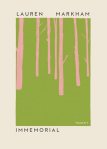 Immemorial by Lauren Markham: An outstanding book-length essay that compares language, memorials, and rituals as strategies for coping with climate anxiety and grief. The dichotomies of the physical versus the abstract and the permanent versus the ephemeral are explored. Forthright, wistful, and determined, the book treats grief as a positive, as “fuel” or a “portal.” Hope is not theoretical in this setup, but solidified in action. This is an elegant meditation on memory and impermanence in an age of climate crisis.
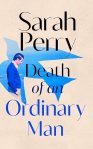 Death of an Ordinary Man by Sarah Perry: Perry recognises what a sacred privilege it was to witness her father-in-law’s death nine days after his diagnosis with oesophageal cancer. David’s end was as peaceful as could be hoped: in his late seventies, at home and looked after by his son and daughter-in-law, with mental capacity and minimal pain or distress. The beauty of this direct but tender memoir is its patient, clear-eyed unfolding of every stage of dying, a natural and inexorable process that in other centuries would have been familiar to all.
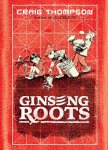 Ginseng Roots by Craig Thompson: A book about everything, by way of ginseng. It begins with Thompson’s childhood summers working on American ginseng farms with his siblings in Marathon, Wisconsin. As an adult, he travels first to Midwest ginseng farms and festivals and then through China and Korea to learn about the plant’s history, cultivation, lore, and medicinal uses. Roots are symbolic of a family story that unfolds in parallel. Both expansive and intimate, this is a surprising gem from one of the best long-form graphic storytellers.
Poetry
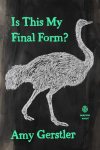 Is This My Final Form? by Amy Gerstler: This delightfully odd collection amazes with its range of voices and techniques. It leaps from surrealism to elegy as it ponders life’s randomness. The language of transformation is integrated throughout. Aging and the seasons are examples of everyday changes. Elsewhere, speakers fall in love with the bride of Frankenstein or turn to dinosaur urine for a wellness regimen. Monologues and sonnets recur. Alliteration plus internal and end rhymes create satisfying resonance.
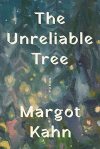 The Unreliable Tree by Margot Kahn: Kahn’s radiant first collection ponders how traumatic events interrupt everyday life. Poles of loss and abundance structure delicate poems infused with family history and food imagery. The title phrase describes literal harvests but is also a metaphor for the vicissitudes of long relationships. California’s wildfires, Covid-19, a mass shooting, and health crises – an emergency surgery and a friend’s cancer – serve as reminders of life’s unpredictability. Disaster is random and inescapable.
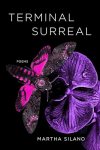 Terminal Surreal by Martha Silano: Silano’s posthumous collection (her eighth) focuses on nature and relationships as she commemorates the joys and ironies of her last years with ALS. The shock of a terminal diagnosis was eased by the quotidian pleasures of observing Pacific Northwest nature, especially birds. Fascination with science recurs, too. Most pieces are free form and alliteration and wordplay enliven the register. Her winsome philosophical work is a gift. “What doesn’t die? / The closest I’ve come to an answer / is poetry.”
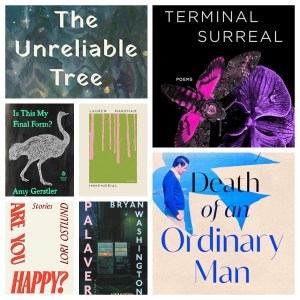
If I had to pick one from each genre? Well, like last year, I find that the books that have stuck with me most are the ones that play around with the telling of life stories. This time, all by women. So it’s Spent, Book of Lives and Is This My Final Form?


What 2025 releases should I catch up on?
Best Books of 2025: The Runners-Up
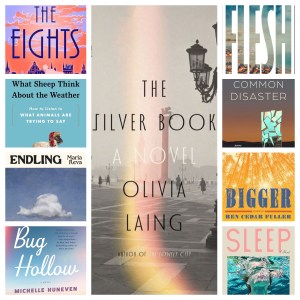
Coming up tomorrow: my list of the 15 best 2025 releases I’ve read. Here are 15 more that nearly made the cut. Pictured below are the ones I read / could get my hands on in print; the rest were e-copies or in-demand library books. Links are to my full reviews where available.
Fiction
 Bug Hollow by Michelle Huneven: A glistening portrait of a lovably dysfunctional California family beset by losses through the years but expanded through serendipity and friendship. Life changes forever for the Samuelsons (architect dad Phil; mom Sibyl, a fourth-grade teacher; three kids) when the eldest son, Ellis, moves into a hippie commune in the Santa Cruz Mountains. A rotating close third-person perspective spotlights each member. Fans of Jami Attenberg, Ann Patchett, and Anne Tyler need to try Huneven’s work pronto.
 Sleep by Honor Jones: A breathtaking character study of a woman raising young daughters and facing memories of childhood abuse. Margaret’s 1990s New Jersey upbringing seems idyllic, but upper-middle-class suburbia conceals the perils of a dysfunctional family headed by a narcissistic, controlling mother. Jones crafts unforgettable, crystalline scenes. There are subtle echoes throughout as the past threatens to repeat. Reminiscent of Sarah Moss and Evie Wyld, and astonishing for its psychological acuity, this promises great things from Jones.
 The Silver Book by Olivia Laing: Steeped in the homosexual demimonde of 1970s Italian cinema (Fellini and Pasolini films), with a clear antifascist message filtered through the coming-of-age story of a young Englishman trying to outrun his past. This offers the best of both worlds: the verisimilitude of true crime reportage and the intimacy of the close third person. Laing leavens the tone with some darkly comedic moments. Elegant and psychologically astute work from one of the most valuable cultural commentators out there.
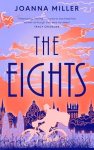 The Eights by Joanna Miller: Highly readable, book club-suitable fiction that is a sort of cross between In Memoriam and A Single Thread in terms of its subject matter: the first women to attend Oxford in the 1920s, the suffrage movement, and the plight of spare women after WWI. Different aspects are illuminated by the four central friends and their milieu. This debut has a good sense of place and reasonably strong characters. Despite some difficult subject matter, it remains resolutely jolly.
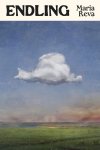 Endling by Maria Reva: What is worth doing, or writing about, in a time of war? That is the central question here, yet Reva brings considerable lightness to a novel also concerned with environmental devastation and existential loneliness. Yeva, a snail researcher in Ukraine, is contemplating suicide when Nastia and Sol rope her into a plot to kidnap 12 bride-seeking Western bachelors. The faux endings and re-dos are faltering attempts to find meaning when everything is breaking down. Both great fun to read and profound on many matters.
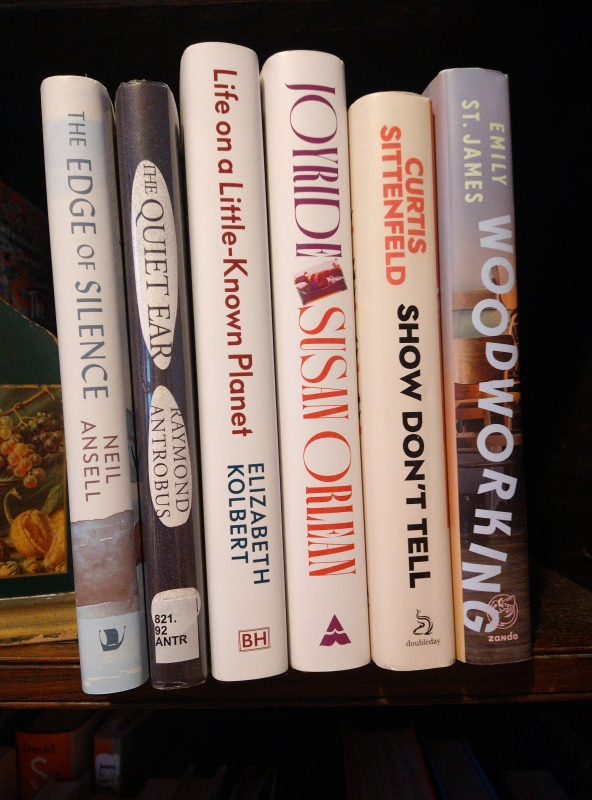
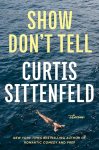 Show Don’t Tell by Curtis Sittenfeld: Sittenfeld’s second collection features characters negotiating principles and privilege in midlife. Split equally between first- and third-person perspectives, the 12 contemporary storylines spotlight everyday marital and parenting challenges. Dual timelines offer opportunities for hindsight on the events of decades ago. Nostalgic yet clear-eyed, these witty stories exploring how decisions determine the future are perfect for fans of Rebecca Makkai, Kiley Reid, and Emma Straub.
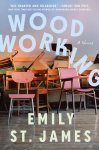 Woodworking by Emily St. James: When 35-year-old English teacher Erica realizes that not only is there another trans woman in her small South Dakota town but that it’s one of her students, she lights up. Abigail may be half her age but is further along in her transition journey and has sassy confidence. But this foul-mouthed mentor has problems of her own, starting with parents who refuse to refer to her by her chosen name. This was pure page-turning enjoyment with an important message, reminiscent of Celia Laskey and Tom Perrotta.
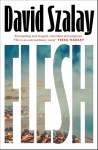 Flesh by David Szalay: Szalay explores modes of masculinity and channels, by turns, Hemingway; Fitzgerald and St. Aubyn; Hardy and McEwan. Unprocessed trauma plays out in Istvan’s life as violence against himself and others as he moves between England and Hungary and sabotages many of his relationships. He comes to know every sphere from prison to the army to the jet set. The flat affect and sparse style make this incredibly readable: a book for our times and all times and thus a worthy Booker Prize winner.
Nonfiction
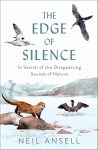 The Edge of Silence: In Search of the Disappearing Sounds of Nature by Neil Ansell: I owe this a full review. I’ve read all five of Ansell’s books and consider him one of the UK’s top nature writers. Here he draws lovely parallels between his advancing hearing loss and the biodiversity crisis we face because of climate breakdown. The world is going silent for him, but rare species may well become silenced altogether. His defiant, low-carbon adventures on the fringes offer one last chance to hear some of the UK’s beloved species, mostly seabirds.
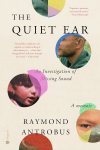 The Quiet Ear: An Investigation of Missing Sound by Raymond Antrobus: (Another memoir about being hard of hearing!) Antrobus’s first work of nonfiction takes up the themes of his poetry – being deaf and mixed-race, losing his father, becoming a parent – and threads them into an outstanding memoir that integrates his disability and celebrates his role models. This frank, fluid memoir of finding one’s way as a poet illuminates the literal and metaphorical meanings of sound. It offers an invaluable window onto intersectional challenges.
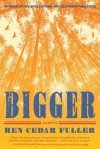 Bigger: Essays by Ren Cedar Fuller: Fuller’s perceptive debut work offers nine linked autobiographical essays in which she seeks to see herself and family members more clearly by acknowledging disability (her Sjögren’s syndrome), neurodivergence (she theorizes that her late father was on the autism spectrum), and gender diversity (her child, Indigo, came out as transgender and nonbinary; and she realizes that three other family members are gender-nonconforming). This openhearted memoir models how to explore one’s family history.
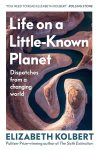 Life on a Little-Known Planet: Dispatches from a Changing World by Elizabeth Kolbert: These exceptional essays encourage appreciation of natural wonders and technological advances but also raise the alarm over unfolding climate disasters. There are travelogues and profiles, too. Most pieces were published in The New Yorker, whose generous article length allows for robust blends of research, on-the-ground experience, interviews, and in-depth discussion of controversial issues. (Review pending for the Times Literary Supplement.)
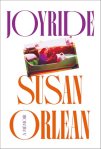 Joyride by Susan Orlean: Another one I need to review in the new year. As a long-time staff writer for The New Yorker (like Kolbert!), Orlean has had the good fortune to be able to follow her curiosity wherever it leads, chasing the subjects that interest her and drawing readers in with her infectious enthusiasm. She gives behind-the-scenes information on lots of her early stories and on each of her books. The Orchid Thief and the movie not-exactly-based on it, Adaptation, are among my favourites, so the long section on them was a thrill for me.
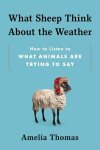 What Sheep Think About the Weather: How to Listen to What Animals Are Trying to Say by Amelia Thomas: A comprehensive yet conversational book that effortlessly illuminates the possibilities of human–animal communication. Rooted on her Nova Scotia farm but ranging widely through research, travel, and interviews, Thomas learned all she could from scientists, trainers, and animal communicators. Full of fascinating facts wittily conveyed, this elucidates science and nurtures empathy. (I interviewed the author, too.)
Poetry
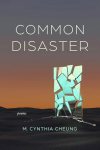 Common Disaster by M. Cynthia Cheung: Cheung is both a physician and a poet. Her debut collection is a lucid reckoning with everything that could and does go wrong, globally and individually. Intimate, often firsthand knowledge of human tragedies infuses the verse with melancholy honesty. Scientific vocabulary abounds here, with history providing perspective on current events. Ghazals with repeating end words reinforce the themes. These remarkable poems gild adversity with compassion and model vigilance during uncertainty.
Best Backlist Reads of the Year
I consistently find that many of my most memorable reads are older rather than current-year releases. Four of these are from 2023–4; the other nine are from 2012 or earlier, with the oldest from 1939. My selections are alphabetical within genre but in no particular rank order. Repeated themes included health, ageing, death, fascism, regret and a search for home and purpose. Reading more from these authors would probably help to ensure a great reading year in 2026!
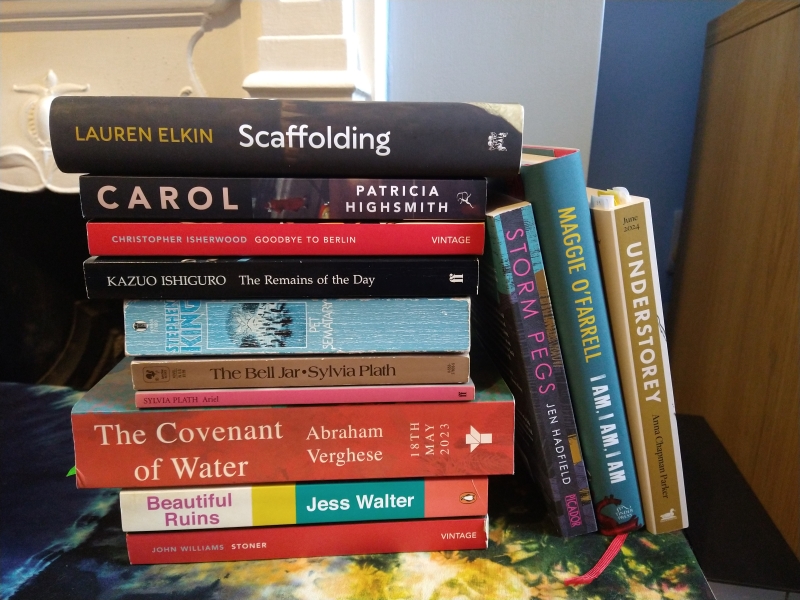
Some trivia:
- 4 were read for 20 Books of Summer (Hadfield, King, Verghese and Walter)
- 3 were rereads for book club (Ishiguro, O’Farrell and Williams) – just like last year!
- 1 was part of my McKitterick Prize judge reading (Elkin)
- 1 was read for 1952 Club (Highsmith)
- 1 was a review catch-up book (Parker)
- 1 was a book I’d been ‘reading’ since 2021 (The Bell Jar)
- The title of one (O’Farrell) was taken from another (The Bell Jar)
Fiction & Poetry
 Scaffolding by Lauren Elkin: Psychoanalysis, motherhood, and violence against women are resounding themes in this intellectual tour de force. As history repeats itself during one sweltering Paris summer, the personal and political structures undergirding the protagonists’ parallel lives come into question. This fearless, sophisticated work ponders what to salvage from the past—and what to tear down. This was our collective runner-up for the 2025 McKitterick Prize, but would have been my overall winner.
 Carol by Patricia Highsmith: Widely considered the first lesbian novel with a happy ending. Therese, a 19-year-old aspiring stage designer, meets a wealthy housewife – “Mrs. H. F. Aird” (Carol) – in a New York City department store one Christmas. When the women set off on a road trip, they’re trailed by a private detective looking for evidence against Carol in a custody battle. It’s a beautiful and subtle romance that unfolds despite the odds and shares the psychological intensity of Highsmith’s mysteries.
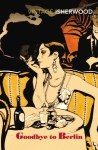 Goodbye to Berlin by Christopher Isherwood: Isherwood intended for these autofiction stories to contribute to a “huge episodic novel of pre-Hitler Berlin.” Two “Berlin Diary” segments from 1930 and 1933 reveal a change in tenor accompanying the rise of Nazism. Even in lighter pieces, menace creeps in through characters’ offhand remarks about “dirty Jews” ruining the country. Famously, the longest story introduces club singer Sally Bowles. I later read Mr Norris Changes Trains as well. Witty and humane, restrained but vigilant.
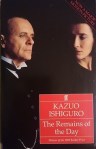 The Remains of the Day by Kazuo Ishiguro: I first read this pre-blog, back when I dutifully read Booker winners whether or not I expected to like them. I was too young then for its theme of regret over things done and left undone; I didn’t yet know that sometimes in life, it really is too late. When I reread it for February book club, it hit me hard. I wrote no review at the time (more fool me), but focused less on the political message than on the refined depiction of upper-crust English society and the brilliance of Stevens the unreliable, repressed narrator.
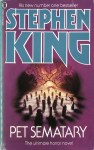 Pet Sematary by Stephen King: A dread-laced novel about how we deal with the reality of death. Is bringing the dead back a cure for grief or a horrible mistake? A sleepy Maine town harbours many cautionary tales, and the Creeds have more than their fair share of sorrow. Louis is a likable protagonist whose vortex of obsession and mental health is gripping. In the last quarter, which I read on a long train ride, I couldn’t turn the pages any faster. Sterling entertainment, but also surprisingly poignant. (And not gruesome until right towards the end.)
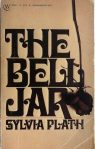
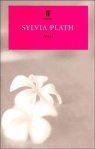 The Bell Jar & Ariel by Sylvia Plath: Given my love of mental hospital accounts, it’s a wonder I’d not read this classic work of women’s autofiction before. Esther Greenwood is the stand-in for Plath: a talented college student who, after working in New York City during the remarkable summer of 1953, plunges into mental ill health. An enduringly relevant and absorbing read. / Ariel takes no prisoners. The images and vocabulary are razor-sharp and the first and last lines or stanzas are particularly memorable.
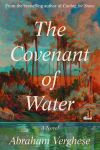 The Covenant of Water by Abraham Verghese: Wider events play out in the background (wars, partition, the fall of the caste system), but this saga sticks with one Kerala family in every generation of which someone drowns. I enjoyed the window onto St. Thomas Christianity, felt fond of all the characters, and appreciated how Verghese makes the Condition a cross between mystical curse and a diagnosable ailment. An intelligent soap opera that makes you think about storytelling, purpose and inheritance, this is extraordinary.
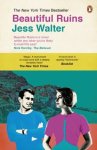 Beautiful Ruins by Jess Walter: I was captivated by the shabby glamour of Pasquale’s hotel in Porto Vergogna on the coast of northern Italy. A myriad of threads and formats – a movie pitch, a would-be Hemingway’s first chapter of a never-finished wartime opus, an excerpt from a producer’s autobiography and a play transcript – coalesce to flesh out what happened in the summer of 1962 and how the last half-century has treated all the supporting players. Warm, timeless and with great scenes, one of which had me in stitches. Fantastic.
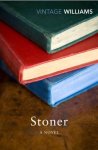 Stoner by John Williams: What a quiet masterpiece. A whole life, birth to death, with all its sadness and failure and tragedy; but also joy and resistance and dignity. One doesn’t have to do amazing things that earn the world’s accolades to find vocation and meaning. Just as powerful a second time (I first read it in 2013). I was especially struck by the power plays in Stoner’s marriage and university department, and how well Williams dissects them. It’s more about atmosphere than plot – and that melancholy tone will stay with you.
Nonfiction
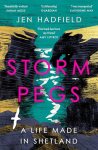 Storm Pegs by Jen Hadfield: Not a straightforward memoir but a set of atmospheric vignettes. Hadfield, a British Canadian poet, moved to Shetland in 2006 and soon found her niche. It’s a life of wild swimming, beachcombing, fresh fish, folk music, seabirds, kind neighbours, and good cheer that warms the long winter nights. After the isolation of the pandemic comes the unexpected joy of a partner and pregnancy in her mid-forties. I savoured this for its language and sense of place; it made me hanker to return to Shetland.
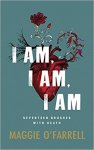 I Am, I Am, I Am: Seventeen Brushes with Death by Maggie O’Farrell: (The final book club reread.) The memoir-in-essays is a highly effective form because it focuses on themes or moments of intensity and doesn’t worry about accounting for boring intermediate material. These pieces form a vibrant picture of a life and also inspire awe at what the human body can withstand. The present tense and a smattering of second person make the work immediate and invite readers to feel their way into her situations. The last two essays are the pinnacle.
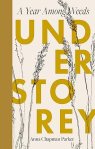 Understorey: A Year among Weeds by Anna Chapman Parker: I owe this a full review in the new year. Parker set out to study and sketch weeds as a way of cultivating attention and stillness as well as celebrating the everyday and overlooked. Daily drawings and entries bear witness to seasons changing but also to the minute alterations she observes in herself and her children. For me, this was all the more special because I’ve holidayed in Berwick-on-Tweed and could picture a lot of the ‘overgrown’ spaces she honours by making them her subjects.
What were some of your best backlist reads this year?
Seasons Readings: Winter, The Robin, & An Almost Perfect Christmas
I’m marking Christmas Eve with cosy reflections on the season, a biography of Britons’ favourite bird (and a bonus seasonal fairy tale), and a mixed bag of essays and stories about the obligations and annoyances of the holidays.
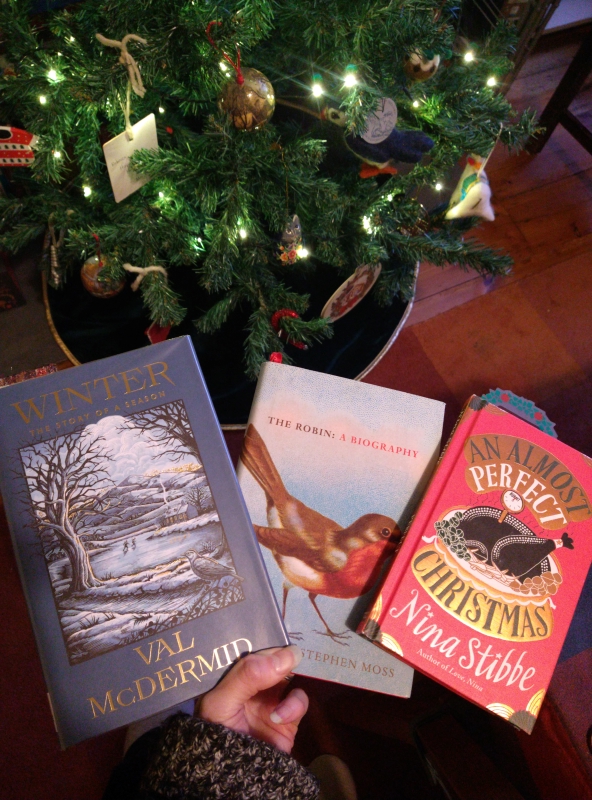
Winter by Val McDermid (2025)
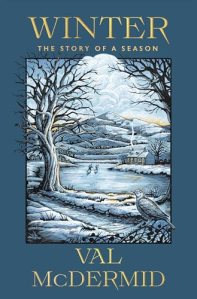 I didn’t realize that Michael Morpurgo’s Spring was the launch of a series of short nonfiction books on the seasons. McDermid writes a book a year, always starting it in early January. She evokes the Scottish winter’s “Janus-faced” character: cosy but increasingly storm-tossed. In few-page essays, she looks for nature’s clues, delves into childhood memories, and traverses the season through traditional celebrations as she has experienced them in Edinburgh and Fife: Hallowe’en, Bonfire Night, Christmas, and New Year’s Eve. The festivities are a collective way of taking the mind off of the season’s hardships, she suggests. I was amused by her mother’s recipe for soup, which she described as more of a “rummage” for whatever vegetables you have in the fridge. It was my first time reading McDermid and, while I don’t know that I will ever pick up one of her crime novels, this was pleasant. I reckon I’d read Bernardine Evaristo on summer and Kate Mosse on autumn, too. (Public library)
The Robin: A Biography – A Year in the Life of Britain’s Favourite Bird by Stephen Moss (2017)
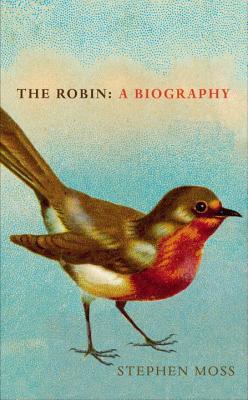 I’ve also read Moss’s most recent bird monograph, The Starling. Both provide a thorough yet accessible introduction to a beloved species’ history, behaviour, and cultural importance. The month-by-month structure works well here: Moss’s observations in his garden and on his local patch lead into discussions of what birds are preoccupied with at certain times of year. Such a narrative approach makes the details less tedious. European robins are known for singing pretty much year-round, and because hardly any migrate – only 5%, it’s thought – they feel like constant companions. They are inquisitive garden guests, visiting feeders and hanging around to see if we monkey-pigs might dig up some juicy worms for them.
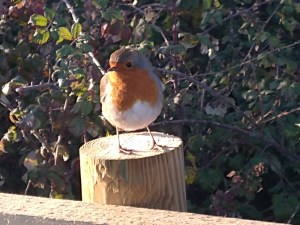
(Last month, this friendly chap at an RSPB bird reserve near Exeter wondered if we might have a snack to share.)
Although we like to think we see the same robins year after year, that’s very unlikely. One in four robins found dead has been killed by a domestic cat; most die of old age and/or starvation within a year. Robin pairs raise one or two broods per year and may attempt a third if the weather allows, but that high annual mortality rate (62%) means we’re not overrun. Compared to other notable species, then, they’re doing well. There are loads of poems and vintage illustrations and, what with robins’ associations with Christmas, this felt like a seasonally appropriate read. At Christmas 2022 I read the very similar Robin by Helen F. Wilson, but this was more engaging. (Free from C’s former colleague)
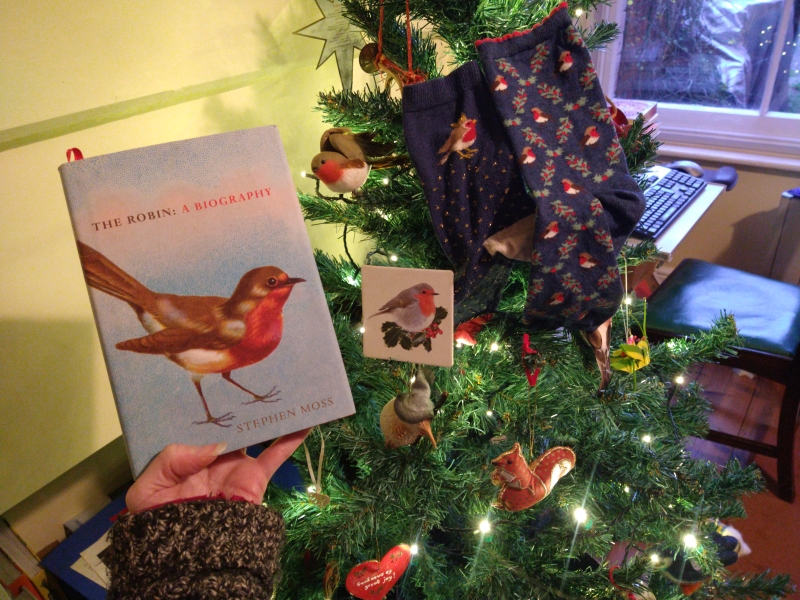
Our small collection of Christmas robin paraphernalia.
&
The Robin & the Fir Tree by Jason Jameson (2020)
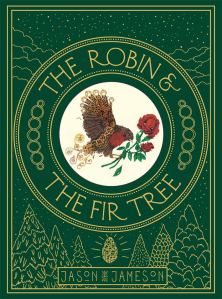 Based on a Hans Christian Andersen fairy tale, this lushly illustrated children’s book stars a restless tree and a faithful robin. The tree resents being stuck in one place and envies his kin who have been made into ships to sail the world. Although his friend the robin describes everything and brings souvenirs, he can’t see the funfair and the flora of other landscapes for himself. “Every season will be just the same. How I long for something different to happen!” he cries. Cue a careful-what-you-wish-for message. When men with axes come to chop down the fir tree and display him in the town square, he feels a combination of trepidation and privilege. Human carelessness turns his sacrifice to waste, and only the robin knows how to make something good out of the wreckage. The art somewhat outshines the story but this is still a lovely hardback I’d recommend to adults and older children. (Public library)
An Almost Perfect Christmas by Nina Stibbe (2017)
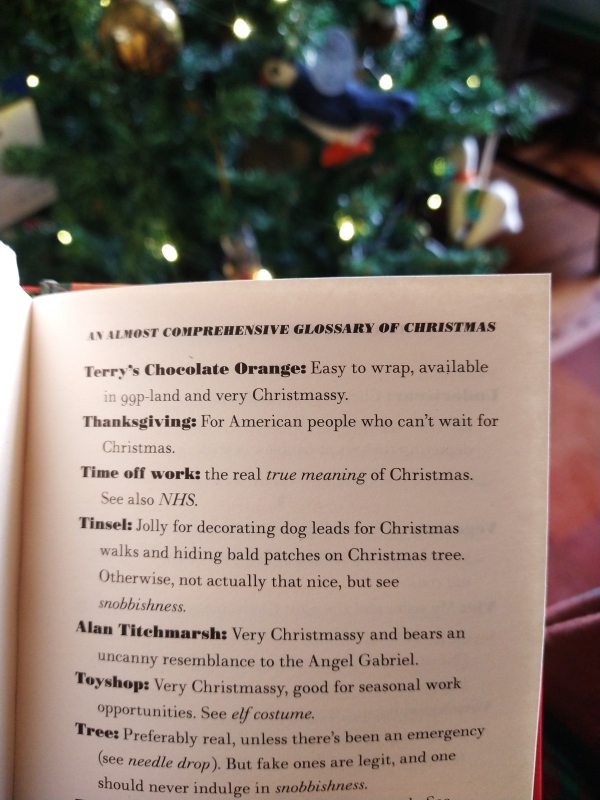
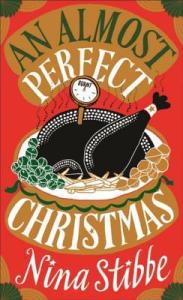 I reviewed this for Stylist magazine when it first came out and had fond memories of a witty collection I expected to dip into again and again. This time, though, Stibbe’s grumpy rants about turkey, family, choosing a tree and compiling the perfect Christmas party playlist fell flat with me. The four short stories felt particularly weak. I most recognized and enjoyed the sentiments in “Christmas Correspondence,” which is about the etiquette for round-robin letters and thank-you notes. The tongue-in-cheek glossary that closes the book is also amusing. But this has served its time in my collection and it’s off to the Little Free Library with it to, I hope, give someone else a chuckle on Christmas day. (Review copy)
My original rating (2017):
My rating now: 
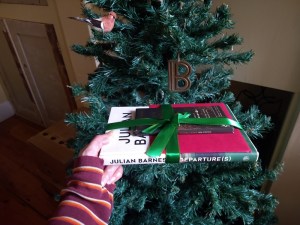
It’s taken me a long time to feel festive this year, but after a couple of book club gatherings and a load of brief community events for the Newbury Living Advent Calendar plus the neighbourhood carol walk, I think I’m finally ready for Christmas. (Not that I’ve wrapped anything yet.) I had a couple of unexpected bookish gifts arrive earlier in December. First, I won the 21st birthday quiz on Kim’s blog and she sent a lovely parcel of Australian books and an apt tote bag. Then, I was sent an early finished copy of Julian Barnes’s upcoming (final) novel, Departure(s). We didn’t trust Benny to be sensible around a real tree so got an artificial one free from a neighbour to festoon with non-breakable ornaments. He discovered the world’s comfiest blanket and spends a lot of time sleeping on it, which has been helpful.


Merry Christmas, everyone! I have a bunch of year-end posts in preparation. It’ll be a day off tomorrow, of course, but here’s what to expect thereafter:
Friday 26th: Reporting back on Most Anticipated Reads of 2025
Saturday 27th: Reading Superlatives
Sunday 28th: Best Backlist Reads
Monday 29th: Love Your Library
Tuesday 30th: Runners-Up
Wednesday 31st: Best Books of 2025
Thursday 1st: Final Statistics for 2025
Friday 2nd: Early Recommendations for 2026
Monday 5th: Most Anticipated Titles of 2026
 Bookish Beck = Rebecca Foster. American transplant to England. Freelance proofreader and book reviewer.
