Winter Reads, I: Michael Cunningham & Helen Moat
It’s been feeling springlike in southern England with plenty of birdsong and flowers, yet cold weather keeps making periodic returns. (For my next instalment of wintry reads, I’ll try to attract some snow to match the snowdrops by reading three “Snow” books.) Today I have a novel drawing on a melancholy Hans Christian Andersen fairy tale and a nature/travel book about learning to appreciate winter.
The Snow Queen by Michael Cunningham (2014)
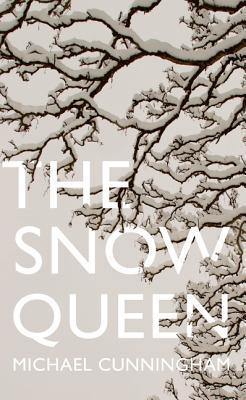 It was among my favourite first lines encountered last year: “A celestial light appeared to Barrett Meeks in the sky over Central Park, four days after Barrett had been mauled, once again, by love.” Barrett is gay and shares an apartment with his brother, Tyler, and Tyler’s fiancée, Beth. Beth has cancer and, though none of them has dared to hope that she will live, Barrett’s epiphany brings a supernatural optimism that will fuel them through the next few years, from one presidential election autumn (2004) to the next (2008). Meanwhile, Tyler, a stalled musician, returns to drugs to try to find inspiration for his wedding song for Beth. The other characters in the orbit of this odd love triangle of sorts are Liz, Beth and Barrett’s boss at a vintage clothing store, and Andrew, Liz’s decades-younger boyfriend. It’s a peculiar family unit that expands and contracts over the years.
Of course, Cunningham takes inspiration, thematically and linguistically, from Hans Christian Andersen’s tale about love and conversion, most obviously in an early dreamlike passage about Tyler letting snow swirl into the apartment through the open windows:
He returns to the window. If that windblown ice crystal meant to weld itself to his eye, the transformation is already complete; he can see more clearly now with the aid of this minuscule magnifying mirror…
I was most captivated by the early chapters of the novel, picking it up late one night and racing to page 75, which is almost unheard of for me. The rest took me significantly longer to get through, and in the intervening five weeks or so much of the detail has evaporated. But I remember that I got Chris Adrian and Julia Glass vibes from the plot and loved the showy prose. (And several times while reading I remarked to people around me how ironic it was that these characters in a 2014 novel are so outraged about Dubya’s re-election. Just you all wait two years, and then another eight!)
I fancy going on a mini Cunningham binge this year. I plan to recommend The Hours for book club, which would be a reread for me. Otherwise, I’ve only read his travel book, Land’s End. I own a copy of Specimen Days and the library has Day, but I’d have to source all the rest secondhand. Simon of Stuck in a Book is a big fan and here are his rankings. I have some great stuff ahead! (Secondhand – Awesomebooks.com)
While the Earth Holds Its Breath: Embracing the Winter Season by Helen Moat (2024)
 Like many of us, Moat struggles with mood and motivation during the darkest and coldest months of the year. Over the course of three recent winters overlapping with the pandemic, she strove to change her attitude. The book spins short autobiographical pieces out of wintry walks near her Derbyshire home or further afield. Paying closer attention to the natural spectacles of the season and indulging in cosy food and holiday rituals helped, as did trips to places where winters are either a welcome respite (Spain) or so much harsher as to put her own into perspective (Lapland and Japan). My favourite pieces of all were about sharing English Christmas traditions with new Ukrainian refugee friends.
There were many incidents and emotions I could relate to here – a walk on the canal towpath always makes me feel better, and the car-heavy lifestyle I resume on trips to America feels unnatural.
Days are where we must live, but it didn’t have to be a prison of house and walls. I needed the rush of air, the slap of wind on my cheeks. I needed to feel alive. Outdoors.
I’d never liked the rain, but if I were to grow to love winters on my island, I had to learn to love wet weather, go out in it.
What can there be but winter? It belongs to the circle of life. And I belonged to winter, whether I liked it or not. Indoors, or moving from house to vehicle and back to house again, I lost all sense of my place on this Earth. This world would be my home for just the smallest of moments in the vastness of time, in the turning of the seasons. It was a privilege, I realised.
However, the content is repetitive such that the three-year cycle doesn’t add a lot and the same sorts of pat sentences about learning to love winter recur. Were the timeline condensed, there might have been more of a focus on the more interesting travel segments, which also include France and Scotland. So many have jumped on the Wintering bandwagon, but Katherine May’s book felt fresh in a way the others haven’t.
With thanks to Saraband for the free copy for review.
Any wintry reading (or weather) for you lately?
Paul Auster Reading Week, II: Baumgartner & Travels in the Scriptorium (#AusterRW25 #ReadIndies)
It’s the final day of Annabel’s Paul Auster Reading Week and, after last week’s reviews of Invisible and Siri Hustvedt’s The Blindfold, I’m squeaking in with a short review of his final novel, Baumgartner, which Annabel chose as the buddy read and Cathy also wrote about. I paired it at random with another of his novellas and found that the two have a similar basic setup: an elderly man being let down by his body and struggling to memorialize what is important from his earlier life. They also happen to feature a character named Anna Blume, and other character names recur from his previous work. I wonder how fair it would be to say that most of Auster’s novels have the same autofiction-inspired protagonist, and are part of the same interlocking universe (à la David Mitchell and Elizabeth Strout)?
Baumgartner (2023)
Sy Baumgartner is a Princeton philosophy professor nearing retirement. The accidental death of his wife, Anna Blume, a decade ago, is still a raw loss he compares to a phantom limb. Only now can he bring himself to consider 1) proposing marriage to his younger colleague and longtime casual girlfriend, Judith Feuer, and 2) allowing a PhD student to sort through reams of Anna’s unpublished work, including poetry, translations and unfinished novels. The book includes a few of her autobiographical fragments, as well as excerpts from his writings, such as an account of a trip to Ukraine to explore his heritage (elsewhere we learn his mother’s name was Ruth Auster) and a précis of his book about car culture.
 Baumgartner’s past is similar to Auster’s (and Adam Walker’s from Invisible – the two characters have a mutual friend in writer James Freeman), but not identical. His childhood memories and the passion and companionship he found with Anna are quite sweet. But I was somewhat thrown by the tone in sections that have this grumpy older man experiencing pseudo-comic incidents such as tumbling down the stairs while showing the meter reader the way. To my relief, the book doesn’t take the tragic turn the last pages seem to augur, instead leaving readers with a nicely open ending.
It’s not this that makes Baumgartner feel incomplete so much as the fact that any of its threads might have been expanded into a full-length novel. Maybe Auster had various projects on the go at the time of his final illness and combined them. That could explain the mishmash. I also had the odd sense that there were unconscious pastiches of other authors. Baumgartner reminds me a lot of James Darke, the curmudgeonly widower in Rick Gekoski’s pair of novels. When Baumgartner speaks to his dead wife on the telephone, I went hunting through my notes because I knew I’d encountered that specific plot before (the short story “The Telephone” by Mary Treadgold, collected in Fear, edited by Roald Dahl). The Ukraine passage might have come from Everything Is Illuminated by Jonathan Safran Foer. So, for me, this was less distinctive as Auster works go. However, it’s gently readable and not formally challenging so it’s a pleasant valedictory volume if not the best representative of his oeuvre. (Public library) 
Travels in the Scriptorium (2006)
 This is very much in the vein of The Locked Room and Oracle Night and indeed makes reference to characters from those earlier books (Sophie Fanshawe and Peter Stillman from the former; John Trause from the latter). Mr. Blank lives in a sparse room containing manuscript pages and a stack of photographs. He is tended by a nurse named Anna Blume and given a rainbow of pharmaceuticals. Whether the pills help or keep him pacified is unclear. The haziness of his memory could be due to age or the drugs. He receives various visitors he feels he should recognize but can’t, and from the comments they make he fears he is being punished for dangerous missions he spearheaded. Even Anna, object of his pitiable sexual desires, is somehow his moral superior. Everyday self-care is struggle enough for him, but he does end up reading and adding to the partial stories on the table, including a dark Western set in an alternative 19th-century USA. Whatever he’s done in the past, he’s now an imprisoned writer and this is a day in his newly constrained life. The novella is a deliberate assemblage of typical Auster tropes and characters; there’s a puppet-master here, but no point. An indulgent minor work. But that’s okay as I still have plenty of appealing books from his back catalogue to read. [Interestingly, the American cover has a white horse in the centre of the room, an embodiment of Mr. Blank’s childhood memory of a white rocking-horse he called Whitey.] (Public library)
Faber, Auster’s longtime publisher, counts towards Reading Independent Publishers Month.
Paul Auster Reading Week: Invisible (#ReadIndies) & Siri Hustvedt’s The Blindfold (#AusterRW25)
The first time Annabel ran a Paul Auster Reading Week, in 2020, it was a great excuse for me to read six of his books (Winter Journal and The New York Trilogy were amazing; I also really enjoyed Oracle Night). I won’t manage so many this time, but maybe three, as well as one by his widow, Siri Hustvedt. Auster would have been 78 today but died of lung cancer in 2024. As a buddy read, Annabel is inviting people to read his final novel, Baumgartner. I’m partway through that and have another of his novellas waiting in the wings in case I find time.
For now, I’m focusing on a novel that exemplifies some recurring elements of his fiction: a book within a book, fragmented narratives, differing perspectives, cryptic events and the inscrutability of memory and language. I’m pairing it with Hustvedt’s debut novel, which is – not coincidentally, I should think – similarly intricate, weird and unsettling.
Invisible (2009)
To start with, I thought we were in autofiction territory, but Auster swiftly adopts a more typical metafictional approach. Adam Walker is a 20-year-old would-be poet studying at Columbia University in 1967. At a party he meets Rudolf Born, a visiting international affairs professor from Paris, and it seems a good omen: Born invests generously in Adam’s literary magazine and also seems open to sharing his beautiful girlfriend, Margot. But when the men are caught up in an attempted mugging, Adam turns against his idol.
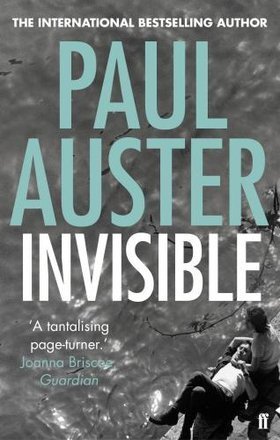 That’s at the heart of Part I (“Spring”). Across four sections, the perspective changes and the narrative is revealed to be 1967, a manuscript Adam began while dying of cancer. “Summer,” in the second person, shines a light on his relationship with his sister, Gwyn. “Fall,” adapted from Adam’s third-person notes by his college friend and fellow author, Jim Freeman, tells of Adam’s study abroad term in Paris. Here he reconnected with Born and Margot with unexpected results. Jim intends to complete the anonymized story with the help of a minor character’s diary, but the challenge is that Adam’s memories don’t match Gwyn’s or Born’s.
I can’t say more about the themes without giving too much away, but this is a provocative novel that makes you question how truth is created or preserved. Who has the right to tell the story, and will justice be done? I wouldn’t say I enjoyed it, but I certainly admired how it was constructed. Auster conjures such a sense of unease, and I always felt like I had no idea what might happen next. With no speech marks, it all flows together in a compulsively readable way. (Secondhand purchase – Awesomebooks.com) 
Faber, Auster’s longtime publisher, counts towards Reading Independent Publishers Month.
The Blindfold by Siri Hustvedt (1992)
“Strange, I thought. Everything is strange.”
I read Hustvedt (The Blazing World) well before I ever tried Auster, and wouldn’t have realized then how similar their books are; they almost seem part of the same body of work. Was Hustvedt a fan or a student of his before they married? I don’t actually know and am loath to dispel the mystery for myself by looking into it. Anyway, there are striking connections between this and Invisible: the narrator is fairly autobiographical and a Columbia University student, the novel is in four loosely connected parts, and the sordid content culminates in a sudden, odd ending. (There’s also the little Easter egg here of “I heard someone shout the name Paul.”) But overall, this is more reminiscent of The New York Trilogy in its surreal randomness and subtly symbolic naming (e.g., the landlord is Mr. Then).
 Iris Vegan (Hustvedt’s mother’s surname), like many an Auster character, is bewildered by what happens to her. An impoverished graduate student in literature, she takes on peculiar jobs. First Mr. Morning hires her to make audio recordings meticulously describing artefacts of a woman he’s obsessed with. Iris comes to believe this woman was murdered and rejects the work as invasive. Next she’s a photographer’s model but hates the resulting portrait and tries to take it off display. Then she’s hospitalized for terrible migraines and has upsetting encounters with a fellow patient, old Mrs. O. Finally, she translates a bizarre German novella and impersonates its protagonist, walking the streets in a shabby suit and even telling people her name is Klaus.
I worked out that the chronological order of the parts is 2 – 4 – 3 – 1, with 1 including a recap of the others. The sections feel like separate vignettes, perhaps reflecting Hustvedt’s previous experience with the short story form, and make a less than satisfying whole. I was most engaged with the segment on working for Mr. Morning and thought that might recur, but it doesn’t. Many of the secondary characters are grotesque, whereas Iris is the intellectual waif trying to make her way in the cruel city, almost like a Dickens or Gissing (anti)hero.
It’s refreshing to get a female take on the Bildungsroman and a little bit of gender-bending with the cross-dressing. (Iris reminds me of Lauren Elkin’s Flaneuse.) The title felt like an enigma to me until close to the end, when it’s revealed to be a tool of sexual sadism. Indeed, each of the sections, in its own way, addresses male exploitation of and violence against women. Disappointingly, Iris remains defined by her relationships with men. She deserves better. Heck, she deserves a sequel! It’s interesting to see where Hustvedt got her start, but I didn’t warm to this as I did to later novels including What I Loved. (Secondhand purchase – Community Furniture Project, Newbury)
January Releases: Greathead, Kauffman, Mills & Watts (#ReadIndies)
I feel out of practice writing reviews after the endless period of sluggish and slightly lackluster reading that was January. Here we are at the start of Kaggsy and Lizzy Siddal’s Reading Independent Publishers Month challenge and I’m happy to make this my first tie-in post as these four books all happen to be from independent publishers. The first two are American novels (that could arguably be called linked short story collections) very much in my wheelhouse for their focus on dysfunctional families and disappointing characters. I also have a group biography aiming to illuminate bisexuality, and a poetry collection about girlhood/womanhood and nature.
The Book of George by Kate Greathead
The marketing for this novel courts relatability: you probably know a George – you might have dated one (women read the most litfic). Each chapter dates to a different period in George’s life, adolescence to late thirties. From the fact that 9/11 happened when he was a college freshman, I know he’s my exact contemporary, and I could indeed see bits of myself in this Everyman schmuck: indecisive, lazy, underachieving, privileged but never living up to his own or others’ expectations. Life keeps happening around him, but you wonder if he’ll ever make something happen for himself. Two gags are revealing: In college he is known for his impression of a clinically depressed penis going through airport security, and later he has 15 minutes of fame for appearing in a hidden-camera Super Bowl commercial. He’s been writing fiction for years – first a Stoner rip-off, then a Kerouac homage – but by the time he gets a short story collection together, it’s the height of #MeToo and he’s missed his moment to publish. Meanwhile, his cohort is doing great things, winning awards for documentaries (his pal Jeremiah) or becoming pro bono lawyers (his longsuffering girlfriend Jenny).
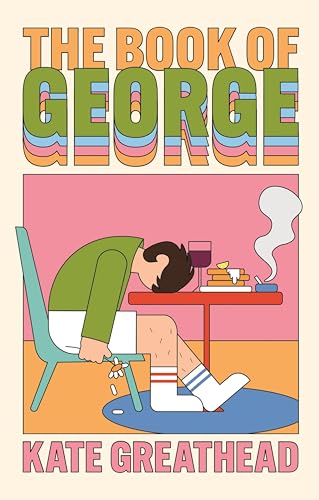 If you need to like a protagonist, expect frustration. Some of George’s behaviour is downright maddening, as when he obsessively plays his old Gameboy while his mother and Jenny pack up his childhood room. Tracing his relationships with his mother, his sister Cressida, and Jenny is rewarding. Sometimes they confront him over his shortcomings; other times they enable him. The novel is very funny, but it’s a biting, ironic humour, and there’s plenty of pathos as well. There are a few particular gut-punches, one relating to George’s father and others surrounding nice things he tries to do that backfire horribly. I thought of George as a rejoinder to all those ‘So-and-So Is Not Okay at All’ type of books featuring a face-planting woman on the cover. Greathead’s portrait is incisive but also loving. And yes, there is that hint of George, c’est moi recognition. His failings are all too common: the mildest of first-world tragedies but still enough to knock your confidence and make you question your purpose. For me this had something of the old-school charm of Jennifer Egan and Jonathan Safran Foer novels I read in the Naughties. I’ll seek out the author’s debut, Laura & Emma.
With thanks to Atlantic Books for the free copy for review. (Published in the USA by Henry Holt and Co. in 2024.)
I’ll Come to You by Rebecca Kauffman
Is 30 years long enough ago to count as historical fiction? In any case, this takes us through the whole of 1995, proceeding month by month and rotating through the close third-person perspectives of the members of one extended family as they navigate illnesses, break-ups and fraught parenting journeys. Corinne and Paul are trying to get pregnant; Paul’s mother, Ellen (again!), is still smarting from her husband leaving with no explanation; Corinne’s father, Bruce, has dementia but his wife, Janet, is doing her best to keep his cognitive deficiencies from the rest of the family. Son Rob is bitter about his ex-wife moving on so quickly, but both he and Ellen will have new romantic prospects before the end.
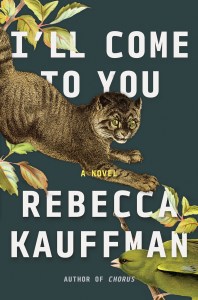 The family’s lies and secrets – also involving a Christmas run-in with Bruce’s shell-shocked brother decades ago – lead to everything coming to a head in a snowstorm. (As best I can tell, the 1995 setting was important mostly so there wouldn’t be cell phones during this crisis.) As with The Book of George, the episodic nature of the narrative means that particular moments are memorable but the whole maybe less so, and the interactions between characters stand out more than the people themselves. I’ll Come to You, named after a throwaway line in the text, is poorly served by both its cover and title, which give no sense of the contents. However, it’s a sweet, offbeat portrait of genuine, if generic, Americans; I was most reminded of J. Ryan Stradal’s work. Although I DNFed Kauffman’s The Gunners some years back, I’d be interested in trying her again with Chorus, which sounds like another linked story collection.
With thanks to Counterpoint (USA) for the advanced e-copy for review.
Uneven: Nine Lives that Redefined Bisexuality by Sam Mills
Back in 2022 I reviewed Julia Shaw’s Bi: The hidden culture, history and science of bisexuality, which took a social sciences approach. By contrast, this is a group biography of nine bisexuals – make that 10, as there are plenty of short memoir-ish passages from Mills, too. Oscar Wilde, Colette, Marlene Dietrich, Anaïs Nin, Susan Sontag: more or less familiar names, though not all of them are necessarily known for their sexuality. The chapters deliver standard potted biographies of the individuals’ work and relationships, probably containing little that couldn’t be found elsewhere in recent scholarship and not really living up to the revolutionary promise of the subtitle. However, it was worthwhile for Mills to recover Wilde as a bisexual rather than a closeted homosexual. A final trilogy of chapters comes more up to date with David Bowie, Jean-Michel Basquiat and Madonna. The closer to the present day, the more satisfying connections there are between figures. For instance, Madonna looked to both Dietrich and Bowie as role models and fashion icons, and she and Basquiat were lovers.
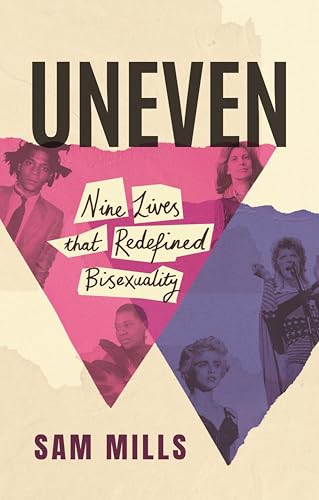 Mills and Shaw consider the same fundamental issues: bi erasure, with bisexuality the least understood and most easily overlooked element of LGBT and many passing as straight if in heterosexual marriages; and the stereotype of bis as hypersexual or promiscuous. Mills is keen to stress that bisexuals have very different trajectories and phases. Like Wilde, they might have a heterosexual era of happy marriage and parenthood followed by a homosexual spree. Or they might have simultaneous lovers of multiple genders. Some might never even act on strong same-sex desires. (Late last year I encountered a similar unity-in-diversity approach in Daniel Tamet’s Nine Minds, a group biography about autistic people.)
The 1890s to 1980s window allows for a record of changing mores yet means that the book seems rather dated. Were it written by an author of a later generation (Mills, who I knew for The Fragments of My Father, is around 50), the point of view and terminology would likely be quite different. Also, including a section on Bessie Smith within a chapter mostly on Colette felt tokenistic. (Though later considering Basquiat separately does add a BIPOC view.) Ultimately, though, my problem with Uneven was that I don’t want to know about behaviour – which is all that a biography can usually document – so much as the internal, soul stuff. Even from Mills, whose accounts of her long-term relationships and flings (including, yes, a threesome) can be titillating but not very enlightening, I didn’t get a sense of what it feels like. So neither the Shaw nor the Mills gave me precisely what I was looking for, which means that the perfect book on bisexuality either doesn’t exist or is out there but I haven’t found it yet. Any suggestions?
With thanks to Atlantic Books for the free copy for review.
The Face in the Well by Rebecca Watts
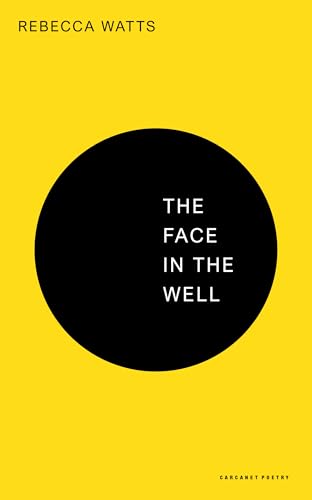 I’ve also read Watts’ The Met Office Advises Caution and Red Gloves; this is her third collection. The Suffolk and Cambridgeshire scenery of her early and adult lives weaves all through, sometimes as an idyll that blurs the lines between humans and nature (“Private No Access”) but other times provoking anxiety about common or gendered dangers, as in the title poem or “The Old Mill” (“What happened there, / down by the old mill, / they never tell. // Something about / a man and a girl / is the most you’ll hear.”). “Woman Seeks” is a tongue-in-cheek advert for the perfect man. Animals – a dolphin, a shark, rodents, a wandering albatross, a robin – recur, as do women poets, especially Emily Brontë, and Victorian death culture (“Victoriana” and “Baroque”). Adulthood brings routine whereas childhood stands out for minor miracles, such as a free soda from a vending machine.
The format and tone vary a lot, so the book is more of a grab bag than a cohesive statement. I noted slant rhymes and alliteration, always a favourite technique of mine. I especially liked “Entropy,” about finding a slice of cake in the freezer labeled by someone who is now dead (“Nothing ever // really dies: all the pieces of you / persist, riven and reconfigured / in infinite unknowable ways”) and “Personal Effects,” about the artefacts from her childhood that her mother guards under the bed (“twists of my hair, my teeth, / my bracelet from the hospital.”).
With thanks to Carcanet Press for the advanced e-copy for review.
Which of these appeal to you? What indie publishers have you been reading from recently?
2025 Releases Read So Far, Including a Review of Aerth by Deborah Tomkins
I’ve gotten to 22 books with a 2025 publication date so far, most of them for paid reviews for Foreword Reviews or Shelf Awareness. I give review excerpts, links where available, and ratings below to pique your interest. (I’ll follow up on Friday with a list of my 25 Most Anticipated titles for the first half of the year!) First, though, it’s time to introduce you to the joint winner of the inaugural Weatherglass Novella Prize, as chosen by Ali Smith – I reviewed the other winner, Astraea by Kate Kruimink, as part of Novellas in November.
Aerth by Deborah Tomkins
At Weatherglass Books’ “The Future of the Novella” event in September (my write-up is here), I was intrigued to learn about this sci-fi novella in flash set on alternative Earths. The draft title was “First, Do No Harm,” referring to one of the five mantras for life on Aerth, a peaceful matriarchal planet that has been devastated by a pandemic. Magnus, the Everyman protagonist, is his parents’ only surviving offspring after their first nine children died of the virus. We meet Magnus in what seems an idyllic childhood of seasonal celebrations and his mother’s homemade cakes. But the weight of his parents’ expectations is too much, and after his relationship with Tilly disintegrates, he decides to fulfil a long-held ambition of becoming an astronaut and travelling to Urth. Here he starts off famous – a sought-after talking head in the media with the ear of the prime minister – but public opinion eventually turns against him.

Urth could be modelled on contemporary London: polluted, capitalist and celebrity-obsessed. But it would be oversimplifying to call Aerth a pre-industrial foil; although at first its lifestyle seems more wholesome, later revelations force us to question why it developed in this way. The planets are twins with potentially parallel environmental and societal trajectories and some exact counterparts; the hints about this “mirrorverse” are eerie. It all could have added up to an unsubtle allegory in which Aerth represents what we should aspire to and Urth symbolizes what we must resist, but Tomkins makes it more nuanced than that. Magnus’s homesickness when he fears he’s trapped on Urth is a heart-rending element, and the diverse styles and formats (such as lists, documents, and second-person sections) keep things interesting. The themes of parenting and loneliness are particularly potent.
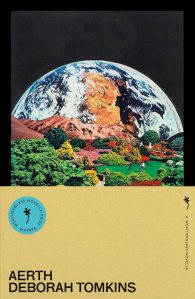 Tomkins first wrote this for the Bath Prize in 2018 and was longlisted. She initially sent the book out to science fiction publishers but was told that it wasn’t ‘sci-fi enough’. I can see how it could fall into the gap between literary fiction and genre fiction: though it’s set on other planets and involves space travel, its speculative nature is understated; it feels more realist. A memorable interrogation of longing and belonging, this novella ponders the value of individuals and their choices in the midst of inexorable planetary trajectories.
(Wowee, Aerth made it onto Eric of Lonesome Reader’s Top Ten list for 2024!)
With thanks to Weatherglass Books for the free copy for review. Aerth will be released on 25 January.
My top recommendations so far for 2025:
(in alphabetical order) All: 
 Save Me, Stranger by Erika Krouse (Flatiron Books, January 21): These 12 first-person narratives are voiced by people in crisis, for whom encounters with strangers tender the possibility of transformation. In the title story, the narrator is taken hostage in a convenience store hold-up. Krouse frequently focuses on young women presented with dilemmas. In “The Pole of Cold,” Vera meets Theo, the son of the American weather researchers who died in the same Siberian plane crash that killed her reindeer herder father. Travel is a recurring element, with stories set in Thailand and Japan as well as various U.S. states. The book exhibits tremendous range, imagining a myriad places, minds, and situations. Krouse often eschews tidy endings, leaving characters on the brink and allowing readers to draw inferences about what they will decide. Fans of Danielle Evans and Lauren Groff have a treat in store.
 Immemorial by Lauren Markham (Transit Books, February 4): This outstanding book-length essay compares language, memorials, and rituals as strategies for coping with climate anxiety and grief. The dichotomies of the physical versus the abstract and the permanent versus the ephemeral are explored; the past, present, and future dance through the text. With language not changing at the pace of the climate, Markham turns to the “Bureau of Linguistical Reality” for help coining a new term for anticipatory ecological grief. The title is one candidate, “premation” another. Forthright, wistful, and determined, the book treats grief as a positive, as “fuel” or a “portal.” Hope is not theoretical in this setup, but solidified in action. In Markham’s case, becoming a parent embodied her trust in the future. Immemorial is an elegant meditation on memory and impermanence in an age of climate crisis.
 Y2K: How the 2000s Became Everything (Essays on the Future that Never Was) by Colette Shade (out today from Dey Street Books!): Shade’s debut collection contains 10 perceptive essays that contrast the promise and political pitfalls of “the Y2K Era” (1997–2008). The author was an adolescent at the turn of the millennium and recalls the thrill of early Internet use and celebrity culture. Consumerism was a fundamental doctrine but the financial crash prompted a loss of faith in progress. It’s a feast of millennial nostalgia but also a hard-hitting work of cultural criticism.
 Show Don’t Tell by Curtis Sittenfeld (Random House, February 25; Transworld, 27 February): Sittenfeld’s second collection features characters negotiating principles and privilege in midlife. The 12 stories spotlight everyday marital and parenting challenges. Dual timelines offer opportunities for hindsight on the events of decades ago. College and boarding school experiences, in particular, remain pivotal. The arbitrary nature of wealth and celebrity is a central theme. Warm, witty, and insightful.
Other 2025 releases:
(in publication date order)
 How Isn’t It Going? Conversations after October 7 by Delphine Horvilleur [trans. from the French by Lisa Appignanesi] (out today from Europa Editions!): There is by turns a stream of consciousness or folktale quality to the narrative as Horvilleur enacts 11 dialogues – some real and others imagined – with her late grandparents, her children, or even abstractions. She draws on history, scripture and her own life, wrestling with thoughts that come during insomniac early mornings. It’s a lament for the Jewish condition, and a warning of the continuing and insidious nature of antisemitism. But it’s not all mourning; there is sometimes a wry sense of humour that feels very Jewish.
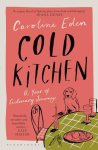 Cold Kitchen: A Year of Culinary Travels by Caroline Eden (Out in UK since May 2024; U.S. release: Bloomsbury, January 14): Eden cooks and writes in the basement kitchen of her Edinburgh apartment. When wanderlust strikes, she revisits favorite places via their cuisine. Her sumptuous fourth book journeys across Central Asia and Eastern Europe, harvesting memories and recipes. (Plus my Shelf Awareness interview)
 North of Ordinary by John Rolfe Gardiner (Bellevue Literary Press, January 14): I read 5 of 10 stories about young men facing life transitions and enjoyed the title one set at a thinly veiled Liberty University but found the rest dated in outlook; all have too-sudden endings.
 If Nothing by Matthew Nienow (Alice James Books, January 14): Straightforward poems about giving up addiction and seeking mental health help in order to be a good father.
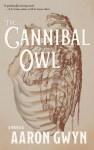 The Cannibal Owl by Aaron Gwyn (Belle Point Press, January 28): An orphaned boy is taken in by the Comanche in 1820s Texas in a brutal novella for fans of Cormac McCarthy.
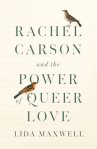 Rachel Carson and the Power of Queer Love by Lida Maxwell (Stanford University Press, January 28): Maxwell’s enthusiastic academic study reappraises scientist Rachel Carson’s motivations in light of ecological crisis and queer studies.
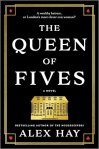 The Queen of Fives by Alex Hay (Graydon House, January 21; Headline, 30 January): Quinn Le Blanc, the latest in a dynasty of London con artists, resolves to pose as a debutante and marry a duke for his fortune – all in just five days in 1898. Like The Housekeepers, it’s a playful romp featuring strong female characters.
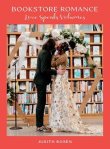 Bookstore Romance: Love Speaks Volumes by Judith Rosen (Brandeis University Press, February 1): A bibliophile’s time capsule and an enduring record of love and literary obsessions, this is a swoon-worthy coffee table book about couples who formalized their relationships in bookstores.
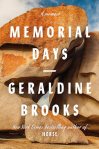 Memorial Days by Geraldine Brooks (Viking, February 4): This elegant bereavement memoir chronicles the sudden death of Brooks’s husband (journalist Tony Horwitz) in 2019 and her grief retreat to Flinders Island, Australia.
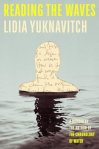 Reading the Waves by Lidia Yuknavitch (Riverhead, February 4): Yuknavitch’s bold memoir-in-essays focuses on pivotal scenes and repeated themes from her life as she reckons with trauma and commemorates key relationships. (A little too much repeated content from The Chronology of Water for me.)
 The Book of Flaco: The World’s Most Famous Bird by David Gessner (Blair, February 11): Gessner’s engaging nature book tells the story of the escaped Central Park Zoo Eurasian eagle-owl. It’s a touching tribute and a subtle challenge to reconsider human effects on wildlife.
 We Would Never by Tova Mirvis (Avid Reader Press, February 11): Mirvis’s fourth novel, inspired by real-life headlines, tells the taut story of an acrimonious divorce case gone horribly wrong. It explores the before and after of a murder, as the victim’s soon-to-be-ex-wife comes under suspicion and her family huddles around to protect her.
 The Café with No Name by Robert Seethaler [trans. from the German by Katy Derbyshire] (Europa Editions, 25 February): Set in 1960s and 1970s Vienna, where World War II still reverberates, this tender novel about a restaurateur’s interactions with acquaintances and customers meditates on the passage of time and bonds that last.
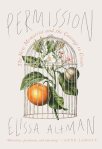 Permission: The New Memoirist and the Courage to Create by Elissa Altman (David R. Godine, March 4): Full of stories drawn from Altman’s life and other authors’ experience, this is an inspirational guide to defusing shame through self-disclosure and claiming the time and focus to write.
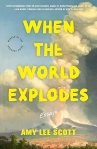 When the World Explodes: Essays by Amy Lee Scott (Mad Creek Books, March 6): Eleven inquisitive pieces set personal crises alongside natural disasters and gun violence. Scott was adopted as a baby from Korea; motherhood and adoption are potent themes across the book.
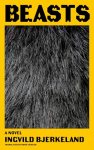 Beasts by Ingvild Bjerkeland [trans. from the Norwegian by Rosie Hedger] (Levine Querido, April 1): In this chilling young adult novella, a teenager tries to keep his little sister safe and reunite with their father in a hazardous postapocalyptic world.
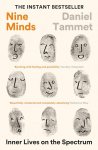 Nine Minds: Inner Lives on the Spectrum by Daniel Tammet (Out in UK since July 2024; U.S. release: The Experiment, April 1): A biographical mosaic of neurodivergence built of stories of individuals whose struggles and achievements defy the clichés surrounding autism. (Notable inclusions: actor Dan Aykroyd, novelist Naoise Dolan.)
Will you look out for one or more of these?
Any other 2025 reads you can recommend?
Best Books of 2024: My Top 20
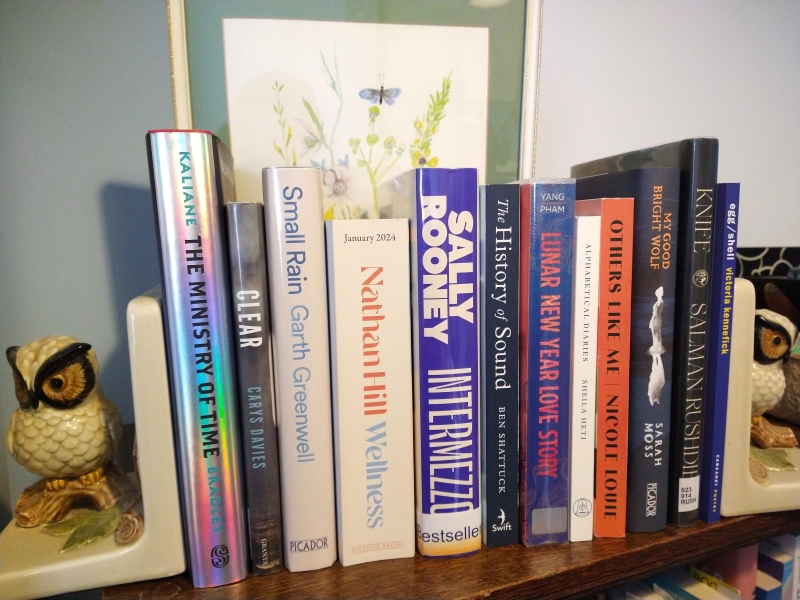
I’m keeping it simple again this year with one post covering all genres: these are the 20 current-year releases that stood out the most for me. (No rankings.) Those that aren’t repeated from my Best Books from the First Half of 2024 post didn’t quite make the cut but should be considered as runners-up well worth your time. Unsurprisingly, health is a common theme across many of my selections, especially as it touches women’s lives. Pictured below are the books I read in print; the others were all electronic copies. Links are to my full reviews where available.
Fiction
 The Worst Journey in the World, Volume 1: Making Our Easting Down: The Graphic Novel by Sarah Airriess: The thrilling opening to a cinematically vivid adaptation of Apsley Cherry-Garrard’s 1922 memoir. He was an assistant zoologist on Robert Falcon Scott’s perilous 1910-13 Terra Nova expedition to the South Pole. The book resembles a full-color storyboard for a Disney-style maritime adventure film. There is jolly camaraderie as the men sing sea shanties to boost morale. The next volume can’t arrive soon enough.
 The Ministry of Time by Kaliane Bradley: This nuanced debut alternately goes along with and flouts the tropes of spy fiction and time travel sci-fi, making clever observations about how we frame stories of empire and progress. The narrator is a “bridge” helping to resettle a Victorian polar explorer in near-future London. You just have to suspend disbelief and go with it. Bradley’s descriptive prose is memorable but never quirky for the sake of it. I haven’t had so much fun with a book since Romantic Comedy. A witty, sexy, off-kilter gem.
 Behind You Is the Sea by Susan Muaddi Darraj: Darraj’s novel-in-stories is a shimmering composite portrait of a Palestinian American community in Baltimore. Across nine stellar linked stories, she explores the complex relationships between characters divided by—or connected despite—class, language, and traditional values. Each of the stories (four in the first person, five in the third person) spotlights a particular character. The book depicts the variety of immigrant and second-generation experience, especially women’s.
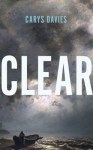 Clear by Carys Davies: Depicts the Highland Clearances in microcosm though Ivar, last resident of a remote Scottish island between Shetland and Norway. John is a minister sent by the landowner to remove Ivar. Mary, John’s wife, journeys from the mainland to rescue him. Davies writes striking scenes that bring the island scenery to life. Her deceptively simple prose captures the slow building of emotion and moments that change everything. For a trio that seemed on course for tragedy, there is the grace of a happier ending.
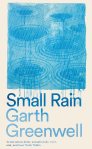 Small Rain by Garth Greenwell: A poet and academic (who both is and is not Greenwell) endures a Covid-era medical crisis that takes him to the brink of mortality and the boundary of survivable pain. Over two weeks, we become intimately acquainted with his every test, intervention, setback and fear. Experience is clarified precisely into fluent language that also flies far above a hospital bed, into a vibrant past, a poetic sensibility, a hoped-for normality. I’ve never read so remarkable an account of what it is to be a mind in a fragile body.
 Wellness by Nathan Hill: A state-of-the-nation story filtered through one Chicago family experiencing midlife and marital crises: underperforming academic Jack; his wife Elizabeth, a placebo researcher at Wellness; and their YouTube-obsessed son Toby. They’ve recently invested their life savings in a new condo. The addictive and spot-on novel asks questions about authenticity, purpose, and nurture. Is love itself a placebo? Hill is clearly fascinated with psychological experimentation but also questions it to humorous effect.
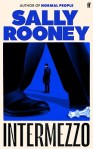 Intermezzo by Sally Rooney: Twenty- and thirtysomethings having lots of sex, yes, but now a solemn tone: Characters’ suffering and failures have deepened their thinking, sense of self, and ability to feel for others. Peter and Ivan lost their father to cancer; Sylvia is in chronic pain after an accident; Naomi is evicted and aimless; Margaret is ashamed of having an estranged alcoholic husband. Chess is a clever metaphor for their interactions; the depiction of grief rings true. A stylistic leap forward, too. Her best, most mature work by a mile.
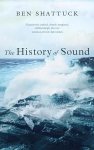 The History of Sound by Ben Shattuck: A dozen stories form a “hook-and-chain” formation of five couplets, bookended by a first and last story related to each other. Links are satisfyingly overt: A pair takes place in the same New England house in different centuries; a companion piece fills in the history of the characters from the previous. All are historically convincing, and the very human themes of lust, parenthood, sorrow and frustrated ambition resonate across centuries and state lines. Really beautiful (and better than North Woods).
 Lunar New Year Love Story by Gene Luen Yang (illus. LeUyen Pham): A super-cute teen graphic novel with gorgeous illustrations prioritizing pink and red to suit the theme. We follow Vietnamese American Valentina through high school as she plays host to an internal debate between cynicism and romanticism. Ever since her mother left, she’s longed to believe in romance but feared that love is a doomed prospect for her family. The Asian community of Oakland, California and a new hobby of lion dancing provide engrossing cultural detail.
Nonfiction
 Grief Is for People by Sloane Crosley: A bereavement memoir like no other. Heart-wrenching yet witty, it bears a unique structure and offers fascinating glimpses into the New York City publishing world. Crosley’s Manhattan apartment was burgled exactly a month before the suicide of her best friend and former boss, Russell. Throughout, the whereabouts of her family jewelry is as much of a mystery as the reason for Russell’s death, and investigating the stolen goods in parallel serves as a displacement activity for her.
 Alphabetical Diaries by Sheila Heti: Heti put 10 years of diary contents into a spreadsheet, alphabetizing each sentence, and then ruthlessly culled the results. The recurring topics are familiar from the rest of her oeuvre: obsessive cogitating about relationships, art and identity, but also the practicalities of trying to make a living as a woman in a creative profession. Heti transcends the quotidian by exploding chronology. Amazingly, the collage approach produces a genuine, crystalline vision of the self. A sui generis work of life writing.
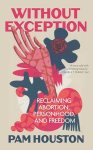 Without Exception: Reclaiming Abortion, Personhood, and Freedom by Pam Houston: If you’re going to read a polemic, make sure it’s as elegantly written and expertly argued as this one. Houston responds to the overturning of Roe v. Wade with 60 micro-essays – one for each full year of her life – about what it means to be in a female body in a country that seeks to control and systematically devalue women. The cycling of topics makes for an exquisite structure. Houston is among my recommendations for top-notch authors you might not know.
 The Body Alone: A Lyrical Articulation of Chronic Pain by Nina Lohman: Chronic Daily Headaches: Having a clinical term for extreme pain did nothing to solve it; no treatment Lohman has tried over a decade has helped much either. Medical professionals and friends alike downplay her experience because she is able to pass as well and raise two children. The fragmentary pieces read like poems. Bodily realities defy language, yet she employs words exquisitely. The tone flows from enraged to resigned to cynical and back.
 Others Like Me: The Lives of Women without Children by Nicole Louie: This impassioned auto/biographical collage combines the strengths of oral history, group biography and a fragmented memoir. “Motherhood as the epicentre of women’s lives was all I’d ever witnessed” via her mother and grandmother, Louie writes, so finding examples of women living differently was key. As readers, we watch her life, her thinking and the book all take shape. It’s warm and empathetic, with layers of stories that reflect diversity of experience.
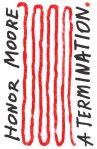 A Termination by Honor Moore: A fascinatingly discursive memoir that circles a 1969 abortion and contrasts societal mores across her lifetime. Moore was a 23-year-old drama student; the termination was “my first autonomous decision,” she insists, a way of saying, “I want this life, not that life.” Family and social factors put her life into perspective. The concise text is composed of crystalline fragments, incorporating occasional second- and third-person narration. The kaleidoscopic yet fluid approach is stunning.
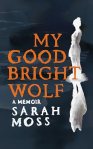 My Good Bright Wolf by Sarah Moss: Moss effectively contrasts the would-be happily ever after of generally getting better after eight years of disordered eating with her anorexia returning with a vengeance at age 46. The mood shifts so that what threatens to be slightly cloying in the childhood section turns academically curious and then, somehow, despite distancing pronouns (mostly second- but also some third-person narration), intimate. Shape-shifting, devastating, staunchly pragmatic; a unique model for converting life into art.
 Knife: Meditations after an Attempted Murder by Salman Rushdie: I’ve not had much success with Rushdie’s fiction, but this is excellent, with intriguing side tendrils and many quotable lines. It traces lead-up and aftermath; unexpected echoes, symbolism and ironies. Although Rushdie goes into some medical detail about his recovery, you get the sense of him more as an unchanging mind and a resolute will. The most noteworthy section imagines dialogues he might have with the imprisoned assailant, probing his beliefs and motivations.
Poetry
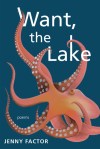 Want, the Lake by Jenny Factor: Factor’s long, intricate poetry collection showcases the tension between past and present and envisions womanhood as a tug of war between desire and constraint. “Elegy for a Younger Self” poems string together vivid reminiscences. In “Sapphics on Nursing” and elsewhere, romantic friendships edge toward homoeroticism; heterosexual marriage and motherhood represent either delightful intimacy or a snare. Allusion and experience, slant rhymes and wordplay craft a lavish tapestry.
 Inconsolable Objects by Nancy Miller Gomez: This debut collection recalls a Midwest girlhood of fairground rides and lake swimming, tornadoes and cicadas. But her Kansas isn’t all rose-tinted nostalgia; there’s an edge of sadness and danger. “Missing History” notes how women’s stories, such as her grandmother’s, are lost to time. In “Tilt-A-Whirl,” her older sister’s harmless flirtation with a ride operator becomes sinister. She also takes inspiration from headlines. The alliteration and slant rhymes are to die for.
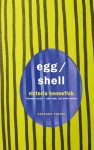 Egg/Shell by Victoria Kennefick: Motherhood and the body are overarching themes. The speaker has multiple miscarriages and names her lost children after plants. Becoming a mother is a metamorphosis all its own, while another long section is about her husband’s transition. Bird metaphors are inescapable. The structure varies throughout: columns, stanzas; a list, a recipe. Amid the sadness, there is dark humour and one-line rejoinders. If you’re wondering how life can be captured in achingly beautiful poetry, look no further.
If I had to choose just one of each? This trio trying out complementary strategies for transmuting life into literature: Small Rain, Alphabetical Diaries and Egg/Shell.


Have you read any of these? Or might you now, based on my recommendation?
Three on a Theme: Christmas Novellas I (Re-)Read This Year
I wasn’t sure I’d manage any holiday-appropriate reading this year, but thanks to their novella length I actually finished three, two in advance and one in a single sitting on the day itself. Two of these happen to be in translation: little slices of continental Christmas.
Twelve Nights by Urs Faes (2018; 2020)
[Translated from the German by Jamie Lee Searle]
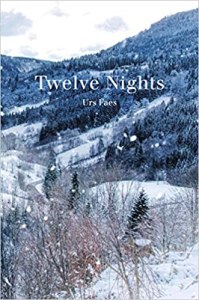 In this Swiss novella, the Twelve Nights between Christmas and Epiphany are a time of mischief when good folk have to protect themselves from the tricks of evil spirits. Manfred has trekked back to his home valley hoping to make things right with his brother, Sebastian. They have been estranged for several decades – since Sebastian unexpectedly inherited the family farm and stole Manfred’s sweetheart, Minna. These perceived betrayals were met with a vengeful act of cruelty (but why oh why did it have to be against an animal?). At a snow-surrounded inn, Manfred convalesces and tries to summon the courage to show up at Sebastian’s door. At only 84 small-format pages, this is more of a short story. The setting and spare writing are appealing, as is the prospect of grace extended. But this was over before it began; it didn’t feel worth what I paid. Perhaps I would have been happier to encounter it in an anthology or a longer collection of Faes’s short fiction. (Secondhand – Hungerford Bookshop)
Through a Glass, Darkly by Jostein Gaarder (1993; 1998)
[Translated from the Norwegian by Elizabeth Rokkan]
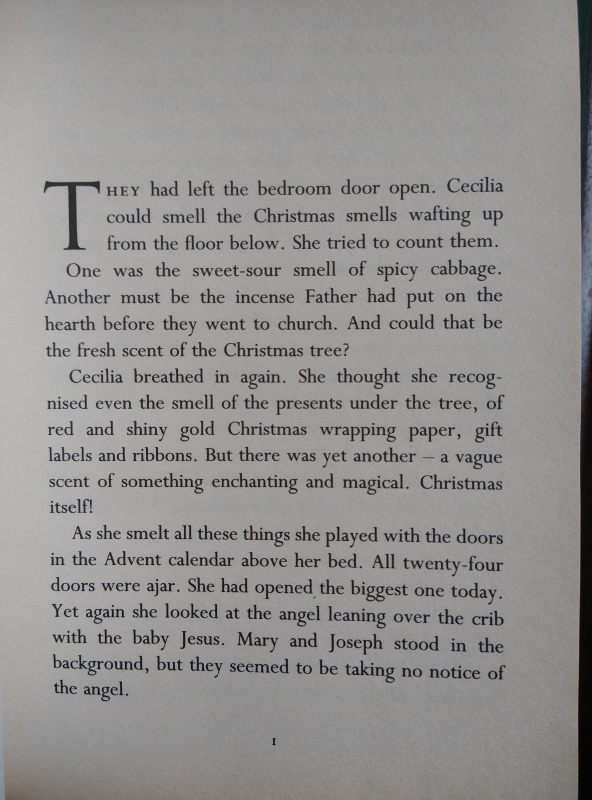
On Christmas Day, Cecilia is mostly confined to bed, yet the preteen experiences the holiday through the sounds and smells of what’s happening downstairs. (What a cosy first page!)
 Her father later carries her down to open her presents: skis, a toboggan, skates – her family has given her all she asked for even though everyone knows she won’t be doing sport again; there is no further treatment for her terminal cancer. That night, the angel Ariel appears to Cecilia and gets her thinking about the mysteries of life. He’s fascinated by memory and the temporary loss of consciousness that is sleep. How do these human processes work? “I wish I’d thought more about how it is to live,” Cecilia sighs, to which Ariel replies, “It’s never too late.” Weeks pass and Ariel engages Cecilia in dialogues and takes her on middle-of-the-night outdoor adventures, always getting her back before her parents get up to check on her. The book emphasizes the wonder of being alive: “You are an animal with the soul of an angel, Cecilia. In that way you’ve been given the best of both worlds.” This is very much a YA book and a little saccharine for me, but at least it was only 161 pages rather than the nearly 400 of Sophie’s World. (Secondhand – Community Furniture Project, Newbury)
Small Things Like These by Claire Keegan (2021)
I idly reread this while The Muppet Christmas Carol played in the background on a lazy, overfed Christmas evening.
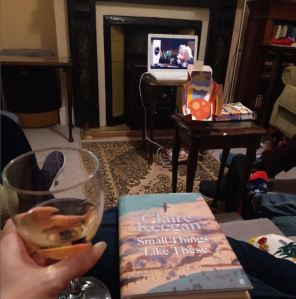
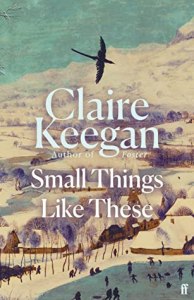 It was an odd experience: having seen the big-screen adaptation just last month, the blow-by-blow was overly familiar to me and I saw Cillian Murphy and Emily Watson, if not the minor actors, in my mind’s eye. I realized fully just how faithful the screenplay is to the book. The film enhances not just the atmosphere but also the plot through the visuals. It takes what was so subtle in the book – blink-and-you’ll-miss-it – and makes it more obvious. Normally I might think it a shame to undermine the nuance, but in this case I was glad of it. Bill Furlong’s midlife angst and emotional journey, in particular, are emphasized in the film. It was probably a mistake to read this a third time within so short a span of time; it often takes me more like 5–10 years to appreciate a book anew. So I was back to my ‘nice little story’ reaction this time, but would still recommend this to you – book or film – if you haven’t yet experienced it. (Free at a West Berkshire Council recycling event)
Previous ratings: (2021 review);  (2022 review)
My rating this time:
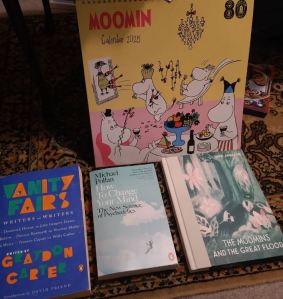
We hosted family for Christmas for the first time, which truly made me feel like a proper grown-up. It was stressful and chaotic but lovely and over all too soon. Here’s my lil’ book haul (but there was also a £50 book token, so I will buy many more!).
I hope everyone has been enjoying the holidays. I have various year-end posts in progress but of course the final Best-of list and statistics will have to wait until the turning of the year.
Coming up:
Sunday 29th: Best Backlist Reads of the Year
Monday 30th: Love Your Library & 2024 Reading Superlatives
Tuesday 31st: Best Books of 2024
Wednesday 1st: Final statistics on 2024’s reading
December Releases by Anita Felicelli, Lise Goett, Brooke Randel & Weike Wang
December isn’t a big month for new releases, but here are excerpts from a few I happened to review early for U.S. publications BookBrowse, Foreword Reviews, and Shelf Awareness: Speculative short stories, loss-tinged poetry, a family memoir based on Holocaust history, and a satirical short novel about racial microaggressions and class divides in contemporary America.
How We Know Our Time Travelers by Anita Felicelli
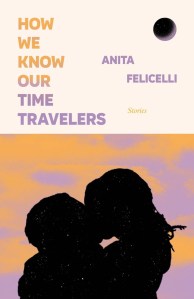 These linked speculative stories, set in near-future California, are marked by environmental anxiety. Many of their characters have South Asian backgrounds. A nascent queer romance between co-op grocery colleagues defies an impending tsunami. A painter welcomes a studio visitor who could be her estranged husband traveling from the past. Mysterious “fog catchers” recur in multiple stories. Memory bridges the human and the artificial, as in “The Glitch,” wherein a coder, bereaved by wildfires, lives alongside holograms of her wife and children. But technology, though a potential means of connecting with the dead, is not an unmitigated good. Creative reinterpretations of traditional stories and figures include urban legends, a locked room mystery, a poltergeist, and a golem. In these grief- and regret-tinged stories, heartbroken people can’t alter their pasts, so they’ll mold the future instead. (See my full Foreword review.)
The Radiant by Lise Goett
 In the 25 poems of Goett’s luminous third poetry collection, nature’s beauty and ancient wisdom sustain the fragile and bereaved. The speaker in “Difficult Body” references a cancer experience and imagines escaping the flesh to diffuse into the cosmos. Goett explores liminal moments and ponders what survives a loss. The use of “terminal” in “Free Fall” denotes mortality while also bringing up fond memories of her late father picking her up from an airport. Mythical allusions, religious imagery, and Buddhist philosophy weave through to shine ancient perspective on current struggles. The book luxuriates in abstruse vocabulary and sensual descriptions of snow, trees, and color. (Tupelo Press, 24 December. Review forthcoming at Shelf Awareness)
Also Here: Love, Literacy, and the Legacy of the Holocaust by Brooke Randel
 Randel’s debut is a poised, tender family memoir capturing her Holocaust survivor grandmother’s recollections of the Holocaust. Golda (“Bubbie”) spoke multiple languages but was functionally illiterate. In her mid-80s, she asked her granddaughter to tell her story. Randel flew to south Florida to conduct interviews. The oral history that emerges is fragmentary and frenetic. The structure of the book makes up for it, though. Interview snippets are interspersed with narrative chapters based on follow-up research. Golda, born in 1930, grew up in Romania. When the Nazis came, her older brothers were conscripted into forced labor; her mother and younger siblings were killed in a concentration camp. At every turn, Golda’s survival (through Auschwitz, Christianstadt, and Bergen-Belsen) was nothing short of miraculous. This concise, touching memoir bears witness to a whole remarkable life as well as the bond between grandmother and granddaughter. (See my full Shelf Awareness review.)
Rental House by Weike Wang
 Their interactions with family and strangers alike on two vacations – Cape Cod and the Catskills, five years apart – put interracial couple Keru and Nate’s choices into perspective as they near age 40. Although some might find their situation (childfree, with a “fur baby”) stereotypical, it does reflect that of a growing number of aging millennials. Wang portrays them sympathetically, but there is also a note of gentle satire here. The way that identity politics comes into the novel is not exactly subtle, but it does feel true to life. And it is very clever how the novel examines the matters of race, class, ambition, and parenthood through the lens of vacations. Like a two-act play, the framework is simple and concise, yet revealing about contemporary American society. (See my full BookBrowse review.)
#NovNov24 Catch-Up, II: Ingalls; Boas, Lindbergh, Toth
Thanks for indulging me as I assemble a final catch-up of the novella-length works I started in November and didn’t manage to review until now. In fiction, I have a surreal modern classic. And in nonfiction, two books of open-hearted and witty writing on the approach of death, and a memoir with a unique framework.
Mrs Caliban by Rachel Ingalls (1982)
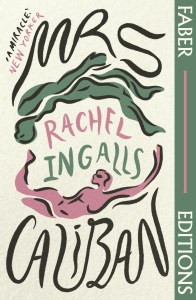 Dorothy Caliban is a California housewife whose unhappy marriage to Fred has been strained by the death of their young son (an allergic reaction during routine surgery) and a later miscarriage. When we read that Dorothy believes the radio has started delivering personalized messages to her, we can’t then be entirely sure if its news report about a dangerous creature escaped from an oceanographic research centre is real or a manifestation of her mental distress. Even when the 6’7” frog-man, Larry, walks into her kitchen and becomes her lover and secret lodger, I had to keep asking myself: is he ever independently seen by another character? Can these actions be definitively attributed to him? So perhaps this is a novella to experience on two levels. Take it at face value and it’s a lighthearted caper of duelling adulterers and revenge, with a pointed message about the exploitation of the Other. Or interpret it as a midlife fantasy of sexual rejuvenation and an attentive partner (“[Larry] said that he enjoyed housework. He was good at it and found it interesting”):
Dorothy still felt like a teenager. At the time when her hope and youth and adventurousness had left her, she had believed herself cheated of those early years when nothing had happened to her, although it might have. Later still, she realized that if she had made an effort, she herself could have made things happen. But now it didn’t matter. Here she was.
I thought of it as a waystation between Bear by Marian Engel and something like Melissa Broder’s novels or All Fours by Miranda July. I enjoyed it well enough but didn’t wholly see what the fuss was all about. (New bargain purchase from Faber) [117 pages]
A Beginner’s Guide to Dying by Simon Boas (2024)
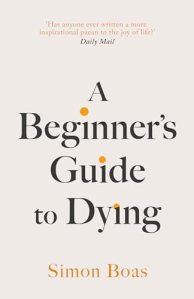 I hadn’t heard of the author but picked this up from the Bestseller display in my library. It’s a posthumous collection of writings, starting with a few articles Boas wrote for his local newspaper, the Jersey Evening Post, about his experience of terminal illness. Diagnosed late on with incurable throat cancer, Boas spent his last year smoking and drinking Muscadet. Looking back at the privilege and joys of his life, he knew he couldn’t complain too much about dying at 46. He had worked in charitable relief in wartorn regions, finishing his career as director of Jersey Overseas Aid. The articles are particularly witty. After learning his cancer had metastasized to his lungs, he wrote, “The prognosis is not quite ‘Don’t buy any green bananas’, but it’s pretty close to ‘Don’t start any long books’.” While I admired the perspective and equanimity of the other essays, most of their topics were overly familiar for me (gratitude, meditation, therapy, what (not) to do/say to the dying). His openness to religion and use of psychedelics were a bit more interesting. It’s hard to write anything original about dying, and his determined optimism – to the extent of downplaying the environmental crisis – grated. (Public library) [138 pages]
No More Words: A Journal of My Mother, Anne Morrow Lindbergh by Reeve Lindbergh (2001)
 I’ve reviewed one of Anne Morrow Lindbergh’s books for a previous NovNov: Gift from the Sea. She was also a poet and aviator. Reeve Lindbergh’s memoir focuses on the last year and a half of her mother’s life, 1999–2001. At this point she was in her early nineties and mostly nonverbal after a series of mini-strokes. She moved to live with her daughter on a Vermont farm and had carers to attend to her daily needs. It’s painful for the whole family to watch someone who was so fond of words gradually lose the ability to communicate. There are still moments of connection and possible memory, as when she reads her mother’s work aloud to her, and even humour, as they eat the messiest possible strawberry shortcake. It is an easy dying: her nurses are gentle and respectful, and she lives significantly longer than anyone predicted. Along the way, we get glimpses of the running of the farm, such as bottle-feeding an abandoned lamb, and of repeated tragedies from the family’s history: the Charles Lindberghs’ first child died in a botched kidnapping attempt at age one, and Reeve also lost a son at a similar age. “It is good just to sit next to my mother, whom I have known and loved for so long,” she writes. These low-key thoughts on age, infirmity and anticipatory grief were nicely done, but won’t likely stay with me. (Secondhand – Barter Books, 2024) [174 pages]
Leaning into the Wind: A Memoir of Midwest Weather by Susan Allen Toth (2003)
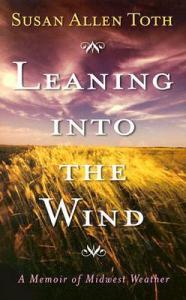 I was always going to read this because I’m a big fan of Susan Allen Toth’s work, including her trilogy of cosy travel books about Great Britain. I’m a memoir junkie in general, but I especially like ones that view the self through a particular filter, e.g., garments sewn (Bound by Maddie Ballard), houses lived in (My Life in Houses by Margaret Forster) and train journeys taken (The Lost Properties of Love by Sophie Ratcliffe). Toth grew up in Iowa and, barring stints on the coasts for her degrees, always lived in the Midwest, chiefly Minnesota. “The weather, I have happily discovered, does not grow old” – a perennial conversation starter and source of novel, cyclical experiences. She remembers huddling in a basement during tornado warnings and welcoming the peace of a first snow. Squalls seen out the window seemed to mirror her turbulent first marriage. She would fret over her daughter driving in thunderstorms until her safe arrival home. Fending off insects is a drawback to summer, and keeping a garden is an alloyed joy. I especially liked the essays on the metaphorical use of weather words and the temptation of ascribing meteorological events to divine activity. Not a squeak about climate change, though at the time the general public was aware of it; there could be an update chapter on shifts in seasonality and the increased frequency of extreme weather events. (Birthday gift from my wish list in 2021) [124 pages]
Final statistics
For this year’s Novellas in November, I reviewed a total of 30 short books, so I achieved my goal of reading the equivalent of one short book for each day of the month! The standouts were (nonfiction) Without Exception by Pam Houston and (fiction) On Chesil Beach by Ian McEwan, which was a reread for me. Other highlights included The House of Dolls by Barbara Comyns, Recognising the Stranger by Isabella Hammad, and Island by Julian Hanna. I also reviewed a film based on a novella, Small Things Like These.
It was great to get involved with Weatherglass Books in the inaugural year of their Novella Prize by attending their “The Future of the Novella” event in London, reviewing Astraea, and interviewing Neil Griffiths. I’ll review Aerth soon, too.
Collectively, we had 46 participants contributing 188 posts covering 160+ books. If you want to take a look back at the link parties, they’re all here. Another fantastic year – thank you again!

#NovNov24 Catch-Up, I: Comyns, Figes, McEwan, Radcliffe, Thériault
Still more to finish reading and/or belatedly review this week before the Novellas in November link-up closes – another, er, nine books after this, I think! I’ll save the short nonfiction for a couple of other posts. For now I have five novellas that range from black comedy to utter heartbreak and from quotidian detail to magic realism.
The House of Dolls by Barbara Comyns (1989)
 What a fantastic opening line: “Amy Doll, are you telling me that all those old girls upstairs are tarts?” Amy is a respectable widow and single mother to Hetty; no one would guess her boarding house is a brothel where gentlemen of a certain age engage the services of Berti, Evelyn, Ivy and the Señora. When a policeman starts courting Amy, she feels it’s time to address her lodgers’ profession and Hetty’s truancy. The older women disperse: move, marry or seek new employment. Sequences where Berti, who can barely boil an egg, tries to pass as a cook for a highly exacting couple, and Evelyn gets into the gin while babysitting, are hilarious. But there is pathos to the spinsters’ plight as well. “The thing that really upset [Berti] was her hair, long wisps of white with blazing red ends which she kept hidden under a scarf. The fact that she was penniless, and with no prospects, had become too terrible to contemplate.” She and Evelyn take to attending the funerals of strangers for the free buffet and booze. Comyns’ last novel (I’d only previously read Who Was Changed and Who Was Dead) is typically dark, but the wit counteracts the morbid nature. It reminded me of Beryl Bainbridge, late Barbara Pym, Lore Segal, and Muriel Spark. (Passed on by Liz – thank you! Even with the hideous cover.) [156 pages]
Light by Eva Figes (1983)
 I read this as part of my casual ongoing project to read books from my birth year. This was recently reissued and I can see why it is considered a lost classic and was much admired by Figes’ fellow authors. A circadian novel, it presents Claude Monet and his circle of family, friends and servants at home in Giverny. The perspective shifts nimbly between characters and the prose is appropriately painterly: “The water lilies had begun to open, layer upon layer of petals folded back to the sky, revealing a variety of colour. The shadow of the willow lost depth as the sun began to climb, light filtering through a forest of long green fingers. A small white cloud, the first to be seen on this particular morning, drifted across the sky above the lily pond”. There are also neat little hints about the march of time: “‘Telephone poles are ruining my landscapes,’ grumbled Claude”. But this story takes plotlessness to a whole new level, and I lost patience far before the end, despite the low page count, and so skimmed half or more. If you are a lover of lyrical writing and can tolerate stasis, it may well be your cup of tea. (Secondhand – Community Furniture Project?) [91 pages]
On Chesil Beach by Ian McEwan (2007)
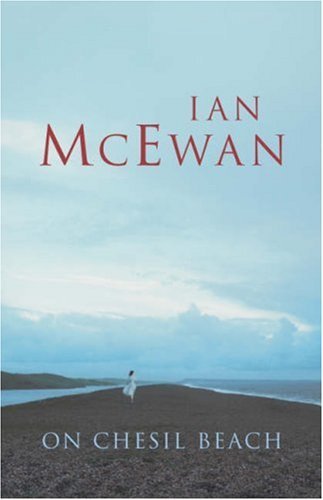 “They were young, educated, and both virgins on this, their wedding night, and they lived in a time when a conversation about sexual difficulties was plainly impossible.” Another stellar opening line to what I think may be a perfect novella. Its core is the night in July 1962 when Edward and Florence attempt to consummate their marriage in a Dorset hotel, but it stretches back to cover everything we need to know about this couple – their family dynamics, how they met, what they want from life – and forward to see their lives diverge. Is love enough? “And what stood in their way? Their personalities and pasts, their ignorance and fear, timidity, squeamishness, lack of entitlement or experience or easy manners, then the tail end of a religious prohibition, their Englishness and class, and history itself. Nothing much at all.” I had forgotten the sources of trauma: Edward’s mother’s brain injury, perhaps a hint that Florence was sexually abused by her father? (But she also says things that would today make us posit asexuality.) I knew when I read this at its release that it was a superior McEwan, but it’s taken the years since – perhaps not coincidentally, the length of my own marriage – to realize just how special. It’s a maturing of the author’s vision: the tragedy is not showy and grotesque like in his early novels and stories, but quiet, hinging on the smallest of actions, or the words not said. This absolutely flayed me emotionally on a reread. (Little Free Library) [166 pages]
The Old Haunts by Allan Radcliffe (2023)
 I was sent this earlier in the year in a parcel containing the 2024 McKitterick Prize shortlist. It’s been instructive to observe the variety just in that set of six (and so much the more in the novels I’m assessing for the longlist now). The short, titled chapters feel almost like linked flash stories that switch between the present day and scenes from art teacher Jamie’s past. Both of his parents having recently died, Jamie and his boyfriend, a mixed-race actor named Alex, get away to remote Scotland. His parents were older when they had him; growing up in the flat above their newsagent’s shop in Edinburgh, Jamie felt the generational gap meant they couldn’t quite understand him or his art. Uni in London was his chance to come out and make supportive friends, but being honest with his parents seemed a step too far. When Alex is called away for an audition, Jamie delves deeper into his memories. Kit, their host at the cottage, has her own story. Some lovely, low-key vignettes and passages (“A smell of soaked fruit. Christmas cake. My mother liked to be organised. She was here, alive, only yesterday.”), but overall a little too soft for the grief theme to truly pierce through. [158 pages]
With thanks to the Society of Authors for the free copy for review.
The Peculiar Life of a Lonely Postman by Denis Thériault (2005; 2008)
[Translated from the French by Liedewy Hawke]
 {BEWARE SPOILERS} Like many, I was drawn in by the quirky title and Japan-evoking cover. To start with, it’s the engaging story of Bilodo, a Montreal postman with a naughty habit of steaming open various people’s mail. He soon becomes obsessed with the haiku exchange between a certain Gaston Grandpré and his pen pal in Guadeloupe, Ségolène. When Grandpré dies a violent death, Bilodo decides to impersonate him and take over the correspondence. He learns to write poetry – as Thériault had to, to write this – and their haiku (“the art of the snapshot, the detail”) and tanka grow increasingly erotic and take over his life, even supplanting his career. But when Ségolène offers to fly to Canada, Bilodo panics. I had two major problems with this: the exoticizing of a Black woman (why did she have to be from Guadeloupe, of all places?), and the bizarre ending, in which Bilodo, who has gradually become more like Grandpré, seems destined for his fate as well. I imagine this was supposed to be a psychological fable, but it was just a little bit silly for me, and the way it’s marketed will probably disappoint readers who are looking for either Harold Fry heart warming or cute Japanese cat/phone box adventures. (Public library) [108 pages]
Which of these catches your eye?
 Bookish Beck = Rebecca Foster. American transplant to England. Freelance proofreader and book reviewer.
 Bookish Beck