Cover Love 2025
As I did in 2019, 2020, 2021, 2022, 2023 and 2024, I’ve picked out some favourite book covers from the past year’s new releases. This time, I’ve read all of the books featured!
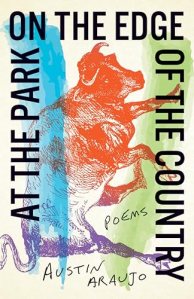
I’m drawn to flora and fauna on book covers; and to adapted artworks.
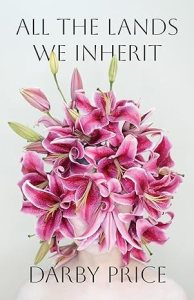
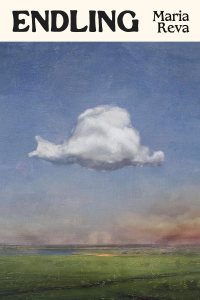
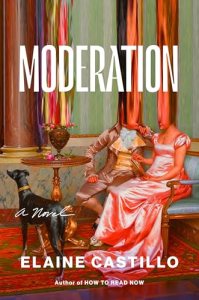
These two stood out for their psychedelic colour choices.
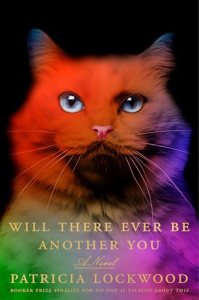
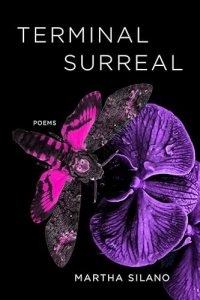
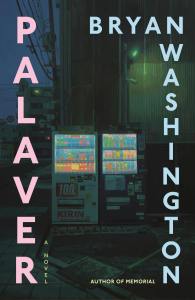
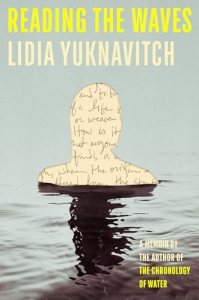
I like an unusual, elegant font. Can anyone identify the one below? I actually wonder if I would have chosen to read all four books had the font not attracted me.
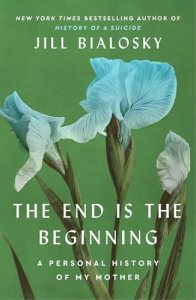
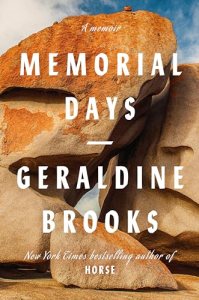
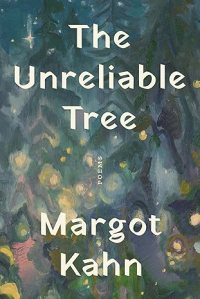
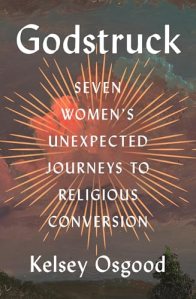
Neat that the image and/or (most of the) title are vertically aligned – a rarer choice.
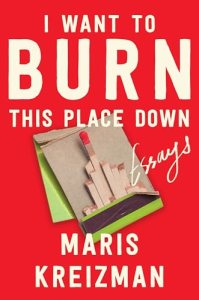
I found this paper cut-out striking, and loved how a cheekily torn matchbook gives the middle finger.
But my two favourite title and cover combinations of the year were:
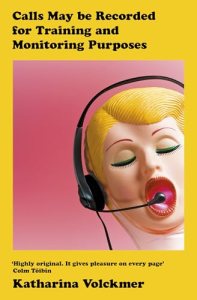
- Calls May Be Recorded for Training and Monitoring Purposes by Katharina Volckmer – The cover is totally appropriate to the bonkers and raunchy contents (see my Shelf Awareness review – even though I technically reviewed the North American release I’m sticking with the full title and sex doll of the UK edition).
(Overall favourite:)
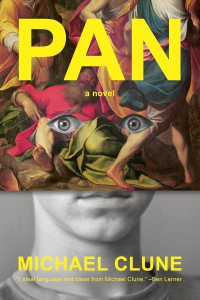
- Pan by Michael Clune – The cover perfectly captures the mood of this weird novel about a teenage boy who has panic attacks and muses about attributing them to the god Pan. The painting snippet is from The Drunkenness of Noah by Camillo Procaccini; but the eyes, look at those eyes!
Postscript: In January 2026, Lit Hub chose their 75 best book covers of the past decade. Pan tied for third place for 2025.
What cover trends have you noticed this year? Which ones tend to grab your attention?
March Releases by Akbar, Bosker, García Márquez, and Wrenn
I’m catching up after a busy end to last month. Today I have an uneven debut novel from a poet whose work I’ve enjoyed before, a journalist’s jaunty submersion in the world of modern art, a posthumous novella from a famous Colombian author I’d not previously read, and a (literally) trippy memoir about C-PTSD, coral, climate breakdown, queerness and more. I can pinpoint a couple of elements that some or all of them have in common: beauty (whether in art or in nature) and dead mothers.
Martyr! by Kaveh Akbar
I’d read the Iranian American poet’s two full-length collections and particularly admired Pilgrim Bell, one of my favourite books of 2021. That was enough for me to put this on my Most Anticipated list for 2024, even though based on the synopsis I wrote: “His debut novel sounds kind of unhinged, but I figure it’s worth a try.” Here’s an excerpt from the publisher’s blurb: “When Cyrus’s obsession with the lives of the martyrs – Bobby Sands, Joan of Arc – leads him to a chance encounter with a dying artist, he finds himself drawn towards the mysteries of an uncle who rode through Iranian battlefields dressed as the Angel of Death; and toward his [late] mother, who may not have been who or what she seemed.”
 Cyrus Shams is an Iranian American aspiring poet who grew up in Indiana with a single father, his mother Roya having died in a passenger aircraft mistakenly shot down by a U.S. Navy missile cruiser (this really happened: Iran Air Flight 655, on 3 July 1988). He continues to lurk around the Keady University campus, working as a medical actor at the hospital, but his ambition is to write. During his shaky recovery from drug and alcohol abuse, he undertakes a project that seems divinely inspired: “Tired of interventionist pyrotechnics like burning bushes and locust plagues, maybe God now worked through the tired eyes of drunk Iranians in the American Midwest”. By seeking the meaning in others’ deaths, he hopes his modern “Book of Martyrs” will teach him how to cherish his own life.
This document, which we see in fragments, sets up hypothetical dialogues between figures real and imaginary, dead and living, and intersperses them with poems and short musings. But when a friend tells Cyrus about the Brooklyn Museum installation “DEATH-SPEAK,” which has terminally ill Iranian artist Orkideh living out her last days in public, he spies an opportunity to move the work beyond theory and into the physical realm. So he flies to New York City with his best friend (and occasional f**kbuddy), bartender Zee Novak, and visits Orkideh every day until the installation’s/artist’s end.
This is a wildly original but unruly novel with a few problems. One: Akbar has clung too obviously to his own story and manner of speaking with Cyrus (e.g., “I honestly actually do worry about that, no joke. Being a young Iranian man making a book about martyrdom, going around talking to people about becoming a martyr. It’s not inert, you know?”). Another is that the poems, and poetic descriptions, are much the best material. The only exception might be a zany scene where Zee and Cyrus chop wood while high. But the main issue I had is that the plot turns on a twist 50 pages from the end, a huge coincidence that feels unearned. I admire the ambition Akbar had for this – a seething, open-hearted enquiry into addiction, love, suicide and queerness – but look forward to him getting back to poetry. 
With thanks to Picador for the proof copy for review.
Get the Picture: A Mind-Bending Journey among the Inspired Artists and Obsessive Art Fiends Who Taught Me How to See by Bianca Bosker
I was a big fan of Bosker’s Cork Dork (2017), her deep dive into the world of fine wine. Her second book is similarly constructed and equally fun: more personal than authoritative, light yet substantial, and accessible to the uninitiated as well as those with an existing interest in the subject. She begins as a complete novice, wondering if she’ll ever know what art is, let alone what it means and whether it’s any good (“the familiar feeling that everyone got the punch line except me”). By the end, she has discovered that, like the love of wine, art appreciation can be a way of expanding and savouring one’s life.
The aim was to get the broadest experience possible, generally through voluntary placements. She started out as an assistant at Jack Barrett’s 315 Gallery, where one of her tasks was to paint a wall white; she failed miserably to meet his expectations even for this simple task. He never lost his fundamental distrust of her, a writer and outsider, as one of “the enemy.” It was expected that she would attend as many art shows and openings as possible per week. “Talking shit was essentially a job requirement.” Bosker might not have known what to make of the art, but others were gossipy, snobbish and opinionated enough to make up for it. When she was tasked with writing a press release for an exhibit, a gallerist taught her the clichéd shorthand: “Every f**king artist allegedly transforms the familiar into the unfamiliar, or vice versa.”

In the course of the book, the New York City-based author also:
- attends the Art Basel Miami Beach contemporary art fair and sells photographs on behalf of Denny Dimin Gallery;
- befriends performance artist and “ass influencer” Mandy AllFIRE, who – ahem – sits on Bosker’s face as part of a temporary installment;
- serves as a studio assistant for French painter Julie Curtiss, whose work is selling for alarmingly high amounts at auction (not actually what a painter wants, as it tends to signal bad things for a career);
- meets a pair of North Dakota collectors known as “the Icy Gays”; and
- works as a Guggenheim Museum guard.
This last was my favourite episode. Forty-minute placements on particular ramps gave her time to focus on one chosen artwork – for instance, an abstract sculpture. She challenged herself to stay with it for that whole time, doing as one artist advised and simply noticing five things about the work. Before, her “default approach to art had just been to plant myself in front of a piece and wait for the epiphany to wash over me.” Now, she worked at it. In fact, she counsels newcomers to not read a caption because many people take a title at face value and an interpretation as gospel, and so don’t experience the art for themselves.
At times I found the book slightly scattered in the way that it zigzags from one challenge to another. There’s differing attention to various experiences; a week-long art school merits just one paragraph. And there’s no getting past the fact that some art she encounters sounds outlandish or just plain silly. (Is it any surprise that she mistakes part of a wall, and a mousetrap, for art pieces?) Ultimately, I think it’s best if you have at least a modicum of appreciation for modern art, which I don’t; whereas I do enjoy drinking wine even if I don’t have a trained palate.
Even so, Bosker’s writing has such verve (“artists were coyly evasive about their work and treated my questions like I was a cactus running after their balloon”; “a hazy daydream of an idea solidified into a yappy, un-shut-uppable chihuahua of want”) that you’ll be glad you went along for the ride. She concludes that taste is subjective, but “Beauty … pulls you close.” Art is valuable because it “knocks us off our well-worn pathways” into something uncharted, a tantalizing prospect. 
With thanks to Allen & Unwin (Grove Press) for the free copy for review.
{SPOILERS IN THIS NEXT ONE}
Until August by Gabriel García Márquez
[Translated from the Spanish by Anne McLean]
A posthumous ‘lost’ novella was not a good place for me to have started with this celebrated author. García Márquez okayed the fifth draft of the text in 2004, 10 years before his death. By this time he was already suffering with memory loss that interfered with his creativity. His sons got the message that he didn’t think the book worked and should be destroyed. But they didn’t do his bidding and, revisiting the book nearly a decade on from his death, decided it wasn’t that bad, if not up to the standard of his best work, and that it should see the light of day after all.
Every August 16th, Ana Magdalena Bach travels to the island where her mother is buried to visit the grave and lay gladioli on it. (My review book came with a bag of three gladioli bulbs and a mini Colombian chocolate bar.) Each year she takes a different lover for the one night at a hotel. The first time, the man leaves her a $20 bill and she feels ashamed, but it doesn’t stop her doing the same thing again for the next four years in a row. Once it’s a long-ago school friend whom she runs into on the ferry. Another time, by golly, it’s a bishop.

It’s refreshing to have a woman in middle age as protagonist and for her to claim sexual freedom. However, the setup is formulaic and repetitive, the sex scenes are somewhat excruciating, and the hypocrisy of her gleefully having one-night stands while fretting over her husband’s potential infidelity is grating. I did like the ending – Ana hears that an anonymous elderly gentleman has been paying to have gladioli laid on her mother’s grave year-round and she wonders if she is in a sense following in her mother’s footsteps all along without knowing it; and decides she’s had enough and exhumes her mother’s remains, returning to her husband with a bag of bones (gruesome!).
But nothing about the plot or the writing – fluid enough bar one awkward sentence (“She listened to him worried that he meant it, but she had the strength not to appear as easy a woman as he might think”) – suggested to me a master at work. At best, this might be reminiscent of the late work of misogynist-leaning authors like Coetzee or Updike.
In my mind García Márquez is linked with magic realism, so I’d be better off trying one of his more representative works. I have several of his earlier novellas on the shelf (received as review copies as part of the same recent marketing push), and if I get on better with those then I’ll be sure to try one of the most famous full-length novels. 
With thanks to Viking (Penguin) for the free copy for review.
Mothership: A Memoir of Wonder and Crisis by Greg Wrenn
Wrenn is an associate English professor teaching environmental literature at James Madison University. He has also been exploring coral reefs for 25 years, with a love of marine wildlife sparked by growing up in Florida. But all along, he’s been trying (much like Cyrus Shams) to come to terms with addiction, queerness, suicidal inclinations, and especially his mother’s place in his life. She made him feel dirty, that he would never be good enough; she hit him with a wooden spoon and bathed him until he was 17. Though he never found out for sure, he suspects his mother was sexually abused by her father and repeated the cycle of molestation.
 This is the third C-PTSD memoir I’ve read (after What My Bones Know and A Flat Place), and has a lot in common with I’m Glad My Mom Died, which features a co-dependent relationship with an abusive mother. After Wrenn’s parents’ divorce, he and his mother remained close. “I had been her therapist, confessor, girlfriend, and punching bag.” He helped care for her after a stroke but eventually had to throw up his hands at her stubborn refusal to follow doctors’ orders. Drawing on the Greek etymology of ecology (oikos means house or family), Wrenn insists on a parallel between the personal and the environmental here: “What we’re facing amounts to global C-PTSD” as “Mother” Earth turns against us. On each trip to Raja Ampat, he knows the coral reef is dying, his carbon footprint only accelerating it.
There’s a lot in this short memoir. Even the summary had me shaking my head in disbelief. For me, though, the tone and style were too erratic. Wrenn can be wry, sorrowful, or campy; he includes scientific data, letters to Adrienne Rich and an imagined descendent, a chapter riffing on “Otters” (the animal and the gay stereotype), flashbacks, and E.T. metaphors. The final third of the book then takes a left turn as he experiments with therapeutic psychedelics via ayahuasca ceremonies in South America, and ditches dating apps and casual sex to try to find a long-term relationship. The drug literally alters his brain, allowing him to feel trust and love. Add on nature and a husband and that’s why he’s still here rather than dead by suicide.
Like Akbar, Wrenn published poetry before switching genre. Their books are both amazing in premise but wobbly in execution. Still, I’d say both authors are laudable for their effort to depict lives wrenched back from extremity. 
With thanks to Regalo Press (USA) for the proof copy for review.
Recent Releases by Nathan Hill, Hisham Matar, Sigrid Nunez and More
One key way in which 2024’s reading has already differed from previous years’ is that I no longer avoid doorstoppers. I now classify any book with over 400 pages as a doorstopper, and by that definition I have already gotten through three this year: The Tidal Year plus two of the below, with Wellness standing out as the true whopper at 597 small-print pages. January offered a set of releases full of variety: gritty yet funny flash fiction; a novel of big ideas and big empathy for its flawed characters; an exile’s elegant love letter to Libya from London; a coy pandemic-era reflection on connection and creation; and a tour of nature close to home.
Universally Adored and Other One Dollar Stories by Elizabeth Bruce
 This was a great collection of 33 stories, all of them beginning with the words “One Dollar” and most of flash fiction length. Bruce has a knack for quickly introducing a setup and protagonist. The voice and setting vary enough that no two stories sound the same. What is the worth of a dollar? In some cases, where there’s a more contemporary frame of reference, a dollar is a sign of desperation (for the man who’s lost house, job and wife in “Little Jimmy,” for the coupon-cutting penny-pincher whose unbroken monologue makes up the whole of “Grocery List”), or maybe just enough for a small treat for a child (as in “Mouse Socks” or “Boogie Board”). In the historical stories, a dollar can buy a lot more. It’s a tank of gas – and a lesson on the evils of segregation – in “Gas Station”; it’s a huckster’s exorbitant charge for a mocked-up relic in “The Grass Jesus Walked On.”
The tone ranges from black comedy (“Festus”) to high tragedy (“Votive Candle”), but the book mostly falls within the realm of dirty realism with the attention to working-class country folk, so I’d recommend the collection to fans of authors who perch on the lighter side of that subgenre, such as Barbara Kingsolver or Denis Johnson. A few of my favorite stories, in addition to the above, were “Ice-Cold Water,” which I appreciated for the Washington D.C. setting and the way that an assumption about who would be racist was overturned by a moment of simple compassion; “Dolores,” in which a slick humanitarian fundraiser meets a waitress who has his number; and “Boiling the Buggers,” a window onto Covid-exacerbated mental illness. (Read via BookSirens)
Wellness by Nathan Hill
Somehow nearly eight years have passed since Hill’s debut novel, The Nix, which I dubbed “a rich, multi-layered story about family curses and failure.” I admired it as much for its prose as for its ideas, and Wellness is just as effervescent and insightful. It’s a state-of-the-nation novel filtered through one Chicago family: experimental photographer and underperforming academic Jack; his wife Elizabeth, a placebo researcher at Wellness; and their YouTube-obsessed son Toby. They’ve recently invested their life savings in a new condo and are considering trendy features like open shelves and separate master bedrooms. It would be oversimplifying, but true, to say that this couple is experiencing midlife and marital crises. Their nineties college romance – and a time of life when everything felt open and possible – is so remote now. When Elizabeth suggests they join a friend at a swingers’ club and a patient of hers who’s also a parent at Toby’s school sees them outside, chaos ensues.
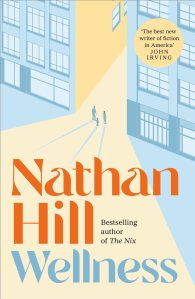
Some elements from The Nix carry over, such as campus politics, the American Midwest, and mother–son relationships, but also broader questions of authenticity, purpose and nurture. Is love itself a placebo? The novel spends time with Jack and Elizabeth at the dawn of their relationship and in the present day, but also looks back to their early careers and first years of parenthood. Hill is clearly fascinated with the sort of psychological experimentation Elizabeth engages in (there’s a whole bibliography of scientific papers consulted) but also turns it to humorous effect, as when Elizabeth subjects Toby to the marshmallow test. A lot of information is conveyed through dialogue, yet it never feels forced. A couple of long asides, on Elizabeth’s family history and the algorithms guiding Jack’s interactions with his conspiracy theorist father, tried my patience, but I loved a four-page chapter on a funeral supper where every sentence starts “There was.” Sooooo many quotable lines throughout.
The only fault in an addictive and spot-on novel (how did he know?! you’ll find yourself thinking about your own attitude to work/marriage/children) is that Hill is so committed to excavating these characters’ backstory of stunted emotion – Jack estranged from his religious Kansas farmer parents after a traumatic incident you feel right in the gut; Elizabeth glad to jettison her father’s wealth with his anger – that he hurries through the denouement. Still, this is sure to be a fiction highlight of my year. It’s one for readers of Jonathan Franzen, sure, but I also thought it reminiscent of Katherine Heiny’s Standard Deviation and Meg Wolitzer’s The Interestings.
With thanks to Picador for the proof copy for review.
My Friends by Hisham Matar
“Benghazi was the one place I longed for the most, it was also the place I most feared to return to.”
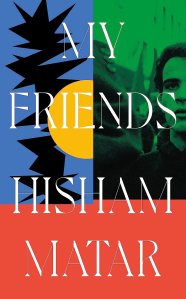 Taking a long walk through London one day, Khaled looks back from midlife on the choices he and his two best friends have made. He first came to the UK as an eighteen-year-old student at Edinburgh University. Everything that came after stemmed from one fateful day. Matar places Khaled and his university friend Mustafa at a real-life demonstration outside the Libyan embassy in London in 1984, which ended in a rain of bullets and the accidental death of a female police officer. Khaled’s physical wound is less crippling than the sense of being cut off from his homeland and his family. As he continues his literary studies and begins teaching, he decides to keep his injury a secret from them, as from nearly everyone else in his life. On a trip to Paris to support a female friend undergoing surgery, he happens to meet Hosam, a writer whose work enraptured him when he heard it on the radio back home long ago. Decades pass and the Arab Spring prompts his friends to take different paths.
I’d previously only read Matar’s short nonfiction work A Month in Siena. The slow, meditative style I enjoyed so much there didn’t translate well into doorstopper length; by the 300-page mark I found myself skimming to see if anything else might happen. Despite the title, we come to know Mustafa and Hosam much less well than we do Khaled. I would happily have had the book’s plot and sentiment concentrated into a taut 200 pages. However, I’m still interested in trying other books by Matar. In the Country of Men is significantly shorter and available from the backroom storage area of my library, and his Folio Prize-winning memoir The Return, too, is on shelf and I reckon will be right up my street.
With thanks to Viking (Penguin) for the proof copy for review.
The Vulnerables by Sigrid Nunez
I’m a huge Nunez fan after reading The Friend, What Are You Going Through, and especially A Feather on the Breath of God. Her last three books have been very much of a piece: autofiction voiced by an unnamed woman who has a duty of care towards a friend or a friend’s pet and ponders, in wry meta fashion, the nature of autobiographical writing and the meaning of life and death at a time of climate breakdown. Alas, The Vulnerables seems like no more than a rehashing of The Friend, with flanking main characters chosen at random from central casting: a parrot named Eureka and a mentally ill college drop-out called Vetch. This quirky trio is thrown together in a lavish New York City apartment during lockdown and nothing much happens but conversation brings them closer.
 A second problem: Covid-19 stories feel dated. For the first two years of the pandemic I read obsessively about it, mostly nonfiction accounts from healthcare workers or ordinary people looking for community or turning to nature in a time of collective crisis. But now when I come across it as a major element in a book, it feels like an out-of-place artefact; I’m almost embarrassed for the author: so sorry, but you missed your moment. My disappointment may primarily be because my expectations were so high. I’ve noted that two blogger friends new to Nunez were enthusiastic about this (but so was Susan, who’d enjoyed her before). That’s not to say this wasn’t a pleasantly fluid and incisive read, even if its message of essential human vulnerability is an obvious one. Anyway, I’ll take Nunez musing on familiar subjects over most other contemporary writers any day:
“Never write ‘I don’t remember,’ Editor says; it undermines your authority. But write as if you remember everything and Reader will smell a rat.”
“You can start with fiction or start with documentary, according to Jean-Luc Goddard. Either way, you will inevitably find the other.”
“I like this clarification by the narrator of a book by Stendhal: ‘It is not out of egotism that I say “I”; it is simply the quickest way to tell the story.’)”
(À propos of the doorstoppers above)
“Does that mean a long novel is easier to write than a short one? / Um, no. But, to borrow from a certain critic, in almost every long book I read I see a short one shirking its job.”
With thanks to Virago for the proof copy for review.
And a bonus work of nonfiction:
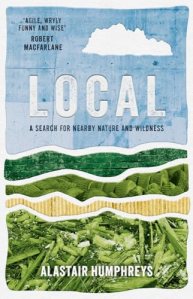
Local: A Search for Nearby Nature and Wildness by Alastair Humphreys
Lev Parikian alerted me to this amiable record of weekly discoveries of the nature on one’s home turf. Humphreys has been an international adventure traveller and written many books about his exploits. Here, by contrast, he zooms the lens in about as far as it will go, ordering a custom-made 20-km-square OS map that has his house at the centre and choosing one surrounding grid square per week (so 52 out of a total of 400) to cycle to and explore. He’s chosen to leave his town unnamed so this can function as an Everyman’s journey through edgelands. And his descriptions and black-and-white photographs really do present an accurate microcosm of modern England: fields, woods, waterways, suburban streets.
 From one November to the next, he watches the seasons advance and finds many magical spaces with everyday wonders to appreciate. “This project was already beginning to challenge my assumptions of what was beautiful or natural in the landscape,” he writes in his second week. True, he also finds distressing amounts of litter, no-access signs and evidence of environmental degradation. But curiosity is his watchword: “The more I pay attention, the more I notice. The more I notice, the more I learn.”
Each week’s observations send him down a research rabbit hole, with topics including caves, land management, mudlarking, plant species, and much more. The nature of the short chapters means that there can only ever be a cursory look at huge issues like rewilding and veganism, but Humphreys is nimble in weaving in the brief, matter-of-fact discussions. His eagerness is irrepressible. “How you look, what you see, and the way all this makes you feel: a single map and the best of all possible worlds.” (See also: Paul’s review.)
With thanks to the author for the free copy for review.
April Releases: Frida Kahlo, Games and Rituals, Romantic Comedy
It’s been a big month for new releases and I have loads more April books on the go or waiting in the wings to be reviewed in catch-up posts in the future. For now, I have a biographical graphic novel about a celebrated painter whose medical struggles coloured her art, a set of witty short stories about modern preoccupations and relationships, and a guilty pleasure of a novel from one of my favourite contemporary authors.
Frida Kahlo: Her Life, Her Work, Her Home by Francisco de la Mora
[Translated from the Spanish by Lawrence Schimel]
 The latest in SelfMadeHero’s Art Masters series (I’ve also reviewed their books on Munch, Van Gogh, Gauguin and O’Keeffe). De la Mora imagines Kahlo (1907–1954) hosting a party at her famous blue house in Coyoacán, Mexico in her final summer – unknown to everyone there, it’s exactly one week before her death. “Hola, come in, welcome. I’m so glad you’re all here. Today is my birthday, and I want to tell all of you the story of my life…” she invites her guests, and thereby the reader. It’s a handy conceit that justifies a chronological approach.
I was reminded of traumatic events from Kahlo’s life that I’d already encountered in various places (such as Constellations by Sinéad Gleeson and Frida Kahlo and My Left Leg by Emily Rapp Black): childhood polio and the Mexican Revolution, the hideous bus accident that reshaped her body, and two miscarriages. Periods of confinement alternate with travels. We see her devotion to traditional dress and the development of her frank self-portraiture style. I’d forgotten, or never knew, that she married Diego Rivera twice and divorced in between. They hosted many cultural giants of the time (e.g., Trotsky’s stay with them forms part of Barbara Kingsolver’s The Lacuna), and both had their infidelities. I loved the use of vibrant colours, but learned little. This is really only an introduction for those new to her.

With thanks to Paul Smith and SelfMadeHero for the free copy for review.
Games and Rituals by Katherine Heiny
Early Morning Riser was one of my favourite books of 2021, and I caught up earlier this year with Heiny’s only previous novel, Standard Deviation. Both are hilarious takes on the quirks of relationships, exploring a specific dynamic that recurs in a couple of these stories: the uncomfortable triangle between a man, his second (invariably younger) wife, and the very different, generally formidable, woman he was formerly married to and who continues to play a role in his life. One of the strongest stories is “561,” which was first published as a stand-alone e-book in 2018. Charlie stole Forrest away from Barbara and now the two women have a frosty relationship. It might seem like poetic justice that Charlie later has to load all of Barbara’s possessions into a moving van, but the notion of penance gets murkier when we learn what happened when they worked together on a suicide prevention hotline.
 Eight of the 11 stories are in the third person and most protagonists are young or middle-aged women navigating marriage/divorce and motherhood. A driving examiner finds herself in the same situation as her teenage test-taker; a wife finds evidence of her actor husband’s adultery. In “Damascus,” Mia worries her son might be on drugs, but doesn’t question her own self-destructive habits. Inspired by Marie Kondo, Rachel tries to pare her life back to the basics in “CobRa.” In “King Midas,” Oscar learns that all is not golden with his mistress. “Sky Bar” has Fawn stuck in her hometown airport during a blizzard. I particularly liked the ridiculous situations Florida housemates get themselves into in “Pandemic Behavior,” and the second-person “Twist and Shout,” about loving an elderly father even though he’s infuriating.
Heiny mixes humour with bitter truths in engaging stories about characters whose mistakes and futile attempts to escape the past only make them the more relatable. Her first and last lines are particularly strong; who could resist a piece that opens with “Your elderly father has mistaken his four-thousand-dollar hearing aid for a cashew and eaten it”?
With thanks to 4th Estate for the proof copy for review.
Romantic Comedy by Curtis Sittenfeld
Curtis Sittenfeld is one of my favourite contemporary authors (I’ve also reviewed You Think It, I’ll Say It and Rodham) and I’ve read everything she’s published. Her work might seem lighter than my usual fare, but I’ve always maintained that she, like Maggie O’Farrell, perfectly treads the line between literary fiction and women’s fiction. This was one of my most anticipated releases of the year and it met my expectations.
Sally Milz is a mid-thirties writer for The Night Owls, a long-running sketch comedy show modelled on Saturday Night Live. Sittenfeld clearly did a lot of research into women in comedy, and Chapter 1 is a convincing blow-by-blow of a typical TNO schedule of pitches, edits, rehearsals, all-nighters and afterparties. This particular week in 2018, the host and musical guest are the same person: Noah Brewster, a pop star with surfer-boy good looks who rose to fame in the early 2000s with radio singles like “Making Love in July” and has maintained steady popularity since then. (I imagined him as a cross between Robbie Williams and Chris Hemsworth.) Sally had been expecting a self-absorbed ignoramus so, when she helps Noah edit a sketch he’s written, is pleasantly surprised to discover he’s actually smart, funny and humble. Sparks seem to fly between them, too, though the week ends all too soon.
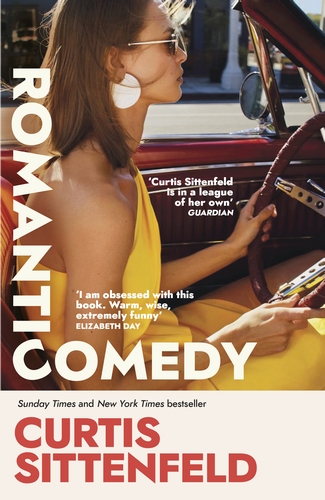 Plain Jane getting the hot guy … that never happens, right? In fact, Sally has a theory about this very dilemma, named after her schlubby TNO office-mate: The Danny Horst Rule states that ordinary men may date and even marry actresses or supermodels, but reverse the genders and it never works. A fundamental lack of confidence means that, whenever she feels too vulnerable, Sally resorts to snarky comedy and sabotages her chances at happiness. But when, midway through the summer of 2020, she gets an out-of-the-blue e-mail from Noah, she wonders if this relationship has potential in the real world. (This, for me, is the peak: when you find out that interest is requited; that the person you’ve been thinking about for years has also been thinking about you. Whatever comes next pales in comparison to this moment.)
The correspondence section was my favourite element. “I do still wonder whether a person’s writing self is their realest self, their fakest self, or just a different self than their in-the-world self?” Sally writes to Noah. As always, Sittenfeld’s inhabiting of a first-person narrator is flawless, and Sally’s backstory and Covid-lockdown, Kansas City existence with her octogenarian stepfather and his beagle endeared her to me. I also appreciated that a woman in her mid- to late thirties could be a romantic lead, and that the question of whether she wants children simply never comes up. Of Sittenfeld’s books, I’d call this closest in tone and content to Eligible, and some familiarity with SNL would probably be of benefit.
Could this be called a predictable story? Well, what does one expect or want from a romcom (watching or reading)? There may be a feminist leaning in places, but this is conventional wish fulfilment, which, I assume, is what keeps romance readers hooked. I enjoyed every sentence and, when it was over, wished I could stay in Sally’s world. (See also Susan’s review.)
With thanks to Doubleday for the proof copy for review.
Would you be interested in reading one or more of these?
Review Catch-Up: Herreros, Onyebuchi and Tookey
Quick snapshot reviews as I work through a backlog.
One each today from fiction, nonfiction and poetry: a graphic novel about the life of Georgia O’Keeffe, a personal response to Chimamanda Ngozi Adichie’s Americanah, and a beautiful collection of place-centric verse.
Georgia O’Keeffe by Maria Herreros (2021; 2022)
[Translated from the Spanish by Lawrence Schimel]
 This is the latest in SelfMadeHero’s “Art Masters” series (I’ve also reviewed Gauguin, Munch and Vincent). Madrid-based illustrator Herreros renders O’Keeffe’s life story in an abstract style that feels in keeping with the artist’s own. The book opens in 1915 with O’Keeffe still living in her family home in Virginia and working as an art teacher. Before she ever meets Alfred Stieglitz, she is fascinated by his photography. They fall in love at a distance via a correspondence and later live together in New York City. Their relationship ebbs as she spends more and more time in New Mexico, a desert landscape that inspires many of her most famous paintings. Much of the narrative is provided by O’Keeffe’s own letters (with idiosyncrasies retained); the additional summary text is unfortunately generic, and the urge to cover many years leads to skating over long periods. Still, the erotic attention to detail and the focus on the subject’s dedication to independence made it worthwhile.

With thanks to SelfMadeHero for the free copy for review.
(S)kinfolk: Chimamanda Ngozi Adichie’s Americanah by Tochi Onyebuchi (2021)
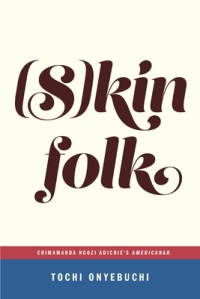 I’ve reviewed six previous releases from Fiction Advocate’s “Afterwords” series (on Blood Meridian, Fun Home, and The Year of Magical Thinking; My Struggle and Wild; and Middlesex). In these short monographs, “acclaimed writers investigate the contemporary classics,” weaving literary criticism into memoir as beloved works reverberate through their lives. Onyebuchi, a Nigerian American author of YA dystopian fiction, chose one of my favourite reads of recent years: Americanah. When he read the novel as a lawyer in training, it was the first time he sensed recognition of his own experiences in literature. He saw his immigrant mother’s situation, the collective triumph of Obama’s election, and his (re)discovery of Black beauty and spaces. Like Ifemelu: he was an outsider to African American identity and had to learn it gradually; and he makes a return trip to Nigeria at the end. I enjoyed this central thread but engaged less with asides about a 2013 visit to the West Bank (for a prisoners’ rights organization) and Frantz Fanon’s work on Algeria.
With thanks to Fiction Advocate for the free e-copy for review.
In the Quaker Hotel by Helen Tookey (2022)
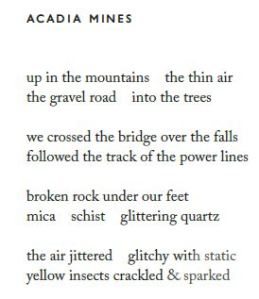
 Tookey’s third collection brings its variety of settings – an austere hotel, Merseyside beaches and woods, the fields and trees of Southern France (via Van Gogh’s paintings), Nova Scotia (she completed a two-week residency at the Elizabeth Bishop House in 2019) – to life as vibrantly as any novel or film could. In recent weeks I’ve taken to pulling out my e-reader as I walk home along the canal path from library volunteering, and this was a perfect companion read for the sunny waterway stroll, especially the poem “Track.” Whether in stanzas, couplets or prose paragraphs, the verse is populated by meticulous images and crystalline musings.
not a loss
something like a clarifying
becoming something you can’t name
There are evanescent encounters (“Leapfrog”) and deep time (“Natural History”); playing with language (“Concession à Perpetuité”) and erasures (“Pool / Other Body”). You’ll find alliteration and ampersands (a trend in contemporary poetry?), close observation of nature, and no trace of cliché. Below are the opening stanzas of a couple of poems to give a flavour:

With thanks to Carcanet Press for the free e-copy for review.
Would you be interested in reading one or more of these?
Women’s Prize Longlist Reviews (Erdrich, Mendelson, Ozeki) & Predictions
Tomorrow the Women’s Prize shortlist will be revealed. I’ve become much more invested in this prize over the past few years and will be following the 2022 race especially closely – look out for a related announcement soon. In recent years the nominees have tended to cluster thematically, which can feel redundant. This longlist has a notably high ghost quotient. Two novels I review below feature unquiet spirits, an appearance by the author, and the magical powers of books. The third is a straightforward contemporary dysfunctional family story.
The Sentence by Louise Erdrich
My second from Erdrich (I gave Love Medicine, her first novel, 5 stars in 2020). I will be revisiting this in June because it is our first pick for my tenure in the Literary Wives online book club. For that post I’ll focus on the relationship between Tookie and Pollux, which I won’t mention in this more general response. I was worried that a take on very recent events – this is set in Minneapolis between 2019 and 2020 and covers the first six months of the pandemic plus local protests following George Floyd’s murder – would seem either rushed or dated. I’m still unsure how I feel about encountering Covid-19 in fiction (vs. I’ve read 20 or more nonfiction records now), but I think this novel functions as a sturdy time capsule.
 Tookie, the narrator, has a tough exterior but a tender heart. When she spent 10 years in prison for a misunderstanding-cum-body snatching, books helped her survive, starting with the dictionary. Once she got out, she translated her love of words into work as a bookseller at Birchbark Books, Louise Erdrich’s Minnesota independent bookshop (Louise herself is an occasional character). Bibliophiles are sure to enjoy the mentions of the books she presses into customers’ hands; there’s also a fun appendix of recommendations on particular topics.
However, the central mystery about Flora, a dead customer who haunts the store until Tookie figures out why she died and how to exorcise her, struck me as silly. I only appreciated this storyline to the extent that it explores authenticity (Flora may have fabricated her Native heritage) and the inescapability of history. I preferred real life: Tookie getting locked down with her stepdaughter and baby grandson and filling book orders from a closed shop.
Erdrich weaves in Indigenous customs naturally and the banter between the characters, including young shop employees, makes this hip and lighthearted, even as it deals with serious subjects. I smiled at the bookish lingo, like Tookie’s division of her reading into a Lazy Stack and a Hard Stack (“books I would avoid reading until some wellspring of mental energy was uncapped” – my occasional and set-aside titles could comprise the latter) and the “cowbirds,” self-published titles secreted on the shelves that aren’t found until inventory day. There’s also an excellent passage on novellas that I’ll be bringing out in November.
Like a vintage armchair, this is a little overstuffed, but so comfortable you’ll want to stay a while. (See also Laura’s review.) (Public library) 
The Exhibitionist by Charlotte Mendelson
~SPOILERS IN THIS ONE~
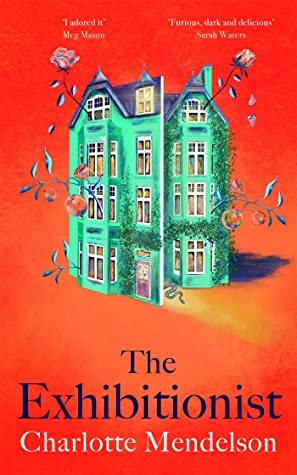 Artists, dysfunctional families, and limited settings (here, one crumbling London house and its environs; and about two days across one weekend) are irresistible elements for me, and I don’t mind a work being peopled with mostly unlikable characters. That’s just as well, because the narrative orbits Ray Hanrahan, a monstrous narcissist who insists that his family put his painting career above all else. His wife, Lucia, is a sculptor who has always sacrificed her own art to ensure Ray’s success. But now Lucia, having survived breast cancer, has the chance to focus on herself. She’s tolerated his extramarital dalliances all along; why not see where her crush on MP Priya Menon leads? What with fresh love and the offer of her own exhibition in Venice, maybe she truly can start over in her fifties.
Ray and Lucia’s three grown children, Leah, Patrick and Jess, are all home for Ray’s new exhibition. They’re mere sketches: Leah is Ray’s staunchest supporter and is infatuated with the no-show caterer; Patrick’s mental health is shaky, interfering with his job prospects; Jess, a teacher in Edinburgh, is pregnant but not sure she’s committed to her boyfriend long term. I wanted more depth from all the characters, but especially the offspring. I also expected a climactic late scene on Hampstead Heath to come to more.
Still, the build-up to the exhibit (followed by a laughably pitiful reveal) and Lucia’s inner life form an adequately strong foundation for Mendelson’s sardonic prose. The dialogue, full of interruptions, is true to life. This is her fifth novel and called to mind Jami Attenberg’s and Claire Fuller’s work. (Liz found shades of Iris Murdoch. Susan loved it, too.) I wouldn’t say I’m compelled to seek out more by Mendelson, but this was a solid read. (Public library)
The Book of Form and Emptiness by Ruth Ozeki
A Tale for the Time Being is one of my favourite novels of the century (and one of my most popular Goodreads reviews ever), My Year of Meats was a terrific backlist read a couple of summers ago, and I’m eager to catch up on All Over Creation. So I’d built up this fourth Ozeki novel in my head, thinking a library setting and magic realist elements presaged something deliciously Murakami-esque.
 What I actually found, having limped through it off and on for seven months, was something of a disappointment. A frank depiction of the mental health struggles of the Oh family? Great. A paean to how books and libraries can save us by showing us a way out of our own heads? A-OK. The problem is with the twee way that The Book narrates Benny’s story and engages him in a conversation about fate versus choice.
When Kenji Oh, a jazz musician, is run over by a chicken truck, Annabelle finds herself a single mother to Benny, a troubled teen who starts to hear everyday objects speaking to him. His voices and Annabelle’s hoarding habit jeopardize the viability of their household: Benny spends time on a psychiatric hospital ward for minors and Annabelle is threatened with eviction. For Benny, the library and the acquaintances he makes there – a fellow pedi-psych patient named Alice who calls herself The Aleph, an Eastern European philosopher who goes by The Bottleman (= Slavoj Žižek?), even the Ozeki figure tapping away on her laptop – may be his salvation; for Annabelle, it could be the book Tidy Magic (modelled on Marie Kondo’s work), written by a Buddhist nun. But until then, their stories get very dark indeed.
Concern for the principal pair and their relationship kept me reading even though this is too long and I wearied of Ozeki’s habit of literalizing metaphors (books speaking to people; being crushed by one’s belongings; crows playing a protective role). I’m still sympathetic to Ozeki’s aims, even if she doesn’t quite pull it all off here. If I pit the rather similar The Sentence and The Book of Form and Emptiness against each other, Erdrich comes out ahead. 
With thanks to Canongate for the proof copy for review.
I’ve gotten to six books from the longlist so far and have a few more on order at the library. The others I’ve read, with ratings and links to my reviews, are:
Build Your House around My Body by Violet Kupersmith
Sorrow and Bliss by Meg Mason 
I’m also partway through The Final Revival of Opal & Nev by Dawnie Walton, which is enjoyable enough but, alas, suffers in comparison to Daisy Jones and the Six, whose format (a composite oral history of a fictional 1960s/70s musical act) it repeats. The addition of the race issue doesn’t feel sufficient to call it original.
I’ve also DNFed a few from the longlist, two of them multiple times, so I have my fingers crossed that they don’t advance!
- The Paper Palace by Miranda Cowley Heller
- The Island of Missing Trees by Elif Shafak
- Great Circle by Maggie Shipstead
My attitude to the rest of the longlist is…
- The Bread the Devil Knead by Lisa Allen-Agostini – No plans to read.
- Salt Lick by Lulu Allison – I might read this from the library. I’m leery of dystopias, but I’m there for a chorus of cows.
- Careless by Kirsty Capes – No plans to read.
- Remote Sympathy by Catherine Chidgey – I would happily read it if it’s shortlisted, but at over 500 pages I fear it’ll be too dense.
- Flamingo by Rachel Elliott – Maybe. Sounds like pretty standard Sarah Winman-type stuff, but it could go down well with a book club.
- This One Sky Day by Leone Ross – No plans to read.
- Creatures of Passage by Morowa Yejidé – I was actually pretty keen to read this one, so I have it on reserve at the library. Egyptian mythology makes a change from the overdone Greeks, and the Washington, D.C. setting is a big draw. Laura’s review has tempered my expectations, but I might still give it a go.
My ideal shortlist (a wish list based on my reading and what I still want to read):
The Sentence by Louise Erdrich
Build Your House around My Body by Violet Kupersmith
Sorrow and Bliss by Meg Mason
The Exhibitionist by Charlotte Mendelson
The Final Revival of Opal & Nev by Dawnie Walton
Creatures of Passage by Morowa Yejidé
vs.
My predicted shortlist:
Remote Sympathy by Catherine Chidgey
The Sentence by Louise Erdrich
Sorrow and Bliss by Meg Mason
The Exhibitionist by Charlotte Mendelson
This One Sky Day by Leone Ross
The Island of Missing Trees by Elif Shafak
An overall winner? Gosh, it’s too early to tell. But maybe The Sentence, Sorrow and Bliss or The Island of Missing Trees.
See also Laura’s shortlist predictions.
What have you read from the longlist so far?
Which of these books are calling to you?
Painting Time by Maylis de Kerangal
Today I’m taking part in the “blog blast” for Painting Time by Maylis de Kerangal (translated from the French by Jessica Moore), which is published today by MacLehose Press.

This is the third novel I’ve read by de Kerangal, after her 2017 Wellcome Book Prize winner, Mend the Living, and 2019’s The Cook. Painting Time resembles the former in the way it revels in niche vocabulary and the latter in that it slowly builds up a portrait of the central character. But all three books could be characterized as deep dives into a particular subject – the human body, gastronomy, and painting, respectively.
The protagonist of Painting Time is Paula Karst, one of 20-some art students who arrive at the Institut de Peinture in Brussels in the autumn of 2007 to learn trompe l’oeil technique. They’re taught to painstakingly imitate every variety of wood and stone so their murals will look as convincing as the real thing. It’s a gruelling course, with many hours spent on their feet every day.
Years later, the only classmates Paula has kept up with are Jonas, her old flatmate, with whom she had a sort-of-almost-not-quite relationship, and their Scottish friend Kate. The novel opens with the three of them having a reunion in Paris. Given this setup, I expected de Kerangal to follow all three characters from 2007 to the near past, but the book sticks closely to Paula, such that the only secondary characters who come through clearly are her parents.
 It’s intriguing to see the work that comes Paula’s way after a degree in decorative painting, including painting backdrops for a Moscow-set film of Anna Karenina and the job of a lifetime: working on a full-scale replica of the prehistoric animal paintings of the Lascaux Caves (Lascaux IV). The final quarter of the novel delves into the history of Lascaux, which was discovered in 1940 and open to the public on and off until the late 1960s. Deep time abuts the troubled present as Paula contemplates what will last versus what is ephemeral.
As de Kerangal did with medical terminology in Mend the Living, so here she relishes art words: colours, tools, techniques; names for types of marble and timber (Paula’s own surname is a word for limestone caves). The long sentences accrete to form paragraphs that stretch across multiple pages. I confess to getting a bit lost in these, and wanting more juicy interactions than austere character study. However, the themes of art and history are resonant. If you’ve enjoyed de Kerangal’s prose before, you will certainly want to read this, too.
My thanks to MacLehose Press for access to an e-copy via NetGalley.
Barbellion Prize Shortlist: Golem Girl by Riva Lehrer
Three memoirs remain on the shortlist; three windows onto living with disability or caring for a relative with an incapacitating mental illness.
First up is a visual artist’s account of growing up with spina bifida, entering Disabled culture, and forming a collaborative style all her own.
Golem Girl: A Memoir by Riva Lehrer (2020)
“My first monster story was Frankenstein,” Lehrer writes. Like Dr. Frankenstein’s creation or the Golem of medieval Jewish legend, she felt like a physical monstrosity in search of an animating purpose. Born with spina bifida, she spent much of her first two years in Cincinnati Children’s Hospital and would endure dozens of surgeries in years to come to repair her spine and urinary tract and attempt to make her legs the same length. In 1958, when she was born, 90% of children with her condition died before age two. Lehrer’s mother, Carole, who grew up in a family pharmacy business and had worked as a medical researcher, was her daughter’s dogged health advocate. Carole fought for Riva even though she was caught up in her own chronic pain after a botched back surgery that left her addicted to painkillers.
Lehrer went to a special school for the disabled in Ohio. It was racially integrated (rare at that time) and offered children physical therapy and normal experiences like Girl Scouts and day camp. But it was clear the teachers didn’t expect these children to achieve anything or have a family life; home ec classes just taught how to wash up from a wheelchair and make meals for one. One horrible day, a substitute teacher locked a classroom door and hectored the children, saying their parents must have drunk and fornicated and they were the wages of sin.
Between the routine or emergency surgeries and family heartaches, Lehrer grew up to attend art school at the University of Cincinnati and Art Institute of Chicago. Professors (most of them male) found her work grotesque and self-indulgent, and she struggled with how to depict her body. There were boyfriends and girlfriends, even a wife (though in the late 1980s, before same-sex marriage was legally recognized). In 1996 she joined the Chicago Disabled Artists Collective and it was a revelation. She learned that Disabled (like Deaf) is a cultural identity as much as a physical reality, adopted vocabulary like crip (a reclaimed term, like queer) and ableism, and began painting fellow artists with dwarfism, prostheses, or wheelchairs.

Becoming a member of the Medical Humanities faculty as well as a visiting artist at two Chicago universities, the School of the Art Institute and Northwestern, gave Lehrer access to Gross Anatomy Labs, where she found in the historical collections – just as she had at the Mütter Museum of medical curiosities in Philadelphia – a fetus in a jar with her very condition. Knowing that she might be the first Disabled person her budding doctors met, she was determined to give them an “inclusive vision” of “the reality of human divergence.” She would have the medical students draw one of the jarred specimens, not as an oddity but as an individual, and give a 15-minute presentation about someone who lives with that disability.
Golem Girl is a touching family memoir delivered in short, essay-like chapters, most of them named after books or films. It is also a primer in Disability theory and – what truly lifts it above the pack – a miniature art gallery, with reproductions of paintings from various of Lehrer’s series as well as self-portraits, family portraits, and photographs. “I fiercely wanted to see a gallery filled with portraits of luminous crips,” she writes; “I suspected I was going to have to make them myself.” And that is just what she has done. The “Circle Stories” featured the Chicago Disabled Artists Collective and “Mirror Shards” included animal daimons, while “The Risk Pictures” of some of her personal heroes were daringly collaborative: she would give the subject an hour alone in her studio with their portrait in progress and allow them to amend it as they wished. Much of her work has bright colors and involves anatomical realism and symbols personal to herself and/or the subject – with Frida Kahlo an acknowledged influence.
I’ve now (just about) read the whole Barbellion Prize shortlist. For how it illuminates a life of being different – through queerness in addition to disability, engages with the academic fields of anatomy and Disability studies, and showcases the achievements of Disabled artists, this would be my clear winner of the inaugural award, with Sanatorium my backup choice. It is also a finalist for the National Book Critics Circle Award for Autobiography.
Readalikes I have also reviewed:
- Constellations by Sinéad Gleeson
- I Am, I Am, I Am by Maggie O’Farrell
Favorite lines:
“The hospital demands surrender. You accept the piercing, the cutting, the swallowing of noxious chemicals. You roll over and stand up even when it’s as impossible as flying around the ceiling. Whoever has authority can remove your clothes and display your stitched-up monster body to crowds of young white-coated men. You’re an assemblage of parts that lack gender and those elusive things called feelings.”
“‘Normal’ beauty is unmarked, smooth, shiny, upright; but my gaze began to slip past normal beauty as if it was coated in baby oil. I wanted crip beauty—variant, iconoclastic, unpredictable. Bodies that were lived in with intentionality and self-knowledge. Crip bodies were fresh.”
With thanks to Virago for the free copy for review.
See my introductory post for more about the Barbellion Prize, which is in its first year and will be awarded on Friday “to an author whose work has best represented the experience of chronic illness and/or disability.”
I will review the final two on the shortlist, The Fragments of My Father by Sam Mills and Kika & Me by Amit Patel, tomorrow.
Review Book Catch-Up: Bamforth, McGrath, Mertz
Today I have a book of medico-philosophical musings, a triptych of novels about the resonant moments of a Canadian childhood, and a varied collection of ekphrastic poems.
Scattered Limbs: A Medical Dreambook by Iain Bamforth (2020)
 A doctor based in Strasbourg, Iain Bamforth offers a commonplace book full of philosophical musings on medicine and wellness from the ancient world to today. All through December I would read just a few pages at a time as a palate cleanser between larger chunks of other books. Most of the entries are under three pages in length, with some one-sentence dictums interspersed. The point of reference is broadly European, with frequent allusions to English, French, and German literature (Charles Dickens, Marcel Proust, and Thomas Mann) and to Greek thinkers like Aristotle and Plato. The themes include memory, overtreatment, technology, and our modern wellness culture. If you’re equally interested in medicine and philosophy, this is a perfect bedside book for you; if you only gravitate towards one or the other, it’s possible that you could run low on patience for the high-brow rumination. My favourite piece was on “panicology,” and two stand-out lines are below.
“Prognostication is where writers and doctors resemble each other most.”
“A proper attitude to death can be a source of life. That is medicine’s only profundity.”
With thanks to Galileo Publishers for the free copy for review.
The Santa Rosa Trilogy by Wendy McGrath (2011–19)
I’m indulging in one last listen to our holiday music compilations as I write, before putting everything away until a hoped-for ‘Christmas in July’ with family and friends. Yesterday I devoured Broke City, the third novella in Wendy McGrath’s Santa Rosa Trilogy, in one sitting and treasured all the Christmas and pine tree references: they bind the book together but also connect it satisfyingly back to Book 1, Santa Rosa, which opened with Christine’s neighbour preparing a Christmas cake one summer. That annual ritual and its built-in waiting period take on new significance when the adult Christine’s life changes suddenly.
In this trio of linked narratives about Christine’s 1960s Edmonton childhood, totem objects and smells evoke memories that persist for decades: Pine-Sol, her parents’ cigarettes, the local meat-packing plant. Even at age seven, Christine is making synaesthetic links between colours and scents as she ponders language and imagines other lives. That her recollections – of a carnival, the neighbourhood grocery store, queasy road trips to her grandmother’s in Saskatchewan, a drive-in movie, and Christmas Eve with her father’s side of the family – so overlap with my late-1980s mental flipbook proves not that suburban Maryland and upstate New York (where I grew up and my mother’s home turf, respectively) are so similar to Alberta, but that this is the universal stuff of a later 20th-century North American childhood.


The other night, discussing The Light Years by Elizabeth Jane Howard, my book club noted how difficult it is to capture childhood in all its joy and distress. McGrath does so superbly, exploiting the dramatic irony between what Christine overhears and what she understands. Readers know her parents’ marriage is in trouble because she never sees them laughing or happy, and she hears her mother complain to her father about his drinking. We know the family is struggling because a man from the City delivers a box of Spam, standard issue to all those who are out of work over the winter. A simple mishearing (“clatteral,” “brain tuber”; thinking that an abattoir sounds “like a fancy ballroom”) can be a perfect example of the child perspective, too. Meanwhile, the pop culture references situate the story in the time period.
Towards the end of Broke City, young Christine declares, “I shall be unusual.” As we root for the girl to outrun her sadder memories and forge a good life, we hope that – like all of us – she’ll find a balance between the ordinary and the exceptional through self-knowledge. While Broke City was my favourite and could probably stand alone, it’s special to chart how moments turn into memories across the three books. I’d recommend the trilogy to readers of Tove Ditlevsen, Tessa Hadley, and Elizabeth Hay. I particularly loved the hybrid-poetry style of the Prologue to Santa Rosa (similar to what Bernardine Evaristo employs), so I would also be interested to try one of McGrath’s two poetry collections.
Some favourite passages:
“he walks at the same time everyday summer and winter
early morning when the day still makes promises” (Santa Rosa)
“Christine thought of herself as a child, with no idea of the world but all the ideas in the world. … Christine is the girl that used to live here, but the girl has disappeared. Her ghost is here, existing parallel to the person she is now. How did this happen? There must have been something she wasn’t paying attention to, something she didn’t see coming.” (Broke City)
With thanks to Wendy McGrath and Edmonton’s NeWest Press for the e-copies for review. I learned about the books from Marcie; see her appreciation of McGrath’s work at Buried in Print.
Color and Line by Carole Mertz (2021)
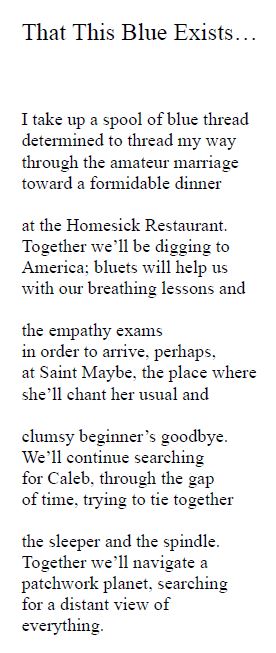
 “Ekphrastic” was a new vocabulary word for me – or, if I’d heard it before, I needed a reminder. It refers to poetry written to describe or respond to artworks. Many of Carole Mertz’s poems, especially in the first section, attest to her love of the visual arts. This is the Ohio church organist’s first full-length collection after the 2019 chapbook Toward a Peeping Sunrise and extensive publication in literary magazines. She was inspired by art ranging in date from 1555 to 2019. “Come Share a Glass with Me,” for instance, is a prose poem that imagines the story behind a Van Gogh. I loved the line “The ewer sits expectant” in a short poem capturing The Staircase by Xavier Mellery.
One could look up all of the artworks discussed, but the descriptions here are so richly detailed that I often didn’t feel I needed to. Two paintings in a row depict sisters. A poem about Salome and the beheading of John the Baptist draws on the Bible story, but also on its many portrayals through art history. Other topics include concern for the Earth and beloved works of literature. I particularly enjoyed “The Word in Joseph’s Hand,” a Christmas hymn that can be sung to the tune of “Lo, How a Rose E’er Blooming,” and a haiku about a cardinal, “a flash of bright red / … in the garden”. Below is my favourite of the poems; it incorporates the titles of 14 books, nine of them by Anne Tyler. See if you can spot them all!
Color and Line was released by Kelsay Books on the 2nd. My thanks to Carole Mertz for the e-copy for review.
Would you be interested in reading one or more of these?
And, just for fun, put a description of or link to your favourite Bernie-in-mittens meme in the comments.
Nonfiction Recommendations from Carolyn Oliver
I ‘met’ poet Carolyn Oliver through her much-missed blog, Rosemary & Reading Glasses. (She’s on Twitter as @CarolynROliver and Instagram as @carolynroliver.) Back in 2017 I asked for her top fiction picks; this year she’s contributed another guest blog listing the best nonfiction she’s read this year. It’s a fascinating selection of memoirs, essays, science and nature, and current events. I scurried to add the ones I hadn’t already heard of to my TBR. Which ones tempt you?
My favorite nonfiction reads from this year (though many are backlist):
 The Butchering Art, Lindsey Fitzharris: Fascinating medical history of Lister’s antiseptic breakthrough.
 Braiding Sweetgrass, Robin Wall Kimmerer: Reflective ecology from the perspective of a Native botanist. Probably my favorite essay collection of the decade.
 The Book of Delights, Ross Gay: Just as the title says. Mini-essays on myriad topics. When you’ve finished, pick up his Catalog of Unabashed Gratitude (poems).
 Atlas of Poetic Botany, Francis Halle: Bite-sized excursions into the worlds of unusual flora, with drawings. Meant for adults, I think, but a huge hit with my eight-year-old.
 Stamped from the Beginning: The Definitive History of Racist Ideas in America, Ibram X. Kendi: Just as the title says. Incisive, eye-opening, necessary.
 The Art Detective, Philip Mould: A romp through the art world with an enthusiastic, knowledgeable guide (Mould is the co-host of the BBC’s Fake or Fortune).
 How We Fight for Our Lives, Saeed Jones: The bildungsroman America needs. Beautiful writing.
 In the Dream House, Carmen Maria Machado: The most formally inventive memoir I’ve ever read. Brilliant and necessary.
 Coventry, Rachel Cusk: I was entranced by Cusk’s voice, even when I didn’t share her conclusions; reading this collection (with the exception of the book reviews added at the end), I felt I was witnessing the writer’s mind in the act of thinking.
 Bookish Beck = Rebecca Foster. American transplant to England. Freelance proofreader and book reviewer.
 Bookish Beck