Some 2025 Reading Superlatives
Longest book read this year: The Covenant of Water by Abraham Verghese (724 pages)
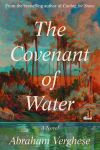
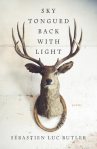
Shortest book read this year: Sky Tongued Back with Light by Sébastien Luc Butler (a 38-page poetry chapbook coming out in 2026)
Authors I read the most by this year: Paul Auster and Emma Donoghue (3) [followed by Margaret Atwood, Chloe Caldwell, Michael Cunningham, Mairi Hedderwick, Christopher Isherwood, Rebecca Kauffman, Stephen King, Elaine Kraf, Maggie O’Farrell, Sylvia Plath and Jess Walter (2 each)]
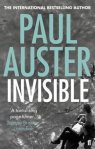
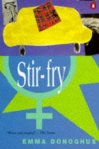
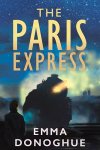
Publishers I read the most from: (Besides the ubiquitous Penguin Random House and its myriad imprints) Faber (14), Canongate (12), Bloomsbury (11), Fourth Estate (7); Carcanet, Picador/Pan Macmillan and Virago (6)
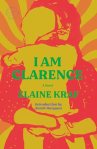
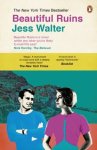
My top author ‘discoveries’ of the year (I’m very late to the party on some of these!): poet Amy Gerstler, Christopher Isherwood, Stephen King, Elaine Kraf, Sylvia Plath, Chloe Savage’s children’s picture books (women + NB characters, science, adventure, dogs), Robin Stevens’s middle-grade mysteries, Jess Walter
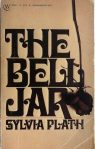
Proudest book-related achievement: Clearing 90–100 books from my shelves as part of our hallway redecoration. Some I resold, some I gave to friends, some I put in the Little Free Library, and some I donated to charity shops.
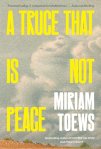
Most pinching-myself bookish moment: Miriam Toews’ U.S. publicist e-mailing me about my Shelf Awareness review of A Truce That Is Not Peace to say, “saw your amazing review! Thank you so much for it – Miriam loved it!”
Books that made me laugh: LOTS, including Spent by Alison Bechdel (which I read twice), The Wedding People by Alison Espach, Victorian Psycho by Virginia Feito, Is This My Final Form? by Amy Gerstler, The Diary of a Nobody by George Grossmith, The Sacred Diary of Adrian Plass Aged 37 ¾, and Slags by Emma Jane Unsworth
A book that made me cry: Death of an Ordinary Man by Sarah Perry
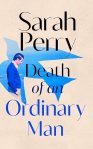
Best book club selections: Leave the World Behind by Rumaan Alam; The Remains of the Day by Kazuo Ishiguro, I Am, I Am, I Am by Maggie O’Farrell and Stoner by John Williams (these three were all rereads)
Best first line encountered this year:
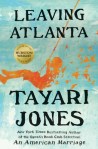
- From Leaving Atlanta by Tayari Jones: “Hard, ugly, summer-vacation-spoiling rain fell for three straight months in 1979.”
Best last lines encountered this year:
- Is a River Alive? by Robert Macfarlane: “Death and love and life, all mingled in the flow.”
(Two quite similar rhetorical questions:)
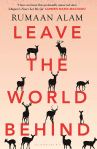 Leave the World Behind by Rumaan Alam: “If they didn’t know how it would end—with night, with more terrible noise from the top of Olympus, with bombs, with disease, with blood, with happiness, with deer or something else watching them from the darkened woods—well, wasn’t that true of every day?”
&
- Beautiful Ruins by Jess Walter: “And even if they don’t find what they’re looking for, isn’t it enough to be out walking together in the sunlight?”
- Wreck by Catherine Newman: “You are still breathing.”
 The Irish Goodbye by Beth Ann Fennelly: “Dear viewer of my naked body, Enjoy the bunions.”
- A Certain Smile by Françoise Sagan: “It was a simple story; there was nothing to make a fuss about.”
- Book of Lives by Margaret Atwood: “We scribes and scribblers are time travellers: via the magic page we throw our voices, not only from here to elsewhere, but also from now to a possible future. I’ll see you there.”
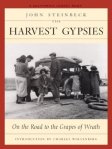
Book that put a song in my head every time I picked it up: The Harvest Gypsies by John Steinbeck (see Kris Drever’s song of the same name). Also, one story of Book of Exemplary Women by Diana Xin mentioned lyrics from “Wild World” by Cat Stevens (“Oh, baby, baby, it’s a wild world. And I’ll always remember you like a child, girl”).
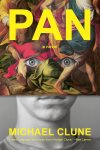
Shortest book titles encountered: Pan (Michael Clune), followed by Gold (Elaine Feinstein) & Girl (Ruth Padel); followed by an 8-way tie! Spent (Alison Bechdel), Billy (Albert French), Carol (Patricia Highsmith), Pluck (Adam Hughes), Sleep (Honor Jones), Wreck (Catherine Newman), Ariel (Sylvia Plath) & Flesh (David Szalay)
Best 2025 book titles: Chopping Onions on My Heart by Samantha Ellis [retitled, probably sensibly, Always Carry Salt for its U.S. release], A Truce That Is Not Peace by Miriam Toews [named after a line from a Christian Wiman poem – top taste there] & Calls May Be Recorded for Training and Monitoring Purposes by Katharina Volckmer.
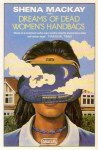
Best book titles from other years: Dreams of Dead Women’s Handbags by Shena Mackay
Biggest disappointments: Dream Count by Chimamanda Ngozi Adichie – so not worth waiting 12 years for – and Heart the Lover by Lily King, which kind of retrospectively ruined her brilliant Writers & Lovers for me.

The 2025 books that it seemed like everyone was reading but I decided not to: Helm by Sarah Hall, The Persians by Sanam Mahloudji, What We Can Know by Ian McEwan (I’m 0 for 2 on his 2020s releases)
The downright strangest books I read this year: Both by Elaine Kraf: I Am Clarence and Find Him! (links to my Shelf Awareness reviews) are confusing, disturbing, experimental in language and form, but also ahead of their time in terms of their feminist content and insight into compromised mental states. The former is more accessible and less claustrophobic.
#NovNov25 Catch-Up: Dodge, Garner, O’Collins, Sagan and A. White
As promised, I’m catching up on five novella-length works I finished in November. In fiction, I have an odd duck of a family story, a piece of autofiction about caring for a friend with cancer, a record of an affair, and a tale of settling two new cats into home life in the 1950s. And in nonfiction, a short book about the religious approach to midlife crisis.
Fup by Jim Dodge (1983)
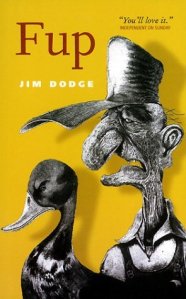 I’d never heard of this but picked it up because of my low-key project of reading books from my birth year. After his daughter died in a freak accident, Grandaddy Jake Santee adopted his grandson “Tiny.” With that touch of backstory dabbed in, we’re in the northern California hills in 1978 with grandfather and grandson – now 99 and 22, respectively. Tiny builds fences, while Grandaddy is famous for his incredibly strong, home-distilled whiskey, “Ol’ Death Whisper.” One day, Tiny rescues a filthy creature from a posthole where it’s been chased by their nemesis, Lockjaw the wild boar. It turns out to be a duckling that grows into a hen mallard named Fup Duck (it’s a spoonerism…) who eats so much she’s too heavy to fly. Grandaddy plans to continue drinking and gambling indefinitely, but the hunt for Lockjaw – who he thinks may be a reincarnation of his Native American friend, Seven Moons – breaks the household apart. This was very weird: it starts out a mixture of grit (those grotesque Harry Horse drawings!) and Homer Hickam schmaltz and then goes full Jonathan Livingston Seagull. (Secondhand – Community Furniture Project, Newbury) [89 pages]
The Spare Room by Helen Garner (2008)
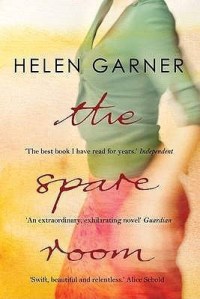 Who knew there was such a market for novels about helping a friend through cancer treatment? Or maybe it’s just that I love them so much I home right in on them. As a work of autofiction – the no-nonsense narrator, Helen, gives her old friend Nicola a place to stay in Melbourne for several weeks while she undergoes experimental procedures – this is most like What Are You Going Through by Sigrid Nunez (but I also had in mind Talk Before Sleep by Elizabeth Berg, We All Want Impossible Things by Catherine Newman, and Some Bright Nowhere by Ann Packer). Helen thinks The Theodore Institute peddles quack medicine, whereas Nicola is willing to shell out thousands of dollars for its coffee enemas and vitamin C infusions, even though they leave her terrifyingly fragile. Nicola is the only character who doesn’t acknowledge that her case is terminal. The pages turn effortlessly as Helen covers her frustration with Nicola, Nicola’s essential optimism, and the realities of living while dying. “Oh, I loved her for the way she made me laugh. She was the least self-important person I knew, the kindest, the least bitchy. I couldn’t imagine the world without her.” I’ll read more by Garner for sure. (Secondhand – Awesomebooks.com) [195 pages]
Second Journey: Spiritual Awareness and the Mid-Life Crisis by Gerald O’Collins SJ (1978; 1995)
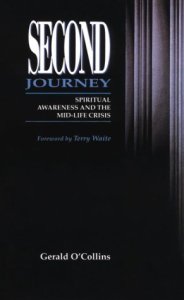 O’Collins, a Jesuit priest, sought a more constructive term than “midlife crisis” for the unease and difficult decisions that many face in their forties. He chooses instead the language of journeys, specifically one embarked upon because a previous way of life was no longer working. There are several types of triggers that O’Collins illustrates through brief case studies of famous individuals or anonymous acquaintances. The shift might be prompted by a sense of failure (John Wesley, Jimmy Carter), by literal exile (Dante), by falling in love (someone who left the priesthood to marry), by experiencing severe illness (John Henry Newman) or fighting in a war (Ignatius of Loyola), or simply by a longing for “something more” (Mother Teresa). But there are only two end points, O’Collins offers: a new place or situation; or a fresh appreciation of the old one – he quotes Eliot’s “to arrive where we started / And know the place for the first time.” This is practical and relatable, but light on actual advice. It also pales by comparison to Richard Rohr’s more recent work on spirituality in the different stages of life (especially in Falling Upward). (Free from a church member’s donations) [100 pages]
A Certain Smile by Françoise Sagan (1956)
[Translated from French by Irene Ash]
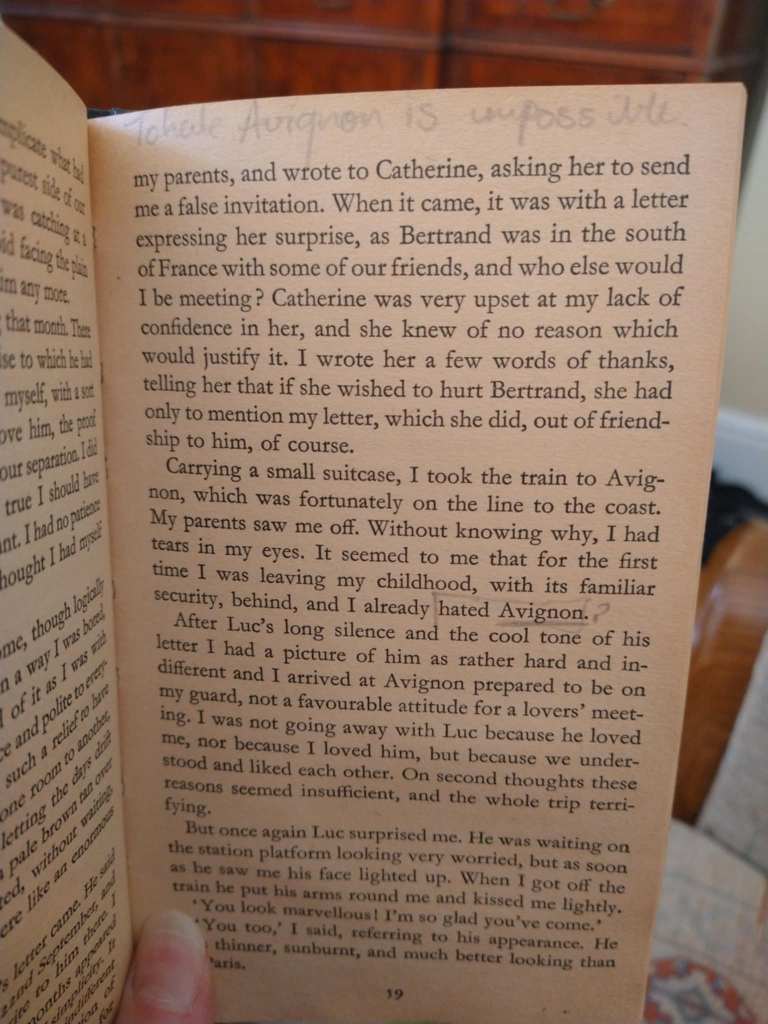
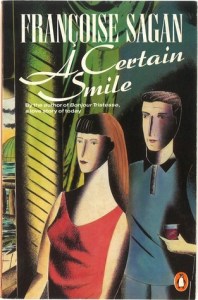 Law student Dominique is lukewarm on her boyfriend Bertrand and starts seeing his married uncle, Luc, instead. The high point is when they manage to go on a ‘honeymoon’ trip of several weeks to Avignon. Both Bertrand and Luc’s wife, Françoise, eventually find out, but everyone is very grown-up about it. The struggle is never external so much as within Dominique to accept that she doesn’t mean as much to Luc as he does to her, and that the relationship will only be a little blip in her early adulthood. I found this a disappointment compared to Bonjour Tristesse and Aimez-Vous Brahms – it really is just the story of an affair; nothing more – but Sagan is always highly readable. I read this in two days, a big section of it on a chilly beach in Devon. In its frank, cool assessment of relationship dynamics, this felt like a model for Sally Rooney. I had to laugh at the righteously angry and rather ungrammatical marginalia below (“To hate Avignon is unpossible”). (University library) [112 pages]
Minka and Curdy by Antonia White; illus. Janet and Anne Johnstone (1957)
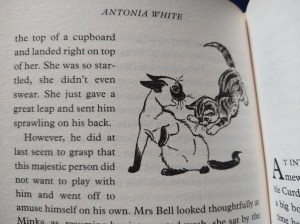
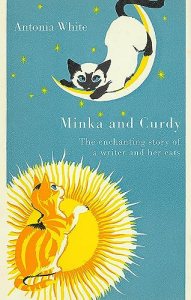 After Mrs Bell’s formidable cat Victoria dies, she hankers to get a new kitten to keep her company – she works at home as a writer. She finds herself greeting all the neighbourhood cats and, in her enthusiasm to help a ‘stray’, accidentally overfeeds someone else’s pet with fresh fish. Her heart is set on a marmalade kitten, so she reserves one from an impending litter in Kent. But then the opportunity to take on a beautiful young female Siamese cat, for free, comes her way, and though she feels guilty about the ginger tom she’s been promised, she adopts Minka anyway. When Coeur de Lion (“Curdy”) arrives a few weeks later, her challenge is to get the kitties to coexist peacefully in her London flat. This reminded me so much of myself back in February and March, when I was so glum over losing Alfie that we rushed into adopting a giant kitten who has been a bit much for us. But we’re already contemplating getting Benny a little sister or two, so I read with interest to see how she made it happen. Well, this is fiction, so it starts out fraught but then is somewhat magically fine. No matter – White writes about cats’ antics and personalities with all the warmth and delight of Derek Tangye, Doreen Tovey and the like, and this 2023 Virago reprint is adorable. (Secondhand – Awesomebooks.com) [113 pages]
I also had a few DNFs last month:
- The Book of Colour by Julia Blackburn (1995) seemed a good bet because I’ve enjoyed some of Blackburn’s nonfiction and it was on the Orange Prize shortlist. But after 60 pages I still had no idea what was going on amid the Mauritius-set welter of family history and magic realism. (Secondhand – Bas Books charity shop, 2022)
- A Single Man by Christopher Isherwood (1964) lured me because I’d so loved Goodbye to Berlin and I remember liking the Colin Firth film. But this story of an Englishman secretly mourning his dead partner while trying to carry on as normal as a professor in Los Angeles was so dreary I couldn’t persist. (Public library)
- Night Life: Walking Britain’s Wild Landscapes after Dark by John Lewis-Stempel (2025) – JLS could write one of these mini nature volumes in his sleep. (Maybe he did with this one, actually?) I’d rather one full-length book from him every few years than bitty, redundant ones annually. (Public library)
- Aunts Aren’t Gentlemen by P.G. Wodehouse (1974) – I’ve read one Jeeves & Wooster book before and enjoyed it well enough. This felt inconsequential, so as I already had way too many novellas on the go I sent it back whence it came. (Little Free Library)
Final statistics for #NovNov25 coming up tomorrow!
Wreck by Catherine Newman (and a Cocktail Recipe) for Thanksgiving
Happy Thanksgiving to all who celebrate! Though it’s just an ordinary Thursday here in the UK, I always strive to mark the occasion. Today, it’ll just be with a slice of pumpkin pie. But I’ve also been lucky this year to be invited to two Thanksgiving feasts, the first (vegetarian) last Saturday with a few North American neighbours from my book club and the next one (vegan) coming up tomorrow with university friends, one of whom is half-American. Meal #1 was splendid and kept us fed with leftovers for four days afterwards (I’m sure the second will be equally delicious and bounteous). We contributed mini squashes stuffed with leek and cauliflower macaroni and cheese, mashed potatoes and onion gravy, a pumpkin pie, and nibbles and cocktails. I adapted this pumpkin pie martini for J (too acrid and too sweet for me) but the rest of us had a signature cocktail I invented. Recipe below.


Friendsgiving Berry Cobbler
(Serves 1; or multiply by the number needed!)
50 mL Bombay Bramble gin
20 mL fresh lemon juice
20 mL homemade simple syrup
5 mL Grand Marnier
5 mL cranberry sauce or lingonberry jam
Mix all ingredients with ice in a cocktail shaker, shake well, and strain through a fine sieve to serve. Garnish with fresh cranberries, frozen blackberries and a twist of orange peel. Top up with ginger ale to taste.
Last month I reviewed Wreck by Catherine Newman for Shelf Awareness. It was one of my Most Anticipated books of the second half of the year and has a sequence set on Thanksgiving, which is reason enough to reprint it here.
 In Catherine Newman’s third novel, Wreck, a winsome sequel set two years on from Sandwich, a family encounters medical uncertainties and ethical quandaries.
Rocky is a fiftysomething food writer and mother of two young adults. After Rocky’s mother’s death, her 92-year-old father moved into the in-law apartment. Rocky and Nick’s son, Jamie, now works as a junior analyst for a New York City consulting firm. The engaging plot turns on two upsetting incidents. “In one single day, in two different directions, my life swerves from its path,” Rocky divulges. First, she notices a mysterious skin rash, which, along with abnormal blood work results, eventually points to an autoimmune liver condition [primary sclerosing cholangitis]; second, news comes that Miles Zapf, one of Jamie’s high school classmates, died in a collision between his car and a train. Was it suicide or an accident? A moral complication arises: Jamie’s firm advised the railroad company.
As one New England fall unfurls, leading to an emotionally climactic Thanksgiving Day, Rocky airs her fears over her prognosis, her father’s infirmity, and her children’s future. Empathy is a two-edged sword—she can’t stop imagining what Miles Zapf’s mother is going through. Newman (We All Want Impossible Things) writes autofiction that’s full of quirky one-liners and particularly resonates with anyone facing mental health and midlife challenges. There’s family drama aplenty, but also the everyday coziness of family rituals, especially those involving food. This warm hug of a novel ponders how to respond graciously when life gets messy and answers aren’t clear-cut.
(Reprinted with permission from Shelf Awareness.)
In short, it’s enjoyable and effortlessly readable, but Rocky is A Bit Much, and after you’ve read Sandwich this is really just more of the same.
Plus, more Thanksgiving reading ideas in this post I wrote way back in 2015.
Book Serendipity, September through Mid-November
I call it “Book Serendipity” when two or more books that I read at the same time or in quick succession have something in common – the more bizarre, the better. This is a regular feature of mine every couple of months. Because I usually have 20–30 books on the go at once, I suppose I’m more prone to such incidents. People frequently ask how I remember all of these coincidences. The answer is: I jot them down on scraps of paper or input them immediately into a file on my PC desktop; otherwise, they would flit away.
Thanks to Emma and Kay for posting their own Book Serendipity moments! (Liz is always good about mentioning them as she goes along, in the text of her reviews.)
The following are in roughly chronological order.
- An obsession with Judy Garland in My Judy Garland Life by Susie Boyt (no surprise there), which I read back in January, and then again in Beard: A Memoir of a Marriage by Kelly Foster Lundquist.
- Leaving a suicide note hinting at drowning oneself before disappearing in World War II Berlin; and pretending to be Jewish to gain better treatment in Aimée and Jaguar by Erica Fischer and The Lilac People by Milo Todd.
- Leaving one’s clothes on a bank to suggest drowning in The Covenant of Water by Abraham Verghese, read over the summer, and then Benbecula by Graeme Macrae Burnet.
- A man expecting his wife to ‘save’ him in Amanda by H.S. Cross and Beard: A Memoir of a Marriage by Kelly Foster Lundquist.
 A man tells his story of being bullied as a child in Goodbye to Berlin by Christopher Isherwood and Beard by Kelly Foster Lundquist.
- References to Vincent Minnelli and Walt Whitman in a story from Touchy Subjects by Emma Donoghue and Beard by Kelly Foster Lundquist.
- The prospect of having one’s grandparents’ dining table in a tiny city apartment in Beard by Kelly Foster Lundquist and Wreck by Catherine Newman.
- Ezra Pound’s dodgy ideology was an element in The Dime Museum by Joyce Hinnefeld, which I reviewed over the summer, and recurs in Swann by Carol Shields.
- A character has heart palpitations in Andrew Miller’s story from The BBC National Short Story Award 2025 anthology and Endling by Maria Reva.
- A (semi-)nude man sees a worker outside the window and closes the curtains in one story of Cathedral by Raymond Carver and one from Good and Evil and Other Stories by Samanta Schweblin.
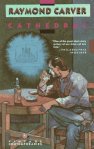
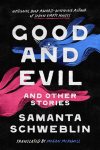
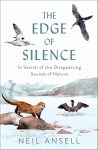
- The call of the cuckoo is mentioned in The Edge of Silence by Neil Ansell and Of All that Ends by Günter Grass.
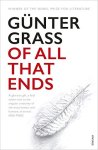 A couple in Italy who have a Fiat in Of All that Ends by Günter Grass and Caoilinn Hughes’s story from The BBC National Short Story Award 2025 anthology.
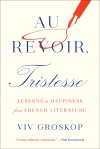
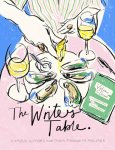
- Balzac’s excessive coffee consumption was mentioned in Au Revoir, Tristesse by Viv Groskop, one of my 20 Books of Summer, and then again in The Writer’s Table by Valerie Stivers.
- The main character is rescued from her suicide plan by a madcap idea in The Wedding People by Alison Espach and Endling by Maria Reva.
- The protagonist is taking methotrexate in Sea, Poison by Caren Beilin and Wreck by Catherine Newman.

- A man wears a top hat in Benbecula by Graeme Macrae Burnet and one story of Cathedral by Raymond Carver.
- A man named Angus is the murderer in Benbecula by Graeme Macrae Burnet and Swann by Carol Shields.
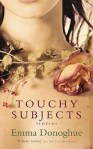 The thing most noticed about a woman is a hair on her chin in the story “Pluck” in Touchy Subjects by Emma Donoghue and Swann by Carol Shields.
- The female main character makes a point of saying she doesn’t wear a bra in Sea, Poison by Caren Beilin and Find Him! by Elaine Kraf.
- A home hairdressing business in one story of Cathedral by Raymond Carver and Emil & the Detectives by Erich Kästner.
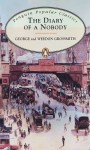
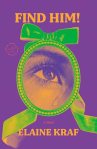
- Painting a bathroom fixture red: a bathtub in The Diary of a Nobody by George Grossmith, one of my 20 Books of Summer; and a toilet in Find Him! by Elaine Kraf.
- A teenager who loses a leg in a road accident in individual stories from A Wild Swan by Michael Cunningham and the Racket anthology (ed. Lisa Moore).
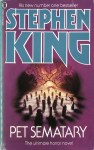
- Digging up the casket of a loved one in the wee hours features in Pet Sematary by Stephen King, one of my 20 Books of Summer; and one story of Pretty Monsters by Kelly Link.
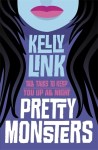
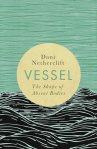
- A character named Dani in the story “The St. Alwynn Girls at Sea” by Sheila Heti and The Silver Book by Olivia Laing; later, author Dani Netherclift (Vessel).
 Obsessive cultivation of potatoes in Benbecula by Graeme Macrae Burnet and The Martian by Andy Weir.
- The story of Dante Gabriel Rossetti digging up the poems he buried with his love is recounted in Sharon Bala’s story in the Racket anthology (ed. Lisa Moore) and one of the stories in Pretty Monsters by Kelly Link.
- Putting French word labels on objects in Alone in the Classroom by Elizabeth Hay and Find Him! by Elaine Kraf.
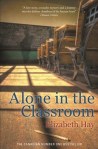
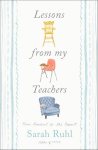 A man with part of his finger missing in Find Him! by Elaine Kraf and Lessons from My Teachers by Sarah Ruhl.
- In Minor Black Figures by Brandon Taylor, I came across a mention of the Italian film director Pier Paolo Pasolini, who is a character in The Silver Book by Olivia Laing.
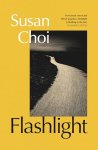
- A character who works in an Ohio hardware store in Flashlight by Susan Choi and Buckeye by Patrick Ryan (two one-word-titled doorstoppers I skimmed from the library). There’s also a family-owned hardware store in Alone in the Classroom by Elizabeth Hay.
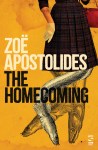
- A drowned father – I feel like drownings in general happen much more often in fiction than they do in real life – in The Homecoming by Zoë Apostolides, Flashlight by Susan Choi, and Vessel by Dani Netherclift (as well as multiple drownings in The Covenant of Water by Abraham Verghese, one of my 20 Books of Summer).
- A memoir by a British man who’s hard of hearing but has resisted wearing hearing aids in the past: first The Quiet Ear by Raymond Antrobus over the summer, then The Edge of Silence by Neil Ansell.
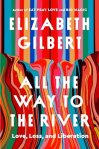 A loved one is given a six-month cancer prognosis but lives another (nearly) two years in All the Way to the River by Elizabeth Gilbert and Lessons from My Teachers by Sarah Ruhl.
- A man’s brain tumour is diagnosed by accident while he’s in hospital after an unrelated accident in Flashlight by Susan Choi and Saltwash by Andrew Michael Hurley.
- Famous lost poems in What We Can Know by Ian McEwan and Swann by Carol Shields.
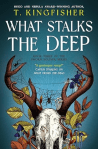
- A description of the anatomy of the ear and how sound vibrates against tiny bones in The Edge of Silence by Neil Ansell and What Stalks the Deep by T. Kingfisher.
- Notes on how to make decadent mashed potatoes in Beard by Kelly Foster Lundquist, Death of an Ordinary Man by Sarah Perry, and Lessons from My Teachers by Sarah Ruhl.
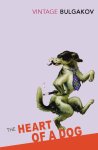
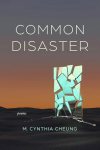
- Transplant surgery on a dog in Russia and trepanning appear in The Heart of a Dog by Mikhail Bulgakov and the poetry collection Common Disaster by M. Cynthia Cheung.
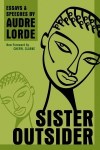
- Audre Lorde, whose Sister Outsider I was reading at the time, is mentioned in Lessons from My Teachers by Sarah Ruhl. Lorde’s line about the master’s tools never dismantling the master’s house is also paraphrased in Spent by Alison Bechdel.
- An adult appears as if fully formed in a man’s apartment but needs to be taught everything, including language and toilet training, in The Heart of a Dog by Mikhail Bulgakov and Find Him! by Elaine Kraf.
 Two sisters who each wrote a memoir about their upbringing in Spent by Alison Bechdel and Vessel by Dani Netherclift.
- The fact that ragwort is bad for horses if it gets mixed up into their feed was mentioned in Ghosts of the Farm by Nicola Chester and Understorey by Anna Chapman Parker.
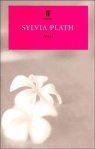
- The Sylvia Plath line “the O-gape of complete despair” was mentioned in Vessel by Dani Netherclift, then I read it in its original place in Ariel later the same day.
- A mention of the Baba Yaga folk tale (an old woman who lives in the forest in a hut on chicken legs) in Common Disaster by M. Cynthia Cheung and Woman, Eating by Claire Kohda. [There was a copy of Sophie Anderson’s children’s book The House with Chicken Legs in the Little Free Library around that time, too.]
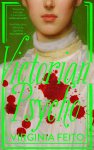
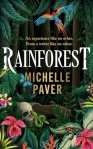
- Coming across a bird that seems to have simply dropped dead in Victorian Psycho by Virginia Feito, Vessel by Dani Netherclift, and Rainforest by Michelle Paver.
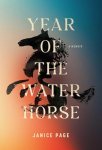
- Contemplating a mound of hair in Vessel by Dani Netherclift (at Auschwitz) and Year of the Water Horse by Janice Page (at a hairdresser’s).
- Family members are warned that they should not see the body of their loved one in Vessel by Dani Netherclift and Rainforest by Michelle Paver.
- A father(-in-law)’s swift death from oesophageal cancer in Year of the Water Horse by Janice Page and Death of an Ordinary Man by Sarah Perry.
- I saw John Keats’s concept of negative capability discussed first in My Little Donkey by Martha Cooley and then in Understorey by Anna Chapman Parker.
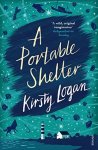
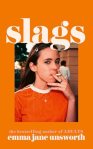
- I started two books with an Anne Sexton epigraph on the same day: A Portable Shelter by Kirsty Logan and Slags by Emma Jane Unsworth.
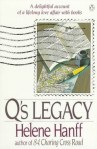
- Mentions of Martin Luther King, Jr.’s assassination in Q’s Legacy by Helene Hanff and Sister Outsider for Audre Lorde, both of which I was reading for Novellas in November.
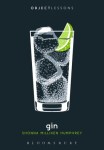
- Mentions of specific incidents from Samuel Pepys’s diary in Q’s Legacy by Helene Hanff and Gin by Shonna Milliken Humphrey, both of which I was reading for Nonfiction November/Novellas in November.
- Starseed (aliens living on earth in human form) in Beautyland by Marie-Helene Bertino and The Conspiracists by Noelle Cook.
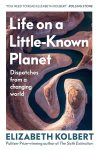
- Reading nonfiction by two long-time New Yorker writers at the same time: Life on a Little-Known Planet by Elizabeth Kolbert and Joyride by Susan Orlean.
- The breaking of a mirror seems like a bad omen in The Spare Room by Helen Garner and The Bell Jar by Sylvia Plath.
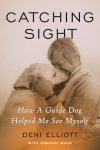 The author’s husband (who has a name beginning with P) is having an affair with a lawyer in Catching Sight by Deni Elliott and Joyride by Susan Orlean.
- Mentions of Lewis Hyde’s book The Gift in Lessons from My Teachers by Sarah Ruhl and The Serviceberry by Robin Wall Kimmerer; I promptly ordered the Hyde secondhand!
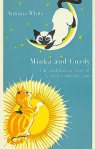
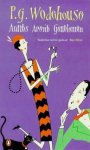
- The protagonist fears being/is accused of trying to steal someone else’s cat in Minka and Curdy by Antonia White and Aunts Aren’t Gentlemen by P.G. Wodehouse, both of which I was reading for Novellas in November.
What’s the weirdest reading coincidence you’ve had lately?
#WITMonth, Part I: Susanna Bissoli, Jente Posthuma and More
I’m starting off my Women in Translation month coverage with two short novels: one Italian and one Dutch; both about women navigating loss, family relationships, physical or mental illness, and the desire to be a writer.
Struck by Susanna Bissoli (2024; 2025)
[Translated from Italian by Georgia Wall]
Vera has been diagnosed a second time with breast cancer – the same disease that felled her mother a decade ago. “I’m fed up with feeling like a problem to be taken care of,” she thinks. Even as her treatment continues, she determines to find routes to a bigger life not defined by her illness. Writing is the solution. When she moves in with her grouchy octogenarian father, Zeno Benin, she discovers he’s secretly written a novel, A Lucky Man. The almost entirely unpunctuated document is handwritten across 51 notebooks Vera undertakes to type up and edit alongside her father as his health declines.
At the same time, she becomes possessed by the legend of local living ‘saint’ Annamaria Bigani, who has been visited multiple times by the Virgin Mary and learned her date of death. Wondering if there is a story here that she needs to tell, Vera interviews Bigani, then escapes to Greece for time and creative space. “Do they save us, stories? Or is it our job to save them? I believe writing that story, day in and day out for years, saved my father’s life. But I’m sorry, I don’t have time to save his story: I need to write my own. The saint, or so I thought.” In the end, we learn, Struck – the very novel we are reading – is Vera’s book.

The title comes from a scientific study conducted on people struck by lightning at a country festival in France. How did they survive, and what were the lasting effects? The same questions apply to Vera, who avoids talking about her cancer but whose relationship with her sister Nora is still affected by choices made while their mother was alive. There are many delightful small conversations and incidents here, often involving Vera’s niece Alice. Vera’s relationship with Franco, a doctor who works with asylum seekers, is a steady part of the background. A translator’s afterword helped me understand the thought that went into how to reproduce Vera and others’ use of dialect (La Bassa Veronese vs. standard Italian) through English vernacular – so Vera and her sister say “Mam” and her father uses colourful idioms.
Though I know nothing of Bissoli’s biography, this second novel has the feeling of autofiction. Despite its wrenching themes of illness and the inevitability of death, it’s a lighthearted family story with free-flowing prose that I can enthusiastically recommend to readers of Elizabeth Berg and Catherine Newman.
This was my introduction to new (est. 2023) independent publisher Linden Editions, which primarily publishes literature in translation. I have two more of their books underway for another WIT Month post later this month. And a nice connection is that I corresponded with translator Georgia Wall when she was the publishing manager for The Emma Press.
With thanks to Linden Editions for the free copy for review.
People with No Charisma by Jente Posthuma (2016; 2025)
[Translated from Dutch by Sarah Timmer Harvey]
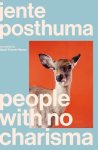 Dutch writer Jente Posthuma’s quirky, bittersweet first novel traces the ripples that grief and mental ill health send through a young woman’s life. The narrator’s mother was an aspiring actress; her father runs a mental hospital. A dozen episodic short chapters present snapshots from a neurotic existence as she grows from a child to a thirtysomething starting a family of her own. Some highlights include her moving to Paris to write a novel, and her father – a terrible driver – taking her on a road trip through France. Despite the deadpan humor, there’s heartfelt emotion here and the prose and incidents are idiosyncratic. (Full review forthcoming for Shelf Awareness)
& Reviewed for Foreword Reviews a couple of years ago:
What I Don’t Want to Talk About by Jente Posthuma (2020; 2023)
[Translated from Dutch by Sarah Timmer Harvey]
 A young woman bereft after her twin brother’s suicide searches for the seeds of his mental illness. The past resurges, alternating with the present in the book’s few-page vignettes. Their father leaving when they were 11 was a significant early trauma. Her brother came out at 16, but she’d intuited his sexuality when they were eight. With no speech marks, conversations blend into cogitation and memories here. A wry tone tempers the bleakness. (Shortlisted for the European Union Prize for Literature and the International Booker Prize.)
Both featured an unnamed narrator and a similar sense of humor. I concluded that Posthuma excels at exploring family dynamics and the aftermath of bereavement.
I got caught out when I reviewed The Appointment, too: Volckmer doesn’t technically count towards this challenge because she writes in English (and lives in London), but as she’s German, I’m adding in a teaser of my review as a bonus. Oddly, this novella did first appear in another language, French, in 2024, under the title Wonderf*ck. [The full title below was given to the UK edition.]
Calls May Be Recorded [for Training and Monitoring Purposes] by Katharina Volckmer (2025)
 Volckmer’s outrageous, uproarious second novel features a sex-obsessed call center employee who negotiates body and mommy issues alongside customer complaints. “Thank you for waiting. My name is Jimmie. How can I help you today?” each call opens. The overweight, homosexual former actor still lives with his mother. His customers’ situations are bizarre and his replies wildly inappropriate; it’s only a matter of time until he faces disciplinary action. As in her debut, Volckmer fearlessly probes the psychological origins of gender dysphoria and sexual behavior. Think of it as an X-rated version of The Office. (Full review forthcoming for Shelf Awareness)
Most Anticipated Books of the Second Half of 2025
My “Most Anticipated” designation sometimes seems like a kiss of death, but other times the books I choose for these lists live up to my expectations, or surpass them!
(Looking back at the 25 books I selected in January, I see that so far I have read and enjoyed 8, read but been disappointed by 4, not yet read – though they’re on my Kindle or accessible from the library – 9, and not managed to get hold of 4.)
This time around, I’ve chosen 15 books I happen to have heard about that will be released between July and December: 7 fiction and 8 nonfiction. (In release date order within genre. UK release information generally given first, if available. Note given on source if I have managed to get hold of it already.)
Fiction
 The Girls Who Grew Big by Leila Mottley [10 July, Fig Tree (Penguin) / June 24, Knopf]: I was impressed with the confident voice in Mottley’s debut, Nightcrawling. She’s just 22 years old so will only keep getting better. This is “about the joys and entanglements of a fierce group of teenage mothers in a small town on the Florida panhandle. … When [16-year-old Adela] tells her parents she’s pregnant, they send her from … Indiana to her grandmother’s in Padua Beach, Florida.” I’ve read one-third so far. (Digital review copy)
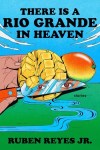
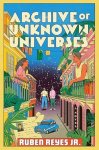 Archive of Unknown Universes by Ruben Reyes Jr. [21 Aug., Footnote Press (Bonnier) / July 1, Mariner Books]: There Is a Rio Grande in Heaven was a strong speculative short story collection and I’m looking forward to his debut novel, which involves alternative history elements. (Starred Kirkus review.) “Cambridge, 2018. Ana and Luis’s relationship is on the rocks, despite their many similarities, including … mothers who both fled El Salvador during the war. In her search for answers, and against her best judgement, Ana uses The Defractor, an experimental device that allows users to peek into alternate versions of their lives.”
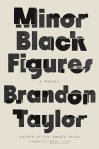 Minor Black Figures by Brandon Taylor [Oct. 7, Riverhead / 5 March 2026, Jonathan Cape (Penguin)]: I’ve read all of his works … but I’m so glad he’s moving past campus settings now. “A newcomer to New York, Wyeth is a Black painter who grew up in the South and is trying to find his place in the contemporary Manhattan art scene. … When he meets Keating, a white former seminarian who left the priesthood, Wyeth begins to reconsider how to observe the world, in the process facing questions about the conflicts between Black and white art, the white gaze on the Black body, and the compromises we make – in art and in life.” (Edelweiss download)
 Heart the Lover by Lily King [16 Oct., Canongate / Oct. 7, Grove Press]: I’ve read several of her books and after Writers & Lovers I’m a forever fan. “In the fall of her senior year of college, [Jordan] meets two star students from her 17th-Century Lit class, Sam and Yash. … she quickly discovers the pleasures of friendship, love and her own intellectual ambition. … when a surprise visit and unexpected news brings the past crashing into the present, Jordan returns to a world she left behind and is forced to confront the decisions and deceptions of her younger self.” (Edelweiss download)
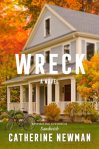 Wreck by Catherine Newman [28 Oct., Transworld / Harper]: This is a sequel to Sandwich, and in general sequels should not exist. However, I can make a rare exception. Set two years on, this finds “Rocky, still anxious, nostalgic, and funny, obsessed with a local accident that only tangentially affects them—and with a medical condition that, she hopes, won’t affect them at all.” In a recent Substack post, Newman compared it to Small Rain, my book of 2024, for the focus on a mystery medical condition. (Edelweiss download)
 Palaver by Bryan Washington [Nov. 4, Farrar, Straus, and Giroux / 1 Jan. 2026, Atlantic]: I’ve read all his work and I’m definitely a fan, though I wish that (like Taylor previously) he wouldn’t keep combining the same elements each time. I’ll be reviewing this early for Shelf Awareness; hooray that I don’t have to wait until 2026! “He’s entangled in a sexual relationship with a married man, and while he has built a chosen family in Japan, he is estranged from his family in Houston, particularly his mother … Then, in the weeks leading up to Christmas, ten years since they’ve last seen each other, the mother arrives uninvited on his doorstep. Separated only by the son’s cat, Taro, the two of them bristle against each other immediately.” (Edelweiss download)
 The Silver Book by Olivia Laing [6 Nov., Hamish Hamilton (Penguin) / 11 Nov., Farrar, Straus and Giroux]: I’ve read all but one of Laing’s books and consider her one of our most important contemporary thinkers. I was also pleasantly surprised by Crudo so will be reading this second novel, too. I’ll be reviewing it early for Shelf Awareness as well. “September 1974. Two men meet by chance in Venice. One is a young English artist, in panicked flight from London. The other is Danilo Donati, the magician of Italian cinema. … The Silver Book is at once a queer love story and a noirish thriller, set in the dream factory of cinema. (Edelweiss download)
Nonfiction
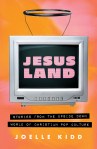 Jesusland: Stories from the Upside[-]Down World of Christian Pop Culture by Joelle Kidd [Aug. 12, ECW]: “Through nine incisive, honest, and emotional essays, Jesusland exposes the pop cultural machinations of evangelicalism, while giving voice to aughts-era Christian children and teens who are now adults looking back at their time measuring the length of their skirts … exploring the pop culture that both reflected and shaped an entire generation of young people.” Yep, that includes me! Looking forward to a mixture of Y2K and Jesus Freak. (NetGalley download)
 Somebody Is Walking on Your Grave: My Cemetery Journeys by Mariana Enríquez; translated from Spanish by Megan McDowell [25 Sept., Granta / Sept. 30, Hogarth]: I’ve enjoyed her creepy short stories, plus I love touring graveyards. “In 2013, when the body of a friend’s mother who was disappeared during Argentina’s military dictatorship was found in a common grave, she began to examine more deeply the complex meanings of cemeteries and where our bodies come to rest. In this vivid, cinematic book … Enriquez travels North and South America, Europe and Australia … [and] investigates each cemetery’s history, architecture, its dead (famous and not), its saints and ghosts, its caretakers and visitors.” (Edelweiss download, for Shelf Awareness review)
 Ghosts of the Farm: Two Women’s Journeys Through Time, Land and Community by Nicola Chester [30 Sept., Chelsea Green]: Nicola is our local nature writer and is so wise on class and countryside matters. On Gallows Down was her wonderful debut and, though I know very little about it, I’m looking forward to her second book. “This is the story of Miss White, a woman who lived in the author’s village 80 years ago, a pioneer who realised her ambition to become a farmer during the Second World War. … Moving between Nicola’s own attempts to work outdoors and Miss White’s desire to farm a generation earlier, Nicola explores the parallels between their lives – and the differences.”
 Death of an Ordinary Man by Sarah Perry [2 Oct., Vintage (Penguin)]: I’ve had a very mixed experience with Perry’s fiction, but a short bereavement memoir should be right up my street. “Sarah Perry’s father-in-law, David, died at home nine days after a cancer diagnosis and having previously been in the good health. The speed of his illness outstripped that of the NHS and social care, so the majority of nursing fell to Sarah and her husband. They witnessed what happens to the body and spirit, hour by hour, as it approaches death.”
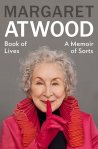 Book of Lives: A Memoir of Sorts by Margaret Atwood [4 Nov., Vintage (Penguin) / Doubleday]: It’s Atwood; ’nuff said, though I admit I’m daunted by the page count. “Raised by ruggedly independent, scientifically minded parents – entomologist father, dietician mother – Atwood spent most of each year in the wild forest of northern Quebec. … [She links] seminal moments to the books that have shaped our literary landscape. … In pages bursting with bohemian gatherings … and major political turning points, we meet poets, bears, Hollywood actors and larger-than-life characters straight from the pages of an Atwood novel.”
 Tigers Between Empires: The Improbable Return of Great Cats to the Forests of Russia and China by Jonathan C. Slaght [4 Nov., Allen Lane / Farrar, Straus and Giroux]: Slaght’s Owls of the Eastern Ice was one of the best books I read in 2022; he’s a top-notch nature and travel writer with an environmentalist’s conscience. After the fall of the Soviet Union, “scientists came together to found the Siberian Tiger Project[, which …] captured and released more than 114 tigers over three decades. … [C]haracters, both feline and human, come fully alive as we travel with them through the quiet and changing forests of Amur.” (NetGalley download)
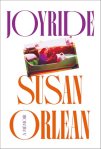 Joyride by Susan Orlean [6 Nov., Atlantic Books / Oct. 14, Avid Reader Press (Simon & Schuster)]: I’m a fan of Orlean’s genre-busting nonfiction, e.g. The Orchid Thief and The Library Book, and have always wanted to try more by her. “Joyride is her most personal book ever—a searching journey through finding her feet as a journalist, recovering from the excruciating collapse of her first marriage, falling head-over-heels in love again, becoming a mother while mourning the decline of her own mother, sojourning to Hollywood for films based on her work. … Joyride is also a time machine to a bygone era of journalism.”
 A Long Game: Notes on Writing Fiction by Elizabeth McCracken [Dec. 2, Ecco]: I’m not big on craft books, but will occasionally read one by an author I admire; McCracken won my heart with The Hero of This Book. “How does one face the blank page? Move a character around a room? Deal with time? Undertake revision? The good and bad news is that in fiction writing, there are no definitive answers. … McCracken … has been teaching for more than thirty-five years [… and] shares insights gleaned along the way, offering practical tips and incisive thoughts about her own work as an artist.” (Edelweiss download)
As a bonus, here are two advanced releases that I reviewed early:
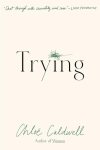 Trying: A Memoir by Chloe Caldwell [Aug. 5, Graywolf] (Reviewed for Foreword): Caldwell devoted much of her thirties to trying to get pregnant via intrauterine insemination. She developed rituals to ease the grueling routine: After every visit, she made a stop for luxury foodstuffs and beauty products. But then her marriage imploded. When she began dating women and her determination to become a mother persisted, a new conception strategy was needed. The book’s fragmentary style suits its aura of uncertainty about the future. Sparse pages host a few sentences or paragraphs, interspersed with wry lists.
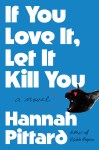 If You Love It, Let It Kill You by Hannah Pittard [July 15, Henry Holt] (Reviewed for Shelf Awareness): A quirky work of autofiction about an author/professor tested by her ex-husband’s success, her codependent family, and an encounter with a talking cat. Hana P. (or should that be Pittard?) relishes flouting the “rules” of creative writing. With her affectations and unreliability, she can be a frustrating narrator, but the metafictional angle renders her more wily than precious. The dialogue and scenes sparkle, and there are delightful characters This gleefully odd book is perfect for Miranda July and Patricia Lockwood fans.
I can also recommend:
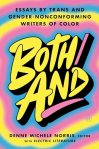
Both/And: Essays by Trans and Gender-Nonconforming Writers of Color, ed. Denne Michele Norris [Aug. 12, HarperOne / 25 Sept., HarperCollins] (Review to come for Shelf Awareness)
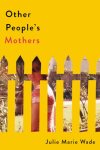
Other People’s Mothers by Julie Marie Wade [Sept. 2, Univ. of Florida Press] (Review pending for Foreword)
Which of these catch your eye? Any other books you’re looking forward to in this second half of the year?
Book Serendipity, November to December 2024
I call it “Book Serendipity” when two or more books that I read at the same time or in quick succession have something in common – the more bizarre, the better. This is a regular feature of mine every couple of months. Because I usually have 20–30 books on the go at once, I suppose I’m more prone to such incidents. People frequently ask how I remember all of these coincidences. The answer is: I jot them down on scraps of paper or input them immediately into a file on my PC desktop; otherwise, they would flit away! The following are in roughly chronological order.
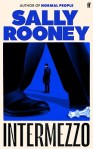
- Characters who were in a chess club and debating society in high school/college in Playground by Richard Powers and Intermezzo by Sally Rooney.
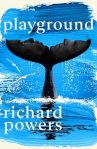
- Pondering the point of a memorial and a mention of hiring mourners in Immemorial by Lauren Markham and Basket of Deplorables by Tom Rachman.
- A mention of Rachel Carson, and her The Sea Around Us in particular, in Playground by Richard Powers, while I was also reading for review Rachel Carson and the Power of Queer Love by Lida Maxwell.
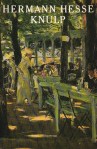
- A character pretends to be asleep when someone comes into the room to check on them in Knulp by Hermann Hesse and Rental House by Weike Wang.
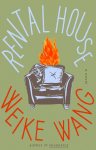
- A mention of where a partner puts his pistachio shells in After the Rites and Sandwiches by Kathy Pimlott and Rental House by Weike Wang.
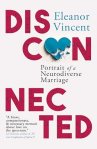 A character who startles very easily (in the last two cases because of PTSD) in Life before Man by Margaret Atwood, A History of Sound by Ben Shattuck, and Disconnected by Eleanor Vincent.
- The husband is named Nate in Life before Man by Margaret Atwood and Rental House by Weike Wang.
- In People Collide by Isle McElroy, there’s a mention of Elizabeth reading “a popular feminist book about how men explained things to women.” The day I finished reading the novel, I started reading the book in question: Men Explain Things to Me by Rebecca Solnit.
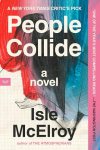
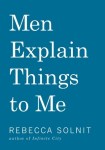
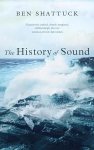
- I learned about the “he’s-at-home” (19th-century dildo) being used by whalers’ wives on Nantucket while the husbands are away at sea through historical fiction – Daughters of Nantucket by Julie Gerstenblatt, which I read last year – and encountered the practice again through an artefact found in the present day in The History of Sound by Ben Shattuck. Awfully specific!
- A week after I finished reading Station Eleven by Emily St. John Mandel, it turned up in a discussion of Vancouver Island in Island by Julian Hanna.
- A Cape Cod setting in Sandwich by Catherine Newman (earlier in the year) plus The History of Sound by Ben Shattuck and Rental House by Weike Wang.
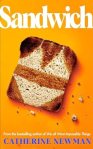
- A gay character references Mulder and Scully (of The X-Files) in the context of determining sexual preference, and there’s a female character named Kit, in The Old Haunts by Allan Radcliffe and one story of Show Don’t Tell by Curtis Sittenfeld.
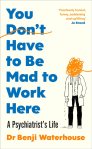
- A mention of The Truman Show in the context of delusions in The Year of Living Biblically by A.J. Jacobs and You Don’t Have to Be Mad to Work Here by Benji Waterhouse.
- St. Lucia is mentioned in Beasts by Ingvild Bjerkeland, Brightly Shining by Ingvild Rishøi (two Norwegian authors named Ingvild there!), and Mudhouse Sabbath by Lauren Winner.
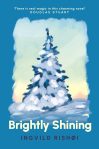
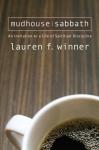
- A pet named Darwin: in Levels of Life by Julian Barnes it’s Sarah Bernhardt’s monkey; in Cold Kitchen by Caroline Eden it’s her beagle. Within days I met another pet beagle named Darwin in Island by Julian Hanna. (It took me a moment to realize why it’s a clever choice!)
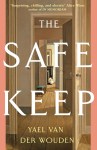
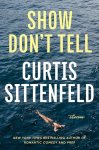
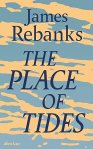
- A character named Henrik in The Place of Tides by James Rebanks and one story of Show Don’t Tell by Curtis Sittenfeld, and a Hendrik in The Safekeep by Yael van der Wouden.
- A hat with a green ribbon in The Safekeep by Yael van der Wouden and one story of Show Don’t Tell by Curtis Sittenfeld (in which it’s an emoji).
- Romanian neighbours who speak very good English in Island by Julian Hanna and Rental House by Weike Wang.
- A scene of returning to a house one used to live in in Hyper by Agri Ismaïl, The Old Haunts by Allan Radcliffe, and one story of Show Don’t Tell by Curtis Sittenfeld.
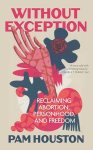
- A woman has had three abortions in The House of Dolls by Barbara Comyns and Without Exception by Pam Houston.
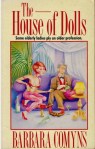
- Household items keep going missing and there’s broken china in The House of Dolls by Barbara Comyns and The Safekeep by Yael van der Wouden.
- Punctuated equilibrium (a term from evolutionary biology) is used as a metaphor in Hyper by Agri Ismaïl and Men Explain Things to Me by Rebecca Solnit.
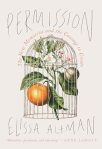 The author’s mother repeatedly asked her daughter a rhetorical question along the lines of “Do you know what I gave up to have you?” in Permission by Elissa Altman and Without Exception by Pam Houston.
- The author/character looks in the mirror at the end of a long day and hardly recognizes him/herself in The Place of Tides by James Rebanks, You Don’t Have to Be Mad to Work Here by Benji Waterhouse, and Amphibian by Tyler Wetherall.
- A man is afraid to hold his boyfriend’s hand in public in another country because he’s unsure about the cultural attitudes towards homosexuality in Clinical Intimacy by Ewan Gass and Small Rain by Garth Greenwell.
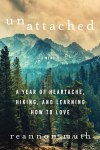
- The author’s mother is a therapist/psychologist and the author her/himself is undergoing some kind of mental health treatment in Unattached by Reannon Muth and You Don’t Have to Be Mad to Work Here by Benji Waterhouse.
- A man declares that dying in one’s mid-40s is nothing to complain about in A Beginner’s Guide to Dying by Simon Boas and Small Rain by Garth Greenwell.
- A woman ponders whether her ongoing anxiety is related to the stressful circumstances of her birth in Unattached by Reannon Muth and When the World Explodes by Amy Lee Scott.
What’s the weirdest reading coincidence you’ve had lately?
Book Serendipity, June to Mid-August 2024
I call it “Book Serendipity” when two or more books that I read at the same time or in quick succession have something in common – the more bizarre, the better. This is a regular feature of mine every couple of months. Because I usually have 20–30 books on the go at once, I suppose I’m more prone to such incidents. People frequently ask how I remember all of these coincidences. The answer is: I jot them on scraps of paper or input them immediately into a file on my PC desktop; otherwise, they would flit away!
The following are in roughly chronological order.
- A self-induced abortion scene in Recipe for a Perfect Wife by Karma Brown and Sleeping with Cats by Marge Piercy.
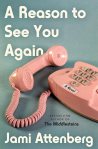
- A woman who cleans buildings after hours, and a character named Tova who lives in the Seattle area in A Reason to See You Again by Jami Attenberg and Remarkably Bright Creatures by Shelby Van Pelt.
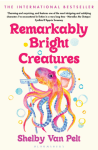
- Flirting with a surf shop employee in Sandwich by Catherine Newman and Remarkably Bright Creatures by Shelby Van Pelt.
- Living in Paris and keeping ticket stubs from all films seen in Paris Trance by Geoff Dyer and The Invention of Hugo Cabret by Brian Selznick.
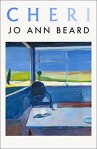
- A schefflera (umbrella tree) is mentioned in Cheri by Jo Ann Beard and Company by Shannon Sanders.

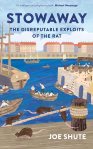
- The Plague by Albert Camus is mentioned in Knife by Salman Rushdie and Stowaway by Joe Shute.
- Making egg salad sandwiches is mentioned in Cheri by Jo Ann Beard and Sandwich by Catherine Newman.
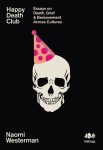
- Pet rats in Stowaway by Joe Shute and Happy Death Club by Naomi Westerman. Rats are also mentioned in Mammoth by Eva Baltasar, The Tale of Despereaux by Kate DiCamillo, and The Colour by Rose Tremain.
- Eels feature in Our Narrow Hiding Places by Kristopher Jansma, Late Light by Michael Malay, and The Colour by Rose Tremain.
- Atlantic City, New Jersey is a location in Florence Adler Swims Forever by Rachel Beanland and Company by Shannon Sanders.
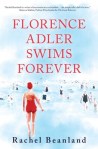 The father is a baker in Florence Adler Swims Forever by Rachel Beanland and Our Narrow Hiding Places by Kristopher Jansma.
- A New Zealand setting (but very different time periods) in Greta & Valdin by Rebecca K Reilly and The Colour by Rose Tremain.
- A mention of Melanie Griffith’s role in Working Girl in I’m Mostly Here to Enjoy Myself by Glynnis MacNicol and Happy Death Club by Naomi Westerman.
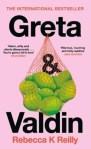 Ermentrude/Ermyntrude as an imagined alternate name in Greta & Valdin by Rebecca K Reilly and a pet’s name in Stowaway by Joe Shute.
- A poet with a collection that was published on 6 August mentions a constant ringing in the ears: Joshua Jennifer Espinoza (I Don’t Want to Be Understood) and Keith Taylor (What Can the Matter Be?).
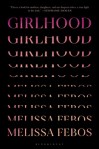
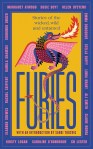
- A discussion of the original meaning of “slut” (a slovenly housekeeper) vs. its current sexualized meaning in Girlhood by Melissa Febos and Sandi Toksvig’s introduction to the story anthology Furies.
- An odalisque (a concubine in a harem, often depicted in art) is mentioned in I’m Mostly Here to Enjoy Myself by Glynnis MacNicol and The Shark Nursery by Mary O’Malley.
- Reading my second historical novel of the year in which there’s a disintegrating beached whale in the background of the story: first was Whale Fall by Elizabeth O’Connor, then Come to the Window by Howard Norman.
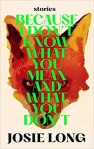 A short story in which a woman gets a job in online trolling in Because I Don’t Know What You Mean and What You Don’t by Josie Long and in the Virago Furies anthology (Helen Oyeyemi’s story).
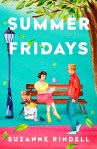
- Her partner, a lawyer, is working long hours and often missing dinner, leading the protagonist to assume that he’s having an affair with a female colleague, in Recipe for a Perfect Wife by Karma Brown and Summer Fridays by Suzanne Rindell.
- A fierce boss named Jo(h)anna in Summer Fridays by Suzanne Rindell and Test Kitchen by Neil D.A. Stewart.
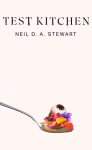
- An OTT rendering of a Scottish accent in Greta & Valdin by Rebecca K Reilly and Test Kitchen by Neil D.A. Stewart.
- A Padstow setting and a mention of Puffin Island (Cornwall) in The Cove by Beth Lynch and England as You Like It by Susan Allen Toth.
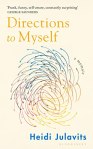
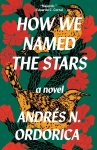
- A mention of the Big and Little Dipper (U.S. names for constellations) in Directions to Myself by Heidi Julavits and How We Named the Stars by Andrés N. Ordorica.
- A mention of Binghamton, New York and its university in We Are Animals by Jennifer Case and We Would Never by Tova Mirvis.
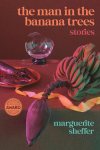
- A character accidentally drinks a soapy liquid in We Would Never by Tova Mirvis and one story of The Man in the Banana Trees by Marguerite Sheffer.
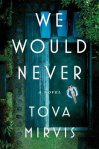 The mother (of the bride or groom) takes over the wedding planning in We Would Never by Tova Mirvis and Summer Fridays by Suzanne Rindell.
- The ex-husband’s name is Jonah in The Mourner’s Bestiary by Eiren Caffall and We Would Never by Tova Mirvis.
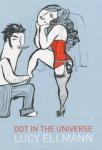
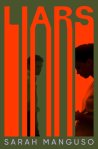
- The husband’s name is John in Dot in the Universe by Lucy Ellmann and Liars by Sarah Manguso.
- An affair is discovered through restaurant receipts in Summer Fridays by Suzanne Rindell and Test Kitchen by Neil D.A. Stewart.
- A mention of eating fermented shark in The Museum of Whales You Will Never See by A. Kendra Greene and Test Kitchen by Neil D.A. Stewart.
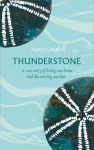
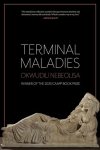
- A mention of using one’s own urine as a remedy in Thunderstone by Nancy Campbell and Terminal Maladies by Okwudili Nebeolisa.
- The main character tries to get pregnant by a man even though one of the partners is gay in Mammoth by Eva Baltasar and Until the Real Thing Comes Along by Elizabeth Berg.
- Motherhood is for women what war is for men: this analogy is presented in We Are Animals by Jennifer Case, Parade by Rachel Cusk, and Want, the Lake by Jenny Factor.
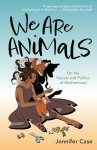 Childcare is presented as a lifesaver for new mothers in We Are Animals by Jennifer Case and Liars by Sarah Manguso.
- A woman bakes bread for the first time in Mammoth by Eva Baltasar and A Year of Biblical Womanhood by Rachel Held Evans.
- A gay couple adopts a Latino boy in Greta & Valdin by Rebecca K Reilly and one story of There Is a Rio Grande in Heaven by Ruben Reyes, Jr.
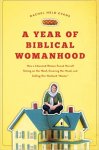 A husband who works on film projects in A Year of Biblical Womanhood by Rachel Held Evans and Liars by Sarah Manguso.
- A man is haunted by things his father said to him years ago in Parade by Rachel Cusk and one story in There Is a Rio Grande in Heaven by Ruben Reyes, Jr.
- Two short story collections in a row in which a character is a puppet (thank you, magic realism!): The Man in the Banana Trees by Marguerite Sheffer, followed by There Is a Rio Grande in Heaven by Ruben Reyes, Jr.
- A farm is described as having woodworm in Mammoth by Eva Baltasar and Parade by Rachel Cusk.
- Sebastian as a proposed or actual name for a baby in Signs, Music by Raymond Antrobus and Birdeye by Judith Heneghan.
What’s the weirdest reading coincidence you’ve had lately?
Sandwich by Catherine Newman (Blog Tour)
Catherine Newman’s second novel for adults, Sandwich, takes place during a week on Cape Cod, a popular Massachusetts beach resort. Rachel, nicknamed “Rocky,” is a fiftysomething mother to two young adults, Jamie and Willa. She and her husband Nick have been renting the same cottage for their family’s summer vacations for 20 years. Although Rocky narrates most of the novel in the first person, in the Prologue she paints the scene for the reader in the third person: “They’ve been coming here for so many years that there’s a watercolor wash over all of it now … pleasant, pastel memories of taffy, clam strips, and beachcombing.”
 Also present are Maya, Jamie’s girlfriend; Rocky’s ageing parents; and Chicken the cat (can you imagine taking your cat on holiday?!). With such close quarters, it’s impossible to keep secrets. Over the week of merry eating and drinking, much swimming, and plenty of no-holds-barred conversations, some major drama emerges via both the oldies and the youngsters. And it’s not just present crises; the past is always with Rocky. Cape Cod has developed layers of emotional memories for her. She’s simultaneously nostalgic for her kids’ babyhood and delighted with the confident, intelligent grown-ups they’ve become. She’s grateful for the family she has, but also haunted by inherited trauma and pregnancy loss.
There couldn’t be more ideal reading for women in the so-called “sandwich generation” who have children growing towards independence as well as parents starting to struggle with infirmity. (The contemporary storyline of Barbara Kingsolver’s Unsheltered, which coincidentally is about a character named Willa, is comparable in that respect.) Newman is frank about Willa’s lesbianism and Rocky’s bisexuality, and she doesn’t hold back about the difficulties of menopause, either. Rocky is challenged to rethink her responsibilities as a daughter, wife and mother when she’s surrounded by equally strong-willed people who won’t do what she wants them to. The novel is so quirky, funny and relatable that it’s impossible not to sympathize with Rocky even if, like me, you’re in a very different life situation.

I like the U.S. cover so much more!
One observation I would make is that Rocky is virtually identical to Ash in Newman’s debut, We All Want Impossible Things, and to the author in real life (as I know from subscribing to her Substack). If you read even the most basic information about her, it’s clear that it’s all autofiction. That’s not an issue for me as I don’t think inventing is inherently superior to drawing from experience; some authors write what they know in a literal sense and that’s okay. So, for her fans, more of the same will be no problem at all. But it is a very particular voice: intense, scatty, purposely outrageous. Rocky is a protagonist who says things like, “How am I a feminist, an advocate for reproductive rights, Our Bodies, Ourselves, hear me roar, blah blah, and I am only just now learning about vaginal atrophy?” (A companion nonfiction read would be Nina Stibbe’s Went to London, Took the Dog.)
In outlook Newman reminds me a lot of Anne Lamott, who is equally forthright and whose books similarly juxtapose life’s joy and sorrows, especially in this late passage: “this may be the only reason we were put on this earth. To say to each other, I know how you feel.”
This is a sweet, fun, chatty book that’s about a summer break – and would be perfect to read on a summer break.
With thanks to Anne Cater of Random Things Tours and Doubleday for the free e-copy for review.
Buy Sandwich from Bookshop.org [affiliate link]
I was delighted to help close out the blog tour for Sandwich. See below for details of where the other reviews have appeared.

This and That (The January Blahs)
The January blahs have well and truly arrived. The last few months of 2023 (December in particular) were too full: I had so much going on that I was always rushing from one thing to the next and worrying I didn’t have the time to adequately appreciate any of it. Now my problem is the opposite: very little to do, work or otherwise; not much on the calendar to look forward to; and the weather and house so cold I struggle to get up each morning and push past the brain fog to settle to any task. As I kept thinking to myself all autumn, there has to be a middle ground between manic busyness and boredom. That’s the head space where I’d like to be living, instead of having to choose between hibernation and having no time to myself.
At least these frigid January days are good for being buried in books. Unusually for me, I’m in the middle of seven doorstoppers, including King by Jonathan Eig (perfect timing as Monday is Martin Luther King Jr. Day), Wellness by Nathan Hill, and Babel by R.F. Kuang (a nominal buddy read with my husband).
Another is Carol Shields’s Collected Short Stories for a buddy rereading project with Marcie of Buried in Print. We’re partway through the first volume, Various Miracles, after a hiccup when we realized my UK edition had a different story order and, in fact, different contents – it must have been released as a best-of. We’ll read one volume per month in January–March. I also plan to join Heaven Ali in reading at least one Margaret Drabble book this year. I have The Waterfall lined up, and her Arnold Bennett biography lurking. Meanwhile, the Read Indies challenge, hosted by Karen and Lizzy in February, will be a great excuse to catch up on some review books from independent publishers.
Literary prize season will be heating up soon. I put all of the Women’s Prize (fiction and nonfiction!) dates on my calendar and I have a running list, in a file on my desktop, of all the novels I’ve come across that would be eligible for this year’s race. I’m currently reading two memoirs from the Nero Book Awards nonfiction shortlist. Last year it looked like the Folio Prize was set to replace the Costa Awards, giving category prizes and choosing an overall winner. But then another coffee chain, Caffè Nero, came along and picked up the mantle.
This year the Folio has been rebranded as The Writers’ Prize, again with three categories, which don’t quite overlap with the Costa/Nero ones. The Writers’ Prize shortlists just came out on Tuesday. I happen to have read one of the poetry nominees (Chan) and one of the fiction (Enright). I’m going to have a go at reading the others that I can source via the library. I’ll even try The Bee Sting given it’s on both the Nero and Writers’ shortlists (ditto the Booker) and I have a newfound tolerance of doorstoppers.
As for my own literary prize involvement, my McKitterick Prize manuscript longlist is due on the 31st. I think I have it finalized. Out of 80 manuscripts, I’ve chosen 5. The first 3 stood out by a mile, but deciding on the other 2 was really tricky. We judges are meeting up online next week.
I’m listening to my second-ever audiobook, an Audible book I was sent as a birthday gift: There Plant Eyes by M. Leona Godin. My routine is to find a relatively mindless data entry task to do and put on a chapter at a time.
There are a handful of authors I follow on Substack to keep up with what they’re doing in between books: Susan Cain, Jean Hannah Edelstein, Catherine Newman, Anne Boyd Rioux, Nell Stevens (who seems to have gone dormant?), Emma Straub and Molly Wizenberg. So far I haven’t gone for the paid option on any of the subscriptions, so sometimes I don’t get to read the whole post, or can only see selected posts. But it’s still so nice to ‘hear’ these women’s voices occasionally, right in my inbox.
My current earworms are from Belle and Sebastian’s Late Developers album, which I was given for Christmas. These lyrics from the title track – saved, refreshingly, for last; it’s a great strategy to end on a peppy song (an uplifting anthem with gospel choir and horn section!) instead of tailing off – feel particularly apt:
Live inside your head
Get out of your bed
Brush the cobwebs off
I feel most awake and alive when I’m on my daily walk by the canal. It’s such a joy to hear the birdsong and see whatever is out there to be seen. The other day there was a red kite zooming up from a field and over the houses, the sun turning his tail into a burnished chestnut. And on the opposite bank, a cuboid rump that turned out to belong to a muntjac deer. Poetry fragments from two of my bedside books resonated with me.
This is the earnest work. Each of us is given
only so many mornings to do it—
to look around and love
the oily fur of our lives,
the hoof and the grass-stained muzzle.
Days I don’t do this
I feel the terror of idleness
like a red thirst.
That is from “The Deer,” from Mary Oliver’s House of Light, and reminds me that it’s always worthwhile to get outside and just look. Even if what you’re looking at doesn’t seem to be extraordinary in any way…
Importance leaves me cold,
as does all the information that is classed as ‘news’.
I like those events that the centre ignores:
small branches falling, the slow decay
of wood into humus, how a puddle’s eye
silts up slowly, till, eventually,
the birds can’t bathe there. I admire the edge;
the sides of roads where the ragwort blooms
low but exotic in the traffic fumes;
the scruffy ponies in a scrubland field
like bits of a jigsaw you can’t complete;
the colour of rubbish in a stagnant leat.
There are rarest enjoyments, for connoisseurs
of blankness, an acquired taste,
once recognised, it’s impossible to shake,
this thirst for the lovely commonplace.
(from “Six Poems on Nothing,” III by Gwyneth Lewis, in Parables & Faxes)
This was basically a placeholder post because who knows when I’ll next finish any books and write about them … probably not until later in the month. But I hope you’ve found at least one interesting nugget!
What ‘lovely commonplace’ things are keeping you going this month?
 Bookish Beck = Rebecca Foster. American transplant to England. Freelance proofreader and book reviewer.
 Bookish Beck