Book Serendipity, June to July
Life can have odd confluences. Esme will not say serendipity: she loathes the word. But sometimes she thinks there must be something at work, some impulse, some collision of forces, some kinks in chronology.
~The Vanishing Act of Esme Lennox by Maggie O’Farrell
Unlike Esme Lennox, I love the word serendipity! You probably know by now that I call it “Book Serendipity” when two or more books that I read at the same time or in quick succession have something in common – the more bizarre, the better. This is a regular feature of mine every couple of months. Because I usually have 20–30 books on the go at once, I suppose I’m more prone to such incidents. People frequently ask how I remember all of these coincidences. The answer is: I jot them down on scraps of paper or input them immediately into a file on my PC desktop; otherwise, they would flit away!
Thanks to Kay for posting about her own book serendipity moments here!
The following are in roughly chronological order.
- A woman gets on a flight even though she’s technically too pregnant to do so in one poem of Family Lines (ed. Armitage and Bower) and Commencement by J. Courtney Sullivan.
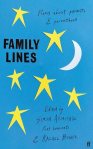
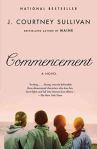
- A mention of a Spanish cat in one poem of Family Lines (ed. Armitage and Bower) and Tsi-Tsa by George Mikes.
- Rum and coke is mentioned in I Sing to the Greenhearts by Maggie Harris and Our Father Who Art in the Tree by Judy Pascoe.
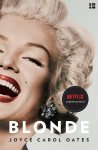
- A character named Gladys in Blonde by Joyce Carol Oates and Our Father Who Art in the Tree by Judy Pascoe.
- A character named Celia in The Seven Husbands of Evelyn Hugo by Taylor Jenkins Reid and Commencement by J. Courtney Sullivan.
- A girl holds her breath until she faints in Lost Lambs by Madeline Cash and Our Father Who Art in the Tree by Judy Pascoe.
 Samuel Taylor Coleridge’s performance as a father appears in one poem of Family Lines (ed. Armitage and Bower) and one essay of Frog by Anne Fadiman.
- A cat scratches a tatami mat in Letters of Note: Cats (ed. Shaun Usher) and I Am a Cat by Natsume Sōseki.
- A Freudian explanation of the collector’s obsessive impulse in The Madman’s Guide to Stamp Collecting by Robert Irwin and The Butterfly Season by Lea Korsgaard.
- A book/other arts coincidence, this: I first saw the actress Anya Taylor-Joy in The Menu, which I watched on my sister’s TV streaming system in the US, and then realized she’s pictured on the Netflix tie-in cover of a book I borrowed from the library, The Queen’s Gambit by Walter Tevis.
- Manhattans are drunk in Furnishing Eternity by David Giffels and The Seven Husbands of Evelyn Hugo by Taylor Jenkins Reid.
- A main character has a history of living in an orphanage in Blonde by Joyce Carol Oates, Buckeye by Patrick Ryan, and The Queen’s Gambit by Walter Tevis; and in children’s homes in Hunger and Thirst by Claire Fuller.
- An in-law named Fran(cesca) in The Vanishing Act of Esme Lennox by Maggie O’Farrell and The Things We Never Say by Elizabeth Strout.
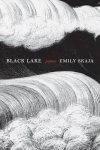
- A scene of visiting one’s grandmother in a dementia ward in The Vanishing Act of Esme Lennox by Maggie O’Farrell and Black Lake by Emily Skaja.
- Eating spoons of sugar straight from the jar/box in Depression Cooking by Sonali Menezes and The Things We Never Say by Elizabeth Strout.
- Young people living in a squat in Sunset Park by Paul Auster and then Hunger and Thirst by Claire Fuller.
- A people-trafficking plot in Lost Lambs by Madeline Cash and The Singer’s Gun by Emily St. John Mandel.
- Someone who doesn’t want to be recognized says “I don’t know what you’re talking about” / “I have no idea what you’re talking about” when someone identifies them in Apt Pupil by Stephen King and The Seven Husbands of Evelyn Hugo by Taylor Jenkins Reid.
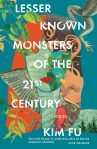
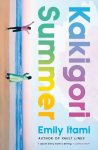
- A woman suffers from insomnia despite having done all the ‘right’ things, sleep hygiene-wise, in one story of Lesser-Known Monsters of the 21st Century by Kim Fu and Kakigori Summer by Emily Itami.
- A future blonde bombshell actress gets married off at age 15 in Blonde by Joyce Carol Oates and The Seven Husbands of Evelyn Hugo by Taylor Jenkins Reid.
- A homosexual encounter takes place in a public bathroom in What Belongs to You by Garth Greenwell and The Seven Husbands of Evelyn Hugo by Taylor Jenkins Reid. (Plus heterosexual ones in a private shower in Partita by Barbara Kingsolver.)
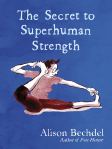
- A reference to Emerson’s “transparent eyeball” in The Secret to Superhuman Strength by Alison Bechdel and Black Lake by Emily Skaja.
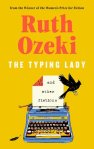
- A character named Manny in Dominion by Addie E. Citchens, Partita by Barbara Kingsolver, and one story of The Typing Lady by Ruth Ozeki.
- A female character named Mick(ie) in The Heart Is a Lonely Hunter by Carson McCullers and Partita by Barbara Kingsolver. (There’s also a male Mick in Few and Far Between by Jan Carson.)
- Shoplifting takes place in Receipts from the Bookshop by Katie Clapham, The Singer’s Gun by Emily St. John Mandel, The Heart Is a Lonely Hunter by Carson McCullers, one story of The Typing Lady by Ruth Ozeki, and The Things We Never Say by Elizabeth Strout.
- The medical necessity of ironing all one’s clothing, especially nappies/underwear, is mentioned in L’Appart by David Lebovitz (a Greek person told him that) and Don’t Let’s Go to the Dogs Tonight by Alexandra Fuller (de rigueur in 1970s Rhodesia).
 Remarking on how quiet/noisy a French dishwasher is in Paris to the Moon by Adam Gopnik/L’Appart by David Lebovitz and a mention of one’s good fortune in getting a store to accept a returned appliance.
- A mention of Ludwig Bemelmans’ Madeline in Receipts from the Bookshop by Katie Clapham and Brother, I’m Dying by Edwidge Danticat.
- Characters are robbed in a motel room in Dominion by Addie E. Citchens and The New People by Andrea Uptmor.
- Living in the space above a garage in one story of The Typing Lady by Ruth Ozeki and The New People by Andrea Uptmor.
- Scenes of a woman/girl reassembling a gun, and a gun amnesty, in one story of Lesser-Known Monsters of the 21st Century by Kim Fu and Don’t Let’s Go to the Dogs Tonight by Alexandra Fuller.
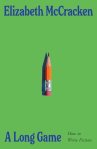
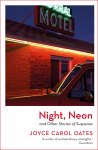
- The use of a typewriter in Brother, I’m Dying by Edwidge Danticat, Apt Pupil by Stephen King, A Long Game by Elizabeth McCracken, one story of Night, Neon by Joyce Carol Oates, and The Typing Lady by Ruth Ozeki.
- Thousands of dollars being stored in/under a mattress in Brother, I’m Dying by Edwidge Danticat and The New People by Andrea Uptmor.
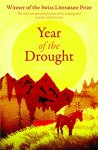 The smell of vetiver: a cologne in Year of the Drought by Roland Buti and fabric softener in Brother, I’m Dying by Edwidge Danticat.
- I encountered sections on the sense of smell at about the same time in Life in Five Senses by Gretchen Rubin and Wearing God by Lauren Winner.
- A person bites someone else’s finger in Don’t Let’s Go to the Dogs Tonight by Alexandra Fuller, one story of The Typing Lady by Ruth Ozeki, and The New People by Andrea Uptmor. (And an ear in The Dud Avocado by Elaine Dundy.)
- Eating an omelette in a Paris café in The Dud Avocado by Elaine Dundy, Paris to the Moon by Adam Gopnik, and Moveable Feasts by Chris Newens. (I suppose these things will happen if I read multiple Paris-set books at once!)
- The fact that “Pas mal” (“not bad”) is high praise in French is explained in Pardon Our French by Alex Durand and Tom Carles and L’Appart by David Lebovitz.
 An insistence that the soles of a woman’s feet not be shown in A Rough Guide to the Heart by Pam Houston (etiquette in Bhutan) and Blonde by Joyce Carol Oates (when Norma Jeane Baker, aka Marilyn Monroe, is having early nude photos taken).
- A nude photo shoot takes place in The Singer’s Gun by Emily St. John Mandel and Blonde by Joyce Carol Oates. There are also nude portrait sittings in The Dud Avocado by Elaine Dundy and The Original by Nell Stevens.
- A man has glass embedded in his face in Few and Far Between by Jan Carson and The Singer’s Gun by Emily St. John Mandel.
- The idea that one will be cursed for touching a stranger’s grave appears in Don’t Let’s Go to the Dogs Tonight by Alexandra Fuller and Kakigori Summer by Emily Itami.
- I find myself rereading two childhood memoirs of wartime life at the same time: Don’t Let’s Go to the Dogs Tonight by Alexandra Fuller and Persepolis by Marjane Satrapi.
What’s the weirdest reading coincidence you’ve had lately?
Three I Read for Father’s Day: Faber Poetry Anthology; Giffels & Pascoe
I’m behind on reviews after a long weekend visiting friends. As I did last year, I picked out three books related to fathers and fatherhood. It’s my ideal Three on a Theme recipe: one fiction + one nonfiction + one poetry. I won a copy of a poetry anthology about parenthood and completed the trio with a memoir that’s been on my shelves for a number of years and a debut novel I bought secondhand mostly for the title.
Family Lines: Poems about Parents and Parenthood, ed. Simon Armitage and Rachel Bower (2026)
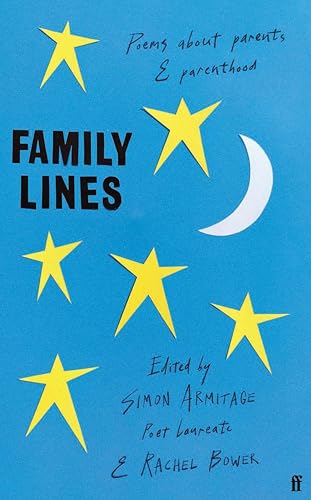 Not all of the poems are about fathers, of course, but there are plenty of selections here that feel true of any family relationship: the complicated emotions, the sometimes physical realities of transformation and care, the risks of ageing and loss, and how identity is defined by a connection or an opposition. This suffered a bit from its first third – covering pregnancy, birth, and early parenthood – being very similar in scope to Night Feeds and Morning Songs (2021, ed. Ana Sampson), which I reviewed for Mother’s Day. Some of the same contributors feature, though I think only the one specific poem overlaps, Liz Berry’s “The Republic of Motherhood.” Highlights included Gail McConnell’s prose poem “Orange” contemplating lesbian motherhood and Rita Dove’s “Daystar” about never-ending domestic duties: “She wanted a little room for thinking; / but she saw diapers steaming on the line”.
Contemporary material mingles with older; Homer and Wordsworth are two of the ten poets included in a chapter on fathers and father figures. “Sleep” by Roger Robinson was the best example of the theme, a sweet tribute to a man who “for the next twenty years / … battles on his job every day / just so you could be comfortable / and have the space to be what you want.” Relevant entries from other sections were Alden Nowlan’s “It’s Good to Be Here,” about his inauspicious beginning in 1932 with a 14-year-old mother (“I’m in trouble, she said / to him. …// … they began to talk very quietly and at last he said / well, I guess we’ll just have to make the best of it”); Anne Sexton’s “All My Pretty Ones,” about going through her late father’s things and wondering if she’s inherited his alcoholism; and Hartley Coleridge’s “Lines—,” acknowledging he’ll never live up to his father’s talent: “Because I bear my Father’s name / I am not quite despised, / My little legacy of fame / I’ve not yet realized.” (Faber giveaway)
Furnishing Eternity: A Father, a Son, a Coffin, and a Measure of Life by David Giffels (2018)
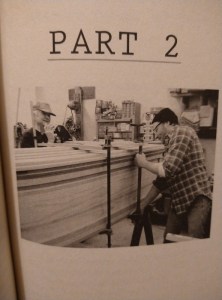
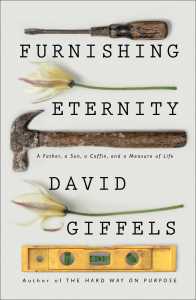 Losing his mother and best friend to cancer within a year, and then turning 50, got Giffels to thinking about mortality. He had a whim to build his own coffin and decided it would be a perfect joint project with his widowed father, who had a home workshop full of tools. As sprightly and driven as his father was, he was also in his eighties and had survived a couple of different cancers, so it was never far from the author’s mind that he needed to make the most of his time with his father while he could. I’m not at all interested in woodworking or DIY, but this is an unusual and likable memoir that alternates the practicalities of building the casket with memories of his relationships with his mother and friend John, who was an artist. While Giffels mentions his wife Gina frequently, he doesn’t talk about his own children as much as I might have expected to take the lessons full circle. No matter; I appreciated the middle-aged Ohio hipster’s thoughts on friendship, ageing and grief. Bereavement memoirs are more often the preserve of women, it seems, so it was good to have a different take.
This is how middle-aged friendships often go, slipping and slipping until ‘we really should get together soon’ becomes a discomforting veil for the truth—that such friendships cease to exist.
I thought a time would come when I would feel definitively like a grown-up, like I would have achieved a certain kind of acumen for making decisions and knowing what to do in unknowable situations, when I wouldn’t feel insecure in real-life grown-up scenarios (board meetings; ordering wine; delivering eulogies). Instead, I still felt like a kid. Or rather, I felt like an adult who was in the continuous loop of his youth.
death is a shattering. Grief is the chaos of wreckage. Only life can find the pattern, and only in its own sweet time. What I remember from the long season of loss was wanting each day to pass as quickly as possible. To get beyond it. I guess I missed the fact that the by-product of this wish was for my own life to rush by.
(New bargain purchase from Amazon)
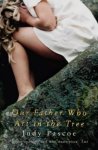
Our Father Who Art in the Tree by Judy Pascoe (2002)
“It was simple for me: the saints were in heaven, and guardian angels had extendable wings like Batman, and my dad had died and gone to live in the tree in the back yard.”
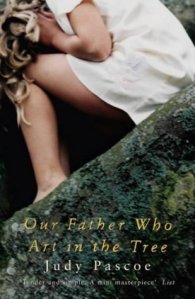 The premise of this Australia-set novella was appealing enough for me to overcome my usual antipathy to child narrators. It probably helps that Simone is looking back from adulthood rather than limited to a 10-year-old’s knowledge. She tells her mother, Dawn, about the voice coming from the tree and it turns out that the two of them are the only ones who can hear her father. He tells them that he’s sorry he left, that he will always love them, that death is not so bad. Simone’s three brothers and best friend, the judgemental neighbours: they’re all clueless. The boys carry on with normal life as best they can, while Dawn has the chance to start over with “the drain man.” Meanwhile, the tree keeps encroaching on the house, undermining the foundations. It’s both a literal problem and a symbol of the enormity of grief, and the book as a whole works on both levels. Despite the early promise of magic, I found it to be a mostly realistic and reasonably touching look at the aftermath of family tragedy. (Secondhand – Community Furniture Project, Newbury)
 Bookish Beck = Rebecca Foster. American transplant to England. Freelance proofreader and book reviewer.
