Literary Wives Club: The Soul of Kindness by Elizabeth Taylor (1964)
(With apologies for today’s multiple posts!)
 This was my fifth time reading Elizabeth Taylor. It’s a later novel of hers: the ninth of 12. As per usual, there’s an ensemble cast, but this time I had some trouble keeping the characters straight and finding enough sympathy for all of them. There are a dozen main players if you count housekeepers and neighbours. The opening scene is Flora’s wedding to Richard. She’s the title character: beautiful and well-meaning yet sometimes thoughtless. As she grows into the roles of wife and mother, Flora believes everyone should follow her into marriage.
Although as good as gold, she had inconvenient plans for other people’s pleasure, and ideas differing from her own she was unable to imagine.
Her interfering can be comical – she doesn’t realize Patrick is homosexual, so her attempt to match-make between him and her friend Meg is futile.
If she could get Meg settled, Flora had decided, she herself would be quite happy, but her friend thought she went about it in strange ways and wondered what, if anything, Flora knew about people.
When she convinces her father-in-law, Percy, to marry his mistress, Barbara, it’s the wrong thing for them. (“I think we are very well as we are, Percy,” Ba had said.) By ignoring Meg’s little brother Kit’s crush on her and encouraging his hopeless dream of acting, Flora nearly precipitates a tragedy – and Kit’s lover decides to let her know about her misstep.
I got hints of Emma so was pleased to see that comparison made in Philip Hensher’s introduction, in which he considers The Soul of Kindness in the context of the English “novel of community.” Flora herself somewhat fades into the background as we spend time rotating through the other characters in pairs. I found Flora silly and stubborn but not deserving of others’ ire. I felt most for Richard and for her mother, Mrs Secretan, both of whom she unfairly underestimates and sidelines.
This wasn’t one of my favourite Taylors – those are Mrs. Palfrey at the Claremont, which I’ve read twice, and In a Summer Season – but she always writes with grace and psychological acuity. Here I loved a description of the fog – “It’s disorganising, like snow. It makes a different world” – and the fact that the book starts and ends with throwing crumbs to birds. Flora’s pet doves must be a symbol of something: the peace she tries to keep but unwittingly disturbs? In any case, the next time you find a book a slog, here’s her diplomatic strategy for talking about it:
she said that she was taking the books in tiny sips, à petites doses, as Henry James wrote when he was up to the same trick – as if it were the most precious wine. That meant that she was bogged down in it.
(Secondhand – Community Furniture Project, Newbury?)
The main question we ask about the books we read for Literary Wives is:
What does this book say about wives or about the experience of being a wife?
Marriage is not a solution to a problem. (Especially if that problem is loneliness.) Some people aren’t the marrying kind, for whatever reason. Being a spouse can be one aspect of a person’s identity, but it’s dangerous when it becomes defining – this is probably the single common moral I’d draw from all that we’ve read for the club.
See Becky’s, Kate’s and Kay’s reviews, too! (Naomi is taking a break.)
Coming up next, in March: Mrs. Bridge by Evan S. Connell.
The Writer’s Table by Valerie Stivers (Blog Tour)
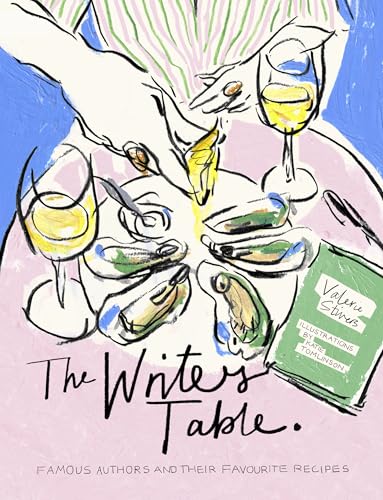
In 2017, Valerie Stivers started writing about food in classic fiction for The Paris Review. Her particular project for the “Eat Your Words” column would be cooking and baking her way through literature. It was a larger undertaking than she realized and became something of an obsession. A selection of the greatest hits made it into The Writer’s Table. Each few-page biographical profile opens with a recipe drawn from that author’s work or developed by Stivers. A surprising number of writers published cookbooks – or had one compiled after their death – including Maya Angelou, Jane Austen (of family friend and housekeeper Martha Lloyd’s recipes), Ernest Hemingway, Barbara Pym, George Sand and Alice B. Toklas.
 Though I’ve read a lot by and about D.H. Lawrence, I didn’t realise he did all the cooking in his household with Frieda, and was renowned for his bread. And who knew that Emily Dickinson was better known in her lifetime as a baker? Her coconut cake is beautifully simple, containing just six ingredients. Flannery O’Connor’s peppermint chiffon pie also sounds delicious. Some essays do not feature a recipe but a discussion of food in an author’s work, such as the unusual combinations of mostly tinned foods that Iris Murdoch’s characters eat. It turns out that that’s how she and her husband John Bayley ate, so she saw nothing odd about it. And Murakami’s 2005 New Yorker story “The Year of Spaghetti” is about a character whose fixation on one foodstuff reflects, Stivers notes, his “emotional … turmoil.”
The alphabetical arrangement of the pieces emphasizes the wide range of eras, regions, and genres. It’s a fun book for browsing, though I might have liked more depth on fewer authors. I especially liked the listicles on “Writers’ Favourite Cocktails” – E.B. White’s triple-strength gin martinis sound lethal! – and “Writers Who Didn’t Eat Proper Meals.” Proust subsisted on croissants and café au lait, while Highsmith ate nothing but bacon and eggs (hers being mostly a liquid diet). Katie Tomlinson’s colourful sketches are delightful. I enjoyed having this around to flick through and can recommend it as a gift for the literary foodie in your life.
With thanks to Anne Cater of Random Things Tours and Frances Lincoln (Quarto Books) for the free copy for review.
Buy The Writer’s Table from Bookshop.org [affiliate link]
I was pleased to be part of the blog tour for The Writer’s Table. See below for details of where other reviews have appeared or will appear soon.
Nonfiction November Book Pairings: Hardy’s Wives, Rituals, and Romcoms
Liz is hosting this week of Nonfiction November. For this prompt, the idea is to choose a nonfiction book and pair it with a fiction title with which it has something in common.

I came up with three based on my recent reading:
Thomas Hardy’s Wives
On my pile for Novellas in November was a tiny book I’ve owned for nearly two decades but not read until now. It contains some of the backstory for an excellent historical novel I reviewed earlier in the year.
Some Recollections by Emma Hardy
&
The Chosen by Elizabeth Lowry


The manuscript of Some Recollections is one of the documents Thomas Hardy found among his first wife’s things after her death in 1912. It is a brief (15,000-word) memoir of her early life from childhood up to her marriage – “My life’s romance now began.” Her middle-class family lived in Plymouth and moved to Cornwall when finances were tight. (Like the Bennets in Pride and Prejudice, you look at the house they lived in, and read about the servants they still employed, and think, “impoverished,” seriously?!) “Though trifling as they may seem to others all these memories are dear to me,” she writes. It’s true that most of these details seem inconsequential, of folk historical value but not particularly illuminating about the individual.
An exception is her account of her dealings with fortune tellers, who often went out of their way to give her good – and accurate – predictions, such as that she would marry a writer. It’s interesting to set this occult belief against the traditional Christian faith she espouses in her concluding paragraph, in which she insists an “Unseen Power of great benevolence directs my ways.” The other point of interest is her description of her first meeting with Hardy, who was sent to St. Juliot, where she was living with her parson brother-in-law and sister, as an architect’s assistant to begin repairs on the church. “I thought him much older than he was,” she wrote. As editor Robert Gittings notes, Hardy made corrections to the manuscript and in some places also changed the sense. Here Hardy gave proof of an old man’s continued vanity by adding “he being tired” after that line … but then partially rubbing it out. (Secondhand, Books for Amnesty, Reading, 2004) [64 pages] 
The Chosen contrasts Emma’s idyllic mini memoir with her bitterly honest journals – Hardy read but then burned these, so Lowry had to recreate their entries based on letters and tone. But Some Recollections went on to influence his own autobiography, and to be published in a stand-alone volume by Oxford University Press. Gittings introduces the manuscript (complete with Emma’s misspellings and missing punctuation) and appends a selection of Hardy’s late poems based on his first marriage – this verse, too, is central to The Chosen.
Another recent nonfiction release on this subject matter that I learned about from a Shiny New Books review is Woman Much Missed: Thomas Hardy, Emma Hardy and Poetry by Mark Ford. I’d also like to read the forthcoming Hardy Women: Mother, Sisters, Wives, Muses by Paula Byrne (1 February 2024, William Collins).
Rituals
The Ritual Effect by Michael Norton
&
The Rituals by Rebecca Roberts


Last month I reviewed this lovely Welsh novel about a woman who is an independent celebrant, helping people celebrate landmark events in their lives or cope with devastating losses by commemorating them through secular rituals.
Coming out in April 2024, The Ritual Effect is a Harvard Business School behavioral scientist’s wide-ranging study of how rituals differ from habits in that they are emotionally charged and lift everyday life into something special. Some of his topics are rites of passage in different cultures; musicians’ and sportspeople’s pre-performance routines; and the rituals we develop around food and drink, especially at the holidays. I’m just over halfway through this for an early Shelf Awareness review and I have been finding it fascinating.
Romantic Comedy
(As also featured in my August Six Degrees post)
What I Was Doing While You Were Breeding by Kristin Newman
&
Romantic Comedy by Curtis Sittenfeld


Romantic Comedy is probably still the most fun reading experience I’ve had this year. Sittenfeld’s protagonist, Sally Milz, writes TV comedy, as does Kristin Newman (That ’70s Show, How I Met Your Mother, etc.). What I Was Doing While You Were Breeding is a lighthearted record of her sexual conquests in Amsterdam, Paris, Russia, Argentina, etc. (Newman even has a passage that reminds me of Sally’s “Danny Horst Rule”: “I looked like a thirty-year-old writer. Not like a twenty-year-old model or actress or epically legged songstress, which is a category into which an alarmingly high percentage of Angelenas fall. And, because the city is so lousy with these leggy aliens, regular- to below-average-looking guys with reasonable employment levels can actually get one, another maddening aspect of being a woman in this city.”) Unfortunately, it got repetitive and raunchy. It was one of my 20 Books of Summer but I DNFed it halfway.
#ReadIndies and Review Catch-up: Hazrat, Nettel, Peacock, Seldon
Another four selections for Read Indies month. I’m particularly pleased that two from this latest batch are “just because” books that I picked up off my shelves; another two are catch-up review copies. A few more indie titles will appear in my February roundup on Tuesday. For today, I have a fun variety: a history of the exclamation point, a Mexican novel about choosing motherhood versus being childfree, a memoir of a decades-long friendship between two poets, and a posthumous poetry collection with themes of history, illness and nature.

An Admirable Point: A brief history of the exclamation mark by Florence Hazrat (2022)
I’m definitely a punctuation geek. (My favourite punctuation mark is the semicolon, and there’s a book about it, too: Semicolon: The Past, Present, and Future of a Misunderstood Mark by Cecelia Watson, which I have on my Kindle.) One might think that strings of exclamation points are a pretty new thing – rounding off phrases in (ex-)presidential tweets, for instance – but, in fact, Hazrat opens with a Boston Gazette headline from 1788 that decried “CORRUPTION AND BRIBERY!!!” in relation to the adoption of the new Constitution.
 The exclamation mark as we know it has been around since 1399, and by the 16th century its use for expression and emphasis had been codified. I was reminded of Gretchen McCulloch’s discussion of emoji in Because Internet, which also considers how written speech signifies tone, especially in the digital age. There have been various proposals for other “intonation points” over the centuries, but the question mark and exclamation mark are the two that have stuck. (Though I’m currently listening to an album called interrobang – ‽, that is. Invented by Martin Speckter in 1962; recorded by Switchfoot in 2021.)
I most enjoyed Chapter 3, on punctuation in literature. Jane Austen’s original manuscripts, replete with dashes, ampersands and exclamation points, were tidied up considerably before they made it into book form. She’s literature’s third most liberal user of exclamation marks, in terms of the number per 100,000 words, according to a chart Ben Blatt drew up in 2017, topped only by Tom Wolfe and James Joyce.
There are also sections on the use of exclamation points in propaganda and political campaigns – in conjunction with fonts, which brought to mind Simon Garfield’s Just My Type and the graphic novel ABC of Typography. It might seem to have a niche subject, but at just over 150 pages this is a cheery and diverting read for word nerds.
With thanks to Profile Books for the proof copy for review.
Still Born by Guadalupe Nettel (2020; 2022)
[Translated from the Spanish by Rosalind Harvey]
This was the Mexican author’s fourth novel; she’s also a magazine director and has published several short story collections. I’d liken it to a cross between Motherhood by Sheila Heti and (the second half of) No One Is Talking About This by Patricia Lockwood. Thirtysomething friends Laura and Alina veer off in different directions, yet end up finding themselves in similar ethical dilemmas. Laura, who narrates, is adamant that she doesn’t want children, and follows through with sterilization. However, when she becomes enmeshed in a situation with her neighbours – Doris, who’s been left by her abusive husband, and her troubled son Nicolás – she understands some of the emotional burden of motherhood. Even the pigeon nest she watches on her balcony presents a sort of morality play about parenthood.
 Meanwhile, Alina and her partner Aurelio embark on infertility treatment. Laura fears losing her friend: “Alina was about to disappear and join the sect of mothers, those creatures with no life of their own who, zombie-like, with huge bags under their eyes, lugged prams around the streets of the city.” They eventually have a daughter, Inés, but learn before her birth that brain defects may cause her to die in infancy or be severely disabled. Right from the start, Alina is conflicted. Will she cling to Inés no matter her condition, or let her go? And with various unhealthy coping mechanisms to hand, will her relationship with Aurelio stay the course?
Laura alternates between her life and her friends’ circumstances, taking on an omniscient voice on Nettel’s behalf – she recounts details she couldn’t possibly be privy to, at least not at the time (there’s a similar strategy in The Group by Lara Feigel). The question of what is fated versus what is chosen, also represented by Laura’s interest in tarot and palm-reading, always appeals to me. This was a wry and sharp commentary on women’s options. (Giveaway win from Bookish Chat on Twitter)
Still Born was published by Fitzcarraldo Editions in the UK and is forthcoming from Bloomsbury in the USA on August 8th.
A Friend Sails in on a Poem by Molly Peacock (2022)
I’ve read one of Peacock’s poetry collections, The Analyst, as well as her biography of Mary Delany, The Paper Garden. I was delighted when she got in touch to offer a review copy of her latest memoir, which reflects on her nearly half a century of friendship with fellow poet Phillis Levin. They met in a Johns Hopkins University writing seminar in 1976, and ever since have shared their work in progress over meals. They are seven years apart in age and their careers took different routes – Peacock headed up the Poetry Society of America’s subway poetry project and then moved to Toronto, while Levin taught at the University of Maryland – but over the years they developed “a sense of trust that really does feel familial … There is a weird way, in our conversations about poetry, that we share a single soul.” For a time they were both based in New York City and had the same therapist; more recently, they arranged annual summer poetry retreats in Cazenovia (recalled via diary entries), with just the two attendees. Jobs and lovers came and went, but their bond has endured.
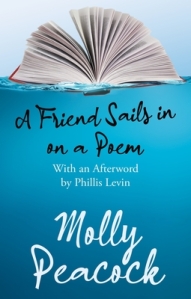 The book traces their lives but also their development as poets, through examples of their verse. Her friend is “Phillis” in real life, but “Levin” when it’s her work is being discussed – and her own poems are as written by “Peacock.” Both women became devoted to the sonnet, an unusual choice because at the time that they were graduate students free verse reigned and form was something one had to learn on one’s own time. Stanza means “room,” Peacock reminds readers, and she believes there is something about form that opens up space, almost literally but certainly metaphorically, to re-examine experience. She repeatedly tracks how traumatic childhood events, as much as everyday observations, were transmuted into her poetry. Levin did so, too, but with an opposite approach: intellectual and universal where Peacock was carnal and personal. That paradox of difference yet likeness is the essence of the friendships we sail on. What a lovely read, especially if you’re curious about ‘where poems come from’; I’d particularly recommend it to fans of Ann Patchett’s Truth and Beauty.
With thanks to Molly Peacock and Palimpsest Press for the free e-copy for review.
The Bright White Tree by Joanna Seldon (Worple Press, 2017)
This appeared the year after Seldon died of cancer; were it not for her untimely end and her famous husband Anthony (a historian and political biographer), I’m not sure it would have been published, as the poetry is fairly mediocre, with some obvious rhymes and twee sentiments. I wouldn’t want to speak ill of the dead, though, so think of this more like a self-published work collected in tribute, and then no problem. Some of the poems were written from the Royal Marsden Hospital, with “Advice” a useful rundown of how to be there for a friend undergoing cancer treatment (text to let them know you’re thinking of them; check before calling, or visiting briefly; bring sanctioned snacks; don’t be afraid to ask after their health).
 Seldon takes inspiration from history (the story of Kitty Pakenham, the bombing of the Bamiyan Buddhas), travels in England and abroad (“Robin in York” vs. “Tuscan Garden”), and family history. Her Jewish heritage is clear from poems about Israel, National Holocaust Memorial Day and Rosh Hashanah. Her own suffering is put into perspective in “A Cancer Patient Visits Auschwitz.” There are also ekphrastic responses to art and literature (a Gaugin, A Winter’s Tale, Jane Eyre, and so on). I particularly liked “Conker,” a reminder of a departed loved one “So is a good life packed full of doing / That may grow warm with others, even when / The many years have turned, and darkness filled / Places where memory shone bright and strong. / I feel the conker and feel he is here.” (New bargain book from Waterstones online sale with Christmas book token)
There are haikus dotted through the collection; here’s one perfect for the season:
“Snowdrops Haiku”
Maids demure, white tips to
Mob caps… Look now! They’ve
Splattered the lawn with snow
Have you discovered any new-to-you independent publishers recently?
September Releases by John Clegg & Tom Gauld (Lots More to Come!)
There aren’t enough hours in the day, or days left in this month, to write up all the terrific September releases I’ve read. The nonfiction fell into two broad thematic camps: books about books (Remainders of the Day by Shaun Bythell and Blurb Your Enthusiasm by Louise Willder still to come), or books about death (What Remains? by Rupert Callender, And Finally by Henry Marsh, and Sinkhole by Juliet Patterson still to come). However, I’ll start off with the two I happen to have written about so far, which are (the odd one out) poetry about science and watery travel, and bookish cartoons. Both: 
Aliquot by John Clegg
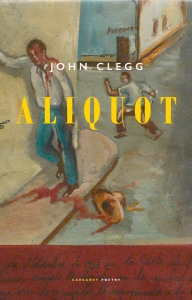 This is the second Carcanet collection by the London bookseller. An aliquot is a sample, a part that represents the whole; a scientific counterpart to synecdoche. It’s a perfect word for what poetry can do: point at larger truths through the pinpricks of meaning found in the everyday. The title poem juxtaposes two moments where the poet muses on the part/whole dichotomy: watching a catering school student and teacher transferring peas from one container to another and spotting two cellists on a tube train. Drawn in by detail, we observe the inevitable movement from separation to togetherness.
A high point is “A Gene Sequence,” about an administrator working behind the scenes at a genomics conference on a Cambridge campus: each poem is named after a different amino acid and the lines (sometimes with the help of extreme enjambment) always begin with the arrangement of A, C, G, and T that encodes them. Here’s an example:
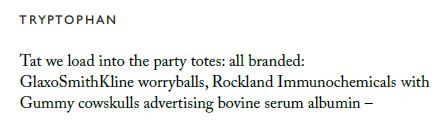
Much of the imagery is maritime, with the occasional reference to a desert (“Language as Sonora”) or settlement (“Dormer Windows” and “Quebec City”). The locations include a science campus and a storm-threatened hotel (“Hurricane Joaquin,” one of my favourites). A proverb is described as being as potent as a raw onion. Here’s a lynx you’ll never see – but she will see you. Like in a Caroline Bird collection, there’s many an absurd or imagined situation. The vocabulary is unusual, sometimes lofty: “their cursory repertoire of query.” Alliteration teems, as in “The High Lama Explains How Items Are Procured for Shangri-La.” Overall, a noteworthy and unique collection that I’d recommend.
A favourite, apropos of nothing stanza from “Lucan – The Waterline”:
There is a kind of crab known to devour human flesh.
There is a shelf five storeys undersea
Where small yachts pile up like bric-a-brac.
There is a town in Maryland called Alibi.
With thanks to Carcanet for the advanced e-copy for review.
Revenge of the Librarians by Tom Gauld
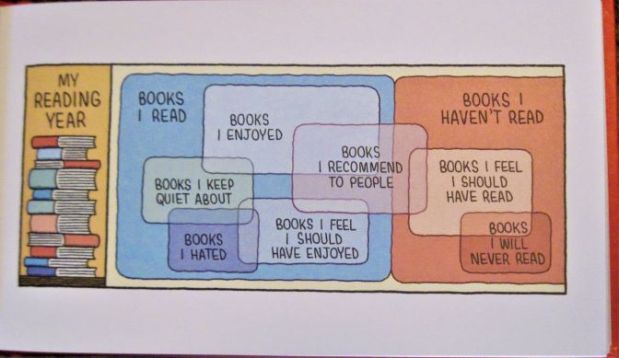
You have probably seen Gauld’s cartoons in the Guardian, New Scientist or New Yorker. I’ve saved clippings of my favourite bookish ones over the years. They’re full of literary in-jokes and bibliophile problems, and divided about equally between a writer’s perspective and a reader’s: the struggle for inspiration and novelty on the one hand, and the battle with the TBR and the impulse to read what one feels one should versus what one enjoys on the other. He pokes holes in the pretensions on either side. Jane Austen features frequently.
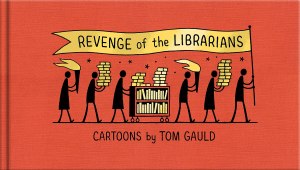
Gauld’s figures are usually blocky stick figures without complete facial features (or books or ghosts), and he often makes use of multiple choice and choose your own adventure structures. Elsewhere he plays around with book titles and typical plots, or stages mild-mannered arguments between authors and their editors or publicists, who generally have quite different notions of quality and marketability.
Lest you dismiss cartoons as being out of touch, the effect of the pandemic on bookshops, libraries and literary events is mentioned a few times. Librarians are depicted as old-time gangsters peddling books while their buildings are closed: “Overdue books are dealt with swiftly and mercilessly” it reads under a panel of a fedora-wearing, revolver-toting figure warning, “The boss says if you ain’t finished ‘The Mirror and the Light’ by tomorrow, it’s curtains!”
Some more favourite lines:
- “1903: Henry James writes a sentence so long and circuitous that he becomes lost inside it for three days.”
- (says one pigeon to another) “I’ve become a psychogeographer. It’s mainly walking around disapproving of gentrification.”
- “A horrible feeling crept over Elaine that perhaps the problems with her novel couldn’t be overcome by changing the font.”
Two spreads that are too good not to share in full (I feel seen!):

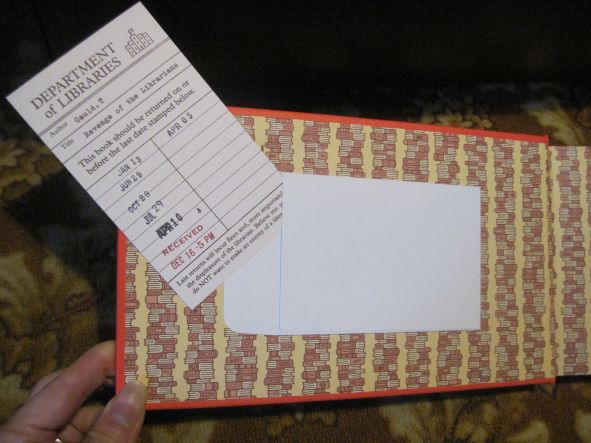
And would you look at this attention to detail on the inside cover!
This is destined for many a book-lover’s Christmas stocking.
With thanks to Canongate for the free copy for review.
Tempted to read one of these?
What other September releases can you recommend?
Catching Up: Mini Reviews of Some Notable Reads from Last Year
I do all my composition on an ancient PC (unconnected to the Internet) in a corner of our lounge. On top of the CPU sit piles of books waiting to be reviewed. Some have been residing there for an embarrassingly long time since I finished reading them; others were only recently added to the stack but had previously languished on my set-aside shelf. I think the ‘oldest’ of the set below is the Olson, which I started reading in November 2019. In every case, the book earned a spot on the pile because I felt it was worth a review, but I’ll stick to a brief paragraph on why each was memorable. Bonus: I get my Post-its back, and can reshelve the books so they get packed sensibly for our upcoming move.
Fiction
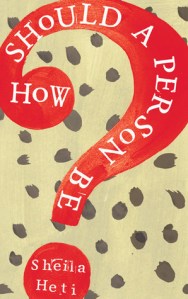 How Should a Person Be? by Sheila Heti (2012): My second from Heti, after Motherhood; both landed with me because they nail aspects of my state of mind. Heti writes autofiction about writers dithering about their purpose in life. Here Sheila is working in a hair salon while trying to finish her play – some absurdist dialogue is set out in script form – and hanging out with artists like her best friend Margaux. The sex scenes are gratuitous and kinda gross. In general, I alternated between sniggering (especially at the ugly painting competition) and feeling seen: Sheila expects fate to decide things for her; God forbid she should ever have to make an actual choice. Heti is self-deprecating about an admittedly self-indulgent approach, and so funny on topics like mansplaining. This was longlisted for the Women’s Prize in 2013. (Little Free Library)
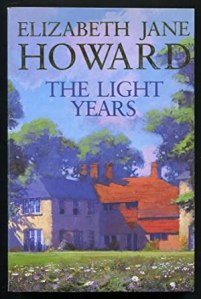 The Light Years by Elizabeth Jane Howard (1990): The first volume of The Cazalet Chronicles, read for a book club meeting last January. I could hardly believe the publication date; it’s such a detailed, convincing picture of daily life in 1937–8 for a large, wealthy family in London and Sussex that it seems it must have been written in the 1940s. The retrospective angle, however, allows for subtle commentary on how limited women’s lives were, locked in by marriage and pregnancies. Sexual abuse is also calmly reported. One character is a lesbian, but everyone believes her partner is just a friend. The cousins’ childhood japes are especially enjoyable. And, of course, war is approaching. It’s all very Downton Abbey. I launched straight into the second book afterwards, but stalled 60 pages in. I’ll aim to get back into the series later this year. (Free mall bookshop)
Nonfiction
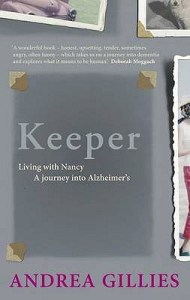 Keeper: Living with Nancy—A journey into Alzheimer’s by Andrea Gillies (2009): The inaugural Wellcome Book Prize winner. The Prize expanded in focus over a decade; I don’t think a straightforward family memoir like this would have won later on. Gillies’ family relocated to remote northern Scotland and her elderly mother- and father-in-law, Nancy and Morris, moved in. Morris was passive, with limited mobility; Nancy was confused and cantankerous, often treating Gillies like a servant. (“There’s emptiness behind her eyes, something missing that used to be there. It’s sinister.”) She’d try to keep her cool but often got frustrated and contradicted her mother-in-law’s delusions. Gillies relays facts about Alzheimer’s that I knew from In Pursuit of Memory. What has remained with me is a sense of just how gruelling the caring life is. Gillies could barely get any writing done because if she turned her back Nancy might start walking to town, or – the single most horrific incident that has stuck in my mind – place faeces on the bookshelf. (Secondhand purchase)
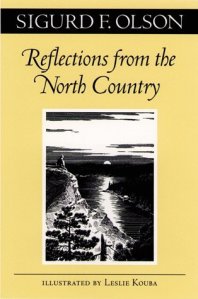 Reflections from the North Country by Sigurd F. Olson (1976): Olson was a well-known environmental writer in his time, also serving as president of the National Parks Association. Somehow I hadn’t heard of him before my husband picked this out at random. Part of a Minnesota Heritage Book series, this collection of passionate, philosophically oriented essays about the state of nature places him in the vein of Aldo Leopold – before-their-time conservationists. He ponders solitude, wilderness and human nature, asking what is primal in us and what is due to unfortunate later developments. His counsel includes simplicity and wonder rather than exploitation and waste. The chief worry that comes across is that people are now so cut off from nature they can’t see what they’re missing – and destroying. It can be depressing to read such profound 1970s works; had we heeded environmental prophets like Olson, we could have changed course before it was too late. (Free from The Book Thing of Baltimore)
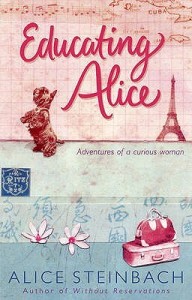 Educating Alice: Adventures of a Curious Woman by Alice Steinbach (2004): I’d loved her earlier travel book Without Reservations. Here she sets off on a journey of discovery and lifelong learning. I included the first essay, about enrolling in cooking lessons in Paris, in my foodie 20 Books of Summer 2020. In other chapters she takes dance lessons in Kyoto, appreciates art in Florence and Havana, walks in Jane Austen’s footsteps in Winchester and environs, studies garden design in Provence, takes a creative writing workshop in Prague, and trains Border collies in Scotland. It’s clear she loves meeting new people and chatting – great qualities in a journalist. By this time she had quit her job with the Baltimore Sun so was free to explore and make her life what she wanted. She thinks back to childhood memories of her Scottish grandmother, and imagines how she’d describe her adventures to her gentleman friend, Naohiro. She recreates everything in a way that makes this as fluent as any novel, such that I’d even dare recommend it to fiction-only readers. (Free mall bookshop)
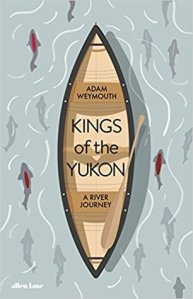 Kings of the Yukon: An Alaskan River Journey by Adam Weymouth (2018): I didn’t get the chance to read this when it was shortlisted for, and then won, the Sunday Times Young Writer of the Year Award, but I received a copy from my wish list for Christmas that year. Alaska is a place that attracts outsiders and nonconformists. During the summer of 2016, Weymouth undertook a voyage by canoe down the nearly 2,000 miles of the Yukon River – the same epic journey made by king/Chinook salmon. He camps alongside the river bank in a tent, often with his partner, Ulli. He also visits a fish farm, meets reality TV stars and native Yup’ik people, and eats plenty of salmon. “I do occasionally consider the ethics of investigating a fish’s decline whilst stuffing my face with it.” Charting the effects of climate change without forcing the issue, he paints a somewhat bleak picture. But his descriptive writing is so lyrical, and his scenes and dialogue so natural, that he kept me eagerly riding along in the canoe with him. (Secondhand copy, gifted)
Would you be interested in reading one or more of these?
Six Degrees: Ethan Frome to A Mother’s Reckoning
This month we began with Ethan Frome by Edith Wharton, which was our buddy read for the short classics week of Novellas in November. I reread and reviewed it recently. (See Kate’s opening post.)
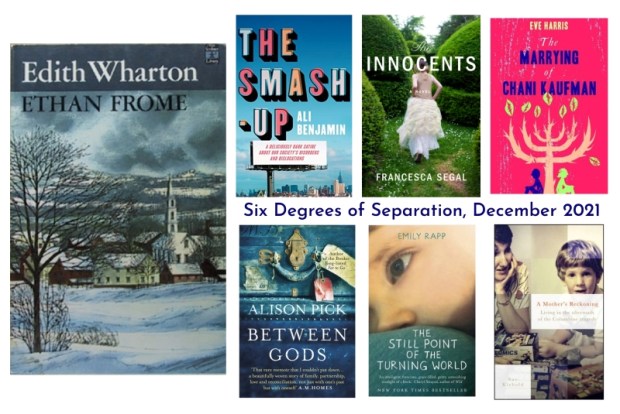
 #1 When I posted an excerpt of my Ethan Frome review on Instagram, I got a comment from the publicist who was involved with the recent UK release of The Smash-Up by Ali Benjamin, a modern update of Wharton’s plot. Here’s part of the blurb: “Life for Ethan and Zo used to be simple. Ethan co-founded a lucrative media start-up, and Zo was well on her way to becoming a successful filmmaker. Then they moved to a rural community for a little more tranquility—or so they thought. … Enter a houseguest who is young, fun, and not at all concerned with the real world, and Ethan is abruptly forced to question everything: his past, his future, his marriage, and what he values most.” I’m going to try to get hold of a review copy when the paperback comes out in February.
 #2 One of my all-time favourite debut novels is The Innocents by Francesca Segal, which won the Costa First Novel Award in 2012. It is also a contemporary reworking of an Edith Wharton novel, this time The Age of Innocence. Segal’s love triangle, set in a world I know very little about (the tight-knit Jewish community of northwest London), stays true to the emotional content of the original: the interplay of love and desire, jealousy and frustration. Adam Newman has been happily paired with Rachel Gilbert for nearly 12 years. Now engaged, Adam and Rachel seem set to become pillars of the community. Suddenly, their future is threatened by the return of Rachel’s bad-girl American cousin, Ellie Schneider.
 #3 Also set in north London’s Jewish community is The Marrying of Chani Kaufman by Eve Harris, which was longlisted for the Booker Prize in 2013. Chani is the fifth of eight daughters in an ultra-Orthodox Jewish family in Golders Green. The story begins and closes with Chani and Baruch’s wedding ceremony, and in between it loops back to detail their six-month courtship and highlight a few events from their family past. It’s a light-hearted, gossipy tale of interclass matchmaking in the Jane Austen vein.
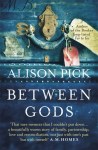 #4 I learned more about Jewish beliefs and rituals via several memoirs, including Between Gods by Alison Pick. Her paternal grandparents escaped Czechoslovakia just before the Holocaust; she only found out that her father was Jewish through eavesdropping. In 2008 the author (a Toronto-based novelist and poet) decided to convert to Judaism. The book vividly depicts a time of tremendous change, covering a lot of other issues Pick was dealing with simultaneously, such as depression, preparation for marriage, pregnancy, and so on.
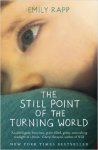 #5 One small element of Pick’s story was her decision to be tested for the BRCA gene because it’s common among Ashkenazi Jews. Tay-Sachs disease is usually found among Ashkenazi Jews, but because only her husband was Jewish, Emily Rapp never thought to be tested before she became pregnant with her son Ronan. Had she known she was also a carrier, things might have gone differently. The Still Point of the Turning World was written while her young son was still alive, but terminally ill.
 #6 Another wrenching memoir of losing a son: A Mother’s Reckoning by Sue Klebold, whose son Dylan was one of the Columbine school shooters. I was in high school myself at the time, and the event made a deep impression on me. Perhaps the most striking thing about this book is Klebold’s determination to reclaim Columbine as a murder–suicide and encourage mental health awareness; all author proceeds were donated to suicide prevention and mental health charities. There’s no real redemptive arc, though, no easy answers; just regrets. If something similar could happen to any family, no one is immune. And Columbine was only one of many major shootings. I finished this feeling spent, even desolate. Yet this is a vital book everyone should read.
So, I’ve gone from one unremittingly bleak book to another, via sex, religion and death. Nothing for cheerful holiday reading – or a polite dinner party conversation – here! All my selections were by women this month.
Where will your chain take you? Join us for #6Degrees of Separation! (Hosted on the first Saturday of each month by Kate W. of Books Are My Favourite and Best.)
Next month’s starting point is Rules of Civility by Amor Towles; I have a copy on the shelf and this would be a good excuse to read it!
Have you read any of my selections? Are you tempted by any you didn’t know before?
Summery Reads of 2020, Part I
Reading with the seasons, I’ve picked up a few books with “summer” or sunshine in their titles. I’ll have more to write up later in August, including novels set during the summer months.
A Summer Bird-Cage by Margaret Drabble (1963)
 Sarah Bennett, who went straight from university in Oxford to Paris for want of a better idea of what to do with her life, is called home to Warwickshire to be a bridesmaid in the wedding of her older sister, Louise, to Stephen Halifax, a wealthy novelist. Afterwards, Sarah decides to move to London and share a flat with a friend whose marriage has recently ended. As the months pass, she figures out life as a single girl in a big city and attends parties hosted by Louise – back from an extended European honeymoon – and others. Sarah eventually works out, from gossip and from confronting Louise herself, that her sister’s marriage isn’t as idyllic as it appeared. Both sisters find themselves at a loss as for what to do next.
Although Drabble’s debut novel is low on action, its characters are sharply drawn and she delights in placing them in situations and conversations where their true values will emerge. I could relate to Sarah for her bookishness, her observant nature, and her feeling that her best days of being a student are behind her. Drabble was only 24 when this was published; though she was already married and a mother, her distinguished university career (a double first from Cambridge) wasn’t long behind her. Given that Drabble’s sister is novelist A.S. Byatt, it’s impossible not to speculate about the autobiographical inspiration for this picture of sisters who are subconscious rivals and don’t even seem to enjoy spending casual time together.
What with the sisters sharing the maiden name Bennett, you also can’t help but think of one of the classic sister novels, Pride and Prejudice. Drabble makes her debt obvious when Sarah goes over to Louise’s for dinner and comments on the “charming convention of the scene – sisters idling away an odd evening in happy companionship. It was like something out of Middlemarch or even Jane Austen.” I was also reminded of the sister pair in Deerbrook: one got all the beauty, but the other seems much more interesting.
The title comes from a John Webster quotation: “’Tis just like a summer bird-cage in a garden: / the birds that are without are desperate to get / in, and the birds that are within despair and / are in a consumption for fear that they will never / get out.” In other words, it’s easy to miss, and idealize, what you don’t have. Sarah still thinks she can have it all; Louise has realized the choices life forces on you. In modern parlance, this is about adulting and FOMO. It still feels relevant, in a way that seems to anticipate the work of Sally Rooney.
My rating:
Rise and Shine by Anna Quindlen (2006)
 Another sisters novel, and the first book in my Journey through the Day with Books challenge. Meghan Fitzmaurice is a household name as the host of America’s most popular morning talk show, Rise and Shine, but her star fades rapidly when, her microphone still on after she thinks they’ve gone to a commercial break, she murmurs “f***ing a**hole” about a guest who is, admittedly, a creep. It turns out her outburst didn’t come out of nowhere: the night before, her husband, Evan, had announced he was leaving her. Meghan goes to Jamaica to regroup, leaving her younger sister, Bridget, a social worker in the Bronx, to figure out what happened and create a semblance of normalcy for her beloved nephew, Meghan’s college-age son Leo, who’s just back from an exchange program at a farm outside Barcelona.
I liked the New York City setting and the central sister relationship – “Sisters tend to get stuck in their roles and they don’t always know how to get out of them. The pretty one. The practical one,” their aunt Maureen, who raised them after their parents’ deaths, says – but the plot hereafter veers between thin and melodramatic. I didn’t warm to Bridget’s boyfriend Irving, a hardboiled older cop, and I get a little nervous about white ladies creating stereotypical African American characters and giving them names like Tequila (Bridget’s receptionist at the women’s shelter) and Princess Margaret (Tequila’s daughter).

In a nice bit of symmetry, though, the book’s end finds a subdued Meghan hosting a late-night show called Day’s End. I didn’t like this nearly as much as her nonfiction (I loved Lots of Candles, Plenty of Cake), but I would read more by Quindlen: I also have a copy of One True Thing, and I have heard that her recent fiction is good.
My rating: 
And a skim from the library that ties in nicely with the cover image above:
The Butterfly Isles: A Summer in Search of Our Emperors and Admirals by Patrick Barkham (2010)
 In 2009, Barkham set out to revive the childhood butterfly-watching hobby he’d shared with his father. The UK is home to 59 species, a manageable number to attempt to see in a season, although it does require a fair bit of travel and insider knowledge. I’ve read too much general history about the human relationship with butterflies (via Rainbow Dust by Peter Marren, which came out a few years later, and An Obsession with Butterflies by Sharman Apt Russell, which Barkham mentions in a Recommended Reading section at the end of the book) to engage with all the context he includes; I focused on the nitty-gritty of the quest running from mid-March to August. I’ll leave it to readers to discover whether he succeeds or not. Nice additions here are the color plates of all the species in question, and the line drawings by Helen Macdonald, yet to come to prominence in her own right – with H Is for Hawk in 2014.
A favorite passage: “Butterflies are symbols of freedom and happiness, sunshine and summer days. They are tokens of romance”
My rating:
Have you been reading anything particularly fitting for summer this year?
Doorstoppers of the Month: Americanah and Deerbrook
On one of my periodic trips back to the States, I saw Chimamanda Ngozi Adichie speak at a large Maryland library soon after Americanah (2013) was published. I didn’t retain much from her talk, except that her main character, Ifemelu, was a blogger about race issues and that Black hair also played a role. I was hugely impressed with Adichie in person: stylish and well-spoken, she has calm confidence and a mellifluous voice. In the “question” (comment) time I remember many young African and African American women saying how much her book meant to them, capturing the complexities of what it’s like to be Black in America.
Ironically, I have hoarded Adichie’s work over the years since then but not read it. I did read We Should All Be Feminists from the library for Novellas in November one year, but had accumulated copies of her other five books as gifts or from neighbors or the free bookshop. (Is there a tsundoku-type term for author-specific stockpiling?) Luckily, my first taste of her fiction exceeded my high expectations and whetted my appetite to read the rest.
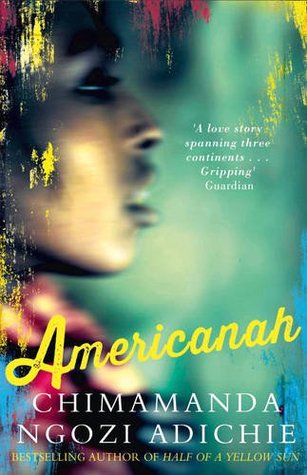
“You can’t write an honest novel about race in this country,” a secondary African American character declares at an evening salon Ifemelu attends. Adichie puts the lie to that statement: her slight outsider status allows her to cut through stereotypes and pretenses and get right to the heart of the issue. The novel may be seven years old (and hearkens back to the optimism of Barack Obama’s first election), but it feels utterly fresh and relevant at a time when we are newly aware of the insidiousness of racism. Again and again, I nodded in wry acknowledgment of the truth of Ifemelu’s cutting observations:
Job Vacancy in America—National Arbiter in Chief of ‘Who Is Racist’: In America, racism exists but racists are all gone. Racists belong to the past. Racists are the thin-lipped mean white people in the movies about the civil rights era. Here’s the thing: the manifestation of racism has changed but the language has not. So if you haven’t lynched somebody then you can’t be called a racist.
Through Ifemelu’s years of studying, working and blogging her way around the Eastern seaboard of the United States, Adichie explores the ways in which the experience of an African abroad differs from that of African Americans. These subtleties become especially clear through her relationships with Curt (white) and Blaine (African American), which involve a performative aspect and a slight tension that were absent with Obinze, her teenage sweetheart. Obinze, too, tries life in another country, moving to the UK illegally. Although they eventually earn financial success and good reputations – with Obinze a married property developer back in Nigeria – both characters initially have to do debasing work to get by.
Americanah is so wise about identity and perceptions, with many passages that resonated for me as an expat. When Ifemelu returns to Nigeria after 13 years, she doesn’t know if she or her country has changed: “She was no longer sure what was new in Lagos and what was new in herself … home was now a blurred place between here and there … there was something wrong with her. A hunger, a restlessness. An incomplete knowledge of herself.”
I loved Ifemelu’s close bond with her cousin, Dike, who is more like a little brother to her, and the way the narrative keeps revisiting a New Jersey hair salon where she is getting her hair braided. These scenes reminded me of Barber Shop Chronicles, a terrific play I saw with my book club last year. The prose is precise, insightful and evocative (“she would not unwrap from herself the pashmina of the wounded,” “There was something in him, lighter than ego but darker than insecurity, that needed constant buffing”).
On a sentence level as well as at a macro plot level, this was engrossing and rewarding – just what I want from a doorstopper. The question of whether Ifemelu and Obinze will get back together is one that will appeal to fans of Normal People – can these sustaining teenage relationships ever last? – but Ifemelu is such a strong, independent character that it’s merely icing on the cake. I’m moving on to her Women’s Prize winner, Half of a Yellow Sun, next.
Page count: 477 (but tiny type)
Source: Free bookshop
My rating:
Deerbrook by Harriet Martineau (1839)
 This was meant to be a buddy read with Buried in Print, but I fell at the first hurdle and started skimming after 35 pages. I haven’t made it through a Victorian triple-decker in well over a decade; just since 2012, I’ve failed to get through three novels by Charles Dickens, whom I used to call my favorite author. I’m mildly disappointed in myself, but may have to accept the change in my reading tastes. In my early 20s, I loved chunky nineteenth-century novels and got my MA in Victorian Literature, but nowadays I look at one of these 500+-page classics and think, why wade through something so tortuously verbose over a matter of weeks when I could read three or more contemporary novels that will have more bearing on my life, for the same word count and time?
In any case, Deerbrook is interesting from a cultural history point of view, sitting between Austen and the Brontës or George Eliot in terms of timeline, style and themes. In the fictional Midlands village of Deerbrook, the Greys and Rowlands are neighbors engaged in a polite feud while sharing a summer house and a governess. Orphaned sisters Hester and Margaret Ibbotson, 21 and 20, come to live with the Greys, their distant cousins and known dissenters. Hester got “all the beauty,” so it’s no surprise that, after a visit from a local doctor, Edward Hope, everyone is pairing him with her in their minds. I liked an early passage voicing the thoughts of Maria Young, the crippled governess (“How I love to overlook people,—to watch them acting unconsciously, and speculate for them!”), but soon tired of the matchmaking and moralizing. A world in which everyone does their duty is boring indeed.

Martineau, though, seems like a fascinating figure I’d like to read more about. She wrote a two-volume Autobiography, which I would also skim if I could find it from a library. Just her one-page bio at the front of my Virago paperback contained many astonishing sentences: “her education was interrupted by advancing deafness, requiring her to use an ear trumpet in later life”; “Her fiancé, John Hugh Worthington, having gone insane also died”; [after writing Deerbrook] “She then collapsed into bed where she was to remain for the next five years. In 1845 Harriet Martineau was dramatically cured by mesmerism,” etc.
Page count: 523 (again, tiny type)
Source: A UK secondhand bookshop 15+ years ago
Women in Translation Month 2019, Part II: Almada and Fenollera
All Spanish-language choices this time: an Argentinian novella, a Spanish novel, and a couple of Chilean short stories to whet your appetite for a November release.
The Wind that Lays Waste by Selva Almada (2012; English translation, 2019)
[Translated by Chris Andrews]
 Selva Almada’s debut novella is also her first work to appear in English. Though you might swear this is set in the American South, it actually takes place in her native Argentina. The circadian narrative pits two pairs of characters against each other. On one hand we have the Reverend Pearson and his daughter Leni, itinerants who are driven ever onward by the pastor’s calling. On the other we have “The Gringo” Brauer, a mechanic, and his assistant, José Emilio, nicknamed “Tapioca.”
On his way to visit Pastor Zack, Reverend Pearson’s car breaks down. While the Gringo sets to work fixing the vehicle, the preacher tries witnessing to Tapioca. He senses something special in the boy, perhaps even recognizing a younger version of himself, and wants him to have more of a chance in life than he’s currently getting at the garage. As a violent storm comes up, we’re left to wonder how Leni’s cynicism, the Reverend’s zealousness, the Gringo’s suspicion, and Tapioca’s resolve will all play out.
Different as they are, there are parallels to be drawn between these characters, particularly Leni and Tapioca, who were both abandoned by their mothers. I particularly liked the Reverend’s remembered sermons, printed in italics, and Leni’s sarcastic thoughts about her father’s vocation: “They always ended up doing what her father wanted, or, as he saw it, what God expected of them” and “she admired the Reverend deeply but disapproved of almost everything her father did. As if he were two different people.”
The setup and characters are straight out of Flannery O’Connor. The book doesn’t go as dark as I expected; I’m not sure I found the ending believable, even if it was something of a relief.
My rating:
My thanks to Charco Press for the free copy for review. Last year I reviewed two Charco releases: Die, My Love and Fish Soup.
See also Susan’s review.
The Awakening of Miss Prim by Natalia Sanmartin Fenollera (2013; English translation, 2014)
[Translated by Sonia Soto]
 San Ireneo de Arnois is a generically European village that feels like it’s been frozen in about 1950: it’s the sort of place that people who are beaten down by busy city life retreat to so they can start creative second careers. Prudencia Prim comes here to interview for a job as a librarian, having read a rather cryptic job advertisement. Her new employer, The Man in the Wingchair (never known by any other name), has her catalogue his priceless collection of rare books, many of them theological treatises in Latin and Greek. She’s intrigued by this intellectual hermit who doesn’t value traditional schooling yet has the highest expectations for the nieces and nephews in his care.
In the village at large, she falls in with a group of women who have similarly ridiculous names like Hortensia and Herminia and call themselves feminists yet make their first task the finding of a husband for Prudencia. All of this is undertaken with the aid of endless cups of tea or hot chocolate and copious sweets. The village and its doings are, frankly, rather saccharine. No prizes for guessing who ends up being Prudencia’s chief romantic interest despite their ideological differences; you’ll guess it long before she admits it to herself at the two-thirds point.
As much as this tries to be an intellectual fable for bibliophiles (Prudencia insists that The Man in the Wingchair give Little Women to his niece to read, having first tried it himself despite his snobbery), it’s really just a thinly veiled Pride and Prejudice knock-off – and even goes strangely Christian-fiction in its last few pages. If you enjoyed The Readers of Broken Wheel Recommend and have a higher tolerance for romance and chick lit than I, you may well like this. It’s pleasantly written in an old-fashioned Pym-homage style, but ultimately it goes on my “twee” shelf and will probably return to a charity shop, from whence it came.
My rating: 
Humiliation by Paulina Flores (2016; English translation, 2019)
[Translated by Megan McDowell]
I’ve read the first two stories so far, “Humiliation” and “Teresa,” which feature young fathers and turn on a moment of surprise. An unemployed father takes his two daughters along to his audition; a college student goes home with a single father for a one-night stand. In both cases, what happens next is in no way what you’re expecting. These are sharp and readable, and I look forward to making my way through the rest over the next month or two.
My rating:
Humiliation will be published by Oneworld on November 7th. My thanks to Margot Weale for a proof copy. I will publish a full review closer to the time.
 Bookish Beck = Rebecca Foster. American transplant to England. Freelance proofreader and book reviewer.
 Bookish Beck