May Releases, Part II (Fiction): Le Blevennec, Lynch, Puchner, Stanley, Ullmann, and Wald
A cornucopia of May novels, ranging from novella to doorstopper and from Montana to Tunisia; less of a spread in time: only the 1980s to now. Just a paragraph on each to keep things simple. I’ll catch up soon with May nonfiction and poetry releases I read.
Friends and Lovers by Nolwenn Le Blevennec (2023; 2025)
[Translated from French by Madeleine Rogers]
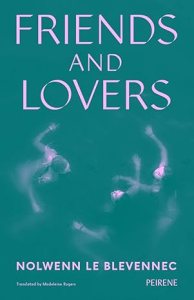 Armelle, Rim, and Anna are best friends – the first two since childhood. They formed a trio a decade or so ago when they worked on the same magazine. Now in their mid-thirties, partnered and with children, they’re all gripped by a sexual “great awakening” and long to escape Paris and their domestic commitments – “we went through it, this mutiny, like three sisters,” poised to blow up the “perfectly executed choreography of work, relationships, children”. The friends travel to Tunisia together in December 2014, then several years later take a completely different holiday: a disaster-prone stay in a lighthouse-keeper’s cottage on an island off the coast of Brittany. They used to tolerate each other’s foibles and infidelities, but now resentment has sprouted up, especially as Armelle (the narrator) is writing a screenplay about female friendship that’s clearly inspired by Rim and Anna. Armelle is relatably neurotic (a hilarious French blurb for the author’s previous novel is not wrong: “Woody Allen meets Annie Ernaux”) and this is wise about intimacy and duplicity, yet I never felt invested in any of the three women or sufficiently knowledgeable about their lives.
With thanks to Peirene Press for the free copy for review.
A Family Matter by Claire Lynch
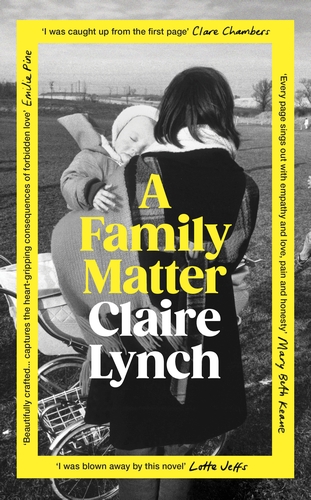 “The fluke of being born at a slightly different time, or in a slightly different place, all that might gift you or cost you.” At events for Small, Lynch’s terrific memoir about how she and her wife had children, women would speak up about how different their experience had been. Lesbians born just 10 or 20 years earlier didn’t have the same options. Often, they were in heterosexual marriages because that’s all they knew to do; certainly the only way they thought they could become mothers. In her research into divorce cases in the UK in the 1980s, Lynch learned that 90% of lesbian mothers lost custody of their children. Her aim with this earnest, delicate debut novel, which bounces between 2022 and 1982, is to imagine such a situation through close portraits of Heron, an ageing man with terminal cancer; his daughter, Maggie, who in her early forties bears responsibility for him and her own children; and Dawn, who loved Maggie desperately but felt when she met Hazel that she was “alive at last, at twenty-three.” How heartbreaking that Maggie knew only that her mother abandoned her when she was little; not until she comes across legal documents and newspaper clippings does she understand the circumstances. Lynch made the wise decision to invite sympathy for Heron from the start, so he doesn’t become the easy villain of the piece. Her compassion, and thus ours, is equal for all three characters. This confident, tender story of changing mores and steadfast love is the new Carol for our times. (Such a lovely but low-key novel was liable to make few ripples, so I’m delighted for Lynch that the U.S. release got a Read with Jenna endorsement.)
With thanks to Chatto & Windus (Penguin) for the proof copy for review.
Dream State by Eric Puchner
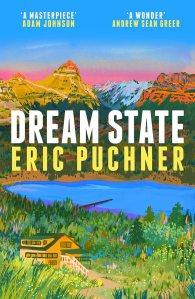 If it starts and ends with a wedding, it must be a comedy. If much of the in between is marked by heartbreak, betrayal, failure, and loss, it must be a tragedy. If it stretches towards 2050 and imagines a Western USA smothered in smoke from near-constant forest fires, it must be an environmental dystopian. Somehow, this novel is all three. The first 163 pages are pure delight: a glistening romantic comedy about the chaos surrounding Charlie and Cece’s wedding at his family’s Montana lake house in the summer of 2004. First half the wedding party falls ill with norovirus, then Charlie’s best friend, Garrett (who’s also the officiant), falls in love with the bride. Do I sound shallow if I admit this was the section I enjoyed the most? The rest of this Oprah’s Book Club doorstopper examines the fallout of this uneasy love triangle. Charlie is an anaesthesiologist, Cece a bookstore owner, and Garrett a wolverine researcher in Glacier National Park, which is steadily losing its wolverines and its glaciers. The next generation comes of age in a diminished world, turning to acting or addiction. There are still plenty of lighter moments: funny set-pieces, warm family interactions, private jokes and quirky descriptions. But this feels like an appropriately grown-up vision of idealism ceding to a reality we all must face. I struggled with a lack of engagement with the children, but loved Puchner’s writing so much on the sentence level that I will certainly seek out more of his work. Imagine this as a cross between Jonathan Franzen and Maggie Shipstead.
With thanks to Sceptre (Hodder) for the proof copy for review.
Consider Yourself Kissed by Jessica Stanley
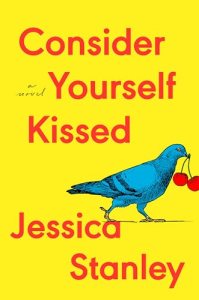 Coralie is nearing 30 when her ad agency job transfers her from Australia to London in 2013. Within a few pages, she meets Adam when she rescues his four-year-old, Zora, from a lake. That Adam and Coralie will be together is never really in question. But over the next decade of personal and political events, we wonder whether they have staying power – and whether Coralie, a would-be writer, will lose herself in soul-destroying work and motherhood. Adam’s job as a political journalist and biographer means close coverage of each UK election and referendum. As I’ve thought about some recent Jonathan Coe novels: These events were so depressing to live through, who would want to relive them through fiction? I also found this overlong and drowning in exclamation points. Still, it’s so likable, what with Coralie’s love of literature (the title is from The Group) and adjustment to expat life without her mother; and secondary characters such as Coralie’s brother Daniel and his husband, Adam’s prickly mother and her wife, and the mums Coralie meets through NCT classes. Best of all, though, is her relationship with Zora. This falls solidly between literary fiction and popular/women’s fiction. Given that I was expecting a lighter romance-led read, it surprised me with its depth. It may well be for you if you’re a fan of Meg Mason and David Nicholls.
With thanks to Hutchinson Heinemann for the proof copy for review.
Girl, 1983 by Linn Ullmann (2021; 2025)
[Translated from Norwegian by Martin Aitken]
 Ullmann is the daughter of actress Liv Ullmann and film director Ingmar Bergman. That pedigree perhaps accounts for why she got the opportunity to travel to Paris in the winter of 1983 to model for a renowned photographer. She was 16 at the time and spent the whole trip disoriented: cold, hungry, lost. Unable to retrace the way to her hotel and wearing a blue coat and red hat, she went to the only address she knew – that of the photographer, K, who was in his mid-forties. Their sexual relationship is short-lived and unsurprising, at least in these days of #MeToo revelations. Its specifics would barely fill a page, yet the novel loops around and through the affair for more than 250. Ullmann mostly pulls this off thanks to the language of retrospection. She splits herself both psychically and chronologically. There’s a “you” she keeps addressing, a childhood imaginary friend who morphs into a critical voice of conscience and then the self dissociated from trauma. And there’s the 55-year-old writer looking back with empathy yet still suffering the effects. The repetition made this something of a sombre slog, though. It slots into a feminist autofiction tradition but is not among my favourite examples.
With thanks to Hamish Hamilton (Penguin) for the proof copy for review.
The Bayrose Files by Diane Wald
 In the 1980s, Boston journalist Violet Maris infiltrates the Provincetown Home for Artists and Writers, intending to write a juicy insider’s exposé of what goes on at this artists’ colony. But to get there she has to commit a deception. Her gay friend Spencer Bayrose has a whole sheaf of unpublished short stories drawing on his Louisiana upbringing, and he offers to let her submit them as her own work to get a place at PHAW. Here Violet finds eccentrics aplenty, and even romance, but when news comes that Spence has AIDS, she has to decide how far she’ll go for a story and what she owes her friend. At barely over 100 pages, this feels more like a long short story, one with a promising setting and a sound plot arc, but not enough time to get to know or particularly care about the characters. I was reminded of books I’ve read by Julia Glass and Sara Maitland. It’s offbeat and good-natured but not top tier.
Published by Regal House Publishing. With thanks to publicist Jackie Karneth of Books Forward for the advanced e-copy for review.
A Family Matter was the best of the bunch for me, followed closely by Dream State.
Which of these do you fancy reading?
Preposterous #NovNov23 Catch-Up Post
I have a big pile of novellas I read last month but never wrote about, plus a few more I’ve sneaked in by finishing them over the past couple of days. I tweaked my shoulder last weekend and the discomfort has moved into my neck, making daily life, and sleep, difficult. A taste of what it’s like to live with chronic pain, I suppose. Add in the freezing temperatures of recent days and I’ve been feeling pretty sorry for myself and haven’t succeeded in sitting at a computer for the time required to write at least a bit about these short books. But as today is the day our link-up finishes, I’m tucked up in bed with laptop, electric blanket, heater, cat, cup of tea and ice pack, ready to do all 16 the best justice I can through a paragraph each.
Fiction:
In the Sweep of the Bay by Cath Barton (2020)
 Susan put this on my radar and I bought it in publisher Louise Walters Books’ closing-down sale. Set in Morecambe, this bittersweet story of a half-century marriage and the figures on its margins – co-workers, children, even strangers – is both ambitious and intimate. Ted and Rene Marshall marry in the 1950s and soon drift into drudgery and traditional gender roles; “They forgot the happiness. Or rather, they pushed it away.” While Ted becomes a celebrated ceramics designer in the family company, Rene stagnates at home. It is not so much suspected infidelity as simply taking each other for granted that threatens their relationship. Barton moves through the decades and varies the perspective, letting us hear from one of the Marshalls’ daughters and giving kind attention to a gay couple. Strictly Come Dancing fans and those familiar with the northwest might take particular pleasure, but I enjoyed this quiet book reminiscent of Anne Tyler’s French Braid and (though less political) Jonathan Coe’s Bournville. (New purchase) [104 pages]
The Visitor by Maeve Brennan (2000)
 This posthumous novella was written in the 1940s but never published in Brennan’s lifetime. From Dublin, she was a longtime New Yorker staff member and wrote acclaimed short stories. After her mother’s death, Anastasia King travels from Paris, where the two set up residence after leaving her father, to Ireland to stay in the family home with her grandmother. Anastasia considers it a return, a homecoming, but her spiteful grandmother makes it clear that she is an unwelcome interloper. Mrs King can’t forgive the wrong done to her son, and so won’t countenance Anastasia’s plan to repatriate her mother’s remains. Rejection and despair eat away at Anastasia’s mental health (“She saw the miserable gate of her defeat already open ahead. There only remained for her to come up to it and pass through it and be done with it”) but she pulls herself together for an act of defiance. Most affecting for me was a scene in which we learn that Anastasia is so absorbed in her own drama that she does not fulfill the simple last wish of a dying friend. This brought to mind James Joyce’s The Dead. (Secondhand purchase – The Bookshop, Wigtown) [81 pages]
Bear by Marian Engel (1976)
 If you’ve heard of this, it’ll be for the fact that the main character – Lou, a librarian sent to archive the holdings of an octagonal house on an island one summer – has sex with a bear. That makes it sound much more repulsive and/or titillating than it actually is. The further I read the more I started to think of it as an allegory for women’s awakening; perhaps the strategy inspired Melissa Broder’s The Pisces (stuffed full of sex with a merman). “I have an odd sense of being reborn,” Lou writes to her boss, the Institute director, with whom she’d been having an affair. The bear lives in an outbuilding and at first Lou is indifferent, only feeding him as necessary. Then he becomes a friend, joining her for swims. Then he comes into the house. Bestiality is a taboo for a reason, but what mostly bothers me is the lack of mutuality, the sense of taking advantage. I’m also wary of stories in which animals have a primarily instrumental or metaphorical role. Still, this was a solid read, offbeat and nearly as shocking today as when it first appeared. (Secondhand purchase online) [167 pages]
So Late in the Day by Claire Keegan (2023)
 Several of us reviewed this for #NovNov though unsure it counts: in the UK the title story (originally for the New Yorker) was published in a standalone volume by Faber, while the U.S. release includes two additional earlier stories; I read the latter. The title story has Cathal spending what should have been his wedding weekend moping about Sabine calling off their engagement at the last minute. It’s no mystery why she did: his misogyny, though not overt, runs deep, most evident in the terms in which he thinks about women. And where did he learn it? From his father. (“The Long and Painful Death” is from Keegan’s second collection, Walk the Blue Fields, and concerns a woman on a writing residency at an author’s historic house in Ireland. She makes a stand for her own work by refusing to cede place to an entitled male scholar. The final story is “Antarctica,” the lead story in that 1999 volume and a really terrific one I’d already experienced before. It’s as dark and surprising as an early Ian McEwan novel.) Keegan proves, as ever, to be a master at portraying emotions and relationships, but the one story is admittedly slight on its own, and its point obvious. (Read via Edelweiss) [64 pages]
Swallowing Geography by Deborah Levy (1993)
 “She is Europe’s eerie child, and she is part of the storm.” J.K. is a young woman who totes her typewriter around different European locations, sleeps with various boyfriends, hears strangers’ stories, and so on. Many of the people she meets are only designated by an initial. By contrast, the most fully realized character is her mother, Lillian Strauss. The chapters feel unconnected and the encounters within them random, building to nothing. Though a bit like Crudo, this has very little detail to latch onto and so was pretentious in its opacity. I’ve generally gotten on much better with Levy’s nonfiction (see below) than her fiction. This, along with the Keegan (above), was my chosen train entertainment for the Booker Prize evening. I got so little out of it that it seemed like wasted reading time. Here’s a decent excerpted passage: “The arrogance of metaphor when facts save people’s lives. The succour of metaphor when facts inadequately describe people’s lives.” (Public library) [83 pages]
Nonfiction:
Starting with two from the Bloomsbury Object Lessons series, a great source of short monographs. These have been among my favourites so far.
Grave by Allison C. Meier (2023)
 Meier is a cemetery tour guide in Brooklyn, where she lives. She surveys American burial customs in particular, noting the lack of respect for Black and Native American burial grounds, the Civil War-era history of embalming, the increasing popularity of cremation, and the rise of garden cemeteries such as Mount Auburn in Cambridge, Massachusetts, which can serve as wildlife havens. The mass casualties and fear of infection associated with Covid-19 brought back memories of the AIDS epidemic, especially for those in New York City. Meier travels to a wide range of resting places, from potter’s fields for unclaimed bodies to the most manicured cemeteries. She also talks about newer options such as green burial, body composting, and the many memorial objects ashes can be turned into. I’m a dedicated reader of books about death and so found this fascinating, with the perfect respectful and just-shy-of-melancholy tone. It’s political and philosophical in equal measures. (Read via NetGalley) [168 pages]
Pregnancy Test by Karen Weingarten (2023)
 Laboratory pregnancy tests have been available since the 1930s and home pregnancy tests – the focus here – since the 1970s. All of them work by testing urine for the hormone hCG (human chorionic gonadotropin). What is truly wild is that pregnancy used to be verifiable only with laboratory animals – female mice and rabbits had to be sacrificed to see if their ovaries had swelled after the injection of a woman’s urine; later, female Xenopus toads were found to lay eggs in response, so didn’t need to be killed. Home pregnancy kits were controversial and available in Canada before the USA because it was thought that they could be unreliable or that they would encourage early abortions. Weingarten brings together the history, laypeople-friendly science, and cultural representations (taking a pregnancy test is excellent TV shorthand) in a readable narrative and makes a clear feminist statement: “the home pregnancy test gave back to women what should have always been theirs: first-hand knowledge about how their bodies worked” and thus “had the potential to upend a paternalistic culture.” (Read via NetGalley) [160 pages]
And from a different Bloomsbury series for monographs about seminal albums, 33 1/3:
Jesus Freak by Will Stockton and D. Gilson (2019)
 The dc Talk album Jesus Freak (1995) is the first CD I ever owned. My best friend and I listened to it (along with Bloom by Audio Adrenaline and Take Me to Your Leader by Newsboys) so many times that we knew every word and note by heart. So it’s hard for me to be objective rather than nostalgic; I was intrigued to see what two secular academics would have to say. Crucially, they were teenage dc Talk fans, now ex-Evangelicals and homosexual partners. As English professors, their approach is to spot musical influences (Nirvana on the title track; R&B and gospel elsewhere), critically analyse lyrics (with “Colored People” proving problematic for its “neoliberal multiculturalism and its potential for post-racial utopianism”), and put a queer spin on things. For those who don’t know, dc Talk were essentially a boy band with three singers, one Black and two white – one of these a rapper. Stockton and Gilson chronicle the confusion of living with a same-sex attraction they couldn’t express as teens, and cheekily suggest there may have been something going on between dc Talk members Toby McKeehan and Michael Tait, who were roommates at Liberty University and apparently dismantled their bunk beds so they could sleep side by side. Hmmm! I was interested enough in the subject matter to overlook the humanities jargon. (Birthday gift from my wish list last year) [132 pages]
And the rest:
Fifty Days of Solitude by Doris Grumbach (1994)
 Grumbach died last year at age 104. This was my third of her books; I read two previous memoirs, Extra Innings and The Presence of Absence, when they were brought back into print as Open Road Media e-books. I knew of Grumbach through her association with May Sarton, and the two in fact had a lot in common, including lesbianism, living in Maine and writing about older age. I was expecting something on a par with Sarton’s Journal of a Solitude, one of my favourite books, but this fell short in comparison. Grumbach spent a month and a half alone in Maine during the winter of 1993 while her partner, Sybil, was away amassing stock for their bookstore. The book is a collection of unconnected meditations about nature, the cold, creativity and so on. She finds herself writing fiction so the characters can keep her company, and notes “how much more I was aware of my vices.” Although she tries to avoid the news, word reaches her of acquaintances’ demises, and she recalls the recent death from AIDS of a young local man. Amusingly, she rereads Bear (see above) during the 50 days. Some atmosphere, but low on insight. (Secondhand purchase – Wonder Book and Video, Hagerstown) [114 pages]
Things I Don’t Want to Know: On Writing by Deborah Levy (2013)
 It feels like I made an error by reading Levy’s “Living Autobiography,” out of order. I picked up the middle volume of the trilogy, The Cost of Living, for #NovNov in 2021 and it ended up being my favourite nonfiction read of that year. I then read part of the third book, Real Estate, last year but set it aside. And now I’ve read the first because it was the shortest. It’s loosely structured around George Orwell’s four reasons for writing: political purpose, historical impulse, sheer egoism and aesthetic enthusiasm. The frame story has her flying to Majorca at a time when she was struggling with her mental health. She vaguely follows in the footsteps of George Sand and then pauses to tell a Chinese shopkeeper the story of her upbringing in apartheid-era South Africa and the family’s move to London. Although I generally admire recreations of childhood and there are some strong pen portraits of minor characters, overall there was little that captivated me here and I was too aware of the writerly shaping. (Secondhand purchase – 2nd & Charles, Hagerstown) [111 pages]
The Private Life of the Hare by John Lewis-Stempel (2019)
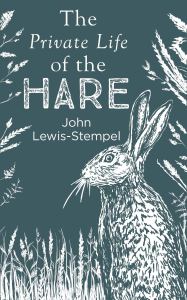 I reviewed a couple of JLS’s species-specific monographs for #NovNov in 2018: The Secret Life of the Owl and The Glorious Life of the Oak. There’s a similar range of material here: anatomy, natural history and cultural significance, including in poetry. There are chapters on hunting, the hare as food, and its appearances in myth and religion. I was engaged about half of the time; I tended to skip over longer excerpts from historical documents. The reliance on lengthy quotations and use of bullet points make it feel like a half-finished research project, with the kind of information you could find anywhere else. Too many of his recent books have felt like they were rushed into print. I would only pick this up if you’re particularly fascinated by hares. (Public library) [99 pages]
The Cancer Journals by Audre Lorde (1980)
 I’ve read so many cancer stories that it takes a lot to make one stand out. This feels like a random collection of documents rather than a coherent memoir. One of the three essays was originally a speech, and two were previously printed in another of her books. Lorde was diagnosed with breast cancer in 1978 and had a mastectomy. A Black lesbian feminist, she resisted wearing prostheses and spoke up about the potential environmental causes of breast cancer that need to be addressed in research (“I may be a casualty in the cosmic war against radiation, animal fat, air pollution, McDonald’s hamburgers and Red Dye No. 2”). Her actual journal entries make up little of the text, which is for the best because fear and pain can bring out the cliches in us – but occasionally a great quote like “if bitterness were a whetstone, I could be sharp as grief.” Another favourite line: “Pain does not mellow you, nor does it ennoble, in my experience.” I’m keen to read her memoir Zami. (University library) [77 pages]
A Month in Siena by Hisham Matar (2019)
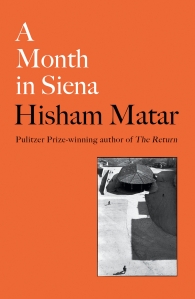 I’d not read Matar before I spotted this art book-cum-memoir and thought, why not. A Libyan American novelist who lives in London, Matar had long been fascinated by the Sienese School of painting (13th to 15th centuries), many of whose artists depicted biblical scenes or religious allegories – even though he’s not a Christian. He spent a month in Italy immersed in the art he loves; there are 15 colour reproductions here. His explications of art history are generalist enough to be accessible to all readers, but I engaged more with the glimpses into his own life. For instance, he meets a fellow Arabic speaker and they quickly form a brotherly attachment, and a Paradise scene gives him fanciful hope of being reunited with his missing father – the subject of his Folio Prize-winning memoir The Return, which I’d like to read soon. His prose is beautiful as he reflects on history, death and how memories occupy ‘rooms’ in the imagination. A little more interest in the art would have helped, though. (Little Free Library) [118 pages]
A Childhood in Scotland by Christian Miller (1981)
 I had high hopes for this childhood memoir that originally appeared in the New Yorker and was reprinted as part of the Canongate Classics series. But I soon resorted to skimming as her recollections of her shabby upper-class upbringing in a Highlands castle are full of page after page of description and dull recounting of events, with few scenes and little dialogue. This would be of high historical value for someone wanting to understand daily life for a certain fraction of society at the time, however. When Miller’s father died, she was only 10 and they had to leave the castle. I was intrigued to learn from her bio that she lived in Newbury for a time. (Secondhand purchase – Barter Books) [98 pages]
Here and Now: Living in the Spirit by Henri J.M. Nouwen (1994)
 This collection of micro-essays under themed headings like “Living in the Present” and “Suffering” was a perfect introduction to Nouwen’s life and theology. The Dutch Catholic priest lived in an Ontario community serving the physically and mentally disabled, and died of a heart attack just two years after this was published. I marked out many reassuring or thought-provoking passages. Here’s a good pre-Christmas one:
“God became a little child in the midst of a violent world. Are we surprised by joy or do we keep saying: ‘How nice and sweet, but the reality is different.’ What if the child reveals to us what is really real?”
I was taken by the ideas that the life of compassion is one of “downward mobility” and that inner freedom only comes when you don’t judge anyone. He encourages readers to not live in a past of shame and regret, but to be grateful for opportunities for God’s mercy and guidance. Very peaceful and readable; a good bedside devotional book. (Free from my stepfather) [175 pages] 
De Profundis by Oscar Wilde (1897)
 My only reread for the month. Wilde wrote this from prison. No doubt he had a miserable time there, but keeping in mind that he was a flamboyant dramatist and had an eye to this being published someday, this time around I found it more exaggerated and self-pitying than I had before. “Suffering is one very long moment. … Where there is sorrow there is holy ground,” he writes, stating that he has found “harmony with the wounded, broken, and great heart of the world.” He says he’s not going to try to defend his behaviour … but what is this but one extended apologia and humble brag, likening himself to a Greek tragic hero (“The gods had given me almost everything. But I let myself be lured into long spells of senseless and sensual ease. I amused myself with being a flâneur, a dandy, a man of fashion”) and even to Christ in his individuality as well as in his suffering at the hands of those who don’t understand him (the scene where he was pilloried consciously mimics a crucifixion tableau). As a literary document, it’s extraordinary, but I didn’t buy his sincerity. He feigns remorse but, really, wasn’t sorry about anything, merely sorry he got caught. (Free from a neighbour) [151 pages]
Original rating (2011):
Rating now:
Average:
Which of these have you read?
And which do you want to read? (You may choose no more than 4!)
In total, I read 27 novellas this November – close to my 2021 record of 29. The highlights included the Barton, Meier, Nouwen and Weingarten above plus Train Dreams by Denis Johnson and Western Lane by Chetna Maroo, but the best of the lot was Absolutely and Forever by Rose Tremain.
Coming right up, final statistics on the month’s participants and posts!
Book Serendipity, Mid-December 2022 to Mid-February 2023
I call it “Book Serendipity” when two or more books that I read at the same time or in quick succession have something in common – the more bizarre, the better. This is a regular feature of mine every few months. Because I usually have 20–30 books on the go at once, I suppose I’m more prone to such incidents. The following are in roughly chronological order.
My biggest overall coincidence set this time was around Korean culture, especially food:
- A demanding Korean/American mother (“Umma”) in Sea Change by Gina Chung, Camp Zero by Michelle Min Sterling, and Crying in H Mart by Michelle Zauner.
- In the Chung and Zauner, she has eyebrows tattooed on.
- In the Chung and Sterling, there’s also a mall setting.
- Winter in Sokcho by Elisa Shua Dusapin was set in South Korea and mentioned a lot of the same cultural factors and foods. KIMCHI (which I’ve never had) was inescapable in these four books.


And the rest…
- The concept of Satan as “the enemy” in God’s Ex-Girlfriend by Gloria Beth Amodeo and All of Us Together in the End by Matthew Vollmer, two 2023 memoirs I reviewed for Foreword Reviews.
- A mention of the Newsboys (my favourite Christian rock band when I was a teenager) in God’s Ex-Girlfriend by Gloria Beth Amodeo and, of all places, Animal Life by Auður Ava Ólafsdóttir (the context: a list of songs with “Born” in the title; theirs is called – you guessed it! – “Born Again”).
- Two Moores in my stack at once: Birds of America by Lorrie Moore and The Distance from Slaughter County by Steven Moore.
- A chapter in The Distance from Slaughter County by Steven Moore is called “Fight Night” and I was reading the early pages of Fight Night by Miriam Toews at the same time.
- A story in Birds of America by Lorrie Moore is called “Real Estate” and I was reading Real Estate by Deborah Levy at the same time.
- The Virgil quote “there are tears at the heart of things” and the theme of melancholy link Bittersweet by Susan Cain and The Heart of Things by Richard Holloway.
- A character who stutters in Bournville by Jonathan Coe and A Place Called Winter by Patrick Gale.

- (Werther’s) butterscotch candies are mentioned in Leila and the Blue Fox by Kiran Millwood Hargrave, Our Missing Hearts by Celeste Ng, What Napoleon Could Not Do by DK Nnuro, and How to Be Sad by Helen Russell.
- A mother who loves going to church in Bournville by Jonathan Coe and Born a Crime by Trevor Noah.
- The metaphor of a girl trapped in a block of marble ready to have her identity carved out in Sea Change by Gina Chung and Everything’s Changing by Chelsea Stickle.

- When I read a short story about a landmine-detecting rat in Everything’s Changing by Chelsea Stickle, I knew it wasn’t the first time I’d encountered that very specific setup. It took some digging, but I found out the other was in Attrib. by Eley Williams.
- Shane McCrae, whose forthcoming memoir Pulling the Chariot of the Sun I was also reading, is a named poetic influence/source in More Sky by Joe Varrick-Carty.

- I’m sure that after the one in Margaret Atwood’s The Door I encountered another poem about a frozen cat … but can’t now find it for the life of me.
- A character named Marnie in Martha Quest by Doris Lessing and City of Friends by Joanna Trollope.
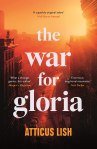
- Cape Verdean immigrants in the Boston area, then and now, in Daughters of Nantucket by Julie Gerstenblatt and The War for Gloria by Atticus Lish.

- Someone swaps green tea for coffee in Bittersweet by Susan Cain and City of Friends by Joanna Trollope.
- A half-French, half-Asian protagonist in a novella translated from the French: A Single Rose by Muriel Barbery and Winter in Sokcho by Elisa Shua Dusapin.
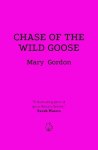
- A (semi-)historical lesbian couple as a subject of historical fiction in Daughters of Nantucket by Julie Gerstenblatt and Chase of the Wild Goose by Mary Gordon.
- A lesbian couple with a ten-year age gap breaks up because the one partner wants a baby and the other does not in My Mother Says by Stine Pilgaard and City of Friends by Joanna Trollope.
- After I specifically read three Frost Fairs books … 18th-century frolics on the frozen Thames were mentioned in The Secret Diaries of Charles Ignatius Sancho by Paterson Joseph.

- As I was reading The Secret Diaries of Charles Ignatius Sancho by Paterson Joseph, I saw him briefly mentioned in How to Be Sad by Helen Russell.
- From one 139-page book about a foreigner’s wanderings in Kyoto (often taking in temples) to another: I followed up A Single Rose by Muriel Barbery with How Kyoto Breaks Your Heart by Florentyna Leow.


- Persimmon jam is mentioned in Winter in Sokcho by Elisa Shua Dusapin and How Kyoto Breaks Your Heart by Florentyna Leow.
- A brave post-tragedy trip to a mothers and babies group ends abruptly when people are awkward or rude in All My Wild Mothers by Victoria Bennett and How to Be Sad by Helen Russell.


 As I was reading What We Talk about when We Talk about Love by Raymond Carver, I encountered a snippet from his poetry as a chapter epigraph in Bittersweet by Susan Cain.
- Sexologist Havelock Ellis inspired one of the main characters in The New Life by Tom Crewe and is mentioned in passing in Martha Quest by Doris Lessing.
What’s the weirdest reading coincidence you’ve had lately?
11 Days, 11 Books: 2023’s Reading So Far
I realized that, as in 2020, I happen to have finished 11 books so far this year (including a Patrick Gale again). Some of the below I’ll be reviewing in full for other themes or challenges coming up, and others have paid reviews pending that I can’t share yet, but I’ve written a little bit about each of the others. Here’s how my reading year has started off…


A children’s book
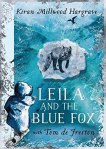 Leila and the Blue Fox by Kiran Millwood Hargrave – Similar in strategy to Hargrave’s previous book (also illustrated by her husband Tom de Freston), Julia and the Shark, one of my favourite reads of last year – both focus on the adventures of a girl who has trouble relating to her mother, a scientific researcher obsessed with a particular species. Leila, a Syrian refugee, lives with family in London and is visiting her mother in the far north of Norway. She joins her in tracking an Arctic fox on an epic journey, and helps the expedition out with social media. Migration for survival is the obvious link. There’s a lovely teal and black colour scheme, but I found this unsubtle. It crams too much together that doesn’t fit.
Celebrity autobiographies
A genre that pretty much never makes it onto my stacks, but I read these two despite knowing little to nothing about the authors; instead, I was drawn in by their particular stories.
 A Heart that Works by Rob Delaney – Delaney is an American actor who was living in London for TV filming in 2016 when his third son, baby Henry, was diagnosed with a brain tumour. He died before the age of three. The details of disabling illness and brutal treatment could not be other than wrenching, but the tone is a delicate balance between humour, rage, and tenderness. The tribute to his son may be short in terms of number of words, yet includes so much emotional range and a lot of before and after to create a vivid picture of the wider family. People who have never picked up a bereavement memoir will warm to this one.
 Born a Crime: Stories from a South African Childhood by Trevor Noah – Again, I was not familiar with the author’s work in TV/comedy, but had heard good things so gave this a try. It reminded me of Barack Obama’s Dreams from My Father what with the African connection, the absent father, the close relationship with his mother, and the reflections on race and politics. I especially loved his stories of being dragged to church multiple times every Sunday. He writes a lot about her tough love, and the difficulty of leaving hood life behind once you’ve been sucked into it. The final chapter is exceptional. Noah does a fine job of creating scenes and dialogue; I’d happily read another book of his.
Novels
 Bournville by Jonathan Coe – Coe does a good line in witty state-of-the-nation novels. Patriotism versus xenophobia is the overarching dichotomy in this one, as captured through a family’s response to seven key events from English history over the last 75+ years, several of them connected with the royals. Mary Lamb, the matriarch, is an Everywoman whose happy life still harboured unfulfilled longings. Coe mixes things up by including monologues, diary entries, and so on. In some sections he cuts between the main action and a transcript of a speech, TV commentary, or set of regulations. Covid informs his prologue and the highly autobiographical final chapter, and it’s clear he’s furious with the government’s handling.
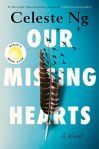 Our Missing Hearts by Celeste Ng – Disappointing compared to her two previous novels. I’d read too much about the premise while writing a synopsis for Bookmarks magazine, so there were no surprises remaining. The political commentary, though necessary, is fairly obvious. The structure, which recounts some events first from Bird’s perspective and then from his mother Margaret Miu’s, makes parts of the second half feel redundant. Still, impossible not to find the plight of children separated from their parents heart-rending, or to disagree with the importance of drawing attention to race-based violence. It’s also appealing to think about the power of individual stories and how literature and libraries might be part of an underground protest movement.
And a memoir in miniature
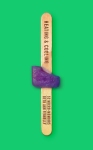 Heating & Cooling: 52 Micro-Memoirs by Beth Ann Fennelly – I love memoirs-in-essays. Fennelly goes for the same minimalist approach as Abigail Thomas’s Safekeeping. Pieces range from one line to six pages and mostly pull out moments of note from the everyday of marriage, motherhood and house maintenance. I tended to get more out of the ones where she reinhabits earlier life, like “Goner” (growing up in the Catholic church); “Nine Months in Madison” (poetry fellowship in Wisconsin, running around the lake where Otis Redding died in a plane crash); and “Emulsionar,” (age 23 and in Barcelona: sexy encounter, immediately followed by scary scene). Two about grief, anticipatory for her mother (“I’ll be alone, curator of the archives”) and realized for her sister (“She threaded her arms into the sleeves of grief” – you can tell Fennelly started off as a poet), hit me hardest. Sassy and poignant.
The best so far? Probably Born a Crime, followed by Bournville.
Any of these you have read or would read?
Book Serendipity, Late 2020 into 2021
I call it Book Serendipity when two or more books that I read at the same time or in quick succession have something pretty bizarre in common. Because I have so many books on the go at once (20+), I suppose I’m more prone to such incidents than some. I also list some of my occasional reading coincidences on Twitter. The following are in chronological order.
- The Orkney Islands were the setting for Close to Where the Heart Gives Out by Malcolm Alexander, which I read last year. They showed up, in one chapter or occasional mentions, in The Frayed Atlantic Edge by David Gange and The Stone Diaries by Carol Shields, plus I read a book of Christmas-themed short stories (some set on Orkney) by George Mackay Brown, the best-known Orkney author. Gavin Francis (author of Intensive Care) also does occasional work as a GP on Orkney.

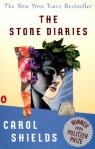
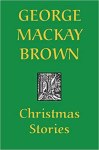
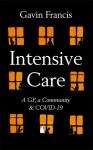
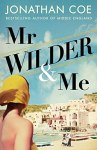
- The movie Jaws is mentioned in Mr. Wilder and Me by Jonathan Coe and Landfill by Tim Dee.
- The Sámi people of the far north of Norway feature in Fifty Words for Snow by Nancy Campbell and The Mercies by Kiran Millwood Hargrave.
- Twins appear in Mr. Wilder and Me by Jonathan Coe and Tennis Lessons by Susannah Dickey. In Vesper Flights Helen Macdonald mentions that she had a twin who died at birth, as does a character in Miss Benson’s Beetle by Rachel Joyce. A character in The Light Years by Elizabeth Jane Howard is delivered of twins, but one is stillborn. From Wrestling the Angel by Michael King I learned that Janet Frame also had a twin who died in utero.
- Fennel seeds are baked into bread in The Mercies by Kiran Millwood Hargrave and The Strays of Paris by Jane Smiley. Later, “fennel rolls” (but I don’t know if that’s the seed or the vegetable) are served in Monogamy by Sue Miller.


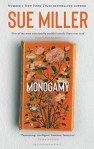
- A mistress can’t attend her lover’s funeral in Here Is the Beehive by Sarah Crossan and Tennis Lessons by Susannah Dickey.
- A sudden storm drowns fishermen in a tale from Christmas Stories by George Mackay Brown and The Mercies by Kiran Millwood Hargrave.
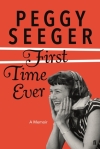 Silver Spring, Maryland (where I lived until age 9) is mentioned in one story from To Be a Man by Nicole Krauss and is also where Peggy Seeger grew up, as recounted in her memoir First Time Ever. Then it got briefly mentioned, as the site of the Institute of Behavioral Research, in Livewired by David Eagleman.
- Lamb is served with beans at a dinner party in Monogamy by Sue Miller and Larry’s Party by Carol Shields.
- Trips to Madagascar in Landfill by Tim Dee and Lightning Flowers by Katherine E. Standefer.
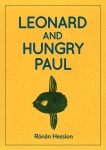 Hospital volunteering in My Year with Eleanor by Noelle Hancock and Leonard and Hungry Paul by Ronan Hession.
- A Ronan is the subject of Emily Rapp’s memoir The Still Point of the Turning World and the author of Leonard and Hungry Paul (Hession).
- The Magic Mountain (by Thomas Mann) is discussed in Scattered Limbs by Iain Bamforth, The Still Point of the Turning World by Emily Rapp, and Snow by Marcus Sedgwick.
- Frankenstein is mentioned in The Biographer’s Tale by A.S. Byatt, The Still Point of the Turning World by Emily Rapp, and Snow by Marcus Sedgwick.


- Rheumatic fever and missing school to avoid heart strain in Foreign Correspondence by Geraldine Brooks and Unsettled Ground by Claire Fuller. Janet Frame also had rheumatic fever as a child, as I discovered in her biography.
- Reading two novels whose titles come from The Tempest quotes at the same time: Owls Do Cry by Janet Frame and This Thing of Darkness by Harry Thompson.

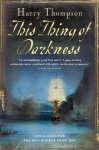
- A character in Embers by Sándor Márai is nicknamed Nini, which was also Janet Frame’s nickname in childhood (per Wrestling the Angel by Michael King).
- A character loses their teeth and has them replaced by dentures in America Is Not the Heart by Elaine Castillo and The Light Years by Elizabeth Jane Howard.
Also, the latest cover trend I’ve noticed: layers of monochrome upturned faces. Several examples from this year and last. Abstract faces in general seem to be a thing.


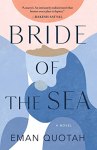


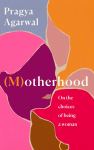
What’s the weirdest reading coincidence you’ve had lately?
Random 2020 Superlatives and Statistics
My top ‘discoveries’ of the year: Chimamanda Ngozi Adichie (4 books), Octavia E. Butler, Tim Dee (3 books each, read or in progress), and Louise Erdrich (2 books, one in progress).


Also the publisher Little Toller Books: I read four of their releases this year and they were fantastic.
The authors I read the most by this year: Carol Shields tops the list at 6 books (3 of these were rereads) thanks to my buddy reads with Buried in Print, followed by Paul Auster with 5 due to Annabel’s reading week in February, then Chimamanda Ngozi Adichie with 4, and finally Anne Lamott with 3 comfort rereads.


Debut authors whose next work I’m most looking forward to: Naoise Dolan, Bess Kalb, Dara McAnulty, Mary South, Brandon Taylor, and Madeleine Watts
My proudest reading achievement: 16 rereads, which must be a record for me. Also, I always say I’m not really a short story person … and yet somehow I’ve read 19 collections of them this year (and one stand-alone story, plus another collection currently on the go)!
My proudest (non-reading) bookish achievement: Conceiving of and coordinating the Not the Wellcome Prize blog tour.
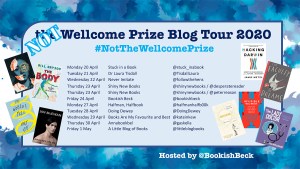
Five favorite blog posts of the year: Love, Etc. – Some Thematic Reading for Valentine’s Day; Polio and the Plague: Epidemics in Fiction; Thinking about the Future with David Farrier & Roman Krznaric (Hay Festival); Three Out-of-the-Ordinary Memoirs: Kalb, Machado, McGuinness; Asking What If? with Rodham by Curtis Sittenfeld (I had a lot of fun putting the current post together, too!)
The bookish experience that most defined my year: Watching the Bookshop Band’s live shows from their living room. Between their Friday night lockdown performances and one-offs for festivals and book launches, I think I saw them play 33 times in 2020!

Biggest book read this year: Going by dimensions rather than number of pages, it was the oversize hardback The Lost Words by Robert Macfarlane and Jackie Morris.
vs.
Smallest book read this year: Pocket-sized and only about 60 pages: No One Is Too Small to Make a Difference by Greta Thunberg.

Oldest author read this year: Peggy Seeger was 82 when her memoir First Time Ever was published. I haven’t double-checked the age of every single author, but I think second place at 77 is a tie between debut novelist Arlene Heyman for Artifact and Sue Miller for Monogamy. (I don’t know how old Michael McCarthy, Jeremy Mynott and Peter Marren, the joint authors of The Consolation of Nature, are; Mynott may actually be the oldest overall, and their combined age is likely over 200.)
vs.
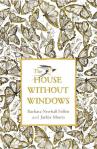 Youngest author read this year: You might assume it was 16-year-old Dara McAnulty with Diary of a Young Naturalist, which won the Wainwright Prize (as well as the An Post Irish Book Award for Newcomer of the Year, the Books Are My Bag Reader Award for Non-Fiction, and the Hay Festival Book of the Year!) … or Thunberg, above, who was 16 when her book came out. They were indeed tied for youngest until, earlier in December, I started reading The House without Windows (1927) by Barbara Newhall Follett, a bizarre fantasy novel published when the child prodigy was 12.
Most As on a book cover: Americanah by Chimamanda Ngozi Adichie
vs.
Most Zs on a book cover: The Hiding Place by Trezza Azzopardi. I haven’t read it yet, but a neighbor passed on a copy she was getting rid of. It was nominated for both the Booker Prize and the Orange Prize.

 The book that made me laugh the most: Kay’s Anatomy by Adam Kay
Books that made me cry: Writers and Lovers by Lily King, Monogamy by Sue Miller, First Time Ever by Peggy Seeger, and Catalogue Baby: A Memoir of (In)fertility by Myriam Steinberg (coming out in March 2021)
 The book that put a song in my head every single time I looked at it, much less read it: I Am an Island by Tamsin Calidas (i.e., “I Am a Rock” by Simon and Garfunkel, which, as my husband pointed out, has very appropriate lyrics for 2020: “In a deep and dark December / I am alone / Gazing from my window to the streets below … Hiding in my room / Safe within my womb / I touch no one and no one touches me.”)
Best book club selections: Notes from an Exhibition by Patrick Gale and The Wife by Meg Wolitzer tied for our highest score ever and gave us lots to talk about.

 Most unexpectedly apt lines encountered in a book: “People came to church wearing masks, if they came at all. They’d sit as far from each other as they could.” (Gilead by Marilynne Robinson. Describing not COVID-19 times but the Spanish flu.)
 Most ironic lines encountered in a book: “September 12—In the ongoing hearings, Senator Joseph Biden pledges to consider the Bork nomination ‘with total objectivity,’ adding, ‘You have that on my honor not only as a senator, but also as the Prince of Wales.’ … October 1—Senator Joseph Biden is forced to withdraw from the Democratic presidential race when it is learned that he is in fact an elderly Norwegian woman.” (from the 1987 roundup in Dave Barry’s Greatest Hits – Biden has been on the U.S. political scene, and mocked, for 3.5+ decades!)
 Best first line encountered this year: “And then there was the day when Addie Moore made a call on Louis Waters.” (Our Souls at Night by Kent Haruf)
Best last lines encountered this year:
- “my childhood falls silently to the bottom of my memory, that library of the soul from which I will draw knowledge and experience for the rest of my life.” (Childhood by Tove Ditlevsen)
- “What I want to say is: I misremember all this so vividly it’s as if it only happened yesterday.” (Other People’s Countries: A Journey into Memory by Patrick McGuinness)
- “these friends would forever be her stitches, her scaffold, her ballast, her home.” (The Dearly Beloved by Cara Wall)
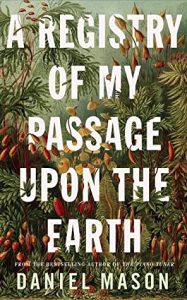
My favorite title and cover combo of the year: A Registry of My Passage Upon the Earth by Daniel Mason
The book I wish had gotten a better title and cover: Tennis Lessons by Susannah Dickey – I did enjoy this second-person novel about a young woman who is her own worst enemy, to the tune of 3.5 stars, but the title says nothing about it and the cover would have been a turnoff had I not won a signed copy from Mslexia.

The most unfortunate typos I found in published works: In English Pastoral by James Rebanks, “sewn” where he meant “sown” (so ironic in a book about farming!) versus, in Mr Wilder & Me by Jonathan Coe, “sown” in place of “sewn.” Also “impassible” where it should read “impassable” in Apeirogon by Colum McCann. This is what proofreaders like myself are for. We will save you from embarrassing homophone slips, dangling modifiers, and more!
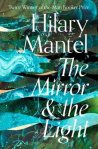
The 2020 books that everybody else loved, but I didn’t: The Mirror and the Light by Hilary Mantel, Hamnet by Maggie O’Farrell, and Shuggie Bain by Douglas Stuart


The year’s biggest disappointments: I don’t like to call anything “worst” (after all, I didn’t read anything nearly as awful as last year’s Jonathan Livingston Seagull), but my lowest ratings went to A Traveller at the Gates of Wisdom by John Boyne and At Hawthorn Time by Melissa Harrison, and I was disappointed that When the Lights Go Out by Carys Bray was misleadingly marketed.
 The downright strangest books I read this year: Enter the Aardvark by Jessica Anthony, A Traveller at the Gates of Wisdom by John Boyne, The House Without Windows by Barbara Newhall Follett, and The Child in Time by Ian McEwan
The people and themes that kept turning up in my reading: Rachel Carson and Henry David Thoreau; curlews and plagues; how we define and relate to history; childhood memoirs (seven of them).

Some of my 2020 curlew reading. (Two more books with curlews on the cover were borrowed from the library.)
Some statistics on my 2020 reading:
Fiction: 57.2%
Nonfiction: 36.8%
Poetry: 6%
(Fiction reigned supreme this year! Last year my F:NF ratio was roughly 1:1. Poetry was down by ~5% this year compared to 2019.)
Male author: 34.1%
Female author: 63.8%
Nonbinary author: 0.3% (= 1 author, Jay Bernard)
Multiple genders (anthologies): 1.8%
(Women dominated by an extra ~5% this year over 2019. I’ve said this for four years now: I find it intriguing that female authors significantly outweigh male authors in my reading because I have never consciously set out to read more books by women; it must be a matter of being interested in the kinds of stories women tell and how they capture their experiences in nonfiction.)
E-books: 10.6%
Print books: 89.4%
(Almost exactly the same as last year. My e-book reading has been declining, partially because I’ve cut back on the reviewing gigs that involve only reading e-books and partially because I’ve done less traveling. Increasingly, I prefer to sit down with a big stack of print books.)
Books by BIPOC: 14.7%
Literature in translation: 6.6%
(Down from last year’s 7.2%; how did this happen?! This will be something to address in 2021.)
Where my books came from for the whole year:
- Free print or e-copy from publisher: 25.6%
- Public library: 25.6%
- Free (giveaways, The Book Thing of Baltimore, the free mall bookshop, etc.): 14.9%
- Secondhand purchase: 11.6%
- Downloaded from NetGalley, Edelweiss or Project Gutenberg: 6.7%
- New purchase (sometimes at a bargain price): 6.3%
- Gifts: 5.5%
- University library: 3.8%
I promised to scale back on review copies this year, and I did: last year they accounted for nearly 37% of my reading. My library reading was higher than last year’s, despite the challenges of lockdowns; my e-book reading decreased in general. I bought more than twice as many new books as usual this year, and read lots that I either bought secondhand or got for free.
Number of unread print books in the house: 435
At the end of last year this figure was at 440 after lots of stock-ups from the free mall bookshop, which has since closed. So even though it might look like I have only read five books of my own, I have in fact read loads from my shelves this year … but also acquired many more books, both new and secondhand.
In any case, the overall movement has been downward, so I’m calling it a win!
Mrs. Shields & Me: (Re)reading Carol Shields in 2020
It’s pure happenstance that I started reading Carol Shields’s work in 2006.

2005: When I first returned to England for my MA program at Leeds, I met a PhD student who was writing a dissertation on contemporary Canadian women writers. At that point I could literally name only one – Margaret Atwood – and I hadn’t even read anything by her yet.
2006: Back in the States after that second year abroad, living with my parents and killing time until my wedding, I got an evening job behind the circulation desk of the local community college library. A colleague passed on four books to me one day. By tying them up in a ribbon, she made a gift out of hand-me-downs: The Giant’s House, The Secret History, and two by Shields: Happenstance and The Stone Diaries. I’ve gone on to read most or all of the books by these authors, so I’m grateful to this acquaintance I’ve since lost touch with.
The inspiration for my post title.
Starting in June this year, I joined Marcie of Buried in Print in reading or rereading six Shields novels. She’s been rereading Shields for many years, and I benefited from her insight and careful attention to connections between the works’ characters and themes during our buddy reads. I’d treated myself to a secondhand book binge in the first lockdown, including copies of three Shields novels I’d not read before. We started with these.
Small Ceremonies (1976)
Shields’s debut ended up being my surprise favorite. A flawless novella, it brings its many elements to a satisfying conclusion and previews the author’s enduring themes in 180 pages. Judith is working on a third biography, of Susanna Moodie, and remembering the recent sabbatical year that she and her husband, a Milton scholar, spent with their two children in Birmingham. High tea is a compensating ritual she imported from a dismal England. She also brought back an idea for a novel. Meanwhile family friend Furlong Eberhardt, author of a string of twee, triumphantly Canadian novels, is casting around for plots.
 What ensues is something of a sly academic comedy à la David Lodge, laced with Shields’s quiet wisdom on marriage, parenting, the writer’s vocation, and the difficulty of ever fully understanding another life. Specific links to her later work include a wonderful dinner party scene with people talking over each other and a craft project.
The Box Garden (1977)
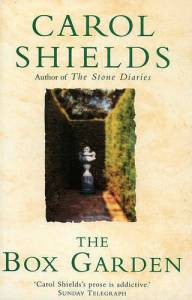 The companion novel to Small Ceremonies is narrated by Judith’s sister Charleen, a poet and single mother who lives in Vancouver and produces the National Botanical Journal. I imagined the sisters representing two facets of Shields, who had previously published poetry and a Moodie biography. Charleen is preparing to travel to Toronto for their 70-year-old mother’s wedding to Louis, an ex-priest. Via flashbacks and excruciating scenes at the family home, we learn how literally and emotionally stingy their mother has always been. If Charleen’s boyfriend Eugene’s motto is to always assume the best of people, her mother’s modus operandi is to assume she’s been hard done by.
The title comes from the time when a faithful Journal correspondent, the mysterious Brother Adam, sent Charleen some grass seed to grow in a window box – a symbol of thriving in spite of restrictive circumstances. I thought the plot went off in a silly direction, but loved the wedding reception. Specific links to Shields’s later work include a botanical hobby, a long train journey, and a final scene delivered entirely in dialogue. 
A Celibate Season (1991)
“We’re suffering a communication gap, that’s obvious.”
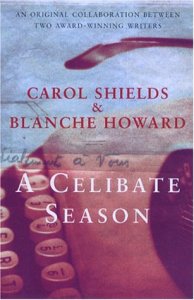 This epistolary novel was a collaboration: Blanche Howard wrote the letters by Jocelyn (“Jock”), who’s gone to Ottawa to be the legal counsel for a commission looking into women’s poverty, while Shields wrote the replies from her husband Charles (“Chas”), an underemployed architect who’s keeping the home fire burning back in Vancouver. He faces challenges large and small: their daughter’s first period versus meal planning (“Found the lentils. Now what?”). The household starts comically expanding to include a housekeeper, Chas’s mother-in-law, a troubled neighbor, and so on.
Both partners see how the other half lives. The misunderstandings between them become worse during their separation. Howard and Shields started writing in 1983, and the book does feel dated; they later threw in a jokey reference to the unreliability of e-mail to explain why the couple are sending letters and faxes. Two unsent letters reveal secrets Jock and Chas are keeping from each other, which felt like cheating. I remained unconvinced that so much could change in 10 months, and the weird nicknames were an issue for me. Plus, arguing about a solarium building project? Talk about First World problems! All the same, the letters are amusing.
Rereads
Happenstance (1980/1982)
 This was the first novel I read by Shields. My Penguin paperback gives the wife’s story first and then you flip it over to read the husband’s story. But the opposite reflects the actual publishing order: Happenstance is Jack’s story; two years later came Brenda’s story in A Fairly Conventional Woman. The obvious inheritor of the pair is A Celibate Season with the dual male/female narratives, and the setups are indeed similar: a man is left at home alone with his teenage kids, having to cope with chores and an unexpected houseguest.
What I remembered beforehand: The wife goes to a quilting conference; an image of a hotel corridor and elevator.
Happenstance
Jack, a museum curator in Chicago, is writing a book about “Indian” trading practices (this isn’t the word we’d use nowadays, but the terminology ends up being important to the plot). He and his best friend Bernie, who’s going through a separation, are obsessed with questions of history: what gets written down, and what it means to have a sense of the past (or not). I loved all the little threads, like Jack’s father’s obsession with self-help books, memories of Brenda’s vivacious single mother, and their neighbor’s failure as Hamlet in a local production. I also enjoyed an epic trek in the snow in a final section potentially modeled on Ulysses.
A Fairly Conventional Woman
“Aside from quiltmaking, pleasantness was her one talent. … She had come to this awkward age, forty, at an awkward time in history – too soon to be one of the new women, whatever that meant, and too late to be an old-style woman.”
Brenda is in Philadelphia for a quilting conference. Quilting, once just a hobby, is now part of a modern art movement and she earns prizes and hundreds of dollars for her pieces. The hotel is overbooked, overlapping with an International Society of Metallurgists gathering, and both she and Barry from Vancouver, an attractive metallurgist in a pinstriped suit whom she meets in the elevator, are driven from their shared rooms by roommates bringing back one-night stands. This doesn’t add anything to the picture of a marriage in Jack’s story and I only skimmed it this time. It’s a wonder I kept reading Shields after this, but I’m so glad I did! 
I reviewed these last two earlier this year. They were previously my joint favorites of Shields’s work, linked by a gardening hobby, the role of chance, and the unreliability of history and (auto)biography. They remain in my top three.
 The Stone Diaries (1995)
What I remembered beforehand: a long train ride, a friend who by the feeling ‘down there’ thought that someone had had sex with her the night before, and something about the Orkney Islands.

 Larry’s Party (1997)
What I remembered beforehand: a food poisoning incident (though I’d thought it was in one of Shields’s short stories), a climactic event involving a garden maze, a chapter entitled “Larry’s Penis,” and the closing dinner party scene.

Looking back: Fortunately, in the last 15 years I’ve done something to redress my ignorance, discovering Canadian women writers whom I admire greatly: Elizabeth Hay, Margaret Laurence, Mary Lawson and especially Margaret Atwood and Carol Shields.
Looking out: “I am watching. My own life will never be enough for me. It is a congenital condition, my only, only disease in an otherwise lucky life. I am a watcher, an outsider whether I like it or not, and I’m stuck with the dangers that go along with it. And the rewards.”
- That’s Judith on the last page of Small Ceremonies. It’s also probably Shields. And, to an extent, it seems like me. A writer, but mostly a reader, absorbing other lives.
Looking forward: I’m interested in rereading Shields’s short stories and Mary Swann (to be reissued by World Editions in 2021). And, though I’ve read 13 of her books now, there are still plenty of unread, lesser-known ones I’ll have to try to find secondhand one day. Her close attention to ordinary lives and relationships and the way we connect to the past makes her work essential.
Thinking Realistically about Reading Plans for the Rest of the Year
The other year I did something dangerous: I started an exclusive Goodreads shelf (i.e., an option besides the standard “Read,” “Currently Reading” and “Want to Read”) called “Set Aside Temporarily,” where I stick a book I have to put on hiatus for whatever reason, whether I’d read 20 pages or 200+. This enabled me to continue in my bad habit of leaving part-read books lying around. I know I’m unusual for taking multi-reading to an extreme with 20‒30 books on the go at a time. For the most part, this works for me, but it does mean that less compelling books or ones that don’t have a review deadline attached tend to get ignored.
I swore I’d do away with the Set Aside shelf in 2020, but it hasn’t happened. In fact, I made another cheaty shelf, “Occasional Reading,” for bedside books and volumes I read a few pages in once a week or so (e.g. devotional works on lockdown Sundays), but I don’t perceive this one to be a problem; no matter if what’s on it carries over into 2021.
Looking at the five weeks left in the year and adapting the End of the Year Book Tag Laura did recently, I’ve been thinking about what I can realistically read in 2020.
Is there a book that you started that you still need to finish by the end of the year?
So many! I hope to finish most, if not all, of the books I’m currently reading, plus I’d like to clear these set aside stacks as much as possible. If nothing else, I have to finish the two review books (Gange and Heyman, on the top of the right-hand stack).
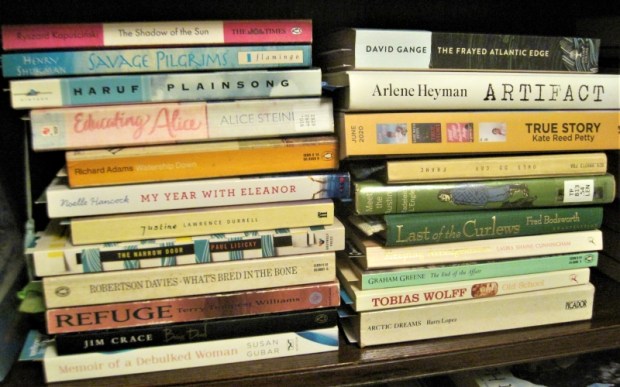
Name some books you want to read by the end of the year.
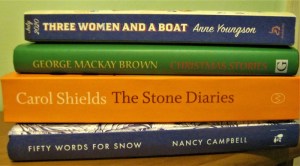
I still have these four print books to review on the blog. The Shields, a reissue, is for a December blog tour; I might save the snowy one for later in the winter.
I will also be reading an e-copy of Miss Benson’s Beetle by Rachel Joyce for a BookBrowse review.
 The 2020 releases I’d placed holds on are still arriving to the library for me. Of them, I’d most like to get to:
- Mr Wilder & Me by Jonathan Coe
- Bringing Back the Beaver: The Story of One Man’s Quest to Rewild Britain’s Waterways by Derek Gow
- To Be a Man by Nicole Krauss
My Kindle is littered with 2020 releases I purchased or downloaded from NetGalley and intended to get to this year, including buzzy books like My Dark Vanessa. I don’t read so much on my e-readers anymore, but I’ll see if I can squeeze in one or two of these:
 Fat by Hanne Blank
- Marram by Leonie Charlton
- D by Michel Faber
- Alone Together: Love, Grief, and Comfort in the Time of COVID-19, edited by Jennifer Haupt
- Tyll by Daniel Kehlmann
- Avoid the Day by Jay Kirk*
- World of Wonders by Aimee Nezhukumatathil*
*These were on my Most Anticipated list for the second half of 2020.
The Nezhukumatathil would also count towards the #DiverseDecember challenge Naomi F. is hosting. I assembled this set of potentials: four books that I own and am eager to read on the left, and four books from libraries on the right.
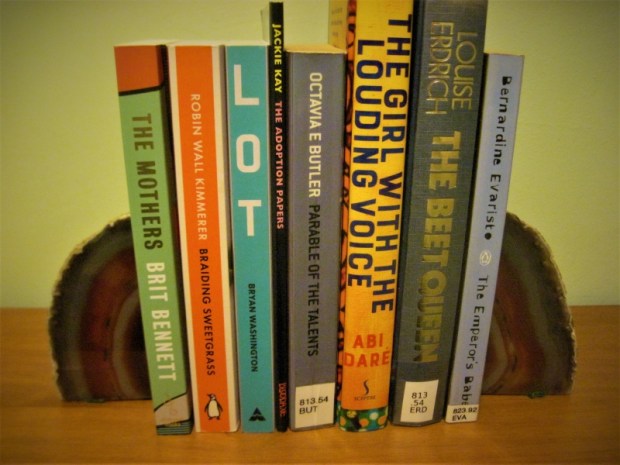
Is there a book that could still shock you and become your favorite of the year?
Two books I didn’t finish until earlier this month, The Glass Hotel by Emily St. John Mandel and Vesper Flights by Helen Macdonald, leapt into contention for first place for the year in fiction and nonfiction, respectively, and it’s entirely possible that something I’ve got out from the library or on my Kindle (as listed above) could be just as successful. That’s why I wait until the last week of the year to finalize Best Of lists.
Do you have any books that are partly read and languishing? How do you decide on year-end reading priorities?
New Reading Projects! (Join Me?)
It’s only one week since we announced the Not the Wellcome Prize winner, the culmination of a month-long project that was months more in the planning. I don’t think I’ll be coordinating another blog tour anytime soon, as it was a lot of work finding participants, working out a schedule and keeping on top of the publicizing via social media. Still, it was a lot of fun, and already I’m missing the buzz and ready to get stuck into more projects.
I’d love it if you joined me for one or more of these. Some could be combined with your 20 Books of Summer or other challenges, too.
Ongoing buddy reads
 It would have been Richard Adams’s 100th birthday on the 9th. That night I started rereading his classic tale of rabbits in peril, Watership Down, which was my favorite book from childhood even though I only read it the once at age nine. I’m 80 pages in and enjoying all the local place names. Who would ever have predicted that that mousy tomboy from Silver Spring, Maryland would one day live just 6.5 miles from the real Watership Down?!
 My husband is joining me for the Watership Down read (he’s not sure he ever read it before), and we’re also doing a buddy read of Arctic Dreams by Barry Lopez. In that case, we ended up with two free copies, one from the bookshop where I volunteer and the other from The Book Thing of Baltimore, so we each have a copy on the go. Lopez’s style, like Peter Matthiessen’s, lends itself to slower, reflective reading, so I’m only two chapters in. It’s novel to journey to the Arctic, especially as we approach the summer.
I plan to take my time over these two, so tell me if you have a copy of either and feel like picking it up at any point over the next few months.
Bibliotherapy self-prescriptions
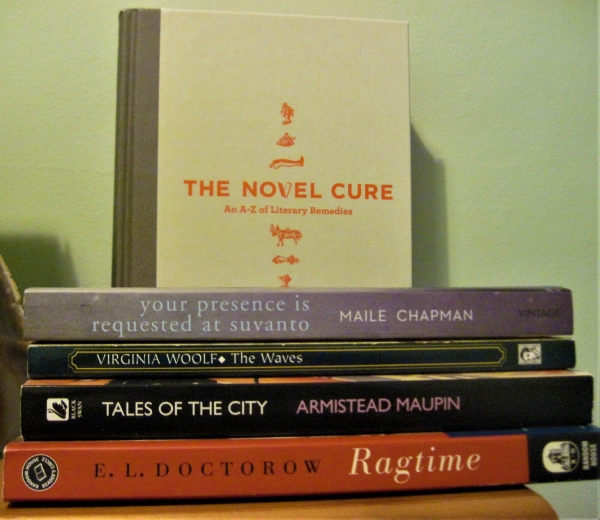
The other day I got out my copy of The Novel Cure by School of Life bibliotherapists Ella Berthoud and Susan Elderkin and browsed through the categories for some prescriptions that might feel relevant to the current situation. I found four books I own that fit the bill:
From the list of “The Ten Best Novels to Lower Your Blood Pressure”: Your Presence Is Requested at Suvanto by Maile Chapman & The Waves by Virginia Woolf (and I’ve read another three of them, including, recently, Crossing to Safety).
One of several prescriptions for Loneliness: Tales of the City by Armistead Maupin.
The cure for Zestlessness: Ragtime by E. L. Doctorow.
If you have access to one of these, or have a copy of The Novel Cure and are keen on following up on another of the prescriptions, let me know.
And now for two memes that I (think I) have created. Although I’m sure something similar has been done in the past, I couldn’t find any specific blogs about them. I don’t know about you, but I always need encouragement to pick up books from my own shelves – even though libraries are currently closed, I’m still working my way through a library stack, and I’m tempted to make another order of new books from Hungerford Bookshop. It’s great to support libraries and independent bookstores, of course, but there could be no better time to mine your own bookshelves for treasures you bought ages ago but still have never read.
Journey through the Day with Books
I enjoyed picking out 18 books from my shelves that refer to particular times of day or meals or activities associated therewith. Four of these are books I’ve already read and four are ones I’m currently reading. You can piggyback on my selections if you wish, or find your own set.
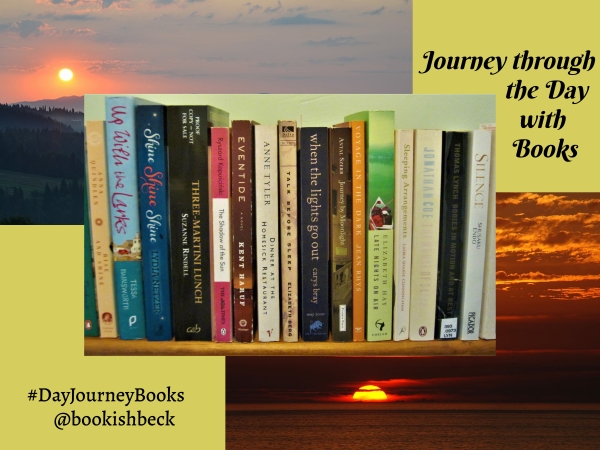
Here’s my full list:
Zennor in Darkness by Helen Dunmore
Rise and Shine by Anna Quindlen
Up with the Larks by Tessa Hainsworth
Shine Shine Shine by Lydia Netzer
Three-Martini Lunch by Suzanne Rindell
The Shadow of the Sun by Ryszard Kapuściński
Eventide by Kent Haruf
Dinner at the Homesick Restaurant by Anne Tyler
Talk before Sleep by Elizabeth Berg
When the Lights Go Out by Carys Bray
Journey by Moonlight by Antal Szerb
Voyage in the Dark by Jean Rhys
Late Nights on Air by Elizabeth Hay
Sleeping Arrangements by Laura Shaine Cunningham
The House of Sleep by Jonathan Coe
Bodies in Motion and at Rest by Thomas Lynch
Silence by Shūsaku Endō
Arctic Dreams by Barry Lopez
The Four in a Row Challenge
I’ve been contemplating this one for quite a while. It’s inspired by Phyllis Rose’s The Shelf –from LEQ to LES: Adventures in Extreme Reading (one of Simon’s favourite books – see his review), for which she picked a shelf of the New York Society Library, eliminated duplicates and repeat entries from the same author, and read the remainder – whether she’d heard of them or not; whether they were awful or not. (“Hands down the worst book on the shelf is Le Queux’s Three Knots, a mystery that reads as if it were written by an eight-year-old on Percocet.”)

This is a variation in that you’re looking at your own TBR shelves and picking a set of four books in a row. For many, that will be four novels whose authors’ surnames all start with the same letter. But if you organize your books differently (especially within nonfiction), you may find that the set of four is more arbitrary. You never know what they might have in common, though (book serendipity!).
I’m no strict challenge host, so if you want to engineer your shelf order, or if you decide to swap a book in later on, that is no problem at all. My one firm rule is only one book per author.
I’ve picked out a few appealing sets, all from my fiction shelves. F, G, L and M had particularly rich pickings. I’ll report back as I finish each set, while the “Journey through a Day” may well take me the whole rest of the year.
Still ongoing (more here): Projects to read as many Bellwether Prize, Wellcome Book Prize and Women’s Prize winners as possible, as well as Wellcome long- and shortlistees.
Can I tempt you to take part in any of these reading projects?
[Journey through the Day: Sunrise in Pieniny, Poland (Pudelek / CC BY-SA (https://creativecommons.org/licenses/by-sa/4.0)) / Sunset (Alvesgaspar / CC BY-SA (https://creativecommons.org/licenses/by-sa/3.0))
Four in a Row: Four pelicans in a row (Sheba_Also 43,000 photos / CC BY-SA (https://creativecommons.org/licenses/by-sa/2.0)) / Phone boxes, Market Place, Ripon (Tim Green from Bradford / CC BY (https://creativecommons.org/licenses/by/2.0))]
My Patchy Experience with Book Clubs
I know that a number of you have long-term, faithful book clubs. Boy, am I envious! You might find it surprising that I’ve only ever been in one traditional book club, and it wasn’t a resounding success. Partway through my time working for King’s College, London, an acquaintance from another library branch started the club. A group of five to eight of us from Library Services aimed to meet after work one evening a month at a Southbank venue or a staff room to discuss our latest pick. By poring over old e-mails and my Goodreads library, I’ve managed to remember 10 of the books we read between November 2011 and June 2013:
- Do Androids Dream of Electric Sheep?, Philip K. Dick [classic science fiction]
- The Little Shadows, Marina Endicott [Canadian historical fiction]
- A Spot of Bother, Mark Haddon [contemporary fiction]
- The Talented Mr. Ripley, Patricia Highsmith [classic suspense]
- The Vintner’s Luck, Elizabeth Knox [bizarre historical fiction/magic realism]
- What Was Lost, Catherine O’Flynn [contemporary fiction]
- Franny and Zooey, J.D. Salinger [classic short fiction]
- The Rabbi’s Cat, Joann Sfar [graphic novel in translation]
- Girl Meets Boy, Ali Smith [an update of Greek myth]
- Angel, Elizabeth Taylor [an obscure English classic]
That may well be the complete list. Although I was a member for 20 months until I quit to go freelance, we often only managed to meet every other month because we couldn’t find a mutually convenient free evening or no one had read the book in time. I was consistently frustrated that – even when our selections were only about 200 pages long – I was often one of the only people to have read the whole book.
Overall, the quality of books we chose struck me as mediocre: I rated half of these books 2 stars, and the rest 3 stars. (I think I was a harsher rater then, but it’s not a good sign, is it?) Perhaps this is part of the inevitable compromising that goes with book clubs, though: You humor other people in their choices and hope they’ll be kind about yours? My suggestion, for the record, was the pretty dismal Little Shadows, for which I got a free set of book club copies to review for Booktime magazine. But I also voted in favor of most of the above list.
Looking back, I am at least impressed by how varied our selections were. People were interested in trying out different genres, so we ranged from historical fiction to sci-fi, and even managed a graphic novel. But when we did get together for discussion there was far too much gossipy chat about work, and when we finally got around to the book itself the examination rarely went deeper than “I liked it” or “I hated all the characters.”
If it was profound analysis I was after, I got that during the years I volunteered at Greenbelt, an annual summer arts festival with a progressive Christian slant. I eagerly read the eclectic set of three books the literature coordinator chose for book club meetings in 2010 – Star of the Morning: The Extraordinary Life of Lady Hester Stanhope by Kirsten Ellis, The First Person and Other Stories by Ali Smith, and The Bridge of San Luis Rey by Thornton Wilder – and then as a literature volunteer for the next three years I read and prepared copious notes and questions about our festival “Big Read.” We did Exile by Richard North Patterson in 2011, Dark Eden by Chris Beckett in 2012 and So Many Ways to Begin by Chris Beckett in 2013, and each time I offered to chair the book club meetings.
Unfortunately, due at least in part to logistical considerations, these were run in the way many festival events are: a panel of two to five talking heads with microphones was at the front of the tent, sometimes on a raised dais, while the audience of whatever size sat towards the back. This created a disconnect between the “experts” and the participants, and with the exception of the McGregor meeting I don’t recall much audience input. I’ve mostly blanked out the events – as I tend to for anything that entails public speaking and nervous preparation for something you can’t control – but I was pleased to be involved and I should probably make more of this on my CV. It wasn’t your average book club setting, that’s for sure.
In recent years the closest thing I’ve had to a book club has been online buddy reading. The shadow panels for the Wellcome Book Prize and Sunday Times Young Writer of the Year Award fall into this category, as do online readalongs I’ve done for several Iris Murdoch novels and for C.S. Lewis’s Mere Christianity with various female family members. A few of us book bloggers chatted about Andrea Levy’s Small Island in an online document earlier this year, and my mom and I e-mailed back and forth while reading W. Somerset Maugham’s The Painted Veil in May. I’m also doing my last three of the #20BooksofSummer as online buddy reads, checking in occasionally on Twitter.
Of course, there are some inherent limitations to this kind of discussion – people read at different paces and don’t want to spoil the plot for others, and at some point the back-and-forth fizzles out – but it’s always been easier for me to organize my thoughts in writing, so I likely feel more comfortable contributing than I might in an in-person meeting.
This is all context for my decision to join my neighborhood book club next month. The club arose some months back out of our community’s Facebook group, a helpful resource run by a go-getting lady a few doors down from us. So far it’s turning out to be a small group of thirty- and fortysomething women who alternate meetings at each other’s houses, and the name they’ve chosen gives an idea of the tone: “Books, Booze and Banter.”
I made the mistake of not getting involved right at the start; I wanted to hang back and see what kind of books they’d choose. This means I wasn’t part of the early process of putting titles in a hat, so I’ve looked on snobbishly for several months as they lurched between crime and women’s fiction, genres I generally avoid. (Still, there were actually a couple books I might have joined them for had I not been in America and had they been readily available at the public library.) For many people a book club selection will be the only book they get through that month, so I can understand how they’d want it to be something ‘readable’ that they’d be happy to pick up anyway. Even though statistically I read 27 books a month, I’m still jealously protective of my reading time; I want everything I read to be worthwhile.
 So for September I managed to steer the group away from a poorly received historical novel of over 400 pages and the new Joël Dicker and onto Ladder of Years by Anne Tyler, which the bookstore chain Waterstones has been promoting heavily as one of their books of the month. I already had a charity shop copy in hand and the others liked the sound of it, so we’re all set for September 12th! Future months’ literary fiction choices look promising, too, so provided I enjoy the discussion and the camaraderie I plan to stick with it: a backlist Pat Barker novel I’ve not read, and Kirsty Logan and Jonathan Coe novels I’ve read before and won’t reread but will remind myself about briefly before the meetings.
I’m out of practice with this book club thing. My mother tells me that I have a lot to contribute but that I must also be open to what I’ll learn from other people – even if I don’t expect to. So I don’t want to set myself up as some kind of expert. In fact, I probably won’t even mention that I’m a freelance book reviewer and book blogger. Mostly I’m hoping to find some friendly faces around the neighborhood, because even though we’ve lived here just over two years I still only know a handful of names and keep myself to myself as I work from home. Even if I have to read books I wouldn’t normally, it’ll be worth it to meet more people.
 Bookish Beck = Rebecca Foster. American transplant to England. Freelance proofreader and book reviewer.
 Bookish Beck


.jpg)
.jpg)