Literary Wives Club: Red Island House by Andrea Lee
My second read with the Literary Wives online book club, after The Sentence. The other members will also be posting their thoughts this week; I’ll add links as we go.
Kay at What Me Read
Lynn at Smoke & Mirrors
Naomi at Consumed by Ink
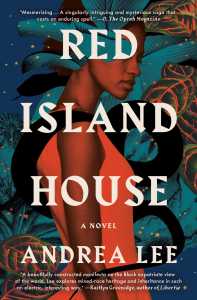 Red Island House by Andrea Lee – a new author for me – is a linked short story collection that spans 20 years or so on Naratrany, a small (fictional) island off of northwest Madagascar, and stars an odd couple. Senna is a rich Italian businessman; Shay is an African American professor 15 years his junior. They meet at a wedding in Como and Senna builds his tropical island getaway at the same time as he courts her. Lee plays up the irony of the fact that Shay ends up being the lady of the house, served by all Black staff.
Colonial attitudes linger among the white incomers. I loved the long first story, “The Packet War,” in which Shay has a low-key feud with Senna’s bombastic Greek overseer, Kristos. The locals believe that, because Senna did not throw a traditional housewarming party for his opulent complex, the Red House is cursed (there are some magic realist scenes reflecting this, and the servants prescribe Shay some rituals to perform to combat it). And the same comes to seem true of their marriage. Or does their partnership just have your average ups and downs?
The main question we ask about the books we read for Literary Wives is:
What does this book say about wives or about the experience of being a wife?
~SPOILERS IN THE FOLLOWING~
Shay and Senna eventually have two children, Roby and Augustina, and spend most of the year in Italy, only coming back to Madagascar for long holidays in the summer and winter. She tolerates her husband’s presumed affairs until he has one so blatant she can’t ignore it. By this time their children are grown and Senna uses the Red House for get-togethers with his ageing playboy friends. Both have realized how little they have in common. They spend much of their time apart; the love that once bound them despite their differences appears to be gone.
as the fascination of their mutual foreignness wears away over the years, they find they share few tastes and interests outside of family life, and it is easy to let that independence pull them apart.
The long story of their love and marriage has always been full of stops and starts, dependent on dashingly improvised bridges over differences in temperament and culture.
By the end of the book they’re facing the fact that they need to make a decision on whether to try to heal their rift or formalize it.
The message I take from this novel is that, if coming from very different backgrounds, you may have to put in extra effort to make a partnership work. Perhaps, too, to an extent, Senna and Shay could be read as symbols of the colonizer and the exotic prey. But there’s a cautionary tale here for all of us in long-term relationships: it’s easy to drift apart. (I remember, at the time of my parents’ divorce, my mother’s colleague astutely noting that their house was too big, such that it was too easy for them to live separate lives in it.)
In general, I liked Lee’s passages describing Madagascar (I was interested to note the Chinese infrastructure projects), and the stories that focus on this family. Others about peripheral characters – beauty parlour customers, a local half-Italian boy, visits from friends – engaged me less, and I was irked by the present tense, so pervasive that it’s even used to, nonsensically, describe actions that took place in the past. I doubt I’d try another by Lee. 
With thanks to Scribner UK for the free copy for review.
Next book: State of the Union by Nick Hornby in December (a reread for me).
September’s Focus: Short Stories
This is the seventh year in a row in which I’m making a special effort to read short stories in September; otherwise, story collections tend to languish on my shelves (and Kindle) unread. In September 2020 I read 8 collections, and in September 2021 it was 12. How many can I get through this time?! Here are my options, including, at far right, some I’m partway through, a thematic trio (“Birds” titles) I fancy reviewing together, and a few from the library.


To my surprise, if I count linked short stories, I’ve already read 13 collections this year. Highlights: Dance Move by Wendy Erskine, The Summer Book by Tove Jansson, Antipodes by Holly Goddard Jones, and How High We Go in the Dark by Sequoia Nagamatsu.
 The best of the lot, though, has been Stories from the Tenants Downstairs by Sidik Fofana, which I’ll be reviewing for BookBrowse over the weekend. It’s a character- and voice-driven set of eight stories about the residents of a Harlem apartment complex, many of them lovable rogues who have to hustle to try to make rent in this gentrifying area.
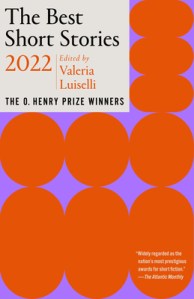 A September release I’ll quickly plug: The Best Short Stories 2022: The O. Henry Prize Winners, selected by Valeria Luiselli. I read this for Shelf Awareness and my review will be appearing in a couple of weeks. Half of the 20 stories are in translation – Luiselli insists this was coincidental – so it’s a nice taster of international short fiction. Contributing authors you will have heard of: Chimamanda Ngozi Adichie, Lorrie Moore, Samanta Schweblin and Olga Tokarczuk. The style runs the gamut from metafiction to sci-fi/horror. Covid-19, loss and parenting are frequent elements. My two favourites: Joseph O’Neill’s “Rainbows,” about sexual misconduct allegations, then and now; and the absolutely bonkers novella-length “Horse Soup” by Vladimir Sorokin, about a woman and a released prisoner who meet on a train and bond over food. (13 September, Anchor Books)
 Here’s a short story collection I received for review but, alas, couldn’t finish: Milk Blood Heat by Dantiel W. Moniz. This was longlisted for the Dylan Thomas Prize and won the NB Magazine Blogger’s Book Prize. The link, I have gathered, is adolescent girls in Florida. I enjoyed the title story, which opens the collection and takes peer pressure and imitation to an extreme, but couldn’t get through more than another 1.5 after that; they left zero impression.
Currently reading: The Boat by Nam Le (it won the Dylan Thomas Prize; I’ve read the first story so far and it was knockout!), Birds of a Lesser Paradise by Megan Mayhew Bergman.
 Resuming soon: The Predatory Animal Ball by Jennifer Fliss (e-book), Hearts & Bones by Niamh Mulvey, The Secret Lives of Church Ladies by Deesha Philyaw – all were review copies.
Are you a short story fan? Read any good ones recently?
Join me in this low-key challenge if you wish!
Four for #WITMonth: Jansson, Lamarche, Lunde and Vogt
I’ve managed four novels for this year’s Women in Translation month: a nostalgic, bittersweet picture of island summers poised between childhood and old age; a brief, impressionistic account of domestic violence and rape; the third in a series looking at how climate change and species loss reverberate amid family situations; and a visceral meditation on women’s bodies and relationships. Two of these were review copies from the recently launched Héloïse Press, which “champions world-wide female talent”.

The Summer Book by Tove Jansson (1972; 1974)
[Translated from the Swedish by Thomas Teal]
It was just the same long summer, always, and everything lived and grew at its own pace.
 This was only the second time I’ve read one of Jansson’s books aimed at adults (as opposed to five from the Moomins series). Whereas A Winter Book didn’t stand out to me when I read it in 2012 – though I will try it again this winter, having acquired a free copy from a neighbour – this was a lovely read, so evocative of childhood and of languid summers free from obligation. For two months, Sophia and Grandmother go for mini adventures on their tiny Finnish island. Each chapter is almost like a stand-alone story in a linked collection. They make believe and welcome visitors and weather storms and poke their noses into a new neighbour’s unwanted construction.
Six-year-old Sophia, based on Jansson’s niece of the same name, is precocious and opinionated, liable to change her mind in an instant. In “The Cat,” one of my favourite stand-alone bits, she’s fed up with their half-feral pet who kills lots of birds and swaps him for a friend’s soppy lap cat, but then regrets it. She’s learning that logic and emotion sometimes contradict each other, which becomes clearer as she peppers Grandmother with questions about religion and superstition.
As is common to Jansson’s books, there’s a melancholy undercurrent here.
Everything was fine, and yet everything was overshadowed by a great sadness. It was August, and the weather was sometimes stormy and sometimes nice, but for Grandmother, no matter what happened, it was only time on top of time, since everything is vanity and a chasing after the wind.
Sophia’s mother died, and although her grandmother has the greater presence, Papa is also around, dealing with practicalities in the background. Death stalks around the edges, reminding Grandmother of her mortality through bouts of vertigo that have her grabbing for her heart medication. On just the second page we have this memento mori:
“When are you going to die?” the child asked.
And Grandmother answered, “Soon. But that is not the least concern of yours.”
And so it doesn’t feel like our concern either; the focus is on the now, on these beautiful little moments of connection across the generations – like in “Playing Venice,” when Grandmother stays up all night rebuilding Sophia’s model city that was washed away by the rain. (Public library)
The Memory of the Air by Caroline Lamarche (2014; 2022)
[Winner of an English PEN Award; translated from the French by Katherine Gregor]
 In a hypnotic monologue, a woman tells of her time with a violent partner (the man before, or “Manfore”) who thinks her reaction to him is disproportionate and all due to the fact that she has never processed being raped two decades ago. When she goes in for a routine breast scan, she shows the doctor her bruised arm, wanting there to be a definitive record of what she’s gone through. It’s a bracing echo of the moment she walked into a police station to report the sexual assault (and oh but the questions the male inspector asked her are horrible).
The novella opens with an image that returns in dreams but is almost more a future memory of what might have been: “I went down into a ravine and, at the bottom, found a dead woman. She was lying in a shroud, on a carpet of fallen leaves.” I read this in one sitting – er, yoga session – and it has stayed in my mind in intense flashes like that and the flounce of her red dress on the summer day that turned into a nightmare. At an intense 70 pages, this reminded me of Annie Ernaux’s concise autofiction (I’ve reviewed Happening and I Remain in Darkness). An introduction by Dr Dominique Carlini-Versini contextualizes the work by considering the treatment of rape in contemporary French women’s writing.
The Memory of the Air will be published on 26 September. With thanks to Héloïse Press for the proof copy for review.
The Last Wild Horses by Maja Lunde (2019; 2022)
[Translated from the Norwegian by Diane Oatley]
The third in Lunde’s “Climate Quartet,” with its recurring elements of migration, shortages and environmental collapse. Always, though, the overall theme is parent–child relationships and the love that might be the only thing that keeps us going in the face of unspeakable challenges. Here she returns to the tripartite structure of The History of Bees (much my favourite of the three): a historical strand, a near-contemporary one, and a dystopian future story line. The link between the three is Przewalski’s horses (aka takhi).
 In the early 1880s, Mikhail Alexandrovich Kovrov, assistant director of St. Petersburg Zoo, is brought the hide and skull of an ancient horse species assumed extinct. Although a timorous man who still lives with his mother, he becomes part of an expedition to Mongolia to bring back live specimens. In 1992, Karin, who has been obsessed with Przewalski’s horses since encountering them as a child in Nazi Germany, spearheads a mission to return the takhi to Mongolia and set up a breeding population. With her is her son Matthias, tentatively sober after years of drug abuse. In 2064 Norway, Eva and her daughter Isa are caretakers of a decaying wildlife park that houses a couple of wild horses. When a climate migrant comes to stay with them and the electricity goes off once and for all, they have to decide what comes next. This future story line engaged me the most.
I appreciated some aspects: queer and middle-aged romances, the return of a character from The End of the Ocean, the consideration across all three plots of what makes a good mother. However, the horses seemed neither here nor there. There are also many, many animal deaths. Perhaps an unsentimental attitude is necessary to reflect past and future values, and the apparent cruelty of natural processes, but it limits the book’s appeal to animal lovers. Maybe the tone fits the Norwegian prose, which the translator describes as lean.
The fourth book of the quartet, publishing in Norway next month, is called something like The Dream of a Tree; a focus on trees would be a draw for me. After the disappointment of Books 2 and 3, I’m unsure whether I want to bother with the final volume, but it makes sense to do so, if only to grasp Lunde’s full vision. (Public library)
What Concerns Us by Laura Vogt (2020; 2022)
[Translated from the German by Caroline Waight]
 Vogt’s Swiss-set second novel is about a tight-knit matriarchal family whose threads have started to unravel. For Rahel, motherhood has taken her away from her vocation as a singer. Boris stepped up when she was pregnant with another man’s baby and has been as much of a father to Rico as to Leni, the daughter they had together afterwards. But now Rahel’s postnatal depression is stopping her from bonding with the new baby, and she isn’t sure this quartet is going to make it in the long term.
Meanwhile, Rahel’s sister Fenna knows she’s pregnant but refuses a doctor’s care. When she comes to stay with Rahel, she confides that the encounter with her partner, Luc, that led to conception was odd, rough; maybe not consensual. And all this time, the women’s mother, Verena, has been undergoing treatment for breast cancer. All three characters appear to be matter-of-factly bisexual; Rahel and Fenna’s father has long been out of the picture, replaced in Verena’s affections by Inge.
As I was reading, I kept thinking of the declaration running through A Ghost in the Throat by Doireann Ní Ghríofa: “This is a female text.” Vogt’s vision is all breasts and eggs, genitals actual and metaphorical. I loved the use of food in the novel: growing up, the girls cherished “silly nights” when their mother prepared an egg feast and paired it with a feminist lecture on reproduction. Late on, there’s a wonderful scene when the three main characters gorge on preserved foodstuffs from the cellar and share their secrets. (Their language is so sexually frank; would anyone really talk to their mother and siblings in that way?!) As in the Lunde, the main question is what it means to be a mother, but negotiating their relationships with men stretches the bonds of this feminine trio. One for fans of Rachel Cusk and Sally Rooney.
With thanks to Héloïse Press for the proof copy for review.
The Best Books from the First Half of 2022
Yes, it’s that time of year already! At first I thought I wouldn’t have enough 2022-released standouts to fill a post, but the more I looked through my list the more I realized that, actually, it has been a pretty good reading year. It remains to be seen, of course, how many of these will make it onto my overall best-of year list, but for now, these are my highlights. I made it up to an even 20 by including one that doesn’t release until July. Fiction is winning thus far! I give review excerpts below and link to the full text here or elsewhere.
Fiction
 Our Wives under the Sea by Julia Armfield: Miri is relieved to have her wife back when Leah returns from an extended deep-sea expedition. Something went wrong with the craft when it was too late to evacuate, though. Chapters alternate between Miri describing their new abnormal and Leah recalling the voyage. As Miri tries to tackle life admin for both of them, she feels increasingly alone. This is a sensitive study of love, grief and dependency. Armfield gives an increasingly eerie story line a solid emotional foundation.
 These Days by Lucy Caldwell: A beautiful novel set in Belfast in April 1941. We see the Second World War mostly through the eyes of the Bell family – especially daughters Audrey, engaged to be married to a young doctor, and Emma, in love with a fellow female first aider. The evocation of a time of crisis is excellent. The lack of speech marks, fluid shifting between perspectives, and alternation between past and present tense keep the story from seeming too familiar or generic. All of the female characters have hidden depths.
 Groundskeeping by Lee Cole: In Cole’s debut novel, two aspiring writers meet on a Kentucky college campus and form a romantic connection despite very different backgrounds. There are stereotypes to be overcome as Owen introduces Alma to Kentucky culture and slang. Trump’s election divides families and colleagues. The gentle satire on the pretensions of writing programs is another enjoyable element. Three-dimensional characters, vivid scenes ripe for the Netflix treatment, timely themes and touching relationships: alright!
 Days of Sand by Aimée de Jongh: This Great Depression-era story was inspired by the work of photographers such as Dorothea Lange. John Clark is following in his father’s footsteps as a photographer, leaving NYC for the Oklahoma panhandle. Locals are suspicious of John as an outsider, especially when they learn he is working to a checklist. Whether a cityscape or the midst of a dust storm, de Jongh’s scenes are stark and evocative. It’s rare for me to find the story and images equally powerful in a graphic novel, but that’s definitely the case here.
 Dance Move by Wendy Erskine: The 11 stories in Erskine’s second collection do just what short fiction needs to: dramatize an encounter, or a moment, that changes life forever. Her characters are ordinary, moving through the dead-end work and family friction that constitute daily existence, until something happens, or rises up in the memory, that disrupts the tedium. Erskine being from Belfast, evidence of the Troubles is never far away. Her writing is blunt and edgy, with no speech marks plus flat dialogue and slang.
 Antipodes by Holly Goddard Jones: Riveting stories of contemporary life in the American South and Midwest. Some have pandemic settings; others are gently magical. All are true to the anxieties of modern careers, marriage and parenthood. Endings elicit a gasp, particularly the audacious inconclusiveness of “Exhaust,” a tense tale of a quarreling couple driving through a blizzard. Worry over environmental crises fuels “Ark,” about a pyramid scheme for doomsday preppers. Nickolas Butler and Lorrie Moore fans will find much to admire.
 Sea of Tranquility by Emily St. John Mandel: This dazzlingly intricate novel blends historical fiction, up-to-the-minute commentary and science-fiction predictions. In 2401, the Time Institute hires Gaspery-Jacques Roberts to investigate a recurring blip in time. Fans of The Glass Hotel will recognize some characters, and those familiar with Station Eleven will find similarities in a pandemic plot that resonates with the Covid-19 experience. How does Mandel do it? One compulsively readable hit after another.
 Very Cold People by Sarah Manguso: The aphoristic style of some of Manguso’s previous books continues here as discrete paragraphs and brief vignettes build to a gloomy portrait of Ruthie’s archetypical affection-starved childhood in the fictional Massachusetts town of Waitsfield in the 1980s and 90s. The depiction of Ruthie’s narcissistic mother is especially acute. So much resonated with me. This is the stuff of girlhood – if not universally, then certainly for the (largely pre-tech) American 1990s as I experienced them.
 How High We Go in the Dark by Sequoia Nagamatsu: Just the right blend of literary fiction and science fiction. Opening in 2031 and stretching another 70 years into the future, this linked short story collection imagines how a pandemic reshapes the world and how communication and connection might continue after death. All but one story are in the first person, so they feel like personal testimonies. The whole is greater than the sum of the parts. The focus on illness and bereavement, but also on the love that survives, made this a winner.
 The Swimmers by Julie Otsuka: Otsuka’s third novel of the Japanese American experience again employs the first-person plural, as well as the second person – rarer perspectives that provide stylistic novelty. The first two chapters are set at a pool that, for the title swimmers, serves as a locus of escape and safety. On the first page we’re introduced to Alice, whose struggle with dementia becomes central. I admired Otsuka’s techniques for moving readers through the minds of the characters, alternating range with profundity and irony with sadness.
 French Braid by Anne Tyler: My 17th from Tyler, and easily her best new work in 18 years. It joins my other favourites such as Dinner at the Homesick Restaurant which reveal a dysfunctional family’s quirks through a close look, in turn, at the various members. Mercy is a painter and essentially moves into her studio, but without announcing it, and her husband Robin spends the next 25+ years pretending they still share a home. Other surprises from Tyler this time: a mild sex scene and a gay character. A return to form. Brava!
Nonfiction
 In Love by Amy Bloom: Bloom’s husband, Brian Ameche, was diagnosed with early-onset Alzheimer’s in his mid-60s, having exhibited mild cognitive impairment for several years. Brian quickly resolved to make a dignified exit while he still, mostly, had his faculties. This achieves the perfect tone, mixing black humour with teeth-gritted practicality as Bloom chronicles their relationship, the final preparations, his assisted suicide at Dignitas in Switzerland, and the aftermath. An essential, compelling read.
 Everything Is True by Roopa Farooki: Second-person, present-tense narration drops readers right into the life of a junior doctor. In February 2020, Farooki’s sister Kiron died of breast cancer. During the first 40 days of the initial UK lockdown, she continues to talk to Kiron. Grief opens the door for magic realism. There is also wry humour, wordplay, slang and cursing. A hybrid work that reads as fluidly as a novel while dramatizing real events, this is sure to appeal to people who wouldn’t normally pick up a bereavement or medical memoir.
 Body Work by Melissa Febos: A boldly feminist essay collection that explores how autobiographical writing can help one face regrets and trauma and extract meaning from the “pliable material” of memory. “In Praise of Navel Gazing” affirms the importance of women airing their stories of abuse and thereby challenging the power structures that aim to keep victims silent. “A Big Shitty Party” warns of the dangers of writing about real people. “The Return” employs religious language for the transformation writing can achieve.
 All Down Darkness Wide by Seán Hewitt: This poetic memoir about love and loss in the shadow of mental illness blends biography, queer history and raw personal experience. The book opens, unforgettably, in a Liverpool graveyard where Hewitt has assignations with anonymous men. His secret self, suppressed during teenage years in the closet, flies out to meet other ghosts: of his college boyfriend; of men lost to AIDS during his 1990s childhood; of English poet George Manley Hopkins; and of a former partner who was suicidal. (Coming out on July 12th from Penguin/Vintage (USA) and July 14th from Jonathan Cape (UK). My full review is forthcoming for Shelf Awareness.)
Poetry
 Thorpeness by Alison Brackenbury: This tenth collection features abundant imagery of animals and the seasons. Alliteration is prominent, but there is also a handful of rhymes. Family history and the perhaps-idyllic rural underpin the verse set in Lincolnshire and Gloucestershire as Brackenbury searches for ancestral graves and delivers elegies. I especially loved “Aunt Margaret’s Pudding,” a multipart poem about her grandmother’s life. There are also playful meetings between historical figures.
 Some Integrity by Padraig Regan: The sensual poems in this debut collection are driven by curiosity, hunger and queer desire. Flora and foods are described as teasing mystery, with cheeky detail. An unusual devotion to ampersands; an erotic response to statuary; alternating between bold sexuality and masochism to the point of not even wanting to exist; a central essay on the Orlando nightclub shooting and videogames – the book kept surprising me. I loved the fertile imagery, and appreciated Regan’s exploration of a nonbinary identity.
 Love Poems in Quarantine by Sarah Ruhl: Having read Ruhl’s memoir Smile, I recognized the contours of her life and the members of her family. Cooking and laundry recur: everyday duties mark time as she tries to write and supervises virtual learning for three children. “Let this all be poetry,” she incants. Part 2 contains poems written after George Floyd’s murder, the structure mimicking the abrupt change in focus for a nation. Part 3’s haiku and tanka culminate in a series on the seasons. A welcome addition to the body of Covid-19 literature.
 Rise and Float by Brian Tierney: Although it tackles heavy subjects like grief and mental health, the collection’s candor and stunning images transform the melancholy into the sublime. Much of the verse is in the first person, building an intimate portrait of the poet and his relationships. A family history of mental illness and electroshock treatment occasions a visit to a derelict psychiatric hospital. Recurring metaphors of holes dramatize a struggle against the void. Tierney’s close attention lends beauty to bleak scenes.
 Vinegar Hill by Colm Tóibín: I didn’t realize when I started that this was Tóibín’s debut collection; so confident is his verse, I assumed he’d been publishing poetry for decades. There’s a wide range of tone, structures and topics. Bereavements and chemotherapy are part of a relatable current events background. Irish-Catholic nostalgia animates a witty sequence from “The Nun” to “Vatican II.” Come along on armchair travels. Poems are based around anecdotes or painterly observations. The line breaks are unfailingly fascinating.
What are some of the best books you’ve read so far this year?
What 2022 releases do I need to catch up on right away?
Spring Reading, Part II: May, Moving and Swifts
Eight days after our move, there are still piles of boxes, but the furniture is in place and there are clear walkways, so we’ll call that progress. We got a lot of help on moving day from neighbours, one of whom built a tower of book boxes in the corner of the dining room! I had fun dismantling it last week and assigning each box to a particular bookcase. Arranging the contents on shelves will be for once we’re back from Spain.
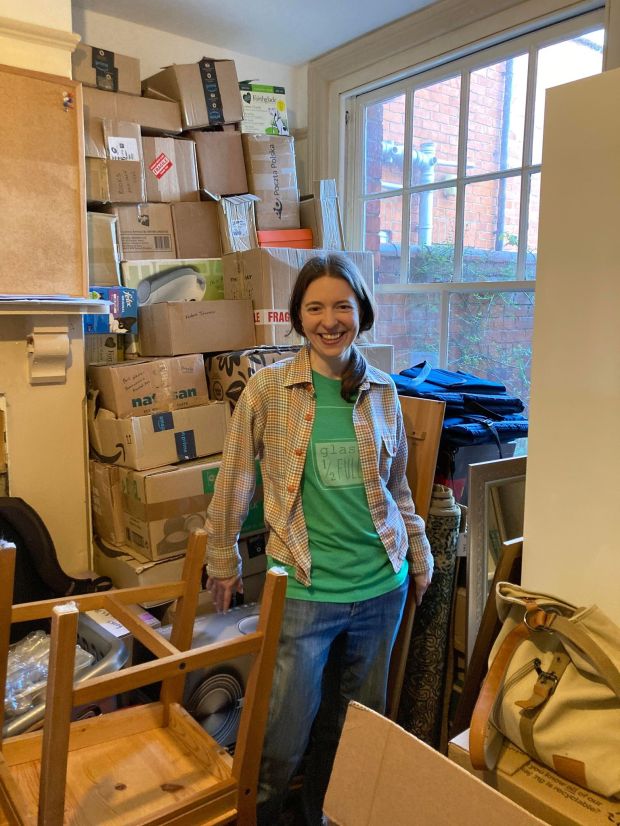
What with moving and DIY, I haven’t had a lot of time for reading lately, so didn’t finish any more of the spring books I’d intended to include – except for one children’s book from the library. I’ll give a little rundown of some of what has been on my coffee table stack.
Busy Spring: Nature Wakes Up by Sean Taylor and Alex Morss; illus. Cinyee Chiu (2021)
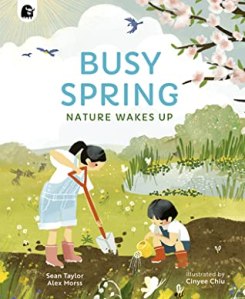 This was a cute read about two little girls helping their father in the garden and discovering the natural wonders of the season, like tadpoles in a pond, birds building nests, and insects and worms in the compost heap. A section at the end gives more information about the science of spring – unfortunately, it mislabels one bird and includes North American species without labelling them as such, whereas the rest of the book was clearly set in the UK. The strategy reminded me of that in Wild Child by Dara McAnulty. This year is the first time a children’s book Wainwright Prize will be awarded, so we’ll see this kind of book being recognized more.
May reads:
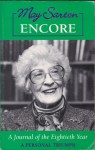 Encore is my last unread journal of May Sarton’s. It begins in May 1991, when she’s 79 and in recovery from major illness. She’s still plagued by pain and fatigue, but her garden and visits from friends are a solace. Although she has to lie down to garden, “to put my hands in the earth to dig is life giving … it is almost as if the earth were nourishing me at the moment.” As usual, there are lovely reflections on the freedoms as well as the losses of ageing. This book, like the previous, was dictated, so there is a bit of repetition. I’ve been amused to see how pretentious she found A.S. Byatt’s Possession! An entry or two at a sitting helped calm my mind during the stress of moving week.
“In a funny way what drives me is the spring, the fleeting spring. Because of the enormous wind and rain we have had, a lot of the daffodils have blown down, though not as many as I feared. But the truth is that their peak is past. We shall have them for another week and then they will be gone. It seems quite unbearable but that is what spring is—the letting go. The waiting and waiting and waiting, and then the letting go.”
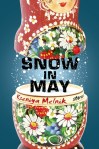
I started a reread of Snow in May by Kseniya Melnik and am partway through the second story. It’s a linked short story collection set in Magadan in northeast Russia – known for Stalin’s forced-labour camps. In “Love, Italian Style, or in Line for Bananas,” it’s 1975 and Tanya is on a shopping spree in Moscow. At a time of deprivation, she buys even things she doesn’t need or that aren’t quite right. Propositioned by an Italian football player on the plane ride over, she fantasizes about the exotic and romantic, juxtaposed against her everyday life.
“The pollen swirled around her like snow. There was a time when the distinctions between right and wrong seemed indisputable, and doing right felt good. When all the decisions had been premade and in her best interest. Back when she didn’t need so much to be happy.”
Belonging
 I saw it on shelf at the library and knew now was the perfect time to read My Life in Houses by Margaret Forster, a memoir via the places she’s lived, starting with the house where she was born in 1938, on a council estate in Carlisle. There’s something appealing to me about tracing a life story through homes – Paul Auster did the same in part of Winter Journal. I’d be tempted to undertake a similar exercise myself someday.
 The swifts come screeching down our new street and we saw one investigating a crevice in our back roof for a nest! In Fledgling by Hannah Bourne-Taylor, she is lonely in rural Ghana, where she and her husband had moved for his work, and takes in a young swift displaced from its nest. I’m only in the early pages, but can tell that her care for the bird will be a way of exploring her own feeling of displacement and the desire to belong. “Although I was unaware of it at the time, the English countryside and the birds had turned into my anchor of home.”
Review Catch-Up: Capildeo, Castillo, Nagamatsu & Wedlich
A second catch-up for April. Today I have a sprightly poetry collection about history, language and nature; a linked short story collection that imagines funerary rituals and human meaning in a post-pandemic future; and a wide-ranging popular science book about the diverse connotations and practical uses of slime. As a bonus, I have a preview essay from a forthcoming collection about how reading promotes empathy and social justice.
Like a Tree, Walking by Vahni Capildeo (2021)
 Capildeo is a nonbinary Trinidadian Scottish poet and the current University of York writer in residence. Their fourth collection is richly studded with imagery of the natural world, especially birds and trees. “In Praise of Birds” makes a gorgeous start:
“In praise of high-contrast birds, purple bougainvillea thicketing the golden oriole. … In praise of grackles quarrelling on the lawn. / In praise of unbeautiful birds abounding in Old Norse, language of scavenging ravens, thought and memory, a treacherous duo”
and finds a late echo in “In Praise of Trees”: “If I could have translated piano practice into botany, the lichen is that Mozart phrase my left hand trialled endlessly.”
The title section (named after a moment from the book of Mark) draws on several numbered series – “Walk #2,” “Nocturne #1,” “Lullaby 4,” and so on – that appeared in a pamphlet they published last year. These are not uncomplicated idylls, though. Walks might involve dull scenery and asthma-inducing dust, as well as danger: “If nobody has abducted you, I’ll double back to meet you. … Before raper-man corner and the gingerbread house.” Lullabies wish for good sleep despite lawnmowers and a neighbour shooting his guns. There’s more bold defiance of expectations in phrases like “This is the circus for dead horses only”.
Language is a key theme, with translations from the French of Eugène Ionesco, and of Pierre de Ronsard into Trini patois. There are also dual-language erasure poems after Dame Julian of Norwich (Middle English) and Simone Weil (French). Much of the work is based on engagement with literature, or was written in collaboration with performers.
“Death is a thief in a stationery shop. He strolls out. The shopkeeper, a poor man, runs after, shouting. – I saw you! Give that back! – Give back what? Death says, strolling out. Hermes is a tram attendant who holds your coffee, helping you find the coin you dropped; it rolls underfoot.” (from “Odyssey Response”)
“Windrush Reflections” impresses for its research into the situation of Caribbean immigrants to Britain. It’s one of a number of long, multipart pieces, some of them prose poems. The verse relies mostly on alliteration and anaphora for its sonic qualities. Along with history, there is reflection on current events, as in “Plague Poems.” Experiences of casual racism fuel one of my favourite passages:
“the doorbell was ringing / the downstairs american oxford neighbours / wanted to check / by chatting on the intercom / if i was doing terrorism / i was doing transcriptions” (from “Violent Triage”)
Honorifics by Cynthia Miller, which I reviewed last week, had more personal resonance for me, but these are both powerful collections – alive to the present moment and revelling in language and in flora and fauna. However, only Capildeo progressed from the Jhalak Prize longlist onto the shortlist, which was announced yesterday.
With thanks to Carcanet Press for the free e-copy for review.
How High We Go in the Dark by Sequoia Nagamatsu (2022)
“Things are bad in every generation. But we still have to live our life.”
This linked short story collection was one of my most anticipated books of the year. Like two of its fellow entries on that list, Sea of Tranquility by Emily St. John Mandel and To Paradise by Hanya Yanagihara, it’s just the right blend of literary fiction and science fiction – an Octavia E. Butler level of the latter that I can handle. Opening in 2031 and stretching another 70 years into the future, it imagines how a pandemic reshapes the world and how communication and connection might continue after death. In the first story, Cliff is on the ground at the start of the Arctic plague, which emerges from a thawing Siberia (the same setup as in Under the Blue!), where his late daughter, Clara, had been part of a research group that discovered a 30,000-year-old Neanderthal girl they named Annie.
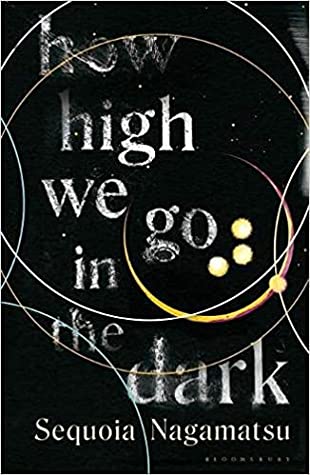 The virus is highly transmissible and deadly, and later found to mostly affect children. In the following 13 stories (most about Asian Americans in California, plus a few set in Japan), the plague is a fact of life but has also prompted a new relationship to death – a major thread running through is the funerary rites that have arisen, everything from elegy hotels to “resomation.” In the stand-out story, the George Saunders-esque “City of Laughter,” Skip works at a euthanasia theme park whose roller coasters render ill children unconscious before stopping their hearts. He’s proud of his work, but can’t approach it objectively after he becomes emotionally involved with Dorrie and her son Fitch, who arrives in a bubble.
All but one of these stories are in the first person, so they feel like intimate testimonies of how a pandemic transforms existence. Almost all of the characters have experienced a bereavement, or are sick themselves. Relatives or acquaintances become protagonists in later stories. For instance, in “Pig Son,” Dorrie’s ex, David, is a scientist growing organs for transplantation. Bereavement coordinator Dennis and his doctor brother Bryan narrate #5 and #8, respectively. Six years on, Cliff’s wife Miki takes their granddaughter on a space mission. My other two favourites were “Through the Garden of Memory,” in which patients on a plague ward build a human pyramid and plot a sacrifice, and “Songs of Your Decay,” about a researcher at a forensic body farm who bonds with her one live donor over rock music.
Some stories are weaker or less original than others, but this is one case where the whole is definitely greater than the sum of its parts. The focus on illness and death, but also on the love that survives, made this a winner for me. I’d be especially likely to recommend it to fans of Kazuo Ishiguro and Karen Russell.
With thanks to Bloomsbury for the free copy for review.
Slime: A Natural History by Susanne Wedlich (2021)
[Translated from the German by Ayça Türkoğlu]
 This is just the sort of wide-ranging popular science book that draws me in. Like Entangled Life by Merlin Sheldrake, a work I’ve had many opportunities to recommend even to those who don’t normally pick up nonfiction, it incorporates many weird and wonderful facts about life forms we tend to overlook. Wedlich, a freelance science journalist in Germany, starts off at the Hunterian Museum in Glasgow, where she seeks a sample of the “primordial slime” collected by the HMS Challenger in 1876. “It seems to be an unwritten rule of horror: slime sells!” she remarks – from H. P. Lovecraft to Ghostbusters, it has provoked disgust. Jellyfish, snails, frogs and carnivorous plants – you’re in for a sticky tour of the natural world.
The technical blanket term for slimy substances is “hydrogels,” which are 99% water and held together by polymers. Biological examples have been inspiring new technologies, like friction reducers (e.g. in fire hoses) modelled on fish mucus, novel adhesives to repair organs and seal wounds, and glue traps to remove microplastics. Looking to nature to aid our lives is nothing new, of course: Wedlich records that slugs were once used to lubricate cart wheels.
The book branches off in a lot of directions. You’ll hear about writers who were spellbound or terrified by marine life (Patricia Highsmith kept snails, while Jean-Paul Sartre was freaked out by sea creatures), the Victorian fascination with underwater life, the importance of the microbiome and the serious medical consequences of its dysfunction, and animals such as amphibians that live between land and water. At times it felt like the narrative jumped from one topic to another, especially between the biological and the cultural, without following a particular plan, but there are enough remarkable nuggets to hold the interest.
With thanks to Granta for the free copy for review.
And a bonus:
 I was delighted to be sent a preview pamphlet containing the author’s note and title essay of How to Read Now by Elaine Castillo, coming from Atlantic in August. This guide to cultural criticism – how to read anything, not just a book – is alive to the biased undertones of everyday life. “Anyone who is perfectly comfortable with keeping the world just as it is now and reading it the way they’ve always read it … cannot be trusted”. Castillo writes that it is not the job of people of colour to enlighten white people (especially not through “the gooey heart-porn of the ethnographic” – war, genocide, tragedy, etc.); “if our stories primarily serve to educate, console and productively scold a comfortable white readership, then those stories will have failed their readers”. This is bold, provocative stuff. I’m sure to learn a lot.
Would you be interested in reading one or more of these?
Territory of Light by Yuko Tsushima (#NovNov Translated Buddy Read)
With well over 100 posts, you all have already smashed last year’s totals for Novellas in November, and there’s still a week and a half to go! We’re grateful for your participation and hope some of you have been enjoying the buddy reads.
For literature in translation week, our readalong book has been Territory of Light by Yuko Tsushima. As much a linked short story collection as a novella, it first appeared in monthly instalments in the Japanese literary magazine Gunzō in 1978–9 but wasn’t translated into English (by Geraldine Harcourt) until 2018, two years after Tsushima’s death. The translation was critically acclaimed, earning nominations for the 2019 Kirkus Prize and the 2020 BTBA Best Translated Book Award for Fiction.
The apartment had windows on all sides. I spent a year there, with my little daughter, on the top floor of an old four-storey office building.
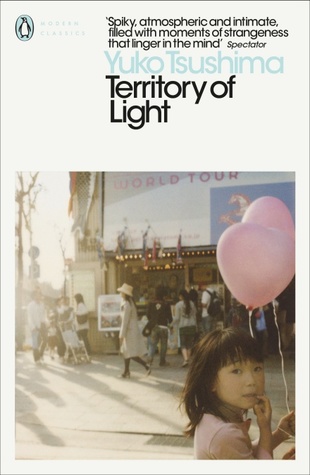 Dark and carefully chiselled, the chapters are like tiny diamonds that you have to hold up to the light to see the glitter. Newly separated from her husband, the unnamed narrator, who works at a music library, entrusts us with vignettes from her first year of single parenthood. She is honest about her bad behaviour – the nights she got falling down drunk and invited men back to the apartment; the mornings she missed the daycare dropoff deadline and let her two-year-old fend for herself while she stayed in bed. Alongside the custody battle with her ex are smaller feuds, like with her neighbour, who’s had enough of the little girl dropping things onto his roof from the windows above and gets the landlord to do something about it.
Her daughter is a typical toddler, stubborn and impetuous, yet there are moments of intimacy between them that make your breath catch. Sometimes their roles even become reversed: the daughter nurses her mother through a bout of fever, and after the neighbour incident comforts her with words she’s received: “Mommy…are you all right? Don’t cry, there’s a good girl.”
The narrator describes her dreams, employing the imagery of fire and flight to capture her occasional hopelessness and longing for escape. Cherry trees are blossoming as they move into the apartment, and by the time they’re ready to move on again the spring is coming back. Details of sound and light make her observations zing. The clean, precise style – no frills, no tricks – reminds me of other autofiction in translation I’ve read. Others mention Elena Ferrante as a readalike, but what came to mind for me was Tove Ditlevsen’s trilogy, especially Dependency with its addiction theme. No doubt Harcourt should also be thanked for her crystal-clear rendition. It’s such a beautiful book, though perhaps already slipping from my grasp; I’m glad Cathy suggested it as our buddy read. (New purchase)
[122 pages]
Other reviews:
Keep in touch via Twitter (@bookishbeck / @cathy746books) and Instagram (@bookishbeck / @cathy_746books). We’ll add any of your review links in to our master posts. Feel free to use the terrific feature image Cathy made and don’t forget the hashtag #NovNov.
Short Stories in September, Part III: Butler, Costello, MacLaverty, Washington
Today I have a third set of terrific and varied short story collections. Between this, my Part I and Part II posts, and a bonus review I have coming up on Friday, I’ve gotten through 12 volumes of stories this month. This feels like a great showing for me because I don’t naturally gravitate to short stories and have to force myself to make a special effort to read them every September; otherwise, they tend to languish unread on my shelves and TBR.
From science fiction and horror tales set in alternate worlds to gritty slices of real life in Texas via two sets of quiet Irish relationship studies, this quartet of books showcases a range of tones and genres but fairly straightforward story structures and points of view. This was such a strong batch, I had to wonder why I never call myself a short story fan. All:
Bloodchild and Other Stories by Octavia E. Butler (2005)
 My first R.I.P. selection and one I can heartily recommend – even if you’re normally wary of dystopias, horror and science fiction. Butler makes these genres accessible by peopling her plots with relatable protagonists and carefully accounting for their bizarre predicaments without wasting time on extraneous world-building. The way in which she explores very human issues alongside the existence of alien beings reminds me of Mary Doria Russell’s The Sparrow, another of my rare forays into sci fi.
Along with the original five stories Butler published in 1970s and 1980s magazines and anthologies, this second edition contains two essays on her writing process and two new stories that date to 2003. In “Bloodchild,” a small band of humans live on another planet ruled by the Tlic, which sound like giant spiders or scorpions. Gan learns he is expected to play his part by being a surrogate for T’Gatoi’s eggs, but is haunted by what he’s heard this process involves. In a brief afterword (one is included with each piece here), Butler explains that the story arose from her terror of botflies, which she knew she might encounter in the Peruvian Amazon, and that she has always faced what scares her through her writing.
My other favorite story was “The Evening and the Morning and the Night,” about a subclass of people afflicted with Duryea-Gode disease. A cruel side effect of a parent’s cancer treatment, the illness compels sufferers to self-harm and they are often confined to asylums. Lynn and Alan visit his mother in one such institution and see what their future might hold. “Speech Sounds” and “Amnesty” reminded me most of the Parable novels, with the latter’s Noah a leader figure similar to Lauren. After an apocalyptic event, people must adapt and cooperate to survive. I appreciated how the two essays value persistence – more so than talent or inspiration – as the key to success as a writer. This was my fourth book by Butler and I don’t see why I shouldn’t keep going and read her whole oeuvre. (University library)

The China Factory by Mary Costello (2012)
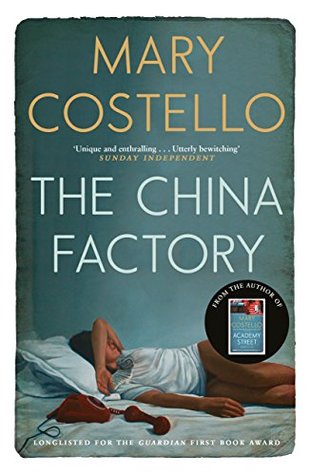 Academy Street is a near-perfect novella and I also enjoyed The River Capture, so I wanted to complete the set by reading Costello’s first book. Its dozen understated stories are about Irish men and women the course of whose lives are altered by chance meetings, surprise liaisons, or not-quite-affairs that needle them ever after with the could-have-been. The mood of gentle melancholy would suit a chilly moonlight drive along the coast road to Howth. In the opening title story, a teenage girl rides to her work sponging clay cups with an oddball named Gus. Others can’t get past things like his body odour, but when there’s a crisis at the factory she sees his calm authority save the day. Elsewhere, a gardener rushes his employer to the hospital, a woman attends her ex-husband’s funeral, and a school inspector becomes obsessed with one of the young teachers he observes.
Three favourites: In “And Who Will Pay Charon?” a man learns that, after he rejected Suzanne, she was hideously attacked in London. When she returns to the town as an old woman, he wonders what he might have done differently. “The Astral Plane” concerns a woman who strikes up a long-distance e-mail correspondence with a man from New York who picked up a book she left behind in a library. How will their intellectual affair translate into the corporeal world? The final story, “The Sewing Room,” reminded me most of Academy Street and could be a novel all of its own, as a schoolteacher and amateur fashion designer prepares for her retirement party and remembers the child she gave up for adoption. (Secondhand, gifted)
Blank Pages and Other Stories by Bernard MacLaverty (2021)
 I knew from The Great Profundo that I liked MacLaverty’s stories, and I also enjoyed his latest novel, Midwinter Break, so I was delighted to hear news of a new collection. A number of the longer stories are set at turning points in twentieth-century history. In 1940, a mother is desperate to hear word of her soldier son; in 1971 Belfast, officers search a woman’s house. Two of the historical stories appealed to me for their medical elements: “The End of Days,” set in Vienna in 1918, dramatizes Egon Schiele’s fight with Spanish flu, while “Blackthorns” gives a lovely picture of how early antibiotics promoted miraculous recovery. In the title story, a cat is all a writer has left to remind him of his late wife. “Wandering” has a woman out looking for her dementia-addled mother. “The Dust Gatherer” muses on the fate of an old piano. Elderly parents and music recur, establishing filaments of thematic connection.
Three favourites: In “Glasshouses,” a man temporarily misplaces his grandchildren in the botanical gardens; “The Fairly Good Samaritan” is the fable of a jolly drunk who calls an ambulance for his poorly neighbour – but not before polishing off her brandy; and in the gorgeous “Sounds and Sweet Airs” a young woman’s harp music enthrals the passengers on a ferry.
With thanks to Jonathan Cape for the free copy for review.
Lot: Stories by Bryan Washington (2019)
 The musical equivalent of Lot might be a mixtape played on a boombox or blasted from an open-top Corvette while touring the streets of Houston, Texas. Most of this Dylan Thomas Prize-winning linked collection follows Nic, a mixed-race Black/Latino boy who works in the family restaurant. As his family situation realigns – his father leaves, his older brother Javi enlists, his sister Jan has a baby – he’s trying to come to terms with his homosexuality and wondering if this gentrifying city suits him anymore. But he knows he’ll take himself wherever he goes, and as the book closes with “Elgin” (the most similar in mood and setup to Washington’s debut novel, Memorial) he’s thinking of taking a chance on love.
Drug dealers, careworn immigrants and prostitutes: Even the toughest guys have tender hearts in these stories. Eleven of 13 stories are in the first person. Where the narration isn’t Nic’s, it’s usually the collective voice of the neighbourhood boys. As far as I can tell, most of the story titles refer to Houston sites: particular addresses or neighbourhoods, or more vague locations. Like in Memorial, there are no speech marks. Washington’s prose is earthy and slang-filled. The matter-of-fact phrasing made me laugh: “He knocked her up in the usual way. For six minutes it looked like he’d stick around”; “He’d been staying there since the Great Thanksgiving Rupture, back when his brother’d found the dick pic in his pillowcase.” With the melting pot of cultures, the restaurant setting, and the sharp humour, this reminded me of Elaine Castillo’s America Is Not the Heart.
Three favourites: In “Shepherd,” the narrator emulates a glamorous cousin from Jamaica; “Bayou” is completely different from the rest, telling the urban legend of a “chupacubra” (a mythical creature like a coyote); “Waugh,” the longest story and one of just two told in the third person, is about a brothel’s worth of male sex workers and their pimp. Its final page is devastating. Despite their bravado, Washington’s characters are as vulnerable as Brandon Taylor’s. I think of these two young gay African American writers as being similar at root even though their style and approach are so very different. (New purchase)
A side note: I’m wondering how an author chooses primarily first person or third person POVs for short stories. MacLaverty and Taylor write exclusively in an omniscient third person; Washington and Eley Williams almost always plump for the first person. (Here, Butler was about half and half and Costello only used first person in three stories.) Is the third person seen as more impartial and commanding – a more elevated form of fiction? Is first person more immediate, informal and natural, but also perhaps too easy? I wouldn’t say I prefer one or the other (not in my novels, either); it all depends on the execution. Notably, none of this year’s stories were in the second person or employed experimental structures.
Two more collections I’m reading are spilling across into October for R.I.P., but will I keep up the short story habit after that? I still have a shelf full of unread story collections, and I have my eye on My Monticello, which I got from NetGalley…
Short Stories in September, Part II: Tove Jansson, Brandon Taylor, Eley Williams
Each September I make a special effort to read short stories, which otherwise tend to languish on my shelves and TBR unread. After my first four reviewed last week, I have another three wonderfully different collections, ranging from bittersweet children’s fantasy in translation to offbeat, wordplay-filled love notes via linked stories suffused with desire and desperation.
Tales from Moominvalley by Tove Jansson (1962; 1963)
[Trans. from the Swedish by Thomas Warburton]
 I only discovered the Moomins in my late twenties, but soon fell in love with the quirky charm of Jansson’s characters and their often melancholy musings. Her stories feel like they can be read on multiple levels, with younger readers delighting in the bizarre creations and older ones sensing the pensiveness behind their quests. There are magical events here: Moomintroll discovers a dragon small enough to be kept in a jar; laughter is enough to bring a fearful child back from literal invisibility. But what struck me more was the lessons learned by neurotic creatures. In “The Fillyjonk who believed in Disasters,” the title character fixates on her belongings—
“we are so very small and insignificant, and so are our tea cakes and carpets and all those things, you know, and still they’re important, but always they’re threatened by mercilessness…”
—but when a gale and a tornado come and sweep it all away, she experiences relief and joy:
“the strange thing was that she suddenly felt quite safe. It was a very strange feeling, and she found it indescribably nice. But what was there to worry about? The disaster had come at last.”
My other favourite was “The Hemulen who loved Silence.” After years as a fairground ticket-taker, he can’t wait to retire and get away from the crowds and the noise, but once he’s obtained his precious solitude he realizes he needs others after all. The final story, “The Fir Tree,” is a lovely Christmas one in which the Moomins, awoken midway through their winter hibernation, get caught up in seasonal stress and experience the holiday for the first time. (Public library)
Filthy Animals by Brandon Taylor (2021)
Real Life was one of my five favourite novels of 2020, and we are in parallel fictional territory here. Lionel, the protagonist in four of the 11 stories, is similar to Wallace insomuch as both are gay African Americans at a Midwestern university who become involved with a (straight?) white guy. The main difference is that Lionel has just been released from hospital after a suicide attempt. A mathematician (rather than a biochemist like Wallace), he finds numbers soothingly precise in comparison to the muddle of his thoughts and emotions.
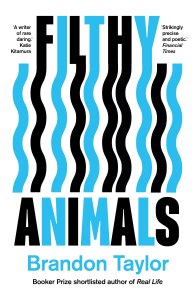 In the opening story, “Potluck,” he meets Charles, a dancer who’s dating Sophie, and the three of them shuffle into a kind of awkward love triangle where, as in Real Life, sex and violence are uncomfortably intertwined. It’s a recurring question in the stories, even those focused around other characters: how does tenderness relate to desire? In the throes of lust, is there room for a gentler love? The troubled teens of the title story are “always in the thick of violence. It moves through them like the Holy Ghost might.” Milton, soon to be sent to boot camp, thinks he’d like to “pry open the world, bone it, remove the ugly hardness of it all.”
Elsewhere, young adults face a cancer diagnosis (“Mass” and “What Made Them Made You”); a babysitter is alarmed by her charge’s feral tendencies (“Little Beast”); and same-sex couples renegotiate their relationships (Simon and Hartjes in “As Though That Were Love” and Sigrid and Marta in “Anne of Cleves,” one of my favourites). While the longer Lionel/Charles/Sophie stories, “Potluck” and “Proctoring,” are probably the best and a few others didn’t make much of an impression, the whole book has an icy angst that resonates. Taylor is a confident orchestrator of scenes and conversations, and the slight detachment of the prose only magnifies his characters’ longing for vulnerability (Marta says to Sigrid before they have sex for the first time: “I’m afraid I’ll mess it up. I’m afraid you’ll see me.” To which Sigrid replies, “I see you. You’re wonderful.”). (New purchase, Forum Books)
 A bonus story: “Oh, Youth” was published in Kink (2021), an anthology edited by Garth Greenwell and R.O. Kwon. I requested this from NetGalley just so I could read the stories by Carmen Maria Machado and Brandon Taylor. All of Taylor’s work feels of a piece, such that his various characters might be rubbing shoulders at a party – which is appropriate because the centrepiece of Real Life is an excruciating dinner party, Filthy Animals opens at a potluck, and “Oh, Youth” is set at a dinner party.
Grisha is here with Enid and Victor, his latest summer couple. He’s been a boytoy for hire since his architecture professor, Nate, surprised him by inviting him into his open marriage with Brigid. “His life at the time was a series of minor discomforts that accumulated like grit in a socket until rotation was no longer possible.” The liaisons are a way to fund a more luxurious lifestyle and keep himself in cigarettes.
While Real Life brought to mind Virginia Woolf, Taylor’s stories recall E.M. Forster or Thomas Mann. In other words, he’s the real deal: a blazing talent, here to stay.
Attrib. and Other Stories by Eley Williams (2017)
 After enjoying her debut novel, The Liar’s Dictionary, this time last year, I was pleased to find Williams’s first book in a charity shop last year. Her stories are brief (generally under 10 pages) and 15 of the 17 are first-person narratives, often voiced by a heartbroken character looking for the words to describe their pain or woo back a departed lover. A love of etymology is patent and, as in Ali Smith’s work, the prose is enlivened by the wordplay.
The settings range from an art gallery to a beach where a whale has washed up, and the speakers tend to have peculiar careers like an ortolan chef or a trainer of landmine-detecting rats. My favourite was probably “Synaesthete, Would Like to Meet,” whose narrator is coached through online dating by a doctor.
 I found a number of the stories too similar and thin, and it’s a shame that the hedgehog featured on the cover of the U.S. edition has to embody human carelessness in “Spines,” which is otherwise one of the standouts. But the enthusiasm and liveliness of the language were enough to win me over. (Secondhand purchase from the British Red Cross shop, Hay-on-Wye – how fun, then, to find the line “Did you know Timbuktu is twinned with Hay-on-Wye?”)
I’ll have one more set of short story reviews coming up before the end of the month, with a few other collections then spilling into October for R.I.P.
Six Degrees of Separation: Second Place to Woman on the Edge of Time
The last Six Degrees of Separation post I did was back in April; I’ve fallen out of the habit since then. But this month an idea seized me and I’m back! This time we begin with Second Place by Rachel Cusk, which is on the Booker Prize longlist. (See Kate’s opening post.)

When I saw Cusk speak at the online Hay Festival, I learned that Second Place (my review) was loosely inspired by Mabel Dodge Luhan’s 1932 memoir Lorenzo in Taos, about the time when D.H. Lawrence came to visit her in New Mexico. Thoughts of Lawrence in Taos inevitably take me back to my first (and only) academic conference in 2005, hosted by the D.H. Lawrence Society of North America in Santa Fe, with a fieldtrip out to his Taos ranch.
 #1 One of the books I read ‘in preparation’ for attending that conference was Small World by David Lodge, a comedic novel about professors on the international conference circuit. I’ve included it as one of the Landmark Books of My Life.
 #2 Flights and “small world” connections also fill the linked short story collection Turbulence by David Szalay.
 #3 If you can bear to remember the turbulence of recent history, UnPresidented by Jon Sopel is a breezy diary of the 2020 U.S. election. We were lucky enough to have the author, a BBC presenter and brother of one of our members, join our book club discussion on Zoom.
 #4 That punning title reminded me of A Sting in the Tale by Dave Goulson, his first and probably best work of popular science – all of his books since have been very similar, but that’s no problem because his enthusiasm for insect life is infectious and he writes with the wit and charm of Gerald Durrell.
#5 Goulson’s latest book, which I’ve recently reviewed for Shelf Awareness, is called Silent Earth, about the grave threats that insects face (pesticides, invasive species, climate change and much more). It’s the second book I’ve read in recent years (the first was Losing Eden by Lucy Jones) that is explicitly based on or inspired by Silent Spring by Rachel Carson. Like Carson’s book, these seek to effect real societal change.


#6 Carson, Goulson and Jones all conjure up dystopian scenarios of unimaginable natural loss to spur readers into action. A feminist classic my book club read earlier in the year, Woman on the Edge of Time by Marge Piercy, contrasts utopian and dystopian scenes experienced by a Latina woman who’s been confined to a mental hospital. Will society evolve into a utopian vision of subsistence living and absolute gender equality, or move towards further isolation and urban barrenness? It’s an unusual and fascinating novel with hints of science fiction, but grounded in the real world. I still haven’t managed to review it, but next month’s 1976 Club may be just the excuse I need. Do give it a try!

Cycling round from one feminist novel to another, I’ve also featured a couple of personal favourites, some recent works, and a classic of nature writing.
Where will your chain take you? Join us for #6Degrees of Separation! (Hosted on the first Saturday of each month by Kate W. of Books Are My Favourite and Best.) Next month’s R.I.P.-appropriate starting point is the short story “The Lottery” by Shirley Jackson.
 Bookish Beck = Rebecca Foster. American transplant to England. Freelance proofreader and book reviewer.
 Bookish Beck