Reading Ireland Month, Part II: Dowd, Enright, Madden & Nugent
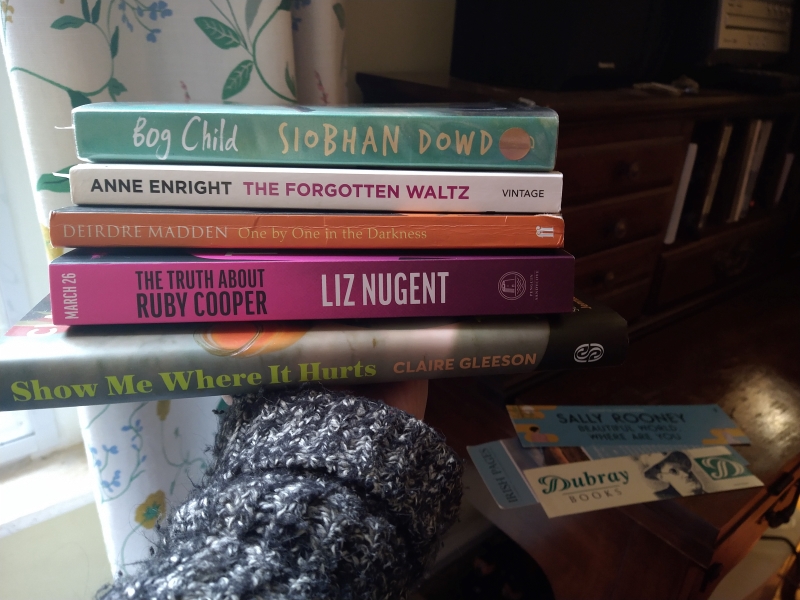
I’m catching up with a final set of reviews for #ReadingIrelandMonth26. I read two novels set at least partially during the Troubles, one of them for teenagers; a quiet novel about adultery and bereavement; and a thriller about consent and family legacy. I also read the first half of one more novel, a sombre one about the aftermath of a mental health crisis. Between this post and my first one, I covered 6.5 novels by Irish women, which I’ll call a win.
Bog Child by Siobhan Dowd (2008)
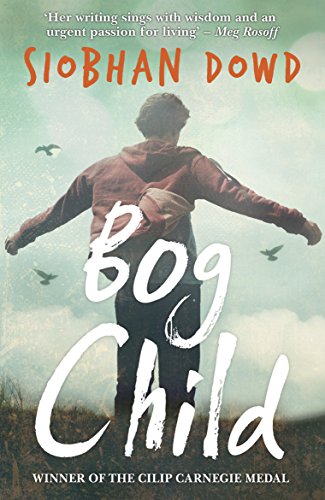 Fergus McCann is 18 and taking A levels; if he can only get three Bs, he’ll have his ticket out of Northern Ireland to study medicine at Aberdeen. This is no ordinary summer, though. He loves running on the hills at the border and here he makes a landmark discovery and embarks on a risky mission. The plot opens with Fergus and his uncle stumbling on the corpse of a girl while cutting peats. It’s a case for archaeologists rather than the police: the body is from the Iron Age and there’s evidence that the girl was sacrificed. An acquaintance then pressures Fergus into running parcels up and down the hill, right under the noses of the British at the checkpoint. He makes friends with Owain, a Welsh soldier, but gets a horrible feeling he’s partially responsible for the bombings he soon hears about on the radio. His family is enmeshed in the IRA anyway: his brother is among the hunger strikers in the local prison. There’s every chance that Joey could die before the summer is out, as much a victim of injustice as “Mel” (as Fergus names the girl from the bog, whose story he dreams).
This was Dowd’s third novel, published posthumously after her death from cancer, and won the Carnegie Medal. I’d say it’s one of the few best young adult novels I’ve ever read. (It’s shelved under Teenage Fiction at my library.) It’s an excellent peripheral glance at history ancient and modern – Fergus’s letter to Margaret Thatcher is brilliant – and effectively recreates a teen’s divided attention: friends, schooling, family drama, the future, and romance (via the daughter of the archaeologist). I searched my library catalogue for further books on bog bodies after reading Anna North’s Bog Queen and it really paid off! (Public library)
The Forgotten Waltz by Anne Enright (2011)
 I’ve only read a handful of Enright novels and wanted to experience more, so picked this one because it was shortlisted for the Orange Prize. On the face of it, it’s a fairly straightforward adultery story, but the unshowy potency of Enright’s writing and her realistic insight into relationships set it apart. While married to Conor, Gina has an affair with Seán, who’s older and married to Aileen. Seán is part of their social circle but also someone she knows through work, and business trips are an easy excuse. “The office game was another game for us to play, after the suburban couples game, and before the game of hotel assignations and fabulous, illicit lust, and neither of us thought there might come a moment when all the games would stop. It was a lot of fun.” Gina narrates matter-of-factly, rejecting cause-and-effect language. She doesn’t defend herself, or fool herself that Seán is perfect. This new relationship involves as many challenges as her marriage, what with her mother’s death and Seán’s preteen daughter, Evie, who appears to be autistic and epileptic. The short chapters are all headed with song lyrics, mostly from love songs (“Will You Love Me Tomorrow,” “Stop! In the Name of Love”) whose ironic optimism underlines the novel’s gently melancholy tone. This reminded me most of Maggie O’Farrell’s early work, and more than justified delving into Enright’s back catalogue. (Secondhand – Awesomebooks.com)
{SPOILERS IN THE REST!!}
One by One in the Darkness by Deirdre Madden (1996)
 Louise Kennedy’s Trespasses was our book club selection for March; I’d read it just two years ago, so skimmed back through and was impressed by its construction. Some were less convinced by the framing story and not emotionally engaged with Michael and Cushla’s affair, but we all appreciated it as a sideways look at Northern Irish history. One by One in the Darkness, which was also shortlisted for the Women’s (then Orange) Prize, is set close to its publication in the 1990s but returns to the Troubles through memories and flashbacks. Set over one week – Saturday to Friday – it’s the story of the three Quinn sisters. Cate is a journalist in London who flies home to Antrim to break the news that she’s pregnant out of wedlock. Helen is a lawyer and Sally a schoolteacher. They, their mother, and Uncle Brian have all gotten on with life as best they could, but their father’s murder is something they can’t forget and won’t ever get over. By saving that scene for the very last page of this novella, she keeps the horror of it fresh. Through one family’s story, she gives a sense of the scope of the country’s loss. But the book is not without a dark sense of humour, either. Madden was a new author for me. I found her work profound at the sentence level (see below for some favourite lines) rather than engaging at the plot level. (Secondhand – Awesomebooks.com)
“‘What’s wrong with Uncle Peter?’ ‘Two things,’ [Granny] said. ‘He thinks too much, and then he drinks too much.’”
“Once when [Cate] was home she’d remarked to Helen that she thought the forecasts were often inaccurate in Northern Ireland. ‘It’s probably deliberate,’ Helen had replied. ‘If they read out the average day’s news here and then said at the end of it, “Oh, and by the way, it’s going to bucket rain for the next twenty-four hours,” it might be more than people could take.’”
“Cate had remarked once that it was only when you lived away from Northern Ireland that you realised on returning how deeply divided a society it was, and how strange the effect of that could be.”
“There’d been well over three thousand people killed since the start of the Troubles, and every single one of them had parents or husbands and wives and children whose lives had been wrecked. It would be written about in the paper for two days, but as soon as the funeral was over it was as if that was the end, when it was really only the beginning.”
The Truth about Ruby Cooper by Liz Nugent (2026)
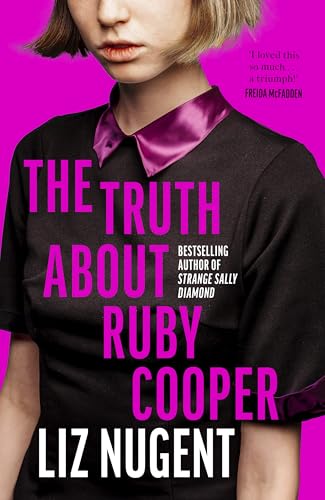 We read Nugent’s Strange Sally Diamond for book club a couple years ago and it was a great Northumberland holiday read for me, with a deliciously off-kilter narrator whose traumatized (and perhaps neurodivergent) perspective carried the novel. Here again Nugent prioritizes unreliable women’s voices and dark happenings, but Ruby is awfully hard to like. At age 16, she falsely accuses her older sister Erin’s boyfriend Milo of raping her. Milo maintains his innocence all along, but goes to jail for the crime; after all, DNA evidence can’t lie, right? Years of his life – and a heartbroken Erin’s – are stolen, his mother dies by suicide, Ruby becomes dependent on alcohol: all of this because of sisterly jealousy and an elaborate lie that their mother upholds rather than expose the family to further shame.
Narration alternates between Erin in Boston and Ruby, who’s moved back to Ireland with their mother. For Ruby’s confession to work, readers are kept in the dark about the truth of the incident, though only for 76 pages. Together the sisters give a tedious blow-by-blow of the intervening years – until Ruby’s daughter, Lucy, is raped by her boss on a drunken night out. Ruby refuses to believe her “because if it was true, that was karma coming to bit me on the ass.” This is where things finally get interesting, as Nugent explores ironies and familial patterns. But I’m sure I won’t be the only one to find the whole thing distasteful. Nugent clearly anticipates a backlash, stating in a prefatory letter, “I need to be very clear about the fact that girls and women like Ruby Cooper are extremely rare.” Was it worth undermining the #BelieveWomen campaign to explore a certain state of mind? Nah.
With thanks to Sandycove (Penguin) for the proof copy for review.
I’d also hoped to finish one more, but ran out of time. Here are my thoughts on the first half:
Show Me Where It Hurts by Claire Gleeson (2025)
 Rachel knew Tom had recurring problems with depression, but had no idea he was on the verge of a breakdown when he deliberately drove their car off the road with the intention of killing his entire family. Their two young children die in the crash but they both survive – Tom held in a psychiatric hospital and Rachel resuming her life as a nurse. The chapters alternate between “After” and “Before,” giving relative date markers in weeks, months or years out from the incident. Gleeson’s understated prose makes it possible for readers to face a tragedy so awful we’d otherwise look away; it never tips over into mawkishness.
Three on a Theme of Sylvia Plath (The Slicks by Maggie Nelson for #NonfictionNovember & #NovNov25; The Bell Jar and Ariel)
A review copy of Maggie Nelson’s brand-new biographical essay on Sylvia Plath (and Taylor Swift) was the excuse I needed to finally finish a long-neglected paperback of The Bell Jar and also get a taste of Plath’s poetry through the posthumous collection Ariel, which is celebrating its 60th anniversary. These are the sorts of works it’s hard to believe ever didn’t exist; they feel so fully formed and part of the zeitgeist. It also boggles the mind how much Plath accomplished before her death by suicide at age 30. What I previously knew of her life mostly came from hearsay and was reinforced by Euphoria by Elin Cullhed. For the mixture of nonfiction, fiction and poetry represented below, I’m counting this towards Nonfiction November’s Book Pairings week.
The Slicks: On Sylvia Plath and Taylor Swift by Maggie Nelson (2025)
 Can young women embrace fame amidst the other cultural expectations of them? Nelson attempts to answer this question by comparing two figures who turn(ed) life into art. The link between them was strengthened by Swift titling her 2024 album The Tortured Poets Department. “Plath … serves as a metonym – as does Swift – for a woman who makes art about a broken heart,” Nelson writes. “When women make the personal public, the charge of whorishness always lurks nearby.” What women are allowed to say and do has always, it seems, attracted public commentary, and “anyone who puts their work into the world, at any level, must learn to navigate between self-protectiveness and risk, becoming harder and staying soft.”
Nelson acknowledges a major tonal difference between Plath and Swift, however. Plath longed for fame but didn’t get the chance to enjoy it; she’s the patron saint of sad-girl poetry and makes frequent reference to death, whereas Swift spotlights joy and female empowerment. It’s a shame this was out of date before it went to print; my advanced copy, at least, isn’t able to comment on Swift’s engagement and the baby rumour mill sure to follow. It would be illuminating to have an afterword in which Nelson discusses the effect of spouses’ competing fame and speculates on how motherhood might change Swift’s art.
Full confession: I’ve only ever knowingly heard one Taylor Swift song, “Anti-Hero,” on the radio in the States. (My assessment was: wordy, angsty, reasonably catchy.) Undoubtedly, I would have gotten more out of this essay were I equally familiar with the two subjects. Nonetheless, it’s fluid and well argued, and I was engaged throughout. If you’re a Swiftie as well as a literary type, you need to read this.


[66 pages]
With thanks to Vintage (Penguin) for the advanced e-copy for review.
The Bell Jar by Sylvia Plath (1963)
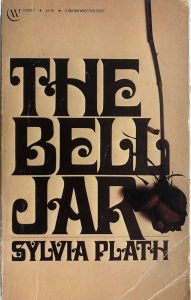 Given my love of mental hospital accounts and women’s autofiction, it’s a wonder I’d not read this before my forties. It was first published under the pseudonym “Victoria Lucas” because Plath thought it immature, “an autobiographical apprentice work which I had to write in order to free myself from the past.” Esther Greenwood is the stand-in for Plath: a talented college student who, after working in New York City during the remarkable summer of 1953, plunges into mental ill health. Chapter 13 is amazing and awful at the same time as Esther attempts suicide thrice in one day, toying with a silk bathrobe cord and ocean waves before taking 50 pills and walling herself into a corner of the cellar. She bounces between various institutional settings, undergoing electroshock therapy – the first time it’s horrible, but later, under a kind female doctor, it’s more like it’s ‘supposed’ to be: a calming reset.
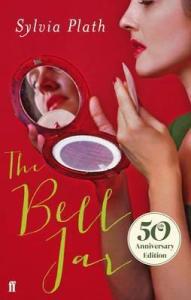 The 19-year-old is obsessed with the notion of purity. She has a couple of boyfriends but decides to look for someone else to take her virginity. Beforehand, the asylum doctor prescribes her a fitting for a diaphragm. A defiant claim to the right to contraception despite being unmarried is a way of resisting the bell jar – the rarefied prison – of motherhood. Still, Esther feels guilty about prioritizing her work over what seems like feminine duty: “Why was I so maternal and apart? Why couldn’t I dream of devoting myself to baby after fat puling baby? … I was my own woman.” Plath never reconciled parenthood with poetry. Whether that’s the fault of Ted Hughes, or the times they lived in, who can say. For her and for Esther, the hospital is a prison as well – but not so hermetic as the turmoil of her own mind. How ironic to read “I took a deep breath and listened to the old brag of my heart. I am, I am, I am” knowing that this was published just a few weeks before this literary genius ceased to be.
Apart from an unfortunate portrayal of a “negro” worker at the hospital, this was an enduringly relevant and absorbing read, a classic to sit alongside Emily Holmes Coleman’s The Shutter of Snow and Janet Frame’s Faces in the Water.
(Secondhand – it’s been in my collection so long I can’t remember where it’s from, but I’d guess a Bowie Library book sale or Wonder Book & Video / Public library – I was struggling with the small type so switched to a recent paperback and found it more readable)
Ariel by Sylvia Plath (1965)
Impossible not to read this looking for clues of her death to come:
Dying
Is an art, like everything else.
I do it exceptionally well.
(from “Lady Lazarus”)
Eternity bores me,
I never wanted it.
(from “Years”)
The woman is perfected.
Her dead
Body wears the smile of accomplishment
(from “Edge”)
 I feel incapable of saying anything fresh about this collection, which takes no prisoners. The images and vocabulary are razor-sharp. First and last lines or stanzas are particularly memorable. (“Morning Song” starts “Love set you going like a fat gold watch”; “Lady Lazarus” ends “Out of the ash / I rise with my red hair / And I eat men like air.”) Words and phrases repeat and gather power as they go. “The Applicant” mocks the obligations of a wife: “A living doll … / It can sew, it can cook. It can talk, talk, talk. … // … My boy, it’s your last resort. / Will you marry it, marry it, marry it.” I don’t know a lot about Plath’s family life, only that her father was a Polish immigrant and died after a long illness when she was eight, but there must have been some daddy issues there – after all, “Daddy” includes the barbs “Daddy, I have had to kill you” and “If I’ve killed one man, I’ve killed two— / The vampire who said he was you / And drank my blood for a year, / Seven years, if you want to know.” It ends, “Daddy, daddy, you bastard, I’m through.” Several later poems in a row, including “Stings,” incorporate bee-related imagery, and Plath’s father was an international bee expert. I can see myself reading this again and again in future, and finding her other collections, too – all but one of them posthumous. (Secondhand – RSPCA charity shop, Newbury)
Book Serendipity, Mid-February to Mid-April
I call it “Book Serendipity” when two or more books that I read at the same time or in quick succession have something in common – the more bizarre, the better. This is a regular feature of mine every couple of months. Because I usually have 20–30 books on the go at once, I suppose I’m more prone to such incidents. People frequently ask how I remember all of these coincidences. The answer is: I jot them down on scraps of paper or input them immediately into a file on my PC desktop; otherwise, they would flit away!
The following are in roughly chronological order.
- The protagonist isn’t aware that they’re crying until someone tells them / they look in a mirror in The Remains of the Day by Kazuo Ishiguro and Three Days in June by Anne Tyler.
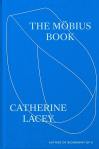
- A residential complex with primal scream therapy in Confessions by Catherine Airey and The Möbius Book by Catherine Lacey.
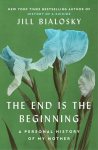
- Memories of wiping down groceries during the early days of the pandemic in The End Is the Beginning by Jill Bialosky and Human/Animal by Amie Souza Reilly.
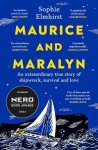
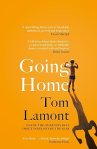
- A few weeks before I read Maurice and Maralyn by Sophie Elmhirst, I’d finished reading the author’s husband’s debut novel (Going Home by Tom Lamont); I had no idea of the connection between them until I got to her Acknowledgements.
- A mention of the same emergency money passing between friends in Alligator Tears by Edgar Gomez ($20) and The Möbius Book by Catherine Lacey ($100).
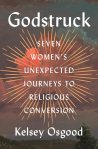
- Autobiographical discussions of religiosity and anorexia in The Möbius Book by Catherine Lacey and Godstruck by Kelsey Osgood.
- The theme of the dark night sky in The Wild Dark by Craig Childs, followed almost immediately by Night Magic by Leigh Ann Henion.
- Last year I learned about Marina Abramović’s performance art where she and her ex trekked to China’s Great Wall from different directions, met in the middle, and continued walking away to dramatize their breakup in The Ritual Effect by Michael Norton. Recently I saw it mentioned again in The Möbius Book by Catherine Lacey. Abramović’s work is also mentioned in Human/Animal by Amie Souza Reilly and is the basis for the opening track on Anne-Marie Sanderson’s album Old Light, “Amethyst Shoes.”
- The idea of running towards danger appears in Alex Marzano-Lesnevich’s essay in Edge of the World, a queer travel anthology edited by Alden Jones; and the bibliography of The Möbius Book by Catherine Lacey.
- I then read another Alex Marzano-Lesnevich essay in quick succession (both were excellent, by the way) in What My Father and I Don’t Talk About, edited by Michele Filgate.
- A scene in which a woman goes to a police station and her concerns are dismissed because she has no evidence and the man/men’s behaviour isn’t ‘bad enough’ in I Am, I Am, I Am by Maggie O’Farrell and Human/Animal by Amie Souza Reilly.
- Too many details as the sign of a lie in Dream Count by Chimamanda Ngozi Adichie and Three Days in June by Anne Tyler.
- Scenes of throwing all of a spouse’s belongings out on the yard/street in Old Soul by Susan Barker, How to Survive Your Mother by Jonathan Maitland, and Human/Animal by Amie Souza Reilly.
- Reading two lost American classics about motherhood and time spent in a mental institution at the same time: The Shutter of Snow by Emily Holmes Coleman and I Am Clarence by Elaine Kraf.
- Disorientation underwater: a literal experience in I Am, I Am, I Am by Maggie O’Farrell, then used as a metaphor for what it was like to be stuck in a blizzard on Annapurna in 2014 in The Secret Life of Snow by Giles Whittell.
- A teenager who has a job cleaning hotels in Old Soul by Susan Barker and I Am, I Am, I Am by Maggie O’Farrell. (In Stir-Fry by Emma Donoghue, Maria is also a teenaged cleaner, but of office buildings.)
- A vacuum cleaner bag splits in Stir-Fry by Emma Donoghue and one story of Are You Happy? by Lori Ostlund – in the latter it’s deliberate, searching for evidence of the character’s late son after cleaning his room.

- An ailing tree or trees that have to be cut down in one story of The Accidentals by Guadalupe Nettel and The Lost Trees of Willow Avenue by Mike Tidwell.
- Buchenwald was mentioned in one poem each in A God at the Door by Tishani Doshi and The Ghost Orchid by Michael Longley.
- A reference to Robin Wall Kimmerer’s Braiding Sweetgrass in To Have or to Hold by Sophie Pavelle and Human/Animal by Amie Souza Reilly.

- A mentally unwell woman deliberately burns her hands in I Am Clarence by Elaine Kraf and Every Day Is Mother’s Day by Hilary Mantel.
- A mention of the pollution caused by gas stoves in We Do Not Part by Han Kang and The Lost Trees of Willow Avenue by Mike Tidwell.
- An art installation involving part-buried trees was mentioned in Immemorial by Lauren Markham and then I encountered a similar project a few months later in We Do Not Part by Han Kang. Burying trees as a method of carbon storage is then discussed in The Lost Trees of Willow Avenue by Mike Tidwell.

- Imagining the lives of the people living in an apartment you didn’t end up renting in Scaffolding by Lauren Elkin and one story of The Accidentals by Guadalupe Nettel.
- The Anthropocene is mentioned in Scaffolding by Lauren Elkin and The Alternatives by Caoilinn Hughes.
- I was reading three debut novels from the McKitterick Prize longlist at the same time, all of them with very similar page counts of 383, 387, and 389 (i.e., too long!).
- Being appalled at an institutionalized mother’s appearance in The End Is the Beginning by Jill Bialosky and Every Day Is Mother’s Day by Hilary Mantel.
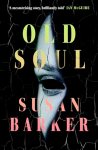 A remote artist’s studio and severed fingers in Old Soul by Susan Barker and We Do Not Part by Han Kang.
- A lesbian couple in New Mexico, the experience of being watched through a window, and the mention of a caftan/kaftan, in Old Soul by Susan Barker and one story of Are You Happy? by Lori Ostlund.
- Refusal to go to a hospital despite being in critical condition in I Am, I Am, I Am by Maggie O’Farrell and one story of Are You Happy? by Lori Ostlund.
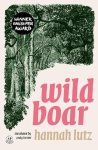
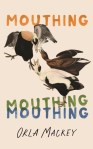
- It’s not a niche stylistic decision anymore; I was reading four novels with no speech marks at the same time: Old Soul by Susan Barker, Scaffolding by Lauren Elkin, The Alternatives by Caoilinn Hughes, and We Do Not Part by Han Kang. [And then, a bit later, three more: Wild Boar by Hannah Lutz, Mouthing by Orla Mackey, and How to Be Somebody Else by Miranda Pountney.]
 A lesbian couple is alarmed by the one partner’s family keeping guns in Spent by Alison Bechdel and one story of Are You Happy? by Lori Ostlund.
- Responding to the 2021 murder of eight Asian spa workers in Atlanta in Foreign Fruit by Katie Goh and Find Me as the Creature I Am by Emily Jungmin Yoon.
- Disposing of a late father’s soiled mattress in Mouthing by Orla Mackey and one story of Are You Happy? by Lori Ostlund.
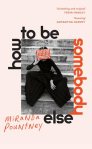 New York City tourist slogans in Apple of My Eye by Helene Hanff and How to Be Somebody Else by Miranda Pountney.
- A Jewish care home for the elderly in The End Is the Beginning by Jill Bialosky and Joanna Rakoff’s essay in What My Father and I Don’t Talk About (ed. Michele Filgate).
- A woman has no memory between leaving a bar and first hooking up with the man she’s having an affair with in If You Love It, Let It Kill You by Hannah Pittard and How to Be Somebody Else by Miranda Pountney.
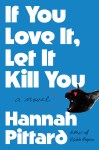 A stalker-ish writing student who submits an essay to his professor that seems inappropriately personal about her in one story of Are You Happy? by Lori Ostlund and If You Love It, Let It Kill You by Hannah Pittard.
- A pygmy goat as a pet (and a one-syllable, five-letter S title!) in Spent by Alison Bechdel and Sleep by Honor Jones.
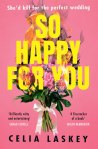
- A Brooklyn setting and thirtysomething female protagonist in Sleep by Honor Jones, So Happy for You by Celia Laskey, and How to Be Somebody Else by Miranda Pountney.
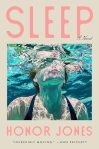
- A mention of the American Girl historical dolls franchise in Sleep by Honor Jones and If You Love It, Let It Kill You by Hannah Pittard, both of which I’m reviewing early for Shelf Awareness.
 A writing professor knows she’s a hypocrite for telling her students what (not) to do and then (not) doing it herself in Trying by Chloé Caldwell and If You Love It, Let It Kill You by Hannah Pittard. These two books also involve a partner named B (or Bruce), metafiction, porch drinks with parents, and the observation that a random statement sounds like a book title.
- The protagonist’s therapist asks her to find more precise words for her feelings in Blue Hour by Tiffany Clarke Harrison and So Happy for You by Celia Laskey.
- The protagonist “talks” with a dying dog or cat in The Möbius Book by Catherine Lacey and If You Love It, Let It Kill You by Hannah Pittard.
 Shalimar perfume is mentioned in Scaffolding by Lauren Elkin and Chopping Onions on My Heart by Samantha Ellis.
- The Rapunzel fairytale is a point of reference in In the Evening, We’ll Dance by Anne-Marie Erickson and Secret Agent Man by Margot Singer, both of which I was reading early for Foreword Reviews.
What’s the weirdest reading coincidence you’ve had lately?
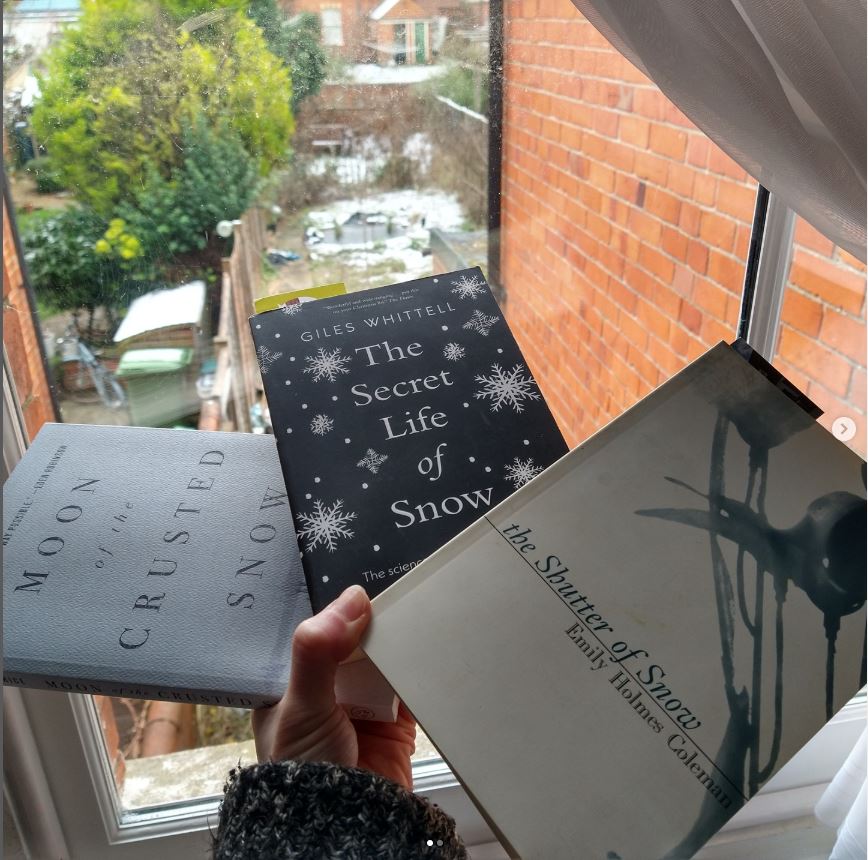
Winter Reading, Part II: “Snow” Books by Coleman, Rice & Whittell
Here I am squeaking in on the day before the spring equinox – when it’s predicted to be warmer than Ibiza here in southern England, as headlines have it – with a few snowy reads that have been on my stack for much of the winter. I started reading this trio when we got a dusting back in January, in case (as proved to be true) it was our only snow of the year. I have an arresting work of autofiction that recreates a period of postpartum psychosis, a mildly dystopian novel by a First Nations Canadian, and a snow-lover’s compendium of science and trivia.
 As it happens, I’ll be starting the spring in the middle of We Do Not Part by Han Kang, which is austerely beautiful and eerily snowy: its narrator traverses a blizzard to rescue her friend’s pet bird; and the friend’s mother recalls a village massacre that left piles of snow-covered corpses. Here Kang muses on the power of snow:
Snow had an unreality to it. Was this because of its pace or its beauty? There was an accompanying clarity to snow as well, especially snow, drifting snow. What was and wasn’t important were made distinct. Certain facts became chillingly apparent. Pain, for one.
The Shutter of Snow by Emily Holmes Coleman (1930)
 Coleman (1899–1974), an expatriate American poet, was part of the Paris literary milieu in the 1920s and then the London scene of the 1930s. (She worked with T.S. Eliot on editing Djuna Barnes’s Nightwood, for instance.) This novella, her only published work of fiction, was based on her experience of giving birth to her son in 1924, suffering from puerperal fever and a mental breakdown, and being incarcerated in Rochester State Hospital. Although the portrait of Marthe Gail is in the omniscient third person, the stream-of-consciousness style – no speech marks or apostrophes, minimal punctuation – recalls unreliable first-person narration. Marthe believes she is Jesus Christ. Her husband Christopher visits occasionally, hoping she’ll soon be well enough to come home to their baby. It’s hard to believe this was written a century ago; I could imagine it being published tomorrow. It is absolutely worth rediscovering. While I admired the weird lyrical prose (“in his heart was growing a stern and ruddy pear … He would make of his heart a stolen marrow bone and clutch snow crystals in the night to his liking”; “This earth is made of tar and every morsel is stuck upon it to wither … there were orange peelings lying in the snow”), the interactions between patients, nurses and doctors got tedious. (Secondhand – Community Furniture Project, Newbury)
Moon of the Crusted Snow by Waubgeshig Rice (2018)
 A mysterious total power outage heralds not just the onset of winter or a temporary crisis but the coming of a new era. For this Anishinaabe community, it will require a return to ancient nomadic, hunter-gatherer ways. I was expecting a sinister dystopian; while there are rumours of a more widespread collapse, the focus is on adaptation versus despair, internal resilience versus external threats. Rice reiterates that Indigenous peoples have often had to rebuild their worlds: “Survival had always been an integral part of their culture. It was their history. The skills they needed to persevere in this northern terrain … were proud knowledge held close through the decades of imposed adversity.” As an elder remarks, apocalypse is nothing new. I was more interested in these ideas than in how they played out in the plot. Evan works snow-ploughs until, with food running short and many falling ill, he assumes the grim task of an undertaker. I was a little disappointed that it’s a white interloper breaks their taboos, but it is interesting how he is compared to the mythical windigo in a dream sequence. As short as this novel is, I found it plodding, especially in the first half. It does pick up from that point (and there is a sequel). I was reminded somewhat of Sherman Alexie. It was probably my first book by an Indigenous Canadian, which was reason enough to read it, though I wonder if I would warm more to his short stories. (Birthday gift from my wish list last year)
The Secret Life of Snow: The science and the stories behind nature’s greatest wonder by Giles Whittell (2018)
 This is so much like The Snow Tourist by Charlie English it was almost uncanny. Whittell, an English journalist who has written history and travel books, is a snow obsessive and hates that, while he may see a few more major snow events in his lifetime, his children probably won’t experience any in their adulthood. Topics in the chatty chapters include historical research into snowflakes, meteorological knowledge then and now and the ongoing challenge of forecasting winter storms, record-breaking snowfalls and the places still most likely to have snow cover, and the depiction of snow in medieval paintings (like English, he zeroes in on Bruegel) and Bond films. There’s a bit too much on skiing for my liking: it keeps popping up in segments on the Olympics, avalanches, and how famous snow spots are reckoning with their uncertain economic future. It’s a fun and accessible book with many an eye-popping statistic, but, coming as it did a decade after English’s, does sound the alarm more shrilly about the future of snow. As in, we’ll get maybe 15 more years (until 2040), before overall warming means it will only fall as rain. “That idea, like death, is hard to think about without losing your bearings, which is why, aware of my cowardice and moral abdication, I prefer to think of the snowy present and recent past rather than of the uncertain future.” (Secondhand – Community Furniture Project, Newbury)
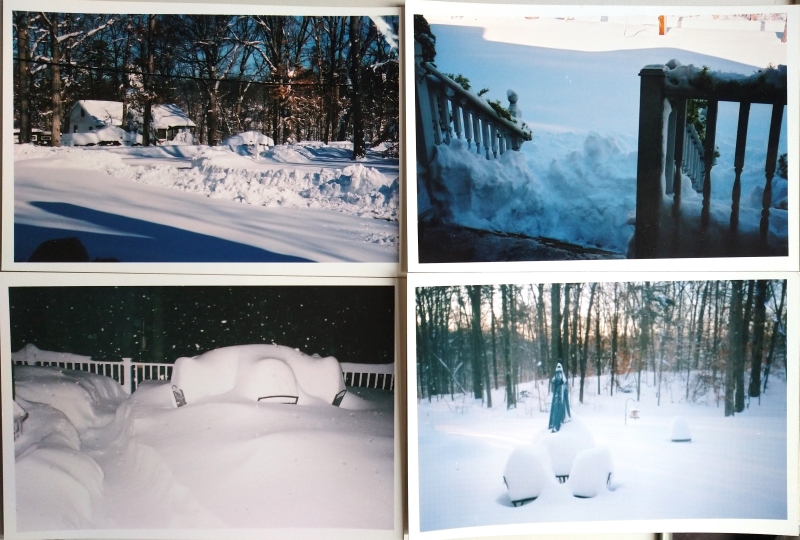
Whittell’s mention of the U.S. East Coast “Snowmaggedon” of February 2010 had me digging out photos my mother sent me of the aftermath at our family home of the time.
Any wintry reading (or weather) for you lately? Or is it looking like spring?
Review Catch-Up: Medical Nonfiction & Nature Poetry
Catching up on four review copies I was sent earlier in the year and have finally got around to finishing and writing about. I have two works of health-themed nonfiction, one a narrative about organ transplantation and the other a psychiatrist’s memoir; and two books of nature poetry, a centuries-spanning anthology and a recent single-author collection.
The Story of a Heart by Rachel Clarke
 Rachel Clarke is a palliative care doctor and voice of wisdom on end-of-life issues. I was a huge fan of her Dear Life and admire her public critique of government policies that harm the NHS. (I’ve also reviewed Breathtaking, her account of hospital working during Covid-19.) While her three previous books all incorporate a degree of memoir, this is something different: narrative nonfiction based on a true story from 2017 and filled in with background research and interviews with the figures involved. Clarke has no personal connection to the case but, like many, discovered it via national newspaper coverage. Nine-year-old Max Johnson spent nearly a year in hospital with heart failure after a mysterious infection. Keira Ball, also nine, was left brain-dead when her family was in a car accident on a dangerous North Devon road. Keira’s heart gave Max a second chance at life.
Clarke zooms in on pivotal moments: the accident, the logistics of getting an organ from one end of the country to another, and the separate recovery and transplant surgeries. She does a reasonable job of recreating gripping scenes despite a foregone conclusion. Because I’ve read a lot around transplantation and heart surgery (such as When Death Becomes Life by Joshua D. Mezrich and Heart by Sandeep Jauhar), I grew impatient with the contextual asides. I also found that the family members and medical professionals interviewed didn’t speak well enough to warrant long quotation. All in all, this felt like the stuff of a long-read magazine article rather than a full book. The focus on children also results in mawkishness. However, the Baillie Gifford Prize judges who shortlisted this clearly disagreed. I laud Clarke for drawing attention to organ donation, a cause dear to my family. This case was instrumental in changing UK law: one must now opt out of donating organs instead of registering to do so.
With thanks to Abacus Books (Little, Brown) for the proof copy for review.
You Don’t Have to Be Mad to Work Here: A Psychiatrist’s Life by Dr Benji Waterhouse
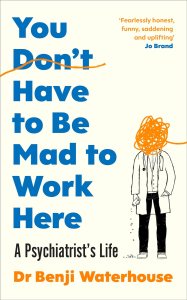 Waterhouse is also a stand-up comedian and is definitely channelling Adam Kay in his funny and touching debut memoir. Most chapters are pen portraits of patients and colleagues he has worked with. He also puts his own family under the microscope as he undergoes therapy to work through the sources of his anxiety and depression and tackles his reluctance to date seriously. In the first few years, he worked in a hospital and in community psychiatry, which involved house visits. Even though identifying details have been changed to make the case studies anonymous, Waterhouse manages to create memorable characters, such as Tariq, an unhoused man who travels with a dog (a pity Waterhouse is mortally afraid of dogs), and Sebastian, an outwardly successful City worker who had been minutes away from hanging himself before Waterhouse and his colleague rang on the door.
Along with such close shaves, there are tragic mistakes and tentative successes. But progress is difficult to measure. “Predicting human behaviour isn’t an exact science. We’re just relying on clinical assessment, a gut feeling and sometimes a prayer,” Waterhouse tells his medical student. The book gives a keen sense of the challenges of working for the NHS in an underfunded field, especially under Covid strictures. He is honest and open about his own failings but ends on the positive note of making advances in his relationship with his parents. This was a great read that I’d recommend beyond medical-memoir junkies like myself. Waterhouse has storytelling chops and the frequent one-liners lighten even difficult topics:
The sum total of my wisdom from time spent in the community: lots of people have complicated, shit lives.
Ambiguous statements … need clarification. Like when a depressed patient telephones to say they’re ‘in a bad place’. I need to check if they’re suicidal or just visiting Peterborough.
What is it about losing your mind that means you so often mislay your footwear too?
With thanks to Jonathan Cape (Penguin) for the proof copy for review.
Green Verse: An Anthology of Poems for Our Planet, ed. Rosie Storey Hilton
 Part of the “In the Moment” series, this anthology of nature poetry has been arranged seasonally – spring through to winter – and, within season, roughly thematically. No context or biographical information is given on the poets apart from birth and death years for those not living. Selections from Emily Dickinson, William Shakespeare and W.B. Yeats thus share space with the work of contemporary and lesser-known poets. This is a similar strategy to the Wildlife Trusts’ Seasons anthologies, the ranging across time meant to suggest continuity in human engagement with the natural world. However, with a few exceptions (the above plus Thomas Hardy’s “The Darkling Thrush” and Gerard Manley Hopkins’s “Inversnaid” are absolute classics, of course), the historical verse tends to be obscure, rhyming and sentimental; unfair to deem it all purple or doggerel, but sometimes bodies of work are forgotten for a reason. By contrast, I found many more standouts among the contemporary poets. Some favourites: “Cyanotype, by St Paul’s Cathedral” by Tamiko Dooley, “Eight Blue Notes” by Gillian Dawson (about eight species of butterfly), the gorgeously erotic “the bluebells are coming out & so am I” by Maya Blackwell, and “The Trees Don’t Know I’m Trans” by Eddy Quekett. It was also worthwhile to discover poems from other ancient traditions, such as haiku by Issa (“O Snail”) and wise aphoristic verse by Lao Tzu (“All things pass”). So, a bit of a mixed bag, but a nice introductory text for those newer to poetry.
With thanks to Saraband for the free copy for review.
Dangerous Enough by Becky Varley-Winter (2023)
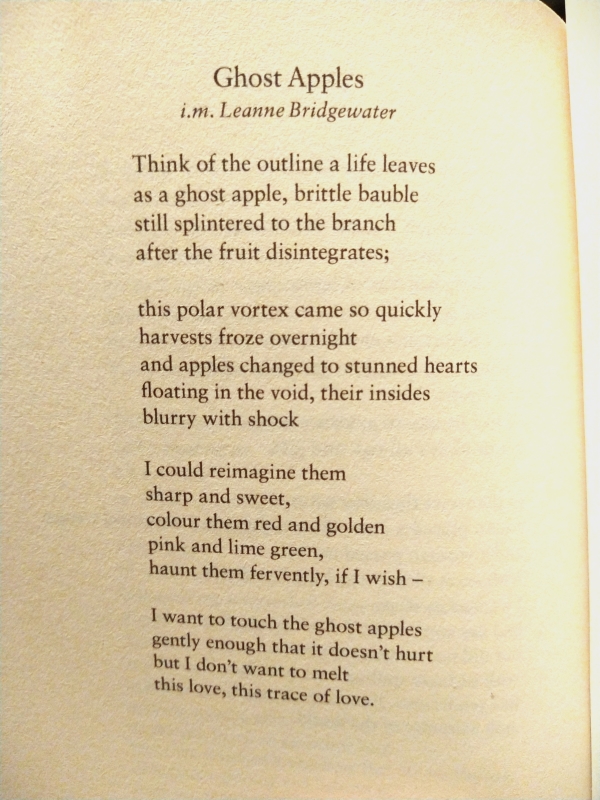
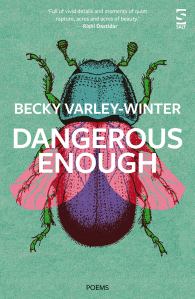 I requested this debut collection after hearing that it had been longlisted for the Laurel Prize for environmental poetry (funded by Simon Armitage, Poet Laureate). Varley-Winter crafts lovely natural metaphors for formative life experiences. Crows and wrens, foxes and fireflies, memories of a calf being born on a farm in Wales; gardens, greenhouses and long-lived orchids. These are the sorts of images that thread through poems about loss, parenting and the turmoil of lockdown. The last line or two of a poem is often especially memorable. It’s been months since I read this and I foolishly didn’t take any notes, so I haven’t retained more detail than that. But here is one shining example:
With thanks to Salt Publishing for the free copy for review.
Book Serendipity, August to October 2024
I call it “Book Serendipity” when two or more books that I read at the same time or in quick succession have something in common – the more bizarre, the better. This is a regular feature of mine every couple of months. Because I usually have 20–30 books on the go at once, I suppose I’m more prone to such incidents. People frequently ask how I remember all of these coincidences. The answer is: I jot them down on scraps of paper or input them immediately into a file on my PC desktop; otherwise, they flit away!
The following are in roughly chronological order.
- The William Carlos Williams line “no ideas but in things” is quoted in Home Is Where We Start by Susanna Crossman and echoed with a slight adaptation in Want, the Lake by Jenny Factor.
- A woman impulsively stops into a tattoo parlour in We Are Animals by Jennifer Case and Birdeye by Judith Heneghan.
- Cleaning up a partner’s bristles from the sink in 300 Arguments by Sarah Manguso and The Echoes by Evie Wyld.
- Sarah Manguso, by whom I was reading two books for a Bookmarks article, was quoted in Some of Us Just Fall by Polly Atkin.
- Someone is annoyed at their spouse making a mess cooking lemon preserves in How We Know Our Time Travelers by Anita Felicelli and Liars by Sarah Manguso, both of which are set in California.
- Rumpelstiltskin is referenced in one short story of a speculative collection: How We Know Our Time Travelers by Anita Felicelli and The Man in the Banana Trees by Marguerite Sheffer.
- A father who is hard of hearing, and an Australian woman looking for traces of her grandmother’s life in England in The House with All the Lights On by Jessica Kirkness and The Echoes by Evie Wyld.
- A character named Janie or Janey in Their Eyes Were Watching God by Zora Neale Hurston and The Echoes by Evie Wyld. The Pre-Raphaelite model Janey is also mentioned in The Garden Against Time by Olivia Laing.
 Contrasting one’s childhood love of the Little House on the Prairie books with reading them as an adult and being aware of the racial and colonial implications in Home Is Where We Start by Susanna Crossman and My Good Bright Wolf by Sarah Moss.
- A mention of Little Women in A Perfect Arrangement by Suzanne Berne and My Good Bright Wolf by Sarah Moss.
- A character grew up in a home hair-dressing business in A Perfect Arrangement by Suzanne Berne and Home Is Where We Start by Susanna Crossman.
- The discovery of an old pram in an outbuilding in Instructions for a Heatwave by Maggie O’Farrell and Mina’s Matchbox by Yōko Ogawa.
- An Irish woman named Aoife in My Good Bright Wolf by Sarah Moss and Instructions for a Heatwave by Maggie O’Farrell.
- Cooking then throwing out entire meals in My Good Bright Wolf by Sarah Moss and The Echoes by Evie Wyld. (Also throwing out a fresh meal in Birdeye by Judith Heneghan. Such scenes distress me!)
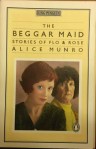 A new lover named Simon in one story of The Beggar Maid by Alice Munro and The Echoes by Evie Wyld.
- A character writes a recommendation letter for someone who then treats them vindictively, because they assumed the letter was negative when it wasn’t, in A Perfect Arrangement by Suzanne Berne and one story of The Beggar Maid by Alice Munro.
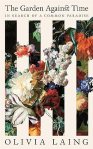
- After her parents’ divorce, the author never had a designated bedroom in her father’s house in Home Is Where We Start by Susanna Crossman and The Garden Against Time by Olivia Laing.
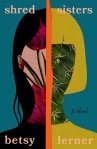 Reading The Bell Jar as a teenager in Shred Sisters by Betsy Lerner and My Good Bright Wolf by Sarah Moss.
- A contentious Town Hall meeting features in A Perfect Arrangement by Suzanne Berne and Birdeye by Judith Heneghan.
- The wife is pregnant with twins in A Perfect Arrangement by Suzanne Berne and The Year of Living Biblically by A.J. Jacobs. (There are also twins in Birdeye by Judith Heneghan. In general, I find that they occur far more often in fiction than in real life!)
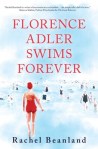
- 1930s Florida as a setting in Florence Adler Swims Forever by Rachel Beanland and Their Eyes Were Watching God by Zora Neale Hurston.
- Dorothy Wordsworth and her journals are discussed in Some of Us Just Fall by Polly Atkin and My Good Bright Wolf by Sarah Moss.
- Wordsworth’s daffodils are mentioned in Signs, Music by Raymond Antrobus and My Good Bright Wolf by Sarah Moss.
- “F*ck off” is delivered in an exaggerated English accent in Birdeye by Judith Heneghan and The Souvenir Museum by Elizabeth McCracken.
- The main character runs a country store in Their Eyes Were Watching God by Zora Neale Hurston and The Beggar Maid by Alice Munro.
 Reading a second novel this year in which the younger sister of a pair wants to go into STEM and joins the Mathletes in high school: first was A Reason to See You Again by Jami Attenberg; later was Shred Sisters by Betsy Lerner.
- An older sister who has great trouble attending normal school and so is placed elsewhere (including a mental institution) for a total of two years in Learning to Think by Tracy King and Shred Sisters by Betsy Lerner.
- The idea of trees taking revenge on people for environmental destruction in one story of The Secret Life of Insects by Bernardo Esquinca and one poem of The Holy & Broken Bliss by Alicia Ostriker.
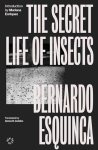
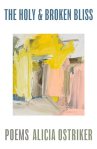
- An illiterate character in Instructions for a Heatwave by Maggie O’Farrell and Also Here by Brooke Randel.
-
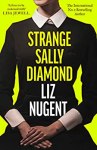 Controversy over throwing a dead body into the trash in Birdeye by Judith Heneghan and Strange Sally Diamond by Liz Nugent.
- A publishing assistant who wears a miniskirt and Doc Martens in Shred Sisters by Betsy Lerner and Summer Fridays by Suzanne Rindell.
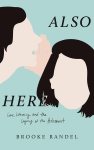
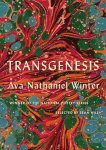
- Ancestors’ experience in Auschwitz in Also Here by Brooke Randel and Transgenesis by Ava Winter.
- The protagonist finds it comforting when her boyfriend lies down with his full weight on her in Shred Sisters by Betsy Lerner and The Echoes by Evie Wyld.
- A woman badgers her ex-husband about when his affair with his high school/college sweetheart started (before or after the divorce) in Shred Sisters by Betsy Lerner and Liars by Sarah Manguso.
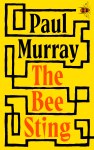 I encountered an Irish matriarch who married the ‘wrong’ brother, not Frank, in The Bee Sting by Paul Murray earlier in the year, and then in Instructions for a Heatwave by Maggie O’Farrell.
- A boy is playing in the family car on the driveway when it rolls backwards and kills someone in A Perfect Arrangement by Suzanne Berne and Tell Me Everything by Elizabeth Strout.
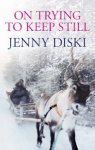
- Quantoxhead, Somerset is mentioned in On Trying to Keep Still by Jenny Diski and A House Unlocked by Penelope Lively.
- Tapeworms are mentioned in On Trying to Keep Still by Jenny Diski and one story of The Best Short Stories 2023: The O. Henry Prize Winners, ed. Lauren Groff.
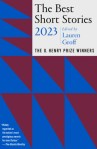
- A description of horrific teeth in one story of The Best Short Stories 2023: The O. Henry Prize Winners, ed. Lauren Groff, and one story of The Long Swim by Terese Svoboda.
- A character researches potato blight, and another keeps his smoking a secret from his wife, in one story of The Best Short Stories 2023: The O. Henry Prize Winners, ed. Lauren Groff, and Tell Me Everything by Elizabeth Strout.
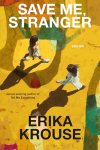 A piano gets mauled out of anger in one story of Save Me, Stranger by Erika Krouse and Strange Sally Diamond by Liz Nugent.
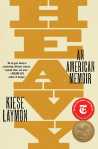
- Men experiencing eating disorders in Heavy by Kiese Laymon and Heartstopper Volumes 3 and 4 by Alice Oseman.
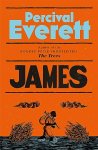
- Black people deliberately changing their vocabulary and speech register when talking to white people in James by Percival Everett and Heavy by Kiese Laymon.
- My second book of the year in which a woman from centuries ago who magically appears in the present requests to go night clubbing: first The Ministry of Time by Kaliane Bradley, then Isabella & Blodwen by Rachael Smith.
- Characters named Sadie in James by Percival Everett, The Souvenir Museum by Elizabeth McCracken, and Still Life at Eighty by Abigail Thomas.
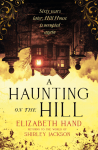
- Creepy hares in horror: A Haunting on the Hill by Elizabeth Hand and What Moves the Dead by T. Kingfisher. There were weird rabbits in I’m the King of the Castle by Susan Hill, too.
- I read two scenes of a calf being born, one right after the other: in Dangerous Enough by Becky Varley-Winter, then I’m the King of the Castle by Susan Hill.
- I read about an animal scratch leading to infection leading to death in a future with no pharmaceuticals in Station Eleven by Emily St. John Mandel in the morning and then in the afternoon heard Eve Smith mention the same thing happening due to antibiotic resistance in her novel The Waiting Rooms. Forget about R.I.P.; this is the stuff that scares me…
What’s the weirdest reading coincidence you’ve had lately?
The Bookshop Band in Abingdon & 20 Books of Summer, 6: Orphans of the Carnival by Carol Birch
The Bookshop Band have been among my favourite musical acts since I first saw play live at the Hungerford Literary Festival in 2014. Initially formed of three local musicians for hire, they got their start in 2010 as the house band at Mr B’s Emporium of Reading Delights in Bath, England. For their first four years, they wrote a pair of original songs about a new book, often the very day of an author’s event in the shop, and performed them on guitar, cello, and ukulele as an interlude to the evening’s reading and discussion.
Notable songs from their first 13 albums are based on Glow by Ned Beauman (“We Are the Foxes”), Don’t Let’s Go to the Dogs Tonight by Alexandra Fuller (“Bobo and the Cattle”), The Unlikely Pilgrimage of Harold Fry by Rachel Joyce (“How Not to Woo a Woman”), and Bring Up the Bodies by Hilary Mantel (“You Make the Best Plans, Thomas”). They have also written responses to classic literature, with songs inspired by Alice in Wonderland, various Shakespeare plays, and a compilation of first lines called “Once Upon a Time.”
I got to see the band live five times pre-pandemic, even after husband-and-wife-duo Ben Please and Beth Porter moved nearly 400 miles away to Wigtown, the Book Town of Scotland. During the first six months of Covid-19 lockdown, the livestream concerts from their attic were weekly treats to look forward to. They also interviewed authors for a breakfast chat show as part of the Wigtown Book Festival, which went online that year.

In the years since, the band has kept busy with other projects (not to mention two children). Porter sings and performs on the two Spell Songs albums based on Robert Macfarlane’s The Lost Words and its sequel. Together they composed the soundtrack to Aardman Animations’ short film, Robin Robin (2021) – winning Best Music at the British Animation Awards, and wrote an album of songs based on Scottish children’s literature. And they have continued writing one-off book songs, such as for the launch of Birnam Wood by Eleanor Catton. (I’m disappointed their songs about All My Wild Mothers by Victoria Bennett and The Spinning Heart by Donal Ryan still haven’t made it onto record.)
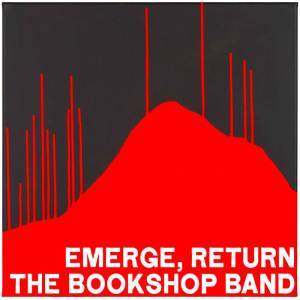 I’ve been enthusing about them for nearly a decade, but they’ve remained mostly under the radar in that time. Not so any longer; their recent album Emerge, Return was produced by Pete Townshend of The Who; the production value has notably advanced while retaining their indie spirit. Foreword Reviews kindly agreed to pay me to fangirl – er, write a blog – about Emerge, Return and the tour supporting it, so I’ll leave it there for the music criticism (their complete discography is now available on Bandcamp and Spotify). I’ll just add that a number of these ‘new’ songs have been kicking around for six to ten years but went unrecorded until now. For that reason, I worried that it might feel like a collection of cast-offs, but in fact they’ve managed to produce something sonically and thematically cohesive. It’s darker than some of their previous work, with moody minor chords and slightly sinister subjects.

Julia Pastrana after death. George Wick, Public domain, via Wikimedia Commons.
I’ve often found that the band will zero in on a detail, scene, or idea that never would have stood out to me while reading a book but, in retrospect, evokes the whole with great success. I decided to test this out by reading Carol Birch’s Orphans of the Carnival in the weeks leading up to seeing them on their months-long UK summer/autumn tour. It’s a historical novel about real-life 1850s Mexican circus “freak” Julia Pastrana, who had congenital conditions that caused her face and body to be covered in thick hair and her jaw and lips to protrude. Cruel contemporaries called her the world’s ugliest woman and warned that pregnant women should not be allowed to see her on tour lest the shock cause them to miscarry. Medical doctors posited, in all seriousness, that she was a link between humans and orangutans.
My copy of Birch’s novel was a remainder, and it is certainly a minor work compared to the Booker Prize-shortlisted Jamrach’s Menagerie. Facts about Julia’s travel itinerary and fellow oddballs quickly grow tedious, and while one of course sympathizes when children throw rocks at her, she never becomes a fully realized character rather than a curiosity.
There is also a bizarre secondary storyline set in 1983, in which Rose fills her London apartment with hoarded objects, including a doll she rescues from a skip and names Tattoo. She becomes obsessed with the idea of visiting a doll museum in Mexico. I thought that Tattoo would turn out to be Julia’s childhood doll Yatzi (similar to in A Council of Dolls by Mona Susan Power, where dolls have sentimental and magical power across the centuries), but the connection, though literal, was not as I expected. It’s more grotesque than that. And stranger than fiction, frankly.
{SPOILERS AHEAD}
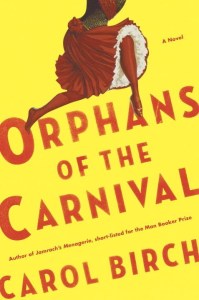 Birch sticks to the known details of Julia’s life. She had various agents, the final one being Theo Lent, who married her. (In the novel, he can’t bring himself to kiss her, but he can, you know, impregnate her.) She died of a fever soon after childbirth. Her son, Theo Junior, who inherited her hypertrichosis, also died within days. Both bodies were embalmed, sold, and exhibited. Theo then married another hairy woman, Marie Bartel of Germany, who took the name “Zenora” and posed as Julia’s sister. Theo died, syphilitic (or so Birch implies) and insane, in a Russian asylum. Julia and Theo Junior’s remains were displayed and mislaid at various points over the years, with Julia’s finally repatriated to Mexico for a proper burial in 2013. In the novel, Tattoo is, in fact, Theo Junior’s mummy.
Two Bookshop Band songs from the new album are about the novel: “Doll” and “Waggons and Wheels.” “Doll” is one of the few more lighthearted numbers on the album. It ended up being a surprise favourite track for me (along with the creepy “Eve in Your Garden,” about Margaret Atwood’s The Testaments, and “Room for Three,” a sombre yet resolute epic written for the launch of Philip Pullman’s La Belle Sauvage) because of its jaunty music-hall tempo; the pattern of repeating most nouns three times; and the hand claps, “deedily” vocal fills, unhinged recorder playing, and springy sound effects. The lyrics are almost a riddle: “When’s a doll (doll doll) not a doll (doll doll)?” They somehow avoid all spoilers while conveying something of the mental instability of a couple of characters.
The gorgeous “Waggons and Wheels” picks up on the melancholy tone and parental worries of earlier tracks from the album. The chorus has a wistful air as Julia ponders the passage of time and her constant isolation: “old friends, new deals / Winter or spring, I am hiding … Winter or spring, I’ll be travelling.” Porter’s mellow soprano tempers Julia’s outrage at mistreatment: “who are you to shout / Indecency and shame? / Shocking, I shock, so lock me out / I’m locked into this face.” She fears, too, what will happen to her child, “a beast or a boy, a monster or joy”. Listening to the song, I feel that the band saw past the specifics to plumb the universal feelings that get readers empathizing with Julia as a protagonist. They’ve gotten to the essence of the story in a way that Birch perhaps never did. Mediocre book; lovely songs. (New (bargain) purchase – Dollar Tree, Bowie, Maryland) 
I caught the Emerge, Return tour at St Nicolas’ Church in Abingdon (an event hosted by Mostly Books) last night. It was my sixth time seeing the Bookshop Band in concert – see also my write-ups of two 2016 events plus one in 2018 and another in 2019 – but the first time in person since the pandemic. I got to show off my limited-edition T-shirt. How nice it was to meet up again with blogger friend Annabel, too! Fun fact for you: Ben was born in Abingdon but hadn’t been back since he was two. Beth’s cousin turned up to the show as well. Although they have their daughters, 2 and 7, on the tour with them, they were being looked after elsewhere for the evening so the parents could relax a bit. Across the two sets, they played seven tracks from the new album, six old favourites, and two curios: one Spell Song, and an untitled song they wrote for the audiobook of Jackie Morris’s The Unwinding. It was a brilliant evening!


Women’s Prize Longlist Reviews (Erdrich, Mendelson, Ozeki) & Predictions
Tomorrow the Women’s Prize shortlist will be revealed. I’ve become much more invested in this prize over the past few years and will be following the 2022 race especially closely – look out for a related announcement soon. In recent years the nominees have tended to cluster thematically, which can feel redundant. This longlist has a notably high ghost quotient. Two novels I review below feature unquiet spirits, an appearance by the author, and the magical powers of books. The third is a straightforward contemporary dysfunctional family story.
The Sentence by Louise Erdrich
My second from Erdrich (I gave Love Medicine, her first novel, 5 stars in 2020). I will be revisiting this in June because it is our first pick for my tenure in the Literary Wives online book club. For that post I’ll focus on the relationship between Tookie and Pollux, which I won’t mention in this more general response. I was worried that a take on very recent events – this is set in Minneapolis between 2019 and 2020 and covers the first six months of the pandemic plus local protests following George Floyd’s murder – would seem either rushed or dated. I’m still unsure how I feel about encountering Covid-19 in fiction (vs. I’ve read 20 or more nonfiction records now), but I think this novel functions as a sturdy time capsule.
 Tookie, the narrator, has a tough exterior but a tender heart. When she spent 10 years in prison for a misunderstanding-cum-body snatching, books helped her survive, starting with the dictionary. Once she got out, she translated her love of words into work as a bookseller at Birchbark Books, Louise Erdrich’s Minnesota independent bookshop (Louise herself is an occasional character). Bibliophiles are sure to enjoy the mentions of the books she presses into customers’ hands; there’s also a fun appendix of recommendations on particular topics.
However, the central mystery about Flora, a dead customer who haunts the store until Tookie figures out why she died and how to exorcise her, struck me as silly. I only appreciated this storyline to the extent that it explores authenticity (Flora may have fabricated her Native heritage) and the inescapability of history. I preferred real life: Tookie getting locked down with her stepdaughter and baby grandson and filling book orders from a closed shop.
Erdrich weaves in Indigenous customs naturally and the banter between the characters, including young shop employees, makes this hip and lighthearted, even as it deals with serious subjects. I smiled at the bookish lingo, like Tookie’s division of her reading into a Lazy Stack and a Hard Stack (“books I would avoid reading until some wellspring of mental energy was uncapped” – my occasional and set-aside titles could comprise the latter) and the “cowbirds,” self-published titles secreted on the shelves that aren’t found until inventory day. There’s also an excellent passage on novellas that I’ll be bringing out in November.
Like a vintage armchair, this is a little overstuffed, but so comfortable you’ll want to stay a while. (See also Laura’s review.) (Public library) 
The Exhibitionist by Charlotte Mendelson
~SPOILERS IN THIS ONE~
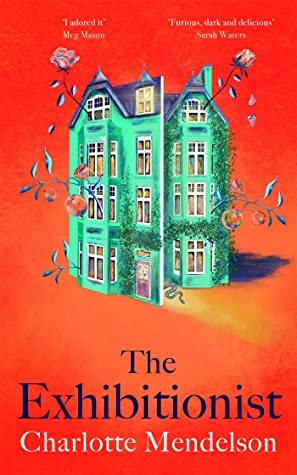 Artists, dysfunctional families, and limited settings (here, one crumbling London house and its environs; and about two days across one weekend) are irresistible elements for me, and I don’t mind a work being peopled with mostly unlikable characters. That’s just as well, because the narrative orbits Ray Hanrahan, a monstrous narcissist who insists that his family put his painting career above all else. His wife, Lucia, is a sculptor who has always sacrificed her own art to ensure Ray’s success. But now Lucia, having survived breast cancer, has the chance to focus on herself. She’s tolerated his extramarital dalliances all along; why not see where her crush on MP Priya Menon leads? What with fresh love and the offer of her own exhibition in Venice, maybe she truly can start over in her fifties.
Ray and Lucia’s three grown children, Leah, Patrick and Jess, are all home for Ray’s new exhibition. They’re mere sketches: Leah is Ray’s staunchest supporter and is infatuated with the no-show caterer; Patrick’s mental health is shaky, interfering with his job prospects; Jess, a teacher in Edinburgh, is pregnant but not sure she’s committed to her boyfriend long term. I wanted more depth from all the characters, but especially the offspring. I also expected a climactic late scene on Hampstead Heath to come to more.
Still, the build-up to the exhibit (followed by a laughably pitiful reveal) and Lucia’s inner life form an adequately strong foundation for Mendelson’s sardonic prose. The dialogue, full of interruptions, is true to life. This is her fifth novel and called to mind Jami Attenberg’s and Claire Fuller’s work. (Liz found shades of Iris Murdoch. Susan loved it, too.) I wouldn’t say I’m compelled to seek out more by Mendelson, but this was a solid read. (Public library)
The Book of Form and Emptiness by Ruth Ozeki
A Tale for the Time Being is one of my favourite novels of the century (and one of my most popular Goodreads reviews ever), My Year of Meats was a terrific backlist read a couple of summers ago, and I’m eager to catch up on All Over Creation. So I’d built up this fourth Ozeki novel in my head, thinking a library setting and magic realist elements presaged something deliciously Murakami-esque.
 What I actually found, having limped through it off and on for seven months, was something of a disappointment. A frank depiction of the mental health struggles of the Oh family? Great. A paean to how books and libraries can save us by showing us a way out of our own heads? A-OK. The problem is with the twee way that The Book narrates Benny’s story and engages him in a conversation about fate versus choice.
When Kenji Oh, a jazz musician, is run over by a chicken truck, Annabelle finds herself a single mother to Benny, a troubled teen who starts to hear everyday objects speaking to him. His voices and Annabelle’s hoarding habit jeopardize the viability of their household: Benny spends time on a psychiatric hospital ward for minors and Annabelle is threatened with eviction. For Benny, the library and the acquaintances he makes there – a fellow pedi-psych patient named Alice who calls herself The Aleph, an Eastern European philosopher who goes by The Bottleman (= Slavoj Žižek?), even the Ozeki figure tapping away on her laptop – may be his salvation; for Annabelle, it could be the book Tidy Magic (modelled on Marie Kondo’s work), written by a Buddhist nun. But until then, their stories get very dark indeed.
Concern for the principal pair and their relationship kept me reading even though this is too long and I wearied of Ozeki’s habit of literalizing metaphors (books speaking to people; being crushed by one’s belongings; crows playing a protective role). I’m still sympathetic to Ozeki’s aims, even if she doesn’t quite pull it all off here. If I pit the rather similar The Sentence and The Book of Form and Emptiness against each other, Erdrich comes out ahead. 
With thanks to Canongate for the proof copy for review.
I’ve gotten to six books from the longlist so far and have a few more on order at the library. The others I’ve read, with ratings and links to my reviews, are:
Build Your House around My Body by Violet Kupersmith
Sorrow and Bliss by Meg Mason 
I’m also partway through The Final Revival of Opal & Nev by Dawnie Walton, which is enjoyable enough but, alas, suffers in comparison to Daisy Jones and the Six, whose format (a composite oral history of a fictional 1960s/70s musical act) it repeats. The addition of the race issue doesn’t feel sufficient to call it original.
I’ve also DNFed a few from the longlist, two of them multiple times, so I have my fingers crossed that they don’t advance!
- The Paper Palace by Miranda Cowley Heller
- The Island of Missing Trees by Elif Shafak
- Great Circle by Maggie Shipstead
My attitude to the rest of the longlist is…
- The Bread the Devil Knead by Lisa Allen-Agostini – No plans to read.
- Salt Lick by Lulu Allison – I might read this from the library. I’m leery of dystopias, but I’m there for a chorus of cows.
- Careless by Kirsty Capes – No plans to read.
- Remote Sympathy by Catherine Chidgey – I would happily read it if it’s shortlisted, but at over 500 pages I fear it’ll be too dense.
- Flamingo by Rachel Elliott – Maybe. Sounds like pretty standard Sarah Winman-type stuff, but it could go down well with a book club.
- This One Sky Day by Leone Ross – No plans to read.
- Creatures of Passage by Morowa Yejidé – I was actually pretty keen to read this one, so I have it on reserve at the library. Egyptian mythology makes a change from the overdone Greeks, and the Washington, D.C. setting is a big draw. Laura’s review has tempered my expectations, but I might still give it a go.
My ideal shortlist (a wish list based on my reading and what I still want to read):
The Sentence by Louise Erdrich
Build Your House around My Body by Violet Kupersmith
Sorrow and Bliss by Meg Mason
The Exhibitionist by Charlotte Mendelson
The Final Revival of Opal & Nev by Dawnie Walton
Creatures of Passage by Morowa Yejidé
vs.
My predicted shortlist:
Remote Sympathy by Catherine Chidgey
The Sentence by Louise Erdrich
Sorrow and Bliss by Meg Mason
The Exhibitionist by Charlotte Mendelson
This One Sky Day by Leone Ross
The Island of Missing Trees by Elif Shafak
An overall winner? Gosh, it’s too early to tell. But maybe The Sentence, Sorrow and Bliss or The Island of Missing Trees.
See also Laura’s shortlist predictions.
What have you read from the longlist so far?
Which of these books are calling to you?
Six Degrees of Separation: From The End of the Affair to Nutshell

 This month we begin with The End of the Affair by Graham Greene, a perfect excuse for me to review a novel I finished more than a year ago. This was only my second novel from Greene, after The Quiet American many a year ago. It’s subtle: low on action and majoring on recollection and regret. Mostly what we get are the bitter memories of Maurice Bendrix, a writer who had an affair with his clueless friend Henry’s wife Sarah during the last days of the Second World War. After she broke up with him, he remained obsessed with her and hired Parkis, a lower-class private detective, to figure out why. To his surprise, Sarah’s diaries revealed, not that she’d taken up with another man, but that she’d found religion. Maurice finds himself in the odd position of being jealous of … God? (More thoughts here.)
 #1 I asked myself if I’d ever read another book where someone was jealous of a concept rather than a fellow human being, and finally came up with one. I enjoyed Cooking as Fast as I Can by Cat Cora even though I wasn’t aware of this Food Network celebrity and restaurateur. Her memoir focuses on her Mississippi upbringing in a half-Greek adoptive family and the challenges of being gay in the South. Separate obsessions plagued her marriage; I remember at one point she gave her wife an ultimatum: it’s either me or the hot yoga.
 #2 Yoga for People Who Can’t Be Bothered to Do It by Geoff Dyer is one of my favourite-ever book titles. The title is his proposed idea for a self-help book, but … wait for the punchline … he couldn’t be bothered to write it. It’s a book of disparate travel essays, with him as the bumbling antihero, sluggish and stoned. This wasn’t one of his better books, but his descriptions and one-liners are always amusing (my review).
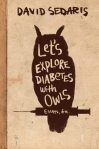 #3 Another book with a fantastic title that has nothing to do with the contents: Let’s Explore Diabetes with Owls by David Sedaris. Again, not my favourite of his essay collections (try Me Talk Pretty One Day or When You Are Engulfed in Flames instead), but he’s reliable for laughs.
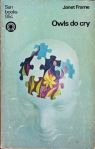 #4 No more about owls than the previous one; Owls Do Cry by Janet Frame is an autobiographical novel that tells the same story as her An Angel at My Table trilogy (but less compellingly): a hardscrabble upbringing in New Zealand and mental illness that led to incarceration in psychiatric hospitals. The title phrase is from Ariel’s song in The Tempest, which the Withers siblings learn at school. I’ve been ‘reading’ this for nearly a year and a half; really, it’s mostly been on the set-aside shelf for that time.
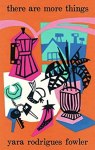 #5 Another title drawn from Shakespeare: there are more things by Yara Rodrigues Fowler is one of my Most Anticipated Books of 2022. It’s about a female friendship that links Brazil and London. I’m holding out hope for a review copy.
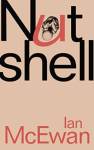 #6 Fowler’s title comes from Hamlet, which provides the plot for Ian McEwan’s Nutshell, one of his strongest novels of recent years. Within a few pages, I was captivated and utterly convinced by the voice of this contemporary, in utero Hamlet. Not even born and already a snob with an advanced vocabulary and a taste for fine wine, this foetus is a delight to spend time with. His captive state pairs perfectly with Hamlet’s existential despair, but also makes him (and us as readers) part of the conspiracy: even as he wants justice for his father, he has to hope his mother and uncle will get away with their crime; his future depends on it.
Where will your chain take you? Join us for #6Degrees of Separation! (Hosted on the first Saturday of each month by Kate W. of Books Are My Favourite and Best.)
Have you read any of my selections? Tempted by any you didn’t know before?
The 1976 Club: Woman on the Edge of Time & The Takeover
It’s my fourth time participating in one of Simon and Karen’s reading weeks (after last year’s 1920 Club and 1956 Club and April’s 1936 Club). I start with a novel I actually read for my book club’s short-lived feminist classics subgroup way back in March but didn’t manage to review before now, and then have another I picked up especially for this challenge. Both were from the university library.

Woman on the Edge of Time by Marge Piercy
An unusual and fascinating novel with hints of science fiction, but still grounded in the real world (in a way that would attract fans of Octavia E. Butler’s Kindred and Parable duology), this contrasts utopian and dystopian scenes experienced by a Latina woman who’s been confined to a mental hospital. At 37, Connie Ramos has had a tough life marked by deprivation and domestic violence; “it was a crime to be born poor as it was a crime to be born brown.” She finds herself in conversation with Luciente, a plant geneticist who claims to be visiting from the future – coastal Massachusetts in 2137 – and has heard rumors of this prior Age of Greed and Waste. Luciente senses that Connie is a “catcher,” receptive to the wavelength of other times and places.
 When drawn into Luciente’s future, Connie thinks of it more as a peasant past because of the animal husbandry and agriculture, but comes to appreciate how technology and gender equality contribute to a peaceful society and environmentally restored landscape. I was intrigued by the dynamic Piercy imagines: everyone is of indeterminate gender (the universal pronouns are “person” and “per” – how about it? Both less confusing and more aesthetically pleasing than they/them!); embryos are cultured in machines and the resulting children raised communally with three honorary named “mother” figures. People choose their own names and change them in response to rites of passage. There’s no government or police. Free love reigns. “Our notions of evil center around power and greed” rather than sex, Connie is told.
With Connie and her fellow inmates facing mind-altering surgery in the ‘real’ world, Luciente’s community becomes a blessed escape. But on one of her time travels, she ends up in a dystopian future New York City instead. From 126 floors up, all that’s visible through the smoggy air is other towers. Everyone is genetically modified and everything is owned by corporations. Which scenario represents the authentic evolution of human society?
The way Piercy intersperses these visions with life at the mental hospital, and closes with excerpts from Connie’s patient notes, forces you to question whether they might all be hallucinations. We didn’t come to any firm conclusion during our Zoom discussion. The others found Connie’s life unremittingly bleak, but I love me a good mental hospital narrative. While I wearied a bit of the anthropological detail as the novel went on, I thought it an intense cultural commentary from a writer ahead of her time on gender roles and the environment (small-scale food production, foraging, renewable energy and reusing/recycling are givens in her utopia, and she questions the nonsensical reliance on cars. Why didn’t we listen to the prophets of the 1970s when we maybe had a chance to turn things around?!).
My rating:
The Takeover by Muriel Spark
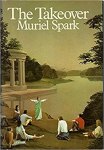 Had I read this in manuscript with no author name attached, I might have declared it to have been written by Iris Murdoch for the clutch of amoral characters, the love triangles, the peculiar religious society, the slight meanness of the attitude, and the detachment of the prose. Maggie Radcliffe is a rich American who owns three houses in the vicinity of Rome, one of which she rents out to Hubert Mallindaine, an effete homosexual who alleges that he is descended from the goddess Diana and founds a cult in her honour. He holds to this belief as fiercely as he defends his right to remain at Nemi even when Maggie decides she wants him out and employs lawyers to start eviction proceedings. There are odd priests, adulterous family members, scheming secretaries, and art and jewellery thieves, too. I wouldn’t say I’m a fan, but I liked this, my fourth novel by Spark, better than the rest. Italian bureaucracy makes for an amusing backdrop to what is almost a financial farce with an ensemble cast.
My rating: 
Another 1976 release I’ve reviewed this year: The Easter Parade by Richard Yates.
 Bookish Beck = Rebecca Foster. American transplant to England. Freelance proofreader and book reviewer.
 Bookish Beck