My Best Backlist Reads of the Year
Like many bloggers and other book addicts, I’m irresistibly drawn to the new books released each year. However, I consistently find that many memorable reads were published earlier. A few of these are from 2022 or 2023 and most of the rest are post-2000; the oldest is from 1910. These 14 selections (alphabetical within genre but in no particular rank order), together with my Best of 2024 post coming up on Tuesday, make up about the top 10% of my year’s reading. Repeated themes included adolescence, parenting (especially motherhood) and trauma. The two not pictured below were read electronically.

Fiction
Fun facts:
- I read 4 of these for book club (Forster, Mandel, Munro and Obreht)
- 3 (Mandel, McEwan and Obreht) were rereads
- I read 2 as part of my Carol Shields Prize shadowing (Foote and Zhang)
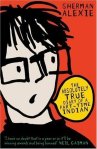 The Absolutely True Diary of a Part-Time Indian by Sherman Alexie: Groundbreaking for both Indigenous literature and YA literature, this reads exactly like a horny 14-year-old boy’s diary, but “Junior” (Arnold Spirit, Jr.) is also self-deprecating and sweetly vulnerable. Poverty, alcoholism, casinos: they don’t feel like clichés of Indian reservations because Alexie writes from experience and presents them matter-of-factly. Junior moves to a white high school and soon becomes adept at code-switching (and cartooning). Heartfelt; spot on.
 The Street by Bernardine Bishop: A low-key ensemble story about the residents of one London street: a couple struggling with infertility, a war veteran with dementia, and so on. Most touching is the relationship between Anne and Georgia, a lesbian snail researcher who paints Anne’s portrait; their friendship shades into quiet, middle-aged love. Beyond the secrets, threats and climactic moments is the reassuring sense that neighbours will be there for you. Bishop’s style reminds me most of Tessa Hadley’s. A great discovery.
 Coleman Hill by Kim Coleman Foote: Is this family memoir? Or autofiction? Foote draws on personal stories but also invokes overarching narratives of Black migration and struggle. The result is magisterial, a debut that is like oral history and a family scrapbook rolled into one, with many strong female characters. Like a linked story collection, it pulls together 15 vignettes from 1916 to 1989 and told in different styles and voices, including AAVE. The inherited trauma is clear, yet Foote weaves in counterbalancing lightness and love.
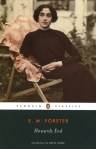 Howards End by E.M. Forster: Rereading for book club, I was so impressed by its complexities – the illustration of class, the character interactions, the coincidences, the deliberate doublings and parallels. It covers so many issues, always without a heavy touch. So many sterling sentences: depictions of places, observations of characters, or maxims that are still true of life. Well over a century later and the picture of well-meaning wealthy intellectuals’ interference making others’ lives worse is just as cutting.
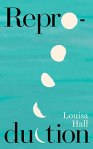 Reproduction by Louisa Hall: Procreation. Duplication. Imitation. All three connotations are appropriate for the title of an allusive novel about motherhood and doppelgangers. A pregnant writer starts composing a novel about Mary Shelley and finds the borders between fiction and (auto)biography blurring. It’s a recognisable piece of autofiction, with a sublime clarity as life is transcribed to the page exactly as it was lived. A tale of transformation – chosen or not – and peril in a country hurtling toward self-implosion. Brilliantly envisioned.
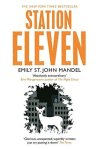 Station Eleven by Emily St. John Mandel: This has persisted as a definitive imagination of post-apocalypse life. On a reread, I was captivated by the different layers of the nonlinear story, from celebrity gossip to a rare graphic novel series, and the links between characters and storylines. Mandel also seeds subtle connections to later work. Themes that struck me were the enduring power of art and the value of the hyperlocal. It seems prescient of Covid-19, but more so of climate collapse. An ideal blend of the literary and the speculative.
 On Chesil Beach by Ian McEwan: A perfect novella. Its core is the July 1962 night when Edward and Florence attempt to consummate their marriage, but it stretches back to cover everything we need to know about them – their family dynamics, how they met, what they want from life – and forward to see their lives diverge. Is love enough? It’s a maturing of the author’s vision: tragedy is not showy and grotesque like in his early work, but quiet, hinging on the smallest action, the words not said. This absolutely flayed me emotionally on a reread.
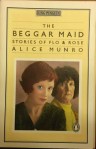 The Beggar Maid by Alice Munro: Linked short stories about a hardscrabble upbringing in small-town Ontario and a woman’s ongoing search for love. Rose’s stepmother Flo is resentful and stingy. She feels she’s always been hard done by, and takes it out on Rose. From early on, we know Rose makes it out of West Hanratty and gets a chance at a larger life, that her childhood becomes a tale of deprivation. Each story is intense, pitiless, and practically as detailed as an entire novel. Rich in insight into characters’ psychology.
 The Tiger’s Wife by Téa Obreht: Natalia, a medical worker in a war-ravaged country, learns of her grandfather’s death away from home. The only one who knew the secret of his cancer, she sneaks away from an orphanage vaccination program to reclaim his personal effects, hoping they’ll reveal something about why he went on this final trip. On this reread I was utterly entranced, especially by the sections about The Deathless Man. I had forgotten the medical element, which of course I loved. My favourite Women’s Prize winner.
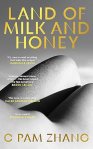 Land of Milk and Honey by C Pam Zhang: On a smog-covered planet where 98% of crops have failed, scarcity reigns – but there is a world apart, a mountaintop settlement at the Italian border where money can buy anything. The 29-year-old Chinese American chef’s job is to produce lavish, evocative multi-course meals. Her relationship with her employer’s 21-year-old daughter is a passionate secret. Each sentence is honed to flawlessness, with paragraphs of fulsome descriptions of meals. A striking picture of desire at the end of the world.
Nonfiction
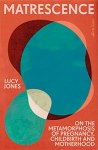 Matrescence: On the Metamorphosis of Pregnancy, Childbirth and Motherhood by Lucy Jones: A potent blend of scientific research and stories from the frontline. Jones synthesizes a huge amount of information into a tight narrative structured thematically but also proceeding chronologically through her own matrescence. The hybrid nature of the book is its genius. There’s a laser focus on her physical and emotional development, but the statistical and theoretical context gives a sense of the universal. For anyone who’s ever had a mother.
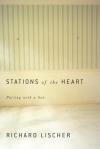 Stations of the Heart: Parting with a Son by Richard Lischer: Lischer opens by looking back on the day when his 33-year-old son Adam called to tell him his melanoma was back. Tests revealed metastases everywhere, including in his brain. The next few months were a Calvary of sorts, and Lischer, an emeritus professor at Duke Divinity School, draws deliberate parallels with biblical and liturgical preparations for Good Friday. His prose is a just right match: stately, resolute and weighted with spiritual allusion, yet never morose.
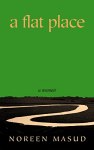 A Flat Place by Noreen Masud: A travel memoir taking in flat landscapes of the British Isles. But flatness is a psychological motif as well as a topographical reality. Growing up with a violent Pakistani father and passive Scottish mother, Masud chose the “freeze” option in fight-or-flight situations. A childhood lack of safety, belonging and love left her with complex PTSD. Her portrayals of sites and journeys are engaging and her metaphors are vibrant. Geography, history and social justice are a backdrop for a stirring personal story.
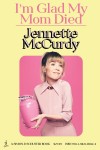 I’m Glad My Mom Died by Jennette McCurdy: True to her background in acting and directing, the book is based around scenes and dialogue, and present-tense narration mimics her viewpoint starting at age six. Much imaginative work was required to make her chaotic late-1990s California household, presided over by a hoarding Mormon cancer survivor, feel real. Abuse, eating disorders, a paternity secret: The mind-blowing revelations keep coming. So much is sad. And yet it’s a very funny book in its observations and turns of phrase.
What were some of your best backlist reads this year?
Three on a Theme: Christmas Novellas I (Re-)Read This Year
I wasn’t sure I’d manage any holiday-appropriate reading this year, but thanks to their novella length I actually finished three, two in advance and one in a single sitting on the day itself. Two of these happen to be in translation: little slices of continental Christmas.
Twelve Nights by Urs Faes (2018; 2020)
[Translated from the German by Jamie Lee Searle]
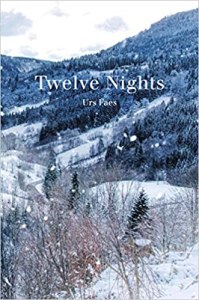 In this Swiss novella, the Twelve Nights between Christmas and Epiphany are a time of mischief when good folk have to protect themselves from the tricks of evil spirits. Manfred has trekked back to his home valley hoping to make things right with his brother, Sebastian. They have been estranged for several decades – since Sebastian unexpectedly inherited the family farm and stole Manfred’s sweetheart, Minna. These perceived betrayals were met with a vengeful act of cruelty (but why oh why did it have to be against an animal?). At a snow-surrounded inn, Manfred convalesces and tries to summon the courage to show up at Sebastian’s door. At only 84 small-format pages, this is more of a short story. The setting and spare writing are appealing, as is the prospect of grace extended. But this was over before it began; it didn’t feel worth what I paid. Perhaps I would have been happier to encounter it in an anthology or a longer collection of Faes’s short fiction. (Secondhand – Hungerford Bookshop)
Through a Glass, Darkly by Jostein Gaarder (1993; 1998)
[Translated from the Norwegian by Elizabeth Rokkan]
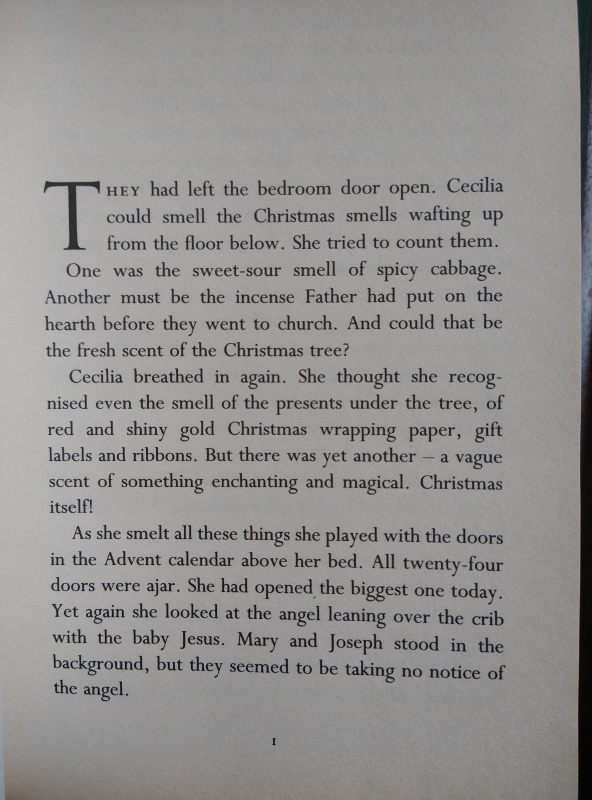
On Christmas Day, Cecilia is mostly confined to bed, yet the preteen experiences the holiday through the sounds and smells of what’s happening downstairs. (What a cosy first page!)
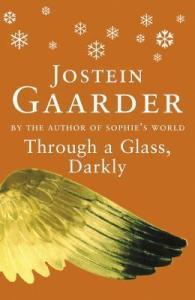 Her father later carries her down to open her presents: skis, a toboggan, skates – her family has given her all she asked for even though everyone knows she won’t be doing sport again; there is no further treatment for her terminal cancer. That night, the angel Ariel appears to Cecilia and gets her thinking about the mysteries of life. He’s fascinated by memory and the temporary loss of consciousness that is sleep. How do these human processes work? “I wish I’d thought more about how it is to live,” Cecilia sighs, to which Ariel replies, “It’s never too late.” Weeks pass and Ariel engages Cecilia in dialogues and takes her on middle-of-the-night outdoor adventures, always getting her back before her parents get up to check on her. The book emphasizes the wonder of being alive: “You are an animal with the soul of an angel, Cecilia. In that way you’ve been given the best of both worlds.” This is very much a YA book and a little saccharine for me, but at least it was only 161 pages rather than the nearly 400 of Sophie’s World. (Secondhand – Community Furniture Project, Newbury)
Small Things Like These by Claire Keegan (2021)
I idly reread this while The Muppet Christmas Carol played in the background on a lazy, overfed Christmas evening.
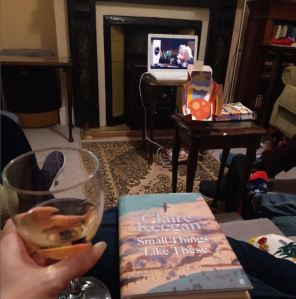
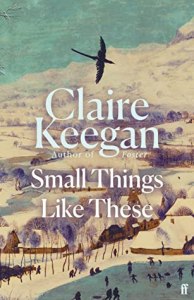 It was an odd experience: having seen the big-screen adaptation just last month, the blow-by-blow was overly familiar to me and I saw Cillian Murphy and Emily Watson, if not the minor actors, in my mind’s eye. I realized fully just how faithful the screenplay is to the book. The film enhances not just the atmosphere but also the plot through the visuals. It takes what was so subtle in the book – blink-and-you’ll-miss-it – and makes it more obvious. Normally I might think it a shame to undermine the nuance, but in this case I was glad of it. Bill Furlong’s midlife angst and emotional journey, in particular, are emphasized in the film. It was probably a mistake to read this a third time within so short a span of time; it often takes me more like 5–10 years to appreciate a book anew. So I was back to my ‘nice little story’ reaction this time, but would still recommend this to you – book or film – if you haven’t yet experienced it. (Free at a West Berkshire Council recycling event)
Previous ratings:  (2021 review);
  (2022 review)
My rating this time:
We hosted family for Christmas for the first time, which truly made me feel like a proper grown-up. It was stressful and chaotic but lovely and over all too soon. Here’s my lil’ book haul (but there was also a £50 book token, so I will buy many more!).
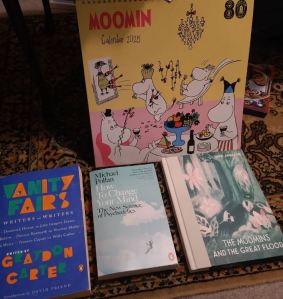
I hope everyone has been enjoying the holidays. I have various year-end posts in progress but of course the final Best-of list and statistics will have to wait until the turning of the year.
Coming up:
Sunday 29th: Best Backlist Reads of the Year
Monday 30th: Love Your Library & 2024 Reading Superlatives
Tuesday 31st: Best Books of 2024
Wednesday 1st: Final statistics on 2024’s reading
#NovNov24 Catch-Up, I: Comyns, Figes, McEwan, Radcliffe, Thériault
Still more to finish reading and/or belatedly review this week before the Novellas in November link-up closes – another, er, nine books after this, I think! I’ll save the short nonfiction for a couple of other posts. For now I have five novellas that range from black comedy to utter heartbreak and from quotidian detail to magic realism.
The House of Dolls by Barbara Comyns (1989)
 What a fantastic opening line: “Amy Doll, are you telling me that all those old girls upstairs are tarts?” Amy is a respectable widow and single mother to Hetty; no one would guess her boarding house is a brothel where gentlemen of a certain age engage the services of Berti, Evelyn, Ivy and the Señora. When a policeman starts courting Amy, she feels it’s time to address her lodgers’ profession and Hetty’s truancy. The older women disperse: move, marry or seek new employment. Sequences where Berti, who can barely boil an egg, tries to pass as a cook for a highly exacting couple, and Evelyn gets into the gin while babysitting, are hilarious. But there is pathos to the spinsters’ plight as well. “The thing that really upset [Berti] was her hair, long wisps of white with blazing red ends which she kept hidden under a scarf. The fact that she was penniless, and with no prospects, had become too terrible to contemplate.” She and Evelyn take to attending the funerals of strangers for the free buffet and booze. Comyns’ last novel (I’d only previously read Who Was Changed and Who Was Dead) is typically dark, but the wit counteracts the morbid nature. It reminded me of Beryl Bainbridge, late Barbara Pym, Lore Segal, and Muriel Spark. (Passed on by Liz – thank you! Even with the hideous cover.) [156 pages]
Light by Eva Figes (1983)
 I read this as part of my casual ongoing project to read books from my birth year. This was recently reissued and I can see why it is considered a lost classic and was much admired by Figes’ fellow authors. A circadian novel, it presents Claude Monet and his circle of family, friends and servants at home in Giverny. The perspective shifts nimbly between characters and the prose is appropriately painterly: “The water lilies had begun to open, layer upon layer of petals folded back to the sky, revealing a variety of colour. The shadow of the willow lost depth as the sun began to climb, light filtering through a forest of long green fingers. A small white cloud, the first to be seen on this particular morning, drifted across the sky above the lily pond”. There are also neat little hints about the march of time: “‘Telephone poles are ruining my landscapes,’ grumbled Claude”. But this story takes plotlessness to a whole new level, and I lost patience far before the end, despite the low page count, and so skimmed half or more. If you are a lover of lyrical writing and can tolerate stasis, it may well be your cup of tea. (Secondhand – Community Furniture Project?) [91 pages]
On Chesil Beach by Ian McEwan (2007)
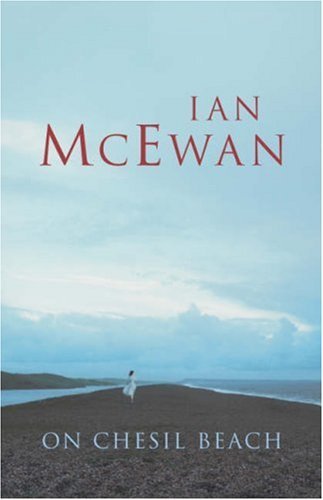 “They were young, educated, and both virgins on this, their wedding night, and they lived in a time when a conversation about sexual difficulties was plainly impossible.” Another stellar opening line to what I think may be a perfect novella. Its core is the night in July 1962 when Edward and Florence attempt to consummate their marriage in a Dorset hotel, but it stretches back to cover everything we need to know about this couple – their family dynamics, how they met, what they want from life – and forward to see their lives diverge. Is love enough? “And what stood in their way? Their personalities and pasts, their ignorance and fear, timidity, squeamishness, lack of entitlement or experience or easy manners, then the tail end of a religious prohibition, their Englishness and class, and history itself. Nothing much at all.” I had forgotten the sources of trauma: Edward’s mother’s brain injury, perhaps a hint that Florence was sexually abused by her father? (But she also says things that would today make us posit asexuality.) I knew when I read this at its release that it was a superior McEwan, but it’s taken the years since – perhaps not coincidentally, the length of my own marriage – to realize just how special. It’s a maturing of the author’s vision: the tragedy is not showy and grotesque like in his early novels and stories, but quiet, hinging on the smallest of actions, or the words not said. This absolutely flayed me emotionally on a reread. (Little Free Library) [166 pages]
The Old Haunts by Allan Radcliffe (2023)
 I was sent this earlier in the year in a parcel containing the 2024 McKitterick Prize shortlist. It’s been instructive to observe the variety just in that set of six (and so much the more in the novels I’m assessing for the longlist now). The short, titled chapters feel almost like linked flash stories that switch between the present day and scenes from art teacher Jamie’s past. Both of his parents having recently died, Jamie and his boyfriend, a mixed-race actor named Alex, get away to remote Scotland. His parents were older when they had him; growing up in the flat above their newsagent’s shop in Edinburgh, Jamie felt the generational gap meant they couldn’t quite understand him or his art. Uni in London was his chance to come out and make supportive friends, but being honest with his parents seemed a step too far. When Alex is called away for an audition, Jamie delves deeper into his memories. Kit, their host at the cottage, has her own story. Some lovely, low-key vignettes and passages (“A smell of soaked fruit. Christmas cake. My mother liked to be organised. She was here, alive, only yesterday.”), but overall a little too soft for the grief theme to truly pierce through. [158 pages]
With thanks to the Society of Authors for the free copy for review.
The Peculiar Life of a Lonely Postman by Denis Thériault (2005; 2008)
[Translated from the French by Liedewy Hawke]
 {BEWARE SPOILERS} Like many, I was drawn in by the quirky title and Japan-evoking cover. To start with, it’s the engaging story of Bilodo, a Montreal postman with a naughty habit of steaming open various people’s mail. He soon becomes obsessed with the haiku exchange between a certain Gaston Grandpré and his pen pal in Guadeloupe, Ségolène. When Grandpré dies a violent death, Bilodo decides to impersonate him and take over the correspondence. He learns to write poetry – as Thériault had to, to write this – and their haiku (“the art of the snapshot, the detail”) and tanka grow increasingly erotic and take over his life, even supplanting his career. But when Ségolène offers to fly to Canada, Bilodo panics. I had two major problems with this: the exoticizing of a Black woman (why did she have to be from Guadeloupe, of all places?), and the bizarre ending, in which Bilodo, who has gradually become more like Grandpré, seems destined for his fate as well. I imagine this was supposed to be a psychological fable, but it was just a little bit silly for me, and the way it’s marketed will probably disappoint readers who are looking for either Harold Fry heart warming or cute Japanese cat/phone box adventures. (Public library) [108 pages]
Which of these catches your eye?
Short, Soul-Soothing Reads for #NovNov24 & #NonfictionNovember: Barnes, Cognetti, Lende, Mann, Nouwen and Winner
After the catastrophic U.S. election results (which we’ve all managed to ignore or normalize so as to keep going with our lives) and a medical crisis with our dear old cat, I’ve been craving literary soul food. These six short nonfiction books have been good companions, promising love, meaning and transcendence in the midst of bereavement and daily routines.
Levels of Life by Julian Barnes (2013)
 Barnes was a favourite author in my twenties and thirties, though I’ve had less success with his recent work. He wrote a few grief-soaked books in the wake of the death of his wife, celebrated literary agent Pat Kavanagh*. I had this mistaken for a different one (Through the Window, I think?) that I had enjoyed more. No matter; it was still interesting to reread this triptych of auto/biographical essays. The final, personal piece, “The Loss of Depth,” is a classic of bereavement literature on par with C.S. Lewis’s A Grief Observed; I would happily take it as a standalone pamphlet. Its every word rings true, especially the sense of duty as the lost one’s “principal rememberer.” But the overarching ballooning metaphor, and links with early French aerial photographer Nadar and Colonel Fred Burnaby, aeronaut and suitor of Sarah Bernhardt, don’t convince. The strategy feels like a rehearsal for Richard Flanagan’s Baillie Gifford Prize-winning Question 7, a similar hybrid work that pulls it off better. (Little Free Library) [118 pages]
*In spring 2008, I attended a talk by John Irving at King’s College, London, where I worked in library services for five years. Barnes and Kavanagh were in the front row and embraced Irving before the start. I was floored to hear of Kavanagh’s death later that year because she’d looked so well. It was a fast-acting brain tumour that felled her just 37 days after diagnosis.
Without Ever Reaching the Summit by Paolo Cognetti (2018; 2020)
[Translated from the Italian by Stash Luczkiw]
 Part pilgrimage and part 40th birthday treat, Cognetti’s October 2017 Himalayan trek through Dolpo (a Nepalese plateau at the Tibetan border) would also somewhat recreate Peter Matthiessen’s The Snow Leopard. Cognetti struggles with altitude sickness and the fare: “I tried salted yak butter tea for the first time—nauseating if you thought you were drinking tea, good and refreshing if you thought you were drinking broth.” He and his companions fancifully decide that Kanjiroba, the lovable stray dog who joins their party, is a reincarnation of Matthiessen. I have limited tolerance for travel books’ episodic combinations of nature descriptions, anthropological observations, and the rigours of the nomadic lifestyle. The same was true here, but the slight spiritual aspect and references to The Snow Leopard lifted it. (Public library) [135 pages]
Find the Good: Unexpected Life Lessons from a Small-Town Obituary Writer by Heather Lende (2015)
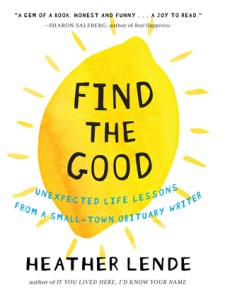 Lende is a journalist in isolated Haines, Alaska (population: 2,000). There’s a plucky motivational bent to these mini-essays about small-town life and death. In writing obituaries for normal, flawed people, she is reminded of what matters most: family (she’s a mother of five, one adopted, and a grandmother; she includes beloved pets in this category) and vocation. The title phrase is the motto she lives by. “I believe gratitude comes from a place in your soul that knows the story could have ended differently, and often does, and I also know that gratitude is at the heart of finding the good in this world—especially in our relationships with the ones we love.” The anecdotes and morals are sweet if not groundbreaking. The pocket-sized hardback might appeal to readers of Anne Lamott and Elizabeth Strout. (Birthday gift from my wish list, secondhand) [162 pages]
Do Not Be Afraid: The joy of waiting in a time of fear by Rachel Mann (2024)
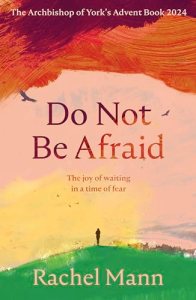 This is the Archbishop of York’s Advent Book 2024; I read it early because, pre-election, I yearned for its message of courage and patience. We need it all the more now. The bite-sized essays are designed to be read one per day from the first Sunday of Advent through to Christmas Day. Often they include a passage of scripture or poetry (including some of Mann’s own) for meditation, and each entry closes with a short prayer and a few questions for discussion or private contemplation. The topics are a real variety but mostly draw on the author’s own experiences of waiting and suffering: medical appointments and Covid isolation as well as the everyday loneliness of being single and the pain of coping with chronic illness. She writes about sitting with parishioners as they face death and bereavement. But there are also pieces inspired by popular culture – everything from Strictly to Quentin Tarantino.
Mann has written several previous Lent course books based on films. I’ve read her work in multiple genres (poetry: A Kingdom of Love and Eleanor Among the Saints; literary criticism: In the Bleak Midwinter; memoir: Dazzling Darkness; fiction: The Gospel of Eve); she is such a versatile writer, and with a fascinating story as a trans priest. Sombre yet hopeful, this is recommended seasonal reading. [114 pages]
With thanks to SPCK for the free copy for review.
The Inner Voice of Love: A Journey through Anguish to Freedom by Henri J. M. Nouwen (1997)
 Anguish is a strong word; I haven’t done any biographical digging to figure out what was going on in Nouwen’s life to prompt it, but apparently this secret journal came out of a lost relationship. (I wonder if it could have been a homosexual attachment. Nouwen was a Dutch Roman Catholic priest who became the pastor of a community for disabled adults in Canada.) He didn’t publish for another eight years but friends encouraged him to let his experience aid others. The one- or two-page reflections are written in the second person, so they feel like a self-help pep talk. The recurring themes are overcoming abandonment and rejection, relinquishing control, and trusting in God’s love and faithfulness. “You must stop being a pleaser and reclaim your identity as a free self.” The point about needing to integrate rather than sideline psychological pain is one I’m sure any therapist would affirm. Nouwen writes that a new spirituality of the body is necessary. This was a comforting bedside book with lots of passages that resonated. (Free – withdrawn from church theological library) [98 pages]
Mudhouse Sabbath: An Invitation to a Life of Spiritual Discipline by Lauren F. Winner (2003)
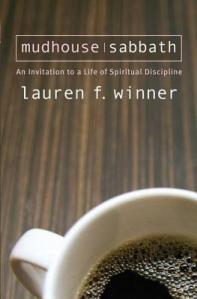 After Winner converted from Orthodox Judaism to Christianity, she found that she missed how Jewish rituals make routine events sacred. There are Christian sacraments, of course, but this book is about how the wisdom of another tradition might be applied in a new context. “Judaism offers opportunities for people to inhabit and sanctify bodies and bodily practices,” Winner writes. There are chapters on the concept of the Sabbath, wedding ceremonies, prayer and hospitality. Fasting is a particular sticking point for Winner, but her priest encourages her to see it as a way of demonstrating dependence on, and hunger for, God. I most appreciated the sections on mourning and ageing. “Perhaps the most essential insight of the Jewish approach to caring for one’s elderly is that this care is, indeed, an obligation. What Judaism understands is that obligations are good things. They are the very bedrock of the Jew’s relationship to God, and they govern some of the most fundamental human relationships”. By the way, Mudhouse is Winner’s local coffeehouse, so she believes these disciplines can be undertaken anywhere. (Secondhand – Awesomebooks.com) [142 pages]

#SciFiMonth: A Simple Intervention (#NovNov24 and #GermanLitMonth) & Station Eleven Reread
It’s rare for me to pick up a work of science fiction but occasionally I’ll find a book that hits the sweet spot between literary fiction and sci-fi. Parable of the Sower by Octavia Butler, The Book of Strange New Things by Michel Faber and The Sparrow by Mary Doria Russell are a few prime examples. It was the comparisons to Margaret Atwood and Kazuo Ishiguro, masters of the speculative, that drew me to my first selection, a Peirene Press novella. My second was a reread, 10 years on, for book club, whose postapocalyptic content felt strangely appropriate for a week that delivered cataclysmic election results.

A Simple Intervention by Yael Inokai (2022; 2024)
[Translated from the German by Marielle Sutherland]
Meret is a nurse on a surgical ward, content in the knowledge that she’s making a difference. Her hospital offers a pioneering procedure that cures people of mental illnesses. It’s painless and takes just an hour.
The doctor had to find the affected area and put it to sleep, like a sick animal. That was his job. Mine was to keep the patients occupied. I was to distract them from what was happening and keep them interacting with me. As long as they stayed awake, we knew the doctor and his instruments had found the right place.
 The story revolves around Meret’s emotional involvement in the case of Marianne, a feisty young woman who has uneasy relationships with her father and brothers. The two play cards and share family anecdotes. Until the last few chapters, the slow-moving plot builds mostly through flashbacks, including to Meret’s affair with her fellow nurse, Sarah. This roommates-to-lovers thread reminded me of Learned by Heart by Emma Donoghue. When Marianne’s intervention goes wrong, Meret and Sarah doubt their vocation and plan an act of heroism.
Inokai invites us to ponder whether what we perceive as defects are actually valuable personality traits. More examples of interventions and their aftermath would be a useful point of comparison, though, and the pace is uneven, with a lot of unnecessary-seeming backstory about Meret’s family life. In the letter that accompanied my review copy, Inokai explained her three aims: to portray a nurse (her mother’s career) because they’re underrepresented in fiction, “to explore our yearning to cut out our ‘demons’,” and to offer “a queer love story that was hopeful.” She certainly succeeds with those first and third goals, but with the central subject I felt she faltered through vagueness.
Born in Switzerland, Inokai now lives in Berlin. This also counts as my first contribution to German Literature Month; another is on the way!
[187 pages]
With thanks to Peirene Press for the free copy for review.


Station Eleven by Emily St. John Mandel (2014)
For synopsis and analysis I can’t do better than when I reviewed this for BookBrowse a few months after its release, so I’d direct you to the full text here. (It’s slightly depressing for me to go back to old reviews and see that I haven’t improved; if anything, I’ve gotten lazier.) A couple book club members weren’t as keen, I think because they’d read a lot of dystopian fiction or seen many postapocalyptic films and found this vision mild and with a somewhat implausible setup and tidy conclusion. But for me this and Cormac McCarthy’s The Road have persisted as THE literary depictions of post-apocalypse life because they perfectly blend the literary and the speculative in an accessible and believable way (this was a National Book Award finalist and won the Arthur C. Clarke Award), contrasting a harrowing future with nostalgia for an everyday life that we can already see retreating into the past.
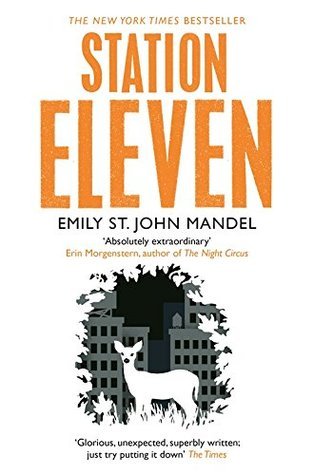 Station Eleven has become a real benchmark for me, against which I measure any other dystopian novel. On this reread, I was captivated by the different layers of the nonlinear story, from celebrity gossip to a rare graphic novel series, and enjoyed rediscovering the links between characters and storylines. I remembered a few vivid scenes and settings. Mandel also seeds subtle connections to later work, particularly The Glass Hotel (island off Vancouver, international shipping and finance) but also Sea of Tranquility (music, an airport terminal). I haven’t read her first three novels, but wouldn’t be surprised if they have additional links.
The two themes that most struck me this time were the enduring power of art and how societal breakdown would instantly eliminate the international – but compensate for it with the return of the extremely local. At a time when it feels difficult to trust central governments to have people’s best interests at heart, this is a rather comforting prospect. Just in my neighbourhood, I see how we implement this care on a small scale. In settlements of up to a few hundred, the remnants of Station Eleven create something like normal life by Year 20.
Book club members sniped that the characters could have better pooled skills, but we agreed that Mandel was wise to limit what could have been tedious details about survival. “Survival is insufficient,” as the Traveling Symphony’s motto goes (borrowed from Star Trek). Instead, she focuses on love, memory, and hunger for the arts. In some ways, this feels prescient of Covid-19, but even more so of the climate-related collapse I expect in my lifetime. I’ve rated this a little bit higher the second time for its lasting relevance. (Free from a neighbour) 
Some favourite passages:
the whole of Chapter 6, a bittersweet litany that opens “An incomplete list: No more diving into pools of chlorinated water lit green from below” and includes “No more pharmaceuticals,” “No more flight,” and “No more countries”
“what made it bearable were the friendships, of course, the camaraderie and the music and the Shakespeare, the moments of transcendent beauty and joy”
“The beauty of this world where almost everyone was gone. If hell is other people, what is a world with almost no people in it?”

My Year in Novellas (#NovNov24)
Here at the start of the month, we’re inviting you to tell us about the novellas you’ve read since last November.
I have a special shelf of short books that I add to throughout the year. When at secondhand bookshops, charity shops, a Little Free Library, or the public library where I volunteer, I’m always thinking about my piles for November. But I do read novellas at other times of year, too. Forty-four of them between December 2023 and now, according to my Goodreads shelves (last year it was 46, so it seems like that’s par for the course). I often choose to review books of novella length for BookBrowse, Foreword and Shelf Awareness. I’ve read a real mixture, but predominantly literature in translation and autobiographical works.


My favourites of the ones I’ve already covered on the blog would probably be (nonfiction) Alphabetical Diaries by Sheila Heti and (fiction) Aimez-vous Brahms by Françoise Sagan. My proudest achievements are: reading the short graphic novel Broderies by Marjane Satrapi in the original French at our Parisian Airbnb in December; and managing two rereads: Heartburn by Nora Ephron and Of Mice and Men by John Steinbeck.


Of the short books I haven’t already reviewed here, I’ve chosen two gems, one fiction and one nonfiction, to spotlight in this post:
Fiction
Clear by Carys Davies
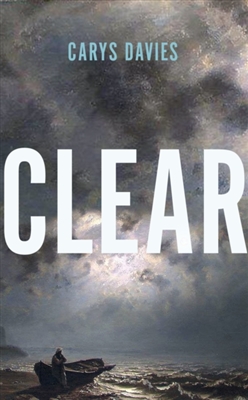 Clear depicts the Highland Clearances in microcosm though the experiences of one man, Ivar, the last resident of a remote Scottish island between Shetland and Norway. As in a play, there is a limited setting and cast. John is a minister sent by the landowner to remove Ivar, but an accident soon after his arrival leaves him beholden to Ivar for food and care. Mary, John’s wife, is concerned and sets off on the long journey from the mainland to rescue him. Davies writes vivid scenes and brings the island’s scenery to life. Flashbacks fill in the personal and cultural history, often via objects. The Norn language is another point of interest. The deceptively simple prose captures both the slow building of emotion and the moments that change everything. It seemed the trio were on course for tragedy, yet they are offered the grace of a happier ending.
In my book club, opinions differed slightly as to the central relationship and the conclusion, but we agreed that it was beautifully done, with so much conveyed in the concise length. This received our highest rating ever, in fact. I’d read Davies’ West and not appreciated it as much, although looking back I can see that it was very similar: one or a few character(s) embarked on unusual and intense journey(s); a plucky female character; a heavy sense of threat; and an improbably happy ending. It was the ending that seemed to come out of nowhere and wasn’t in keeping with the tone of the rest of the novella that made me mark West down. Here I found the writing cinematic and particularly enjoyed Mary as a strong character who escaped spinsterhood but even in marriage blazes her own trail and is clever and creative enough to imagine a new living situation. And although the ending is sudden and surprising, it nevertheless seems to arise naturally from what we know of the characters’ emotional development – but also sent me scurrying back to check whether there had been hints. One of my books of the year for sure.
Nonfiction
A Termination by Honor Moore
Poet and memoirist Honor Moore’s A Termination is a fascinatingly discursive memoir that circles her 1969 abortion and contrasts societal mores across her lifetime.
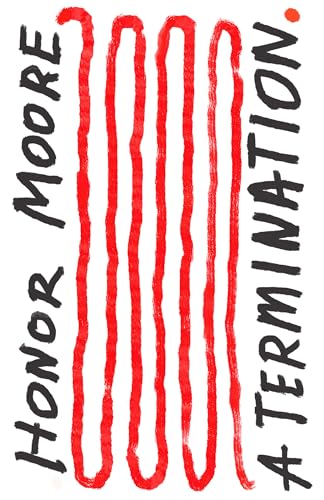 During the spring in question, Moore was a 23-year-old drama school student. Her lover, L, was her professor. But she also had unwanted sex with a photographer. She did not know which man had impregnated her, but she did know she didn’t feel prepared to become a mother. She convinced a psychiatrist that doing so would destroy her mental health, and he referred her to an obstetrician for a hospital procedure. The termination was “my first autonomous decision,” Moore insists, a way of saying, “I want this life, not that life.”
Family and social factors put Moore’s experiences into perspective. The first doctor she saw refused Moore’s contraception request because she was unmarried. Her mother, however, bore nine children and declined to abort a pregnancy when advised to do so for medical reasons. Moore observes that she made her own decision almost 10 years before “the word choice replaced pro abortion.”
This concise work is composed of crystalline fragments. The stream of consciousness moves back and forth in time, incorporating occasional second- and third-person narration as well as highbrow art and literature references. Moore writes one scene as if it’s in a play and imagines alternative scenarios in which she has a son; though she is curious, she is not remorseful. The granular attention to women’s lives recalls Annie Ernaux, while the kaleidoscopic yet fluid approach is reminiscent of Sigrid Nunez’s work. It’s a stunning rendering of steps on her childfree path. 
Reprinted with permission from Shelf Awareness.
I currently have four novellas underway and plan to start some more this weekend. I have plenty to choose from!
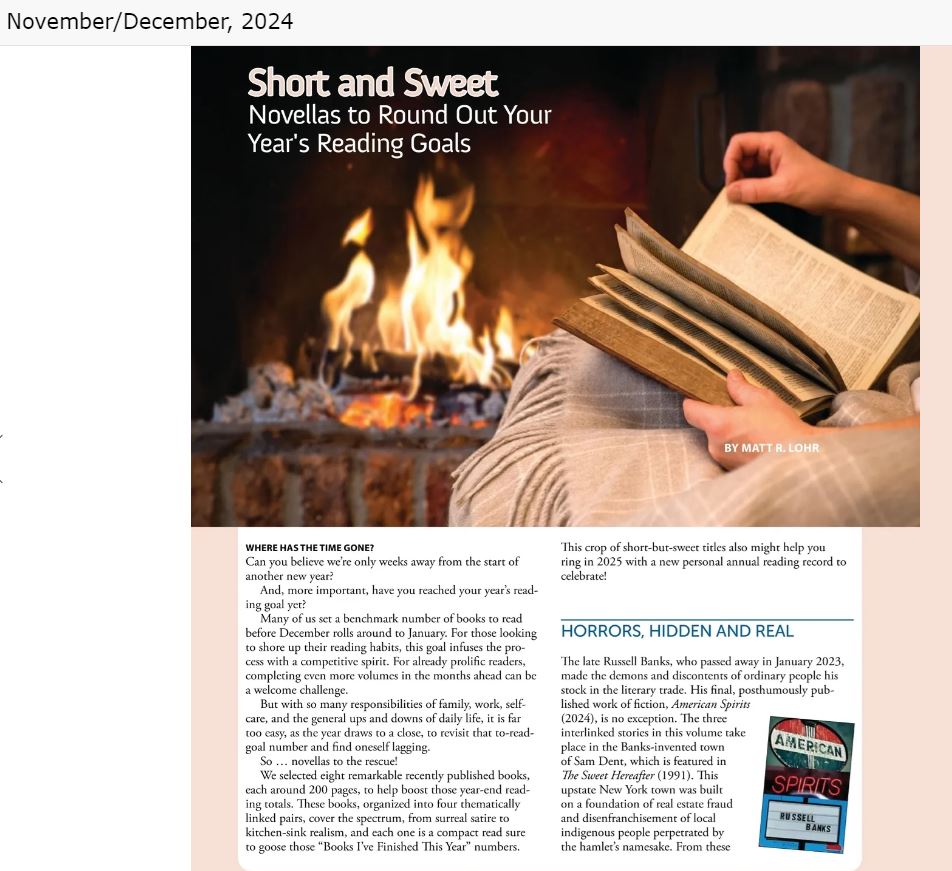
Everyone’s getting in on the act: there’s an article on ‘short and sweet books’ in the November/December issue of Bookmarks magazine, for which I’m an associate editor; Goodreads sent around their usual e-mail linking to a list of 100 books under 250 or 200 pages to help readers meet their 2024 goal. Or maybe you’d like to join in with Wafer Thin Books’ November buddy read, the Ugandan novella Waiting by Goretti Kyomuhendo (2007).

Why not share some recent favourite novellas with us in a post of your own?

Autumn Reads: Don Freeman, Seamus Heaney, Jo Lindley, Alice Oseman
I keep a whole box full of future seasonal reads. Winter is the largest contingent because it includes Christmas, cold, snow and ice; followed by summer, which also covers heat, sun and so on. Every once in a while, I’ll come across a spring-related book. Autumn may be great for misty canal walks, vibrant leaves and variegated squashes, but it’s the hardest of the seasons to find books for. I’ve read all the obvious ones by now. Some of the below connections are more abstract but not too much of a stretch, I hope.


Corduroy by Don Freeman (1968)
Autumn is when I wear the most corduroy, sometimes (accidentally) head to toe.
 I knew I’d read this as a child, but didn’t expect individual pages to feel so familiar. It must have been on frequent rotation in my house growing up. Corduroy the bear is among the toys on offer in a large department store. One morning Lisa, a little Black girl, picks him out, but her mother says no, they’ve spent too much already – and besides, the toy is damaged. He didn’t realize until her mother said: his green overall is missing a button. That night he rides the escalator to go look for the button, thinking he’ll never be loved until he’s complete. His adventure doesn’t turn out as planned, but Lisa hasn’t stopped thinking about him. Long before Toy Story, here was a sweet book about what toys get up to when we’re not around. And the repeated expressions of the bear’s meek wonderment – “This must be home,” “You must be a friend” – gave me the warm fuzzies. (Little Free Library)
Field Work by Seamus Heaney (1979)
 Harvest is a secondary theme in this poetry collection, which also has an overall melancholy tone that seems appropriate to the season of All Souls. Two poems are headed “In Memoriam” and another is titled “Elegy.” Even when they are not the stated topic, the Troubles rear up, as in the first section of “Triptych”: “Two young men with rifles on the hill, / Profane and bracing as their instruments. // Who’s sorry for our trouble?” The countryside can nevermore be an idyll when armoured cars and bombs could be anywhere. “The end of art is peace,” a late line from “The Harvest Bow,” may well be the poet’s motto (so long as “end” is interpreted as “goal”). There is a sequence of 10 sonnets and several poems devoted to animals. I experience Heaney’s poetry as linguistically fertile and formally rigorous; probably best heard out loud. (Secondhand – Oxfam, Marlborough)
Autumnal passages I marked:
“We toe the line / between the tree in leaf and the bare tree.” (from “September Song”)
“the sunflower, dreaming umber” (from “Field Work”)
“A rowan like a lipsticked girl” (from “Song”)
“the sunset blaze / of straw on blackened stubble, a thatch-deep, freshening barbarous crimson burn” (from “Leavings”)
But none of those stood out to me as much as “Oysters,” the opening poem, which I photographed here. I’ve read and savoured every line of it five times now. It’s gold.
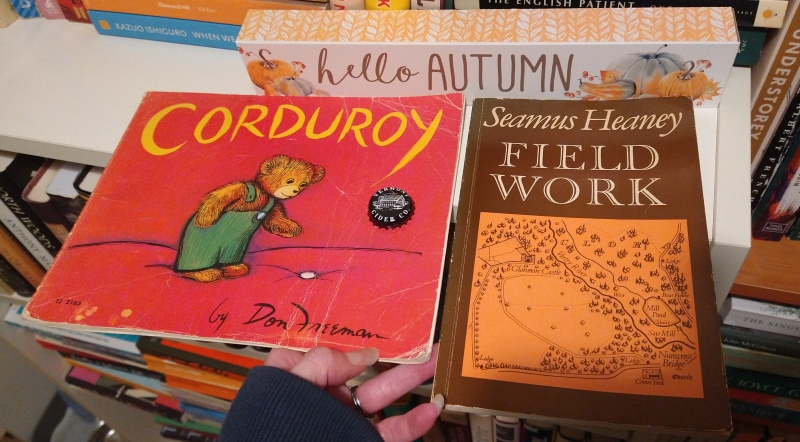
Hello Autumn by Jo Lindley (2023)
 Depicted as elfin children, the seasons take turns wearing a single crown. Autumn is a timid soul worried about what might go wrong. But when one of the others is at risk, he rushes to help even if it might take him outside his comfort zone. By doing so, he realizes how much there is to enjoy in every season. This is part of a didactic series (Little Seasons/Best Friends with Big Feelings) about coping with anxiety. I’m surprised it wasn’t classified in the mostly-nonfiction “Family Matters” section of the children’s library, which includes books on feelings, illnesses, death, divorce, siblings, first experiences, etc. It was a little heavy-handed for me and I wasn’t sure why the characters had to be elves. (Public library)
Heartstopper: Volume 1 by Alice Oseman (2019)
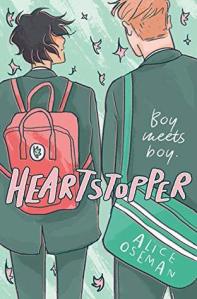 I’ve been rereading the series through the hardback reissue; I’m now on Volume 5 (and WHERE is Volume 6, huh?). I’ve included the first book because of the falling leaves motif on the cover, which fits the back-to-school vibe. (Public library)
What I thought this time: Just as cute the second time around. All the looks, all the blushes, all the angst! I’d forgotten the details of how Nick and Charlie met and got together. Single best page: when Tori appears out of nowhere and says to Charlie of Nick, “I don’t think he’s straight.”
Original review: It’s well known at Truham boys’ school that Charlie is gay. Luckily, the bullying has stopped and the others accept him. Nick, who sits next to Charlie in homeroom, even invites him to join the rugby team. Charlie is smitten right away, but it takes longer for Nick, who’s only ever liked girls before, to sort out his feelings. This black-and-white YA graphic novel is pure sweetness, taking me right back to the days of high school crushes.
Love Your Library, September 2024
Thanks to Eleanor, Laura (here, here and here & Happy birthday!), Marcie and Naomi (here and here) for posting about their recent library reading!
On our holiday I popped into the Dunbar library (East Lothian, Scotland) while my husband was touring a nearby brewery. It seemed like a sweet and useful community centre, and I enjoyed the kid-friendly book returns box.


Last week my library removed its Perspex screens from around the three enquiry desks, nearly four years on from when they were put up during Covid.
I’m dipping into the Booker and Wainwright Prize shortlists through my library borrowing, and stocking up for R.I.P.
I appreciated this passage about libraries from Home Is Where We Start by Susanna Crossman:
Every week, from the age of seven, I walk the twenty minutes to the local library, and I borrow four books. My path takes me past the greengrocer’s, the newsagent’s, the butcher’s, the baker’s, the bank, the post office, and across the town square … Inside the library, high walls are lined with books, and when I’ve read all the Children’s section, the librarian lets me take the Adult books, but only the Classics. Back in my room at the community, I read for hours. Reading is one of my forms of resistance. … Books are my home, and when you turn the cover, you close one door and open another, moving to imagined worlds.
My library use over the last month:
(links to reviews not already featured on the blog)
READ
- One Garden against the World: In Search of Hope in a Changing Climate by Kate Bradbury
- Clear by Carys Davies
- Moominpappa at Sea by Tove Jansson
- The Song of the Whole Wide World: On Motherhood, Grief, and Poetry by Tamarin Norwood
- Strange Sally Diamond by Liz Nugent
- Heartstopper: Volume 1 by Alice Oseman (reread)
- Heartstopper: Volume 2 by Alice Oseman (reread)
- Heartstopper: Volume 3 by Alice Oseman (reread)
- Lumberjanes: Campfire Songs by Shannon Watters
- The Echoes by Evie Wyld

SKIMMED
- The Garden against Time: In Search of a Common Paradise by Olivia Laing
- The Accidental Garden: The Plot Thickens by Richard Mabey
CURRENTLY READING
- The Lone-Ranger and Tonto Fistfight in Heaven by Sherman Alexie
CURRENTLY READING-ish (more accurately, set aside temporarily)
- Death Valley by Melissa Broder
- The Tale of Despereaux by Kate DiCamillo
- Learning to Think: A Memoir about Faith, Demons, and the Courage to Ask Questions by Tracy King
- Groundbreakers: The Return of Britain’s Wild Boar by Chantal Lyons
- Unearthing: A Story of Tangled Love and Family Secrets by Kyo Maclear
- Late Light: Finding Home in the West Country by Michael Malay
- Mrs Gulliver by Valerie Martin
- After Dark by Haruki Murakami
- Stowaway: The Disreputable Exploits of the Rat by Joe Shute

CHECKED OUT, TO BE READ
- A Haunting on the Hill by Elizabeth Hand
- Dispersals: On Plants, Borders and Belonging by Jessica J. Lee
- Now She Is Witch by Kirsty Logan
- Held by Anne Michaels
- Heartstopper: Volume 4 by Alice Oseman (reread)
- It’s Not Just You: How to Navigate Eco-Anxiety and the Climate Crisis by Tori Tsui
IN THE RESERVATION QUEUE
- Orbital by Samantha Harvey
- Bothy: In Search of Simple Shelter by Kat Hill
- The Painter’s Daughters by Emily Howes
- Playground by Richard Powers
- The Place of Tides by James Rebanks

ON HOLD, TO BE PICKED UP
- The Glassmaker by Tracy Chevalier
- James by Percival Everett
- Small Rain by Garth Greenwell
- Intermezzo by Sally Rooney
RETURNED UNREAD
- Wasteland: The Dirty Truth about What We Throw Away, Where It Goes, and Why It Matters by Oliver Franklin-Wallis – Twice I’ve had this out and failed to actually open it. I think I’m worried it will depress me.
- This Is My Sea by Miriam Mulcahy – A bereavement memoir with a swimming theme was sure to attract me, but the writing was blah. In fact, I think I may have borrowed this when it first came out in hardback and DNFed it then, too. Whoops!
RETURNED UNFINISHED
- The Forester’s Daughter by Claire Keegan (a standalone Faber short) – This didn’t seem very interesting, and I figure there is no point reading just one story from a whole unread collection.
- The Burial Plot by Elizabeth Macneal – I actually read 109 pages, then left it alone for weeks before it was requested off me. It was perfectly readable stuff but I kept feeling like I’d encountered this story before. It reminded me most of The Shadow Hour by Kate Riordan but was also trying for the edginess of early Sarah Waters. Now that I’ve DNFed Macneal’s two latest novels, I think it’s time to stop trying her.
What have you been reading or reviewing from the library recently?

Share a link to your own post in the comments. Feel free to use the above image. The hashtag is #LoveYourLibrary.
Summer Reading, Part II: Beanland, Watters; O’Farrell, Oseman Rereads
Apparently the UK summer officially extends to the 22nd – though you’d never believe it from the autumnal cold snap we’re having just now – so that’s my excuse for not posting about the rest of my summery reading until today. I have a tender ancestry-inspired story of a Jewish family’s response to grief, a bizarre YA fantasy comic, and two rereads, one a family story from one of my favourite contemporary authors and the other the middle instalment in a super-cute graphic novel series.
Florence Adler Swims Forever by Rachel Beanland (2020)
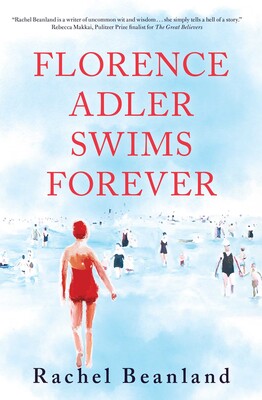 After reviewing Beanland’s second novel, The House Is on Fire, I wanted to catch up on her debut. Both are historical and give a broad but detailed view of a particular milieu and tragic event through the use of multiple POVs. It’s the summer of 1934 in Atlantic City, New Jersey. Florence, a plucky college student who intends to swim the English Channel, drowns on one of her practice swims. This happens in the first chapter (and is announced in the blurb), so the rest is aftermath. The Adlers make the unusual decision to keep Florence’s death from her sister, Fannie, who is on hospital bedrest during her third pregnancy because she lost a premature baby last year. Fannie’s seven-year-old daughter, Gussie, is sworn to silence about her aunt – with Stuart, the lifeguard who loved Florence, and Anna, a German refugee the Adlers have sponsored, turning it into a game for her by creating the top-secret “Florence Adler Swims Forever Society” with its own language.
The particulars can be chalked up to family history: this really happened; the Gussie character was Beanland’s grandmother, and the author believes her great-great-aunt Florence died of hypertrophic cardiomyopathy. It’s intriguing to get glimpses of Jewish ritual, U.S. anti-Semitism and early concern over Nazism, but I was less engaged with other subplots such as Fannie’s husband Isaac’s land speculation in Florida. There’s a satisfying queer soupcon, and Beanland capably inhabits all of the perspectives and the bereaved mindset. (Secondhand – Awesomebooks.com) 
Lumberjanes: Campfire Songs by Shannon Watters et al. (2020)
 This comics series created by a Boom! Studios editor ran from 2014 to 2020 and stretched to 75 issues that have been collected in 20+ volumes. Watters wanted to create a girl-centric comic and roped in various writers who together decided on the summer scout camp setting. I didn’t really know what I was getting into with this set of six stand-alone stories, each illustrated by a different artist. The characters are recognizably the same across the stories, but the variation in style meant I didn’t know what they’re “supposed” to look like. All are female or nonbinary, including queer and trans characters. I guess I expected queer coming-of-age stuff, but this is more about friendship and fantastical adventures. Other worlds are just a few steps away. They watch the Northern Lights with a pair of yeti, attend a dinner party cooked by a ghost chef, and play with green kittens and giant animate pumpkins. My favourite individual story was “A Midsummer Night’s Scheme,” in which Puck the fairy interferes with preparations for a masquerade ball. I won’t bother reading other installments. (Public library)
And the rereads:
Instructions for a Heatwave by Maggie O’Farrell (2013)
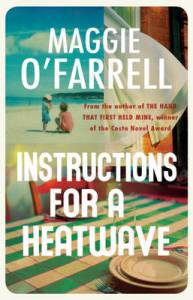 I read this when it first came out (original review here) and saw O’Farrell speak on it, in conversation with Julie Cohen, at a West Berkshire Libraries event – several years before I lived in the county. I expected it to be a little more atmospheric about the infamous UK drought of summer 1976. All I’d remembered otherwise was that one character is hiding illiteracy and another has an affair while leading a residential field trip. The novel opens, Harold Fry-like, with Robert Riordan disappearing from his suburban home. Gretta phones each of her adult children to express concern, but she’s so focussed on details like how she’ll get into the shed without Robert’s key that she fails to convey the gravity of the situation. Eventually the three descend on her from London, Gloucestershire and New York and travel to Ireland together to find him, but much of the novel is a patient filling-in of backstory: why Monica and Aoife are estranged, what went wrong in Michael Francis’s marriage, and so on.
I had forgotten the two major reveals, but this time they didn’t seem as important as the overall sense of decisions with unforeseen consequences. O’Farrell was using extreme weather as a metaphor for risk and cause-and-effect (“a heatwave will act upon people. It lays them bare, it wears down their guard. They start behaving not unusually but unguardedly”), and it mostly works. But this wasn’t a top-tier O’Farrell on a reread. (Little Free Library)
My original rating (2013):
My rating now:
Average:
Heartstopper: Volume 3 by Alice Oseman (2020)
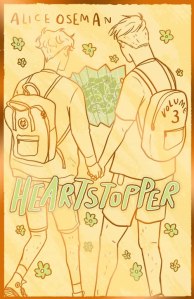 Heartstopper was my summer crush back in 2021, and I couldn’t resist rereading the series in the hardback reissue. That I started with the middle volume (original review here) is an accident of when my library holds arrived for me, but it turned out to be an apt read for the Olympics summer because it mostly takes place during a one-week school trip to Paris, full of tourism, ice cream, hijinks and romance. Nick and Charlie are dating but still not out to everyone in their circle. This is particularly true for Nick, who is a jock and passes as straight but is actually bisexual. Charlie experienced a lot of bullying at his boys’ school before his coming-out, so he’s nervous for Nick, and the psychological effects persist in his disordered eating. Oseman deals sensitively with mental health issues here, and has fun adding more queer stories into the background: Darcy and Tara, Tao and Elle (trans), and even the two male trip chaperones. It’s adorable how everything flirtation-related is so dramatic and the characters are always blushing and second-guessing. Lucky teens who get to read this at the right time. (Public library)
Any final “heat” or “summer” books for you this year?
20 Books of Summer, 14–16: Polly Atkin, Nan Shepherd and Susan Allen Toth
I’m still plugging away at the challenge. It’ll be down to the wire, but I should finish and review all 20 books by the 31st! Today I have a chronic illness memoir, a collection of poetry and prose pieces, and a reread of a cosy travel guide.
Some of Us Just Fall: On Nature and Not Getting Better by Polly Atkin (2023)
I was heartened to see this longlisted for the Wainwright Prize. It was a perfect opportunity to recognize the disabled/chronically ill experience of nature and the book achieves just what the award has recognised in recent years: the braiding together of life writing and place-based observation. (Wainwright has also done a great job on diversity this year: there are three books by BIPOC and five by women on the nature writing shortlist alone.)
 Polly Atkin knew something was different about her body from a young age. She broke bones all the time, her first at 18 months when her older brother ran into her on his bicycle. But it wasn’t until her thirties that she knew what was wrong – Ehlers-Danlos syndrome and haemochromatosis – and developed strategies to mitigate the daily pain and the drains on her energy and mobility. “Correct diagnosis makes lives bearable,” she writes. “It gives you access to the right treatment. It gives you agency.”
The book assembles long-ish fragments, snippets from different points of her past alternating with what she sees on rambles near her home in Grasmere. She writes in some depth about Lake District literature: Thomas De Quincey as well as the Wordsworths – Atkin’s previous book is a biography of Dorothy Wordsworth that spotlights her experience with illness. In describing the desperately polluted state of Windermere, Atkin draws parallels with her condition (“Now I recognise my body as a precarious ecosystem”). Although she spurns the notion of the “Nature Cure,” swimming is a valuable therapy for her.
Theme justifies form here: “This is the chronic life, lived as repetition and variance, as sedimentation of broken moments, not as a linear progression.” For me, there was a bit too much particularity; if you don’t connect to the points of reference, there’s no way in and the danger arises of it all feeling indulgent. Besides, by the time I opened this I’d already read two Ehlers-Danlos memoirs (All My Wild Mothers by Victoria Bennett and Floppy by Alyssa Graybeal) and another reference soon came my way in The Invisible Kingdom by Meghan O’Rourke. So overfamiliarity was a problem. And by the time I forced myself to pick this off of my set-aside shelf and finish it, I’d read Nina Lohman’s stellar The Body Alone. For those newer to reading about chronic illness, though, especially if you also have an interest in the Lakes, it could be an eye-opener.
With thanks to Sceptre (Hodder) for the free copy for review.
Selected Prose & Poetry by Nan Shepherd (2023)
 I’d read and enjoyed Shepherd’s The Living Mountain, which has surged in popularity as an early modern nature writing classic thanks to Robert Macfarlane et al. I’m not sure I’d go as far as the executor of the Nan Shepherd Estate, though, who describes her in the Preface as “Taylor Swift in hiking boots.” The pieces reprinted here are from her one published book of poems, In the Cairngorms, and the mixed-genre collection Wild Geese. There is also a 28-page “novella,” Descent from the Cross. After World War I, Elizabeth, a workers’ rights organiser for a paper mill, marries a shell-shocked veteran who wants to write a book but isn’t sure he has either the genius or the dedication. It’s interesting that Shepherd would write about a situation where the wife has the economic upper hand, but the tragedy of the sickly failed author put me in mind of George Gissing or D.H. Lawrence, so didn’t feel fresh. Going by length alone, I would have called this a short story, but I understand why it would be designated a novella, for the scope.
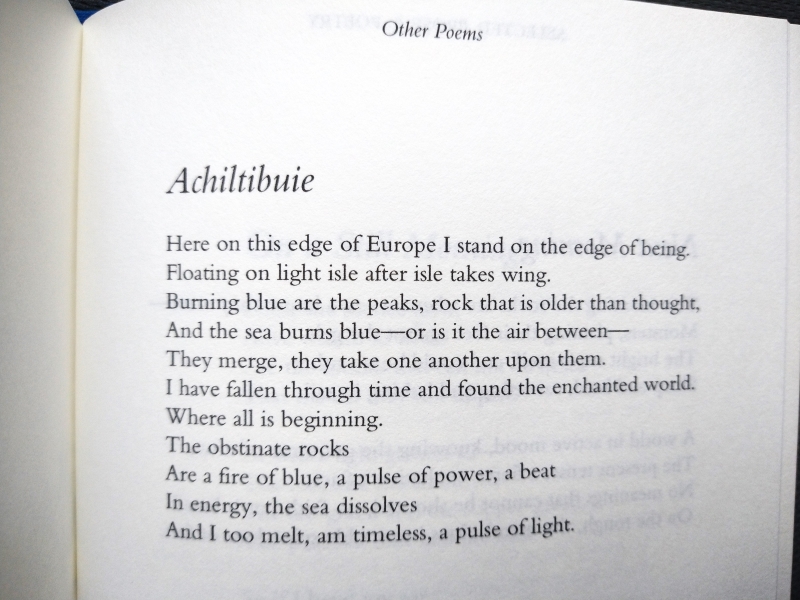
None of the miniature essays – field observations and character studies – stood out to me. About half of the book is given over to poetry. As with the nature writing, there is a feeling of mountain desolation. There are a lot of religious references and hints of the mystical, as in “The Bush,” which opens “In that pure ecstasy of light / The bush is burning bright. / Its substance is consumed away / And only form doth stay”. It’s a mixed bag: some feels very old-fashioned and sentimental, with every other line or, worse, every line rhyming, and some archaic wording and rather impenetrable Scots dialect. It could have been written 100 years before, by Robert Burns if not William Blake. But every so often there is a flash of brilliance. “Blackbird in Snow” is quite a nice one, and reminiscent of Thomas Hardy’s “The Darkling Thrush.” I even found the cryptic lines from “Real Presence” that inspired a song on David Gray’s Skellig. My favourite poem by far was:
Overall, this didn’t engage me; it’s only for Shepherd fanatics and completists. (Won from Galileo Publishers in a Twitter giveaway)
England As You Like It: An Independent Traveler’s Companion by Susan Allen Toth (1995)
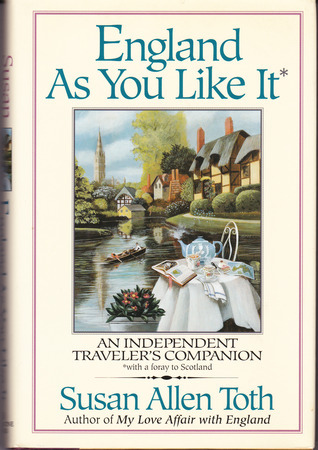 A reread. As I was getting ready to go overseas for the first time in the summer of 2003, Toth’s trilogy of memoirs whetted my appetite for travel in Britain. (They’re on my Landmark Books in My Life, Part II list.) This is the middle book and probably the least interesting in that it mostly recounts stays in particular favourite locations, such as Dorset, the Highlands, and various sites in Cornwall. However, I’ve never forgotten her “thumbprint theory,” which means staying a week or more in an area no larger than her thumb covers on a large-scale map, driving an hour or less for day trips. Not for her those cram-it-all-in trips where you race through multiple countries in a week (I have American friends who did Paris, London and Rome within six days, or five countries in eight days; blame it on stingy vacation policies, I guess). Instead, she wants to really bed into one place and have the time to make serendipitous discoveries such as an obscure museum or a rare opening of a private garden.
I most liked the early general chapters about how to make air travel bearable, her obsession with maps, her preference for self-catering, and her tendency to take home edible souvenirs. Of course, all the “Floating Facts” are hopelessly out-of-date. This being the early to mid-1990s, she had to order paper catalogues to browse cottage options (I still did this for honeymoon prep in 2006–7) and make international phone calls to book accommodation. She recommends renting somewhere from the National Trust or Landmark Trust. Ordnance Survey maps could be special ordered from the British Travel Bookshop in New York City. Entry fees averaged a few pounds. It’s all so quaint! An Anglo-American time capsule of sorts. I’ve always sensed a kindred spirit in Toth, and those whose taste runs toward the old-fashioned will probably also find her a charming tour guide. I’ve also reviewed the third book, England for All Seasons. (Free from The Book Thing of Baltimore)
 Bookish Beck = Rebecca Foster. American transplant to England. Freelance proofreader and book reviewer.
 Bookish Beck