Three on a Theme: Armchair Travels at the Italian Coast (Rachel Joyce, Sarah Moss and Jess Walter – #18 of 20 Books)
I’ve done a lot of journeying through Italy’s lakes and islands this summer. Not in real life, thank goodness – it would be far too hot! – but via books. I started with the Moss, then read the Joyce, and rounded off with the Walter, a book that had been on my TBR for 12 years and that many had heartily recommended, so I was delighted to finally experience it for myself.
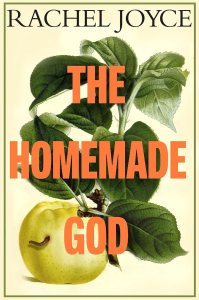
The Homemade God by Rachel Joyce (2025)
Joyce has really upped her game. I’ve somehow read all of her books though I often found them, from Harold Fry onward, disappointingly sentimental and twee. But with this she’s entering the big leagues, moving into the more expansive, elegant and empathetic territory of novels by Anne Enright (The Green Road), Patrick Gale (Notes from an Exhibition), Maggie O’Farrell (Instructions for a Heatwave) and Tom Rachman (The Italian Teacher). It’s the story of four siblings, initially drawn together and then dramatically blown apart by their father’s death. Despite weighty themes of alcoholism, depression and marital struggles, there is an overall lightness of tone and style that made this a pleasure to read.
Vic Kemp, the title figure, was a larger-than-life, womanizing painter whose work divided critics. After his first wife’s early death from cancer, he raised three daughters and a son with the help of a rotating cast of nannies (whom he inevitably slept with). At 76 he delivered the shocking news that he was marrying again: Bella-Mae, an artist in her twenties – much younger than any of his children. They moved from London to his second home in Italy just weeks before he drowned in Lake Orta. Netta, the eldest daughter, is sure there’s something fishy; he knew the lake so well and would never have gone out for a swim with a mist rolling in. Did Bella-Mae kill him for his money? And where is his last painting? Funny how waiting for an autopsy report and searching for a new will and carping with siblings over the division of belongings can ruin what should be paradise.
The interactions between Netta, Susan, Goose (Gustav) and Iris, plus Bella-Mae and her cousin Laszlo, are all flawlessly done, and through flashbacks and surges forward we learn so much about these flawed and flailing characters. The derelict villa and surrounding small town are appealing settings, and there are a lot of intriguing references to food, fashion and modern art.
My only small points of criticism are that Iris is less fleshed out than the others (and her bombshell secret felt distasteful), and that Joyce occasionally resorts to delivering some of her old obvious (though true) messages through an omniscient narrator, whereas they could be more palatable if they came out organically in dialogue or indirectly through a character’s thought process. Here’s an example: “When someone dies or disappears, we can only tell stories about what might have been the case or what might have happened next.” (One I liked better: “There were some things you never got over. No amount of thinking or talking would make them right: the best you could do was find a way to live alongside them.”) I also don’t think Goose would have been able to view his father’s body more than two months after his death; even with embalming, it would have started to decay within weeks.
You can tell that Joyce got her start in theatre because she’s so good at scenes and dialogue, and at moving people into different groups to see what they’ll do. She’s taken the best of her work in other media and brought it to bear here. It’s fascinating how Goose starts off seeming minor and eventually becomes the main POV character. And ending with a wedding (good enough for a Shakespearean comedy) offers a lovely occasion for a potential reconciliation after a (tragi)comic plot. More of this calibre, please! (Public library) 
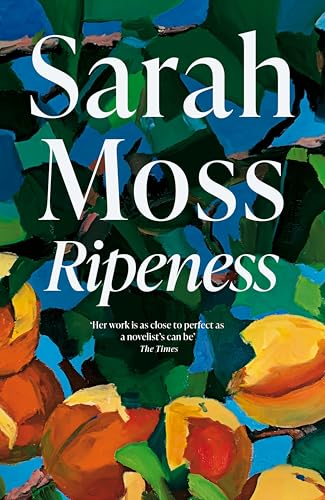
Ripeness by Sarah Moss (2025)
One sneaky little line, “Ripeness, not readiness, is all,” a Shakespeare mash-up (“Ripeness is all” is from King Lear vs. “the readiness is all” is from Hamlet), gives a clue to how to understand this novel: As a work of maturity from Sarah Moss, presenting life with all its contradictions and disappointments, not attempting to counterbalance that realism with any false optimism. What do we do, who will we be, when faced with situations for which we aren’t prepared?
Now that she’s based in Ireland, Moss seems almost to be channelling Irish authors such as Claire Keegan and Maggie O’Farrell. The line-up of themes – ballet + sisters + ambivalent motherhood + the question of immigration and belonging – should have added up to something incredible and right up my street. While Ripeness is good, even very good, it feels slightly forced. As has been true with some of Moss’s recent fiction (especially Summerwater), there is the air of a creative writing experiment. Here the trial is to determine which feels closer, a first-person rendering of a time nearly 60 years ago, or a present-tense, close-third-person account of the now. [I had in mind advice from one of Emma Darwin’s Substack posts: “What you’ll see is that ‘deep third’ is really much the same as first, in the logic of it, just with different pronouns: you are locking the narrative into a certain character’s point-of-view, but you don’t have a sense of that character as the narrator, the way you do in first person.” Except, increasingly as the novel goes on, we are compelled to think about Edith as a narrator, of her own life and others’.
In the current story line, everyone in rural West Ireland seems to have come from somewhere else (e.g. Edith’s lover Gunter is German). “She’s going to have to find a way to rise above it, this tribalism,” Edith thinks. She’s aghast at her town playing host to a small protest against immigration. Fair enough, but including this incident just seems like an excuse for some liberal handwringing (“since it’s obvious that there is enough for all, that the problem is distribution not supply, why cannot all have enough? Partly because people like Edith have too much.”). The facts of Maman being French-Israeli and having lost family in the Holocaust felt particularly shoehorned in; referencing Jewishness adds nothing. I also wondered why she set the 1960s narrative in Italy, apart from novelty and personal familiarity. (Teenage Edith’s high school Italian is improbably advanced, allowing her to translate throughout her sister’s childbirth.)
Though much of what I’ve written seems negative, I was left with an overall favourable impression. Mostly it’s that the delivery scene and the chapters that follow it are so very moving. Plus there are astute lines everywhere you look, whether on dance, motherhood, or migration. It may simply be that Moss was taking on too much at once, such that this lacks the focus of her novellas. Ultimately, I would have been happy to have just the historical story line; the repeat of the surrendering for adoption element isn’t necessary to make any point. (I was relieved, anyway, that Moss didn’t resort to the cheap trick of having the baby turn out to be a character we’ve already been introduced to.) I admire the ambition but feel Moss has yet to return to the sweet spot of her first five novels. Still, I’m a fan for life. (Public library) 
#18 of my 20 Books of Summer
(Completing the second row on the Bingo card: Book set in a vacation destination)


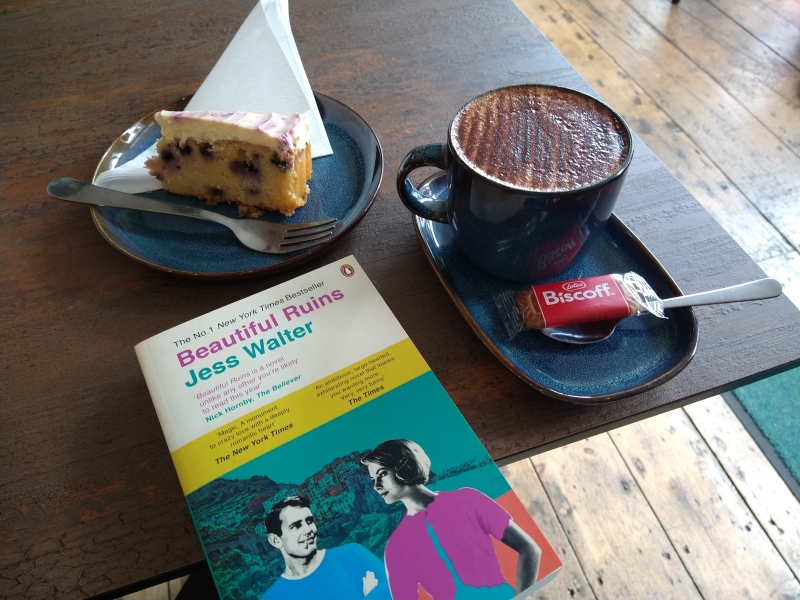
Beautiful Ruins by Jess Walter (2012)
 I loved how Emma Straub described the ideal summer read in one of her Substack posts: “My plan for the summer is to read as many books as possible that make me feel that drugged-up feeling, where you just want to get back to the page.” I wish I’d been able to read this faster – that I hadn’t had so much on my plate all summer so I could have been fully immersed. Nonetheless, every time I returned to it I felt welcomed in. So many trusted bibliophiles love this book – blogger friends Laila and Laura T.; Emma Milne-White, owner of Hungerford Bookshop, who plugged it at their 2023 summer reading celebration; and Maris Kreizman, who in a recent newsletter described this as “One of my favorite summer reading novels ever … escapist magic, a lush historical novel.”
I’m relieved to report that Beautiful Ruins lived up to everyone’s acclaim – and my own high expectations after enjoying Walter’s So Far Gone, which I reviewed for BookBrowse earlier in the summer. I was immediately captivated by the shabby glamour of Pasquale’s hotel in Porto Vergogna on the coast of northern Italy. With refreshing honesty, he’s dubbed the place “Hotel Adequate View.” In April 1962, he’s attempting to build a cliff-edge tennis court when a boat delivers beautiful, dying American actress Dee Moray. It soon becomes clear that her condition is nothing nine months won’t fix and she’s been dumped here to keep her from meddling in the romance between the leads in Cleopatra, filming in Rome. In the present day, an elderly Pasquale goes to Hollywood to find out whatever happened to Dee.
A myriad of threads and formats – a movie pitch, a would-be Hemingway’s first chapter of a never-finished wartime masterpiece, an excerpt from a producer’s autobiography and a play transcript – coalesce to flesh out what happened in that summer of 1962 and how the last half-century has treated all the supporting players. True to the tone of a novel about regret, failure and shattered illusions, Walter doesn’t tie everything up neatly, but he does offer a number of the characters a chance at redemption. This felt to me like a warmer and more timeless version of A Visit from the Goon Squad. There are so many great scenes, none better than Richard Burton’s drunken visit to Porto Vergogna, which had me in stitches. Fantastic. (Hungerford Bookshop – 40th birthday gift from my husband from my wish list) 
Most Anticipated Books of the First Half of 2025
As I said the other week, I sometimes wonder if designating a book as “Most Anticipated” is a curse – if the chosen books are doomed to fail to meet my expectations. Nonetheless, I can’t resist compiling such a list at least once each year.
Also on my radar: fiction by Claire Adam, Amy Bloom, Emma Donoghue, Sarah Hall, Michelle Huneven, Eowyn Ivey, Rachel Joyce, Heather Parry and Torrey Peters; nonfiction by Melissa Febos, Robert Macfarlane, Lucy Mangan, Suzanne O’Sullivan and Sophie Pavelle. (Further ahead, I’ll seek out I Want to Burn This Place Down: Essays by Maris Kreizman and The Girls Who Grew Big by Leila Mottley in July, The Savage Landscape by Cal Flyn in Oct. and Tigers between Empires by Jonathan C. Slaght in Nov.)
However, below I’ve narrowed it down to the 25 books I’m most looking forward to for the first half of 2025, 15 fiction and 10 nonfiction. I’m impressed that 4 are in translation! And 22/25 are by women (all the fiction is). In release date order, with UK publication info given first if available. The blurbs are adapted from Goodreads. I’ve taken the liberty of using whichever cover is my favourite (almost always the U.S. one).

Fiction
 Live Fast by Brigitte Giraud (trans. from the French by Cory Stockwell) [Feb. 11, Ecco]: I found out about this autofiction novella via an early Shelf Awareness review. It “follows one woman’s quest to comprehend the motorcycle accident that took the life of her partner Claude at age 41. The narrator … recounts the chain of events that led up to the fateful accident, tracing the tiny, maddening twists of fate that might have prevented its tragic outcome. Each chapter asks the rhetorical question, ‘what if’ … A sensitive elegy to her husband”.
 The Unworthy by Agustina Bazterrica (trans. from the Spanish by Sarah Moses) [13 Feb., Pushkin; March 4, Scribner]: I wasn’t enamoured of the Argentinian author’s short stories, but Tender Is the Flesh was awesome. This is a short dystopian horror set in a convent. “In the House of the Sacred Sisterhood, the unworthy live in fear of the Superior Sister’s whip. … Risking her life, one of the unworthy keeps a diary in secret. Slowly, memories surface from a time before the world collapsed, before the Sacred Sisterhood became the only refuge. Then Lucía arrives.” (PDF copy for Shelf Awareness review)
 Victorian Psycho by Virginia Feito [13 Feb., Fourth Estate; Feb. 4, Liveright]: Feito’s debut, Mrs March, was deliciously odd, and I love the (U.S.) cover for this one. It sounds like a bonkers horror take on Henry James’s The Turn of the Screw, “a gruesome and gleeful new novel that probes the psyche of a bloodthirsty governess. Winifred Notty arrives at Ensor House prepared to play the perfect Victorian governess—she’ll dutifully tutor her charges, Drusilla and Andrew, tell them bedtime stories, and only joke about eating children.”

Three Days in June by Anne Tyler [13 Feb., Chatto & Windus (Penguin) / Feb. 11, Knopf]: I’m not a Tyler completist, but she’s reliable and this is a novella! “It’s the day before her daughter’s wedding and things are not going well for Gail Baines. First …, she loses her job … Then her ex-husband Max turns up at her door expecting to stay for the festivities. He doesn’t even have a suit. Instead, he’s brought memories, a shared sense of humour – and a cat looking for a new home. … [And] daughter Debbie discovers her groom has been keeping a secret.” Susan vouches for this. (Edelweiss download / on order from library)
 The Swell by Kat Gordon [27 Feb., Manilla Press (Bonnier Books UK)]: I got vague The Mercies (Kiran Millwood Hargrave) vibes from the blurb. “Iceland, 1910. In the middle of a severe storm two sisters, Freyja and Gudrun, rescue a mysterious, charismatic man from a shipwreck near their remote farm. Sixty-five years later, a young woman, Sigga, is spending time with her grandmother when they learn a body has been discovered on a mountainside near Reykjavik, perfectly preserved in ice.” (NetGalley download)
 Dream Count by Chimamanda Ngozi Adichie [4 March, Fourth Estate/Knopf]: This is THE book I’m most looking forward to; I’ve read everything Adichie has published and Americanah was a 5-star read for me. So I did something I’ve never done before and pre-ordered the signed independent bookshop edition from my local indie, Hungerford Bookshop. “Chiamaka is a Nigerian travel writer living in America. Alone in the midst of the pandemic, she recalls her past lovers and grapples with her choices and regrets.” The focus is on four Nigerian American women “and their loves, longings, and desires.” (New purchase)
 Kate & Frida by Kim Fay [March 11, G.P. Putnam’s Sons]: “Frida Rodriguez arrives in Paris in 1991 … But then she writes to a bookshop in Seattle … A friendship begins that will redefine the person she wants to become. Seattle bookseller Kate Fair is transformed by Frida’s free spirit … [A] love letter to bookshops and booksellers, to the passion we bring to life in our twenties”. Sounds like a cross between The Paris Novel and 84 Charing Cross Road – could be fab; could be twee. We shall see! (Edelweiss download)
 The Antidote by Karen Russell [13 March, Chatto & Windus (Penguin) / March 11, Knopf]: I love Russell’s Swamplandia! but haven’t gotten on with her other work I’ve tried, so I’m only tentatively enthusiastic about the odd Wizard of Oz-inspired blurb: “a historic dust storm ravages the fictional town of Uz, Nebraska. But Uz is already collapsing—not just under the weight of the Great Depression … but beneath its own violent histories. The Antidote follows a ‘Prairie Witch,’ … a Polish wheat farmer …; his orphan niece, a … witch’s apprentice …; a voluble scarecrow; and a New Deal photographer”. (Requested from publisher)
 Elegy, Southwest by Madeleine Watts [13 March, ONE (Pushkin) / Feb. 18, Simon & Schuster]: Watts’s debut, The Inland Sea, was a hidden gem. Given the news from L.A., this seems all the more potent: “In November 2018, Eloise and Lewis rent a car in Las Vegas and take off on a two-week road trip across the American southwest … [w]hile wildfires rage. … Lewis, an artist working for a prominent land art foundation, is grieving the recent death of his mother, while Eloise is an academic researching the past and future of the Colorado River … [and] beginning to suspect she might be pregnant”. (Edelweiss download)
 O Sinners! by Nicole Cuffy [March 18, One World (Random House)]: Cuffy’s Dances, which was longlisted for the Carol Shields Prize, was very good. The length of this sophomore novel (464 pages) gives me pause, but I do generally gravitate towards stories of cults. “Faruq Zaidi, a young journalist reeling from the recent death of his father, a devout Muslim, takes the opportunity to embed in a cult called The Nameless [b]ased in the California redwoods and shepherded by an enigmatic [Black] Vietnam War veteran.”
 The Accidentals: Stories by Guadalupe Nettel (trans. from the Spanish by Rosalind Harvey) [10 April, Fitzcarraldo Editions / April 29, Bloomsbury]: I really enjoyed Nettel’s International Booker-shortlisted novel Still Born. “When an albatross strays too far from its home, or loses its bearings, it becomes an ‘accidental’, an unmoored wanderer. The protagonists of these eight stories each find the ordinary courses of their lives disrupted by an unexpected event. … Deft and disquieting, oscillating between the real and the fantastical”. (PDF copy for Shelf Awareness review)
 Ordinary Saints by Niamh Ni Mhaoileoin [24 April, Manilla Press (Bonnier Books UK)]: “Brought up in a devout household in Ireland, Jay is now living in London with her girlfriend, determined to live day to day and not think too much about either the future or the past. But when she learns that her beloved older brother, who died in a terrible accident, may be made into a Catholic saint, she realises she must at last confront her family, her childhood and herself.” Winner of the inaugural PFD Queer Fiction Prize and shortlisted for the Women’s Prize Discoveries Award.
 Heartwood by Amity Gaige [1 May, Fleet / April 1, Simon & Schuster]: I loved Gaige’s Sea Wife. “In the heart of the Maine woods, an experienced Appalachian Trail hiker goes missing. She is forty-two-year-old Valerie Gillis, who has vanished 200 miles from her final destination. … At the centre of the search is Beverly, the determined Maine State Game Warden tasked with finding Valerie, who is managing the search on the ground. While Beverly is searching, Lena, a seventy-six-year-old birdwatcher in a retirement community, becomes an unexpected armchair detective.”
 Are You Happy?: Stories by Lori Ostlund [May 6, Astra House]: Ostlund is not so well known, especially outside the USA, but I enjoyed her debut novel, After the Parade, back in 2015. “Nine masterful stories that explore class, desire, identity, and the specter of violence in America–and in American families–against women and the LGBTQ+ community. … [W]e watch Ostlund’s characters as they try—and often fail—to make peace with their pasts while navigating their present relationships and responsibilities.” (Edelweiss download)
 Ripeness by Sarah Moss [22 May, Picador / Sept. 9, Farrar, Straus and Giroux]: Though I was disappointed by her last two novels, I’ll read anything Moss publishes and hope for a return to form. “It is the [19]60s and … Edith finds herself travelling to rural Italy … to see her sister, ballet dancer Lydia, through the final weeks of her pregnancy, help at the birth and then make a phone call which will seal this baby’s fate, and his mother’s.” Promises to be “about migration and new beginnings, and about what it is to have somewhere to belong.”
Nonfiction
 The Forgotten Sense: The New Science of Smell by Jonas Olofsson [Out now! 7 Jan., William Collins / Mariner]: Part of a planned deep dive into the senses. “Smell is … one of our most sensitive and refined senses; few other mammals surpass our ability to perceive scents in the animal kingdom. Yet, as the millions of people who lost their sense of smell during the COVID-19 pandemic can attest, we too often overlook its role in our overall health. … For readers of Bill Bryson and Steven Pinker”. (On order from library)
 Bread and Milk by Karolina Ramqvist (trans. from the Swedish by Saskia Vogel) [13 Feb., Bonnier Books / Feb. 11, Coach House Books]: I think I first found about this via the early Foreword review. “Bread and Milk traces a life through food, from carefully restricted low-fat margarine to a bag of tangerines devoured in one sitting to the luxury of a grandmother’s rice pudding. In this radiant memoir from one of Northern Europe’s most notable literary stylists, we follow several generations of women and their daughters as they struggle with financial and emotional vulnerability, independence, and motherhood.”
 My Mother in Havana: A Memoir of Magic & Miracle by Rebe Huntman [Feb. 18, Monkfish]: I found out about this from Rebecca Moon Ruark and by the time the publisher offered it to me I’d already downloaded it. The themes of bereavement and religion are right up my street. “As she explores the memory of her own mother, interlacing it with her search for the sacred feminine, Huntman leads us into a world of séance and sacrifice, pilgrimage and sacred dance, which resurrect her mother and bring Huntman face to face with a larger version of herself.” (Edelweiss download)
 Mother Animal by Helen Jukes [27 Feb., Elliott & Thompson]: This may be the 2025 release I’ve known about for the longest. I remember expressing interest the first time the author tweeted about it; it’s bound to be a good follow-up to Lucy Jones’s Matrescence. “When Helen Jukes falls pregnant, … she widens her frame of reference, looking beyond humans to ask what motherhood looks like in other species. … As she enters the sleeplessness, chaos and intimate discoveries of life with a newborn, these animal stories become … companions and guides.” (Requested from publisher)
 Alive: An Alternative Anatomy by Gabriel Weston [6 March, Vintage (Penguin) / March 4, David R. Godine]: I’ve read Weston’s Direct Red and appreciate her perspective. “As she became a surgeon, a mother, and ultimately a patient herself, Weston found herself grappling with the gap between scientific knowledge and unfathomable complexity of human experience. … Focusing on our individual organs, not just under the intense spotlight of the operating theatre, but in the central role they play in the stories of our lives.”
 The Lost Trees of Willow Avenue: A Story of Climate and Hope on One American Street by Mike Tidwell [March 25, St. Martin’s Press]: A must-read for me because it’s set in Takoma Park, Maryland, where I was born. “A love letter to the magnificent oaks and other trees dying from record heat waves and bizarre rain, [activist] Tidwell’s story depicts the neighborhood’s battle to save the trees and combat climate change. … Tidwell chronicles people on his block sick with Lyme disease, a church struggling with floods, and young people anguishing over whether to have kids, … against the global backdrop of 2023’s record heat domes and raging wildfires and hurricanes.”
 Breasts: A Relatively Brief Relationship by Jean Hannah Edelstein [3 April, Phoenix (W&N)]: I loved Edelstein’s 2018 memoir This Really Isn’t About You, and I regularly read her Substack. “As [Edelstein] comes of age, she learns that breasts are a source of both shame and power. In early motherhood, she sees her breasts transform into a source of sustenance and a locus of pain. And then, all too soon, she is faced with a diagnosis and forced to confront what it means to lose and rebuild an essential part of yourself.”
 Poets Square: A Memoir in Thirty Cats by Courtney Gustafson [8 May, Fig Tree (Penguin) / April 29, Crown]: Gustafson became an Instagram and TikTok hit with her posts about looking after a feral cat colony in Tucson, Arizona. The money she raised via social media allowed her to buy her home and continue caring for animals. “[Gustafson] had no idea about the grief and hardship of animal rescue, the staggering size of the problem in neighborhoods across the country. And she couldn’t have imagined how that struggle … would help pierce a personal darkness she’d wrestled for with much of her life.” (Proof copy from publisher)
 Lifelines: Searching for Home in the Mountains of Greece by Julian Hoffman [15 May, Elliott & Thompson]: Hoffman’s Irreplaceable was my book of 2019. “In the summer of 2000, Julian Hoffman and his wife Julia found themselves disillusioned with city life. Overwhelmed by long commutes, they stumbled upon a book about Prespa, Greece – a remote corner of Europe filled with stone villages, snow-capped mountains and wildlife. What began as curiosity soon transformed into a life-changing decision: to make Prespa their home.” I know next to nothing about Greece and this is a part of it that doesn’t fit the clichés.
 Spent: A Comic Novel by Alison Bechdel [22 May, Jonathan Cape (Penguin) / May 20, Mariner Books]: Bechdel’s Fun Home is an absolute classic of the graphic memoir. I’ve lost track of her career a bit but like the sound of this one. “A cartoonist named Alison Bechdel, running a pygmy goat sanctuary in Vermont, is existentially irked by a climate-challenged world and a citizenry on the brink of civil war.” After her partner’s wood-chopping video goes viral, she decides to create her own ethical-living reality TV show. Features cameos from some characters from her Dykes to Watch Out For series.
Other lists of anticipated books:
Clare – we overlap on a couple of our picks
Kate – one pick in common, plus I’ve already read a couple of her others
Laura – we overlap on a couple of our picks
Paul (mostly science and nature)
What catches your eye here? What other 2025 titles do I need to know about?
Best Books of 2024: My Top 20
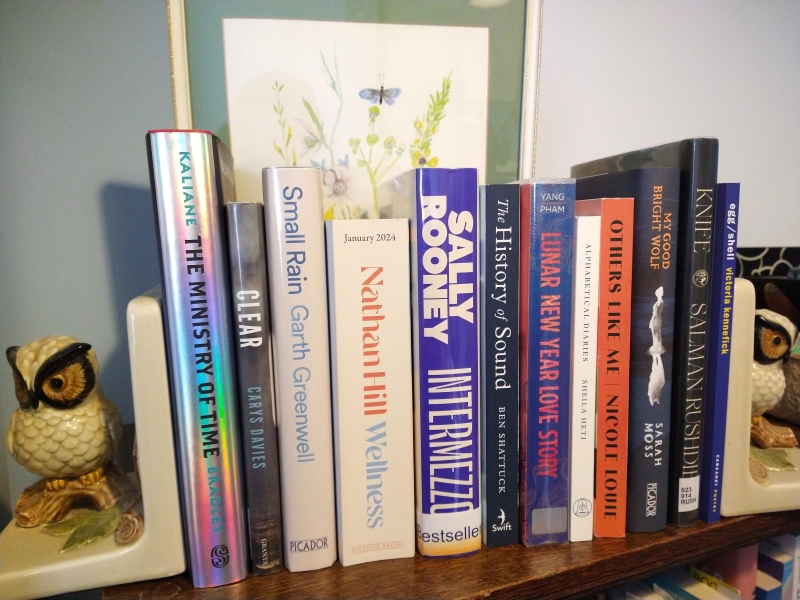
I’m keeping it simple again this year with one post covering all genres: these are the 20 current-year releases that stood out the most for me. (No rankings.) Those that aren’t repeated from my Best Books from the First Half of 2024 post didn’t quite make the cut but should be considered as runners-up well worth your time. Unsurprisingly, health is a common theme across many of my selections, especially as it touches women’s lives. Pictured below are the books I read in print; the others were all electronic copies. Links are to my full reviews where available.
Fiction
 The Worst Journey in the World, Volume 1: Making Our Easting Down: The Graphic Novel by Sarah Airriess: The thrilling opening to a cinematically vivid adaptation of Apsley Cherry-Garrard’s 1922 memoir. He was an assistant zoologist on Robert Falcon Scott’s perilous 1910-13 Terra Nova expedition to the South Pole. The book resembles a full-color storyboard for a Disney-style maritime adventure film. There is jolly camaraderie as the men sing sea shanties to boost morale. The next volume can’t arrive soon enough.
 The Ministry of Time by Kaliane Bradley: This nuanced debut alternately goes along with and flouts the tropes of spy fiction and time travel sci-fi, making clever observations about how we frame stories of empire and progress. The narrator is a “bridge” helping to resettle a Victorian polar explorer in near-future London. You just have to suspend disbelief and go with it. Bradley’s descriptive prose is memorable but never quirky for the sake of it. I haven’t had so much fun with a book since Romantic Comedy. A witty, sexy, off-kilter gem.
 Behind You Is the Sea by Susan Muaddi Darraj: Darraj’s novel-in-stories is a shimmering composite portrait of a Palestinian American community in Baltimore. Across nine stellar linked stories, she explores the complex relationships between characters divided by—or connected despite—class, language, and traditional values. Each of the stories (four in the first person, five in the third person) spotlights a particular character. The book depicts the variety of immigrant and second-generation experience, especially women’s.
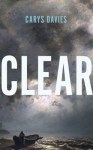 Clear by Carys Davies: Depicts the Highland Clearances in microcosm though Ivar, last resident of a remote Scottish island between Shetland and Norway. John is a minister sent by the landowner to remove Ivar. Mary, John’s wife, journeys from the mainland to rescue him. Davies writes striking scenes that bring the island scenery to life. Her deceptively simple prose captures the slow building of emotion and moments that change everything. For a trio that seemed on course for tragedy, there is the grace of a happier ending.
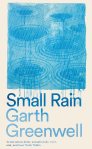 Small Rain by Garth Greenwell: A poet and academic (who both is and is not Greenwell) endures a Covid-era medical crisis that takes him to the brink of mortality and the boundary of survivable pain. Over two weeks, we become intimately acquainted with his every test, intervention, setback and fear. Experience is clarified precisely into fluent language that also flies far above a hospital bed, into a vibrant past, a poetic sensibility, a hoped-for normality. I’ve never read so remarkable an account of what it is to be a mind in a fragile body.
 Wellness by Nathan Hill: A state-of-the-nation story filtered through one Chicago family experiencing midlife and marital crises: underperforming academic Jack; his wife Elizabeth, a placebo researcher at Wellness; and their YouTube-obsessed son Toby. They’ve recently invested their life savings in a new condo. The addictive and spot-on novel asks questions about authenticity, purpose, and nurture. Is love itself a placebo? Hill is clearly fascinated with psychological experimentation but also questions it to humorous effect.
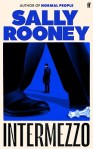 Intermezzo by Sally Rooney: Twenty- and thirtysomethings having lots of sex, yes, but now a solemn tone: Characters’ suffering and failures have deepened their thinking, sense of self, and ability to feel for others. Peter and Ivan lost their father to cancer; Sylvia is in chronic pain after an accident; Naomi is evicted and aimless; Margaret is ashamed of having an estranged alcoholic husband. Chess is a clever metaphor for their interactions; the depiction of grief rings true. A stylistic leap forward, too. Her best, most mature work by a mile.
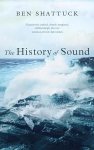 The History of Sound by Ben Shattuck: A dozen stories form a “hook-and-chain” formation of five couplets, bookended by a first and last story related to each other. Links are satisfyingly overt: A pair takes place in the same New England house in different centuries; a companion piece fills in the history of the characters from the previous. All are historically convincing, and the very human themes of lust, parenthood, sorrow and frustrated ambition resonate across centuries and state lines. Really beautiful (and better than North Woods).
 Lunar New Year Love Story by Gene Luen Yang (illus. LeUyen Pham): A super-cute teen graphic novel with gorgeous illustrations prioritizing pink and red to suit the theme. We follow Vietnamese American Valentina through high school as she plays host to an internal debate between cynicism and romanticism. Ever since her mother left, she’s longed to believe in romance but feared that love is a doomed prospect for her family. The Asian community of Oakland, California and a new hobby of lion dancing provide engrossing cultural detail.
Nonfiction
 Grief Is for People by Sloane Crosley: A bereavement memoir like no other. Heart-wrenching yet witty, it bears a unique structure and offers fascinating glimpses into the New York City publishing world. Crosley’s Manhattan apartment was burgled exactly a month before the suicide of her best friend and former boss, Russell. Throughout, the whereabouts of her family jewelry is as much of a mystery as the reason for Russell’s death, and investigating the stolen goods in parallel serves as a displacement activity for her.
 Alphabetical Diaries by Sheila Heti: Heti put 10 years of diary contents into a spreadsheet, alphabetizing each sentence, and then ruthlessly culled the results. The recurring topics are familiar from the rest of her oeuvre: obsessive cogitating about relationships, art and identity, but also the practicalities of trying to make a living as a woman in a creative profession. Heti transcends the quotidian by exploding chronology. Amazingly, the collage approach produces a genuine, crystalline vision of the self. A sui generis work of life writing.
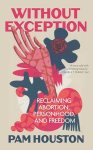 Without Exception: Reclaiming Abortion, Personhood, and Freedom by Pam Houston: If you’re going to read a polemic, make sure it’s as elegantly written and expertly argued as this one. Houston responds to the overturning of Roe v. Wade with 60 micro-essays – one for each full year of her life – about what it means to be in a female body in a country that seeks to control and systematically devalue women. The cycling of topics makes for an exquisite structure. Houston is among my recommendations for top-notch authors you might not know.
 The Body Alone: A Lyrical Articulation of Chronic Pain by Nina Lohman: Chronic Daily Headaches: Having a clinical term for extreme pain did nothing to solve it; no treatment Lohman has tried over a decade has helped much either. Medical professionals and friends alike downplay her experience because she is able to pass as well and raise two children. The fragmentary pieces read like poems. Bodily realities defy language, yet she employs words exquisitely. The tone flows from enraged to resigned to cynical and back.
 Others Like Me: The Lives of Women without Children by Nicole Louie: This impassioned auto/biographical collage combines the strengths of oral history, group biography and a fragmented memoir. “Motherhood as the epicentre of women’s lives was all I’d ever witnessed” via her mother and grandmother, Louie writes, so finding examples of women living differently was key. As readers, we watch her life, her thinking and the book all take shape. It’s warm and empathetic, with layers of stories that reflect diversity of experience.
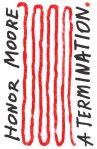 A Termination by Honor Moore: A fascinatingly discursive memoir that circles a 1969 abortion and contrasts societal mores across her lifetime. Moore was a 23-year-old drama student; the termination was “my first autonomous decision,” she insists, a way of saying, “I want this life, not that life.” Family and social factors put her life into perspective. The concise text is composed of crystalline fragments, incorporating occasional second- and third-person narration. The kaleidoscopic yet fluid approach is stunning.
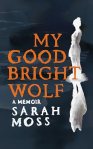 My Good Bright Wolf by Sarah Moss: Moss effectively contrasts the would-be happily ever after of generally getting better after eight years of disordered eating with her anorexia returning with a vengeance at age 46. The mood shifts so that what threatens to be slightly cloying in the childhood section turns academically curious and then, somehow, despite distancing pronouns (mostly second- but also some third-person narration), intimate. Shape-shifting, devastating, staunchly pragmatic; a unique model for converting life into art.
 Knife: Meditations after an Attempted Murder by Salman Rushdie: I’ve not had much success with Rushdie’s fiction, but this is excellent, with intriguing side tendrils and many quotable lines. It traces lead-up and aftermath; unexpected echoes, symbolism and ironies. Although Rushdie goes into some medical detail about his recovery, you get the sense of him more as an unchanging mind and a resolute will. The most noteworthy section imagines dialogues he might have with the imprisoned assailant, probing his beliefs and motivations.
Poetry
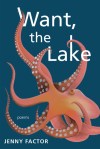 Want, the Lake by Jenny Factor: Factor’s long, intricate poetry collection showcases the tension between past and present and envisions womanhood as a tug of war between desire and constraint. “Elegy for a Younger Self” poems string together vivid reminiscences. In “Sapphics on Nursing” and elsewhere, romantic friendships edge toward homoeroticism; heterosexual marriage and motherhood represent either delightful intimacy or a snare. Allusion and experience, slant rhymes and wordplay craft a lavish tapestry.
 Inconsolable Objects by Nancy Miller Gomez: This debut collection recalls a Midwest girlhood of fairground rides and lake swimming, tornadoes and cicadas. But her Kansas isn’t all rose-tinted nostalgia; there’s an edge of sadness and danger. “Missing History” notes how women’s stories, such as her grandmother’s, are lost to time. In “Tilt-A-Whirl,” her older sister’s harmless flirtation with a ride operator becomes sinister. She also takes inspiration from headlines. The alliteration and slant rhymes are to die for.
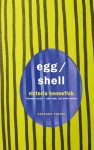 Egg/Shell by Victoria Kennefick: Motherhood and the body are overarching themes. The speaker has multiple miscarriages and names her lost children after plants. Becoming a mother is a metamorphosis all its own, while another long section is about her husband’s transition. Bird metaphors are inescapable. The structure varies throughout: columns, stanzas; a list, a recipe. Amid the sadness, there is dark humour and one-line rejoinders. If you’re wondering how life can be captured in achingly beautiful poetry, look no further.
If I had to choose just one of each? This trio trying out complementary strategies for transmuting life into literature: Small Rain, Alphabetical Diaries and Egg/Shell.


Have you read any of these? Or might you now, based on my recommendation?
Book Serendipity, August to October 2024
I call it “Book Serendipity” when two or more books that I read at the same time or in quick succession have something in common – the more bizarre, the better. This is a regular feature of mine every couple of months. Because I usually have 20–30 books on the go at once, I suppose I’m more prone to such incidents. People frequently ask how I remember all of these coincidences. The answer is: I jot them down on scraps of paper or input them immediately into a file on my PC desktop; otherwise, they flit away!
The following are in roughly chronological order.
- The William Carlos Williams line “no ideas but in things” is quoted in Home Is Where We Start by Susanna Crossman and echoed with a slight adaptation in Want, the Lake by Jenny Factor.
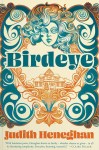
- A woman impulsively stops into a tattoo parlour in We Are Animals by Jennifer Case and Birdeye by Judith Heneghan.
- Cleaning up a partner’s bristles from the sink in 300 Arguments by Sarah Manguso and The Echoes by Evie Wyld.
- Sarah Manguso, by whom I was reading two books for a Bookmarks article, was quoted in Some of Us Just Fall by Polly Atkin.
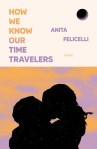
- Someone is annoyed at their spouse making a mess cooking lemon preserves in How We Know Our Time Travelers by Anita Felicelli and Liars by Sarah Manguso, both of which are set in California.
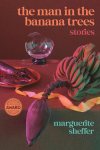
- Rumpelstiltskin is referenced in one short story of a speculative collection: How We Know Our Time Travelers by Anita Felicelli and The Man in the Banana Trees by Marguerite Sheffer.
- A father who is hard of hearing, and an Australian woman looking for traces of her grandmother’s life in England in The House with All the Lights On by Jessica Kirkness and The Echoes by Evie Wyld.
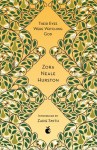
- A character named Janie or Janey in Their Eyes Were Watching God by Zora Neale Hurston and The Echoes by Evie Wyld. The Pre-Raphaelite model Janey is also mentioned in The Garden Against Time by Olivia Laing.
- Contrasting one’s childhood love of the Little House on the Prairie books with reading them as an adult and being aware of the racial and colonial implications in Home Is Where We Start by Susanna Crossman and My Good Bright Wolf by Sarah Moss.
- A mention of Little Women in A Perfect Arrangement by Suzanne Berne and My Good Bright Wolf by Sarah Moss.
- A character grew up in a home hair-dressing business in A Perfect Arrangement by Suzanne Berne and Home Is Where We Start by Susanna Crossman.
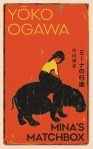
- The discovery of an old pram in an outbuilding in Instructions for a Heatwave by Maggie O’Farrell and Mina’s Matchbox by Yōko Ogawa.
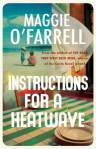
- An Irish woman named Aoife in My Good Bright Wolf by Sarah Moss and Instructions for a Heatwave by Maggie O’Farrell.
- Cooking then throwing out entire meals in My Good Bright Wolf by Sarah Moss and The Echoes by Evie Wyld. (Also throwing out a fresh meal in Birdeye by Judith Heneghan. Such scenes distress me!)
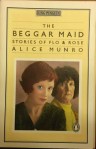 A new lover named Simon in one story of The Beggar Maid by Alice Munro and The Echoes by Evie Wyld.
- A character writes a recommendation letter for someone who then treats them vindictively, because they assumed the letter was negative when it wasn’t, in A Perfect Arrangement by Suzanne Berne and one story of The Beggar Maid by Alice Munro.
- After her parents’ divorce, the author never had a designated bedroom in her father’s house in Home Is Where We Start by Susanna Crossman and The Garden Against Time by Olivia Laing.
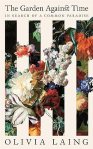
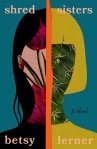 Reading The Bell Jar as a teenager in Shred Sisters by Betsy Lerner and My Good Bright Wolf by Sarah Moss.
- A contentious Town Hall meeting features in A Perfect Arrangement by Suzanne Berne and Birdeye by Judith Heneghan.
- The wife is pregnant with twins in A Perfect Arrangement by Suzanne Berne and The Year of Living Biblically by A.J. Jacobs. (There are also twins in Birdeye by Judith Heneghan. In general, I find that they occur far more often in fiction than in real life!)
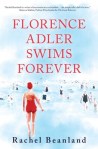
- 1930s Florida as a setting in Florence Adler Swims Forever by Rachel Beanland and Their Eyes Were Watching God by Zora Neale Hurston.
- Dorothy Wordsworth and her journals are discussed in Some of Us Just Fall by Polly Atkin and My Good Bright Wolf by Sarah Moss.
- Wordsworth’s daffodils are mentioned in Signs, Music by Raymond Antrobus and My Good Bright Wolf by Sarah Moss.
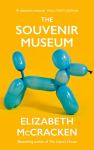
- “F*ck off” is delivered in an exaggerated English accent in Birdeye by Judith Heneghan and The Souvenir Museum by Elizabeth McCracken.
- The main character runs a country store in Their Eyes Were Watching God by Zora Neale Hurston and The Beggar Maid by Alice Munro.
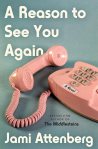 Reading a second novel this year in which the younger sister of a pair wants to go into STEM and joins the Mathletes in high school: first was A Reason to See You Again by Jami Attenberg; later was Shred Sisters by Betsy Lerner.
- An older sister who has great trouble attending normal school and so is placed elsewhere (including a mental institution) for a total of two years in Learning to Think by Tracy King and Shred Sisters by Betsy Lerner.
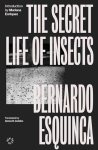
- The idea of trees taking revenge on people for environmental destruction in one story of The Secret Life of Insects by Bernardo Esquinca and one poem of The Holy & Broken Bliss by Alicia Ostriker.
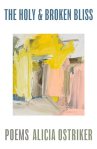
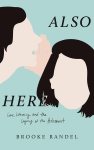
- An illiterate character in Instructions for a Heatwave by Maggie O’Farrell and Also Here by Brooke Randel.
-
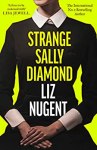 Controversy over throwing a dead body into the trash in Birdeye by Judith Heneghan and Strange Sally Diamond by Liz Nugent.
- A publishing assistant who wears a miniskirt and Doc Martens in Shred Sisters by Betsy Lerner and Summer Fridays by Suzanne Rindell.
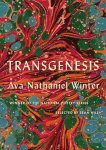
- Ancestors’ experience in Auschwitz in Also Here by Brooke Randel and Transgenesis by Ava Winter.
- The protagonist finds it comforting when her boyfriend lies down with his full weight on her in Shred Sisters by Betsy Lerner and The Echoes by Evie Wyld.
- A woman badgers her ex-husband about when his affair with his high school/college sweetheart started (before or after the divorce) in Shred Sisters by Betsy Lerner and Liars by Sarah Manguso.
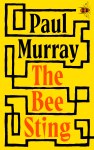 I encountered an Irish matriarch who married the ‘wrong’ brother, not Frank, in The Bee Sting by Paul Murray earlier in the year, and then in Instructions for a Heatwave by Maggie O’Farrell.
- A boy is playing in the family car on the driveway when it rolls backwards and kills someone in A Perfect Arrangement by Suzanne Berne and Tell Me Everything by Elizabeth Strout.
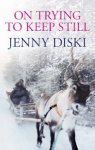
- Quantoxhead, Somerset is mentioned in On Trying to Keep Still by Jenny Diski and A House Unlocked by Penelope Lively.
- Tapeworms are mentioned in On Trying to Keep Still by Jenny Diski and one story of The Best Short Stories 2023: The O. Henry Prize Winners, ed. Lauren Groff.
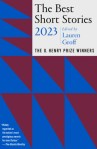
- A description of horrific teeth in one story of The Best Short Stories 2023: The O. Henry Prize Winners, ed. Lauren Groff, and one story of The Long Swim by Terese Svoboda.
- A character researches potato blight, and another keeps his smoking a secret from his wife, in one story of The Best Short Stories 2023: The O. Henry Prize Winners, ed. Lauren Groff, and Tell Me Everything by Elizabeth Strout.
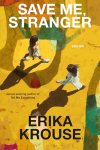 A piano gets mauled out of anger in one story of Save Me, Stranger by Erika Krouse and Strange Sally Diamond by Liz Nugent.
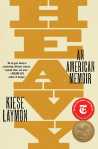
- Men experiencing eating disorders in Heavy by Kiese Laymon and Heartstopper Volumes 3 and 4 by Alice Oseman.
- Black people deliberately changing their vocabulary and speech register when talking to white people in James by Percival Everett and Heavy by Kiese Laymon.
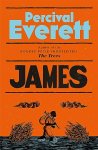
- My second book of the year in which a woman from centuries ago who magically appears in the present requests to go night clubbing: first The Ministry of Time by Kaliane Bradley, then Isabella & Blodwen by Rachael Smith.
- Characters named Sadie in James by Percival Everett, The Souvenir Museum by Elizabeth McCracken, and Still Life at Eighty by Abigail Thomas.
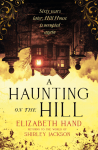
- Creepy hares in horror: A Haunting on the Hill by Elizabeth Hand and What Moves the Dead by T. Kingfisher. There were weird rabbits in I’m the King of the Castle by Susan Hill, too.
- I read two scenes of a calf being born, one right after the other: in Dangerous Enough by Becky Varley-Winter, then I’m the King of the Castle by Susan Hill.
- I read about an animal scratch leading to infection leading to death in a future with no pharmaceuticals in Station Eleven by Emily St. John Mandel in the morning and then in the afternoon heard Eve Smith mention the same thing happening due to antibiotic resistance in her novel The Waiting Rooms. Forget about R.I.P.; this is the stuff that scares me…
What’s the weirdest reading coincidence you’ve had lately?
20 Books of Summer 2024 Retrospective
That’s a wrap! It was my seventh year in a row participating. I managed to read and review all 20 books by yesterday. Only eight of the books I earmarked in my plans (plus two more that were DNFs) made it into my final stacks, but I don’t really consider that a problem.

With what I substituted in, I ended up achieving 1 reread and getting through 7 review copies, 3 of which had been languishing in my set-aside piles for a long time. I stuck to my pledge to read only a) books that I owned in hardback and b) books by women. I read roughly half and half fiction and non- (11 vs. 9).
Unfortunately, a lot of my selections this year happened to be lackluster: there were 5 books that I rated at 2.5 stars or below, and another 6 that merited 3 stars. Those 11 make for a pretty low average rating across the 20.
By contrast, I had a few 4-star highlights: Company by Shannon Sanders, Sleeping with Cats by Marge Piercy, and My Good Bright Wolf by Sarah Moss (if anyone in the UK would like my proof copy of this last one, let me know and I’ll post it to you).
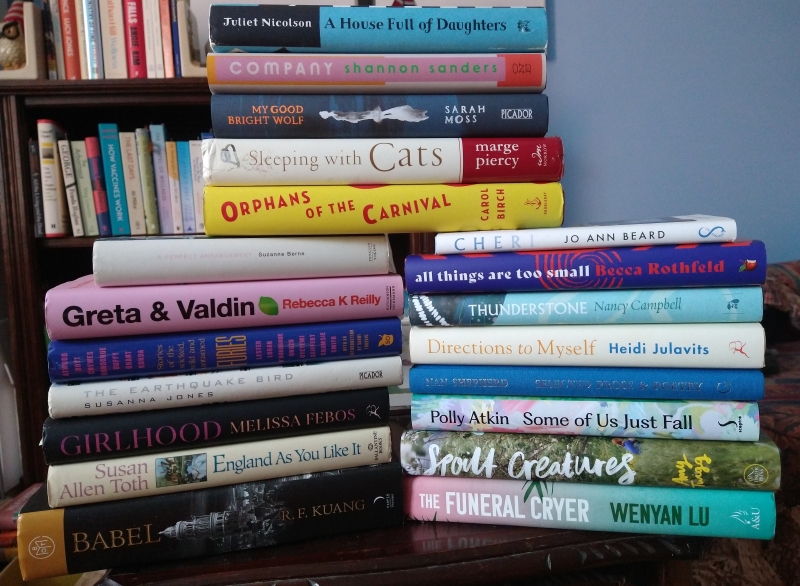
It was also fun tying into the Reading the Meow week and connecting reviews with events such as an online conference about Vita Sackville-West and the new album by the Bookshop Band.
I’ve cleared 16 of 23 (including the several DNFs) books from my shelves by reselling them or donating them to my neighbourhood Little Free Library. I’ll surely appreciate that extra space to accommodate the constant stream of incomers.
Next year I think I need to make the challenge even more open, because it seems that as soon as I ‘assign’ myself 20 books, I lose interest in most of them. Again, I want to limit myself to books from my shelves, but I won’t specify anything else. I’ll just let myself pick up whatever interests me at the time – bearing in mind that in the summers I like to indulge in juicy fiction that’s toward the popular end of literary.
How did your summer reading go?
August Releases: Sarah Manguso (Fiction), Sarah Moss (Memoir), and Carl Phillips (Poetry)
Today I feature a new-to-me poet and two women writers whose careers I’ve followed devotedly but whose latest books – forthright yet slippery; their genre categories could easily be reversed – I found very emotionally difficult to read. Gruelling, almost, but admirable. Many rambling thoughts ensue. Then enjoy a nice poem.
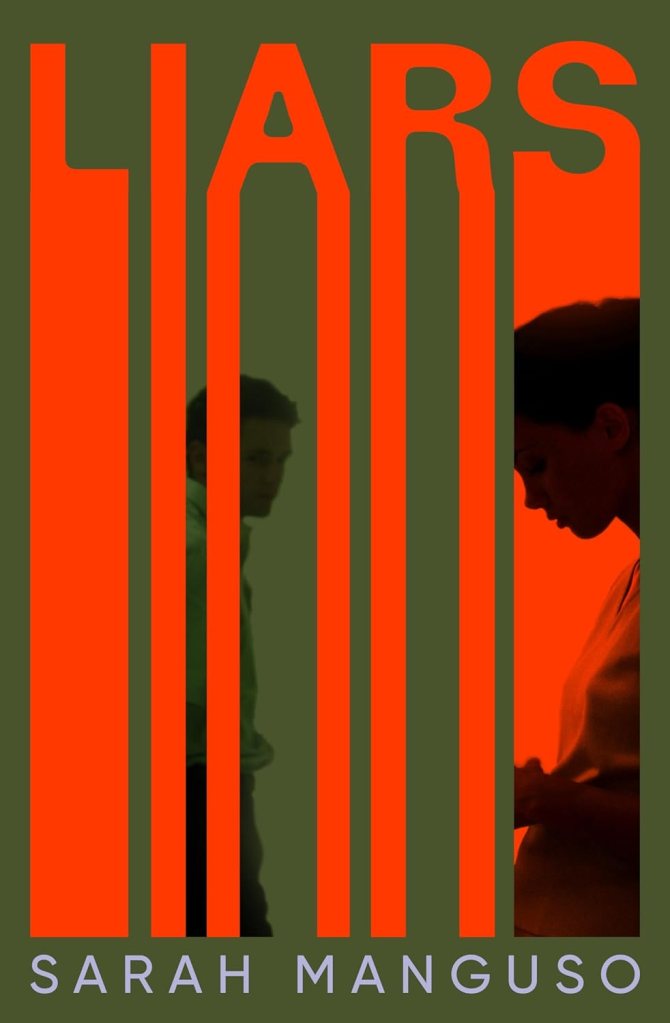
Liars by Sarah Manguso
As part of a profile of Manguso and her oeuvre for Bookmarks magazine, I wrote a synopsis and surveyed critical opinion; what follow are additional subjective musings. I’ve read six of her nine books (all but the poetry and an obscure flash fiction collection) and I esteem her fragmentary, aphoristic prose, but on balance I’m fonder of her nonfiction. Had Liars been marketed as a diary of her marriage and divorce, Manguso might have been eviscerated for the indulgence and one-sided presentation. With the thinnest of autofiction layers, is it art?
Jane recounts her doomed marriage, from the early days of her relationship with John Bridges to the aftermath of his affair and their split. She is a writer and academic who sacrifices her career for his financially risky artistic pursuits. Especially once she has a baby, every domestic duty falls to her, while he keeps living like a selfish stag and gaslights her if she tries to complain, bringing up her history of mental illness. The concise vignettes condense 14+ years into 250 pages, which is a relief because beneath the sluggish progression is such repetition of type of experiences that it could feel endless. John’s last name might as well be Doe: The novel presents him – and thus all men – as despicable and useless, while women are effortlessly capable and, by exhausting themselves, achieve superhuman feats. This is what heterosexual marriage does to anyone, Manguso is arguing. Indeed, in a Guardian interview she characterized this as a “domestic abuse novel,” and elsewhere she has said that motherhood can be unlinked from patriarchy, but not marriage.
Let’s say I were to list my every grievance against my husband from the last 17+ years: every time he left dirty clothes on the bedroom floor (which is every day); every time he loaded the dishwasher inefficiently (which is every time, so he leaves it to me); every time he failed to seal a packet or jar or Tupperware properly (which – yeah, you get the picture) – and he’s one of the good guys, bumbling rather than egotistical! And he’d have his own list for me, too. This is just what we put up with to live with other people, right? John is definitely worse (“The difference between John and a fascist despot is one of degree, not type”). But it’s not edifying, for author or reader. There may be catharsis to airing every single complaint, but how does it help to stew in bitterness? Look at everything I went through and validate my anger.
There are bright spots: Jane’s unexpected transformation into a doting mother (but why must their son only ever be called “the child”?), her dedication to her cat, and the occasional dark humour:
So at his worst, my husband was an arrogant, insecure, workaholic, narcissistic bully with middlebrow taste, who maintained power over me by making major decisions without my input or consent. It could still be worse, I thought.
Manguso’s aphoristic style makes for many quotably mordant sentences. My feelings vacillated wildly, from repulsion to gung-ho support; my rating likewise swung between extremes and settled in the middle. I felt that, as a feminist, I should wholeheartedly support a project of exposing wrongs. It’s easy to understand how helplessness leads to rage, and how, considering sunk costs, a partner would irrationally hope for a situation to improve. So I wasn’t as frustrated with Jane as some readers have been. But I didn’t like the crass sexual language, and on the whole I agreed with Parul Sehgal’s brilliant New Yorker review that the novel is so partial and the tone so astringent that it is impossible to love. 
With thanks to Picador for the proof copy for review.
And a quote from the Moss memoir (below) to link the two books: “Homes are places where vulnerable people are subject to bullying, violence and humiliation behind closed doors. Homes are places where a woman’s work is never done and she is always guilty.”
20 Books of Summer, #19:
My Good Bright Wolf by Sarah Moss
I’ve reviewed this memoir for Shelf Awareness (it’s coming out in the USA from Farrar, Straus and Giroux on October 22nd) so will only give impressions, in rough chronological order:
Sarah Moss returns to nonfiction – YES!!!
Oh no, it’s in the second person. I’ve read too much of that recently. Fine for one story in a collection. A whole book? Not so sure. (Kirsty Logan got away with it, but only because The Unfamiliar is so short and meant to emphasize how matrescence makes you other.)
 The constant second-guessing of memory via italicized asides that question or refute what has just been said; the weird nicknames (her father is “the Owl” and her mother “the Jumbly Girl”) – in short, the deliberate artifice – at first kept me from becoming submerged. This must be deliberate and yet meant it was initially a chore to pick up. It almost literally hurt to read. And yet there are some breathtakingly brilliant set pieces. Oh! when her mother’s gay friend Keith buys her a chocolate éclair and she hides it until it goes mouldy.
Once she starts discussing her childhood reading – what it did for her then and how she views it now – the book really came to life for me. And she very effectively contrasts the would-be happily ever after of generally getting better after eight years of disordered eating with her anorexia returning with a vengeance at age 46 – landing her in A&E in Dublin. (Oh! when she reads War and Peace over and over on a hospital bed and defiantly uses the clean toilets on another floor.) This crisis is narrated in the third person before a return to second person.
The tone shifts throughout the book, so that what threatens to be slightly cloying in the childhood section turns academically curious and then, somehow, despite the distancing pronouns, intimate. So much so that I found myself weeping through the last chapters over this lovely, intelligent woman’s ongoing struggles. As an overly cerebral person who often thinks it’s pesky to have to live in a body, I appreciated her probing of the body/mind divide; and as she tracks where her food issues came from, I couldn’t help but think about my sister’s years of eating disorders and my mother’s fear that it was all her fault.
Beyond Moss’s usual readers, I’d also recommend this to fans of Laura Freeman’s The Reading Cure and Noreen Masud’s A Flat Place.
Overall: shape-shifting, devastating, staunchly pragmatic. I’m not convinced it all hangs together (and I probably would have ended it at p. 255), but it’s still a unique model for transmuting life into art. 
With thanks to Picador for the free copy for review.
Scattered Snows, to the North by Carl Phillips
 Phillips is a prolific poet I’d somehow never heard of. In fact, he won the Pulitzer Prize last year for his selected poetry volume. He’s gay and African American, and in his evocative verse he summons up landscapes and a variety of weather, including as a metaphor for emotions – guilt, shame, and regret. Looking back over broken relationships, he questions his memory.
Will I remember individual poems? Unlikely. But the sense of chilly, clear-eyed reflection, yes. (Sample poem below) 
With thanks to Carcanet for the advanced e-copy for review.
Record of Where a Wind Was
Wave-side, snow-side,
little stutter-skein of plovers
lifting, like a mind
of winter—
We’d been walking
the beach, its unevenness
made our bodies touch,
now and then, at
the shoulders mostly,
with that familiarity
that, because it sometimes
includes love, can
become confused with it,
though they remain
different animals. In my
head I played a game with
the waves called Weapon
of Choice, they kept choosing
forgiveness, like the only
answer, as to them
it was, maybe. It’s a violent
world. These, I said, I choose
these, putting my bare hands
through the air in front of me.
Any other August releases you’d recommend?
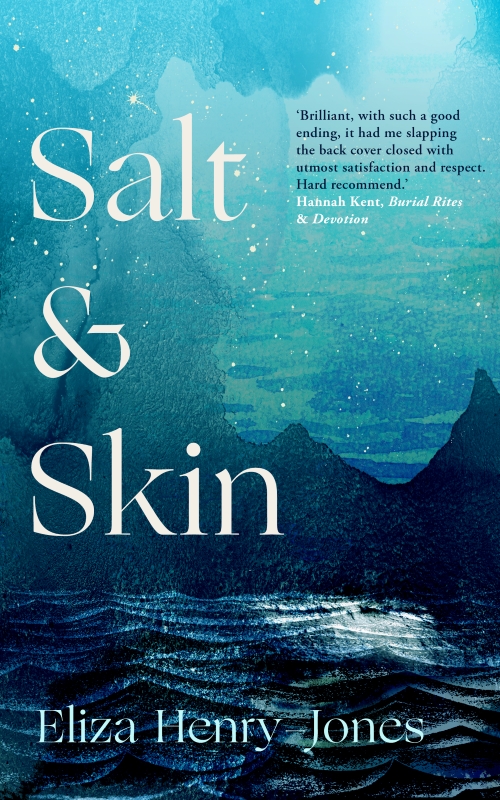
Salt & Skin by Eliza Henry-Jones (Blog Tour)
I was drawn to Eliza Henry-Jones’s fifth novel, Salt & Skin (2022), by the setting: the remote (fictional) island of Seannay in the Orkneys. It tells the dark, intriguing story of an Australian family lured in by magic and motivated by environmentalism. History overshadows the present as they come to realize that witch hunts are not just a thing of the past. This was exactly the right evocative reading for me to take on my trip to some other Scottish islands late last month. The setup reminded me of The Last Animal by Ramona Ausubel, while the novel as a whole is reminiscent of The Night Ship by Jess Kidd and Night Waking by Sarah Moss.
Only a week after the Managans – photographer Luda, son Darcy, 16, and daughter Min, 14 – arrive on the island, they witness a hideous accident. A sudden rockfall crushes a little girl, and Luda happens to have captured it all. The photos fulfill her task of documenting how climate change is affecting the islands, but she earns the locals’ opprobrium for allowing them to be published. It’s not the family’s first brush with disaster. The kids’ father died recently; whether in an accident or by suicide is unclear. Nor is it the first time Luda’s camera has gotten her into trouble. Darcy is still angry at her for selling a photograph she took of him in a dry dam years before, even though it raised a lot of money and awareness about drought.
The family live in what has long been known as “the ghost house,” and hints of magic soon seep in. Luda’s archaeologist colleague wants to study the “witch marks” at the house, and Darcy is among the traumatized individuals who can see others’ invisible scars. Their fate becomes tied to that of Theo, a young man who washed up on the shore ten years ago as a web-fingered foundling rumoured to be a selkie. Luda becomes obsessed with studying the history of the island’s witches, who were said to lure in whales. Min collects marine rubbish on her deep dives, learning to hold her breath for improbable periods. And Darcy fixates on Theo, who also attracts the interest of a researcher seeking to write a book about his origins.
It’s striking how Henry-Jones juxtaposes the current and realistic with the timeless and mystical. While the climate crisis is important to the framework, it fades into the background as the novel continues, with the focus shifting to the insularity of communities and outlooks. All of the characters are memorable, including the Managans’ elderly relative, Cassandra (calling to mind a prophetic figure from Greek mythology), though I found Father Lee, the meddlesome priest, aligned too readily with clichés. While the plot starts to become overwrought in later chapters, I appreciated the bold exploration of grief and discrimination, the sensitive attention to issues such as addiction and domestic violence, and the frank depictions of a gay relationship and an ace character. I wouldn’t call this a cheerful read by any means, but its brooding atmosphere will stick with me. I’d be keen to read more from Henry-Jones.
With thanks to Random Things Tours and September Publishing for the free copy for review.
Buy Salt & Skin from the Bookshop UK site. [affiliate link]
or
Pre-order Salt & Skin (U.S. release: September 5) from Bookshop.org. [affiliate link]
I was delighted to help kick off the blog tour for Salt & Skin on its UK publication day. See below for details of where other reviews have appeared or will be appearing soon.

All My Wild Mothers by Victoria Bennett & I Have Some Questions for You by Rebecca Makkai
I’m catching up with reviews of two February releases that I spent the whole of last month submerged in. These are early entries on my Best of 2023 list: A lovely memoir about grief and gardening, caring for an ill child and a dying parent; and a riveting true crime-inspired novel, set on a boarding school campus, that rages at injustice and violence against women.
All My Wild Mothers: Motherhood, loss and an apothecary garden by Victoria Bennett
Early in February, I attended the online book launch via Sam Read Bookseller in Grasmere. With conversation, readings and song, it was the ideal introduction to the themes of this debut memoir by a poet. The book is composed of dozens of brief autobiographical, present-tense essays, each titled after a wildflower with traditional healing properties. The chapters are headed by a black-and-white woodcut of each plant (by Bennett’s husband, Adam Clarke) and a précis of its medicinal uses, as well as where it is found. Again and again, these descriptions site the flora on edgelands or “disturbed ground” – the perfect metaphorical tie-in to Bennett’s tumultuous life and the comfort that creating an apothecary garden brought.
Bennett is the youngest of six children. When she was expecting her son – much longed for after multiple pregnancy losses – news came that her eldest sister had died in a canoeing accident. At age two, her son was diagnosed with type 1 diabetes; managing his condition has imposed a heavy emotional burden. And years later, she was the primary caregiver for her elderly mother as she was dying of mesothelioma. The memoir’s format – which arose in part because it was written over the course of 10 years, during stolen moments – realistically presents bereavement and caring as ongoing, cyclical challenges rather than one-time events.

There are no simple solutions offered here, nothing so pat as that ‘gardening heals all hurts’, but Bennett writes into the broken places and finds joy in what comes to life spontaneously in nature or in her ramshackle yard on a social housing estate in Cumbria. She recalls a horse chestnut tree that looked over her outside the window of her childhood home; she and her son take impish delight in guerrilla gardening and sometimes disastrous cooking projects with foraged fruit. Some of my favourite individual vignettes were “Elder,” about the magic and medicine of making elderberry syrup from the few village trees that escape the chainsaw; “Dandelion,” about her trio of older sisters, who were Greenham Common protestors and always tried to protect her as well as nature; “Herb Robert,” about her sister-in-law’s funeral; and especially “Honeysuckle,” about a local agricultural show where the officious organizers make them feel like interlopers yet her son wins first place for their feral, fecund garden.
Many side topics twine into the narrative as well: a difficult relationship with a controlling mother; a family history that takes in boarding schools, cults, road trips, risk taking and mental health issues; the economic disparity that leads to one set of rules for the rich and another for those on benefits. But the core of the book is a tender mother–son relationship. “I can give him this: a seed, with all its defiant hope against the dark; and the memory that once, we grew a garden out of rock, and waste, and all things broken, and it thrived.” Sitting somewhere between creative nonfiction and nature essays, it’s a beautiful read for any fan of women’s life writing, especially if you share the interests in grief or gardening. I hope we’ll see it recognized on the Barbellion and Wainwright Prize shortlists alike.
Readalikes I have reviewed: A Still Life by Josie George, The Book of Difficult Fruit by Kate Lebo, The Cure for Sleep by Tanya Shadrick
With thanks to Victoria Bennett and Two Roads for the free copy for review.
I Have Some Questions for You by Rebecca Makkai
I’m a big fan of Makkai’s first two novels, The Borrower and The Hundred-Year House, and have her other two books lined up to read, so I was excited to hear about this new work and put it on my Most Anticipated list for the year. My interest was redoubled by Laura’s review, which likens it to a cross between Prep and My Dark Vanessa – irresistible.
Bodie Kane grew up in a deprived and dysfunctional family in Indiana, and has beneficent Mormon neighbours to thank for the tuition money that allowed her to attend Granby, an exclusive New Hampshire boarding school, in the early to mid-1990s. She was an angry and awkward high school student, yet her memories of Granby and the friendships she made there are still an emotional mainstay more than two decades later. In 2018, she is a successful film professor with a podcast about Hollywood starlets. Although she is separated from Jerome, her artist husband, he lives next door and they co-parent their two children.
After an invitation comes from Granby to teach a two-week course on podcasting, Bodie trades Los Angeles for a bitter New England winter. It’s the perfect excuse to indulge her obsession with the 1995 murder of her former Granby roommate, Thalia Keith, who was found dead in the swimming pool one March morning after a play performance. Bodie has never been comfortable with the flawed case against the Black athletics coach, Omar Evans, who has been imprisoned ever since. When one of her students chooses to make Thalia’s murder the subject of a podcast, it’s all the justification Bodie needs to dive deep into her pet hypothesis: Thalia was sleeping with the music director, Denny Bloch, and he was involved in her death in some way. Her blinkered view threatens to exclude a key explanation. Still, the informal sleuthing she and her students do is enough to warrant a follow-up hearing in 2022, but they – and Omar – are up against a broken system.

Makkai has taken her cues from the true crime genre and constructed a convincing mesh of evidence and theories. There’s a large cast of secondary characters, from Dorian, the bully who once humiliated Bodie with sexual slurs, to Fran, the faculty kid/gay best friend who now lives and works on campus herself and continues to be Bodie’s trusty backup. The combinations of background + teenage behaviour + 40-something lives all feel authentic in their randomness (when I saw that Makkai sourced 24 names from indie bookstore supporters, I realized afresh just how real, as opposed to ‘made-up’, these characters feel).
At times I wondered if there was too much detail on the case and the former classmates; I might even have streamlined the novel by doing away with the 2022 section altogether, though it ends up being crucial to the plot. But Makkai has so carefully crafted these pen portraits, and so intimately involved us in Bodie’s psyche, that it’s easy to become invested in the story. What’s more, the novel introduces a seam of rage about violence towards women – so predictably excused and allowed to recur by a justice system weighted against victims –
What’s as perfect as a girl stopped dead, midformation? Girl as blank slate. Girl as reflection of your desires, unmarred by her own. Girl as sacrifice to the idea of girl.
let’s say it was the one where the rugby team covered up the girl’s death and the school covered for the rugby team. Actually it was the one where the therapist spent years grooming her. It was the one where the senator, then a promising teenager, shoved his d*ck in the girl’s face. … It was the one where her body was never found. It was the one where her body was found in the snow. It was the one where he left her body for dead under the tarp.
– yet also finds nuance in the situation when Bodie’s ex-husband is subjected to exaggerated #MeToo accusations. It’s timely, daring, intelligent, enthralling storytelling. Susan (review here) and I are both hoping to see this make the Women’s Prize longlist next week.
Readalikes I have reviewed: Ghost Wall by Sarah Moss, My Dark Vanessa by Kate Elizabeth Russell, The Bass Rock by Evie Wyld
With thanks to Fleet for the proof copy for review.
What are the best 2023 books you’ve read so far?
What Lies Hidden: Secrets of the Sea House & Night Waking
When I read Kay’s review of Sarah Maine’s The House Between Tides, the book seemed so familiar I did a double take. A Scottish island in the Outer Hebrides … dual contemporary and historical story lines … the discovery of a skeleton. It sounded just like Night Waking by Sarah Moss (another Sarah M.!), which I was already planning on rereading on our trip to the Outer Hebrides. Kay then suggested a readalike that ended up being even more similar, Elisabeth Gifford’s The Sea House (U.S. title), one of whose plots was Victorian and the skeleton in which was a baby’s. I passed on the Maine but couldn’t resist finding a copy of the Gifford from the library so I could compare it with the Moss. Both: 
Secrets of the Sea House by Elisabeth Gifford (2013)
 Although nearly 130 years separate the two protagonists, they are linked by the specific setting – a manse on the island of Harris – and a belief that they are descended from selkies. In 1992, Ruth and her husband are converting the Sea House into a B&B and hoping to start a family. When they find the remains of a baby with skeletal deformities reminiscent of a mermaid under the floorboards, Ruth plunges into a search for the truth of what happened in their home. In 1860, Reverend Alexander Ferguson lived here and indulged his amateur naturalist curiosity about cetaceans and the dubious creatures announced as “mermaids” (often poor taxidermy crosses between a monkey and a fish, as in The Mermaid and Mrs. Hancock).
Ruth and Alexander trade off as narrators, but we get a more rounded view of mid-19th-century life through additional chapters voiced by the reverend’s feisty maid, Moira, a Gaelic speaker whose backstory reveals the cruelty of the Clearances – she won’t forgive the laird for what happened to her family. Gifford’s rendering of period prose wasn’t altogether convincing and there are some melodramatic moments: this could be categorized under romance, and I was surprised by the focus on Ruth’s traumatic upbringing in a children’s home after her mother’s death by drowning. Still, this was an absorbing novel and I actually learned a lot, including the currently accepted explanation for where selkie myths come from.
I also was relieved that Gifford uses real place names instead of disguising them (as Bella Pollen and Sarah Moss did). We passed through the tiny town of Scarista, where the manse is meant to be, on our drive. If I’d known ahead of time that it was a real place, I would have been sure to stop for a photo op (it must be this B&B!). We also stopped in Tarbert, a frequent point of reference, to visit the Harris Gin distillery. (Public library)
Night Waking by Sarah Moss (2011)
This was my first of Moss’s books and I have always felt guilty that I didn’t appreciate it more. I found the voice more enjoyable this time, but was still frustrated by a couple of things. Dr Anna Bennet is a harried mum of two and an Oxford research fellow trying to finish her book (on Romantic visions of childhood versus the reality of residential institutions – a further link to the Gifford) while spending a summer with her family on the remote island of Colsay, which is similar to St. Kilda. Her husband, Giles Cassingham, inherited the island but is also there to monitor the puffin numbers and track the effects of climate change. Anna finds a baby’s skeleton in the garden while trying to plant some fruit trees. From now on, she’ll snatch every spare moment (and trace of Internet connection) away from her sons Raph and Moth – and the builders and the police – to write her book and research what might have happened on Colsay.
 Each chapter opens with an epigraph from a classic work on childhood (e.g. by John Bowlby or Anna Freud). Anna also inserts excerpts from her manuscript in progress and fragments of texts she reads online. Adding to the epistolary setup is a series of letters dated 1878: May Moberley reports to her sister Allie and others on the conditions on Colsay, where she arrives to act as a nurse and address the island’s alarming infant mortality statistics. It took me the entire book to realize that Allie and May are the sisters from Moss’s 2014 novel Bodies of Light; I’m glad I didn’t remember, as there was a shock awaiting me.
According to Goodreads, I first read this over just four days in early 2012. (This was back in the days where I read only one book at a time, or at most two, one fiction and one nonfiction.) I remember feeling like I should have enjoyed its combination of topics – puffin fieldwork, a small island, historical research – much more, but I was irked by the constant intrusions of the precocious children. That is, of course, the point: they interrupt Anna’s life, sleep and research, and she longs for a ‘room of her own’ where she can be a person of intellect again instead of wiping bottoms and assembling sometimes disgusting meals. She loves her children, but hates the daily drudgery of motherhood. Thankfully, there’s hope at the end that she’ll get what she desires.
I had completely forgotten the subplot about the first family they rent out the new holiday cottage to (yet another tie-in to the Gifford, in which they’re preparing to open a guest house): a hot mess of alcoholic mother, workaholic father, and university-age daughter with an eating disorder. Zoe’s interactions with the boys, and Anna’s role as makeshift counsellor to her, are sweet, but honestly? I would have cut this story line entirely. Really, I longed for the novella length and precision of a later work like Ghost Wall. Still, I was happy to reread this, with Anna’s wry wit a particular highlight, and to discover for the first time (silly me!) that thread of connection with Bodies of Light / Signs for Lost Children. (Free from a neighbour)
Original rating: 
My rating now:
I enjoyed the Gifford enough to immediately request the library’s copy of one of her newer novels, The Lost Lights of St. Kilda, so my connection to the Western Isles can at least continue through my reading. I also found a pair of children’s novels plus a mystery novel set on St. Kilda, and I was sent an upcoming novel set on an island off the west coast of Scotland, so I’ll be on this Scotland reading kick for a while!
Adventuring (and Reading) in the Outer Hebrides
Islands are irresistible for the unique identities they develop through isolation, and the extra effort that it often takes to reach them. Over the years, my husband and I have developed a special fondness for Britain’s islands – the smaller and more remote the better. After exploring the Inner Hebrides in 2005 and Orkney and Shetland in 2006, we always intended to see more of Scotland’s islands; why ever did we leave it this long?

From Wikimedia Commons. By Kelisi.
Rail strikes and cancelled trains threatened our itinerary more than once, so it was a relief that we were able to go, even at extra cost. Our back-up plan left us with a spare day in Inverness, which we filled with coffee and pastries outside the cathedral, browsing at Leakey’s bookshop, walking along the River Ness and in the botanical gardens, and a meal overlooking the 19th-century castle.


Then it was on to the Outer Hebrides at last, via a bus ride and then a ferry to Stornoway in Lewis, the largest settlement in the Western Isles. Here we rented a car for a week to allow us to explore the islands at will. We were surprised at how major a town Stornoway is, with a big supermarket and slight suburban sprawl – yet it was dead on the Saturday morning we went in to walk around; not until 11:30 was there anything like the bustle we expected.
We’d booked three nights in a tiny Airbnb house 15 minutes from the capital. First up on our tourist agenda was Callanish stone circle, which we had to ourselves (once the German coach party left). Unlike at Stonehenge, you can walk in among the standing stones. The rest of our time on Lewis went to futile whale watching, the castle grounds, and beach walks.


This post threatens to become a boring rundown, so I’ll organize the rest thematically, introduced by songs by Scottish artists.
“I’ll Always Leave the Light On” by Kris Drever
Long days: The daylight lasts longer so far north, so each day we could plan activities not just for the morning and afternoon but late into the evening. At our second stop – three nights in another Airbnb on North Uist – we took walks after dinner, often not coming back until 10 p.m., at which point there was still another half-hour until sunset.
“Why Does It Always Rain on Me?” by Travis
Weather: We got a mixture of sun and clouds. It rained at least a bit on most days, and we got drenched twice, walking out to an eagle observatory on Harris (where we saw no eagles, as they are too sensible to fly in the rain) and dashing back to the car from a coastal excursion. I was doomed to wearing plastic bags around my feet inside my disintegrating hiking boots for the rest of the trip. There was also a strong wind much of the time, which made it feel colder than the temperature suggested – I often wore my fleece and winter hat.

A witty approach to weather forecasting. (Outside the shop/bistro on Berneray.)
“St Kilda Wren” by Julie Fowlis
 Music and language: Julie Fowlis is a singer from North Uist who records in English and Gaelic. (This particular song is in Gaelic, but the whole Spell Songs album was perfect listening on our drives because of the several Scottish artists involved and the British plants and animals sung about.) There is a strong Gaelic-speaking tradition in the Western Isles. We heard a handful of people speaking it, all road signs give place names in Gaelic before the English translation, and there were several Gaelic pages in the free newspaper we picked up.
Wildlife: The Outer Hebrides is a bastion for some rare birds: the corncrake, the red-necked phalarope, and both golden and white-tailed eagles. Thanks to intel gleaned from Twitter, my husband easily found a phalarope swimming in a small roadside loch. Corncrakes hide so well they are virtually impossible to see, but you will surely hear their rasping calls from the long grass. Balranald is the westernmost RSPB reserve and a wonderful place to hear corncrakes and see seabirds flying above the machair (wildflower-rich coastal grassland). No golden eagles, but we did see a white-tailed eagle flying over our accommodation on our last day, and short-eared owls were seemingly a dime a dozen. We were worried we might see lots of dead birds on our trip due to the avian flu raging, but there were only five – four gannets and an eider – and a couple looked long dead. Still, it’s a distressing situation.


We also attended an RSPB guided walk to look for otters and did indeed spot one on a sea loch. It happened to be the Outer Hebrides Wildlife Festival week. Our guide was knowledgeable about the geography and history of the islands as well.

Badges make great, cheap souvenirs!
St. Kilda: This uninhabited island really takes hold of the imagination. It can still be visited, but only via a small boat through famously rough seas. We didn’t chance it this time. I might never get there, but I enjoy reading about it. There’s a viewing point on North Uist where one can see out to St. Kilda, but it was only the vaguest of outlines on the hazy day we stopped.
“Traiveller’s Joy” by Emily Smith
Additional highlights:
- An extended late afternoon tea at Mollans rainbow takeaway shed on Lewis. Many of the other eateries we’d eyed up in the guidebook were closed, either temporarily or for good – perhaps an effect of Covid, which hit just after the latest edition was published.


- A long reading session with a view by the Butt of Lewis, which has a Stevenson lighthouse.
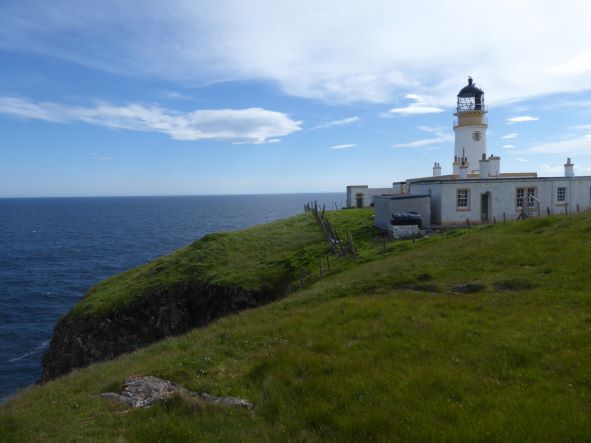
- Watching mum and baby seals playing by the spit outside our B&B window on Berneray.
- Peat smoked salmon. As much of it as I could get.
- A G&T with Harris gin (made with kelp).
“Dear Prudence” (Beatles cover) by Lau
Surprises:
- Gorgeous, deserted beaches. This is Luskentyre on Harris.

- No midges to speak of. The Highlands are notorious for these biting insects, but the wind kept them away most of the time we were on the islands. We only noticed them in the air on one still evening, but they weren’t even bad enough to deploy the Avon Skin So Soft we borrowed from a neighbour.
- People still cut and burn peats for fuel. Indeed, when we stepped into the Harris gin distillery for a look around, I was so cold and wet that I warmed my hands by a peat fire! Even into the 1960s, people lived in primitive blackhouses, some of which have now been restored as holiday rentals. The one below is run as a museum.

- Not far outside Stornoway is the tiny town of Tong. We passed through it each day. Here Mary Anne MacLeod was born in 1912. If only she’d stayed on Lewis instead of emigrating to New York City, where she met Fred Trump and had, among other children, a son named Donald…
- Lord Leverhulme, founder of Unilever, bought Lewis in 1918 and part of Harris the next year. He tried to get crofters to work in his businesses, but all his plans met with resistance and his time there was a failure, as symbolized by this “bridge to nowhere” (Garry Bridge). His legacy is portrayed very differently here compared to in Port Sunlight, the factory workers’ town he set up in Merseyside.

- The most far-flung Little Free Library I’ve ever visited (on Lewis).

- Visits from Lulu the cat at our North Uist Airbnb.

“Wrapped Up in Books” by Belle and Sebastian
What I read: I aimed for lots of relevant on-location reads. I can’t claim Book Serendipity: reading multiple novels set on Scottish islands, it’s no surprise if isolation, the history of the Clearances, boat rides, selkies and seabirds recur. However, the coincidences were notable for one pair, Secrets of the Sea House by Elisabeth Gifford and Night Waking by Sarah Moss, a reread for me. I’ll review these two together, as well as The Summer of the Bear by Bella Pollen (inspired by a real incident that occurred on North Uist in 1980), in full later this week.

I also read about half of Sightlines by Kathleen Jamie, a reread for me; its essays on gannets and St. Kilda chimed with the rest of my reading. Marram, Leonie Charlton’s memoir of pony trekking through the Outer Hebrides, will form part of a later 20 Books of Summer post thanks to the flora connection, as will Jon Dunn’s Orchid Summer, one chapter of which involves a jaunt to North Uist to find a rare species.


 Stormy Petrel by Mary Stewart: My selection for the train journey up. I got Daphne du Maurier vibes from this short novel about a holiday Dr Rose Fenemore, an English tutor at Cambridge, takes to Moila, a (fictional) small island off of Mull in the Inner Hebrides. It’s a writing retreat for her: she’s working on a book of poetry, but also on the science fiction she publishes under a pseudonym. Waiting for her brother to join her, she gets caught up in mild intrigue when two mysterious men enter her holiday cottage late one stormy night. Each has a good excuse cooked up, but who can she trust? I enjoyed the details of the setting but found the plot thin, predictable and slightly silly (“I may be a dish, but I am also a don”). This feels like it’s from the 1950s, but was actually published in 1991. I might try another of Stewart’s.
I also acquired four books on the trip: one from the Little Free Library and three from Inverness charity shops.

I started reading all three in the bottom pile, and read a few more books on my Kindle, two of them for upcoming paid reviews. The third was:
 Tracy Flick Can’t Win by Tom Perrotta: A sequel to Election, which you might remember as a late-1990s Reese Witherspoon film even if you don’t know Perrotta’s fiction. Tracy Flick was the goody two-shoes student who ran for school president and had her campaign tampered with. Now in her forties, she’s an assistant principal at a high school and a single mother. Missing her late mother and wishing she’d completed law school, she fears she’ll be passed over for the top job when the principal retires. This is something of an attempt to update the author’s laddish style for the #MeToo era. Interspersed with the third-person narration are snappy first-person testimonials from Tracy, the principal, a couple of students, and the washed-up football star the school chooses to launch its new Hall of Fame. I can’t think of any specific objections, but nor can I think of any reason why you should read this.
On my recommendation, my husband read Love of Country by Madeleine Bunting and The Frayed Atlantic Edge by David Gange, two excellent nonfiction books about Britain’s islands and coastline.
“Other Side of the World” by KT Tunstall
General impressions: We weren’t so taken with Lewis on the whole, but absolutely loved what we saw of Harris on our drive to the ferry to Berneray and wished we’d allotted it more time. While we only had one night on Berneray and mostly saw it in the rain, we thought it a lovely little place. It only has the one shop, which doubles as the bistro in the evenings – warned by the guidebook that this is the only place to eat on the island, we made our dinner reservation many weeks in advance. The following morning, as we ate our full Scottish cooked breakfast, I asked the B&B owner what led him to move from England to “the ends of the earth.” He took mild objection to my tossed-off remark and replied that the islands are more like “the heart of it all.” Thanks to fast Internet service, remote working is no issue.


We are more than half serious when we talk about moving to Scotland one day. We love Edinburgh, though the tourists might drive us mad, and enjoyed our time in Wigtown four years ago. I’d like to think we could even cope with island life in Orkney or the Hebrides. We imagine them having warm, tight-knit communities, but would newcomers feel welcome? With only one major supermarket in the whole Western Isles, would we find enough fresh fruit and veg? And however would one survive the bleakness of the winters?
North Uist captivated us right away, though. Within 15 minutes of driving onto the island via a causeway, we’d seen three short-eared owls and three red deer stags, and we got great views of hen harriers and other raptors. One evening we found ourselves under what seemed to be a raven highway. It felt unlike anywhere else we’d been: pleasingly empty of humans, and thus a wildlife haven.
The long journey home: The public transport nightmares of our return trip put something of a damper on the end of the holiday. We left the islands via a ferry to Skye, where we caught a bus. So far, so good. Our second bus, however, broke down in the middle of nowhere in the Highlands and the driver plus we five passengers were stuck for 3.5 hours awaiting a taxi we thought would never come. When it did, it drove the winding road at terrifying speed through the pitch black.
Grateful to be alive, we spent the following half-day in Edinburgh, bravely finding brunch, the botanic gardens and ice cream with our heavy luggage in tow. The final leg home, alas, was also disrupted when our overcrowded train to Reading was delayed and we missed the final connection to Newbury, necessitating another taxi – luckily, both were covered by the transport operators, and we’ll also reclaim for our tickets. Much as we believe in public transport and want to support it, this experience gave us pause. Getting to and around Spain by car was so much easier, and that trip ended up a lot cheaper, too. Ironic!

Guarding the bags in Edinburgh
“Take Me Back to the Islands” by Idlewild
Next time: On this occasion we only got as far south as Benbecula (which, pleasingly, is pronounced Ben-BECK-you-luh). In the future we’d think about starting at the southern tip and seeing Barra, Eriskay and South Uist before travelling up to Harris. We’ve heard that these all have their own personalities. Now, will we get back before many more years pass?
 Bookish Beck = Rebecca Foster. American transplant to England. Freelance proofreader and book reviewer.
 Bookish Beck