The Orange Fish by Carol Shields (Buddy Reread)
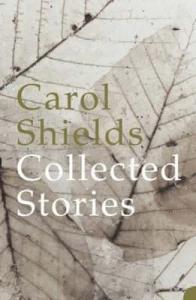
Marcie of Buried in Print and I are rereading Shields’s short stories for the first quarter of 2024: one volume per month from the Collected Stories. My review of the first one, Various Miracles (1985), is here. The Orange Fish followed four years later. It’s a shorter book – 12 stories rather than 21 – but again opens with the title story, which features a gentle slide into absurdity. The members of a select group think their possession of an orange fish lithograph makes them special, and the sense of being chosen enlivens and rejuvenates them. But when the artwork becomes widely available, it devalues their joy in it. This reminded me of a statistic I’ve often heard: experiments show that people don’t want to be earning a particular amount of money; they want to be earning comfortably relative to others.
 “Today Is the Day” stands out for its fable-like setup: “Today is the day the women of our village go out along the highway planting blisterlilies.” With the ritualistic activity and the arcane language, it seems borne out of women’s secret history; if it weren’t for mentions of a few modern things like a basketball court, it could have taken place in medieval times.
European settings recur in a few stories, and there are more third-person POVs than first-. And surprise! A character from Various Miracles is back: Meershank, the writer from “Flitting Behaviour,” stars in “Block Out.” Here Shields inverts the fear of writer’s block: for this prolific scribbler it’s a welcome break. “The suffering of the throttled was his, and he felt appropriately shriven, haunted, beset and blessed.”
In both “Collision” and “Family Secrets,” Shields muses on the biographer’s art, asking what passes into the historical record. The former involves a brief encounter between Martä and Malcolm, a visiting consultant, in Eastern Europe. I loved the mischievous personification: “Biography, that old buzzard, is having a field day, running along behind them picking up all the bits and pieces.” In “Family Secrets,” the narrator remembers that, before marriage, her mother took a year off teaching for “sickness,” and wonders if it was actually a pregnancy, hidden as assiduously as two amputations in the family. “Lies, secrets, casual misrepresentations and small failures of memory, all these things are useful in their way. History gobbles everything up willy-nilly”. Ernest Hemingway also makes a fun cameo appearance in this one.
I had three favourites: 1) “Hinterland” has a married couple visiting Paris at a time of terrorist activity. (There’s a fantastic list of the random things Roy might have thought of while fleeing the bomb threat, but didn’t.) The combination of that and a museum setting of course made me think of The Goldfinch. But it seems like the greater threats here are ageing and potential breakdowns within the family. “Milk Bread Beer Ice,” the last story in the collection, is also travel-based and contrasts the wife’s love of words with this marriage’s fundamental failure of communication. 2) “Hazel,” one I mistakenly read last month, is an example of Shields’s abiding interest in happenstance and how it changes a life’s direction.
 And my overall favourite, 3) “Fuel for the Fire,” a lovely festive-season story that gets beyond the everything-going-wrong-on-a-holiday stereotypes, even though the oven does play up as the narrator is trying to cook a New Year’s Day goose. The things her widowed father brings along to burn on their open fire – a shed he demolished, lilac bushes he took out because they reminded him of his late wife, bowling pins from a derelict alley – are comical yet sad at base, like so much of the story. “Other people might see something nostalgic or sad, but he took a look and saw fuel.” Fire is a force that, like time, will swallow everything.
Being a significantly shorter collection than Various Miracles, The Orange Fish seems to contain less filler and so struck me as stronger overall. There were only maybe one or two stories that I was less engaged with, and the themes of art, biography, coincidence, marriages and writers reminded me of works by some of my favourite authors, Julian Barnes, A.S. Byatt and David Lodge.
My original rating (c. 2008): 
My rating now: 
Recent Releases by Nathan Hill, Hisham Matar, Sigrid Nunez and More
One key way in which 2024’s reading has already differed from previous years’ is that I no longer avoid doorstoppers. I now classify any book with over 400 pages as a doorstopper, and by that definition I have already gotten through three this year: The Tidal Year plus two of the below, with Wellness standing out as the true whopper at 597 small-print pages. January offered a set of releases full of variety: gritty yet funny flash fiction; a novel of big ideas and big empathy for its flawed characters; an exile’s elegant love letter to Libya from London; a coy pandemic-era reflection on connection and creation; and a tour of nature close to home.
Universally Adored and Other One Dollar Stories by Elizabeth Bruce
 This was a great collection of 33 stories, all of them beginning with the words “One Dollar” and most of flash fiction length. Bruce has a knack for quickly introducing a setup and protagonist. The voice and setting vary enough that no two stories sound the same. What is the worth of a dollar? In some cases, where there’s a more contemporary frame of reference, a dollar is a sign of desperation (for the man who’s lost house, job and wife in “Little Jimmy,” for the coupon-cutting penny-pincher whose unbroken monologue makes up the whole of “Grocery List”), or maybe just enough for a small treat for a child (as in “Mouse Socks” or “Boogie Board”). In the historical stories, a dollar can buy a lot more. It’s a tank of gas – and a lesson on the evils of segregation – in “Gas Station”; it’s a huckster’s exorbitant charge for a mocked-up relic in “The Grass Jesus Walked On.”
The tone ranges from black comedy (“Festus”) to high tragedy (“Votive Candle”), but the book mostly falls within the realm of dirty realism with the attention to working-class country folk, so I’d recommend the collection to fans of authors who perch on the lighter side of that subgenre, such as Barbara Kingsolver or Denis Johnson. A few of my favorite stories, in addition to the above, were “Ice-Cold Water,” which I appreciated for the Washington D.C. setting and the way that an assumption about who would be racist was overturned by a moment of simple compassion; “Dolores,” in which a slick humanitarian fundraiser meets a waitress who has his number; and “Boiling the Buggers,” a window onto Covid-exacerbated mental illness. (Read via BookSirens)
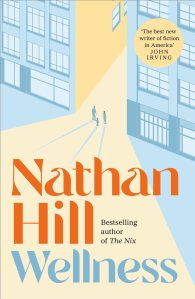
Wellness by Nathan Hill
Somehow nearly eight years have passed since Hill’s debut novel, The Nix, which I dubbed “a rich, multi-layered story about family curses and failure.” I admired it as much for its prose as for its ideas, and Wellness is just as effervescent and insightful. It’s a state-of-the-nation novel filtered through one Chicago family: experimental photographer and underperforming academic Jack; his wife Elizabeth, a placebo researcher at Wellness; and their YouTube-obsessed son Toby. They’ve recently invested their life savings in a new condo and are considering trendy features like open shelves and separate master bedrooms. It would be oversimplifying, but true, to say that this couple is experiencing midlife and marital crises. Their nineties college romance – and a time of life when everything felt open and possible – is so remote now. When Elizabeth suggests they join a friend at a swingers’ club and a patient of hers who’s also a parent at Toby’s school sees them outside, chaos ensues.
Some elements from The Nix carry over, such as campus politics, the American Midwest, and mother–son relationships, but also broader questions of authenticity, purpose and nurture. Is love itself a placebo? The novel spends time with Jack and Elizabeth at the dawn of their relationship and in the present day, but also looks back to their early careers and first years of parenthood. Hill is clearly fascinated with the sort of psychological experimentation Elizabeth engages in (there’s a whole bibliography of scientific papers consulted) but also turns it to humorous effect, as when Elizabeth subjects Toby to the marshmallow test. A lot of information is conveyed through dialogue, yet it never feels forced. A couple of long asides, on Elizabeth’s family history and the algorithms guiding Jack’s interactions with his conspiracy theorist father, tried my patience, but I loved a four-page chapter on a funeral supper where every sentence starts “There was.” Sooooo many quotable lines throughout.
The only fault in an addictive and spot-on novel (how did he know?! you’ll find yourself thinking about your own attitude to work/marriage/children) is that Hill is so committed to excavating these characters’ backstory of stunted emotion – Jack estranged from his religious Kansas farmer parents after a traumatic incident you feel right in the gut; Elizabeth glad to jettison her father’s wealth with his anger – that he hurries through the denouement. Still, this is sure to be a fiction highlight of my year. It’s one for readers of Jonathan Franzen, sure, but I also thought it reminiscent of Katherine Heiny’s Standard Deviation and Meg Wolitzer’s The Interestings.
With thanks to Picador for the proof copy for review.
My Friends by Hisham Matar
“Benghazi was the one place I longed for the most, it was also the place I most feared to return to.”
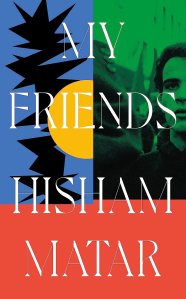 Taking a long walk through London one day, Khaled looks back from midlife on the choices he and his two best friends have made. He first came to the UK as an eighteen-year-old student at Edinburgh University. Everything that came after stemmed from one fateful day. Matar places Khaled and his university friend Mustafa at a real-life demonstration outside the Libyan embassy in London in 1984, which ended in a rain of bullets and the accidental death of a female police officer. Khaled’s physical wound is less crippling than the sense of being cut off from his homeland and his family. As he continues his literary studies and begins teaching, he decides to keep his injury a secret from them, as from nearly everyone else in his life. On a trip to Paris to support a female friend undergoing surgery, he happens to meet Hosam, a writer whose work enraptured him when he heard it on the radio back home long ago. Decades pass and the Arab Spring prompts his friends to take different paths.
I’d previously only read Matar’s short nonfiction work A Month in Siena. The slow, meditative style I enjoyed so much there didn’t translate well into doorstopper length; by the 300-page mark I found myself skimming to see if anything else might happen. Despite the title, we come to know Mustafa and Hosam much less well than we do Khaled. I would happily have had the book’s plot and sentiment concentrated into a taut 200 pages. However, I’m still interested in trying other books by Matar. In the Country of Men is significantly shorter and available from the backroom storage area of my library, and his Folio Prize-winning memoir The Return, too, is on shelf and I reckon will be right up my street.
With thanks to Viking (Penguin) for the proof copy for review.
The Vulnerables by Sigrid Nunez
I’m a huge Nunez fan after reading The Friend, What Are You Going Through, and especially A Feather on the Breath of God. Her last three books have been very much of a piece: autofiction voiced by an unnamed woman who has a duty of care towards a friend or a friend’s pet and ponders, in wry meta fashion, the nature of autobiographical writing and the meaning of life and death at a time of climate breakdown. Alas, The Vulnerables seems like no more than a rehashing of The Friend, with flanking main characters chosen at random from central casting: a parrot named Eureka and a mentally ill college drop-out called Vetch. This quirky trio is thrown together in a lavish New York City apartment during lockdown and nothing much happens but conversation brings them closer.
 A second problem: Covid-19 stories feel dated. For the first two years of the pandemic I read obsessively about it, mostly nonfiction accounts from healthcare workers or ordinary people looking for community or turning to nature in a time of collective crisis. But now when I come across it as a major element in a book, it feels like an out-of-place artefact; I’m almost embarrassed for the author: so sorry, but you missed your moment. My disappointment may primarily be because my expectations were so high. I’ve noted that two blogger friends new to Nunez were enthusiastic about this (but so was Susan, who’d enjoyed her before). That’s not to say this wasn’t a pleasantly fluid and incisive read, even if its message of essential human vulnerability is an obvious one. Anyway, I’ll take Nunez musing on familiar subjects over most other contemporary writers any day:
“Never write ‘I don’t remember,’ Editor says; it undermines your authority. But write as if you remember everything and Reader will smell a rat.”
“You can start with fiction or start with documentary, according to Jean-Luc Goddard. Either way, you will inevitably find the other.”
“I like this clarification by the narrator of a book by Stendhal: ‘It is not out of egotism that I say “I”; it is simply the quickest way to tell the story.’)”
(À propos of the doorstoppers above)
“Does that mean a long novel is easier to write than a short one? / Um, no. But, to borrow from a certain critic, in almost every long book I read I see a short one shirking its job.”
With thanks to Virago for the proof copy for review.
And a bonus work of nonfiction:
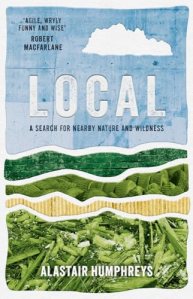
Local: A Search for Nearby Nature and Wildness by Alastair Humphreys
Lev Parikian alerted me to this amiable record of weekly discoveries of the nature on one’s home turf. Humphreys has been an international adventure traveller and written many books about his exploits. Here, by contrast, he zooms the lens in about as far as it will go, ordering a custom-made 20-km-square OS map that has his house at the centre and choosing one surrounding grid square per week (so 52 out of a total of 400) to cycle to and explore. He’s chosen to leave his town unnamed so this can function as an Everyman’s journey through edgelands. And his descriptions and black-and-white photographs really do present an accurate microcosm of modern England: fields, woods, waterways, suburban streets.
 From one November to the next, he watches the seasons advance and finds many magical spaces with everyday wonders to appreciate. “This project was already beginning to challenge my assumptions of what was beautiful or natural in the landscape,” he writes in his second week. True, he also finds distressing amounts of litter, no-access signs and evidence of environmental degradation. But curiosity is his watchword: “The more I pay attention, the more I notice. The more I notice, the more I learn.”
Each week’s observations send him down a research rabbit hole, with topics including caves, land management, mudlarking, plant species, and much more. The nature of the short chapters means that there can only ever be a cursory look at huge issues like rewilding and veganism, but Humphreys is nimble in weaving in the brief, matter-of-fact discussions. His eagerness is irrepressible. “How you look, what you see, and the way all this makes you feel: a single map and the best of all possible worlds.” (See also: Paul’s review.)
With thanks to the author for the free copy for review.
Various Miracles by Carol Shields: The Start of a Buddy Rereading Project
In 2020, Marcie of Buried in Print and I did a buddy read (reread in some cases for me) of six Carol Shields novels and found it very rewarding – my write-up is here. For the first quarter of this year, we’re rereading Shields’s short stories: one volume per month from the Collected Stories. I believe it was 2008–10 when I first binged on Shields’s work from Surrey Libraries – that was my modus operandi at the time, finding a reliable author and devouring everything I could find by them (Curtis Sittenfeld was another of my prized finds) – and I know I did get hold of her complete stories even though I was no great story reader, but I’ve retained no memory of them. Now that I’ve read so much more by Shields, sometimes twice, I’m better able to track her themes across the body of work.
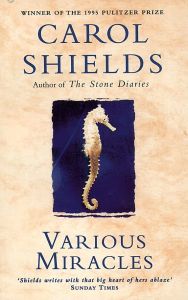 Various Miracles was published in 1985, when Shields was 50. She was still a decade from finding success for her best-known works, The Stone Diaries and Larry’s Party, and so far had published poetry, criticism and several novels. The title story’s string of coincidences and the final story, sharing a title with one of her poetry volumes (“Others”), neatly express the book’s concerns with chance and how we relate to other people and imagine their lives. I was disoriented by first starting the UK paperback (Fourth Estate, 1994). I had no idea it’s a selection; a number of the stories appear in the Collected volume under her next title, The Orange Fish. Before I realized that, I’d read two interlopers, including “Hazel,” which also spotlights the theme of coincidence. “Everything is an accident, Hazel would be willing to say if asked. Her whole life is an accident, and by accident she has blundered into the heart of it,” stumbling into a sales career during her widowhood.
The third story, indeed, is explicitly called “Accidents,” and “Scenes” echoes the opening story by presenting Frances’ life as a process of arbitrary accretion. “There are people who think such scenes are ornaments suspended from lives that are otherwise busy and useful. Frances knows perfectly well that they are what a life is made of, one fitting against the next like English paving-stones.” I asked myself whether such a vision of life rang true for me, comparing with two comedians’ diaries I’m reading at the moment (A Carnival of Snackery by David Sedaris and Went to London, Took the Dog by Nina Stibbe) and with my mother’s journals, and pondering what’s more important: Random happenings and encounters? (That’s mostly where those authors locate humour.) Or what one does, thinks and feels? I prefer self-reflection on who one is becoming, but the recording of one’s life and times is also valuable. There’s a balance to be struck there somewhere; I’m still working on it in my own journal.
I noted a few other recurring elements in the stories: travel, especially to France (4 stories); male narrators or main characters (5 stories); and an obsession with language. The irony to “The Metaphor Is Dead—Pass It On” is that the professor’s diatribe is full of figurative language. The writer antihero of “Flitting Behaviour,” Meershank, is insufferable with his puns and lavish prose, but learns the worth of simple phrases as he and his loved ones compare their hearing of his wife’s last words. “Words” started out like a climate fable, but I decided it’s more of an allegorical satire about words as so much hot air. Such flash fictions, also including “Pardon” (a spate of apologies), “Invitations” (a feast-or-famine social calendar), and “Purple Blooms” (everyone’s reading the same Mexican poet), felt slight. In a book of 21 stories, some are always bound to pale.
By contrast, my favourites went deep with a few characters, or reflected on the writer’s craft. “Fragility” has a couple moving from Toronto to Vancouver, starting a new life and looking for a house that gives off good vibrations (not “a divorce house”). The slow reveal of the catalyzing incident with their son is devastating. With “Others,” Shields (or editors) saved the best for last. On honeymoon in France, Robert and Lila help a fellow English-speaking couple by cashing a check for them. Every year thereafter, Nigel and Jane send them a Christmas card, winging its way from England to Canada. Robert and Lila romanticize these people they met all of once. The plot turns on what is in those pithy 1–2-sentence annual updates versus what remains unspoken. “Love so Fleeting, Love so Fine,” too, involves filling in an entire backstory for an unknown character. Another favourite was “Poaching,” about friends touring England and picking up hitchhikers, whose stories they appropriate.
This doesn’t always feel like a cohesive collection; I think it could stand to lose a good 5–6 stories and perhaps group the others more effectively. But for the way her central subjects were starting to coalesce, and for a handful of very powerful stories, I’d rate it more highly than I originally did, and can recommend that Shields fans seek it out.
My original rating (c. 2008):
My rating now: 
Best Books from 2023
Keeping it simple again this year with one post covering all genres: the 24 (or, actually 26) current-year releases that stood out the most for me. (No rankings; anything from my Best of First Half that didn’t make it through can be considered a runner-up, along with The Librarianist.)


Fiction
 The New Life by Tom Crewe: Two 1890s English sex researchers (based on John Addington Symonds and Havelock Ellis) write a book called Sexual Inversion drawing on ancient Greek history and containing case studies of homosexual behaviour. Oscar Wilde’s trial puts everyone on edge; not long afterwards, their own book becomes the subject of an obscenity trial, and each man has to decide what he’s willing to give up in devotion to his principles. This is deeply, frankly erotic stuff, and, on the sentence level, just exquisite writing.
 The Vaster Wilds by Lauren Groff: Groff’s fifth novel combines visceral detail and magisterial sweep as it chronicles a runaway Jamestown servant’s struggle to endure the winter of 1610. Flashbacks to traumatic events seep into her mind as she copes with the harsh reality of life in the wilderness. The style is archaic and postmodern all at once. Evocative and affecting – and as brutal as anything Cormac McCarthy wrote. A potent, timely fable as much as a historical novel.
Counting as one this thematic trio of women’s true crime pastiches; I liked the Makkai best.
Penance by Eliza Clark: A compelling account of teenage feuds and bullying that went too far and ended in murder. It’s a pretty gruesome crime, but memorable, not least because it coincided with the day of the Brexit vote. I loved Clark’s portrait of Crow-on-Sea, a down-at-heel seaside town near Scarborough, and the depth of character that comes through via interviews and documents. She also nails teenage dialogue and social media use, podcasts, true crime obsession and so on.


 Bright Young Women by Jessica Knoll: An engrossing story of a Type A sorority president whose perfect life goes askew when a serial killer targets the house and kills two of her friends. She and the domestic partner of one of his previous victims are determined to see “the Defendant” brought to justice. 1970s Florida/Washington were interesting settings, and I liked the focus on the victims. The judge in the Defendant’s case lamented that such a bright young man would come to grief; think of the bright young women he extinguished instead.
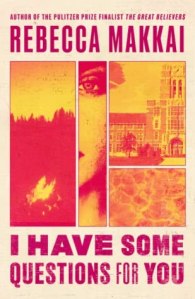
I Have Some Questions for You by Rebecca Makkai: When an invitation comes from her boarding school alma mater, Granby, to teach a two-week course on podcasting, Bodie indulges her obsession with the 1995 murder of her former roommate. Makkai has taken her cues from the true crime genre and constructed a convincing mesh of evidence and theories. She so carefully crafts her pen portraits, and so intimately involves us in Bodie’s psyche, that it’s impossible not to get invested. This is timely, daring, intelligent, enthralling storytelling.
 Sidle Creek by Jolene McIlwain: In this debut collection of 22 short stories, loosely linked by their location in the Appalachian hills in western Pennsylvania and a couple of recurring minor characters, McIlwain softens the harsh realities of addiction, poverty and violence with the tender bruises of infertility and lost love. Grief is a resonant theme in many of the stories, with pregnancy or infant loss a recurring element. At times harrowing, always clear-eyed, these stories are true to life and compassionate about human foibles and animal pain.
 Mrs S by K Patrick: Patrick’s unnamed narrator is an early-twenties Australian butch lesbian who has come to England to be a matron at a girls’ boarding school. Mrs S is the headmaster’s wife, perhaps 20 years her senior. A heat wave gives a sultry atmosphere as hints of attraction between them give way to explicit scenes. Summer romances never last, but their intensity is legendary, and this feels like an instant standard. Not your average coming-of-age story, seduction narrative or cougar stereotype. It’s a new queer classic.
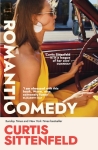 Romantic Comedy by Curtis Sittenfeld: Through her work as a writer for a sketch comedy show modelled on Saturday Night Live, Sally Milz meets Noah Brewster, a pop star with surfer-boy good looks. Plain Jane getting the hot guy – that never happens, right? In fact, Sally has a theory about this very dilemma… As always, Sittenfeld’s inhabiting of a first-person narrator is flawless, and Sally’s backstory and Covid-lockdown existence endeared her to me. Could this be called predictable? Well, what does one want from a romcom?
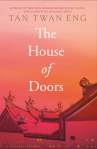 The House of Doors by Tan Twan Eng: In 1921, “Willie” Somerset Maugham and his secretary/lover, Gerald, stay with old friends Robert and Lesley Hamlyn in Penang, Malaysia. Willie’s marriage is floundering and he faces financial ruin. He needs a story that will sell and gets one when Lesley starts recounting the momentous events of 1910: volunteering at the party office of Dr Sun Yat Sen and trying to save her friend from a murder charge. Tan weaves it all into a Maugham-esque plot with sumptuous scene-setting and atmosphere.
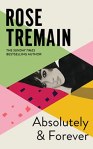 Absolutely and Forever by Rose Tremain: At age 15, Marianne falls in love. She imagines her romance with Simon as a grand adventure (and escape from her parents’ ordinariness), but his post-school life in Paris doesn’t have room for her. Much changes over the next 15 years, but never her attachment to her first love. This has the chic, convincing 1960s setting of Tessa Hadley’s work, and Marianne’s droll narration is a delight. It put me through an emotional wringer – no cheap tear-jerker but a tender depiction of love in all its forms.
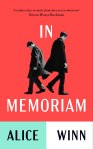 In Memoriam by Alice Winn: Heartstopper on the Western Front; swoon! Will Sidney Ellwood and Henry Gaunt both acknowledge that this is love and not just sex, as it is for so many teenage boys at their English boarding school? And will one or both survive the trenches of the First World War? Winn depicts the full horror of war, but in between there is banter, friendship and poetry. Some moments are downright jolly. This debut is obsessively researched, but Winn has a light touch with it. Engaging, thrilling, and, yes, romantic.
Nonfiction
 All My Wild Mothers by Victoria Bennett: A lovely memoir about grief and gardening, caring for an ill child and a dying parent. The book is composed of dozens of brief autobiographical, present-tense essays, each titled after a wildflower with traditional healing properties. The format realistically presents bereavement and caring as ongoing, cyclical challenges rather than one-time events. Sitting somewhere between creative nonfiction and nature essays, it’s a beautiful read for any fan of women’s life writing.
 Monsters by Claire Dederer: The question posed by this hybrid work of memoir and cultural criticism is “Are we still allowed to enjoy the art made by horrible people?” It begins, in the wake of #MeToo, by reassessing the work of film directors Roman Polanski and Woody Allen. The book is as compassionate as it is incisive. While there is plenty of outrage, there is also much nuance. Dederer’s prose is forthright and funny; lucid even when tackling thorny issues. Erudite, empathetic and engaging from start to finish.
 Womb by Leah Hazard: A wide-ranging and accessible study of the uterus, this casts a feminist eye over history and future alike. Blending medical knowledge and cultural commentary, it cannot fail to have both personal and political significance for readers of any gender. The thematic structure of the chapters also functions as a roughly chronological tour of how life with a uterus might proceed: menstruation, conception, pregnancy, labour, caesarean section, ongoing health issues, menopause. Inclusive and respectful of diversity.
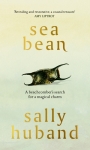 Sea Bean by Sally Huband: Stories of motherhood, the quest to find effective treatment in a patriarchal medical system, volunteer citizen science projects, and studying Shetland’s history and customs mingle in a fascinating way. Huband travels around the archipelago and further afield, finding vibrant beachcombing cultures. In many ways, this is about coming to terms with loss, and the author presents the facts about climate crisis with sombre determination. She writes with such poetic tenderness in this radiant debut memoir.
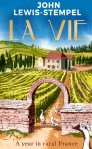 La Vie by John Lewis-Stempel: The author has written much about his Herefordshire haunts, but he’s now relocated permanently to southwest France (La Roche, in the Charente). He proudly calls himself a peasant farmer, growing what he can and bartering for much of the rest. La Vie chronicles a year in his quest to become self-sufficient. It opens one January and continues through the December, an occasional diary with recipes. It’s a peaceful, comforting read that’s attuned to the seasons and the land. Lewis-Stempel’s best book in an age.
 All of Us Together in the End by Matthew Vollmer: In 2019, Vollmer’s mother died of complications of Alzheimer’s and Parkinson’s. Months later, his father reported blinking lights in the woods near the family cemetery. Although Vollmer had left the Seventh-Day Adventist Church in college, his religious upbringing influenced his investigation, which overlapped with COVID-19. Grief, mysticism, and acceptance of the unexplained are resonant themes. An unforgettable record of “a collision with the ineffable.”
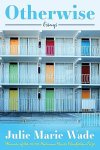 Otherwise by Julie Marie Wade: Nine intricate autobiographical essays reflect on risk, bodily autonomy, and poetry versus prose. A series of meditations composed across Wade’s thirties arranges snapshots of her growing frustration with gendered stereotypes. In particular, she interrogates her rosy childhood notions of marriage. As she explored feminism and accepted her lesbian identity—though not before leaving a man at the altar—she found ways to be “a secular humanist by day and a hopeless romantic by night.” Superb.
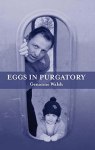 Eggs in Purgatory by Genanne Walsh: This autobiographical essay tells the story of the last few months of her father’s life. Aged 89, he lived downstairs from Walsh and her wife in San Francisco. He was quite the character: idealist, stubborn, outspoken; a former Catholic priest. Although he had no terminal conditions, he was sick of old age and its indignities and ready to exit. The task of a memoir is to fully mine the personal details of a situation but make of it something universal, and that’s just what she does here. Stunning.
Poetry
 More Sky by Joe Carrick-Varty: In this debut collection, the fact of his alcoholic father’s suicide is inescapable. The poet alternates between an intimate “you” address and third-person scenarios, auditioning coping mechanisms. His frame of reference is wide: football, rappers, Buddhist cosmology. The word “suicide” itself is repeated to the point where it becomes just a sibilant collection of syllables. The tone is often bitter, as is to be expected, but there is joy in the deft use of language.
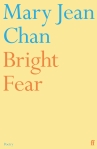 Bright Fear by Mary Jean Chan: This follow-up to Flèche takes up many of the same foundational subjects: race, family, language and sexuality. But this time, the pandemic is the lens through which all is filtered. At a time when Asian heritage merited extra suspicion, English was both a means of frank expression and a source of ambivalence. At the centre of the book, “Ars Poetica,” a multi-part collage incorporating lines from other poets, forms a kind of autobiography in verse. Chan also questions the lines between genres. Excellent.
 Lo by Melissa Crowe: This incandescent autobiographical collection delves into the reality of sexual abuse and growing up in rural poverty. Guns are insidious, used for hunting or mass shootings. Trauma lingers. “Maybe home is what gets on you and can’t / be shaken loose.” The collection is so carefully balanced in tone that it never feels bleak. In elegies and epithalamiums (poems celebrating marriage), Crowe honors family ties that bring solace. The collection has emotional range: sensuality, fear, and wonder at natural beauty.
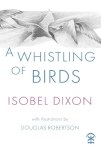 A Whistling of Birds by Isobel Dixon: I was drawn to this for its acknowledged debt to D.H. Lawrence’s Birds, Beasts and Flowers. Snakes, bees, bats and foxes are some of the creatures that scamper through the text. There are poems for marine life, fruit and wildflowers. You get a sense of the seasons turning, and the natural wonders to prize from each. Dixon’s poetry is formal yet playful, the structures and line and stanza lengths varying. There are portraits and elegies. The book is in collaboration with Scottish artist Douglas Robertson. A real gem.
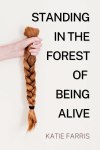 Standing in the Forest of Being Alive by Katie Farris: This debut collection addresses the symptoms and side effects of breast cancer treatment at age 36, but often in oblique or cheeky ways – it can be no mistake that “assistance” appears two lines before a mention of hemorrhoids, for instance, even though it closes an epithalamium distinguished by its gentle sibilance (Farris’s husband is Ukrainian American poet Ilya Kaminsky.) She crafts sensual love poems, and exhibits Japanese influences. (Discussed in my review essay for The Rumpus.)
 The House of the Interpreter by Lisa Kelly: Kelly is half-Danish and has single-sided deafness, and her second collection engages with questions of split identity. One section ends with the Deaf community’s outrage that the Prime Minister’s Covid briefings were not translated into BSL. Bizarre but delightful is the sequence of alliteration-rich poems about fungi, followed by a miscellany of autobiographical poems full of references to colour, language, nature and travel.
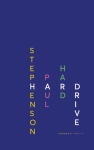 Hard Drive by Paul Stephenson: This wry, wrenching debut collection is an extended elegy for his partner, Tod Hartman, an American anthropologist who died of heart failure at 38. There’s every style, tone and structure imaginable here. Stephenson riffs on his partner’s oft-misspelled name (German for death), and writes of discovery, autopsy, sadmin and rituals. In “The Only Book I Took” he opens up Tod’s copy of Joan Didion’s The Year of Magical Thinking – which came from Wonder Book, the bookstore chain I worked at in Maryland!
Okay, twist my arm … if I had to pick my overall books of the year, I’d concur with the Times in picking The New Life. In nonfiction: Monsters. In poetry: Standing in the Forest of Being Alive.


Have you read any of my favourites? What 2023 releases do I need to catch up on right away?
Preposterous #NovNov23 Catch-Up Post
I have a big pile of novellas I read last month but never wrote about, plus a few more I’ve sneaked in by finishing them over the past couple of days. I tweaked my shoulder last weekend and the discomfort has moved into my neck, making daily life, and sleep, difficult. A taste of what it’s like to live with chronic pain, I suppose. Add in the freezing temperatures of recent days and I’ve been feeling pretty sorry for myself and haven’t succeeded in sitting at a computer for the time required to write at least a bit about these short books. But as today is the day our link-up finishes, I’m tucked up in bed with laptop, electric blanket, heater, cat, cup of tea and ice pack, ready to do all 16 the best justice I can through a paragraph each.
Fiction:
In the Sweep of the Bay by Cath Barton (2020)
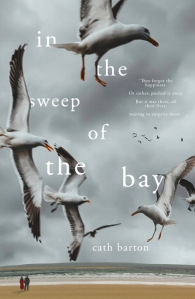 Susan put this on my radar and I bought it in publisher Louise Walters Books’ closing-down sale. Set in Morecambe, this bittersweet story of a half-century marriage and the figures on its margins – co-workers, children, even strangers – is both ambitious and intimate. Ted and Rene Marshall marry in the 1950s and soon drift into drudgery and traditional gender roles; “They forgot the happiness. Or rather, they pushed it away.” While Ted becomes a celebrated ceramics designer in the family company, Rene stagnates at home. It is not so much suspected infidelity as simply taking each other for granted that threatens their relationship. Barton moves through the decades and varies the perspective, letting us hear from one of the Marshalls’ daughters and giving kind attention to a gay couple. Strictly Come Dancing fans and those familiar with the northwest might take particular pleasure, but I enjoyed this quiet book reminiscent of Anne Tyler’s French Braid and (though less political) Jonathan Coe’s Bournville. (New purchase) [104 pages]
The Visitor by Maeve Brennan (2000)
 This posthumous novella was written in the 1940s but never published in Brennan’s lifetime. From Dublin, she was a longtime New Yorker staff member and wrote acclaimed short stories. After her mother’s death, Anastasia King travels from Paris, where the two set up residence after leaving her father, to Ireland to stay in the family home with her grandmother. Anastasia considers it a return, a homecoming, but her spiteful grandmother makes it clear that she is an unwelcome interloper. Mrs King can’t forgive the wrong done to her son, and so won’t countenance Anastasia’s plan to repatriate her mother’s remains. Rejection and despair eat away at Anastasia’s mental health (“She saw the miserable gate of her defeat already open ahead. There only remained for her to come up to it and pass through it and be done with it”) but she pulls herself together for an act of defiance. Most affecting for me was a scene in which we learn that Anastasia is so absorbed in her own drama that she does not fulfill the simple last wish of a dying friend. This brought to mind James Joyce’s The Dead. (Secondhand purchase – The Bookshop, Wigtown) [81 pages]
Bear by Marian Engel (1976)
 If you’ve heard of this, it’ll be for the fact that the main character – Lou, a librarian sent to archive the holdings of an octagonal house on an island one summer – has sex with a bear. That makes it sound much more repulsive and/or titillating than it actually is. The further I read the more I started to think of it as an allegory for women’s awakening; perhaps the strategy inspired Melissa Broder’s The Pisces (stuffed full of sex with a merman). “I have an odd sense of being reborn,” Lou writes to her boss, the Institute director, with whom she’d been having an affair. The bear lives in an outbuilding and at first Lou is indifferent, only feeding him as necessary. Then he becomes a friend, joining her for swims. Then he comes into the house. Bestiality is a taboo for a reason, but what mostly bothers me is the lack of mutuality, the sense of taking advantage. I’m also wary of stories in which animals have a primarily instrumental or metaphorical role. Still, this was a solid read, offbeat and nearly as shocking today as when it first appeared. (Secondhand purchase online) [167 pages]
So Late in the Day by Claire Keegan (2023)
 Several of us reviewed this for #NovNov though unsure it counts: in the UK the title story (originally for the New Yorker) was published in a standalone volume by Faber, while the U.S. release includes two additional earlier stories; I read the latter. The title story has Cathal spending what should have been his wedding weekend moping about Sabine calling off their engagement at the last minute. It’s no mystery why she did: his misogyny, though not overt, runs deep, most evident in the terms in which he thinks about women. And where did he learn it? From his father. (“The Long and Painful Death” is from Keegan’s second collection, Walk the Blue Fields, and concerns a woman on a writing residency at an author’s historic house in Ireland. She makes a stand for her own work by refusing to cede place to an entitled male scholar. The final story is “Antarctica,” the lead story in that 1999 volume and a really terrific one I’d already experienced before. It’s as dark and surprising as an early Ian McEwan novel.) Keegan proves, as ever, to be a master at portraying emotions and relationships, but the one story is admittedly slight on its own, and its point obvious. (Read via Edelweiss) [64 pages]
Swallowing Geography by Deborah Levy (1993)
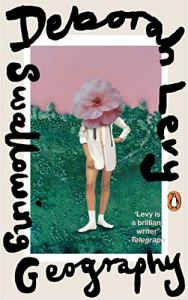 “She is Europe’s eerie child, and she is part of the storm.” J.K. is a young woman who totes her typewriter around different European locations, sleeps with various boyfriends, hears strangers’ stories, and so on. Many of the people she meets are only designated by an initial. By contrast, the most fully realized character is her mother, Lillian Strauss. The chapters feel unconnected and the encounters within them random, building to nothing. Though a bit like Crudo, this has very little detail to latch onto and so was pretentious in its opacity. I’ve generally gotten on much better with Levy’s nonfiction (see below) than her fiction. This, along with the Keegan (above), was my chosen train entertainment for the Booker Prize evening. I got so little out of it that it seemed like wasted reading time. Here’s a decent excerpted passage: “The arrogance of metaphor when facts save people’s lives. The succour of metaphor when facts inadequately describe people’s lives.” (Public library) [83 pages]
Nonfiction:
Starting with two from the Bloomsbury Object Lessons series, a great source of short monographs. These have been among my favourites so far.
Grave by Allison C. Meier (2023)
 Meier is a cemetery tour guide in Brooklyn, where she lives. She surveys American burial customs in particular, noting the lack of respect for Black and Native American burial grounds, the Civil War-era history of embalming, the increasing popularity of cremation, and the rise of garden cemeteries such as Mount Auburn in Cambridge, Massachusetts, which can serve as wildlife havens. The mass casualties and fear of infection associated with Covid-19 brought back memories of the AIDS epidemic, especially for those in New York City. Meier travels to a wide range of resting places, from potter’s fields for unclaimed bodies to the most manicured cemeteries. She also talks about newer options such as green burial, body composting, and the many memorial objects ashes can be turned into. I’m a dedicated reader of books about death and so found this fascinating, with the perfect respectful and just-shy-of-melancholy tone. It’s political and philosophical in equal measures. (Read via NetGalley) [168 pages]
Pregnancy Test by Karen Weingarten (2023)
 Laboratory pregnancy tests have been available since the 1930s and home pregnancy tests – the focus here – since the 1970s. All of them work by testing urine for the hormone hCG (human chorionic gonadotropin). What is truly wild is that pregnancy used to be verifiable only with laboratory animals – female mice and rabbits had to be sacrificed to see if their ovaries had swelled after the injection of a woman’s urine; later, female Xenopus toads were found to lay eggs in response, so didn’t need to be killed. Home pregnancy kits were controversial and available in Canada before the USA because it was thought that they could be unreliable or that they would encourage early abortions. Weingarten brings together the history, laypeople-friendly science, and cultural representations (taking a pregnancy test is excellent TV shorthand) in a readable narrative and makes a clear feminist statement: “the home pregnancy test gave back to women what should have always been theirs: first-hand knowledge about how their bodies worked” and thus “had the potential to upend a paternalistic culture.” (Read via NetGalley) [160 pages]
And from a different Bloomsbury series for monographs about seminal albums, 33 1/3:
Jesus Freak by Will Stockton and D. Gilson (2019)
 The dc Talk album Jesus Freak (1995) is the first CD I ever owned. My best friend and I listened to it (along with Bloom by Audio Adrenaline and Take Me to Your Leader by Newsboys) so many times that we knew every word and note by heart. So it’s hard for me to be objective rather than nostalgic; I was intrigued to see what two secular academics would have to say. Crucially, they were teenage dc Talk fans, now ex-Evangelicals and homosexual partners. As English professors, their approach is to spot musical influences (Nirvana on the title track; R&B and gospel elsewhere), critically analyse lyrics (with “Colored People” proving problematic for its “neoliberal multiculturalism and its potential for post-racial utopianism”), and put a queer spin on things. For those who don’t know, dc Talk were essentially a boy band with three singers, one Black and two white – one of these a rapper. Stockton and Gilson chronicle the confusion of living with a same-sex attraction they couldn’t express as teens, and cheekily suggest there may have been something going on between dc Talk members Toby McKeehan and Michael Tait, who were roommates at Liberty University and apparently dismantled their bunk beds so they could sleep side by side. Hmmm! I was interested enough in the subject matter to overlook the humanities jargon. (Birthday gift from my wish list last year) [132 pages]
And the rest:
Fifty Days of Solitude by Doris Grumbach (1994)
 Grumbach died last year at age 104. This was my third of her books; I read two previous memoirs, Extra Innings and The Presence of Absence, when they were brought back into print as Open Road Media e-books. I knew of Grumbach through her association with May Sarton, and the two in fact had a lot in common, including lesbianism, living in Maine and writing about older age. I was expecting something on a par with Sarton’s Journal of a Solitude, one of my favourite books, but this fell short in comparison. Grumbach spent a month and a half alone in Maine during the winter of 1993 while her partner, Sybil, was away amassing stock for their bookstore. The book is a collection of unconnected meditations about nature, the cold, creativity and so on. She finds herself writing fiction so the characters can keep her company, and notes “how much more I was aware of my vices.” Although she tries to avoid the news, word reaches her of acquaintances’ demises, and she recalls the recent death from AIDS of a young local man. Amusingly, she rereads Bear (see above) during the 50 days. Some atmosphere, but low on insight. (Secondhand purchase – Wonder Book and Video, Hagerstown) [114 pages]
Things I Don’t Want to Know: On Writing by Deborah Levy (2013)
 It feels like I made an error by reading Levy’s “Living Autobiography,” out of order. I picked up the middle volume of the trilogy, The Cost of Living, for #NovNov in 2021 and it ended up being my favourite nonfiction read of that year. I then read part of the third book, Real Estate, last year but set it aside. And now I’ve read the first because it was the shortest. It’s loosely structured around George Orwell’s four reasons for writing: political purpose, historical impulse, sheer egoism and aesthetic enthusiasm. The frame story has her flying to Majorca at a time when she was struggling with her mental health. She vaguely follows in the footsteps of George Sand and then pauses to tell a Chinese shopkeeper the story of her upbringing in apartheid-era South Africa and the family’s move to London. Although I generally admire recreations of childhood and there are some strong pen portraits of minor characters, overall there was little that captivated me here and I was too aware of the writerly shaping. (Secondhand purchase – 2nd & Charles, Hagerstown) [111 pages]
The Private Life of the Hare by John Lewis-Stempel (2019)
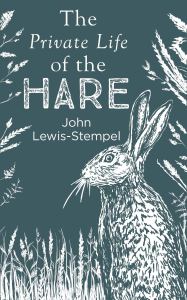 I reviewed a couple of JLS’s species-specific monographs for #NovNov in 2018: The Secret Life of the Owl and The Glorious Life of the Oak. There’s a similar range of material here: anatomy, natural history and cultural significance, including in poetry. There are chapters on hunting, the hare as food, and its appearances in myth and religion. I was engaged about half of the time; I tended to skip over longer excerpts from historical documents. The reliance on lengthy quotations and use of bullet points make it feel like a half-finished research project, with the kind of information you could find anywhere else. Too many of his recent books have felt like they were rushed into print. I would only pick this up if you’re particularly fascinated by hares. (Public library) [99 pages]
The Cancer Journals by Audre Lorde (1980)
 I’ve read so many cancer stories that it takes a lot to make one stand out. This feels like a random collection of documents rather than a coherent memoir. One of the three essays was originally a speech, and two were previously printed in another of her books. Lorde was diagnosed with breast cancer in 1978 and had a mastectomy. A Black lesbian feminist, she resisted wearing prostheses and spoke up about the potential environmental causes of breast cancer that need to be addressed in research (“I may be a casualty in the cosmic war against radiation, animal fat, air pollution, McDonald’s hamburgers and Red Dye No. 2”). Her actual journal entries make up little of the text, which is for the best because fear and pain can bring out the cliches in us – but occasionally a great quote like “if bitterness were a whetstone, I could be sharp as grief.” Another favourite line: “Pain does not mellow you, nor does it ennoble, in my experience.” I’m keen to read her memoir Zami. (University library) [77 pages]
A Month in Siena by Hisham Matar (2019)
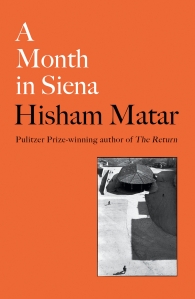 I’d not read Matar before I spotted this art book-cum-memoir and thought, why not. A Libyan American novelist who lives in London, Matar had long been fascinated by the Sienese School of painting (13th to 15th centuries), many of whose artists depicted biblical scenes or religious allegories – even though he’s not a Christian. He spent a month in Italy immersed in the art he loves; there are 15 colour reproductions here. His explications of art history are generalist enough to be accessible to all readers, but I engaged more with the glimpses into his own life. For instance, he meets a fellow Arabic speaker and they quickly form a brotherly attachment, and a Paradise scene gives him fanciful hope of being reunited with his missing father – the subject of his Folio Prize-winning memoir The Return, which I’d like to read soon. His prose is beautiful as he reflects on history, death and how memories occupy ‘rooms’ in the imagination. A little more interest in the art would have helped, though. (Little Free Library) [118 pages]
A Childhood in Scotland by Christian Miller (1981)
 I had high hopes for this childhood memoir that originally appeared in the New Yorker and was reprinted as part of the Canongate Classics series. But I soon resorted to skimming as her recollections of her shabby upper-class upbringing in a Highlands castle are full of page after page of description and dull recounting of events, with few scenes and little dialogue. This would be of high historical value for someone wanting to understand daily life for a certain fraction of society at the time, however. When Miller’s father died, she was only 10 and they had to leave the castle. I was intrigued to learn from her bio that she lived in Newbury for a time. (Secondhand purchase – Barter Books) [98 pages]
Here and Now: Living in the Spirit by Henri J.M. Nouwen (1994)
 This collection of micro-essays under themed headings like “Living in the Present” and “Suffering” was a perfect introduction to Nouwen’s life and theology. The Dutch Catholic priest lived in an Ontario community serving the physically and mentally disabled, and died of a heart attack just two years after this was published. I marked out many reassuring or thought-provoking passages. Here’s a good pre-Christmas one:
“God became a little child in the midst of a violent world. Are we surprised by joy or do we keep saying: ‘How nice and sweet, but the reality is different.’ What if the child reveals to us what is really real?”
I was taken by the ideas that the life of compassion is one of “downward mobility” and that inner freedom only comes when you don’t judge anyone. He encourages readers to not live in a past of shame and regret, but to be grateful for opportunities for God’s mercy and guidance. Very peaceful and readable; a good bedside devotional book. (Free from my stepfather) [175 pages] 
De Profundis by Oscar Wilde (1897)
 My only reread for the month. Wilde wrote this from prison. No doubt he had a miserable time there, but keeping in mind that he was a flamboyant dramatist and had an eye to this being published someday, this time around I found it more exaggerated and self-pitying than I had before. “Suffering is one very long moment. … Where there is sorrow there is holy ground,” he writes, stating that he has found “harmony with the wounded, broken, and great heart of the world.” He says he’s not going to try to defend his behaviour … but what is this but one extended apologia and humble brag, likening himself to a Greek tragic hero (“The gods had given me almost everything. But I let myself be lured into long spells of senseless and sensual ease. I amused myself with being a flâneur, a dandy, a man of fashion”) and even to Christ in his individuality as well as in his suffering at the hands of those who don’t understand him (the scene where he was pilloried consciously mimics a crucifixion tableau). As a literary document, it’s extraordinary, but I didn’t buy his sincerity. He feigns remorse but, really, wasn’t sorry about anything, merely sorry he got caught. (Free from a neighbour) [151 pages]
Original rating (2011):
Rating now:
Average:
Which of these have you read?
And which do you want to read? (You may choose no more than 4!)
In total, I read 27 novellas this November – close to my 2021 record of 29. The highlights included the Barton, Meier, Nouwen and Weingarten above plus Train Dreams by Denis Johnson and Western Lane by Chetna Maroo, but the best of the lot was Absolutely and Forever by Rose Tremain.
Coming right up, final statistics on the month’s participants and posts!
Bodily Harm and Stone Mattress by Margaret Atwood (#MARM)
It’s my sixth year participating in the annual Margaret Atwood Reading Month (#MARM), hosted by indomitable Canadian blogger Marcie of Buried in Print. In previous years, I’ve read Surfacing and The Edible Woman, The Robber Bride and Moral Disorder, Wilderness Tips, and The Door; and reread The Blind Assassin. Wish a happy belated birthday to MA, who turned 84 earlier this month. As it happens, today is my husband’s 40th birthday and I am tapping away at this in the passenger’s seat of the car as we hurtle through the freezing fog toward Slimbridge for some wintry birdwatching. I spent much of yesterday making his German chocolate cake (delicious but very involved) from a Hummingbird Bakery cookbook.

Bodily Harm (1982)
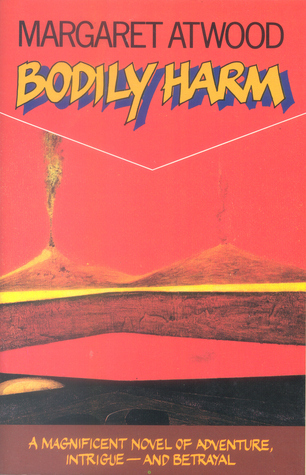 I had literally never heard of her fifth novel before I spotted it on the library catalogue and decided to have a go. The fact that nobody talks about it is evidence, I think, of an overbaked plot and more successful treatment of her trademark themes in other books. Nonetheless, it was perfectly readable and had its highlights. Renata Wilford, “Rennie,” is a journalist for hire from Ontario who has recently had her life turned upside down by breast cancer and the departure of her boyfriend, Jake. She flies to the Caribbean island nation of St. Antoine to write a travel piece, coinciding with the first elections since the British left. It’s a febrile postcolonial setting of shantytowns and shortages. Rennie tries to focus on boat trips, cocktails and beach lounging, but Dr. Minnow, who she met on the plane, is determined to show her the reality of his country – cold truths that include assassination and imprisonment.
Alongside the thriller plot are the more expected literary flashbacks to Rennie’s childhood, her life with Jake, and the cancer surgery and her crush on her surgeon. Her old friend Jocasta is an amusingly punky feminist and a counterpoint to Lora, the fellow Canadian and bad girl Rennie meets in St. Antoine. There are no speech marks in the sections set in the past, and there are some passages of direct monologue from Lora recounting her abusive upbringing. I felt Atwood was stretching to make points about cultural imperialism and violence, whereas the title is more applicable to the physical threats women face from illness and misogyny:
“The body, sinister twin, taking its revenge for whatever crimes the mind was supposed to have committed on it. Nothing had prepared her for her own outrage, the feeling that she’d been betrayed by a close friend. She’d given her body swimming twice a week, forbidden it junk food and cigarette smoke, allowed it a normal amount of sexual release. She’d trusted it. Why then had it turned against her?”
(University library)
Stone Mattress (2014)
I was tempted to call this my first ever audiobook, but that is not technically true: 11 years ago, we had a David Attenborough book on in the car on the way to Cornwall. However, this definitely felt like a landmark. I’d long meant to catch up on Atwood’s last but one story collection, but my library had withdrawn the physical copy and only had the book on CD. How would I fit it into my life, I wondered? Others have told me they listen to audiobooks while commuting, cooking or cleaning … er, I don’t really do any of those! But I amassed a goodly list of tasks involving my hands but not much of my brain to complete while listening to the CDs through my PC speakers:
• Prepared two clothing recycling parcels (37 socks off to the London Sock Company’s Sock Amnesty programme; 3 shirts and 2 sets of pyjamas to Rapanui’s 100% cotton recycling scheme)
• Mended 13 socks, 4 shirts, 3 gloves, 2 cardigans, a shoulder bag strap, and a purse strap and lining
• Framed a photo for a Christmas gift
• Baked the aforementioned German chocolate cake
• Wrapped my husband’s birthday presents
• Wrote a couple of Christmas cards
 Nonetheless, I found it frustrating that it took so long to get through a story/disc, surely longer than I would have spent reading with my eyes (and so I have only managed 7.5 of 9 stories so far), and it was slightly harder for me to concentrate. It was also disorienting to not have visual cues, such that I had no idea how much of a story was remaining, and sometimes didn’t know how place or character names were spelt. One interesting novelty, though, was the reader voices. There are five different voice actors on this audiobook, three women (including MA herself on the title story) and two men. It is interesting to ponder how their intonation might affect my reaction to a story. For instance, Rob Delaney’s deadpan delivery really makes “The Freeze-Dried Groom,” a witty work of mild horror in which a fraudulent antiques dealer finds an entire wedding, complete with groom, abandoned in a storage unit.
As in a number of Atwood’s later works, recurring themes of ageing and the writer’s craft intertwine. I most enjoyed the opening linked trio of “Alphinland,” “Revenant” and “Dark Lady,” which orbit SFF writer Constance and her one-time lover, macho poet Gavin. The first story has Constance slipping between her fictional world and the real one, in which a winter storm is impending and her husband Ewan has been dead for four days. In “Revenant,” an elderly Gavin holds court as a scholar comes to interview him. Imagine his ire when he learns she is there to question him about Constance for her PhD research. “Dark Lady” brings the three major women from Gavin’s life into a face-off.
Funniest was “I Dream of Zenia with the Bright Red Teeth,” a The Robber Bride mini-sequel in which three ageing women fend off an interfering male with the help of a potential reincarnation of their late friend. I was reminded of the setup of Charlotte Wood’s The Weekend, not least for the presence of an annoying dog. Least engaging has been “The Dead Hand Loves You,” about Jack Dace, the author of an international horror classic who has always resented having to share his profits four ways with his early adulthood housemates because of his promise to catch up on his back rent from his creative earnings. I thought this one would never end. In general, though, this has been classic MA, mixing realism and fantasy in clever and witty ways. And I’m sure it won’t be my last audiobook. I was gifted an Audible book for my birthday by a blind friend, to start with. Now to store up some more busy work… (Public library audiobook)
Short Stories in September Roundup: Munro, Ulrich; Virago Anthology
This comes a few days later than I intended, but better late than never. I’ve been focusing on short stories in September for the last eight years. In September 2021 I read 12 short story collections; last year it was 11.5; this year I finished 11, so pretty much par for the course, and pushing my year-to-date total to 30 story collections – not bad going for someone who feels like she hardly ever reads stories and doesn’t seek them out. This year’s reviews are here, here and here.
Hateship, Friendship, Courtship, Loveship, Marriage by Alice Munro (2001)
I always think I’ve never read Munro before, but that’s not the case. A decade or more ago I read Lives of Girls and Women. The ironic thing is that I chose it because I thought it was the odd one out in her oeuvre, being a novel rather than short stories. In fact, it’s a linked story collection, and really they might as well be discrete stories. That book left no impression, but I’d happened to accumulate several more Munro collections over the years and, especially after she won the Nobel, felt delinquent for not reading her.
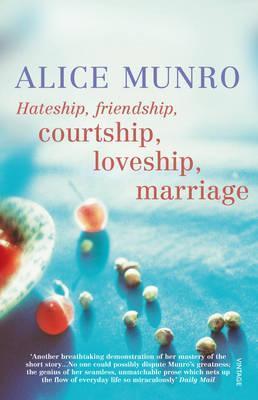 There are nine stories in the 320-page volume, so the average story here is 30–35 pages – a little longer than I tend to like, but it allows Munro to fill in enough character detail that these feel like miniature novels; they certainly have all the emotional complexity. Her material is small-town Ontario and the shifts and surprises in marriages and dysfunctional families.
More commonly, she employs an omniscient third person to allow her to move between minds, yet I found that the three first-person stories were among the most memorable: in “Family Furnishings,” a woman recalls the encounter with her father’s cousin that made her resolve to be a writer; in “Nettles,” childhood friends meet again in midlife and a potential affair is quashed by the report of a tragedy; in “Queenie,” a young woman spends a short time living with her older stepsister and her husband, her music teacher she ran off with. This last one reminded me of Tessa Hadley’s stories – no doubt Munro has been an influence on many.
For instance, the title story, which opens the collection, gave me strong Elizabeth Hay and Mary Lawson vibes. A housekeeper sets off on the train to start a new life, encouraged by a romantic correspondence fabricated by her adolescent charge, Sabitha, and her friend. Munro pays close attention to domestic minutiae like furniture and clothing. Illness and death are frequent seeds of a story: cancer in “Floating Bridge,” the suicide of an ALS patient in “Comfort,” and dementia in the oft-anthologized “The Bear Came Over the Mountain.”
Individual plots are less likely to stay with me than the quality of the prose, the compassionate eye, and the feeling of being immersed in a novel-length narrative when really I was only halfway through a few dozen pages. I’ll certainly read more Munro collections. (Free from a neighbour)
Close Company: Stories of Mothers and Daughters, ed. Christine Park and Caroline Heaton (1987)
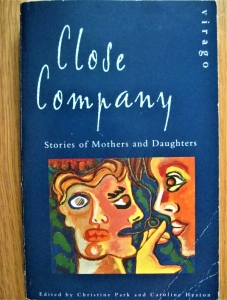 Back in 2021, I read 14 of these 25 stories (reviewed here) and set the book aside. At that time I noted the repeated theme of women’s expectations of their daughters, and that was true of the remainder as well. The editors quote Simone de Beauvoir in the introduction, “the daughter is for the mother at once her double and another person.” So in Emily Prager’s “A Visit from the Footbinder,” Lady Guo Guo subjects her spirited daughter to the same painful procedure she underwent as a child. The cultural detail was overpowering in this one, like the author felt she had to prove she’d done her research on China. The father–daughter relationship struck me more in Judith Chernaik’s Jewish Brooklyn-set “Honor Thy Father and Thy Mother.”
From this batch, two stood out the most: in “Children’s Liberation” by Jan Clausen, Lisa rebels against her lesbian mother’s bohemian lifestyle by idolizing heterosexual love stories; and in Zhang Jie’s “Love Must Not Be Forgotten,” a daughter comes to understand her mother by reading her diary about her doomed romance. My overall favourites, though, were still the stories by Jane Gardam, Janet Frame, Alice Walker and Charlotte Perkins Gilman. (Free mall bookshop)
Small, Burning Things by Cathy Ulrich (2023)
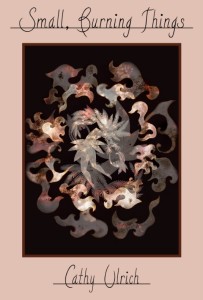 Ulrich’s second collection contains 50 flash fiction pieces, most of which were first published in literary magazines. She often uses the first-person plural and especially the second person; both “we” and “you” are effective ways of implicating the reader in the action. Her work is on a speculative spectrum ranging from magic realism to horror. Some of the situations are simply bizarre – teenagers fall from the sky like rain; a woman falls in love with a giraffe; the mad scientist next door replaces a girl’s body parts with robotic ones – while others are close enough to the real world to be terrifying. The dialogue is all in italics. Some images recur later in the collection: metamorphoses, spontaneous combustion. Adolescent girls and animals are omnipresent. At a certain point this started to feel repetitive and overlong, but in general I appreciated the inventiveness.
Published on 2 July by Okay Donkey Press. With thanks to publicist Lori Hettler for the free e-copy for review.
 I also read the first two stories in The Best Short Stories 2023: The O. Henry Prize Winners, edited by Lauren Groff. If these selections by Ling Ma and Catherine Lacey are anything to go by, Groff’s taste is for gently magical stories where hints of the absurd or explained enter into everyday life. Ma’s “Office Hours” has academics passing through closet doors into a dream space; the title of Lacey’s “Man Mountain” is literal. I’ll try to remember to occasionally open the book on my e-reader to get through the rest.
Short Stories in September, Part III: Linked Collections by Jonathan Escoffery & Soraya Palmer
These two debut linked short story collections had enough in common to get a mention in yesterday’s Book Serendipity post, including a 2023 publication date, a central sibling pair, Jamaican heritage, and memories of a devastating hurricane.
If I Survive You by Jonathan Escoffery
A starred Kirkus review first put this on my radar, and I requested a copy back in February. Though I enjoyed the first two stories, I then set the book aside. Its longlisting for this year’s Booker Prize reminded me to pick it back up and it’s now one of the six on the shortlist.
Five of eight stories are filtered through the consciousness of Trelawny, the younger son of Topper and Sanya, who immigrated to Miami in the late 1970s to escape unrest in Kingston, Jamaica. Older brother Delano is the golden boy, yet in a post-recession landscape both sons struggle to get by. After their parents’ split, the family home seems like a totem of security.
An accident leads Delano to give up his tree service business and pursue reggae music professionally. Trees play a pivotal role: when Topper humiliates him at a party by calling him “soft” and “defective,” Trelawny attacks his father’s beloved ackee tree with an axe. After Topper kicks him out, Trelawny lives in his car, accepting a succession of strange and sordid gigs (the stuff of “Odd Jobs” and the title story; “in Miami … you’re as likely to wind up getting your organs harvested as you are to make a profit”) before settling on teaching.

Three stories are in the always engaging second person (one of those inhabiting Topper’s perspective), three are narrated in the first person by Trelawny, and two are in the third person – the one about Delano and another about their cousin Cukie (“Splashdown”). Family legacy, particularly from fathers, is a major theme. “I felt sick with hatred,” Trelawny says. “For her [racist] father, yes, but for all fathers, for their propensity for passing down the worst of themselves.”
Trelawny is an entertaining POV character, jaded but quick-witted as he navigates microaggressions. People are confused about whether he’s African American or Latino. “In Flux,” the opening story and probably the strongest, has him coming to terms with what it means to be Black in America while living in Florida or at college in the Midwest, prompted by a question he frequently has to field: “What are you?” My other favourite story was “Independent Living,” in which he’s an administrator for an oversubscribed senior housing block and has to become as wily as his residents.
Escoffery creates a strong sense of place and character. I suspect there’s a lot that’s autobiographical here, as is common in first books. His ambivalence about sites that hold personal significance is palpable. Ideally, a linked collection will be composed of confident stand-alone stories that together are more than the sum of their parts. I didn’t really feel that about these. While the voice is promising and several stories are highlights, the whole didn’t set me on fire. (And I’d be astonished if it won the Booker. That’ll go to a guy named Paul.) Maybe Escoffery has a great novel brewing, though.
A favourite passage:
“On the day you are scheduled to begin the sixth grade, a hurricane named Andrew pops your house’s roof open, peeling it back like the lid of a Campbell’s soup can, pouring a fraction of the Atlantic into your bedroom, living room—everywhere—bloating carpet, drywall, and fibreboard with sopping sea salt corrosion. It disinters the kidney-colored fibreglass from the walls and ceiling, splaying the house’s entrails on the lawn. The storm chops your neighbor’s house to rubble, parks a tugboat at the far end of your street.”
With thanks to 4th Estate for the free copy for review.
Buy from Bookshop [affiliate link].
The Human Origins of Beatrice Porter & Other Essential Ghosts by Soraya Palmer
Sasha and Zora are steeped in Caribbean folklore absorbed from their parents. Nigel, from Jamaica, tells them about “Rolling Calf,” the vengeful ghost of a butcher paying penance for all the animals he slaughtered; Trinidadian Beatrice reminds them that the hero of the Anansi stories is a woman. Like the trickster spider, these Brooklyn adolescents will have to live by their wits when their family disintegrates – Nigel leaves to marry a German woman and Beatrice returns to Trinidad when she’s diagnosed with metastatic skin cancer.
 Apart from a few third-person segments about the parents, the chapters, set between 1997 and 2005, trade off first-person narration duties between Zora, a romantic would-be writer, and Sasha, the black sheep and substitute family storyteller-in-chief, who dates women and goes by Ashes when she starts wearing a binder. It’s interesting to discover examples of queer erasure in both parents’ past, connecting Beatrice more tightly to Sasha than it first appears – people always condemn most vehemently what they’re afraid of revealing in themselves.
I’ve had too much of the patois + legends/magic realism combo recently (e.g., When We Were Birds) and Palmer tries too hard to root her stories in time through 1990s pop culture references. She also exhibits a slightly annoying MFA stylistic showiness, whereas Escoffery’s work feels more natural. Still, this is more novel than stories (the opposite is true for If I Survive You) and thus the kind of book that would make a good wildcard selection on the Women’s Prize longlist. (Passed along by a book club friend) 
A favourite passage:
Zora: “It was like the end of a Jenga game, the way shit just fell apart. Our family foundation had been fading slowly for years, and yet when it all collapsed, it seemed to happen all at once.”
Buy from Bookshop [affiliate link].
Final reviews and a roundup coming up soon.
Currently reading: Hateship, Friendship, Courtship, Loveship, Marriage by Alice Munro; Close Company: Stories of Mothers and Daughters, ed. Christine Park; Small, Burning Things by Cathy Ulrich
Short Stories in September, Part II: Brautigan, Doyle, Minot, Simpson
Every time I do this self-set challenge, I am amazed anew by how different short story collections can be in mood and theme – even if their overall concerns are the same as in most fiction: life and death, relationships, identity, choices. Today I have one debut work, two new-to-me authors, and a disappointing showing from an old favourite.
Revenge of the Lawn: Stories 1962–1970 by Richard Brautigan (1972)
 There are more than five dozen stories in this slim volume, most just one to three pages and in the first person (55 of 62); bizarre or matter-of-fact slices of life in the Pacific Northwest or California, often with a grandiose title that’s then contradicted by the banality of the contents (e.g., in the three-page “A Short History of Religion in California,” some deer hunters encounter a group of Christian campers). The simple declarative sentences and mentions of drinking and hunting made me think of Carver and Hemingway, but Brautigan is funnier, coming out with the occasional darkly comic zinger. Here’s “The Scarlatti Tilt” in its entirety: “‘It’s very hard to live in a studio apartment in San Jose with a man who’s learning to play the violin.’ That’s what she told the police when she handed them the empty revolver.”
In the absurdist “Homage to the San Francisco YMCA,” a man replaces his plumbing with poetry: “He took out his bathtub and put in William Shakespeare. The bathtub did not know what was happening. He took out his kitchen sink and put in Emily Dickinson. The kitchen sink could only stare back in wonder.” Brautigan has an incomer’s admiration for California: “I come from someplace else and was gathered to the purpose of California like a metal-eating flower gathers the sunshine.” Many of the flash stories feel autobiographical and bridge country and city life with themes of bear hunting versus movie-going and riding buses.
There are some macho attitudes towards women, who are generally objects of male desire rather than subjects in their own right. But I appreciated this flash fiction collection for its unexpected metaphors and tonal range, from the over-the-top humour of “Complicated Banking Problems” to a pathos-filled rundown of a life in “The World War I Los Angeles Aeroplane.” (Secondhand – Westwood Books, Sedbergh, 2023)
I Meant It Once by Kate Doyle (2023)
 A debut collection of 16 stories, three of them returning to the same sibling trio. Many of Doyle’s characters are young people who still define themselves by the experiences and romances of their college years. In “That Is Shocking,” Margaret can’t get over the irony of her ex breaking up with her on Valentine’s Day after giving her a plate of heart-shaped scones. Former roommates Christine and Daisy are an example of fading friendship in “Two Pisces Emote about the Passage of Time.”
The title phrase comes from “Cinnamon Baseball Coyote,” one of the Helen–Grace–Evan stories, when the sparring sisters are children and the one writes down “I hate my sister” and saves the paper in her desk because, as she tells their father, “I don’t mean it anymore. I only kept it because I meant it once.” Moments of great drama or emotion, and the regret that comes in their aftermath, are the stuff of these mainly New York City-set stories.
Across nine first-person and seven third-person stories, the content and point of view are pretty samey and minor; nothing here to make you feel you’re reading a rising star of American fiction. I only found a few standouts. “Hello It’s You” is about Meg’s history of same-sex partners: though she’s with Sara now, she can’t stop thinking about Jenny, her college girlfriend. “Aren’t We Lucky” has a soupçon of magic as it imagines a house and its ghosts resisting renovations. But my favourite was “Moments Earlier,” about Kelly’s medical crisis and the friends who never get past it.
With thanks to Corsair for the free copy for review. See also Susan’s review.
Why I Don’t Write and Other Stories by Susan Minot (2020)
 Minot was new to me (as was Brautigan). These stories were first published between 1991 and 2019, so they span a good chunk of her career. “Polepole” depicts a short-lived affair between two white people in Kenya, one of whom seems to have a dated colonial attitude. In “The Torch,” a woman with dementia mistakes her husband for an old flame. “Occupied” sees Ivy cycling past the NYC Occupy camp on her way to pick up her daughter. The title story, published at LitHub in 2018, is a pithy list of authorial excuses. “Listen” is a nebulous set of lines of unattributed speech that didn’t add up to much for me. “The Language of Cats and Dogs” reminded me of Mary Gaitskill in tone, as a woman remembers her professor’s inappropriate behaviour 40 years later.
Eight of the stories are in the third person and two in the first person. They’re almost all accomplished in terms of scene setting and creating characters and motivations, but I can’t say Minot won me over such that I’ll seek out more of her work. Only a few stories will stay with me: “Green Glass,” in which a man encounters his ex-girlfriend at a wedding and cuts her down to size in a way that alarms his current partner; “Boston Common at Twilight,” an account of a strange but ultimately non-consensual sexual encounter; and my favourite, “Café Mort,” the only one with a speculative edge, about an establishment that only serves the dead. (New bargain purchase – Dollar Tree, Hagerstown, Maryland, 2023)
Hey Yeah Right Get a Life by Helen Simpson (2000)
This was my sixth collection from Simpson, who only appears to write short fiction. This was one of my least favourite of her books, unfortunately, because her common theme of frazzled mothers trying to balance parenting with career felt tired. The title story is about Dorrie, mum of three, and this set of characters recurs in the final piece, “Hurrah for the Hols.” Simpson does get the mindset just right:
She had to be thinking of other people all the time or the whole thing fell apart.
I can’t see how the family would work if I let myself start wanting things again, thought Dorrie; give me an inch and I’d run a mile, that’s what I’m afraid of.
The whole pattern of family life hung for a vivid moment above the chopping board as a seamless cycle of nourishment and devoural.
It was like being on holiday with Punch and Judy – lots of biffing and shrieking and fights over sausages.

But I’ve read too many of her exasperated-mum stories at this point. Two here were about female bankers. One, “Burns and the Bankers,” set at a seemingly endless Burns Night supper, rather outstayed its welcome and made overly obvious its message about this being a man’s field. Do read Simpson, but maybe not this (despite the amazing title); I’d recommend Four Bare Legs in a Bed or In the Driver’s Seat (UK title: Constitutional) instead. (Secondhand – Books for Amnesty, York, 2023)
I’ll have one more set of reviews and a roundup on the last day of the month.
Currently reading: If I Survive You by Jonathan Escoffery; The Best Short Stories 2023: The O. Henry Prize Winners, ed. Lauren Groff; How to Disappear by Tara Masih; Hateship, Friendship, Courtship, Loveship, Marriage by Alice Munro; The Human Origins of Beatrice Porter and Other Essential Ghosts by Soraya Palmer; Close Company: Stories of Mothers and Daughters, ed. Christine Park; Small, Burning Things by Cathy Ulrich
September Focus on Short Stories, with Reviews of Bloom and de Kerangal
This is the eighth year in a row in which I’m making a special effort to read short stories in September; otherwise, story collections tend to languish on my shelves (and Kindle) unread. In September 2021 I read 12 collections and in September 2022 it was 11.5; let’s see how many I get to this year!
As someone who doesn’t claim to love short stories, I was surprised to see that I’ve already read 19 collections this year. Some of the highlights have been Old Babes in the Wood by Margaret Atwood, How Strange a Season by Megan Mayhew Bergman, What We Talk about When We Talk about Love by Raymond Carver, Games and Rituals by Katherine Heiny, and Sidle Creek by Jolene McIlwain.
I have a whole shelf of short story options set out for me and will make my selections from there. For now, I have brief reviews of two collections I read during a quick trip to the USA.
A Blind Man Can See How Much I Love You by Amy Bloom (2000)
 My second collection by Bloom this year, after Where the God of Love Hangs Out; somewhat confusingly, the latter reprints two of this volume’s Lionel and Julia stories, so there were actually only six stories here that were new to me (5 x first-person; 3 x third-person). However, they’re all typically great ones. The title story has a mother accompanying her daughter to the medical appointments that will transform Jessie into Jess, her son, and also taking a chance on romance. “Rowing to Eden” explores the dynamic between best friends, one lesbian and one married to a man; the one has already been through breast cancer treatment so can counsel her friend from experience.
In “Stars at Elbow and Foot,” a woman whose baby died goes back to the children’s hospital to volunteer with the disabled. “Hold Tight” also reflects on loss and accidents (but is probably the throw-away story if I had to name one). “The Story,” which closes the book, had me hunting for autobiographical correlations what with its mentions of “Amy.” By far my favourite was “The Gates Are Closing,” in which D.M. is having an affair with the synagogue president’s husband, who has Parkinson’s disease. As Yom Kippur approaches, he gives his mistress an ultimatum. The minor assisted dying theme in this one felt ironically prescient of Bloom’s own experience accompanying her husband to Dignitas (the subject of In Love). As always, Bloom’s work is sensual, wry and emotionally wise.
Canoes by Maylis de Kerangal (2021; 2023)
[Translated from the French by Jessica Moore]
These eight stories are all in the first person; although I tend to prefer more diversity of narration, the plots are so dissimilar that it makes up for that homogeneity. In an author’s note at the end, de Kerangal writes that her overall theme was voices, especially women’s voices; perhaps ironically, then, the collection uses no speech marks. In “Mountain Stream and Iron Filings,” the narrator’s friend Zoé is on a mission to lower her voice to make it more suitable for radio. “Nevermore” has a woman contributing a recording of herself reading Edgar Allan Poe’s epic poem “The Raven” to an audio library. “A Light Bird,” which I found particularly poignant, is about a widower and his daughter deciding what to do about their late wife’s/mother’s voice on the answering machine.
 “After” has a school leaver partying and figuring out what comes next, “Ontario” revolves around a trip to Canada, and “Arianespace” has an investigator visiting an elderly woman who has reported a UFO sighting. The longest story (billed as a novella), “Mustang,” focuses on a French family that has relocated to Colorado in the 1990s. The mother, recently bereaved, learns to drive their rather impractical American car.
Like Painting Time, the collection is in thrall to questions of deep time. This is clearest in “Bivouac,” in which a woman undergoes a procedure while the dentist tells her about an ancient human jawbone found deep under Paris. Prehistory is even present in the metaphorical language: “the first foothills of the Rockies sketched the backbone of a sleepy stegosaurus who’d escaped extinction” (from “Mustang”). Each story also mentions a canoe, if only in passing (e.g., the dentist’s necklace charm in the first story).
As was my main quibble with Mend the Living, though, de Kerangal is all too fond of arcane vocabulary. I mean, she uses “alveolar” twice in this very short book; there’s also “sagittal slices” and “sinuous mnemic circuits.” Some sentences stretch to fill two-plus pages. So overwriting is a recurrent issue I have with her work, but I would certainly recommend that her fans read her short fiction, which I found more accessible than her novels.
With thanks to MacLehose Press for the free copy for review. Canoes will be published on 28 September.
Currently reading: Revenge of the Lawn by Richard Brautigan; I Meant It Once by Kate Doyle; The Best Short Stories 2023: The O. Henry Prize Winners, ed. Lauren Groff; Why I Don’t Write by Susan Minot; Hateship, Friendship, Courtship, Loveship, Marriage by Alice Munro; The Human Origins of Beatrice Porter and Other Essential Ghosts by Soraya Palmer (linked stories); Small, Burning Things by Cathy Ulrich.
Resuming soon: The Secrets of a Fire King by Kim Edwards; If I Survive You by Jonathan Escoffery (I read the first two stories ages ago, but its longlisting for the Booker Prize is the impetus I need to pick it back up); Hey Yeah Right Get a Life by Helen Simpson.
Are you a short story fan? Read any good ones recently?
 Bookish Beck = Rebecca Foster. American transplant to England. Freelance proofreader and book reviewer.
 Bookish Beck