20 Books of Summer, #16–17: Classics by R.L. Stevenson and N. West
Doing double duty this month as my classics and two of my last few animal-themed summer reading choices are a record of a trek in France and a sleazy novella set in 1930s Hollywood.
Travels with a Donkey in the Cévennes by Robert Louis Stevenson (1879)
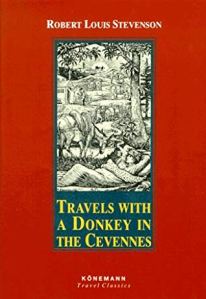 I think I decided this was a must-read because I so love Christopher Rush’s recreation of the journey in To Travel Hopefully. The problem with the original is that there doesn’t seem to have been any particular reason for walking 120 miles in 12 days with a donkey as one’s pack animal and traveling companion. “I have been after an adventure all my life, a pure dispassionate adventurer, such as befell early and heroic voyagers,” Stevenson writes, but of all the options before him this must surely have been one of the safer choices.
As autumn comes on, Stevenson keeps being mistaken for a peddler and meeting religious extremists of various stripes, from Trappist monks to a Plymouth Brother. He stays in shared inn rooms or sleeps outdoors. He learns about the history of religious wars and martyrdom in the region. It’s the sort of material that might have inspired Guy Stagg in writing The Crossway, his account of a secular pilgrimage from Canterbury to Jerusalem. But it’s, for the most part, awfully boring. Rush at least had a good reason for undertaking his journey: after his wife’s death from breast cancer he needed a quest to take his mind off his grief.
But anyway, the donkey. Stevenson buys Modestine for 65 francs and she quickly proves to be a typical stubborn-as creature. Passersby encourage him to find an effective goad and show the beast who’s in charge.
They told me when I left, and I was ready to believe it, that before a few days I should come to love Modestine like a dog. Three days had passed, we had shared some misadventures, and my heart was still as cold as a potato towards my beast of burden. She was pretty enough to look at; but then she had given proof of dead stupidity
Between the early entries and the final ones, though, she is mostly invisible. And, regretfully, Stevenson then has to sell the poor beast again – and for only 35 francs with her saddle. That represents quite a financial loss after less than two weeks!
Ultimately, I prefer reading about Stevenson to reading his actual work. (Other examples: Nancy Horan’s novel Under the Wide and Starry Sky; the chapter of Richard Holmes’s Footsteps: Adventures of a Romantic Biographer in which he recreates the Cévennes trek.) My next Stevenson-themed reading will be The Lighthouse Stevensons by Bella Bathurst.
A lovely line: “to love is the great amulet which makes the world a garden”
Wigtown gets a random mention! As he’s musing on the controversial religious history of the area: “If you met a mixed company in the King’s Arms at Wigton, it is not likely that the talk would run on Covenanters.”
(The e-book is available as a free download from Project Gutenberg, though I read a secondhand copy I’d had for ages.)
See also Kaggsy’s review: it’s more positive and includes helpful background information.
My rating: 
The Day of the Locust by Nathanael West (1939)
Boy oh boy, this is one weird and sordid little book. Like The Great Gatsby, which had been published 14 years before, it shows the seamy underbelly of a glittering American city. Here the setting is Hollywood, where Tod Hackett is a set and costume designer. He’s smitten with his neighbor, Faye Greener, a 17-year-old aspiring actress (“taut and vibrant … shiny as a new spoon”) who’s not above taking a few shifts at the brothel to make ends meet.
 Tod is not the only one obsessed with Faye, though; her other suitors include Homer Simpson (so hard to take him seriously because of that name!), a sad sack from Iowa who moved to the California desert for his respiratory health; Earle Shoop the cowboy; and Miguel, a Mexican cock-fighter. Comic relief is provided by Abe Kusich, a gambling dwarf whose slang includes “lard-ass” and “punkola.” The novella opens and ends with mob scenes, but while the first takes place on a studio lot the last is dangerously real.
There are some fairly disturbing elements here. The casual racism is probably to be expected, but the violence of Tod’s fantasies about Faye startled me: “If only he had the courage to wait for her some night and hit her with a bottle and rape her.” But like Daisy Buchanan in Gatsby, Faye is the sort of careless person who will always come out on top – “Nothing could hurt her. She was like a cork.”
West portrays Hollywood as a wasteland of broken dreams: “the dump grew continually, for there wasn’t a dream afloat somewhere which wouldn’t sooner or later turn upon it, having first been made photographic by plaster, canvas, lath, and paint.” This was his final work before he died in a car accident in 1940. I got more out of Miss Lonelyhearts, but I’m still glad I read this Wigtown purchase. I have no idea what the title refers to, though it sounds like it might be a biblical reference.
My rating: 
I’m still plugging away at my last few #20BooksofSummer and plan to write them up for the last day, September 3rd.
20 Books of Summer, #11–13: Harrison, Pym, Russell
It’s cats and butterflies in the spotlight this time, adding in a gazelle as a metaphor for Freddie Mercury’s somebody to love.
Travelling Cat: A Journey round Britain with Pugwash by Frederick Harrison (1988)
If Tom Cox had been born 20 years earlier, this is the sort of book he might have written. In 1987, saddened more by his cat Podey being run over than by the end of his marriage, Harrison set out from South London in his Ford Transit van for a seven-month drive around the country. He decided to take Pugwash, one of his local (presumably ownerless) cats, along as a companion.
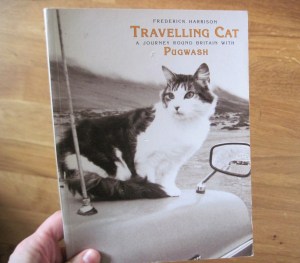 They encountered Morris dancers, gypsies, hippies at Stonehenge for the Summer Solstice, sisters having a double wedding, and magic mushroom collectors. They went to a county fair and beaches in Suffolk and East Yorkshire, and briefly to Hay-on-Wye. And on the way back they collected Podey, whom he’d had stuffed. Harrison muses on the English “vice” of nostalgia for a past that probably never existed; Pugwash does what cats do, and very well.
It’s all a bit silly and dated and lightweight, but enjoyable nonetheless. Plus there are tons of black-and-white photos of “Pugs” and other feline friends. This was a secondhand purchase from The Bookshop, Wigtown. 
Favorite lines:
“Cats hate to make prats of themselves. But then, don’t we all?”
(last lines) “Warm, fed, contented, unemployable, and entirely at peace with the world. Yes indeed. Cats certainly know something we don’t.”
Some Tame Gazelle by Barbara Pym (1950)
(An example of a book that just happens to have an animal in the title.) I’d only read one other Pym novel, Quartet in Autumn, a late and fairly melancholy story of four lonely older people. With her first novel I’m in more typical territory, I take it. The middle-aged Bede sisters are pillars of the church in their English village. Harriet takes each new curate under her wing, making of them a sort of collection, and fends off frequent marriage proposals from the likes of a celebrity librarian and an Italian count.
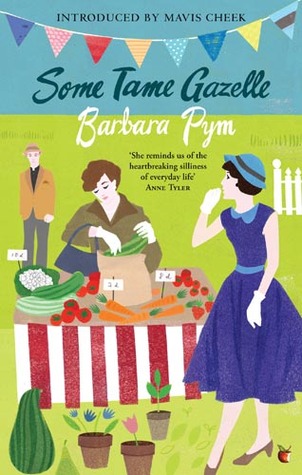 Belinda, on the other hand, only has eyes for one man: Archdeacon Hochleve, whom she’s known and loved for 30 years. They share a fondness for quoting poetry, the more obscure the better (like the title phrase, taken from “Some tame gazelle, or some gentle dove: / Something to love, oh, something to love!” by Thomas Haynes Bayly). The only problem is that the archdeacon is happily married. So single-minded is Belinda that she barely notices her own marriage proposal when it comes: a scene that reminded me of Mr. Collins’s proposal to Lizzie in Pride and Prejudice. Indeed, Pym is widely recognized as an heir to Jane Austen, what with her arch studies of relationships in a closed community.
There were a handful of moments that made me laugh, like when the seamstress finds a caterpillar in her cauliflower cheese and has to wipe with a Church Times newspaper when the Bedes run out of toilet paper (such mild sacrilege!). This is enjoyable, if fluffy; it was probably a mistake to have read one of Pym’s more serious books first: I expected too much of this one. If you’re looking for a quick, gentle and escapist read in which nothing awful will happen, though, it would make a good choice. Knowing most of her books are of a piece, I wouldn’t read more than one of the remainder – it’ll most likely be Excellent Women.
An Obsession with Butterflies: Our Long Love Affair with a Singular Insect by Sharman Apt Russell (2003)
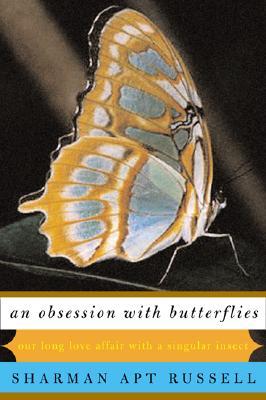 This compact and fairly rollicking book is a natural history of butterflies and of the scientists and collectors who have made them their life’s work. There are some 18,000 species and, unlike, say, beetles, they are generally pretty easy to tell apart because of their bold, colorful markings. Moth and butterfly diversity may well be a synecdoche for overall diversity, making them invaluable indicator species. Although the history of butterfly collecting was fairly familiar to me from Peter Marren’s Rainbow Dust, I still learned or was reminded of a lot, such as the ways you can tell moths and butterflies apart (and it’s not just about whether they fly in the night or the day). And who knew that butterfly rape is a thing?
The final third of the book was strongest for me, including a trip to London’s Natural History Museum; another to Costa Rica’s butterfly ranches, an example of successful ecotourism; and a nicely done case study of the El Segundo Blue butterfly, which was brought back from the brink of extinction by restoration of its southern California dunes habitat. Russell, a New Mexico-based author of novels and nonfiction, also writes about butterflies’ cultural importance: “No matter our religious beliefs, we accept the miracle of metamorphosis. One thing becomes another. … Butterflies wake us up.” 
 I also recently read the excellent title story from John Murray’s 2003 collection A Few Short Notes on Tropical Butterflies. Married surgeons reflect on their losses, including the narrator’s sister in a childhood accident and his wife Maya’s father to brain cancer. In the late 1800s, the narrator’s grandfather, an amateur naturalist in the same vein as Darwin, travelled to Papua New Guinea to collect butterflies. The legends from his time, and from family trips to Cape May to count monarchs on migration in the 1930s, still resonate in the present day for these characters. The treatment of themes like science, grief and family inheritance, and the interweaving of past and present, reminded me of work by Andrea Barrett and A.S. Byatt.
(I’ve put the book aside for now but will go back to it in September as I focus on short stories.)
Other butterfly-themed books I have reviewed:
- Four Wings and a Prayer: Caught in the Mystery of the Monarch Butterfly by Sue Halpern (one of last year’s 20 Books of Summer)
- Ruins by Peter Kuper (a graphic novel set in Mexico, this also picks up on monarch migration)
- Magdalena Mountain by Robert Michael Pyle (a novel about butterfly researchers in Colorado)
A Week in Italy and What I Read
We’re relieved to be back in the balmy UK after a sweltering week in northern Italy. Though our sixth-floor Airbnb apartment in Milan suited our needs perfectly, it was a challenge to keep it minimally comfortable. Eventually we worked out that it was essential to get up by 6:30 a.m. to close the balcony doors and shutter. The bedroom happened to be shaded, so I could set up my laptop in there and work until noon, when it was time to close out the heat of the day on that side. In the afternoons I read and napped on the divan, and then sometime between 6 and 10 p.m., depending on how sunny it had been during the day, we could fling the windows and doors wide open again. Fans helped, but we still passed some horribly muggy nights.


My husband was at his conference for four of the days, so we only braved the city centre itself on Monday morning, touring the Duomo and climbing the steps to the roof. This was well worth doing for views over the city. Afterwards we walked through the associated museum (mostly underground, and blissfully cool with air conditioning) and Galleria Vittorio Emanuele II, a luxurious nineteenth-century shopping arcade filled with designer fashions.


Two day trips by train got us out of the city and into slightly cooler temperatures: on Wednesday we explored Varenna and Bellagio on Lake Como, and on Saturday we took a bus and cable car from Lecco into the mountains at Piani d’Erna. We took full advantage of one-euro espressos and glasses of wine, and ate lots of pizza, pasta and gelato.

After much deliberation, this is the book stack I actually packed for our trip. I got through the first half of the Orwell, an excellent account of working as a dishwasher in Paris hotels and having to scrape together enough money to ward off starvation. I’ll be writing it up as my Classic of the Month in a couple of weeks. I also read Sunburn by Laura Lippman, which I’ll hold in reserve for a summer-themed post, and (on Kindle) So Many Rooms by Laura Scott, a debut poetry collection coming out in October that I’ll review here at a later date.
Two of my other Kindle reads ended up being perfect for the setting:
From Scratch: A Memoir of Love, Sicily, and Finding Home by Tembi Locke: This was the perfect book for me to read during the week in Italy. Not only is it set largely in Sicily, but it ticks a lot of boxes in terms of my reading interests: food, travel, bereavement, and the challenges of being an American overseas. During a semester abroad in Florence, Locke (an actress I was previously unfamiliar with) met and fell in love with Saro Gullo, an Italian chef. His parents could hardly accept him marrying someone from outside of Sicily, let alone a black woman from Texas, and refused to attend their wedding. But as the years passed they softened towards Locke, who gradually became accepted in Saro’s hometown of Aliminusa.
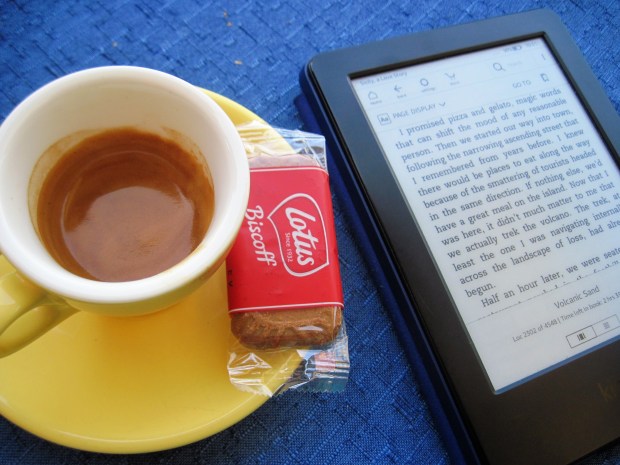
In fact, after Saro’s death from bone cancer in 2012, she became like a second daughter to Saro’s mother. The book focuses on the three summers in a row when she and her adopted daughter Zoela traveled to the family home in Sicily to stay with Nonna. I particularly appreciated the exploration of what it’s like to live between countries and cultures. This is one of three Reese Witherspoon book club books I’ve read so far (along with Where the Crawdads Sing and Daisy Jones and the Six), and all have been great – Reese’s recommendations are proving as reliable as Oprah’s.
 A mudslide blocked the route we should have taken back from Milan to Paris, so we rebooked onto trains via Switzerland. This plus the sub-Alpine setting for our next-to-last day made the perfect context for racing through Where the Hornbeam Grows: A Journey in Search of a Garden by Beth Lynch in just two days. Lynch moved from England to Switzerland when her husband took a job in Zurich. Suddenly she had to navigate daily life, including frosty locals and convoluted bureaucracy, in a second language. The sense of displacement was exacerbated by her lack of access to a garden. Gardening had always been a whole-family passion, and after her parents’ death their Sussex garden was lost to her. Two years later she and her husband moved to a cottage in western Switzerland and cultivated a garden idyll, but it wasn’t enough to neutralize their loneliness.
Much of what Lynch has to say about trying to find genuine connections as an expatriate rang true for me. Paradise Lost provides an unexpected frame of reference as Lynch asks what it means for a person or a plant to be transplanted somewhere new, and what it takes to thrive. Her elegant writing reminded me of Diana Athill’s and Penelope Lively’s, and the exploration of the self through gardens is reminiscent of Allan Jenkins’s Plot 29.
Other successful reads:
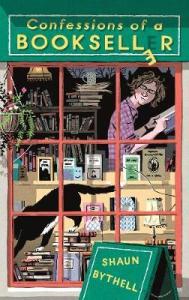 Confessions of a Bookseller by Shaun Bythell: This picks up right where The Diary of a Bookseller left off and carries through the whole of 2015. Again it’s built on the daily routines of buying and selling books, including customers’ and colleagues’ quirks, and of being out and about in a small town. I wished I was in Wigtown instead of Milan! Because of where I was reading the book, I got particular enjoyment out of the characterization of Emanuela (soon known as “Granny” for her poor eyesight and myriad aches and gripes), who comes over from Italy to volunteer in the bookshop for the summer. Bythell’s break-up with “Anna” is a recurring theme in this volume, I suspect because his editor/publisher insisted on an injection of emotional drama.
 City of Girls by Elizabeth Gilbert: There’s a fun, saucy feel to this novel set mostly in 1940s New York City. Twenty-year-old Vivian Morris comes to sew costumes for her Aunt Peg’s rundown theatre and falls in with a disreputable lot of actors and showgirls. When she does something bad enough to get her in the tabloids and jeopardize her future, she retreats in disgrace to her parents’ – but soon the war starts and she’s called back to help with Peg’s lunchtime propaganda shows at the Brooklyn Navy Yard. The quirky coming-of-age narrative reminded me a lot of classic John Irving, while the specifics of the setting made me think of Wise Children, All the Beautiful Girls and Manhattan Beach. The novel takes us to 2010, when Vivian is 90 and still brazenly independent. I was somewhat underwhelmed – while it’s a fairly touching story of how to absorb losses and make an unconventional family, I wondered if it had all meant much. I’ll be expanding this into a Shiny New Books review.
 Judgment Day by Sandra M. Gilbert: English majors will know Gilbert best for her landmark work of criticism, The Madwoman in the Attic (co-written with Susan Gubar). I had no idea that she writes poetry. This latest collection has a lot of interesting reflections on religion, food and art, as well as elegies to those she’s lost. Raised Catholic, Gilbert married a Jew, and the traditions of Judaism still hold meaning for her after husband’s death even though she’s effectively an atheist. “Pompeii and After,” a series of poems describing food scenes in paintings, from da Vinci to Hopper, is particularly memorable.
Not-so-successful reads:
 Vintage 1954 by Antoine Laurain: Dreadful! I would say: avoid this sappy time-travel novel at all costs. I thought the setup promised a gentle dose of fantasy, and liked the fact that the characters could meet their ancestors and Paris celebrities during their temporary stay in 1954. But the characters are one-dimensional stereotypes, and the plot is far-fetched and silly. I know many others have found this delightful, so consider me in the minority…
As well as a few DNFs…
What Dementia Teaches Us about Love by Nicci Gerard: I’ve read a lot of books about dementia, both clinical and anecdotal, and this doesn’t add anything new. (11%)
The Great Railway Bazaar by Paul Theroux: I read the first 32 pages, up to when Theroux arrives in northern Italy. He mostly describes his fellow passengers, as well as the details of meals and sleeping arrangements on trains. The writing struck me as old-fashioned, and I couldn’t imagine getting through another nearly 350 pages of it.
Out of the Woods by Luke Turner: Attempts to fuse nature and sexuality in a way that’s reminiscent of Hidden Nature by Alys Fowler. The writing didn’t draw me in at all. (5%)
My Most Anticipated Releases of the Second Half of 2019
Although over 90 books from the second half of the year are already on my radar, I’ve managed to narrow it down to the 15 July to November releases that I’m most excited about. I have access to a few of these already, and most of the rest I will try requesting as soon as I’m back from Milan. (These are given in release date order within thematic sections; the quoted descriptions are from the publisher blurbs on Goodreads.)
[By the way, here’s how I did with my most anticipated releases of the first half of the year:
- 16 out of 30 read; of those 9 were somewhat disappointing (i.e., 3 stars or below) – This is such a poor showing! Is it a matter of my expectations being too high?
- 10 I still haven’t managed to find
- 1 print review copy arrived recently
- 1 I have on my Kindle to read
- 1 I skimmed
- 1 I lost interest in]
Fiction
 The Lager Queen of Minnesota by J. Ryan Stradal [July 23, Pamela Dorman Books] Stradal’s Kitchens of the Great Midwest (2015) is one of my recent favorites. This one has a foodie theme again, and sounds a lot like Louise Miller’s latest – two sisters: a baker of pies and a founder of a small brewery. “Here we meet a cast of lovable, funny, quintessentially American characters eager to make their mark in a world that’s often stacked against them.”
 Hollow Kingdom by Kira Jane Buxton [August 6, Grand Central Publishing / Headline Review] As soon as I heard that this was narrated by a crow, I knew I was going to have to read it. (And the Seattle setting also ties in with Lyanda Lynn Haupt’s book.) “Humanity’s extinction has seemingly arrived, and the only one determined to save it is a foul-mouthed crow whose knowledge of the world around him comes from his TV-watching education.”
 Inland by Téa Obreht [August 13, Random House / Weidenfeld & Nicolson] However has it been eight years since her terrific debut novel?! “In the lawless, drought-ridden lands of the Arizona Territory in 1893, two extraordinary lives collide. … [L]yrical, and sweeping in scope, Inland subverts and reimagines the myths of the American West.” The synopsis reminds me of Eowyn Ivey’s latest.
 A Door in the Earth by Amy Waldman [August 27, Little, Brown and Company] I loved The Submission, Waldman’s 2011 novel about a controversial (imagined) 9/11 memorial. “Parveen Shamsa, a college senior in search of a calling, feels pulled between her charismatic and mercurial anthropology professor and the comfortable but predictable Afghan-American community in her Northern California hometown [and] travels to a remote village in the land of her birth to join the work of his charitable foundation.” (NetGalley download)
 Bloomland by John Englehardt [September 10, Dzanc Books] “Bloomland opens during finals week at a fictional southern university, when a student walks into the library with his roommate’s semi-automatic rifle and opens fire. In this richly textured debut, Englehardt explores how the origin and aftermath of the shooting impacts the lives of three characters.” (print review copy from publisher)
 The Dutch House by Ann Patchett [September 25, Harper / Bloomsbury UK] I’m more a fan of Patchett’s nonfiction, but will keep reading her novels thanks to Commonwealth. “At the end of the Second World War, Cyril Conroy combines luck and a single canny investment to begin an enormous [Philadelphia] real estate empire … Set over … five decades, The Dutch House is a dark fairy tale about two smart people who cannot overcome their past.”
Medical themes
 Will My Cat Eat My Eyeballs?: Big Questions from Tiny Mortals about Death by Caitlin Doughty [September 10, W.W. Norton / September 19, Weidenfeld & Nicolson] I’ve read Doughty’s previous books about our modern attitude towards mortality and death customs around the world. She’s wonderfully funny and iconoclastic. Plus, how can you resist this title?! Although it sounds like it’s geared towards children, I’ll still read the book. “Doughty blends her mortician’s knowledge of the body and the intriguing history behind common misconceptions … to offer factual, hilarious, and candid answers to thirty-five … questions.”
 The Undying: Pain, Vulnerability, Mortality, Medicine, Art, Time, Dreams, Data, Exhaustion, Cancer, and Care by Anne Boyer [September 17, Farrar, Straus and Giroux] “A week after her forty-first birthday, the acclaimed poet Anne Boyer was diagnosed with highly aggressive triple-negative breast cancer. … A genre-bending memoir in the tradition of The Argonauts, The Undying will … show you contemporary America as a thing both desperately ill and occasionally, perversely glorious.” (print review copy from publisher)

From the author’s Twitter page.
Breaking and Mending: A doctor’s story of burnout and recovery by Joanna Cannon [September 26, Wellcome Collection] I haven’t gotten on with Cannon’s fiction, but a memoir should hit the spot. “A frank account of mental health from both sides of the doctor-patient divide, from the bestselling author of The Trouble with Goats and Sheep and Three Things About Elsie, based on her own experience as a doctor working on a psychiatric ward.”
 The Body: A Guide for Occupants by Bill Bryson [October 3, Doubleday / Transworld] His last few books have been somewhat underwhelming, but I’d read Bryson on any topic. He’s earned a reputation for making history, science and medicine understandable to laymen. “Full of extraordinary facts and astonishing stories, The Body: A Guide for Occupants is a brilliant, often very funny attempt to understand the miracle of our physical and neurological makeup.”
 The Depositions: New and Selected Essays on Being and Ceasing to Be by Thomas Lynch [November 26, W.W. Norton] Lynch is such an underrated writer. A Michigan undertaker, he crafts essays and short stories about small-town life, the Irish-American experience and working with the dead. I discovered him through Greenbelt Festival some years back and have read three of his books. Some of what I’ve already read will likely be repeated here, but will be worth a second look anyway.
Other Nonfiction
 Confessions of a Bookseller by Shaun Bythell [August 29, Profile Books] The Diary of a Bookseller was a treat in 2017. I’ve read the first two-thirds of this already while in Milan, and I wish I was in Wigtown instead! This sequel picks up in 2015 and is very much more of the same – the daily routines of buying and selling books and being out and about in a small town – so it’s up to you whether that sounds boring or comforting. I’m finding it strangely addictive. (NetGalley download)
 We Are the Weather: Saving the Planet Begins at Breakfast by Jonathan Safran Foer [September 17, Farrar, Straus and Giroux / October 10, Hamish Hamilton] Foer’s Eating Animals (2009) was a hard-hitting argument against eating meat. In this follow-up he posits that meat-eating is the single greatest contributor to climate change. “With his distinctive wit, insight and humanity, Jonathan Safran Foer presents this essential debate as no one else could, bringing it to vivid and urgent life, and offering us all a much-needed way out.”
 Surfacing by Kathleen Jamie [September 19, Sort of Books] Jamie is a Scottish poet who writes exquisite essays about the natural world. I’ve read her two previous essay collections, Findings and Sightlines, as well as a couple of volumes of her poetry. “From the thawing tundra linking a Yup’ik village in Alaska to its hunter-gatherer past to the shifting sand dunes revealing the impressively preserved homes of neolithic farmers in Scotland, Jamie explores how the changing natural world can alter our sense of time.”
 Unfollow by Megan Phelps-Roper [October 8, Farrar, Straus and Giroux / riverrun] Ties in with my special interest in women’s religious memoirs. “In November 2012, at the age of twenty-six, [Phelps-Roper] left [Westboro Baptist Church], her family, and her life behind. Unfollow is a story about the rarest thing of all: a person changing their mind. It is a fascinating insight into a closed world of extreme belief, a biography of a complex family, and a hope-inspiring memoir of a young woman finding the courage to find compassion.”
Which of these do you want to read, too?
What other upcoming 2019 titles are you looking forward to?
Fourth Blog Anniversary
I launched my blog four years ago today. Is that ages, or no time at all? Like I said last year, it feels like something I’ve been doing forever, and yet there are bloggers out there who are coming up on a decade or more of online writing about books.

By Incabell [CC BY-SA 4.0 (https://creativecommons.org/licenses/by-sa/4.0)%5D.
This is my 542nd post, so the statistics tell me that I’ve been keeping up an average of just over 2.5 posts a week. Although I sometimes worry about overwhelming readers with ‘too many’ posts, I keep in mind that a) no one is obliged to read everything I post, b) a frequently updated blog is a thriving blog, and c) it only matters that it’s a manageable pace for me.
In the last year or so, I’ve gotten more involved in buddy reads and monthly challenges (things like Reading Ireland Month, 20 Books of Summer, R.I.P., Margaret Atwood Reading Month, and Novellas and Nonfiction in November); I’ve continued to take part in literary prize shadow panels and attend literary events when I can. I’ve hosted the Library Checkout for nearly a year and a half now and there are a few bloggers who join in occasionally (more are always welcome!). The posts I most enjoy putting together are write-ups of my travels, and seasonal and thematic roundups, which are generally good excuses to read backlist books from my own shelves instead of getting my head turned by new releases.
Some statistics from the past year:
 My four most viewed posts were:
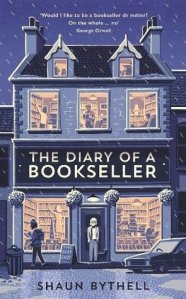
The Diary of a Bookseller by Shaun Bythell
Clock Dance by Anne Tyler: Well…
Mixed Feelings about Elena Ferrante
I got the most likes in December 2018, and the most unique visitors and comments in August.
 My four favorite posts I wrote in the past year were:
A Trip to Wigtown, Scotland’s Book Town
Painful but Necessary: Culling Books, Etc.
Why We Sleep … And Why Can’t I Wake Up?
A President’s Day Reading Special (No Trump in Sight)
Thanks to everyone who has supported me this past year, and/or all four years, by visiting the site, commenting, re-tweeting, and so on. You’re the best!
The Three Best Books I’ve Read So Far This Year
I’m very stingy with my 5-star ratings, so when I give one out you can be assured that a book is truly special. These three are all backlist reads – look out for my Classic of the Month post next week for a fourth that merits 5 stars – that are well worth seeking out. Out of the 50 books I’ve read so far this year, these are far and away the best.
This Sunrise of Wonder: Letters for the Journey by Michael Mayne (1995)

The cover image is Mark Rothko’s Orange, Red, Yellow (1956).
I plucked this Wigtown purchase at random from my shelves and it ended up being just what I needed to lift me out of January’s funk. Mayne’s thesis is that experiencing wonder, “rare, life-changing moments of seeing or hearing things with heightened perception,” is what makes us human. Call it an epiphany (as Joyce did), call it a moment of vision (as Woolf did), call it a feeling of communion with the universe; whatever you call it, you know what he is talking about. It’s that fleeting sense that you are right where you should be, that you have tapped into some universal secret of how to be in the world.
Mayne believes poets, musicians and painters, in particular, reawaken us to wonder by encouraging us to pay close attention. His frame of reference is wide, with lots of quotations and poetry extracts; he has a special love for Turner, Monet and Van Gogh and for Rilke, Blake and Hopkins. Mayne was an Anglican priest and Dean of Westminster, so he comes at things from a Christian perspective, but most of his advice is generically spiritual and not limited to a particular religion. There are about 50 pages towards the end that are specifically about Jesus; one could skip those if desired.
The book is a series of letters written to his grandchildren from a chalet in the Swiss Alps one May to June. Especially with the frequent quotations and epigraphs, the effect is of a rich compendium of wisdom from the ages. I don’t often feel awake to life’s wonder – I get lost in its tedium and unfairness instead – but this book gave me something to aspire to.
A few of the many wonderful quotes:
“The mystery is that the created world exists. It is: I am. The mystery is life itself, together with the fact that however much we seek to explore and to penetrate them, the impenetrable shadows remain.”
“Once wonder goes; once mystery is dismissed; once the holy and the numinous count for nothing; then human life becomes cheap and it is possible with a single bullet to shatter that most miraculous thing, a human skull, with scarcely a second thought. Wonder and compassion go hand-in-hand.”
“this recognition of my true worth is something entirely different from selfishness, that turned-in-upon-myselfness of the egocentric. … It is a kind of blasphemy to view ourselves with so little compassion when God views us with so much.”
Body of Work: Meditations on Mortality from the Human Anatomy Lab by Christine Montross (2007)
 When she was training to become a doctor in Rhode Island, Montross and her anatomy lab classmates were assigned an older female cadaver they named Eve. Eve taught her everything she knows about the human body. Montross is also a published poet, as evident in her lyrical exploration of the attraction and strangeness of working with the remnants of someone who was once alive. She sees the contrasts, the danger, the theatre, the wonder of it all:
“Stacked beside me on my sage green couch: this spinal column that wraps into a coil without muscle to hold it upright, hands and feet tied together with floss, this skull hinged and empty. A man’s teeth.”
“When I look at the tissues and organs responsible for keeping me alive, I am not reassured. The wall of the atrium is the thickness of an old T-shirt, and yet a tear in it means instant death. The aorta is something I have never thought about before, but if mine were punctured, I would exsanguinate, a deceptively beautiful word”
All through her training, Montross has to remind herself to preserve her empathy despite a junior doctor’s fatigue and the brutality of the work (“The force necessary in the dissections feels barbarous”), especially as the personal intrudes on her career through her grandparents’ decline and her plans to start a family with her wife – which I gather is more of a theme in her next book, Falling into the Fire, about her work as a psychiatrist. I get through a whole lot of medical reads, as any of my regular readers will know, but this one is an absolute stand-out for its lyrical language, clarity of vision, honesty and compassion.
There There by Tommy Orange (2018)
Had I finished this late last year instead of in the second week of January, it would have been vying with Lauren Groff’s Florida for the #1 spot on my Best Fiction of 2018 list.
 The title – presumably inspired by both Gertrude Stein’s remark about Oakland, California (“There is no there there”) and the Radiohead song – is no soft pat of reassurance. It’s falsely lulling; if anything, it’s a warning that there is no consolation to be found here. Orange’s dozen main characters are urban Native Americans converging on the annual Oakland Powwow. Their lives have been difficult, to say the least, with alcoholism, teen pregnancy, and gang violence as recurring sources of trauma. They have ongoing struggles with grief, mental illness and the far-reaching effects of fetal alcohol syndrome.
The novel cycles through most of the characters multiple times, alternating between the first and third person (plus one second person chapter). As we see them preparing for the powwow, whether to dance and drum, meet estranged relatives, or get up to no good, we start to work out the links between everyone. I especially liked how Orange unobtrusively weaves in examples of modern technology like 3D printing and drones.
The writing in the action sequences is noticeably weaker, and I wasn’t fully convinced by the sentimentality-within-tragedy of the ending, but I was awfully impressed with this novel overall. I’d recommend it to readers of David Chariandy’s Brother and especially Sunil Yapa’s Your Heart Is a Muscle the Size of a Fist. It was my vote for the National Book Critics Circle’s John Leonard Prize (for the best first book, of any genre, published in 2018), and I was pleased that it went on to win.
A Retrospective of 2018’s Events, Reading Projects and Themes
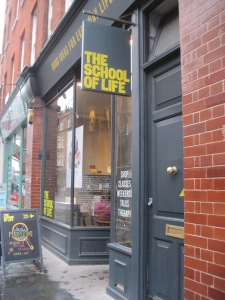 In January I had the tremendous opportunity to have a free personalized bibliotherapy appointment with Ella Berthoud at the School of Life in London. I’ve since read three of her prescriptions plus parts of a few others, but I still have several more awaiting me in the early days of 2019, and will plan to report back at some point on what I got out of all of them.
In March to April I ran a Wellcome Book Prize shadow panel for the second time. This year it was much more successful; I plan to do it again next year, too. (I actually proffered myself as an official judge for next year’s prize and got a very kind but entirely noncommittal e-mail back from the chairwoman, which I will have to take as victory enough.)
 Early April saw us visiting Wigtown, Scotland’s book town, for the first time. It was a terrific trip, but thus far I have not been all that successful at reading the 13 books that I bought! (Just two and a quarter so far.)
I reviewed three novels for Liz Dexter’s Iris Murdoch Readalong project: A Severed Head in March, The Italian Girl in June, and The Nice and the Good in September. In February I’ll pop back in with one more paperback that I own, The Sacred and Profane Love Machine. November was Margaret Atwood Reading Month, hosted by Marcie of Buried in Print and Naomi of Consumed by Ink, and provided me with a good excuse to read her first two novels.
 I did some “buddy reads” for the first time: Andrea Levy’s Small Island with Canadian blogger friends, including Marcie and Naomi; and West With the Night with Laila of Big Reading Life and Late Nights on Air with Naomi as well as Penny of Literary Hoarders during 20 Books of Summer, which I took part in for the first time. In May my mother and I read W. Somerset Maugham’s The Painted Veil and shared reading notes via e-mail. (A planned buddy read of The Left Hand of Darkness with Annabel and Laura was, alas, a fail.)
Besides the official Wellcome Book Prize blog tour in April, I participated in another 11 blog tours, averaging out at one a month. I’m going to scale back on these next year because I have too often found, after I accepted, that the book was a dud and I had to just run an extract because I could see I wasn’t going to get through it and write a review.
I joined my neighborhood book club in September and have attended every month since then. Our first four selections were Ladder of Years by Anne Tyler, The Gracekeepers by Kirsty Logan, Noonday by Pat Barker, and Number 11 by Jonathan Coe. I’d already read the Logan and Coe years ago and didn’t fancy rereading them, so wasn’t able to participate as much in those months, but was still glad to go along for the socializing. My husband even read the Coe and came to December’s meeting (was it just for the mince pies and mulled wine?!). We’ve set our first four reads for 2019 – the three below, in order from left to right, plus Ernest Hemingway’s The Garden of Eden, which I’ll borrow from the university library.

 In October I won tickets to see a production of Angela Carter’s Wise Children at the Old Vic in London. Just a few weeks later I won tickets to see Barbara Kingsolver in conversation about Unsheltered at the Southbank Centre. I don’t often make it into London, so it was a treat to have bookish reasons to go and blogging friends to meet up with (Clare of A Little Blog of Books joined me for both, and Laura T. was also at the Kingsolver event).
November was mostly devoted to novellas, for the third year in a row. Although I didn’t officially participate in Nonfiction November, I still enjoyed coming up with some fiction/nonfiction pairings and an “expert’s” list of women’s religious memoirs.
My husband wrote pretty much his entire PhD thesis this year and on Friday the 14th had his graduation ceremony. I was the moral support / proofreader / preparer of simple meals during the months when he was in the throes of writing up, so I will consider myself as sharing in the accomplishment. Congratulations, Dr. Foster!
This month and into January I’ll be reading the last few nominees for the National Book Critics Circle’s John Leonard Prize.

When the list of finalists was released, I was relieved to see I’d already read four out of seven (and three of those were ones I’d nominated); the other three – the Adjei-Brenyah and Brinkley stories and There There – were books I was keen to read but hadn’t managed to get hold of. About 80 of us NBCC members are reading the shortlist and voting for the best first book of the year by January 8th. Plus I’m technically up for an NBCC prize myself, in that I nominated myself (that’s how it works) for the 2018 Nona Balakian Citation for Excellence in Reviewing and sent in an application with five of my best reviews from the year.
The Ones that Got Away
 Two posts I planned but never got around to putting together would have commemorated the 50th anniversary of Thomas Merton’s death (I own several of his books but am most interested in reading The Seven-Storey Mountain, which celebrated its 70th birthday in October) and the 40th anniversary of the publication of The Snow Leopard by the late Peter Matthiessen. Perhaps I’ll try these authors for the first time next year instead.
Final Book Serendipity Incidents
In the second half of the year I started keeping track of all my weird reading coincidences, posting about them on Twitter or Instagram before collecting them into a blog post a couple months ago. Here are a few that popped up since then or recalled earlier reads from the year:
- Two protagonists named Willa: Anne Tyler’s Clock Dance and Barbara Kingsolver’s Unsheltered
- Two novels featuring bog people: Anne Youngson’s Meet Me at the Museum and Sarah Moss’s Ghost Wall
- Two dogs named Flash: Ben Crane’s Blood Ties and Andrew Marshall’s The Power of Dog
- Multiple sclerosis is an element in Christian Donlan’s The Unmapped Mind: A Memoir of Neurology, Incurable Disease and Learning How to Live, Jennifer Richardson’s Americashire and Michelle Obama’s Becoming (her father had it)
- The ideas of Freud are mentioned in a 1910s setting in Nancy Horan’s Loving Frank, Annabel Abbs’s Frieda and Daniel Mason’s The Winter Soldier
- Mermaids (or ‘mermaids’) and/or mermen appear in Imogen Hermes Gowar’s The Mermaid and Mrs Hancock, Melissa Broder’s The Pisces, Daniel Mason’s The Winter Soldier, and a series of poems in Miriam Darlington’s Windfall
- Bohemian writer dies young of tuberculosis (or similar) in novels about their wives: Annabel Abbs’s Frieda (D.H. Lawrence) and Nancy Horan’s Under the Wide and Starry Sky (Robert Louis Stevenson)
- Two books that mention the Indonesian practice of keeping dead relatives as mummies and bringing them out on occasion for ritual celebrations: From Here to Eternity by Caitlin Doughty and The Hot Young Widows Club by Nora McInerny
- Two books that include a trip to Lourdes for healing: Heal Me by Julia Buckley and Constellations by Sinéad Gleeson
- Two books that mention the irony of some of the most well-loved modern Christmas songs being written by Jews: In Mid-Air by Adam Gopnik and Christmas Days by Jeanette Winterson
Surprise Themes from My Year’s Reading
A few of these make sense – cults fit with my interest in narratives of religious experience, and it doesn’t take a psychologist to see that my relationship with my father has been an ongoing issue in recent years (I wonder how the numbers would compare for books about mothers?) – but most are completely random.
I decided a theme had to show up at least three times to make the list. Some topics I enjoyed so much I’ll keep reading about them next year. Within a category the books are in rough chronological order of my reading, and I include skims, DNFs and books in progress.
 Fathers (absent/difficult) + fatherhood in general: Educated by Tara Westover, And When Did You Last See Your Father? by Blake Morrison, The Italian Teacher by Tom Rachman, In the Days of Rain by Rebecca Stott, Implosion by Elizabeth W. Garber, Little Women by Louisa May Alcott & March by Geraldine Brooks, The Unmapped Mind by Christian Donlan, Never Mind and Bad News by Edward St. Aubyn, The Reading Promise by Alice Ozma, How to Build a Boat by Jonathan Gornall, Lake Success by Gary Shteyngart, Normal People by Sally Rooney, Rosie by Rose Tremain, My Father and Myself by J.R. Ackerley, Everything Under by Daisy Johnson, Ghost Wall by Sarah Moss, Surfacing by Margaret Atwood, Heart Berries by Terese Marie Mailhot, Blood Ties by Ben Crane, To Throw Away Unopened by Viv Albertine, Small Fry by Lisa Brennan-Jobs
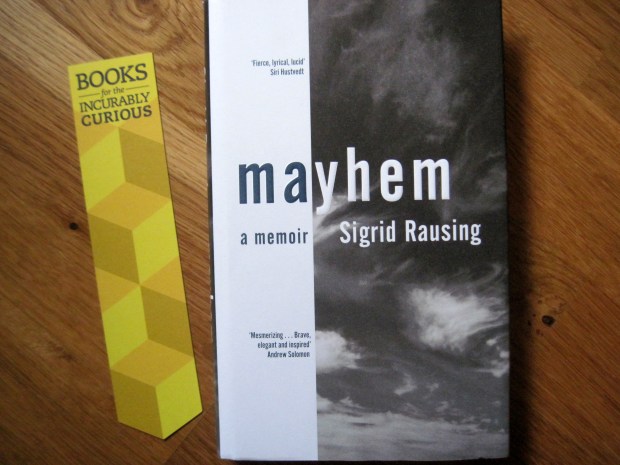
Addiction: The Leavers by Lisa Ko, Mayhem by Sigrid Rausing, The Only Story by Julian Barnes, The Small Door of Your Death by Sheryl St. Germain, Writing and Madness in a Time of Terror by Afarin Majidi, Marlena by Julie Buntin, Ninety Days by Bill Clegg, Bad News by Edward St. Aubyn, Pretend I’m Dead by Jen Beagin, Heart Berries by Terese Marie Mailhot
 Greenland: A Wilder Time by William E. Glassley, This Cold Heaven by Gretel Ehrlich, Miss Smilla’s Feeling for Snow by Peter Høeg, On Balance by Sinéad Morrissey (the poem “Whitelessness”), Cold Earth by Sarah Moss, Crimson by Niviaq Korneliussen, The Library of Ice by Nancy Campbell
Cults: Educated by Tara Westover, Harmony by Carolyn Parkhurst, In the Days of Rain by Rebecca Stott, The Incendiaries by R.O. Kwon, A River Could Be a Tree by Angela Himsel
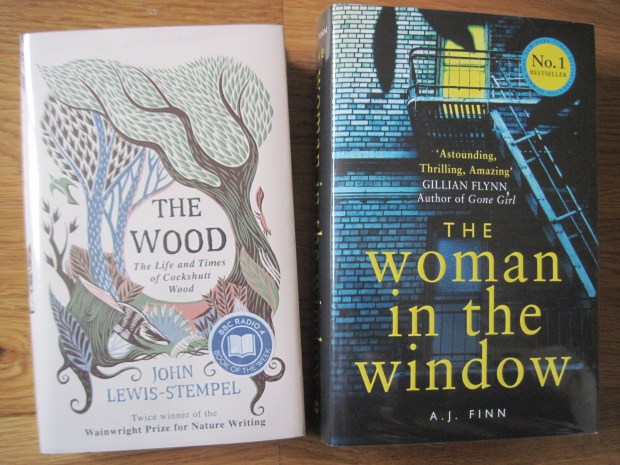
Trees: Ladders to Heaven by Mike Shanahan, The Overstory by Richard Powers, The Man Who Planted Trees by Jean Giono, The Wood and The Secret Life of the Oak by John Lewis-Stempel
 Flying: Skybound by Rebecca Loncraine, West With the Night by Beryl Markham, Going Solo by Roald Dahl, Skyfaring by Mark Vanhoenacker
The Anglo experience in Africa: Free Woman: Life, Love and Doris Lessing by Lara Feigel, Leaving Before the Rains Come by Alexandra Fuller, West With the Night by Beryl Markham, Going Solo by Roald Dahl
Korean-American women: The Incendiaries by R.O. Kwon, If You Leave Me by Crystal Hana Kim, All You Can Ever Know by Nicole Chung, Famous Adopted People by Alice Stephens, Digging to America by Anne Tyler
 New Zealand: The Garden Party and Other Stories by Katherine Mansfield, To the Is-Land by Janet Frame, Dunedin by Shena Mackay
Life in the White House: Living History by Hillary Rodham Clinton, All the Presidents’ Pastries by Roland Mesnier, Becoming by Michelle Obama
Lighthouses: Stargazing: Memoirs of a Young Lighthouse Keeper by Peter Hill, The Bird Artist by Howard Norman, Under the Wide and Starry Sky by Nancy Horan (about Robert Louis Stevenson, whose family built lighthouses)

More lighthouse books ready for next year.
Butterflies: Four Wings and a Prayer by Sue Halpern, Magdalena Mountain by Robert Michael Pyle, Mama Amazonica by Pascale Petit

More butterfly books ready for next year.
What were some of the highlights of your bookish year?
What odd coincidences and recurring themes have you spotted in your year’s reading?
October Reading Plans: R.I.P. and More
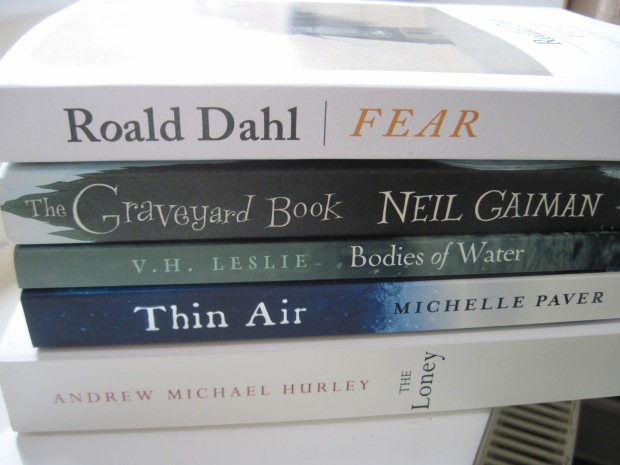
For the first time I’m joining in with the R.I.P. challenge (that’s “Readers Imbibing Peril,” if you’re unfamiliar) – a spur to read the dark fantasy, mystery, thriller, horror and suspense books I own during the month of October. None of these are go-to genres for me, but I do have some books that fit the bill. To start me off, I set aside this pile early in September. I’m not sure how many I’ll get through, so I’m not committing to a particular number.
Several of my review books for the month also happen to be appropriate, beginning with one of my current reads, Little by Edward Carey, a delightfully macabre historical novel about the real-life girl who became Madame Tussaud of waxworks fame. I hope to review it here soon. I also have Deborah Harkness’s latest and an upcoming fable by A.L. Kennedy. Continuing last month’s focus on short stories, I’m going to start on Aimee Bender’s 2013 volume soon; it might just be fantastical enough to count towards the challenge.
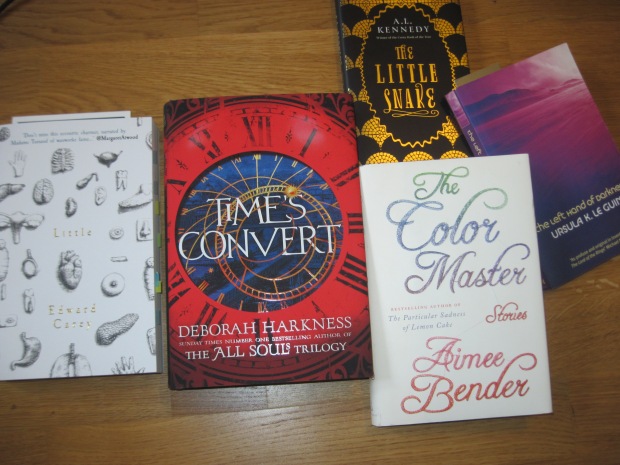
I’ve never read anything by the late Ursula K. Le Guin, so Annabel, Laura and I are embarking on a buddy read of The Left Hand of Darkness this month, too.
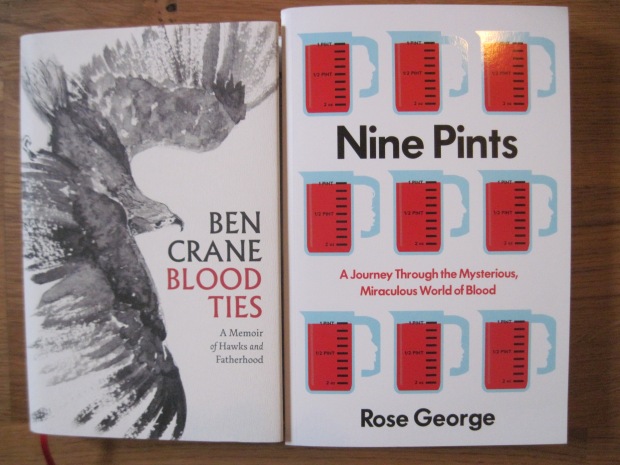
And then I may cheat and add in these two ‘blood-y’ nonfiction books since I’m going to be reading them soon anyway.
My other goal is to read more of the print books I’ve acquired over the past year, including some of 2017’s birthday and Christmas hauls and the books I bought at Bookbarn and in Wigtown. My birthday is coming up in the middle of the month, so it would be good to start chipping away at these stacks before the new acquisitions pile up much more!
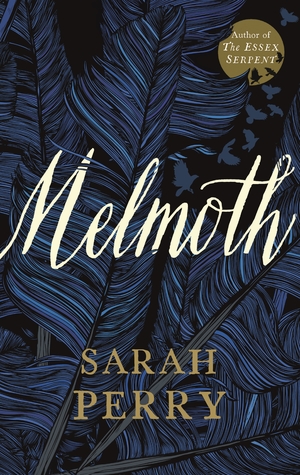
I got a head start on a month of spooky reading with Sarah Perry’s new Gothic tale, Melmoth. It seems to have been equally inspired by Charles Robert Maturin’s 1820 novel Melmoth the Wanderer and by Perry’s time in Prague as a UNESCO World City of Literature Writer in Residence. The action opens in Prague in 2016 as Helen Franklin, a translator, runs into her distressed friend Dr. Karel Pražan one December night. An aged fellow scholar, Josef Hoffman, has been found dead in the National Library, where Helen and Karel first met. Karel is now in possession of the man’s leather document file, which contains accounts of his Holocaust-era family history and of his investigations into the Melmoth legend. She was one of the women at Jesus’s empty tomb but denied the resurrection and so was cursed to wander the Earth ever after. As Hoffman explains, “she is lonely, with an eternal loneliness” and “she comes to those at the lowest ebb of life.”
 Is this just a tale used to scare children? In any case, it resonates with Helen, who exiled herself to Prague 20 years ago to escape guilt over a terrible decision. For most of the book we get only brief glimpses into Helen’s private life, like when she peeks into the under-the-bed shoebox where she keeps relics of the life she left behind. We do eventually learn what she ran away from, but by then I was so weary of dull found documents, irritating direct reader address (“Look! It is evening now … Reader, witness, here is what you see”), and toothless Gothic tropes that the reveal was barely worth hanging around for. Alas, I found the whole thing pretty melodramatic and silly, and not in the least bit frightening.
I truly loved The Essex Serpent ( ), but I think Perry is one of those authors where I will need to skip every other release and just read the even numbers; After Me Comes the Flood, her first, was one of my lowest-rated books ever (
 ). I recall that when I saw her speak at Bloxham Festival of Faith and Literature in 2016 Perry revealed that Novel #4 will be a contemporary courtroom drama. I’ll try again with that one.
My rating: 
Melmoth is released in the UK today, October 2nd. My thanks to Serpent’s Tail for a proof copy for review. It comes out in the USA from Custom House on the 16th. Sarah Perry has written an interesting article about being on strong pain medication while writing Melmoth.
Will you be reading anything scary in the month ahead? Can you recommend any of the books I have coming up?
Book Triage
I feel like I have more books staring at me than ever before. I could blame free library reservations and a trip to Wigtown, but there’s one more major reason for the books stacking up: an utter lack of restraint when it comes to requesting or accepting books for review. I’ve had loads of books coming through the door in the past month or so. Some were offered to me by authors or publishers via Goodreads, Twitter or my blog’s contact form. Others I sent e-mails to request after I saw tempting reviews in the Guardian or previews on Susan’s blog.
Of course I want to read all of these books. I really want to read most of them. Otherwise I wouldn’t have gone to the trouble of requesting, borrowing or buying them. But even so, there’s only so much time. It’s not just a simple matter of picking up the book(s) from the stack that I most feel like reading at a given moment anymore. No, it’s become a triage process whereby I have to assess them by order of urgency.
So, what are my priorities? Here’s a baker’s dozen, in photos.
- Wellcome Book Prize shortlist reading. I’m on the last of six now; this is for the blog tour coming up next week.
- Library books that are due in early May and requested after me.
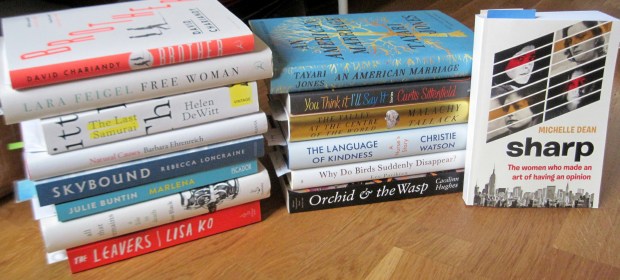
- Books I’ve requested for a blog review, in release date order. I feel so behind that you can expect some doubled-up reviews or mini-reviews in roundup form.
- Books I’ve agreed to review for another outlet, even if that’s just Goodreads.

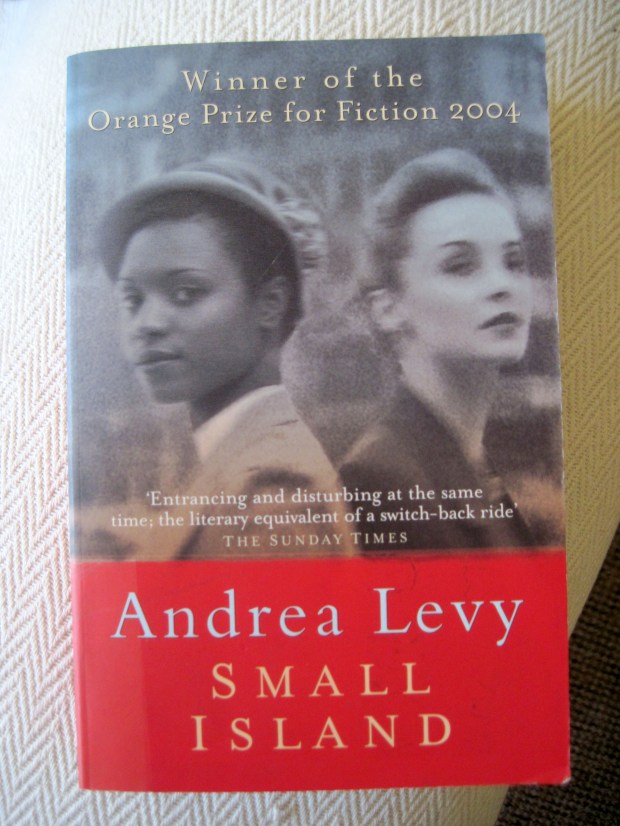
- My first-ever buddy read: Small Island with Buried in Print and Consumed by Ink, arranged months ago. Join us!
- Month- or season-specific reads.
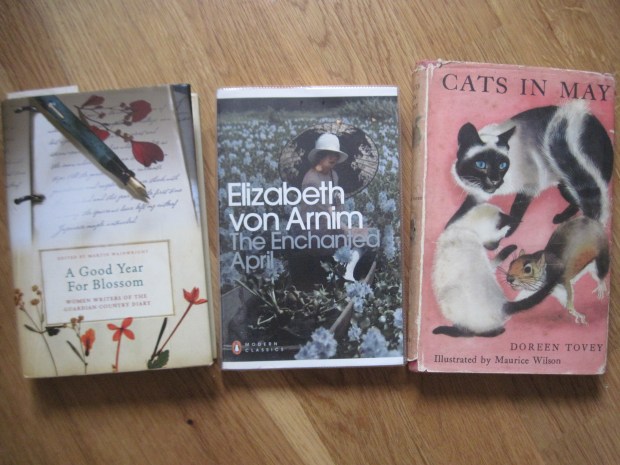
- Public library books with no current renewal issues.
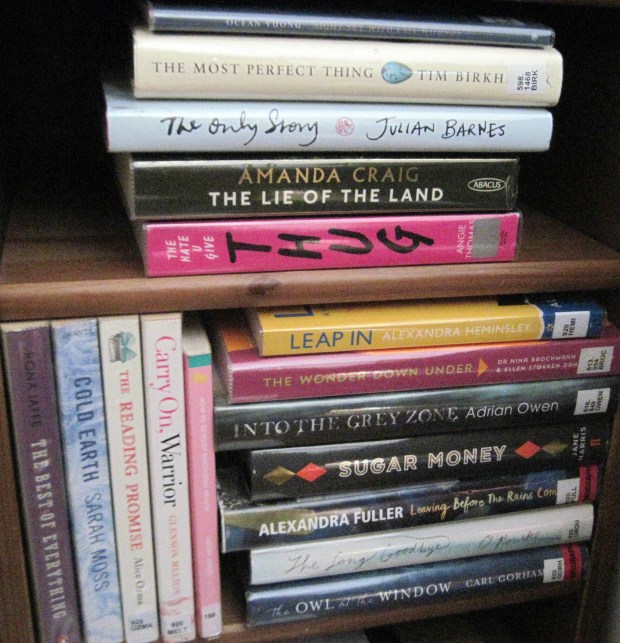
- Booker Prize winners for the 50th anniversary this summer – I’ll at least review the Coetzee for Shiny New Books, and perhaps a few more on the blog if I get the time.

- Three more Iris Murdoch novels to read as part of Liz’s #IMReadalong later on in the year, starting in June.

- Bibliotherapy prescriptions.

- Books I’ve set aside temporarily, generally because I have enthusiastically started too many at once and had to put some down to pick up more time-sensitive review books. Many of these I was enjoying very much and could see turning out to be 4- or even 5-star reads (especially Brooks, Frame and Matthiessen); others I might end up abandoning.

- University library books, which can be renewed pretty much indefinitely.

- Every other book I own, even if I had it eyed up for a particular challenge. My vague resolution to read lots of travel books and biographies has pretty much gone by the wayside so far. I also have barely managed a single classic. Sigh! There’s still two-thirds of the year left, but I certainly won’t be managing the one a month from these genres that I proposed.
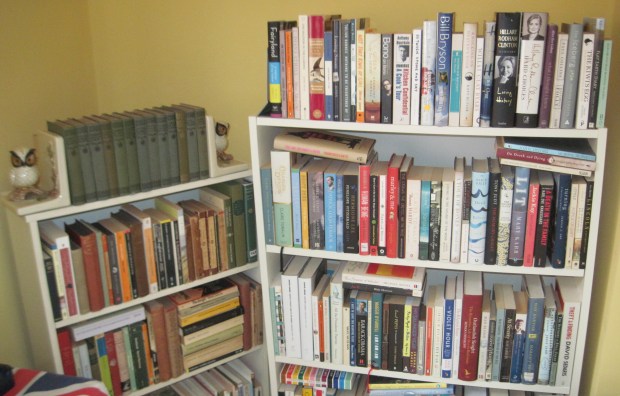
What’s your book triage situation like?
A Trip to Wigtown, Scotland’s Book Town
Wigtown is tucked away in the southwest corner of Scotland in Galloway, a region that doesn’t draw too many tourists. It did remind us a lot of Hay-on-Wye, the Book Town in Wales, what with the dry-stone walls, rolling green hills with more imposing mountains behind, sheep in the fields, and goodly number of bookshops. Wigtown is a sleepier place – it’s really just one main street and square – and has fewer bookshops and eateries overall, but the shops it does have are mainly large and inviting, and several are lovely bookshops-cum-cafés where you can pause for tea/coffee and cake before continuing with your book browsing. It rained for much of our trip and even snowed on a couple of brief occasions, but we got one day of very good weather and made the best of all the rest.


Day 1, Monday the 2nd: Six-plus hours of driving, partially in the sleet and snow, saw us arriving to our spacious and comfortable B&B by 6 p.m., giving us an hour to freshen up before dinner in the dining room. Cullen skink (leek and potato soup with chunks of smoked haddock); pork chops in a mustard cream sauce with roast parsnips, boiled potatoes and carrots, and mashed swede (aka rutabaga); and chocolate cake with gingerbread sauce. All delicious!
Day 2, Tuesday the 3rd: Smoked salmon and scrambled eggs for breakfast, accompanied by plenteous tea and toast. Off in the drizzle to see some local sites: Torhouse stone circle and Crook of Baldoon RSPB bird reserve. Nice sightings of whooper swans, pink-footed geese and lapwings, and a panoramic view of Wigtown across the way. Back to the car in the steady rain to find that we had a flat tire. Thanks to our foot pump, we got back to the W. Barclay garage in town, where they ordered a new tire and fitted the spare wheel. In the afternoon we drove to the Isle of Whithorn to see the 13th-century St. Ninian’s Chapel ruins and St. Ninian’s Cave. In the evening we went to Craft for beer/cider and the weekly acoustic music night, which, alas, just ended up being two old guys playing Americana songs on guitars.


Today’s book shopping: Glaisnock Café, where we also stopped for coffee and a tasty slice of courgette and avocado cake; The Open Book (run by Airbnb customers – this week it was Maureen from Pennsylvania and her niece Rebecca from Switzerland; they’d booked the experience two years ago, and the wait is now up to three years); the Wigtown Community shop (a charity shop); and browsing at Old Bank Books and Byre Books.


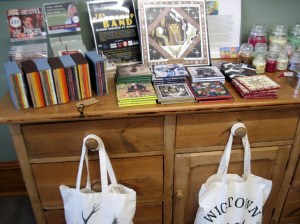
I loved seeing lots of Bookshop Band merchandise around. This was in the Festival Shop.
Day 3, Wednesday the 4th: Vegetarian ‘full Scottish’ cooked breakfast to fuel us for a rainy day of bookshops and explorations further afield. 12 p.m.: return trip to the garage to have our tire fitted. All the staff were so friendly and pleasant. They seemed delighted to see tourists around, and were interested in where we came from and what we were finding to do in the area. Mr. Barclay himself had one of the thickest Scottish accents I’ve ever heard, but I managed to decipher that he thinks of Galloway as “the next best place to heaven,” despite the weather. We spotted a local ‘celebrity’, Ben of the Bookshop Band, in the Co-op, but didn’t say hello as he was trying to pay for his shopping and had the baby in tow.
In the afternoon we ventured to Newton Stewart, the nearest big town, to buy petrol, picnic supper food, and another secondhand book at the community shop there. We retreated from the sudden snow for a scrumptious dinner of smoked salmon, black pudding and haggis (all of them battered and fried, with chips!) at a diner-like smokehouse. Back in Wigtown, we got a mainly dry evening to do the Martyrs’ Walk. In 1685 two Covenanters (Scottish reformers who broke from Charles I’s Anglican Church), Margaret McLachlan, 63, and Margaret Wilson, 18, were tied to stakes on the mud flats and allowed to drown in the rising tide.


Today’s book shopping: THE BOOKSHOP. I’ve meant to visit ever since I read Jessica Fox’s memoir, Three Things You Need to Know about Rockets, in February 2013. Previously based in California, Fox decided on a whim to visit a bookshop in Scotland and ended up here at the country’s largest. She promptly fell in love with the bookshop owner and with Wigtown itself; though she and Shaun Bythell are no longer an item, she has been a major mover and shaker in the town, playing a role in the annual festival and establishing The Open Book.


The Bookshop is a wonderfully rambling place with lots of nooks and crannies housing all sorts of categories. Look out for the shot and mounted Kindle, the Festival bed, the stuffed badger, a scroll of bookseller’s rules, Captain the cat, and a display of Bythell’s The Diary of a Bookseller. Together we found £35 worth of books we wanted to buy – whew! – thanks to my husband’s niche nature books, and had a nice chat with the man himself at the till. He signed my book, commiserated with us about the weather and our trip to see “Willie” (Barclay), and gave us tips for what to see locally. You’d hardly believe he’s the same curmudgeon who wrote the book. Now that I’ve been to the town and the shop, it’s time for me to start rereading it.


We also perused the smallish but very nice selection at Beltie Books, where we made a welcome stop for a cappuccino and some cookies, and I bought a cut-price new book at the Festival Shop. (They stock books by festival speakers plus a curated selection of new releases.)
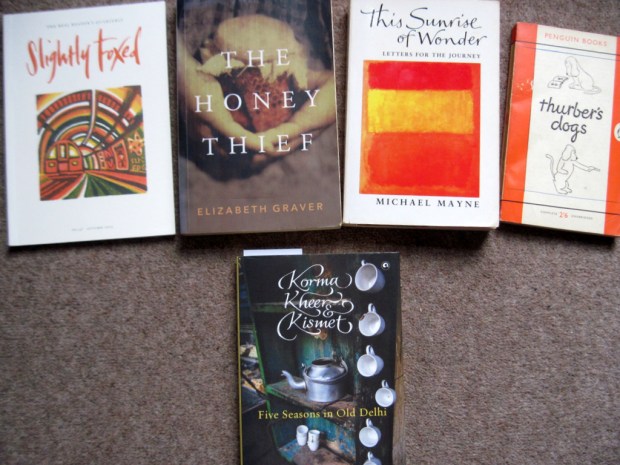
Day 4, Thursday the 5th: SUNSHINE, at last! After hearty omelettes, we headed to the hill that overlooks the town to get the best views of the week. On to Monreith for a charming coastal walk up to the Gavin Maxwell monument of a bronze otter. (He wrote Ring of Bright Water, which my husband brought along to read on our trip.) After a lunch stop back in town, it was out to the red kite feeding station about 40 minutes away – I came for the books; my husband came for the red kites. Though they’re common enough in our part of Berkshire, he was keen to see the site of another recent reintroduction. Wales also has a feeding station we visited some years ago, and on both occasions seeing dozens of birds swoop down for meat was quite the spectacle – though here you sit on an open porch, even closer to the action. We did a few other short walks in the area, finishing off with a sunset sit in Wigtown’s bird hide.


Today’s book shopping: ReadingLasses calls itself Britain’s only women’s bookshop. They stock Persephone Books direct from Bloomsbury, and they also have a large selection of secondhand books. This is the best place to go in town for a light meal and a snack. We had delicious homemade soup with soda bread for an early lunch, followed by coffee and tiffin. I bought a novel by Candia McWilliam, a Scottish author I’ve only read nonfiction by before.


At Curly Tale Books, the children’s bookshop next-door to The Bookshop, we bought a picture book about the local ‘belted’ Galloway cows for our niece. We didn’t realize the shop owner is also the author! She offered to sign the book for us, but we decided that a five-year-old wouldn’t appreciate it enough.
Day 5, Friday the 6th: Full Scottish breakfast to see us on our way, and a farewell to the two B&B cats, including the fluffiest cat on earth. To break up the rather arduous journey, we stopped early on at the Cairn Holy stone circle/tomb and the Cream o’ Galloway farm shop for cheese and ice cream. Home at 7:30 p.m. to find something from the freezer for dinner, unpack and shelve all these new books.
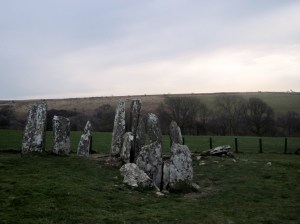
Cairn Holy
Total acquisitions: 13 books for me, 7 books for my husband, 3 books for gifts
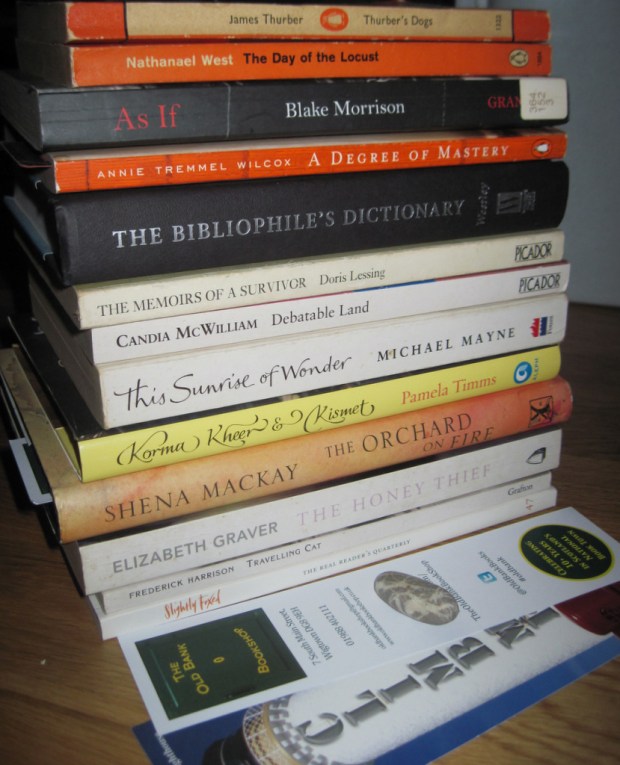
Wigtown is more than twice as far away as Hay is for us, so we’re less likely to go back. (It’s also a tough place to find a decent evening meal.) However, I’d like to think that life will take me back to Wigtown someday, perhaps for the Festival, or for a stay at The Open Book – though I’d have to start planning ahead to 2021!
What I read:
Bits of lots of books I had on the go, but mostly a few vaguely appropriate titles:
Under the Skin by Michel Faber was the perfect book for reading on rainy Scottish highways. I’m so glad I decided at the last minute to bring it. Isserley drives along Highland roads picking up hitchhikers – but only the hunky males – to take back to her farm near the Moray Firth. It’s likely that you already know the setup of this even if you haven’t read it, perhaps from the buzz around the 2013 film version starring Scarlett Johansson. It must have been so difficult for the first reviewers and interviewers to discuss the book without spoilers back in 2000. David Mitchell, in his introduction to my Canons series reprint, does an admirable job of suggesting the eeriness of the contents without giving anything significant away.
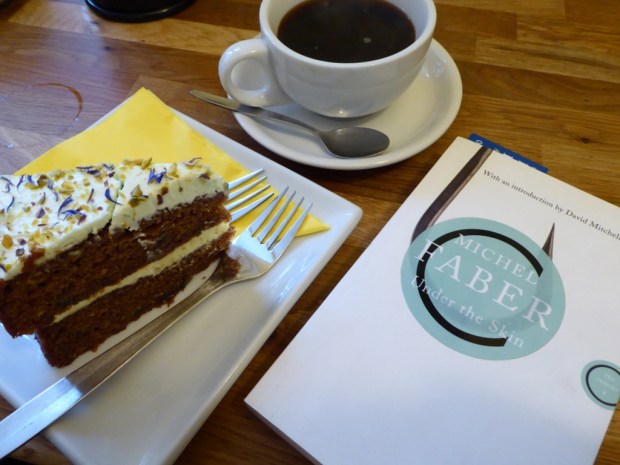
Shelve this under science fiction, though it veers towards horror and then becomes a telling allegory. I knew the basic plot beforehand, but there were still some surprises awaiting me, and I was impressed with how Faber pulled it all off. Keep an eye open for how he uses the word “human.” This has a lot to say about compassion and dignity, and how despite our differences we are fundamentally the same “under the skin.”
An atmospheric line: “The fields all around her house were shrouded in snow, with patches of dark earth poking through here and there as if the world were a rich fruit cake under cream.”
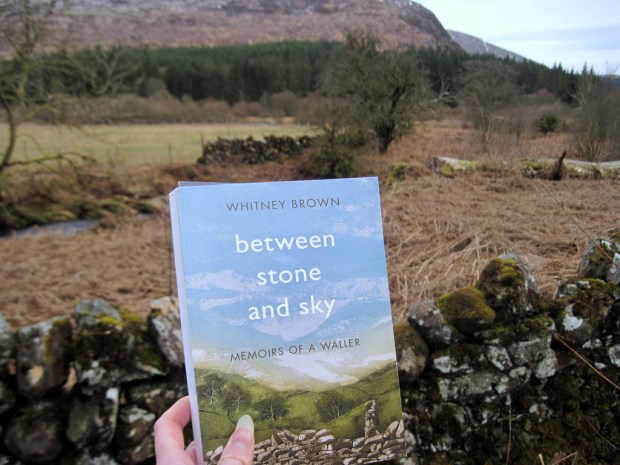
Between Stone and Sky: Memoirs of a Waller by Whitney Brown: For a TLS review. Brown, from South Carolina, trained as a dry-stone waller in Wales (where she fell in love with a man who wouldn’t marry her), but we saw plenty such walls in Scotland too. As an expat I could relate to her feeling of being split between two countries. (Releases May 17th.)
I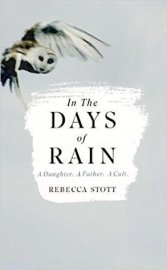 n the Days of Rain: A daughter. A father. A cult. by Rebecca Stott: I read the first two-fifths or so, mostly in the car and over our leisurely B&B breakfasts. One branch of Stott’s Exclusive Brethren family came from Eyemouth, a Scottish fishing village. A family memoir, a bereavement memoir, a theological theme: this brings together a lot of my favorite things. And it won last year’s Costa Biography Award, so you know it’s got to be good.
I also started two books by Scottish novelists, The Orchard on Fire by Shena Mackay and The Accidental by Ali Smith – though I don’t know if I’ll make it through the latter.
 Bookish Beck = Rebecca Foster. American transplant to England. Freelance proofreader and book reviewer.
 Bookish Beck