March Releases by Emily Haworth-Booth, Roz Morris, Catherine Redford & Joann Sfar
Autofiction about beloved animals and ambivalence over motherhood, a witty memoir of house-hunting in the South of England, a poetry collection reflecting on bereavement and queer parenthood, and a graphic novel adaptation of a 20th-century classic: I had a real variety this month.
Mare by Emily Haworth-Booth
Is the entire novel built around a pun? The French for mother, mère, is a homophone for mare. Like Motherhood by Sheila Heti, this is a work of autofiction that circles the question of becoming a mother and posits the writing life and other relationships as partial substitutes for parenthood. But yes, there is also a literal horse. The narrator lives in London with her husband and scrapes together a living by teaching creative writing on Zoom and writing children’s books. They’ve recently lost their dearly loved dog and are friendly with the neighbours whose garden they share and whose noise they hear the other side of a wall – so much so that she thinks of the two girls as “not-my-daughter” and “also-not-my-daughter.” The narrator is contracted to write a book about plastics for children but can’t seem to land on the right tone somewhere between alarm and false cheer. Approaching age 40, she’s finally coming to terms with the fact that she won’t be a mother due to premature ovarian failure.
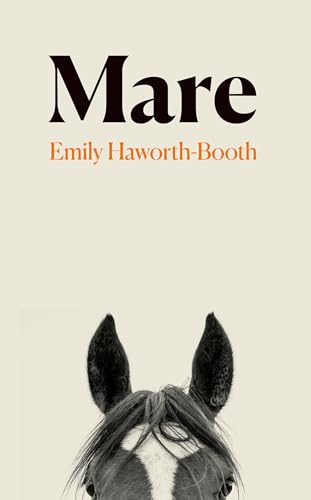 Into all this comes the love of a horse. She finds a stable two miles away and spends three days a week there riding and tending to a black and white mare. As a child she’d been horse-crazy, so this isn’t “a new feeling … but a resurgence. Deeply familiar. Lust and tenderness and hope mingled.” Time with the horse reminds her to be present, to live in her body despite its flaws, to take joy in the everyday. “Being with the horse has come to feel more and more like an exercise in metaphor.”
Haworth-Booth makes caring for an animal analogous with motherhood, but doesn’t stop at easy symbolism. The mare might stand in for female fear and vulnerability, but is also flesh and blood. Cultivating bodily bonds with other creatures is part of how we find purpose when life is threatened by chronic illness and climate breakdown.
This is Haworth-Booth’s adult debut and I hope it will be submitted for next year’s McKitterick Prize. Its wry honesty appealed to me, as did the narrator’s interactions with her mother (who forwards her “Childfree and fabulous” e-newsletters) and not-my-daughter, who share her interest in horses. There’s also the meta angle of the narrator assembling an “H folder” that eventually becomes this book. Hard to tell in my Kindle file, but some passages seem to be aligned like poetry. “The boundaries are blurring … this is the age of the non-binary, the hybrid, … the uncategorisable,” the narrator says to her students. “What about a collection of thoughts themed around a subject, themed around, for example, a horse?” I can see how some would find this insufferable, but it really worked for me. (Read via NetGalley)
Turn Right at the Rainbow: A Memoir of Househunting, Happenstance and Home by Roz Morris
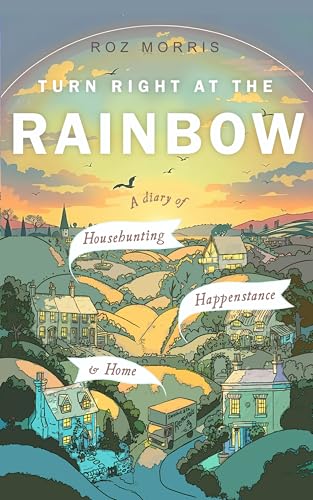 Now that we’re four years on from the purchase of our first property, I can read about house-hunting without finding it too depressing! When Morris and her husband Dave decided to move out of London, securing a buyer for their house was a cinch, but finding a new place that they loved as much as their home of twenty-plus years seemed like an insurmountable challenge. She wrings much humour from the process by comparing house viewings with first dates – as in a romcom, you’re always looking out for “The One,” but all the potential suitors have various issues – and employing jokey nicknames (“the Rusty Tractor house,” “The Aardvark House”), and a financial shorthand of arms and legs.
Estate agents, potential buyers, and sellers alike are maddening in their quirks. There are so many inexplicable features in otherwise normal suburban Surrey properties: more toilets than bedrooms, giant air-conditioning units, a long bench that looks like it belongs in a bus station waiting room, and so on. In between details of the search, Morris remembers her upbringing in mining country made famous by Alan Garner and how she and Dave met and made a life together as childfree writers. This is a warm and funny read whose short chapters fly by, but it also made me ponder what is essential in a home. Though I was mildly taken aback by the ending, I came to think of it as fitting, in a T.S. Eliot knowing the place for the first time sort of way.
With thanks to the author for the free e-copy for review. (Published by Spark Furnace.)
The Way the Water Held Me by Catherine Redford
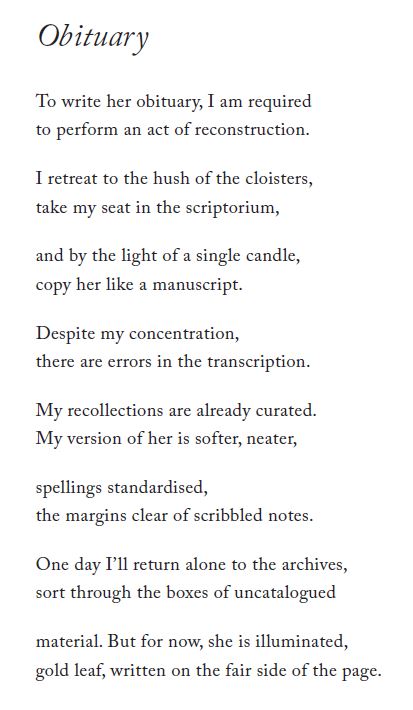
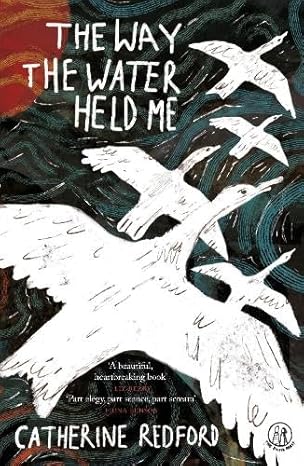 This isn’t your average bereavement story: Redford was only 35 and had a young child at the time that her wife died of cancer. We don’t hear so much about being widowed early, or in a same-sex partnership. Redford interrogates the expectations of widowhood (“If not Victoria, I can be Jackie O”) through biographical poems about Mary Shelley’s writings in the wake of Percy Bysshe Shelley’s untimely death. There’s a found/collage poem pieced together from one of Shelley’s letters; others quote from her Frankenstein and The Last Man. Elsewhere, Redford alludes to Woolf, Wordsworth and Wuthering Heights. Redford recalls feeling bombarded by people’s sympathy (“The flowers arrive like a tsunami”) and having no idea how to respond when asked how she’s doing. She relives moments from their carefree courtship days, lists the elements of “Her Last Day,” and documents the rituals that enshrine memory. I loved the archival vocabulary of “Obituary” (below) and how belongings left behind take on outsize significance: “I cross-examine every page of her notebooks, lay out the contents / of each drawer in a crescent on the floor as if they are grave goods // selected for her journey to the afterlife” (from “Circles”). The alliteration and nature (especially seaside) imagery were just right for me. From the hardest of circumstances came something tender and lovely.
With thanks to The Emma Press for the advanced e-copy for review.
The Little Prince by Antoine de Saint-Exupéry (1943)
Graphic novel adaptation by Joann Sfar (2008); colours by Brigitte Findakly
[Translated from French by Sarah Ardizzone, 2010]
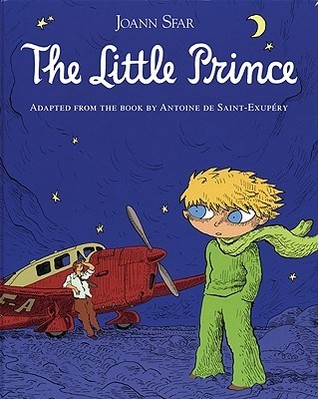 Reading The Little Prince in the original French was a long-term project in my high school French curriculum. I can still remember snippets such as “Dessine-moi un mouton” (“Draw me a sheep”) and apprivoiser (to tame) – it was good for learning such random vocabulary words. You are probably familiar with this fable of a pilot who crashes in the desert and meets a strange, possibly alien boy and talks with him about his interplanetary journeys as well as a flower, a snake, a fox, and so on. Before he landed on earth, he alighted on six other planets where he met a king, a vain man, a drunk, a businessman, a lamplighter, and a geographer, all of whom appeared to be trapped in destructive patterns of their own making.
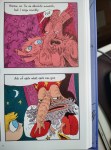
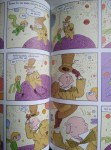
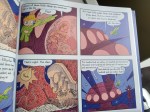
I had a few issues. The main one is that, these days, the story falls for me in the same category as other intolerably twee stuff like Jonathan Livingston Seagull and The Boy, the Mole, the Fox and the Horse. Granted, “You can only see clearly with the heart. What matters is invisible to the eye” is profound in its simplicity. But much of the rest had me rolling my eyes. As for the adaptation, why was it deemed necessary? The original The Little Prince is illustrated. Plus the drawing style is rather grotesque. (I don’t remember this from the only other book I’ve read by Sfar, The Rabbi’s Cat.) I guess the idea was to contrast the boy’s innocence and blue-pool eyes with the essential ugliness of much of what he encounters. But what’s with most of the planets’ residents having noses like penises? (Unsolicited review copy from SelfMadeHero)
Three for #ReadingWales26: Tishani Doshi, Gwyneth Lewis & Jan Morris
As well as Reading Ireland Month, it’s Reading Wales Month, hosted by Karen of BookerTalk and Kath of Nut Press. I read three relevant books by women – my ideal trio of a novel, a poetry collection and a memoir – and also experienced some additional poetry via a special church service.
Fountainville by Tishani Doshi (2013)
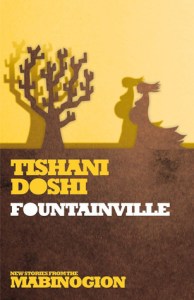 This is part of a Seren series retelling the medieval Welsh legends in the Mabinogion. Doshi has Welsh and Indian parentage; here she blends her knowledge of both countries and their stories. Luna, the narrator, works as an assistant to Begum, the Lady of the Fountain. Begum and her husband Kedar, a gangster, operate a shady surrogacy clinic. Then Owain Knight comes to town and makes Luna a proposition and things get complicated. Though this is novella length, it took me ages to slog through it. My lack of familiarity with the source text felt like a problem – I’d rather it had been summarized in a foreword rather than an afterword – and Doshi’s narrative is insipid despite the soap opera-ready content; I saw none of the spark and originality I’ve found in her excellent poetry. On this evidence I’m unlikely to pick up any more of her fiction. In any case, it was appropriate that I bought an ex-Swansea Libraries copy from Richard Booth’s Bookshop in Hay-on-Wye. (Secondhand purchase)
First Rain in Paradise by Gwyneth Lewis (2025)
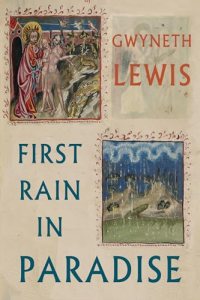 I’ve read a couple of Lewis’s poetry collections before (e.g. Parables and Faxes), as well as her memoir of depression and her travel book about sailing with her husband. She was Wales’s first poet laureate in 2005–6 and this is her sixth collection in English. The first section about her childhood with an emotionally abusive mother envisions her mother as a spider. The rest of the book traces the effects of that early trauma into chronic illness and mental health struggles. There is a sense of lost time. “Late Blackberries” opens “Where was I during the glut? I missed / the first sweetness, alluring and glossy // black as a dormouse’s eye, when pickings / were easy. A decade lost being ill tastes // bitter.” The imagery is drawn from physics, the countryside, medieval religious art, and the discovery of mummies. The two most quintessentially Welsh poems are “Red Waistcoat,” about coming across a dead ewe in a field, and “Under,” commemorating a fatal 2011 mining accident. Forasmuch as the book’s themes seemed perfectly assembled to appeal to me, I never felt they’d been brought to life in the language. (Secondhand purchase – Exeter charity shop)
A Writer’s House in Wales by Jan Morris (2002)
“My house is so absolutely of its setting, is rooted so profoundly not just in the soil, but in the very idea of Wales, that anywhere else it would lose all charisma.”
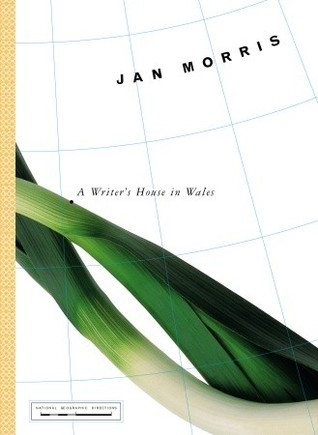 Although Jan Morris was famous for travelling the world and writing all about it, she equally loved being able to retreat to Trefan Morys, “for me … a summation, a metaphor, a paradigm, a microcosm, an examplar, a multum in parvo, a demonstration, a solidification, an essence, a regular epitome of all that I love about my country.” That excerpt from the first paragraph is a typical example of her effusive overwriting. This short book was clearly written for people (Americans) who know nothing about Wales, not even where on earth it is. I love her cosy evocation of her home – actually the renovated 18th-century stable block of the former family home, ample for her and Elizabeth in their dotage – and its bookshelves and animal life, whether domestic (Ibsen the Norwegian forest cat) or wild (bats in the attic!).
However, this was a reread and I found it indulgent as well as quaint this time around. It reminded me most of her diaries (the first volume was In My Mind’s Eye) and would be ideal for reading in tandem with those. Morris writes, “I am emotionally in thrall to Welshness.” I couldn’t help but think of biographer Sara Wheeler’s words about Morris’s contradictions: “she was a famous chronicler of the British Empire (some say an apologist for it) and a card-carrying Welsh nationalist. She was singular and contrary”. Wheeler slept in this house, in Morris’s bed, after her death while working through the papers.
I’ve always meant to source more from this National Geographic Directions series of brief travel books in which authors celebrate a beloved place. The only other I’ve read is Land’s End, Michael Cunningham’s book on Provincetown. (Free from The Book Thing of Baltimore)
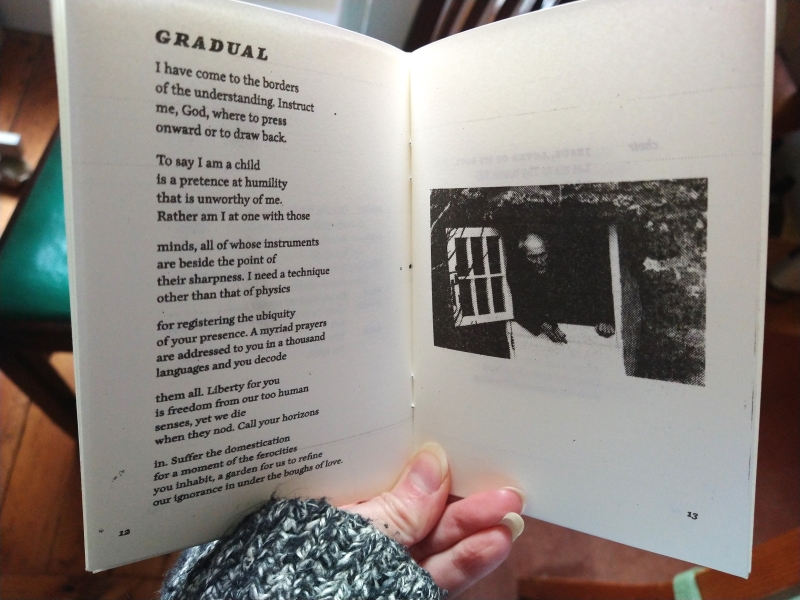
For Advent last year and Lent this year, my church put on special evening compline services that combine liturgy and folk-inspired music my husband helped with. Earlier this month we had an extraordinary R.S. Thomas-themed service with some poems read aloud from the pulpit and others set to avant-garde music (a theremin was ruled out, but a harmonium, melodeon and glockenspiel featured, as well as a mandolin, banjo, toy piano and electric guitar). I was mostly unfamiliar with Thomas, who was a priest as well as a poet, and was gobsmacked by the commingling of scientific and theological vocabulary and the tolerance of doubt. Here are some extracts.
It is this great absence
that is like a presence,
that compels me to address it without hope
of a reply.
You speak
all languages and none,
answering our most complex
prayers with the simplicity
of a flower, confronting
us, when we would domesticate you
to our uses, with the rioting
viruses under our lens.
You have made God small,
setting him astride
a pipette
And all this in a carefully assembled pamphlet that I’ve kept as a souvenir.
I might not have chosen the best books this year, but I’m still feeling well disposed towards the Welsh. A nice link is that Thomas lived just a few miles from Morris. In her book she calls him “perhaps the greatest Welsh poet writing in English since George Herbert.” She describes him thus: “I last set eyes on R. S. Thomas standing all alone beside our coastal road gazing silently into an adjacent wood, as though communing with the crows and blackbirds in its branches … Whenever I recall him at the roadside that day, looking silently into the trees as though the answer to all things was to be found among them, the memory gives me a sense of calm and liberation, as Wales itself does”.
Three on a Theme for Mother’s Day: Baker, Diski and Sampson
It’s Mothering Sunday in the UK today, so, like last year, I’m featuring three very different books about mothers and motherhood: a memoir, a novel and a poetry anthology. There are complex emotions at play in the first two due to grief, abuse and disability. The poems are cheerier (thankfully) and reflect on the experience of motherhood but also of being mothered. On that last point, I’ve added my response to a relevant short story I happened to read today.
Reading My Mother Back: A memoir in childhood animal stories by Timothy C. Baker (2022)
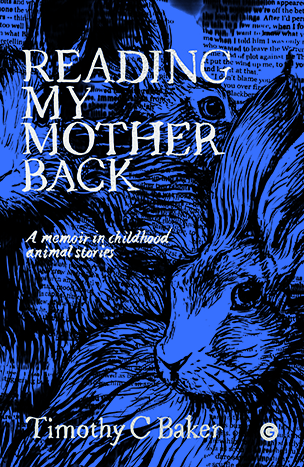 Baker is a lecturer in Scottish literature at the University of Aberdeen. His first non-academic publication is a curiously beguiling novella-length reappraisal of favourite children’s books. “To misquote Heraclitus, you cannot read the same book twice.” While he’s sheepish about including so many 19th- and early-20th-century white male authors, he can’t do otherwise as these are the texts that first taught him about death, loneliness and friendship: Charlotte’s Web, The Wind in the Willows, The Magician’s Nephew and Watership Down. (Also The Secret Garden.) Baker grew up in Maryland and Vermont, lonesome and closeted, with parents who briefly joined a cult. In his memory, his mother (who had been abused) always suffered with chronic illness and pain. In each chapter, he weaves together a discussion of a plot with stories from his early life and critical opinion on the value of rereading. It helped that I was familiar with six of the nine books Baker features (and others by Gallico, though not The Man Who Was Magic); I’d not even heard of Merle the High Flying Squirrel or The Book of the Dun Cow.
I spotted this in the Wigtown Festival Shop* on our 2023 visit to Scotland’s Book Town and could hardly believe it existed because it seemed so perfectly suited to me: I loved animal books, especially Watership Down, as a child; I’ll read any bereavement memoir going; I grew up 30 miles from Baltimore, where Baker spent his early life; he and I both had strict religious upbringings; and his mother experienced kidney failure (after eating a foxglove??), a link to my family’s history of kidney disease. There are plentiful differences, too, of course, but Baker emphasises connection. “If reading these books has taught me anything,” he concludes, “it is that all of my stories are individual, and all of them are universal. What we share is the unshareability of our grief … [but also] the joy of knowing that we have loved.” And for such a seemingly niche book (from Goldsmiths Press), I have actually found myself mentioning it to two blogger friends in recent days, so that’s proof he was right. 
[*As to how the book finally came into my possession: I added it to my wishlist and an acquaintance (a former mayor of Newbury, in fact) bought it for me for my 40th birthday. However, he forgot to bring the gift to our joint party and it took another 2+ years to extract it from him – through explicit reminders when we invited him to join us on a quiz team.]
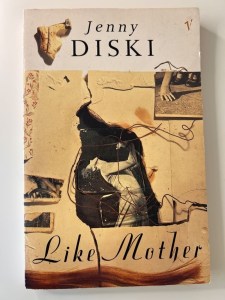
Like Mother by Jenny Diski (1988)
I’ve enjoyed the late Jenny Diski’s travel memoirs (Skating to Antarctica and Stranger on a Train) and essays (On Trying to Keep Still). This novella was my first taste of her fiction and, while it’s dark as hell, I admired the psychological acuity and playfulness with narration. Occasional chapters introduce a dialogue between Nony and an imaginary interlocutor whose role is to listen to the story of her mother, Frances, a former dancer. That family history is the substance of the rest of the book, which is in an omniscient third person. The artificiality of the setup is blatant, though; Nony can neither think nor speak, having been born without a brain (hydranencephaly). Nony’s full name is thus Frances’s cruel joke.
By necessity, the story stretches back to Frances’s parents, Ivy and Gerald, whose postwar optimism soon ceded to the reality of addiction, adultery and the attrition of love. A semiferal Frances escaped her unhappy home for the streets of London and engaged in sex play with Stuart on a bombsite. This went on for years. For Stuart, it blossomed into genuine love, but the numb Frances could never return his feelings and only used him. There are some really painful scenes here, such as Stuart stealing ether from the chemistry supply cupboard so she can huff herself into temporary oblivion, and a drunk Ivy molesting adolescent Frances. “Like mother, like daughter” is a bitter confirmation of inherited trauma. Nony might well be a symbolic manifestation of Frances’s desire to cultivate nothingness. To the extent that she is a literal baby – I’m really not sure – Frances does seem to love her and care for her physical needs, even as she’s grateful that the relationship will be short-lived.
Diski draws attention to the falsity of her narrative technique at the very end. It’s a disturbing yet intriguing novel that I think must be trying to make a wider point about postwar disillusionment. (Enough to make one question one’s growing antipathy towards Boomers?) I was reminded faintly of Nutshell by Ian McEwan, which is from the perspective of a fetus, and I Am Clarence by Elaine Kraf, a troubling story of a mentally ill mother and her disabled son. I have another novella plus a short story collection by Diski on the shelf, and I daresay after those I’ll have to seek out everything else she wrote. (University library) 
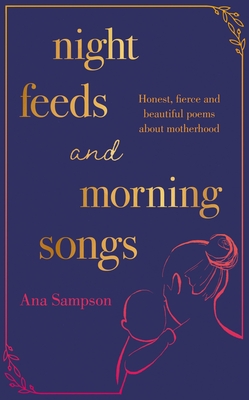
Night Feeds and Morning Songs, ed. Ana Sampson (2021)
“I crossed the border into the Republic of Motherhood
and found it a queendom, a wild queendom.”
~Liz Berry
It would have been easy to make such an anthology samey and sentimental, so kudos to Sampson for curating a solid mix of contemporary and period work. The poems are grouped into loose categories covering pregnancy, the sleepless nights of early motherhood, the power of womanly solidarity, the legacy (or absence) of one’s own mother, and the milestones of life as a child grows up and moves away. (Jackie Kay marvels that her baby boy is now a 6-foot-2 world traveller.) However, there are almost as many emotional approaches and poetic forms as there are contributors. Exhilaration meets exhaustion; guilt and grief threaten to overwhelm the good times. Sometimes the infant is addressed directly. The tone might be sombre, outraged or satirical. A few excerpts:
from “Labour Ward Prayer” by Vicky Thomas
Give us this day our daily miracle.
Exchange our offering of sweat and tears
and, most of all, of blood,
for new life, crumpled as a new leaf bud.
 from “The Visitor” by Idra Novey
…more dragon
than spaniel, more flammable
than fluid …
All wet mattress to my analysis,
he’s stayed the loudest and longest
of any houseguest
from “What My Kids Will Write about Me in Their Future Tell-All Book” by January Gill O’Neil
They will say that no was my favourite word,
More than stop, or eat, or love.
That some morning, I’d rather stay in bed,
laptop on lap, instead of making breakfast
…
They will say they have seen me naked.
Front side, back side – none of which
were my good side.
I enjoyed re-encountering work by some personal favourite poets such as Caroline Bird, though most entries were new to me. Sampson’s section introductions aren’t particularly illuminating and often reference poems that aren’t actually in the part in question. Some of the 19th-century and earlier material is quaintly twee, but I did love discovering Christina Rossetti’s “To My First Love, My Mother.” This is the poem that made me cry, though:
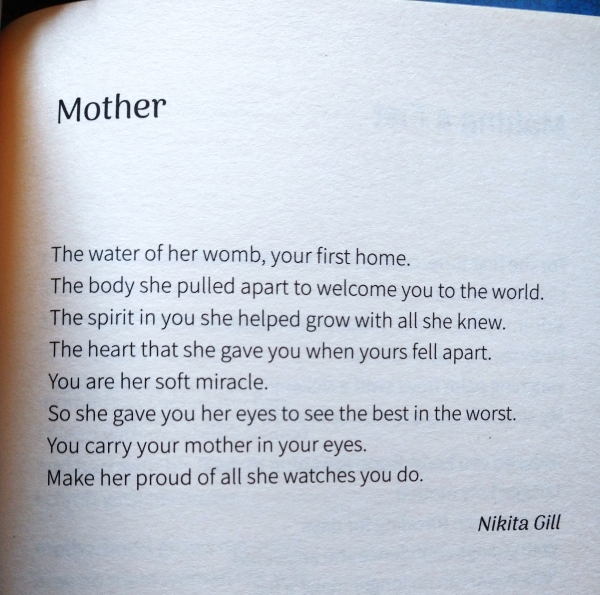
(Little Free Library)
And a bonus short story:
 “Egg Mother” by Kim Samek (from I Am the Ghost Here): I’m two stories into Samek’s gently surreal collection. This second story combines the themes of parenting and grief prevalent above. Her openings are knockout: “At thirty-six I turn into a scrambled egg. It happens a few months after I give birth.” In therapy, the narrator discovers that she’s been repressing her grief over her mother, who died of cancer when the narrator was 13. The therapist suggests that she and her husband hold a joint ‘funeral’ for her mother and her younger self in a graveyard. But even after the ritual, she doesn’t return to herself. It’s a sobering but realistic message: some things one just doesn’t get over.
“Every story that I read becomes the story of my mother.”
~Timothy C. Baker
Last night, we saw Brooklyn expat singer-songwriter Annie Dressner (and Sean Duggan of Steady Habits) in concert at a church hall. I was mostly underwhelmed by her quirky confessional songs and little-girl voice, but a couple of songs stood out for me. One, “I Just Realized,” includes the line “And I hope that I can be just like my mother.”
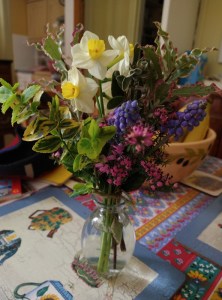
Today was a more emotional day than I was expecting. I got a sweet posy from church, but having a whole service focussed on mothers and mothering was hard for me. I had to mostly switch off to get through it.
Just in my current stack, there are so many books about mothers or mothering…
 the loss of a mother (Eva Luna by Isabel Allende; The Memory of Borrowed Books by Meg Anderson; The Curious Incident of the Dog in the Night-Time by Mark Haddon; Late Migrations by Margaret Renkl; I Capture the Castle by Dodie Smith) – so common an element in novels that I have to think it’s shorthand for a character who has to pluckily rely on their own psychological resources
- mothers’ protective instinct (The Benefactors by Wendy Erskine)
- emotional distance from an unstable mother (Carrie by Stephen King; First Rain in Paradise by Gwyneth Lewis; Blonde by Joyce Carol Oates; The First Day of Spring by Nancy Tucker, which also includes the struggle to be a good mother in turn)
- mixed feelings about the inability to have a child (Mare by Emily Haworth-Booth)
- a mother’s grief at the loss of a child (Ordinary Saints by Niamh Ni Mhaoileoin)
I know it’s a subject I’ll be reading and thinking about for the rest of my life.
Miscellaneous for #ReadIndies: Grenville & Holman-Hunt, Trans History & Travel Poetry, Kathleen Jamie & Kristen Zory King
Squeaking in some more reviews on the last day of a challenge, as is my wont. Today I have mini-responses to a wide selection: a graphic novel companion to LGBTQ history, an exposé that will have you checking the ingredients lists on all your toiletries and other household cleaning products, a memoir of an eccentric Edwardian childhood, poems about modes of travel and the states of mind they produce, superb nature essays blending personal and environmental writing, and a mini collection of flash fiction about young women.
Trans History: From Ancient Times to the Present Day by Alex L. Combs and Andrew Eakett (2025)
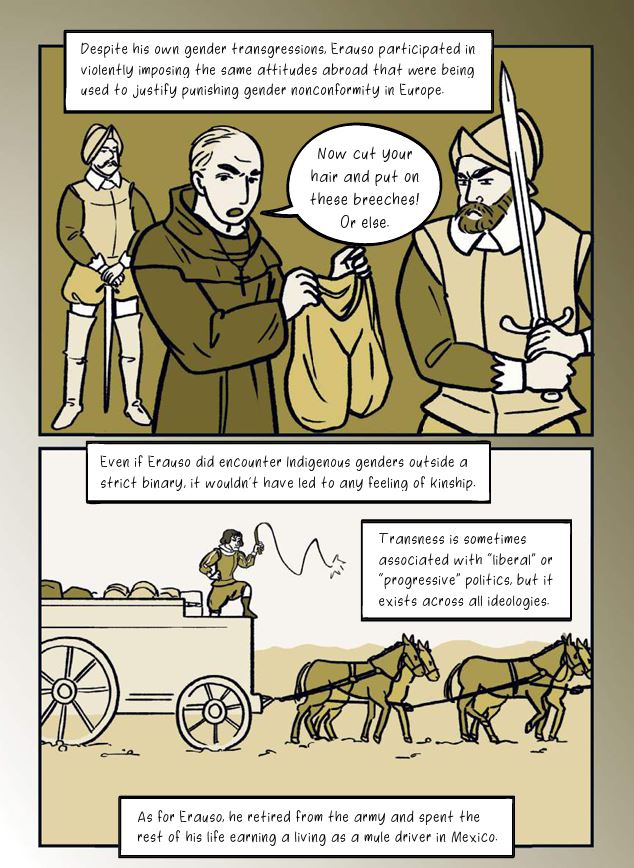
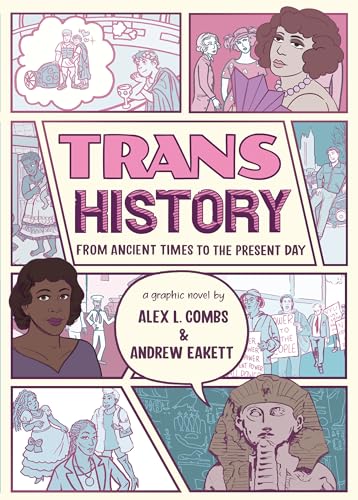 Queer people of all varieties have always been with us; they just might have understood their experience or talked about it in different terms. So while Combs and Eakett are careful not to apply labels retrospectively, they feature a plethora of people who lived as a different gender to that assigned at birth. Apart from a few familiar names like Lili Elbe and Marsha P. Johnson, most were new to me. For every heartening story of an emperor, monk or explorer who managed to live out their true identity in peace, there are three distressing ones of those forced to conform. Many Indigenous cultures held a special place for gender-nonconforming individuals; colonizers would have seen this as evidence of desperate need of civilizing. Even doctors who were willing to help with early medical transitions retained primitive ideas about gender and its connection to genitals. The structure is chronological, with a single colour per chapter. Panes reenact scenes and feature talking heads explaining historical developments and critical theory. A final section is devoted to modern-day heroes campaigning for trans rights and seeking to preserve an archive of queer history. This was a little didactic, but ideal for teens, I think, and certainly not just one for gender studies students.
Readalike: Meg-John Barker’s Sexuality: A Graphic Guide
 (Read via Edelweiss) [Candlewick Press]
The Case Against Fragrance by Kate Grenville (2017)
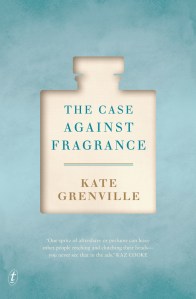 File this with other surprising nonfiction books by well-known novelists. In 2015, Grenville started struggling while on a book tour: everything from a taxi’s air freshener and a hotel’s cleaning products to a fellow passenger’s perfume was giving her headaches. She felt like a diva for stipulating she couldn’t be around fragrances, but as she started looking into it she realized she wasn’t alone. I thought this was just going to be about perfume, but it covers all fragranced products, which can list “parfum” on their ingredients without specifying what that is – trade secrets. The problem is, fragrances contain any of thousands of synthetic chemicals, most of which have never been tested and thus are unregulated. Even those found to be carcinogens or endocrine disruptors in rodent studies might be approved for humans because it’s not taken into account how these products are actually used. Prolonged or repeat contact has cumulative effects. The synthetic musks in toiletries and laundry detergents are particularly bad, acting as estrogen mimics and likely associated with prostate and breast cancer. I tend to buy whatever’s on offer in Boots, but as soon as my Herbal Essences bottle is empty I’m going back to Faith in Nature (look for plant extracts). The science at the core of the book is a little repetitive, but eased by the social chapters to either side, and you can tell from the footnotes that Grenville really did her research.
Readalike: Chris van Tulleken’s Ultra-Processed People
(Secondhand – gift from my wish list) [Text Publishing]
My Grandmothers and I by Diana Holman-Hunt (1960)
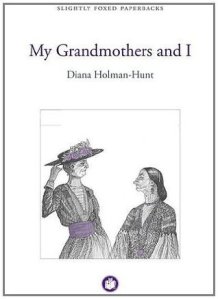 The author was the granddaughter of Pre-Raphaelite painter William Holman Hunt (The Light of the World et al.). While her father was away in India, she was shunted between two homes: Grandmother and Grandfather Freeman’s Sussex estate, and the mausoleum-cum-gallery her paternal grandmother, “Grand,” maintained in Kensington. The grandparents have very different ideas about the sorts of foodstuffs and activities that are suitable for little girls. Both households have servants, but Grand only has the one helper, Helen. Grand probably has a lot of money tied up in property and paintings but lives like a penniless widow. Grand encourages abstemious habits – “Don’t be ruled by Brother Ass, he’s only your body and a nuisance” – and believes in boiled milk and margarine. The single egg she has Helen serve Diana in the morning often smells off. “Food is only important as fuel; whether we like it or not is quite immaterial,” Grand insists. Diana might more naturally gravitate to the pleasures of the Freeman residence, but when it comes time to give a tour of the Holman Hunt oeuvre, she does so with pride. There are some funny moments, such as Diana asking where babies come from after one of the Freemans’ maids gives birth, but this felt so exaggerated and fictionalized – how could she possibly remember details and conversations at the distance of several decades? – that I lost interest by the midpoint.
Readalike: Gwen Raverat’s Period Piece
 (Secondhand – Community Furniture Project) [Slightly Foxed]
In Transit: Poems of Travel, ed. Sarah Jackson and Tim Youngs (2018)
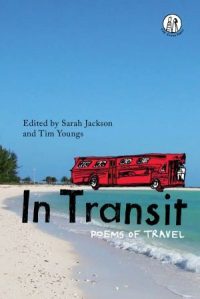 Some methods of transport are just more romantic than others. The editors’ introduction notes that “Trains were by far the most popular … followed by aeroplanes and then boats.” Walks and car journeys were surprisingly scarce, they observed, though there are a couple of poems about wandering in New York City. Often, the language is of maps, airports, passports and long flights; of trading one place for another as exile, expatriate or returnee. The collection circuits the globe: China, the Middle East, Greece, Scandinavia, the bayous of the American South. France and Berlin show up more than once. The Emma Press anthologies vary and this one had fewer standout entries than average. However, a few favourites were Nancy Campbell’s “Reading the Water,” about a boy launching out to sea in a kayak; Simon Williams’s “Aboard the Grey Ghost,” about watching for dolphins on a wartime voyage from England to the USA; and Vicky Sparrow’s “Dual Gauge,” which follows a train of thought – about humans as objects moving, perhaps towards death – during a train ride.
(New purchase from publisher) [The Emma Press]
Findings by Kathleen Jamie (2005)
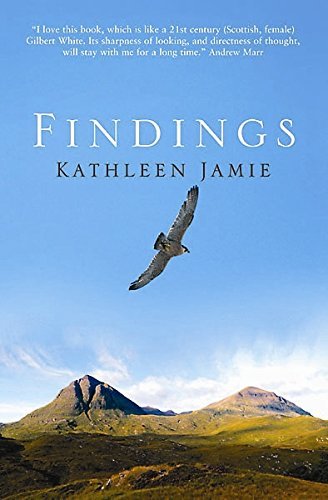 As I found when I reread Sightlines in 2022, Jamie’s topics couldn’t be better suited to my interests: Scottish islands, seabirds, medical history, and the meaning we derive from mortality. She visits the Orkney Islands just before the winter solstice, which draws a faithful few to the tomb of Maes Howe. From her attic room in Fife, she watches peregrine falcons on a cliff face. A gannet’s skull is her prized souvenir from a boat tour to an uninhabited Hebridean island. Vigilance pays off when she hears, then sees, corncrake on the Isle of Coll. Although she has a penchant for empty places, she also writes about cityscapes and hospitals. “Skylines” looks out over Edinburgh, also the setting for “Surgeons’ Hall,” about the pathology museum on the Royal College of Surgeons campus (my 2018 visit). In “Fever” her husband has a scary bout of pneumonia. Jamie is one of our wisest writers on nature and human culture. She asks whether any creatures are truly wild given the pervasiveness of human influence. Even as she seeks out the ancient, she knows we are all ephemeral. “Sabbath” is the best single essay, combining a visit to Lewis with her worry for her mother, who’s had a stroke, and her grandmother, who is to move into a care home. She explores the island “relishing the movement of my body, its own small continuing strength. It wouldn’t last forever – that was the truth of it – but today I could cycle along a road, to see where it led.”
(University library) [Sort Of Books]
My rating in 2012:
My rating now: 
Ladies, Ladies, Ladies by Kristen Zory King (2025)
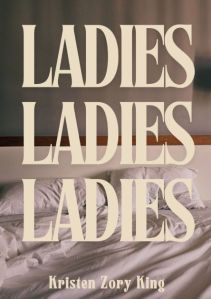 I’d never encountered “chapbook” being used for prose rather than poetry, but it’s an apt term for this 61-page paperback containing 18 stories. It’s remarkable how much King can pack into just a few pages: a voice, a character, a setting and situation, an incident, a salient backstory, and some kind of epiphany or resolution. Fifteen of the pieces focus on one named character, with another three featuring a set (“Ladies,” hence the title). Laura-Jean wonders whether it was a mistake to tell her ex’s mother what she really thinks about him in a Christmas card. A love of ice cream connects Margot’s past and present. A painting in a museum convinces Paige to reconnect with her estranged sister. Alice is sure she sees her double wandering around, and Mary contemplates stealing other people’s cats. The women are moved by rage or lust; stymied by loneliness or nostalgia. Is salvation to be found in scripture or poetry? Each story is distinctive, with no words wasted. I’ll look out for future work by King.
(Duplicate copy passed on by Marcie – thank you!) [Stanchion Books]
Which of these do you fancy reading?
Six more indie publishers spotlighted, for a total of 19 books and 18 publishers this month – job done!
Also covered:
Ansell, Farrier, Febos, Hoffman, Orlean, Stacey
Chevillard, Hopkins & Bateman, McGrath, Richardson
Victorian-Themed Novels by Annie Elliot and Livi Michael
There are plenty more indie books that I’m in the middle of, or picked out but didn’t get to in February. As much as possible, I’ll continue reading (indie) books from my shelves this year.
#ReadIndies Review Catch-Up: Chevillard, Hopkins & Bateman, McGrath, Richardson
Quick thoughts on some more review catch-up books, most of them from 2025. It’s a miscellaneous selection today: absurdist flash fiction by a prolific French author, a self-help graphic novel about surviving heartbreak, a blend of bird photography and poetry, and a debut poetry collection about life and death as encountered by a parish priest.
Museum Visits by Éric Chevillard (2024)
[Trans. from French by David Levin Becker]
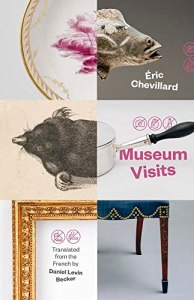 I’d not heard of Chevillard, even though he’s published 22 novels and then some. This appealed to me because it’s a collection of micro-essays and short stories, many of them witty etymological or historical riffs. “The Guide,” a tongue-in-cheek tour of places where things may have happened, reminded me of Julian Barnes: “So, right here is where Henri IV ran a hand through his beard, here’s where a raindrop landed on Dante’s forehead, this is where Buster Keaton bit into a pancake” and so on. It’s a clever way of questioning what history has commemorated and whether it matters. Some pieces elaborate on a particular object – Hegel’s cap, a chair, stones, a mass attendance certificate. A concertgoer makes too much of the fact that they were born in the same year as the featured harpsichordist. “Autofiction” had me snorting with laughter, though it’s such a simple conceit. All Chevillard had to do in this authorial rundown of a coming of age was replace “write” with “ejaculate.” This leads to such ridiculous statements as “It was around this time that I began to want to publicly share what I was ejaculating” and “I ejaculate in all the major papers.” There are some great pieces about animals. Others outstayed their welcome, however, such as “Faldoni.” Most feel like intellectual experiments, which isn’t what you want all the time but is interesting to try for a change, so you might read one or two mini-narratives between other things.
With thanks to the University of Yale Press for the free copy for review.
What to Do When You Get Dumped: A Guide to Unbreaking Your Heart by Suzy Hopkins; illus. Hallie Bateman (2025)
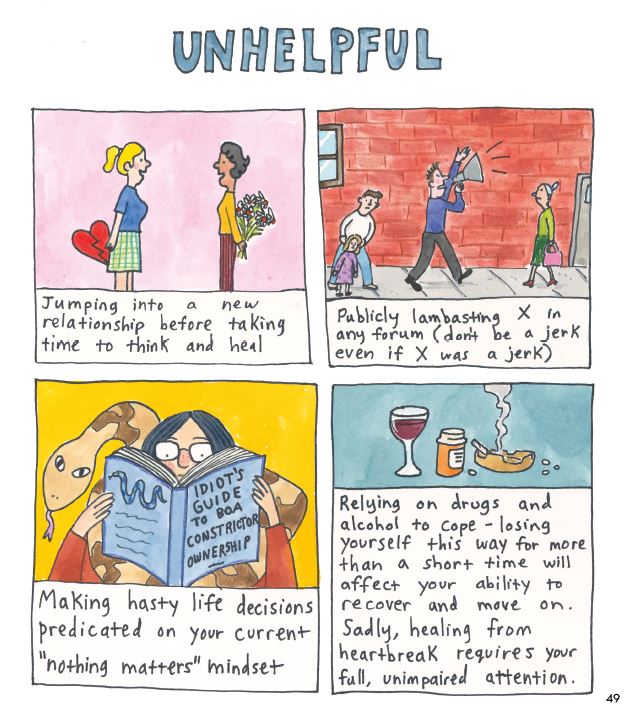
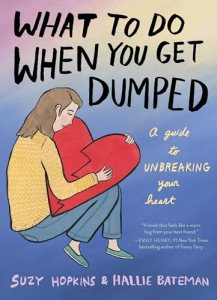 Discovered through Molly Wizenberg’s excellent author interview (she did a series on her Substack, “I’ve Got a Feeling”) with illustrator Hallie Bateman. It’s a mother–daughter collaboration – their second, after What to Do When I’m Gone, a funny advice guide that’s been likened to Roz Chast’s work (I’ve gotta get that one!). Hopkins’s husband of 30 years left her for an ex-girlfriend. (Ironic yet true: the girlfriend was a marriage counselor.) Composed while deep in grief, this is a frank look at the flood of emotions that accompany a breakup and gives wry but heartfelt suggestions for what might help: journaling, telling someone what happened, cleaning, making really easy to-do lists. Hopkins interviewed six others who had been dumped to get some extra perspective. Bateman describes her mother’s writing process: she made notes and stuck them in a shoebox with a hole in the lid, then went on a retreat to combine it all into a draft. At this point Bateman started illustrating. It was complicated for her, of course, because the dumper is her dad. She notes in the interview that she couldn’t just say “He’s an asshole” and dismiss him. But she could still position herself as a girlfriend to her mother, listening and commiserating. The vignettes are structured as a countdown starting with day 1,582 – it took over four years for Hopkins to come to terms with her loss and embrace a new life. This is a cute and gentle book that I wish had been around for my mom; it’s a heck of a lot cheaper than therapy.
With thanks to Bloomsbury for the free e-copy for review.
The Beauty of Vultures by Wendy McGrath; photos by Danny Miles (2025)
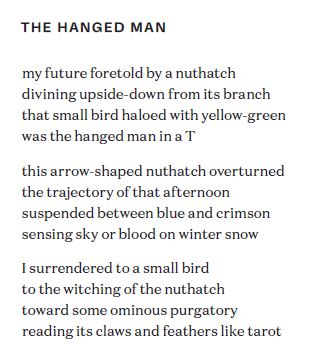
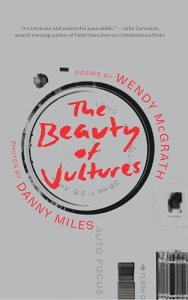 I enjoyed McGrath’s Santa Rosa trilogy and was keen to try her poetry, so I’m pleased that Marcie’s review pointed me here. McGrath came to collaborate with Miles, a musician, after her son told her of Miles’s newfound love of bird photography. She writes in her introduction that she wanted to go “beyond a simple call-and-response,” to instead use the photos as “portals” into art, history, memory, mythology, wordplay. The form varies to suit the topic: “sonnet, pantoum, acrostic, ghazal, concrete poem, … even a mini-play.” (I didn’t identify all of these on a first read, to be honest.) One poem imitates a matchbox cover and another is printed sideways. Most of the images are black-and-white close-ups, with a handful in colour. There are a few mammals as well as birds. One notable flash of colour is the recipient of the first poem, the sassy rebuttal “A Message from the Peahen to the Peacock.” The hen tells him to quit with the fancy displays and get real: “I’ve seen that gaudy display too often.”
Other poems describe birds, address them directly, or take on their perspectives. Birds are a reassuring presence (cf. Ted Hughes on swifts): “I counted on our robins to return every spring” as a balm, the anxious speaker reports in “Air raid siren.” A nest of gape-mouthed baby swallows in an outhouse is the prize at the end of a long countryside walk. With its alliteration and repetition, “The Goldfinch Charm” feels like an incantation. Birds model grace (or at least the appearance of grace):
Assume a buoyancy, lightness, as though you were about to fly.
That yellow rubber duck is my surreal mythology.
Head above water. Stay calm. Paddle like crazy.
They link the natural world and the human in these gorgeous poems that interact with the images in ways that both lead and illuminate.
A female swan is a pen and eyes open
I try to write this dream:
a moment stolen or given.
Published by NeWest Press. With thanks to the author for the free e-copy for review.
Dirt Rich by Graeme Richardson (2026)
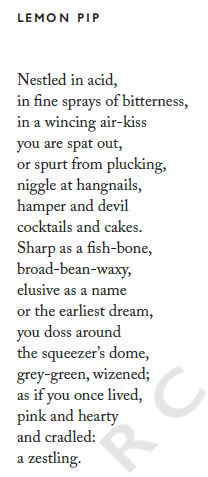
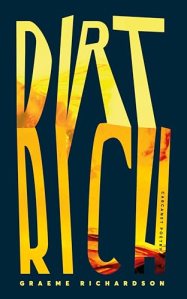 Dirt poor? Nah. Miners, gravediggers and archaeologists will tell you that dirt is precious. It’s where lots of our food and minerals come from; it’s what we’ll return to – our bodies as well as the material traces of what we loved and cared for. Richardson, the poetry critic for the Sunday Times, comes from Nottinghamshire mining country and has worked as a chaplain and parish priest. He writes of church interiors and cemeteries, funerals and crumbling faith. There’s a harsh reminder of life’s unpredictability in the juxtaposition of “For the Album,” about the photographic evidence of a wedding day; and, beginning on the facing page, “After the Death of a Child.” It opens with “A Pastoral Heckle”: “The dead live on in memory? Not true. / They lodge there dead, and yours not theirs the hell.” Richardson now lives in Germany, so there are continental scenes as well as ecclesial English ones. The elegiac tone of standouts such as “Last of the Coalmine Choirboys” (with its words drawn from scripture and hymns) is tempered by the chaotic joy of multiple poems about parenthood in the final section. Throughout, the imagery and language glisten. I loved the slant rhyme, assonance and sibilance in “Rewilding the Churchyard”: “Cedars and self-seeders link / with the storm-forked sycamore.” I highly recommend this debut collection.
With thanks to Carcanet Press for the advanced e-copy for review.
Which of these do you fancy reading?
(Goodbye to) Winter Reads by Sylvia Plath (#ReadIndies) & Kathleen Winter
The sunshine, temperatures and flora suggest that spring is here to stay, though I wouldn’t be surprised by a return of the cold and wet in March. We live in the wrong part of the UK for snow lovers; we didn’t get any snow this winter, apart from some early-morning flurries one day when I was fast asleep. My seasonal reading consisted of a lesser-known posthumous poetry collection, a record of a sea voyage past Greenland, and a silly children’s book.
Winter Trees by Sylvia Plath (1971)
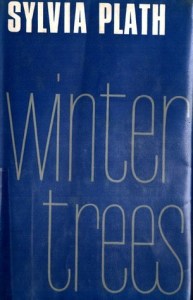 A prefatory note from Ted Hughes explains that these poems “are all out of the batch from which the Ariel poems were more or less arbitrarily chosen and they were all composed in the last nine months of Sylvia Plath’s life.” Ariel is much the stronger collection. There are only 19 poems here; the final one, “Three Women,” is more of a play (subtitled “A Poem for Three Voices”) set on a maternity ward. Motherhood is a central concern throughout. There’s harsh, unpleasant language around womanhood in general. The opening title poem is a marvel of artistic imagery, assonance and internal rhyme, but also contains a metaphor that made me cringe: “Knowing neither abortions nor bitchery, / Truer than women, / They seed so effortlessly!”


That paints motherhood as hard won, as “Childless Woman” reinforces by turning purposeless menstruation into a horror story with its vocabulary of “a child’s shriek” — “Spiderlike” — “Uttering nothing but blood— / Taste it, dark red!” — “My funeral” — “the mouths of corpses”. Plath was certainly ambivalent about babies (“Thalidomide” is particularly frightening) but I bristled at childlessness being linked with living only for oneself. Then again, pretty much everything – men, God, travel, animals – is portrayed negatively here. “Winter Trees” is the single poem I’d anthologize. (University library)
Published by Faber, so counts for #ReadIndies
Boundless: Adventures in the Northwest Passage by Kathleen Winter (2015)
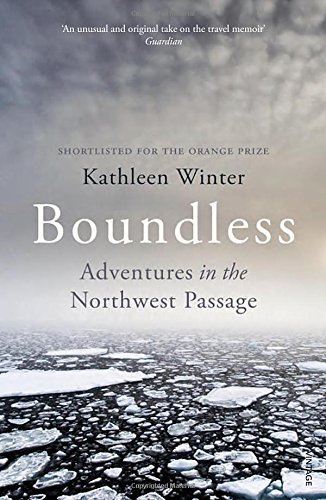 I read this excellent travel book slowly, over most of the winter, including during that surreal period when He Who Shall Not Be Named was threatening to annex Greenland. Winter was invited to be a writer-in-residence aboard an icebreaker travelling through the Northwest Passage, past southwest Greenland and threading between the islands of the Canadian Arctic. She was prepared: a friend had taught her that the only thing to say in these sorts of lucky, unexpected scenarios is “My bags are already packed.” Her ‘getaway bag’ of two pairs of underwear, a T-shirt, a pair of jeans, and a LBD wasn’t exactly Arctic-ready, but she still had a head start. She adds an old concertina and worn hiking boots that resemble “lobes of some mushroom cracked off the bole of an old warrior tree.”
It’s not a long or gruelling trip, so there’s not much of the bellyaching that bores me in trekking books. Winter is interested in everything: birds, folk music, Indigenous arts and crafts, her fellow passengers’ stories, the infamous lost Arctic expeditions, and her family’s history in England and Canada. She collects her scraps of notes in a Ziploc, and that’s what this book is – a grab bag. Winter is enthusiastic yet prioritizes quiet epiphanies about the sacredness of land and creatures over thrills – though their vessel does get stranded on rocks and requires a Coast Guard rescue. It would be interesting to reread her Orange Prize-shortlisted novel about an intersex person, Annabel. (If you hanker to go deeper about Greenland, read This Cold Heaven by Gretel Ehrlich and Miss Smilla’s Feeling for Snow by Peter Høeg.) (Secondhand – Bas Books)
& A bonus children’s book:
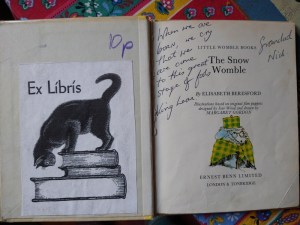
 The Snow Womble by Elisabeth Beresford; illus. Margaret Gordon (1975) – I thought this would be a cute one to read even though I’m unfamiliar with the Wombles. But it’s just a one-note extended joke about the creatures not being able to tell their snowman version of Great-Uncle Bulgaria apart from the real one. The best thing about reading this was the frontispiece’s juxtaposition of elements: the computer-printed bookplate, the nominal secondhand price (withdrawn from London Borough of Sutton Public Libraries), and the wholly inappropriate inscription Grandad Nick chose from King Lear! (Little Free Library)
Healing in (Re)Verse: Poems about not dying. Yet by BS Casey (Blog Tour)
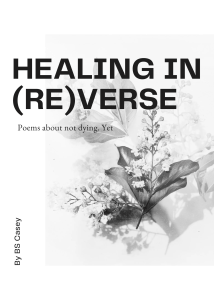 Bee Casey’s self-published debut collection contains a hard-hitting set of accessible poems arising from the conjunction of mental health crisis and disability. It opens with the sense of a golden era never to be regained: “the girl before / commanded the room // Oh how I wish I could even walk into it now.” Now the body brings only “pain and cruelty”: “an unwelcome guest / lingers on my chest / in bones and my home”.
End rhymes, slant rhymes, and alliteration form part of the sonic palette. Through imagined conversations with the self and with others who have hurt the speaker or put them down, they wrestle with concepts of forgiveness and self-love. “Just a girl” chronicles instances of sexualized verbal and emotional abuse. The use of repeated words and phrases, with minor adaptations, along with the themes of trauma and recovery, reminded me of Rupi Kaur’s performance poetry-inspired style. “Monster” is more like a short story with its prose paragraphs and imagined dialogue. “How are you” is an erasure poem that crosses out all the possible genuine answers to that question in between, leaving only the socially acceptable “I’m fine thanks. … how are you?”
The pages’ stark black-and-white design is softened by background images of flowers, feathers, forests, candle flames, and shadows falling through windows. Although the tone is overwhelmingly sad, there is also some wry humour, as in the below.
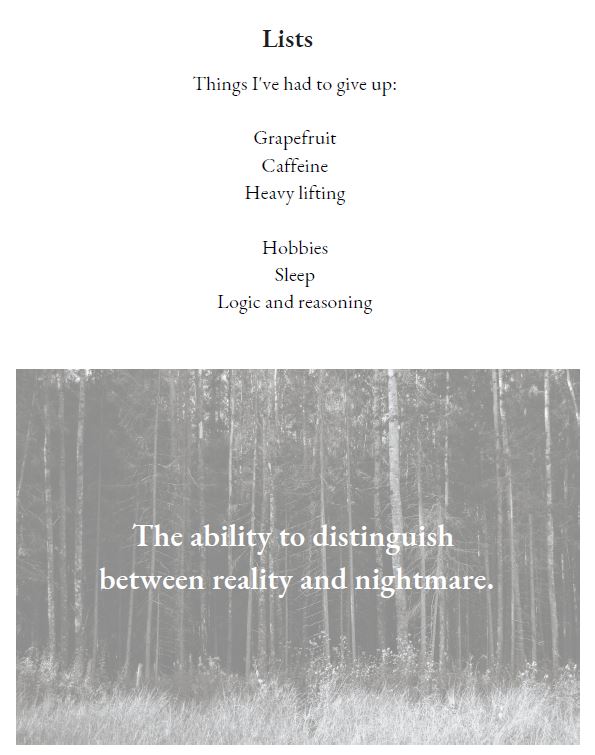
 Casey has only just turned 30, and it’s sobering to think how much they’ve gone through in that short time and how often suicide has been a temptation. It’s a relief to see that their view of life has shifted from it being a trial to a gift. “What an honour, a privilege / What beauty to grow old.” Sometimes for them, not dying has to be an active decision, as in the poem “Tomorrow I will kill myself,” but the habit can stick – for 15 years “I’ve been too busy / Accidentally being alive.”
Poetry – writing it or reading it – can be a great way for people to work through the pain of mental ill health and chronic illness and not feel so alone. That’s one reason I’m looking forward to the return of the Barbellion Prize later this year. “The Barbellion Prize celebrates and promotes writing that represents the experience of chronic illness and disability. The prize is named after the diarist W.N.P. Barbellion, who wrote eloquently on his life with multiple sclerosis (MS). It is a cross-genre award for literature published in the English language.” I’ve donated to get it up and running again; maybe you can, too?
My thanks to Random Things Tours and the author for the advanced e-copy for review.
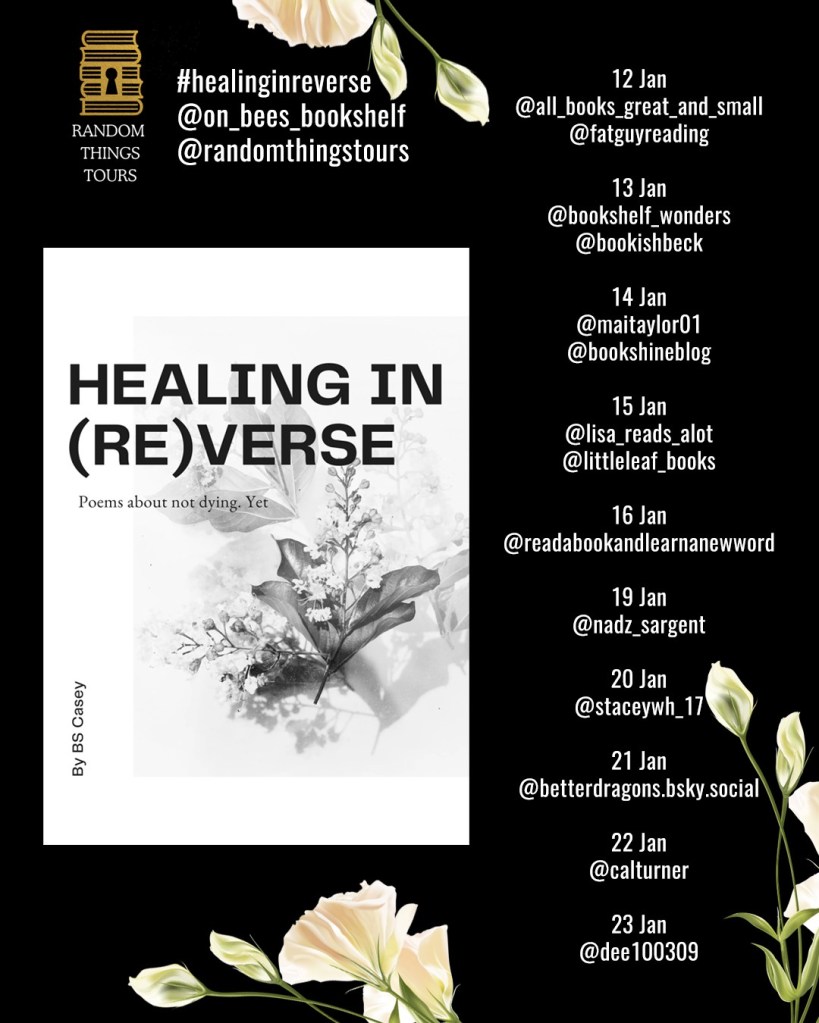
See below for details of where other reviews have appeared or will be appearing soon.
The 2026 Releases I’ve Read So Far
I happen to have read a number of pre-release books, generally for paid reviews for Foreword and Shelf Awareness. (I already previewed six upcoming novellas here.) Most of my reviews haven’t been published yet, so I’ll just give brief excerpts and ratings here to pique the interest. I link to the few that have been published already, then list the 2026 books I’m currently reading. Soon I’ll follow up with a list of my Most Anticipated titles.


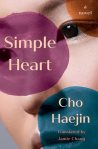 Simple Heart by Cho Haejin (trans. from Korean by Jamie Chang) [Other Press, Feb. 3]: A transnational adoptee returns to Korea to investigate her roots through a documentary film. A poignant novel that explores questions of abandonment and belonging through stories of motherhood.
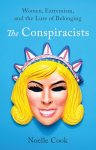 The Conspiracists: Women, Extremism, and the Lure of Belonging by Noelle Cook [Broadleaf Books, Jan. 6]: An in-depth, empathetic study of “conspirituality” (a philosophy that blends conspiracy theories and New Age beliefs), filtered through the outlook of two women involved in storming the Capitol on January 6, 2021.

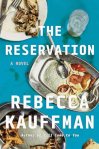 The Reservation by Rebecca Kauffman [Counterpoint, Feb. 24]: The staff members of a fine-dining restaurant each have a moment in the spotlight during the investigation of a theft. Linked short stories depict character interactions and backstories with aplomb. Big-hearted; for J. Ryan Stradal fans.


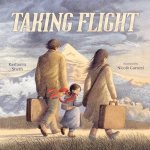 Taking Flight by Kashmira Sheth (illus. Nicolo Carozzi) [Dial Press, April 21]: A touching story of the journeys of three refugee children who might be from Tibet, Syria and Ukraine. The drawing style reminded me of Chris Van Allsburg’s. This left a tear in my eye.

Currently reading:
(Blurb excerpts from Goodreads; all are e-copies apart from Evensong)
 Visitations: Poems by Julia Alvarez [Knopf, April 7]: “Alvarez traces her life [via] memories of her childhood in the Dominican Republic … and the sisters who forged her, her move to America …, the search for mental health and beauty, redemption, and success.”
 Our Numbered Bones by Katya Balen [Canongate, 12 Feb. / HarperVia, Feb. 17]: Her “adult debut [is] about a grieving author who heads to rural England for a writer’s retreat, only to stumble upon an incredible historical find” – a bog body!
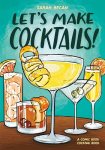 Let’s Make Cocktails!: A Comic Book Cocktail Book by Sarah Becan [Ten Speed Press, April 7]: “With vivid, easy-to-follow graphics, Becan guides readers through basic techniques such as shaking, stirring, muddling, and more. With all recipes organized by spirit for easy access, readers will delight in the panelized step-by-step comic instructions.”
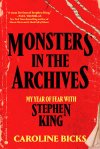 Monsters in the Archives: My Year of Fear with Stephen King by Caroline Bicks [Hogarth/Hodder & Stoughton, April 21]: “A fascinating, first of its kind exploration of Stephen King and his … iconic early books, based on … research and interviews with King … conducted by the first scholar … given … access to his private archives.”
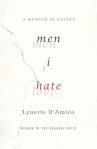 Men I Hate: A Memoir in Essays by Lynette D’Amico [Mad Creek Books, Feb. 17]: “Can a lesbian who loves a trans man still call herself a lesbian? As D’Amico tries to engage more deeply with the man she is married to, she looks at all the men—historical figures, politicians, men in her family—in search of clear dividing lines”.
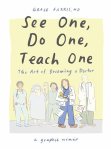 See One, Do One, Teach One: The Art of Becoming a Doctor: A Graphic Memoir by Grace Farris [W. W. Norton & Company, March 24]: “In her graphic memoir debut, Grace looks back on her journey through medical school and residency.”
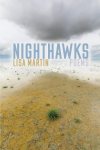 Nighthawks by Lisa Martin [University of Alberta Press, April 2]: “These poems parse aspects of human embodiment—emotion, relationship, mortality—and reflect on how to live through moments of intense personal and political upheaval.”
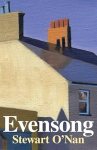 Evensong by Stewart O’Nan [published in USA in November 2025; Grove Press UK, 1 Jan.]: “An intimate, moving novel that follows The Humpty Dumpty Club, a group of women of a certain age who band together to help one another and their circle of friends in Pittsburgh.”
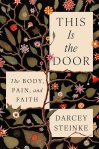 This Is the Door: The Body, Pain, and Faith by Darcey Steinke [HarperOne, Feb. 24]: “In chapters that trace the body—The Spine, The Heart, The Knees, and more—[Steinke] introduces sufferers to new and ancient understandings of pain through history, philosophy, religion, pop culture, and reported human experience.”
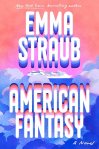 American Fantasy by Emma Straub [Riverhead, April 7 / Michael Joseph (Penguin), 14 May]: “When the American Fantasy cruise ship sets sail for a four-day themed voyage, aboard are all five members of a famous 1990s boyband, and three thousand screaming women who have worshipped them for thirty years.”
Additional pre-release review books on my shelf:
 Shooting Up by Jonathan Tepper [Constable, 19 Feb.]: “Born into a family of American missionaries driven by unwavering faith … Jonathan’s home became a sanctuary for society’s most broken … AIDS hit Spain a few years after it exploded in New York and, like an invisible plague, … claimed countless lives – including those … in the family rehabilitation centre.”
 Elizabeth and Ruth by Livi Michael [Salt Publishing, 9 Feb.]: “Based on the real correspondence between Elizabeth Gaskell and Charles Dickens … [Gaskell] visits a young Irish prostitute in Manchester’s New Bailey prison. … [A] story of hypocrisy and suppression, and how Elizabeth navigates the … prejudice of the day to help the young girl”.
Will you look out for one or more of these?
Any other 2026 reads you can recommend?
Best Books of 2025
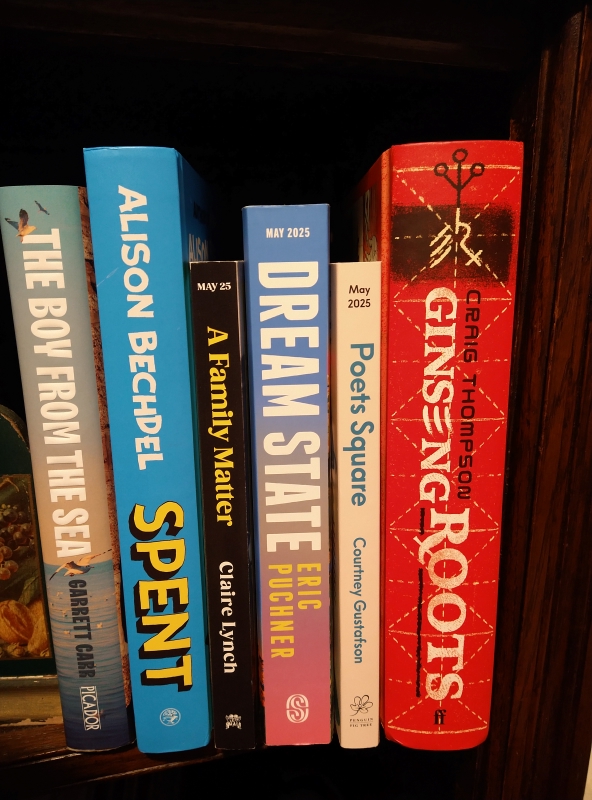
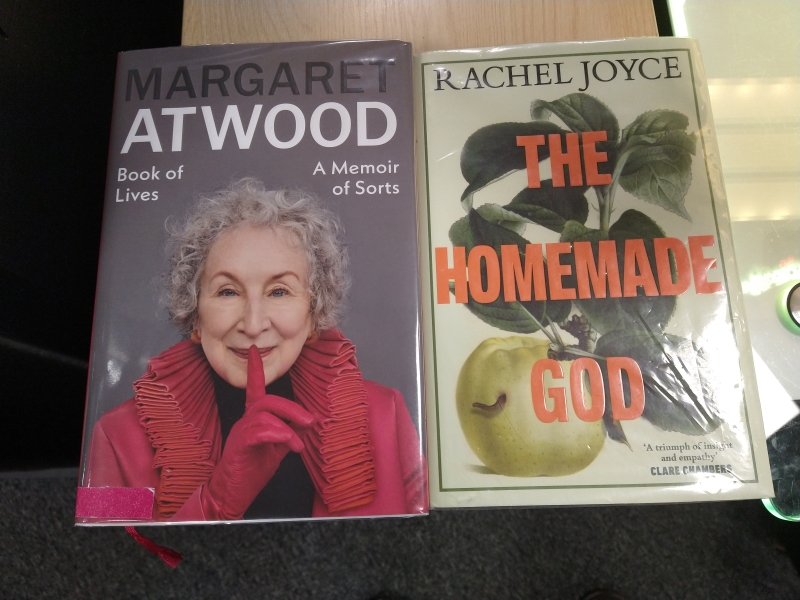
Without further ado, I present my 15 favourite releases from 2025. (With the 15 runners-up I chose yesterday, these represent about the top 9.5% of my current-year reading.) Pictured below are the ones I read in print; all the others were e-copies or library books I couldn’t get my hands on for a photo shoot. Links are to my full reviews where available.
Fiction
 Spent: A Comic Novel by Alison Bechdel: Alison has writer’s block and is consumed with anxiety about the state of the world. “Who can draw when the world is burning?” Then she has an idea for a book – or a reality TV series – called $UM to wean people off of capitalism. That creative journey is mirrored here. Through Alison’s ageing hippie friends and their kids, Bechdel showcases alternative ways of living. Even the throwaway phrases are hilarious. It’s a gleeful and zeitgeist-y satire, yet draws to a touching close. So great, I read it twice.
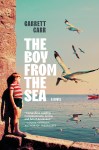 The Boy from the Sea by Garrett Carr: I was entranced by this story of an Irish family in the 1970s–80s: Ambrose, a fisherman left behind by technology; his wife Christine, walked all over by her belligerent father and sister; their son Declan, a budding foodie; and the title character, Brendan, a foundling they adopt and raise. Narrated by a chorus of village voices, this debut has the heart of Claire Keegan and the humour of Paul Murray. It reimagines biblical narratives, too: Cain and Abel, Jacob and Esau (brotherly rivalry!); Job and more.
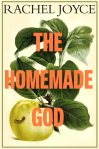 The Homemade God by Rachel Joyce: The story of four siblings initially drawn together (in Italy) and then dramatically blown apart by their father’s remarriage and death. Despite weighty themes including alcoholism and depression, there is an overall lightness of tone and style that made this a pleasure to read. Joyce has really upped her game: it’s more expansive, elegant and empathetic than her previous seven books. You can tell she got her start in theatre, too: she’s so good at scenes, dialogue, and moving groups of people around.
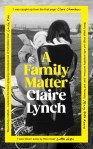 A Family Matter by Claire Lynch: In her research into UK divorce cases in the 1980s, Lynch learned that 90% of lesbian mothers lost custody of their children. Her earnest, delicate debut novel, which bounces between 2022 and 1982, imagines such a situation through close portraits of three family members. Maggie knew only that her mother, Dawn, abandoned her when she was little. Lynch’s compassion is equal for all three characters. This confident, tender story of changing mores and steadfast love is the new Carol for our times.
 Are You Happy? by Lori Ostlund: Nine short fictions form a stunning investigation into how violence and family dysfunction reverberate. “The Peeping Toms” and “The Stalker” are a knockout pair featuring Albuquerque lesbian couples under threat by male acquaintances. Characters are haunted by loss and grapple with moral dilemmas. Each story has the complexity and emotional depth of a novel. Freedom versus safety for queer people is a resonant theme in an engrossing collection ideal for Alice Munro and Edward St. Aubyn fans.
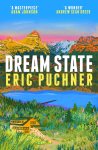 Dream State by Eric Puchner: It starts as a glistening romantic comedy about t Charlie and Cece’s chaotic wedding at a Montana lake house in summer 2004. First half the wedding party falls ill with norovirus, then the best man, Garrett, falls in love with the bride. The rest examines the fallout of this uneasy love triangle as it stretches towards 2050 and imagines a Western USA smothered in smoke from near-constant forest fires. Still, there are funny set-pieces and warm family interactions. Jonathan Franzen meets Maggie Shipstead.
 Palaver by Bryan Washington: Washington’s emotionally complex third novel explores the strained bond between a mother and her queer son – and their support systems of friends and lovers – when she visits him in Tokyo. The low-key plot builds through memories and interactions: the son’s with his students or hook-ups; the mother’s with restaurateurs as she gains confidence exploring Japan. Through words and black-and-white photographs, the author brings settings to life vibrantly. This is his best and most moving work yet.
Nonfiction
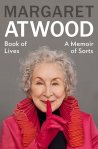 Book of Lives: A Memoir of Sorts by Margaret Atwood: For diehard fans, this companion to her oeuvre is a trove of stories and photographs. The context on each book is illuminating and made me want to reread lots of her work. I was reminded how often she’s been ahead of her time. The title feels literal in that Atwood has been wilderness kid, literary ingénue, family and career woman, philanthropist and elder stateswoman. She doesn’t try to pull all her incarnations into one, instead leaving the threads trailing into the beyond.
 Poets Square: A Memoir in 30 Cats by Courtney Gustafson: Working for a food bank, trapped in a cycle of dead-end jobs and rising rents: Gustafson saw first hand how broken systems and poverty wear people down. She’d recently started feeding and getting veterinary care for a feral cat colony in her Tucson, Arizona neighbourhood. With its radiant portraits of individual cats and its realistic perspective on personal and collective problems, this is a cathartic memoir and a probing study of building communities of care in times of hardship.
 Immemorial by Lauren Markham: An outstanding book-length essay that compares language, memorials, and rituals as strategies for coping with climate anxiety and grief. The dichotomies of the physical versus the abstract and the permanent versus the ephemeral are explored. Forthright, wistful, and determined, the book treats grief as a positive, as “fuel” or a “portal.” Hope is not theoretical in this setup, but solidified in action. This is an elegant meditation on memory and impermanence in an age of climate crisis.
 Death of an Ordinary Man by Sarah Perry: Perry recognises what a sacred privilege it was to witness her father-in-law’s death nine days after his diagnosis with oesophageal cancer. David’s end was as peaceful as could be hoped: in his late seventies, at home and looked after by his son and daughter-in-law, with mental capacity and minimal pain or distress. The beauty of this direct but tender memoir is its patient, clear-eyed unfolding of every stage of dying, a natural and inexorable process that in other centuries would have been familiar to all.
 Ginseng Roots by Craig Thompson: A book about everything, by way of ginseng. It begins with Thompson’s childhood summers working on American ginseng farms with his siblings in Marathon, Wisconsin. As an adult, he travels first to Midwest ginseng farms and festivals and then through China and Korea to learn about the plant’s history, cultivation, lore, and medicinal uses. Roots are symbolic of a family story that unfolds in parallel. Both expansive and intimate, this is a surprising gem from one of the best long-form graphic storytellers.
Poetry
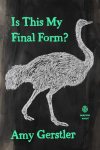 Is This My Final Form? by Amy Gerstler: This delightfully odd collection amazes with its range of voices and techniques. It leaps from surrealism to elegy as it ponders life’s randomness. The language of transformation is integrated throughout. Aging and the seasons are examples of everyday changes. Elsewhere, speakers fall in love with the bride of Frankenstein or turn to dinosaur urine for a wellness regimen. Monologues and sonnets recur. Alliteration plus internal and end rhymes create satisfying resonance.
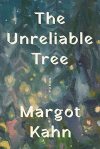 The Unreliable Tree by Margot Kahn: Kahn’s radiant first collection ponders how traumatic events interrupt everyday life. Poles of loss and abundance structure delicate poems infused with family history and food imagery. The title phrase describes literal harvests but is also a metaphor for the vicissitudes of long relationships. California’s wildfires, Covid-19, a mass shooting, and health crises – an emergency surgery and a friend’s cancer – serve as reminders of life’s unpredictability. Disaster is random and inescapable.
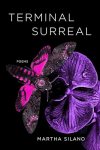 Terminal Surreal by Martha Silano: Silano’s posthumous collection (her eighth) focuses on nature and relationships as she commemorates the joys and ironies of her last years with ALS. The shock of a terminal diagnosis was eased by the quotidian pleasures of observing Pacific Northwest nature, especially birds. Fascination with science recurs, too. Most pieces are free form and alliteration and wordplay enliven the register. Her winsome philosophical work is a gift. “What doesn’t die? / The closest I’ve come to an answer / is poetry.”
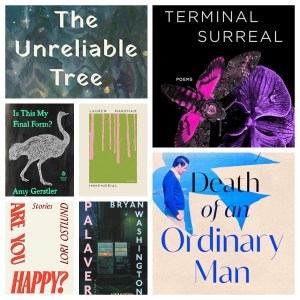
If I had to pick one from each genre? Well, like last year, I find that the books that have stuck with me most are the ones that play around with the telling of life stories. This time, all by women. So it’s Spent, Book of Lives and Is This My Final Form?


What 2025 releases should I catch up on?
Best Books of 2025: The Runners-Up
Coming up tomorrow: my list of the 15 best 2025 releases I’ve read. Here are 15 more that nearly made the cut. Pictured below are the ones I read / could get my hands on in print; the rest were e-copies or in-demand library books. Links are to my full reviews where available.
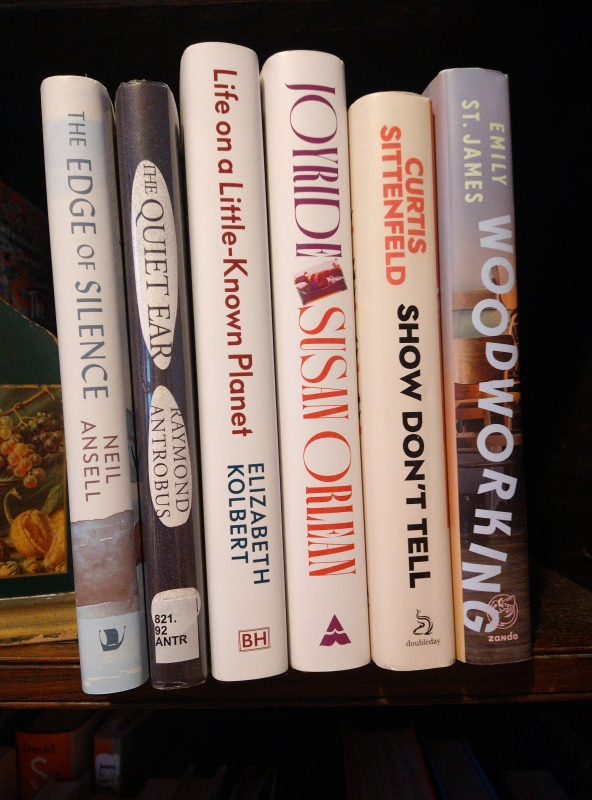
Fiction
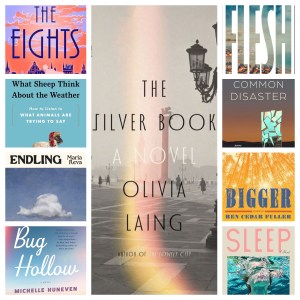
 Bug Hollow by Michelle Huneven: A glistening portrait of a lovably dysfunctional California family beset by losses through the years but expanded through serendipity and friendship. Life changes forever for the Samuelsons (architect dad Phil; mom Sibyl, a fourth-grade teacher; three kids) when the eldest son, Ellis, moves into a hippie commune in the Santa Cruz Mountains. A rotating close third-person perspective spotlights each member. Fans of Jami Attenberg, Ann Patchett, and Anne Tyler need to try Huneven’s work pronto.
 Sleep by Honor Jones: A breathtaking character study of a woman raising young daughters and facing memories of childhood abuse. Margaret’s 1990s New Jersey upbringing seems idyllic, but upper-middle-class suburbia conceals the perils of a dysfunctional family headed by a narcissistic, controlling mother. Jones crafts unforgettable, crystalline scenes. There are subtle echoes throughout as the past threatens to repeat. Reminiscent of Sarah Moss and Evie Wyld, and astonishing for its psychological acuity, this promises great things from Jones.
 The Silver Book by Olivia Laing: Steeped in the homosexual demimonde of 1970s Italian cinema (Fellini and Pasolini films), with a clear antifascist message filtered through the coming-of-age story of a young Englishman trying to outrun his past. This offers the best of both worlds: the verisimilitude of true crime reportage and the intimacy of the close third person. Laing leavens the tone with some darkly comedic moments. Elegant and psychologically astute work from one of the most valuable cultural commentators out there.
 The Eights by Joanna Miller: Highly readable, book club-suitable fiction that is a sort of cross between In Memoriam and A Single Thread in terms of its subject matter: the first women to attend Oxford in the 1920s, the suffrage movement, and the plight of spare women after WWI. Different aspects are illuminated by the four central friends and their milieu. This debut has a good sense of place and reasonably strong characters. Despite some difficult subject matter, it remains resolutely jolly.
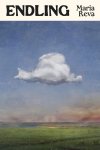 Endling by Maria Reva: What is worth doing, or writing about, in a time of war? That is the central question here, yet Reva brings considerable lightness to a novel also concerned with environmental devastation and existential loneliness. Yeva, a snail researcher in Ukraine, is contemplating suicide when Nastia and Sol rope her into a plot to kidnap 12 bride-seeking Western bachelors. The faux endings and re-dos are faltering attempts to find meaning when everything is breaking down. Both great fun to read and profound on many matters.
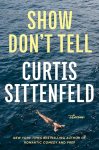 Show Don’t Tell by Curtis Sittenfeld: Sittenfeld’s second collection features characters negotiating principles and privilege in midlife. Split equally between first- and third-person perspectives, the 12 contemporary storylines spotlight everyday marital and parenting challenges. Dual timelines offer opportunities for hindsight on the events of decades ago. Nostalgic yet clear-eyed, these witty stories exploring how decisions determine the future are perfect for fans of Rebecca Makkai, Kiley Reid, and Emma Straub.
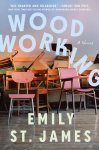 Woodworking by Emily St. James: When 35-year-old English teacher Erica realizes that not only is there another trans woman in her small South Dakota town but that it’s one of her students, she lights up. Abigail may be half her age but is further along in her transition journey and has sassy confidence. But this foul-mouthed mentor has problems of her own, starting with parents who refuse to refer to her by her chosen name. This was pure page-turning enjoyment with an important message, reminiscent of Celia Laskey and Tom Perrotta.
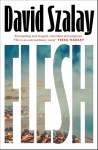 Flesh by David Szalay: Szalay explores modes of masculinity and channels, by turns, Hemingway; Fitzgerald and St. Aubyn; Hardy and McEwan. Unprocessed trauma plays out in Istvan’s life as violence against himself and others as he moves between England and Hungary and sabotages many of his relationships. He comes to know every sphere from prison to the army to the jet set. The flat affect and sparse style make this incredibly readable: a book for our times and all times and thus a worthy Booker Prize winner.
Nonfiction
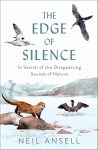 The Edge of Silence: In Search of the Disappearing Sounds of Nature by Neil Ansell: I owe this a full review. I’ve read all five of Ansell’s books and consider him one of the UK’s top nature writers. Here he draws lovely parallels between his advancing hearing loss and the biodiversity crisis we face because of climate breakdown. The world is going silent for him, but rare species may well become silenced altogether. His defiant, low-carbon adventures on the fringes offer one last chance to hear some of the UK’s beloved species, mostly seabirds.
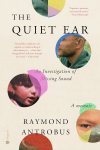 The Quiet Ear: An Investigation of Missing Sound by Raymond Antrobus: (Another memoir about being hard of hearing!) Antrobus’s first work of nonfiction takes up the themes of his poetry – being deaf and mixed-race, losing his father, becoming a parent – and threads them into an outstanding memoir that integrates his disability and celebrates his role models. This frank, fluid memoir of finding one’s way as a poet illuminates the literal and metaphorical meanings of sound. It offers an invaluable window onto intersectional challenges.
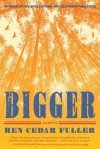 Bigger: Essays by Ren Cedar Fuller: Fuller’s perceptive debut work offers nine linked autobiographical essays in which she seeks to see herself and family members more clearly by acknowledging disability (her Sjögren’s syndrome), neurodivergence (she theorizes that her late father was on the autism spectrum), and gender diversity (her child, Indigo, came out as transgender and nonbinary; and she realizes that three other family members are gender-nonconforming). This openhearted memoir models how to explore one’s family history.
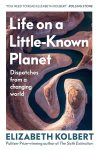 Life on a Little-Known Planet: Dispatches from a Changing World by Elizabeth Kolbert: These exceptional essays encourage appreciation of natural wonders and technological advances but also raise the alarm over unfolding climate disasters. There are travelogues and profiles, too. Most pieces were published in The New Yorker, whose generous article length allows for robust blends of research, on-the-ground experience, interviews, and in-depth discussion of controversial issues. (Review pending for the Times Literary Supplement.)
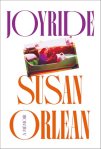 Joyride by Susan Orlean: Another one I need to review in the new year. As a long-time staff writer for The New Yorker (like Kolbert!), Orlean has had the good fortune to be able to follow her curiosity wherever it leads, chasing the subjects that interest her and drawing readers in with her infectious enthusiasm. She gives behind-the-scenes information on lots of her early stories and on each of her books. The Orchid Thief and the movie not-exactly-based on it, Adaptation, are among my favourites, so the long section on them was a thrill for me.
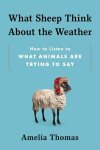 What Sheep Think About the Weather: How to Listen to What Animals Are Trying to Say by Amelia Thomas: A comprehensive yet conversational book that effortlessly illuminates the possibilities of human–animal communication. Rooted on her Nova Scotia farm but ranging widely through research, travel, and interviews, Thomas learned all she could from scientists, trainers, and animal communicators. Full of fascinating facts wittily conveyed, this elucidates science and nurtures empathy. (I interviewed the author, too.)
Poetry
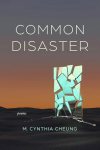 Common Disaster by M. Cynthia Cheung: Cheung is both a physician and a poet. Her debut collection is a lucid reckoning with everything that could and does go wrong, globally and individually. Intimate, often firsthand knowledge of human tragedies infuses the verse with melancholy honesty. Scientific vocabulary abounds here, with history providing perspective on current events. Ghazals with repeating end words reinforce the themes. These remarkable poems gild adversity with compassion and model vigilance during uncertainty.
 Bookish Beck = Rebecca Foster. American transplant to England. Freelance proofreader and book reviewer.
 Bookish Beck