January Releases by Julian Barnes and Stewart O’Nan
These two novels by literary lions (of the UK and USA, respectively) share themes of ageing, loss, and memory, as well as a wry and gently melancholy tone. I’ve read 23 books by Julian Barnes, some of them twice; Stewart O’Nan has also published twenty-some books, but was a new author for me.
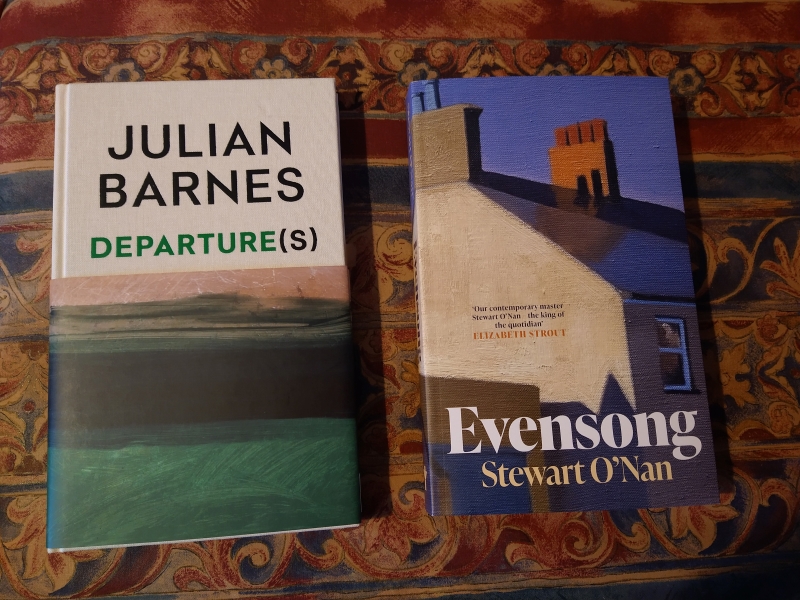
Departure(s) by Julian Barnes (2026)
“That’s what I’ve been after all my writing life: the whole story.”
Julian Barnes has been a favourite author of mine since my early twenties. He insists this novella will be his final book. It’s a coy fiction–autofiction mixture featuring the same fixations as much of his work: how time affects relationships and memory, how life gets translated into written evidence, and how we make peace with death. The narrator is one Julian Barnes, a writer approaching age 80 and adjusting to a recent diagnosis of a non-life-threatening blood cancer. The ostensible point is to retell his Oxford University friends Stephen and Jean’s two-stage romance: they were college sweethearts but married other people; then Julian reintroduced them in their sixties and they married – but it didn’t last.
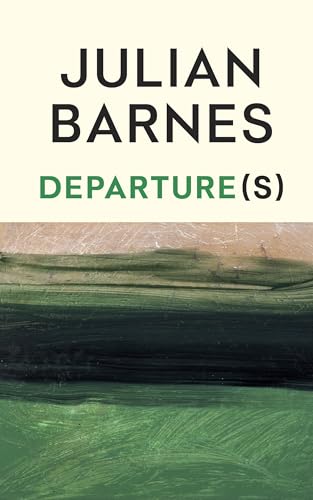 He parcels out bits of this story in between pondering involuntary autobiographical memory (IAM), his “incurable but manageable” condition, and his possible legacy. He hopes he’ll be exonerated due to waiting until Stephen and Jean were dead to write about them and adopting Jean’s old Jack Russell terrier, Jimmy. His late wife, Pat Kavanagh, is never far from his thoughts, and he documents other losses among his peers, including Martin Amis (d. 2023 – for a short book, this is curiously dated, as if it hung around for years unfinished). There are also, as one would expect from Barnes, occasional references to French literature. Confident narration gives the sense of an author in full control of his material. Yet I found much of it tedious. He’s addressed subjectivity much more originally in other works, and the various strands here feel like incomplete ideas shoehorned into one volume.
It’s a shame that I had just reread Talking It Over, a glistening voice-led novel of his from 1991, because it showed up the thinness and repetition of much of his recent work. (I even thought I spotted a reference to Talking It Over as Jean is warning Julian not to write about her and Stephen. “I’ll tell you the truth, and don’t you ever fucking use it, not even deeply disguised in some novel where I appear as Jeanette [Gillian?] and Stephen is Stuart.”) I see his oeuvre as a left-skewed bell curve: three of the first four novels are not worth reading and five of the last seven have also been dubious, but with much excellent material in between. It’s been a case of diminishing returns from The Sense of an Ending onwards, but I have many excellent rereads to look forward to. My next two will be A History of the World in 10½ Chapters – a typically playful take on documented history and legend – and Nothing to Be Frightened Of, his forthright memoir about mortality. If you’ve not read Barnes before, this wouldn’t be a bad place to start as you’ll get a taster of his trademark topics and dry wit, but delving into his back catalogue may well prove more rewarding.
With thanks to Jonathan Cape (Penguin) for the free copy for review.
Evensong by Stewart O’Nan (2025)
The comparisons to Kent Haruf and Elizabeth Strout in the press materials and pre-publication reviews are spot on: this is the kind of quiet American novel that appeals for its small-town ambience and cosy community of lovably quirky people with everyday problems. O’Nan grew up in Pittsburgh, the setting for this fourth book in a loose series based around the character Emily Maxwell – I did have a slight feeling of having wandered into a variant of Olive, Again partway through, but it wasn’t a major stumbling block for me. The generally elderly, female members of the Humpty Dumpty Club form a constellation of care: they help each other out by driving to hospital appointments, picking up prescriptions and groceries – and, when worst comes to worst, planning funeral services.
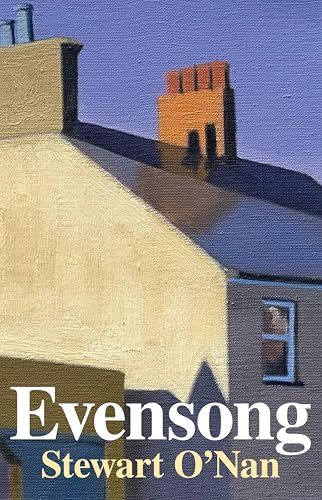 Often, the short chapters are vignettes starring one or more of the central characters. When Joan has a fall down her stairs and lands in rehab, Kitzi takes over as de facto HDC leader. A musical couple’s hoarding and cat colony become her main preoccupation. Emily deals with family complications I didn’t fully understand for want of backstory, and Arlene realizes dementia is affecting her daily life. Susie, the “baby” of the group at 63, takes in Joan’s cat, Oscar, and meets someone through online dating. The novel covers four months of 2022–23, anchored by a string of holidays (Halloween, Thanksgiving, Christmas); events such as John Fetterman’s election and ongoing Covid precautions; and the cycle of the Church year.
O’Nan encourages affection for his salt-of-the-earth folk who vote Democrat, support the Steelers and attend liberal Protestant churches as a matter of course. They lead simple lives and cope with failing health with as much dignity as they can. There’s something to be said for celebrating older, ordinary people, who don’t often get a look-in in contemporary fiction. But I struggled with the ensemble nature of the cast – well over halfway through I was still trying to work out who everyone was; it doesn’t help that there are a Gene, a Jean and a Joan – and the extreme verisimilitude. The Humpty Dumpty Club exists in real life, but these women could be your aunt or choir director from Any Town, USA. Were my mother still around, this would be her, running errands and helping neighbours in suburban Pittsburgh, and I would be visiting the area annually. That combination of the mundane and the too close to home conspired to make this more of a slog than expected. I also feel I gleaned no distinct understanding of O’Nan as a writer – especially as other novels of his that I own (The Night Country and A Prayer for the Dying) are classed under horror. I’ll just have to try more.
First published in November 2025 by Atlantic Monthly Press in the USA. With thanks to Grove Press UK for the free copy for review.
While these were much anticipated reads for me, I ultimately found them a little underwhelming. I think I wanted a bit more raging against the dying of the light.
Have you read either or both of these authors? What can you recommend by them, or what will you seek out?
The Single Hound by May Sarton (1938)
I spotted that the 30th anniversary of May Sarton’s death was coming up, so decided to read an unread book of hers from my shelves in time to mark the occasion. Today’s the day: she died on July 16, 1995 in York, Maine. Marcie of Buried in Print joined me for a buddy read (her review). I was drawn by the title, which comes from an Emily Dickinson quote. It’s the ninth Sarton novel I’ve read and, while in general I find her nonfiction more memorable than her fiction, this impressionistic debut novel was a solid read. It was clearly inspired by Virginia Woolf’s work and based on Sarton’s memories of her time on the fringes of the Bloomsbury Group.
 In Part I we are introduced to “the Little Owls,” three dear friends and winsome spinsters in their sixties – Doro, Annette and Claire – who teach and live above their schoolroom in Ghent, Belgium. (I couldn’t help but think of the Brontë sisters’ time in Belgium.) Doro, a poet, seems likely to be a stand-in for the author. I loved the gentle pace of this section; although the novel was published when she was only 26, Sarton was already displaying insight into friendship and ageing and appreciation of life’s small pleasures, elements that would recur in her later autobiographical work.
the three together made a complete world.
Was this life? This slow penetration of experience until nothing had been left untasted, unexplored, unused — until the whole of one’s life became a fabric, a tapestry with a pattern? She could not see the pattern yet.
tea was opium to them both, the time when the past became a soft pleasant country of the imagination, lost its bitterness, ceased to devour, and in some tea-inspired way nourished them.
Part II felt to me like a strange swerve into the story of Mark Taylor, an aspiring English writer who falls in love with a married painter named Georgia Manning. Their flirtation, as soon through the eyes of a young romantic like Mark, is monolithic, earth-shattering, but to readers is more of a clichéd subplot. In the meantime, Mark sticks to his vow of going on a pilgrimage to Belgium to meet Jean Latour, the poet whose work first inspired him. Part III brings the two strands together in an unexpected way, as Mark gains clarity about his hero and his potential future with Georgia, though cleverer readers than I may have been able to predict it – especially if they heeded the Brontë connection.
It was rewarding to spot the seeds of future Sarton themes here, such as discovering the vocation of teaching (The Small Room) and young people meeting their elder role models and soliciting words of wisdom on how to live (Mrs. Stevens Hears the Mermaids Singing). Through Doro, Sarton also expresses trust in poetry’s serendipitous power. “This is why one is a poet, so that some day, sooner or later, one can say the right thing to the right person at the right time.” I enjoyed my time with the Little Owls but mostly viewed this as a dress rehearsal for later, more mature work. (Secondhand – Awesomebooks.com) 
20 Books of Summer, 1–3: Chimamanda Ngozi Adichie, Daisy Johnson & Ruth Padel
It’s been a slow start to #20BooksofSummer2025 for me, but I’ll hope to do some catching up during our Scotland holiday and then once we’re home in July. So far, I’m sticking to the list I chose last month. These first few were slightly disappointing, to be honest, but I have no doubt I’ll find some gems among my original selections.
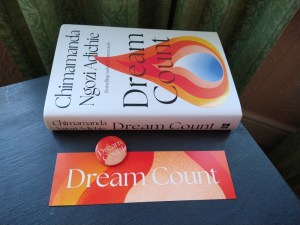
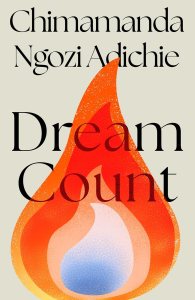
Dream Count by Chimamanda Ngozi Adichie (2025)
This was one of my Most Anticipated books of the year and had a lot to live up to as Adichie’s first novel since the amazing Americanah. When I first attempted to read it, I was dismayed by how much it felt like a rehashing of Americanah, with Chia (a travel writer in Maryland) and her cousin Omelogor (a feminist blogger) together reminiscent of Ifemelu. It did get more readable and somewhat more interesting as it went on. But instead of finding the narration and structure natural, I ended up full of questions about what Adichie intended.
 Why four main characters? Why is it the one non-Nigerian who’s poor, victimized, and less proficient in English? (That Kadiatou is based on a real person doesn’t explain enough. Her plight does at least provide what plot there is.) Why are the other three, to varying extents, rich and pretentious? Why are two narratives in the first person and two in the third person? Why in such long chunks instead of switching the POV more often? Why so many men, all of them more or less useless? (All these heterosexual relationships – so boring!) Why bring Covid into it apart from for verisimilitude? But why is the point in time important? What point is she trying to convey about pornography, the subject of Omelogor’s research?
It’s Adichie, so of course she writes solid prose with engaging characters, convincing dialogue, and provocative ideas. There’s a focus here on women’s experiences of attempted or actual motherhood (e.g., PMDD, fibroids, single parenthood or pressure to adopt), and, as per usual, a bit about race (specifically colorism, ethnic prejudice, and code-switching). But the characters’ connections seem weak, their coverage of the range of women’s experiences narrow. The title is, I suppose, the best clue to what Adichie wanted to do with the novel. Everyone dreams of finding, or preserving, love and family. Chia yearns for someone who will truly know her, and because she’s convinced this will be a romantic bond she devotes lockdown to a mental inventory of past relationships. Kadiatou dreams of peace more than of justice, and only in that she gets what she wants is there a happy ending of sorts. I wish I could be more positive, but this was a slog for me. (New purchase – Hungerford Bookshop) 
The Hotel by Daisy Johnson (2024)
I’d really enjoyed Johnson’s two novels, Everything Under and Sisters, and have a copy of her previous short story collection, Fen, on the shelf. This completely passed my notice last year. I liked the idea of eerie linked short stories, but I wish I’d known this was originally written for radio as I think it accounts for how simplistic and insubstantial the 15 tales are.
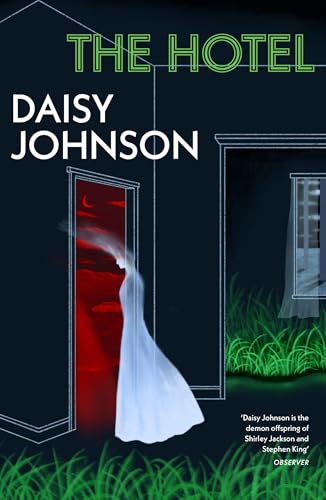 The Hotel is a fenland folly, built on the site of a pond where a suspected witch was drowned. Ever after, it is a cursed place. Those who build the hotel and stay in it are subject to violence, fear, and eruptions of the unexplained – especially if they go in Room 63. Anyone who visits once seems doomed to return. Most of the stories are in the first person, which makes sense for dramatic monologues. The speakers are guests, employees, and monsters. Some are BIPOC or queer, as if to tick off demographic boxes. Just before the Hotel burns down in 2019, it becomes the subject of an amateur student film like The Blair Witch Project.
Scary books don’t tend to work for me because I am often too aware of how they are constructed and so fail to give myself over to the reading experience and take them seriously. I can’t summon much enthusiasm for these stories, though I suppose the setting is rather atmospheric. My favourite was “Infestation,” about two girls – the one (not randomly) named Shirley – who think they discover something down in the laundry room in 1968. Only one of them makes it out alive. Okay, this one was creepy, but the rest left me unmoved. (Gift – purchased with Hungerford Bookshop with Christmas token) 
Girl by Ruth Padel (2024)
Padel is one of my favourite poets and a repeat appearance on my summer reading list; I reviewed her Emerald in 2021. I’ve read 12 of her books now. This collection is about girlhood, by way of personal history and myth.
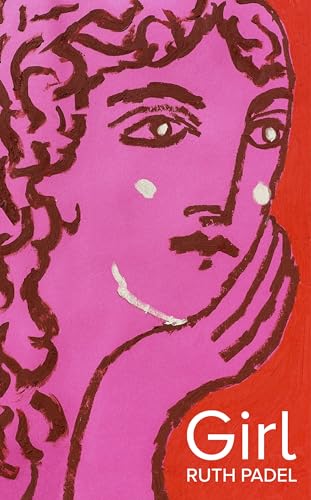 The first section, “When the Angel Comes for You,” is about the Virgin Mary, its 15 poems corresponding to the 15 Mysteries of the Rosary (as Padel explains in a note at the end; had she not, that would have gone over my head). The opening poem about the Annunciation is the most memorable its contemporary imagery emphasizing Mary’s youth and naivete: “a flood of real fear / and your heart / in the cowl-neck T-shirt from Primark / suddenly convulsed. But your old life // now seems dry as a stubbed / cigarette.” The third section, “Lady of the Labyrinth,” is about Ariadne, inspired by the snake goddess figurines in a museum on Crete. The message here is the same: “there is always the question of power / and girl is a trajectory / of learning how to deal with it”.
But the only poems that truly stood out to me are in the central autobiographical section arising from Padel’s own girlhood as well as her observations of her daughter and grandchild (setting up a Maiden–Mother–Crone triad). “Girl in a Forest” and “Tomboy and Panther” draw on the lure of the jungle to depict a wild child who chooses trousers over skirts. I loved “Fair Verona” for its traveler’s nostalgia but also for the hint of menace: so many tourists fondled the breast on a statue of Juliet that it had to be replaced. “How much touching // does it take for a bronze breast to crack?” the poet asks.
There’s some good alliteration throughout, and I warmed to the vision of girlhood as a time of promise and possibility: “the wonder / the where shall I go what new thing / will this day bring of being a girl.” Overall, though, I didn’t think the book had a lot of substance to convey about its theme. (Gift – purchased with Hungerford Bookshop with Christmas token) 
Off to Scotland today. I’ve packed Ice Cream by Helen Dunmore and Pet Sematary by Stephen King from my 20 Books list, plus other books I may substitute in. I’m scheduling a few posts for while we’re away; forgive me if I don’t reply to comments until July.
November Releases Including #NovNov24: Bennett, Pimlott, Rishøi, Shattuck
Two belated novellas: one a morbid farce set at an old folks’ home; the other a sweet Norwegian tale that offers sisterhood and magic as ways to survive a rough upbringing. Plus a lovely poetry pamphlet about the early days of widowhood and a linked short story collection spanning several centuries of art and relationships in New England.
Killing Time by Alan Bennett
I’d only previously read The Uncommon Reader by Alan Bennett; I perpetually have him confused with Arnold Bennett, by whom I know more. It could be debated whether this is a novella by word count, but even if more of a short story, for me it counts for #NovNov24 because it’s in a stand-alone volume, as publishing partner Faber produced for Claire Keegan’s So Late in the Day last year.
I polished this off in one sitting. Bennett’s black comedy is set at a posh home for the elderly, the Edwardian mansion Hill Topp House. (Residents know to be on their best behaviour lest they be demoted to an inferior neighbouring facility, Low Moor.) When a prospective client calls, Mrs McBryde enthusiastically lists the assets:
We have a choir and on special occasions a glass of dry sherry. It’s less of a home and more of a club and very much a community. We go on frequent trips out. Only last week we went to a local farm where they have a flamingo. … We don’t vegetate at Hill Topp. And the cuisine is not unadventurous. It’s not long since we had a Norwegian evening.
 The dialogue is sparkling, just like you’d expect from a playwright. As in the Hendrik Groen books and Elizabeth Taylor’s Mrs Palfrey at the Claremont, the situation invites cliques and infantilizing. The occasional death provides a bit more excitement than jigsaws and knitting. Ageing bodies may be pitiable (the incontinence!), but sex remains a powerful impulse.
Here is where readers might start to feel disconnected from Bennett’s dated humour. The window cleaner turned gigolo is somewhat amusing; the repeated gag of a flasher, not so much. “Has she seen the sights yet?” two ladies ask. And a jesting conversation about clerical sexual abuse scandals seems particularly ill considered given recent news.
The story is most interesting and fresh once Covid comes onto the scene. Some perish early on; the survivors, ungoverned, do their best. I loved the detail of a resident turning a velvet dress into 60 masks. Two objects, one of them depicted on the cover (it’s not a grenade as I thought at first!), come to have particular importance. I liked this but thought by favouring broad humour it sacrificed characterization or compassion. You’ll enjoy it if you’re fond of wicked comedy by the likes of Alan Ayckbourn. [112 pages]
With thanks to Profile Books for the free copy for review.
After the Rites and Sandwiches: Poems by Kathy Pimlott
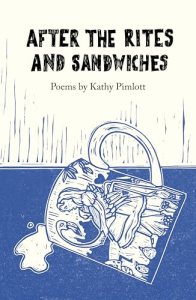 The 18 poems in this pamphlet (in America it would be called a chapbook) orbit the sudden death of Pimlott’s husband a few years ago. By the time she found Robert at the bottom of the stairs, there was nothing paramedics could do. What next? The callousness of bureaucracy: “Your demise constitutes a quarter off council tax; / the removal of a vote you seldom cast and then / only to be contrary; write-off of a modest overdraft; / the bill for an overpaid pension” (from “Death Admin I”). Attempts at healthy routines: “I’ve written my menu for the week. Today’s chowder. / I manage ten pieces of the 1000-piece jigsaw’s scenes / from Jane Austen. Tomorrow I’ll visit friends and say // it’s alright, it’s alright, seventy, eighty percent / alright” (from “How to be a widow”). Pimlott casts an eye over the possessions he left behind, remembering him in gardens and on Sunday walks of the sort they took together. Grief narratives can err towards bitter or mawkish, but this one never does. Everyday detail, enjambment and sprightly vocabulary lend the wry poems a matter-of-fact grace. I plan to pass on my copy to a new book club member who was widowed unexpectedly in May – no doubt she’ll recognise the practical challenges and emotional reality depicted.
With thanks to The Emma Press for the free copy for review.
Brightly Shining by Ingvild Rishøi (2021; 2024)
[Translated from the Norwegian by Caroline Waight]
 Ten-year-old Ronja and her teenage sister Melissa have to stick together – their single father may be jolly and imaginative, but more often than not he’s drunk and unemployed. They can’t rely on him to keep food in their Tøyen flat; they subsist on cereal. When Ronja hears about a Christmas tree seller vacancy, she hopes things might turn around. Their father lands the job but, after his crew at a local pub pull him back into bad habits, Melissa has to take over his hours. Ronja hangs out at the Christmas tree stand after school, even joining in enthusiastically with publicity. The supervisor, Tommy, doesn’t mind her being around, but it’s clear that Eriksen, the big boss, is uncomfortable with even a suggestion of child labour.
It’s touching to see Melissa take on a caring role and to meet the few indisputably good people who help the sisters, such as their elderly neighbour, Aronsen. Ronja’s innocent narration emphasizes her disbelief at their father’s repeated failings and also sets the story up for a late swerve into what seems like magic realism. I’m genuinely not sure what’s supposed to happen at the end, but the sisters find themselves alone in a wintry storm and the language of miracles is used. Rishøi’s debut will surely be compared to Small Things Like These and other classic holiday novellas. I found it a little obvious and saccharine, but if you find the right mood and moment it might just tug at your heart in the run-up to Christmas. [182 pages]
With thanks to Grove Press UK for the free copy for review.
The History of Sound by Ben Shattuck
“history is personal, even when it isn’t”
The dozen stories of Shattuck’s fiction debut form a “hook-and-chain” structure of five couplets, bookended by a first and last story that are related to each other. The links are satisfyingly overt: A pair might take place in the same house in different centuries, or the second will fill in the history of the characters from the first. In “Edwin Chase of Nantucket,” the eponymous figure recognizes his bereaved mother’s loneliness and does her a kindness. “Silver Clip,” which follows, is separated by 200 years, but its accounts of a young painter living in his ancestral island home reprises the motifs of grief, compassion and memory. “Graft,” about a woman spurned in the 1880s, and “Tundra Swan,” in which a man concocts a swindle to pay for his son’s rehab in the present day, are connected by a Cape Cod orchard. Artefacts and documents also play important roles: a journal accounts for a mysterious mass death, a radio transcript and a photograph explain a well-meaning con, and an excerpt from a history textbook follows up on the story of the religious cult in “The Children of New Eden.”
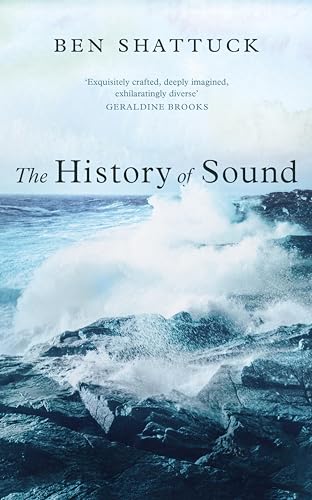 My favourite individual story was “August in the Forest,” about a poet whose artist’s fellowship isn’t all it cracked up to be – the primitive cabin being no match for a New Hampshire winter. His relationships with a hospital doctor, Chloe, and his childhood best friend, Elizabeth, seem entirely separate until Elizabeth returns from Laos and both women descend on him at the cabin. Their dialogues are funny and brilliantly awkward (“Sorry not all of us are quietly chiseling toward the beating heart of the human experience, August. One iamb at a time”) and it’s fascinating to watch how, years later, August turns life into prose. But the crowning achievement is the opening title story and its counterpart, “Origin Stories,” about folk music recordings made by two university friends during the First World War – and the afterlife of both the songs and the men.
From the start I was reminded strongly of North Woods by Daniel Mason, and particular sequences recall Shoot the Horses First by Leah Angstman and An Account of the Decline of the Great Auk, According to One Who Saw It by Jessie Greengrass. It’s a slight shame for Shattuck that what he was doing here didn’t seem as original to me because of my familiarity with these predecessors. Yet, to my surprise, I found that The History of Sound was more consistent than any of those. With the exception of a few phrases from “Graft” (“living room,” “had sex” and “boring” don’t strike me as 1880s lingo), all of the stories are historically convincing, and the very human themes of lust, parenthood, sorrow and frustrated ambition resonate across centuries and state lines. Really beautiful. (See Susan’s review too.)
[Some you-couldn’t-make-it-up trivia about Shattuck: he’s married to Jenny Slate (author of Little Weirds et al., as well as an actress known to me as Mona Lisa from Parks and Recreation); and he runs the oldest general store in America, built in 1793.]
With thanks to Swift Press for the free copy for review.
Which of these November releases catches your eye? What others can you recommend?
Short Stories in September, II: Willie Davis, Gerald Durrell, Sue Mell and Lore Segal
Four more collections down. Two of them blend fictional and autobiographical modes. Two are set primarily in New York City, with another hanging out in Kentucky and the fourth touring Europe. Three of the authors were new to me and one is an old favourite. I’m borrowing Marcie’s five-sentence review format to keep things simple.
I Can Outdance Jesus by Willie Davis (2024)
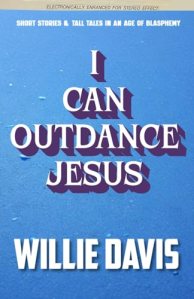 I don’t often take a look at unsolicited review copies, but I couldn’t resist the title of this and I’m glad I gave it a try. Davis’s 10 stories, several of flash length, take place in small-town Kentucky and feature a lovable cast of pranksters, drunks, and spinners of tall tales. The title phrase comes from one of the controversial songs the devil-may-care narrator of “Battle Hymn” writes. My two favourites were “Kid in a Well,” about one-upmanship and storytelling in a local bar, and “The Peddlers,” which has two rogues masquerading as Mormon missionaries. I got vague Denis Johnson vibes from this sassy, gritty but funny collection; Davis is a talent!
Published by Cowboy Jamboree Press. With thanks to publicist Lori Hettler for the free e-copy for review.
The Picnic and Suchlike Pandemonium by Gerald Durrell (1979)
 If you’ve read his autobiographical trilogy or seen The Durrells, you’ll be familiar with the quirky, chaotic family atmosphere that reigns in the first two pieces: “The Picnic,” about a luckless excursion in Dorset, and “The Maiden Voyage,” set on a similarly disastrous sailing in Greece (“Basically, the rule in Greece is to expect everything to go wrong and to try to enjoy it whether it does or not”). No doubt there’s some comic exaggeration at work here, especially in “The Public School Education,” about running into a malapropism-prone ex-girlfriend in Venice, and “The Havoc of Havelock,” in which Durrell, like an agony uncle, lends volumes of the sexologist’s work to curious hotel staff in Bournemouth. The final two France-set stories, however, feel like pure fiction even though they involve the factual framing device of hearing a story from a restaurateur or reading a historical manuscript that friends inherited from a French doctor. “The Michelin Man” is a cheeky foodie one with a surprisingly gruesome ending; “The Entrance” is a full-on dose of horror worthy of R.I.P. I wouldn’t say this is essential reading for Durrell fans, but it was a pleasant way of passing the time. (Secondhand – Lions Bookshop, Alnwick, 2021)
A New Day by Sue Mell (2024)
 Three suites of linked stories focus on young women whose choices in the 1980s have ramifications decades later. Chance meetings, addictions, ill-considered affairs, and random events all take their toll. Emma house-sits and waitresses while hoping in vain for her acting career to take off; “all she felt was a low-grade mourning for what she’d lost and hadn’t attained.” My favourite pair was about Nina, who is a photographer’s assistant in “Single Lens Reflex” and 13 years later, in “Photo Finish,” bumps into the photographer again in Central Park. With wistful character studies and nostalgic snapshots of changing cities, this is a stylish and accomplished collection.
Published by She Writes Press on September 3. With thanks to publicist Caitlin Hamilton Summie for the free e-copy for review.
Ladies’ Lunch and Other Stories by Lore Segal (2023)
 The first section contains nine linked stories about a group of five elderly female friends. Bessie jokes that “wakes and funerals are the cocktail parties of the old,” and Ruth indeed mistakes a shivah for a party and meets a potential beau who never quite successfully invites her on a date. One of their members leaves the City for a nursing home; “Sans Teeth, Sans Taste” is a good example of the morbid sense of humour. A few unrelated stories draw on Segal’s experience being evacuated from Vienna to London by Kindertransport; “Pneumonia Chronicles” is one of several autobiographical essays that bring events right up to the Covid era – closing with the bonus story “Ladies’ Zoom.” The ladies’ stories are quite amusing, but the book as a whole feels like an assortment of minor scraps; it was published when Segal, a New Yorker contributor, was 95. (Secondhand – National Trust bookshop, 2023)
Postscript: Segal died on 7 October 2024, aged 96.
I’ll have a couple more reviews roundups between now and early October.
Currently reading: The Lone-Ranger and Tonto Fistfight in Heaven by Sherman Alexie, The Skeleton in the Cupboard by Lilija Berzinska; The Woman Who Gave Birth to Rabbits by Emma Donoghue; The Best Short Stories 2023: The O. Henry Prize Winners, ed. Lauren Groff; Waltzing the Cat by Pam Houston; Dreams of Dead Women’s Handbags by Shena Mackay; How to Disappear by Tara Masih; The Souvenir Museum by Elizabeth McCracken; Like Life by Lorrie Moore; The Long Swim by Teresa Svoboda; In Love and Trouble by Alice Walker
July Releases, I: Books by Nina Lohman and Ricky Ray for Disability Pride Month
The Wellcome Book Prize (for health- and medicine-related books) and the Barbellion Prize (for representations of disability and/or chronic illness) are much missed, but I continue to be drawn to their highlighted themes in my reading. This is the first year that I’ve been aware of July as Disability Pride Month, though it’s been a thing since 1990 in the USA and 2015 in the UK. My first set of July releases – I have reviews of three novels coming up tomorrow – consists of a nonlinear memoir interrogating life with chronic pain and a chronically ill poet’s collection in which an old dog is an example of grace through suffering.
The Body Alone: A Lyrical Articulation of Chronic Pain by Nina Lohman
For well over a decade, Nina Lohman has endured Chronic Daily Headaches – when a doctor presented her with this phrase, she remarks, it was not so much a diagnosis as a description. Having a clinical term for her extreme pain did nothing to solve it; no treatment she has tried has helped much either, from pharmaceuticals to acupuncture. (Doctors think they’re breaking new ground if they suggest ice packs or elevating her neck.) Like Meghan O’Rourke’s The Invisible Kingdom, this documents a quest with no natural end. Lohman’s health fluctuates, and medical professionals and family and friends minimize her pain because she is able to pass as well, to carry out the daily tasks of raising two children.
The subtitle is apt for a work that is fragmentary and not driven by chronology. Had Cataloguing Pain not already been taken (by Allison Blevins), it might have been a perfect title. Some of Lohman’s short pieces read like poems, including erasure poems based on her medical notes. Repeated headings demonstrate a desire to organise her illness so as to make sense of it: “A Primer,” “Classifications” and “Perhaps” musings. She dwells on the names of things – shades of colours, groups of animals – while she longs for a vocabulary tailored to her own circumstances. Imagined monologues by doctors, friends and her husband (“He”) show pain has not turned her insular; she has empathy even when people act in hurtful ways.

One aspect of the book that I found particularly interesting is that Lohman, though not raised with Christian beliefs, studied theology at university level. Doctrines of the Fall bringing anguish and the Cross offering atonement are logical to her yet feel irrelevant to her situation. She bristles when a religious friend suggests that pain might be “her cross to bear.” Lohman admits she has given up hope on ever being free of pain, so finds resonance with poet Christian Wiman, who has been living with cancer for decades and whose work is equally infused with pain and faith.
It’s a journalistic as well as personal narrative, in the tradition of Anne Boyer, Sinéad Gleeson and Susan Sontag, shifting between modes and registers as Lohman gives a history of opiates, records of her pregnancies, and précis of philosophical understandings of suffering. “Theorizing can only take me so far,” she acknowledges, toward comprehending bodily experiences that defy language. And yet she employs words exquisitely, marshalling metaphors though they’re inadequate. The tone flows from enraged to resigned to cynical and back as she depicts the helplessness of women in a medical system that ignores their pain. Especially if you have enjoyed work by any of the authors I mention above, I highly recommend this debut: it’s sure to be one of my books of the year.
Published by the University of Iowa Press. With thanks to Nectar Literary for the free advanced e-copy for review.
The Soul We Share: Life with Earth and an Old Brown Dog by Ricky Ray
New England poet Ricky Ray describes himself as an “eco-mystic” and is the author of several previous works. Maura Dooley chose this as the Aryamati Collection Prize winner in 2023. As in Birds Knit My Ribs Together by Phil Barnett, nature is a source of comfort in a life complicated by chronic illness. In “Pain: 8 on a Scale out of 10,” Ray explains how “Some days, I never make it out of my head, / that coal-eyed melon … The impinged nerves crack their whips / within my animal pelt”. An accidental overdose and depression are matter-of-fact components of the poet’s history. While uxorious, he regrets that he may never become a father. And yet this couplet expresses deep pleasure in life:
(Dis)ability
Some days, my body is so beautiful
I can’t believe I get to live here.

His elderly rescue dog Addie is his beloved companion, and the delight she takes in physical existence despite advancing cancer is a model to him: “she still has a lot / to teach me about aging, about ignoring it, about how to throw my body— / even when it fails me, even when it hurts like hell—headlong into joy.” Multiple poems remember particular walks with her, such as in a Connecticut forest. He even gets a tutorial from her in how to dig a hole. Later on, he remarks as if to her, “Forgive me, I’m human, / we’re slow to learn, quick to forget— / it could be said we live too long / to appreciate each drop of time in the heart’s well.”
If his primary engagement with the nonhuman world is via a pet, Ray also widens the scope to include environmental plight: “you look up and extinction’s / already guzzling half the bestiary, / You think, / God, what have I done? / And the God in you answers: / harm, now what will you do?” This sense of responsibility meeting resolution echoes throughout the book. Ache is a spur to seek remedies; “I learned that hurt inducts all painfolk as conspirators // in the craft of healing.” The prose poems were a bit long and ranty for me (e.g., “Identity Earth: A Brief Biography of Our Planetary Self” goes on for more than six pages) and overall I found the book a little sentimental and New Age-adjacent. However, the poems about Addie are undeniably touching, and perfect for fans of Mary Oliver’s Dog Songs.
With thanks to Fly on the Wall Press for the free copy for review.
Have you read anything to tie into Disability Pride Month?
Spring Reads, Part II: Blossomise, Spring Chicken & Cold Spring Harbor
Our garden is an unruly assortment of wildflowers, rosebushes, fruit trees and hedge plants, along with an in-progress pond, and we’ve made a few half-hearted attempts at planting vegetable seeds and flower bulbs. It felt more like summer earlier in May, before we left for France; as the rest of the spring plays out, we’ll see if the beetroot, courgettes, radishes and tomatoes amount to anything. The gladioli have certainly been shooting for the sky!
I recently encountered spring (if only in name) through these three books, a truly mixed bag: a novelty poetry book memorable more for the illustrations than for the words, a fascinating popular account of the science of ageing, and a typically depressing (if you know the author, anyway) novel about failing marriages and families. Part I of my Spring Reading was here.
Blossomise by Simon Armitage; illus. Angela Harding (2024)
 Armitage has been the Poet Laureate for yonks now, but I can’t say his poetry has ever made much of an impression on me. That’s especially true of this slim volume commissioned by the National Trust: it’s 3 stars for Angela Harding’s lovely if biologically inaccurate (but I’ll be kind and call them whimsical) engravings, and 2 stars for the actual poems, which are light on content. Plum, cherry, apple, pear, blackthorn and hawthorn blossom loom large. It’s hard to describe spring without resorting to enraptured clichés, though: “Planet Earth in party mode, / petals fizzing and frothing / like pink champagne.” The haiku (11 of 21 poems) feel particularly tossed-off: “The streets are learning / the language of plum blossom. / The trees have spoken.” But others are sure to think more of this than I did.
A favourite passage: “Scented and powdered / she’s staging / a one-tree show / with hi-viz blossoms / and lip-gloss petals; / she’ll season the pavements / and polished stones / with something like snow.” (Public library) 
Spring Chicken: Stay Young Forever (or Die Trying) by Bill Gifford (2015)
 Gifford was in his mid-forties when he undertook this quirky journey into the science and superstitions of ageing. As a starting point, he ponders the differences between his grandfather, who swam and worked his orchard until his death from infection at 86, and his great-uncle, not so different in age, who developed Alzheimer’s and died in a nursing home at 74. Why is the course of ageing so different for different people? Gifford suspects that, in this case, it had something to do with Uncle Emerson’s adherence to the family tradition of Christian Science and refusal to go to the doctor for any medical concern. (An alarming fact: “The Baby Boom generation is the first in centuries that has actually turned out to be less healthy than their parents, thanks largely to diabetes, poor diet, and general physical laziness.”) But variation in healthspan is still something of a mystery.
Over the course of the book, Gifford meets all number of researchers and cranks as he attends conferences, travels to spend time with centenarians and scientists, and participates in the Baltimore Longitudinal Study of Aging. There have been some truly zany ideas about how to pause or reverse aging, such as self-dosing with hormones (Suzanne Somers is one proponent), but long-term use is discouraged. Some things that do help, to an extent, are calorie restriction and periodic fasting plus, possibly, red wine, coffee and aspirin. But the basic advice is nothing we don’t already know about health: don’t eat too much and exercise, i.e., avoid obesity. The layman-interpreting-science approach reminded me of Mary Roach’s. There was some crossover in content with Mark O’Connell’s To Be a Machine and various books I’ve read about dementia. Fun and enlightening. (New purchase – bargain book from Dollar Tree, Bowie, MD) 
Cold Spring Harbor by Richard Yates (1986)
 Cold Spring Harbor is a Long Island hamlet whose name casts an appropriately chilly shadow over this slim novel about families blighted by alcoholism and poor decisions. Evan Shepard, only in his early twenties, already has a broken marriage behind him after a teenage romance led to an unplanned pregnancy. Mary and their daughter Kathleen seem to be in the rearview mirror as he plans to return to college for an engineering degree. One day he accompanies his father into New York City for an eye doctor appointment and the car breaks down. The men knock on a random door and thereby become entwined with the Drakes: Gloria, the unstable, daytime-drinking mother; Rachel, her beautiful daughter; and Phil, her earnest but unconfident adolescent son.
Evan and Rachel soon marry and agree to Gloria’s plan of sharing a house in Cold Spring Harbor, where the Shepards live (Evan’s mother is also an alcoholic, but less functional; she hides behind the “invalid” label). Take it from me: living with your in-laws is never a good idea! As the Second World War looms, and with Evan and Rachel expecting a baby, it’s clear something will have to give with this uneasy family arrangement, but the dramatic break I was expecting – along the lines of a death or accident – never arrived. Instead, there’s just additional slow crumbling, and the promise of greater suffering to come. Although Yates’s character portraits are as penetrating as in Easter Parade, I found the plot a little lacklustre here. (Secondhand – Clutterbooks, Sedbergh)
Any ‘spring’ reads for you recently?
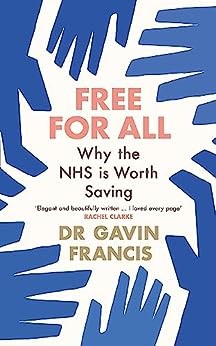
Long Live the NHS! Free for All by Gavin Francis
Dr Gavin Francis’s Intensive Care is the definitive Covid-19 read for me, and I admired his follow-up, Recovery, a personal and general history of convalescence. Free for All is most similar to the latter: a short book, impassioned and practical, that demands a social safety net.
The UK’s National Health Service was established 75 years ago this summer, with the aim of making healthcare free at the point of use for everyone, funded not by charity but by taxation. Today, the NHS is limping along from crisis to crisis (every winter, basically) because it has been chronically underfunded. Any UK-based reader could tell their own story of ridiculous wait times*, I suspect.
Francis makes it clear that the governing party of the last 13 years bears the responsibility for this. The UK’s healthcare spending is lower than that of key European benchmark nations that have better health outcomes. The Conservatives’ goal seems to be to privatize health and focus on market demand. Francis argues powerfully that allowing healthcare to be driven by profit, as it is in the USA, is immoral and uncivilized.
His valuable perspective is that of a GP who has to pick up the slack in his clinics and is begged not to send any but the most desperate cases to overcrowded hospitals. Services are strained to the breaking point; private medicine, far from lessening the burden, increases it when patients revert to the NHS for follow-up care or repair of botched procedures. Meanwhile, the introduction of performance standards can divert doctors’ attention to ticking boxes and ensuring value for money rather than providing the best possible care. Overtreatment (mostly of the elderly) is another potential pitfall.
Francis elaborates his case through his work with anonymized patients, conversations with fellow medical professionals, and a frank look at the statistics on spending and achievements. The book is slightly dry compared to some of his earlier work, simply because of the subject matter, and I noticed a bit of repetition. However, it is still a concise and cogent manifesto. The author believes that people can show they value the NHS by electing politicians who will properly fund it. The NHS is, after all, “an expression of what’s best in our society” and “worth saving,” he concludes. Hear hear!
With thanks to Profile Books/Wellcome Collection for the free copy for review.
Buy Free for All from Bookshop UK. [affiliate link]
*Mine? I waited 12 months for a PHONE consultation with an ear, nose and throat specialist regarding tinnitus. By that point, of course, my problem had largely subsided.
July Releases: Speak to Me & The Librarianist
I didn’t expect these two novels to have anything in common, but in fact they’re both about lonely, introverted librarians who have cause to plunge into memories of a lost relationship. (They also had a couple of random tiny details in common, for which see my next installment of Book Serendipity.) Tonally, however, they couldn’t be more different, and while the one worked for me the other did not at all. You might be surprised which! Read on…
Speak to Me by Paula Cocozza
I adored Cocozza’s debut, How to Be Human, so news of her follow-up was very exciting. The brief early synopses made it sound like it couldn’t be more up my street what with the theme of a woman frustrated by her husband’s obsession with his phone – I’m a smartphone refusenik and generally nod smugly along to arguments about how they’re an addiction that encourages lack of focus and time wasting. But it turns out that was only a peripheral topic; the novel is strangely diffuse and detached.
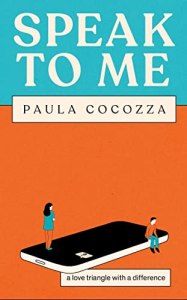 Susan is a middle-aged librarian and mother to teenage twin boys. She lives with them and her husband Kurt on a partially built estate in Berkshire full of soulless houses of various designs. Their “Beaufort” is not a happy place, and their marriage is failing, for several reasons. One is tech guru Kurt’s phone addiction. Susan refers to each new model as “Wendy,” and for her the last straw is when he checks it during the middle of sex on her 50th birthday. She joins a forum for likeminded neglected family members, and kills several Wendys by burial, washing machine, or sledgehammer.
But as the story goes on, Kurt’s issues fade into the background and Susan becomes more obsessed with the whereabouts of a leather suitcase that went missing during their move. The case contains letters and souvenirs from her relationship with Antony, whom she met at 16. She’s convinced that Kurt is hiding it, and does ever odder things in the quest to get it back, even letting herself into their former suburban London home. Soon her mission shifts: not only does she want Antony’s letters back; she wants Antony himself.
The message seems a fairly obvious one: the characters have more immediate forms of communication at their disposal than ever before, yet are not truly communicating with each other about what they need and want from life, and allowing secrets to come between them. “We both act as if talking will destroy us, but surely silence will, more slowly, and we will be undone by all the things we leave unsaid,” Susan thinks about her marriage. Nostalgia and futurism are both held up as problematic. Fair enough.
However, Susan is unforthcoming and delusional – but not in the satisfying unreliable narrator way – and delivers this piecemeal record with such a flat affect (reminding me of no one more than the title character from Kazuo Ishiguro’s Klara and the Sun; Susan even says, “Why do I feel scared that someone will find me out every time I tick the box that says ‘I am not a robot’?”) that I lost sympathy early on and couldn’t care what happened. A big disappointment from my Most Anticipated list.
With thanks to Tinder Press for the proof copy for review.
The Librarianist by Patrick deWitt
Bob Comet, a retired librarian in Portland, Oregon, gets a new lease on life at age 71. One day he encounters a lost woman with dementia and/or catatonia in a 7-Eleven and, after accompanying her back to the Gambell-Reed Senior Center, decides to volunteer there. A plan to read aloud to his fellow elderly quickly backfires, but the resident curmudgeons and smart-asses enjoy his company, so he’ll just come over to socialize.
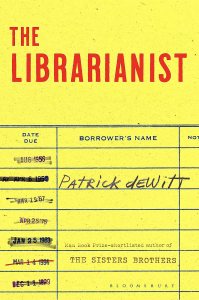 If it seems this is heading in a familiar A Man Called Ove or The Secret Diary of Hendrik Groen direction, think again. Bob has a run-in with his past that leads into two extended flashbacks: one to his brief marriage to Connie and his friendship with his best man, Ethan, in 1960; the other to when he ran away by train and bus at age 11.5 and ended up in a hotel as an assistant to two eccentric actresses and their performing dogs for a few days in 1945.
Imagine if Wes Anderson directed various Dickens vignettes set in the mid-20th-century Pacific Northwest – Oliver Twist with dashes of Great Expectations and Nicholas Nickleby. That’s the mood of Bob Comet’s early adventures. Witness this paragraph:
The next day Bob returned to the beach to practice his press rolls. The first performance was scheduled to take place thirty-six hours hence; with this in mind, Bob endeavored to arrive at a place where he could achieve the percussive effect without thinking of it. An hour and a half passed, and he paused, looking out to sea and having looking-out-to-sea thoughts. He imagined he heard his name on the wind and turned to find Ida leaning out the window of the tilted tower; her face was green as spinach puree, and she was waving at him that he should come up. Bob held the drum above his head, and she nodded that he should bring it with him.
(You can just picture the Anderson staginess: the long establishing shots; the jump cuts to a close-up on her face, then his; the vibrant colours; the exaggerated faces. I got serious The Grand Budapest Hotel vibes.) This whole section was so bizarre and funny that I could overlook the suspicion that deWitt got to the two-thirds point of his novel and asked himself “now what?!” The whole book is episodic and full of absurdist dialogue, and delights in the peculiarities of its characters, from Connie’s zealot father to the diner chef who creates the dubious “frizzled beef” entrée. And Bob himself? He may appear like a blank, but there are deep waters there. And his passion for books was more than enough to endear him to me:
“Bob was certain that a room filled with printed matter was a room that needed nothing.”
[Ethan:] “‘I keep meaning to get to books but life distracts me.’ ‘See, for me it’s just the opposite,’ Bob said.”
“All his life he had believed the real world was the world of books; it was here that mankind’s finest inclinations were represented.”
Weird and hilariously deadpan in just the way you’d expect from the author of The Sisters Brothers and French Exit, this was the pop of fun my summer needed. (See also Susan’s review.)
With thanks to Bloomsbury for the proof copy for review.
Would you read one or both of these?
10 Days in the USA and What I Read (Plus a Book Haul)
On October 29th, I went to an evening drinks party at a neighbour’s house around the corner. A friend asked me about whether the UK or the USA is “home” and I replied that the States feels less and less like home every time I go, that the culture and politics are ever more foreign to me and the UK’s more progressive society is where I belong. I even made an offhand comment to the effect of: once my mother passed, I didn’t think I’d fly back there often, if at all. I was thinking about 5–10 years into the future; instead, a few hours after I got home from the party, we were awoken by the middle-of-the-night phone call saying my mother had suffered a nonrecoverable brain bleed. The next day she was gone.
I haven’t reflected a lot on the irony of that timing, probably because it feels like too much, but it turns out I was completely wrong: in fact, I’m now returning to the States more often. With our mom gone and our dad not really in our lives, my sister and I have gotten closer. Since October I’ve flown back twice and she’s visited here once. There are 7.5 years between us and we’ve always been at different stages of life, with separate preoccupations and priorities; I was also lazy and let my mom be the go-between, passing family news back and forth. Now there’s a sense that we are all we have, and we have to stick together.


So it was doubly important for me to be there for my sister’s graduation from nursing school last week. If we follow each other on Facebook or Instagram, you will have already seen that she finished at the top of her cohort and was one of just two students recognized for academic excellence out of the college’s over 200 graduates – and all of this while raising four children and coping with the disruption of Mom’s death seven months ago. There were many times when she thought she would have to pause or give up her studies, but she persisted and will start work as a hospice nurse soon. We’re all as proud as could be, on our mom’s behalf, too.
The trip was a mixture of celebratory moments and sad duties. We started the process of going through our mom’s belongings and culling what we can, but the files, photos and mementoes are the real challenge and had to wait for another time. There were dozens of books I’d given her for birthdays and holidays, mostly by her favourite gentle writers – Gerald Durrell, Jan Karon, Gervase Phinn – invariably annotated with her name, the date and occasion. I looked back through them and then let them go.


Between my two suitcases I managed to bring back the rest of her first box of journals (there are 150 of them in total, spanning 1989 to 2022), and I’m halfway through #4 at the moment. We moved out of my first home when I was nine, and I don’t have a lot of vivid memories of those early years. But as I read her record of everyday life it’s like I’m right back in those rooms. I get new glimpses of myself, my dad, my sister, but especially of her – not as my mother, but as a whole person. As a child I never realized she was depressed: distressed about her job situation, worried over conflicts with her siblings and my sister, coping with ill health (she was later diagnosed with fibromyalgia) and resisting ageing. For as strong as her Christian faith was, she was really struggling in ways I couldn’t appreciate then.

I hope that later journals will introduce hindsight, now that she’s not around to give a more circumspect view. In any case, they’re an incredible legacy, a chance for me to relive much of my life that I otherwise would only remember in fragments through photographs, and perhaps have a preview of what I can expect from the course of our shared kidney disease.
What I Read
 The Housekeepers by Alex Hay – A historical heist novel with shades of Downton Abbey, this comes out in July. Reviewed for Shelf Awareness.

Cowboys Are My Weakness by Pam Houston – Terrific: stark, sexy stories about women who live out West and love cowboys and hunters (as well as dogs and horses). Ten of the stories are in the first person, voiced by women in their twenties and thirties who are looking for romance and adventure and anxiously pondering motherhood (“by the time you get to be thirty, freedom has circled back on itself to mean something totally different from what it did at twenty-one”). The remaining two are in the second person, which I always enjoy. The occasional Montana setting reminded me of stories I’ve read by Maile Meloy and Maggie Shipstead, while the relationship studies made me think of Amy Bloom’s work. 

The Harpy by Megan Hunter – Read for Literary Wives club. Review coming up on Monday. 

The Lake Shore Limited by Sue Miller – A solid set of narratives alternating between the POVs of four characters whose lives converge around a play inspired by the playwright’s loss of her boyfriend on one of the hijacked planes on 9/11. Her mixed feelings about him towards the end of his life and about being shackled to his legacy as his ‘widow’ reverberate in other sections: one about the lead actor, whose wife has ALS; and one about a widower the playwright is being set up with on a date. Fitting for a book about a play, the scenes feel very visual. A little underpowered, but subtlety is to be expected from a Miller novel. She, Anne Tyler and Elizabeth Berg write easy reads with substance, just the kind of book I want to take on an airplane, as indeed I did with this one. I read the first 2/3 on my travel day (although with the 9/11 theme this maybe wasn’t the best choice!).
 For apposite plane reading, I also started Fly Girl by Ann Hood, her memoir of being a TWA flight attendant in the 1970s, the waning glory days of air travel. I’ve read 10 or so of Hood’s books before from various genres, but lost interest in the minutiae of her job applications and interviews. Another writer would probably have made a bigger deal of the inherent sexism of the profession, too. I read 30%.
 Hello Beautiful by Ann Napolitano – I knew I wanted to read this even before it was Oprah’s 100th book club pick. It’s a family story spanning three decades and focusing on the Padavanos, a working-class Italian American Chicago clan with four daughters: Julia, Sylvie, and twins Cecilia and Emeline. Julia meets melancholy basketball player William Waters while at Northwestern in the late 1970s and they marry and have a daughter; Sylvie, a budding librarian, makes out with boys in the stacks until her great romance comes along; Cecilia is an artist and Emeline loves babies and manages a nursery. More than once a character think of their collective story as a “soap opera,” and there’s plenty of melodrama here – an out-of-wedlock pregnancy, estrangements, a suicide attempt, a coming out, stealing another’s man – as well as far-fetched coincidences, including the two major deaths falling on the same day as a birth and a reconciliation.
There is such warmth and intensity to the telling, and brave reckoning with mental illness, prejudice and trauma, that I excused flaws such as dwelling overly much in characters’ heads through close third person narration, to the detriment of scenes and dialogue. I love sister stories in general, and the subtle echoes of Leaves of Grass and Little Women (the connections aren’t one to one and you’re kept guessing for most of the book who will be the Beth) add heft. I especially appreciated how a late parent is still remembered in daily life after 30 years have passed. This is, believe it or not, the second basketball novel I’ve loved this year, after Tell the Rest by Lucy Jane Bledsoe.
I always try to choose thematically appropriate reads, so I also started:
 Circling My Mother by Mary Gordon – A memoir she began after her nonagenarian mother’s death with dementia. Intriguingly, the structure is not chronological but topic by topic, built around key relationships: so far I’ve read “My Mother and Her Bosses” and “My Mother: Words and Music.”
Grave by Allison C. Meier – My sister and I made a day trip up to my mother’s grave for the first time since her burial. She has a beautiful spot in a rural cemetery dating back to the 1780s, but it’s in full sun and very dry, so we tried to cheer up the dusty plot with some extra topsoil and grass seed, marigolds, and a butterfly flag.


 Meier is a cemetery tour guide in Brooklyn, where she lives. In the third of the e-book I’ve read so far, she looks at American burial customs, the lack of respect for Black and Native American burial sites, and the rise of garden cemeteries such as Mount Auburn in Cambridge, Massachusetts. I’ve been reading death-themed books for over a decade and have delighted in exploring cemeteries (including Mount Auburn, as part of my New England honeymoon) for even longer, so this is right up my street and one of the better Object Lessons monographs.
What I Bought
I traded in most of my mother’s books at 2nd & Charles and Wonder Book and Video but, no surprise, promptly spent the store credit on more secondhand books. Thanks to clearance shelves at both stores, I only had to chip in another $12.25 for the below haul, which also covered two Dollar Tree purchases (I felt bad for Susan Minot having signed editions end up remaindered!). Some tried and true authors here, as well as novelties to test out, with a bunch of short stories and novellas to read later in the year.


 Bookish Beck = Rebecca Foster. American transplant to England. Freelance proofreader and book reviewer.
 Bookish Beck