Nine Days in Germany and What I Read, II: Lübeck
(Part I covered Berlin.) Three works of short fiction embodied the rest of our journeying, from Berlin to Lübeck to home. We were sad to say goodbye to Lemmy and Roxanne, the affectionate, fluffy cats who came with our Berlin flat, but there were further adventures to be had. The hosts of our Lübeck Airbnb apartment also owned two cats we briefly met, but it wasn’t the same as having surrogate pets around.
Goodbye to Berlin by Christopher Isherwood (1939)
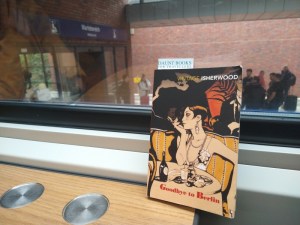 Isherwood intended for these six autofiction stories to contribute to a “huge episodic novel of pre-Hitler Berlin” titled The Lost. Two “Berlin Diary” segments from 1930 and 1933 bear witness to a change in tenor accompanying the rise of Nazism. Even in lighter pieces about a holiday at the Baltic coast and his friendship with a family who run a department store, menace creeps in through characters’ offhand remarks about “dirty Jews” ruining the country. The narrator, Christopher Isherwood, is a private English tutor staying in squalid boarding houses or spare rooms. His living conditions are mostly played for laughs – his landlady, Fraulein Schroeder, calls him “Herr Issyvoo” – but I was also reminded of George Orwell’s didactic realism. I had it in mind that Isherwood was homosexual; the only evidence of that here is his observation of the homoerotic tension between two young men, Otto and Peter, whom he meets on the Ruegen Island vacation, so he was still being coy in print. Famously, the longest story introduces Sally Bowles (played by Liza Minnelli in Cabaret), the lovable club singer who flits from man to man and feigns a carefree joy she doesn’t always feel. This is the second of two Berlin books; I will have to find the other and explore the rest of Isherwood’s work as I found this witty and humane, restrained but vigilant. (Little Free Library)
On balance, we planned the division well: busy city days first, followed by a more restful long weekend; reliable English-speaking opportunities while we built up our confidence, then a more provincial setting where we could try out a bit of German. Friends were curious why we chose Lübeck. Two charitably assumed that I went for the Thomas Mann connections, but that was an incidental side benefit. (I quailed at the prospect of reading the 700+-page debut novel based on his family history, Buddenbrooks; instead, I intended to reread Death in Venice, but my Project Gutenberg download didn’t work, so I’ve earmarked it for Novellas in November instead.)
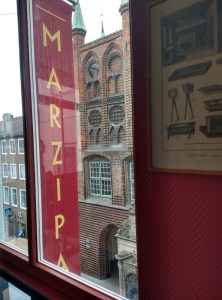
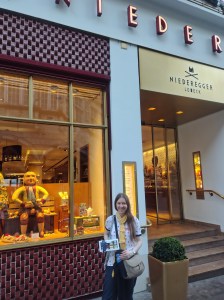
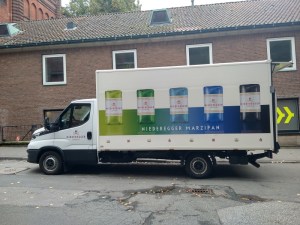
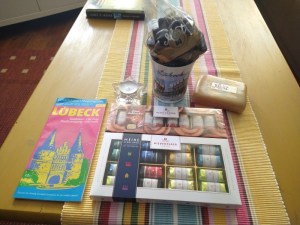
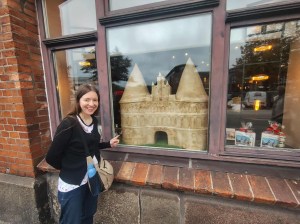
Nope, I was in it for the marzipan. Lübeck has been known for its marzipan since 1795. In 1926, there were 36 marzipan manufacturers in this northern city; three remain today and of course we visited both cafes and all three shops. Niederegger has a small museum above the Bettys-like café. You would not believe the scale or number of tableaux made entirely of almond paste! Nor the variety of flavours and packaging in the shop downstairs. We enjoyed marzipan hot chocolate, cappuccino and cakes, and came away with a modest supply of treats. We also dropped into a trendy restaurant where I had a “Lübecker martini” combining rum, marzipan liqueur and espresso.
-
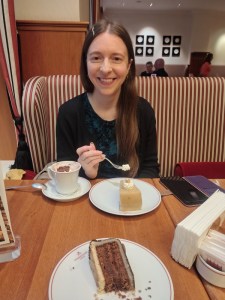
- Marzipan hot chocolate and traditional nusstorte at the Niederegger cafe.
-
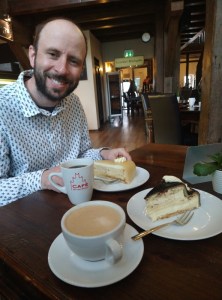
- Marzipanland was better! I had Othello Torte and a marzipan cappuccino.


In a German Pension by Katherine Mansfield (1911)
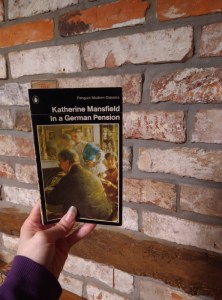 Mansfield was 19 when she composed this slim debut collection of arch sketches set in and around a Bavarian guesthouse. The narrator is a young Englishwoman traveling to take the waters for her health. A quiet but opinionated outsider (“I felt a little crushed … at the tone – placing me outside the pale – branding me as a foreigner”), she crafts pen portraits of a gluttonous baron, the fawning Herr Professor, and various meddling or air-headed fraus and frauleins. There are funny lines that rest on stereotypes (“you English … are always exposing your legs on cricket fields, and breeding dogs in your back gardens”; “a tired, pale youth … was recovering from a nervous breakdown due to much philosophy and little nourishment”) but also some alarming scenarios. One servant girl narrowly escapes being violated, while “The-Child-Who-Was-Tired” takes drastic action when another baby is added to her workload. Most of the stories are unmemorable, however. Mansfield renounced this early work as juvenile and inferior – her first publisher went bankrupt and when war broke out in Europe, sparking renewed interest in a book that pokes fun at Germans, she refused republishing rights. (Secondhand – Well-Read Books, Wigtown)
On our travels, I also read…
- portions of various e-books for paid Shelf Awareness reviews: Benbecula by Graeme Macrae Burnet, Beard by Kelly Foster Lundquist, Wreck by Catherine Newman;
- part of Bright Lights, Big City by Jay McInerney, which I’ll finish for Novellas in November;
- and portions of e-books for fun: Startlement by Ada Limón and An Oral History of Atlantis by Ed Park (more short story catch-up reviews to come).
Aside from marzipan, Lübeck has a lot going for it: lovely medieval Brick Gothic architecture – the iconic Holstentor gate once featured on the 50-mark note; proximity to the Baltic Sea; and connections with three Nobel Prize winners, two for literature – the other being Günter Grass. On the Saturday morning, we took a bus to Travemünde, a popular seaside resort town, for a walk along the cliffs. The path was busy with cyclists but the dog beach was nearly deserted. We watched a ferry setting off for Sweden. (Had we had a few more days to play with, we would have liked to tack on trips to Denmark from here and into Poland from Berlin.)


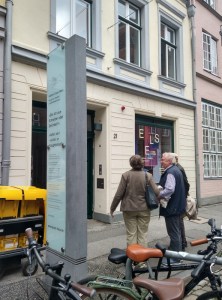
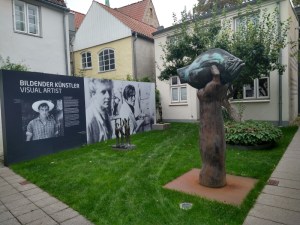
Buddenbrookhaus, the home of Mann’s grandparents, is undergoing a several-year renovation and expansion project. I wasn’t too upset about missing out on it, and there was a Mann exhibit in the tourist information centre. Instead, I went to the Günter Grass House museum, which opened in 2002. Grass spent his last 20 years living 15 miles south of Lübeck and kept an office in this building. For future reference, there’s a good-value day-ticket one can buy that covers all the museums in Lübeck. My husband went to the natural history museum while I learned about Grass, whom I’d never read before, and about Else Lasker-Schüler, whose works were on display in the rotating upstairs exhibit featuring figures who, like Grass, were writers and visual artists.


Grass grew up in what is now Danzig, Poland and was drafted into the Waffen-SS at age 17. He was lucky in that he soon received a minor injury that landed him in American custody. The Tin Drum, his well-known debut novel, drew on his military background, which he otherwise rarely discussed. Formally trained in art, he illustrated his works with the same motifs that appear in words. Flora and fauna run all through: fruit, onions; birds, snails, the flounder, cats and dogs. A multitalented writer, he also produced plays, poetry and political commentary. He won the Nobel Prize in 1999 and died in 2015. I found the material on his life and work unexpectedly diverting. I read the short volume below as soon as we got back.
-
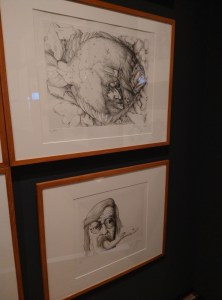
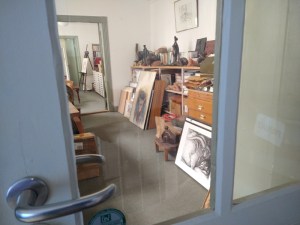
- Some of Grass’s grotesque hybrid animal drawings
-
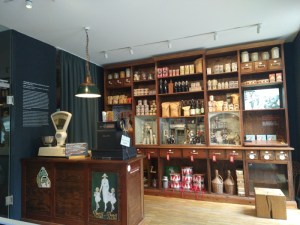
- Replica of the Grass family’s store in Danzig
-
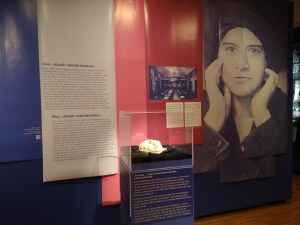
- Else Lasker-Schüler exhibit, including her death mask
Of All that Ends by Günter Grass (2015)
[Translated from German by Breon Mitchell]
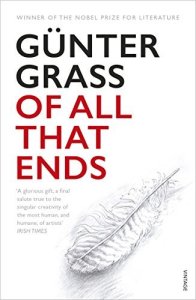 This posthumous prosimetric collection contains miniature essays, stories and poems, many of which seem autobiographical. By turns nostalgic and morbid, the pieces are very much concerned with senescence and last things. The black-and-white sketches, precise like Dürer’s but looser and more impressionistic, obsessively feature dead birds, fallen leaves, bent nails and shorn-off fingers. The speaker and his wife order wooden boxes in which their corpses will lie and store them in the cellar. One winter night they’re stolen, only to be returned the following summer. He has lost so many friends, so many teeth; there are few remaining pleasures of the flesh that can lift him out of his naturally melancholy state. Though, in Lübeck for the Christmas Fair, almonds might just help? The poetry happened to speak to me more than the prose in this volume. I’ll read longer works by Grass for future German Literature Months. My library has his first memoir, Peeling the Onion, as well as The Tin Drum, both doorstoppers. (Public library)


Of all that ends: books, holidays, seasons. It was a trip that, like so many we take these days, was sometimes irksome and exhausting, and could be overwhelming (Berlin) or boring (Lübeck) by turns – yet was still far preferable to the humdrum of home life. And – isn’t it always the way? – just as we’d gotten comfortable with greetings, farewells and other everyday phrases in a new language, it was time to leave. We were more comfortable with French when ordering a vegan supper at a café and drinks in a bustling Art Deco bar during our quick overnight stay in Brussels, then it was onto the Eurostar to come back home. Somewhere on those many train rides back, I caught this monster cold that will not die after 10 days and counting. And the very day we arrived back in the UK, we felt a sudden shift to late autumn weather.
November will be here before we know it.
Nine Days in Germany and What I Read, Part I: Berlin
We’ve actually been back for more than a week, but soon after our return I was felled by a nasty cold (not Covid, surprisingly), which has left me with a lingering cough and ongoing fatigue. Finally, I’m recovered just about enough to report back.
This Interrail adventure was more low-key than the one we took in 2016. The first day saw us traveling as far as Aachen, just over the border from France. It’s a nice small city with Christian and culinary history: Charlemagne is buried in the cathedral; and it’s famous for a chewy, spicy gingerbread called printen. Before our night in a chain hotel, we stumbled upon the mayor’s Green Party rally in the square – there was to be an election the following day – and drank and dined well. The Gin Library, spotted at random on the map, is an excellent and affordable Asian-fusion cocktail bar. My “Big Ben,” for instance, featured Tanqueray gin, lemon juice, honey, fresh coriander, and cinnamon syrup. Then at Hanswurst – Das Wurstrestaurant (cue jokes about finding the “worst” restaurant in Aachen!), a superior fast-food joint, I had the vegetarian “Hans Berlin,” a scrumptious currywurst with potato wedges.


The next day it was off to Berlin with a big bag of bakery provisions. For the first time, we experienced the rail cancellations and delays that would plague us for much of the next week. We then had to brave the only supermarket open in Berlin on a Sunday – the Rewe in the Hauptbahnhof – before taking the S-Bahn to Alexanderplatz, the nearest station to our Airbnb flat.


It was all worth it to befriend Lemmy (the ginger one) and Roxanne. It’s a sweet deal the host has here: whenever she goes away, people pay her to look after her cats. At the same time as we were paying for a cat-sitter back home. We must be chumps!


I’ll narrate the rest of the trip through the books I read. I relished choosing relevant reads from my shelves and the library’s holdings – I was truly spoiled for choice for Berlin settings! – and I appreciated encountering them all on location.


As soon as we walked into the large airy living room of the fifth-floor Airbnb flat, I nearly laughed out loud, for there in the corner was a monstera plant. The trendy, minimalist décor, too, was just like that of the main characters’ place in…
Perfection by Vincenzo Latronico (2022; 2025)
[Translated from Italian by Sophie Hughes]
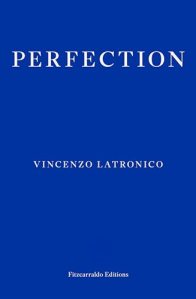 Anna and Tom are digital nomads from Southern Europe who offer up their Berlin flat as a short-term rental. In the listing photographs it looks pristine, giving no hint of the difficulties of the expatriate life such as bureaucracy and harsh winters. “Creative professionals” working in the fields of web development and graphic design, they are part of the micro-generation that grew up as the Internet was becoming mainstream, and they tailor their products and personal lives to social media’s preferences. They are lazy liberals addicted to convenience and materialism; aspiring hedonists who like the idea of sex clubs but don’t enjoy them when they actually get there. When Berlin loses its magic, they try Portugal and Sicily before an unforeseen inheritance presents them with the project of opening their own coastal guesthouse. “What they were looking for must have existed once upon a time, back when you only had to hop onto a train or a ferry to reach a whole other world.” This International Booker Prize shortlistee is a smart satire about online posturing and the mistaken belief that life must be better elsewhere. There are virtually no scenes or dialogue but Latronico gets away with the all-telling style because of the novella length. Were it not for his note in the Acknowledgements, I wouldn’t have known that this is a tribute to Things by Georges Perec. (Read via Edelweiss)
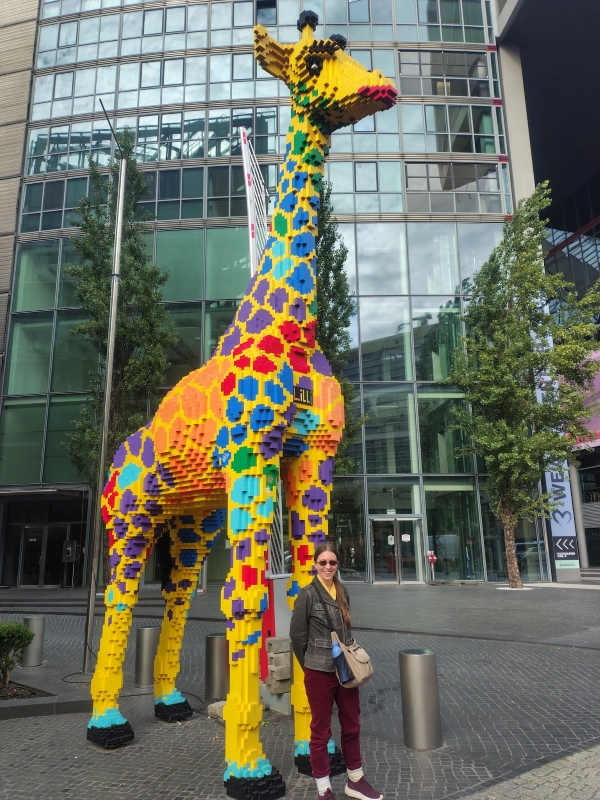
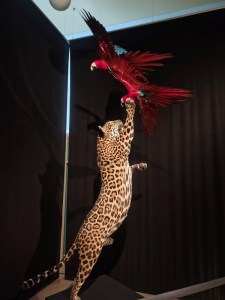 We got to pretend to be hip locals for four days, going up the Reichstag tower, strolling through the Tiergarten, touring the Natural History Museum (which has some excellent taxidermy as at left), walking from Potsdam station through Park Sanssouci and ogling the castles and windmill, chowing down on hand-pulled noodles and bao buns at neighbourhood café Wen Cheng, catching an excellent free lunchtime concert at the Philharmonic, and bringing back pastries or vegan doughnuts to snack on while hanging out with the kitties. The S-Bahn was included on our Interrail passes but didn’t go everywhere we needed, so we were often on the handy U-Bahn and tram system instead. Graffiti is an art form rather than an antisocial activity in Berlin; there is so much of it, everywhere.
-
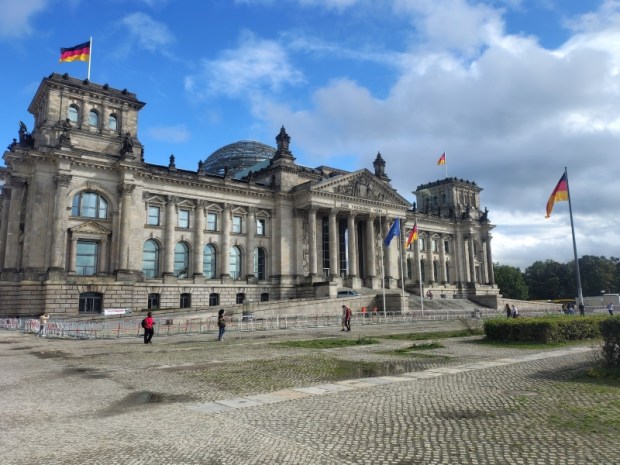
- Reichstag (Photos 1, 2 and 4 by Chris Foster)
-
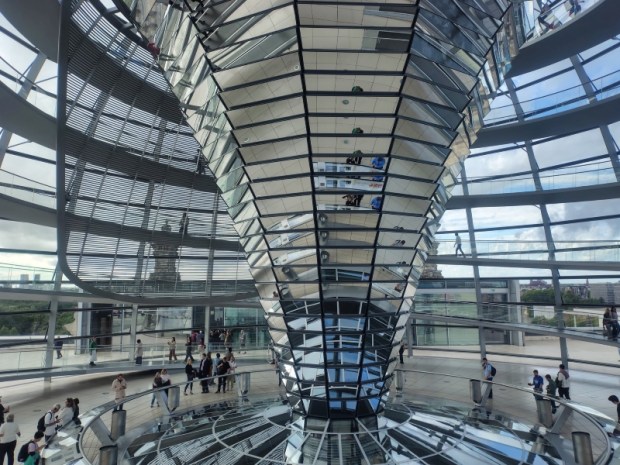
- Reichstag tower designed by Norman Foster
-

- The Philharmonic
-
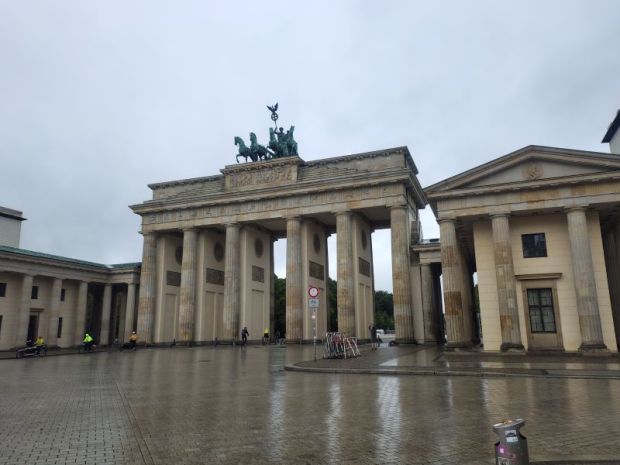
- Brandenburg Gate (Photos 1-3 by Chris Foster)
-
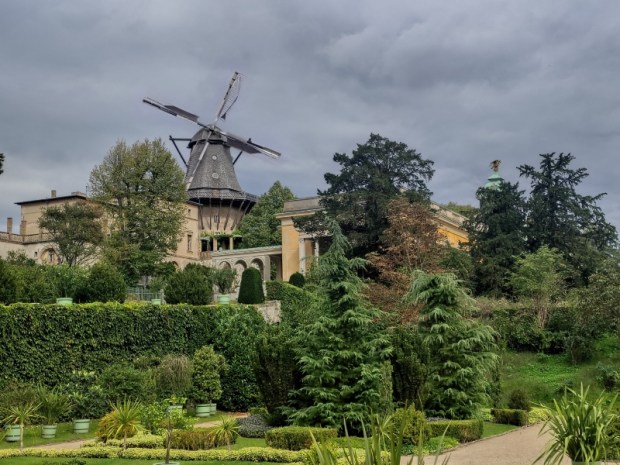
- Postdam’s Park Sanssouci
-
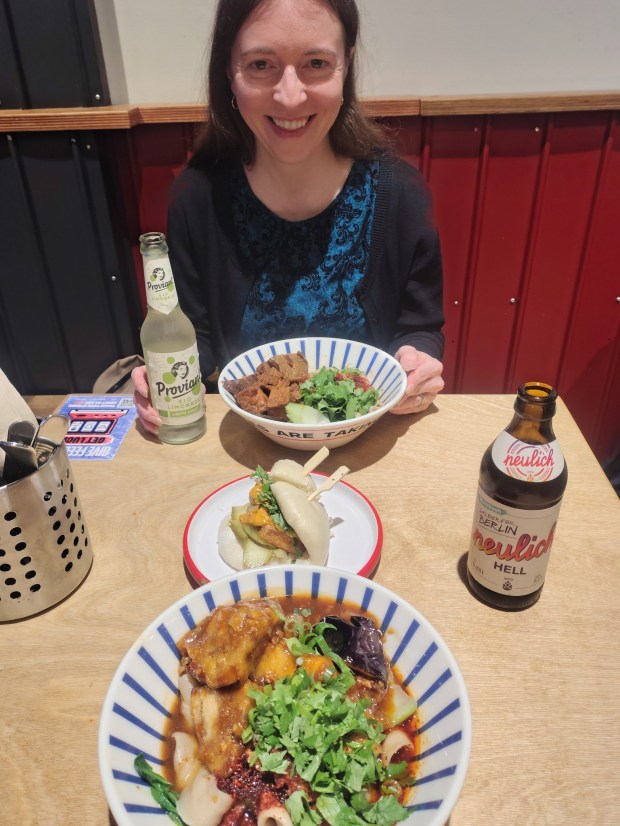
- Wen Cheng noodles
-

- Brammibal’s vegan doughnuts
I brought along another novella that proved an apt companion for our explorations of the city. Even just spotting familiar street and stop names in it felt like reassurance.
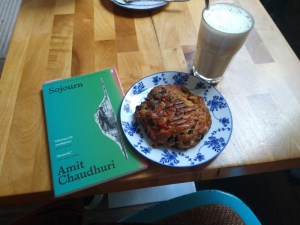
Sojourn by Amit Chaudhuri (2022)
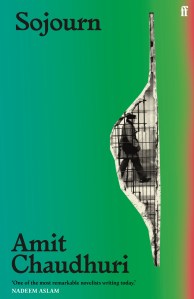 The narrator of this spare text is a Böll Visiting Professor experiencing disorientation yet resisting gestures of familiarity. Like a Teju Cole or Rachel Cusk protagonist, his personality only seeps in through his wanderings and conversations. After his first talk, he meets a fellow Indian from the audience, Faqrul Haq, who takes it upon himself to be his dedicated tour guide. The narrator isn’t entirely sure how he feels about Faqrul, yet meets him for meals and seeks his advice about the best place to buy warm outerwear. An expat friend is a crutch he wishes he could refuse, but the bewilderment of being somewhere you don’t speak the language at all is such that he feels bound to accept. Meanwhile, there is the possibility of another academic admirer, Birgit, becoming his lover. Strangely, his relationship with his cleaning lady, who addresses him only in German, seems the healthiest one on offer. As the book goes on, the chapters get shorter and shorter, presaging some kind of mental crisis. “I keep walking – in which direction I’m not sure; Kreuzberg? I’ve lost my bearings – not in the city; in its history. The less sure I become of it, the more I know my way.” This was interesting, even admirable, but I wanted more story. (Public library)
We spent a drizzly and slightly melancholy first day and final morning making pilgrimages to Jewish graveyards and monuments to atrocities, some of them nearly forgotten. I got the sense of a city that has been forced into a painful reckoning with its past – not once but multiple times, perhaps after decades of repression. One morning we visited the claustrophobic monument to the Murdered Jews of Europe, and, in the Tiergarten, the small memorials to the Roma and homosexual victims of the Holocaust. The Nazis came for political dissidents and the disabled, too, as I was reminded at the Topography of Terrors, a free museum where brutal facts are laid bare. We didn’t find the courage to go in as the timeline outside was confronting enough. I spotted links to the two historical works I was reading during my stay (Stella the red-haired Jew-catcher in the former and Magnus Hirschfeld’s institute in the latter). As I read both, I couldn’t help but think about the current return of fascism worldwide and the gradual erosion of rights that should concern us all.


Aimée and Jaguar: A Love Story, Berlin 1943 by Erica Fischer (1994; 1995)
[Translated from German by Edna McCown]
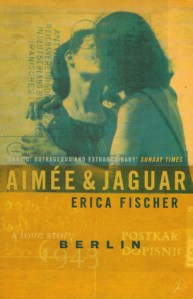 Elisabeth “Lilly” Wust was a good German: the estranged wife of a Nazi and mother of four young sons. She met Felice Schragenheim via her new domestic helper, Inge Wolf. Lilly (aka Aimée) was slow to grasp that Inge and Felice were part of a local lesbian milieu, and didn’t realize Felice (aka Jaguar) was a “U-boat” (Jew living underground) until they’d already become lovers. They got nearly a year and a half together, living almost as a married couple – they had rings engraved and everything – before Felice was taken into Gestapo custody. You know from the outset that this story won’t end well, but you keep hoping – just like Lilly did. It’s not a usual or ‘satisfying’ tragedy, though, because there is no record of what happened to Felice. She was declared legally dead in 1948 but most likely shared the fate of Anne and Margot Frank, dying of typhus at Bergen-Belsen. It’s heartbreaking that Felice, the orphaned daughter of well-off dentists, had multiple chances to flee Berlin – via her sister in London, their stepmother in Palestine, an uncle in America, or friends escaping through Switzerland – but chose to remain.
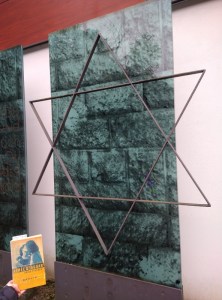 The narrative incorporates letters, diaries and interviews, especially with Lilly, who clearly grieved Felice for the rest of her life. The book is unsettling, though, in that Fischer doesn’t let it stand as a simple Juliet & Juliet story; rather, she undermines Lilly by highlighting Felice’s promiscuity (so she likely would not have remained faithful) and Lilly’s strange postwar behaviour: desperately trying to reclaim Felice’s property, and raising her sons as Jewish. This was a time capsule, a wholly absorbing reclamation of queer history, but no romantic vision. (Secondhand purchase – Community Furniture Project)
[A similar recent release: Milena and Margarete: A Love Story in Ravensbrück by Gwen Strauss]
The Lilac People by Milo Todd (2025)
 This was illuminating, as well as upsetting, about the persecution of trans people in Nazi Germany. Todd alternates between the gaiety of early 1930s Berlin – when trans man Bertie worked for Magnus Hirschfeld’s Institute of Sexual Science and gathered with friends at the Eldorado Club for dancing and singing their anthem, “Das Lila Lied” – and 1945 Ulm, where Bert and his partner Sofie have been posing as an older farming couple. At the novel’s start, a runaway from Dachau, a young trans man named Karl, joins their household. Ironically, it is at this point safer to be Jewish than to be different in any other way; even with the war over, rumour has it the Allies are rounding up queer people and putting them in forced labour camps, so the trio pretend to be Jews as they ponder a second round of escapes.
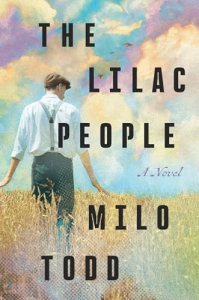 While this is slow to start with, and heavy on research throughout, it does gather pace. The American officer, Ward, is something of a two-dimensional villain who keeps popping back up. Still, the climactic scenes are gripping and the dual timeline works well. Todd explores survivor guilt and gives much valuable context. He is careful to employ language in use at that time (transvestites, transsexuals, “inverts,” “third sex”) and persuasively argues that, in any era, how we treat the vulnerable is the measure of our humanity. (Read via Edelweiss)
[A similar recent release: Under the Pink Triangle by Katie Moore (set in Dachau)]
We might have been at the Eldorado in the early 1930s on the evening when we ventured out to the bar Zosch for a “New Orleans jazz” evening. The music was superb, the German wine tasty, the whole experience unforgettable … but it sure did feel like being in a bygone era. We’re so used to the indoor smoking ban (in force in the UK since 2007) that we didn’t expect to find young people chain-smoking rollies in an enclosed brick basement, and got back to the flat with our clothes reeking and our lungs burning.


It was good to see visible signs of LGTBQ support in Berlin, though they weren’t as prevalent as I perhaps expected.


 For a taste of more recent German history, I’ve started Kairos by Jenny Erpenbeck, which is set in the 1980s not long before the Berlin Wall came down. Unfortunately, my library hold didn’t arrive until too late to take it with me. We made a point of seeing the wall remnants and Checkpoint Charlie on our trip.


Other Berlin highlights: a delicious vegetarian lunch at the canteen of an architecture firm, the Ritter chocolate shop, and the pigeons nesting on the flat balcony – the chicks hatched on our final morning!


And a belated contribution to Short Story September:
Touchy Subjects by Emma Donoghue (2006)
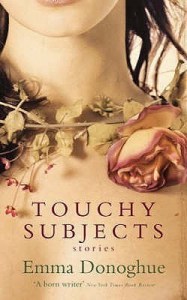 I seem to pluck one or two books at random from Donoghue’s back catalogue per year. I designated this as reliable train reading. The 19 contemporary stories fall into thematic bundles: six about pregnancy or babies, several about domestic life, a few each on “Strangers” and “Desire,” and a final set of four touching on death. The settings range around Europe and North America. It’s impressive how Donoghue imagines herself into so many varied situations, including heterosexual men longing for children in their lives and rival Louisiana crawfishermen setting up as tour-boat operators. The attempts to write Black characters in “Lavender’s Blue” and “The Welcome” are a little cringey, and the latter felt dated with its ‘twist’ of a character being trans. She’s on safer ground writing about a jaded creative writing tutor or football teammates who fall for each other. I liked a meaningful encounter between a tourist and an intellectually disabled man in a French cave (“The Sanctuary of Hands”), an Irishwoman’s search for her missing brother in Los Angeles (“Baggage”) and a contemporary take on the Lazarus myth (“Necessary Noise”), but my two favourites were “The Cost of Things,” about a lesbian couple whose breakup is presaged by their responses to their cat’s astronomical vet bill; and “The Dormition of the Virgin,” in which a studious young traveller to Florence misses what’s right under his nose. There are some gems here, but the topics are so scattershot the collection doesn’t cohere. (Secondhand – Awesomebooks.com)
Trip write-up to be continued (tomorrow, with any luck)…
Scottish Travels & Book Haul: Wigtown, Arran, Islay and Glasgow
When I was a kid, one-week vacations were rare and precious – Orlando or Raleigh for my dad’s church conferences, summer camp in Amish-country Pennsylvania, spring break with my sister in California – and I mourned them when they were over. As an adult, I find that after a week I’m ready to be home … and yet just days after we got back from Scotland, I’m already wondering why I thought everyday life was so great. Oh well. I like to write up my holidays because otherwise it’s all too easy to forget them. This one had fixed start and end points – several days of beetle recording in Galloway for my husband; meeting up with my sister and nephew in Glasgow one evening the next week – and we filled in the intervening time with excursions to two new-to-us Scottish islands; we’re slowly collecting them all.
First Stop, Wigtown
Hard to believe it had been over five years since our first trip to Wigtown. The sleepy little town had barely changed; a couple of bookshops had closed, but there were a few new ones I didn’t remember from last time. The weather was improbably good, sunny and warm enough that I bought a pair of cutoffs at the Community Shop. Each morning my husband set off for bog or beach or wood for his fieldwork and I divided the time until he got back between bits of paid reviewing, reading and book shopping. Our (rather spartan) Airbnb apartment was literally a minute’s walk into town and so was a perfect base.


I paced myself and parcelled out the eight bookshops and several other stores that happen to sell books across the three and a bit days that I had. It felt almost like living there – except I would have to ration my Reading Lasses visits, as a thrice-weekly coffee-and-cake habit would soon get expensive as well as unhealthy. (I spent more on books than on drinks and cakes over the week, though only ~25% more: £44 vs. £32.)


I also had the novelty of seeing my husband interact with his students when we were invited to a barbecue at one’s family home on the Mull of Galloway – and realizing that we’re almost certainly closer in age to the mum than to the student. Getting there required two rural bus journeys to the middle of nowhere, an experience all in itself.
‘Pro’ tips: New Chapter Books was best for bargains, with sections for 50p and £1 paperbacks and free National Geographics. Well-Read Books was good for harder-to-find fiction: among my haul were two Jane Urquhart novels, and the owner was knowledgeable and pleasant. Byre Books carries niche subjects and has scant opening hours, but I procured two poetry collections and a volume of Dorothy Wordsworth’s journals. The Old Bank Bookshop and The Bookshop are the two biggest shops; wander for an hour or more if you can. The Open Book tends to get castoffs from other shops and withdrawn library stock, but I still made two purchases and ended up being the first customer for the week’s hosts: Debbie and Jenny, children’s book authors and long-distance friends from opposite coasts of the USA. Overall, I was pleased with my novella, short story and childhood memoir acquisitions. A better haul than last time.

‘Celebrity’ sightings: On our walk down to the bird hide on the first evening, we passed Jessica Fox, an American expat who’s been influential in setting up the literary festival and The Open Book. She gave us a cheery “hello.” I also spotted Ben of The Bookshop Band twice, once in Reading Lasses and another time on his way to the afternoon school run. Both times he had the baby in tow and I decided not to bother him, not even to introduce myself as one of their Patreon supporters.
On our last morning in town, we lucked out and found Shaun Bythell behind the counter at The Bookshop. He’d just taken delivery of a book-print kilt his staff surprised him by ordering with his credit card, and Nicky (not as eccentric as she’s portrayed in Diary of a Bookseller; she’s downright genteel, in fact) had him model it. He posted a video to Facebook that includes The Open Book hosts on the 23rd, if you wish to see it, and his new cover photo shows him and his staff members wearing the jackets that match the kilt. I bought a few works of paperback fiction and then got him to sign my own copies of two of his books.


As last time, he was chatty and polite, taking an interest in our travels and exhorting us to come back sooner than five years next time. I congratulated him on his success and asked if we could expect more books. He said that depends on his publisher, who worry the market is saturated at the moment, though he has another SIX YEARS of diaries in draft form and the Remainders of the Day epilogue would be quite different if he wrote it now. Tantalizing!
Note to self: Next time, plan to be in town through a Friday evening – we left at noon, so I was sad to miss out on a Beth Porter (the other half of The Bookshop Band) children’s songs concert at Foggie Toddle Books at 3:00, followed by a low-key cocktail party at The Open Book at 5:30 – but not until a Monday, as pretty much everything shuts that day. How I hope someone buys Reading Lasses (the owner is retiring) and maintains the café’s high standard!
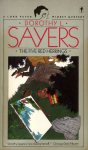 Appropriate reading: I read the first third of Dorothy L. Sayers’s The Five Red Herrings because it’s set in the area (first line: “If one lives in Galloway, one either fishes or paints”), and found it entertaining, though not enough to care whodunnit. In general, I’m terrible for trying mystery series and DNFing or giving up after the first book. Lord Peter Wimsey seemed like he’d be an amusing detective in the Sherlock Holmes vein, but the rendering of Scottish accents was OTT and the case relied too much on details of train schedules and bicycles.
Arran
Our short jaunt to Arran started off poorly with a cancelled ferry sailing, leaving us stranded in Ardrossan (which Bythell had almost prophetically dubbed a “sh*thole” that morning!) for several hours until the next one, and we struggled with a leaky rear tyre and showery weather for much of the time, but we were still enamoured with this island that calls itself “Scotland in miniature.” That was particularly delightful for me because I come from the state nicknamed “America in miniature,” Maryland. This Airbnb was plush by comparison, we obtained excellent food from the Blackwater Bakehouse and a posh French takeaway, and we enjoyed walks at the Machrie stone circles and Brodick Castle as well as at the various bays (one with a fossilized dinosaur footprint) that we stopped off at on our driving tour.


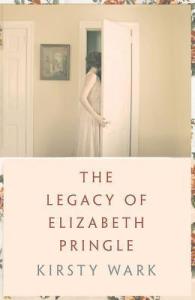 Appropriate reading: The Legacy of Elizabeth Pringle by Kirsty Wark, the only Arran-set novel on my library’s catalogue, is an enjoyable dual-timeline story linked by the Lamlash home of the title character. When she died in her nineties in 2006, she bequeathed her home to a kind woman who used to walk past on summer holidays with her daughter in a pram. Martha Morrison was that baby, and with her mother, Anna, suffering from dementia, it’s up to her to take possession and root out Elizabeth’s secrets. Every other chapter is a first-person fragment from Elizabeth’s memoir, cataloguing her losses of parents and lovers and leading ever closer to the present, when she befriended Saul, an American Buddhist monk based at Holy Island across the water, and Niall, a horticulturist at Brodick Castle. It’s a little too neat how the people in her life pair off (sub-Maggie O’Farrell; more Joanna Trollope, perhaps), but it was fun to be able to visualize the settings and to learn about Arran’s farming traditions and wartime history.
Islay
Islay is a tourist mecca largely because of its nine distilleries – what a pity we don’t care for whiskey! – but we sought it out for its wildlife and scenery, which were reminiscent of what we saw in the Outer Hebrides last year. Our B&B was a bit fusty (there was a rotary phone in the hall!), but we had an unbeatable view from our window and enjoyed visiting two RSPB reserves. The highlight for me was the walk to the Mull of Oa peninsula and the cow-guarded American Monument, which pays tribute to the troops who died in two 1918 naval disasters – a torpedoed boat and a shipwreck – and the heroism of locals who rescued survivors.


We spent a very rainy Tuesday mooching from one distillery shop to another. There are two gin-makers whose products we were eager to taste, but we also relished our mission to buy presents for two landmark birthdays, one of an American friend who’s a whiskey aficionado. Even having to get the tyre replaced didn’t ruin the day. There’s drink aplenty on Islay, but quality food was harder to acquire, so if we went back we’d plump for self-catering.


Incidental additional hauls: I found this 50th anniversary Virago tote bag under a bench at Bowmore harbour after our meal at Peatzeria. I waited a while to see if anyone would come back for it, but it was so sodden and sandy that it must have been there overnight. I cleaned it up and brought home additional purchases in it: two secondhand finds at a thrift store in Tarbert, the first town back on the mainland, and a Knausgaard book I got free with my card points from a Waterstones in Glasgow.


Glasgow
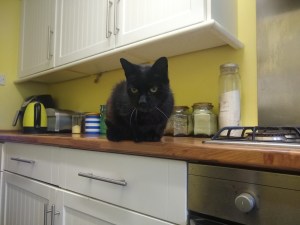 My 15-year-old nephew is currently on a school trip to Scotland and my sister went along as an unofficial chaperone. I couldn’t let them come to the UK without meeting up, so for months we’d pencilled in an evening in Glasgow. When we booked our Airbnb room in a suburb, it was because it was on a super-convenient train line … which happened to be closed for engineering works while we were there. Plan B: rail replacement buses, which were fine. We greatly enjoyed the company of Santos the Airbnb cat, who mugged us for scraps of our breakfasts.
With our one day in Glasgow, we decided to prioritize the Burrell Collection, due to the enthusiastic recommendations from Susan, our Arran hosts, and Bill Bryson in Notes on a Small Island (“Among the city’s many treasures, none shines brighter, in my view”). It’s a museum with a difference, housed in a custom-built edifice that showcases the wooded surroundings as much as the stunning objects. We were especially partial to the stained glass.


Our whistle-stop city tour also included a walk past the cathedral, a ramble through the Necropolis (where, pleasingly, I saw a grave for one Elizabeth Pringle), and the Tenement Museum, a very different sort of National Trust house that showed how one woman, a spinster and hoarder, lived in the first half of the 20th century. Then on to an exceptional seafood-heavy meal at Kelp, also recommended by Susan, and an all-too-brief couple of hours with my family at their hotel and a lively pub.


We keep returning to Scotland. Where next in a few years? Possibly the southern islands of the Outer Hebrides, which we didn’t have time for last year, or the more obscure of the Inner Hebrides, before planning return visits to some favourites. All the short ferry rides were smooth this time around, so I can cope with the thought of more.

We got home to find our mullein plants attempting to take over the world.
Adventuring (and Reading) in the Outer Hebrides
Islands are irresistible for the unique identities they develop through isolation, and the extra effort that it often takes to reach them. Over the years, my husband and I have developed a special fondness for Britain’s islands – the smaller and more remote the better. After exploring the Inner Hebrides in 2005 and Orkney and Shetland in 2006, we always intended to see more of Scotland’s islands; why ever did we leave it this long?

From Wikimedia Commons. By Kelisi.
Rail strikes and cancelled trains threatened our itinerary more than once, so it was a relief that we were able to go, even at extra cost. Our back-up plan left us with a spare day in Inverness, which we filled with coffee and pastries outside the cathedral, browsing at Leakey’s bookshop, walking along the River Ness and in the botanical gardens, and a meal overlooking the 19th-century castle.


Then it was on to the Outer Hebrides at last, via a bus ride and then a ferry to Stornoway in Lewis, the largest settlement in the Western Isles. Here we rented a car for a week to allow us to explore the islands at will. We were surprised at how major a town Stornoway is, with a big supermarket and slight suburban sprawl – yet it was dead on the Saturday morning we went in to walk around; not until 11:30 was there anything like the bustle we expected.
We’d booked three nights in a tiny Airbnb house 15 minutes from the capital. First up on our tourist agenda was Callanish stone circle, which we had to ourselves (once the German coach party left). Unlike at Stonehenge, you can walk in among the standing stones. The rest of our time on Lewis went to futile whale watching, the castle grounds, and beach walks.


This post threatens to become a boring rundown, so I’ll organize the rest thematically, introduced by songs by Scottish artists.
“I’ll Always Leave the Light On” by Kris Drever
Long days: The daylight lasts longer so far north, so each day we could plan activities not just for the morning and afternoon but late into the evening. At our second stop – three nights in another Airbnb on North Uist – we took walks after dinner, often not coming back until 10 p.m., at which point there was still another half-hour until sunset.
“Why Does It Always Rain on Me?” by Travis
Weather: We got a mixture of sun and clouds. It rained at least a bit on most days, and we got drenched twice, walking out to an eagle observatory on Harris (where we saw no eagles, as they are too sensible to fly in the rain) and dashing back to the car from a coastal excursion. I was doomed to wearing plastic bags around my feet inside my disintegrating hiking boots for the rest of the trip. There was also a strong wind much of the time, which made it feel colder than the temperature suggested – I often wore my fleece and winter hat.

A witty approach to weather forecasting. (Outside the shop/bistro on Berneray.)
“St Kilda Wren” by Julie Fowlis
 Music and language: Julie Fowlis is a singer from North Uist who records in English and Gaelic. (This particular song is in Gaelic, but the whole Spell Songs album was perfect listening on our drives because of the several Scottish artists involved and the British plants and animals sung about.) There is a strong Gaelic-speaking tradition in the Western Isles. We heard a handful of people speaking it, all road signs give place names in Gaelic before the English translation, and there were several Gaelic pages in the free newspaper we picked up.
Wildlife: The Outer Hebrides is a bastion for some rare birds: the corncrake, the red-necked phalarope, and both golden and white-tailed eagles. Thanks to intel gleaned from Twitter, my husband easily found a phalarope swimming in a small roadside loch. Corncrakes hide so well they are virtually impossible to see, but you will surely hear their rasping calls from the long grass. Balranald is the westernmost RSPB reserve and a wonderful place to hear corncrakes and see seabirds flying above the machair (wildflower-rich coastal grassland). No golden eagles, but we did see a white-tailed eagle flying over our accommodation on our last day, and short-eared owls were seemingly a dime a dozen. We were worried we might see lots of dead birds on our trip due to the avian flu raging, but there were only five – four gannets and an eider – and a couple looked long dead. Still, it’s a distressing situation.


We also attended an RSPB guided walk to look for otters and did indeed spot one on a sea loch. It happened to be the Outer Hebrides Wildlife Festival week. Our guide was knowledgeable about the geography and history of the islands as well.

Badges make great, cheap souvenirs!
St. Kilda: This uninhabited island really takes hold of the imagination. It can still be visited, but only via a small boat through famously rough seas. We didn’t chance it this time. I might never get there, but I enjoy reading about it. There’s a viewing point on North Uist where one can see out to St. Kilda, but it was only the vaguest of outlines on the hazy day we stopped.
“Traiveller’s Joy” by Emily Smith
Additional highlights:
- An extended late afternoon tea at Mollans rainbow takeaway shed on Lewis. Many of the other eateries we’d eyed up in the guidebook were closed, either temporarily or for good – perhaps an effect of Covid, which hit just after the latest edition was published.


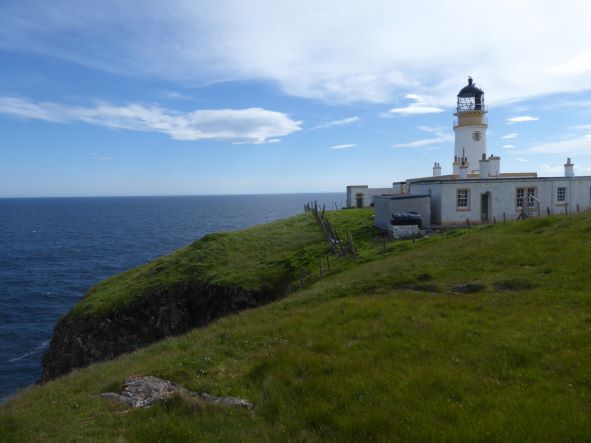
- A long reading session with a view by the Butt of Lewis, which has a Stevenson lighthouse.
- Watching mum and baby seals playing by the spit outside our B&B window on Berneray.
- Peat smoked salmon. As much of it as I could get.
- A G&T with Harris gin (made with kelp).
“Dear Prudence” (Beatles cover) by Lau
Surprises:
- Gorgeous, deserted beaches. This is Luskentyre on Harris.

- No midges to speak of. The Highlands are notorious for these biting insects, but the wind kept them away most of the time we were on the islands. We only noticed them in the air on one still evening, but they weren’t even bad enough to deploy the Avon Skin So Soft we borrowed from a neighbour.
- People still cut and burn peats for fuel. Indeed, when we stepped into the Harris gin distillery for a look around, I was so cold and wet that I warmed my hands by a peat fire! Even into the 1960s, people lived in primitive blackhouses, some of which have now been restored as holiday rentals. The one below is run as a museum.

- Not far outside Stornoway is the tiny town of Tong. We passed through it each day. Here Mary Anne MacLeod was born in 1912. If only she’d stayed on Lewis instead of emigrating to New York City, where she met Fred Trump and had, among other children, a son named Donald…
- Lord Leverhulme, founder of Unilever, bought Lewis in 1918 and part of Harris the next year. He tried to get crofters to work in his businesses, but all his plans met with resistance and his time there was a failure, as symbolized by this “bridge to nowhere” (Garry Bridge). His legacy is portrayed very differently here compared to in Port Sunlight, the factory workers’ town he set up in Merseyside.

- The most far-flung Little Free Library I’ve ever visited (on Lewis).

- Visits from Lulu the cat at our North Uist Airbnb.

“Wrapped Up in Books” by Belle and Sebastian
What I read: I aimed for lots of relevant on-location reads. I can’t claim Book Serendipity: reading multiple novels set on Scottish islands, it’s no surprise if isolation, the history of the Clearances, boat rides, selkies and seabirds recur. However, the coincidences were notable for one pair, Secrets of the Sea House by Elisabeth Gifford and Night Waking by Sarah Moss, a reread for me. I’ll review these two together, as well as The Summer of the Bear by Bella Pollen (inspired by a real incident that occurred on North Uist in 1980), in full later this week.

I also read about half of Sightlines by Kathleen Jamie, a reread for me; its essays on gannets and St. Kilda chimed with the rest of my reading. Marram, Leonie Charlton’s memoir of pony trekking through the Outer Hebrides, will form part of a later 20 Books of Summer post thanks to the flora connection, as will Jon Dunn’s Orchid Summer, one chapter of which involves a jaunt to North Uist to find a rare species.


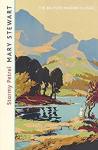 Stormy Petrel by Mary Stewart: My selection for the train journey up. I got Daphne du Maurier vibes from this short novel about a holiday Dr Rose Fenemore, an English tutor at Cambridge, takes to Moila, a (fictional) small island off of Mull in the Inner Hebrides. It’s a writing retreat for her: she’s working on a book of poetry, but also on the science fiction she publishes under a pseudonym. Waiting for her brother to join her, she gets caught up in mild intrigue when two mysterious men enter her holiday cottage late one stormy night. Each has a good excuse cooked up, but who can she trust? I enjoyed the details of the setting but found the plot thin, predictable and slightly silly (“I may be a dish, but I am also a don”). This feels like it’s from the 1950s, but was actually published in 1991. I might try another of Stewart’s.
I also acquired four books on the trip: one from the Little Free Library and three from Inverness charity shops.

I started reading all three in the bottom pile, and read a few more books on my Kindle, two of them for upcoming paid reviews. The third was:
 Tracy Flick Can’t Win by Tom Perrotta: A sequel to Election, which you might remember as a late-1990s Reese Witherspoon film even if you don’t know Perrotta’s fiction. Tracy Flick was the goody two-shoes student who ran for school president and had her campaign tampered with. Now in her forties, she’s an assistant principal at a high school and a single mother. Missing her late mother and wishing she’d completed law school, she fears she’ll be passed over for the top job when the principal retires. This is something of an attempt to update the author’s laddish style for the #MeToo era. Interspersed with the third-person narration are snappy first-person testimonials from Tracy, the principal, a couple of students, and the washed-up football star the school chooses to launch its new Hall of Fame. I can’t think of any specific objections, but nor can I think of any reason why you should read this.
On my recommendation, my husband read Love of Country by Madeleine Bunting and The Frayed Atlantic Edge by David Gange, two excellent nonfiction books about Britain’s islands and coastline.
“Other Side of the World” by KT Tunstall
General impressions: We weren’t so taken with Lewis on the whole, but absolutely loved what we saw of Harris on our drive to the ferry to Berneray and wished we’d allotted it more time. While we only had one night on Berneray and mostly saw it in the rain, we thought it a lovely little place. It only has the one shop, which doubles as the bistro in the evenings – warned by the guidebook that this is the only place to eat on the island, we made our dinner reservation many weeks in advance. The following morning, as we ate our full Scottish cooked breakfast, I asked the B&B owner what led him to move from England to “the ends of the earth.” He took mild objection to my tossed-off remark and replied that the islands are more like “the heart of it all.” Thanks to fast Internet service, remote working is no issue.


We are more than half serious when we talk about moving to Scotland one day. We love Edinburgh, though the tourists might drive us mad, and enjoyed our time in Wigtown four years ago. I’d like to think we could even cope with island life in Orkney or the Hebrides. We imagine them having warm, tight-knit communities, but would newcomers feel welcome? With only one major supermarket in the whole Western Isles, would we find enough fresh fruit and veg? And however would one survive the bleakness of the winters?
North Uist captivated us right away, though. Within 15 minutes of driving onto the island via a causeway, we’d seen three short-eared owls and three red deer stags, and we got great views of hen harriers and other raptors. One evening we found ourselves under what seemed to be a raven highway. It felt unlike anywhere else we’d been: pleasingly empty of humans, and thus a wildlife haven.
The long journey home: The public transport nightmares of our return trip put something of a damper on the end of the holiday. We left the islands via a ferry to Skye, where we caught a bus. So far, so good. Our second bus, however, broke down in the middle of nowhere in the Highlands and the driver plus we five passengers were stuck for 3.5 hours awaiting a taxi we thought would never come. When it did, it drove the winding road at terrifying speed through the pitch black.
Grateful to be alive, we spent the following half-day in Edinburgh, bravely finding brunch, the botanic gardens and ice cream with our heavy luggage in tow. The final leg home, alas, was also disrupted when our overcrowded train to Reading was delayed and we missed the final connection to Newbury, necessitating another taxi – luckily, both were covered by the transport operators, and we’ll also reclaim for our tickets. Much as we believe in public transport and want to support it, this experience gave us pause. Getting to and around Spain by car was so much easier, and that trip ended up a lot cheaper, too. Ironic!

Guarding the bags in Edinburgh
“Take Me Back to the Islands” by Idlewild
Next time: On this occasion we only got as far south as Benbecula (which, pleasingly, is pronounced Ben-BECK-you-luh). In the future we’d think about starting at the southern tip and seeing Barra, Eriskay and South Uist before travelling up to Harris. We’ve heard that these all have their own personalities. Now, will we get back before many more years pass?
Making Plans for a Return to Hay-on-Wye & A Book “Overhaul”
Somehow it’s been nearly 3.5 years since our last trip to Hay-on-Wye, the Book Town of Wales (I wrote about that April 2017 visit here). This coming weekend will be our seventh trip to Hay, one of our favorite places. We’ve booked an Airbnb in nearby English hamlet Cusop Dingle for two nights, so it’s a pretty short break, but longer than the weekend away we managed last month – reduced to only 36 hours by the cat’s poorly timed but ultimately minor one-day illness.
I’ve acquired many, many books from the free mall bookshop over the past year. (It’s now closed permanently, alas.) And I had no shortage of additional incomers during lockdown, via the unofficial Little Free Library I started and orders I placed with independent bookstores and publishers. So you could say I don’t need a book-buying trip to Hay. But 1) it’s never a question of need, is it? and 2) We want to continue to support the town, which will have been hit hard by temporary closures and by its annual literary festival being purely online this year.
I have no particular plans for what to buy this time, so will just see what takes my fancy. There are noticeably fewer bookshops than when we first started visiting Hay in 2004, but among the dozen or so remaining are some truly excellent shops like Addyman Books, the Hay Cinema Bookshop, and Booth’s Bookshop. Our best bargains last time were from the Oxfam charity shop and the honesty shelves around the castle, so those will likely be our first ports of call, and from there we’ll let whimsy be our guide. Saturday and Monday will be for wandering the town and book shopping, while Sunday will include countryside walks around Hay Bluff. We also hope to explore some eatery options we’ve not tried before.
An Overhaul of Last Trip’s Book Purchases
Simon of Stuck in a Book runs a regular blog feature he calls “The Overhaul,” where he revisits a book haul from some time ago and takes stock of what he’s read, what he still owns, etc. (here’s the most recent one). With his permission, I’m borrowing the title and format to look back at what I bought in Hay last time.
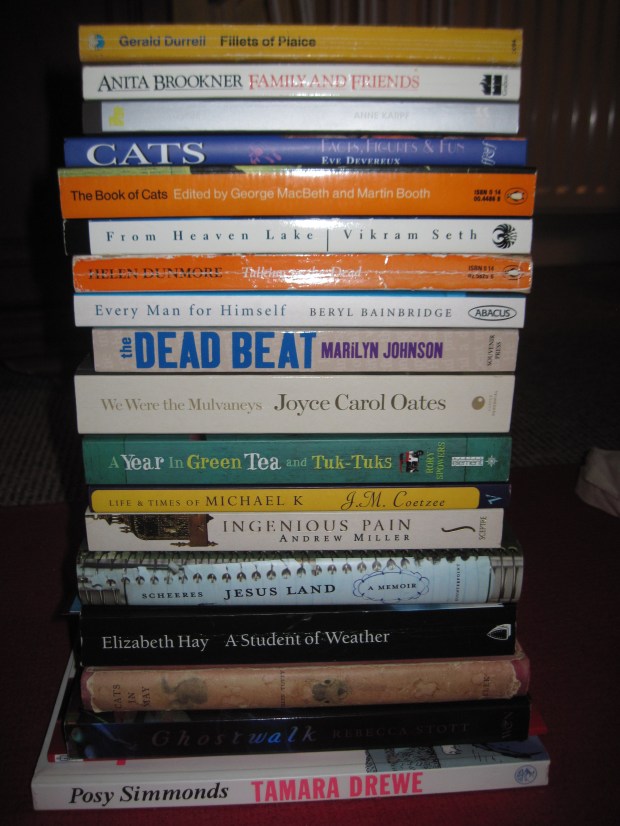
Date of haul: April 2017
Location: Hay-on-Wye
Number of books bought: 18
Had already read: (3/18)
- How to Age by Anne Karpf
- From Heaven Lake by Vikram Seth
- Tamara Drewe by Posy Simmonds – It’s on my shelf for rereading.
Have read since then: (5/18)
- Every Man for Himself by Beryl Bainbridge [resold]
- Fillets of Plaice by Gerald Durrell
- A Student of Weather by Elizabeth Hay (!)
- The Dead Beat by Marilyn Johnson
- Cats in May by Doreen Tovey
BUT also read from my hubby’s pile (not pictured):
- Sold for a Farthing by Clare Kipps
- All the Presidents’ Pastries by Roland Mesnier
- Second Nature by Michael Pollan
- A Shepherd’s Life by James Rebanks
DNFed: (3/18)
- Life & Times of Michael K by J.M. Coetzee [resold]
- We Were the Mulvaneys by Joyce Carol Oates – Might try this one again another time.
- Ghostwalk by Rebecca Stott [given away]
Resold unread: (1/18)
- Family and Friends by Anita Brookner – I’d added it to the Oxfam pile to make up a 5 for £1 stack, but then didn’t enjoy Booker winner Hotel du Lac enough to try another by Brookner.
Total still unread: 6
Total no longer owned: 4
This is not too bad a showing overall, though it does reveal my habit of buying books and letting them sit around for years unread. (Surely I’m not alone in this?!)
The six purchases still to read are two cat-themed anthologies for reading piecemeal, plus these four – two fiction and two non-:
- Talking to the Dead by Helen Dunmore
- Ingenious Pain by Andrew Miller
- Jesus Land by Julia Scheeres
- A Year in Green Tea and Tuk-Tuks by Rory Spowers
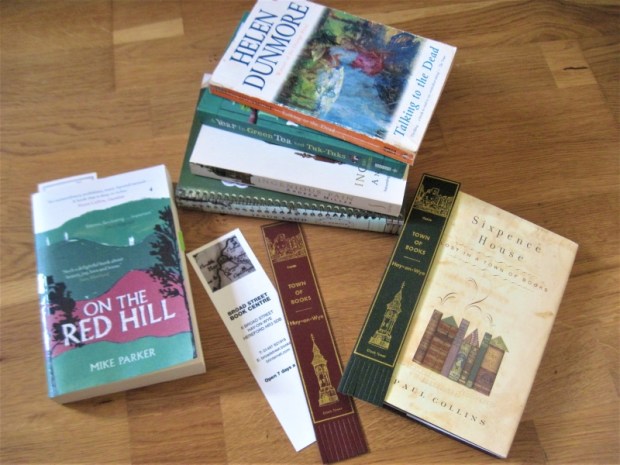
To force myself to get to them, these are the four I’ve packed for reading in the car and while in Hay. I’m also bringing, to read on location: 1) On the Red Hill by Mike Parker, a Wainwright Prize-shortlisted memoir about life in the Welsh countryside (I’m about 40 pages into it already); and 2) Sixpence House, which I’ve read several times before and consider among my absolute favorite books; it’s Paul Collins’s memoir about finding a temporary home and work among the bookshops of Hay.
I’ll be back on Tuesday with this year’s book haul plus photos and notes on how we found the town this time around. (But first, Six Degrees of Separation will post on Saturday while I’m away.)
“Being the Expert” on Women’s Religious Memoirs Again: Unfollow & Leaving the Witness
 I’ve fallen behind on the weekly prompts for Nonfiction November, but wanted to post a follow-up to my 2018 list of a baker’s dozen of memoirs I’ve read that explore women’s religious experiences. I’ve read a couple more this year that are worth adding to the list; in addition to their themes of doubt and making a new life outside the church, they also share an interesting detail: it’s an online friend that goads each author into questioning her beliefs. Even if you aren’t typically interested in this subgenre, you’ve likely heard of Unfollow because of the high-profile story behind it. (This week is hosted by Katie of Doing Dewey.)
Unfollow: A Journey from Hatred to Hope, Leaving the Westboro Baptist Church by Megan Phelps-Roper
“God hates f*gs.” If you know one thing about Westboro Baptist Church of Topeka, Kansas, it’s that this slogan plastered their signs and was part of their armory of in-your-face chants at nationwide protests.

Fred Phelps in 2002. (User Rudolf 1922 on sv.wikipedia.)
Megan Phelps-Roper grew up in the Church, which was founded by her grandfather, Fred Phelps, and made up mostly of her extended family: Phelps had 13 children, and Phelps-Roper is one of 11. In 1989 Phelps learned that nearby Gage Park was a gay cruising spot and wrote in disgust to the mayor and other city officials. In a sense, he never got over it. The anti-homosexuality message would become Westboro’s trademark, at least until the church started its picketing of military funerals after the Iraq War – which, like 9/11, was interpreted as being God’s just punishment of American immorality.
By portraying it from the inside and recreating her shifting perspective from early childhood onwards, Phelps-Roper initially makes her extreme upbringing seem normal. After all, it’s the only thing she knew, and it never would have occurred to her that her family could be wrong. The Phelpses were fiercely intelligent and also ran a law firm, so it’s impossible to just dismiss them as redneck idiots. Frequent passages from the King James Bible appear in italics to echo the justifications the Church cited for its beliefs and actions.
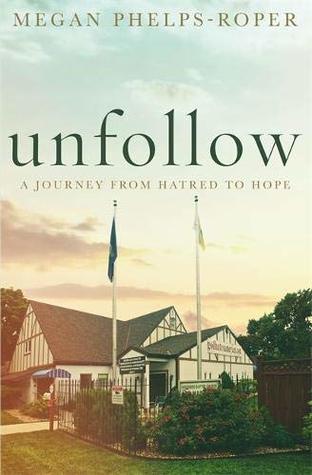 Only gradually did doubts start to creep in for the author as various uncles and brothers left the church. Phelps-Roper was even the voice of Westboro on Twitter, but defending funeral protests became increasingly difficult for her. Two things brought her to a breaking point. First, in something of a coup, the Church appointed a new body of elders – all male, of course – who instituted ever more draconian rules, such as a dress code for women, and effectively removed her mother from leadership. (Ultimately, they would kick the dying Fred Phelps himself out of the church.) Secondly, the Church started to spread fake news via doctored photos. For example, they claimed to be protesting a royal wedding in London, when in fact Westboro members never go anywhere the First Amendment can’t protect them.
All along, Phelps-Roper had been corresponding with “C.G.,” an online acquaintance with whom she played Words with Friends. Chad gently encouraged her to ask why Westboro believed as it did, and to unpick rather than ignore any doctrines that didn’t make sense. “What if we’re wrong? What if this isn’t The Place led by God Himself? What if we’re just people?” she wondered. In November 2012, she and her sister Grace left the Church and the family home, where she’d lived until age 26, and retreated to a Deadwood, South Dakota Airbnb to hike, read and think about what they’d left behind and what came next. I’d had just about enough of Westboro and its infighting by that point in the book – the chapter about her leaving gets a little melodramatic – so, like the author, I was glad to move on to another setting, and this interlude ended up being my favorite section.

Westboro Baptist Church demonstration outside the Virginia Holocaust Museum, March 2010. (JCWilmore [CC BY 3.0 (https://creativecommons.org/licenses/by/3.0)%5D.)
Note: Westboro was the subject of a Louis Theroux documentary in 2006, and in a nice full-circle moment, he’s now interviewing Phelps-Roper on some of her UK book tour spots. And, in another lovely aside, she married C.G.
My rating: 
With thanks to riverrun for the free copy for review.
Leaving the Witness: Exiting a Religion and Finding a Life by Amber Scorah
Like In the Days of Rain by Rebecca Stott, this is the story of growing up in a cult and what happens when, as an adult, a woman has to build a new life free from the constraints – but also unmoored from the comforting framework – of a previously unquestioned belief system. Scorah grew up in Vancouver’s community of Jehovah’s Witnesses and, although she was temporarily disfellowshipped as a teenager for having premarital sex, the faith was her home and gave her a sense of purpose. Witnesses are discouraged from attending university or pursuing careers; without exception, they’re expected to preach and win converts – the only task worth engaging in given that the world is headed towards Armageddon.
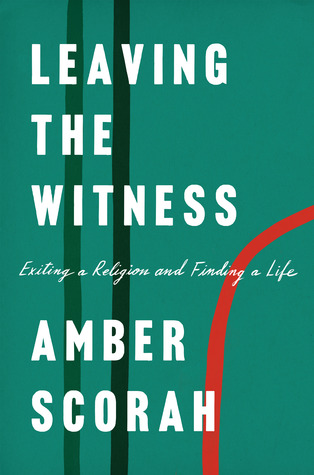 Scorah and her husband went to China as clandestine JW missionaries. Her Mandarin skills were good enough that she could become friends with her English-language pupils and then start to talk to them about religion. In the meantime, she became an early podcast host with the program “Dear Amber,” which offered advice on the Chinese language and culture. She embarked on a flirtatious correspondence with one of her regular listeners, Jonathan from Los Angeles, who goaded her into rethinking everything she’d been taught to believe. “I was questioning with a mind that had been trained not to. It was highly uncomfortable.”
As her marriage and faith simultaneously crumbled, Scorah had to decide what was left to form the foundation of a new life on her own in New York City. “My eye-glazing peace, unquestioning contentment, and eternal life were gone, and the time ahead of me was filled with people I didn’t yet know, uncertainty about the future, and, one day, death.” I was absorbed in the bittersweet outworkings of this before and after: a process of losing faith and deciding what’s next.
The final chapter is a whirlwind tour through her first years in NYC, including the tragic death of her infant son, Karl. This makes for something of an abrupt end to the book; I might have liked to get as much detail on all this as we got about the time in China. But it was clearly a deliberate decision to present such life and death matters from a hard-won secular perspective, without the false balm of a religion that promises she’ll see her son again. There’s a lot of secrecy about the Jehovah’s Witnesses, so this is a rare insider’s view as well as a wrenching account of loss and starting over.
My rating:
Full disclosure: Amber Scorah offered me a copy through a Facebook group we are both a part of.
Thanks to her and Viking for sending a free copy for review.
Can you see yourself reading either of these books?
Thomas Hardy Tourism in Dorset
We fancied a short break before term starts (my husband is a teaching associate in university-level biology), so booked a cheap Airbnb room in Bridport for a couple of nights and headed to Dorset on Wednesday, stopping at the Thomas Hardy birthplace cottage on the way down and returning on Friday via Max Gate, the home he designed on the outskirts of Dorchester.
I’d been to both before, but over 15 years ago. In the summer of 2004, at the end of my study abroad year, I used a travel grant from my college to spend a week in Dorset and Nottinghamshire, researching the sense of place in the works of Hardy and D.H. Lawrence. I marvel at my bravery now: barely out of my teens, there I was traveling alone by train and bus to places I’d never been before, finding my own B&B accommodation, and taking long countryside walks to arrive at many sites on foot.

Max Gate
I found that much had changed in 15 years. The main difference is that both properties have now been given the full National Trust treatment, with an offsite visitor centre and café down the lane from Hardy’s Cottage, and the upper floors of Max Gate now open to the public after the end of private tenancies in 2011.* This could be perceived as a good thing or a bad thing: Everything is more commercial and geared towards tourists, yes, but also better looked after and more inviting thanks to visitor income and knowledgeable volunteers. Fifteen years ago I remember the two sites being virtually deserted, with the cottage’s garden under black plastic and awaiting a complete replanting. Now it’s flourishing with flowers and vegetables.
*In 2004 only a few ground-floor rooms were open to the public. I happened to spot in the visitor’s book that novelist Vikram Seth had signed in just before me. When I made the caretakers aware of this, they expressed admiration for his work and offered him an exclusive look at the study where Hardy wrote Tess of the d’Urbervilles. I got to tag along! The story is less impressive since it’s been a standard part of the house tour for eight years now, but I still consider it a minor claim to fame.
The thatched cottage doesn’t possess anything that belonged to the Hardy family, but is decorated in a period style that’s true to its mid-1800s origin. Hardy was born here and remained until his early thirties, completing an architecture apprenticeship and writing his first few books, including Under the Greenwood Tree. Even if you’re not particularly familiar with or fond of Hardy’s work, I’d recommend an afternoon at the cottage for a glimpse of how simple folk lived in that time. With wood smoke spooling out of the chimney and live music emanating from the door – there are two old fiddles in the sitting room that guests are invited to play – it was a perfectly atmospheric visit.

 Afterwards, we headed to Portland, an isthmus extending from the south coast near Weymouth and known for its stone. It’s the setting of The Well-Beloved, which Hardy issued in serial form in 1892 and revised in 1897 for its book publication. Jocelyn Pierston, a sculptor whose fame is growing in London, returns to “the Isle of Slingers” (Hardy gave all his English locales made-up names) for a visit and runs into Avice Caro, a childhood friend. On a whim, he asks her to marry him. Before long, though, following a steamy (for Victorian literature, anyway) scene under an upturned boat during a storm, he transfers his affections to Miss Bencomb, the daughter of his father’s rival stone merchant. The fickle young man soon issues a second marriage proposal. I read the first 30 pages, but that was enough for me.

St. George’s Church, Portland, in a Christopher Wren style.
 [I failed on classics or doorstoppers this month, alas, so look out for these monthly features to return in October. I did start The Warden by Anthony Trollope, my first of his works since Phineas Finn in 2005, with the best of intentions, and initially enjoyed the style – partway between Dickens and Hardy, and much less verbose than Trollope usually is. However, I got bogged down in the financial details of Septimus Harding’s supposed ripping-off of the 12 old peasants who live in the local hospital (as in a rest center for the aged and infirm, like the Hospital of St Cross at Winchester). He never should have had his comfortable £800 a year, it seems. His son-in-law, the archdeacon Dr. Grantly, and his would-be son-in-law, gadfly John Bold, take opposing sides as Harding looks to the legal and religious authorities for advice. I read the first 125 pages but only briefly skimmed the rest. Given how much longer the other five volumes are, I doubt I’ll ever read the rest of the Barchester Chronicles.]
My other appropriate reading of the trip was Moon Tiger by Penelope Lively, in which Claudia Hampton, a popular historian now on her deathbed, excavates the layers of her personal past and dwells on the subjectivity of history and memory. She grew up in Dorset and mentions ammonites and rock strata, which we encountered on our beach walks.

Bridport isn’t so well known, but we thought it a lovely place, full of pleasant cafés, pubs and charity shops. It also has an independent bookshop and two secondhand ones, and we had an excellent meal of dumplings and noodle bowls at the English/Asian fusion restaurant Dorshi. It’s tucked away down an alley, but well worth a special trip. Our other special experience of the trip was a tour of Dorset Nectar, a small, family-run organic cider farm just outside of Bridport, which included a tasting of their 10+ delicious ciders. We had splendid late-summer weather for our three days away, too – we really couldn’t have asked for better.


Three secondhand books purchased, for a total of £4.10.
A Week in Italy and What I Read
We’re relieved to be back in the balmy UK after a sweltering week in northern Italy. Though our sixth-floor Airbnb apartment in Milan suited our needs perfectly, it was a challenge to keep it minimally comfortable. Eventually we worked out that it was essential to get up by 6:30 a.m. to close the balcony doors and shutter. The bedroom happened to be shaded, so I could set up my laptop in there and work until noon, when it was time to close out the heat of the day on that side. In the afternoons I read and napped on the divan, and then sometime between 6 and 10 p.m., depending on how sunny it had been during the day, we could fling the windows and doors wide open again. Fans helped, but we still passed some horribly muggy nights.


My husband was at his conference for four of the days, so we only braved the city centre itself on Monday morning, touring the Duomo and climbing the steps to the roof. This was well worth doing for views over the city. Afterwards we walked through the associated museum (mostly underground, and blissfully cool with air conditioning) and Galleria Vittorio Emanuele II, a luxurious nineteenth-century shopping arcade filled with designer fashions.


Two day trips by train got us out of the city and into slightly cooler temperatures: on Wednesday we explored Varenna and Bellagio on Lake Como, and on Saturday we took a bus and cable car from Lecco into the mountains at Piani d’Erna. We took full advantage of one-euro espressos and glasses of wine, and ate lots of pizza, pasta and gelato.

After much deliberation, this is the book stack I actually packed for our trip. I got through the first half of the Orwell, an excellent account of working as a dishwasher in Paris hotels and having to scrape together enough money to ward off starvation. I’ll be writing it up as my Classic of the Month in a couple of weeks. I also read Sunburn by Laura Lippman, which I’ll hold in reserve for a summer-themed post, and (on Kindle) So Many Rooms by Laura Scott, a debut poetry collection coming out in October that I’ll review here at a later date.
Two of my other Kindle reads ended up being perfect for the setting:
From Scratch: A Memoir of Love, Sicily, and Finding Home by Tembi Locke: This was the perfect book for me to read during the week in Italy. Not only is it set largely in Sicily, but it ticks a lot of boxes in terms of my reading interests: food, travel, bereavement, and the challenges of being an American overseas. During a semester abroad in Florence, Locke (an actress I was previously unfamiliar with) met and fell in love with Saro Gullo, an Italian chef. His parents could hardly accept him marrying someone from outside of Sicily, let alone a black woman from Texas, and refused to attend their wedding. But as the years passed they softened towards Locke, who gradually became accepted in Saro’s hometown of Aliminusa.
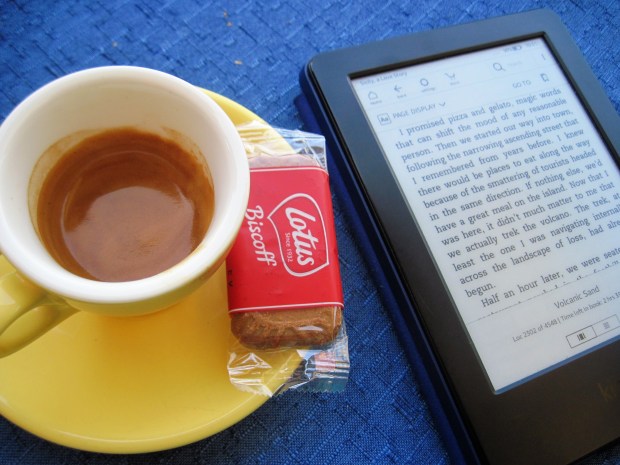
In fact, after Saro’s death from bone cancer in 2012, she became like a second daughter to Saro’s mother. The book focuses on the three summers in a row when she and her adopted daughter Zoela traveled to the family home in Sicily to stay with Nonna. I particularly appreciated the exploration of what it’s like to live between countries and cultures. This is one of three Reese Witherspoon book club books I’ve read so far (along with Where the Crawdads Sing and Daisy Jones and the Six), and all have been great – Reese’s recommendations are proving as reliable as Oprah’s.
 A mudslide blocked the route we should have taken back from Milan to Paris, so we rebooked onto trains via Switzerland. This plus the sub-Alpine setting for our next-to-last day made the perfect context for racing through Where the Hornbeam Grows: A Journey in Search of a Garden by Beth Lynch in just two days. Lynch moved from England to Switzerland when her husband took a job in Zurich. Suddenly she had to navigate daily life, including frosty locals and convoluted bureaucracy, in a second language. The sense of displacement was exacerbated by her lack of access to a garden. Gardening had always been a whole-family passion, and after her parents’ death their Sussex garden was lost to her. Two years later she and her husband moved to a cottage in western Switzerland and cultivated a garden idyll, but it wasn’t enough to neutralize their loneliness.
Much of what Lynch has to say about trying to find genuine connections as an expatriate rang true for me. Paradise Lost provides an unexpected frame of reference as Lynch asks what it means for a person or a plant to be transplanted somewhere new, and what it takes to thrive. Her elegant writing reminded me of Diana Athill’s and Penelope Lively’s, and the exploration of the self through gardens is reminiscent of Allan Jenkins’s Plot 29.
Other successful reads:
 Confessions of a Bookseller by Shaun Bythell: This picks up right where The Diary of a Bookseller left off and carries through the whole of 2015. Again it’s built on the daily routines of buying and selling books, including customers’ and colleagues’ quirks, and of being out and about in a small town. I wished I was in Wigtown instead of Milan! Because of where I was reading the book, I got particular enjoyment out of the characterization of Emanuela (soon known as “Granny” for her poor eyesight and myriad aches and gripes), who comes over from Italy to volunteer in the bookshop for the summer. Bythell’s break-up with “Anna” is a recurring theme in this volume, I suspect because his editor/publisher insisted on an injection of emotional drama.
 City of Girls by Elizabeth Gilbert: There’s a fun, saucy feel to this novel set mostly in 1940s New York City. Twenty-year-old Vivian Morris comes to sew costumes for her Aunt Peg’s rundown theatre and falls in with a disreputable lot of actors and showgirls. When she does something bad enough to get her in the tabloids and jeopardize her future, she retreats in disgrace to her parents’ – but soon the war starts and she’s called back to help with Peg’s lunchtime propaganda shows at the Brooklyn Navy Yard. The quirky coming-of-age narrative reminded me a lot of classic John Irving, while the specifics of the setting made me think of Wise Children, All the Beautiful Girls and Manhattan Beach. The novel takes us to 2010, when Vivian is 90 and still brazenly independent. I was somewhat underwhelmed – while it’s a fairly touching story of how to absorb losses and make an unconventional family, I wondered if it had all meant much. I’ll be expanding this into a Shiny New Books review.
 Judgment Day by Sandra M. Gilbert: English majors will know Gilbert best for her landmark work of criticism, The Madwoman in the Attic (co-written with Susan Gubar). I had no idea that she writes poetry. This latest collection has a lot of interesting reflections on religion, food and art, as well as elegies to those she’s lost. Raised Catholic, Gilbert married a Jew, and the traditions of Judaism still hold meaning for her after husband’s death even though she’s effectively an atheist. “Pompeii and After,” a series of poems describing food scenes in paintings, from da Vinci to Hopper, is particularly memorable.
Not-so-successful reads:
 Vintage 1954 by Antoine Laurain: Dreadful! I would say: avoid this sappy time-travel novel at all costs. I thought the setup promised a gentle dose of fantasy, and liked the fact that the characters could meet their ancestors and Paris celebrities during their temporary stay in 1954. But the characters are one-dimensional stereotypes, and the plot is far-fetched and silly. I know many others have found this delightful, so consider me in the minority…
As well as a few DNFs…
What Dementia Teaches Us about Love by Nicci Gerard: I’ve read a lot of books about dementia, both clinical and anecdotal, and this doesn’t add anything new. (11%)
The Great Railway Bazaar by Paul Theroux: I read the first 32 pages, up to when Theroux arrives in northern Italy. He mostly describes his fellow passengers, as well as the details of meals and sleeping arrangements on trains. The writing struck me as old-fashioned, and I couldn’t imagine getting through another nearly 350 pages of it.
Out of the Woods by Luke Turner: Attempts to fuse nature and sexuality in a way that’s reminiscent of Hidden Nature by Alys Fowler. The writing didn’t draw me in at all. (5%)
Upcoming Reading Plans: Milan Trip and Summer Books
“Centre of fashion, business and finance,” “muggy and mosquito-ridden in summer” – from the guidebook descriptions it could hardly sound less like our kind of place, and yet Milan is where we’re off to tomorrow. While it wouldn’t be our first-choice destination, my husband is attending a landscape ecology conference there and presenting a paper; I’m going along for the week to have a holiday. It’s Italy. Why not?! I doubt the northern plain will be as much to our taste as Tuscany, which we explored on a wonderfully memorable trip in April 2014 (on which I first drank coffee), but there will still be history and culture around every corner, and we plan on eating very well and getting out of the city to see some of the Lakes region, too.
We’re traveling the slow way: a train to London; the Eurostar to Paris, where we’ll stay for one night; and a seven-hour train ride to Milan the following day. If the weather remains as hot as it has been in Continental Europe (e.g. 40°C / 105°F in Paris this week – ugh!), I’m not sure I’ll be up for a lot of solo sightseeing. I’ll put in a much-reduced work load for the week, but for much of the rest of the time when my husband is at the conference I may just lounge around our Airbnb, with a stack of print books, in front of the USB-powered fan I’ve ordered.
So of course I’ve been having great fun thinking about what reading material I might pack. I’ve assembled a main stack, and a subsidiary stack, of books that seem appropriate for one or more reasons.
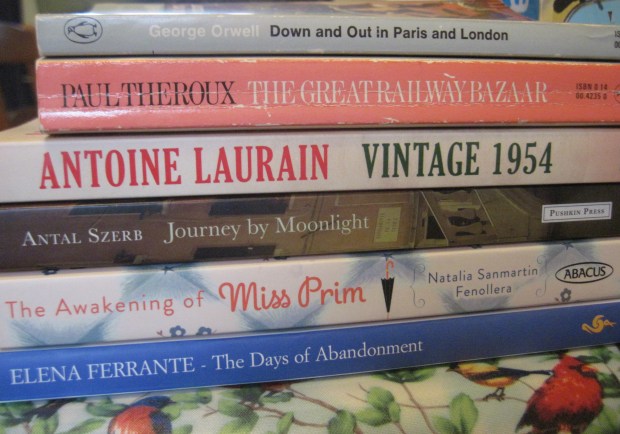
Down and Out in Paris and London, George Orwell – To read on the Eurostar between London and Paris. Orwell’s first book and my first try with his nonfiction: an account of the living conditions of the poor in two world cities.
Bonus goal it fulfills: Classic of the month
Vintage 1954, Antoine Laurain – For a Nudge review; to read en route to and in Paris. Drinking a 1954 Beaujolais transports a Parisian and his neighbors – including an Airbnb guest – back to the 1950s. Sounds like good fun.
Bonus goal it fulfills: Lit in translation
The Great Railway Bazaar, Paul Theroux – To read on the long train ride to Milan. Theroux travels from London to Tokyo on trains, then returns via the Trans-Siberian Express. I’ve always meant to try his work.
Bonus goal it fulfills: Travel classics
Journey by Moonlight, Antal Szerb – A Hungarian novel set on an Italian honeymoon. Try to resist these first lines: “On the train everything seemed fine. The trouble began in Venice, with the back-alleys.”
Bonus goals it fulfills: Lit in translation; 20 Books of Summer substitute (horse on the cover)
The Awakening of Miss Prim, Natalia Sanmarin Fenollera – Promises to be a cozy, fluffy novel about what happens when librarian Prudencia Prim arrives in a small village. I had the feeling it was set in Italy, but maybe it’s actually Spain? I’ll find out.
Bonus goal it fulfills: Lit in translation
The Days of Abandonment, Elena Ferrante – I’ve tried two Ferrante novels and not been too impressed, yet still I keep trying. This one’s set during a heat wave. Maybe I’ll get on with it better than I did with My Brilliant Friend or The Lost Daughter?
Bonus goal it fulfills: Lit in translation
The extra stack:
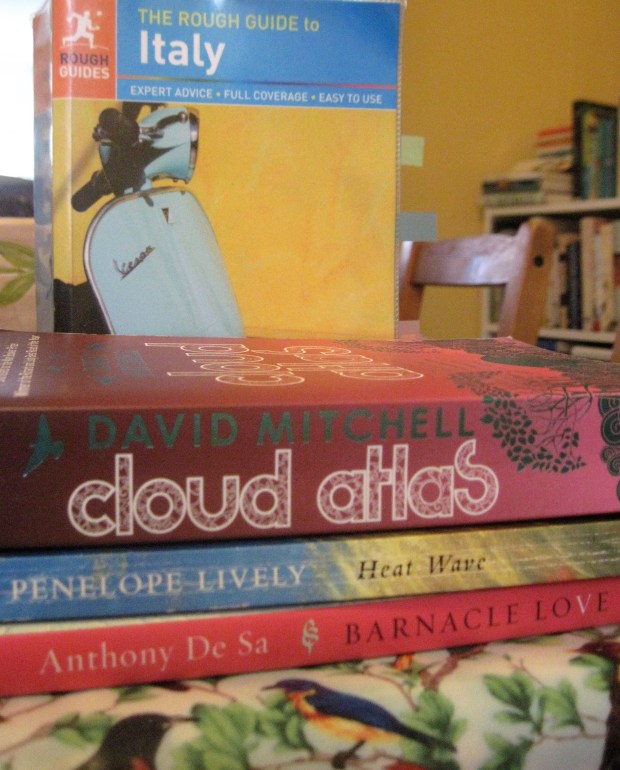
Heat Wave, Penelope Lively – The title says it all.
Bonus goal it fulfills: Reading with the seasons
Barnacle Love, Anthony De Sa – An extra animal book for 20 Books of Summer.
Cloud Atlas, David Mitchell – A novel I’ve meant to read for years. I’ve earmarked it for our super-long day of travel back to the UK.
Bonus goal it fulfills: Doorstopper of the Month
Considering getting from the library:
The Last Supper, Rachel Cusk – I’ve only made it through one of the three Cusk books I’ve attempted, but perhaps a travel memoir is a more surefire selection?
On my Kindle:
 The Fourth Shore, Virginia Baily – There’s an Italian flavor to this WWII novel, as there was to Baily’s previous one, Early One Morning. However, I’ve heard that this is mostly set in Tripoli, so I won’t make it a priority.
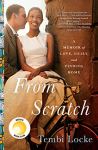
From Scratch, Tembi Locke – An actress’s memoir of falling in love with an Italian chef and her trips to his family home in Sicily with their adopted daughter. (Foodie and bereavement themes!)
I’ll read the first few pages of lots of these to make sure they ‘take’ and will try to pack a sensible number. (Which probably means all but one or two!) We’ll be packing light in general, since there’s only so many clothes one can wear in such heat, so I don’t mind carrying a backpack full of books – I’m used to it from weekly treks to the library and flights to America, and I know that I don’t find reading on Kindle as satisfying, though it certainly is convenient for when you’re on the go.
If you’d like to put in a good word for any of the above options, or want to dissuade me from a book I might not find worthwhile, let me know.
Meanwhile, I’ve been slow out of the gate with my 20 Books of Summer, but I finally have a first set of mini-reviews coming up tomorrow.
Other summer-themed books that I have on hand or will get from the library soon include One Summer: America, 1927 by Bill Bryson, The Go-Between by L.P. Hartley, The Sun Does Shine by Anthony Ray Hinton, The Summer Book by Tove Jansson, and Sunburn by Laura Lippman.
How’s your summer reading going?
Will you do any reading ‘on location’ this year?
Out and About in Edinburgh
After going to Wigtown in April, I never expected I’d be back in Scotland this year. This was a fairly last-minute trip we booked so that my husband could attend a short rewilding workshop for PhD students. They all met up in Edinburgh and proceeded by bus into the Cairngorms to see sites of habitat restoration and potential future wildlife releases. I stayed behind at our Airbnb flat and kept up a reduced work load while enjoying the city break.
Day 1, Wednesday the 19th: A travel day. Our journey – two train rides plus a short walk at either end – should have taken just over 7 hours. Instead, it took 14. Recent storms had taken down wires at Durham and left debris on the line, so our original train was terminated at York. We managed to get a connection to Newcastle, queued outside for two hours for rail replacement buses that never came, and finally got a very delayed train through to Edinburgh. Our poor Airbnb hostess’s parents had to wait up for us until 12:40 a.m.
Day 2, Thursday the 20th: After just a few hours of sleep, we were up early so that Chris could leave by 7:15 for his meet-up on the Edinburgh campus. The props and sketches scattered about suggest that the flat owner is a theatre costume and set designer. The view overlooking Holyrood Park and Arthur’s Seat is spectacular – a great place to put in a few hours of proofreading before heading out to town after lunch.
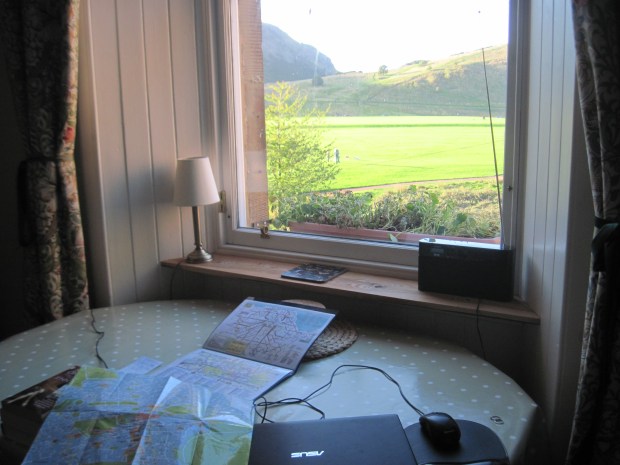


On Clare’s recommendation I started with the Surgeons’ Hall Museums on the Royal College of Surgeons campus. They have several collections covering the history of surgery, dentistry, and pathology specimens. Many of the names and developments were familiar to me from Lindsey Fitzharris’s The Butchering Art. Joseph Lister’s frock coat is on display, and in one corner rare video footage plays of Sir Arthur Conan Doyle (who was initially a practicing physician) explaining how he based Sherlock Holmes on his university mentor, Joseph Bell.
 It’s not a place for the squeamish as there are mummified skeletons, details about Burke and Hare’s grave-robbing, surgical tools, and tumors and other anatomical deformities in jars everywhere. I found it all fascinating and spent a good two hours poking around. My favorite bits were the case full of foreign bodies removed from noses, stomachs and intestines and the temporary exhibition, “A Quest for Healing” by Zhang Yanzi, who had a residency at the museums in the summer of 2017. Her pieces included a 2D mountain made of pill packets, a cotton and gauze sculpture bristling with acupuncture needles, a matching hanging sculpture of capillaries, two surgical beds, and various silk screen panels.
The pathology museum, spread across two floors, was a little overwhelming and almost distressingly faceless – so many human beings reduced to the conditions that had defined and perhaps killed them. The most striking specimen for me, then, was one that actually included a face. I think it was a First World War soldier whose nose had been sewn back together, and what was so remarkable was that you could see his ginger whiskers and eyebrows, and his eyes were closed as if he was just taking a nap. (For ever. In a museum case.)

The sculpture outside is From Here Health by Denys Mitchell (1994).
There are only explanatory panels about a select few samples, so it can be hard to spot just what’s wrong with the organs unless you have specialist medical knowledge. I appreciated the few places where notes have been added along the lines of “see your doctor if…” There were four polycystic kidneys on display in various cases, so including mine there were at least six present in the building that day. “More lives would be saved if more people carried kidney donor cards,” one caption read. Amen.
Clare also recommended the university area for its charity shops. I had a good trawl around Nicolson Street and bought one book, but a lot of the shops are geared towards vintage and High Street fashion. I had better luck at the Salvation Army store on Forrest Road (near the National Museum), where I found three books and two classical CDs.


On to the Writers’ Museum, which commemorates Robert Burns, Sir Walter Scott and Robert Louis Stevenson. I was most interested in the Stevenson material, including memorabilia from his later life on Samoa, especially as I’m currently reading a novel about his relationship with the American divorcee Fanny Osbourne. By now I was museum-ed out and headed back to the flat for a leftovers dinner and some reading before an early bedtime.


Day 3, Friday the 21st: Another morning of work followed by an afternoon of wandering on foot between free attractions and charity shops and avoiding the drizzle. I visited the unusual Scottish Parliament building (which cost a cool £414 million) and saw inside the debating chamber. Four books from the Lothian Cat Rescue charity shop; quick jaunts around the Museum of Childhood, the Museum of Edinburgh, Canongate Kirk, the Music Museum, and the Central Library. When it came to it I couldn’t be bothered to pay £14 to go around Holyrood Palace, but I enjoyed a reasonably priced cappuccino and carrot cake at their café. Chris was back in the evening for a dinner of frozen pizza with local beer and cider.


Day 4, Saturday the 22nd: Our one full day in the City together. We weren’t feeling up to the Arthur’s Seat walk, so we did a gentle stroll up the Salisbury Crags and back instead. Then we caught a bus out to the Stockbridge area for more charity shopping (two more books) and a scrumptious brunch at The Pantry. This was a recommendation on chef David Lebovitz’s food blog and it more than lived up to expectations. It’s no wonder we had to wait half an hour for a table. I could have eaten anything on the menu, but in the end I had smoked salmon eggs Benedict followed by a cherry and Nutella brownie.


After a brief browse at Golden Hare Books, we went on along the Water of Leith to the lovely Royal Botanic Garden. It’s free to walk around, but we also paid to tour the Glasshouses, which recreate the flora of 10 different climates. The RBG is also home to the National Memorial for Organ and Tissue Donors, a peaceful circular space set back in the woods and marked out by a few benches and stone monuments. As I have organ donors to thank for the continued life and health of my mother and several other relatives, it was well worth a visit.


Back into town for gelato (I had a delicious poached plum and cinnamon sorbet) at Mary’s Milk Bar, which is on Grassmarket across from the Castle and was another Lebovitz recommendation. A quick circuit of the animal hall at the National Museum before it closed, a stroll along the Royal Mile, and a rest with tea and books back at the flat before going back out for a veggie curry.
Airbnb bedroom reading nook
Day 5, Sunday the 23rd: Return travel day. No major issues, but still enough of a delay to apply for compensation – refunds from LNER and my husband’s work will have made the journey very cheap indeed.
I was sad to leave Edinburgh this time. I loved our Airbnb flat and felt very at home in it. If I had a bicycle to get into town a little faster, I could easily live there. The tourists would probably drive me mad, but Edinburgh is a wonderful place with so much to see and do and such incredible scenery within a short drive.
Thank you to everyone who offered suggestions of what to see and do. I managed to fit in most of what you recommended!
What I read:
The bulk of Unsheltered, Barbara Kingsolver’s bold new novel about distrust and displacement in America then (the 1870s) and now (during the rise of Trump), and Come to Me by Amy Bloom, a wonderful story collection about people who love who they shouldn’t love. More about this one in my upcoming round-up of short stories I’ve read this month. 
 A Ladder to the Sky by John Boyne is a delicious piece of literary suspense with a Tom Ripley-like hero you’ll love to hate: Maurice Swift, who wants nothing more than to be a writer but doesn’t have any ideas of his own, so steals them from other people. I loved how we see this character from several outside points of view – first Erich Ackerman, whose Nazi-era history provides the basis for Maurice’s first novel; then Gore Vidal, to whose Italian home Maurice pays a visit with his new mentor; and finally Maurice’s wife Edith, a celebrated author in her own right – before getting Maurice’s own perspective. By this point we know enough about him to understand just how unreliable a narrator he is. My one criticism is that I would have binned the whole subplot about Edith’s sister and brother-in-law. (A nice touch: at one point Maurice buys a reprint copy of Maude Avery’s Like to the Lark, which should ring a bell from The Heart’s Invisible Furies.)
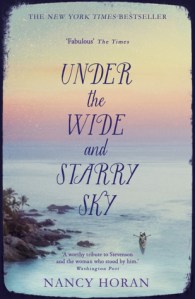 I also read over half of Jenny Diski’s Stranger on a Train, a memoir about two long train journeys she took across America in the late 1990s that also incorporates memories from a troubled adolescence – she started smoking at 14 and was in and out of mental hospitals at 15 – in which she loved nothing more than to read while riding the Circle line all day long. I’m a quarter of the way through both Nancy Horan’s Under the Wide and Starry Sky, about Stevenson and his wife, and Peter Hill’s Stargazing, a memoir about dropping out of art school to become a Scottish lighthouse keeper in 1973; he started on Pladda, a tiny island off of Arran. And on my Nook I read a good bit of All You Can Ever Know, Nicole Chung’s forthcoming memoir about being raised by adoptive white parents in Oregon and meeting members of her Korean family in her mid-twenties, just as she became a mother herself.
 Bookish Beck = Rebecca Foster. American transplant to England. Freelance proofreader and book reviewer.
 Bookish Beck