Seasons Readings: Winter, The Robin, & An Almost Perfect Christmas
I’m marking Christmas Eve with cosy reflections on the season, a biography of Britons’ favourite bird (and a bonus seasonal fairy tale), and a mixed bag of essays and stories about the obligations and annoyances of the holidays.
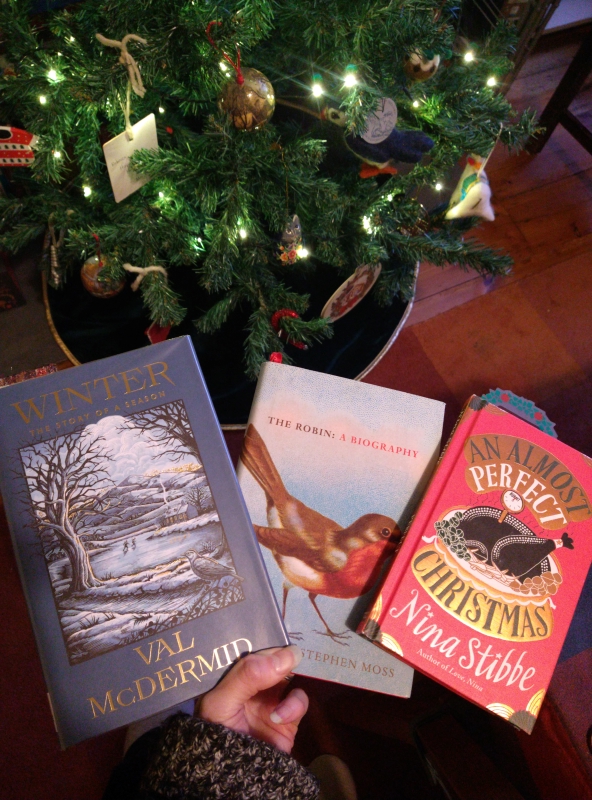
Winter by Val McDermid (2025)
 I didn’t realize that Michael Morpurgo’s Spring was the launch of a series of short nonfiction books on the seasons. McDermid writes a book a year, always starting it in early January. She evokes the Scottish winter’s “Janus-faced” character: cosy but increasingly storm-tossed. In few-page essays, she looks for nature’s clues, delves into childhood memories, and traverses the season through traditional celebrations as she has experienced them in Edinburgh and Fife: Hallowe’en, Bonfire Night, Christmas, and New Year’s Eve. The festivities are a collective way of taking the mind off of the season’s hardships, she suggests. I was amused by her mother’s recipe for soup, which she described as more of a “rummage” for whatever vegetables you have in the fridge. It was my first time reading McDermid and, while I don’t know that I will ever pick up one of her crime novels, this was pleasant. I reckon I’d read Bernardine Evaristo on summer and Kate Mosse on autumn, too. (Public library)
The Robin: A Biography – A Year in the Life of Britain’s Favourite Bird by Stephen Moss (2017)
 I’ve also read Moss’s most recent bird monograph, The Starling. Both provide a thorough yet accessible introduction to a beloved species’ history, behaviour, and cultural importance. The month-by-month structure works well here: Moss’s observations in his garden and on his local patch lead into discussions of what birds are preoccupied with at certain times of year. Such a narrative approach makes the details less tedious. European robins are known for singing pretty much year-round, and because hardly any migrate – only 5%, it’s thought – they feel like constant companions. They are inquisitive garden guests, visiting feeders and hanging around to see if we monkey-pigs might dig up some juicy worms for them.
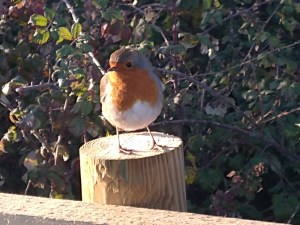
(Last month, this friendly chap at an RSPB bird reserve near Exeter wondered if we might have a snack to share.)
Although we like to think we see the same robins year after year, that’s very unlikely. One in four robins found dead has been killed by a domestic cat; most die of old age and/or starvation within a year. Robin pairs raise one or two broods per year and may attempt a third if the weather allows, but that high annual mortality rate (62%) means we’re not overrun. Compared to other notable species, then, they’re doing well. There are loads of poems and vintage illustrations and, what with robins’ associations with Christmas, this felt like a seasonally appropriate read. At Christmas 2022 I read the very similar Robin by Helen F. Wilson, but this was more engaging. (Free from C’s former colleague)
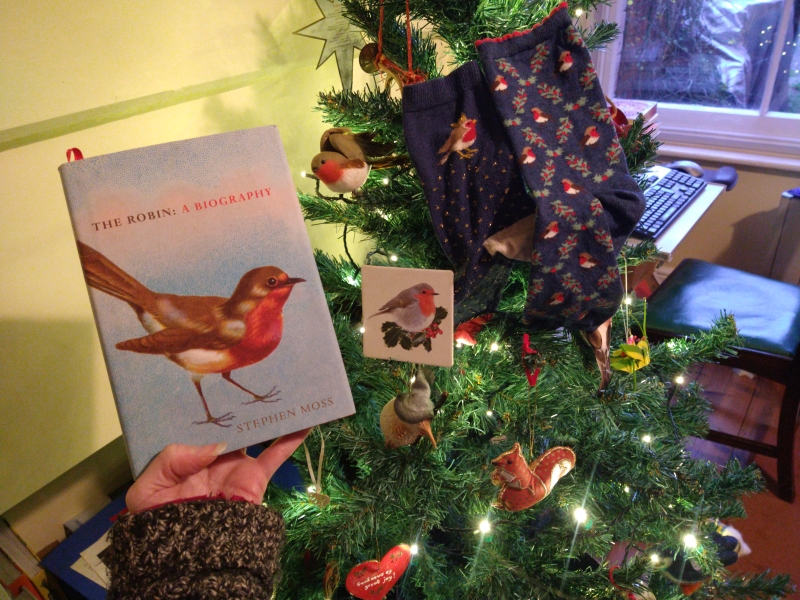
Our small collection of Christmas robin paraphernalia.
&
The Robin & the Fir Tree by Jason Jameson (2020)
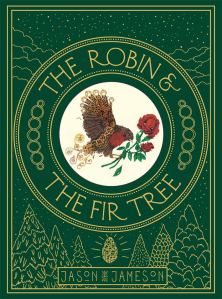 Based on a Hans Christian Andersen fairy tale, this lushly illustrated children’s book stars a restless tree and a faithful robin. The tree resents being stuck in one place and envies his kin who have been made into ships to sail the world. Although his friend the robin describes everything and brings souvenirs, he can’t see the funfair and the flora of other landscapes for himself. “Every season will be just the same. How I long for something different to happen!” he cries. Cue a careful-what-you-wish-for message. When men with axes come to chop down the fir tree and display him in the town square, he feels a combination of trepidation and privilege. Human carelessness turns his sacrifice to waste, and only the robin knows how to make something good out of the wreckage. The art somewhat outshines the story but this is still a lovely hardback I’d recommend to adults and older children. (Public library)
An Almost Perfect Christmas by Nina Stibbe (2017)
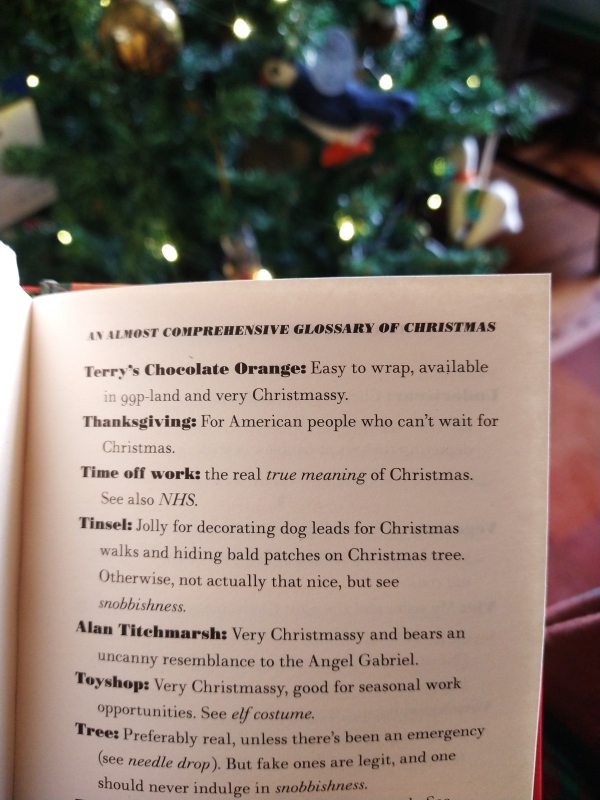
 I reviewed this for Stylist magazine when it first came out and had fond memories of a witty collection I expected to dip into again and again. This time, though, Stibbe’s grumpy rants about turkey, family, choosing a tree and compiling the perfect Christmas party playlist fell flat with me. The four short stories felt particularly weak. I most recognized and enjoyed the sentiments in “Christmas Correspondence,” which is about the etiquette for round-robin letters and thank-you notes. The tongue-in-cheek glossary that closes the book is also amusing. But this has served its time in my collection and it’s off to the Little Free Library with it to, I hope, give someone else a chuckle on Christmas day. (Review copy)
My original rating (2017):
My rating now: 
It’s taken me a long time to feel festive this year, but after a couple of book club gatherings and a load of brief community events for the Newbury Living Advent Calendar plus the neighbourhood carol walk, I think I’m finally ready for Christmas. (Not that I’ve wrapped anything yet.) I had a couple of unexpected bookish gifts arrive earlier in December. First, I won the 21st birthday quiz on Kim’s blog and she sent a lovely parcel of Australian books and an apt tote bag. Then, I was sent an early finished copy of Julian Barnes’s upcoming (final) novel, Departure(s). We didn’t trust Benny to be sensible around a real tree so got an artificial one free from a neighbour to festoon with non-breakable ornaments. He discovered the world’s comfiest blanket and spends a lot of time sleeping on it, which has been helpful.
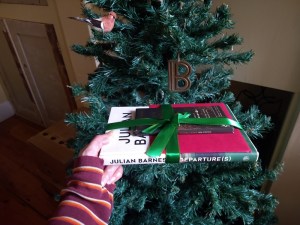


Merry Christmas, everyone! I have a bunch of year-end posts in preparation. It’ll be a day off tomorrow, of course, but here’s what to expect thereafter:
Friday 26th: Reporting back on Most Anticipated Reads of 2025
Saturday 27th: Reading Superlatives
Sunday 28th: Best Backlist Reads
Monday 29th: Love Your Library
Tuesday 30th: Runners-Up
Wednesday 31st: Best Books of 2025
Thursday 1st: Final Statistics for 2025
Friday 2nd: Early Recommendations for 2026
Monday 5th: Most Anticipated Titles of 2026
Book Serendipity, Mid-February to Mid-April
I call it “Book Serendipity” when two or more books that I read at the same time or in quick succession have something in common – the more bizarre, the better. This is a regular feature of mine every couple of months. Because I usually have 20–30 books on the go at once, I suppose I’m more prone to such incidents. People frequently ask how I remember all of these coincidences. The answer is: I jot them down on scraps of paper or input them immediately into a file on my PC desktop; otherwise, they would flit away!
The following are in roughly chronological order.
- The protagonist isn’t aware that they’re crying until someone tells them / they look in a mirror in The Remains of the Day by Kazuo Ishiguro and Three Days in June by Anne Tyler.
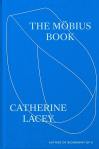
- A residential complex with primal scream therapy in Confessions by Catherine Airey and The Möbius Book by Catherine Lacey.
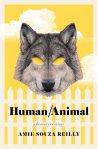
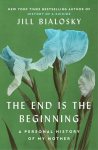
- Memories of wiping down groceries during the early days of the pandemic in The End Is the Beginning by Jill Bialosky and Human/Animal by Amie Souza Reilly.
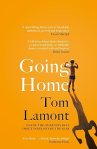
- A few weeks before I read Maurice and Maralyn by Sophie Elmhirst, I’d finished reading the author’s husband’s debut novel (Going Home by Tom Lamont); I had no idea of the connection between them until I got to her Acknowledgements.
- A mention of the same emergency money passing between friends in Alligator Tears by Edgar Gomez ($20) and The Möbius Book by Catherine Lacey ($100).
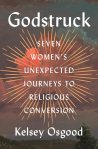
- Autobiographical discussions of religiosity and anorexia in The Möbius Book by Catherine Lacey and Godstruck by Kelsey Osgood.
- The theme of the dark night sky in The Wild Dark by Craig Childs, followed almost immediately by Night Magic by Leigh Ann Henion.
- Last year I learned about Marina Abramović’s performance art where she and her ex trekked to China’s Great Wall from different directions, met in the middle, and continued walking away to dramatize their breakup in The Ritual Effect by Michael Norton. Recently I saw it mentioned again in The Möbius Book by Catherine Lacey. Abramović’s work is also mentioned in Human/Animal by Amie Souza Reilly and is the basis for the opening track on Anne-Marie Sanderson’s album Old Light, “Amethyst Shoes.”
- The idea of running towards danger appears in Alex Marzano-Lesnevich’s essay in Edge of the World, a queer travel anthology edited by Alden Jones; and the bibliography of The Möbius Book by Catherine Lacey.
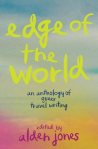
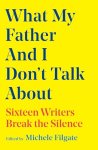
- I then read another Alex Marzano-Lesnevich essay in quick succession (both were excellent, by the way) in What My Father and I Don’t Talk About, edited by Michele Filgate.
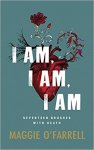
- A scene in which a woman goes to a police station and her concerns are dismissed because she has no evidence and the man/men’s behaviour isn’t ‘bad enough’ in I Am, I Am, I Am by Maggie O’Farrell and Human/Animal by Amie Souza Reilly.
- Too many details as the sign of a lie in Dream Count by Chimamanda Ngozi Adichie and Three Days in June by Anne Tyler.
- Scenes of throwing all of a spouse’s belongings out on the yard/street in Old Soul by Susan Barker, How to Survive Your Mother by Jonathan Maitland, and Human/Animal by Amie Souza Reilly.
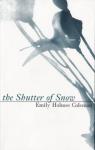
- Reading two lost American classics about motherhood and time spent in a mental institution at the same time: The Shutter of Snow by Emily Holmes Coleman and I Am Clarence by Elaine Kraf.
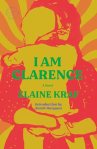
- Disorientation underwater: a literal experience in I Am, I Am, I Am by Maggie O’Farrell, then used as a metaphor for what it was like to be stuck in a blizzard on Annapurna in 2014 in The Secret Life of Snow by Giles Whittell.
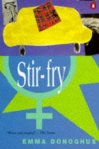
- A teenager who has a job cleaning hotels in Old Soul by Susan Barker and I Am, I Am, I Am by Maggie O’Farrell. (In Stir-Fry by Emma Donoghue, Maria is also a teenaged cleaner, but of office buildings.)
- A vacuum cleaner bag splits in Stir-Fry by Emma Donoghue and one story of Are You Happy? by Lori Ostlund – in the latter it’s deliberate, searching for evidence of the character’s late son after cleaning his room.

- An ailing tree or trees that have to be cut down in one story of The Accidentals by Guadalupe Nettel and The Lost Trees of Willow Avenue by Mike Tidwell.
- Buchenwald was mentioned in one poem each in A God at the Door by Tishani Doshi and The Ghost Orchid by Michael Longley.
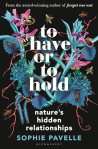
- A reference to Robin Wall Kimmerer’s Braiding Sweetgrass in To Have or to Hold by Sophie Pavelle and Human/Animal by Amie Souza Reilly.

- A mentally unwell woman deliberately burns her hands in I Am Clarence by Elaine Kraf and Every Day Is Mother’s Day by Hilary Mantel.
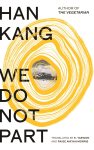
- A mention of the pollution caused by gas stoves in We Do Not Part by Han Kang and The Lost Trees of Willow Avenue by Mike Tidwell.
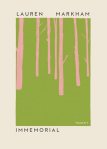
- An art installation involving part-buried trees was mentioned in Immemorial by Lauren Markham and then I encountered a similar project a few months later in We Do Not Part by Han Kang. Burying trees as a method of carbon storage is then discussed in The Lost Trees of Willow Avenue by Mike Tidwell.

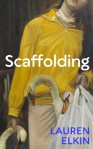
- Imagining the lives of the people living in an apartment you didn’t end up renting in Scaffolding by Lauren Elkin and one story of The Accidentals by Guadalupe Nettel.
- The Anthropocene is mentioned in Scaffolding by Lauren Elkin and The Alternatives by Caoilinn Hughes.
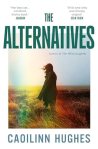
- I was reading three debut novels from the McKitterick Prize longlist at the same time, all of them with very similar page counts of 383, 387, and 389 (i.e., too long!).
- Being appalled at an institutionalized mother’s appearance in The End Is the Beginning by Jill Bialosky and Every Day Is Mother’s Day by Hilary Mantel.
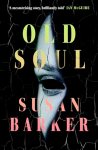 A remote artist’s studio and severed fingers in Old Soul by Susan Barker and We Do Not Part by Han Kang.
- A lesbian couple in New Mexico, the experience of being watched through a window, and the mention of a caftan/kaftan, in Old Soul by Susan Barker and one story of Are You Happy? by Lori Ostlund.
- Refusal to go to a hospital despite being in critical condition in I Am, I Am, I Am by Maggie O’Farrell and one story of Are You Happy? by Lori Ostlund.
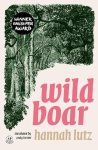
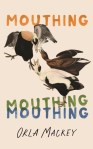
- It’s not a niche stylistic decision anymore; I was reading four novels with no speech marks at the same time: Old Soul by Susan Barker, Scaffolding by Lauren Elkin, The Alternatives by Caoilinn Hughes, and We Do Not Part by Han Kang. [And then, a bit later, three more: Wild Boar by Hannah Lutz, Mouthing by Orla Mackey, and How to Be Somebody Else by Miranda Pountney.]
 A lesbian couple is alarmed by the one partner’s family keeping guns in Spent by Alison Bechdel and one story of Are You Happy? by Lori Ostlund.
- Responding to the 2021 murder of eight Asian spa workers in Atlanta in Foreign Fruit by Katie Goh and Find Me as the Creature I Am by Emily Jungmin Yoon.
- Disposing of a late father’s soiled mattress in Mouthing by Orla Mackey and one story of Are You Happy? by Lori Ostlund.
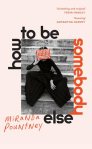 New York City tourist slogans in Apple of My Eye by Helene Hanff and How to Be Somebody Else by Miranda Pountney.
- A Jewish care home for the elderly in The End Is the Beginning by Jill Bialosky and Joanna Rakoff’s essay in What My Father and I Don’t Talk About (ed. Michele Filgate).
- A woman has no memory between leaving a bar and first hooking up with the man she’s having an affair with in If You Love It, Let It Kill You by Hannah Pittard and How to Be Somebody Else by Miranda Pountney.
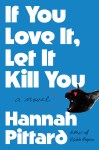 A stalker-ish writing student who submits an essay to his professor that seems inappropriately personal about her in one story of Are You Happy? by Lori Ostlund and If You Love It, Let It Kill You by Hannah Pittard.
- A pygmy goat as a pet (and a one-syllable, five-letter S title!) in Spent by Alison Bechdel and Sleep by Honor Jones.
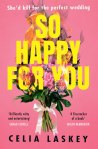
- A Brooklyn setting and thirtysomething female protagonist in Sleep by Honor Jones, So Happy for You by Celia Laskey, and How to Be Somebody Else by Miranda Pountney.
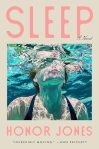
- A mention of the American Girl historical dolls franchise in Sleep by Honor Jones and If You Love It, Let It Kill You by Hannah Pittard, both of which I’m reviewing early for Shelf Awareness.
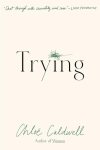 A writing professor knows she’s a hypocrite for telling her students what (not) to do and then (not) doing it herself in Trying by Chloé Caldwell and If You Love It, Let It Kill You by Hannah Pittard. These two books also involve a partner named B (or Bruce), metafiction, porch drinks with parents, and the observation that a random statement sounds like a book title.
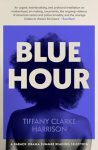
- The protagonist’s therapist asks her to find more precise words for her feelings in Blue Hour by Tiffany Clarke Harrison and So Happy for You by Celia Laskey.
- The protagonist “talks” with a dying dog or cat in The Möbius Book by Catherine Lacey and If You Love It, Let It Kill You by Hannah Pittard.
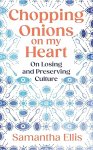 Shalimar perfume is mentioned in Scaffolding by Lauren Elkin and Chopping Onions on My Heart by Samantha Ellis.
- The Rapunzel fairytale is a point of reference in In the Evening, We’ll Dance by Anne-Marie Erickson and Secret Agent Man by Margot Singer, both of which I was reading early for Foreword Reviews.
What’s the weirdest reading coincidence you’ve had lately?
Winter Reads, I: Michael Cunningham & Helen Moat
It’s been feeling springlike in southern England with plenty of birdsong and flowers, yet cold weather keeps making periodic returns. (For my next instalment of wintry reads, I’ll try to attract some snow to match the snowdrops by reading three “Snow” books.) Today I have a novel drawing on a melancholy Hans Christian Andersen fairy tale and a nature/travel book about learning to appreciate winter.
The Snow Queen by Michael Cunningham (2014)
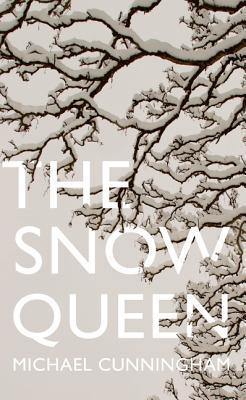 It was among my favourite first lines encountered last year: “A celestial light appeared to Barrett Meeks in the sky over Central Park, four days after Barrett had been mauled, once again, by love.” Barrett is gay and shares an apartment with his brother, Tyler, and Tyler’s fiancée, Beth. Beth has cancer and, though none of them has dared to hope that she will live, Barrett’s epiphany brings a supernatural optimism that will fuel them through the next few years, from one presidential election autumn (2004) to the next (2008). Meanwhile, Tyler, a stalled musician, returns to drugs to try to find inspiration for his wedding song for Beth. The other characters in the orbit of this odd love triangle of sorts are Liz, Beth and Barrett’s boss at a vintage clothing store, and Andrew, Liz’s decades-younger boyfriend. It’s a peculiar family unit that expands and contracts over the years.
Of course, Cunningham takes inspiration, thematically and linguistically, from Hans Christian Andersen’s tale about love and conversion, most obviously in an early dreamlike passage about Tyler letting snow swirl into the apartment through the open windows:
He returns to the window. If that windblown ice crystal meant to weld itself to his eye, the transformation is already complete; he can see more clearly now with the aid of this minuscule magnifying mirror…
I was most captivated by the early chapters of the novel, picking it up late one night and racing to page 75, which is almost unheard of for me. The rest took me significantly longer to get through, and in the intervening five weeks or so much of the detail has evaporated. But I remember that I got Chris Adrian and Julia Glass vibes from the plot and loved the showy prose. (And several times while reading I remarked to people around me how ironic it was that these characters in a 2014 novel are so outraged about Dubya’s re-election. Just you all wait two years, and then another eight!)
I fancy going on a mini Cunningham binge this year. I plan to recommend The Hours for book club, which would be a reread for me. Otherwise, I’ve only read his travel book, Land’s End. I own a copy of Specimen Days and the library has Day, but I’d have to source all the rest secondhand. Simon of Stuck in a Book is a big fan and here are his rankings. I have some great stuff ahead! (Secondhand – Awesomebooks.com)
While the Earth Holds Its Breath: Embracing the Winter Season by Helen Moat (2024)
 Like many of us, Moat struggles with mood and motivation during the darkest and coldest months of the year. Over the course of three recent winters overlapping with the pandemic, she strove to change her attitude. The book spins short autobiographical pieces out of wintry walks near her Derbyshire home or further afield. Paying closer attention to the natural spectacles of the season and indulging in cosy food and holiday rituals helped, as did trips to places where winters are either a welcome respite (Spain) or so much harsher as to put her own into perspective (Lapland and Japan). My favourite pieces of all were about sharing English Christmas traditions with new Ukrainian refugee friends.
There were many incidents and emotions I could relate to here – a walk on the canal towpath always makes me feel better, and the car-heavy lifestyle I resume on trips to America feels unnatural.
Days are where we must live, but it didn’t have to be a prison of house and walls. I needed the rush of air, the slap of wind on my cheeks. I needed to feel alive. Outdoors.
I’d never liked the rain, but if I were to grow to love winters on my island, I had to learn to love wet weather, go out in it.
What can there be but winter? It belongs to the circle of life. And I belonged to winter, whether I liked it or not. Indoors, or moving from house to vehicle and back to house again, I lost all sense of my place on this Earth. This world would be my home for just the smallest of moments in the vastness of time, in the turning of the seasons. It was a privilege, I realised.
However, the content is repetitive such that the three-year cycle doesn’t add a lot and the same sorts of pat sentences about learning to love winter recur. Were the timeline condensed, there might have been more of a focus on the more interesting travel segments, which also include France and Scotland. So many have jumped on the Wintering bandwagon, but Katherine May’s book felt fresh in a way the others haven’t.
With thanks to Saraband for the free copy for review.
Any wintry reading (or weather) for you lately?
September Releases, Part I: Berzinska, Falomo, Fubini
September is always a big month for new releases. I reviewed a load for Shelf Awareness this month (excerpts and links in tomorrow’s post, along with one more full review) and I’m awaiting library holds of some other big-name titles.
As often seems to be the case, my main roundup features one book each from fiction, poetry and nonfiction. Today I have short reviews of a set of sweetly fantastical Latvian short stories for middle grade readers, a Nigerian American’s autobiography in verse, and a short book about how prioritizing flavour might be the key to fixing a broken globalized food system.
The Skeleton in the Cupboard by Lilija Berzinska (2018; 2024)
[Translated from the Latvian by Žanete Vēvere Pasqualini and Sara Smith]
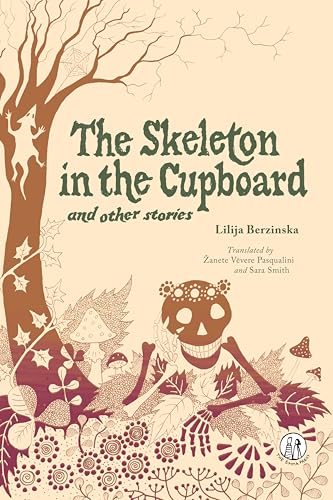 Something a bit different that still fit my September short stories focus: these nine linked fairytales feature sentient animals and fantastical creatures learning relatable life lessons. In the title story, Squishbod airs his closet once a year, which requires taking out the skeleton – a symbol of shameful secrets one holds close. Newfound friendship shades into obsession in “The Sea Wolf and the Hare” before the hare’s epiphany that love requires freedom. Characters wrestle with greed, fear and feelings of inadequacy or incompleteness. In “The End of the World,” which can be interpreted as a subtle climate fable, a thick fog induces panic. A puffin entertains thoughts of piracy. Spendthrift is compelled to have the latest in home décor while Mousekin frets over his lack of ambition. This is perfect for Moomins fans, who will embrace the blend of domesticity and adventure, melancholy and reassurance. I was also reminded of another European children’s novel-in-stories I’ve reviewed, Scary Fairy in Wicked Wood by Jana Bauer (translated from the Slovenian). The book is illustrated with whimsical drawings by the author, and a translators’ note explains how they assigned the creatures punning names. This is meant for children aged eight and up, but I loved it, too.
With thanks to The Emma Press for the free copy for review.
In September-released short stories, I also recently reviewed A New Day by Sue Mell.
Autobiomythography Of by Ayokunle Falomo
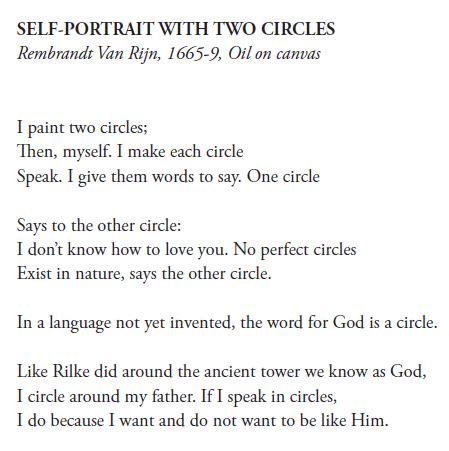
 The title is adapted from Audre Lorde’s term for Zami, “biomythography” (Kim Coleman Foote also borrowed it for Coleman Hill). This collection reminded me most of Jason Allen-Paisant’s multi-award-winning Self-Portrait as Othello. Both books pair an investigation of identity with musings on history and art, and six of Falomo’s poem titles begin with “Self-Portrait.” Another nine open with “Lugard & I,” referencing the early-1900s white high commissioner/governor/governor-general who effectively created Nigeria. Falomo contrasts his childhood understanding of his country with the more complicated postcolonial vision that has emerged in later decades.
Drawing on the Bible and mythology, the poet spins meditations on genealogy and describes himself as if from the outside, via others’ perceptions (“If Found,”) and erasure of official forms. “To You in Your Dark Lake Moving Darkly Now” is addressed to his child in utero, and a major theme is figuring out how to be a father differently from one’s own father (on which, see also Raymond Antrobus’s Signs, Music; I’ll link to my review tomorrow). The form varies a lot, from fragmented stanzas to paragraphs. I was impressed. A favourite passage (and a sample poem below):
The past will remain
what it is—a pastiche
of regrets and joys—
but lest I be accused of being
tethered to it, here is the snail-
sized horse I’ve named
Forgive. No, Forget.
Remind me.
I have forgotten who I was.
I have forgiven who I was supposed to be.
(from “Autobiography Of”)
With thanks to Alice James Books for the advanced e-copy for review.
In Search of the Perfect Peach: Why flavour holds the answer to fixing our food system by Franco Fubini
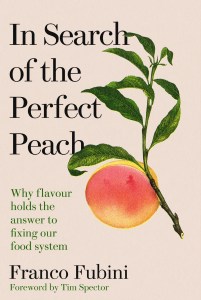 Fubini is the CEO of Natoora, which supplies produce to world-class restaurants. He is passionate about restoring seasonal patterns of eating; just because we can purchase strawberries year-round doesn’t mean we should. Supermarkets (which control 85% or more of food stock in the USA and UK) are to blame, Fubini explains, because after the Second World War they “tricked families with feelings of value and convenience, yet what they really wanted was for them to consume more of this unhealthy, flavour-engineered food [i.e. ultra-processed foods], which is cheap to produce and easy to transport because of its industrial nature.” He gives a few examples of fruits that have been selected for flavour rather than shelf life, such as the winter tomato varieties he popularized via River Café, green citrus, and the divine Greta white peach that set him off on this journey in 2011. This is a concise and readable introduction to modern food issues.
While it didn’t contain a lot that was new to me and I found the prose only serviceable, I’d still recommend it to anyone wanting a quick and thought-provoking read about where food comes from. Fubini’s is a wise voice we would do well to heed; I saw him quoted in the Guardian the other day on how to choose ripe fruit.
With thanks to Chelsea Green Publishing for the proof copy for review.
Carol Shields Prize Longlist Reading: The Future and Chrysalis
My first two dedicated reads for our informal Carol Shields Prize shadowing project exhibit one main way in which the prize is different from the Women’s Prize for Fiction: works in translation and short story collections are eligible. I have one of each to review today. Laura and I did a buddy read of an atmospheric dystopian novel translated from the French, and I caught up on a magical, erotic story collection I’d had on my Kindle for a long time. These were both very good, but my minor misgivings are such that I’d rate them the same:
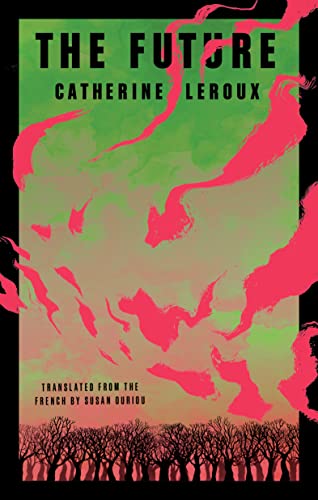
The Future by Catherine Leroux (2020; 2023)
[Translated from the French by Susan Ouriou]
For such a monolithic title, this has a limited stage: a few derelict districts of the ailing city we know as Detroit, Michigan – but in Leroux’s alternate version, it remained part of French Canada, with lingering Indigenous influence, and so is known as Fort Détroit. No doubt she was inspired by the many vacant properties that characterized Detroit in the 2010s; there’s even a ruins tour bus. In her Fort Détroit, a handful of determined adults cling on in their own homes, but the streets and parks have been abandoned to animals and to a gang of half-feral children who have developed their own nicknames (Adidas, Lego, Wolfpup), social hierarchy and vernacular. Worlds meet when Gloria determines to find her granddaughters Cassandra and Mathilda, who ran away after their addict mother Judith’s suspicious death. At the same time, her neighbour Eunice wants to find out who ran her father down in the street.
 Despite their fierce independence and acts of protest, the novel’s children still rely on the adult world. Ecosystems are awry and the river is toxic, but Gloria’s friend Solomon, a former jazz pianist, still manages to grow crops. He overlooks the children’s thefts from his greenhouse and eventually offers to help them grow their own food supply, and other adults volunteer to prepare a proper winter shelter to replace their shantytown. Puberty threatens their society, too: we learn that Fiji, the leader, has been binding her breasts to hide her age.
I expected to be reminded strongly of Station Eleven, and while there were elements that were reminiscent of Emily St John Mandel’s work, Leroux’s is a more consciously literary approach. The present-tense omniscient narration occupies many perspectives, including that of a dog, and the descriptions and musings are more lyrical than literal. Where another author would site high drama – sixtysomething Gloria’s night quest, a few children rafting down the river – Leroux moves on swiftly to other character interactions. What did bring Mandel to mind was the importance of art during societal collapse: the children spin nursery rhyme mash-ups and fairytales, Stutt rescues a makeshift library and insists on Huckleberry Finn going along on the river journey, and Solomon plays the piano again after decades.
The opening mysteries of death and disappearance are resolved before the end, but don’t seem to have been the point. The Future is more subtle and slippery than many dystopian novels I’ve read in that there’s not really a warning, or a message here. Instead, there’s an intriguing situation that opens out and alters slightly, but avoids resolution. It’s all about atmosphere and language – I was especially impressed by Ouriou’s rendering of Leroux’s made-up dialect via folksy slang (“She figgers she’s growed-up”). I loved the details and one-on-one moments more than the momentous scenes. On the whole, I found the story elegant but somewhat frustrating. You might be drawn to it if you enjoyed To Paradise or the MaddAddam books. (Read via Edelweiss; published by Biblioasis)
See also Laura’s review.
Chrysalis: Stories by Anuja Varghese (2023)
This debut collection of 15 stories brims with magic and horror, and teems with women of colour and queer people. Indeed, Varghese dedicates the book to “all the girls and women who don’t see themselves in most stories.” Most of the characters are of South Asian extraction. Adoption recurs in a couple of places. Two of the rarer realist stories, “Milk” and “Stories in the Language of the Fist,” have protagonists dealing with schoolgirl bullying and workplace microaggressions. More often, there are unexplained phenomena that position the players between life and death. “In the Bone Fields” focuses on the twin daughters of an Indian immigrant family on a Canadian farm. The house and the bone field behind are active and hungry, and only one twin will survive. (I got mild North Woods vibes.)
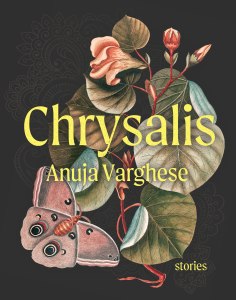 In the title story, Radhika visits her mother’s grave and wonders whether her life is here in Montreal with her lover or back in Toronto with her husband. Fangs and wings symbolize her desire for independence. Elsewhere, watery metaphors alternately evoke fear of drowning or sexual fluidity. “Midnight at the Oasis” charts the transformation of a trans woman and “Cherry Blossom Fever,” one of my two favourites, bounces between several POVs. Marjan is in love with Talia, but she’s married to Sunil, who’s also in love with Silas. “People do it — open their relationships and negotiate rules and write themselves into polyamorous fairy tales … Other people. Not brown people,” Talia sighs. They are better off, at least, than they would be back in India, where homophobia can be deadly (“The Vetala’s Song”).
My other favourite was “Bhupati,” about a man who sets up multiple Lakshmi figures in the backyard, hoping devotion will earn him and his wife a better future. The statues keep being burned up by lightning; we learn his wife may be petitioning for different things. “Chitra” is a straightforward Cinderella retelling whose title character lives with two mean stepsisters and works in food service at the mall. A Shoe Chateau BOGO closing sale gives her the chance to get a bargain – and catch the manager’s eye. Despite a striking ending signalled by the story’s subtitle, all I could conclude about this one was “cute.” The three flash horror stories (a murder hotel, ghosts in a basement, werewolves) were much the weakest for me.
There’s a pretty even split of third- and first-person stories (nine versus six) here, and the genre shifts frequently. The quality wasn’t as consistent as I’d hoped, but it was an engaging read. The overall blend of feminism and horror had me thinking of Her Body and Other Parties by Carmen Maria Machado, but I’d be most likely to recommend this to fans of Julia Armfield, Violet Kupersmith and Vauhini Vara. (Read via Edelweiss; published by House of Anansi Press)
Both of these are worthwhile books and it’s great that readers outside of Canada can discover them. I wouldn’t personally shortlist either, but the judges may well be dazzled enough to do so. I don’t yet have a sense of where they’d fit for me in the rankings.
Up next:
Cocktail by Lisa Alward (short story collection from Edelweiss)
A Council of Dolls by Mona Susan Power (buddy read with Laura)
Land of Milk and Honey by C Pam Zhang (from library)

I’m aiming for one or two more batches of reviews before the shortlist is announced on 9 April.
Literary Wives Club: His Only Wife by Peace Adzo Medie
(My fourth read with the Literary Wives online book club; see also Kay’s review and Naomi’s review.)
{SPOILERS IN THIS ONE}
Peace Adzo Medie’s 2020 debut novel was the first disappointment I’ve had from Reese Witherspoon’s book club. The Kirkus review excerpt inside the paperback’s front cover should have given me an idea of what to expect: “A Cinderella story set in Ghana … A Crazy Rich Asians for West Africa.” While both slightly reductive, those comparisons do give some sense of the book’s tone and superficiality.
Afi Tekple is a seamstress whose family arranges for her to marry Elikem Ganyo, a rich international businessman who has properties all over Ghana. In a neat bit of symmetry, I read a novel earlier this year that opened with a traditional Ghanaian divorce ceremony where the husband was in absentia (What Napoleon Could Not Do); this opens with a traditional wedding ceremony where, again, the groom isn’t there. The giving of schnapps as part of a dowry is a customary element of both.
The first half of the novel was agonizingly slow. Afi and her mother do little but sit in an opulent Accra flat, waiting for Eli to grace them with his presence. When he does appear, what luck! (eye roll) he and Afi have a magical sexual connection, described in romance novel language. But he’s only there part time, dividing his attentions between households. Afi enrols in fashion school, cooks and keeps house for Eli, and falls pregnant with his son, Selorm. (In another instance of poor pacing, we then jump to a year after the birth.) It should be a perfect life, yet she’s not happy because there is a rival for her husband’s affections.

You see, Eli’s family chose Afi in the hope that she’d get him to give up the Liberian woman who gave birth to his sickly daughter. They despise Muna for her independent spirit and transgressive behaviour. Although Afi knew about Muna, she doesn’t realize the extent to which she was the Ganyos’ pawn until late on. Meanwhile, Afi has gone from a timid country girl to a confident, high-class boutique owner accustomed to modern conveniences. She won’t ignore her longing to move into Eli’s house and get their marriage legally recognized. She issues an ultimatum: either she’s the only, official wife or she’s out of there.
I kept expecting a showdown between Afi and Muna; then, the further I got, the more I feared Muna wouldn’t appear at all. She does have a scene, 20 pages from the end, and instantly takes on more contours than the evil stereotype the Ganyos have spread, yet it doesn’t change Afi’s jealousy and determination to live independently. I hoped for more of a message of understanding and sisterhood. Initially, the arranged marriage plot reminded me of a particular Chimamanda Ngozi Adichie short story, but Afi’s narration was only so-so and there were more grammar and vocabulary errors than I’m used to encountering in conventionally published work. This might appeal to readers of Ayobami Adebayo’s Stay with Me. (Public library) 
The main question we ask about the books we read for Literary Wives is:
What does this book say about wives or about the experience of being a wife?
My main takeaway from His Only Wife is that a marriage doesn’t work if there’s someone interfering – and that refers to Afi’s mother-in-law probably more so than it does to Muna.
Eli just wants to have his cake and eat it. He thinks he should be free to accumulate as many cars and houses and women as he wants. He never intended to leave that woman and you all knew it … I want him to be mine only. Is that too much to ask? I’m sorry that I’m not like other wives who are able to happily share their husbands with co-wives and mistresses and girlfriends. That’s just not me. I’m not built like that.
I was a little uncomfortable that Medie presents legal marriage and monogamy as the only viable option, with Afi coming to disparage the village ceremony she had and wanting the fairy tale proposal in Paris and church wedding instead. Polygamy has a long tradition in countries including Ghana and Nigeria; it might have been interesting for Medie to explore contrasting attitudes toward it. Instead, this feels like pandering to Western tastes.
Next book: The Harpy by Megan Hunter in June
20 Books of Summer #11, Review Catch-up, and Wainwright Children’s Picks
Comparing my January–April reading totals with my May–July average, I see that my reading is down 57% over the last few months (at least in terms of number of books finished), and I can only blame the stress and time-consuming processes of moving house and DIY. I feel like I’ve slowed to a crawl through my various challenges, including my 20 Books.
With increasingly apocalyptic news filling my feeds, I find that I simultaneously a) want to retreat into books all the more and b) wonder what the point of all this compulsive reading is. For now, I’m taking as back-up Gretchen Rubin’s motto shared on National Book Lovers Day (“Reading is my tree house and my cubicle, my treadmill and my snow day” – what a perfect summary! It’s playtime, escape, mental exercise, indulgence but also, in some cases, work) and the premise of San Diego philosopher Nick Riggle’s upcoming This Beauty, which I’m reading for an early review: the purpose of life is to participate in and replicate beauty.
20 Books of Summer, #11
From the hedgerows: A collection of short stories on the wildlife, places and people of Newbury District by Lew Lewis (2008)
 The love and appreciation of natural beauty starts at home, and we are lucky here in West Berkshire to have a very good newspaper that still hosts a nature column (currently by beloved local author Nicola Chester). This collection of Newbury Weekly News articles spans 1979 to 1996, with the majority of the pieces from 1990–5. They were contributed by 17 authors, but most are by Lew Lewis (including under a pseudonym).
If you regularly read the Guardian Country Diary feature, you’ll find the format familiar. The general idea is to pick a natural phenomenon that’s seasonal or timely in some way, and write a short essay on it that incorporates context, personal observation, a political conscience and sometimes whimsical or nostalgic musing. Many pieces are about bird sightings; a few are about plants and insects; others celebrate the unique landscapes we have here, like heath and chalk downland. Some are quaint, like an introduction to “ticking” (birders’ list-keeping).
It was faintly depressing to see that we’ve been noting these habitat and species losses and their causes (generally, intensified agriculture) for over 30 years, and haven’t done enough to reverse them. But there are some good news stories, too, like “Return of the Red Kite,” one of our flagship species. This is basically self-published and could have done with some extra proofreading, but the black-and-white illustrations, most by Richard Allen, are charming. I was so pleased to find this on my library reshelving trolley one day. It’s an important artefact of a nature-lover’s heritage. There should be a follow-up volume or two! (Public library) 
Review Book Catch-up
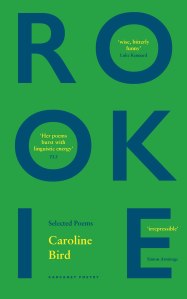 Rookie: Selected Poems by Caroline Bird (2022)
I discovered Caroline Bird early last year through In These Days of Prohibition and her latest collection, The Air Year, was one of my favourite reads of 2021. Part of the joy of working my way through this chronological volume was finding the traces of Bird’s later surrealism. Her first collection, Looking through Letterboxes, was written when she was just 14 and published when she was 16, but you’d never guess that from reading these poems of family, fairy tales and unspecified longing. I particularly liked the first stanza of “Passing the Time”:
Thirty paperclip statues on every table in the house
and things are slightly boring without you.
I’ve knitted a multi-coloured jacket for every woodlouse
in the park. But what can you do?
Trouble Came to the Turnip has some cheeky and randy fare, with the title poem offering a beleaguered couple various dubious means of escape. Watering Can pits monogamy and marriage against divorce and the death of love, via some twisted myths and fairy tales (e.g., Narcissus and Red Riding Hood). “Last Tuesday” is a stand-out. The Hat-Stand Union has more of what I most associate with Bird’s verse: dreams and the surreal. “How the Wild Horse Stopped Me” was a favourite. Mostly, I’m glad I own this so I can have access to the material from her two latest collections, but it was also fun to encounter her earlier style. In an afterword, she writes: “I chose poetry because it let me hide and, once hidden, I could be brave, roll my heart in sequins and chuck it out, glittering, into the street.”
With thanks to Carcanet Press for the free copy for review.
Getting through It: My Year of Cancer during Covid by Helen Epstein (2022)
 Given my love of medical memoirs and my recent obsession with Covid chronicles, this was always going to appeal to me. Epstein, an arts journalist and nonfiction author born in Prague and based in Massachusetts, was diagnosed with endometrial cancer in June 2020. She documents the next year or so in a matter-of-fact diary format, never shying away from the details of symptoms, medical procedures and side effects. Her husband Patrick’s e-mail updates sent out to friends and family, and occasional medical reports, fill in the parts she was less clear on due to fatigue and brain fog – including two small strokes she suffered. Surgery was followed by chemo and then the fraught decision of whether to decline brachytherapy (internal radiation). And, of course, all this was happening at a time when people were less able to see loved ones and rely on their regular diversions. The apt cover conjures up the outdoor chaise longue where Epstein would hold court and receive visitors.
In my mind, cancer patients fall into two camps: those who want to read everything they can about their illness so they know what to expect, and those who avoid thinking about it at all costs. For those in the former group, a no-nonsense book like this will be invaluable. I particularly appreciated Epstein’s attention to her husband’s experience, which she had to dig a little deeper to understand, and her realization that having female cancer brought back memories of childhood sexual molestation. She is also candid about how other people’s emotional demands (e.g., recounting a family member’s illness, or expecting effusive gratitude for small thoughtful acts) weighed on her. A forthright Everywoman’s narrative.
With thanks to the author for the free e-copy for review. Full disclosure: We are acquaintances through a Facebook group for book reviewers.
Wainwright Children’s Prize shortlist
I’ve now read 4 of 7 books on the Wainwright Prize’s Children’s Nature and Conservation Writing shortlist. I’m unlikely to have a chance to read the other three before the winner is announced unless my library system acquires them quickly. Any of the ones I’ve read would make a deserving winner, but the two I review below really grabbed me by the heartstrings and I would be particularly delighted to see one or the other take this inaugural award.
One World: 24 Hours on Planet Earth by Nicola Davies, illus. Jenni Desmond (2022)
 It’s one minute to midnight in London. Two Brown sisters are awake and looking at the moon. A journey of the imagination takes them through the time zones to see the natural spectacles the world has to offer: polar bears hunting at the Arctic Circle, baby turtles scrambling for the sea on an Indian beach, humpback whales breaching in Hawaii, and much more. Each spread has no more than two short paragraphs of text to introduce the landscape and fauna and explain the threats each ecosystem faces due to human influence. As the girls return to London and the clock chimes to welcome in 22 April, Earth Day, the author invites us to feel kinship with the creatures pictured: “They’re part of us, and every breath we take. Our world is fragile and threatened – but still lovely. And now it’s the start of a new day: a day when I’ll speak about these wonders, shout them out”.

A lot of research went into ensuring accuracy, and the environmentalist message is clear but not overstated. Fantastic! (Public library) 
Julia and the Shark by Kiran Millwood Hargrave, illus. Tom de Freston (2021)
 I could never have predicted when I read The Way Past Winter that Hargrave would become one of my favourite contemporary writers. Julia and her parents (and not forgetting the cat, Noodle) are off on an island adventure to Unst, in the north of Shetland, where her father will keep the lighthouse for a summer and her mother, a marine biologist, will search for the Greenland shark, a notably long-lived species she’s researching in hopes of discovering clues to human longevity – a cause close to her heart after her own mother’s death with dementia. Julia makes friends with Kin, a South Asian boy whose family run the island laundromat-cum-library. They watch stars and try to evade local bullies together. But one thing Julia can’t escape is her mother’s mental health struggle (late on named as bipolar: “Mum sometimes bounced around like Tigger, and other times she was mopey like Eeyore”). Julia thinks that if she can find the shark, it might fix her mother.
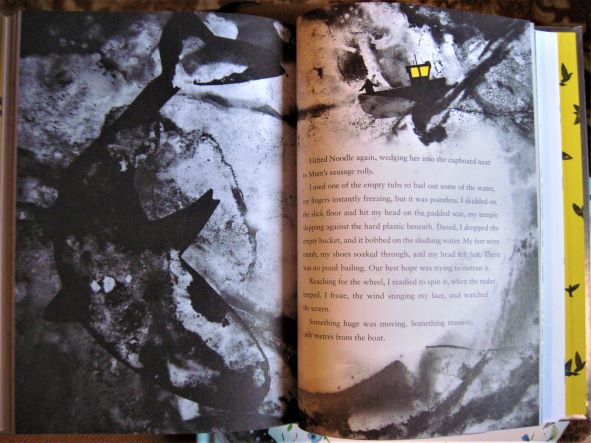
Hargrave treats the shark as both a real creature and a metaphor for all that lurks – all that we fear and don’t understand. It and murmurations of starlings are visual motifs throughout the book, which has a yellow and black colour scheme. Like One World, it’s as beautifully illustrated as it is profound in its messages. Julia is no annoyingly precocious child narrator, just a believable one who shows us her struggling family and the love and magic that get them through. I could see this becoming a modern children’s classic. (Public library)
Recommended April Releases by Amy Bloom, Sarah Manguso & Sara Rauch
Just two weeks until moving day – we’ve got a long weekend ahead of us of sanding, painting, packing and gardening. As busy as I am with house stuff, I’m endeavouring to keep up with the new releases publishers have been so good as to send me. Today I review three short works: the story of accompanying a beloved husband to Switzerland for an assisted suicide, a coolly perceptive novella of American girlhood, and a vivid memoir of two momentous relationships. (April was a big month for new books: I have another 6–8 on the go that I’ll be catching up on in the future.) All:
In Love: A Memoir of Love and Loss by Amy Bloom
“We’re not here for a long time, we’re here for a good time.”
(Ameche family saying)
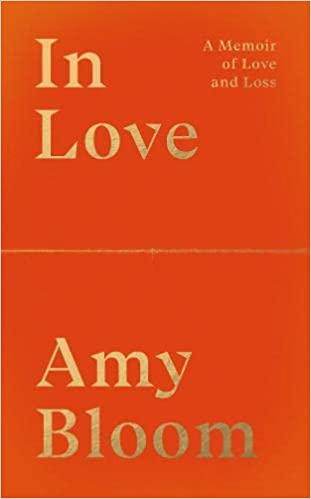
Given the psychological astuteness of her fiction, it’s no surprise that Bloom is a practicing psychotherapist. She treats her own life with the same compassionate understanding, and even though the main events covered in this brilliantly understated memoir only occurred two and a bit years ago, she has remarkable perspective and avoids self-pity and mawkishness. Her husband, Brian Ameche, was diagnosed with early-onset Alzheimer’s in his mid-60s, having exhibited mild cognitive impairment for several years. Brian quickly resolved to make a dignified exit while he still, mostly, had his faculties. But he needed Bloom’s help.
“I worry, sometimes, that a better wife, certainly a different wife, would have said no, would have insisted on keeping her husband in this world until his body gave out. It seems to me that I’m doing the right thing, in supporting Brian in his decision, but it would feel better and easier if he could make all the arrangements himself and I could just be a dutiful duckling, following in his wake. Of course, if he could make all the arrangements himself, he wouldn’t have Alzheimer’s”
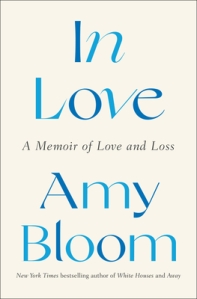
U.S. cover
She achieves the perfect tone, mixing black humour with teeth-gritted practicality. Research into acquiring sodium pentobarbital via doctor friends soon hit a dead end and they settled instead on flying to Switzerland for an assisted suicide through Dignitas – a proven but bureaucracy-ridden and expensive method. The first quarter of the book is a day-by-day diary of their January 2020 trip to Zurich as they perform the farce of a couple on vacation. A long central section surveys their relationship – a second chance for both of them in midlife – and how Brian, a strapping Yale sportsman and accomplished architect, gradually descended into confusion and dependence. The assisted suicide itself, and the aftermath as she returns to the USA and organizes a memorial service, fill a matter-of-fact 20 pages towards the close.
Hard as parts of this are to read, there are so many lovely moments of kindness (the letter her psychotherapist writes about Brian’s condition to clinch their place at Dignitas!) and laughter, despite it all (Brian’s endless fishing stories!). While Bloom doesn’t spare herself here, diligently documenting times when she was impatient and petty, she doesn’t come across as impossibly brave or stoic. She was just doing what she felt she had to, to show her love for Brian, and weeping all the way. An essential, compelling read.
With thanks to Granta for the free copy for review.
Very Cold People by Sarah Manguso
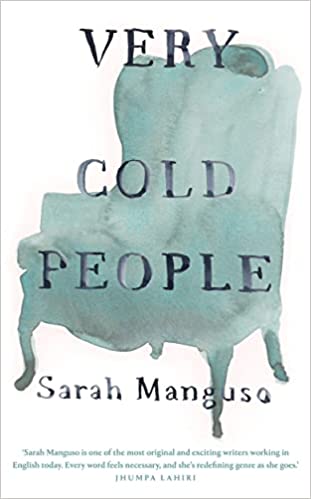
I’ve read Manguso’s four nonfiction works and especially love her Wellcome Book Prize-shortlisted medical memoir The Two Kinds of Decay. The aphoristic style she developed in her two previous books continues here as discrete paragraphs and brief vignettes build to a gloomy portrait of Ruthie’s archetypical affection-starved childhood in the fictional Massachusetts town of Waitsfield in the 1980s and 90s. She’s an only child whose parents no doubt were doing their best after emotionally stunted upbringings but never managed to make her feel unconditionally loved. Praise is always qualified and stingily administered. Ruthie feels like a burden and escapes into her imaginings of how local Brahmins – Cabots and Emersons and Lowells – lived. Her family is cash-poor compared to their neighbours and loves nothing more than a trip to the dump: “My parents weren’t after shiny things or even beautiful things; they simply liked getting things that stupid people threw away.”
The depiction of Ruthie’s narcissistic mother is especially acute. She has to make everything about her; any minor success of her daughter’s is a blow to her own ego. I marked out an excruciating passage that made me feel so sorry for this character. A European friend of the family visits and Ruthie’s mother serves corn muffins that he seems to appreciate.
My mother brought up her triumph for years. … She’d believed his praise was genuine. She hadn’t noticed that he’d pegged her as a person who would snatch up any compliment into the maw of her unloved, throbbing little heart.
U.S. cover
At school, as in her home life, Ruthie dissociates herself from every potentially traumatic situation. “My life felt unreal and I felt half-invested. I felt indistinct, like someone else’s dream.” Her friend circle is an abbreviated A–Z of girlhood: Amber, Bee, Charlie and Colleen. “Odd” men – meaning sexual predators – seem to be everywhere and these adolescent girls are horribly vulnerable. Molestation is such an open secret in the world of the novel that Ruthie assumes this is why her mother is the way she is.
While the #MeToo theme didn’t resonate with me personally, so much else did. Chemistry class, sleepovers, getting one’s first period, falling off a bike: this is the stuff of girlhood – if not universally, then certainly for the (largely pre-tech) American 1990s as I experienced them. I found myself inhabiting memories I hadn’t revisited for years, and a thought came that had perhaps never occurred to me before: for our time and area, my family was poor, too. I’m grateful for my ignorance: what scarred Ruthie passed me by; I was a purely happy child. But I think my sister, born seven years earlier, suffered more, in ways that she’d recognize here. This has something of the flavour of Eileen and My Name Is Lucy Barton and reads like autofiction even though it’s not presented as such. The style and contents may well be divisive. I’ll be curious to hear if other readers see themselves in its sketches of childhood.
With thanks to Picador for the proof copy for review.
XO by Sara Rauch
Sara Rauch won the Electric Book Award for her short story collection What Shines from It. This compact autobiographical parcel focuses on a point in her early thirties when she lived with a long-time female partner, “Piper”, and had an intense affair with “Liam”, a fellow writer she met at a residency.
“no one sets out in search of buried treasure when they’re content with life as it is”
“Longing isn’t cheating (of this I was certain), even when it brushes its whiskers against your cheek.”
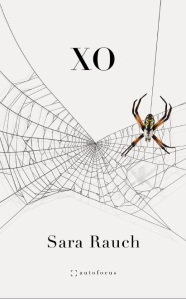 Adultery is among the most ancient human stories we have, a fact Rauch acknowledges by braiding through the narrative her musings on religion and storytelling by way of her Catholic upbringing and interest in myths and fairy tales. She’s looking for the patterns of her own experience and how endings make way for new life. The title has multiple meanings: embraces, crossroads and coming full circle. Like a spider’s web, her narrative pulls in many threads to make an ordered whole. All through, bisexuality is a baseline, not something that needs to be interrogated.
This reminded me of a number of books I’ve read about short-lived affairs – Tides, The Instant – and about renegotiating relationships in a queer life – The Fixed Stars, In the Dream House – but felt most like reading a May Sarton journal for how intimately it recreates daily routines of writing, cooking, caring for cats, and weighing up past, present and future. Lovely stuff.
With thanks to publicist Lori Hettler and Autofocus Books for the e-copy for review.
Will you seek out one or more of these books?
What other April releases can you recommend?
Three on a Theme for Valentine’s Day: “Love” Books by Natalie Diaz, Maile Meloy and Jane Smiley
This post is an annual tradition for me, somehow.* Love, whether erotic, romantic or familial, turns up in the titles of these three works by women writers: poems, short stories and a novella.
Postcolonial Love Poem by Natalie Diaz (2020)
Diaz, raised on a Mojave reservation in California, won a Pulitzer Prize for this honey-thick exploration of queer Native American identity. There are lustful moments aplenty here—
My lover comes to me like darkfall—long,
and through my open window. Mullion, transom. […]
I keep time on the hematite clocks of her shoulders.
(from “Like Church”)
 —but the mineral-heavy imagery (“the agate cups of your palms …the bronzed lamp of my breast”) is so weirdly archaic and the vocabulary so technical that I kept thinking of the Song of Solomon. Not that there’s anything wrong with that; it’s just not the model I expected to find.
So I ended up preferring the forthright political poems about contemporary Native American life. Police shootings, pipeline protests: it’s a fact that her people are disproportionately persecuted (see “American Arithmetic”). Her brother’s drug abuse and mental illness also form a repeating subject (e.g., “It Was the Animals”).
The collection is as much of a love poem to land as it is to a woman, with water bodies described as affectionately as female bodies. “The Colorado River is the most endangered river in the United States—also, it is a part of my body” is the opening line of “The First Water Is the Body”; see also “exhibits from the American Water Museum.”
My favourite single poem, “If I Should Come Upon Your House Lonely in the West Texas Desert,” is sexy but also, charmingly, features echoes of “Goldilocks and the Three Bears”:
I will swing my lasso of headlights
across your front porch,
let it drop like a rope of knotted light
at your feet.
While I put the car in park,
you will tie and tighten the loop
of light around your waist—
and I will be there with the other end
wrapped three times
around my hips horned with loneliness.
[…]
I will lie down in you.
Eat my meals at the red table of your heart.
Each steaming bowl will be, Just right.
I will eat it all up,
break all your chairs to pieces.
(New purchase, Awesomebooks.com) 
Half in Love by Maile Meloy (2002)
Meloy’s was a new name for me when I picked this up as part of a bargain secondhand book haul last year, but she’s actually published 10 books and is esteemed in literary circles; Ann Patchett even dedicated her latest release, These Precious Days, to her.
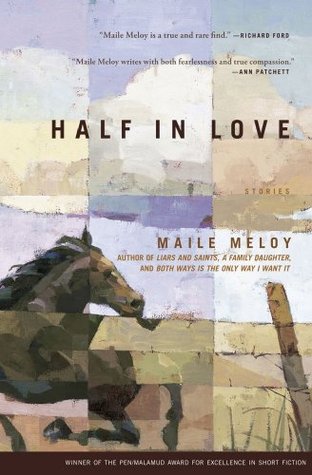 Meloy is from Montana and most of the 14 stories in this, her debut collection, are set in the contemporary American West among those who make their living from the outdoors, diving to work on hydroelectric dams or keeping cattle and horses. However, one of the more memorable stories, “Aqua Boulevard,” is set in Paris, where a geriatric father can’t tamp down his worries for his offspring.
The few historical stories have a melancholy air, with protagonists whose star has faded. There’s the brief, touching portrait of an outmoded career in “The Ice Harvester” and the secondhand reminiscences of being in late-colonial diplomatic service in the Middle East in “Last of the White Slaves”; “Red” is about an American soldier stationed in London during the Second World War.
Crime and its consequences recur. I loved the opening story, “Tome,” about a lawyer whose client wants her to keep in touch after he goes to jail. Teenage girls are the title characters in a couple of stories; “Ranch Girl” is in the second person. “Kite Whistler Aquamarine” is a heartbreaker about a filly born premature one winter. “Paint” was the standout for me: it’s pretty terrifying what a wife’s temporary attitude of neglect leads to when her luckless husband undertakes some DIY.
As is usual with a collection, a few of the stories left little impression on me. But there’s sufficient range and depth here to induce me to seek out more of Meloy’s work. I can recommend this to readers of Claire Boyles, David Guterson, Lily King, Jane Smiley (see below!) and David Vann. (Secondhand purchase, 2nd & Charles) 
Favourite passages:
“Be interesting in your twenties,” Suzy says. “Otherwise you’ll want to do it in your thirties or forties, when it wreaks all kinds of havoc, and you’ve got a husband and kids.”
Eugénie invited my husband to Greece every summer because she wanted him to publish her memoir. She had lived a remarkable life but didn’t have a remarkable book, and it dragged through slow ghostwritten revisions. Every year, at work in the hot city, I thought of blue water and white bougainvillea and forgot how exhausting it was to be her guest, to stay in favor and say the right things. So each summer we would arrive, look at the new draft, give careful suggestions that would not be taken, and find ourselves on the terrace waiting for her to trip mercifully off to bed.
Ordinary Love by Jane Smiley (1990)
 This is one of Smiley’s earlier works and feels a little generic, like she hadn’t yet developed a signature voice or themes. One summer, a 52-year-old mother of five prepares for her adult son Michael’s return from India after two years of teaching. His twin brother, Joe, will pick him up from the airport later on. Through conversations over dinner and a picnic in the park, the rest of the family try to work out how Michael has changed during his time away. “I try to accept the mystery of my children, of the inexplicable ways they diverge from parental expectations, of how, however much you know or remember of them, they don’t quite add up.” The narrator recalls her marriage-ending affair and how she coped afterwards. Michael drops a bombshell towards the end of the 91-page novella. Readable yet instantly forgettable, alas. I bought it as part of a dual volume with Good Will, which I don’t expect I’ll read. (Secondhand purchase, Bookbarn International)
If you read just one … It’s got to be Postcolonial Love Poem, the most Eros-appropriate of the three by far.
*I’m really not a Valentine’s Day person, yet this is the sixth year in a row that I’ve put together a themed post featuring books that have “Love” or a similar word in the title in the run-up to mid-February (2017, 2018, 2019, 2020, and 2021).
Read any books about love lately?
Short Classics Week of #NovNov: Who Was Changed and Who Was Dead
Can you believe it’s the last week of Novellas in November?! I’m hosting our final theme, short classics, and my first review is of a strange, mesmerizing 1950s novella.
We hope some of you will join in with our last buddy read, Ethan Frome by Edith Wharton (free to download here from Project Gutenberg if you don’t already have access). I’m looking forward to rereading it – in one sitting, if I can manage it – on Tuesday afternoon or Wednesday morning and will review it on Thursday. This list of 10 favourite classic novellas I put together last year might give you some more ideas of what to read this week.
Who Was Changed and Who Was Dead by Barbara Comyns (1954)
[146 pages]
 I’d heard about this via its recent Daunt Books reissue and was attracted to the plague theme. The spark for the story was a real-life event in France in 1951, but Comyns takes imaginative liberties. In 1911, a Warwickshire village is overtaken by calamity: first a flood and then a mysterious sickness. The first line – “The ducks swam through the drawing-room window” – sets up a jolly, fable-like atmosphere as the Willoweed family go rowing through their garden. And yet there’s death all over the place. The multitude of drowned animals soon cedes to a roll call of human casualties. Some deaths are self-inflicted and others result from rapid illness, but all are gruesome. The general pattern of the sickness seems to be stomach pains, fits, bleeding and death, all within a few days. At first, we don’t know if what we’re looking at is a medical phenomenon or a case of mass hysteria. Either is rich fodder for fiction.
Ebin Willoweed writes it all up for the newspapers, leaving his motherless daughters to do the hard work of cleaning up from the flood damage and looking after their little brother. Meanwhile, Ebin’s brutal, selfish mother presides over the household like some ogre in a fairy tale. The title (which comes from Longfellow) makes it clear that even those who survive this epidemic will not escape totally unscathed.
Comyns is entirely unsentimental in this, her third novel; those characters who are not horrible are typically passive, and the humour is very black indeed. It’s illuminating to observe how each figure responds to tragedy and what their priorities are. In general, though, it’s not a rosy picture of human nature. While I was initially reminded of H.E. Bates’s The Darling Buds of May and Stella Gibbons’s Cold Comfort Farm, this feels darker. There is some casual racism and the morbidness probably won’t be for everyone, but I remained gripped, wondering how on earth this would conclude. I liked it enough to try more by Comyns – my library has a copy of the brilliantly titled Our Spoons Came from Woolworths, but I’m also open to other suggestions. (Secondhand purchase)
Keep in touch via Twitter (@bookishbeck / @cathy746books) and Instagram (@bookishbeck / @cathy_746books). We’ll add any of your review links in to our master posts. Feel free to use the terrific feature image Cathy made and don’t forget the hashtag #NovNov.
 Bookish Beck = Rebecca Foster. American transplant to England. Freelance proofreader and book reviewer.
 Bookish Beck