Snow, Dog, Foot by Claudio Morandini: A Peirene Press Novella
Who could resist the title of this Italian bestseller? A black comedy about a hermit in the Italian Alps, it starts off like Robert Seethaler’s A Whole Life and becomes increasingly reminiscent of Olga Tokarczuk’s Drive Your Plow Over the Bones of the Dead with its remote setting, hunting theme, and focus on an older character of dubious mental health.
Adelmo Farandola hasn’t washed in years. Why bother since he only sees fellow humans every six months when he descends to the valley to stock up on food and wine? When he arrives at the general store at the start of autumn, though, he gets a surprise. The shopkeeper laughs at him, saying he nearly cleared her out the week before. Yet he doesn’t remember having been there since April. Sure enough, when he gets back to the cabin he sees that his stable is full of supplies. He also finds an old dog that won’t go away and soon starts talking to him.

Estranged from his brother, who co-owns the property, and still haunted by the trauma of the war years, when he had to hide in a mine shaft, Adelmo is used to solitude and starvation rations. But now, with the dog around, there’s an extra mouth to feed. Normally Adelmo might shoot an occasional chamois for food, but a pesky mountain ranger keeps coming by and asking if Adelmo has a shotgun – and whether he has a license for it.
When winter sets in and heavy snowfall and then an avalanche trap Adelmo and the dog in the cabin, they are driven to the limits of their resilience and imagination. The long-awaited thaw reveals something disturbing: a blackened human foot poking out of a snowdrift. Each day Adelmo forgets about the corpse and the dog has to remind him that the foot has been visible for a week now, so they really should alert someone down in the village…
The hints of Adelmo’s dementia and mental illness accumulate gradually, making him a highly unreliable point-of-view character. This is a taut story that alternates between moments of humor and horror. I was so gripped I read it in one evening sitting, and would call it one of the top two Peirene books I’ve read (along with The Looking-Glass Sisters by Gøhril Gabrielsen).
My rating: 
Snow, Dog, Foot will be published in the UK on the 15th. It was translated from the Italian by J. Ockenden, who won the 2019 Peirene Stevns Translation Prize for the work in progress. With thanks to Peirene Press for the free copy for review.
Peirene Press issues its novellas in thematic trios. This is the first in 2020’s “Closed Universe” series, which will also include Ankomst by Gøhril Gabrielsen, about a Norwegian climatologist who has left her family to study seabird parenting and meet up with a lover; and The Pear Field by Nana Ekvtimishvili, set at a Georgian orphanage. (I’m especially keen on the former.)
Novellas in November, Part 1: 3 Nonfiction, 2 Super-Short Fiction
Short books; short reviews.
Nonfiction:
The Measure of My Days by Florida Scott-Maxwell (1968)
[150 pages]
 I learned about this from one of May Sarton’s journals, which shares its concern with ageing and selfhood. The author was an American suffragist, playwright, mother and analytical psychologist who trained under Jung and lived in England and Scotland with her Scottish husband. She kept this notebook while she was 82, partly while recovering from gallbladder surgery. It’s written in short, sometimes aphoristic paragraphs. While I appreciated her thoughts on suffering, developing “hardihood,” the simplicity that comes with giving up many cares and activities, and the impossibility of solving “one’s own incorrigibility,” I found this somewhat rambly and abstract, especially when she goes off on a dated tangent about the equality of the sexes. (Free from The Book Thing of Baltimore)
Hope in the Dark: Untold Histories, Wild Possibilities by Rebecca Solnit (2004)
[143 pages]
 “Activism is not a journey to the corner store, it is a plunge into the unknown. The future is always dark.” This resonated with the Extinction Rebellion handbook I reviewed earlier in the year. Solnit believes in the power of purposeful individuals working towards social justice, even in the face of dispiriting evidence (the largest protests the world had seen didn’t stop the Iraq War). Instead of perfectionism, she advises flexibility and resilience; things could be even worse had we not acted. At first I thought it depressing that 15 years on we’re still dealing with many of the issues she mentions here, and the environmental crisis has only deepened. But her strong and stirring writing is a reminder that, though injustice is always with us, so is everyday heroism. (Free from The Book Thing of Baltimore)
Lama by Derek Tangye (1966)
[160 pages]
 Tangye wrote a series of cozy animal books similar to Doreen Tovey’s. He and his wife Jean ran a flower farm in Cornwall and had a succession of cats, along with donkeys and a Muscovy duck named Boris. After the death of their beloved cat Monty, Jean wanted a kitten for Christmas but Tangye, who considered himself a one-cat man rather than a wholesale cat lover, hesitated. The matter was decided for them when a little black stray started coming round and soon made herself at home. (Her name is a tribute to the Dalai Lama’s safe flight from Tibet.) Mild adventures ensue, such as Lama going down a badger sett and Jeannie convincing herself that she’s identified another stray as Lama’s mother. Pleasant, if slight; I’ll read more by Tangye. (From Kennet Centre free bookshop)
Fiction:
The Small Miracle by Paul Gallico (1951)
[47 pages]
 Like Tangye, Gallico is known for writing charming animal books, but fables rather than memoirs. Set in postwar Assisi, Italy, this stars Pepino, a 10-year-old orphan boy who runs errands with his donkey Violetta to earn his food and board. When Violetta falls ill, he dreads losing not just his livelihood but also his only friend in the world. But the powers that be won’t let him bring her into the local church so that he can pray to St. Francis for her healing. Pepino takes to heart the maxim an American corporal gave him – “don’t take no for an answer” – and takes his suit all the way to the pope. This story of what faith can achieve just manages to avoid being twee. (From Kennet Centre free bookshop)
Birthday Girl by Haruki Murakami (2002; English translation by Jay Rubin, 2003)
[42 pages]
 Reprinted as a stand-alone pamphlet to celebrate the author’s 70th birthday, this is about a waitress who on her 20th birthday is given the unwonted task of taking dinner up to the restaurant owner, who lives above the establishment. He is taken with the young woman and offers to grant her one wish. We never hear exactly what that wish was. It’s now more than 10 years later and she’s recalling the occasion for a friend, who asks her if the wish came true and whether she regrets what she requested. She surveys her current life and says that it remains to be seen whether her wish will be fulfilled; I could only assume that she wished for happiness, which is shifting and subjective. Encountering this in a larger collection would be fine, but it wasn’t particularly worth reading on its own. (Public library)
I’ve also had a number of novella DNFs so far this month, alas: Atlantic Winds by William Prendiville (not engaging in the least), By Grand Central Station I Sat Down and Wept by Elizabeth Smart (fascinating autobiographical backstory; pretentious prose) and The Dream Life of Balso Snell by Nathanael West (even more bizarre and crass than I’m used to from him).
Onwards!
Have you read any of these novellas? Which one takes your fancy?
This Year’s Summer-Themed Reading: Lippman, Lively, Nicholls & More
Sun, warmth and rival feelings of endlessness and evanescence: here were three reads that were perfect fits for the summer setting.
Sunburn by Laura Lippman (2018)
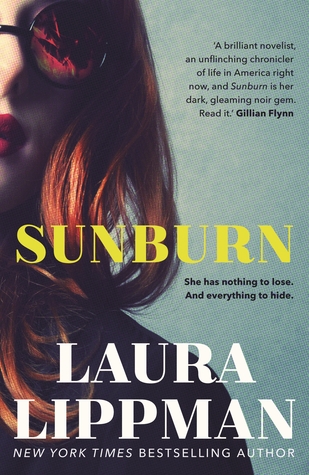 While on a beach vacation in 1995, a woman walks away from her husband and daughter and into a new life as an unattached waitress in Belleville, Delaware. Polly has been known by many names, and this isn’t the first time she’s left a family and started over. She’s the (literal) femme fatale of this film noir-inspired piece, as bound by her secrets as is Adam Bosk, the investigator sent to trail her. He takes a job as a chef at the diner where Polly works, and falls in love with her even though he may never fully trust her. Insurance scams and arson emerge as major themes.
I liked the fact that I recognized many of the Maryland/Delaware settings, and that the setup is a tip of the hat to Anne Tyler’s excellent Ladder of Years, which was published in the year this is set. It is a quick and enjoyable summer read that surprised me with its ending, but I generally don’t find mysteries a particularly worthwhile use of my reading time. Put it down to personal taste and/or literary snobbery.
Heat Wave by Penelope Lively (1996)
 My fourth Lively book, and the most enjoyable thus far. Pauline, a freelance copyeditor (“Putting commas into a novel about unicorns”) in her fifties, has escaped from London to spend a hot summer at World’s End, the Midlands holiday cottage complex she shares with her daughter Teresa, Teresa’s husband Maurice, and their baby son Luke. Maurice is writing a history of English tourism and regularly goes back to London for meetings or receives visits from his publishers, James and Carol. Pauline, divorced from a philandering husband, recognizes the signs of Maurice’s adultery long before Teresa does, and uneasily ponders how much to hint and how much to say outright.
The last line of the first chapter coyly promises an “agreeable summer of industry and companionship,” but the increasing atmospheric threats (drought or storms; combine harvesters coming ever nearer) match the tensions in the household. I expected this to be one of those subtle relationship studies where ultimately nothing happens. That’s not the case, though; if you’ve been paying good attention to the foreshadowing you’ll see that the ending has been on the cards.
I loved the city versus country setup of the novel, especially the almost Van Gogh-like descriptions of the blue sky and the golden wheat, and recognized myself in Pauline’s freelancer routines. Her friendships with bookseller Hugh and her client, novelist Chris Rogers, might be inconsequential to the plot but give Pauline a life wider than the confines of the cottage, and the frequent flashbacks to her marriage to Harry show what she had to overcome to earn a life of her own.
This was a compulsive read that was perfect for reading during the hottest week of our English summer. I’d recommend it to fans of Tessa Hadley, Susan Hill and Polly Sansom.
Sweet Sorrow by David Nicholls (2019)
 The title is a snippet from Romeo and Juliet, which provides the setup and subject matter for this novel about first love during the golden summer of 1997, when Charlie Lewis and Fran Fisher are 16. Charlie thinks he’s way too cool for the thespians, but if he wants to keep seeing Fran he has to join the Full Fathom Five Theatre Co-operative for the five weeks of rehearsals leading up to performances. Besides, he doesn’t have anything better to do – besides watching his dad get drunk on the couch and scamming the petrol station where he works nights. Charlie starts off as the most robotic Benvolio imaginable, but Fran helps bring him up to scratch with her private tutoring (which is literal as well as a euphemism).
Glimpses of the present day are an opportunity for nostalgia and regret, as Charlie/Nicholls coyly insists that first love means nothing: “love is boring. Love is familiar and commonplace for anyone not taking part, and first love is just a gangling, glandular incarnation of the same. … first love wasn’t real love anyway, just a fraught and feverish, juvenile imitation of it.” I enjoyed the teenage boy perspective and the theatre company shenanigans well enough, but was bored with the endless back story about Charlie’s family: his father’s record shops went bankrupt; his mother left him for another golf club colleague and took his sister; he and his depressed father are slobby roommates subsisting on takeaways and booze; blah blah blah.
It’s possible that had I read or seen R&J more recently, I would have spotted some clever parallels. Honestly? I’d cut 100+ pages (it should really be closer to 300 pages than 400) and repackage this as YA fiction. If you’re looking for lite summer fare reminiscent of Rachel Joyce and, yes, One Day, this will slip down easily, but I feel like I need to get better about curating my library stack and weeding out new releases that will be readable but forgettable. I really liked Us, which explains why I was willing to take another chance on Nicholls.
Note: There is a pretty bad anachronism here: a reference to watching The Matrix, which wasn’t released until 1999 (p. 113, “Cinnamon” chapter). Also a reference to Hobby Lobby, which as far as I know doesn’t exist in the UK (here it’s Hobbycraft) (p. 205, “Masks” chapter). I guess someone jumped the gun trying to get this ready for its U.S. release.
Favorite summery passage: “This summer’s a bastard, isn’t it? Sun comes out, sky’s blue if you’re lucky and suddenly there are all these preconceived ideas of what you should be doing, lying on a beach or jumping off a rope swing into the river or having a picnic with all your amazing mates, sitting on a blanket in a meadow and eating strawberries and laughing in that mad way, like in the adverts. It’s never like that, it’s just six weeks of feeling like you’re in the wrong place … and you’re missing out. That’s why summer’s so sad – because you’re meant to be so happy. Personally, I can’t wait to get my tights back on, turn the central heating up. At least in winter you’re allowed to be miserable” (Fran)
Plus a couple of skims:
The Sun Does Shine: How I Found Life and Freedom on Death Row by Anthony Ray Hinton with Lara Love Hardin (2018)
 I’d heard about Hinton’s case: he spent nearly 30 years on death row in Alabama for crimes he didn’t commit. In 1985 he was convicted of two counts of robbery and murder, even though he’d been working in a locked warehouse 15 miles away at the time the restaurant managers were shot. His mother’s gun served as the chief piece of evidence, even though it didn’t match the bullets found at the crime scenes. “My only crime was … being born black in Alabama,” Hinton concludes. He was a convenient fall guy, and his every appeal failed until Bryan Stevenson of the Equal Justice Initiative (and author of Just Mercy, which I’d like to read) took on his case.
It took another 16 years and an appeal to the U.S. Supreme Court, but Hinton was finally released and now speaks out whenever he can about justice for those on death row, guilty or innocent. Almost the most heartbreaking thing about the book is that his mother, who kept the faith for so many years, died in 2012 and didn’t get to see her son walk free. I love the role that literature played: Hinton started a prison book club in which the men read Go Tell It on the Mountain and To Kill a Mockingbird and discussed issues of race and injustice. Although he doesn’t say very much about his life post-prison, I did note how big of an adjustment 30 years’ worth of technology was for him.
I don’t set a lot of stock by ghostwritten or co-written books, and found the story much more interesting than the writing here (though Hardin does a fine job of recreating the way a black man from the South speaks), so I just skimmed the book for the basics. I was impressed by how Hinton avoided bitterness and, from the very beginning, chose to forgive those who falsely accused him and worked to keep him in prison. “I was afraid every single day on death row. And I also found a way to find joy every single day. I learned that fear and joy are both a choice.” The book ends with a sobering list of all those currently on death row in the United States: single-spaced, in three columns, it fills nine pages. Lord, have mercy.
The Last Supper: A Summer in Italy by Rachel Cusk (2009)
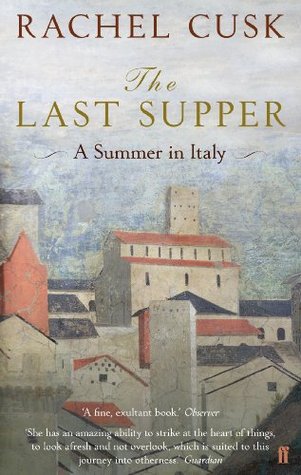 Having moved away from Bristol, Cusk and her family (a husband and two children) decided to spend a summer in Italy before deciding where to go next. They took the boat to France then drove, made a stop in Lucca, and settled into a rented house on the eastern edge of Tuscany. It proceeded to rain for 10 days. Cusk learns to speak the vernacular of football and Catholicism – but Italian eludes her: “I too feel humbled, feel childlike and impotent. It is hard to feel so primitive, so stupid.” They glory in the food, elemental and unpretentious; they try a whole spectrum of gelato flavors. And they experience as much culture as they can: “we will learn to fillet an Italian city of its artworks with the ruthless efficiency of an English aristocrat de-boning a Dover sole.” A number of these masterpieces are reproduced in the text in black and white. In the grip of a heatwave, they move on to Rome, Naples and Capri.
If I’d been able to get hold of this for my trip to Milan (it was on loan at the time), I might have enjoyed it enough to read the whole thing. As it is, I just had a quick skim through. Cusk can write evocatively when she wishes to (“We came here over the white Apuan mountains, leaving behind the rose-coloured light of the coast … up and up into regions of dazzling ferocity where we wound among deathly white peaks scarred with marble quarries, along glittering chasms where the road fell away into nothingness and we clung to our seats in terror”), but more often resorts to flat descriptions of where they went and what they did. I’m pretty sure Transit was a one-off and I’ll never warm to another Cusk book.
DNFs: Alas, One Summer: America, 1927 by Bill Bryson and The Go-Between by L. P. Hartley were total non-starters. Maybe some other day (make that year).
See also my 2017 and 2018 “summer” reads, all linked by the season appearing in the title.
Have you read any summer-appropriate books lately?
A Week in Italy and What I Read
We’re relieved to be back in the balmy UK after a sweltering week in northern Italy. Though our sixth-floor Airbnb apartment in Milan suited our needs perfectly, it was a challenge to keep it minimally comfortable. Eventually we worked out that it was essential to get up by 6:30 a.m. to close the balcony doors and shutter. The bedroom happened to be shaded, so I could set up my laptop in there and work until noon, when it was time to close out the heat of the day on that side. In the afternoons I read and napped on the divan, and then sometime between 6 and 10 p.m., depending on how sunny it had been during the day, we could fling the windows and doors wide open again. Fans helped, but we still passed some horribly muggy nights.


My husband was at his conference for four of the days, so we only braved the city centre itself on Monday morning, touring the Duomo and climbing the steps to the roof. This was well worth doing for views over the city. Afterwards we walked through the associated museum (mostly underground, and blissfully cool with air conditioning) and Galleria Vittorio Emanuele II, a luxurious nineteenth-century shopping arcade filled with designer fashions.


Two day trips by train got us out of the city and into slightly cooler temperatures: on Wednesday we explored Varenna and Bellagio on Lake Como, and on Saturday we took a bus and cable car from Lecco into the mountains at Piani d’Erna. We took full advantage of one-euro espressos and glasses of wine, and ate lots of pizza, pasta and gelato.

After much deliberation, this is the book stack I actually packed for our trip. I got through the first half of the Orwell, an excellent account of working as a dishwasher in Paris hotels and having to scrape together enough money to ward off starvation. I’ll be writing it up as my Classic of the Month in a couple of weeks. I also read Sunburn by Laura Lippman, which I’ll hold in reserve for a summer-themed post, and (on Kindle) So Many Rooms by Laura Scott, a debut poetry collection coming out in October that I’ll review here at a later date.
Two of my other Kindle reads ended up being perfect for the setting:
From Scratch: A Memoir of Love, Sicily, and Finding Home by Tembi Locke: This was the perfect book for me to read during the week in Italy. Not only is it set largely in Sicily, but it ticks a lot of boxes in terms of my reading interests: food, travel, bereavement, and the challenges of being an American overseas. During a semester abroad in Florence, Locke (an actress I was previously unfamiliar with) met and fell in love with Saro Gullo, an Italian chef. His parents could hardly accept him marrying someone from outside of Sicily, let alone a black woman from Texas, and refused to attend their wedding. But as the years passed they softened towards Locke, who gradually became accepted in Saro’s hometown of Aliminusa.
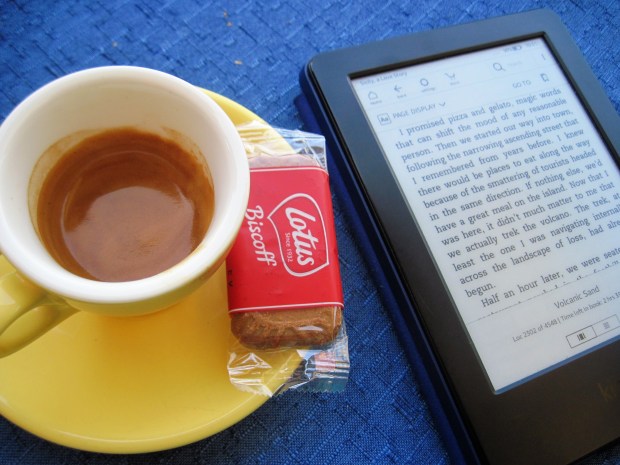
In fact, after Saro’s death from bone cancer in 2012, she became like a second daughter to Saro’s mother. The book focuses on the three summers in a row when she and her adopted daughter Zoela traveled to the family home in Sicily to stay with Nonna. I particularly appreciated the exploration of what it’s like to live between countries and cultures. This is one of three Reese Witherspoon book club books I’ve read so far (along with Where the Crawdads Sing and Daisy Jones and the Six), and all have been great – Reese’s recommendations are proving as reliable as Oprah’s.
 A mudslide blocked the route we should have taken back from Milan to Paris, so we rebooked onto trains via Switzerland. This plus the sub-Alpine setting for our next-to-last day made the perfect context for racing through Where the Hornbeam Grows: A Journey in Search of a Garden by Beth Lynch in just two days. Lynch moved from England to Switzerland when her husband took a job in Zurich. Suddenly she had to navigate daily life, including frosty locals and convoluted bureaucracy, in a second language. The sense of displacement was exacerbated by her lack of access to a garden. Gardening had always been a whole-family passion, and after her parents’ death their Sussex garden was lost to her. Two years later she and her husband moved to a cottage in western Switzerland and cultivated a garden idyll, but it wasn’t enough to neutralize their loneliness.
Much of what Lynch has to say about trying to find genuine connections as an expatriate rang true for me. Paradise Lost provides an unexpected frame of reference as Lynch asks what it means for a person or a plant to be transplanted somewhere new, and what it takes to thrive. Her elegant writing reminded me of Diana Athill’s and Penelope Lively’s, and the exploration of the self through gardens is reminiscent of Allan Jenkins’s Plot 29.
Other successful reads:
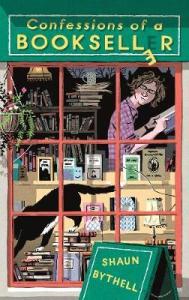 Confessions of a Bookseller by Shaun Bythell: This picks up right where The Diary of a Bookseller left off and carries through the whole of 2015. Again it’s built on the daily routines of buying and selling books, including customers’ and colleagues’ quirks, and of being out and about in a small town. I wished I was in Wigtown instead of Milan! Because of where I was reading the book, I got particular enjoyment out of the characterization of Emanuela (soon known as “Granny” for her poor eyesight and myriad aches and gripes), who comes over from Italy to volunteer in the bookshop for the summer. Bythell’s break-up with “Anna” is a recurring theme in this volume, I suspect because his editor/publisher insisted on an injection of emotional drama.
 City of Girls by Elizabeth Gilbert: There’s a fun, saucy feel to this novel set mostly in 1940s New York City. Twenty-year-old Vivian Morris comes to sew costumes for her Aunt Peg’s rundown theatre and falls in with a disreputable lot of actors and showgirls. When she does something bad enough to get her in the tabloids and jeopardize her future, she retreats in disgrace to her parents’ – but soon the war starts and she’s called back to help with Peg’s lunchtime propaganda shows at the Brooklyn Navy Yard. The quirky coming-of-age narrative reminded me a lot of classic John Irving, while the specifics of the setting made me think of Wise Children, All the Beautiful Girls and Manhattan Beach. The novel takes us to 2010, when Vivian is 90 and still brazenly independent. I was somewhat underwhelmed – while it’s a fairly touching story of how to absorb losses and make an unconventional family, I wondered if it had all meant much. I’ll be expanding this into a Shiny New Books review.
 Judgment Day by Sandra M. Gilbert: English majors will know Gilbert best for her landmark work of criticism, The Madwoman in the Attic (co-written with Susan Gubar). I had no idea that she writes poetry. This latest collection has a lot of interesting reflections on religion, food and art, as well as elegies to those she’s lost. Raised Catholic, Gilbert married a Jew, and the traditions of Judaism still hold meaning for her after husband’s death even though she’s effectively an atheist. “Pompeii and After,” a series of poems describing food scenes in paintings, from da Vinci to Hopper, is particularly memorable.
Not-so-successful reads:
 Vintage 1954 by Antoine Laurain: Dreadful! I would say: avoid this sappy time-travel novel at all costs. I thought the setup promised a gentle dose of fantasy, and liked the fact that the characters could meet their ancestors and Paris celebrities during their temporary stay in 1954. But the characters are one-dimensional stereotypes, and the plot is far-fetched and silly. I know many others have found this delightful, so consider me in the minority…
As well as a few DNFs…
What Dementia Teaches Us about Love by Nicci Gerard: I’ve read a lot of books about dementia, both clinical and anecdotal, and this doesn’t add anything new. (11%)
The Great Railway Bazaar by Paul Theroux: I read the first 32 pages, up to when Theroux arrives in northern Italy. He mostly describes his fellow passengers, as well as the details of meals and sleeping arrangements on trains. The writing struck me as old-fashioned, and I couldn’t imagine getting through another nearly 350 pages of it.
Out of the Woods by Luke Turner: Attempts to fuse nature and sexuality in a way that’s reminiscent of Hidden Nature by Alys Fowler. The writing didn’t draw me in at all. (5%)
Upcoming Reading Plans: Milan Trip and Summer Books
“Centre of fashion, business and finance,” “muggy and mosquito-ridden in summer” – from the guidebook descriptions it could hardly sound less like our kind of place, and yet Milan is where we’re off to tomorrow. While it wouldn’t be our first-choice destination, my husband is attending a landscape ecology conference there and presenting a paper; I’m going along for the week to have a holiday. It’s Italy. Why not?! I doubt the northern plain will be as much to our taste as Tuscany, which we explored on a wonderfully memorable trip in April 2014 (on which I first drank coffee), but there will still be history and culture around every corner, and we plan on eating very well and getting out of the city to see some of the Lakes region, too.
We’re traveling the slow way: a train to London; the Eurostar to Paris, where we’ll stay for one night; and a seven-hour train ride to Milan the following day. If the weather remains as hot as it has been in Continental Europe (e.g. 40°C / 105°F in Paris this week – ugh!), I’m not sure I’ll be up for a lot of solo sightseeing. I’ll put in a much-reduced work load for the week, but for much of the rest of the time when my husband is at the conference I may just lounge around our Airbnb, with a stack of print books, in front of the USB-powered fan I’ve ordered.
So of course I’ve been having great fun thinking about what reading material I might pack. I’ve assembled a main stack, and a subsidiary stack, of books that seem appropriate for one or more reasons.
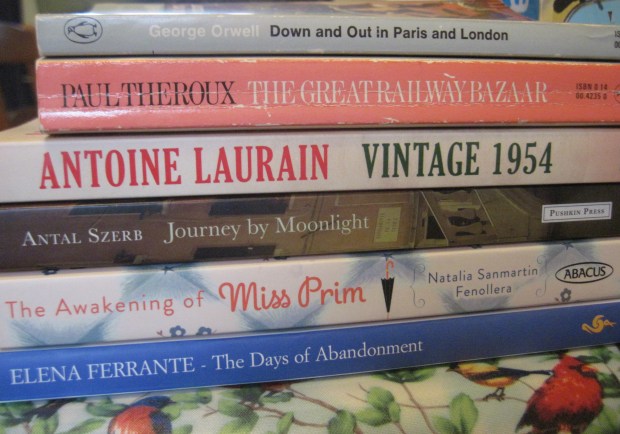
Down and Out in Paris and London, George Orwell – To read on the Eurostar between London and Paris. Orwell’s first book and my first try with his nonfiction: an account of the living conditions of the poor in two world cities.
Bonus goal it fulfills: Classic of the month
Vintage 1954, Antoine Laurain – For a Nudge review; to read en route to and in Paris. Drinking a 1954 Beaujolais transports a Parisian and his neighbors – including an Airbnb guest – back to the 1950s. Sounds like good fun.
Bonus goal it fulfills: Lit in translation
The Great Railway Bazaar, Paul Theroux – To read on the long train ride to Milan. Theroux travels from London to Tokyo on trains, then returns via the Trans-Siberian Express. I’ve always meant to try his work.
Bonus goal it fulfills: Travel classics
Journey by Moonlight, Antal Szerb – A Hungarian novel set on an Italian honeymoon. Try to resist these first lines: “On the train everything seemed fine. The trouble began in Venice, with the back-alleys.”
Bonus goals it fulfills: Lit in translation; 20 Books of Summer substitute (horse on the cover)
The Awakening of Miss Prim, Natalia Sanmarin Fenollera – Promises to be a cozy, fluffy novel about what happens when librarian Prudencia Prim arrives in a small village. I had the feeling it was set in Italy, but maybe it’s actually Spain? I’ll find out.
Bonus goal it fulfills: Lit in translation
The Days of Abandonment, Elena Ferrante – I’ve tried two Ferrante novels and not been too impressed, yet still I keep trying. This one’s set during a heat wave. Maybe I’ll get on with it better than I did with My Brilliant Friend or The Lost Daughter?
Bonus goal it fulfills: Lit in translation
The extra stack:
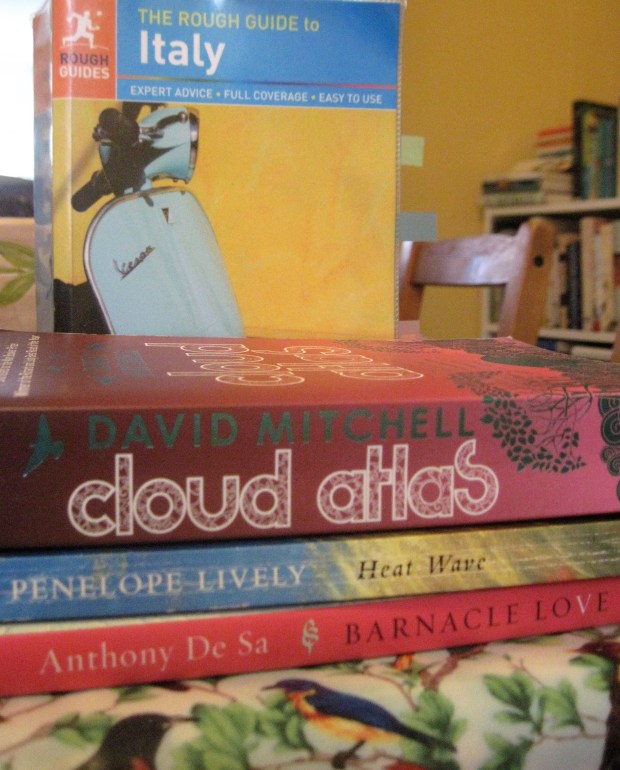
Heat Wave, Penelope Lively – The title says it all.
Bonus goal it fulfills: Reading with the seasons
Barnacle Love, Anthony De Sa – An extra animal book for 20 Books of Summer.
Cloud Atlas, David Mitchell – A novel I’ve meant to read for years. I’ve earmarked it for our super-long day of travel back to the UK.
Bonus goal it fulfills: Doorstopper of the Month
Considering getting from the library:
The Last Supper, Rachel Cusk – I’ve only made it through one of the three Cusk books I’ve attempted, but perhaps a travel memoir is a more surefire selection?
On my Kindle:
 The Fourth Shore, Virginia Baily – There’s an Italian flavor to this WWII novel, as there was to Baily’s previous one, Early One Morning. However, I’ve heard that this is mostly set in Tripoli, so I won’t make it a priority.
From Scratch, Tembi Locke – An actress’s memoir of falling in love with an Italian chef and her trips to his family home in Sicily with their adopted daughter. (Foodie and bereavement themes!)
I’ll read the first few pages of lots of these to make sure they ‘take’ and will try to pack a sensible number. (Which probably means all but one or two!) We’ll be packing light in general, since there’s only so many clothes one can wear in such heat, so I don’t mind carrying a backpack full of books – I’m used to it from weekly treks to the library and flights to America, and I know that I don’t find reading on Kindle as satisfying, though it certainly is convenient for when you’re on the go.
If you’d like to put in a good word for any of the above options, or want to dissuade me from a book I might not find worthwhile, let me know.
Meanwhile, I’ve been slow out of the gate with my 20 Books of Summer, but I finally have a first set of mini-reviews coming up tomorrow.
Other summer-themed books that I have on hand or will get from the library soon include One Summer: America, 1927 by Bill Bryson, The Go-Between by L.P. Hartley, The Sun Does Shine by Anthony Ray Hinton, The Summer Book by Tove Jansson, and Sunburn by Laura Lippman.
How’s your summer reading going?
Will you do any reading ‘on location’ this year?
Kinds of Love: Three Books for Valentine’s Day
At about this time of year I try to read a handful of books with “love” in the title. I’m currently reading Iris Murdoch’s The Sacred and Profane Love Machine for the #IMReadalong, and I have one more “love” title towards the end of this post, but it turns out that my focus this year has been more on the kinds of love that tend to get ignored around Valentine’s Day – familial love for one’s ageing parents and grandparents.

Be With: Letters to a Carer by Mike Barnes (2018)
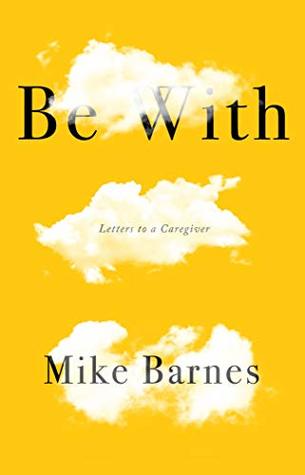 Mike Barnes, a Toronto poet and novelist, has been a primary caregiver for his mother, Mary, in the nine years since her Alzheimer’s diagnosis disease. She grew up on a Saskatchewan farm and is now in her nineties; he’s in his sixties. A bipolar sufferer, Barnes has spent his own fair share of time in hospitals and on disability. He’s moved Mary between care homes four times as her condition has deteriorated. Though he laments her gradual loss of words and awareness of her family, he can still discern instances of her bravery and the beauty of life.
This book of fragments – memories and advice delivered via short letters – was written in between demanding caregiving tasks and is meant to be read in those same gaps. Dementia is one situation in which you should definitely throw money at a problem, Barnes counsels, to secure the best care you can, even round-the-clock nursing help. However, as the title suggests, nothing outweighs simply being there. Your presence, not chiefly to make decisions, but just to sit, listen and place a soothing hand on a forehead, is the greatest gift.
There are many excellent, pithy quotations in this book. Here are a few of my favorites:
Dementia is…
“a retreat under fire”
“a passage of exquisite vulnerability”
By your loved one’s side is “Not where things are easy, or satisfactorily achieved, or achievable, or even necessarily pleasant. But where you ought to be, have to be, and are. It brings a peace.”
The goal is “Erring humanely”.
I can imagine this being an invaluable companion for caregivers, to be tucked into a pocket or purse and pulled out for a few moments of relief. On the theme of a parent’s dementia, I’d also recommend Paulette Bates Alden’s book of linked short stories, Unforgettable.
My rating:
Out now from Myriad Editions. My thanks for the free copy for review.
The Smallest Things: On the enduring power of family: A memoir of tiny dramas by Nick Duerden (2019)
 Journalist Nick Duerden always appreciated how his maternal grandparents, Nonna and Nonno, seemed so ordinary and unchanging. Every trip to see them in the Milan suburbs was, comfortingly, the same. He’d muddle along with his meager Italian, and they’d look after him in their usual clucking way. It was only as he reached middle age and realized that his grandparents were undeniably very old – his grandmother is 99 and in a care home at the time of writing – that he realized how lucky he was to still have them in his life and how unlikely it was that they’d be around for much longer.
Duerden compares his small immediate family with his Spanish wife’s large extended one, and his uptight paternal grandparents with the more effusive set. There are also some family secrets still to uncover. I made the mistake of reading a previous nonfiction book of Duerden’s just the week before this one: Get Well Soon (2018), which has a long chapter about his grandparents that told me all I needed to know about them. That’s probably the main reason why this short book struck me as lightweight, though I did ultimately find it a touching tribute, especially to his grandmother. It could make a good Mother’s Day present.
My rating: 
Out today from Elliott & Thompson. My thanks for a proof copy for review.
Love Story by Erich Segal (1970)
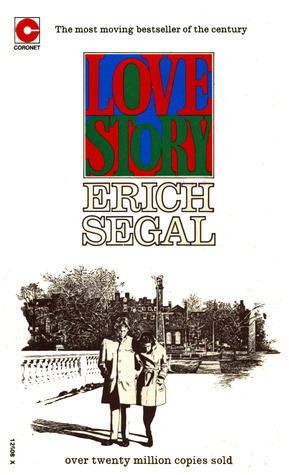 This offbeat novella was a bestseller and a successful film. You surely know its most famous line: “Love means not ever having to say you’re sorry.” Oliver Barrett IV is a golden boy: his banker father and previous generations of the eminent Barrett family funded various buildings at Harvard, where Oliver is a hockey player in the late 1960s. Jenny Cavilleri, on the other hand, comes from a single-parent Italian-American family in New Jersey. She’s made it to Radcliffe as a harpsichordist, but her father is just a baker; she’d never be considered good enough for the likes of Oliver. But they meet at the Radcliffe library and, sure enough, fall for each other. She calls him “Preppie”; he calls her a bitch. They’re only partially joking. It may be true love against the odds, but it has an expiration date, as we know from the first line: “What can you say about a twenty-five-year old girl who died?”
I wanted to like this more. There’s a pleasing lightness to the style, but because the whole book is from Oliver’s perspective, I felt like Jenny got short shrift: she’s the wise-cracking gal from the block, and then she’s the innocent victim in the hospital bed. Because this is only about 120 pages, there’s not much space in between for her character to be developed. I was somewhat appalled to learn about a 1977 sequel in which Oliver finds a new love.
(Segal’s daughter Francesca is also a novelist (The Innocents).)
My rating:
Have you read any “love” books, or books about love of any kind, lately?
Wellcome Book Prize 10th Anniversary Blog Tour: Teach Us to Sit Still by Tim Parks (2010)
“Launched in 2009, the Wellcome Book Prize, worth £30,000, celebrates the best new books that engage with an aspect of medicine, health or illness, showcasing the breadth and depth of our encounters with medicine through exceptional works of fiction and non-fiction.” I was delighted to be asked to participate in the official Wellcome Book Prize 10th anniversary blog tour. For this stop on the tour I’m highlighting a shortlisted title from 2010, a very strong year. The winning book, Rebecca Skloot’s The Immortal Life of Henrietta Lacks, along with Siddhartha Mukherjee’s The Emperor of All Maladies, turned me on to health-themed reading and remains one of my most memorable reads of the past decade.
Teach Us to Sit Still: A Sceptic’s Search for Health and Healing by Tim Parks
 Tim Parks, an Englishman, has lived and worked in Italy for over 30 years. He teaches translation at the university in Milan, and is also a novelist and a frequent newspaper columnist on literary topics. Starting in his forties, Parks was plagued by urinary problems and abdominal pain. Each night he had to get up five or six times to urinate, and when he didn’t have fiery pangs shooting through his pelvic area he had a dull ache. Doctors assessed his prostate and bladder in tests that seemed more like torture sessions, but ultimately found nothing wrong. While he was relieved that his worst fears of cancer were allayed, he was left with a dilemma: constant, unexplained discomfort and no medical strategy for treating it.
When conventional medicine failed him, Parks asked himself probing questions: Had he in some way brought this pain on himself through his restless, uptight and pessimistic ways? Had he ever made peace with his minister father’s evangelical Christianity after leaving it for a life based on reason? Was his obsession with transmuting experience into words keeping him from living authentically? During a translation conference in Delhi, he consulted an ayurvedic doctor on a whim and heard words that haunted him: “This is a problem you will never get over, Mr Parks, until you confront the profound contradiction in your character.”
The good news is: some things helped. One was the book A Headache in the Pelvis, which teaches a paradoxical relaxation technique that Parks used for up to an hour a day, lying on a yoga mat in his study. Another was exercise, especially running and kayaking – a way of challenging himself and seeking thrills in a controlled manner. He also started shiatsu therapy. And finally, Vipassana meditation retreats helped him shift his focus off the mind’s experience of pain and onto bodily wholeness. Vipassana is all about “seeing things as they really are,” so the retreats were for him a “showdown with this tangled self” and a chance to face the inevitability of death. Considering he couldn’t take notes at the time, I was impressed by the level of detail with which Parks describes his breakthroughs during meditation.
Though I was uneasy reading about a middle-aged man’s plumbing issues and didn’t always follow the author on his digressions into literary history (Coleridge et al.), I found this to be an absorbing and surprising quest narrative. If not with the particulars, I could sympathize with the broader strokes of Parks’s self-interrogation. He wonders whether sitting at a desk, tense and with poor posture, and wandering around with eyes on the ground and mind on knots of words for years contributed to his medical crisis. Borrowing the title phrase from T.S. Eliot, he’s charted an unlikely journey towards mindfulness in a thorough, bracingly honest, and diverting book that won’t put off those suspicious of New Age woo-woo.
My rating:
With thanks to Midas PR for the free copy for review.
Wellcome Book Prize 2010
Winner: The Immortal Life of Henrietta Lacks by Rebecca Skloot
Shortlist: Angel of Death by Gareth Williams; Grace Williams Says It Loud by Emma Henderson; So Much for That by Lionel Shriver; Medic by John Nicols and Tony Rennell; Teach Us to Sit Still by Tim Parks
Judges: Comedy writer and television presenter Clive Anderson (chair); novelist and academic Maggie Gee; academic and writer Michael Neve; television presenter and author Alice Roberts; academic and writer A.C. Grayling
The 2019 Wellcome Book Prize longlist will be announced in February. I’m already looking forward to it, of course, and I’m planning to run a shadow panel once again.
Elif Shafak, award-winning author, is the chair of this year’s judges and is joined on the panel by Kevin Fong, consultant anaesthetist at University College London Hospitals; Viv Groskop, writer, broadcaster and stand-up comedian; Jon Day, writer, critic, and academic; and Rick Edwards, broadcaster and author.
See below for details of where other reviews have appeared or will be appearing soon as part of the Wellcome Book Prize 10th anniversary blog tour.

Books in Brief: Five I Enjoyed Recently
Lab Girl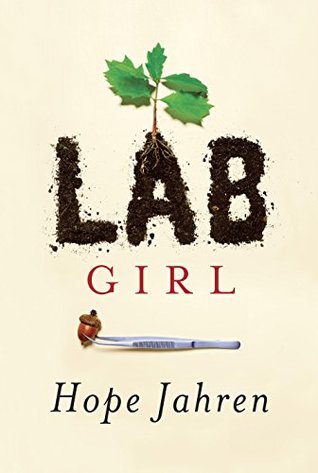
By Hope Jahren
This memoir puts so many things together that it shouldn’t work, yet somehow – delightfully – does. With witty anecdotes and recreated dialogue, Jahren tells about her Minnesota upbringing, crossing the country to take up geobiology/botany academic posts in Atlanta, Baltimore and Hawaii, her long-time platonic relationship with eccentric lab partner Bill, and zany road trips for conferences and field work. On the serious side, she writes about how bipolar disorder complicated work life, marriage and motherhood. Add to that the interspersed chapters illuminating aspects of plant biology and you get a truly varied and intricate narrative. What Jahren does best is simply convey what it is like to have true passion for your work, a rare thing. You don’t have to be a science type to enjoy this book. All that’s required is curiosity about how others live. Jahren might even inspire you to go plant a tree.
My rating: 
 It’s Okay to Laugh (Crying Is Cool, Too)
By Nora McInerny Purmort
Purmort was hit by a triple whammy of loss: within weeks of miscarrying her second child, both her father and her husband were dead of cancer. After a seizure revealed his brain tumor, she and Aaron got engaged on his hospital bed and went through fertility treatment to have their son. All in all they got three years together, after which the Minneapolis-based author founded what she calls the “Hot Widows Club.” She’s only about my age but, as she puts it, has “been through some shit.” The book is in the form of short essays, a lot like blog entries, that tread the fine line between heartbreak and humor. I might have preferred a bit more of a narrative; I wearied of open letters and lists. The book is best where she eases up on self-deprecating jokes and pop culture references and just tells her story, so much of which resonates with my sister’s experience. As soon as I finished the book, I ordered her a copy.
My rating: 
My Heart Can’t Even Believe It: A Story of Science, Love, and Down Syndrome
 By Amy Silverman
When her younger daughter Sophie was born with Down’s syndrome in 2003, Silverman had no idea what to expect. The long-time Arizona journalist put her investigative skills to work, finding out everything she could about the discovery of Down’s and the history of how patients have been treated down the decades. In addition, she delves into the foundation of the Special Olympics (which had a connection with the Kennedy family) and its alternatives, and – not being a “support group kinda girl,” the other sources of encouragement she finds, especially through fellow bloggers. A significant portion of the book is about finding the best schools for Sophie – information that may well be not just U.S.-specific but particular to Arizona, where charter schools are popular. Still, what comes through is Silverman’s fierce love for her daughter and her insistence that every person with Down’s is an individual.
My rating:
 How to Ruin Everything: Essays
By George Watsky
Watsky is a slam poet and rap/hip hop artist from San Francisco. These essays about his misadventures reminded me most of Lauren Weedman (Miss Fortune) and John Jeremiah Sullivan (Pulphead). My favorite pieces were “Tusk,” on smuggling a narwhal tusk from Canada to the States to be his roommate’s great-aunt June’s hundredth birthday present, and “The White Whale,” about his unreliable tour bus. Others see him moving from a crumbling Boston college house to the heart of Hollywood deadbeat territory, traveling through India, fishing in Alaska, trying to attract older women, and reflecting on a childhood love of baseball. In the other stand-out essay, a more serious one, he reveals his experience of epilepsy and weaves in the history of its diagnosis and treatment. Also remarkable was a mention of Pauly Shore, a personage I haven’t thought about in, oh, I don’t know, a decade?
My rating:
Only in Naples: Lessons in Food and Famiglia from My Italian Mother-in-Law
 By Katherine Wilson
This is just the kind of book I would want to write about my experience studying abroad in England and eventually settling here. Of course, Wilson had it harder: she had to conduct her romance with Salvatore Avallone, relate to her future in-laws, and start a career all in a different language. But there were consolation prizes, chief among them the food. A lot of the best anecdotes revolve around Italian cuisine, like Salva’s mother Raffaella sending food down to her daughter in the apartment below via the elevator, or his uncle catching octopi with his one arm. I loved the colorful Italian and Neapolitan dialect expressions Wilson dots around, and as a fellow expat it was interesting to see what her non-negotiable American imports are (we all have our own list, I’m sure): wall-to-wall carpeting, air conditioning, a garbage disposal, and peanut butter – I’m with her on that last one, anyway.
My rating:
(For each one, read my full Goodreads review by clicking on the title link.)
Have you read any of these? Which one takes your fancy?
Note: I’m traveling until the 24th so won’t be responding to comments right away, but will be sure to catch up soon after I’m back. I always welcome your thoughts!
Mixed Feelings about Elena Ferrante
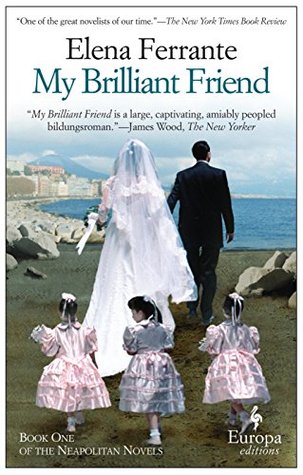
I paid my 40 pence and waited in what felt like an endless holds queue to get my hands on a public library copy of My Brilliant Friend, the first of Elena Ferrante’s four Neapolitan novels. For months I’d been eager to try out this literary phenomenon in translation. I read about the first 100 pages and then my interest started to tail off. Aware of the impending due date, I skimmed the rest – so this doesn’t count towards my year’s reading list.
What went wrong? I didn’t dislike the book; in fact, I found it to be an accomplished psychological study of a female friendship and how it changes over time. Yet there were some factors that kept me at a distance. I’ll give a quick synopsis before listing pros and cons.
 The Story:
Elena, in her sixties, gets a call from the son of her childhood best friend, Lila. His mother and all her possessions have vanished from her home. Elena recalls Lila’s longtime desire to disappear without a trace, and decides she won’t let her: she sits down to her computer to write the story of their friendship, a bulwark against failing memory and deliberate sabotage.
From here Elena, a novelist in her own right (often assumed to be an autobiographical stand-in for Ferrante), returns to the girls’ childhood in 1940s and 1950s Naples, a place of organized crime, domestic violence, and what seems like surprising social backwardness. Neapolitan dialect contrasts with educated Italian. Lila and Elena have a low-key academic rivalry until Lila has to quit school to help her father, a shoemaker. Even then Lila finds ways to show her friend up, maxing out her whole family’s library cards and learning Latin and Greek on her own time. Lila is always one step ahead of Elena, whether in her studies or in attracting boys’ attention. This volume concludes with Lila’s wedding at the age of 16.
What I Loved:
- The psychological acuity Ferrante brings to the relationship between Elena and Lila. Their friendship has a shifting dynamic, vacillating between jealousy and support as they move from childhood through puberty. The novel powerfully captures Elena’s hesitation and Lila’s brazenness, often in piercing one-liners:
she did her best to make me understand that I was superfluous in her life.
In general I was the pretty one, while she was skinny, like a salted anchovy, she gave off an odor of wildness
Lila acted … on me like a demanding ghost
only what Lila touched became important.
- The choice between education and a trade. Money and class have a lot to do with it, but both girls long for a Woolfian “room of one’s own” and even talk of writing novels together one day. Although Lila finds fulfillment designing shoes, it’s plain she envies Elena’s chance to complete high school. “My brilliant friend” is what Lila calls Elena late on in the novel, but it’s what Elena has always thought of Lila too.
- The Naples setting: Don Achille’s murder; setting off fireworks on New Year’s; the sense that the community is on the up and up when someone they know publishes a book. A few of my favorite lines describe the girls’ neighborhood:
We didn’t know the origin of that fear-rancor-hatred-meekness that our parents displayed toward the Carraccis and transmitted to us, but it was there, it was a fact, like the neighborhood, its dirty-white houses, the fetid odor of the landings, the dust of the streets.
What I Struggled with:
- A lack of context. Footnotes would have been intrusive, but perhaps a short introduction from the translator or an English-language critic could have helped set the scene and given some sociological details that would aid in my understanding of mid-twentieth-century Italy. Even just within the first chapter of Only in Naples by Katherine Wilson, a memoir I’m currently reading, there’s more basic information about Italy to help orient foreigners.
- The confusing names. The central characters are known by multiple names – for example, Lila’s full name is Raffaella Cerullo – and nicknames aren’t always intuitive; it reminded me of the variations in War & Peace. Thank goodness for the three-page index of characters.
- Short shrift given to Elena’s odd relationship with her mother. I felt there was a lot more that could have been explored. Perhaps that is a matter for another volume.
- Repetition in the day to day, especially regarding Elena’s schooling. I wondered whether all four, or at least two, of the books might have been condensed into one 400-page novel.
- Minor punctuation and translation issues. I only marked out one passage that sounded false to my ear (“I’ve kept a place for you.” / “Go away, my mother has understood everything.”), but the punctuation drove me a little nutty. I dislike lots of phrases being strung together with commas – as in the anchovy sentence above; I always look for a semicolon!
In general, I avoid series fiction. I hate being saddled with a sense of obligation, and I don’t like feeling that a story is unfinished. That doesn’t mean a book’s last pages can’t be open-ended, but I’d prefer to imagine my own future for the characters rather than have to read about it in another book or three or 14. While I seriously doubt I will pick up another of the Neapolitan novels, I could possibly be persuaded to pick up one of her stand-alone novellas. Naomi at Consumed by Ink wrote a very appealing review of The Lost Daughter, for instance. Although this long-awaited literary experiment was a touch disappointing, I’m still eager to try another model of “autofiction” in translation, Karl Ove Knausgaard.
My rating: 
Further reading: Meghan O’Rourke’s 2014 Guardian article about Elena Ferrante’s growing popularity and mysterious persona.
Have I given Elena Ferrante a fair shake? If not, what should I try next?
Reviews Roundup, November–December
One of my goals with this blog is to have one convenient place where I can gather together all my writing that has appeared in disparate online locations. To that end, once a month I provide links to all book reviews I’ve published elsewhere, with a rating (below each description) and a taster so you can decide whether to read more. A few exceptions: I won’t point out my Kirkus Indie, BlueInk or Publishers Weekly reviews since I don’t get a byline.
The Bookbag
 In Search of Mary: The Mother of All Journeys by Bee Rowlatt: A BBC journalist and mother of four sets out, baby in tow, to trace the steps of Mary Wollstonecraft in Norway and France. A follow-up trip to California is a little off-topic, but allows Rowlatt to survey the development of feminism over the last few centuries. This isn’t as successful a bibliomemoir as many I’ve read in recent years, such as Rebecca Mead’s My Life in Middlemarch or Samantha Ellis’s How to Be a Heroine, but for readers interested in engaging in the ongoing debate about how women can balance work life with motherhood, and especially for any women who have attempted traveling with children, it’s a fun, sassy travelogue.

Foreword Reviews
 Italy Invades: How Italians Conquered the World by Christopher Kelly and Stuart Laycock: Proceeding alphabetically from Afghanistan to Zimbabwe, the authors give a comprehensive picture of Italians’ global reach through one- to five-page snapshots. There are many familiar names here, such as Caesar, Garibaldi and Marco Polo. Along with exploration, some major reasons for historical crossover were trade, war, colonialism and immigration. At times it feels as if the authors are grasping at straws; better to skip one-paragraph write-ups altogether and focus instead on the countries that have extensive links with Italy. Nonetheless, this is a lively, conversational book full of surprising facts.

Why You Won’t Go to Hell by Benjamin Vande Weerdhof Andrews: In a well-structured argument, Andrews prizes empirical thinking, rejects the supernatural, and affirms the possibility of godless morality. His central thesis is that religion doesn’t evolve to keep pace with society and so holds humanity back. The book’s tone is too often defensive, often in response to included website comments, and there are some failures of accuracy and fairness. Ultimately, though, this could be an inspirational book for atheists or believers, prompting both groups to question their assumptions and be willing to say “I don’t know.” Readers of Sam Harris and Christopher Hitchens will be particularly drawn to the book, but others should take a chance on it too.

 Cultured Food for Health by Donna Schwenk: When Schwenk started eating cultured foods in 2002, she had diabetes, high blood pressure, and a premature newborn. Keen to see if good bacteria could help with her medical problems, she started introducing the “healing powerhouse” of kefir (a fermented milk product resembling thin yogurt), kombucha (bubbly tea), and cultured vegetables into her diet, and soon reaped the rewards. About a quarter of the book is background information about probiotic foods. Bullet-pointed lists of health benefits, along with an alphabetical inventory of the diseases that cultured foods can treat, should prove helpful. The rest of the book is devoted to recipes, most vegetarian.
Three Simple Questions: Being in the World, But Not of It by Charlie Horton: Horton, trained as a social worker, was diagnosed with cerebellar degeneration in 1988. It has gradually affected his speech and movement. Despite having lived with disability for nearly three decades, he declares, “the world I live in is rich, and my spirit is young.” Here he documents how he deals with depression and physical limitations through guided meditations that bring him closer to God. Although he comes from a Christian perspective, he writes about spirituality in such inclusive terms that his work should speak to people of any faith.
Middle Passage: The Artistic Life of Lawrence Baker by Louis B. Burroughs, Jr.: This ghostwritten autobiography of an African-American artist is not only an evocative, eventful life story that moves from the Jim Crow South to the North, but also a forceful artist’s manifesto. Burroughs writes in Baker’s voice, a decision that works surprisingly well. The title is a powerful reference to the slave trade. Indeed, Burroughs consciously crafts Baker’s autobiography as an “up from slavery” narrative reminiscent of Richard Wright and Maya Angelou – with ‘slavery’ in this case being poverty and racism.
Nudge
 40 Sonnets by Don Patterson: All but one of the poems in this new book have the sonnet’s traditional 14 lines; “The Version” is a short prose story about writing an untranslatable poem. However, even in the more conventional verses, there is a wide variety of both subject matter and rhyme scheme. Topics range from love and death to a phishing phone call and a footpath blocked off by Dundee City Council. A few favorites were “A Powercut,” set in a stuck elevator; “Seven Questions about the Journey,” an eerie call-and-response; and “Mercies,” a sweet elegy to an old dog put to sleep. There weren’t quite enough stand-outs here for my liking, but I appreciated the book as a showcase for just how divergent in form sonnets can be.
 Without You There Is No Us by Suki Kim: This is a quietly gripping book even though not much of moment happens over Kim’s five months teaching young men at a missionary-run college in Pyongyang. She was in a unique position in that students saw her as ethnically one of their own but she brought an outsider’s perspective to bear on what she observed. Just before she flew back to the States in 2011, Kim Jong-Il died, an event she uses as a framing device. It could have represented a turning point for the country, but instead history has repeated itself with Kim Jong-un. Kim thus ends on a note of frustration: she wants better for these young men she became so fond of. A rare glimpse into a country that carefully safeguards its secrets and masks its truth.
 Alive, Alive Oh!: And Other Things that Matter by Diana Athill: Diana Athill turns 98 on December 21st. Apart from “Dead Right,” however, this collection is not primarily concerned with imminent death. Instead Athill is still grateful to be alive: marveling at a lifetime of good luck and health and taking joy in gardening, clothing, books, memories and friendships. Six of the 10 essays originally appeared elsewhere. The collection highlight is the title piece, about a miscarriage she suffered in her forties. Another stand-out is “The Decision,” about moving into a retirement home in her nineties. This doesn’t live up to her best memoirs, but is an essential read for a devoted fan, and a consolation given she will likely not publish anything else (though you never know). [For first-time Athill readers, I’d recommend starting with Somewhere Towards the End, followed by Stet, about her work as a literary editor.]
I also post reviews of most of my casual reading and skimming on Goodreads:
The Weightless World by Anthony Trevelyan: This debut novel blends postcolonial bureaucracy with steampunk zaniness. The setup is familiar enough: businessmen head overseas to take financial advantage of a former colony, puzzle over unfamiliar customs, and by the end are chastened but gain a clearer sense of values. Narrator Steven Strauss is the personal assistant to Raymond Ess, an entrepreneur with a history of mental illness. Their aviation company has gone bust; Strauss is to accompany Ess to India and keep him occupied by looking for an anti-gravity machine. Not anchored by either current events or convincing fantasy, the plot suffers in comparison to works by Geoff Dyer or Nick Harkaway. Despite entirely serviceable writing and a gravity-defying theme, it never really takes off.

 My Confection: Odyssey of a Sugar Addict by Lisa Kotin: 1978. Twenty-one-year-old mime goes to macrobiotic rehab to recover from sugar addiction. Fails. Shows signs of being a sex addict as well. Pared down to headlines, that’s how this fairly rambling memoir about Kotin’s relationships with food, family, lovers, and career opens. I kept waiting for a turn, some moment of revelation, when Kotin’s binge eating would be solved. Still, her recreation of her obsessive younger self can be pretty funny and charming, and her family sounds a bit like the Sedaris clan. I found this a bit dated, but others may find the time period and Jewish family background more evocative.
 Good on Paper by Rachel Cantor: I’m going to chalk this one up to blurb inflation. The writing is lively and the plot well crafted, with quirky postmodern touches, but the novel as a whole did not live up to my absurdly high expectations: it’s really nothing like A.S. Byatt’s Possession. It’s 1999 and Shira Greene is a failed translator from the Italian, now working as a temp in New York City and raising her daughter Andi with the help of her gay, Pakistani co-parent, Ahmad. One day she gets a call from Romei, a Nobel Prize-winning Italian poet who wants her to translate his new work, a version of Dante’s Vita Nuova that focuses on his relationship with his ill wife – and eventually starts to comment on Shira’s own life in surprising ways.
Water Sessions by James Lasdun: Wonderful poems from a severely underrated writer. The British Lasdun has relocated to small-town upstate New York, where he’s learned the spiritual worth of manual labor. There are such interesting rhyme schemes and half-rhymes throughout. One of the most striking poems, “Thing One and Thing Two,” compares human and animal sexuality in a rather disturbing way. The title sequence is a dialogue between a patient and a therapist, discussing what went wrong in a relationship and how arguments are never ‘about’ the thing that started it.
 The Secret Chord by Geraldine Brooks: A retelling of the life of King David from the perspective of the prophet Nathan. The naming takes some getting used to, but the stories – from gory massacres to moments of triumph – are recognizable from the Old Testament. What makes Brooks’s take unique is the different points of view it shows and the ways it subtly introduces doubt about David’s carefully cultivated image. It’s sensual historical fiction, full of rich descriptive language. Strangely unmemorable for me, perhaps because the storyline is just too familiar. Brooks doesn’t offer a radical reinterpretation but sows small seeds of doubt about the hero we think we know. (Full review in Jan/Feb 2016 issue of Third Way magazine.)
 When I Die: Lessons from the Death Zone by Philip Gould: Gould may be familiar to British readers as a key strategist of the New Labour movement and one of Tony Blair’s advisors. In 2008 he was diagnosed with esophageal cancer and chose to pay for private treatment at New York’s Sloan-Kettering hospital instead of going for a radical operation through the NHS – a fateful decision. Gould’s own account is fairly short, about 140 pages, but it’s supplemented by short reminiscences from his wife and two daughters. Daughter Georgia’s, especially, is a very good blow-by-blow of his final week. All royalties from the book went to the National Oesophago-Gastric Cancer Fund.
 Twain’s End by Lynn Cullen: “Twain’s End” was a possible name for the Clemens house in Connecticut, but it’s also a tip of the hat to Howards End and an indication of the main character’s impending death. In January 1909, when the novel opens, Samuel Clemens, 74, is busy dictating his autobiography and waiting for Halley’s Comet, the heavenly body that accompanied his birth, to see him back out. His secretary, Isabel Lyon, is 45 and it’s no secret that the two of them are involved. I love how the novel shifts between the perspectives of several strong female characters yet still gives a distinct portrait of Clemens/Twain. Interestingly, I found that it helped to have visited the Twain house in Connecticut – I could truly picture all the scenes, especially those set in the billiard room and conservatory.
 Meadowland: The Private Life of an English Field by John Lewis-Stempel: Lewis-Stempel is a proper, third-generation Herefordshire farmer, but also a naturalist with a poet’s eye. His day job might involve shooting rabbits, cutting hay and delivering lambs, but he still finds the time to notice and appreciate wildlife. He knows his field’s flowers, insects and birds as well as he knows his cows; he gets quiet and close enough to the ground to watch a shrew devouring beetles. June and July are the stand-out chapters, with some truly magical moments. When his mower breaks on a stone, he has to cut the hay by hand, returning him to a centuries-gone model of hard labor. All delivered in the loveliest prose.

Did You Ever Have a Family by Bill Clegg: A strong debut novel about personal and community responses to tragedy. Clegg’s multivocal approach works quite well, though there are perhaps a few too many voices diluting the mixture. I like how the revelations of what really happened that night before the wedding to cause the fatal house fire come gradually, making you constantly rethink who was responsible and what it all means. The small-town Connecticut setting is a good one, but I’d question the decision to set so much of the book in Washington, where the bereaved June drives on a whim. For a tragic story, it’s admirably lacking in melodrama.
 A Homemade Life: Stories and Recipes from My Kitchen Table by Molly Wizenberg: Foodoir extraordinaire! I liked this even better than Delancey, which is a terrific book about opening a pizza restaurant in Seattle with her husband. Here we get the prequel: the death of her father Burg from cancer, time spent living in Paris, building a new life in Seattle, starting her now-famous food blog (Orangette), and meeting her husband Brandon through it. Each brief autobiographical essay is perfectly formed and followed by a relevant recipe, capturing precisely how food is tied up with her memories. Wizenberg’s very fond of salad, but also of cake, and every recipe is full-on in terms of flavors and ingredients.
Ellen Foster by Kaye Gibbons: This was a random library book sale purchase, chosen almost entirely for the title. I set aside my usual dislike of child narrators and found an enjoyable voice-driven novella about a feisty ten-year-old who loses both her parents (good riddance to her father, at least) and finds her own unconventional family after cycling through the homes of some truly horrid relatives. Just as an example, her maternal grandmother sends her out to work picking cotton. The book is set in the South, presumably in the 1970s or 80s, so it’s alarming to see how strong racial prejudice still was.
 The Ecco Book of Christmas Stories, edited by Alberto Manguel: I read this over several years, a handful each holiday season. There are some very unusual choices, including some that really have hardly anything to do with Christmas (e.g. one by Bessie Head). Still, it’s a nice book to have to hand, even if just to skip through. Manguel strikes a good balance between well-known short story writers, authors you might never think to associate with Christmas, and fairly obscure works in translation. Four favorites: “A Christmas Memory,” Truman Capote (overall favorite); “Christmas Is a Sad Season for the Poor,” John Cheever; “The Zoo at Christmas,” Jane Gardam; and “O’Brien’s First Christmas,” Jeanette Winterson.
 Bookish Beck = Rebecca Foster. American transplant to England. Freelance proofreader and book reviewer.
 Bookish Beck