Book Serendipity, Mid-April to Mid-June
I call it “Book Serendipity” when two or more books that I read at the same time or in quick succession have something in common – the more bizarre, the better. This is a regular feature of mine every couple of months. Because I usually have 20–30 books on the go at once, I suppose I’m more prone to such incidents. People frequently ask how I remember all of these coincidences. The answer is: I jot them down on scraps of paper or input them immediately into a file on my PC desktop; otherwise, they would flit away!
The following are in roughly chronological order.
- Raising a wild animal but (mostly) calling it by its species rather than by a pet name (so “Pigeon” and “the leveret/hare”) in We Should All Be Birds by Brian Buckbee and Raising Hare by Chloe Dalton.
- Eating hash cookies in New York City in Women by Chloe Caldwell and How to Be Somebody Else by Miranda Pountney.
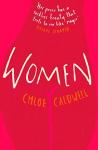
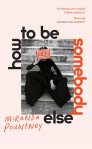
- A woman worries she’s left underclothes strewn about a room she’s about to show someone in one story of Single, Carefree, Mellow by Katherine Heiny and Days of Light by Megan Hunter.
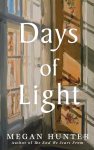 The dialogue is italicized in Women by Chloe Caldwell and Days of Light by Megan Hunter.
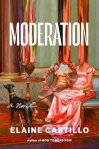
- The ‘you know it when you see it’ definition (originally for pornography) is cited in Moderation by Elaine Castillo and Bookish by Lucy Mangan.
- Women (including the protagonist) weightlifting in a gym in Moderation by Elaine Castillo and All Fours by Miranda July.
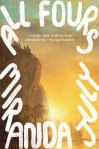
- Miranda July, whose All Fours I was also reading at the time, was mentioned in Chinese Parents Don’t Say I Love You by Candice Chung.
- A sibling story and a mystical light: late last year into early 2025 I read The Snow Queen by Michael Cunningham, and then I recognized this type of moment in Days of Light by Megan Hunter.
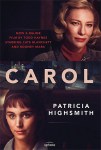
- A lesbian couple with a furniture store in Carol [The Price of Salt] by Patricia Highsmith and one story of Are You Happy? by Lori Ostlund.

- Not being able to see the stars in Las Vegas because of light pollution was mentioned in The Wild Dark by Craig Childs, then in Moderation by Elaine Castillo.
- A gynaecology appointment scene in All Fours by Miranda July and How to Be Somebody Else by Miranda Pountney.
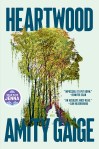
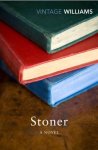
- An awkwardly tall woman in Heartwood by Amity Gaige, How to Be Somebody Else by Miranda Pountney, and Stoner by John Williams.
- The 9/11 memorial lights’ disastrous effect on birds is mentioned in The Wild Dark by Craig Childs and How to Be Somebody Else by Miranda Pountney.
- A car accident precipitated by an encounter with wildlife is key to the denouement in the novellas Women by Chloe Caldwell and Wild Boar by Hannah Lutz.
- The plot is set in motion by the death of an older brother by drowning, and pork chops are served to an unexpected dinner guest, in Bug Hollow by Michelle Huneven and Days of Light by Megan Hunter, both of which I was reading for Shelf Awareness review.
- Kids running around basically feral in a 1970s summer, and driving a box of human ashes around in Case Histories by Kate Atkinson and Bug Hollow by Michelle Huneven.
- A character becomes a nun in Case Histories by Kate Atkinson and Days of Light by Megan Hunter.
- Wrens nesting just outside one’s front door in Lifelines by Julian Hoffman and Little Mercy by Robin Walter.

- ‘The female Woody Allen’ is the name given to a character in Women by Chloe Caldwell and then a description (in a blurb) of French author Nolwenn Le Blevennec.
- A children’s birthday party scene in Single, Carefree, Mellow by Katherine Heiny and Friends and Lovers by Nolwenn Le Blevennec. A children’s party is also mentioned in Case Histories by Kate Atkinson and A Family Matter by Claire Lynch.
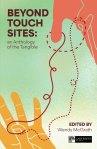
- A man who changes his child’s nappies, unlike his father – evidence of different notions of masculinity in different generations, in Case Histories by Kate Atkinson, What My Father and I Don’t Talk About, edited by Michele Filgate, and one piece in Beyond Touch Sites, edited by Wendy McGrath.
- What’s in a name? Repeated names I came across included Pansy (Case Histories by Kate Atkinson and Days of Light by Megan Hunter), Olivia (Case Histories by Kate Atkinson and A Family Matter by Claire Lynch), Jackson (Case Histories by Kate Atkinson and So Far Gone by Jess Walter), and Elias (Good Girl by Aria Aber and Dream State by Eric Puchner).
- The old wives’ tale that you should run in zigzags to avoid an alligator appeared in Alligator Tears by Edgar Gomez and then in The Girls Who Grow Big by Leila Mottley, both initially set in Florida.
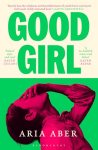
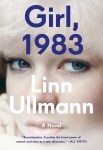
- A teenage girl is groped in a nightclub in Good Girl by Aria Aber and Girl, 1983 by Linn Ullmann.
- Discussion of the extinction of human and animal cultures and languages in both Nature’s Genius by David Farrier and Lifelines by Julian Hoffman, two May 2025 releases I was reading at the same time.
- In Body: My Life in Parts by Nina B. Lichtenstein, she mentions Linn Ullmann – who lived on her street in Oslo and went to the same school (not favourably – the latter ‘stole’ her best friend!); at the same time, I was reading Linn Ullmann’s Girl, 1983! And then, in both books, the narrator recalls getting a severe sunburn.
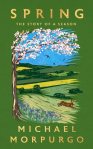 On the same day, I read about otter sightings in Lifelines by Julian Hoffman and Spring by Michael Morpurgo. The next day, I read about nesting swallows in both books.
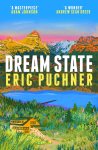
- The Salish people (Indigenous to North America) are mentioned in Lifelines by Julian Hoffman, Dream State by Eric Puchner (where Salish, the town in Montana, is also a setting), and So Far Gone by Jess Walter.
- Driving into a compound of extremists, and then the car being driven away by someone who’s not the owner, in Dream State by Eric Puchner and So Far Gone by Jess Walter.
- A woman worries about her (neurodivergent) husband saying weird things at a party in The Honesty Box by Lucy Brazier and Normally Weird and Weirdly Normal by Robin Ince.
- Shooting raccoons in Ginseng Roots by Craig Thompson and So Far Gone by Jess Walter. (Raccoons also feature in Dream State by Eric Puchner.)
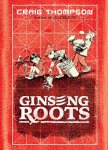
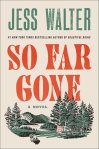
- A graphic novelist has Hollywood types adding (or at least threatening to add) wholly unsuitable supernatural elements to their plots in Spent by Alison Bechdel and Ginseng Roots by Craig Thompson.
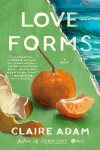
- A novel in which a character named Dawn has to give up her daughter in the early 1980s, one right after the other: A Family Matter by Claire Lynch, followed by Love Forms by Claire Adam.
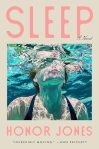
- A girl barricades her bedroom door for fear of her older brother in Love Forms by Claire Adam and Sleep by Honor Jones.
- A scene of an only child learning that her mother had a hysterectomy and so couldn’t have any more children in Dream Count by Chimamanda Ngozi Adichie and Other People’s Mothers by Julie Marie Wade.
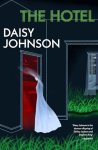
- An African hotel cleaner features in Dream Count by Chimamanda Ngozi Adichie and The Hotel by Daisy Johnson.

- Annie Dillard’s essay “Living Like Weasels” is mentioned in Nature’s Genius by David Farrier and The Dry Season by Melissa Febos.
- A woman assembles an inventory of her former lovers in Dream Count by Chimamanda Ngozi Adichie and The Dry Season by Melissa Febos.
What’s the weirdest reading coincidence you’ve had lately?
May Releases, Part II (Fiction): Le Blevennec, Lynch, Puchner, Stanley, Ullmann, and Wald
A cornucopia of May novels, ranging from novella to doorstopper and from Montana to Tunisia; less of a spread in time: only the 1980s to now. Just a paragraph on each to keep things simple. I’ll catch up soon with May nonfiction and poetry releases I read.
Friends and Lovers by Nolwenn Le Blevennec (2023; 2025)
[Translated from French by Madeleine Rogers]
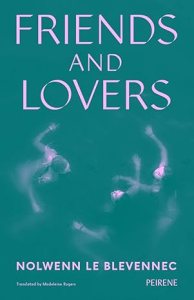 Armelle, Rim, and Anna are best friends – the first two since childhood. They formed a trio a decade or so ago when they worked on the same magazine. Now in their mid-thirties, partnered and with children, they’re all gripped by a sexual “great awakening” and long to escape Paris and their domestic commitments – “we went through it, this mutiny, like three sisters,” poised to blow up the “perfectly executed choreography of work, relationships, children”. The friends travel to Tunisia together in December 2014, then several years later take a completely different holiday: a disaster-prone stay in a lighthouse-keeper’s cottage on an island off the coast of Brittany. They used to tolerate each other’s foibles and infidelities, but now resentment has sprouted up, especially as Armelle (the narrator) is writing a screenplay about female friendship that’s clearly inspired by Rim and Anna. Armelle is relatably neurotic (a hilarious French blurb for the author’s previous novel is not wrong: “Woody Allen meets Annie Ernaux”) and this is wise about intimacy and duplicity, yet I never felt invested in any of the three women or sufficiently knowledgeable about their lives.
With thanks to Peirene Press for the free copy for review.
A Family Matter by Claire Lynch
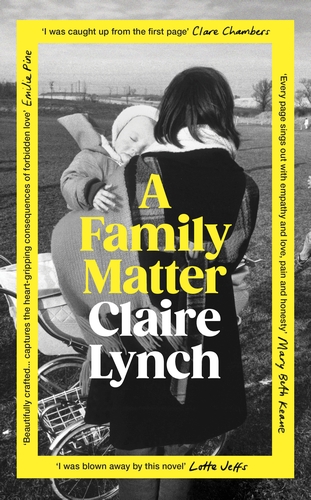 “The fluke of being born at a slightly different time, or in a slightly different place, all that might gift you or cost you.” At events for Small, Lynch’s terrific memoir about how she and her wife had children, women would speak up about how different their experience had been. Lesbians born just 10 or 20 years earlier didn’t have the same options. Often, they were in heterosexual marriages because that’s all they knew to do; certainly the only way they thought they could become mothers. In her research into divorce cases in the UK in the 1980s, Lynch learned that 90% of lesbian mothers lost custody of their children. Her aim with this earnest, delicate debut novel, which bounces between 2022 and 1982, is to imagine such a situation through close portraits of Heron, an ageing man with terminal cancer; his daughter, Maggie, who in her early forties bears responsibility for him and her own children; and Dawn, who loved Maggie desperately but felt when she met Hazel that she was “alive at last, at twenty-three.” How heartbreaking that Maggie knew only that her mother abandoned her when she was little; not until she comes across legal documents and newspaper clippings does she understand the circumstances. Lynch made the wise decision to invite sympathy for Heron from the start, so he doesn’t become the easy villain of the piece. Her compassion, and thus ours, is equal for all three characters. This confident, tender story of changing mores and steadfast love is the new Carol for our times. (Such a lovely but low-key novel was liable to make few ripples, so I’m delighted for Lynch that the U.S. release got a Read with Jenna endorsement.)
With thanks to Chatto & Windus (Penguin) for the proof copy for review.
Dream State by Eric Puchner
 If it starts and ends with a wedding, it must be a comedy. If much of the in between is marked by heartbreak, betrayal, failure, and loss, it must be a tragedy. If it stretches towards 2050 and imagines a Western USA smothered in smoke from near-constant forest fires, it must be an environmental dystopian. Somehow, this novel is all three. The first 163 pages are pure delight: a glistening romantic comedy about the chaos surrounding Charlie and Cece’s wedding at his family’s Montana lake house in the summer of 2004. First half the wedding party falls ill with norovirus, then Charlie’s best friend, Garrett (who’s also the officiant), falls in love with the bride. Do I sound shallow if I admit this was the section I enjoyed the most? The rest of this Oprah’s Book Club doorstopper examines the fallout of this uneasy love triangle. Charlie is an anaesthesiologist, Cece a bookstore owner, and Garrett a wolverine researcher in Glacier National Park, which is steadily losing its wolverines and its glaciers. The next generation comes of age in a diminished world, turning to acting or addiction. There are still plenty of lighter moments: funny set-pieces, warm family interactions, private jokes and quirky descriptions. But this feels like an appropriately grown-up vision of idealism ceding to a reality we all must face. I struggled with a lack of engagement with the children, but loved Puchner’s writing so much on the sentence level that I will certainly seek out more of his work. Imagine this as a cross between Jonathan Franzen and Maggie Shipstead.
With thanks to Sceptre (Hodder) for the proof copy for review.
Consider Yourself Kissed by Jessica Stanley
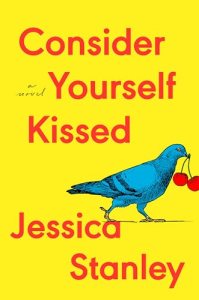 Coralie is nearing 30 when her ad agency job transfers her from Australia to London in 2013. Within a few pages, she meets Adam when she rescues his four-year-old, Zora, from a lake. That Adam and Coralie will be together is never really in question. But over the next decade of personal and political events, we wonder whether they have staying power – and whether Coralie, a would-be writer, will lose herself in soul-destroying work and motherhood. Adam’s job as a political journalist and biographer means close coverage of each UK election and referendum. As I’ve thought about some recent Jonathan Coe novels: These events were so depressing to live through, who would want to relive them through fiction? I also found this overlong and drowning in exclamation points. Still, it’s so likable, what with Coralie’s love of literature (the title is from The Group) and adjustment to expat life without her mother; and secondary characters such as Coralie’s brother Daniel and his husband, Adam’s prickly mother and her wife, and the mums Coralie meets through NCT classes. Best of all, though, is her relationship with Zora. This falls solidly between literary fiction and popular/women’s fiction. Given that I was expecting a lighter romance-led read, it surprised me with its depth. It may well be for you if you’re a fan of Meg Mason and David Nicholls.
With thanks to Hutchinson Heinemann for the proof copy for review.
Girl, 1983 by Linn Ullmann (2021; 2025)
[Translated from Norwegian by Martin Aitken]
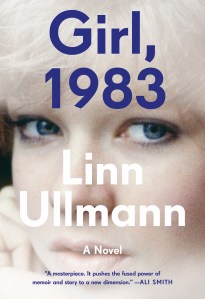 Ullmann is the daughter of actress Liv Ullmann and film director Ingmar Bergman. That pedigree perhaps accounts for why she got the opportunity to travel to Paris in the winter of 1983 to model for a renowned photographer. She was 16 at the time and spent the whole trip disoriented: cold, hungry, lost. Unable to retrace the way to her hotel and wearing a blue coat and red hat, she went to the only address she knew – that of the photographer, K, who was in his mid-forties. Their sexual relationship is short-lived and unsurprising, at least in these days of #MeToo revelations. Its specifics would barely fill a page, yet the novel loops around and through the affair for more than 250. Ullmann mostly pulls this off thanks to the language of retrospection. She splits herself both psychically and chronologically. There’s a “you” she keeps addressing, a childhood imaginary friend who morphs into a critical voice of conscience and then the self dissociated from trauma. And there’s the 55-year-old writer looking back with empathy yet still suffering the effects. The repetition made this something of a sombre slog, though. It slots into a feminist autofiction tradition but is not among my favourite examples.
With thanks to Hamish Hamilton (Penguin) for the proof copy for review.
The Bayrose Files by Diane Wald
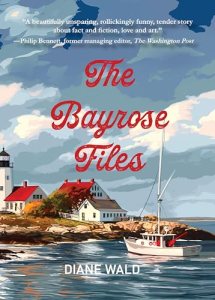 In the 1980s, Boston journalist Violet Maris infiltrates the Provincetown Home for Artists and Writers, intending to write a juicy insider’s exposé of what goes on at this artists’ colony. But to get there she has to commit a deception. Her gay friend Spencer Bayrose has a whole sheaf of unpublished short stories drawing on his Louisiana upbringing, and he offers to let her submit them as her own work to get a place at PHAW. Here Violet finds eccentrics aplenty, and even romance, but when news comes that Spence has AIDS, she has to decide how far she’ll go for a story and what she owes her friend. At barely over 100 pages, this feels more like a long short story, one with a promising setting and a sound plot arc, but not enough time to get to know or particularly care about the characters. I was reminded of books I’ve read by Julia Glass and Sara Maitland. It’s offbeat and good-natured but not top tier.
Published by Regal House Publishing. With thanks to publicist Jackie Karneth of Books Forward for the advanced e-copy for review.
A Family Matter was the best of the bunch for me, followed closely by Dream State.
Which of these do you fancy reading?
#1952Club: Patricia Highsmith, Paul Tillich & E.B. White
Simon and Karen’s classics reading weeks are always a great excuse to pick up some older books. I assembled an unlikely trio of lesbian romance, niche theology, and an animal-lover’s children’s classic.

Carol by Patricia Highsmith
Originally published as The Price of Salt under the pseudonym Claire Morgan, this is widely considered the first lesbian novel with a happy ending (it’s more open-ended, really, but certainly not tragic; suicide was a common consequence in earlier fiction). Therese, a 19-year-old aspiring stage designer in New York City, takes a job selling dolls in a department store one Christmas season. Her boyfriend, Richard, is a painter and has promised to take her to Europe, but she’s lukewarm about him and the physical side of their relationship has never interested her. One day, a beautiful blonde woman in a fur coat – “Mrs. H. F. Aird” (Carol) – comes to her counter to order a doll and have it sent to her out in New Jersey. Therese sends a Christmas card to the same address, and the women start meeting up for drinks and meals.
 It takes time for them to clarify their feelings to themselves, let alone to each other. “It would be almost like love, what she felt for Carol, except that Carol was a woman,” Therese thinks early on. When she first visits Carol’s home, a mothering dynamic prevails. Carol is going through a divorce and worries about its effect on her daughter, Rindy. The older woman tucks Therese into bed and brings her warm milk. Scenes like this have symbolic power but aren’t overdone; another has Therese and Richard out flying kites. She brings up homosexuality as a theoretical (“Did you ever hear of it? … I mean two people who fall in love suddenly with each other, out of the blue. Say two men or two girls”) and he cuts her kite strings.
The second half of the book has Carol and Therese setting out on a road trip out West. It should be an idyllic consummation, but they realize they’re being trailed by a private detective collecting evidence for Carol’s husband Harge to use against her in a custody battle. I was reminded of the hunt for Humbert Humbert and his charge in Lolita; “the whole world was ready to be their enemy,” Therese realizes, and to consider their relationship “sordid and pathological,” as Richard describes it in a letter.
The novel is a beautiful and subtle romance that unfolds despite the odds against it. I’d read five of Highsmith’s mysteries and thought them serviceable but nothing special (I don’t read crime in general). This does, however, share their psychological intensity and the suspense about how things will play out. Highsmith gives details about Therese’s early life and Carol’s previous intimate friendship that help to explain some things but never reduce either character to a diagnosis or a tendency. Neither of them wanted just anyone, some woman; it was this specific combination of souls that sparked at first sight. (Secondhand from a charity shop that closed long ago, so I know I’d had it on my shelf unread since 2016!) 
The Courage to Be by Paul Tillich
 Tillich is a theologian who left Nazi Germany for the USA in 1933. I had to read selections from his work as part of my Religion degree (during the Pauline Theology tutorial I took in Oxford during my year abroad, I think). This book is based on a lecture series he delivered at Yale University. He posits that in an age of anxiety, which “becomes general if the accustomed structures of meaning, power, belief and order disintegrate” – certainly apt for today! – it is more important than ever to develop the courage to be oneself and to be “as a part.” The individual and the collective are of equal importance, then. Tillich discusses various philosophers and traditions, from the Stoics to Existentialism. I have to admit that I barely got anything out of this, I found it so jargon-filled, repetitive and elliptical. It’s been probably 15 years or more since I’ve read any proper theology. I adopted that old student skimming trick of reading the first paragraph of each chapter, followed by the topic sentence of each paragraph, but that left me mostly none the wiser. Anyway, I believe his conclusion is that, when assailed by doubt, we can rely on “the God above the God of theism” – by which I take it he means the ground of all being rather than the deity envisioned by any specific religious system. (University library)
Charlotte’s Web by E.B. White
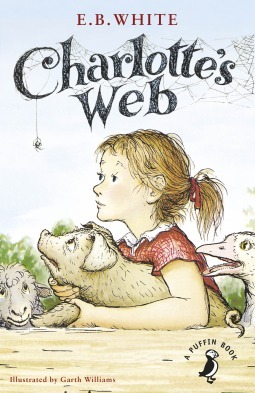 My library has a small section of the children’s department called “Family Matters” that includes the labels “First Time” (starting school, etc.), “Family” (divorce, new baby), “Health” (autism, medical conditions) and “Death.” I have the feeling Charlotte’s Web is not at all well known in the UK, whereas it’s a standard in the USA alongside L.M. Montgomery and Laura Ingalls Wilder. Were it more familiar to British children, it would be a great addition to that “Death” shelf. (Don’t read the Puffin Modern Classics introduction if you don’t want spoilers!) Wilbur is a doubly rescued pig. First, Fern Arable hand-rears him when he’s the doomed runt of the litter. When he’s transferred to Uncle Homer Zuckerman’s farm and an old sheep explains he’ll be fattened up for slaughter, his new friend Charlotte intervenes.
Charlotte is a fine specimen of a barn spider, well spoken and witty. She puts her mind to saving Wilbur’s bacon by weaving messages into her web, starting with “Some Pig.” He’s soon a county-wide spectacle, certain to survive the chop. But a farm is always, inevitably, a place of death. White fashions such memorable characters, including Templeton the gluttonous rat, and captures the hope of new life returning as the seasons turn over. Talking animals aren’t difficult to believe in when Fern can hear every word they say. The black-and-white line drawings are adorable. And making readers care about invertebrates? That’s a lasting achievement. I’m sure I read this several times as a child, but I appreciated it all the more as an adult. (Little Free Library) 

I’ve previously participated in the 1920 Club, 1956 Club, 1936 Club, 1976 Club, 1954 Club, 1929 Club, 1940 Club, 1937 Club, and 1970 Club.
Reading Ireland Month, I: Donoghue, Longley, Tóibín
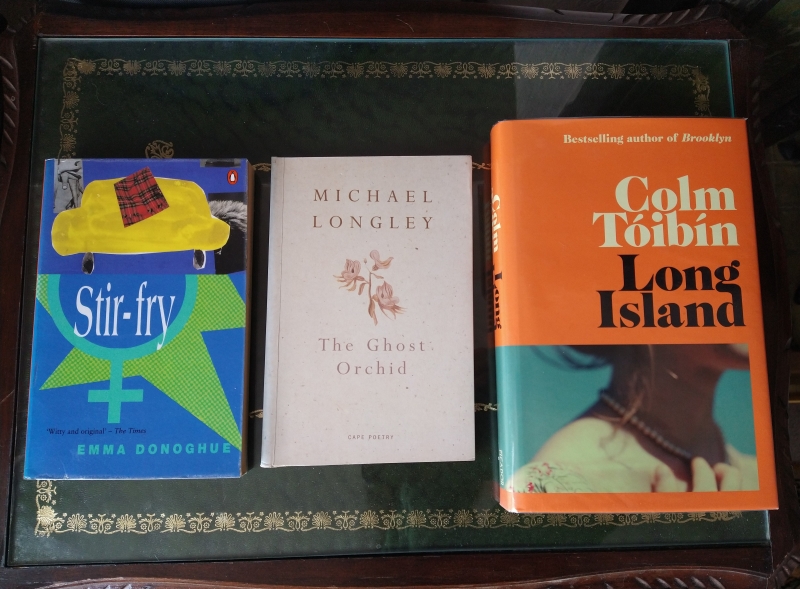
St. Patrick’s Day is a good occasion to compile my first set of contributions to Cathy’s Reading Ireland Month. Today I have an early novel by a favourite author, a poetry collection inspired by nature and mythology, and a sequel that I read for book club.
Stir-Fry by Emma Donoghue (1994)
After enjoying Slammerkin so much last year, I decided to catch up on more of Donoghue’s way-back catalogue. She tends to alternate between contemporary and historical settings. I have a slight preference for the former, but she can excel at both; it really depends on the book. I reckon this was edgy for its time. Maria (whose name rhymes with “pariah”) arrives in Dublin for university at age 17, green in every way after a religious upbringing in the countryside. In response to a flat-share advert stipulating “NO BIGOTS,” she ends up living with Ruth and Jael (pronounced “Yale”), two mature students. Ruth is the mother hen, doing all the cooking and fretting over the others’ wellbeing; Jael is a wild, henna-haired 30-year-old prone to drinking whisky by the mug-full. Maria attends lectures, takes a job cleaning office buildings, and finds a friend circle through her backstage student theatre volunteering. She’s mildly interested in American exchange student Galway and then leather-clad Damien (until she realizes he has a boyfriend), but nothing ever goes further than a kiss.
 It’s obvious to readers that Ruth and Jael are a couple, but Maria doesn’t work it out until a third of the way into the book. At first she’s mortified, but soon the realization is just one more aspect of her coming of age. Maria’s friend Yvonne can’t understand why she doesn’t leave – “how can you put up with being a gooseberry?” – but Maria insists, “They really don’t make me feel left out … I think they need me to absorb some of the static. They say they’d be fighting like cats if I wasn’t around to distract them.” Scenes alternate between the flat and the campus, which Donoghue depicts as a place where radicalism and repression jostle for position. Ruth drags Maria to a Tuesday evening Women’s Group meeting that ends abruptly: “A porter put his greying head in the door to comment that they’d have to be out in five minutes, girls, this room was booked for the archaeologists’ cheese ’n’ wine.” Later, Ruth’s is the Against voice in a debate on “That homosexuality is a blot on Irish society.”
Mostly, this short novel is a dance between the three central characters. The Irish-accented banter between them is a joy. Jael’s devil-may-care attitude contrasts with Ruth and Maria’s anxiety about how they are perceived by others. Ruth and Jael are figures in the Hebrew Bible and their devotion/boldness dichotomy is applicable to the characters here, too. The stereotypical markers of lesbian identity haven’t really changed, but had Donoghue written this now I think she would at least have made Maria a year older and avoided negativity about Damien and Jael’s bisexuality. At heart this is a sweet romance and an engaging picture of early 1990s feminism, but it doesn’t completely steer clear of predictability and I would have happily taken another 50–70 pages if it meant she could have fleshed out the characters and their interactions a little more. [Guess what was for my lunch this afternoon? Stir fry!] (Secondhand – Awesomebooks.com) 
The Ghost Orchid by Michael Longley (1995)
 Longley’s sixth collection draws much of its imagery from nature and Greek and Roman classics. Seven poems incorporate quotations and free translations of the Iliad and Odyssey; elsewhere, he retells the story of Baucis and Philemon and other characters from Ovid. The Orient and the erotic are also major influences; references to Hokusai bookend poems about Chinese artefacts. Poppies link vignettes of the First and Second World Wars. Longley’s poetry is earthy in its emphasis on material objects and sex. Alliteration and slant rhymes are common techniques and the vocabulary is always precise. This was the third collection I’ve read by the late Belfast poet, and with its disparate topics it didn’t all cohere for me. My two favourite poems are naughty indeed:
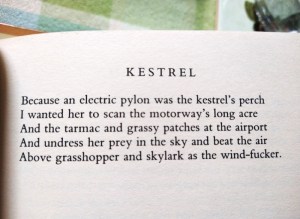
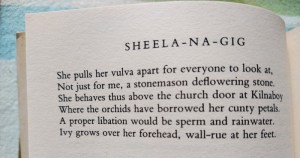
(Secondhand – Green Ink Booksellers, Hay-on-Wye) 
Long Island by Colm Tóibín (2024)
{SPOILERS in this one}
 I read Brooklyn when it first came out and didn’t revisit it (via book or film) before reading this. While recent knowledge of the first book isn’t necessary, it probably would make you better able to relate to Eilis, who is something of an emotional blank here. She’s been married for 20 years to Tony, a plumber, and is a mother to two teenagers. His tight-knit Italian American family might be considered nurturing, but for her it is more imprisoning: their four houses form an enclave and she’s secretly relieved when her mother-in-law tells her she needn’t feel obliged to join in the Sunday lunch tradition anymore.
When news comes that Tony has impregnated a married woman and the cuckolded husband plans to leave the baby on the Fiorellos’ doorstep when the time arrives, Eilis checks out of the marriage. She uses her mother’s upcoming 80th birthday as an excuse to go back to Ireland for the summer. Here Eilis gets caught up in a love triangle with publican Jim Farrell, who was infatuated with her 20 years ago and still hasn’t forgotten her, and Nancy Sheridan, a widow who runs a fish and chip shop and has been Jim’s secret lover for a couple of years. Nancy has a vision of her future and won’t let Eilis stand in her way.
I felt for all three in their predicaments but most admired Nancy’s pluck. Ironically given the title, the novel spends more of its time in Ireland and only really comes alive there. There’s also a reference to Nora Webster – cute that Tóibín is trying out the Elizabeth Strout trick of bringing multiple characters together in the same fictional community. But, all told, this was just a so-so book. I’ve read 10 or so works by Tóibín now, in all sorts of genres, and with its plain writing this didn’t stand out at all. It got an average score from my book club, with one person loving it, a couple hating it, and most fairly indifferent. (Public library)
Another batch will be coming up before the end of the month!
Best Books of 2024: My Top 20
I’m keeping it simple again this year with one post covering all genres: these are the 20 current-year releases that stood out the most for me. (No rankings.) Those that aren’t repeated from my Best Books from the First Half of 2024 post didn’t quite make the cut but should be considered as runners-up well worth your time. Unsurprisingly, health is a common theme across many of my selections, especially as it touches women’s lives. Pictured below are the books I read in print; the others were all electronic copies. Links are to my full reviews where available.
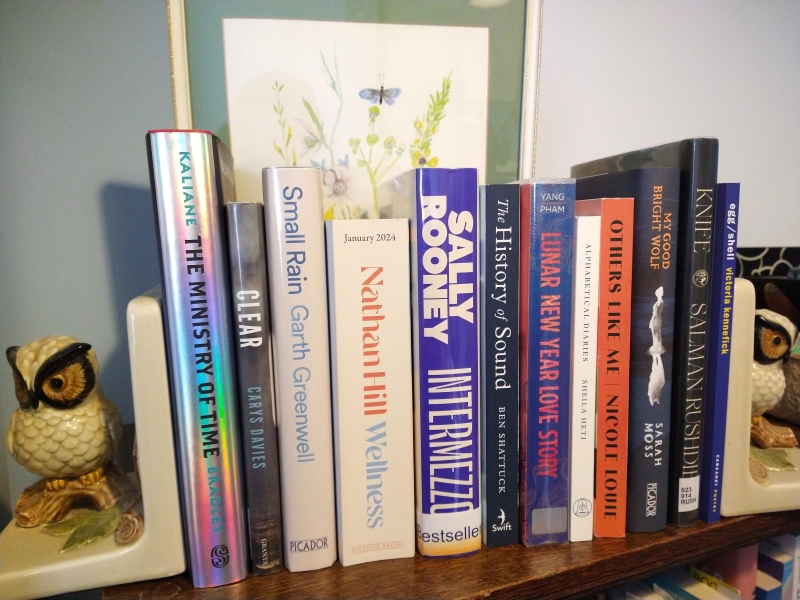
Fiction
 The Worst Journey in the World, Volume 1: Making Our Easting Down: The Graphic Novel by Sarah Airriess: The thrilling opening to a cinematically vivid adaptation of Apsley Cherry-Garrard’s 1922 memoir. He was an assistant zoologist on Robert Falcon Scott’s perilous 1910-13 Terra Nova expedition to the South Pole. The book resembles a full-color storyboard for a Disney-style maritime adventure film. There is jolly camaraderie as the men sing sea shanties to boost morale. The next volume can’t arrive soon enough.
 The Ministry of Time by Kaliane Bradley: This nuanced debut alternately goes along with and flouts the tropes of spy fiction and time travel sci-fi, making clever observations about how we frame stories of empire and progress. The narrator is a “bridge” helping to resettle a Victorian polar explorer in near-future London. You just have to suspend disbelief and go with it. Bradley’s descriptive prose is memorable but never quirky for the sake of it. I haven’t had so much fun with a book since Romantic Comedy. A witty, sexy, off-kilter gem.
 Behind You Is the Sea by Susan Muaddi Darraj: Darraj’s novel-in-stories is a shimmering composite portrait of a Palestinian American community in Baltimore. Across nine stellar linked stories, she explores the complex relationships between characters divided by—or connected despite—class, language, and traditional values. Each of the stories (four in the first person, five in the third person) spotlights a particular character. The book depicts the variety of immigrant and second-generation experience, especially women’s.
 Clear by Carys Davies: Depicts the Highland Clearances in microcosm though Ivar, last resident of a remote Scottish island between Shetland and Norway. John is a minister sent by the landowner to remove Ivar. Mary, John’s wife, journeys from the mainland to rescue him. Davies writes striking scenes that bring the island scenery to life. Her deceptively simple prose captures the slow building of emotion and moments that change everything. For a trio that seemed on course for tragedy, there is the grace of a happier ending.
 Small Rain by Garth Greenwell: A poet and academic (who both is and is not Greenwell) endures a Covid-era medical crisis that takes him to the brink of mortality and the boundary of survivable pain. Over two weeks, we become intimately acquainted with his every test, intervention, setback and fear. Experience is clarified precisely into fluent language that also flies far above a hospital bed, into a vibrant past, a poetic sensibility, a hoped-for normality. I’ve never read so remarkable an account of what it is to be a mind in a fragile body.
 Wellness by Nathan Hill: A state-of-the-nation story filtered through one Chicago family experiencing midlife and marital crises: underperforming academic Jack; his wife Elizabeth, a placebo researcher at Wellness; and their YouTube-obsessed son Toby. They’ve recently invested their life savings in a new condo. The addictive and spot-on novel asks questions about authenticity, purpose, and nurture. Is love itself a placebo? Hill is clearly fascinated with psychological experimentation but also questions it to humorous effect.
 Intermezzo by Sally Rooney: Twenty- and thirtysomethings having lots of sex, yes, but now a solemn tone: Characters’ suffering and failures have deepened their thinking, sense of self, and ability to feel for others. Peter and Ivan lost their father to cancer; Sylvia is in chronic pain after an accident; Naomi is evicted and aimless; Margaret is ashamed of having an estranged alcoholic husband. Chess is a clever metaphor for their interactions; the depiction of grief rings true. A stylistic leap forward, too. Her best, most mature work by a mile.
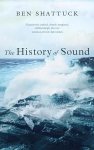 The History of Sound by Ben Shattuck: A dozen stories form a “hook-and-chain” formation of five couplets, bookended by a first and last story related to each other. Links are satisfyingly overt: A pair takes place in the same New England house in different centuries; a companion piece fills in the history of the characters from the previous. All are historically convincing, and the very human themes of lust, parenthood, sorrow and frustrated ambition resonate across centuries and state lines. Really beautiful (and better than North Woods).
 Lunar New Year Love Story by Gene Luen Yang (illus. LeUyen Pham): A super-cute teen graphic novel with gorgeous illustrations prioritizing pink and red to suit the theme. We follow Vietnamese American Valentina through high school as she plays host to an internal debate between cynicism and romanticism. Ever since her mother left, she’s longed to believe in romance but feared that love is a doomed prospect for her family. The Asian community of Oakland, California and a new hobby of lion dancing provide engrossing cultural detail.
Nonfiction
 Grief Is for People by Sloane Crosley: A bereavement memoir like no other. Heart-wrenching yet witty, it bears a unique structure and offers fascinating glimpses into the New York City publishing world. Crosley’s Manhattan apartment was burgled exactly a month before the suicide of her best friend and former boss, Russell. Throughout, the whereabouts of her family jewelry is as much of a mystery as the reason for Russell’s death, and investigating the stolen goods in parallel serves as a displacement activity for her.
 Alphabetical Diaries by Sheila Heti: Heti put 10 years of diary contents into a spreadsheet, alphabetizing each sentence, and then ruthlessly culled the results. The recurring topics are familiar from the rest of her oeuvre: obsessive cogitating about relationships, art and identity, but also the practicalities of trying to make a living as a woman in a creative profession. Heti transcends the quotidian by exploding chronology. Amazingly, the collage approach produces a genuine, crystalline vision of the self. A sui generis work of life writing.
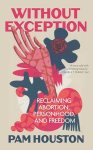 Without Exception: Reclaiming Abortion, Personhood, and Freedom by Pam Houston: If you’re going to read a polemic, make sure it’s as elegantly written and expertly argued as this one. Houston responds to the overturning of Roe v. Wade with 60 micro-essays – one for each full year of her life – about what it means to be in a female body in a country that seeks to control and systematically devalue women. The cycling of topics makes for an exquisite structure. Houston is among my recommendations for top-notch authors you might not know.
 The Body Alone: A Lyrical Articulation of Chronic Pain by Nina Lohman: Chronic Daily Headaches: Having a clinical term for extreme pain did nothing to solve it; no treatment Lohman has tried over a decade has helped much either. Medical professionals and friends alike downplay her experience because she is able to pass as well and raise two children. The fragmentary pieces read like poems. Bodily realities defy language, yet she employs words exquisitely. The tone flows from enraged to resigned to cynical and back.
 Others Like Me: The Lives of Women without Children by Nicole Louie: This impassioned auto/biographical collage combines the strengths of oral history, group biography and a fragmented memoir. “Motherhood as the epicentre of women’s lives was all I’d ever witnessed” via her mother and grandmother, Louie writes, so finding examples of women living differently was key. As readers, we watch her life, her thinking and the book all take shape. It’s warm and empathetic, with layers of stories that reflect diversity of experience.
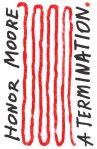 A Termination by Honor Moore: A fascinatingly discursive memoir that circles a 1969 abortion and contrasts societal mores across her lifetime. Moore was a 23-year-old drama student; the termination was “my first autonomous decision,” she insists, a way of saying, “I want this life, not that life.” Family and social factors put her life into perspective. The concise text is composed of crystalline fragments, incorporating occasional second- and third-person narration. The kaleidoscopic yet fluid approach is stunning.
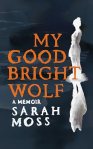 My Good Bright Wolf by Sarah Moss: Moss effectively contrasts the would-be happily ever after of generally getting better after eight years of disordered eating with her anorexia returning with a vengeance at age 46. The mood shifts so that what threatens to be slightly cloying in the childhood section turns academically curious and then, somehow, despite distancing pronouns (mostly second- but also some third-person narration), intimate. Shape-shifting, devastating, staunchly pragmatic; a unique model for converting life into art.
 Knife: Meditations after an Attempted Murder by Salman Rushdie: I’ve not had much success with Rushdie’s fiction, but this is excellent, with intriguing side tendrils and many quotable lines. It traces lead-up and aftermath; unexpected echoes, symbolism and ironies. Although Rushdie goes into some medical detail about his recovery, you get the sense of him more as an unchanging mind and a resolute will. The most noteworthy section imagines dialogues he might have with the imprisoned assailant, probing his beliefs and motivations.
Poetry
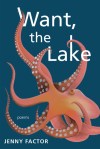 Want, the Lake by Jenny Factor: Factor’s long, intricate poetry collection showcases the tension between past and present and envisions womanhood as a tug of war between desire and constraint. “Elegy for a Younger Self” poems string together vivid reminiscences. In “Sapphics on Nursing” and elsewhere, romantic friendships edge toward homoeroticism; heterosexual marriage and motherhood represent either delightful intimacy or a snare. Allusion and experience, slant rhymes and wordplay craft a lavish tapestry.
 Inconsolable Objects by Nancy Miller Gomez: This debut collection recalls a Midwest girlhood of fairground rides and lake swimming, tornadoes and cicadas. But her Kansas isn’t all rose-tinted nostalgia; there’s an edge of sadness and danger. “Missing History” notes how women’s stories, such as her grandmother’s, are lost to time. In “Tilt-A-Whirl,” her older sister’s harmless flirtation with a ride operator becomes sinister. She also takes inspiration from headlines. The alliteration and slant rhymes are to die for.
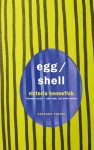 Egg/Shell by Victoria Kennefick: Motherhood and the body are overarching themes. The speaker has multiple miscarriages and names her lost children after plants. Becoming a mother is a metamorphosis all its own, while another long section is about her husband’s transition. Bird metaphors are inescapable. The structure varies throughout: columns, stanzas; a list, a recipe. Amid the sadness, there is dark humour and one-line rejoinders. If you’re wondering how life can be captured in achingly beautiful poetry, look no further.
If I had to choose just one of each? This trio trying out complementary strategies for transmuting life into literature: Small Rain, Alphabetical Diaries and Egg/Shell.


Have you read any of these? Or might you now, based on my recommendation?
Nonfiction November Book Pairings: Autistic Husbands & The Ocean
Liz is the host for this week’s Nonfiction November prompt. The idea is to choose a nonfiction book and pair it with a fiction title with which it has something in common.
I came up with these two based on my recent reading:
An Autistic Husband
The Rosie Effect by Graeme Simsion (also The Rosie Project and The Rosie Result)
&
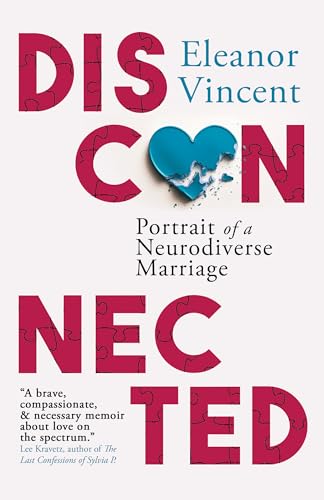
Disconnected: Portrait of a Neurodiverse Marriage by Eleanor Vincent
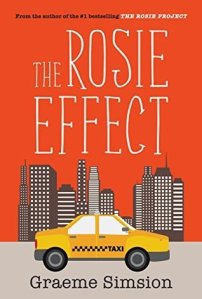 Graeme Simsion’s Don Tillman trilogy tells the odd-couple story of an autistic professor and how he falls in love with and marries a wholly unsuitable neurotypical woman. He turns this situation into romantic comedy. For Eleanor Vincent, it wasn’t so funny. She met her third husband, computer scientist Lars (a pseudonym), through Zydeco dancing when she was in her sixties. Though aware that he could be unemotional and act strangely, she found him chivalrous and sweet. They dated for a time but he hurt and confused her by asking for his apartment keys back. After a five-year period she calls their “Interregnum,” the two got back together and married. Despite their years of friendship, she was completely unprepared for what living with him would be like. “At the age of seventy-one, I had married a stranger,” she writes.
It didn’t help that Covid hit partway through their four-year marriage, nor that they each received a cancer diagnosis (cervical vs. prostate). But the problems were more with their everyday differences in responses and processing. During their courtship, she ignored some bizarre things he did around her family: he bit her nine-year-old granddaughter as a warning of what would happen if she kept antagonizing their cat, and he put a gift bag over his head while they were at the dinner table with her siblings. These are a couple of the most egregious instances, but there are examples throughout of how Lars did things she didn’t understand. Through support groups and marriage counselling, she realized how well Lars had masked his autism when they were dating – and that he wasn’t willing to do the work required to make their marriage succeed. The book ends with them estranged but a divorce imminent.
 If this were purely carping about a husband’s weirdness, it might have been tedious or depressing. But Vincent doesn’t blame Lars, and she incorporates so much else in this short memoir, including a number of topics that are of particular interest to me. There’s her PTSD from a traumatic upbringing, her parents’ identity as closeted gay people, the complications around her father’s death, the tragedy of her older daughter’s death, as well as the more everyday matters of being a working single parent, finding an affordable property in California’s Bay Area, and blending households.
Vincent crafts engaging scenes with solid recreated dialogue, and I especially liked the few meta chapters revealing “What I Left Out” – a memoir is always a shaped narrative, while life is messy; this shows both. She is also honest about her own failings and occasional bad behavior. I probably could have done with a little less detail on their sex life, however.
This had more relevance to me than expected. While my sister and I were clearing our mother’s belongings from the home she shared with her second husband for the 16 months between their wedding and her death, our stepsisters mentioned to us that they suspected their father was autistic. It was, as my sister said, a “lightbulb” moment, explaining so much about our respective parents’ relationship, and our interactions with him as well. My stepfather (who died just 10 months after my mother) was a dear man, but also maddening at times. A retired math professor, he was logical and flat of affect. Sometimes his humor was off-kilter and he made snap, unsentimental decisions that we couldn’t fathom. Had they gotten longer together, no doubt many of the issues Vincent experienced would have arisen. (Read via BookSirens)
[173 pages]
The Ocean
Playground by Richard Powers
&
Rachel Carson and the Power of Queer Love by Lida Maxwell
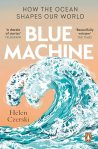
The Blue Machine by Helen Czerski
Under the Sea Wind by Rachel Carson
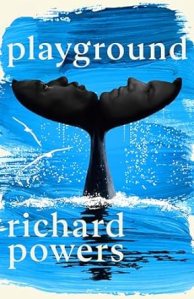 While I was less than enraptured with its artificial intelligence theme and narrative trickery, I loved the content about the splendour of the ocean in Richard Powers’s Booker Prize-longlisted Playground. Most of this comes via Evelyne Beaulieu, a charismatic French Canadian marine biologist (based in part on Sylvia Earle) who is on the first all-female submarine mission and is still diving in the South Pacific in her nineties. Powers explicitly references Rachel Carson’s The Sea Around Us. Between that and the revelation of Evelyne as a late-bloomer lesbian, I was reminded of Rachel Carson and the Power of Queer Love, a forthcoming novella-length academic study by Lida Maxwell that I have assessed for Foreword Reviews. Maxwell’s central argument is that Carson’s romantic love for a married woman, Dorothy Freeman, served as an awakening to wonder and connection and spurred her to write her greatest works.
After reading Playground, I decided to place a library hold on Blue Machine by Helen Czerski (winner of the Wainwright Writing on Conservation Prize this year), which Powers acknowledges as an inspiration that helped him to think bigger. I have also pulled my copy of Under the Sea Wind by Rachel Carson off the shelf as it’s high time I read more by her.
Previous book pairings posts: 2018 (Alzheimer’s, female friendship, drug addiction, Greenland and fine wine!) and 2023 (Hardy’s Wives, rituals and romcoms).
#SciFiMonth: A Simple Intervention (#NovNov24 and #GermanLitMonth) & Station Eleven Reread
It’s rare for me to pick up a work of science fiction but occasionally I’ll find a book that hits the sweet spot between literary fiction and sci-fi. Parable of the Sower by Octavia Butler, The Book of Strange New Things by Michel Faber and The Sparrow by Mary Doria Russell are a few prime examples. It was the comparisons to Margaret Atwood and Kazuo Ishiguro, masters of the speculative, that drew me to my first selection, a Peirene Press novella. My second was a reread, 10 years on, for book club, whose postapocalyptic content felt strangely appropriate for a week that delivered cataclysmic election results.

A Simple Intervention by Yael Inokai (2022; 2024)
[Translated from the German by Marielle Sutherland]
Meret is a nurse on a surgical ward, content in the knowledge that she’s making a difference. Her hospital offers a pioneering procedure that cures people of mental illnesses. It’s painless and takes just an hour.
The doctor had to find the affected area and put it to sleep, like a sick animal. That was his job. Mine was to keep the patients occupied. I was to distract them from what was happening and keep them interacting with me. As long as they stayed awake, we knew the doctor and his instruments had found the right place.
 The story revolves around Meret’s emotional involvement in the case of Marianne, a feisty young woman who has uneasy relationships with her father and brothers. The two play cards and share family anecdotes. Until the last few chapters, the slow-moving plot builds mostly through flashbacks, including to Meret’s affair with her fellow nurse, Sarah. This roommates-to-lovers thread reminded me of Learned by Heart by Emma Donoghue. When Marianne’s intervention goes wrong, Meret and Sarah doubt their vocation and plan an act of heroism.
Inokai invites us to ponder whether what we perceive as defects are actually valuable personality traits. More examples of interventions and their aftermath would be a useful point of comparison, though, and the pace is uneven, with a lot of unnecessary-seeming backstory about Meret’s family life. In the letter that accompanied my review copy, Inokai explained her three aims: to portray a nurse (her mother’s career) because they’re underrepresented in fiction, “to explore our yearning to cut out our ‘demons’,” and to offer “a queer love story that was hopeful.” She certainly succeeds with those first and third goals, but with the central subject I felt she faltered through vagueness.
Born in Switzerland, Inokai now lives in Berlin. This also counts as my first contribution to German Literature Month; another is on the way!
[187 pages]
With thanks to Peirene Press for the free copy for review.


Station Eleven by Emily St. John Mandel (2014)
For synopsis and analysis I can’t do better than when I reviewed this for BookBrowse a few months after its release, so I’d direct you to the full text here. (It’s slightly depressing for me to go back to old reviews and see that I haven’t improved; if anything, I’ve gotten lazier.) A couple book club members weren’t as keen, I think because they’d read a lot of dystopian fiction or seen many postapocalyptic films and found this vision mild and with a somewhat implausible setup and tidy conclusion. But for me this and Cormac McCarthy’s The Road have persisted as THE literary depictions of post-apocalypse life because they perfectly blend the literary and the speculative in an accessible and believable way (this was a National Book Award finalist and won the Arthur C. Clarke Award), contrasting a harrowing future with nostalgia for an everyday life that we can already see retreating into the past.
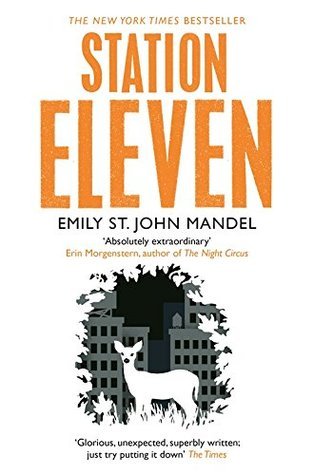 Station Eleven has become a real benchmark for me, against which I measure any other dystopian novel. On this reread, I was captivated by the different layers of the nonlinear story, from celebrity gossip to a rare graphic novel series, and enjoyed rediscovering the links between characters and storylines. I remembered a few vivid scenes and settings. Mandel also seeds subtle connections to later work, particularly The Glass Hotel (island off Vancouver, international shipping and finance) but also Sea of Tranquility (music, an airport terminal). I haven’t read her first three novels, but wouldn’t be surprised if they have additional links.
The two themes that most struck me this time were the enduring power of art and how societal breakdown would instantly eliminate the international – but compensate for it with the return of the extremely local. At a time when it feels difficult to trust central governments to have people’s best interests at heart, this is a rather comforting prospect. Just in my neighbourhood, I see how we implement this care on a small scale. In settlements of up to a few hundred, the remnants of Station Eleven create something like normal life by Year 20.
Book club members sniped that the characters could have better pooled skills, but we agreed that Mandel was wise to limit what could have been tedious details about survival. “Survival is insufficient,” as the Traveling Symphony’s motto goes (borrowed from Star Trek). Instead, she focuses on love, memory, and hunger for the arts. In some ways, this feels prescient of Covid-19, but even more so of the climate-related collapse I expect in my lifetime. I’ve rated this a little bit higher the second time for its lasting relevance. (Free from a neighbour) 
Some favourite passages:
the whole of Chapter 6, a bittersweet litany that opens “An incomplete list: No more diving into pools of chlorinated water lit green from below” and includes “No more pharmaceuticals,” “No more flight,” and “No more countries”
“what made it bearable were the friendships, of course, the camaraderie and the music and the Shakespeare, the moments of transcendent beauty and joy”
“The beauty of this world where almost everyone was gone. If hell is other people, what is a world with almost no people in it?”

20 Books of Summer, 17–18: Suzanne Berne and Melissa Febos
Nearly there! I’ll have two more books to review for this challenge as part of roundups tomorrow and Saturday. Today I have a lesser-known novel by a Women’s Prize winner and a set of personal essays about body image and growing up female.
A Perfect Arrangement by Suzanne Berne (2001)
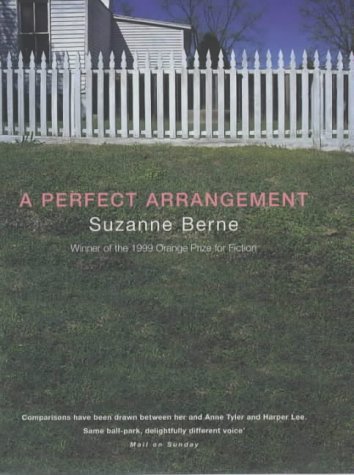 Berne won the Orange (Women’s) Prize for A Crime in the Neighbourhood in 1999. This is another slice of mild suburban suspense. The Boston-area Cook-Goldman household faces increasingly disruptive problems. Architect dad Howard is vilified for a new housing estate he’s planning, plus an affair that he had with a colleague a few years ago comes back to haunt him. Hotshot lawyer Mirella can’t get the work–life balance right, especially when she finds out she’s unexpectedly pregnant with twins at age 41. They hire a new nanny to wrangle their two under-fives, headstrong Pearl and developmentally delayed Jacob. If Randi Gill seems too good to be true, that’s because she’s a pathological liar. But hey, she’s great with kids.
It’s clear some Bad Stuff is going to happen to this family; the only questions are how bad and precisely what. Now, this is pretty much exactly what I want from my “summer reading”: super-readable plot- and character-driven fiction whose stakes are low (e.g., midlife malaise instead of war or genocide or whatever) and that veers more popular than literary and so can be devoured in large chunks. I really should have built more of that into my 20 Books plan! I read this much faster than I normally get through a book, but that meant the foreshadowing felt too prominent and I noticed some repetition, e.g., four or five references to purple loosestrife, which is a bit much even for those of us who like our wildflowers. It seemed a bit odd that the action was set back in the Clinton presidency; the references to the Lewinsky affair and Hillary’s “baking cookies” remark seemed to come out of nowhere. And seriously, why does the dog always have to suffer the consequences of humans’ stupid mistakes?!
This reminded me most of Friends and Strangers by J. Courtney Sullivan and a bit of Breathing Lessons by Anne Tyler, while one late plot turn took me right back to The Senator’s Wife by Sue Miller. While the Goodreads average rating of 2.93 seems pretty harsh, I can also see why fans of A Crime would have been disappointed. I probably won’t seek out any more of Berne’s fiction. (Secondhand – Community Furniture Project, Newbury)
Girlhood by Melissa Febos (2021)
I was deeply impressed by Febos’s Body Work (2022), a practical guide to crafting autobiographical narratives as a way of reckoning with the effects of trauma. Ironically, I engaged rather less with her own personal essays. One issue for me was that her highly sexualized experiences are a world away from mine. I don’t have her sense of always having had to perform for the male gaze, though maybe I’m fooling myself. Another was that it’s over 300 pages and only contains seven essays, so there were several pieces that felt endless. This was especially true of “The Mirror Test” (62 pp.) which is about double standards for girls as they played out in her simultaneous lack of confidence and slutty reputation, but randomly references The House of Mirth quite a lot; and “Thank You for Taking Care of Yourself” (74 pp.), which ponders why Febos has such trouble relaxing at a cuddle party and whether she killed off her ability to give physical consent through her years as a dominatrix.
 “Wild America,” about her first lesbian experience and the way she came to love a perceived defect (freakishly large hands; they look perfectly normal to me in her author photo), and “Intrusions,” about her and other women’s experience with stalkers, worked a bit better. But my two favourites incorporated travel, a specific relationship, and a past versus present structure. “Thesmophoria” opens with her arriving in Rome for a mother–daughter vacation only to realize she told her mother the wrong month. Feeling guilty over the error, she remembers other instances when she valued her mother’s forgiveness, including when she would leave family celebrations to buy drugs. The allusions to Greek myth were neither here nor there for me, but the words about her mother’s unconditional love made me cry.
I also really liked “Les Calanques,” which again draws on her history of heroin addiction, comparing a strung-out college trip to Paris when she scored with a sweet gay boy named Ahmed with the self-disciplined routines and care for her body she’d learned by the time she returns to France for a writing retreat. This felt like a good model for how to write about one’s past self. “I spend so much time with that younger self, her savage despair and fleeting reliefs, that I start to feel as though she is here with me.” The prologue, “Scarification,” is a numbered list of how she got her scars, something Paul Auster also gives in Winter Journal. As if to insist that we can only ever experience life through our bodies.
Although I’d hoped to connect to this more, and ultimately felt it wasn’t really meant for me (and maybe I’m a deficient feminist), I did admire the range of strategies and themes so will keep it on the shelf as a model for approaching the art of the personal essay. I think I would probably prefer a memoir from Febos, but don’t need to read more about her sex work (Whip Smart), so might look into Abandon Me. If bisexuality and questions of consent are of interest, you might also like Another Word for Love by Carvell Wallace, which I reviewed for BookBrowse. (Gift (secondhand) from my Christmas wish list last year) 
#WITMonth, Part I: Novellas by Eva Baltasar and Françoise Sagan
I’m starting off my Women in Translation month coverage with mini responses to two novellas: one Catalan and one French; both about disaffected women trying to work out what they want from life.
Mammoth by Eva Baltasar (2022; 2024)
[Translated from the Catalan by Julia Sanches]
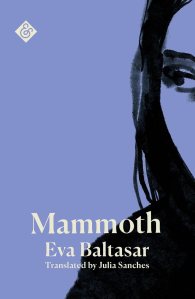 I’d been vaguely attracted by descriptions of the Spanish poet’s novels Permafrost and Boulder, which are also about lesbians in odd situations. Mammoth is the third book in a loose trilogy. Its 24-year-old narrator is so desperate for a baby that she’s decided to have unprotected sex with men until a pregnancy results. In the meantime, her sociology project at nursing homes comes to an end and she moves from Barcelona to a remote farm where she develops subsistence skills and forms an interdependent relationship with the gruff shepherd. “I’d been living in a drowning city, and I need this – the restorative silence of a decompression chamber. … my past is meaningless, and yet here, in this place, there is someone else’s past that I can set up and live in awhile.” For me this was a peculiar combination of distinguished writing (“The city pounces on the still-pale light emerging from the deep sea and seizes it with its lucrative forceps”) but absolutely repellent story, with a protagonist whose every decision makes you want to throttle her. An extended scene of exterminating feral cats certainly didn’t help matters. I’d be wary of trying Baltasar again.
With thanks to And Other Stories for the proof copy for review.
Aimez-vous Brahms… by Françoise Sagan (1959; 1960)
[Translated from the French by Peter Wiles]
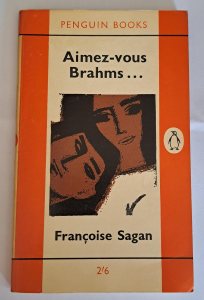 At age 39, divorced interior decorator Paule is “passionately concerned with her beauty and battling with the transition from young to youngish woman”. (Ouch. But true.) It’s an open secret that her partner Roger is always engaged in a liaison with a young woman; people pity her and scorn Roger for his infidelity. But when Paule has a dalliance with a client’s son, 25-year-old lawyer Simon, a double standard emerges: “they had never shown her the mixture of contempt and envy she was going to arouse this time.” Simon is an idealist, accusing her of “letting love go by, of neglecting your duty to be happy”, but he’s also indolent and too fond of drink. Paule wonders if she’s expected too much from an affair. “Everyone advised a change of air, and she thought sadly that all she was getting was a change of lovers: less bother, more Parisian, so common”.
I was by turns reminded of Chéri by Colette, In a Summer Season by Elizabeth Taylor, and even The Graduate (“Mrs. Robinson,” anyone?). Simon asks the title question to invite Paule to a concert; that she has to ponder it carefully tells her she’s “losing herself, losing track of herself”. But it’s all too easy for the status quo to be reinstated after a brave act. Middle-aged woman makes bid for freedom but ultimately nothing changes: same plot as The Funeral Cryer and any number of other books, but this was so much better. How did Sagan manage such insight at age 24 (and this was her fourth book)?! While not quite as memorable as Bonjour Tristesse, this is another incisive slice of fiction that has aged well apart from using “sodomite” and “Negress” as matter-of-fact terms for bit players. I’d read anything else I can find by Sagan. (Secondhand – Community Furniture Project, Newbury)
June Releases by Caroline Bird, Kathleen Jamie, Glynnis MacNicol and Naomi Westerman
These four books by women all incorporate life writing to an extent. Although the forms differ, a common theme – as in the other June releases I’ve reviewed, Sandwich and Others Like Me – is grappling with what a woman’s life should be, especially for those who have taken an unconventional path (i.e. are queer or childless) or are in midlife or later. I’ve got a poet up to her usual surreal shenanigans but with a new focus on lesbian parenting; a hybrid collection of poetry and prose giving snapshots of nature in crisis; an account of a writer’s hedonistic month in pandemic-era Paris; and mordant essays about death culture.
Ambush at Still Lake by Caroline Bird
 Caroline Bird has become one of my favourite contemporary poets over the past few years. Her verse is joyously cheeky and absurdist. A great way to sample it is via her selected poems, Rookie. This seventh collection is muted by age and circumstance – multiple weddings and a baby – but still hilarious in places. Instead of rehab or hospital as in In These Days of Prohibition, the setting is mostly the domestic sphere. Even here, bizarre things happen. The police burst in at 4 a.m. for no particular reason; search algorithms and the baby monitor go haywire. Her brother calls to deliver a paranoid rant (in “Up and at ’Em”), while Nannie Edna’s dying wish is to dangle her great-grandson from her apartment window (in “Last Rites”). The clinic calls to announce that their sperm donor was a serial killer – then ‘oops, wrong vial, never mind!’ A toddler son’s strange and megalomaniac demands direct their days. My two favourites were “Ants,” in which a kitchen infestation signals general chaos, and “The Frozen Aisle,” in which a couple scrambles to finish the grocery shop and get home to bed before a rare horny moment passes. A lesbian pulp fiction cover, mischievous wit and topics of addiction and queer parenting: this is not your average poetry.
With thanks to Carcanet Press for the free copy for review.
A sample poem:
Siblings
A woman gave birth
to the reincarnation
of Gilbert and Sullivan
or rather, two reincarnations:
one Gilbert, one Sullivan.
What are the odds
of both being resummoned
by the same womb
when they could’ve been
a blue dart frog
and a supply teacher
on separate continents?
Yet here they were, squidged
into a tandem pushchair
with their best work
behind them, still smarting
from the critical reception
of their final opera
described as ‘but an echo’
of earlier collaborations.
Cairn by Kathleen Jamie
 As she approached age 60, Kathleen Jamie found her style changing. Whereas her other essay collections alternate extended nature or travel pieces with few-page vignettes, Cairn eschews longer material and instead alternates poems with micro-essays on climate crisis and outdoor experiences. In the prologue she calls these “distillations and observations. Testimonies” that she has assembled into “A cairn of sorts.”
As in Surfacing, she writes many of the autobiographical fragments in the second person. The book is melancholy at times, haunted by all that has been lost and will be lost in the future:
What do we sense on the moor but ghost folk,
ghost deer, even ghost wolf. The path itself is a
phantom, almost erased in ling and yellow tormentil (from “Moor”)
In “The Bass Rock,” Jamie laments the effect that bird flu has had on this famous gannet colony and wishes desperately for better news:
The light glances on the water. The haze clears, and now the rock is visible; it looks depleted. But hallelujah, a pennant of twenty-odd gannets is passing, flying strongly, now rising now falling They’ll be Bass Rock birds. What use the summer sunlight, if it can’t gleam on a gannet’s back? You can only hope next year will be different. Stay alive! You call after the flying birds. Stay alive!
Natural wonders remind her of her own mortality and the insignificance of human life against deep time. “I can imagine the world going on without me, which one doesn’t at 30.” She questions the value of poetry in a time of emergency: “If we are entering a great dismantling, we can hardly expect lyric to survive. How to write a lyric poem?” (from “Summer”). The same could be said of any human endeavour in the face of extinction: We question the point but still we continue.
My two favourite pieces were “The Handover,” about going on an environmental march with her son and his friends in Glasgow and comparing it with the protests of her time (Greenham Common and nuclear disarmament) – doom and gloom was ever thus – and the title poem, which piles natural image on image like a cone of stones. Although I prefer the depth of Jamie’s other books to the breadth of this one, she is an invaluable nature writer for her wisdom and eloquence, and I am grateful we have heard from her again after five years.
With thanks to Sort Of Books for the free copy for review.
I’m Mostly Here to Enjoy Myself: One Woman’s Pursuit of Pleasure in Paris by Glynnis MacNicol
 I loved New York City freelance writer Glynnis MacNicol’s No One Tells You This (2018), which approached her 40th year as an adventure into the unknown. This second memoir is similarly frank and intrepid as MacNicol examines the unconscious rules that people set for women in their mid-forties and gleefully flouts them, remaining single and childfree and delighting in the freedom that allows her to book a month in Paris on a whim. She knows that she is an anomaly for being “untethered”; “I am ready for anything. To be anyone.”
This takes place in August 2021, when some pandemic restrictions were still in force, and she found the city – a frequent destination for her over the years – drained of locals, who were all en vacances, and largely empty of tourists, too. Although there was still a queue for the Mona Lisa, she otherwise found the Louvre very quiet, and could ride her borrowed bike through the streets without having to look out for cars. She and her single girlfriends met for rosé-soaked brunches and picnics, joined outdoor dance parties and took an island break.
And then there was the sex. MacNicol joined a hook-up app called Fruitz and met all sorts of men. She refused to believe that, just because she was 46 going on 47, she should be invisible or demure. “All the attention feels like pure oxygen. Anything is possible.” Seeing herself through the eyes of an enraptured 27-year-old Italian reminded her that her body was beautiful even if it wasn’t what she remembered from her twenties (“there is, on average, a five-year gap between current me being able to enjoy the me in the photos”). The book’s title is something she wrote while messaging with one of her potential partners.
As I wrote yesterday about Others Like Me, there are plenty of childless role models but you may have to look a bit harder for them. MacNicol does so by tracking down the Paris haunts of women writers such as Edith Wharton and Colette. She also interrogates this idea of women living a life of pleasure by researching the “odalisque” in 18th- and 19th-century art, as in the François Boucher painting on the cover. This was fun, provocative and thoughtful all at once; well worth seeking out for summer reading and armchair travelling.
(Read via Edelweiss) Published in the USA by Penguin Life/Random House.
Happy Death Club: Essays on Death, Grief & Bereavement across Cultures by Naomi Westerman
 Like Erica Buist (This Party’s Dead) and Caitlin Doughty (Smoke Gets in Your Eyes, From Here to Eternity and Will My Cat Eat My Eyeballs?), playwright Naomi Westerman finds the comical side of death. Part of 404 Ink’s Inklings series (“Big ideas, pocket-sized books” – perfect for anyone looking for short nonfiction for Novellas in November!), this is a collection of short essays about her own experiences of bereavement as well as her anthropological research into rituals and beliefs around death. “The Rat King of South London” is about her father’s sudden death from an abdominal aneurysm. An instantaneous death is a good one, she contends. More than 160,000 people die every day, and what to do with all those bodies is a serious question. A subversive sense of humour is there right from the start, as she gives a rundown of interment options. “Mummification: Beloved by Ancient Egyptians and small children going through their Ancient Egypt phase, it’s a classic for a reason!” Meanwhile, she legally owns her father’s plot so also buries dead pet rats there.
Other essays are about taking her mother’s ashes along on world travels, the funeral industry and “red market” sales of body parts, grief as a theme in horror films, the fetishization of dead female bodies, Mexico’s Day of the Dead festivities, and true crime obsession. In “Batman,” an excerpt from one of her plays, she goes to have a terrible cup of tea with the man she believes to be responsible for her mother’s death – a violent one, after leaving an abusive relationship. She also used the play to host an on-stage memorial for her mother since she wasn’t able to sit shiva. In the final title essay, Westerman tours lots of death cafés and finds comfort in shared experiences. These pieces are all breezy, amusing and easy to read, so it’s a shame that this small press didn’t achieve proper proofreading, making for a rather sloppy text, and that the content was overall too familiar for me.
With thanks to 404 Ink and publicist Claire Maxwell for the free copy for review.
Does one or more of these catch your eye?
What June releases can you recommend?
 Bookish Beck = Rebecca Foster. American transplant to England. Freelance proofreader and book reviewer.
