A Review for PKD Awareness Day: The Mourner’s Bestiary by Eiren Caffall
Today is PKD Awareness Day. Because the author and I both have polycystic kidney disease, I’m doing something I rarely do and reprinting an early review of mine that has already appeared on Shelf Awareness. I could hardly believe it when I was trawling through the list of review book offers and saw that Eiren Caffall also has PKD, then even more astonished to learn that it is a major theme in her memoir, which also weaves in marine biology and environmental concerns. An altogether intriguing book that, of course, held personal interest for me.
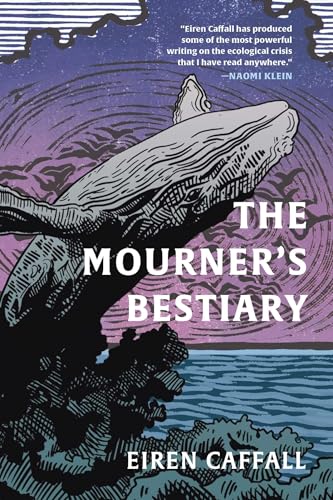
The Mourner’s Bestiary by Eiren Caffall
Eiren Caffall’s debut is an ardent elegy for her illness-haunted family and for the ailing marine environments that inspire her.
For centuries, the author’s family has been subject to “the Caffall Curse.” Polycystic kidney disease, a degenerative genetic condition, causes fluid-filled cysts to proliferate in a person’s enlarged kidneys. PKD can involve pain, fatigue, high blood pressure, kidney failure, and a heightened risk of brain aneurysm. Given Caffall’s paternal family history, she expected to die before age 50.
 Caffall’s melancholy memoir spotlights moments that opened her eyes to medical and environmental catastrophe. In 1980, when she was nine years old, she and her parents vacationed at a rental cottage on Long Island Sound. They nicknamed the pollution-ridden site “Dogshit Beach”—her mother spent idyllic summers there as a child, yet now “both the ecosystem and my father were slipping away.” For the first time, Caffall became aware of her father’s suffering and lack of energy. She realized that she, too, might have inherited PKD and could face similar struggles as an adult.
In 2014, Caffall, then a single mother, took her nine-year-old son, Dex, on vacation to the Gulf of Maine. During the trip, she had a fall that prompted a seizure, and she and Dex were evacuated from Monhegan Island by Coast Guard ship. Although no further seizures ensued and no clear cause emerged, the crisis served as a wake-up call, reminding her of how serious PKD is and that it might afflict her son as well.
The book draws fascinating connections between personal experiences and ecological threats. Caffall structures her story as a gallery of endangered marine animals such as the Longfin Inshore Squid and Humpback Whale, tracing their history and exposing the dangers they face in degraded environments. Red tides (massive algal blooms) and floods are apt metaphors for physical trials: “the Sound was dying, hypoxic … from an overwhelm of nutrients flooding an ecosystem—nitrogen, phosphorus, imbalanced saline—the same things that overwhelm a body when kidneys can no longer filter blood properly.”
Re-created scenes enliven accounts of family illness and therapeutic developments. The lyrical hybrid narrative, informed by scientific journals and government publications, is as impassioned about restoring the environment as it is about ensuring equality of access to health care. Personal and species extinction are just cause for “permanent mourning,” Caffall writes, but adapting to change keeps hope alive.
(Coming out in the USA from Row House Publishing on October 15th)
Posted with permission from Shelf Awareness.
[I couldn’t help but compare family members’ trajectories. Like her father, my mother was on dialysis for a time before getting a transplant, from her cousin. Like her aunt, my uncle died of a brain aneurysm, which is an associated risk. It sounds like Caffall has been much more severely affected than I have thus far. She is 53 and on Tolvaptan, a cutting-edge drug that slows the growth of cysts and thus the decline in kidney function. But even within families, the disease course is so varied. A cousin of mine was in her thirties when she had a transplant, whereas I am still very much in the early stages.]
A shout-out to the PKD Foundation in the States and the PKD Charity here in the UK.
A related post: In 2017 I reviewed four books for World Kidney Day.
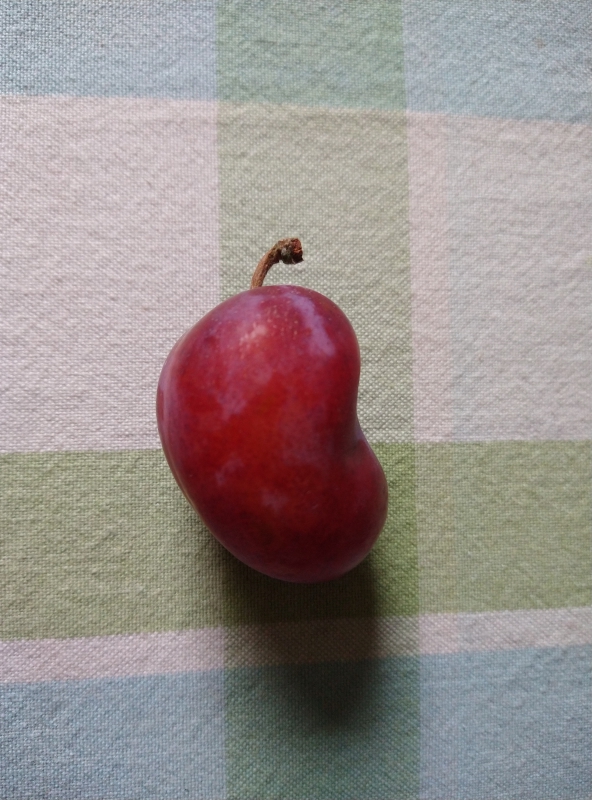
From the supermarket last week: a plum that wanted to be a kidney.
Book Serendipity, June to Mid-August 2024
I call it “Book Serendipity” when two or more books that I read at the same time or in quick succession have something in common – the more bizarre, the better. This is a regular feature of mine every couple of months. Because I usually have 20–30 books on the go at once, I suppose I’m more prone to such incidents. People frequently ask how I remember all of these coincidences. The answer is: I jot them on scraps of paper or input them immediately into a file on my PC desktop; otherwise, they would flit away!
The following are in roughly chronological order.
- A self-induced abortion scene in Recipe for a Perfect Wife by Karma Brown and Sleeping with Cats by Marge Piercy.
- A woman who cleans buildings after hours, and a character named Tova who lives in the Seattle area in A Reason to See You Again by Jami Attenberg and Remarkably Bright Creatures by Shelby Van Pelt.
- Flirting with a surf shop employee in Sandwich by Catherine Newman and Remarkably Bright Creatures by Shelby Van Pelt.
- Living in Paris and keeping ticket stubs from all films seen in Paris Trance by Geoff Dyer and The Invention of Hugo Cabret by Brian Selznick.
- A schefflera (umbrella tree) is mentioned in Cheri by Jo Ann Beard and Company by Shannon Sanders.
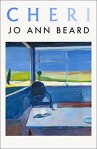

- The Plague by Albert Camus is mentioned in Knife by Salman Rushdie and Stowaway by Joe Shute.
- Making egg salad sandwiches is mentioned in Cheri by Jo Ann Beard and Sandwich by Catherine Newman.
- Pet rats in Stowaway by Joe Shute and Happy Death Club by Naomi Westerman. Rats are also mentioned in Mammoth by Eva Baltasar, The Tale of Despereaux by Kate DiCamillo, and The Colour by Rose Tremain.
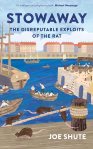
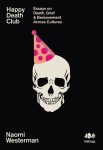
- Eels feature in Our Narrow Hiding Places by Kristopher Jansma, Late Light by Michael Malay, and The Colour by Rose Tremain.
- Atlantic City, New Jersey is a location in Florence Adler Swims Forever by Rachel Beanland and Company by Shannon Sanders.
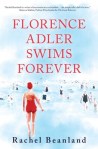 The father is a baker in Florence Adler Swims Forever by Rachel Beanland and Our Narrow Hiding Places by Kristopher Jansma.
- A New Zealand setting (but very different time periods) in Greta & Valdin by Rebecca K Reilly and The Colour by Rose Tremain.
- A mention of Melanie Griffith’s role in Working Girl in I’m Mostly Here to Enjoy Myself by Glynnis MacNicol and Happy Death Club by Naomi Westerman.
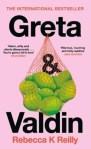 Ermentrude/Ermyntrude as an imagined alternate name in Greta & Valdin by Rebecca K Reilly and a pet’s name in Stowaway by Joe Shute.
- A poet with a collection that was published on 6 August mentions a constant ringing in the ears: Joshua Jennifer Espinoza (I Don’t Want to Be Understood) and Keith Taylor (What Can the Matter Be?).
- A discussion of the original meaning of “slut” (a slovenly housekeeper) vs. its current sexualized meaning in Girlhood by Melissa Febos and Sandi Toksvig’s introduction to the story anthology Furies.
- An odalisque (a concubine in a harem, often depicted in art) is mentioned in I’m Mostly Here to Enjoy Myself by Glynnis MacNicol and The Shark Nursery by Mary O’Malley.
- Reading my second historical novel of the year in which there’s a disintegrating beached whale in the background of the story: first was Whale Fall by Elizabeth O’Connor, then Come to the Window by Howard Norman.
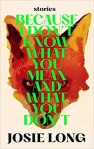 A short story in which a woman gets a job in online trolling in Because I Don’t Know What You Mean and What You Don’t by Josie Long and in the Virago Furies anthology (Helen Oyeyemi’s story).
- Her partner, a lawyer, is working long hours and often missing dinner, leading the protagonist to assume that he’s having an affair with a female colleague, in Recipe for a Perfect Wife by Karma Brown and Summer Fridays by Suzanne Rindell.
- A fierce boss named Jo(h)anna in Summer Fridays by Suzanne Rindell and Test Kitchen by Neil D.A. Stewart.
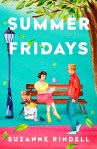
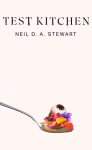
- An OTT rendering of a Scottish accent in Greta & Valdin by Rebecca K Reilly and Test Kitchen by Neil D.A. Stewart.
- A Padstow setting and a mention of Puffin Island (Cornwall) in The Cove by Beth Lynch and England as You Like It by Susan Allen Toth.
- A mention of the Big and Little Dipper (U.S. names for constellations) in Directions to Myself by Heidi Julavits and How We Named the Stars by Andrés N. Ordorica.
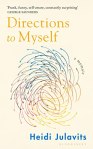
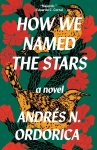
- A mention of Binghamton, New York and its university in We Are Animals by Jennifer Case and We Would Never by Tova Mirvis.
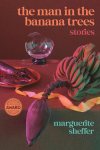
- A character accidentally drinks a soapy liquid in We Would Never by Tova Mirvis and one story of The Man in the Banana Trees by Marguerite Sheffer.
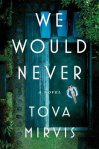 The mother (of the bride or groom) takes over the wedding planning in We Would Never by Tova Mirvis and Summer Fridays by Suzanne Rindell.
- The ex-husband’s name is Jonah in The Mourner’s Bestiary by Eiren Caffall and We Would Never by Tova Mirvis.
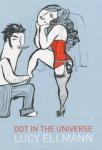
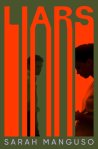
- The husband’s name is John in Dot in the Universe by Lucy Ellmann and Liars by Sarah Manguso.
- An affair is discovered through restaurant receipts in Summer Fridays by Suzanne Rindell and Test Kitchen by Neil D.A. Stewart.
- A mention of eating fermented shark in The Museum of Whales You Will Never See by A. Kendra Greene and Test Kitchen by Neil D.A. Stewart.
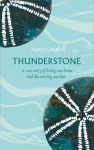
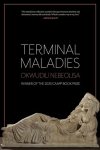
- A mention of using one’s own urine as a remedy in Thunderstone by Nancy Campbell and Terminal Maladies by Okwudili Nebeolisa.
- The main character tries to get pregnant by a man even though one of the partners is gay in Mammoth by Eva Baltasar and Until the Real Thing Comes Along by Elizabeth Berg.
- Motherhood is for women what war is for men: this analogy is presented in We Are Animals by Jennifer Case, Parade by Rachel Cusk, and Want, the Lake by Jenny Factor.
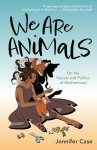 Childcare is presented as a lifesaver for new mothers in We Are Animals by Jennifer Case and Liars by Sarah Manguso.
- A woman bakes bread for the first time in Mammoth by Eva Baltasar and A Year of Biblical Womanhood by Rachel Held Evans.
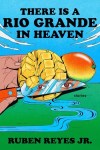
- A gay couple adopts a Latino boy in Greta & Valdin by Rebecca K Reilly and one story of There Is a Rio Grande in Heaven by Ruben Reyes, Jr.
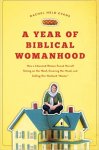 A husband who works on film projects in A Year of Biblical Womanhood by Rachel Held Evans and Liars by Sarah Manguso.
- A man is haunted by things his father said to him years ago in Parade by Rachel Cusk and one story in There Is a Rio Grande in Heaven by Ruben Reyes, Jr.
- Two short story collections in a row in which a character is a puppet (thank you, magic realism!): The Man in the Banana Trees by Marguerite Sheffer, followed by There Is a Rio Grande in Heaven by Ruben Reyes, Jr.
- A farm is described as having woodworm in Mammoth by Eva Baltasar and Parade by Rachel Cusk.
- Sebastian as a proposed or actual name for a baby in Signs, Music by Raymond Antrobus and Birdeye by Judith Heneghan.
What’s the weirdest reading coincidence you’ve had lately?
July Releases, II: Howard Norman, Andrés N. Ordorica, Neil D. A. Stewart
Three more July releases after yesterday’s Disability Pride Month special. Today is all fiction, but with rather different settings: Atlantic Canada, upstate New York and Mexico, and a London restaurant. The time period ranges from the last days of the First World War to 2013. The themes? Murder, plagues, accidental deaths and gourmet food in addition to those perennial subjects of finding love and coming to terms with identity.
Come to the Window by Howard Norman
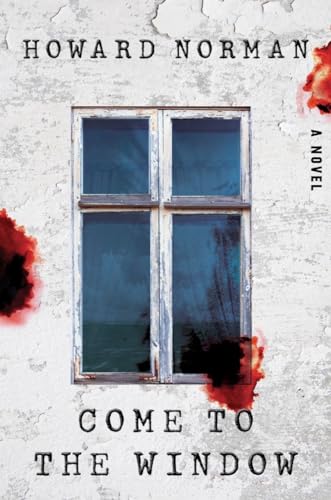 This was my eighth book by Norman and felt most similar to My Darling Detective and Next Life Might Be Kinder. Nothing much happens in the Nova Scotia fishing village of Parrsboro – until the night in April 1918 that Elizabeth Frame shoots dead her husband of 11 hours and throws the revolver into the blowhole of a beached whale. The story is a boon for Toby Havenshaw, a journalist with the Halifax Evening Mail, and quickly becomes an obsession. It’s never a whodunit so much as a why as Toby reports on the trial and follows Elizabeth when she goes on the lam. The sordid case just keeps getting stranger, drawing in bigamy, illegitimate pregnancy, and so on.
But Norman never treats all this too seriously; it is almost a tragicomic foil to the more consequential matters of world war and an influenza pandemic, which soon has Atlantic Canada in its grip as well. Toby’s wife, Amelia, is a hospital surgeon operating on returning veterans. She’s so quietly capable she makes Toby look a dunce, and their everyday rapport and unusual road to parenthood in their late thirties are charming. I also enjoyed Norman’s Dickensian naming (Bevel Cousins, Dr. S. S. Particulate) and literary references: the title phrase is from Matthew Arnold, and L. M. Montgomery gets a mention.
No doubt Norman wrote this as a Covid response; the parallel with the Spanish flu has been irresistible for many. He really captures the feeling of living through a uniquely terrible world situation. However, I’m not sure this short novel will prove memorable. Such has been true for his other recent novels, which pale in comparison with The Bird Artist. (Read via Edelweiss)
How We Named the Stars by Andrés N. Ordorica
I learned about this through the Observer’s 10 best new novelists feature and requested a copy via a Northern Fiction Alliance online showcase. There’s a sweet Heartstopper vibe to the story of an unlikely romance blooming between Daniel de la Luna and Sam Morris, his roommate at the University of Cayuga (= Cornell). Sam is a hunky jock while Daniel is a nervous would-be writer who has only just become comfortable with calling himself gay.
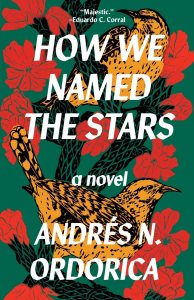 Ordorica, also a poet, immediately sets an elegiac tone by revealing Sam’s untimely death soon after the end of their freshman year. To cope with losing the love of his life, Daniel writes this text as if it’s an extended letter to Sam, recounting the course of their relationship – from strangers to best friends to secret lovers – and telling of his summer spent in Mexico exploring his family history, especially the parallels between his life and that of his late uncle and namesake, who was brave enough to be openly gay in the early days of the AIDS crisis.
Unfortunately, solid ideas and a warm-hearted approach are swamped by a host of problems. Ordorica writes a pretty good sex scene but the rest is clichéd, purple or awkward prose (“I snapped photo after photo of you, laughing all the while from your infectious elation”; “I felt unmoored, unsettled, and utterly liminal, in a state of flux”; “I sank into my pillows, muffling my tears as my mind floundered into even deeper waves of sadness”) and stiff dialogue. The cultural references and terminology feel all wrong for 2011, let alone for the 1988 diary entries of Uncle Daniel’s. The Mexico subplot is too tidy and Daniel’s breakdown after news of Sam’s death, which appears to involve full-blown alcohol addiction, is implausibly resolved within a chapter. The characterization of the secondary figures, particularly Daniel’s trio of queer Cayuga friends, is tissue thin.
It seems likely that Ordorica channeled much of his own experience into this queer coming-of-age narrative. He may have been aiming for star-crossed lovers and a groundbreaking own voices story, but this is run-of-the-mill stuff – more like a college student’s first draft than a finished book.
With thanks to Saraband for the proof copy for review.
Test Kitchen by Neil D. A. Stewart
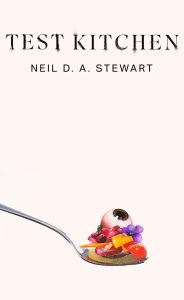 I spied this in one of Susan’s monthly previews. (If you haven’t already subscribed to her blog, do so at once. You’ll never be short of ideas for what to read.) Midgard is a fine dining restaurant with a tree in the middle whose multiple small courses evoke childhood memories and disguise one foodstuff as another. The London establishment earned two Michelin stars and has a perpetual waiting list, but as a news piece at the start presages, it will be forced to close its doors within five years after a series of disasters. Every other chapter introduces another set of diners, table by table: a first date, a reunion of old friends, a 12-year-old foodie trying to forestall his parents’ divorce, a restaurant critic and her freeloading acquaintances, and a solitary man who should really get that face wound seen to.
Many of these situations aren’t what they seem; the same goes for the intervening glimpses into the kitchen. Our host for these is Marley, the most recently hired waitress, who fled a chaotic home life in Melbourne. She didn’t show for work today; she’s in hiding, yet knows everything about the staff dynamics so is a perfect tour guide. There’s a mixture of nerves and bravado running through the kitchen as dinner starts. A knife accident, a food allergy, and a champagne cork hitting a customer are only the beginning of the evening’s mishaps. While I was initially drawn to the structure, which is almost like a linked short story collection, and I can’t resist a restaurant setting, the narrative trickery and the way that the mood evolves from slapstick to grotesque put me off. I enjoyed individual vignettes, but the whole didn’t come together as satisfyingly as in Sweetbitter or Service, among others.
With thanks to Corsair (Hachette) for the free copy for review.
Any July releases you’d recommend?
April Releases by Brownrigg, Ernaux, O’Connor, Waterman and Wood
Family history is a common element for the first four of these review books: a multi-generational story (incorporating autofiction in places) about Anglo-American writers and the legacy of suicide; a brief slice of memoir about the loss of a mother; a historical novella inspired by family stories and set on an island at the cusp of war; and a poetry collection drawing on a father’s death as well as on local folklore. Addiction and dementia are specific links between pairs. And to round off, a set of short stories about pregnancy and motherhood.
The Whole Staggering Mystery: A Story of Fathers Lost and Found by Sylvia Brownrigg
“The dead don’t come back, but they are not as far away as you think.”
I knew Brownrigg’s name as a novelist thanks to Susan’s blog (see her review of Pages for Her), but when I read about this family memoir it piqued my interest more than her fiction might have. The Brownrigg clan are nobility (really – her brother has the title “Baronet”) but have rejected conventional Englishness over the past century. First her grandfather, Gawen, separated from his wife and moved to Nairobi to work as a journalist. He also published two obscure novels before dying at age 27. The empty bottle of Nembutal and recent changes to his will suggested suicide, though his mother resisted the notion vociferously. Gawen’s son, Nicholas, was raised in California by his mother, Lucia, and became an alcoholic who lived off-grid on a ranch and had an unpublished Beats-influenced novel.
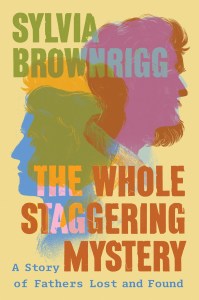 After Nicholas’s death in 2018, Brownrigg was compelled to trace her family’s patterns of addiction and creativity. It’s a complex network of relatives and remarriages here. The family novels and letters were her primary sources, along with a scrapbook her great-grandmother Beatrice made to memorialize Gawen for Nicholas. Certain details came to seem uncanny. For instance, her grandfather’s first novel, Star Against Star, was about, of all things, a doomed lesbian romance – and when Brownrigg first read it, at 21, she had a girlfriend.
Along with the more traditional memoir sections, there are the documents that speak for themselves and extended passages of autofiction. I loved an imaginary letter by Gawen’s older brother, who died in young childhood, and a third-person segment about Beatrice’s life in England during the Second World War. But I mostly skipped over the 90 lightly fictionalized pages about the author’s (“Sophie’s”) life with her father in California. You might view this as a showcase of possible methods for engaging with family history, some of which work better than others. All of it is fascinating material, though.
Published by Counterpoint in the USA. With thanks to Nectar Literary for the advanced e-copy for review.
A Woman’s Story by Annie Ernaux (1988; 2024)
[Translated from the French by Tanya Leslie]
 This memoir of Ernaux’s mother’s life and death is, at 58 pages, little more than an extended (auto)biographical essay. Confusingly, it covers the same period she wrote about in I Remain in Darkness (originally published nine years later), a diary of her mother’s final years with dementia; I even remembered two specific events and quotes. Why not combine the two into a full-length biographical recollection? Or pair it with A Man’s Place, Ernaux’s memoir of her father, in one volume? Perhaps her works will be repackaged in the future. But this came first: Ernaux started writing just a couple of weeks after her mother’s death, and spent 10 months over it. It’s clear she was determined to salvage what she could of her mother’s life:
It’s a difficult undertaking. For me, my mother has no history. She has always been there. When I speak of her, my first impulse is to ‘freeze’ her in a series of images unrelated to time … This book can be seen as a literary venture as its purpose is to find out the truth about my mother, a truth that can be conveyed only by words. … I believe I am writing about my mother because it is my turn to bring her into the world.
Ernaux opens with news of the death, and the funeral. But soon she’s pushing back into the past. Her mother grew up in poverty near Rouen and worked in a factory before her marriage, when she and her husband took on a grocery store and café. The Second World War was in some romantic way the great drama of her life. She was exacting of her daughter: “Her overriding concern was to give me everything she hadn’t had. But this involved so much work, so much worrying about money”. In her widowhood she came to live with Ernaux, who was then divorced with two sons, and tried to find a middle way between independence and connection. Eventually, though, her memory loss required admission to a nursing home.
I’ve felt the same about all three short works I’ve read by Ernaux so far: though precisely observed, they conceal themselves behind emotional distance. So while this might seem similar to A Very Easy Death by Simone de Beauvoir, I found the latter more engaging.
With thanks to Fitzcarraldo Editions for the free copy for review.
Whale Fall by Elizabeth O’Connor
 The remote Welsh island setting of O’Connor’s debut novella was inspired by several real-life islands that were depopulated in the twentieth century due to a change in climate and ways of life: Bardsey, St Kilda, the Blasket Islands, and the Aran Islands. (A letter accompanying my review copy explained that the author’s grandmother was a Welsh speaker from North Wales and her Irish grandfather had relatives on the Blasket Islands.)
Eighteen-year-old Manod Llan is the older daughter of a lobster fisherman. Her sweetheart recently left to find work in a mainland factory. It’s 1938 and there are vague rumbles about war, but more pressing is the arrival of strangers here to study a vanishing culture. Anthropologists Edward and Joan learn snatches of Welsh and make recordings of local legends and songs, which are interspersed with the fragmentary narrative. Manod, star-struck, seeks the English researchers’ approval as she helps with translation and other secretarial duties, but becomes disillusioned with their misinterpretations and fascist leanings.
The gradual disintegration of a beached whale casts a metaphorical shadow of decay over the slow-burning story. I kept waiting for momentous events that never came. More definitive consequences? Something to do with Manod’s worries for her little sister, Llinos? A flash-forward to the abandoned island’s after-years? Or to Manod’s future? As it is, the sense of being stuck at a liminal time makes it all feel like prologue. But O’Connor’s writing is quite lovely (“The milk had formed a film over the surface and puckered, like a strange kiss”; “All of my decisions felt like trying to catch a fish that did not exist until I caught it”) and the book is strong on atmosphere and tension. I’ll look out for her next work.
With thanks to Picador for the free copy for review.
Come Here to This Gate by Rory Waterman
I was most drawn to the poems in Part I, “All but Forgotten,” about his father’s last year or so.
The titles participate in telling the story: “Alcoholic Dementia,” followed by “Twin Oaks Nursing Home.”
The sheep-tracks of your mind were worn to trenches.
…
Then what you’ve turned yourself into – half there
on one side of a final single bed
you might not leave till the rest of you has left –
starts, stares through me, says ‘I’m being held
against my will!’, tells a nurse to ‘Just fuck off’
then thanks her. Old boy, when did you get like this?
The sheep-tracks of my mind are worn to trenches.
Then they moved you to a home
that still wasn’t home. ‘Why
am I in this fucking place?
Nothing’s wrong with me.’
So I’d tell you all over again,
but only the easy part (‘You’re
not remembering things well
at present.’ ‘Yes I fucking am’)
and you relearned that you’d
never learn – mindless torture,
until I stopped it. Your
silences were trains departing.
From the miscellany of Part II, I plucked out “Gooseberries” and “Perennials,” both of which conceal emotion among plants. Then Part III, “Lincolnshire Folk Tales,” turns the tone mischievous, with the ABCB end-rhymes of “Yallery Brown,” “The Metheringham Lass,” “The Lincoln Imp,” and “Nanny Rutt” (I felt I’d stumbled on a limerick with its rhythm: “Math Wood is a small plot of trees south of Bourne, / next to McDonald’s and Lidl. / It’s privately owned, full of shot-gun shells, pheasants – / but still, a bit of an idyll”). Plenty of good stuff, then, but it doesn’t all seem to fit together in the same collection.
With thanks to Carcanet Press for the advanced e-copy for review.
This Is Why We Can’t Have Nice Things by Naomi Wood
 I requested this because a) I had enjoyed Wood’s novels Mrs. Hemingway and The Hiding Game and b) I couldn’t resist the title. These nine contemporary stories (five in the first person and four in the third person) all feature women who are pregnant and/or mothers of young children. Three dwell on work–life balance in particular, with the female protagonists of “Lesley, in Therapy” and “Dracula at the Movies” an animator and a filmmaker, respectively. The third, “Hurt Feelings,” in which a medical emergency forces a choice between career and motherhood, was my favourite. Claudia is working on an advertising campaign for a large pharmaceutical company whose newest product targets chronic pain. Although she suspects it’s a placebo, she knows how valuable it is for these people to have their pain acknowledged given it’s as invisible as her history of pregnancy loss.
Other highlights included “Peek-a-Boo,” in which pregnant twin sisters fly to Italy to remonstrate with their father, who refuses to cede a holiday flat to the next renters; and “Wedding Day,” about a woman bitter enough to try to sabotage her ex’s big day by demanding he bring their daughter, the flower girl, home by bedtime. “Flatten the Curve” is about restrictions and desires during Covid lockdown. Family, neighbour, and co-worker dynamics fuel the drama. In a few cases, Wood imagined promising situations but didn’t deliver on them. I could hardly believe “Comorbidities,” about a mother who films a sex tape with her husband to distract from her eco-anxiety, won the 2023 BBC National Short Story Award. If Wood was aiming for edgy, she landed on peevish instead. “Dino Moms,” the final story, was worst, with its absurd dinosaur-vet reality-TV setup. Overall, the collection is too one-note because of the obsession with motherhood (“It is not very interesting to be in love with your child; it’s commonplace, this sacrificial love”). Back to novels soon, please.
With thanks to Phoenix (Orion) for the free copy for review.
Does one of these catch your eye? What April releases can you recommend?
Salt & Skin by Eliza Henry-Jones (Blog Tour)
I was drawn to Eliza Henry-Jones’s fifth novel, Salt & Skin (2022), by the setting: the remote (fictional) island of Seannay in the Orkneys. It tells the dark, intriguing story of an Australian family lured in by magic and motivated by environmentalism. History overshadows the present as they come to realize that witch hunts are not just a thing of the past. This was exactly the right evocative reading for me to take on my trip to some other Scottish islands late last month. The setup reminded me of The Last Animal by Ramona Ausubel, while the novel as a whole is reminiscent of The Night Ship by Jess Kidd and Night Waking by Sarah Moss.
Only a week after the Managans – photographer Luda, son Darcy, 16, and daughter Min, 14 – arrive on the island, they witness a hideous accident. A sudden rockfall crushes a little girl, and Luda happens to have captured it all. The photos fulfill her task of documenting how climate change is affecting the islands, but she earns the locals’ opprobrium for allowing them to be published. It’s not the family’s first brush with disaster. The kids’ father died recently; whether in an accident or by suicide is unclear. Nor is it the first time Luda’s camera has gotten her into trouble. Darcy is still angry at her for selling a photograph she took of him in a dry dam years before, even though it raised a lot of money and awareness about drought.
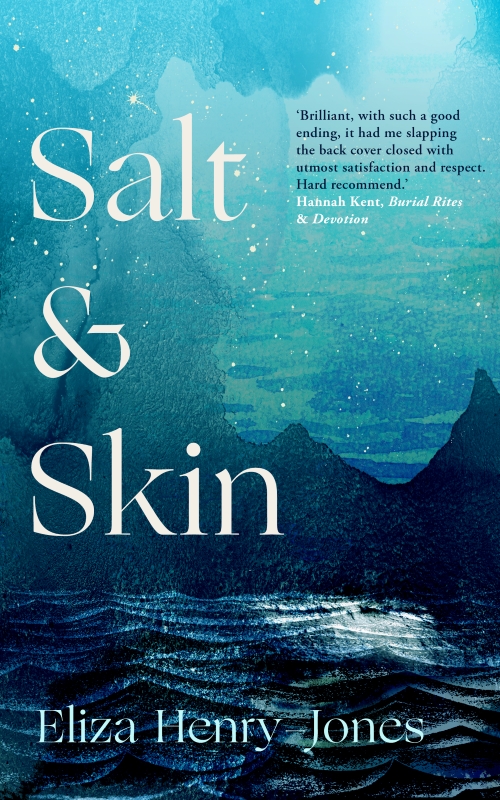
The family live in what has long been known as “the ghost house,” and hints of magic soon seep in. Luda’s archaeologist colleague wants to study the “witch marks” at the house, and Darcy is among the traumatized individuals who can see others’ invisible scars. Their fate becomes tied to that of Theo, a young man who washed up on the shore ten years ago as a web-fingered foundling rumoured to be a selkie. Luda becomes obsessed with studying the history of the island’s witches, who were said to lure in whales. Min collects marine rubbish on her deep dives, learning to hold her breath for improbable periods. And Darcy fixates on Theo, who also attracts the interest of a researcher seeking to write a book about his origins.
It’s striking how Henry-Jones juxtaposes the current and realistic with the timeless and mystical. While the climate crisis is important to the framework, it fades into the background as the novel continues, with the focus shifting to the insularity of communities and outlooks. All of the characters are memorable, including the Managans’ elderly relative, Cassandra (calling to mind a prophetic figure from Greek mythology), though I found Father Lee, the meddlesome priest, aligned too readily with clichés. While the plot starts to become overwrought in later chapters, I appreciated the bold exploration of grief and discrimination, the sensitive attention to issues such as addiction and domestic violence, and the frank depictions of a gay relationship and an ace character. I wouldn’t call this a cheerful read by any means, but its brooding atmosphere will stick with me. I’d be keen to read more from Henry-Jones.
With thanks to Random Things Tours and September Publishing for the free copy for review.
Buy Salt & Skin from the Bookshop UK site. [affiliate link]
or
Pre-order Salt & Skin (U.S. release: September 5) from Bookshop.org. [affiliate link]
I was delighted to help kick off the blog tour for Salt & Skin on its UK publication day. See below for details of where other reviews have appeared or will be appearing soon.

The Seafarers by Stephen Rutt (Paperback Release)
It’s the paperback release date for The Seafarers: A Journey among Birds by Stephen Rutt, one of my highlights from last year’s summer reading and ultimately one of my top 5 nonfiction reads of 2019.
I’ve been asked to repost my review, and you get a bonus: I’m also posting part of the review my husband wrote for his blog last year, which opens with memories of seabird-rich trips he and I have taken. (Chris is a lecturer in animal ecology at the University of Reading, a Newbury Town councillor, and an off-and-on nature blogger.)
Rebecca’s review:
 In 2016 Rutt left his anxiety-inducing life in London in a search for space and silence. He found plenty of both on the Orkney Islands, where he volunteered at the North Ronaldsay bird observatory for seven months. In the few years that followed, the young naturalist travelled the length and breadth of the British Isles – from Skomer to Shetland – courting encounters with seabirds. He’s surrounded by storm petrels one magical night at Mousa Broch; he runs from menacing skuas; he watches eider and terns and kittiwakes along the northeast coast; he returns to Orkney to marvel at gannets and fulmars. Whether it’s their beauty, majesty, resilience, or associations with freedom, such species are for him a particularly life-enhancing segment of nature to spend time around.
Discussion of the environmental threats that hit seabirds hardest, such as plastic pollution, make for a timely tie-in to wider conservation issues. Rutt also sees himself as part of a long line of bird-loving travellers, including James Fisher and especially R. M. Lockley, whose stories he weaves in. This is one of the best nature/travel books I’ve read in a long time, especially enjoyable because I’ve been to a lot of the island locations and the elegantly evocative writing, making particularly effective use of varied sentence lengths, brought back to me just what it’s like to be in the far north of Scotland in the midst of an endless summer twilight, a humbled observer as a whole whirlwind of bird life carries on above you.
A favorite passage:
“Gannets nest on the honeycombs of the cliff, in their thousands. They sit in pairs, pointing to the sky, swaying heads. They stir. The scent of the boat’s herring fills the air. They take off, tessellating in a sky that is suddenly as much bird as light. The great skuas lurk.”
Chris’s review
Scotland, 2005. That’s the trip I always cite as my ‘conversion experience’ as a birder. Perhaps the most memorable element was a boat trip out to the seabird colonies of the Treshnish Isles. Puffins were the draw, but other memories are more vivid. The sudden appearance of a great skua, powering through at low level causing consternation among other birds and excitement among birdwatchers. A minke whale blowing spray near the boat. The dark eye of a shag up close, inscrutably ancient, a pterodactyl that somehow survived to the present.

Puffins at Hermaness, Shetland. Photo by Chris Foster.
Captivated by the peace and isolation of Scottish islands and the incredible sights, sounds and smells of seabirds we did it all again the following year, heading farther north. We started on mainland Orkney, travelling overland by train before catching the ferry from Thurso. During a few days on Westray we experienced a small island community, intriguing to a child of English suburbia, though mostly I remember the rain and superb traybakes in the village café. Finally on to Shetland, making our way up to Hermaness, the very northern end of Britain on the island of Unst. Towering skua-ruled cliffs with the most inquisitive, trusting puffins I have ever known, no land between us and the North Pole. Some four years later we visited Skomer in Pembrokeshire, another famed seabird destination, but since then our visits to Britain’s seabird islands have, alas, largely dried up. I’ve caught up with seabirds on and off since but perhaps let the full wonder of seabirds and the magic of islands drift out of my life.
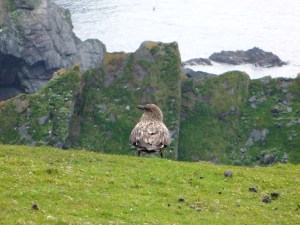
Great skua at Hermaness, Shetland. Photo by Chris Foster.
In that respect The Seafarers was a timely read. It takes the reader, via a series of personal journeys, through the major groups of ocean-going birds that visit Britain while also introducing a significant seabird location in each chapter. It’s an appealing blend of travel, descriptive nature writing, popular science and biography. Author Stephen Rutt balances a highly personal account of what seabirds have meant for him with some solid seabird facts which are well explained, detailed but not at all dense. Rutt is a young birder, naturalist and writer. Since I too am a bearded, balding young (though not nearly so young as he) birder who is not fond of crowds I was probably predisposed to enjoy his voice, and I did, but I also admired its freshness. He successfully avoids the ‘lone white male’ cliché often accused of dominating nature writing. The writing is accomplished throughout and Rutt’s prose is distinctive, concise yet poetic. The life-affirming, simple joy of birding shines through.
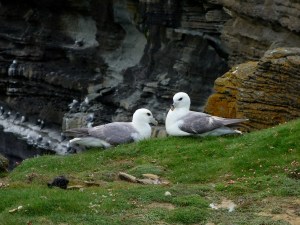
Fulmars on Westray, Orkney Islands. Photo by Chris Foster.
The particularly well-crafted short chapter on vagrant birds may be one of those rare pieces of writing to actually change my mind. Where I have lately been inclined toward the view that twitching exotic vagrants is “a morbid act, a premature wake for a waif that won’t last out the day,” as Rutt puts it, I was won over by his “faith in the wondrous, sense-defying, thrilling capacity that birds have of being lost and making that seem … OK.”
The Seafarers follows just two years after Adam Nicolson’s The Seabird’s Cry. The latter is the more complete (and global) treatment of seabirds, what we know about them and why they matter, but that’s not really a criticism of Rutt’s book. The Seafarers is as much an autobiographical account of the transformative power of birding as it is a compilation of seabird lore. What they have in common is that both books are love letters to this extraordinary group of animals.
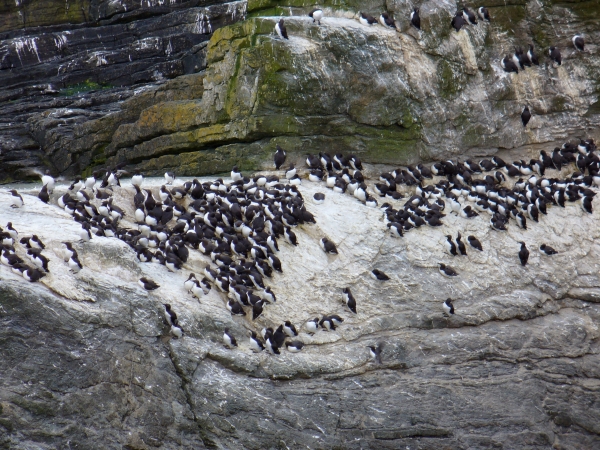
Guillemots at Sumburgh Head, Shetland. Photo by Chris Foster.
Rutt has added his own unique chapter to the shared history of people and seabirds on these islands, as well as establishing himself as a writer with real promise. I look forward to seeing what he turns his thoughts to next.
[The answer was geese; see my review of Rutt’s second 2019 publication, Wintering.]
Note: The Seafarers won the Saltire First Book of the Year award and was longlisted for the Highland Book Prize 2019.
(Order from your local independent bookstore, Hive or Waterstones.)
Books of Summer #18–20: Alan Garner, Peter Matthiessen, Lorrie Moore
I’m sneaking in just in time here, on the very last day of the #20BooksofSummer challenge, with my final three reviews: two novellas, one of them a work of children’s fantasy; and a nature/travel classic that turns into something more like a spiritual memoir.
The Owl Service by Alan Garner (1967)
 I’d heard of Garner, a British writer of classic children’s fantasy novels, but never read any of his work until I picked this up from the free bookshop where I volunteer on a Friday. My husband remembers reading Elidor (also a 1990s TV series) as a boy, but I’m not sure Garner was ever well known in America. Perhaps if I’d discovered this right after the Narnia series when I was a young child, I would have been captivated. I did enjoy the rural Welsh setting, and to start with I was intrigued by the setup: curious about knocking and scratching overhead, Alison and her stepbrother Roger find a complete dinner service up in the attic of this house Alison inherited from her late father. Alison becomes obsessed with tracing out the plates’ owl pattern – which disappears when anyone else, like Nancy the cook, looks at them.
I gather that Garner frequently draws on ancient legend for his plots. Here he takes inspiration from Welsh myths, but the background was so complex and unfamiliar that I could barely follow along. This meant that the climactic ‘spooky’ scenes failed to move me. Instead, I mostly noted the period slang and the class difference between the English children and Gwyn, Nancy’s son, who’s forbidden from speaking Welsh (Nancy says, “I’ve not struggled all these years in Aber to have you talk like a labourer”) and secretly takes elocution lessons to sound less ‘common’.
Can someone recommend a Garner book I might get on with better?
My rating: 
The Snow Leopard by Peter Matthiessen (1978)
 For two months of 1973, from late September to late November, Matthiessen joined zoologist George Schaller on a journey from the Nepalese Himalayas to the Tibetan Plateau to study Himalayan blue sheep. Both also harbored a hope of spotting the elusive snow leopard.
Matthiessen had recently lost his partner, Deborah Love, to cancer, and left their children behind – at residential schools or with family friends – to go on this spirit-healing quest. Though he occasionally feels guilty, especially about the eight-year-old, his thoughts are usually on the practicalities of the mountain trek. They have sherpas to carry their gear, and they stop in at monasteries but also meet ordinary people. More memorable than the human encounters, though, are those with the natural world. Matthiessen watches foxes hunting and griffons soaring overhead; he marvels at alpine birds and flora.
The writing is stunning. No wonder this won a 1979 National Book Award (in the short-lived “Contemporary Thought” category, which has since been replaced by a general nonfiction award). It’s a nature and travel writing classic. However, it took me nearly EIGHTEEN MONTHS to read, in all kinds of fits and starts (see below), because I could rarely read more than part of one daily entry at a time. I struggle with travel narratives in general – perhaps I think it’s unfair to read them faster than the author lived through them? – but there’s also an aphoristic density to the book that requires unhurried, meditative engagement.

The mountains in their monolithic permanence remind the author that he will die. The question of whether he will ever see a snow leopard comes to matter less and less as he uses his Buddhist training to remind himself of tenets of acceptance (“not fatalism but a deep trust in life”) and transience: “In worrying about the future, I despoil the present”; what is this “forever getting-ready-for-life instead of living it each day”? I’m fascinated by Buddhism, but anyone who ponders life’s deep questions should get something out of this.
My rating: 
Who Will Run the Frog Hospital? by Lorrie Moore (1994)
Thanks to Cathy for reminding me about this one – I had intended to make it one of my novellas for November, but as I was scrambling around to find a last couple of short books to make up my 20 I thought, “Frog! hey, that fits”* and picked it up.
 Oddly, given that Moore is so well known for short stories, I’ve only ever read two of her novels (the other was A Gate at the Stairs). Berie Carr lives just over the border from Quebec in Horsehearts, a fictional town in upstate New York. She and her best friend Sils are teenagers at the tail end of the Vietnam War, and work at Storyland amusement park on the weekends and during the summer. When Sils gets into trouble, Berie starts pocketing money from the cash register to help her out, but it will only be so long until she gets caught and the course of her life changes.
Berie is recounting these pivotal events from adulthood, when she’s traveling in Paris with her husband, Daniel. There are some troubling aspects to their relationship that don’t get fully explored, but that seems to be part of the point: we are always works in progress, and never as psychologically well as we try to appear. I most enjoyed the book’s tone of gentle nostalgia: “Despite all my curatorial impulses and training, my priestly harborings and professional, courtly suit of the past, I never knew what to do with all those years of one’s life: trot around in them forever like old boots – or sever them, let them fly free?”
Moore’s voice here reminds me of Amy Bloom’s and Elizabeth McCracken’s, though I’ve generally enjoyed those writers more.
*There are a few literal references to frogs (as well as the understood slang for French people). The title phrase comes from a drawing Sils makes about their mission to find and mend all the swamp frogs that boys shoot with BB guns. Berie also remarks on the sound of a frog chorus, and notes that two decades later frogs seem to be disappearing from the earth. In both these cases frogs are metaphors for a lost innocence. “She has eaten the frog” is also, in French, a slang term for taking from the cash box.
(I can’t resist mentioning Berie and Sils’ usual snack: raw, peeled potatoes cut into quarters and spread with margarine and salt!)
My rating: 
A recap of my 20 Books of Summer:
- I enjoyed my animal theme, which was broad enough to encompass straightforward nature books but also a wide variety of memoirs and fiction. In most cases there was a literal connection between the animal in the title and the book’s subject.
- I read just nine of my original choices, plus two of the back-ups. The rest were a mixture of: books I brought back from America, review copies, books I’d started last year and set aside for ages, and ones I had lying around and had forgotten were relevant.
- I accidentally split the total evenly between fiction and nonfiction: 10 of each.
- I happened to read three novels by Canadian authors. The remainder were your usual British and American suspects.
- The clear stand-out of the 20 was Crow Planet by Lyanda Lynn Haupt, followed closely by The Snow Leopard (see above) and The Seafarers by Stephen Rutt – all nonfiction!
- In my second tier of favorites were three novels: Fifteen Dogs, The Unchangeable Spots of Leopards, and Crow Lake.

I also had three DNFs that I managed to replace in time.
Hollow Kingdom by Kira Jane Buxton [a review copy – and one of my Most Anticipated titles]
(I managed the first 36 pages.) Do you have a friend who’s intimidatingly sharp, whose every spoken or written line leaps from wordplay to a joke to an allusion to a pun? That’s how I felt about Hollow Kingdom. It’s so clever it’s exhausting.
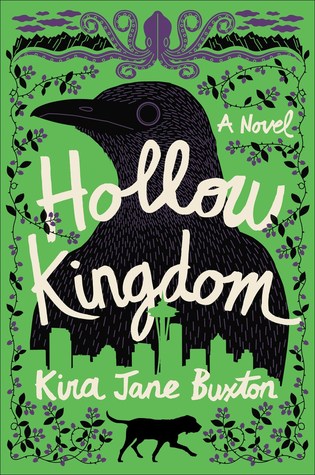 I wanted to read this because I’d heard it’s narrated by a crow. S.T. (Shit Turd) is an American Crow who lives with an electrician, Big Jim, in Seattle, along with Dennis the dumb bloodhound. One day Jim’s eyeball pops out and he starts acting crazy and spending all his time in the basement. On reconnaissance flights through the neighborhood, S.T. realizes that all the humans (aka “MoFos” or “Hollows”) are similarly deranged. He runs into a gang of zombies when he goes to the Walgreens pharmacy to loot medications. Some are even starting to eat their pets. (Uh oh.)
We get brief introductions to other animal narrators, including Winnie the Poodle and Genghis Cat. An Internet-like “Aura” allows animals of various species to communicate with each other about the crisis. I struggle with dystopian and zombie stuff, but I think I could make an exception for this. Although I do think it’s overwritten (one adverb and four adjectives in one sentence: “We left slowly to the gentle song of lugubrious paw pads and the viscous beat of crestfallen wings”), I’ll try it again someday.
 Gould’s Book of Fish: A Novel in Twelve Fish by Richard Flanagan: I read the first 164 pages last year before stalling; alas, I could make no more headway this summer. It’s an amusing historical pastiche in the voice of a notorious forger and counterfeiter who’s sentenced to 14 years in Van Diemen’s Land. I could bear only so much of this wordy brilliance, and no more.
 Tisala by Richard Seward Newton: I guess I read the blurb and thought this was unmissable, but I should have tried to read a sample or some more reviews of it. I got to page 6 and found it so undistinguished and overblown that I couldn’t imagine reading another 560+ pages about a whale.
For next year, I’m toying with the idea of a food and drink theme. Once again, this would include fiction and nonfiction that is specifically about food but also slightly more cheaty selections that happen to have the word “eats” or “ate” or a potential foodstuff in the title, or have an author whose name brings food to mind. I perused my shelf and found exactly 20 suitable books, so that seems like a sign! (The eagle-eyed among you may note that two of these were on my piles of potential reads for this summer, and two others on last summer’s. When will they ever actually get read?!)
Alternatively, I could just let myself have completely free choice from my shelves. My only non-negotiable criterion is that all 20 books must be ones that I own, to force me to get through more from my shelves (even if that includes review copies).


How did you fare with your summer reading?
Reviews Roundup, January–February
One of my goals with this blog is to have one convenient place where I can gather together all my writing that has appeared in disparate online locations. To that end, once a month I provide links to all book reviews I’ve published elsewhere, with a rating (below each description) and a taster so you can decide whether to read more. A few exceptions: I won’t point out my Kirkus Indie, BlueInk or Publishers Weekly reviews since I don’t get a byline. Meanwhile, I’ve done my first review for the Pittsburgh Post-Gazette – exciting!
The Bookbag
The Noise of Time by Julian Barnes: “Art is the whisper of history, heard above the noise of time.” Through a fictionalized biography of the Russian composer Shostakovich, Barnes questions how art can withstand political oppression. Knowing Barnes’s penchant for stylistic experimentation, this was never going to be a straightforward, chronological life story. Instead, as he so often does, he sets up a tripartite structure, focusing on three moments when Shostakovich has a reckoning with Power. The book is full of terrific one-liners (“Integrity is like virginity: once lost, never recoverable”), but there are not many memorable scenes to latch on to.

Motions and Moments : More Essays on Tokyo (& interview) by Michael Pronko: Pronko’s third collection of essays about his adopted city is an eloquent tribute to a place full of contradictions and wonders. Compared to his earlier collection, Beauty and Chaos, I sense Pronko is now more comfortable in his surroundings, perhaps happier to include himself in ‘we’ rather than looking on passively at ‘them’. For instance – inspired by Japanese women’s perfect outfits – he consciously tries to dress better, and he’s taken to eating ramen and sleeping on a futon, just like a native. The highlight is a set of pieces written in the aftermath of the 2011 earthquake / tsunami.

BookBrowse
 The Portable Veblen by Elizabeth McKenzie: Veblen, named after the late-nineteenth-century Norwegian-American economist, is one of the oddest heroines you’ll ever meet. She thinks squirrels are talking to her and kisses flowers. But McKenzie doesn’t just play Veblen for laughs; she makes her a believable character well aware of her own psychological backstory. I suspect the squirrel material could be a potential turn-off for readers who can’t handle too much whimsy. Over-the-top silly in places, this is nonetheless a serious account of the difficulty of Veblen and Paul, her neurology researcher fiancé, blending their dysfunctional families and different ideologies – which is what marriage is all about.
 Weathering by Lucy Wood: This atmospheric debut novel is set in a crumbling house by an English river and stars three generations of women – one of them a ghost. Ada has returned to her childhood home after 13 years to scatter her mother Pearl’s ashes, sort through her belongings, and get the property ready to sell. In a sense, then, this is a haunted house story. Yet Wood introduces the traces of magical realism so subtly that they never feel jolting. Like the river, the novel is fluid, moving between the past and present with ease. The vivid picture of the English countryside and clear-eyed look at family dynamics remind me most of Tessa Hadley (The Past) and Polly Samson (The Kindness).
Foreword Reviews
When We Were Invincible by Jonathan Harnisch: In this short novel, a young man wrestles with depression and Tourette’s syndrome, which together drive him to the point of suicide. A series of dreams and chance meetings, along with the possibility of romance and faith in God, pull him back from the edge. The book successfully introduces philosophical themes and gives a sympathetic picture of mental illness. However, it is weaker at filling in background and providing transitions, and there are many awkward, unlikely lines of dialogue. Recommended to fans of The Curious Incident of the Dog in the Night-Time.

Nudge
 The Life and Death of Sophie Stark by Anna North: The twisty, clever story of a doomed filmmaker – perfect for fans of Hausfrau. Who is Sophie Stark? A New York City-based indie director whose four documentary-style movies are “almost more like life than life itself.” Bisexual and with certain traits of high-functioning autism, Sophie is easily misunderstood. She’s a rebel who doesn’t conform to social niceties. The book is told through five first-person reminiscences from the people closest to her. In this respect the novel’s format recalls Kitchens of the Great Midwest. My favorite sections, though, are the reviews of her films, all by the same critic.
 Casualties by Betsy Marro: A powerful, melancholy debut novel about how war affects whole families, not just individual soldiers. As in Bill Clegg’s Did You Ever Have a Family, which Casualties resembles in tone if not in style, a bereaved mother sets off on a journey. Ruth’s unlikely companion on the road trip east is a Gulf War amputee who appears little more than a conman but genuinely wants to clean up his act so he can reconcile with his teenage daughter. At times the road trip scenario felt a little far-fetched to me, and Casey too obvious a replacement son figure. Yet as both he and Ruth ponder how much they have lost and the small things they can try to put right, they together form a touching picture of the various ways war’s effects can linger.
Pittsburgh Post-Gazette
 Mr. Splitfoot by Samantha Hunt: “All stories are ghost stories,” Samantha Hunt proclaims in her quirky third novel about the crossover between motherhood and mysticism. In a dual storyline that takes in fundamentalist cults, unlikely mediums and a pregnant woman’s pilgrimage, Hunt asks whether one can ever believe in the unseen. Mr. Splitfoot has the offbeat charm of Scarlett Thomas’s work. While the plot ultimately feels like a bit of a jumble, its vision of unexpected love and loyalty remains compelling. “The End’s always coming,” but it is how one lives in the face of brutality and impending extinction that matters.
I also post reviews of most of my casual reading and skimming on Goodreads:
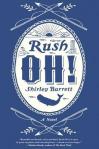 Rush Oh! by Shirley Barrett: A debut novel in which an Australian whaler’s daughter looks back at 1908, a catastrophic whaling season but also her first chance at romance. I felt that additional narrators, such as a whaleman or an omniscient voice, would have allowed for more climactic scenes. Still, I found this gently funny, especially the fact that the family’s cow and horse are inseparable and must be together on any outing. There are some great descriptions of whales, too.
 Felicity by Mary Oliver: I was disappointed with my first taste of Mary Oliver’s poetry. So many readers praise her work to the skies, and I’ve loved excerpts I’ve read elsewhere. However, I found these to be rather simplistic and clichéd, especially poems’ final lines, e.g. “Soon now, I’ll turn and start for home. / And who knows, maybe I’ll be singing.” or “Late, late, but now lovely and lovelier. / And the two of us, together—a part of it.” I’ll definitely try more of her work, but I’ll look out for an older, classic collection.
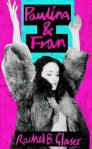 Paulina & Fran by Rachel B. Glaser: Full of blunt, faux-profound sentences and smutty, two-dimensional characters. Others may rave about it, but this wasn’t for me. I get that it is a satire on female friendship and youth entitlement. But I hated how the main characters get involved in a love triangle, and once they leave college any interest I had in them largely disappeared. Least favorite lines: “Paulina. She’s like Cleopatra, but more squat.” / “She’s more like Humphrey Bogart” and “She craved the zen-ness of being rammed.”

 Noah’s Wife by Lindsay Starck: I kept wanting to love this book, but never quite did. It’s more interesting as a set of ideas – a town where it won’t stop raining, a minister losing faith, homeless zoo animals sheltering with ordinary folk – than as an executed plot. My main problem was that the minor characters take over so that you never get to know the title character, who remains nameless. There’s also a ton of platitudes towards the end. It reminded me most of The Readers of Broken Wheel Recommend and Not Forgetting the Whale (another cozy environmental dystopia based around biblical allusions).
 Spill Simmer Falter Wither by Sara Baume: This sounded like a charmingly offbeat story about a loner and his adopted dog setting off on a journey. As it turns out, this debut is much darker than expected, but what saves it from being unremittingly depressing is the same careful attention to voice you encounter in fellow Irish writers like Donal Ryan and Anne Enright. It’s organized into four sections, with the title’s four verbs as headings. In a novel low on action, the road trip is much the most repetitive section, extending to the language as well. Even so, Baume succeeds in giving a compassionate picture of a character whose mental state comes into question. (Full review in March 2016 issue of Third Way magazine.)
 Medium Hero by Korby Lenker: Lenker is an indie musician, and the 27 autobiographical stories in his debut collection are about the everyday challenges of being on the road versus trying to pay the bills. Many feature “Korby” or “Simon” as fictional stand-ins, and recurring locations include his hometown of Twin Falls, Idaho and his adopted home of Nashville. As the title suggests, Lenker has no illusions about being famous or out of the ordinary. Most of the time he just tries to be a decent guy, the kind who prays for family members in distress even though he’s not sure he believes in God. Lest that sound too serious, though, there are also stories about peeing his pants and the perils of being a metrosexual.
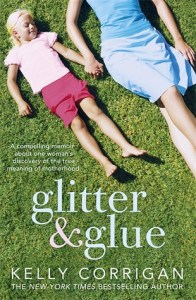 Glitter and Glue by Kelly Corrigan: Slides down like ice cream. And I say that even though the whole basis for this memoir feels rather thin. Corrigan frames it around five months in the early 1990s when she worked as a nanny for two Australian kids whose mother died of cancer. For a young woman fresh out of college, it was like a trial run for being a mother, and also gave her a new appreciation for everything her own mother had done for her during her Philadelphia Catholic upbringing. If Corrigan’s father was the ‘glitter’ of the family, her mother was the ‘glue’ – holding everything together in the background. This is impressively reconstructed, dialogue and all, from letters, journals and photos.
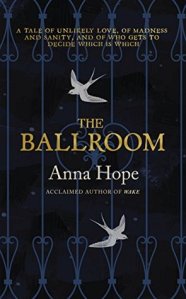 The Ballroom by Anna Hope: This novel was inspired by the story of the author’s great-great-grandfather, an Irishman who was a patient at Menston Asylum in West Yorkshire from 1909 to 1918. The novel zeroes in on the long, hot summer of 1911, focusing through alternating close third-person chapters on John Mulligan, a new patient named Ella Fay, and Dr. Charles Fuller, who wants to put his mental hospital at the frontline of eugenics research. Ultimately I didn’t like this quite as much as Wake, but I think it cements Anna Hope’s reputation as a solid historical fiction writer. I hope with her next book she’ll move beyond the years around World War I to consider a less-chronicled era.
 Life without a Recipe by Diana Abu-Jaber: The Jordanian–American writer reflects on how various food cultures have sustained her through a life that hasn’t always turned out as expected. Three marriages, a move from Portland to Florida, a winding path to motherhood in her forties, and her father’s death from leukemia are some of the main events. Like Sasha Martin’s Life from Scratch, this is more about family and personal history than it is about food (and there are no recipes). Still, food is the stuff of memories, and it is what binds her to two strong characters: her Jordanian father Bud with his stuffed grape leaves, and her maternal grandmother Grace with her frequent baking and the pastries they consumed together in Paris.
 Arctic Summer by Damon Galgut: This fictionalized account of the life of E.M. Forster focuses on the drawn-out composition of A Passage to India, which he began in 1913 but wouldn’t complete and publish until 1924. In between he broke off to write his explicitly homosexual novel Maurice (only published posthumously), spent three years working in Egypt during the war, and served as a secretary to an Indian maharajah. As fictionalized biographies of authors go, I’d rate this somewhere between David Lodge’s A Man of Parts (H.G. Wells) and Colm Tóibín’s superior The Master (Henry James); all three share a heavy focus on the author’s sexuality. “Buggery in the colonies. It wasn’t noble” is one of my favorite random snippets from this novel, and sums up, for me, its slightly prurient aftertaste.
Reviews Roundup, August–September
One of my goals with this blog is to have one convenient place where I can gather together all my writing that has appeared in disparate online locations. To that end, once a month I’ll provide links to all the book reviews I’ve published elsewhere, with a rating (below each description) and a short taster so you can decide whether to click to read more. A couple of exceptions: I won’t point out my Kirkus Indie or BlueInk reviews since I don’t get a byline.
The Bookbag
 Dandelion Angel by C.B. Calico (& interview): This was inspired by a non-fiction work, Understanding the Borderline Mother by Christine Ann Lawson. The four mother/daughter relationships in this Germany-set novel – all marked to some extent by dysfunction, physical and/or verbal abuse, and borderline personality disorder – are based on Lawson’s metaphorical classifications: the hermit, the queen, the waif, and the witch. Looping back through her four storylines in three complete cycles, Calico shows how mental illness is rooted in childhood experiences and can go on to affect a whole family.

The Last Pilot by Benjamin Johncock: Cinematic descriptions of the California desert setting plus excellent characters and dialogue enliven this debut novel about a fictional test pilot and his family troubles during America’s Space Race. Johncock is British, but you can tell he’s taken inspiration from stories about the dawn of the astronaut age. If I allowed myself small points of criticism, I would say that it’s a challenge to accept the passage of time in the final 50 pages, and that a keen interest in astronauts is probably a boon to keep readers going through the test flight portions, which to me were less compelling than the domestic drama of Jim, Grace and Florence.
 Home Is Burning by Dan Marshall: At age 25, Dan Marshall went home to Salt Lake City to care for a father with ALS and a mother with leukemia. He and his four hapless siblings (a Sedaris-like clan) approached caregiving with sarcasm and dirty humor. Gleefully foul-mouthed, his memoir lacks introspective depth. He hardly ventures deeper than initial descriptions like “My gay brother, Greg” and “My adopted Native American sister, Michelle.” And even when his sentiments about his father are sincere, they are conveyed via what sound like clichés: “I wanted my poor dad to get better, not worse.” But to my surprise, Marshall made me cry in the end.

Of Orcas and Men by David Neiwert: Inspired by personal sightings near his home in Seattle, Neiwert set out to learn everything he could about orcas. The result is a thorough study of whales’ behavior and interactions with humanity from native mythology through modern-day aquarium shows. Some specialist interest would probably be helpful to those attempting this book, although there are plenty of black-and-white photographs to keep even casual readers interested. “Recovering our humanity may be the real gift of the orcas, what they can teach us. It’s our choice whether to listen.”

BookBrowse
 This Is Your Life, Harriet Chance! by Jonathan Evison [a subscription service, but an excerpt is available for free]: A widow in her seventies relives the ups and downs of her life while on an Alaskan cruise to scatter her husband’s ashes. Chapters alternate between a third-person account of the cruise and a second-person survey of Harriet’s past, delivered in the format of TV’s This Is Your Life. The narration is fresh and effective because the gradual revelations undermine Harriet’s elderly persona in such surprising ways. She is an out-of-the-ordinary but believable protagonist who, like all of us, has a mixture of victories and disappointments behind her. This is a charming novel about learning to reckon with the past.
 Speak by Louisa Hall [subscription service, but the full text of my review will be available for free during the week starting September 25th as part of Editor’s Choice]: Hall interweaves disparate time periods and voices to track the development of artificial intelligence. The fact that all six narratives are in different documentary formats – memoirs, letters, the transcript of a dialogue, a diary, and so on – means they are easy to distinguish. One might argue that two of them (Alan Turing’s letters and Mary’s shipboard diary) are unnecessary, and yet these are by far the most enjoyable. They prove Hall has an aptitude for historical fiction, a genre she might choose to pursue in the future. A remarkable book interrogating how the languages we converse in and the stories we tell make us human.
BookTrib
 You Too Can Have a Body Like Mine by Alexandra Kleeman: Think of Alexandra Kleeman as an heir to Dave Eggers and Douglas Coupland, with a hefty dollop of Margaret Atwood thrown in. Her first novel is a full-on postmodern satire bursting with biting commentary on consumerism and conformity. Television and shopping are the twin symbolic pillars of a book about the commodification of the body. In a culture of self-alienation where we buy things we don’t need, have no idea where food comes from and desperately keep up the façade of normalcy, Kleeman’s is a fresh voice advocating the true sanity of individuality. Don’t miss her incredible debut.

Foreword Reviews
Conflict Communication by Rory Miller: Based on “ConCom,” the police verbal de-escalation program Miller developed with Marc MacYoung, this book aims to introduce readers to more conscious methods of verbal communication that will sidestep instinctive reactions and promote peaceful solutions. The advice is practical and intuitive, yet picks up on tiny details that most people would not notice. Concise, helpful, and well-organized, this is strongly recommended for readers interested in the psychology of violence and improving communication skills.
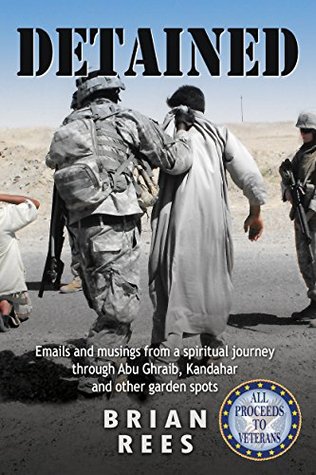 Detained by Brian Rees: Rees intersperses witty e-mail updates from his tours of Iraq and Afghanistan with clued-in commentary about war tactics, terrorism, Islam, and the benefits of transcendental meditation (TM) for soldiers with PTSD. The mixture of formats and topics generally works well, though the spiritual material deserves its own book. There’s no denying Rees’s expertise, and his fluid writing keeps the pages turning. This could make a fascinating companion volume for fans of recent war fiction such as The Yellow Birds, Redeployment, and War of the Encyclopaedists.
 Talk to Me of Love by Julia Anne Bernhardt: The poems in Bernhardt’s first collection range from erotic to spiritual as they investigate love in all its forms. Repetition, rhyme, and mantras produce hypnotic sonic effects and support the central message of the epigraph: “God is in the detail.” The everyday and the eternal mix here. This well-structured collection celebrates different types of love through meditative verse. The themes’ strength is enough to recommend it to readers of Jo Shapcott and Julia Copus.
The Hidden Treasure of Dutch Buffalo Creek by Jackson Badgenoone: Otherworldly ghost writers (the “Neverborn”) compose biographies for ordinary people in this playfully metafictional novel. James is a strong central character whose memories from the 1950s through the present give a sense of history’s sweep, while vivid descriptive language enlivens the settings. Although well written, the book as a whole is an unusual amalgam of spiritualism, historical nostalgia, and technology. James’s story might have been better told as a simple coming-of-age novel with flashbacks.
Nudge
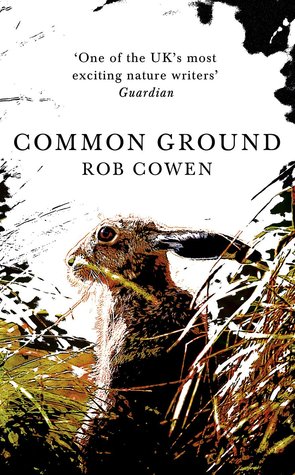 Common Ground by Rob Cowen: An unassuming patch of edge-land outside Harrogate is Cowen’s nature paradise, providing him with wildlife encounters and imaginative scenarios. Essentially, what Cowen does is give profiles of the edge-land’s inhabitants: animal and human, himself included. For instance, he creates an account of the life and death of a fox; elsewhere, he crafts a first-person narrative by a deer being hunted in medieval times. These fictions emulating Watership Down or Tarka the Otter, though well written, are out of place. When the book avoids melodramatic anthropomorphizing, it is very beautiful indeed.
We Love This Book
 Where My Heart Used to Beat by Sebastian Faulks: In Faulks’s thirteenth novel, his trademark themes of war, love and memory coalesce through the story of a middle-aged psychiatrist discovering the truth about his father’s death. Reminiscent of Birdsong as well as John Fowles’s The Magus and Ernest Hemingway’s A Farewell to Arms, this does not have the power of Faulks’s previous work but is a capable study of how war stories and love stories translate into personal history. [A few extra thoughts at Goodreads.]

I also post reviews of most of my casual reading and skimming on Goodreads.
 How to Write a Novel by Melanie Sumner: Our would-be novelist is Aris (short for Aristotle) Thibodeau, 12.5 years old and as precocious as Flavia de Luce. Diane is her single mother, and Max her downright weird younger brother. Using Write a Novel in 30 Days!, Aris is turning her family’s life story into fiction. In some ways they are very out of place here in Kanuga, Georgia. The child’s wry look at family dysfunction reminded me of Sue Townsend’s The Secret Diary of Adrian Mole, Aged 13 ¾. I would probably read something else from Sumner, so long as it wasn’t quite as silly and YA geared as this.
The Art of Memoir by Mary Karr: I would recommend this to anyone who reads and/or secretly wants to write memoirs; for the latter group, there is a wealth of practical advice here, on topics such as choosing the right carnal details (not sexual – or not only sexual – but physicality generally), correcting your facts and misconceptions, figuring out a structure, and settling on your voice. Along the way Karr discusses a number of favorite memoirs in detail, sometimes even line by line: Wild by Cheryl Strayed, Stop-Time by Pat Conroy, A Childhood by Harry Crews, Maya Angelou’s books, Speak, Memory by Nabokov, and so on.

Emblems of the Passing World: Poems after Photographs by August Sander by Adam Kirsch: A charming mix of historical photographs (1910s–1950s Germany) and poems. Kirsch uses his poetry to bring these one-dimensional figures to life, imagining the stories behind their generic titles (“Office Worker” or “Farming Family”) and sometimes slyly questioning the political and status connotations of such designations. One of my favorites was “Student of Philosophy.” This book could draw people whose interests usually run more to nonfiction – especially social history – into giving poetry a try. Releases November 17th.
 Browsings by Michael Dirda: Dirda wrote this pleasant set of bibliophilic essays for the American Scholar website in 2012–13. He’s the American equivalent of the UK’s John Sutherland: an extremely well-read doyen of the classics with a special love for Victorian and Edwardian genre fiction, often as revived by small presses and specialist societies. At times Dirda’s interests can be a bit obscure for the average reader, and some of the essays feel redundant. Still, it’s easy to relate to his addictive book purchasing and hoarding.
The Communist Manifesto by Karl Marx and Friedrich Engels: I read this on the train to Manchester, appropriate reading when approaching one of the UK’s biggest centers of Victorian industry and the place where Marx and Engels met to discuss ideas in the mid-1840s. Like Darwin’s Origin of Species, another seminal Victorian text, this has so many familiar lines and wonderful metaphors that have entered into common discourse that I simply assumed it was composed in English. My eyes glaze over at politics or economics, so I valued this more for its language than for its ideas. Part II, “Proletarians and Communists,” is the most focused part if you want to sample it.
 Number 11 by Jonathan Coe: This is a funny and mildly disturbing state-of-England and coming-of-age novel. I’d only read one previous book by Coe, Expo 58; this is a better example of his usual pattern: multiple, loosely linked storylines. Here the theme is the absurdity of modern culture, encompassing many aspects: unjust wars, the excesses of the uber-rich, the obsession with celebrity, and suspicion and exclusion of those who are different from us. The number 11 keeps popping up, too. My favorite parts were a Survivor-type reality television show and a laughably over-the-top prize ceremony banquet. Releases November 11th.
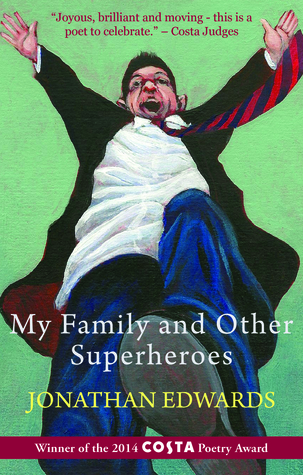 My Family and Other Superheroes by Jonathan Edwards: Edwards displays his proud Welsh heritage with poems reflecting on his family tree and the country’s landscape. One of my favorites was “View of Valleys Village from a Hill,” in which the narrator, with a God’s-eye view of his family, envisions messing around with them. The witty “In John F. Kennedy International Airport” imagines that Wales has been abolished and recreated in miniature in a small Kansas museum (a bit like Julian Barnes’s England, England).
The Whole & Rain-domed Universe by Colette Bryce: Many of these poems are about the author’s Irish family inheritance, both literal and figurative, as in “Heritance”: “From her? Resilience. Generosity. / A teacher’s gravitas. / Irish stew. A sense / of the ridiculous. High ceilings.” I loved the first line of “Signature” – “When I finally gave up and became my mother.” It’s particularly nice how enjambment often makes the thought go just that one line beyond what you expect. I’d read more from Bryce.
 Bookish Beck = Rebecca Foster. American transplant to England. Freelance proofreader and book reviewer.
 Bookish Beck