Summery Reading, Part I: The Greengage Summer & Sunburn by Watson
Brief thoughts on a first pair of summer-themed reads: coming-of-age stories about teenage girls who trade England for somewhere more exciting – France or Greece – for a summer and awaken to the complications of sex when let down by the adults in their lives. Both: 
The Greengage Summer by Rumer Godden (1958)
 We wanted to read something by Godden in my book club’s women’s classics subgroup, and decided on this almost purely for the evocative title. Cecil is the second of five children who run amok at a French hotel while their father is botanizing in Tibet and their mother in hospital with an infected horsefly bite. Hotel staff and hangers-on are engaged in all sorts of shenanigans – affairs and casual molestation of the maids, for instance – and the children, caught up in the thrill of it, attach themselves to Eliot, the English lover of Mademoiselle Zizi. The adults get Cecil and her older sister, Joss, drunk on champagne. Joss is the belle of the ball and attracts an inappropriate suitor; Cecil gets her first period and tells Eliot, of all people. It’s a familiar message in mid-century fiction, I suppose: loss of sexual innocence leads to disaster. I found this quite melodramatic, with a sudden ending; it didn’t live up to the terrific premise. I was similarly underwhelmed by Black Narcissus. (University library)
Sunburn by Andi Watson; illus. Simon Gane (2022)
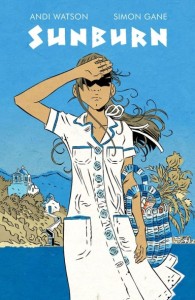 We open in suburban London in what appears to be the 1950s. Sixteen-year-old Rachel is offered a lucky escape from a summer of working at the butcher shop to stay with her parents’ friends, the Warners, at their home on a Greek island. Their life is a heady mix of languorous shopping, swimming and nightly parties. There’s a big contrast between the sophisticated expats and the local peasantry. When Rachel meets Ben, a fellow English teenager, it seems like her idyllic summer is complete, but things sour between them. Over the course of the book, Rachel realizes that not all grown-ups can be trusted. The plot took a twist I wasn’t expecting, which is always refreshing, but I should probably have been ready for it based on the depictions. The graphic novel is all in shades of blue, with white and light brown accents, as befitting the Greek flag and scenery. A problem I had was that most of the characters look the same – the artist has just the one way of drawing faces, so Rachel, Mrs. Warner and Ben have pretty much identical features. I would have catalogued this in YA. (Public library)
Both at least had a steamy summer atmosphere! My next seasonal read, picked up from the library today, will be One Midsummer’s Day by Mark Cocker, which is all about swifts. We have a pair nesting in our eaves again this year – hurrah! – and have been enjoying watching their (albeit diminished) screaming parties tear down the streets on warm summer evenings.
Any “summer” or “sun” books for you this year?
Three on a Theme: “Rainbow” Books for Pride Month
Two of these are short story collections (and one almost is); two are specifically queer in outlook; all attracted me for their colorful covers, and all were borrowed from the library. #LoveYourLibrary

Rainbow Rainbow: Stories by Lydia Conklin (2022)
The 10 stories in this confident debut collection are unabashedly queer, and half involve the trans experience, whether ideation or reality. Conklin is nonbinary, so it’s tempting to read several stories as autobiographical: female characters long to get top surgery and transition to male or nonbinary, but worry it will change how they are perceived or desired. “Pink Knives” and “Boy Jump,” especially, have the flavor of autofiction, with protagonists traveling in Poland and feeling attraction to people of various genders. (The former has a pandemic setting, which I’ve noticed has at this point started to feel dated.) My overall favorite was “Sunny Talks,” in which middle-aged Lillia accompanies her trans teenage nephew to a conference for celebrity YouTubers but can’t bring herself to announce her own intended transition. Though life hasn’t been easy for Sunny, he has support she lacked growing up.
 Asher and Ivan, two characters of nebulous sexuality and future gender, are the core of “Cheerful Until Next Time” (check out the acronym), which has the fantastic opening line “The queer feminist book club came to an end.” “Laramie Time” stars a lesbian couple debating whether to have a baby (in the comic Leigh draws, a turtle wishes “reproduction was automatic or mandatory, so no decision was necessary”). “A Fearless Moral Inventory” features a pansexual who is a recovering sex addict. Adolescent girls are the focus in “The Black Winter of New England” and “Ooh, the Suburbs,” where they experiment with making lesbian leanings public and seeking older role models. “Pioneer,” probably my second favorite, has Coco pushing against gender constraints at a school Oregon Trail reenactment. Refusing to be a matriarch and not allowed to play a boy, she rebels by dressing up as an ox instead. The tone is often bleak or yearning, so “Counselor of My Heart” stands out as comic even though it opens with the death of a dog; Molly’s haplessness somehow feels excusable.
Six of the stories are in the third person and four in first person. I’d be interested to try Conklin’s longer-form work, and think first-person narration would particularly suit her. I didn’t really sense that this was a book meant for me, but that’s okay; a lot of readers will feel seen and represented. Pair this with, or have it on hand as a follow-up to, work by Allison Blevins, Melissa Febos and, most of all, Eley Williams. 
Under the Rainbow by Celia Laskey (2020)
In Laskey’s debut, which has been marketed as a novel but reads more like linked short stories, a favorite format of mine, researchers have identified Big Burr, Kansas as the most homophobic town in America. A task force from Acceptance Across America descends on the rural backwater for a targeted two-year program promoting education and friendship. Each chapter is a first-person, present-tense confession from a local or a queer visitor, whose stories interlock and push the chronology forward. For every positive step – a gender-neutral bathroom in the high school, a closeted individual who summons up the courage to come out – there is a regressive one, such as a AAA billboard being set on fire or a house being egged.
 Laskey inhabits all 11 personae with equal skill and compassion. Avery, the task force leader’s daughter, resents having to leave L.A. and plots an escape with her new friend Zach, a persecuted gay teen. Christine, a Christian homemaker, is outraged about the liberal agenda, whereas her bereaved neighbor, Linda, finds purpose and understanding in volunteering at the AAA office. Food hygiene inspector Henry is thrown when his wife leaves him for a woman, and meat-packing maven Lizzie agonizes over the question of motherhood. Task force members David, Tegan and Harley all have their reasons for agreeing to the project, but some characters have to sacrifice more than others.
Little references in later chapters catch you up on what’s happened with the others. I only questioned the need for Elsie as a POV character, and the exclusion of Jamal (presumably Laskey thought it unwise to write from the perspective of a Black man, but he’s a glaring omission). A final chapter, returning to one of the protagonists and set 10 years later, presents a town that’s changed enough to host its first gay wedding and first LGBTQ-owned business.
The novel is realistically sad, but not overly so, and was compellingly readable and heartwarming in a way that reminded me of how I felt about Shotgun Lovesongs. You might not want to live there, but I guarantee you’ll develop a certain fondness for Big Burr. 
Scattered Showers: Stories by Rainbow Rowell; illus. Jim Tierney (2022)
I spotted this collection while shelving in the YA section of the library one day and admired the sky blue naked hardback for its red sprayed edges, chunky rainbow endpapers, distinctive font, and teal and magenta interior color scheme. I’d read one Rowell book before, the graphic novel Pumpkinheads. This is probably a better match for her dedicated fans in that three of the stories are spin-offs from her fiction and a few of the rest are one-offs (Amazon Original Stories, a World Book Day publication, a contribution to an anthology), such that I felt a little like I was reading leftovers. A B-sides volume, if you will.
 Four of the nine are holiday-themed, so this could make a good Twixtmas read if you like seasonality; eight are in the third person and just one has alternating first person narrators. All are what could be broadly dubbed romances, with most involving meet-cutes or moments when long-time friends realize their feelings go deeper (“Midnights” and “The Snow Ball”). Only one of the pairings is queer, however: Baz and Simon (who are a vampire and … a dragon-man, I think? and the subjects of a trilogy) in the Harry Potter-meets Twilight-meets Heartstopper “Snow for Christmas.” The rest are pretty straightforward boy-girl stories.
I liked “Kindred Spirits,” in which Elena joins a small group (“three cold nerds”) of hardcore Star Wars fans waiting in line for the first sequel and notices Gabe, a classmate, as if for the first time; “Winter Songs for Summer,” in which a sensitive jock proves he knows his upstairs dorm mate better than anyone through the breakup-recovery tracks he puts on a mix CD for her; and “If the Fates Allow,” about Nebraska neighbors who bond over Jell-O salad during a couple of pandemic Christmases.
I wasn’t as enamored by the couple of fantasy stories, “The Prince and the Troll,” a fairy tale twisted into a vague environmental dystopian parable (“This isn’t easy. This is just another kind of hard. That’s all that’s left now, for any of us”), and “In Waiting,” about the evolving characters incubating in a writer’s head. “Mixed Messages” was refreshing for having middle-aged characters, two friends texting back and forth to try to work out whether the one missed a period because she’s pregnant or in perimenopause, but I doubt I’d be tempted to seek out the book these characters originated in (Attachments), or any of Rowell’s others.
There was a clear winner here: Under the Rainbow!
Extra goodies:
Celebrate Pride Month! The Bookshop.org team has curated this list of books by LGBTQIA+ authors for you to enjoy. Please enjoy 20% OFF all titles. [affiliate link]
A song Sufjan Stevens wrote for Pride Month 2019.
Summery Reads from Holly Hopkins, Sarah McCoy, Phil Stamper and Edith Wharton
Every season, I try to choose a few books that feel appropriate for their settings or titles. A few of these I’ve already mentioned briefly, as part of my heat wave reading suggestions. Much as I love autumn, the end of summer tends to coincide with gloomy musings for me. However, it’s farewell to August with four reasonably cheerful books: a poetry collection about England then and now, city and country; an escapist novel set on the Caribbean island of Mustique in the 1970s; the story of four gay friends going their separate ways for a high school summer of adventure; and a less-tragic-than-expected American classic.
The English Summer by Holly Hopkins (2022)
 Colour, geology and history are major sources of imagery in this debut full-length collection. Churches and cemeteries, museums and manor houses, versus hospitals and rental flats: this is the stuff of a country that has swapped its illustrious past for the dismal reality of the everyday. The collection closes with “England, Where Did You Go?” which ends, “should I get out in search of you, … / I’d be left wandering down dual carriageways, / looking across bean fields and filthy ditches.” Hopkins imagines a government that decides to address climate change by assigning weekly community service hours – nearly twice as many for women, who always bear the greater burden for domestic work.
It’s mostly alliteration, repetition, and internal or slant rhymes here. I particularly liked the pair “Rows of Differently Coloured Houses,” which contrasts bright seaside facades with the “Lakes of postwar pebbledash / grey on grey on grey on grey” seen from a Megabus, and “Stratigraphy,” about the archaeologist’s work. Not many standouts otherwise, but it was still worth a try. (New purchase – the publisher, Penned in the Margins, lured me with a sale)
Mustique Island by Sarah McCoy (2022)
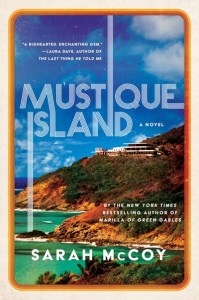 Mustique is a private island in the St. Vincent archipelago that became a playground of the rich and famous in the 1970s, with Princess Margaret and Mick Jagger regular visitors. In McCoy’s novel – inspired by real events and people, and featuring cameos from the aforementioned celebrities as well as the island’s owners at the time, the baron Colin Tennant and his wife, Lady Anne Glenconner (who, I was amused to spot at the library the other day, has written her own fictional tribute to the island, Murder on Mustique) – Willy May, a Texan with a small fortune at her disposal thanks to her divorce from an English brewing magnate, sails in on a private boat and decides to build her own villa on Mustique. She’s uncomfortable with the way locals, who only have service jobs, are sometimes paraded out for colonial displays of pomp. Her two young adult daughters, Hilly and Joanne, later join her. The one has been a model in Paris, where she became addicted to amphetamines.
Love is on the cards for all three main female characters, but there’s heartache along the way as well. Closer to women’s fiction than I generally choose, this was a frothy indulgence that was fun to read but could be shorter and needn’t have tried so hard to make serious points about motherhood and to evoke the time period, e.g., with a list of what’s on the radio. I have also reviewed McCoy’s Marilla of Green Gables. (Offered by publicist via NetGalley)
Golden Boys by Phil Stamper (2022)
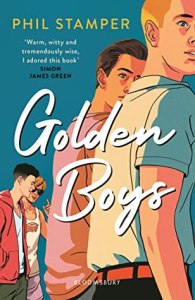 Four gay high schoolers in small-town Ohio look forward to a summer of separate travels for jobs and internships and hope their friendships will stay the course. We have Gabriel, a nature lover off to volunteer for a Boston save-the-trees non-profit; Sal, his friend with benefits, who dreams of bypassing college for a career in politics so interns at his local senator’s office in Washington, DC; Reese, headed to Paris for a fashion design course; and Heath, escaping his parents’ divorce and moving chaos to stay with an aunt and cousin in Florida and work at their beach café. With alternating first-person passages from all four characters, plus transcriptions of their conversation threads, this moves quickly.
Reese has been secretly infatuated with Heath for ages, but three of the four will consider new dating opportunities this summer (the fourth just becomes a workaholic). Secondary characters are pansexual and nonbinary – it’s a whole new world from when I was in high school! Initially, I found the inner monologues too one-note, but I think Stamper’s aim was to recreate the teenage struggle for self-confidence and individuality and has captured that life stage’s inherent anxiety. I also would have trimmed the preparatory stuff; nearly 100 pages before the first of them leaves Ohio is a bit much. This YA novel was a sweet, fun page turner and the perfect replacement to the Heartstopper series as my summer crush. However, I don’t think I was taken enough with the characters to read next year’s projected sequel. (Public library)
Summer by Edith Wharton (1917)
 Charity Royall was born into poverty but brought down the mountain and adopted by a kindly couple into respectable North Dormer society. Mrs. Royall has died before the action starts, but as a young woman Charity still lives with Lawyer Royall, her guardian, and works at the library. When a stranger, Mr. Harney, arrives in their New England town to survey the local architecture, it’s clear right away that he’ll be a romantic prospect for her. “She had always thought of love as something confused and furtive, and he made it as bright and open as the summer air.” However, shame over her lowly origins – she is so snobbish every time she comes into contact with someone from the mountain – continues to plague her.
Although Harney returns her affections and they set up a little love nest in an abandoned house in the woods, uncertainty lingers as to whether he’ll consider marriage to Charity beneath him. This skirts Tess of the d’Urbervilles territory but doesn’t turn nearly as tragic as Ethan Frome (apparently, Wharton called this a favourite among her works, and referred to it as “the Hot Ethan”). Charity isn’t as vain as another Hardy heroine, Bathsheba Everdene; she’s an endearing blend of innocent and worldly, and her realistic reaction to what fate seems to decree feels like about the best one can expect for her time. Melodrama aside, I truly enjoyed the descriptions of a quintessential American summer with picnics and Fourth of July fireworks. Ethan fan or not, you should definitely read this one. (University library)
Sophie’s World by Jostein Gaarder for #NordicFINDS
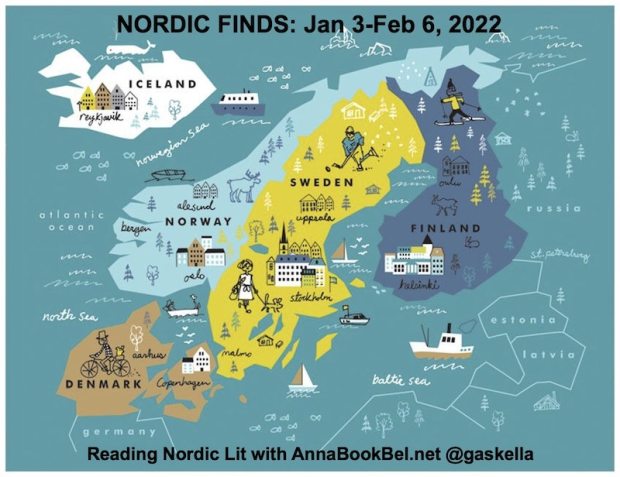
For my meager contribution to Annabel’s five-week Nordic FINDS challenge, I got out my copy of Sophie’s World by Jostein Gaarder that came from the free mall bookshop in 2020.
Sophie’s World: A Novel about the History of Philosophy (1994)
[Translated from the Norwegian by Paulette Møller]
 Sophie Amundsen, 14 going on 15, starts receiving mysterious letters asking her life’s big questions: Who are you? Where does the world come from? Soon her anonymous correspondent starts sending whole sheaves of paper elaborating on episodes from the unfolding history of philosophy, from creation myths through the Greek philosophers to Marxism and Darwinism via the Renaissance and Enlightenment. She’s so engrossed in her impromptu philosophy course that she starts to neglect her schoolwork and worry her mother. Sophie identifies the letter-writer as one Alberto Knox, who perhaps lives in a lake cabin nearby, and starts to interact with him by writing back. (I loved that their letters are delivered by a golden Labrador named Hermes.) Meanwhile, she’s perplexed by all the postcards she receives addressed to “Hilde,” also 15. Is she reading Hilde’s story, or is Hilde reading hers?
I’ll be honest … I made it just 96 pages (out of 394) before I started skimming, flipping past big chunks to get to the story. As to what I did experience, my feelings are mixed:
- On the one hand, this is certainly a more fun way to encounter philosophy than the textbook I had in college, while still offering accurate and thorough information.
- On the other hand, is the novel’s young adult audience really going to stick around for all the talky/preachy bits surrounding the slightly magical, mind-bending plot?
I think this became a word-of-mouth bestseller a couple of decades ago because of its novelty value. It’s a book that asks and assumes a lot of its readers: that we be curious and diligent, that we engage in the universal search of meaning. As Alberto writes in his first proper letter, “We feel we are part of something mysterious and we would like to know how it all works.” I feel I missed my moment to read it, though I can admire its aim. 
(See Annabel’s review here.)
My current Scandinavian read is Land of Snow and Ashes by Petra Rautiainen, a Finnish author, about the treatment of Sámi people during World War II (coming out from Pushkin Press tomorrow).
Autumnal Children’s and YA Books
Browsing through old magazines, I found a fun BookPage reading list from October 2019 entitled “Pumpkin spice latte literature.” It asks, “what if autumn were distilled into a book? The mixture of crispness and warmth, the thrill of possibility, the bittersweetness of change—these books are pure pumpkin spice.” I love the lateral thinking that came up with
 The Art of Fielding by Chad Harbach (back to school in the Midwest)
- I Remember Nothing by Nora Ephron (wry reflections from the autumn of a life)
- Possession by A.S. Byatt (bookish geeking out)
- Calling a Wolf a Wolf by Kaveh Akbar (taking comfort from a vision of recovery from alcoholism)
- An Enchantment of Ravens by Margaret Rogerson (wit and magic)
I’ve read the first three, and am keen to catch up on Akbar’s debut poetry collection after loving Pilgrim Bell this summer. I’m only unlikely to pick up Rogerson’s fantasy. In any case, I enjoyed seeing how the editors came up with their selections.
I tend to be rather more literal with my seasonal reading recommendations. Does it have autumn in the title or as a setting?! Is it about pumpkins or Halloween?
This year I happen to have amassed all children’s and YA selections.
October, October by Katya Balen (2020)
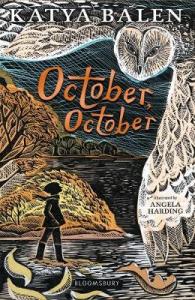 I’ll admit it: it was Angela Harding’s gorgeous cover illustration that drew me to this one. But I found a story that lived up to it, too. October, who has just turned 11 and is named after her birth month, lives in the woods with her father. Their shelter and their ways are fairly primitive, but it’s what October knows and loves. When her father has an accident and she’s forced into joining her mother’s London life, her only consolations are her rescued barn owl chick, Stig, and the mudlarking hobby she takes up with her new friend, Yusuf.
The child’s perspective is well rendered through artful run-on sentences. Balen is careful to show the consequences of October’s decisions and to present advantages as well as disadvantages so it’s not just countryside = good, city = bad. I thought the father’s recovery a bit too quick, but overall, this middle grade novel was a great read for any age, as well as one to get kids thinking about illness and loss. And how about these heart-tugging last lines? “There are stories everywhere and I want to tell them all. And all the world is wild and waiting for me.” (Public library) 
Autumn Story by Jill Barklem (1980)
 The second in the quartet of seasonal “Brambly Hedge” stories. Autumn is a time for stocking the pantry shelves with preserves, so the mice are out gathering berries, fruit and mushrooms. Young Primrose wanders off, inadvertently causing alarm – though all she does is meet a pair of elderly harvest mice and stay for tea and cake in their round nest amid the cornstalks. I love all the little touches in the illustrations: the patchwork tea cosy matches the quilt on the bed one floor up, and nearly every page is adorned with flowers and other foliage. After we get past the mild peril that seems to be de rigueur for any children’s book, all is returned to a comforting normal. Time to get the Winter volume out from the library. (Public library)
Une Chanson d’ours by Benjamin Chaud (2011)
 The first whole book I’ve read in French in many a year. I just about coped, given that it’s a picture book with not all that many words on a page; any vocabulary I didn’t know offhand, I could understand in context. It’s late into the autumn and Papa Bear is ready to start hibernating for the year, but Little Bear spies a late-flying bee and follows it out of the woods and all the way to the big city. Papa Bear, realizing his lad isn’t beside him in the cave, sets out in pursuit and bee, cub and bear all end up at the opera hall, to the great surprise of the audience. What will Papa do with his moment in the spotlight? This is a lovely book that, despite the whimsy, still teaches about the seasons and parent–child bonds as it offers a vision of how humans and animals could coexist. I’ve since found out that this was made into a series of four books, all available in English translation. (Little Free Library)
Pumpkinheads by Rainbow Rowell; illus. Faith Erin Hicks (2019)
 This YA graphic novel is set on a Nebraska pumpkin patch that’s more like Disney World than a simple field down the road. Josiah and Deja have worked together at the Succotash Hut for the last three autumns. Today they’re aware that it’s their final Halloween before leaving for college. Deja’s goal is to try every culinary delicacy the patch has to offer – a smorgasbord of foodstuffs that are likely to be utterly baffling to non-American readers: candy apples, Frito pie (even I hadn’t heard of this one), kettle corn, s’mores, and plenty of other saccharine confections.
Josiah’s goal, by contrast, is to catch the eye of Marcy, the beauty who works at the fudge stand. Deja convinces him to desert the Succotash Hut and go in pursuit of Marcy via as many food stands as possible. She’s willing to indulge his unrealistic fantasy even though, as a bisexual who’s dated just about everyone at the patch, she knows romance is sometimes not all it’s cracked up to be. Meanwhile, there’s an angry billy goat on the loose.
This is a fun and quick romp, and the ending genuinely surprised me. I liked the story better than the art, though – my main problem was that these teen characters look more like they’re 30 (Josiah, especially, looks almost haggard what with the sharp lines down the sides of his face – I guess they’re to give him a ‘chiselled’ jaw?), similar to that weird phenomenon of much older actors playing high schoolers. So, I laughed to see in an afterword conversation between Rowell and Hicks that one of the major things they changed from early mock-ups was making the protagonists look older. (Public library) 
Pick a Pumpkin by Patricia Toht; illus. Jarvis (2019)
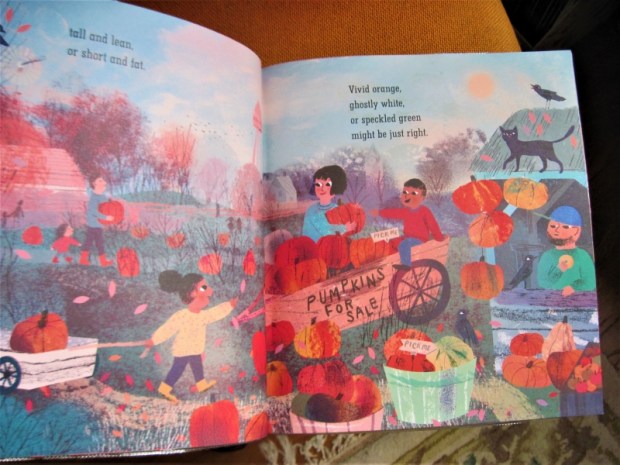
 From picking the best pumpkin at the patch to going out trick-or-treating, this is a great introduction to Halloween traditions. It even gives step-by-step instructions for carving a jack-o’-lantern. The drawing style – generally 2D, and looking like it could be part cut paper collages, with some sponge painting – reminds me of Ezra Jack Keats and most of the characters are not white, which is refreshing. There are lots of little autumnal details to pick out in the two-page spreads, with a black cat and crows on most pages and a set of twins and a mouse on some others. The rhymes are either in couplets or ABCB patterns. Perfect October reading. (Public library)
 Any super-autumnal reading for you this year?
Do you read children’s picture books and YA novels even if you (and any children) are well past that age – or is it just me?
Booker Prize 2021: Longlist Reading and Shortlist Predictions
The 2021 Booker Prize shortlist will be announced tomorrow, September 14th, at 4 p.m. via a livestream. I’ve managed to read or skim eight of 13 from the longlist, only one of which I sought out specifically after it was nominated (An Island – the one no one had heard of; it turns out it was released by a publisher based just 1.5 miles from my home!). I review my four most recent reads below, followed by excerpts of reviews of ones I read a while ago and my brief thoughts on the rest, including what I expect to see on tomorrow’s shortlist.
Klara and the Sun by Kazuo Ishiguro
 Why ever did I put this on my Most Anticipated list of the year and pre-order a signed copy?! I’m a half-hearted Ishiguro fan at best (I love Nocturnes but am lukewarm on the other four I’ve read, including his Booker winner) and should have known that his take on AI would be no more inspiring than Ian McEwan’s (Machines Like Me) a couple of years back.
Klara is an Artificial Friend purchased as part of an effort to combat the epidemic of teenage loneliness – specifically, to cheer up her owner, Josie, who suffers from an unspecified illness and is in love with her neighbour, Rick, a bright boy who remains excluded. Klara thinks of the sun as a god, praying to it and eventually making a costly bargain to try to secure Josie’s future health.
Part One’s 45 pages are slow and tedious; the backstory could have been dispensed with in five fairy tale-like pages. There’s a YA air to the story: for much of the length I might have been rereading Everything, Everything. In fact, when I saw Ishiguro introduce the novel at a Guardian/Faber launch event, he revealed that it arose from a story he wrote for children. The further I got, the more I was sure I’d read it all before. That’s because the plot is pretty much identical to the final story in Mary South’s You Will Never Be Forgotten.
Klara’s highly precise diction, referring to everyone in the third person, also gives this the feeling of translated fiction. While that is part of Ishiguro’s aim, of course – to explore the necessarily limited perspective and speech of a nonhuman entity (“Her ability to absorb and blend everything she sees around her is quite amazing”) – it makes the prose dull and belaboured. The secondary characters include various campy villains, the ‘big reveals’ aren’t worth waiting for, and the ending is laughably reminiscent of Toy Story. This took me months and months to force myself through. What a slog! (New purchase) 
An Island by Karen Jennings (2019)
 Seventy-year-old Samuel has been an island lighthouse keeper for 14 years when a brown-skinned stranger washes up on his beach. Sole survivor from a sunken refugee boat, the man has no English, so they communicate through gestures. Jennings convincingly details the rigors of the isolated life here: Samuel dug his own toilet pipes, burns his trash once a week, and gets regular deliveries from a supply boat. Nothing is wasted and everything is appreciated here, even the thirdhand magazines and videotapes he inherits from the mainland.
Although the core action takes place in just four days, Samuel is so mentally shaky that his memories start getting mixed up with real life. We learn that he has been a father, a prisoner and a beggar. Jennings is South African, and in this parallel Africa, racial hierarchy still holds sway and a general became a dictator through a military coup. Samuel’s father was involved in the independence movement, while Samuel himself was arrested for resisting the dictator.
The novella’s themes – jealousy, mistrust, possessiveness, suspicion, and a return to primitive violence – are of perennial relevance. Somehow, it didn’t particularly resonate for me. It’s not dissimilar in style to J. M. Coetzee’s vague but brutal detachment, and it’s a highly male vision à la Doggerland. Though highly readable, it’s ultimately a somewhat thin fable with a predictable message about xenophobia. Still, I’m glad I discovered it through the Booker longlist.
My thanks to Holland House for the free copy for review.
Bewilderment by Richard Powers
 This has just as much of an environmentalist conscience as The Overstory, but a more intimate scope, focusing on a father and son who journey together in memory and imagination as well as in real life. The novel leaps between spheres: between the public eye, where neurodivergent Robin is a scientific marvel and an environmental activist, and the privacy of family life; between an ailing Earth and the other planets Theo studies; and between the humdrum of daily existence and the magic of another state where Robin can reconnect with his late mother. When I came to the end, I felt despondent and overwhelmed. But as time has passed, the book’s feral beauty has stuck with me. The pure sense of wonder Robin embodies is worth imitating. (Review forthcoming for BookBrowse.)
China Room by Sunjeev Sahota
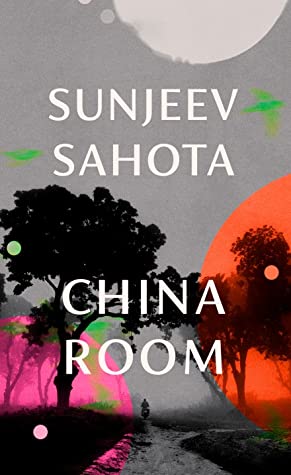 Sahota appeared on Granta’s list of Best Young British Novelists in 2013 and was previously shortlisted for The Year of the Runaways, a beautiful novel tracking the difficult paths of four Indian immigrants seeking a new life in Sheffield.
Three brides for three brothers: as Laura notes, it sounds like the setup of a folk tale, and there’s a timeless feel to this short novel set in the Punjab in the late 1920s and 1990s – it also reminded me of biblical stories like those of Jacob and Leah and David and Bathsheba. Mehar is one of three teenage girls married off to a set of brothers. The twist is that, because they wear heavy veils and only meet with their husbands at night for procreation, they don’t know which is which. Mehar is sure she’s worked out which brother is her husband, but her well-meaning curiosity has lasting consequences.
In the later storyline, a teenage addict returns from England to his ancestral estate to try to get clean before going to university and becomes captivated by the story of his great-grandmother and her sister wives, who were confined to the china room. The characters are real enough to touch, and the period and place details make the setting vivid. The two threads both explore limitations and desire, and the way the historical narrative keeps surging back in makes things surprisingly taut. See also Susan’s review. (Read via NetGalley)
Other reads, in brief:
(Links to my full reviews)
 Second Place by Rachel Cusk: Significantly more readable than the Outline trilogy and with psychological depths worth pondering, though Freudian symbolism makes it old-fashioned. M’s voice is appealing, as is the marshy setting and its isolated dwellings. This feels like a place outside of time. The characters act and speak in ways that no real person ever would – the novel is most like a play: melodramatic and full of lofty pronouncements. Interesting, but nothing to take to heart; Cusk’s work is always intimidating in its cleverness.
 A Town Called Solace by Mary Lawson: In 1972, Clara, a plucky seven-year-old, sits vigil for the return of her sixteen-year-old sister, who ran away from home; and their neighbour, who’s in the hospital. One day Clara sees a strange man moving boxes in next door. This is Liam Kane, who inherited the house from a family friend. Like Lawson’s other works, this is a slow burner featuring troubled families. It’s a tender and inviting story I’d recommend to readers of Tessa Hadley, Elizabeth Strout and Anne Tyler.
 No One Is Talking About This by Patricia Lockwood: This starts as a flippant skewering of modern life. A woman who became a social media star by tweeting quips like “Can a dog be twins?” reflects on life on “the portal” and under “the dictator.” Midway through the book, she gets a wake-up call when her mother summons her back to the Midwest for a family emergency. It’s the about-face that makes this novel, forcing readers to question the value of a digital existence based on glib pretence. Funny, but with an ache behind it.
 Light Perpetual by Francis Spufford: While I loved the premise, the execution didn’t live up to it. Spufford calls this an act of “literary resurrection” of five figures who survive a South London bombing. But these particular characters don’t seem worth spending time with; their narratives don’t connect up tightly, as expected, and feel derivative, serving only as ways to introduce issues (e.g. mental illness, sexual assault, racial violence, eating disorders) and try out different time periods. I would have taken a whole novel about Ben.
 This leaves five more: Great Circle (by Maggie Shipstead) I found bloated and slow when I tried it in early July, but I’m going to give it another go when my library hold comes in. The Sweetness of Water (Nathan Harris) I might try if my library acquired it, but I’m not too bothered – from Eric’s review on Lonesome Reader, it sounds like it’s a slavery narrative by the numbers. I’m not at all interested in the novels by Anuk Arudpragasam, Damon Galgut, or Nadifa Mohamed but can’t say precisely why; their descriptions just don’t excite me.
Here’s what I expect to still be in the running after tomorrow. Clear-eyed, profound, international; bridging historical and contemporary; much that’s unabashedly highbrow.
- Second Place by Rachel Cusk
 The Promise by Damon Galgut (will win)
- No One Is Talking About This by Patricia Lockwood
- Bewilderment by Richard Powers
- China Room by Sunjeev Sahota
- Light Perpetual by Francis Spufford
What have you read from the longlist? What do you expect to be shortlisted?
Northumberland Trip, Book Haul, and Reading & 20 Books #9 Emerald
We spent the first 11 days of July on holiday in Northumberland (via stays with friends in York on the way up and back) – our longest spell of vacation since 2016, and our longest UK break since 2013. The trip also happened to coincide with our 14th anniversary. It was a fantastic time of exploring England’s northeast corner, a region new to me. I loved the many different types of landscape, from sandy beaches and rocky coasts and islands to moorland and lovely towns. It’s the county for you if you like castles. We joined the National Trust so we could make stops at lots of stately homes and other historic sites. Some highlights were:
- Cherryburn, the off-the-beaten-track home of engraver Thomas Bewick.
- A cheap and delicious meal of authentic Mexican street food in Hexham, of all places (at Little Mexico).
- Walking along a tiny fraction of Hadrian’s Wall from Housesteads Roman Fort.


- Cragside, the over-the-top home of a Victorian inventor (and the first international arms dealer – whoops), nestled in a plantation of pines and rhododendrons.
- A boat trip to the Farne Islands with a landing on Inner Farne, giving close-up views of puffins, other seabirds, and grey seals. We also sailed past the lighthouse made famous by Grace Darling’s rescue of shipwreck victims in 1838. (Relevant song by Duke Special, by way of a Michael Longley poem.)
- Whiling away a rainy morning in Barter Books, one of Britain’s largest secondhand bookshops (located in an old Victorian railway station), and the charity shops of Alnwick.
- An adventurous (and very wet) walk along the coast to the Dunstanburgh Castle ruin.


- Searching the dunes for rare orchids on Holy Island, followed by a delicious and largely vegan lunch at Pilgrims Coffee House.
- Another seabird-filled boat trip, this one round Coquet Island. Sightings included roseate terns and the Duke of Northumberland.
- Our second Airbnb, The Lonnen (near Rothbury), was a rural idyll shared mostly with sheep and gray wagtails. We were spoiled by Ruth’s excellent interior décor and cooked breakfasts. You can get a feel for the place via her Instagram.
- Coffee and snacks at Corbridge Larder’s Heron Café – so good we made a second trip.


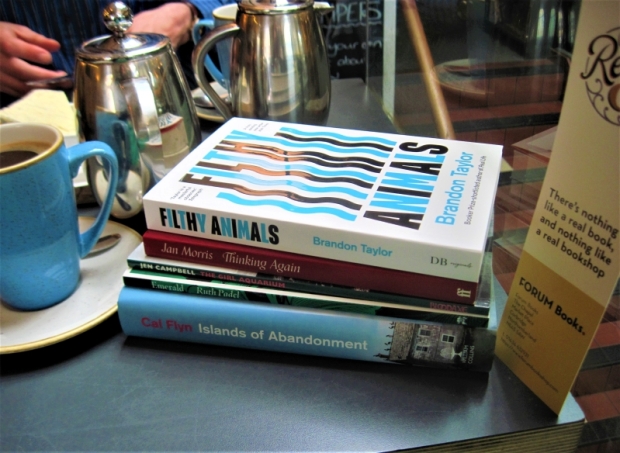
It was also, half unexpectedly, a week filled with book shopping. First up was Forum Books in Corbridge, a lovely independent bookshop. I don’t often buy new books, so enjoyed the splurge here. The Flyn and Taylor were two of my most anticipated releases of 2021. It felt appropriate to pick up a Bloodaxe poetry title as the publisher is based in nearby Hexham.
Next came a bounteous charity shop haul in Hexham.

On the Tuesday we holed up in Barter Books for hours while it rained – and the queue lengthened – outside. I was surprised and delighted that the nine antiquarian books I resold to Barter more than paid for my purchases, leaving me in credit to spend another time (online if, as seems likely, I don’t get back up in person anytime soon).


Alnwick also has a number of charity shops. I had the most luck at the Lions bookshop.

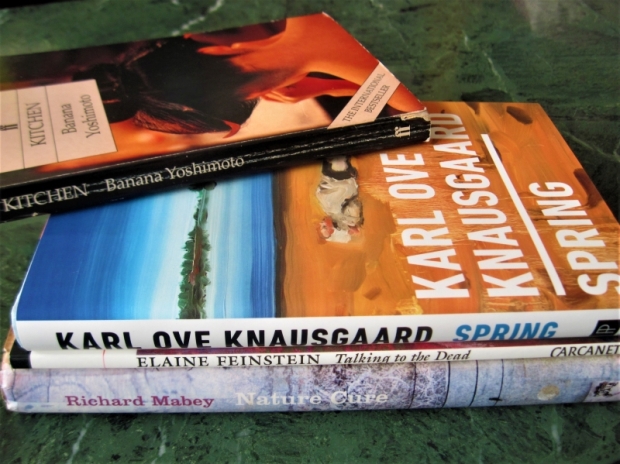
I seemed to keep finding books wherever I went. Kitchen came from a bookshelf in a shop/café on Holy Island. A secondhand/remainders shop near York Minster was the source of the other three.
What I Read:
The holiday involved significant car journeys as Northumberland is a big county with an hour or more between destinations. Alongside my navigating and DJ duties, I got a lot of reading done during the days, as well as in the evenings.
Finished second half or so of:
 Phosphorescence by Julia Baird – An intriguing if somewhat scattered hybrid: a self-help memoir with nature themes. Many female-authored nature books I’ve read recently (Wintering, A Still Life, Rooted) have emphasized paying attention and courting a sense of wonder. To cope with recurring abdominal cancer, Baird turned to swimming at the Australian coast and to faith. Indeed, I was surprised by how deeply she delves into Christianity here. She was involved in the campaign for the ordination of women and supports LGBTQ rights.
 Open House by Elizabeth Berg – When her husband leaves, Sam goes off the rails in minor and amusing ways: accepting a rotating cast of housemates, taking temp jobs at a laundromat and in telesales, and getting back onto the dating scene. I didn’t find Sam’s voice as fresh and funny as Berg probably thought it is, but this is as readable as any Oprah’s Book Club selection and kept me entertained on the plane ride back from America and the car trip up to York. It’s about finding joy in the everyday and not defining yourself by your relationships.
 Site Fidelity by Claire Boyles – I have yet to review this for BookBrowse, but can briefly tell you that it’s a terrific linked short story collection set on the sagebrush steppe of Colorado and featuring several generations of strong women. Boyles explores environmental threats to the area, like fracking, polluted rivers and an endangered bird species, but never with a heavy hand. It’s a different picture than what we usually get of the American West, and the characters shine. The book reminded me most of Love Medicine by Louise Erdrich.
 Every Minute Is a Day by Robert Meyer, MD and Dan Koeppel – The Bronx’s Montefiore Medical Center serves an ethnically diverse community of the working poor. Between March and September 2020, it had 6,000 Covid-19 patients cross the threshold. Nearly 1,000 of them would die. Unfolding in real time, this is an emergency room doctor’s diary as compiled from interviews and correspondence by his journalist cousin. (Coming out on August 3rd. Reviewed for Shelf Awareness.)
 Virga by Shin Yu Pai – Yoga and Zen Buddhism are major elements in this tenth collection by a Chinese American poet based in Washington. She reflects on her family history and a friend’s death as well as the process of making art, such as a project of crafting 108 clay reliquary boxes. “The uncarved block,” a standout, contrasts the artist’s vision with the impossibility of perfection. The title refers to a weather phenomenon in which rain never reaches the ground because the air is too hot. (Coming out on August 1st.)
Read most or all of:
 The Other Black Girl by Zakiya Dalila Harris – I feel like I’m the last person on Earth to read this buzzy book, so there’s no point recounting the plot, which initially is reminiscent of Luster by Raven Leilani but morphs into its own thing as Nella realizes her rivalry with Hazel, her new Black colleague at Wagner Books, is evidence of a wider social experiment. The prose is hip, bringing to mind Queenie and Such a Fun Age. It was a fun road trip read for me, but I could have done without the silliness of magical hair care products.
 Heartstopper, Volume 1 by Alice Oseman – It’s well known at Truham boys’ school that Charlie is gay. Luckily, the bullying has stopped and the others accept him. Nick, who sits next to Charlie in homeroom, even invites him to join the rugby team. Charlie is smitten right away, but it takes longer for Nick, who’s only ever liked girls before, to sort out his feelings. This black-and-white YA graphic novel is pure sweetness, taking me right back to the days of high school crushes. I raced through and placed holds on the other three volumes.
 The Vacationers by Emma Straub – Perfect summer reading; perfect holiday reading. Like Jami Attenberg, Straub writes great dysfunctional family novels featuring characters so flawed and real you can’t help but love and laugh at them. Here, Franny and Jim Post borrow a friend’s home in Mallorca for two weeks, hoping sun and relaxation will temper the memory of Jim’s affair. Franny’s gay best friend and his husband, soon to adopt a baby, come along. Amid tennis lessons, swims and gourmet meals, secrets and resentment simmer.
 Kitchen by Banana Yoshimoto – A pair of poignant stories of loss and what gets you through. In the title novella, after the death of the grandmother who raised her, Mikage takes refuge with her friend Yuichi and his mother (once father), Eriko, a trans woman who runs a nightclub. Mikage becomes obsessed with cooking: kitchens are her safe place and food her love language. Moonlight Shadow, half the length, repeats the bereavement theme but has a magic realist air as Satsuki meets someone who lets her see her dead boyfriend again.
I also made a good start on a few of my other purchases from the trip: Islands of Abandonment, No Time to Spare, Filthy Animals, and Female Friends.
Alas, most of the in-demand library books I brought along with me – Great Circle by Maggie Shipstead, Malibu Rising by Taylor Jenkins Reid, and Still Life by Sarah Winman – didn’t hit the spot, so I’ve returned them unread and will borrow them at another point later in the year (except Malibu Rising, which felt soapy and insubstantial).
It’s been a struggle getting back into the routines of work and writing since we got back, but I’ve managed to review one more of my 20 Books of Summer. This is #9, slipped in from my Forum Books pile, and I’m currently working on books #10–13.
Emerald by Ruth Padel (2018)
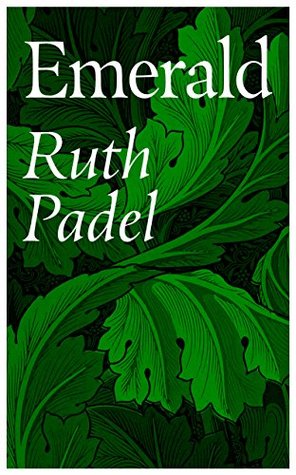 This was my 11th book from Padel; I’ve read a mixture of her poetry, fiction, narrative nonfiction and poetry criticism. Emerald consists mostly of poems in memory of her mother, Hilda, who died in 2017 at the age of 97. The book pivots on her mother’s death, remembering the before (family stories, her little ways, moving her into sheltered accommodation when she was 91, sitting vigil at her deathbed) and the letdown of after. It made a good follow-on to one I reviewed last month, Kate Mosse’s An Extra Pair of Hands.
Emerald, the hue and the gemstone, recurs frequently in ornate imagery of verdant outdoor scenes and expensive art objects. Two favourites were travel-based: “Jaipur,” about the emerald-cutters of India, where Padel guiltily flew while her mother was ill; and “Salon Noir,” about a trip down into prehistoric caves of France the summer after Hilda’s death. Overall, I expected the book to resonate with me more than it did. The bereavement narrative never broke through to touch me; it remained behind a silk screen of manners and form.
Two favourite stanzas:
“Your voice is your breath.
The first thing that’s yours
and the last.” (from “Fragile as Breath”)
“that’s all of us
sifting the dark
in our anonymities and hope.” (from “Above is the Same as Below”)
My rating:
Next books in progress: The Glitter in the Green by Jon Dunn and Nothing but Blue Sky by Kathleen MacMahon
Mary Jane by Jessica Anya Blau (Blog Tour)
Are you having a groovy June yet? If not, I have just the remedy: a juicy coming-of-age novel that drops you directly into the Baltimore summer of 1975. Mary Jane Dillard, 14, lives in the upper-class white neighborhood of Roland Park. Her parents are prim types who attend church every week, belong to a country club, and pray for the (Republican) president’s health before each sit-down family dinner. When Mary Jane starts working as a daytime nanny for five-year-old Izzy, the Cones’ way of life is a revelation to her. They are messy bohemians who think nothing of walking around the house half-naked, shouting up and down the stairs at each other, or leaving a fridge full of groceries to rot and going out for fast food instead.
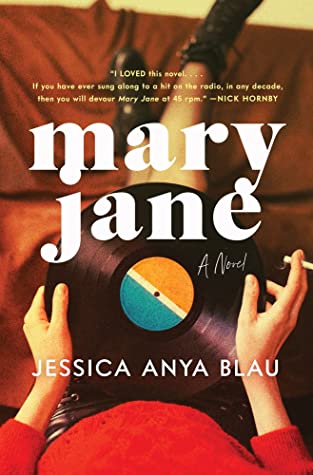 Dr. Cone is a psychiatrist whose top-secret assignment is helping a rock star to kick his drug addiction. Jimmy and his actress wife, Sheba, move into the Cones’ attic for the summer. If they go out in public, they wear wigs and pretend to be friends visiting from Rhode Island. While the Cones are busy monitoring or trying to imitate their celebrity guests, Mary Jane introduces discipline by cleaning the kitchen, alphabetizing the bookcase, and replicating her mother’s careful weekly menus with food she buys from Eddie’s market. In some ways she seems the most responsible member of the household, but in others she’s painfully naïve, entirely ignorant of sex and unaware that her name is a slang term for marijuana.
Open marriage, sex addiction and group therapy are new concepts that soon become routine for our confiding narrator, as she adopts a ‘What they don’t know can’t hurt them’ stance towards her trusting parents. Blau is the author of four previous YA novels, and while this is geared towards adults, it resonates for how it captures the uncertainty and swirling hormones of the teenage years. Who didn’t share Mary Jane’s desperate curiosity to learn about sex? Who can’t remember a moment of realization that parents aren’t right about everything?
Music runs all through the book, creating and cementing bonds between the characters. Mary Jane sings in the choir and shares her mother’s love of both church music and show tunes. Jimmy and Sheba are always making up little songs on which Mary Jane harmonizes, and a clandestine trip to a record store in an African American part of town forms one of the novel’s pivotal scenes. The relationship between Mary Jane and Izzy, who is precocious and always coming out with malapropisms, is touching, and Blau cleverly inserts references to the casual racism and antisemitism of the 1970s.
I love it when a novel has a limited setting and can evoke a sense of wistfulness for a golden time that will never come again. I highly recommend this for nostalgic summer reading, particularly if you’ve enjoyed work by Curtis Sittenfeld – especially Prep and Rodham.
My thanks to Harper360 UK and Anne Cater for arranging my proof copy for review.
I was delighted to be part of the blog tour for Mary Jane. See below for details of where other reviews and features have appeared or will be appearing soon.

February Releases by de Visser, George, Lawson, and Smiley
Nonfiction about doctors’ memorable patients and a life of chronic pain and disability; novels set in 1970s Canada and contemporary (but magically outside-of-time) Paris.
That One Patient: Doctors’ and nurses’ stories of the patients who changed their lives forever by Ellen de Visser
[Translated from the Dutch by Brent Annable]
Ellen de Visser is a science writer for the most popular newspaper in the Netherlands, De Volkskrant. Her “That One Patient” column, which began in the summer of 2017, turns interviews with medical professionals into punchy first-person narratives. A collection of them was published in Dutch in 2019. This English translation tacks on 10 additional pieces based on conversations with English and American practitioners (including Dr. Anthony Fauci, immunologist and presidential medical advisor), four of them explicitly reflecting on COVID-19.
Many of the cases are decades old yet stuck with the doctor or nurse in question because of a vital lesson learned. Overtreatment is regretted just as much as an omission of care. Again and again, these medical professionals conclude that it’s impossible to judge someone else’s decisions or quality of life. For instance, a surgeon admits he had a hard time empathizing with his obese patients undergoing stomach reduction until he followed up with a young woman who told him about how invisible she’d felt before her surgery. Premature and disabled children bring grief or joy, not always in the expected doses. A doctor resents the work his team puts into repairing a woman who jumped from an eighth-floor window – why the heroic measures for someone who wanted to die? – until he learns she was pushed. A cancer surgeon develops breast cancer and now knows exactly what her patients go through.
 Some of these stories are disturbing: being stalked by a patient with a personality disorder, a man poisoning his girlfriend, a farmer predicting the very day and time of his death. A gynaecologist changes his mind about abortion after he meets a 15-year-old who gave birth at home and left her baby outside in a plastic bag to die of exposure. Other pieces are heart-warming: A paramedic delivers a premature, breech baby right in the ambulance. Staff throw a wedding at the hospital for a dying teen (as in Dear Life by Rachel Clarke). A woman diagnosed with cancer while pregnant has chemotherapy and a healthy baby – now a teenager. There’s even a tale from a vet who crowdfunded prostheses for a lively terrier.
One unique thing about the Netherlands is that euthanasia is legal and provided by doctors upon the express request of a patient suffering from a terminal illness. It is taken for granted in these essays, yet some interviewees express their discomfort with it as an option for young patients. De Visser is careful to note that, even with the situation as it is, only 4% of deaths in the Netherlands are by euthanasia, and the majority of these are end-stage cancer cases.
As with any collection of this nature, some stories are more enticing than others, but overall I found it a surprising and moving set of reflections that is alive to ethical complexities and grapples with tough issues like disability, doctor error, loneliness, pain, and sense of purpose.
Two quotes, in particular, stood out to me, one from a nurse – “We are only ever guests in other people’s lives, and that’s how we ought to behave” – and the other from Dr. Fauci’s piece. In 2014 he treated a doctor who had been volunteering in Sierra Leone after an Ebola outbreak but became ill with the virus and had to be evacuated. “He cited Hippocrates: ‘It is far more important to know what sort of person has the disease, rather than what sort of disease the person has.’ You treated me like a person, not a disease, he said. And that’s what medicine is all about.”
With thanks to 4th Estate for the proof copy for review.
A Still Life: A Memoir by Josie George
 Over a year of lockdowns, many of us have become accustomed to spending most of the time at home. But for Josie George, social isolation is nothing new. Chronic illness long ago reduced her territory to her home and garden. The magic of A Still Life is in how she finds joy and purpose despite extreme limitations. Opening on New Year’s Day and travelling from one winter to the next, the book is a window onto George’s quiet existence as well as the turning of the seasons. (My full review will appear in a forthcoming issue of the Times Literary Supplement. See also Eleanor’s thorough review.) This is top of my wish list for next year’s Barbellion Prize shortlist.
With thanks to Bloomsbury for the proof copy for review.
A Town Called Solace by Mary Lawson
I discovered Mary Lawson in 2015 with Road Ends and caught up with Crow Lake in the summer of 2019. All four of her books are set in fictional locations inspired by the villages and rural areas of Northern Ontario, where the author grew up before moving to England in 1968. So Solace, while not a real town, is true to her memory and, despite the sometimes gruff or know-it-all locals, an emotional landmark for the three central characters, all of whom are processing trauma and looking for places of comfort where they can start over.
 1972. First we meet Clara, a plucky seven-year-old sitting vigil. She’s waiting for the return of two people: her sixteen-year-old sister, Rose, who ran away from home; and their next-door neighbour, Mrs. Orchard, whose cat, Moses, she’s feeding until the old lady gets back from the hospital. As days turn into weeks, though, it seems less likely that either will come home, and one day Clara sees a strange man moving boxes around in Mrs. Orchard’s house. This is Liam Kane, who’s inherited the house from a family friend. In his thirties and recently divorced, he’s taking a break in this tiny town, never imagining that he might find a new life. The third protagonist, and only first-person narrator, is Elizabeth, who lies in a hospital bed with heart trouble and voices her memories as a monologue to her late husband.
As we cycle through these three characters’ perspectives in alternating chapters, we gradually come to understand the connections between them. There are satisfying parallels in that, on multiple occasions but in slightly different ways, a child attaches to an older person or an adult stands in as a guardian for a neglected child. All of Lawson’s creations, even the secondary figures, are dealing with distressing memories or a loss of some kind, the details of which might only emerge much later on. Solace offers myriad opportunities for recovery, whether kitty playtime at Mrs. Orchard’s or diner food and homemade ice cream.
Like Lawson’s other works, this is a slow burner featuring troubled families. Her characters, often full of regret and sorrow, take a shadowy past as a prompt to reset their lives. They’re charming in spite of their flaws. I recalled that Crow Lake also looks back to the climactic happenings experienced by a seven-year-old girl. And like Road Ends, A Town Called Solace makes a convincing case for present decisions being influenced by historical trauma. It’s a tender and inviting story I’d recommend to readers of Wendy McGrath and Anne Tyler, with Clever Girl by Tessa Hadley and Olive, Again by Elizabeth Strout as specific readalikes. (My dilemma now is whether to read my only remaining Lawson novel, The Other Side of the Bridge, right away or save it: she’s not the most prolific author, with four books in 19 years.)
A favorite passage:
[Liam’s] life prior to coming north seemed to be taking on the quality of an old movie, one in which he’d been deeply engrossed while watching it but which now seemed trivial, unconvincing and profoundly lacking in either colour or plot. Solace had colour and plot in spades, maybe too much. In every way it was coming to seem more real than Toronto, with its endless malls and traffic jams and high-powered jobs. Though maybe, if he went back to Toronto, the same would be true in reverse. Maybe when he’d been back for a couple of months he’d find that it was Solace that seemed unreal, its unremarkable streets and stores like something from a dream, its dramatic landscape fading to nothing, like a holiday photo left in the sun.
With thanks to Chatto & Windus for the free copy for review.
The Strays of Paris by Jane Smiley
(Published in the USA in December 2020 under the title Perestroika in Paris. It’s been given a The Boy, the Mole, the Fox and the Horse treatment for its UK release.)
 My summary for Bookmarks magazine: “A racehorse, Perestroika—nicknamed Paras—strays from her unlocked suburban stable one day, carrying her groom’s purse in her mouth, and ends up in Paris’s Place du Trocadéro. Here she meets Frida the dog, Sid and Nancy the mallards, and Raoul the raven. Frida, whose homeless owner died, knows about money. She takes euros from the purse to buy food from a local market, while Paras gets treats from a baker on predawn walks. Etienne, an eight-year-old orphan who lives with his ancient great-grandmother, visits the snowy park to feed the wary animals (who can talk to each other), and offers Paras a home. A sweet fable for animal lovers.”
Yes, this is a talking animal book, but the animals only talk to each other; they communicate with humans through their gestures and soulful eyes. Kindly shopkeepers work out what Frida wants to buy based on what she stares at or points to with a paw; the baker whose window Paras passes on her early morning walks intuits that the horse is hungry; Etienne, who gives a couple of the stray animals a home during a chill winter, learns to understand when Paras needs to go out to relieve herself, after piles of dung build up in the sitting room.
I liked how patiently and convincingly Smiley builds the portrait of each character – human or animal – and the overall situation of kindness and good fortune. Raoul is particularly amusing for his birdsplaining: “It is a feature of age. I have learned so many things in my life that they just force their way out of my beak,” he says. However, a crow would be much more realistic for Paris (or any city) than a raven, and, overall, this was a little twee and farfetched for my tastes. It was nice to read something a bit different from Smiley, who I haven’t tried since her Last Hundred Years Trilogy. She has a sideline in YA horse novels; this should probably have been lumped with those. (Annabel liked it a bit more.)
I was sent an unsolicited review copy by Picador/Mantle.
What recent releases can you recommend?
R.I.P. Reads, Part II: Cox, Gaiman, Paver
Happy Halloween! I enjoyed taking part in R.I.P. for the first time this year. My top two choices out of the six fantastical and/or spooky books I managed to read would be The Loney and The Graveyard Book (see below). For this second installment I’ve been reading eerie short stories that take place in the English countryside, a young adult fantasy novel set mostly in a graveyard, and a ghost story that unfolds in the Himalayas of the 1930s.

Help the Witch by Tom Cox (2018)
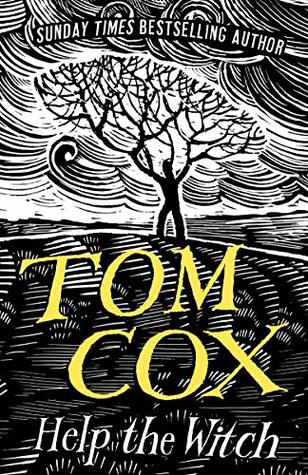 I knew Tom Cox for his witty books about his many cats, including The Good, the Bad and the Furry. His first foray into fiction was published by Unbound earlier this month; I pre-ordered it on a Kindle deal for £1. The settings are dilapidated cottages, moorland and villages, mostly in the North of England. Even in the spookier stories, there’s always a welcome touch of humor. “Seance” raises the ghost of a cyclist who was killed on his bike and now is destined to cycle evermore. He doesn’t, at first, realize that he’s dead. “‘Morning!’ he called to a middle-aged couple with a labradoodle, cheerfully, as he cycled past Whiddon Scrubs. They ignored him. ‘Shitbags,’ he said under his breath.”
The three sets of flash fictions, “Listings,” “Nine Tiny Stories about Houses,” and “Folk Tales of the Twenty-third Century,” particularly made me laugh, though each perhaps overstays its welcome a bit. My two favorites were proper ghost stories: “Speed Awareness,” about a peculiar mix-up with the course teacher, and “Just Good Friends,” in which a woman’s Internet dating experiences turn strange when she meets someone with inside knowledge about her past. I could see the latter being anthologized. These are enjoyable enough stories to flip through around Halloween.
My rating:
The Graveyard Book by Neil Gaiman (2008)
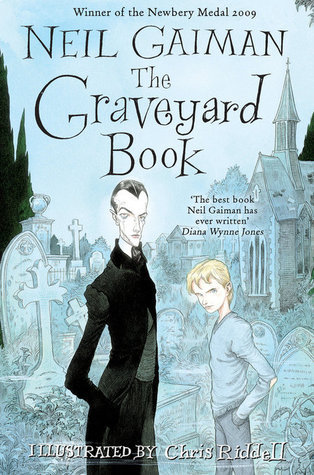 Nobody “Bod” Owens has lived in a graveyard ever since the night he climbed out of his cot and toddled there – the same night that a man named Jack murdered his parents and older sister. He was the only member of his family to survive the slaughter. Although he passes a happy childhood among the graveyard’s witches, ghouls and ghosts from many centuries, he knows he’s different. He’s alive; he has to eat and craves human friendship. As valuable as his lessons in Fading and Dreamwalking prove to be, he longs to attend school and discover more of the world outside – provided he can keep his head down and avoid notice; previous trips beyond the cemetery walls, such as to a pawnshop, have bordered on the disastrous.
Bod’s japes with his returning friend Scarlett turn more serious when he learns that Jack is still after him. This is quite a dark book for its young teen audience, but as I remember from the only other Gaiman book I’ve read, The Ocean at the End of the Lane, he’s a master at balancing sadness with humor and magic. The illustrations by Chris Riddell are terrific, too.
Favorite lines:
Silas, Bod’s guardian: “You’re alive, Bod. That means you have infinite potential. You can do anything, make anything, dream anything. If you change the world, the world will change.”
“Mother Slaughter’s headstone [was] so cracked and worn and weathered that all it said now was:
LAUGH
which had puzzled the local historians for over a hundred years.”
My rating: 
Thin Air: A Ghost Story by Michelle Paver (2016)
 In 1935 Dr. Stephen Pearce and his brother Kits are part of a five-man mission to climb the most dangerous mountain in the Himalayas, Kangchenjunga. Thirty years before, Sir Edmund Lyell led an ill-fated expedition up the same mountain: more than one man did not return, and the rest lost limbs to frostbite. “I don’t want to know what happened to them. It’s in the past. It has nothing to do with us,” Dr. Pearce tells himself, but from the start it feels like a bad omen that they, like Lyell’s party, are attempting the southwest approach; even the native porters are nervous. And as they climb, they fall prey to various medical and mental crises; hallucinations of ghostly figures on the crags are just as much of a danger as snow blindness.
This is pacey, readable historical fiction with a good sense of period and atmosphere. I enjoyed Pearce’s narration, and the one-upmanship type of relationship with his brother adds an interesting dimension to the expedition dynamics. However, I never submitted sufficiently to Paver’s spell to find anything particularly scary. I’ll try again with her other ghost story, Dark Matter, about an Arctic expedition from the same time period.
Favorite passage:
“The Sherpas are wrong. This mountain has no spirit, no sentience and no intent. It’s not trying to kill us. It simply is.” [famous last words…]
My rating:
 Bookish Beck = Rebecca Foster. American transplant to England. Freelance proofreader and book reviewer.
 Bookish Beck