August Releases: Bright Fear, Uprooting, The Farmer’s Wife, Windswept
This month I have three memoirs by women, all based on a connection to land – whether gardening, farming or crofting – and a sophomore poetry collection that engages with themes of pandemic anxiety as well as crossing cultural and gender boundaries.
My August highlight:
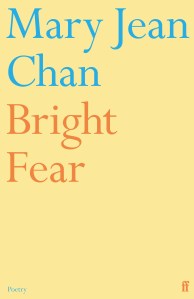
Bright Fear by Mary Jean Chan
Chan’s Flèche was my favourite poetry collection of 2019. Their follow-up returns to many of the same foundational subjects: race, family, language and sexuality. But this time, the pandemic is a lens through which all is filtered. This is particularly evident in Part I, “Grief Lessons.” “London, 2020” and “Hong Kong, 2003,” on facing pages, contrast Covid-19 with SARS, the major threat when they were a teenager. People have always made assumptions about them based on their appearance or speech. At a time when Asian heritage merited extra suspicion, English was both a means of frank expression and a source of ambivalence:
“At times, English feels like the best kind of evening light. On other days, English becomes something harder, like a white shield.” (from “In the Beginning Was the Word”)
“my Chinese / face struck like the glow of a torch on a white question: / why is your English so good, the compliment uncertain / of itself.” (from “Sestina”)
 At the centre of the book, “Ars Poetica,” a multi-part collage incorporating lines from other poets, forms a kind of autobiography in verse. Chan also questions the lines between genres, wondering whether to label their work poetry, nonfiction or fiction (“The novel feels like a springer spaniel running off-/leash the poem a warm basket it returns to always”).
The poems’ structure varies, with paragraphs and stanzas of different lengths and placement on the page (including, in one instance, a goblet shape). The enjambment, as you can see in lines I’ve quoted above and below, is noteworthy. Part III, “Field Notes on a Family,” reflects on the pressures of being an only child whose mother would prefer to pretend lives alone rather than with a female partner. The book ends with hope that Chan might be able to be open about their identity. The title references the paradoxical nature of the sublime, beautifully captured via the alliteration that closes “Circles”: “a commotion of coots convincing / me to withstand the quotidian tug-/of-war between terror and love.”
Although Flèche still has the edge for me, this is another excellent work I would recommend even to those wary of poetry. 
Some more favourite lines, from “Ars Poetica”:
“What my mother taught me was how
to revere the light language emitted.”
“Home, my therapist suggests, is where
you don’t have to explain yourself.”
With thanks to Faber for the free copy for review.
Three land-based memoirs:
(All:  )
)
Uprooting: From the Caribbean to the Countryside – Finding Home in an English Country Garden by Marchelle Farrell
 This Nan Shepherd Prize-winning memoir shares Chan’s attention to pandemic-era restrictions and how they prompt ruminations about identity and belonging. Farrell is from Trinidad but came to the UK as a student and has stayed, working as a psychiatrist and then becoming a wife and mother. Just before Covid hit, she moved to the outskirts of Bath and started rejuvenating her home’s large and neglected garden. Under thematic headings that also correspond to the four seasons, chapters are named after different plants she discovered or deliberately cultivated. The peace she finds in her garden helps her to preserve her mental health even though, with the deaths of George Floyd and so many other Black people, she is always painfully aware of her fragile status as a woman of colour, and sometimes feels trapped in the confining routines of homeschooling. I enjoyed the exploration of postcolonial family history and the descriptions of landscapes large and small but often found Farrell’s metaphors and psychological connections obvious or strained.
With thanks to Canongate for the free copy for review.
The Farmer’s Wife: My Life in Days by Helen Rebanks
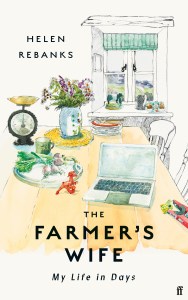 I fancied a sideways look at James Rebanks (The Shepherd’s Life and Wainwright Prize winner English Pastoral) and his regenerative farming project in the Lake District. (My husband spotted their dale from a mountaintop on holiday earlier in the month.) Helen Rebanks is a third-generation farmer’s wife and food and family are the most important things to her. One gets the sense that she has felt looked down on for only ever wanting to be a wife and mother. Her memoir, its recollections structured to metaphorically fall into a typical day, is primarily a defence of the life she has chosen, and secondarily a recipe-stuffed manifesto for eating simple, quality home cooking. (She paints processed food as the enemy.)
Growing up, Rebanks started cooking for her family early on, and got a job in a café as a teenager; her mother ran their farm home as a B&B but was forgetful to the point of being neglectful. She met James at 17 and accompanied him to Oxford, where they must have been the only student couple cooking and eating proper food. This period, when she was working an office job, baking cakes for a café, and mourning the devastating foot-and-mouth disease epidemic from a distance, is most memorable. Stories from travels, her wedding, and the births of her four children are pleasant enough, yet there’s nothing to make these experiences, or the telling of them, stand out. I wouldn’t make any of the dishes; most you could find a recipe for anywhere. Eleanor Crow’s black-and-white illustrations are lovely, though.
With thanks to Faber for the free copy for review.
Windswept: Life, Nature and Deep Time in the Scottish Highlands by Annie Worsley
 I’d come across Worsley in the Wildlife Trusts’ Seasons anthologies. For a decade she has lived on Red River Croft, in a little-known pocket of northwest Scotland. In word pictures as much as in the colour photographs that illustrate this volume, she depicts it as a wild land shaped mostly by natural forces – also, sometimes, manmade. From one September to the next, she documents wildlife spectacles and the influence of weather patterns. Chronic illness sometimes limited her daily walks to the fence at the cliff-top. (But what a view from there!) There is more here about local history and ecology than any but the keenest Scotland-phile may be interested to read. Worsley also touches on her upbringing in polluted Lancashire, and her former academic career and fieldwork in Papua New Guinea. Her descriptions are full of colours and alliteration, though perhaps a little wordy: “Pale-gold autumnal days are spliced by fickle and feisty bouts of turbulent weather. … Sunrises and sunsets may pour with cinnabar and henna; dawn and dusk can ripple with crimson and purple.” The kind of writing I could appreciate for the length of an essay but not a whole book.
With thanks to William Collins for the free copy for review.
Would you read one or more of these?
Love Your Library, August 2023
Thanks to Elle and Jana for participating this month!
My reading and borrowing since last time:
READ
- Loved and Missed by Susie Boyt

- One Midsummer’s Day: Swifts and the Story of Life on Earth by Mark Cocker
- Protecting the Planet: The Season of Giraffes by Nicola Davies

- Rhubarb Lemonade by Oskar Kroon
- August Blue by Deborah Levy
- La Vie: A Year in Rural France by John Lewis-Stempel

&
Diary of a Tuscan Bookshop by Alba Donati (2022; 2023)
[Translated from the Italian by Elena Pala]
My final #WITMonth selection (I’m pleased with my total of nine, after these four and those four!) and a perfect choice for readers of Shaun Bythell’s bookshop diaries. Instead of a lovable grump in Wigtown, you get a tiny town in the Tuscan hills and a stock of mostly women’s literature and bluestocking gifts curated by an outspoken feminist poet in her sixties. She relied on crowdfunding to open the shop in 2019 – and again to rebuild it after a devastating fire just a couple of months later.
 Set during the first five months of 2021, this gives lovely snapshots of a bookseller’s personal and professional life without overstaying its welcome or getting repetitive. Donati has an adult daughter and a 101-year-old mother who was only just losing independence. Although she generally feels supported by the people of Lucignana, some 30% are naysayers, she estimates, and not everyone shares her opinions – she’s outraged when the council cuts down all the trees in the central square.
While keeping the focus on books, she also manages to give a sense of her family’s convoluted wartime history, local politics, and shifting Covid restrictions. I especially enjoyed hearing about her 25-year career in publishing; Edward Carey, Michael Cunningham, and Daša Drndić were ‘her’ authors and she has juicy stories to tell about all three.
Each entry ends with a list of that day’s orders. It’s fascinating to see which are the popular authors in translation – Maeve Brennan, Emily Dickinson, Fannie Flagg, Kent Haruf, Jenny Offill, Vita Sackville-West, Ali Smith – as well as plenty in various European languages. Sometimes, no doubt, the stock reflects Donati’s own taste. [A couple of the English titles are rendered incorrectly: “Longbourne House” by Jo Baker and “Woman, Girl, Other” by Bernardine Evaristo should have been caught before this went to print.]
In short, she’s a bookish kindred spirit (“I like books that make you discover other books – a virtuous cycle that should never be broken. The only eternity we will ever experience here on earth”) and I thoroughly enjoyed reading about her fairly uneventful yet rewarding days. This, too, was perfect (summer) armchair travel reading.
SKIMMED
- The Orchid Outlaw by Ben Jacob
CURRENTLY READING
- The Year of the Cat by Rhiannon Lucy Coslett
- The Three Graces by Amanda Craig
- Reproduction by Louisa Hall
- Milk by Alice Kinsella
- Tom Lake by Ann Patchett
- Wild Fell by Lee Schofield
CHECKED OUT, TO BE READ


RETURNED UNFINISHED
- The Other Side of Mrs Wood by Lucy Barker – I read the first 82 pages. This was capable hist fic but without the spark that would have kept me interested.
- King by Jonathan Eig – Requested after I’d only read two chapters. It’s a massive biography, so I’ll have to get it back out another time when I can give it more attention.
What have you been reading or reviewing from the library recently?

Share a link to your own post in the comments. Feel free to use the above image. The hashtag is #LoveYourLibrary.
Summer Reads, Part II: Cocker, Kroon, Levy & Lewis-Stempel
(Part I was here, ICYMI.) Cooler days here as we say a drawn-out farewell to summer and welcome in early autumn; I’ve been seeing ripe blackberries and Vs of geese for a few weeks now. This batch of books I read from the library truly encapsulated summer: swifts flying overhead, cold lemonade as a reward for sticky outdoor activities, and travels through the confusing cities and inviting countryside of the Continent.
One Midsummer’s Day: Swifts and the Story of Life on Earth by Mark Cocker (2023)
We saw our last swift in Newbury somewhere around 13 August. The three and a half months they were with us passed in what felt like an instant, leaving us bereft until they come back.
 Why is it that books seem to bunch together by topic, with several about Henry James or swifts or whatever all being published within the same year or few years? It’s unfortunate for Mark Cocker, a well-respected author on birds and environmental issues in general, that he is two years behind Charles Foster and Sarah Gibson with this work on swifts. I also think he attempts too much, in terms of both literary strategy and subject matter (see the second part of the subtitle), and so loses focus.
The book employs a circadian structure, recording what he sees from his garden from one midsummer evening to the next as he looks up at the sky. Within this framework he delivers a lot of information about the world’s swift species, a fair bit of it familiar to me from those previous books; more novel are his stories of remarkable sightings, like a vagrant white-throated needletail in the Outer Hebrides (it later died in a collision with a wind turbine). But he also tries to set swifts in the context of the grand sweep of evolution. I skipped over these sections, which felt superfluous. With his literary allusions, Cocker is aiming for something like Tim Dee’s exceptional Greenery but falls short.
This could have made a superb concentrated essay, maybe as part of a collection devoting each chapter to a different species, because his passion is clear and his metaphors excellent as he holds up swifts as an emblem of the aerial life, and of hope (“In a social screaming display these weaponised shapes blaze together as a black-swarming meteor in a widening orbit that burns over the houses or between them”). The few-page run-on sentence about how humanity has gotten itself into the climate crisis is pretty great (though Lev Parikian did so much more concisely in Into the Tangled Bank: It’s “f***ing f***ed”). But Foster has written the definitive tribute to swifts, The Screaming Sky, and in just 150 small pages.
Rhubarb Lemonade by Oskar Kroon (2019; 2023)
[Translated from the Swedish by A. A. Prime]
 This was like an update of The Summer Book by Tove Jansson: the delicious innocence of a Scandinavian island summer is threatened by change and, ultimately, death. Vinga is happy to escape her troubles for a simple island life with Grandpa. They eat the same foods day after day, do the same things week after week, and slowly work on refurbishing the wooden sailing boat he gave her. Ruth, the shopkeeper’s granddaughter, couldn’t be more different: she hates the sea, misses the city, and is fully immersed in social media and celebrity culture. Yet Vinga finds her captivating and tingles when she’s near. “Things would be so much easier if we’d never met. Things would be so much more boring if we’d never met.”
Prime won Sweden’s August Prize for this YA novel (spot the reference to The Murderer’s Ape, which won the same prize!). As will be familiar to regular readers of YA, we see Vinga dealing with issues like bullying, loneliness, body image, and family breakdown. She’s called back to the mainland to meet the baby her father has had by the new woman in his life – a trip that coincides with the worst storm the island has seen in ages and a chance for Grandpa to play the sea captain hero. But falling for Ruth, kissing a girl, is not a reason for angst. It’s just the way things are. Kroon makes no grand claim that this will be true love, forever. It’s a teen summer romance, and exaggerated by the cover. Maybe it will last; maybe it won’t. The deeper love is familial, particularly between Vinga and her grandfather.
August Blue by Deborah Levy (2023)
 My third novel from Levy, and a typically confounding one. The facts are simple enough: Elsa M. Anderson is a pianist who has had something of a breakdown. She retreats from giving concerts, dyes her hair blue, and bounces between European capitals in the later days of the pandemic, giving music lessons and caring for her mentor and adoptive father, Arthur, who’s dying on Sardinia. In between there are laughs and lovers, searching and sadness, all muffled by Elsa’s (Levy’s) matter-of-factness. Meanwhile, there’s a touch of the uncanny in the doppelganger Elsa keeps seeing. First, her double buys the carousel horses she had her eye on in Athens. Then Elsa steals her twin’s trilby hat. There’s a confrontation late on but it doesn’t seem to make much difference. The doubling appears to be a way of making literal the adopted Elsa’s divided self. I’m not entirely sure what to say about this one. I enjoyed reading it well enough. Though I never felt compelled to pick it up, when I did I easily got through several chapters at a time. But I’m not convinced it meant much.
La Vie: A Year in Rural France by John Lewis-Stempel (2023)
Lewis-Stempel’s best book in an age; my favourite, certainly, since Meadowland. I’m featuring it in a summer post because, like Peter Mayle’s Provence series, it’s ideal for armchair travelling. Especially with the heat waves that have swept Europe this summer, I’m much happier reading about France or Italy than being there. The author has written much about his Herefordshire haunts, but he’s now relocated permanently to southwest France (La Roche, in the Charente). He proudly calls himself a peasant farmer, growing what he can and bartering for much of the rest. La Vie chronicles a year in his quest to become self-sufficient. It opens one January and continues through the December, an occasional diary with recipes.
 The family’s small-scale potager is organic agriculture at its best. He likens it to turning the clock back to the 1970s, or earlier, before England wrecked its countryside with industrial production. (His list of birds in the area is impressive, including some you’d be lucky to come across in the UK – turtledove, nightingale, stone curlew.) In fact, he estimates that his yield per square metre is triple what it was when he participated in that damaging system, for the same amount of work. His lifestyle is also a deliberate resistance to hyper-speed modernity: he scythes his grass, spends days preserving a haul of walnuts, and tries his hand at pressing oil and making spirits. There’s a make-do-and-mend attitude here: when his sheep-shearing equipment goes missing, he buys a beard trimmer at the supermarket and uses that instead.
It’s a peaceful, comforting read that’s attuned to the seasons and the land. There is also gentle mockery of the French with their bureaucracy and obsession with hunting, and self-deprecation of his own struggle to get his point across in a second language. I could never make a living by manual labour, but I like reading about back-to-the-land adventures, especially ones as bucolic as this – two-hour lunches, six-course dinners with homemade wine? Mais oui!
20 Books of Summer, 15–17: Bill Buford, Kristin Newman, J. Courtney Sullivan
One last foodie selection for the summer: a chef’s memoir set mostly in Lyon, France. Plus a bawdy travel memoir I DNFed halfway through, and an engaging but probably overlong contemporary novel about finances, generational conflict and women’s relationships.
Dirt: Adventures in French Cooking by Bill Buford (2020)
 Buford’s Heat was one of the highlights of my foodie summer reading in 2020. This is a sequel insomuch as it tells you what he did next, after his Italian-themed apprenticeships. The short answer is that he went to Lyon to learn French cooking in similarly obsessive fashion. Without knowing a word of French. And this time he had a wife and twin toddlers in tow. He met several celebrated French chefs – Michel Richard, Paul Bocuse, Daniel Boulud – and talked his way into training at a famous cookery school and in Michelin-starred kitchens.
These experiences are discussed in separate essays, so I rather lost track of the timeline. It’s odd that it took the author so many years to get around to publishing about it all. You’d think his sons were still young, but in fact they’re now approaching adulthood. The other slightly unusual thing is the amount of space Buford devotes to his pet theory that French cuisine (up to ragout, at least) evolved from Italian. Unsurprisingly, the French don’t favour this idea; I didn’t particularly care one way or the other.
Nonetheless, I enjoyed reading about his encounters with French bureaucracy; the stress of working in busy (and macho) restaurants, where he’s eventually entrusted with cooking the staff lunch; and his discovery of what makes for good bread: small wheat-growing operations rather than industrially produced flour – his ideal was the 90-cent baguette from his local boulangerie. This could have been a bit more focused, and I’m still more likely to recommend Heat, but I am intrigued to go to Lyon one day. (Secondhand gift, Christmas 2022)
What I Was Doing While You Were Breeding by Kristin Newman (2014)
 (DNF, 156/291 pages) As featured in my Six Degrees post earlier in the month. Newman is a comedy writer for film and television (That ’70s Show, How I Met Your Mother, etc.). I liked how the title unabashedly centres things other than couplehood and procreation. When she’s travelling, she can be spontaneous, open-to-experience “Kristin-adjacent,” who loves doing whatever it is that locals do. And be a party girl, of course (“If there is one thing that is my favorite thing in the world, it’s making out on a dance floor”). However, this chronological record of her sexual conquests in Amsterdam, Paris, Russia, Argentina, etc. gets repetitive and raunchy. I also felt let down when I learned that she married and had a child right after she published it. So this was just her “Pietra Pan” stage before she copied everyone else. Which is fine, but were her drunken shenanigans really worth commemorating? (Secondhand, Bas Books & Home)
Friends and Strangers by J. Courtney Sullivan (2020)
I got Emma Straub vibes from this big, juicy novel focusing on two women in upstate New York: Elisabeth, a married journalist who moved out of Brooklyn when she finally conceived via IVF; and Sam, a college art student who becomes her son Gil’s babysitter. Elisabeth misses her old crowd and doesn’t fit in with the middle-aged book club ladies in her suburban neighbourhood; Sam is almost her only friend, a confidante who’s also like a little sister (better, anyway, than Elisabeth’s real sister, who lives on tropical islands and models swimwear for inspirational Instagram posts). And Sam admires Elisabeth for simultaneously managing a career and motherhood with seeming aplomb.
 But fundamental differences between the two emerge, mostly to do with economics. Elisabeth comes from money and takes luxury products for granted, while Sam is solidly working-class and develops a surprising affinity with Elisabeth’s father-in-law, George, who is near bankruptcy after Uber killed off his car service business. His pet theory, “The Hollow Tree,” explains that ordinary Americans have been sold the lie that they are responsible for their own success, when really they are in thrall to corporations and the government doesn’t support them as it should. This message hits home for Sam, who is distressed about the precarious situation of the Latina dining hall employees she has met via her work study job. Both Elisabeth and Sam try to turn their privilege to the good, with varied results.
Although I remained engrossed in the main characters’ stories, which unfold in alternating chapters, I thought this could easily have been 300 pages instead of nearly 400. In particular, Sullivan belabours Sam’s uncertainty over her thirtysomething English fiancé, Clive, whom Elisabeth refers to as “sleazy-hot.” The red flags are more than obvious to others in Sam’s life, and to us as readers, yet we get scene after scene meant to cast shade on him. I also kept wondering if first person would have been the better delivery mode for one or both strands. Still, this was perfect literary cross-over summer reading. (Little Free Library)
#WITMonth, Part II: Wioletta Greg, Dorthe Nors, Almudena Sánchez and More
My next four reads for Women in Translation month (after Part I here) were, again, a varied selection: a mixed volume of family history in verse and fragmentary diary entries, a set of nature/travel essays set mostly in Denmark, a memoir of mental illness, and a preview of a forthcoming novel about Mary Shelley’s inspirations for Frankenstein. One final selection will be coming up as part of my Love Your Library roundup on Monday.
(20 Books of Summer, #13)
Finite Formulae & Theories of Chance by Wioletta Greg (2014)
[Translated from the Polish by Marek Kazmierski]
 I loved Greg’s Swallowing Mercury so much that I jumped at the chance to read something else of hers in English translation – plus this was less than half price AND a signed copy. I had no sense of the contents and might have reconsidered had I known a few things: the first two-thirds is family wartime history in verse, the rest is a fragmentary diary from eight years in which Greg lived on the Isle of Wight, and the book is a bilingual edition, with Polish and English on facing pages (for the poems) or one after the other (for the diary entries). I’m not sure what this format adds for English-language readers; I can’t know whether Kazmierski has rendered anything successfully. I’ve always thought it must be next to impossible to translate poetry, and it’s certainly hard to assess these as poems. They are fairly interesting snapshots from her family’s history, e.g., her grandfather’s escape from a stalag, and have quite precise vocabulary for the natural world. There’s also been an attempt to create or reproduce alliteration. I liked the poem the title phrase comes from, “A Fairytale about Death,” and “Readers.” The short diary entries, though, felt entirely superfluous. (New purchase – Waterstones bargain, 2023)
(20 Books of Summer, #14)
A Line in the World: A Year on the North Sea Coast by Dorthe Nors (2021; 2022)
[Translated from the Danish by Caroline Waight]
 Nors’s first nonfiction work is a surprise entry on this year’s Wainwright Prize nature writing shortlist. I’d be delighted to see this work in translation win, first because it would send a signal that it is not a provincial award, and secondly because her writing is stunning. Like Patrick Leigh Fermor, Aldo Leopold or Peter Matthiessen, she doesn’t just report what she sees but thinks deeply about what it means and how it connects to memory or identity. I have a soft spot for such philosophizing in nature and travel writing.
You carry the place you come from inside you, but you can never go back to it.
I longed … to live my brief and arbitrary life while I still have it.
This eternal, fertile and dread-laden stream inside us. This fundamental question: do you want to remember or forget?
Nors lives in rural Jutland – where she grew up, before her family home was razed – along the west coast of Denmark, the same coast that reaches down to Germany and the Netherlands. In comparison to Copenhagen and Amsterdam, two other places she’s lived, it’s little visited and largely unknown to foreigners. This can be both good and bad. Tourists feel they’re discovering somewhere new, but the residents are insular – Nors is persona non grata for at least a year and a half simply for joking about locals’ exaggerated fear of wolves.
Local legends and traditions, bird migration, reliance on the sea, wanderlust, maritime history, a visit to church frescoes with Signe Parkins (the book’s illustrator), the year’s longest and shortest days … I started reading this months ago and set it aside for a time, so now find it difficult to remember what some of the essays are actually about. They’re more about the atmosphere, really: the remote seaside, sometimes so bleak as to seem like the ends of the earth. (It’s why I like reading about Scottish islands.) A bit more familiarity with the places Nors writes about would have pushed my rating higher, but her prose is excellent throughout. I also marked the metaphors “A local woman is standing there with a hairstyle like a wolverine” and “The sky looks like dirty mop-water.”
With thanks to Pushkin Press for the proof copy for review.
Pharmakon by Almudena Sánchez (2021; 2023)
[Translated from the Spanish by Katie Whittemore]
 This is a memoir in micro-essays about the author’s experience of mental illness, as she tries to write herself away from suicidal thoughts. She grew up on Mallorca, always feeling like an outsider on an island where she wasn’t a native. Did her depression stem from her childhood, she wonders? She is also a survivor of ovarian cancer, diagnosed when she was 16. As her mind bounces from subject to subject, “trying to analyze a sick brain,” she documents her doctor visits, her medications, her dreams, her retweets, and much more. She takes inspiration from famous fellow depressives such as William Styron and Virginia Woolf. Her household is obsessed with books, she says, and it’s mostly through literature that she understands her life. The writing can be poetic, but few pieces stand out on the whole. My favourite opens: “Living in between anxiety and apathy has driven me to flowerpot decorating.”
With thanks to Fum d’Estampa Press for the free copy for review.
And a bonus preview:
Mary and the Birth of Frankenstein by Anne Eekhout (2021; 2023)
[Translated from the Dutch by Laura Watkinson]
 Anne Eekhout’s fourth novel and English-language debut is an evocative recreation of two momentous periods in Mary Shelley’s life that led – directly or indirectly – to the composition of her 1818 masterpiece. Drawing parallels between the creative process and motherhood and presenting a credibly queer slant on history, the book is full of eerie encounters and mysterious phenomena that replicate the Gothic science fiction tone of Frankenstein itself. The story lines are set in the famous “Year without a Summer” of 1816 (the storytelling challenge with Lord Byron) and during a period in 1812 that she spent living in Scotland with the Baxter family; Mary falls in love with the 17-year-old daughter, Isabella.
Coming out on 3 October from HarperVia. My full review for Shelf Awareness is pending.
20 Books of Summer, 11–12: Gillian Clarke Poetry and Ross Gay Essays
It might not look like I’ll finish the 20 Books of Summer challenge in time, but I’ve got it all planned out and should be reviewing the last few on the final day! My initial foodie idea has turned into a micro-theme that joins only about six of the titles in total. I’ve swapped in various other things along the way, such as a couple of poetry collections and novellas (note to self: always include at least a few very short books!), but the focus has been on getting through stuff from my own shelves, especially recent acquisitions and work by women.
Today I have an excellent poetry collection infused with the language of gardening and geology and reflecting on two crises of the early 2000s, and a book of mini-essays about noticing the small pleasures that make life worth living.
Making the Beds for the Dead by Gillian Clarke (2004)
 I look out for black-and-white Carcanet spines whenever I’m scanning the poetry section in a secondhand bookshop. Clarke’s was a new name for me (the National Poet of Wales from 2008 to 2016, she’s now 86) but the blurb attracted me and this ended up being exactly the sort of poetry I love: full of colours and nature imagery, profuse with alliteration and slant rhymes, relishing its specialist terminology, and taking on the serious subject matter of manmade disasters. Several medium-length sequences are devoted to gardening (“The Middleton Poems” and “Nine Green Gardens”) and geology (“The Stone Poems”); some earlier pieces are ekphrastic, or dedicated to particular poets.
Clarke remembers the delight she took as a child in the unfamiliar vocabulary of the Bible, “a narrative of spells / in difficult columns on those moth-thin pages, / words to thrill the heart with a strange music.” The book teems with animals – though, alas, many of them are dead (as in “Adders” and “Taxidermy”). The title sequence, indeed is about the foot and mouth disease outbreak that decimated the UK livestock population in 2001. Farmers were forced to cull their flocks and news footage showed mountains of carcasses burning. She hovers over the catastrophe, imagining herself into the minds of family farmers, gossiping onlookers, and a traumatized vet. Just as one crisis was coming to an end, September 11 came – another unforgettable tragedy, commemorated with “The Fall.” A very affecting collection, all told. I’ll be sure to read more by Clarke. (Secondhand – Bridport Old Books, 2023)
A favourite passage, from “The Yew Tunnel in Winter”:
Listen to sap rise, unstoppable flood,
for all the centuries as the tap-roots grew,
pumping through branches to the stirring bud
from deepest earth. In graveyards they say a yew
sends a root into the mouths of all the dead.
Here, sense all that power snowed in and still,
shut in the dream of winter and history
at the end of a muffled lane
The Book of Delights by Ross Gay (2019)
“Perhaps delight is like after the great cosmic finger has pointed at something, and that something … appears.”
Gay is better known as a poet, with several collections to his name, and teaches at Indiana University. This book project started as a challenge to self to write a daily essay about something that was good in his life, quickly and longhand. He started on his 42nd birthday (August 1) and continued for a full year; there are 102 micro-essays here, so he managed one every few days. They are about everything or nothing much, depending on how you look at it: an adored foodstuff or piece of music, a dream, a surprise encounter with a stranger, what was growing in his garden at the time, etc.
 One essay is titled “The Jenky,” about the crooked and makeshift. Gay watches the birds enjoying a dead tree in his (deliberately neglected) yard, and notes a sign reading “Caution: Bees on Bridge” and thereby making space for nature. A few of the more memorable incidents involve plane travel. One time he flies with a tomato seedling in his lap and finds that people treat him more kindly. He gets an unexpectedly enthusiastic response from a security guard when he mentions that he’s on his way to read poems and realizes later that, by some quirk of regional American accents, the man thought he’d said “reading palms.”
Although I enjoyed the book more as I went along, something held me back from loving it. There weren’t enough sentiments that I recognized, and the loose, informal style wasn’t always for me. While you get glimpses into his upbringing and travels, I tend to prefer a memoir. It may also be that Gay and I are just different personalities. The delight he takes in other people’s oddities suggests he might be an extrovert; he truly enjoys being spoken to, or even touched (on the shoulder, for instance), by strangers, whereas I don’t particularly. Part of this is about minority group bonding for him: he writes of the “Negreeting” exchanged between Black people passing each other on a street. There were also a few too many mentions of him peeing into bottles or in his car.
So I liked this, but maybe not enough to try more by Gay, though I should probably see what his verse is like. I was glad to have read it, especially when I realized I can only think of about 20 books I’ve read by Black men. Ever. Yikes. (New – Christmas gift, 2022)
#WITMonth, Part I: de Beauvoir, Jansson, NDiaye
My first four reads for Women in Translation month were quite a varied selection: a sobering autobiographical essay about the loss of a mother, a characteristically impish children’s novel, a confoundingly elliptical family memoir, and a preview of a forthcoming Mexican novel about women’s friendships and handicraft. Another four coming up later in August.
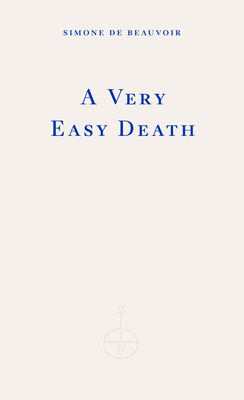
A Very Easy Death by Simone de Beauvoir (1964; 1965)
[Translated from the French by Patrick O’Brian]
“When someone you love dies you pay for the sin of outliving her with a thousand piercing regrets.”
I’d read a lot about Simone de Beauvoir but not one of her own works until this reissue came my way. It was right up my street as a miniature bereavement memoir (just 84 pages) that doesn’t shy away from the physical details of decline or the emotional complications of a fraught mother–daughter relationship.
 In October 1963, de Beauvoir was in Rome when she got a call informing her that her mother had had an accident. Expecting the worst, she was relieved – if only temporarily – to hear that it was a fall at home, resulting in a broken femur. But when Françoise de Beauvoir got to the hospital, what at first looked like peritonitis was diagnosed as stomach cancer with an intestinal obstruction. Her daughters knew that she was dying, but she had no idea (from what I’ve read, this paternalistic notion that patients must be treated like children and kept ignorant of their prognosis is more common on the Continent, and continues even today).
Over the next month, de Beauvoir and her sister Poupette took turns visiting. Initially alarmed by their mother’s condition, they soon grew used to the deterioration. “I was not worried by her nakedness any more: it was no longer my mother, but a poor tormented body.” They found her in varying states of awareness and discomfort. “In this race between pain and death we most earnestly hoped that death would come first.” Some nurses were better than others. De Beauvoir makes tantalizing references to the standoff between her and her mother about the Catholic faith Simone left behind. (I’ll need to read Memoirs of a Dutiful Daughter for more on that.) Even the hope of heaven didn’t fully neutralize self-pity and physical suffering for the dying woman because she feared her daughters wouldn’t be joining her.
The title is what a nurse told the grieving daughters: that their mother’s had been a very easy death in the end (and an upper-class one, de Beauvoir adds). The word used in French for easy, douce, can also be translated as “gentle,” a tie-in to the epigraph from Dylan Thomas’s “Do not go gentle into that good night.” Is it better for a loved one to die suddenly, or protractedly? I’ve debated this with myself and a few others since my mother’s death from a stroke in October. Ultimately, it’s pointless to ask; any death is an affront, hard to accept and adjust to no matter how much warning is given. I appreciated how matter-of-factly and concisely de Beauvoir’s essay encapsulates the duties and feelings surrounding a death. Frank and unshowy yet potent, this is a classic of the subgenre.
Published as Fitzcarraldo Editions Classics No. 2 in June. With thanks to the publisher for the free copy for review.
(Books of Summer, #10)
Finn Family Moomintroll by Tove Jansson (1948; 1950)
[Translated from the Swedish by Elizabeth Portch]
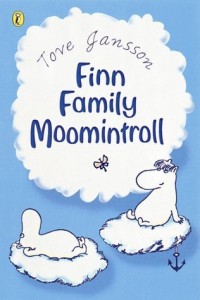 My sixth Moomins book, and ninth by Jansson overall. The novella’s gentle peril is set in motion by the discovery of the Hobgoblin’s Hat, which transforms anything placed within it. As spring moves into summer, this causes all kind of mild mischief until Thingumy and Bob, who speak in spoonerisms, show up with a suitcase containing something desired by both the Groke and the Hobgoblin, and make a deal that stops the disruptions.
As always, the creatures and events, conveyed by Jansson’s black-and-white drawings as much as by her words, are inventive and whimsical. There’s a cosy charm to the seasonal rituals, like the end-of-summer pancake party here. But what I value even more is the pointed accounts of the secondary characters’ neuroses. The Moomins are generally on a pretty even keel, though there is mention of Moominpappa’s sense of being hard done by because of childhood bullying and an enduring lack of respect. However, characters like the Muskrat and the Hemulen get a wry smile and shake of the head from me because their predicaments are so familiar: The Muskrat, terrified of mortifying situations, decides the life of a hermit might be preferable; the Hemulen gives up stamp collecting and switches to botanizing because there’s no joy in a finished quest, only in an ongoing search. The Moomins books offer the perfect combination of the familial and routine with the novel and adventurous. Even staid adults should give them a try. (Little Free Library)
Self-Portrait in Green by Marie NDiaye (2005; 2015)
[Translated from the French by Jordan Stump]
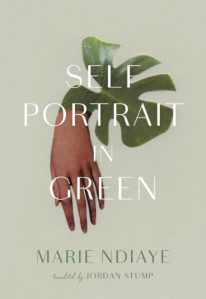 I tend to love a memoir that tries something new or experimental with the form (such as Constructing a Nervous System or In the Dream House), but this was a step too far for me; the self referred to in the title is almost wholly absent. NDiaye, a French–Senegalese author, opens in 2003 with the expected flooding of the Garonne in southwest France. Fragments of narrative from 2000–2003 chart her encounters with various women dressed in green, starting with one she thinks she sees under a banana tree (though her four children see nothing). Then there’s Katia Depetiteville, dead 10 years … NDiaye’s stepmother, once her childhood best friend; her friend Jenny’s rival for Ivan’s affection; and her mother, who now has a new family. What is a ‘woman in green’? The author explicitly associates the colour with cruelty, with presumably the usual connotation of jealousy as well. But it still feels arbitrary.
It’s all rather dreamlike, with poetic repetition, rhetorical questions and black-and-white photos that seem marginally relevant. “I’m saying to myself: Is all this really real?” NDiaye writes, and the reader will surely be asking the same. “I’m always interested in stories,” she adds, and while I’d agree, I need to know that they’re being told to build to some greater meaning. It was only in the last fifth of the book, when the author goes to a literary symposium in Ouagadougou and visits her father (a many-times-married former restaurateur and amateur architect now suffering from cataracts) and stepmother that I felt like there was a purpose: a bringing together of past and present for psychological clarity. I was relieved that this was only 112 pages. (Edelweiss) 
The 10th anniversary edition is being reissued by Two Lines Press next month.
And a bonus preview:
Cross-Stitch by Jazmina Barrera (2021; 2023)
[Translated from the Spanish by Christina MacSweeney]
 In the inventive debut novel by Mexican author Jazmina Barrera, a sudden death provokes an intricate examination of three young women’s years of shifting friendship. Their shared hobby of embroidery occasions a history of women’s handiwork, woven into a relationship study that will remind readers of works by Elena Ferrante and Deborah Levy. Citlali, Dalia, and Mila had been best friends since middle school. Mila, a writer with a young daughter, is blindsided by news that Citlali has drowned off Senegal. While waiting to be reunited with Dalia for Citlali’s memorial service, she browses her journal to revisit key moments from their friendship, especially travels in Europe and to a Mexican village. Cross-stitch becomes its own metaphorical language, passed on by female ancestors and transmitted across social classes. Reminiscent of Still Born and A Ghost in the Throat. (Edelweiss)
Coming out on 7 November from Two Lines Press. My full review for Shelf Awareness is pending.
Cumbria Sights and Reading & A Return to Sedbergh
We returned on Friday from a one-week reunion with university friends – some we see very often and some less so; we hadn’t all been together since February 2020. After a protracted winter selection process pitting locations and cottages against each other, the nine of us had managed to agree on a converted inn in Appleby-in-Westmorland, Cumbria, and it ended up being the perfect base for us: roomy, with lots of communal space plus en suite rooms for each family unit, and well located.
This was my first time in the Lake District in 17 years, and I particularly enjoyed the outings to Haweswater, Acorn Bank, Keswick and Derwentwater, and Carlisle (that one by train), as well as some low-key walking closer to the cottage.


As apposite reading, I took along:
- Some of Us Just Fall by Polly Atkin: A memoir of chronic illness by a writer based in Grasmere.
- Haweswater by Sarah Hall: Purchased in Sedbergh last year. Hall’s debut novel is set in the run-up to the lake being dammed to provide water for the city of Manchester in 1936, flooding the village of Mardale. I’m finding it rather dry and the local accent over-the-top, but I’ll push through and call it one of my 20 Books of Summer.
- The Farmer’s Wife by Helen Rebanks: A recipe-studded memoir of daily life as the spouse of famous Lake District sheep farmer James Rebanks.
- Wild Fell by Lee Schofield: As featured in my Six Degrees post, a plant-loving and conservation-oriented memoir by the manager of the RSPB Haweswater site.

I also packed, but didn’t get time to read from, books by Margaret Forster and Dorothy Wordsworth. A good showing by women from the northwest!
Though we hadn’t planned on going back so soon, having been for the first time in September, when I learned that Sedbergh was only 40 minutes from where we were staying, I suggested it for a daytrip along with a scenic walk to a waterfall and cake and soft drinks at the Cross Keys Temperance Inn, and even the less book-obsessed of us seemed to enjoy.

My final haul – including, from Carlisle, one book each from a charity shop and Bookcase (above), which I learned about from Simon but actually found kind of overwhelmingly huge and mazelike – cost £9.50 after subtracting the sellback of a partial box of books at Westwood. A good selection of poetry and novellas, plus a favourite I couldn’t resist buying two copies of and might reread as a buddy read with my husband (the Orlean).

Any vacation reading or book hauls for you this August?
Six Degrees of Separation: Romantic Comedy to Wild Fell
This is a fun meme I take part in every few months.
For August we begin with Romantic Comedy by Curtis Sittenfeld, one of my top 2023 releases so far. (See Kate’s opening post.)
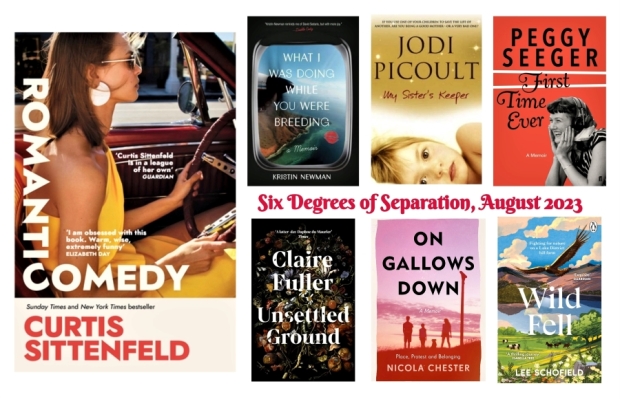
#1 Sittenfeld’s protagonist, Sally Milz, writes TV comedy, as does Kristin Newman (That ’70s Show, How I Met Your Mother, etc.), author of What I Was Doing While You Were Breeding, a lighthearted record of her travels and romantic conquests. (She even has a passage that reminds me of Sally’s Danny Horst Rule: “I looked like a thirty-year-old writer. Not like a twenty-year-old model or actress or epically legged songstress, which is a category into which an alarmingly high percentage of Angelenas fall. And, because the city is so lousy with these leggy aliens, regular- to below-average-looking guys with reasonable employment levels can actually get one, another maddening aspect of being a woman in this city.”)
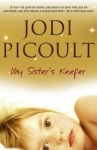 #2 I didn’t realize when I picked it up in a charity shop that my copy smelled strongly of cigarette smoke. I aired it in kitty litter, then by scented candles, and it still reeks. I reckon I can tolerate the smell long enough to finish it and put it in the Little Free Library, which gets good ventilation. A novel I acquired from the free bookshop we used to have in the mall in town was the only book I can remember having to get rid of before reading because it just smelled too bad (also of cigarettes in that case): My Sister’s Keeper by Jodi Picoult.
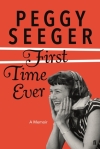 #3 So I didn’t read that, but I have read another Picoult novel, Sing You Home. The author is known for picking a central issue to address in each work, and in that one it was sexuality. Zoe, a music therapist, is married to Max but leaves him for Vanessa – and then decides to sue him for the use of the embryos they created together via IVF. It was the first book I’d read with that dynamic (a previously straight woman enters into a lesbian partnership), but by no means the last. Later came Untamed by Glennon Doyle, Hidden Nature by Alys Fowler, The Fixed Stars by Molly Wizenberg … and one you maybe weren’t expecting: the fantastic memoir First Time Ever by Peggy Seeger. The authors vary in how they account for it. They were gay all along but didn’t realize it? Their orientation changed? Or they just happened to fall in love with someone of the same gender? Seeger doesn’t explain at all, simply records how head-over-heels she was for Ewan MacColl … and then for Irene Pyper Scott.
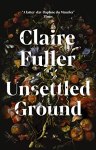 #4 Peggy Seeger is one of my heroes these days. I first got into her music through the lockdown livestreams put together by Folk on Foot and have since seen her live and acquired several of her albums, including a Smithsonian Folkways collection of her best-loved folk standards. One of these is, of course, “I’m Gonna Be an Engineer,” which was one of the inspirations for Claire Fuller’s Unsettled Ground.
 #5 Unsettled Ground, an unusual story of rural poverty and illiteracy, is set in a fictional village modelled on Inkpen, where Nicola Chester lives. Her memoir On Gallows Down, which held particular local interest for me, was shortlisted for the Wainwright Prize last year.
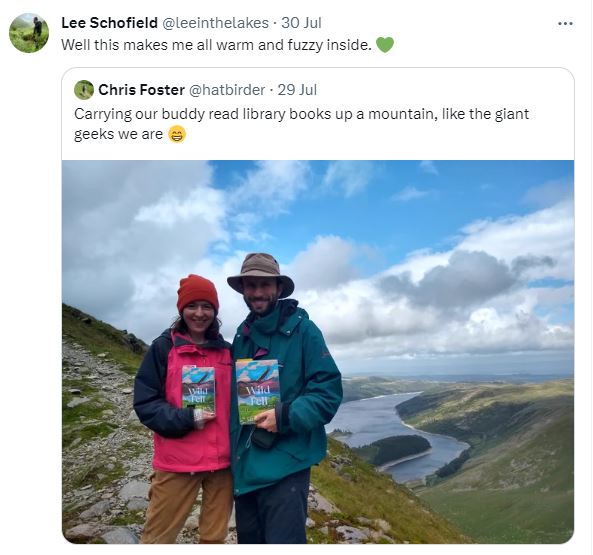
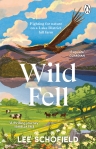 #6 Also shortlisted that year was Wild Fell by Lee Schofield, about his work at RSPB Haweswater. Like Chester, he’s been mired in the struggle to balance sustainable farming with conservation at a beloved place. And like a fellow Lakeland farmer (and previous Wainwright Prize winner for English Pastoral), James Rebanks, he’s trying to be respectful of tradition while also restoring valuable habitats. My husband and I each took a library copy of Wild Fell along to Cumbria last week (about which more anon) and packed it in a backpack for an on-location photo during our wild walk at the very atmospheric Haweswater.
Where will your chain take you? Join us for #6Degrees of Separation! (Hosted on the first Saturday of each month by Kate W. of Books Are My Favourite and Best.) Next month’s starting book is Wifedom by Anna Funder.
Have you read any of my selections? Tempted by any you didn’t know before?
Book Serendipity, June to July 2023
I call it “Book Serendipity” when two or more books that I read at the same time or in quick succession have something in common – the more bizarre, the better.
Are all of these pure coincidence? Or, as a character says in The Year of Pleasures by Elizabeth Berg, maybe it’s true that “Sometimes serendipity is just intention, unmasked.”
This is a regular feature of mine every couple of months. Because I usually have 20–30 books on the go at once, I suppose I’m more prone to such incidents. The following are in roughly chronological order.
- A deadbeat boyfriend named Andrew in Yellowface by Rebecca F. Kuang and The Legacy of Elizabeth Pringle by Kirsty Wark.
- A partner’s piano playing is by turns annoying (practice) and revelatory (performance) in The Happy Couple by Naoise Dolan and The Late Americans by Brandon Taylor.

- Frequent meals of potatoes due to poverty, and a character sneaking salt in, in Music in the Dark by Sally Magnusson and How Much of These Hills Is Gold by C Pam Zhang.
- Getting close to a seal even though the character knows it might bite in Salt & Skin by Eliza Henry-Jones and one story in High-Wire Act by JoeAnn Hart.
- Rev. Robert Kirk’s writings on fairies are mentioned in The Archaeology of Loss by Sarah Tarlow and The Legacy of Elizabeth Pringle by Kirsty Wark (and were also a major element in Sally Magnusson’s previous novel, The Ninth Child; I happened to be reading her most recent novel at the same time as the above two!).
- Menthols are smoked in Death of a Bookseller by Alice Slater and The Late Americans by Brandon Taylor.
- Joan Didion’s The Year of Magical Thinking is mentioned in Death of a Bookseller by Alice Slater and The Archaeology of Loss by Sarah Tarlow.
 An ant farm as a metaphor in The Happy Couple by Naoise Dolan and The Wild Delight of Wild Things by Brian Turner.
- The main character, in buying a house, inherits the care of a large, elaborate garden from an older woman who kept it immaculate, in The Year of Pleasures by Elizabeth Berg and one story in High-Wire Act by JoeAnn Hart.
- A widow, despite her feminist ideals, wishes she had a man to take care of DIY and other house stuff for her in The Year of Pleasures by Elizabeth Berg and The Archaeology of Loss by Sarah Tarlow.
- A spouse’s death in 2016 and a description of cremation in The Archaeology of Loss by Sarah Tarlow and The Wild Delight of Wild Things by Brian Turner.
- A character deliberately burns a sexual partner’s cheek with a cigarette in Death of a Bookseller by Alice Slater and The Late Americans by Brandon Taylor.
- Counting down the days, then hours, until a wedding, in The Year of Pleasures by Elizabeth Berg, The Happy Couple by Naoise Dolan, and Crudo by Olivia Laing.
- Similar sentiments – about reading to find our own experiences expressed in a way we never would have thought to put them – in passages I encountered on the same day from A Life of One’s Own by Joanna Biggs (“I want to have that moment of recognition, finding something on the page I’ve felt but haven’t put into words”) and The Librarianist by Patrick deWitt (“the reader says to him or herself, Yes, that’s how it is, only I didn’t know it to describe it”).
- I encountered mentions of “Believe” by Cher in The Country of the Blind by Andrew Leland and House Gone Quiet by Kelsey Norris on the same evening.
- Calculating how old a newborn child will be on a certain date in the future – and fearing what the world will be like for them then – in Matrescence by Lucy Jones and Milk by Alice Kinsella.
- Moving with twin sons is a key part of the setup in Dirt by Bill Buford and Speak to Me by Paula Cocozza.


- I read scenes of a mother’s death from brain cancer in The Librarianist by Patrick deWitt and One Last Thing by Wendy Mitchell in the same evening.
- There’s a mint-green house, and a house with a rope banister (the same house in one case, but not in the other) in both Speak to Me by Paula Cocozza and The Librarianist by Patrick deWitt, two 6 July 2023 releases.
- Connective tissue in the body is compared to the threads of textiles in Cross-Stitch by Jazmina Barrera and Floppy by Alyssa Graybeal.

- The metaphorical framework of one day is used as the structure in One Midsummer’s Day by Mark Cocker and The Farmer’s Wife by Helen Rebanks.
- I’ve read two chef’s memoirs this summer with a scene of pig slaughter: A Cook’s Tour by Anthony Bourdain and Dirt by Bill Buford.
- A character who lost an arm in the First World War in The Librarianist by Patrick deWitt and Haweswater by Sarah Hall.
 I read descriptions of fried egg residue on a plate, one right after the other in the same evening, in The Dead Are Gods by Eirinie Carson and The Wren The Wren by Anne Enright.
What’s the weirdest reading coincidence you’ve had lately?
 Bookish Beck = Rebecca Foster. American transplant to England. Freelance proofreader and book reviewer.
