Book Serendipity, January to February
I call it “Book Serendipity” when two or more books that I read at the same time or in quick succession have something in common – the more bizarre, the better. This is a regular feature of mine every couple of months. Because I usually have 20–30 books on the go at once, I suppose I’m more prone to such incidents. People frequently ask how I remember all of these coincidences. The answer is: I jot them down on scraps of paper or input them immediately into a file on my PC desktop; otherwise, they would flit away! Feel free to join in with your own.
The following are in roughly chronological order.
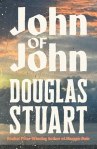
- An old woman with purple feet (due to illness or injury) in one story of Brawler by Lauren Groff and John of John by Douglas Stuart.

- Someone is pushed backward and dies of the head injury in Zofia Nowak’s Book of Superior Detecting by Piotr Cieplak and one story of Brawler by Lauren Groff.
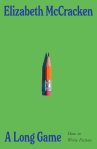
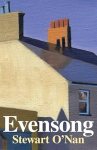
- The Hindenburg disaster is mentioned in A Long Game by Elizabeth McCracken and Evensong by Stewart O’Nan.
- Reluctance to cut into a corpse during medical school and the dictum ‘see one, do one, teach one’ in the graphic novel See One, Do One, Teach One: The Art of Becoming a Doctor by Grace Farris and Separate by C. Boyhan Irvine.
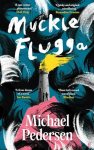 A remote Scottish island setting and a harsh father in Muckle Flugga by Michael Pedersen [Shetland] and John of John by Douglas Stuart [Harris]. (And another Scottish island setting in A Calendar of Love by George Mackay Brown [Orkney].)
- A mention of genuine Harris tweed in Alone in the Classroom by Elizabeth Hay and John of John by Douglas Stuart.
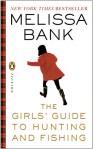
- The Katharine Hepburn film The Philadelphia Story is mentioned in The Girls’ Guide to Hunting and Fishing by Melissa Bank and Woman House by Lauren W. Westerfield.
- A mention of Icelandic poppies in Nighthawks by Lisa Martin and Boundless by Kathleen Winter.
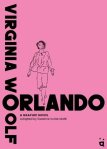
- Vita Sackville-West is mentioned in the Orlando graphic novel adaptation by Susanne Kuhlendahl and Boundless by Kathleen Winter.
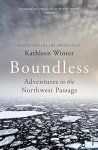
- Fear of bear attacks in Black Bear by Trina Moyles and Boundless by Kathleen Winter. Bears also feature in A Rough Guide to the Heart by Pam Houston and No Paradise with Wolves by Katie Stacey. [Looking through children’s picture books at the library the other week, I was struck by how many have bears in the title. Dozens!]
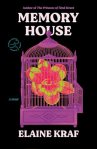
- I was reading books called Memory House (by Elaine Kraf) and Woman House (by Lauren W. Westerfield) at the same time, both of them pre-release books for Shelf Awareness reviews.
- An adolescent girl is completely ignorant of the facts of menstruation in I Who Have Never Known Men by Jacqueline Harpman and Carrie by Stephen King.
- Camembert is eaten in The Honesty Box by Lucy Brazier and Ordinary Saints by Niamh Ni Mhaoileoin.
- A herbal tonic is sought to induce a miscarriage in The Girls Who Grew Big by Leila Mottley and Bog Queen by Anna North.

- Vicks VapoRub is mentioned in Love Invents Us by Amy Bloom, Kin by Tayari Jones, and Dirt Rich by Graeme Richardson.
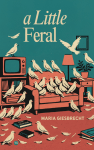
- An adolescent girl only admits to her distant mother that she’s gotten her first period because she needs help dealing with a stain (on her bedding / school uniform) in Love Invents Us by Amy Bloom, An Experiment in Love by Hilary Mantel, and Ordinary Saints by Niamh Ni Mhaoileoin. (I had to laugh at the mother asking the narrator of the Mantel: “Have you got jam on your underskirt?”) Basically, first periods occurred a lot in this set! They are also mentioned in A Little Feral by Maria Giesbrecht and one story of The Blood Year Daughter by G.G. Silverman. [I also had three abortion scenes in this cycle, but I think it would constitute spoilers to say which novels they appeared in.)
- A casual job cleaning pub/bar toilets in Kin by Tayari Jones and John of John by Douglas Stuart.
- Kansas City is a location mentioned in Strangers by Belle Burden, Mrs. Bridge by Evan S. Connell, and Dreams in Which I’m Almost Human by Hannah Soyer. (Not actually sure if that refers to Kansas or Missouri in two of them.)
- The notion of “flirting with God” is mentioned in Love Invents Us by Amy Bloom and A Little Feral by Maria Giesbrecht.
- A signature New Orleans cocktail, the Sazerac (a variation on the whisky old-fashioned containing absinthe), appears in Kin by Tayari Jones and Let the Bad Times Roll by Alice Slater.
- An older person’s smell brings back childhood memories in Love Invents Us by Amy Bloom and Whistler by Ann Patchett.
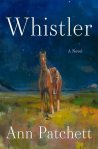
- The fact that complaining of chest pain will get you seen right away in an emergency room is mentioned in Love Invents Us by Amy Bloom and The Girls Who Grew Big by Leila Mottley.
- Thickly buttered toast is a favoured snack in The Honesty Box by Lucy Brazier and An Experiment in Love by Hilary Mantel.
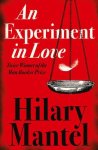 A scene of trying on fur coats in Love Invents Us by Amy Bloom and An Experiment in Love by Hilary Mantel.
- Lime and soda is drunk in Our Numbered Bones by Katya Balen, Kin by Tayari Jones, and Whistler by Ann Patchett.
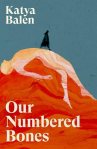
- A husband 17 years older than his wife in Kin by Tayari Jones and Whistler by Ann Patchett.
- The protagonist seems to hold a special attraction for old men in Love Invents Us by Amy Bloom and Whistler by Ann Patchett.
- A tattoo of a pottery shard (her ex-husband’s) in Strangers by Belle Burden and one of an arrowhead (her own) in Dreams in Which I’m Almost Human by Hannah Soyer.
- A relationship with an older editor at a publishing house: The Girls’ Guide to Hunting and Fishing by Melissa Bank (romantic) and Whistler by Ann Patchett (stepfather–stepdaughter).
- Repeated vomiting and a fever of 103–104°F leads to a diagnosis of appendicitis in My Grandmothers and I by Diana Holman-Hunt and Whistler by Ann Patchett.
 Multiple pet pugs in Strangers by Belle Burden and My Grandmothers and I by Diana Holman-Hunt.
- Palm crosses are mentioned in My Grandmothers and I by Diana Holman-Hunt and Kin by Tayari Jones.
- A Miss Jemison in Kin by Tayari Jones and a Miss Jamieson in Elizabeth and Ruth by Livi Michael.
- Pasley as a surname in Elizabeth and Ruth by Livi Michael and a place name (Pasley Bay) in Boundless by Kathleen Winter.
- A remark on a character’s unwashed hair in My Grandmothers and I by Diana Holman-Hunt and Let the Bad Times Roll by Alice Slater.
- A mention of a monkey’s paw in Museum Visits by Éric Chevillard and Let the Bad Times Roll by Alice Slater.

- A character gets 26 (22) stitches in her face (head) after a car accident, a young person who’s vehemently anti-smoking, and a mention of being dusted orange from eating Cheetos, in Whistler by Ann Patchett and Let the Bad Times Roll by Alice Slater.
- Pre-eclampsia occurs in Strangers by Belle Burden and The Girls Who Grew Big by Leila Mottley.
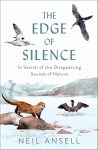
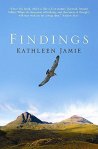
- There’s a chapter on searching for corncrakes on the Isle of Coll (the Inner Hebrides of Scotland) in The Edge of Silence by Neil Ansell, which I read last year; this year I reread the essay on the same topic in Findings by Kathleen Jamie.
- Worry over women with long hair being accidentally scalped – if a horse steps on her ponytail in Mare by Emily Haworth-Booth; if trapped in a London Underground escalator in Leaving Home by Mark Haddon.
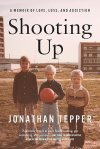 A pet ferret in My Grandmothers and I by Diana Holman-Hunt and Shooting Up by Jonathan Tepper.
- A dodgy doctor who molests a young female patient in Leaving Home by Mark Haddon and Elizabeth and Ruth by Livi Michael.
- A high school girl’s inappropriate relationship with her English teacher is the basis for Love Invents Us by Amy Bloom, and then Half His Age by Jennette McCurdy, which I started soon after.

- College roommates who become same-sex lovers, one of whom goes on to have a heterosexual marriage, in Kin by Tayari Jones and Whistler by Ann Patchett.
- A mention of Sephora (the cosmetics shop) in Half His Age by Jennette McCurdy and Whistler by Ann Patchett.
- A discussion of the Greek mythology character Leda in Mrs. Bridge by Evan S. Connell and Whistler by Ann Patchett (where it’s also a character name).
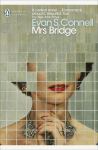
- A workaholic husband who rarely sees his children and leaves their care to his wife in Strangers by Belle Burden and Mrs. Bridge by Evan S. Connell.
- An apparently wealthy man who yet steals food in Strangers by Belle Burden and Let the Bad Times Roll by Alice Slater.
- Characters named Lulubelle in Mrs. Bridge by Evan S. Connell and Lulabelle in Kin by Tayari Jones.
- Characters named Ruth in Mrs. Bridge by Evan S. Connell, Kin by Tayari Jones, and Elizabeth and Ruth by Livi Michael.
 A mention of Mary McLeod Bethune in Negroland by Margo Jefferson and Kin by Tayari Jones.
- Doing laundry at a whorehouse in Kin by Tayari Jones and Elizabeth and Ruth by Livi Michael.
- A male character nicknamed Doll in John of John by Douglas Stuart and then Elizabeth and Ruth by Livi Michael.
- A mention of tuberculosis of the stomach in Findings by Kathleen Jamie and Shooting Up by Jonathan Tepper. I was also reading a whole book on tuberculosis, Everything Is Tuberculosis by John Green, at the same time.
- Mention of Doberman dogs in Mrs. Bridge by Evan S. Connell and one story of The Blood Year Daughter by G.G. Silverman.
- Extreme fear of flying in Leaving Home by Mark Haddon and Whistler by Ann Patchett.
What’s the weirdest reading coincidence you’ve had lately?
Three on a Theme (Valentine’s Day): “Love” Books by Amy Bloom, George Mackay Brown & Hilary Mantel
Every year I say it: I’m really not a Valentine’s Day person and yet it’s become a tradition to put together a themed post featuring one or more books with “Love” or “Heart” in the title. This is the tenth year in a row, in fact – after 2017, 2018, 2019, 2020, 2021, 2022, 2023, 2024 and 2025. As you might expect, none of the three below contains a straightforward love story. The relationships portrayed tend to be unequal, creepy or doomed, but the solid character work and use of setting and voice was enough to keep me engaged with all of the books.
Love Invents Us by Amy Bloom (1997)
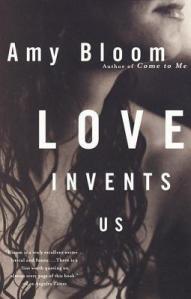 I’ve found Bloom’s short stories more successful than her novels. This is something of a halfway house: linked short stories (one of which was previously published in Come to Me; another that gives the title line to her 2000 collection A Blind Man Can See How Much I Love You) about Elizabeth Taube. When we first meet her on Long Island in the 1960s, she’s a rebellious and sexually precocious Jewish girl; by the time we’ve journeyed through several decades of vignettes, she’s a flighty and psychologically scarred single mother. Stories of her Lolita-esque attractiveness to grown salesmen and teachers, her shoplifting, her casual work for elderly African American Mrs. Hill, and her great love for Horace, nicknamed Huddie, a Black basketball player, are in the first person. The longer second part – about the aftermath of her physical affair with Huddie and her ongoing emotional entanglement with her English teacher, Max Stone – is in the third person yet feels more honest. Liz seems like bad news for everyone she meets. Bloom shows us some of the reasons for what she does, but I still couldn’t absolve her protagonist. I’d also reverse the title: We Invent Love. Liz is responsible for irrevocably altering two lives besides her own based on what she needs to feel secure. This is very much Lorrie Moore territory, but Moore leaves less of a bitter taste. (Secondhand – Community Furniture Project)
A Calendar of Love and Other Stories by George Mackay Brown (1967)
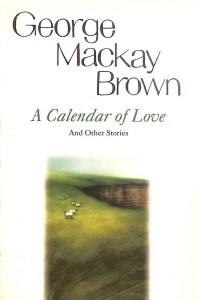 The title story opens a collection steeped in the landscape and history of Orkney. Each month we check in with three characters: Jean, who lives with her ailing father at the pub they run; and her two very different suitors, pious Peter and drunken Thorfinn. When she gives birth in December, you have to page back to see that she had encounters with both men in March. Some are playful in this vein or resemble folk tales: a boy playing hooky from school, a distant cousin so hapless as to father three bairns in the same household, and a rundown of the grades of whisky available on the islands. Others with medieval time markers are overwhelmingly bleak, especially “Witch,” about a woman’s trial and execution – and one of two stories set out like a play for voices. I quite liked the flash fiction “The Seller of Silk Shirts,” about a young Sikh man who arrives on the islands, and “The Story of Jorfel Hayforks,” in which a Norwegian man sails to find the man who impregnated his sister and keeps losing a crewman at each stop through improbable accidents. This is an atmospheric book I would have liked to read on location, but few of the individual stories stand out. (Secondhand – Community Furniture Project, Newbury)
An Experiment in Love by Hilary Mantel (1995)
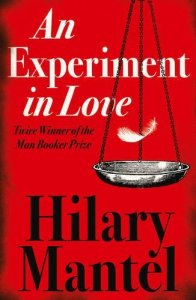 Mantel is best remembered for the Wolf Hall trilogy, but her early work includes a number of concise, sharp novels about growing up in the north of England. Carmel McBain attends a Catholic school in Manchester in the 1960s before leaving to study law at the University of London in 1970. In lockstep with her are a couple of friends, including Karina, who is of indeterminate Eastern European extraction and whose tragic Holocaust family history, added to her enduring poverty, always made her an object of pity for Carmel’s mother. But Karina as depicted by Carmel is haughty, even manipulative, and over the years their relationship swings between care and competition. As university students they live on the same corridor and have diverging experiences of schoolwork, romance, and food. “Now, I would not want you to think that this is a story about anorexia,” Carmel says early on, and indeed, she presents her condition as more like forgetting to eat. But then you recall tiny moments from her past when teachers and her mother shamed her for eating, and it’s clear a seed was sown. Carmel and her friends also deal with the results of the new-ish free love era. This is dark but funny, too, with Carmel likening roast parsnips to “ogres’ penises.” Further proof, along with Every Day Is Mother’s Day, that it’s well worth exploring authors’ back catalogue. (Public library)
Plus a DNF:
 Unexpected Lessons in Love by Bernardine Bishop (2013): I loved Bishop’s The Street, and this posthumous novel initially drew me in with its medical detail (two friends who both had stoma operations) and the exploration of different forms of love – romantic, parental, grandparental – before starting to feel obvious (two adoptions, one historical and one recent), maudlin and overlong. With some skimming, I made it to page 120. (Secondhand – Awesomebooks.com)
Other relevant reading on the go:
I would have tried spinning this one into another thematic trio, but ran out of time…
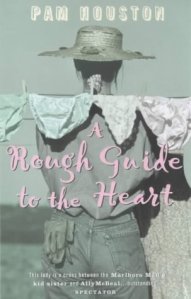 A Rough Guide to the Heart by Pam Houston (1999): A mix of personal essays and short travel pieces. The material about her dysfunctional early family life, her chaotic dating, and her thrill-seeking adventures in the wilderness is reminiscent of the highly autobiographical Waltzing the Cat. Amusingly, this has a previous price label from Richard Booth’s Bookshop in Hay-on-Wye, where it was incorrectly classed as Romance Fiction – one could be excused the mistake based on the title and cover! (Secondhand – Community Furniture Project)
And three books about marriage…
 The Honesty Box by Lucy Brazier – A pleasant year’s diary of rural living and adjusting to her husband’s new diagnosis of neurodivergence.
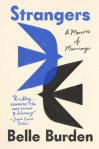
- Strangers by Belle Burden – A high-profile memoir about her husband’s strange and marriage-ending behaviour (his affair was only part of it) during the 2020 lockdown.
- Mrs. Bridge by Evan S. Connell – For Literary Wives Club in March. I’m in the early pages but it seems comparable to Richard Yates.
Assisted Dying: Intervals by Marianne Brooker; Wendy Mitchell; and a Local Panel Discussion
Intervals by Marianne Brooker is on the longlist for the inaugural Women’s Prize for Non-Fiction, which my book club has applied to shadow. I’ve now read three of the nominees, the others being Matrescence and A Flat Place (review coming up tomorrow). Unsurprisingly, I’ve gravitated towards the ones based around a personal narrative – although all three are also political and incorporate research and cultural critique. Brooker’s is an extended essay about her mother’s protracted death with multiple sclerosis and the issues it brought up around disability, poverty, and inequality of access to medical care and services.

Specifically, Brooker decries the injustice of the wealthy having the option of travelling to Dignitas in Switzerland for an assisted death (current cost: £15,000), whereas her single mother, who lived in rented accommodation and had long been disabled and unable to work, apart from crafting and reading tarot, had so such relief in sight. Instead, she resorted to refusing life-sustaining nourishment. VSED, or voluntarily stopping eating and drinking, was a topic much on my mind anyway because of Wendy Mitchell’s death last month.
 Mitchell was diagnosed with early-onset Alzheimer’s in her fifties and was an energetic campaigner for dementia education and research for the last decade of her life. With a co-author, she wrote three books that give a valuable insider’s view of life with dementia: Somebody I Used to Know, What I Wish People Knew About Dementia, and One Last Thing, in which she specifically discusses VSED. She was determined to live independently. For her, a dignified life was being able to meet her own daily physical needs. She did not want to be in a care home, or to exist past the point where she could no longer recognise her daughters. So when, in January, she fell and broke both wrists, giving her a taste of dependency and derailing her plans to travel to Dignitas, she knew that the time had come. VSED was her way out. You can read her farewell message here.
Is wilful starvation a good death? I don’t really know. It’s peaceful, at least; a person simply gets weaker and weaker, spending more and more time asleep until they fade out, at home. But it can take two weeks to die in this way. Should loved ones have to watch this process?
Denied a liveable life and a legal right to die, my mum made a choice within and between the lines of the law. A decade after her diagnosis, when she was forty-nine and I was twenty-six, she decided to stop eating and drinking to end her suffering and her life. Her MS symptoms were barely treatable and certainly incurable: severe pain, incontinence, fatigue, the gradual but intensifying loss of mobility, vision and speech. But these medical symptoms were compounded by social conditions: isolation, stress, debt and fear of a future in which she would not be able to live or die in her chosen home. We were caught in a perfect storm.
Brooker’s description of the vigil of these last days, like her account of her vivacious mother’s life, is both tender and unflinching. It’s almost like a counterpoint to Simone de Beauvoir’s A Very Easy Death, but with the same incisive attention and emotional transfer between mother and daughter. The book also incorporates political commentary and quotations from psychologists and cultural critics. This somewhat distances the reader; it feels less like a bereavement memoir and more like an impassioned, personally inspired treatise. But that’s not to say there isn’t some levity. She remembers good times from their earlier life together, and reckons with her new role as her mother’s memorial and archivist in a way that really rang true for me. I wish the title was more evocative so as to draw the right readers to this book.
With thanks to Fitzcarraldo Editions for the free copy for review.
Also on this topic, I have read In Love by Amy Bloom, That One Patient by Ellen de Visser, The Inevitable by Katie Engelhart, Darke Matter by Rick Gekoski, and Wild and Precious Life by Deborah Ziegler.
Last night I attended a local panel discussion put on by the Campaign for Dignity in Dying. It wasn’t a debate in that 3.5 of the 4 members on the panel were pro-assisted dying, and I would guess more than four-fifths of the audience as well. In fact, the only anti- voice of the evening was from a young Catholic man during question time. I knew about the event because one panelist attends my church: George Carey, a former archbishop of Canterbury.
The Anglican Church’s line – the religious response in general – is to uphold the sanctity of life and thus to oppose assisted suicide, so for Lord Carey to do otherwise is noteworthy. He changed his mind in 2014, he explained, after the high-profile case of Tony Nicklinson, who was paralysed after a stroke and lost his appeal over the right to die. “There is no theological contradiction between valuing life and wanting a good death,” Carey insisted. Jesus showed mercy to the ill and dying, and so should we. (He also, more facetiously, described King Saul’s mercy killing by an enemy soldier in 2 Samuel as an assisted death.)
The other panelists were a lawyer, a retired doctor, and a Member of Parliament. Lawyer Graham Wood noted that the 1961 Suicide Act, under which anyone who assists a suicide can be prosecuted, would have to be abolished, and that there would also need to be a negotiation regarding Article 2 of the European Convention on Human Rights, which protects the “right to life.” He was the most wary of the speakers, warning of the danger of undue influence being exerted by relatives when money and assets are involved – he said he sees the worst of humanity in his line of work.

Dr Barry Newman pinned his support for assisted dying to compassion and autonomy, two overriding values of a liberal society. He acknowledged the current professional risk for doctors, and noted that the UK’s main medical bodies remain neutral. However, he brought up a loophole, “double effect,” administering a medication that might end life but whose intent is to alleviate suffering, e.g., a high dose of morphine to an end-stage cancer patient.
Kit Malthouse, Conservative MP for northwest Hampshire, co-chairs a group on end-of-life and has campaigned for assisted dying. (American readers may be surprised by a conservative politician having liberal views on an ethical matter. In the UK, morality is not in lockstep with religions and/or political parties as it is in the USA. This was something it took me a while to get used to: I have Christian friends who vote for four different political parties.) He was disappointed that a members’ bill on assisted dying failed in 2015, but has hope that multiple recent cases (e.g., Esther Rantzen) will put it back on the agenda and believes support in the Commons is sufficient to push legislation through in six months.
“It’s coming,” he assured, not least because many of the UK’s European neighbours and other allies have introduced assisted dying. The UK bill does not go as far as the Dutch legislation, about which all the panelists expressed doubt, and can be tailored to this country’s health system. The status quo, Malthouse cautioned, is people suffering. We know from Oregon that the current proposal will work well, he said; there is vanishingly little abuse of the system in any of the places that have instituted assisted dying legislation.
It was all preaching to the choir as far as I was concerned. Indeed, the spontaneous applause and affirming subvocalizations reminded me of a Pentecostal church service. Clearly, many from the audience had witnessed loved ones dying in horrible ways (a few of these stories came out during question time, such as a woman whose husband went to Dignitas and another who had to fight for her terminally ill sister’s wishes when she was mistakenly resuscitated by paramedics after a suicide attempt). Malthouse observed that supporters of assisted dying have often been through horrific experiences with relatives or spouses.
I was already firmly in support so last night didn’t sway me in any way, but I was encouraged that so many people are thinking and talking about these issues. Maybe by the time I face such a crisis myself, or on someone else’s behalf, a compassionate law will be in place.
Some 2023 Reading Superlatives
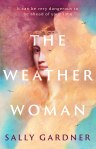 Longest book read this year: The Weather Woman by Sally Gardner (457 pages) – not very impressive compared to last year’s 720-page To Paradise. That means I didn’t get through a single doorstopper this year. D’oh!
Shortest book read this year: Pitch Black by Youme Landowne and Anthony Horton (40 pages)
Authors I read the most by this year: Margaret Atwood, Deborah Levy and Brian Turner (3 books each); Amy Bloom, Simone de Beauvoir, Tove Jansson, John Lewis-Stempel, W. Somerset Maugham, L.M. Montgomery and Maggie O’Farrell (2 books each)


Publishers I read the most from: (Setting aside the ubiquitous Penguin and its many imprints) Carcanet (11 books) and Picador/Pan Macmillan (also 11), followed by Canongate (7).
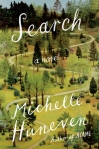
My top author discoveries of the year: Michelle Huneven and Julie Marie Wade
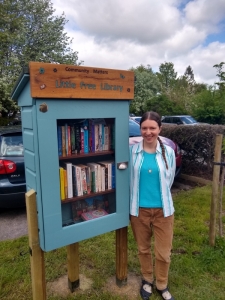
My proudest bookish accomplishment: Helping to launch the Little Free Library in my neighbourhood in May, and curating it through the rest of the year (nearly daily tidying; occasional culling; requesting book donations)
Most pinching-myself bookish moments: Attending the Booker Prize ceremony; interviewing Lydia Davis and Anne Enright over e-mail; singing carols after-hours at Shakespeare and Company in Paris

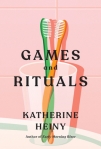
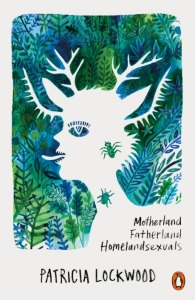
Books that made me laugh: Notes from a Small Island by Bill Bryson, The Librarianist by Patrick deWitt, two by Katherine Heiny, Motherland Fatherland Homelandsexuals by Patricia Lockwood
Books that made me cry: A Heart that Works by Rob Delaney, Lucy by the Sea by Elizabeth Strout, Family Meal by Bryan Washington
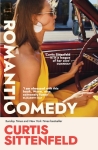 The book that was the most fun to read: Romantic Comedy by Curtis Sittenfeld
Best book club selections: By the Sea by Abdulrazak Gurnah and The Woman in Black by Susan Hill
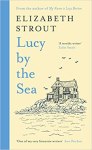 Best last lines encountered this year: “And I stood there holding on to this man as though he were the very last person left on this sweet sad place that we call Earth.” (Lucy by the Sea, Elizabeth Strout)
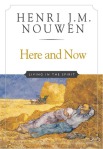 A book that put a song in my head every time I picked it up: Here and Now by Henri Nouwen (Aqualung song here)
Shortest book title encountered: Lo (the poetry collection by Melissa Crowe), followed by Bear, Dirt, Milk and They
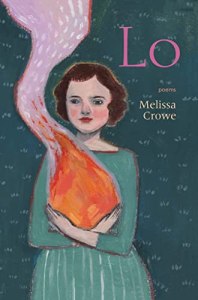



Best 2023 book titles: These Envoys of Beauty and You Bury the Birds in My Pelvis
 Best book titles from other years: I Want to Die but I Want to Eat Tteokbokki, Before You Suffocate Your Own Fool Self, A Down Home Meal for These Difficult Times, The Cats We Meet Along the Way, We All Want Impossible Things
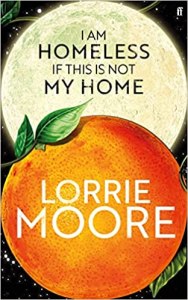
Favourite title and cover combo of the year: I Am Homeless If This Is Not My Home by Lorrie Moore (shame the contents didn’t live up to it!)
Biggest disappointment: Speak to Me by Paula Cocozza
A 2023 book that everyone was reading but I decided not to: Prophet Song by Paul Lynch

The worst books I read this year: Monica by Daniel Clowes, They by Kay Dick, Swallowing Geography by Deborah Levy and Self-Portrait in Green by Marie Ndiaye (1-star ratings are extremely rare for me; these were this year’s four)
The downright strangest book I read this year: Motherland Fatherland Homelandsexuals by Patricia Lockwood
September Focus on Short Stories, with Reviews of Bloom and de Kerangal
This is the eighth year in a row in which I’m making a special effort to read short stories in September; otherwise, story collections tend to languish on my shelves (and Kindle) unread. In September 2021 I read 12 collections and in September 2022 it was 11.5; let’s see how many I get to this year!
As someone who doesn’t claim to love short stories, I was surprised to see that I’ve already read 19 collections this year. Some of the highlights have been Old Babes in the Wood by Margaret Atwood, How Strange a Season by Megan Mayhew Bergman, What We Talk about When We Talk about Love by Raymond Carver, Games and Rituals by Katherine Heiny, and Sidle Creek by Jolene McIlwain.
I have a whole shelf of short story options set out for me and will make my selections from there. For now, I have brief reviews of two collections I read during a quick trip to the USA.
A Blind Man Can See How Much I Love You by Amy Bloom (2000)
 My second collection by Bloom this year, after Where the God of Love Hangs Out; somewhat confusingly, the latter reprints two of this volume’s Lionel and Julia stories, so there were actually only six stories here that were new to me (5 x first-person; 3 x third-person). However, they’re all typically great ones. The title story has a mother accompanying her daughter to the medical appointments that will transform Jessie into Jess, her son, and also taking a chance on romance. “Rowing to Eden” explores the dynamic between best friends, one lesbian and one married to a man; the one has already been through breast cancer treatment so can counsel her friend from experience.
In “Stars at Elbow and Foot,” a woman whose baby died goes back to the children’s hospital to volunteer with the disabled. “Hold Tight” also reflects on loss and accidents (but is probably the throw-away story if I had to name one). “The Story,” which closes the book, had me hunting for autobiographical correlations what with its mentions of “Amy.” By far my favourite was “The Gates Are Closing,” in which D.M. is having an affair with the synagogue president’s husband, who has Parkinson’s disease. As Yom Kippur approaches, he gives his mistress an ultimatum. The minor assisted dying theme in this one felt ironically prescient of Bloom’s own experience accompanying her husband to Dignitas (the subject of In Love). As always, Bloom’s work is sensual, wry and emotionally wise. 
Canoes by Maylis de Kerangal (2021; 2023)
[Translated from the French by Jessica Moore]
These eight stories are all in the first person; although I tend to prefer more diversity of narration, the plots are so dissimilar that it makes up for that homogeneity. In an author’s note at the end, de Kerangal writes that her overall theme was voices, especially women’s voices; perhaps ironically, then, the collection uses no speech marks. In “Mountain Stream and Iron Filings,” the narrator’s friend Zoé is on a mission to lower her voice to make it more suitable for radio. “Nevermore” has a woman contributing a recording of herself reading Edgar Allan Poe’s epic poem “The Raven” to an audio library. “A Light Bird,” which I found particularly poignant, is about a widower and his daughter deciding what to do about their late wife’s/mother’s voice on the answering machine.
 “After” has a school leaver partying and figuring out what comes next, “Ontario” revolves around a trip to Canada, and “Arianespace” has an investigator visiting an elderly woman who has reported a UFO sighting. The longest story (billed as a novella), “Mustang,” focuses on a French family that has relocated to Colorado in the 1990s. The mother, recently bereaved, learns to drive their rather impractical American car.
Like Painting Time, the collection is in thrall to questions of deep time. This is clearest in “Bivouac,” in which a woman undergoes a procedure while the dentist tells her about an ancient human jawbone found deep under Paris. Prehistory is even present in the metaphorical language: “the first foothills of the Rockies sketched the backbone of a sleepy stegosaurus who’d escaped extinction” (from “Mustang”). Each story also mentions a canoe, if only in passing (e.g., the dentist’s necklace charm in the first story).
As was my main quibble with Mend the Living, though, de Kerangal is all too fond of arcane vocabulary. I mean, she uses “alveolar” twice in this very short book; there’s also “sagittal slices” and “sinuous mnemic circuits.” Some sentences stretch to fill two-plus pages. So overwriting is a recurrent issue I have with her work, but I would certainly recommend that her fans read her short fiction, which I found more accessible than her novels. 
With thanks to MacLehose Press for the free copy for review. Canoes will be published on 28 September.
Currently reading: Revenge of the Lawn by Richard Brautigan; I Meant It Once by Kate Doyle; The Best Short Stories 2023: The O. Henry Prize Winners, ed. Lauren Groff; Why I Don’t Write by Susan Minot; Hateship, Friendship, Courtship, Loveship, Marriage by Alice Munro; The Human Origins of Beatrice Porter and Other Essential Ghosts by Soraya Palmer (linked stories); Small, Burning Things by Cathy Ulrich.
Resuming soon: The Secrets of a Fire King by Kim Edwards; If I Survive You by Jonathan Escoffery (I read the first two stories ages ago, but its longlisting for the Booker Prize is the impetus I need to pick it back up); Hey Yeah Right Get a Life by Helen Simpson.
Are you a short story fan? Read any good ones recently?
Book Serendipity, Mid-February to Mid-April
I call it “Book Serendipity” when two or more books that I read at the same time or in quick succession have something in common – the more bizarre, the better. This is a regular feature of mine every couple of months. Because I usually have 20–30 books on the go at once, I suppose I’m more prone to such incidents. The following are in roughly chronological order.
Last time, my biggest set of coincidences was around books set in or about Korea or by Korean authors; this time it was Ghana and Ghanaian authors:
- Reading two books set in Ghana at the same time: Fledgling by Hannah Bourne-Taylor and His Only Wife by Peace Adzo Medie. I had also read a third book set in Ghana, What Napoleon Could Not Do by DK Nnuro, early in the year and then found its title phrase (i.e., “you have done what Napoleon could not do,” an expression of praise) quoted in the Medie! It must be a popular saying there.
- Reading two books by young Ghanaian British authors at the same time: Quiet by Victoria Adukwei Bulley and Maame by Jessica George.


And the rest:
- An overweight male character with gout in Where the God of Love Hangs Out by Amy Bloom and The Secret Diaries of Charles Ignatius Sancho by Paterson Joseph.
- I’d never heard of “shoegaze music” before I saw it in Michelle Zauner’s bio at the back of Crying in H Mart, but then I also saw it mentioned in Pulling the Chariot of the Sun by Shane McCrae.
- Sheila Heti’s writing on motherhood is quoted in Without Children by Peggy O’Donnell Heffington and In Vitro by Isabel Zapata. Before long I got back into her novel Pure Colour. A quote from another of her books (How Should a Person Be?) is one of the epigraphs to Lorrie Moore’s I Am Homeless If This Is Not My Home.


- Reading two Mexican books about motherhood at the same time: Still Born by Guadalupe Nettel and In Vitro by Isabel Zapata.
- Two coming-of-age novels set on the cusp of war in 1939: The Inner Circle by T.C. Boyle and Martha Quest by Doris Lessing.
- A scene of looking at peculiar human behaviour and imagining how David Attenborough would narrate it in a documentary in Notes from a Small Island by Bill Bryson and I Have Some Questions for You by Rebecca Makkai.
- The painter Caravaggio is mentioned in a novel (The Things We Do to Our Friends by Heather Darwent) plus two poetry books (The Fourth Sister by Laura Scott and Manorism by Yomi Sode) I was reading at the same time.


- Characters are plagued by mosquitoes in The Last Animal by Ramona Ausubel and Through the Groves by Anne Hull.
- Edinburgh’s history of grave robbing is mentioned in The Things We Do to Our Friends by Heather Darwent and Womb by Leah Hazard.
- I read a chapter about mayflies in Lev Parikian’s book Taking Flight and then a poem about mayflies later the same day in Ephemeron by Fiona Benson.
- Childhood reminiscences about playing the board game Operation and wetting the bed appear in Homesick by Jennifer Croft and Through the Groves by Anne Hull.

- Fiddler on the Roof songs are mentioned in Through the Groves by Anne Hull and We All Want Impossible Things by Catherine Newman.
- There’s a minor character named Frith in Shadow Girls by Carol Birch and Rebecca by Daphne du Maurier.
- Scenes of a female couple snogging in a bar bathroom in Through the Groves by Anne Hull and The Garnett Girls by Georgina Moore.

- The main character regrets not spending more time with her father before his sudden death in Maame by Jessica George and Pure Colour by Sheila Heti.
- The main character is called Mira in Birnam Wood by Eleanor Catton and Pure Colour by Sheila Heti, and a Mira is briefly mentioned in one of the stories in Before You Suffocate Your Own Fool Self by Danielle Evans.
- Macbeth references in Shadow Girls by Carol Birch and Birnam Wood by Eleanor Catton – my second Macbeth-sourced title in recent times, after Tomorrow and Tomorrow and Tomorrow by Gabrielle Zevin last year.


- A ‘Goldilocks scenario’ is referred to in Womb by Leah Hazard (the ideal contraction strength) and Taking Flight by Lev Parikian (the ideal body weight for a bird).
- Caribbean patois and mention of an ackee tree in the short story collection If I Survive You by Jonathan Escoffery and the poetry collection Cane, Corn & Gully by Safiya Kamaria Kinshasa.
- The Japanese folktale “The Boy Who Drew Cats” appeared in Our Missing Hearts by Celeste Ng, which I read last year, and then also in Enchantment by Katherine May.


- Chinese characters are mentioned to have taken part in the Tiananmen Square massacre/June 4th incident in Dear Chrysanthemums by Fiona Sze-Lorrain and Oh My Mother! by Connie Wang.
- Endometriosis comes up in What My Bones Know by Stephanie Foo and Womb by Leah Hazard.

What’s the weirdest reading coincidence you’ve had lately?
Six Degrees of Separation: From Born to Run to Scary Monsters
I take part in this meme every few months. This time we begin with Born to Run, Bruce Springsteen’s memoir. (See Kate’s opening post.)
 #1 Springsteen is one of my musical blind spots – I maybe know two songs by him? – but my husband has been working up a cover of his “Streets of Philadelphia” to perform at the next open mic night at our local arts venue. A great Philadelphia-set novel I’ve read twice is The Sixteenth of June by Maya Lang.
 #2 The 16th of June is, as James Joyce fans out there will know, “Bloomsday,” so I’ll move on to the only novel I’ve read so far by Amy Bloom (and one I felt ambivalent about, though I love her short stories and memoir), White Houses.
 #3 A recent and much-missed occupant of the White House: Barack Obama, whose Dreams from My Father didn’t quite stand up to a reread but is still a strong family memoir when it doesn’t go too deep into community organizing.
 #4 Similar to the Oprah effect, Obama publicly mentioning that he’s read and enjoyed a book is enough to make it a bestseller. On his list of favourite books of 2022 was The Furrows by Namwali Serpell, which I currently have on the go as a buddy read with Laura T.
 #5 The Furrows is longlisted for the inaugural Carol Shields Prize for Fiction. In 2020 I did buddy reads of six Carol Shields novels with Marcie of Buried in Print. One of those was Happenstance, the story of a marriage told from two perspectives, the husband’s and the wife’s.
 #6 My Happenstance volume gives the wife’s story first and then once you’ve read to halfway you flip it over to read the husband’s story. The only other novel I know of that does that (How to Be Both does have two different versions, each of which starts with a different story line, but you don’t physically turn the book over) is Scary Monsters by Michelle de Kretser, which recently won the Rathbones Folio Prize in the fiction category. Perhaps it’s no coincidence that Ali Smith was a judge! (How astonished am I that I predicted all three category winners and the overall winner in this post from three days before the announcement?!) I know nothing else about the novel, but I have a copy out from the library and plan to read it soon.
Where will your chain take you? Join us for #6Degrees of Separation! (Hosted on the first Saturday of each month by Kate W. of Books Are My Favourite and Best.) Next month’s starting book is Hydra by Adriane Howell, from the Stella Prize 2023 shortlist.
Have you read any of my selections? Tempted by any you didn’t know before?
Recommended March Releases by Jane Aldous, Danielle Evans, Katherine May & Genanne Walsh
Sonnets, short stories, nature-fuelled wonder, and an autobiographical essay about a father’s death … from postwar Edinburgh to modern-day San Francisco and from fiction about young African American women to pilgrimages along the English coast, I have a real variety to recommend this month. (And coming up in a separate post: Womb by Leah Hazard.)
More Patina than Gleam by Jane Aldous
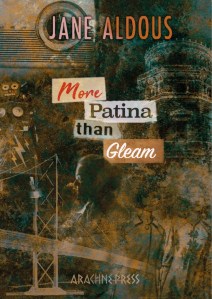 This was my second Arachne Press collection after Routes by Rhiya Pau. Intriguingly, it’s a story composed of 70 sonnets, untraditional in that they do not follow a particular rhyme scheme apart from the odd couplet. There is scant punctuation, with within-line spaces separating the phrases. Aldous, who has recently been featured in a Guardian article on debut authors over 60, imagines a sort of alternative future for her mother had she run away with her when she was a baby. Here, Linda escapes her abusive common-law husband, Vernon, and travels from England to Edinburgh with her 11-year-old daughter, Angie. They settle with an eccentric older woman named Elsie Datlow, who hires Linda as a lady’s companion and keeps her on as a housekeeper when financial struggles force her to accept paying guests. It’s impressive how much Aldous fits into comparatively little text, including Angie’s coming of age, the ups and downs of the Datlows’ picture restoring business, and transgressive romance as both Elsie and Linda fall in love across accepted gender or racial boundaries. This was a pleasant surprise that called to mind works by Muriel Spark and Sarah Waters.
With thanks to Arachne Press for the free copy for review.
Before You Suffocate Your Own Fool Self by Danielle Evans (2010)
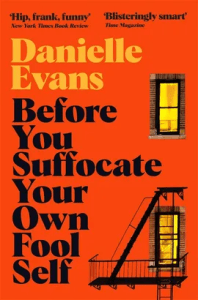 A couple of years ago I reviewed Evans’s second short story collection, The Office of Historical Corrections. This was her first book but has only just been published in the UK. Six of the eight stories are in the first person, the other two in third person. The protagonists tend to be young African American women in moments of transition or clinging to unhealthy relationships. In “Virgins,” 15-year-old Erica and Jasmine want to shed their innocence but can’t necessarily control how it happens. “Snakes” has Tara, a transracial adoptee, spending her ninth summer with her white cousin, Allison, down at their grandmother’s home in Florida. The response to a series of accidents makes it clear to her who is valued in this family. The college girls in “Harvest” consider a variety of reproductive experiences, from selling their eggs to abortion. In “The King of a Vast Empire,” a brother and sister decide to track down a survivor of a car accident their family had when they were children. “Jellyfish” sees a father and daughter meeting for lunch in Harlem and pondering their separate futures.
Many settings were familiar to me from the Delmarva area where I grew up. Here on the cusp of the South, Confederate sympathy still exists, as high schoolers Crystal and Geena discover in “Robert E. Lee Is Dead.” The best friends collaborate on pranks, but Crystal’s grades point to a promising future whereas everyone has given up on Geena, including herself. Along with that one, my two favourites were “Someone Ought to Tell Her There’s Nowhere to Go” and “Wherever You Go, There You Are.” In the former, military veteran Georgie tries to ingratiate himself with his ex-girlfriend by treating her daughter to a princess experience; in the latter, Carla takes her would-be-sexpot 14-year-old niece, Chrissie, on a road trip to North Carolina to meet her ex’s fiancée. Both are exemplary of the assets of the whole collection: strong characters, natural dialogue, and subtle treatment of themes of class and race. I’d proffer this for fans of Sidik Fofana, and as a better option than Dantiel Moniz’s stories.
With thanks to Picador for the proof copy for review.
Enchantment: Reawakening wonder in an exhausted age by Katherine May
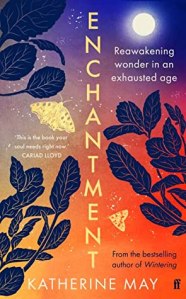 I was a big fan of Katherine May’s Wintering, which published just before the pandemic and, as if presciently, offers strategies for coping with seasons of depression. Coming after a few years of upheaval and disconnection, this follow-up voices May’s longing for rituals of the transcendent that will allow her to live in harmony and close attention to the world around her. Her usual way of communing with nature and other people was group swims in the sea, but that temporarily stopped with lockdown. She sought alternatives, such as visiting a sacred well with a friend, beekeeping, cultivating a wild garden, and chasing a meteor shower. The Earth – Water – Fire – Air structure is sometimes forced, and the content sparse; like Raynor Winn, May, I feel, was pressured to capitalize on the success of her previous work and quickly publish unfinished and rather nebulous material. It’s all surprisingly woo-woo from an English author. Yet May’s writing is unfailingly lovely and this went down easy a chapter at a time. It’s a comparable read to Wanderland by Jini Reddy.
With thanks to Faber for the proof copy for review.
Eggs in Purgatory by Genanne Walsh
I reviewed Genanne Walsh’s novel Twister as part of my summer reading in 2018. This autobiographical essay, recently published by WTAW Press and a finalist in their Alcove Chapbook Series Open, tells the story of the last few months of her father’s life. Aged 89, he lived downstairs from Walsh and her wife in San Francisco. He was quite the character: idealist, stubborn, outspoken; a former Catholic priest influenced by A Course in Miracles and convinced of the oneness of everything. Although he had no terminal conditions, he was sick of old age and its indignities and ready to exit. (“He wanted to be put on an ice floe and pushed offshore. The problem was, I lived above him on the iceberg and would be tasked with shoving him off.”) However, there was confusion about California state laws and whether doctors could help him with this, and at one point the police showed up at the door.
 The title refers to a Middle Eastern dish (see this Nigella Lawson recipe) I’ve known as shakshuka. It was the last proper meal her father ate, Christmas morning 2017 with her and her wife, before he went on his final hunger strike. Later Walsh writes, “Mourning is a kind of purgatory. You exist between worlds. For a long time I walked through, not fully feeling the world of the living or the world of the dead but aware of both.”
The task of a memoir is to fully mine the personal details of a situation but make of it something universal, and that’s just what she does here. Her father’s past with her mother (who died decades before, following a stroke) renders the family dynamic a backdrop to a final pyrrhic battle. Aware that she doesn’t come out of this a saint, Walsh admits to contradictory feelings, including “my life will be so much easier when he dies.” The prediction, no less than its reality, makes her feel guilty. Though she has no faith as such, she senses her father’s influence in her very desire to keep communing with him after his death.
This stunning little book met me at a deep place and I can highly recommend it, especially if you were a fan of In Love by Amy Bloom and All Things Consoled by Elizabeth Hay. (See also The Inevitable – one of its case studies reminded me of this.)
With thanks to the author for the free e-copy for review.
And one dud:
 Birnam Wood by Eleanor Catton – This year’s Klara and the Sun for me: I have trouble remembering why I was so excited about Catton’s third novel that I put it on my Most Anticipated list for 2023, especially given my decidedly mixed feelings about The Luminaries. I’d read a lot about Birnam Wood so its plot held no surprises for me. An American tech billionaire is up to no good on a New Zealand nature reserve; though the members of a guerrilla gardening group summon courage to fight back, his drones see all.
From early on I had little interest in the cast and their doings, especially the buzzword-filled dialogues, and skimmed the rest. Literary fiction usually distinguishes itself from commercial genre fiction by its focus on character depth (and prose quality), but in Catton’s case that was achieved through endless backstory. Her attempt at edginess entails adding at least one F-word to each spoken sentence. (The Bookshop Band, usually so mild-mannered, reflected this by dropping an F-bomb in their song based on the book – see the music video, which cleverly employs a derelict greenhouse and drones.) I’d heard that the ending was a knockout, so I skipped ahead and did find the last 40 pages gripping and the gruesome final tableau worthy of the Shakespearean allusions, but there’s a lot of blah to wade through before that.
With thanks to Granta for the free copy for review.
Would you be interested in reading one or more of these?
Constructing a Nervous System by Margo Jefferson
I’ve had mixed feelings about the online nature of life recently. On Sunday I avoided the Internet altogether so as not to be bombarded with (UK) Mother’s Day memes and notifications. Yesterday our home broadband dropped out completely, such that I couldn’t do any freelance work or post about the Folio Prize poetry shortlist as I’d meant to do on World Poetry Day. Too much connectivity or not enough. Today – just as a line engineer is due to arrive; that usual irony – all is normal and I’m back in the swing of working and blogging.
Using my husband’s phone as a hotspot, I was at least still able to watch yesterday evening’s free 5×15 event with the Rathbones Folio Prize, featuring Amy Bloom, NoViolet Bulawayo, Sheila Heti, Margo Jefferson and Elizabeth Strout and hosted by interviewer Alex Clark. Over the next couple of days I’ll review Heti and Strout’s novels and the entire poetry shortlist, but for now I’ll weave some of the insight I gained last night into a review of Constructing a Nervous System by Margo Jefferson (2022), the new-to-me book from the nonfiction shortlist that I was most interested in reading.
Although the subtitle is “A Memoir,” this experimental text does such novel things with the genre that it bears little resemblance to most memoirs I’ve read. For that reason alone, I can see why the judges shortlisted it. During the 5×15 event, Jefferson described her book as “an assemblage of ideas, memories, sensations, feelings, and other people’s words—not just my own.” It’s also a reckoning with culture – particularly jazz music and dance by African Americans, but also particular examples from the white literary canon.
Jefferson was a long-time theatre and book critic for Newsweek and The New York Times and won a Pulitzer Prize for her criticism in 1995; she now teaches writing at Columbia University. She has previously published another memoir, Negroland, and a biography of Michael Jackson. Here she blends her chosen genres of life writing and cultural criticism. Her aim, she said, was to craft “criticism with the intensities and intimacies of memoir” and “memoir with the range of criticism.”

Jefferson mentioned that the deaths of her mother and older sister (who was like her muse) left her an orphan and, strangely, “cleared the stage for me to step out and speak my lines.” Indeed, the book is loosely structured as a play, opening with the metaphor of an empty stage and ending with the direction “BLACKOUT.” In between there are many imagined dialogues with herself or between historical figures, such as the bizarre pairing of George Eliot and W.E.B. Du Bois. Some quotations and definitions appear in italics or bold face. Ella Fitzgerald and Josephine Baker play major roles, but there’s also a surprisingly long section devoted to Willa Cather’s The Song of the Lark, which Jefferson loves and has often taught, yet finds problematic for how it enshrines whiteness (“Confederate Southern mythmaking”).
I don’t feel that I got much of a sense of the sweep of Jefferson’s life from the book, just a vague impression of an upper-middle-class Black upbringing. (Perhaps Negroland is a more straightforward memoir?) To be sure, she was keen to avoid “slogging through chronology,” as she explained, instead welcoming onto the page “a repertory company of myself as I encounter all the materials of my life—the factual and historical as well as the creative.” And so I do feel I have met her as an industrious mind, drawing connections between disparate aspects of experience and cultural consumption. This is a model of how a critic (like myself) might incorporate a body of work into a record of life. Yet when so many of her touchstones do not overlap with mine, I could only observe and admire from afar, not be truly drawn in.
Some lines I loved:
“Remember: Memoir is your present negotiating with versions of your past for a future you’re willing to show up in.”
“Older women’s tales— ‘Une femme d’un certain âge’ tales—are hard to pull off. They risk being arch.”
(of Ella Fitzgerald) “You turned the maw of black female labor into the wonderland of black female art.”
“Women’s anger needs to be honored—celebrated and protected—the way virginity used to be! … I’ve spent my adult years working on an assemblage of black feminist anger modes.”
With thanks to FMcM Associates and Granta Books for the free copy for review.
I was very impressed with both Amy Bloom and Margo Jefferson ‘in person’ (on Zoom): elegant, intellectual, well-spoken; authors at the top of their game. I reviewed Amy Bloom’s affecting memoir In Love, about her husband Brian’s early-onset Alzheimer’s and the decision to end his life at Dignitas in Zurich, last year. She told Alex Clark that the book started as a caregiver’s notes, but Brian made it clear that he wanted her to write about the experience, to inform people about end-of-life options. She believes that ultimately the memoir is about what it means to be a person and the decisions that make up a life. Her children joke that her only four subjects – in fiction or otherwise – are love, sex, family and death. Well, what else is there, really?
I know only the barest facts about the other three books on the Folio nonfiction shortlist but none of them screams ‘must read’ to me:
- The Passengers by Will Ashon – oral narratives from contemporary Britain
- The Escape Artist by Jonathan Freedland – biography of an Auschwitz whistle-blower
- The Social Distance Between Us by Darren McGarvey – a rapper’s book about inequality and antisocial behaviour
Have you read, or would you read, anything from the Folio nonfiction shortlist?
Tomorrow: Five poetry shortlist reviews
Friday: Two fiction shortlist reviews; my predictions for the category winners and overall prize winner
Three on a Theme for Valentine’s Day: “Love” Short Story Collections
Even though I’m really not a Valentine’s Day sort of person*, this is the seventh year in a row that I’ve put together a themed post featuring books that have “Love” or a similar word in the title in the run-up to mid-February (2017, 2018, 2019, 2020, 2021 and 2022).
I also don’t generally read short story collections if it’s not September – I seem to need that alliterative crutch to get to a dozen or so of them – but my “Birds” trio and these three were so great that I had to wonder why I don’t read them all year round.
Are these love stories? Some, to an extent. But also loss stories. Loneliness stories. Hatred stories. Abandonment stories. A few even verge on horror. In other words, realistic slivers of life. And as different as Carver’s lean, masculine tales of addiction and failure might seem from Bloom’s wry scenes of family life and Dunmore’s intimate pictures of isolation and mental illness, I found that all three resonated with each other. As for character detail, Dunmore’s “fat men” echo the overweight male protagonist in Bloom’s first story cycle.
Where the God of Love Hangs Out by Amy Bloom (2010)
One of these stories, “Sleepwalking,” was familiar to me because it is reprinted from her 1993 collection, Come to Me, and another two were originally published in 2000’s A Blind Man Can See How Much I Love You – isn’t she great at titles?! She excels at first lines, too: some from this volume are “At two o’clock in the morning, no one is to blame,” “William has gout,” “Clare can’t walk,” “No power” and “I had always planned to kill my father.”
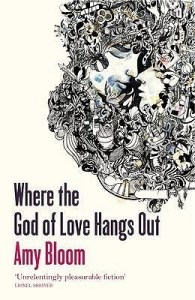 The book contains two quartets of linked stories and four stand-alone stories. The first set is about Clare and William, whose dynamic shifts from acquaintances to couple-friends to lovers to spouses. Bloom, a former psychotherapist, is interested in tracking how they navigate these changes over the years, and does so by switching between first- and third-person narration and adopting a different perspective for each story. She does the same with the four stories about Lionel and Julia, a Black man and his white stepmother. Over the course of maybe three decades, we see the constellations of relationships each one forms, while the family core remains. She also includes sexual encounters between characters who are middle-aged and older – when, according to stereotypes, lust should have been snuffed out.
Of the unlinked stories, the most memorable was “By-and-By,” a distressingly unemotional account of the ripple effects of a serial killer’s actions as seen by a victim’s roommate. I also loved the title story, which appears last. An older man and his daughter-in-law meet twice, by accident, in small-town eateries, the one wanting to come clean about a troubled past and the other wanting to embark on a new and surprising romance. This one reminded me of Richard Russo and early John Irving, while the collection as a whole would suit fans of Julia Glass, Tessa Hadley, Sue Miller, Lorrie Moore and Elizabeth Strout. (Secondhand – Bookbarn International)
What We Talk about When We Talk about Love by Raymond Carver (1981)
Such a famous title that it has spawned countless imitators, two of which I’ve even read (What We Talk about When We Talk about God by Rob Bell and What We Talk about When We Talk about Anne Frank by Nathan Englander). It turns out I had Carver confused with John Cheever, so I was expecting gritty stories of alcoholism in the 1950s Midwest. Yes to the alcohol abuse, but Carver was from the Pacific Northwest and was writing in the 1980s. A number of his protagonists are drunk, deadbeat dads who have been kicked out and make a scene to get back at their wives. Others are more passive, stuck in suburban ennui. Grown men fear turning into their fathers (“Sacks”). Ultimatums are defused (“Everything Stuck to Him”) and custody arrangements fought over (the Solomonic fable “Popular Mechanics”).
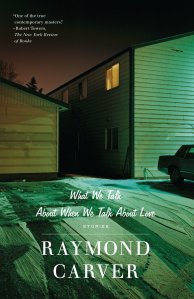 The declarative simplicity of the prose, and the interest in male activities like gambling, hunting and fishing, can’t fail to recall Ernest Hemingway, yet I warmed to Carver much more than Hem. Two of these stories struck me as feminist for how they expose nonchalant male violence towards women; elsewhere I spotted tiny gender-transgressing details (a man who knits, for instance). In “Tell the Women We’re Going,” two men escape their families to play pool and drink, then make a fateful decision on the way home. I don’t think I’ve been as shocked by the matter-of-fact brutality of a short story since “The Lottery.” My favourite was also chilling, “So Much Water So Close to Home.” Both reveal how homosocial peer pressure leads to bad behaviour; this was toxic masculinity before we had that term.
Many of the stories are only 3–8 pages long, such that 17 fit into a slender volume. They’re about half and half first- and third-person, sometimes with speech marks and sometimes not. At 15 pages, the title story is the longest and a great one. Two couples are having pre-dinner drinks and discussing types of love – physical, spiritual and so on. The POV character mostly conveys monologues by his friend Mel, a cardiologist (of course he would be a heart doctor!), comparing the obsessive love of his first wife’s ex, who turned out to be a stalker, and the mature devotion he saw in an elderly couple at his hospital after a horrific car accident. There were a few flippant or less memorable stories in here, but I’m impressed enough to seek out more of Carver’s work, poetry or prose. (Secondhand – Books for Amnesty, York)
Love of Fat Men by Helen Dunmore (1997)
This was an early work by Dunmore, who was so prolific in her two-decade career that I still come across titles of hers that I’ve never heard of before. I don’t think a book by this title would get published nowadays, but I won’t hold it against her. It is literal in that Ulli, a recurring character in 10 of these 19 stories, finds comfort in sleeping with larger men. I wondered what so captured Dunmore’s imagination about Scandinavia: you can work out that Ulli is from Finland and most of the stories are set there or in nearby countries.
 Every other story returns to Ulli, but the fragments of her life miss out the connective tissue: we suspect she’s pregnant as a teen, but don’t learn what she chose to do about it; we witness some dysfunctional scenes and realize she’s estranged from her family later on, but don’t find out if there was some big bust-up that prompted it. She comes across as a loner and a nomad, apt to be effaced by stronger personalities. In “The Ice Bear,” she’s on a ferry from Sweden back to Finland and can’t escape the prattle of a male missionary. In “A Question of Latitude” she’s out for a restaurant meal with friends, one of whom diagnoses her thus: “Nothing really affects you, does it? You just smile and put it out of your mind. And you cut people out of your life the same way, when you’ve finished with them.”
Whereas in the Bloom the interconnected stories are the strongest, here my preference was for the others. “The Bridge Painter” is about a man who leaves a peculiar calling card at each bridge he visits. “Annina” paints a woman with a questionable grasp on reality after the loss of a child. Best of all is probably “North Sea Crossing,” which contrasts two father-and-son pairs. If you only know Dunmore from novels, I can recommend her poetry and short stories, too. (Secondhand – Bas Books, Newbury)
All three:
Try all of these authors right away if you haven’t already!
*A daytrip into London on Thursday was our Valentine’s gift to selves. We toured the Tower of London and the Science Museum (the Wellcome medical collections for me) and had an exceptional late lunch at Dishoom (starters and drinks pictured below). Tonight we’ll be having chocolate prune pots in front of The Bookshop Band’s love-themed livestream concert.

 Bookish Beck = Rebecca Foster. American transplant to England. Freelance proofreader and book reviewer.
 Bookish Beck