Four for #NonfictionNovember and #NovNov25: Hanff, Humphrey, Kimmerer & Steinbeck
I’ll be doubling up posts most days for the rest of this month to cram everything in!


Today I have a cosy companion story to a beloved bibliophiles’ classic, a comprehensive account of my favourite beverage, a refreshing Indigenous approach to economics, and a journalistic exposé that feels nearly as relevant now as it did 90 years ago.
Q’s Legacy by Helene Hanff (1985)
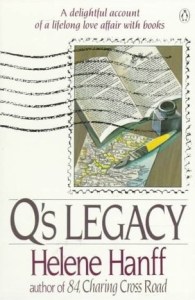 Of course we all know and love 84, Charing Cross Road, about Hanff’s epistolary friendship with the staff of Marks & Co. Antiquarian Booksellers in London in the 1950s. This gives a bit of background to the writing and publication of that book, responds to its unexpected success, and follows up on a couple of later trips to England for the TV and stage adaptations. Hanff lived in a tiny New York City apartment and worked behind the scenes in theatre and television. Even authoring a cult classic didn’t change the facts of being a creative in one of the world’s most expensive cities: paying the bills between royalty checks was a scramble. The title is a little odd and refers to Hanff’s self-directed education after she had to leave Temple University after a year. When she stumbled on Cambridge professor Sir Arthur Quiller-Couch’s books of lectures at the library, she decided to make them the basis of her classical education. I most liked the diary from a 1970s trip to London on which she stayed in her UK publisher André Deutsch’s mother’s apartment! This is pleasant and I appreciated Hanff’s humble delight in her unexpected later-life accomplishments, but it does feel rather like a collection of scraps. I also have to wonder to what extent this repeats content from the 84 sequel, The Duchess of Bloomsbury Street. But if you’ve liked her other books, you may as well read this one, too. (Free – The Book Thing of Baltimore) [177 pages]
Gin by Shonna Milliken Humphrey (2020)
 Picking up something from the Bloomsbury Object Lessons series (or any of these other series of nonfiction books) is a splendid way to combine two challenges. Humphrey was introduced to gin at 16 when the manager of the movie theater where she worked gave her Pepsi cups of gin and grapefruit juice. Luckily, that didn’t precede any kind of misconduct and she’s been fond of gin ever since. She takes readers through the etymology of gin (from the Dutch genever; I startled the bartender by ordering a glass of neat vieux ginèvre at a bar in Brussels in September), the single necessary ingredient (juniper), the distillation process, the varieties (single- or double-distilled; Old Tom with sugar added), the different neutral spirits or grain bases that can be used (at a recent tasting I had gins made from apples and potatoes), and appearances in popular culture from William Hogarth’s preachy prints through The African Queen and James Bond to rap music. I found plenty of interesting tidbits – Samuel Pepys mentions gin (well, “strong water made of juniper,” anyway) in his diary as a constipation cure – but the writing is nothing special, I knew a lot of technical details from distillery tours, and I would have liked more exploration of the modern gin craze. “Gin is, in many ways, how I see myself: comfortable, but evolving,” Humphrey writes. “Gin has always interested a younger generation of drinker, as well as commitment from the older crowd, while maintaining a reputation among the middle aged. It is unique that way.” That checks out from my experience of tastings and the fact that it’s my mother-in-law’s tipple of choice as well. (Birthday gift from my Bookshop wish list) [134 pages]
The Serviceberry: An Economy of Gifts and Abundance by Robin Wall Kimmerer (2024)
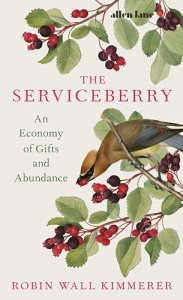 Serviceberries (aka saskatoons or juneberries) are Kimmerer’s chosen example of nature’s bounty, freely offered and reliable. When her farmer neighbours invite people to come and pick pails of them for nothing, they’re straying from the prevailing economic reasoning that commodifies food. Instead of focusing on the “transactional,” they’re “banking goodwill, so-called social capital.” Kimmerer would disdain the term “ecosystem services,” arguing that turning nature into a commodity has diminished people’s sense of responsibility and made them feel more justified in taking whatever they want and hoarding it. Capitalism’s reliance on scarcity (sometimes false or forced) is anathema to her; in an Indigenous gift-based economy, there is sufficient for all to share: “You can store meat in your own pantry or in the belly of your brother.” I love that she refers to Little Free Libraries and other community initiatives such as farm stands of free produce, swap shops, and online giveaway forums. I volunteer with our local Repair Café, I curate my neighbourhood Little Free Library, and I’m lucky to live in a community where people are always giving away quality items. These are all win-win situations where unwanted or broken items get a new lease on life. Save landfill space, resources, and money at the same time! Compared to Braiding Sweetgrass, this is thin (but targeted) and sometimes feels overly optimistic about human nature. I was glad I didn’t buy the bite-sized hardback with gift money last year, but I was happy to have a chance to read the book anyway. (New purchase – Kindle 99p deal) [124 pages]
The Harvest Gypsies: On the Road to The Grapes of Wrath by John Steinbeck (1936; 1988)
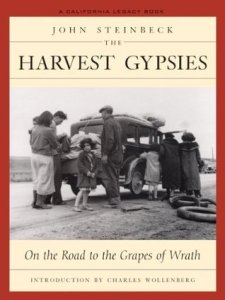 This lucky find is part of the “California Legacy” collection published by Heyday and Santa Clara University. In October 1936, Steinbeck produced a series of seven articles for The San Francisco News about the plight of Dust Bowl-era migrant workers. His star was just starting to rise but he wouldn’t achieve true fame until 1939 with the Pulitzer Prize-winning The Grapes of Wrath, which was borne out of his travels as a journalist. Some 150,000 transient workers traveled the length of California looking for temporary employment in the orchards and vegetable fields. Squatters’ camps were places of poor food and hygiene where young children often died of disease or malnutrition. Women in their thirties were worn out by annual childbirth and frequent miscarriage and baby loss. Dignity was hard to maintain without proper toilet facilities. Because workers moved around, they could not establish state residency and so had no access to healthcare or unemployment benefits. This distressing material is captured through dispassionate case studies. Steinbeck gives particular attention to the state’s poor track record for the treatment of foreign workers – Chinese, Japanese and Filipino as well as Mexican. He recounts disproportionate police brutality in response to workers’ attempts to organize. (Has anything really changed?!) In the final article, he offers solutions: the right to unionize, and blocks of subsistence farms on federal land. Charles Wollenberg’s introduction about Steinbeck and his tour guide, camp manager Tom Collins, is illuminating and Dorothea Lange’s photographs are the perfect accompaniment. Now I’m hankering to reread The Grapes of Wrath. (Secondhand – Gifted by a friend as part of a trip to Community Furniture Project, Newbury last year) [62 pages]
Check out Kris Drever’s folk song “Harvest Gypsies” (written by Boo Hewerdine) here.
December Releases by Anita Felicelli, Lise Goett, Brooke Randel & Weike Wang
December isn’t a big month for new releases, but here are excerpts from a few I happened to review early for U.S. publications BookBrowse, Foreword Reviews, and Shelf Awareness: Speculative short stories, loss-tinged poetry, a family memoir based on Holocaust history, and a satirical short novel about racial microaggressions and class divides in contemporary America.
How We Know Our Time Travelers by Anita Felicelli
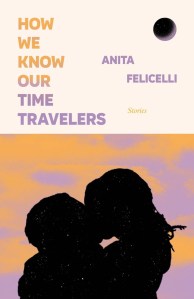 These linked speculative stories, set in near-future California, are marked by environmental anxiety. Many of their characters have South Asian backgrounds. A nascent queer romance between co-op grocery colleagues defies an impending tsunami. A painter welcomes a studio visitor who could be her estranged husband traveling from the past. Mysterious “fog catchers” recur in multiple stories. Memory bridges the human and the artificial, as in “The Glitch,” wherein a coder, bereaved by wildfires, lives alongside holograms of her wife and children. But technology, though a potential means of connecting with the dead, is not an unmitigated good. Creative reinterpretations of traditional stories and figures include urban legends, a locked room mystery, a poltergeist, and a golem. In these grief- and regret-tinged stories, heartbroken people can’t alter their pasts, so they’ll mold the future instead. (See my full Foreword review.)
The Radiant by Lise Goett
 In the 25 poems of Goett’s luminous third poetry collection, nature’s beauty and ancient wisdom sustain the fragile and bereaved. The speaker in “Difficult Body” references a cancer experience and imagines escaping the flesh to diffuse into the cosmos. Goett explores liminal moments and ponders what survives a loss. The use of “terminal” in “Free Fall” denotes mortality while also bringing up fond memories of her late father picking her up from an airport. Mythical allusions, religious imagery, and Buddhist philosophy weave through to shine ancient perspective on current struggles. The book luxuriates in abstruse vocabulary and sensual descriptions of snow, trees, and color. (Tupelo Press, 24 December. Review forthcoming at Shelf Awareness)
Also Here: Love, Literacy, and the Legacy of the Holocaust by Brooke Randel
 Randel’s debut is a poised, tender family memoir capturing her Holocaust survivor grandmother’s recollections of the Holocaust. Golda (“Bubbie”) spoke multiple languages but was functionally illiterate. In her mid-80s, she asked her granddaughter to tell her story. Randel flew to south Florida to conduct interviews. The oral history that emerges is fragmentary and frenetic. The structure of the book makes up for it, though. Interview snippets are interspersed with narrative chapters based on follow-up research. Golda, born in 1930, grew up in Romania. When the Nazis came, her older brothers were conscripted into forced labor; her mother and younger siblings were killed in a concentration camp. At every turn, Golda’s survival (through Auschwitz, Christianstadt, and Bergen-Belsen) was nothing short of miraculous. This concise, touching memoir bears witness to a whole remarkable life as well as the bond between grandmother and granddaughter. (See my full Shelf Awareness review.)
Rental House by Weike Wang
 Their interactions with family and strangers alike on two vacations – Cape Cod and the Catskills, five years apart – put interracial couple Keru and Nate’s choices into perspective as they near age 40. Although some might find their situation (childfree, with a “fur baby”) stereotypical, it does reflect that of a growing number of aging millennials. Wang portrays them sympathetically, but there is also a note of gentle satire here. The way that identity politics comes into the novel is not exactly subtle, but it does feel true to life. And it is very clever how the novel examines the matters of race, class, ambition, and parenthood through the lens of vacations. Like a two-act play, the framework is simple and concise, yet revealing about contemporary American society. (See my full BookBrowse review.)
Nonfiction November Book Pairings: Autistic Husbands & The Ocean
Liz is the host for this week’s Nonfiction November prompt. The idea is to choose a nonfiction book and pair it with a fiction title with which it has something in common.
I came up with these two based on my recent reading:
An Autistic Husband
The Rosie Effect by Graeme Simsion (also The Rosie Project and The Rosie Result)
&
Disconnected: Portrait of a Neurodiverse Marriage by Eleanor Vincent
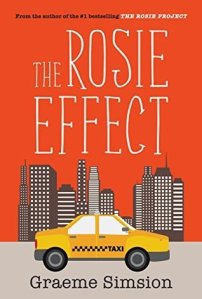 Graeme Simsion’s Don Tillman trilogy tells the odd-couple story of an autistic professor and how he falls in love with and marries a wholly unsuitable neurotypical woman. He turns this situation into romantic comedy. For Eleanor Vincent, it wasn’t so funny. She met her third husband, computer scientist Lars (a pseudonym), through Zydeco dancing when she was in her sixties. Though aware that he could be unemotional and act strangely, she found him chivalrous and sweet. They dated for a time but he hurt and confused her by asking for his apartment keys back. After a five-year period she calls their “Interregnum,” the two got back together and married. Despite their years of friendship, she was completely unprepared for what living with him would be like. “At the age of seventy-one, I had married a stranger,” she writes.
It didn’t help that Covid hit partway through their four-year marriage, nor that they each received a cancer diagnosis (cervical vs. prostate). But the problems were more with their everyday differences in responses and processing. During their courtship, she ignored some bizarre things he did around her family: he bit her nine-year-old granddaughter as a warning of what would happen if she kept antagonizing their cat, and he put a gift bag over his head while they were at the dinner table with her siblings. These are a couple of the most egregious instances, but there are examples throughout of how Lars did things she didn’t understand. Through support groups and marriage counselling, she realized how well Lars had masked his autism when they were dating – and that he wasn’t willing to do the work required to make their marriage succeed. The book ends with them estranged but a divorce imminent.
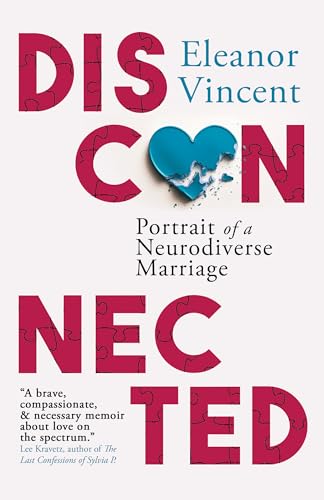 If this were purely carping about a husband’s weirdness, it might have been tedious or depressing. But Vincent doesn’t blame Lars, and she incorporates so much else in this short memoir, including a number of topics that are of particular interest to me. There’s her PTSD from a traumatic upbringing, her parents’ identity as closeted gay people, the complications around her father’s death, the tragedy of her older daughter’s death, as well as the more everyday matters of being a working single parent, finding an affordable property in California’s Bay Area, and blending households.
Vincent crafts engaging scenes with solid recreated dialogue, and I especially liked the few meta chapters revealing “What I Left Out” – a memoir is always a shaped narrative, while life is messy; this shows both. She is also honest about her own failings and occasional bad behavior. I probably could have done with a little less detail on their sex life, however.
This had more relevance to me than expected. While my sister and I were clearing our mother’s belongings from the home she shared with her second husband for the 16 months between their wedding and her death, our stepsisters mentioned to us that they suspected their father was autistic. It was, as my sister said, a “lightbulb” moment, explaining so much about our respective parents’ relationship, and our interactions with him as well. My stepfather (who died just 10 months after my mother) was a dear man, but also maddening at times. A retired math professor, he was logical and flat of affect. Sometimes his humor was off-kilter and he made snap, unsentimental decisions that we couldn’t fathom. Had they gotten longer together, no doubt many of the issues Vincent experienced would have arisen. (Read via BookSirens)
[173 pages]
The Ocean
Playground by Richard Powers
&
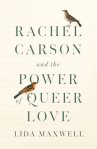
Rachel Carson and the Power of Queer Love by Lida Maxwell
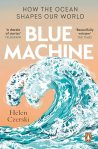
The Blue Machine by Helen Czerski
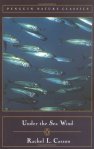
Under the Sea Wind by Rachel Carson
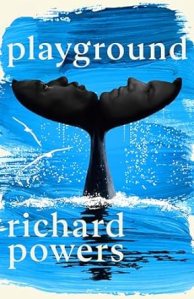 While I was less than enraptured with its artificial intelligence theme and narrative trickery, I loved the content about the splendour of the ocean in Richard Powers’s Booker Prize-longlisted Playground. Most of this comes via Evelyne Beaulieu, a charismatic French Canadian marine biologist (based in part on Sylvia Earle) who is on the first all-female submarine mission and is still diving in the South Pacific in her nineties. Powers explicitly references Rachel Carson’s The Sea Around Us. Between that and the revelation of Evelyne as a late-bloomer lesbian, I was reminded of Rachel Carson and the Power of Queer Love, a forthcoming novella-length academic study by Lida Maxwell that I have assessed for Foreword Reviews. Maxwell’s central argument is that Carson’s romantic love for a married woman, Dorothy Freeman, served as an awakening to wonder and connection and spurred her to write her greatest works.
After reading Playground, I decided to place a library hold on Blue Machine by Helen Czerski (winner of the Wainwright Writing on Conservation Prize this year), which Powers acknowledges as an inspiration that helped him to think bigger. I have also pulled my copy of Under the Sea Wind by Rachel Carson off the shelf as it’s high time I read more by her.
Previous book pairings posts: 2018 (Alzheimer’s, female friendship, drug addiction, Greenland and fine wine!) and 2023 (Hardy’s Wives, rituals and romcoms).
April Releases by Brownrigg, Ernaux, O’Connor, Waterman and Wood
Family history is a common element for the first four of these review books: a multi-generational story (incorporating autofiction in places) about Anglo-American writers and the legacy of suicide; a brief slice of memoir about the loss of a mother; a historical novella inspired by family stories and set on an island at the cusp of war; and a poetry collection drawing on a father’s death as well as on local folklore. Addiction and dementia are specific links between pairs. And to round off, a set of short stories about pregnancy and motherhood.
The Whole Staggering Mystery: A Story of Fathers Lost and Found by Sylvia Brownrigg
“The dead don’t come back, but they are not as far away as you think.”
I knew Brownrigg’s name as a novelist thanks to Susan’s blog (see her review of Pages for Her), but when I read about this family memoir it piqued my interest more than her fiction might have. The Brownrigg clan are nobility (really – her brother has the title “Baronet”) but have rejected conventional Englishness over the past century. First her grandfather, Gawen, separated from his wife and moved to Nairobi to work as a journalist. He also published two obscure novels before dying at age 27. The empty bottle of Nembutal and recent changes to his will suggested suicide, though his mother resisted the notion vociferously. Gawen’s son, Nicholas, was raised in California by his mother, Lucia, and became an alcoholic who lived off-grid on a ranch and had an unpublished Beats-influenced novel.
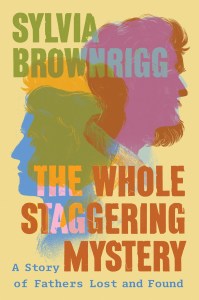 After Nicholas’s death in 2018, Brownrigg was compelled to trace her family’s patterns of addiction and creativity. It’s a complex network of relatives and remarriages here. The family novels and letters were her primary sources, along with a scrapbook her great-grandmother Beatrice made to memorialize Gawen for Nicholas. Certain details came to seem uncanny. For instance, her grandfather’s first novel, Star Against Star, was about, of all things, a doomed lesbian romance – and when Brownrigg first read it, at 21, she had a girlfriend.
Along with the more traditional memoir sections, there are the documents that speak for themselves and extended passages of autofiction. I loved an imaginary letter by Gawen’s older brother, who died in young childhood, and a third-person segment about Beatrice’s life in England during the Second World War. But I mostly skipped over the 90 lightly fictionalized pages about the author’s (“Sophie’s”) life with her father in California. You might view this as a showcase of possible methods for engaging with family history, some of which work better than others. All of it is fascinating material, though.
Published by Counterpoint in the USA. With thanks to Nectar Literary for the advanced e-copy for review.
A Woman’s Story by Annie Ernaux (1988; 2024)
[Translated from the French by Tanya Leslie]
 This memoir of Ernaux’s mother’s life and death is, at 58 pages, little more than an extended (auto)biographical essay. Confusingly, it covers the same period she wrote about in I Remain in Darkness (originally published nine years later), a diary of her mother’s final years with dementia; I even remembered two specific events and quotes. Why not combine the two into a full-length biographical recollection? Or pair it with A Man’s Place, Ernaux’s memoir of her father, in one volume? Perhaps her works will be repackaged in the future. But this came first: Ernaux started writing just a couple of weeks after her mother’s death, and spent 10 months over it. It’s clear she was determined to salvage what she could of her mother’s life:
It’s a difficult undertaking. For me, my mother has no history. She has always been there. When I speak of her, my first impulse is to ‘freeze’ her in a series of images unrelated to time … This book can be seen as a literary venture as its purpose is to find out the truth about my mother, a truth that can be conveyed only by words. … I believe I am writing about my mother because it is my turn to bring her into the world.
Ernaux opens with news of the death, and the funeral. But soon she’s pushing back into the past. Her mother grew up in poverty near Rouen and worked in a factory before her marriage, when she and her husband took on a grocery store and café. The Second World War was in some romantic way the great drama of her life. She was exacting of her daughter: “Her overriding concern was to give me everything she hadn’t had. But this involved so much work, so much worrying about money”. In her widowhood she came to live with Ernaux, who was then divorced with two sons, and tried to find a middle way between independence and connection. Eventually, though, her memory loss required admission to a nursing home.
I’ve felt the same about all three short works I’ve read by Ernaux so far: though precisely observed, they conceal themselves behind emotional distance. So while this might seem similar to A Very Easy Death by Simone de Beauvoir, I found the latter more engaging.
With thanks to Fitzcarraldo Editions for the free copy for review.
Whale Fall by Elizabeth O’Connor
 The remote Welsh island setting of O’Connor’s debut novella was inspired by several real-life islands that were depopulated in the twentieth century due to a change in climate and ways of life: Bardsey, St Kilda, the Blasket Islands, and the Aran Islands. (A letter accompanying my review copy explained that the author’s grandmother was a Welsh speaker from North Wales and her Irish grandfather had relatives on the Blasket Islands.)
Eighteen-year-old Manod Llan is the older daughter of a lobster fisherman. Her sweetheart recently left to find work in a mainland factory. It’s 1938 and there are vague rumbles about war, but more pressing is the arrival of strangers here to study a vanishing culture. Anthropologists Edward and Joan learn snatches of Welsh and make recordings of local legends and songs, which are interspersed with the fragmentary narrative. Manod, star-struck, seeks the English researchers’ approval as she helps with translation and other secretarial duties, but becomes disillusioned with their misinterpretations and fascist leanings.
The gradual disintegration of a beached whale casts a metaphorical shadow of decay over the slow-burning story. I kept waiting for momentous events that never came. More definitive consequences? Something to do with Manod’s worries for her little sister, Llinos? A flash-forward to the abandoned island’s after-years? Or to Manod’s future? As it is, the sense of being stuck at a liminal time makes it all feel like prologue. But O’Connor’s writing is quite lovely (“The milk had formed a film over the surface and puckered, like a strange kiss”; “All of my decisions felt like trying to catch a fish that did not exist until I caught it”) and the book is strong on atmosphere and tension. I’ll look out for her next work.
With thanks to Picador for the free copy for review.
Come Here to This Gate by Rory Waterman
I was most drawn to the poems in Part I, “All but Forgotten,” about his father’s last year or so.
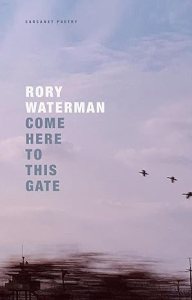
The titles participate in telling the story: “Alcoholic Dementia,” followed by “Twin Oaks Nursing Home.”
The sheep-tracks of your mind were worn to trenches.
…
Then what you’ve turned yourself into – half there
on one side of a final single bed
you might not leave till the rest of you has left –
starts, stares through me, says ‘I’m being held
against my will!’, tells a nurse to ‘Just fuck off’
then thanks her. Old boy, when did you get like this?
The sheep-tracks of my mind are worn to trenches.
Then they moved you to a home
that still wasn’t home. ‘Why
am I in this fucking place?
Nothing’s wrong with me.’
So I’d tell you all over again,
but only the easy part (‘You’re
not remembering things well
at present.’ ‘Yes I fucking am’)
and you relearned that you’d
never learn – mindless torture,
until I stopped it. Your
silences were trains departing.
From the miscellany of Part II, I plucked out “Gooseberries” and “Perennials,” both of which conceal emotion among plants. Then Part III, “Lincolnshire Folk Tales,” turns the tone mischievous, with the ABCB end-rhymes of “Yallery Brown,” “The Metheringham Lass,” “The Lincoln Imp,” and “Nanny Rutt” (I felt I’d stumbled on a limerick with its rhythm: “Math Wood is a small plot of trees south of Bourne, / next to McDonald’s and Lidl. / It’s privately owned, full of shot-gun shells, pheasants – / but still, a bit of an idyll”). Plenty of good stuff, then, but it doesn’t all seem to fit together in the same collection.
With thanks to Carcanet Press for the advanced e-copy for review.
This Is Why We Can’t Have Nice Things by Naomi Wood
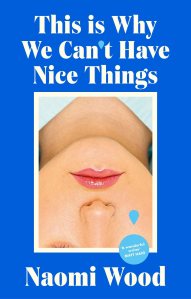 I requested this because a) I had enjoyed Wood’s novels Mrs. Hemingway and The Hiding Game and b) I couldn’t resist the title. These nine contemporary stories (five in the first person and four in the third person) all feature women who are pregnant and/or mothers of young children. Three dwell on work–life balance in particular, with the female protagonists of “Lesley, in Therapy” and “Dracula at the Movies” an animator and a filmmaker, respectively. The third, “Hurt Feelings,” in which a medical emergency forces a choice between career and motherhood, was my favourite. Claudia is working on an advertising campaign for a large pharmaceutical company whose newest product targets chronic pain. Although she suspects it’s a placebo, she knows how valuable it is for these people to have their pain acknowledged given it’s as invisible as her history of pregnancy loss.
Other highlights included “Peek-a-Boo,” in which pregnant twin sisters fly to Italy to remonstrate with their father, who refuses to cede a holiday flat to the next renters; and “Wedding Day,” about a woman bitter enough to try to sabotage her ex’s big day by demanding he bring their daughter, the flower girl, home by bedtime. “Flatten the Curve” is about restrictions and desires during Covid lockdown. Family, neighbour, and co-worker dynamics fuel the drama. In a few cases, Wood imagined promising situations but didn’t deliver on them. I could hardly believe “Comorbidities,” about a mother who films a sex tape with her husband to distract from her eco-anxiety, won the 2023 BBC National Short Story Award. If Wood was aiming for edgy, she landed on peevish instead. “Dino Moms,” the final story, was worst, with its absurd dinosaur-vet reality-TV setup. Overall, the collection is too one-note because of the obsession with motherhood (“It is not very interesting to be in love with your child; it’s commonplace, this sacrificial love”). Back to novels soon, please.
With thanks to Phoenix (Orion) for the free copy for review.
Does one of these catch your eye? What April releases can you recommend?
Rereading Of Mice and Men for #1937Club
A year club hosted by Karen and Simon is always a great excuse to read more classics. Between my shelves and the library, I had six options for 1937. But I started reading too late, and had too many books on the go, to finish more than one – a reread. No matter; it was a good one I was glad to revisit, and I’ll continue with the other reread at my own pace.
Of Mice and Men by John Steinbeck
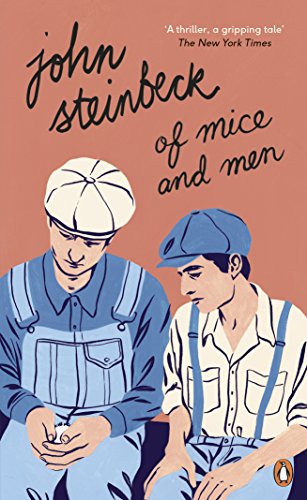 Are teenagers doomed to dislike the books they read in school? I think this must have been on the curriculum for 11th grade English. It was my third Steinbeck novella after The Red Pony and The Pearl, so to me it confirmed that he wrote contrived, depressing stuff with lots of human and animal suffering. Not until I read The Grapes of Wrath in college and East of Eden (THE Great American Novel) five years ago did I truly recognize Steinbeck’s greatness.
George and Lennie are itinerant farm workers in Salinas Valley, California. Lennie is a gentle giant, intellectually disabled and aware of his own strength when hauling sacks of barley but not when stroking mice and puppies. George looks after Lennie as a favour to Aunt Clara and they’re saving up to buy their own smallholding. This dream is repeated to the point of legend, somewhere between a bedtime story and scripture:
‘Someday—we’re gonna get the jack together and we’re gonna have a little house and a couple of acres an’ a cow and some pigs and—’ ‘An’ live off the fatta the lan’,’ Lennie shouted. ‘And have rabbits.’
They quickly settle in alongside the other ranch-hands and even convert two to their idyllic picture of independence. But the foreman, Curley, is a hothead and his bored would-be-starlet wife won’t stop roaming into the men’s quarters. No matter how much George tells Lennie to stay away from both of them, something is set in motion – an inevitable repeat of an incident from their previous employment that forced them to move on.
I remembered the main contours here but not the ultimate ending, and this time I appreciated the deliberate echoes and heavy foreshadowing (all that symbolism to write formulaic school essays about!): this is Shakespearean tragedy with the signs and stakes writ large against a limited background. Bar some paragraphs of scene-setting descriptions, it is like a play; no surprise it’s been filmed several times. (I wish I didn’t have danged John Malkovich in my head as Lennie; I can’t think of anyone else in that role, whereas Gary Sinise doesn’t necessarily epitomize George for me.) The characterization of the one Black character, Crooks, and the one woman are uncomfortably of their time. However, Crooks is given the dubious honour of conveying the bleak vision: “Nobody never gets to heaven, and nobody gets no land. It’s just in their head.” Like Hardy, Steinbeck knows what happens when the lower classes make the mistake of wanting too much. It’s a timeless tale of grit and desperation, the kind one can’t imagine not existing. (Public library)
Apposite listening: “The Great Defector” by Bell X1 (known for their quirky lyrics):
You’ve been teasing us farm boys
’til we start talking ’bout those rabbits, George
oh, won’t you tell us ’bout those rabbits, George?
Original rating (1999?):
My rating now: 


Currently rereading: The Hobbit by J.R.R. Tolkien – My father gave me this for Christmas when I was 10. I think I finally read it sometime in my later teens, about when the Lord of the Rings films were coming out. I’m on page 70 now. I’d forgotten just how funny Tolkien is about the set-in-his-ways Bilbo and his devotion to a cosy, quiet life. When he’s roped into a quest to reclaim a mountain hoard of treasure from a dragon – along with 13 dwarves and Gandalf the wizard – he realizes he has much discomfort and many a missed meal ahead of him.


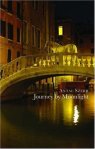 DNFed: Journey by Moonlight by Antal Szerb – My second attempt with Hungarian literature, and I found it curiously similar to the other novel I’d read (Embers by Sandor Márai) in that much of it, at least the 50 pages I read, is a long story told by one character to another. In this case, Mihály, on his Italian honeymoon, tells his wife about his childhood best friends, a brother and sister. I wondered if I was meant to sense homoerotic attachment between Mihály and Tamás, which would appear to doom this marriage right at its outset. (Secondhand – Edinburgh charity shop, 2018)
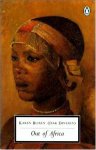 Skimmed: Out of Africa by Karen Blixen – I enjoyed the prose style but could tell I’d need a long time to wade through the detail of her life on a coffee farm in Kenya, and would probably have to turn a blind eye to the expected racism of the anthropological observation of the natives. (Secondhand – Way’s in Henley, 2015)
Here’s hoping for a better showing next time!
(I’ve previously participated in the 1920 Club, 1956 Club, 1936 Club, 1976 Club, 1954 Club, 1929 Club, and 1940 Club.)
#ReadIndies Catch-up: Ansell, Kinard, McNaught, Ponce, Toews and Vara
At last, my first dedicated selections for Read Indies month, two of which have been languishing on the shelf since 2022! A few more indie titles will appear in my February roundup tomorrow. I’ve got a huge variety here: an extended essay comparing life among the unhoused in London in the 1980s with the freedom of the open road and the island of Jura; gospel-saturated poems of queer African American life; an exposé of spiritual abuse in a Pentecostal church with branches in England and Nigeria; an Ecuadorian novella obsessed with bodies and sex; a funny yet heartbreaking novel about a zany family trying not to fall apart; and short stories about siblings, adolescence, memory, death and much more. I name the publishers and other books I have on the docket from each one.

Deer Island by Neil Ansell (2013)
 My last unread book by Ansell (whose Deep Country, The Last Wilderness, and The Circling Sky I’ve loved) and one that had been out of print for many years, so it was great to hear that Little Toller was reissuing it. Ansell has visited most countries; pressed for a favourite place, he names the Scottish isle of Jura. In memory he returns to a place he hadn’t been in over 20 years. In the early 1980s he lived in London and volunteered with The Simon Community, a homeless charity, for three years. Later that decade, he found himself in the same situation as those he served, squatting in chaotic multi-occupancy London properties. But in between he’d had a magical jaunt to Jura by hitchhiking and motorbike with a girlfriend. And later, when his only sentimental keepsake was stolen from his squat bedroom, he left that lifestyle behind and fled to Jura, haunt of golden eagles and otters; refuge for George Orwell, who experienced his fair share of squalor – Down and Out in Paris and London gets a mention, but Ansell doesn’t belabour a comparison he more than earns. It’s a shame this is so short, but it’s a carefully crafted slice of life, and illustrates a sobering truth: “Security is an illusion.”
With thanks to Little Toller Books for the free copy for review. Deer Island came out in paperback on 27 February.
Little Toller
Also read recently: brother. do. you. love. me. by Manni Coe
Currently reading: The Long Field by Pamela Petro
Orders of Service by Willie Lee Kinard III (2023)
 At a confluence of Southern, Black and gay identities, Kinard writes of matriarchal families, of congregations and choirs, of the descendants of enslavers and enslaved living side by side. The layout mattered more than I knew, reading an e-copy: often it is white text on a black page; words form rings or an infinity symbol; erasure poems gray out much of what has come before. “Boomerang” interludes imagine a chorus of fireflies offering commentary – just one of numerous insect metaphors. Mythology also plays a role. “A Tangle of Gorgons,” a sample poem I’d read before, wends its serpentine way across several pages. “Catalog of My Obsessions or Things I Answer to” presents an alphabetical list. For the most part, the poems were longer, wordier and more involved (four pages of notes on the style and allusions) than I tend to prefer, but I could appreciate the religious frame of reference and the alliteration.
Two favorite passages:
Ma taught me how to change a tire
the fall before it got real cold one October,
on the plot of dirt the pole beans we call Babel
spiral from, where our boozy station wagon
sat after hobbling home & passing out
in the backyard
(from “Work”)
I left before the door was closed.
I built myself of drowning hymns.
I stole every one to fly.
(from “Icarus Confesses”)
With thanks to Alice James Books for the advanced e-copy for review.
Alice James Books
Also read recently: Theophanies by Sarah Ghazal Ali
Immanuel by Matthew McNaught (2022)
 “Immanuel was the centre of the world once. Long after it imploded, its gravitational pull remains.” McNaught grew up in an evangelical church in Winchester, England, but by the time he left for university he’d fallen away. Meanwhile, some peers left for Nigeria to become disciples at charismatic preacher TB Joshua’s Synagogue Church of All Nations in Lagos. It’s obvious to outsiders that this was a cult, but not so to those caught up in it. It took years and repeated allegations for people to wake up to faked healings, sexual abuse, and the ceding of control to a megalomaniac who got rich off of duping and exploiting followers. This book won the inaugural Fitzcarraldo Editions Essay Prize. I admired its blend of journalistic and confessional styles: research, interviews with friends and strangers alike, and reflection on the author’s own loss of faith. He gets to the heart of why people stayed: “A feeling of holding and of being held. A sense of fellowship and interdependence … the rare moments of transcendence … It was nice to be a superorganism.” This gripped me from page one, but its wider appeal strikes me as limited. For me, it was the perfect chance to think about how I might write about traditions I grew up in and spurned.
With thanks to Fitzcarraldo Editions for the proof copy for review.
Fitzcarraldo Editions
Currently reading: Intervals by Marianne Brooker
Up next: Alphabetical Diaries by Sheila Heti
Blood Red by Gabriela Ponce (2020; 2024)
[Translated from the Spanish by Sarah Booker]
 Like other short works I’ve read by Hispanic women authors (Die, My Love, September and the Night, In Vitro), this Ecuadorian novella is intense, fragmentary, and obsessed with the female body and psyche. The unnamed narrator, a woman separated from her husband and freed from inhibitions, gives in to her substance and sex addictions – “For me, anything that isn’t falling in love has never merited much attention. That giddiness from proximity or bodies”. I was reminded of A Spy in the House of Love in that she flits compulsively from one lover to another, but Ponce is much more explicit than Nin. At least at the start, the sex scenes are almost constant and described in graphic detail. The narrator meets her lovers in warehouses and caves. Literal holes/orifices and blood are profuse, but also symbolically weighty, with fear of pregnancy also featuring heavily. I was impressed at how Booker rendered the stream-of-consciousness approach, which involves several-page paragraphs and metaphors of moths and moss. I wouldn’t say this was a pleasant book to spend time with, but the style and vocabulary made it worthy of note.
With thanks to Dead Ink for the free copy for review. Blood Red was first published in English by Restless Books in the USA in 2022.
Dead Ink
Up next: Sinking Bell by Bojan Louis
Fight Night by Miriam Toews (2022)
 I knew from All My Puny Sorrows that Canadian author Miriam Toews has a knack for combining humour and heartbreak. I can’t believe it took me since 2015 to read another of her novels. Once again, there seems to be a strong autobiographical element and suicide in the family is part of the backstory. Although abandonment and failure haunt these three female generations, we see everything through a child’s point-of-view, which turns life into a jolly adventure. Swiv’s mother, an underemployed actress, is heavily pregnant with “Gord”; her father is out of the picture. Swiv has been expelled, which gives her plenty of time with Grandma Elvira, who makes friends with everyone she meets but, alas, is crumbling physically. Luckily, Swiv knows just how to keep her going with nitro spray and compression socks and pills rescued from the floor. Before Gord arrives, Grandma wants one last adventure: a flight from Canada to Fresno, California to see her remaining family. Their trip is a disaster, in hilarious ways. Child narrators are tough to pull off, so kudos to Toews for making eight-year-old Swiv almost completely believable (though a bit too precocious). These characters are all foul-mouthed fighters, with a quick wit and the determination to make their stories matter. You’ll laugh and cry.
With thanks to Faber for the proof copy for review.
Faber
Also read recently: Happiness Falls by Angie Kim
Currently reading: Places I’ve Taken My Body by Molly McCully Brown
This Is Salvaged by Vauhini Vara (2023)
 The epigraph is from the two pages of laughter (“Ha!”) in “Real Estate,” one of the stories of Birds of America by Lorrie Moore. Vara shares Moore’s themes, which are the stuff of literary fiction generally – adolescence, friendship, ageing, memory, romantic relationships – but also her tone of dark comedy. The death of a sibling recurs. In “The Irates,” teenage Swati, whose brother died of cancer, and her friend Lydia get phone sales jobs through the Chinese restaurant where they go for egg rolls. In “I, Buffalo,” Sheila tries to hide her alcoholism when her sister Priya comes for a visit with Sheila’s brother-in-law and niece. “The girl” in “You Are Not Alone” is delighted to spend her eighth birthday in Florida with her estranged father, but less so when she learns there’s a stepmother figure in the picture. The women of “Sibyls” look after an elderly neighbour with dementia. The querulous child in “Unknown Unknowns” reminded me of Good Talk by Mira Jacob. My two favourites were the title story, about building a Noah’s Ark replica, and “What Next,” about a woman accompanying her teenage daughter to meet her father for the first time. A few stories didn’t stand out, and while I liked the writing, this didn’t necessarily feel like a cohesive collection.
With thanks to Grove Press UK for the free copy for review. This Is Salvaged came out in paperback in the UK on 1 February.
Grove Atlantic
Up next: Get the Picture by Bianca Bosker, Home/Land by Rebecca Mead, We Play Ourselves by Jen Silverman
Have you discovered any new-to-you independent publishers recently?
My Best Backlist Reads of the Year
Like many bloggers, I’m irresistibly drawn to the new books released each year. However, I consistently find that many of my more memorable reads were published earlier – most of these happen to have been published between one and a few years ago, with the ‘oldest’ being from 2004. These dozen selections – alphabetical within genre but in no particular rank order – together with my Best of 2023 post (coming up tomorrow), make up about the top 10% of my year’s reading.

Fiction
 Loved and Missed by Susie Boyt: The heart-wrenching story of a woman who adopts her granddaughter because of her daughter’s drug addiction. The prose is stunning as Boyt traces the history of this complicated, makeshift family. The title has a wry double meaning, but also connotations of anticipatory grief. There can be love even where there is estrangement, or eternal separation. That is one of the enduring messages of this gem of a short novel.
 Homesick by Jennifer Croft: Each vignette – some just a paragraph long – is perfectly chosen to reveal a family dynamic and a moment in American history. What Croft does so brilliantly is to chart the accretion of ordinary and landmark events that form a life. In the end it didn’t matter whether this was presented as memoir or autofiction, so true was it to the experience of 1990s girlhood, as well as to sisterhood and coming of age.
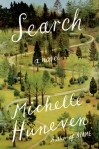 Search by Michelle Huneven: When middle-aged restaurant critic Dana Potowski is invited to be on the search committee to appoint the next minister for her California Unitarian church, she reluctantly agrees but soon wonders whether the experience could be interesting fodder for a new book… The setup might seem niche but will resonate with anyone who’s had a brush with bureaucracy. Pure pleasure; lit fic full of gossip and good food.
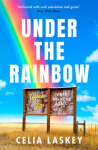 Under the Rainbow by Celia Laskey: Researchers identified Big Burr, Kansas as the most homophobic town in America. An Acceptance Across America task force descends on the rural backwater for a two-year program promoting education and friendship. Each chapter in the linked short story collection is a first-person, present-tense confession from a local or a queer visitor, whose stories interlock. Laskey inhabits all 11 with equal skill and compassion.
 The Chosen by Elizabeth Lowry: This utterly immersive novel examines Thomas Hardy’s relationship with his first wife, Emma Gifford. It opens on the morning of her death. The couple had long been estranged, but Hardy was instantly struck with grief – and remorse, his guilt compounded by what he found in her journals. A universal tale of waning romance, loss, and regret. Beautifully understated; perfectly convincing for the period but also timeless.
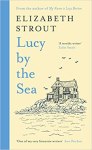 Lucy by the Sea by Elizabeth Strout: As Covid hits, William whisks Lucy from her NYC apartment to a house at the Maine coast. She’s an Everywoman recounting the fear and confusion of the early pandemic. Isolation has benefits: the first ‘room of her own’ she’s ever had, and time to ponder her childhood trauma and what went wrong in her marriage. Astute on American politics and writers’ inspirations; an effortless voice and emotional intelligence.
Nonfiction
 Bibliomaniac by Robin Ince: Ince was meant to undertake a stadium tour in Autumn 2021, but a Covid resurgence put paid to that. Not one for sitting around at home, he formulated Plan B: 100+ events, most of them in independent bookshops, over the course of two months, criss-crossing Britain and hitting many of my favourites. He’s not just a speaker at them but, invariably, a customer. I sensed a kindred spirit in so many lines. Witty and open-minded.
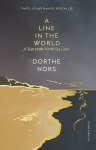 A Line in the World by Dorthe Nors: Nors lives in rural Jutland along the west coast of Denmark – little visited and largely unknown to foreigners. This can be both good and bad. Tourists feel they’re discovering somewhere new, but the residents are insular. Local legends and traditions, bird migration, reliance on the sea, wanderlust, maritime history, a visit to church frescoes, and more. Gorgeous writing and atmosphere, despite the bleakness.
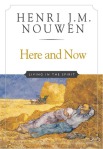 Here and Now by Henri Nouwen: This collection of micro-essays under themed headings like “Living in the Present” and “Suffering” is a perfect introduction to the Dutch Catholic priest’s theology. I marked out many reassuring or thought-provoking passages. I was taken by his ideas that the life of compassion is one of “downward mobility” and that inner freedom comes when you don’t judge anyone. Peaceful and readable; a good bedside devotional.
Poetry
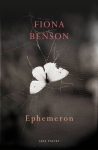 Ephemeron by Fiona Benson: Exquisite poems about the ephemeral, whether that be insect lives, boarding school days, primal emotions or moments from her children’s early years. The book is in four discrete corresponding sections but themes and language bleed from one into another and the whole is shot through with astonishing corporeality and eroticism. The form varies but the alliteration, slant rhymes and unexpected metaphors make each poem glisten.
 Leave Me a Little Want by Beverly Burch: Burch’s fourth collection juxtaposes the cosmic and the mundane, marvelling at the behind-the-scenes magic that goes into one human being born but also making poetry of an impatient wait in a long post office queue. Beset by environmental anxiety and the scale of bad news during the pandemic, she pauses in appreciation of the small and gradual.
 Making the Beds for the Dead by Gillian Clarke: Full of colour and nature imagery, profuse with alliteration and slant rhymes, relishing its specialist terminology, and taking on the serious subject matter of manmade disasters. Several sequences are devoted to gardening and geology; some pieces are ekphrastic, or dedicated to particular poets. The title sequence tackles the 2001foot and mouth disease outbreak. “The Fall” is on 9/11. Very affecting stuff.
My overall favourites were: in novels, Search and The Chosen (one contemporary and one historical) and in poetry, Ephemeron.
What were your best backlist reads this year?
Short Stories in September, Part II: Brautigan, Doyle, Minot, Simpson
Every time I do this self-set challenge, I am amazed anew by how different short story collections can be in mood and theme – even if their overall concerns are the same as in most fiction: life and death, relationships, identity, choices. Today I have one debut work, two new-to-me authors, and a disappointing showing from an old favourite.
Revenge of the Lawn: Stories 1962–1970 by Richard Brautigan (1972)
 There are more than five dozen stories in this slim volume, most just one to three pages and in the first person (55 of 62); bizarre or matter-of-fact slices of life in the Pacific Northwest or California, often with a grandiose title that’s then contradicted by the banality of the contents (e.g., in the three-page “A Short History of Religion in California,” some deer hunters encounter a group of Christian campers). The simple declarative sentences and mentions of drinking and hunting made me think of Carver and Hemingway, but Brautigan is funnier, coming out with the occasional darkly comic zinger. Here’s “The Scarlatti Tilt” in its entirety: “‘It’s very hard to live in a studio apartment in San Jose with a man who’s learning to play the violin.’ That’s what she told the police when she handed them the empty revolver.”
In the absurdist “Homage to the San Francisco YMCA,” a man replaces his plumbing with poetry: “He took out his bathtub and put in William Shakespeare. The bathtub did not know what was happening. He took out his kitchen sink and put in Emily Dickinson. The kitchen sink could only stare back in wonder.” Brautigan has an incomer’s admiration for California: “I come from someplace else and was gathered to the purpose of California like a metal-eating flower gathers the sunshine.” Many of the flash stories feel autobiographical and bridge country and city life with themes of bear hunting versus movie-going and riding buses.
There are some macho attitudes towards women, who are generally objects of male desire rather than subjects in their own right. But I appreciated this flash fiction collection for its unexpected metaphors and tonal range, from the over-the-top humour of “Complicated Banking Problems” to a pathos-filled rundown of a life in “The World War I Los Angeles Aeroplane.” (Secondhand – Westwood Books, Sedbergh, 2023) 
I Meant It Once by Kate Doyle (2023)
 A debut collection of 16 stories, three of them returning to the same sibling trio. Many of Doyle’s characters are young people who still define themselves by the experiences and romances of their college years. In “That Is Shocking,” Margaret can’t get over the irony of her ex breaking up with her on Valentine’s Day after giving her a plate of heart-shaped scones. Former roommates Christine and Daisy are an example of fading friendship in “Two Pisces Emote about the Passage of Time.”
The title phrase comes from “Cinnamon Baseball Coyote,” one of the Helen–Grace–Evan stories, when the sparring sisters are children and the one writes down “I hate my sister” and saves the paper in her desk because, as she tells their father, “I don’t mean it anymore. I only kept it because I meant it once.” Moments of great drama or emotion, and the regret that comes in their aftermath, are the stuff of these mainly New York City-set stories.
Across nine first-person and seven third-person stories, the content and point of view are pretty samey and minor; nothing here to make you feel you’re reading a rising star of American fiction. I only found a few standouts. “Hello It’s You” is about Meg’s history of same-sex partners: though she’s with Sara now, she can’t stop thinking about Jenny, her college girlfriend. “Aren’t We Lucky” has a soupçon of magic as it imagines a house and its ghosts resisting renovations. But my favourite was “Moments Earlier,” about Kelly’s medical crisis and the friends who never get past it. 
With thanks to Corsair for the free copy for review. See also Susan’s review.
Why I Don’t Write and Other Stories by Susan Minot (2020)
 Minot was new to me (as was Brautigan). These stories were first published between 1991 and 2019, so they span a good chunk of her career. “Polepole” depicts a short-lived affair between two white people in Kenya, one of whom seems to have a dated colonial attitude. In “The Torch,” a woman with dementia mistakes her husband for an old flame. “Occupied” sees Ivy cycling past the NYC Occupy camp on her way to pick up her daughter. The title story, published at LitHub in 2018, is a pithy list of authorial excuses. “Listen” is a nebulous set of lines of unattributed speech that didn’t add up to much for me. “The Language of Cats and Dogs” reminded me of Mary Gaitskill in tone, as a woman remembers her professor’s inappropriate behaviour 40 years later.
Eight of the stories are in the third person and two in the first person. They’re almost all accomplished in terms of scene setting and creating characters and motivations, but I can’t say Minot won me over such that I’ll seek out more of her work. Only a few stories will stay with me: “Green Glass,” in which a man encounters his ex-girlfriend at a wedding and cuts her down to size in a way that alarms his current partner; “Boston Common at Twilight,” an account of a strange but ultimately non-consensual sexual encounter; and my favourite, “Café Mort,” the only one with a speculative edge, about an establishment that only serves the dead. (New bargain purchase – Dollar Tree, Hagerstown, Maryland, 2023)
Hey Yeah Right Get a Life by Helen Simpson (2000)
This was my sixth collection from Simpson, who only appears to write short fiction. This was one of my least favourite of her books, unfortunately, because her common theme of frazzled mothers trying to balance parenting with career felt tired. The title story is about Dorrie, mum of three, and this set of characters recurs in the final piece, “Hurrah for the Hols.” Simpson does get the mindset just right:
She had to be thinking of other people all the time or the whole thing fell apart.
I can’t see how the family would work if I let myself start wanting things again, thought Dorrie; give me an inch and I’d run a mile, that’s what I’m afraid of.
The whole pattern of family life hung for a vivid moment above the chopping board as a seamless cycle of nourishment and devoural.
It was like being on holiday with Punch and Judy – lots of biffing and shrieking and fights over sausages.

But I’ve read too many of her exasperated-mum stories at this point. Two here were about female bankers. One, “Burns and the Bankers,” set at a seemingly endless Burns Night supper, rather outstayed its welcome and made overly obvious its message about this being a man’s field. Do read Simpson, but maybe not this (despite the amazing title); I’d recommend Four Bare Legs in a Bed or In the Driver’s Seat (UK title: Constitutional) instead. (Secondhand – Books for Amnesty, York, 2023)
I’ll have one more set of reviews and a roundup on the last day of the month.
Currently reading: If I Survive You by Jonathan Escoffery; The Best Short Stories 2023: The O. Henry Prize Winners, ed. Lauren Groff; How to Disappear by Tara Masih; Hateship, Friendship, Courtship, Loveship, Marriage by Alice Munro; The Human Origins of Beatrice Porter and Other Essential Ghosts by Soraya Palmer; Close Company: Stories of Mothers and Daughters, ed. Christine Park; Small, Burning Things by Cathy Ulrich
20 Books of Summer, 9: Search by Michelle Huneven (2022)
Now this is what I want from my summer reading: pure pleasure; lit fic full of gossip and good food; the kind of novel I was always relieved to pick up and spend time with, usually as a reward for having gotten through my daily allotment in paid-review books and some more challenging reads. The Kirkus review was appealing enough to land this a place on my Most Anticipated list last year, but the only way to get hold of a copy was to spend my Bookshop.org voucher from my sister and have her bring it over in her suitcase in December.
The setup to Search might seem niche to many: a Southern California Unitarian church undergoes a months-long process to replace its retiring senior minister via a nationwide application process. But in fact it will resonate with, and elicit chuckles from, anyone who’s had even the most fleeting brush with bureaucracy – whether serving on a committee, conducting interviews, or trying to get a unanimous decision out of three or more people – and the framing story makes it warm and engrossing.
Dana Potowski is a middle-aged restaurant critic who has just released a successful cookbook based on what she grows on her smallholding. When she’s invited to be part of an eight-member task force looking for the right next minister for Arroyo Unitarian Universalist Community Church –
a “little chugger” of a church in a small unincorporated suburb of LA … three acres of raffish gardens, an ugly sanctuary, a deliquescing Italianate mansion, a jewel-box chapel used mostly for yoga classes
– she reluctantly agrees but soon wonders whether this could be interesting fodder for a second memoir (with identifying details changed, to be sure). You’ll quickly forget about the layers of fictionalization and become immersed in the interactions between the search committee members, who are of different genders, races and generations. They range from stalwart members, including a former church president and Dana the one-time seminarian, to a Filipino American recent Evangelical defector with a husband and young children.

Like the ministerial candidates, they’re all gloriously individual. You realize, however, that most of them have agendas and preconceived ideas. The church as a whole agreed that it wanted a gifted preacher and skilled site manager, but there’s also a collective sense that it’s time for a demographic change. A woman of colour is therefore a priority after decades of white male control, but a facilitator warns: “If you’re too focused on a specific category, you could overlook the best hire for your needs. Our goal is to get beyond thinking in categories to see the whole person.” Still, fault lines develop, with the younger contingent on the panel pushing for a thirtysomething candidate and the others giving more weight to experience.
Huneven develops all of her characters through the dialogue and repartee at the search committee’s meetings, which always take place over snacks, if not full meals with cocktails. Dana is not the only gifted home cook among the bunch (a section at the end gives recipes for some of the star dishes, like “Belinda’s Preserved Lemon Chicken,” “Dana’s Seafood Chowder,” and “Jennie’s Midmorning Glory Muffins”), and she also takes turns inviting her fellow committee members out on her restaurant assignments for the paper.
I was amazed by the formality and intensity of this decision-making process: a lengthy application packet, Skype interviews, watching/reading multiple sermons by the candidates, speaking to their references, and then an entire weekend of in-person activities with each of three top contenders. It’s clear that Huneven did a lot of research about how this works. The whole thing starts out casual and fun – Dana refers to the church and minister packets as “dating profiles” – but grows increasingly momentous. Completely different worship and leadership styles are at stake. People have their favourites, and with the future of a beloved institution at stake, compromise comes to feel more like a failure of integrity.
Keep in mind, of course, that we’re getting all of it from Dana’s perspective. She sets herself up as the objective recorder, but our admiration and distrust can only be guided by hers. And she’s a very likable narrator: intelligent and quick-witted, fond of gardening, passionate about food and spirituality, comfortable in her quiet life with her Jewish husband and her dog and donkeys. It’s possible not everyone will relate to her, or read meal plans and sermon transcripts as raptly, as I did. At the same time as I was totally absorbed in the narrative, I was also mentally transported to churches and pastors past, to petty dramas the ministers in my family have navigated, to the one Unitarian service I attended in Santa Fe in the summer of 2005… For me, this had it all. Both light and consequential; nostalgic and resolute about the future; frustrated with yet tender towards humanity. Delicious! I’ll seek out more by Huneven.
(New purchase with birthday money) 
Books of Summer, 3–4: Anthony Bourdain and Meron Hadero
Back to the foodie lit. A chef’s memoir of adventurous travel and eating, and a short story collection about Ethiopian American immigrants – for some of whom learning how to cook traditional American food is a sign of integration.
A Cook’s Tour: In Search of the Perfect Meal by Anthony Bourdain (2001)
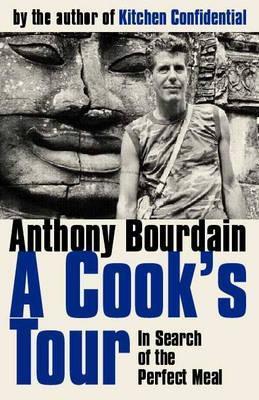 Anthony Bourdain also appeared on my summer reading list when I reviewed Kitchen Confidential in 2020; I have both books in an omnibus edition. The chef acknowledges there’s no such thing as a perfect dining experience as there are many subjective factors apart from the food, but a few of his meals here are pretty close to ideal. Others are horrific. But everywhere he goes, from England to Cambodia, he gives a fair try. Four interspersed chapters are set in Vietnam, a country he falls in love with, but the rest are like individual essays with a different destination each time: Spain, Russia, Morocco, Japan, Scotland…
Some places are chosen due to personal significance or professional connections. He goes back to where he spent childhood summers in France, but it doesn’t live up to expectations: “I’d thought everything would be instant magic. That the food would taste better because of all the memories. … But you can never be ten years old again.” His boss arranges a pig roast for him in Portugal; he travels to the state in Mexico where most of his kitchen staff come from. With several other chefs, he journeys to Thomas Keller’s The French Laundry in California for a 20-course tasting menu – the rundown of the dishes takes him several pages. The key ingredients of this and the other near-perfect meals seem to be excellent quality of food, innovative flavors, a variety of dishes, and a languid pace with the alcohol flowing.
Bourdain sheepishly confesses that his travels were documented for television; the Food Network made him agree to some filming opportunities he would otherwise have avoided. Vegetarians be warned: some of these involve slaughter, and/or eating exotic animals. Aside from the pig, there’s a whole lamb cooked over a fire in the desert in Morocco, a turkey he beheads, and rabbits he shoots. And while you might think he’d eat anything with pleasure, there are in fact a few meals that leave him feeling ill: iguana tamales, bird’s nest soup, and dishes that use up all parts of a cobra. A notorious vegetarian hater, he even agrees to attend a vegan potluck in Berkeley, but reports that “not one of them could cook a f***ing vegetable.”
This was fast-moving, brash and funny; just as good as Kitchen Confidential and something I’d recommend to anyone who enjoys cooking shows or stunt travel. (Free – swap shop)
A Down Home Meal for These Difficult Times by Meron Hadero (2022)
Debut author Hadero won the Restless Books Prize for New Immigrant Writing for this work in progress, many of whose stories had been published in periodicals in 2015–20. The 15 stories are roughly half in the first person and half in the third person, and apart from a couple whose place or character origins aren’t specified, I think all are about Ethiopians or Ethiopian Americans. Often, the protagonist is a recent immigrant. Yohannes, in “Medallion,” is recruited by his taxi driver almost immediately upon his arrival in Los Angeles, but finds that his American dream never comes through. In “The Thief’s Tale,” an old Ethiopian man who speaks no English is lost in Prospect Park. When the man who holds him up at knifepoint realizes there is no watch or wallet to take, he lets him call his daughter from a payphone and, as they wait, the two strangers share their stories of failure and regret.
Sometimes Ethiopia is the setting instead. “The Suitcase” has Saba getting ready to return to the USA after a one-month visit to Addis Ababa, her bag 10 kilograms too heavy because of everything people are sending back with her. In “The Street Sweep,” Getu hopes to impress a departing NGO worker enough at his leaving party at the Addis Sheraton that he’ll get a life-changing job offer. This one was a standout, though distressing for how it rests on misunderstanding.
 My favorites seem like they could be autobiographical for the author. “The Wall” is narrated by a man who immigrated to Iowa via Berlin at age 10 in the mid-1980s. At a potluck dinner, he met Professor Johannes Weill, who gave him free English lessons. Six years later, he heard of the Berlin Wall coming down and, though he’d lost touch with the professor, made a point of sending a note. The connection across age, race and country is touching. “Sinkholes” is a short, piercing one about the single Black student in a class refusing to be the one to write the N-word on the board during a lesson on Invisible Man. The teacher is trying to make a point about not giving a word power, but it’s clear that it does have significance whether uttered or not. “Swearing In, January 20, 2009” is a poignant flash story about an immigrant’s patriotic delight in Barack Obama’s inauguration, despite prejudice encountered.
The title story is the only foodie link, but it’s a sweet one. Two women who attend church Amharic classes in New York City admit that they can’t cook, but want to impress at the PTA bake sale, so go in search of a quintessential American cookbook, and in the years to come prepare dishes from The Good Housekeeping Illustrated Cookbook every time there is a crisis. “When Yeshi’s husband left her for a blonde waitress, they made Broiled Hamburg Steak, just the once. … When Jazarah’s credit cards were stolen and maxed out, they made trays of Corn Fritters.” Eventually, they start to make a living from their own food truck.
There were no bad stories here per se, but several too many, and not enough variety. I also didn’t warm to the couple of political satires involving manuscripts. “The Case of the Missing _______,” set in 2036 and counting backwards from Day 100, is a document full of erasure, produced by the Minnesota newspaper The Exile Gazeta and concerning an absent authoritarian leader. It made me think of Ella Minnow Pea, or perhaps novels by Jonathan Safran Foer and Hernan Diaz, and felt different to the rest, but not in a good way. It would be interesting to try a novel by Hadero someday. See also Liz’s review. (Other challenges this met: review catch-up, set-aside) 
With thanks to Canongate for the proof copy for review.
 Bookish Beck = Rebecca Foster. American transplant to England. Freelance proofreader and book reviewer.
 Bookish Beck